

Apulia · Bari
Putignano
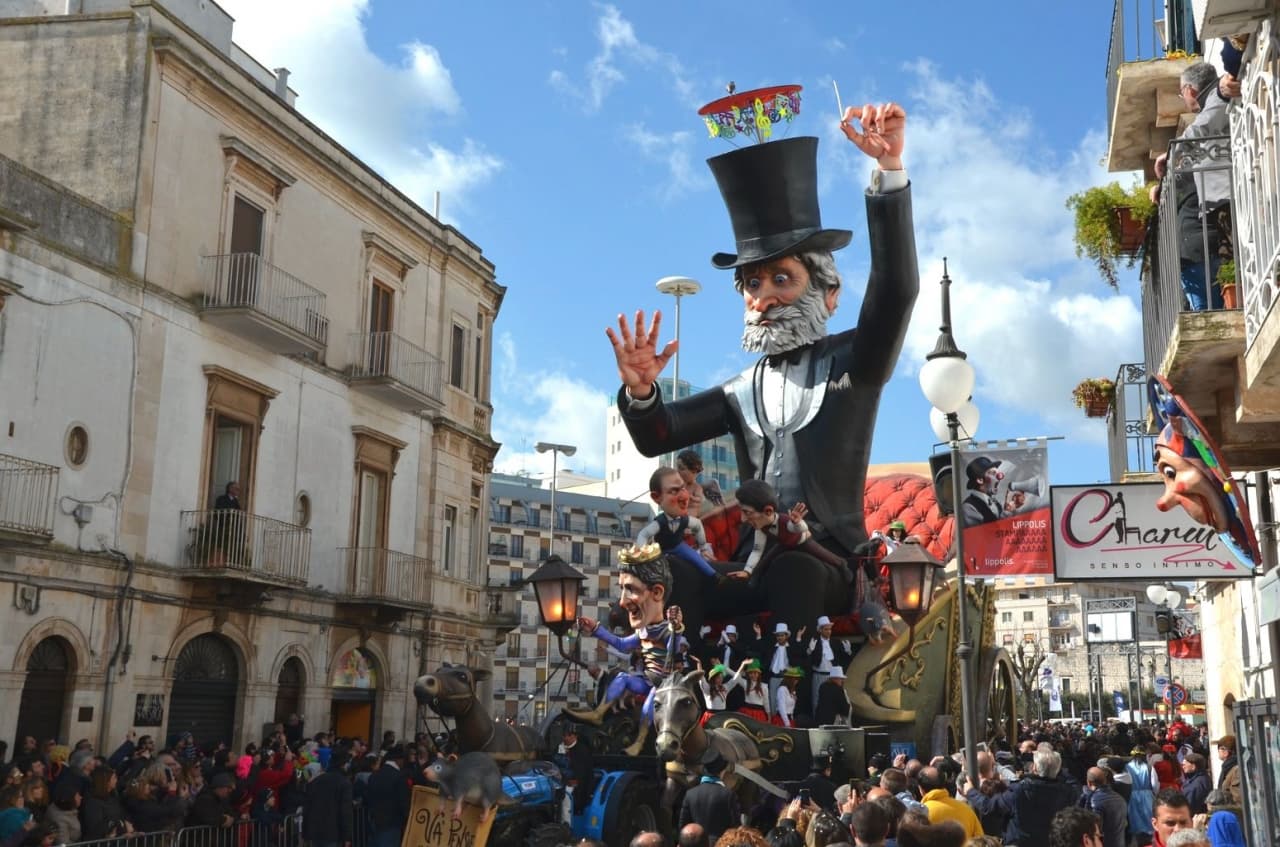
Europe's longest-running carnival — Putignano Carnevale has run continuously since 1394, with 631 years of cartapesta papier-mâché floats, a 26,000-resident Murgia town on the Bari–Lecce plateau, and the Grotta del Trullo karst cave inside the centro.
Known for
EUROPE'S OLDEST CARNIVAL
Continuous since 26 December 1394 — 631 years of cartapesta processions, satire, and grotesque masks. One of the four longest-running in the world.
CARTAPESTA TRADITION
30+ active papier-mâché workshops build the allegorical floats year-round. The cartapesta artisan tradition is recognised as intangible heritage by the Puglia region.
GROTTA DEL TRULLO
Karst cave system with entrance inside the centro storico. Stalactites + WWII refuge shelter. The town's distinctive geological feature.
MURGIA-PUGLIAN GATEWAY
On the karst plateau between Bari and Lecce. Easy reach to Alberobello (15 km, UNESCO trulli) + Martina Franca (capocollo + baroque) + the whole Valle d'Itria.
When to visit
Best · Feb–Jun, Sep–Oct
- J
- F
- M
- A
- M
- J
- J
- A
- S
- O
- N
- D
- Best
- Hot or crowded
- Quiet
- Mostly closed
The festa: Stefano, 3 August
Why come
Putignano is here for the Carnevale. The Carnevale di Putignano has run continuously since 26 December 1394 — making it the oldest carnival in Europe by documented tradition and one of the four longest-running in the world. The origin story is specific: on that date a Benedictine confraternity transferred the relics of Santo Stefano from the coast at Monopoli to the inland church of Putignano, fleeing Saracen raids; the local farmers transferring grapevines in the same December procession started singing satirical verses (le Propaggini, still the carnival's opening event every 26 December) and the carnival has run continuously across 631 years of plagues, wars, fascism and pandemics.
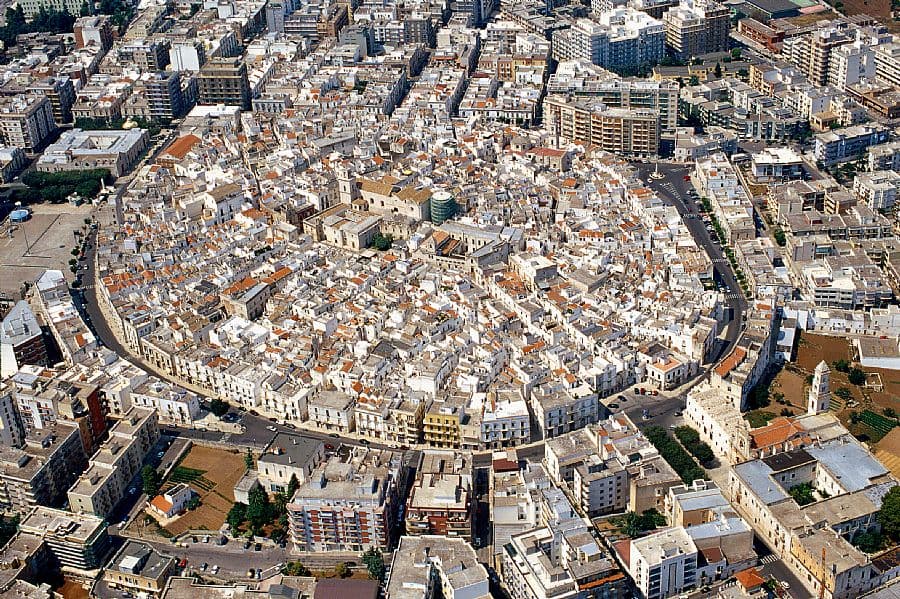
The headline today is the cartapesta — large papier-mâché allegorical floats built in the 30+ workshops around town in the months leading up to Carnevale, paraded across 5 Sunday processions from January through Shrove Tuesday, depicting political satire, popular culture, and grotesque masks. The Carnival closes with the Funerale del Carnevale on Shrove Tuesday (the death-and-burial parody of the spirit of carnival) and 365 Bells (one for each day until next year). Beyond Carnevale, the town is a 25,935-resident Murgia centre on the Bari–Lecce karst plateau altitude, with a quietly handsome centro storico (the Chiesa Madre di San Pietro Apostolo with 16th-c crypt, the Palazzo del Balì, the medieval walls partially preserved), and one striking geological feature: the Grotta del Trullo, a karst cave system whose entrance is INSIDE the centro (under the Trullo-roofed building of the same name, hence the name), excavated and partially open for visits with stalactites + WWII-era refuge shelter. The food is Murgia-Puglian: focaccia barese, orecchiette with cime di rapa, capocollo di Martina Franca (the next town), Primitivo di Manduria from 80 km south, and the carnival's emblematic dolce farinella (sweet polenta cake with grape must and chickpea flour).
The Sunday letter
We haven’t written Putignano’s letter yet.
One town every Sunday, with the photo, the food, the festa. Be there when this one comes up. Free, by Peter & Sophia from Pietrasanta.
By subscribing you agree to Substack’s Terms of Use, our Privacy Policy and our Information collection notice.
What to see
Carnevale di Putignano (Dec 26 – Shrove Tuesday)
Europe's longest-running carnival, continuous since 1394. Five Sunday cartapesta float processions, le Propaggini opening 26 December, Funerale del Carnevale closing Shrove Tuesday.
Cartapesta workshops + Museo del Carnevale
30+ active papier-mâché workshops build the allegorical floats year-round — many open for visits. Museo del Carnevale documents 631 years of carnival history.
Grotta del Trullo
Karst cave system with entrance INSIDE the centro storico (under the Trullo-roofed building of the same name). Stalactites + a partially-open WWII refuge shelter. Guided visits.
Chiesa Madre di San Pietro Apostolo
Restored Romanesque parish church with 16th-c crypt. Anchor of the central piazza, with the Palazzo del Balì opposite.
Murgia-Puglian kitchen
Focaccia barese, orecchiette con cime di rapa, capocollo di Martina Franca (next town), Primitivo di Manduria 80 km south, the carnival-emblematic farinella sweet polenta cake.
The slow-trip planner
Building a trip? Find where Putignano fits in a slow Italy circuit.
Answer five questions. We will shape a geographically coherent slow trip from the 1,000 Italian towns most travelers skip. Yours to save and share.
We recommend
Where to eat and stay
Not our picks, but places the guides put their name to — a Michelin star, a Gambero Rosso fork, a Slow Food snail, a Michelin Key for the hotels. Worth a table, a counter, or a night when you pass through.
Angelo SabatelliRistorante
Angelo Sabatelli carries one Michelin star, two Gambero Rosso forks (85/100), plus a place in L'Espresso's Top 300.
Botteghe AnticheTrattoria
Botteghe Antiche has two Gambero Rosso prawns and a Slow Food snail.
Living here
- Population 25,935
- Commuter belti
- Pharmacy in town
- High school within a 30-minute drive
- Train station in the comune
- Nearest airport Bari / Brindisi, 57 min drive
- Regional capital Bari, 46 min drive
Tags & datadesignations · numbers · sources
The numbers
- Elevation: 372 m
- Population: 25,935
- Surface area: 100.16 km²
These figures were compiled from public directories — ISTAT, OpenStreetMap, Wikidata — and from the official listings of the guides named on this page. Town details change; verify with official sources before you travel.
Close by
More towns near Putignano
Castellana Grotte
Province: Bari
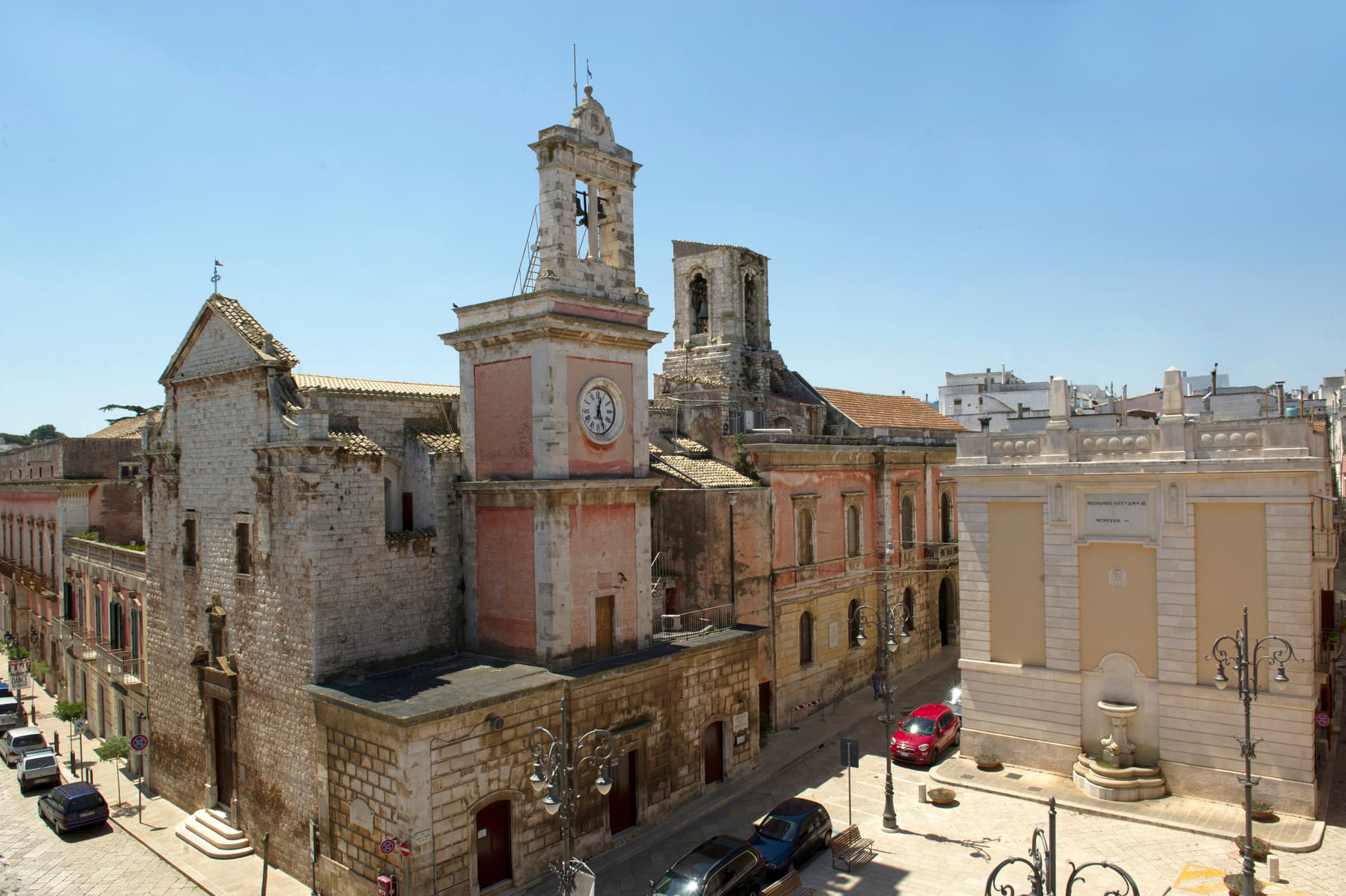
A Murge town at 290 meters above the karst cave system discovered in 1938, with a 3-kilometer subterranean route 60 meters deep.
Alberobello
Province: Bari
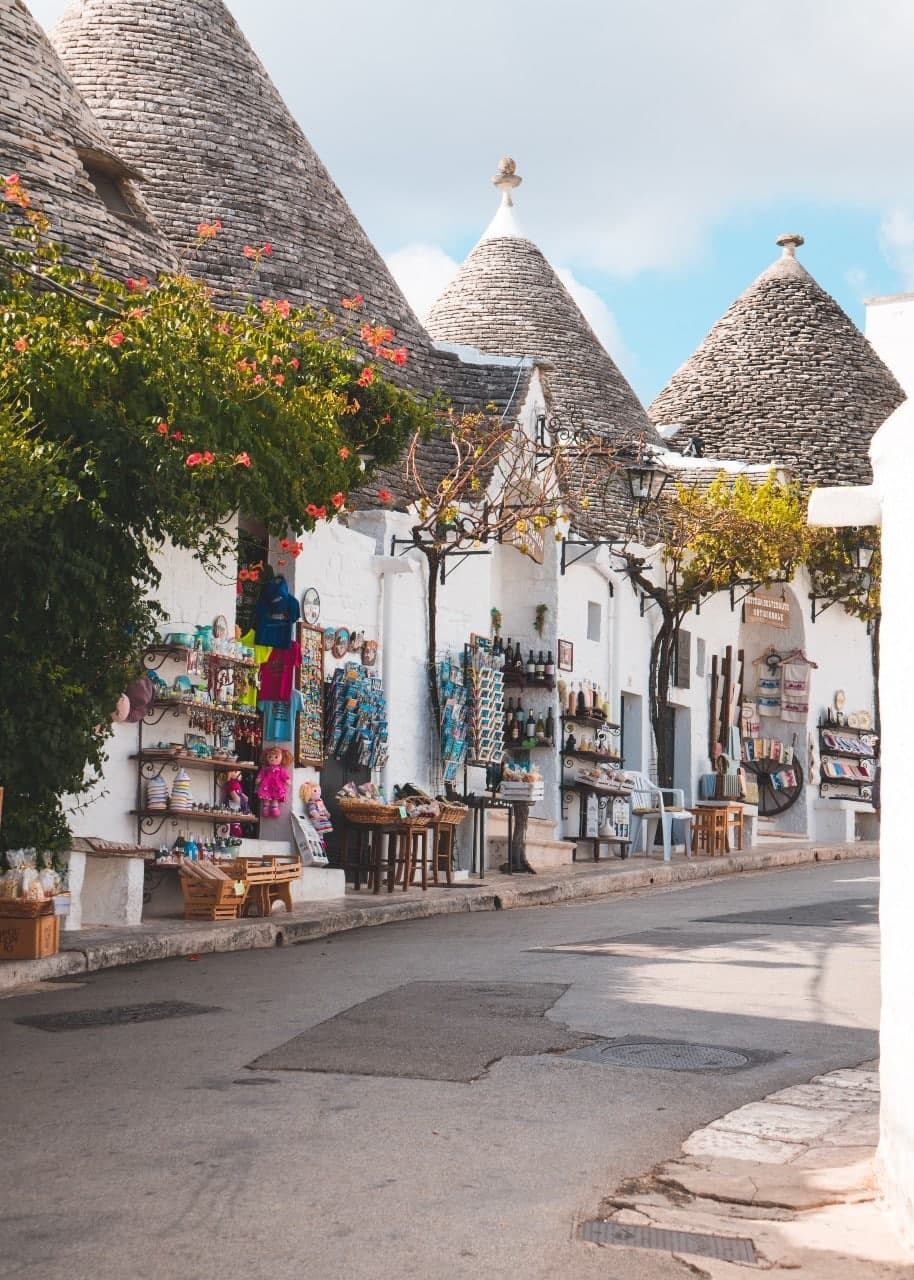
The Itria valley town built entirely of trulli, 1,500 corbelled limestone cones in two quarters, UNESCO since 1996.
Sammichele di Bari
Province: Bari
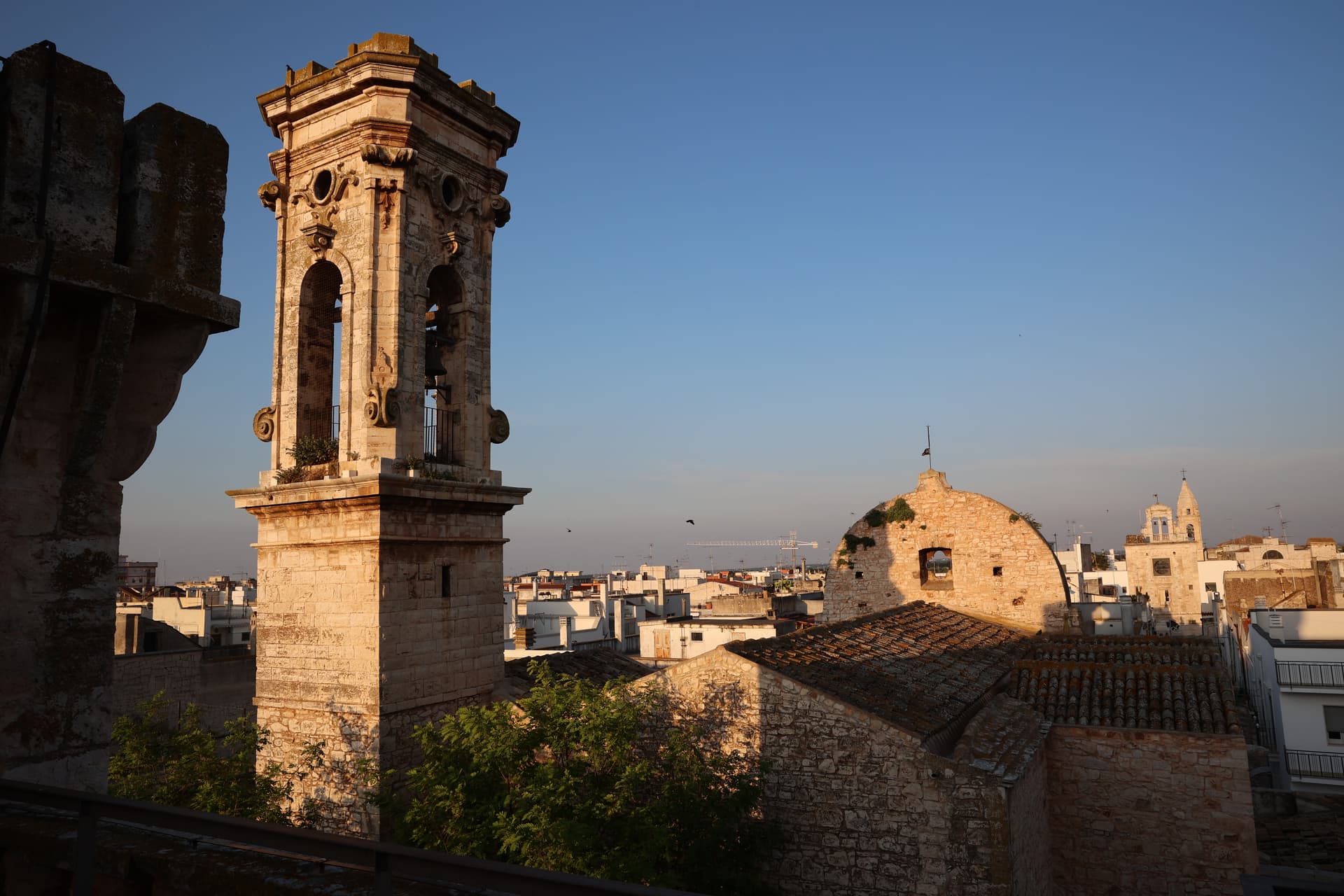
A Murge town at 280 meters founded in 1609, anchored by the Caracciolo castle and famous for the zampina pork sausage.
Conversano
Province: Bari
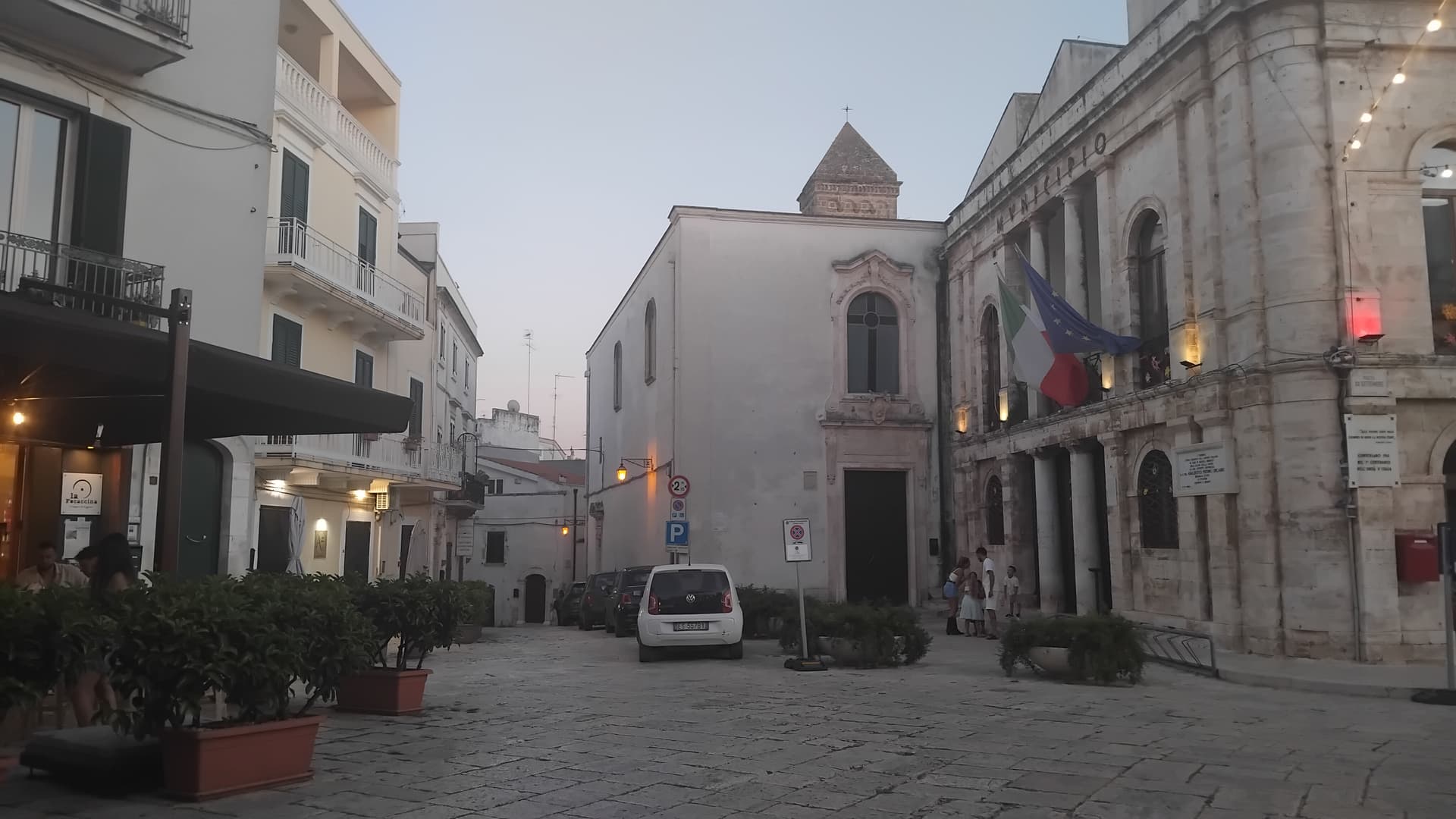
A pre-Murge hill town at 219 meters, three centuries seat of the Acquaviva counts, with the abbey-monastery once called the Wonder of Puglia.
Monopoli
Province: Bari
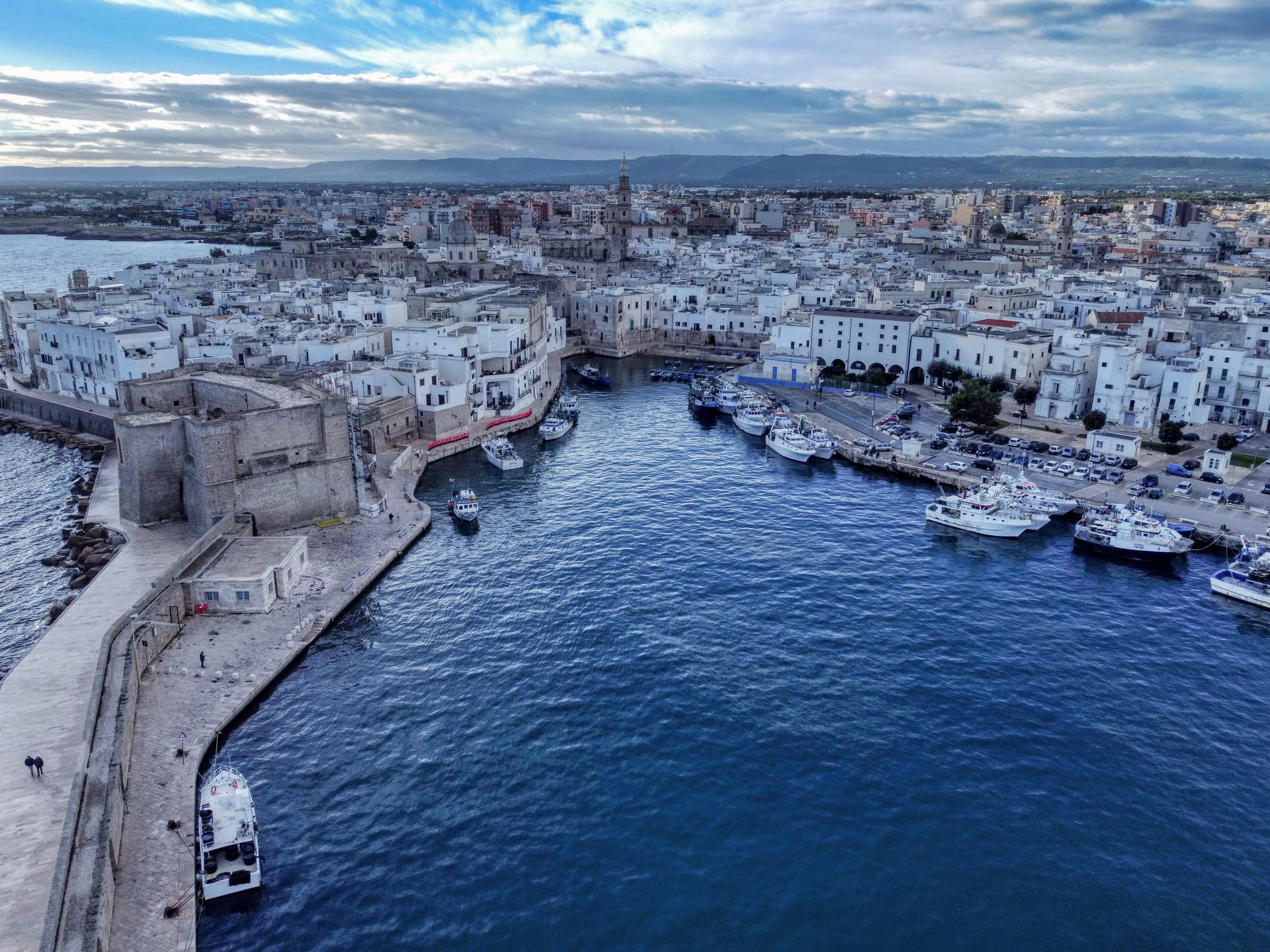
An Adriatic walled town forty kilometers south of Bari, the Charles V castle on the headland, 156 square kilometers of coastline behind it.