

Marche · Ascoli Piceno
Ascoli Piceno
The travertine city where the Tronto meets the Castellano, capital of the Piceni and host of the Quintana joust.
Known for
TRAVERTINE
The entire centro storico is built from local travertine, polished pale under rain and lit gold at sunset, an inheritance from Roman quarrying.
QUINTANA
Costumed joust between the six sestieri, run twice a year on the first Sunday of July and the first Sunday of August.
OLIVE ASCOLANA
Stuffed and fried green olive of the Ascolana tenera cultivar, the city's culinary signature, made to a DOP protocol since 2005.
When to visit
Best · Apr–Oct
- J
- F
- M
- A
- M
- J
- J
- A
- S
- O
- N
- D
- Best
- Hot or crowded
- Quiet
- Mostly closed
The festa: Emidio d'Ascoli, 5 August
Why come
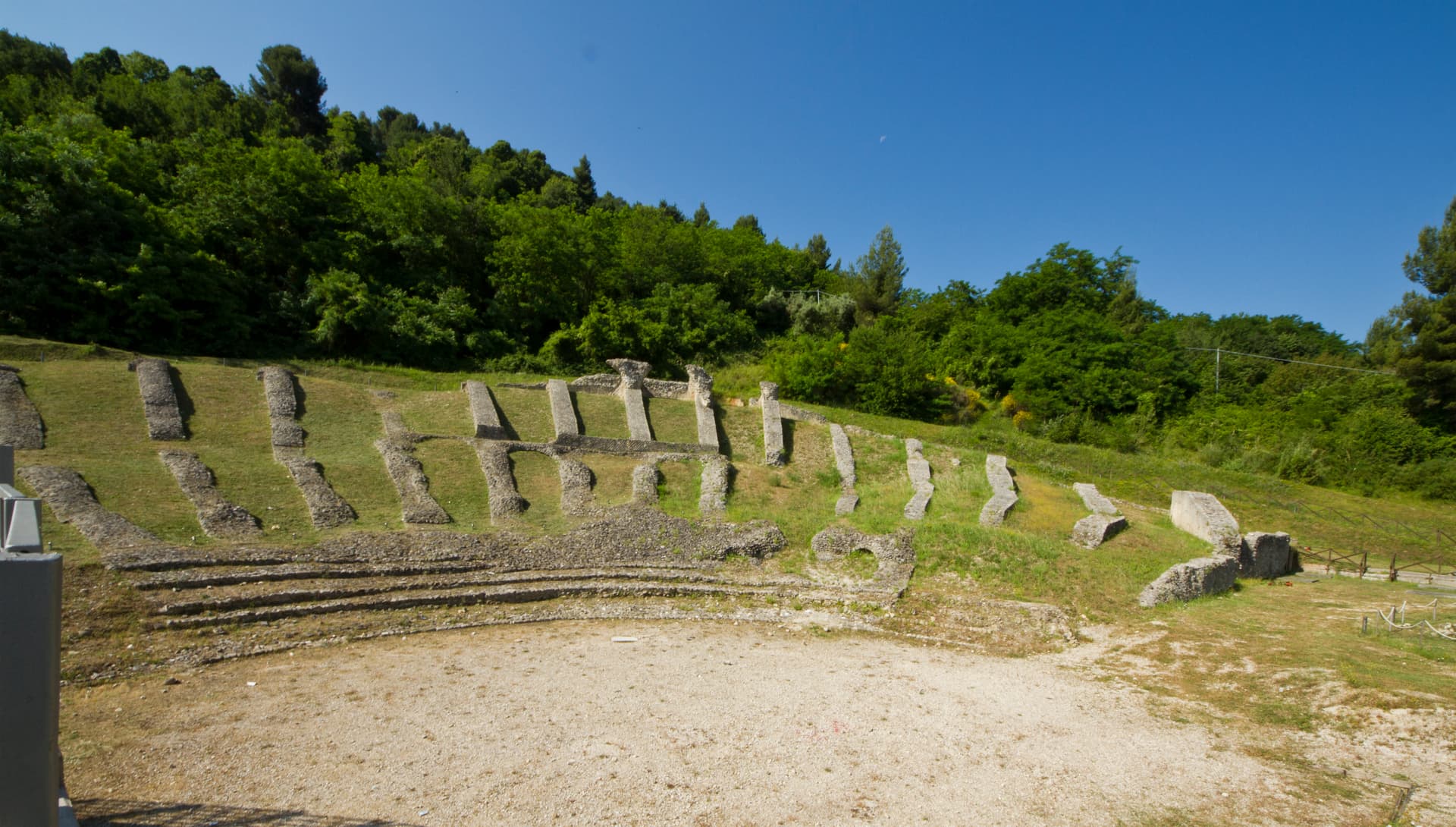
Ascoli Piceno sits at the confluence of the Tronto and the Castellano, the historic capital of the Piceni who held this part of the Marche before Rome. The town is built almost entirely from local travertine, which gives the centro storico its luminous pale surface and its mirror behavior under rain: Piazza del Popolo, paved in polished travertine slabs, is one of the most photographed squares in Italy. In 91 BC the Ascolani killed the Roman delegation in their forum and triggered the Social War; the city was razed and rebuilt by Rome and the present grid still follows the Roman layout.
The Quintana, run in costume in July and August, is a joust between the six sestieri, the city districts, the knight on horseback charging an effigy of an Arab warrior. Anisetta Meletti, the local aniseed liqueur invented in 1907, is poured at the Caffè Meletti on the piazza.
The Sunday letter
We haven’t written Ascoli Piceno’s letter yet.
One town every Sunday, with the photo, the food, the festa. Be there when this one comes up. Free, by Peter & Sophia from Pietrasanta.
By subscribing you agree to Substack’s Terms of Use, our Privacy Policy and our Information collection notice.
What to see
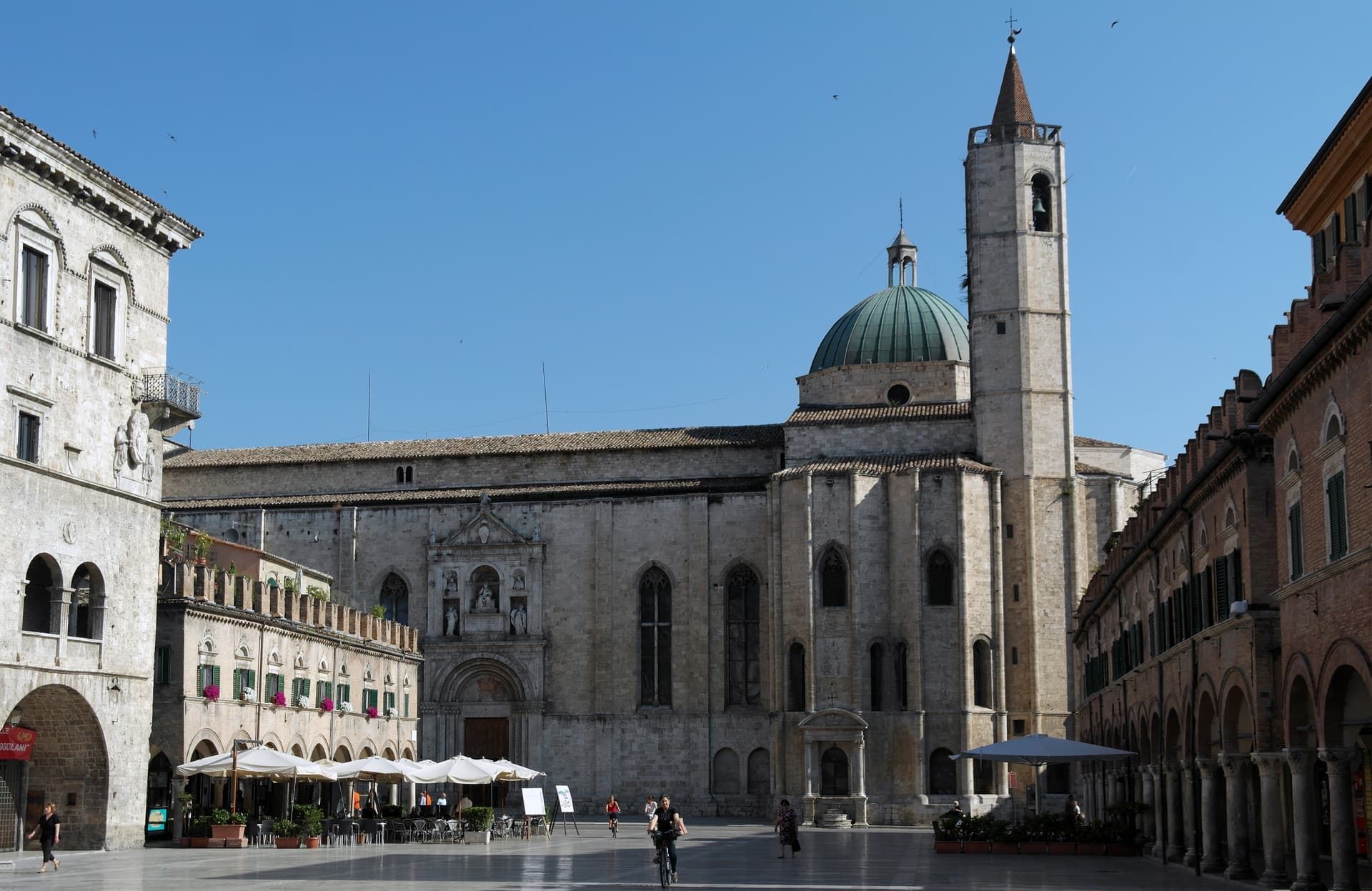
Piazza del Popolo
Paved in polished travertine slabs and lined by Renaissance porticoes, the Palazzo dei Capitani and the Loggia dei Mercanti, one of the most photographed squares in Italy.
Chiesa di San Francesco
Gothic basilica begun in the thirteenth century, three travertine portals, two bell-towers, the largest Marchigiana example of the Franciscan order's architecture.
Cattedrale di Sant'Emidio
Cathedral on Piazza Arringo, with a fifth-century crypt holding the relics of Sant'Emidio, patron saint invoked against earthquakes.
Quintana
Costumed joust held in July and August, the six sestieri compete in archery and a charge against an Arab effigy, observed across the medieval streets.
Pinacoteca Civica
Civic gallery in the Palazzo dell'Arengo, with works by Carlo Crivelli, Tiziano, Pietro Alemanno and Cola dell'Amatrice.
Le Cento Torri
The hundred towers, mostly absorbed into later buildings, that gave Ascoli its medieval skyline; a dozen still stand and several can be climbed.
The slow-trip planner
Building a trip? Find where Ascoli Piceno fits in a slow Italy circuit.
Answer five questions. We will shape a geographically coherent slow trip from the 1,000 Italian towns most travelers skip. Yours to save and share.
We recommend
Where to eat and stay
Not our picks, but places the guides put their name to — a Michelin star, a Gambero Rosso fork, a Slow Food snail, a Michelin Key for the hotels. Worth a table, a counter, or a night when you pass through.
Caffè MelettiCaffè
Caffè Meletti has a place on Italy's historic-locali register and a spot in the Michelin Guide.
TetsuGiapponese
Tetsu holds two Gambero Rosso Mappamondi.
Living here
- Population 45,571
- A local hubi
- Pharmacy in town
- High school within a 30-minute drive
- Train station in the comune
- Nearest airport Ancona / Pescara, 1 h 32 min drive
- Regional capital Ancona, 1 h 27 min drive
Tags & datadesignations · numbers · sources
Recognised as
The numbers
- Elevation: 154 m
- Population: 45,571
- Surface area: 158.02 km²
These figures were compiled from public directories — ISTAT, OpenStreetMap, Wikidata — and from the official listings of the guides named on this page. Town details change; verify with official sources before you travel.
Close by
More towns near Ascoli Piceno
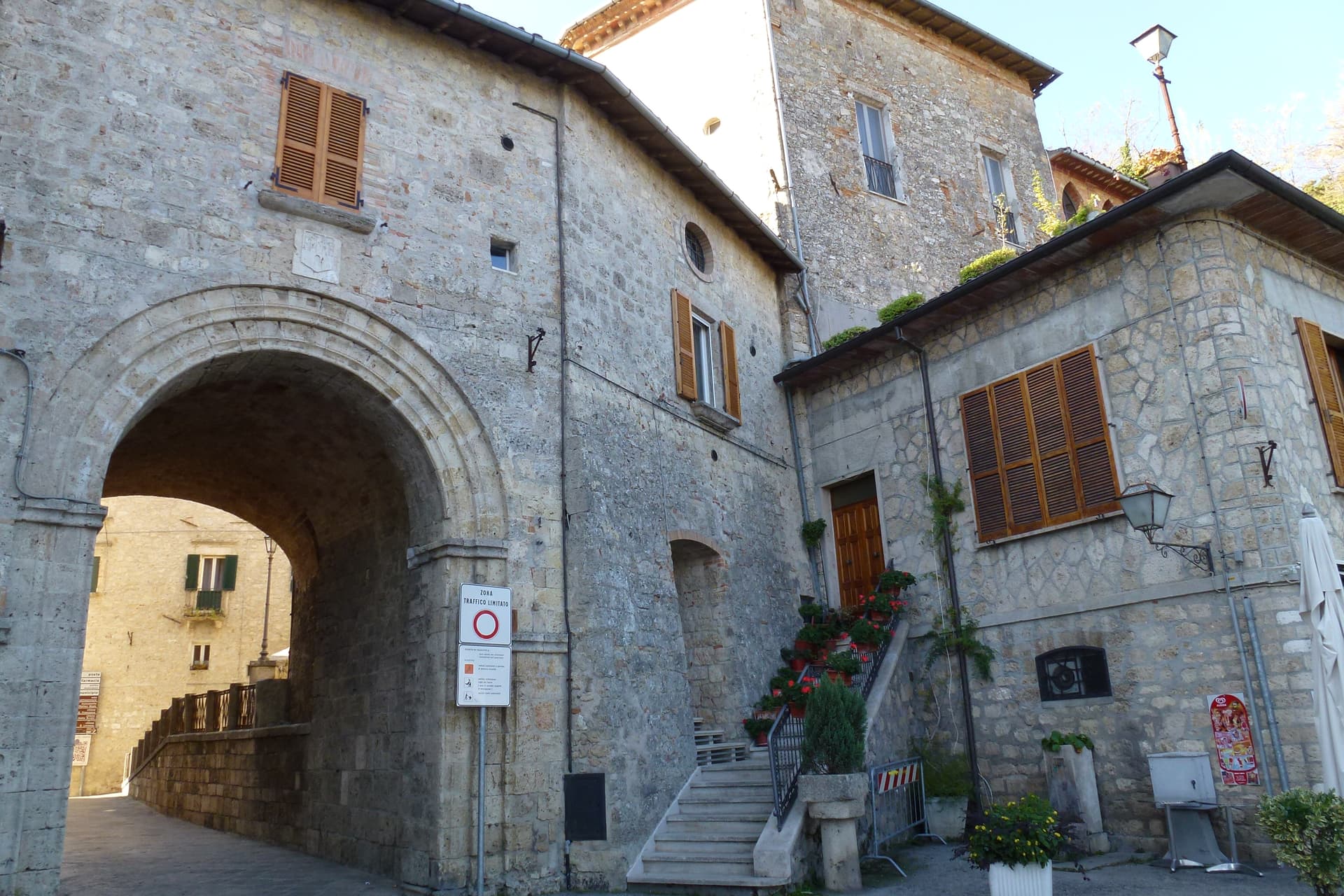
Civitella del Tronto
Province: Teramo
A rocky crest at 589 meters above the Tronto valley, crowned by the last Bourbon fortress to surrender to united Italy in March 1861.
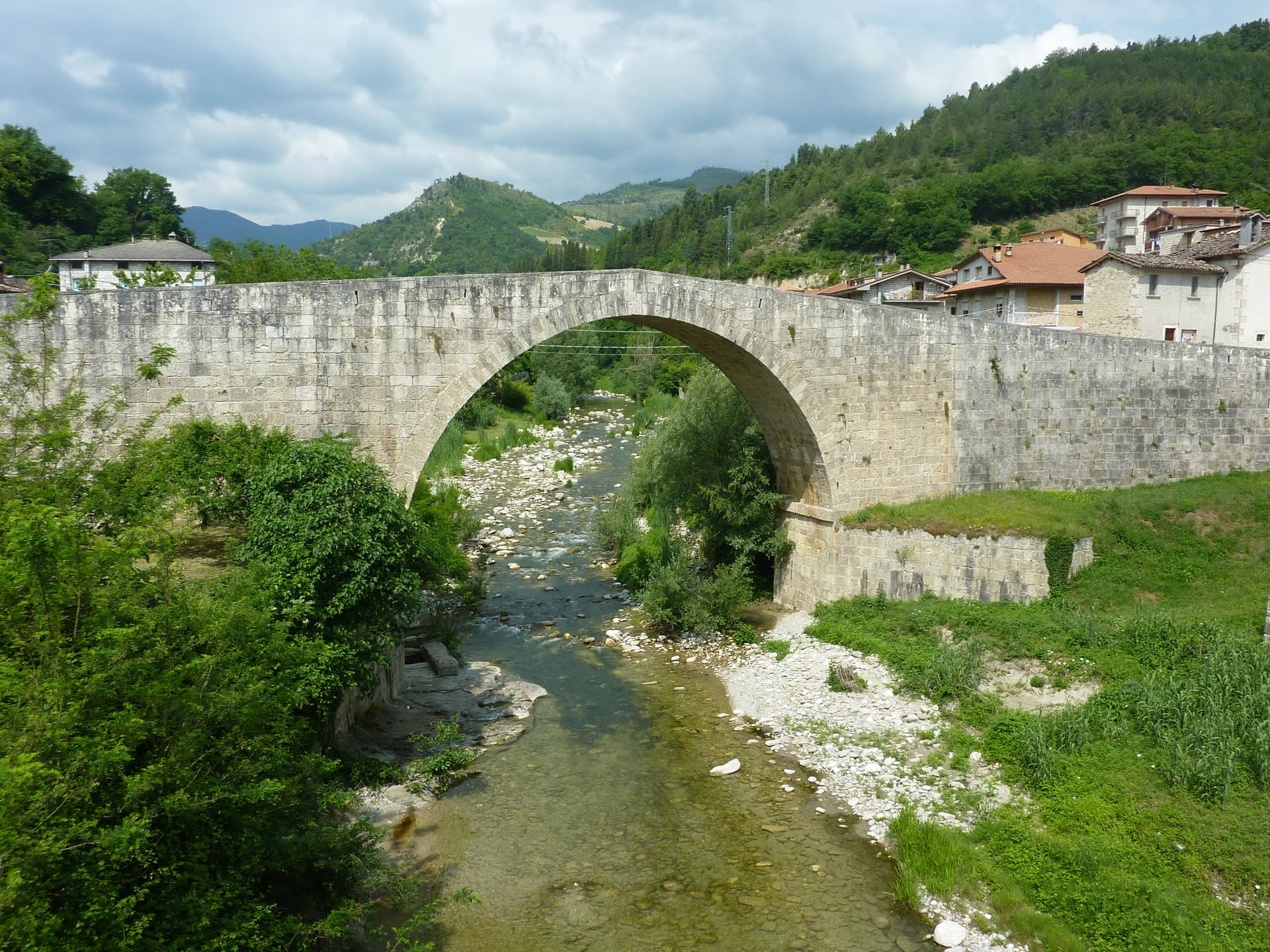
Acquasanta Terme
Province: Ascoli Piceno
A sulphur-spring spa at 392 meters in the upper Tronto valley, used for cures since the Roman consul Lucio Munazio Planco around 50 AD.
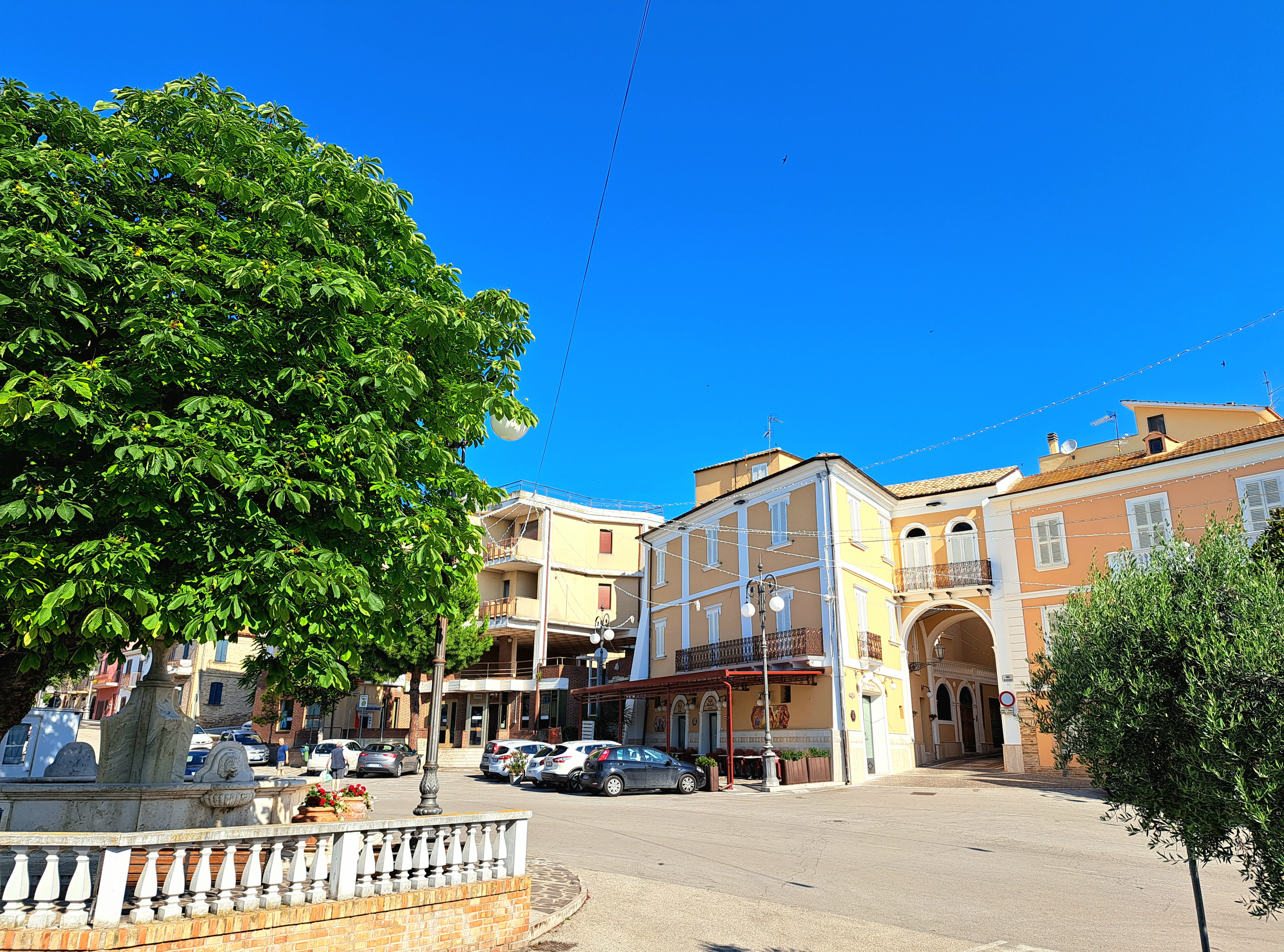
Controguerra
Province: Teramo
A 267-meter Val Vibrata wine village, seat of the Controguerra DOC since 1996, and a founding Cittaslow of the Teramo hills.
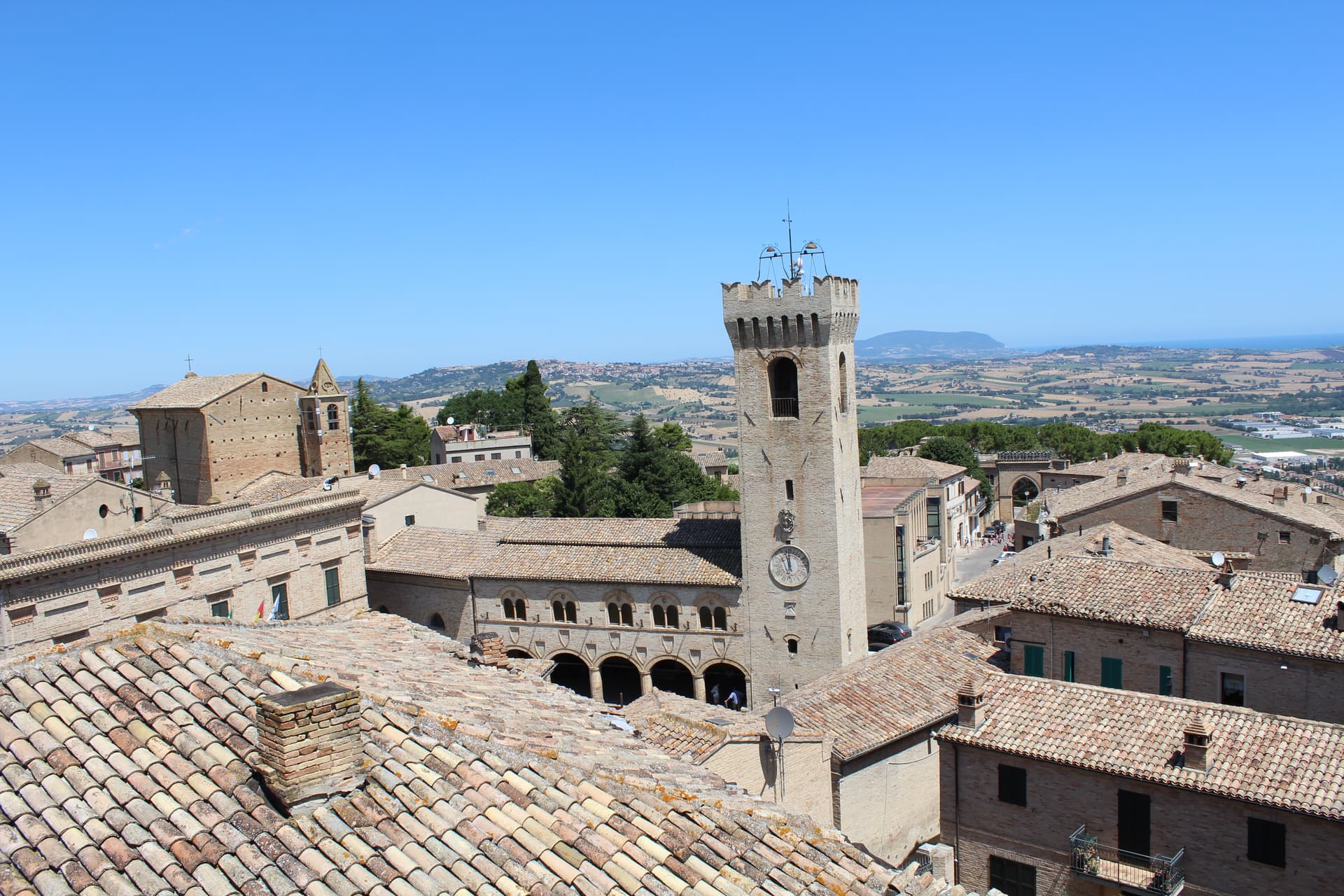
Monteprandone
Province: Ascoli Piceno
A hilltop borgo at 266 meters above the lower Tronto valley, birthplace of San Giacomo della Marca and home to his fifteenth-century convent library.
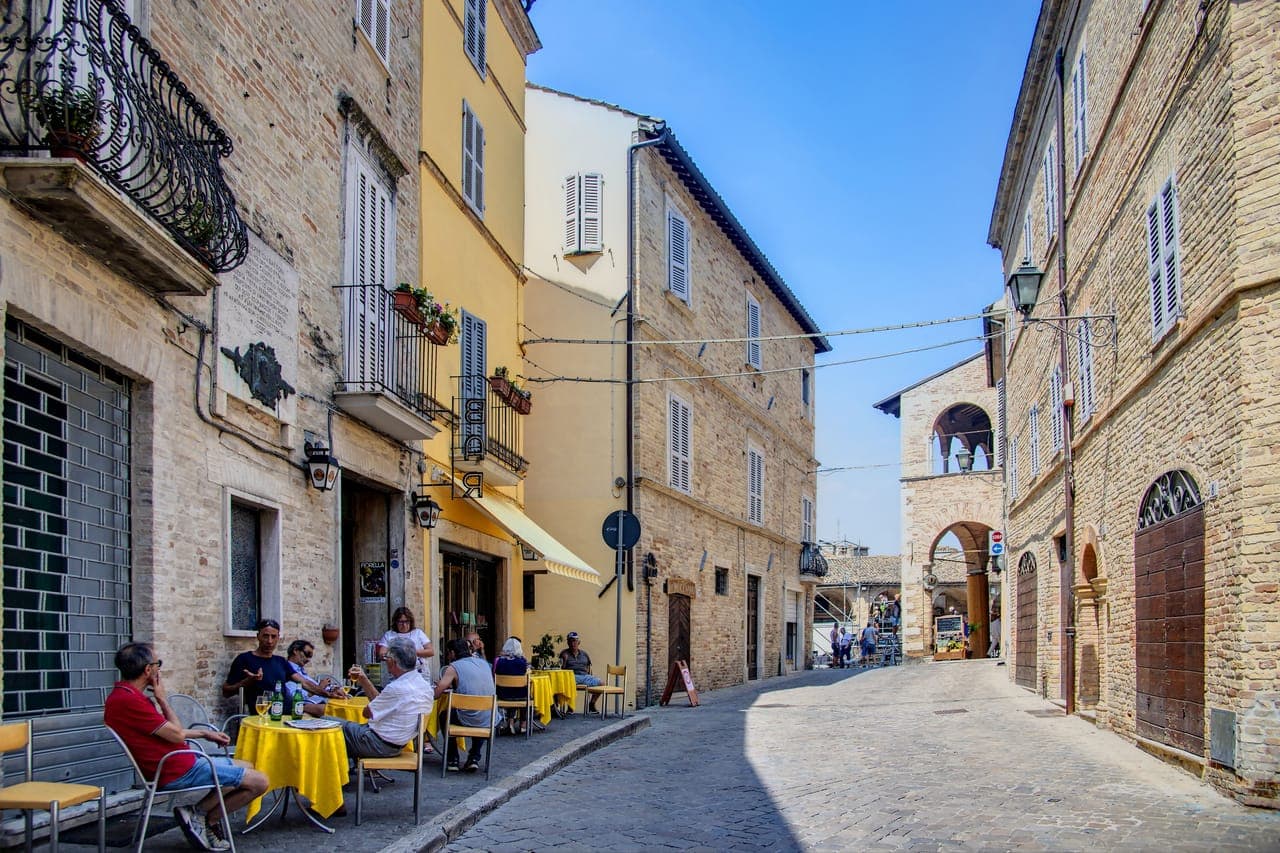
Offida
Province: Ascoli Piceno
A hill borgo at 293 meters in the Piceno wine country, with a Romanesque-Gothic cliff church and women still working bobbin lace.
🫒 Città dell'Olio
More Città dell'Olio towns in Marche
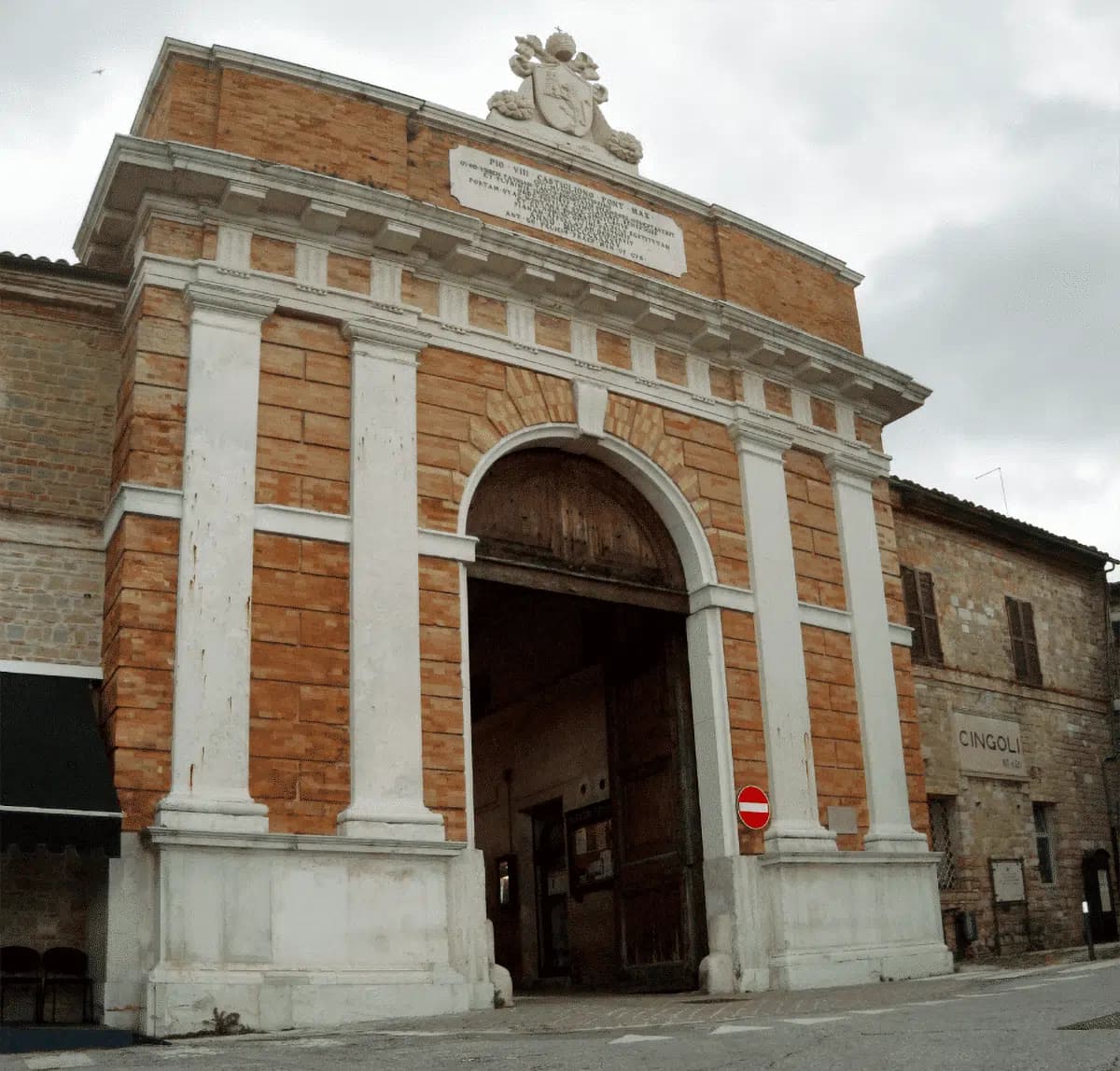
Cingoli
Province: Macerata
The Balcone delle Marche at 631 meters, a hilltop borgo where on clear days the view runs from the Sibillini to the Croatian coast.
Gradara
Province: Pesaro e Urbino
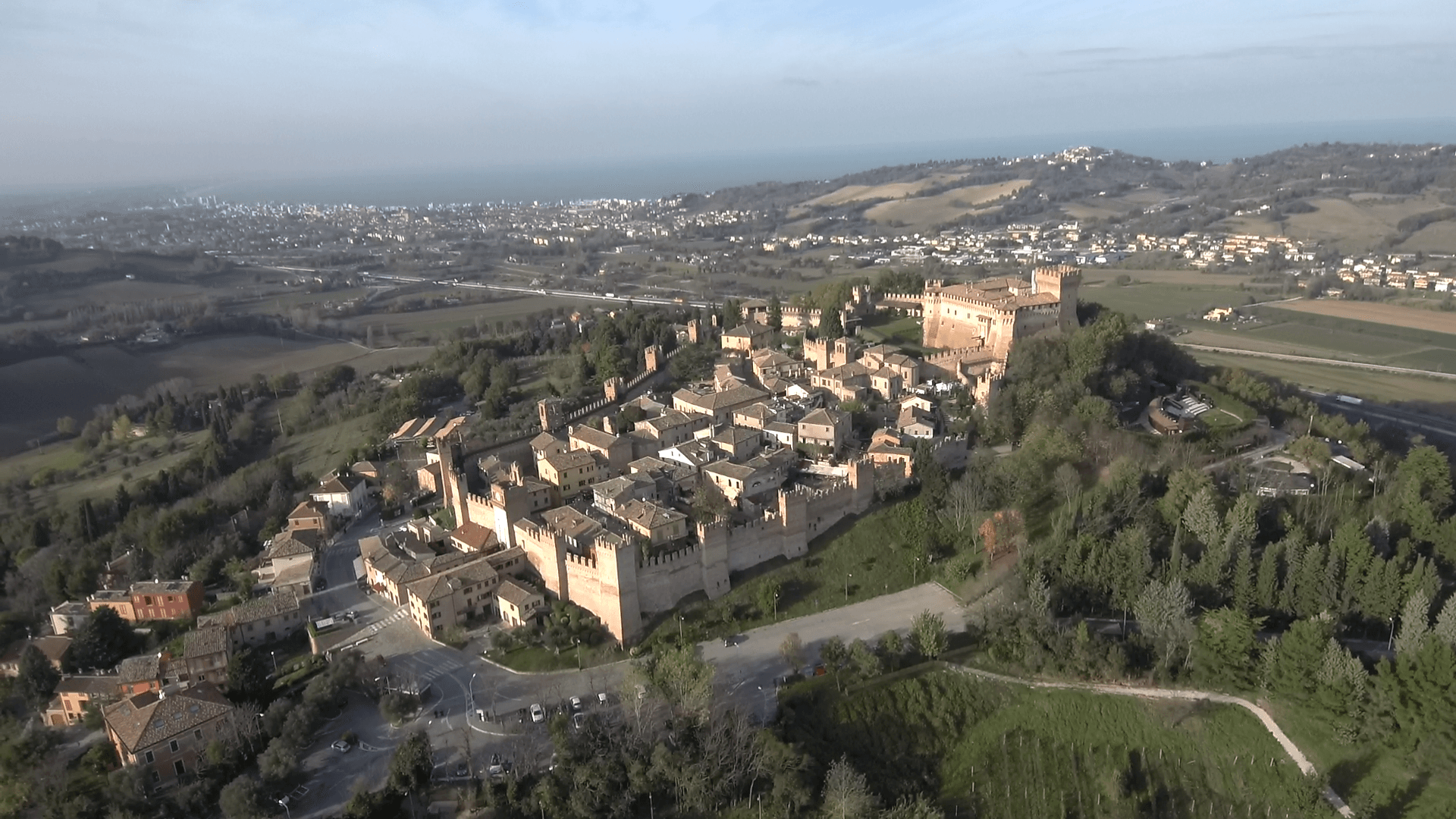
The walled hill borgo at 142 meters above the Adriatic where Dante set the deaths of Paolo and Francesca, with one of Italy's best-preserved castles.
Pesaro
Province: Pesaro e Urbino
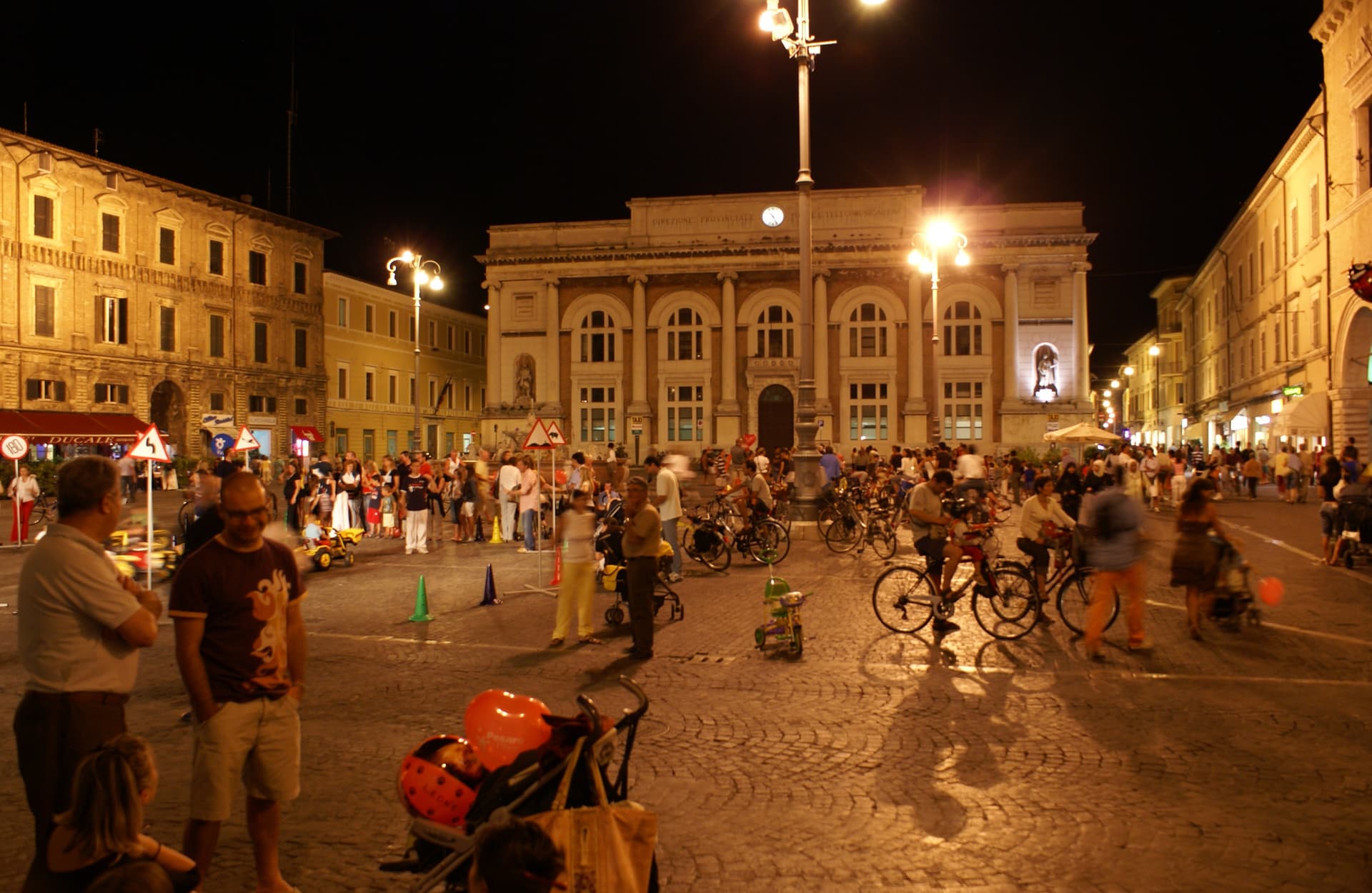
The Adriatic port at the mouth of the Foglia, founded as Roman Pisaurum in 184 BC and given to the world by Rossini in 1792.
Ripatransone
Province: Ascoli Piceno
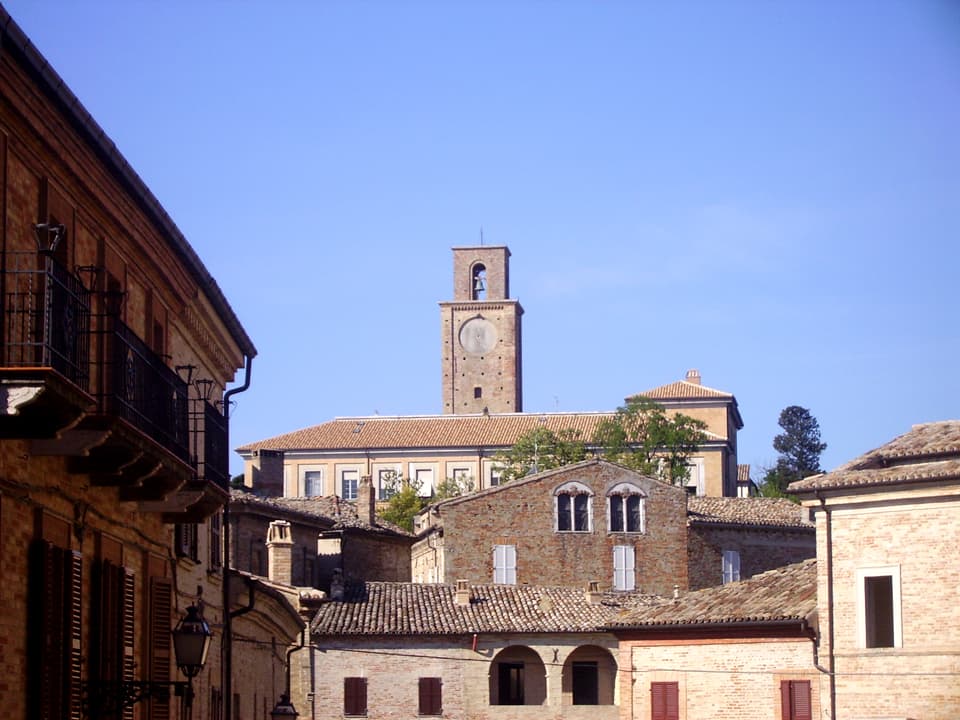
The Belvedere del Piceno at 494 meters, ridgetop borgo with views to the Adriatic and the narrowest alley in Italy at 43 centimeters.
Senigallia
Province: Ancona
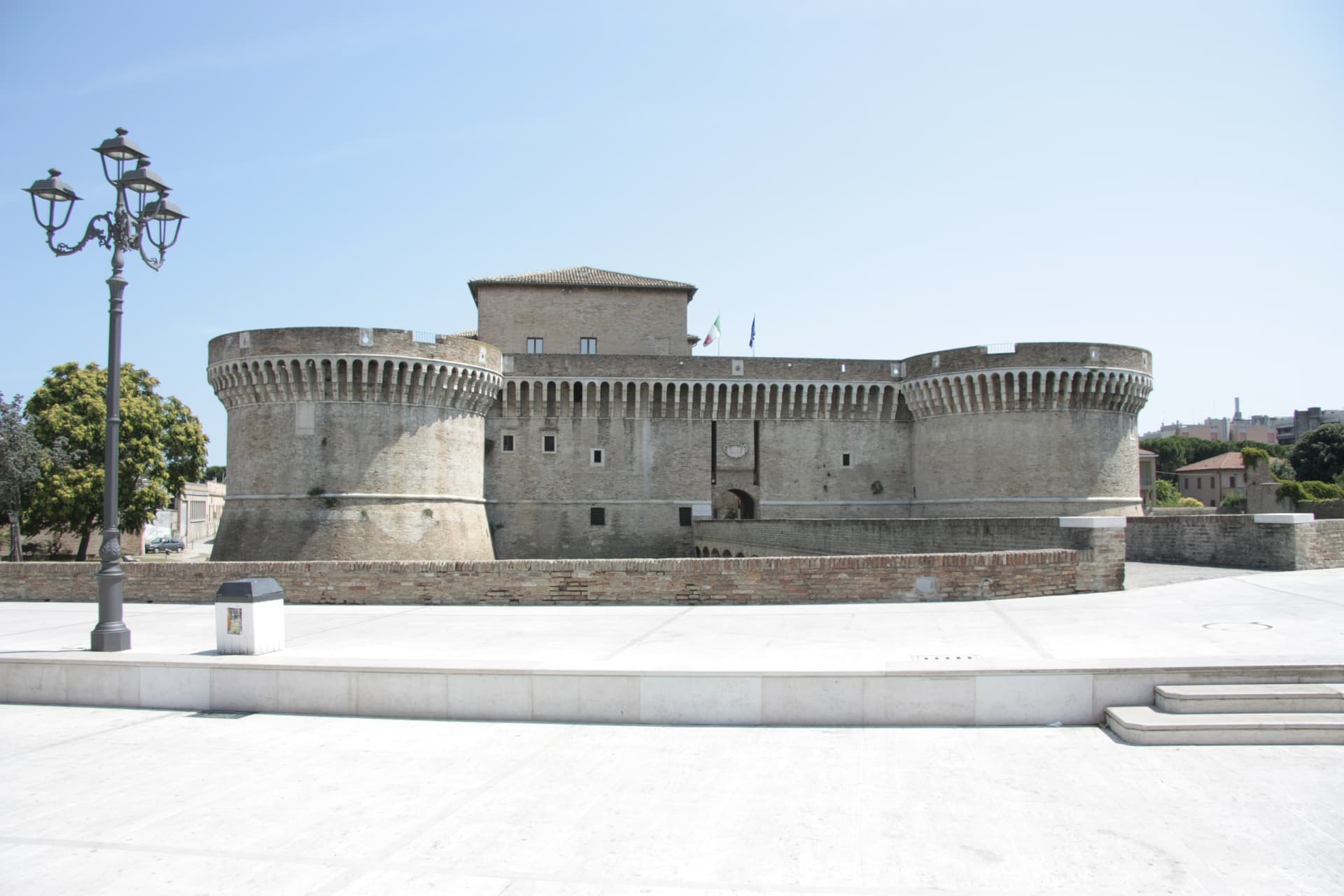
Thirteen kilometers of fine sand on the Adriatic that earned the Spiaggia di Velluto name, hometown of photographer Mario Giacomelli and chef Mauro Uliassi.