

Marche · Pesaro e Urbino
Fossombrone
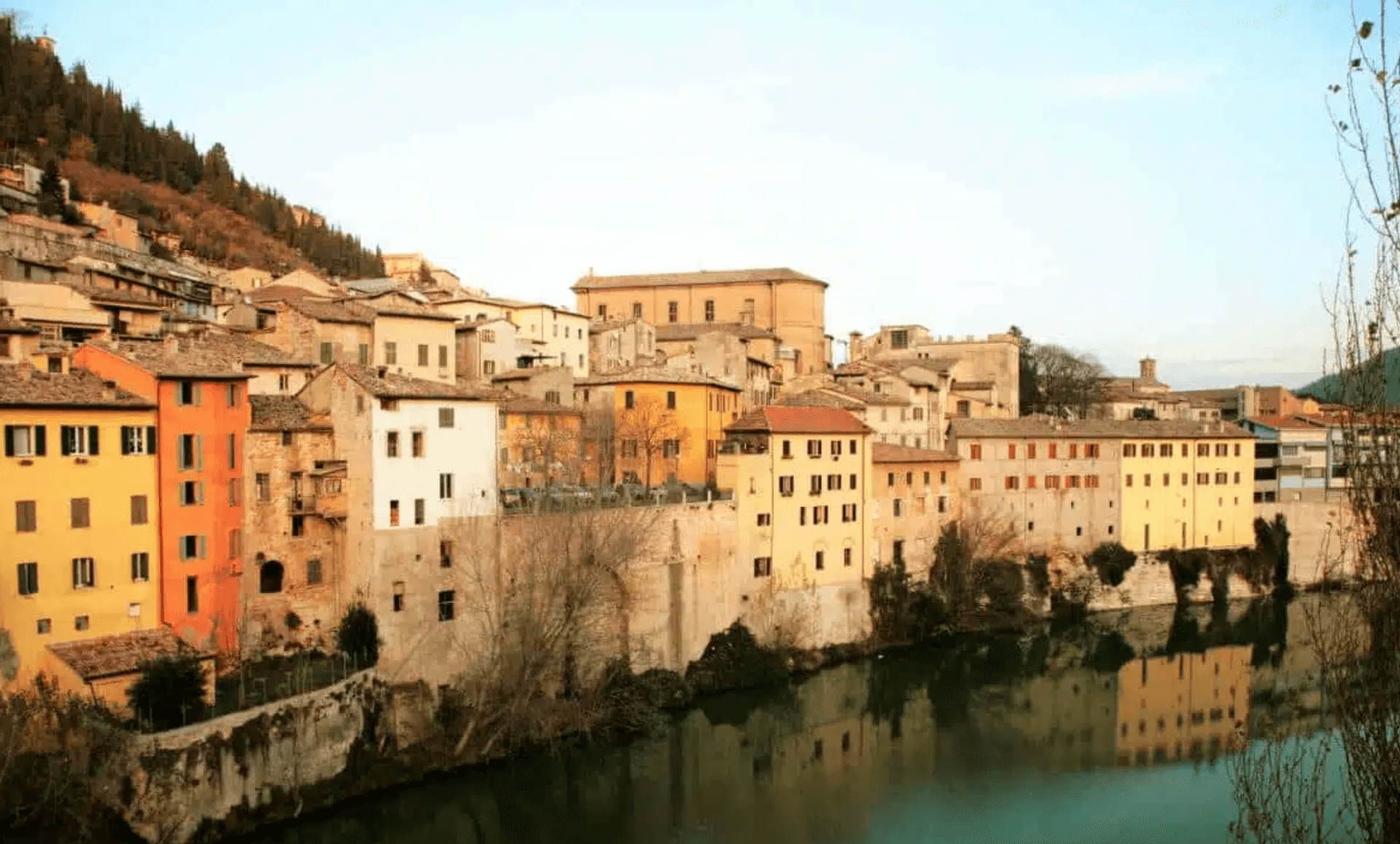
An inland Marchigiano town on the Metauro river layered over the Roman Forum Sempronii, a Renaissance Della Rovere ducal court above, and the Furlo Gorge with its 76 AD Roman road tunnel a few kilometers upstream.
Known for
FORUM SEMPRONII
Roman colony founded c. 120 BC along the Via Flaminia, with the stratigraphy of an earlier north-Piceno village visible below.
DUCAL COURT
Corte Alta — Montefeltro-Della Rovere ducal palace, 15th-16th c., with a frescoed Sala dell'Investitura.
FURLO TUNNEL
The 76 AD Roman road tunnel through the Furlo Gorge, 8 km upstream — still walkable on the original Via Flaminia.
When to visit
Best · Apr–Oct
- J
- F
- M
- A
- M
- J
- J
- A
- S
- O
- N
- D
- Best
- Hot or crowded
- Quiet
- Mostly closed
The festa: Aldebrando di Fossombrone, 1 May
Why come
Fossombrone sits on the Metauro river in the foothills of the central Apennines, 30 km inland from Pesaro. The site has been continuously occupied since the 8th century BC: a north-Piceno village, then a partial Celtic settlement, then the Roman colony of Forum Sempronii, founded around 120 BC along the Via Flaminia by the consul Caius Sempronius Gracchus. The Roman city's stratigraphy is visible in the archaeological area just east of the modern centre.
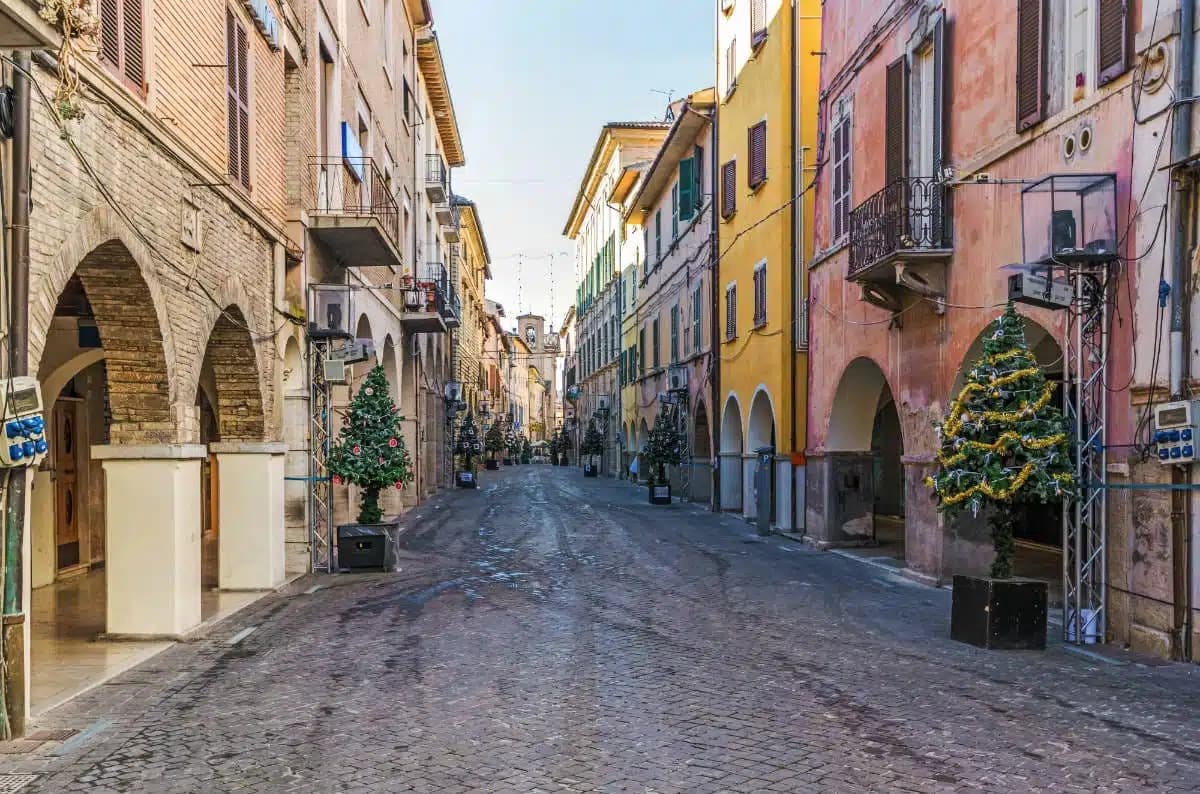
Above it, the medieval and Renaissance town climbs a long single street to the Corte Alta — the ducal palace built by Federico da Montefeltro and finished by the Della Rovere family in the 15th and 16th centuries — with a frescoed Sala dell'Investitura. Lower down, the Casa Cattabrini and the Cattedrale dei Santi Aldebrando e Agostino anchor the centro storico. The setting is the real surprise: just 8 km upstream, the Metauro narrows into the Furlo Gorge, where the Romans cut a 38-metre road tunnel through the cliff in 76 AD under Vespasian — the Galleria del Furlo — that's still walkable. The gorge and the surrounding nature reserve are some of the wildest landscape in the Marche.
The Sunday letter
We haven’t written Fossombrone’s letter yet.
One town every Sunday, with the photo, the food, the festa. Be there when this one comes up. Free, by Peter & Sophia from Pietrasanta.
By subscribing you agree to Substack’s Terms of Use, our Privacy Policy and our Information collection notice.
What to see
Forum Sempronii (area archeologica)
Roman colony founded c. 120 BC along the Via Flaminia. Excavations reveal the forum, basilica, domus mosaics and a continuous stratigraphy from north-Piceno through Roman imperial.
Corte Alta
Renaissance ducal palace begun by Federico da Montefeltro and completed by the Della Rovere dukes, 15th-16th c. Holds a frescoed Sala dell'Investitura and a small civic museum.
Galleria del Furlo (76 AD)
Roman road tunnel 8 km upstream, cut through limestone by Vespasian's engineers in 76 AD. The Via Flaminia still passes through it; the gorge above is a nature reserve.
Cattedrale dei Santi Aldebrando e Agostino
18th-century cathedral on the foundations of an earlier medieval church, anchoring the lower centro storico above the river.
The slow-trip planner
Building a trip? Find where Fossombrone fits in a slow Italy circuit.
Answer five questions. We will shape a geographically coherent slow trip from the 1,000 Italian towns most travelers skip. Yours to save and share.
Living here
- Population 9,042
- Commuter belti
- Pharmacy in town
- High school within a 30-minute drive
- Nearest airport Ancona / Pescara, 1 h 9 min drive
- Regional capital Ancona, 1 h 21 min drive
Tags & datadesignations · numbers · sources
The numbers
- Elevation: 116 m
- Population: 9,042
- Surface area: 106.88 km²
These figures were compiled from public directories — ISTAT, OpenStreetMap, Wikidata — and from the official listings of the guides named on this page. Town details change; verify with official sources before you travel.
Close by
More towns near Fossombrone
Pergola
Province: Pesaro e Urbino
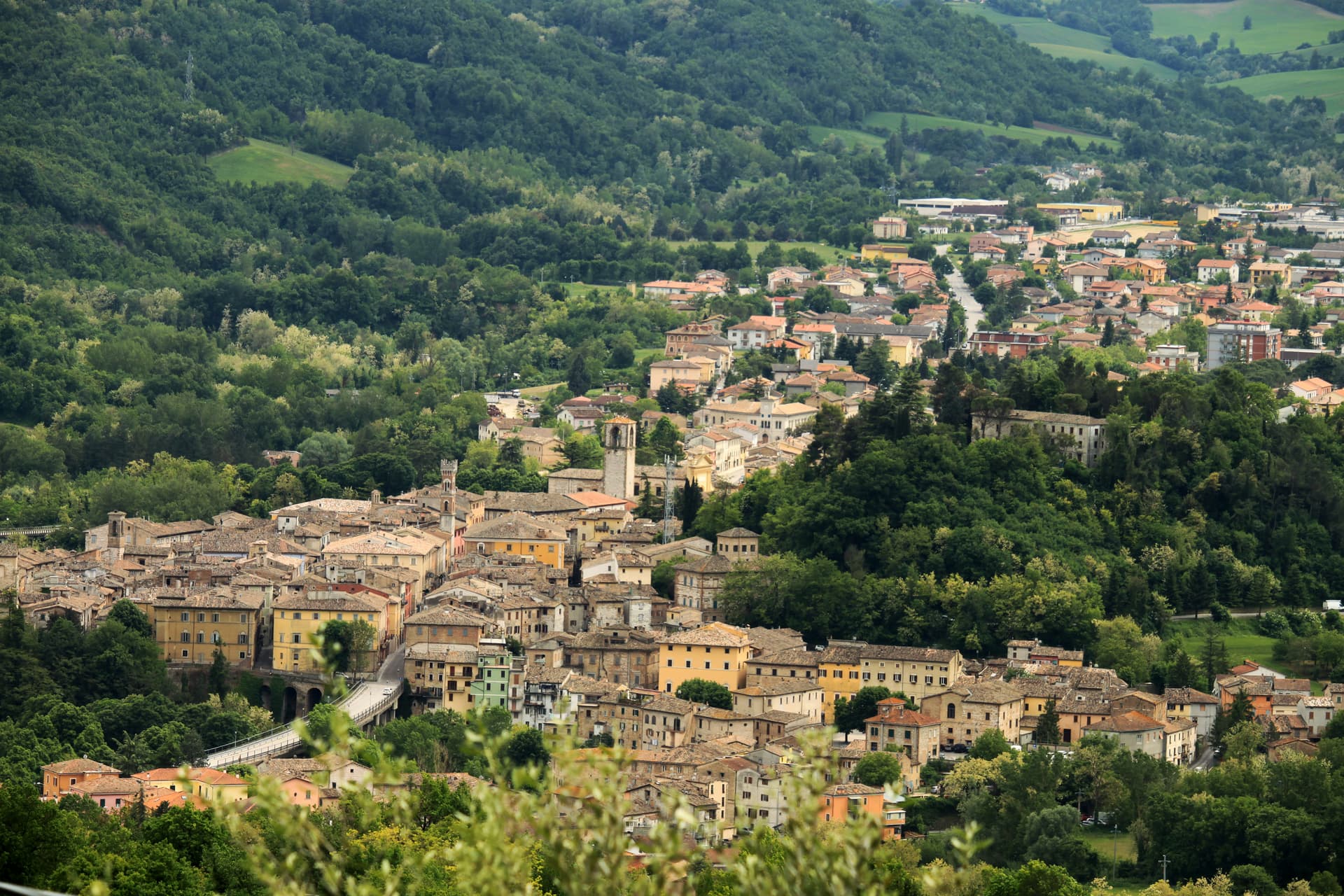
A hill town at 265 meters in the upper Cesano valley, holding the only surviving group of Roman gilded bronze statues from antiquity.
Mondavio
Province: Pesaro e Urbino
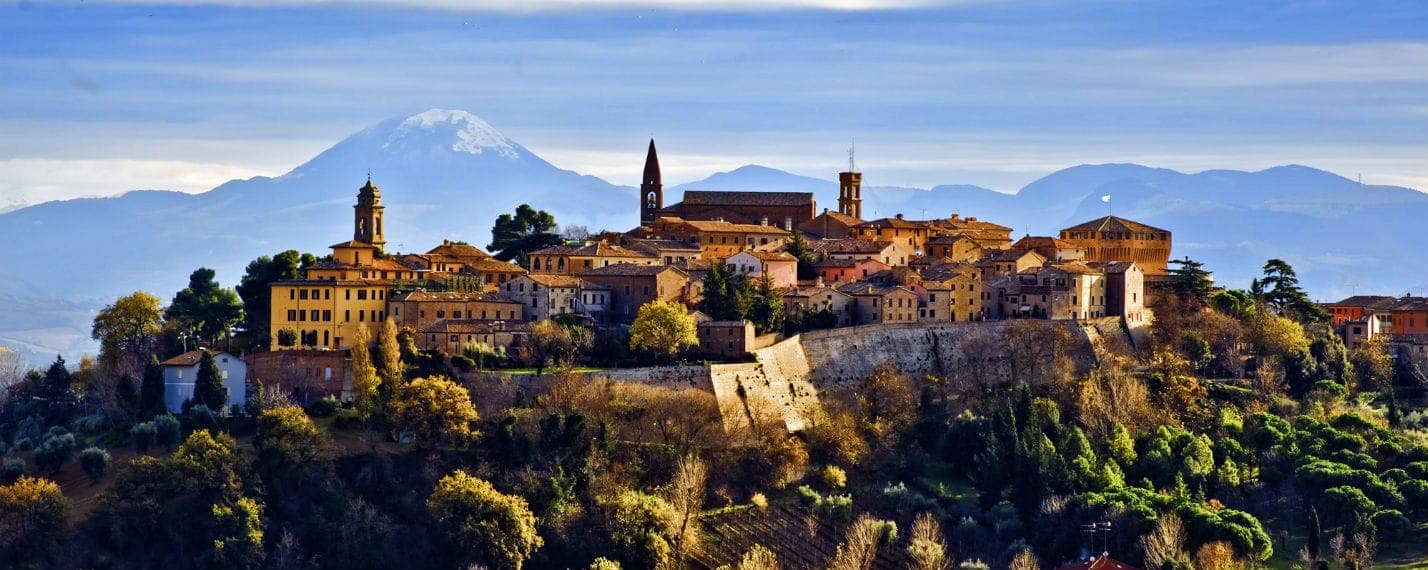
A hill borgo at 280 meters whose Rocca Roveresca, designed by Francesco di Giorgio Martini in the 1480s, never took a cannon shot.
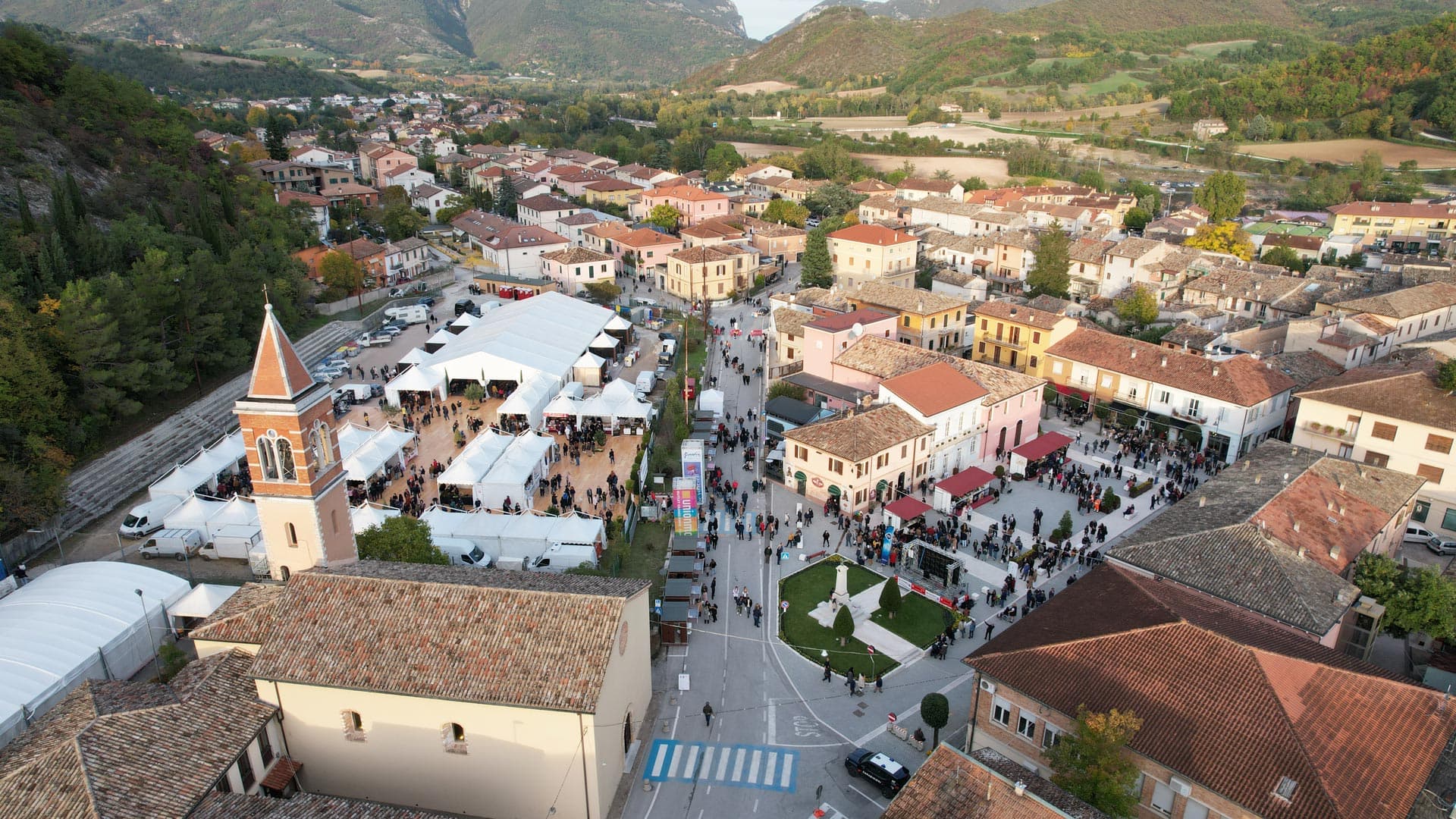
Acqualagna
Province: Pesaro e Urbino
The Italian truffle capital at 204 meters in the Metauro valley, supplying two-thirds of the country's white truffle harvest from the surrounding limestone woods.
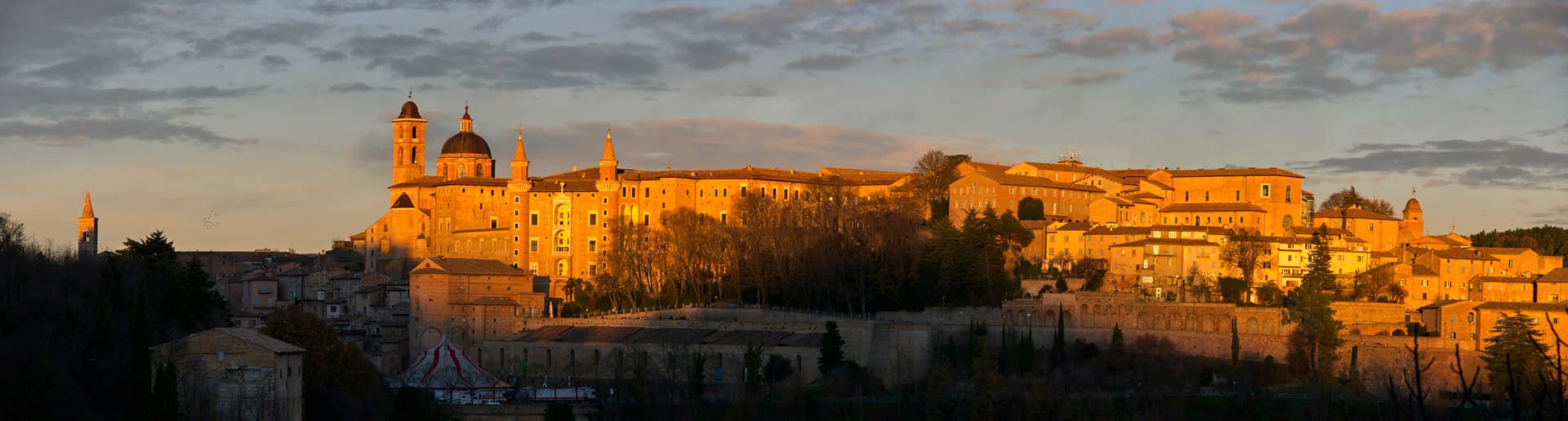
Urbino
Province: Pesaro e Urbino
The Montefeltro capital at 451 meters on twin hills, where Federico II built the Renaissance court that produced Raffaello.
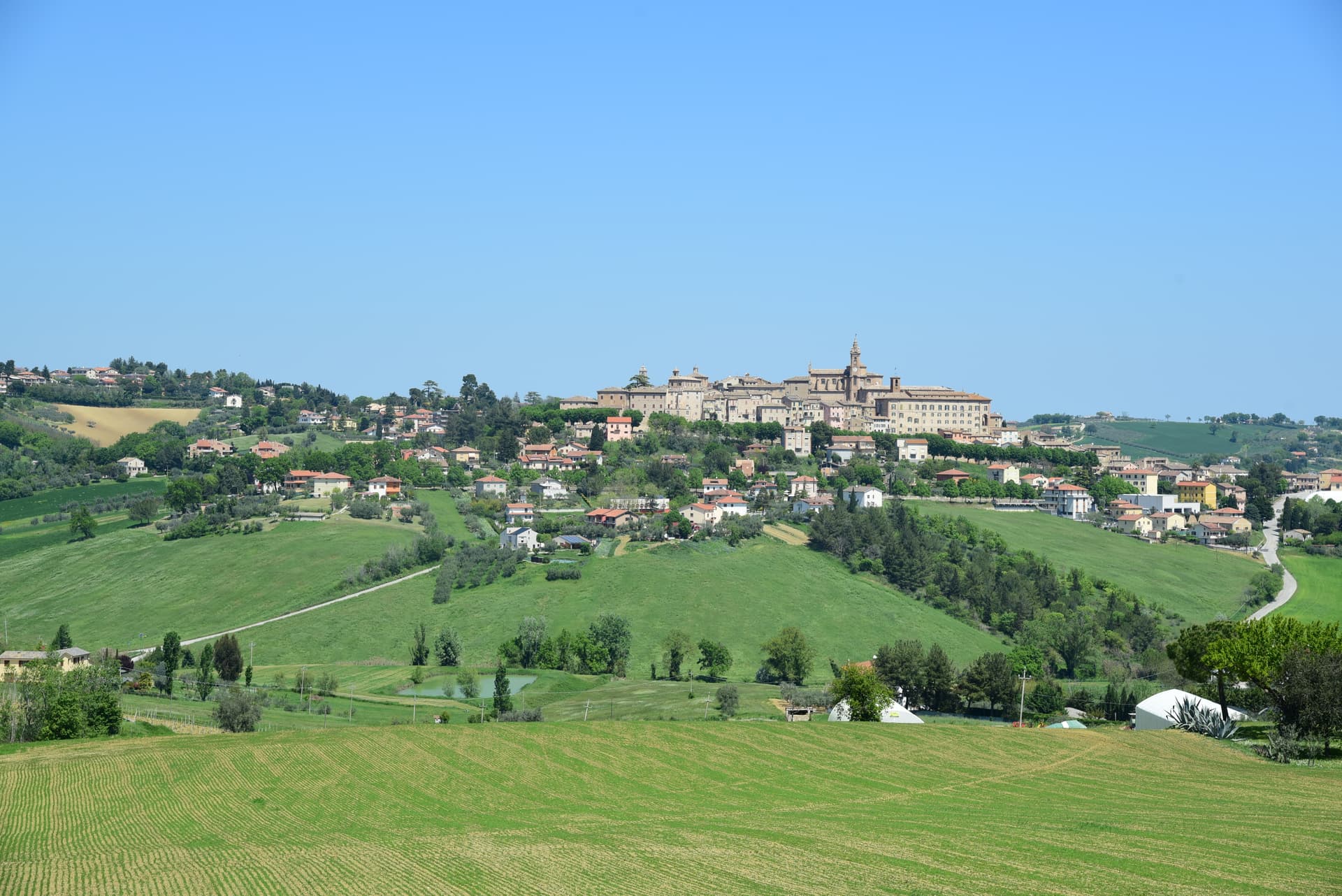
Corinaldo
Province: Ancona
A walled hill borgo at 203 meters with 912 meters of intact medieval walls, the birthplace of Saint Maria Goretti and the Pozzo della Polenta.