
Campania · Napoli
Capri
The 142-meter Tyrrhenian island town where Tiberius governed Rome for a decade from twelve villas above limestone cliffs.
Known for
TIBERIUS
Roman emperor who moved permanently to Capri in AD 27 and ruled the empire from twelve villas across the island until his death in AD 37.
FARAGLIONI
Three limestone stacks off the southern coast, the central Mezzo pierced by a tunnel, the visual emblem of the island.
LA PIAZZETTA
Piazza Umberto I, the small social center of Capri town, where café tables and the clock tower frame island life since 1907.
When to visit
Best · May–Sep
- J
- F
- M
- A
- M
- J
- J
- A
- S
- O
- N
- D
- Best
- Hot or crowded
- Quiet
- Mostly closed
The festa: Costanzo di Capri, 14 May
Why come
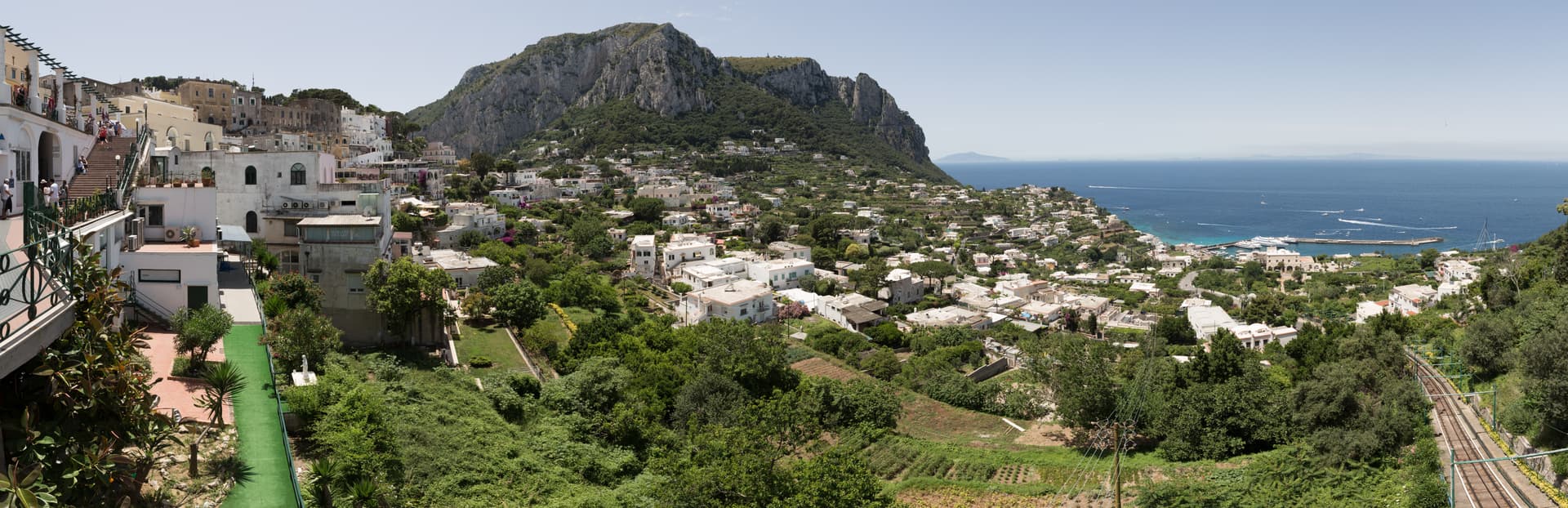
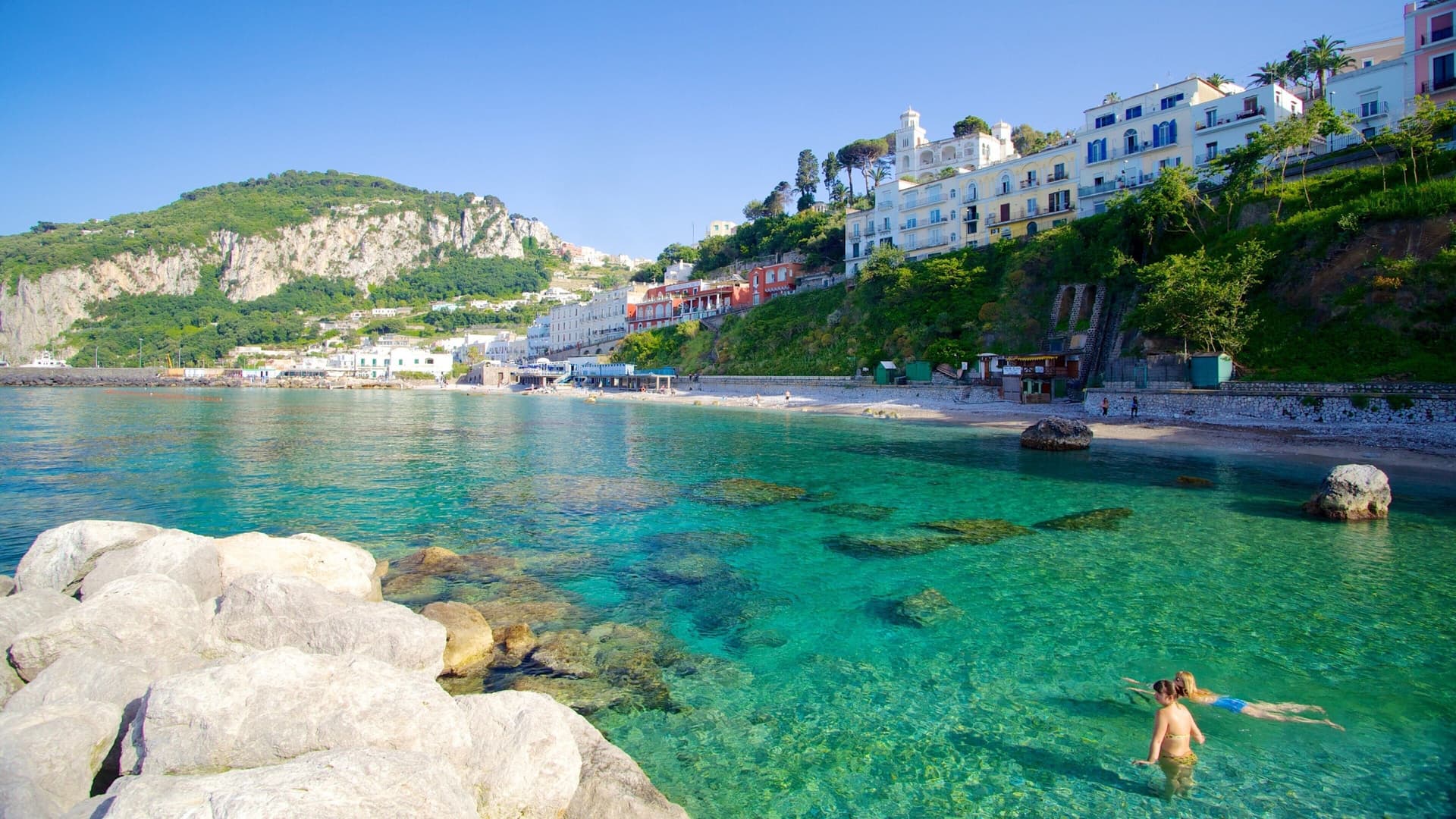
Capri sits above the Marina Grande harbor on the eastern half of the four-square-kilometer island that bears its name, divided between two communes. The town wraps around the Piazzetta, formally Piazza Umberto I, the social center of the island since the funicular replaced the donkey path in 1907. Tiberius ruled the Roman Empire from here for the last ten years of his life, from twelve villas that Tacitus counted; the ruins of Villa Jovis still stand on the northeastern cape.
The Faraglioni, three limestone stacks off the southern coast, rise to 109 meters; the middle one has an arched tunnel through it. Capri is overwhelmed by day-trippers from June through September. After the last ferry leaves at six in the evening the island returns to its six thousand residents, and the Belvedere of Tragara becomes quiet again.
The Sunday letter
We haven’t written Capri’s letter yet.
One town every Sunday, with the photo, the food, the festa. Be there when this one comes up. Free, by Peter & Sophia from Pietrasanta.
By subscribing you agree to Substack’s Terms of Use, our Privacy Policy and our Information collection notice.
What to see
Villa Jovis
Ruins of Tiberius's imperial villa on Monte Tiberio at 334 meters, the largest of his twelve Capri villas, abandoned after AD 37.
Piazzetta (Piazza Umberto I)
Small square at the heart of Capri town, social hub of the island since 1907 when the funicular replaced the donkey path.
Belvedere di Tragara
Panoramic terrace at the end of Via Tragara, looking down on the three Faraglioni stacks rising from the southern sea.
Faraglioni
Three limestone sea stacks, Stella, Mezzo and Scopolo, the central one pierced by an arched tunnel rowable by small boat.
Giardini di Augusto
Terraced gardens above the Marina Piccola, with the best lookout over the Faraglioni and the switchback Via Krupp below.
Grotta Azzurra
Sea cave on the northwestern coast where light entering underwater turns the interior an electric blue, reached by rowboat.
The slow-trip planner
Building a trip? Find where Capri fits in a slow Italy circuit.
Answer five questions. We will shape a geographically coherent slow trip from the 1,000 Italian towns most travelers skip. Yours to save and share.
We recommend
Where to eat and stay
Not our picks, but places the guides put their name to — a Michelin star, a Gambero Rosso fork, a Slow Food snail, a Michelin Key for the hotels. Worth a table, a counter, or a night when you pass through.
Da ToninoRistorante
Da Tonino has a Gambero Rosso listing and a spot in the Michelin Guide.
Gennaro AmitranoRistorante
Two Gambero Rosso forks (82/100) for Gennaro Amitrano, and a spot in the Michelin Guide.
Le MonzùRistorante
Le Monzù carries one Michelin star, plus a Gambero Rosso listing.
Campanella by Quattro Passi del Pazziella Garden & SuitesRistorante
Two Gambero Rosso forks (81/100), at Campanella by Quattro Passi del Pazziella Garden & Suites.
Gennaro's dell'Hotel La PalmaRistorante
Two Gambero Rosso forks (83/100), at Gennaro's dell'Hotel La Palma.
Il RiccioRistorante
A Gambero Rosso listing, at Il Riccio.
L' Olivo del Jumeirah Capri PalaceRistorante
L' Olivo del Jumeirah Capri Palace has two Gambero Rosso forks (87/100) to its name.
La Colombaia del Grand Hotel QuisisanaRistorante
La Colombaia del Grand Hotel Quisisana holds two Gambero Rosso forks (83/100).
Le GrottelleTrattoria
Le Grottelle holds a Gambero Rosso listing.
Terrazza TiberioRistorante
Terrazza Tiberio holds a spot in the Michelin Guide.
Capri Tiberio PalaceHotel
Capri Tiberio Palace has one Michelin Key, a La Liste score of 92.5 and a Leading Hotels of the World listing.
J.K. Place CapriHotel
J.K. Place Capri has three Michelin Keys, a La Liste score of 99 and a Leading Hotels of the World listing.
Hotel Punta TragaraHotel
Hotel Punta Tragara has a La Liste score of 92 and a place in the Michelin hotel guide.
Capri Palace JumeirahHotel
Capri Palace Jumeirah carries two Michelin Keys.
Grand Hotel QuisisanaHotel
Grand Hotel Quisisana carries a Leading Hotels of the World listing.
La Palma Capri, an Oetker Collection HotelHotel
One Michelin Key, at La Palma Capri, an Oetker Collection Hotel.
Pazziella, a Luxury Collection Hotel, CapriHotel
Pazziella, a Luxury Collection Hotel, Capri has a place in the Michelin hotel guide to its name.
Villa Marina CapriHotel
Villa Marina Capri holds a place in the Michelin hotel guide.
Living here
- Population 6,804
- Off the beaten pathi
- Pharmacy in town
- High school within a 30-minute drive
- Regional capital Napoli, 1 h 19 min drive
Tags & datadesignations · numbers · sources
The numbers
- Elevation: 142 m
- Population: 6,804
- Surface area: 4.06 km²
On the map
These figures were compiled from public directories — ISTAT, OpenStreetMap, Wikidata — and from the official listings of the guides named on this page. Town details change; verify with official sources before you travel.
Close by
More towns near Capri
Anacapri
Province: Napoli
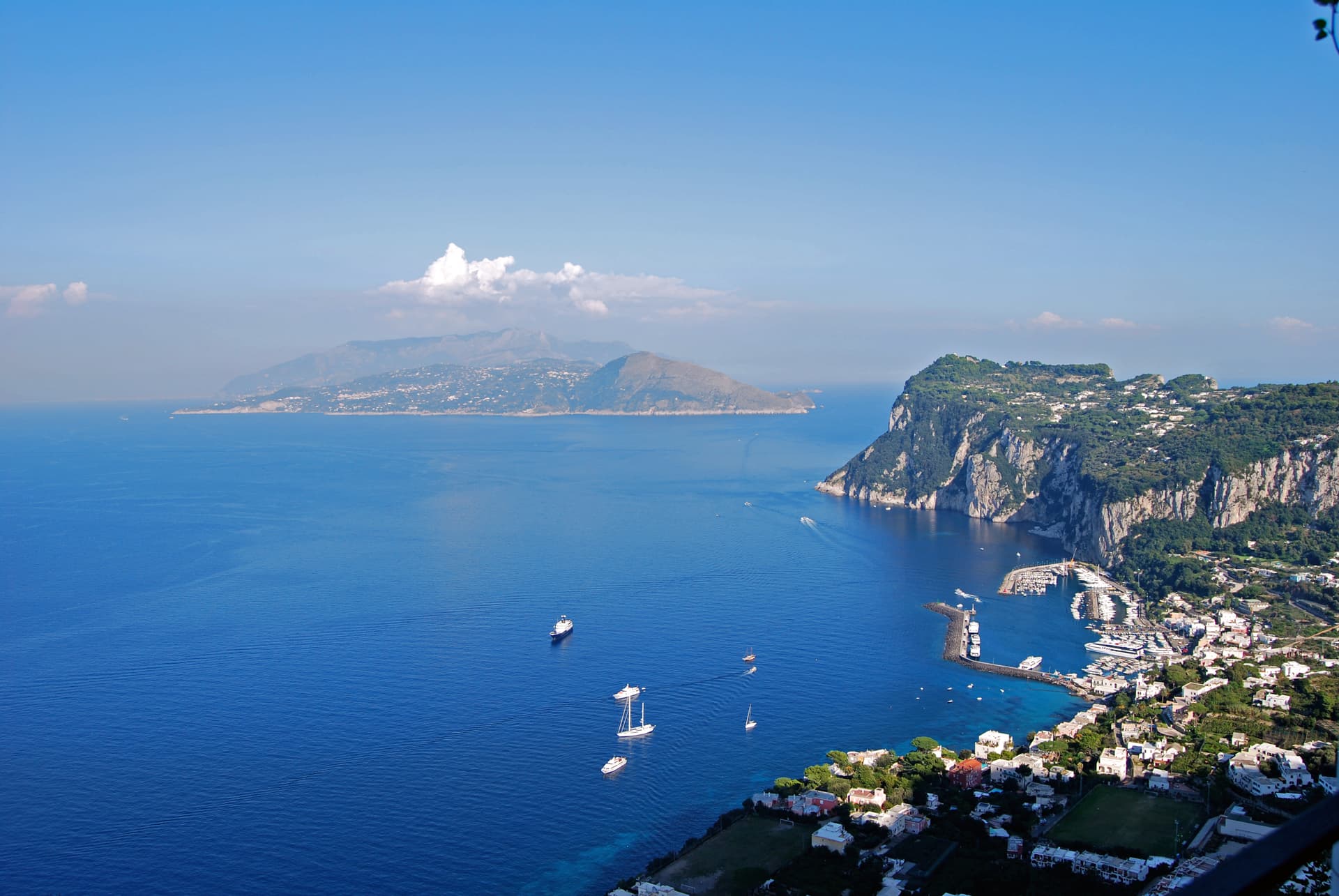
The upper half of Capri, 150 meters above its famous twin, where Axel Munthe built Villa San Michele on a Tiberian ruin.
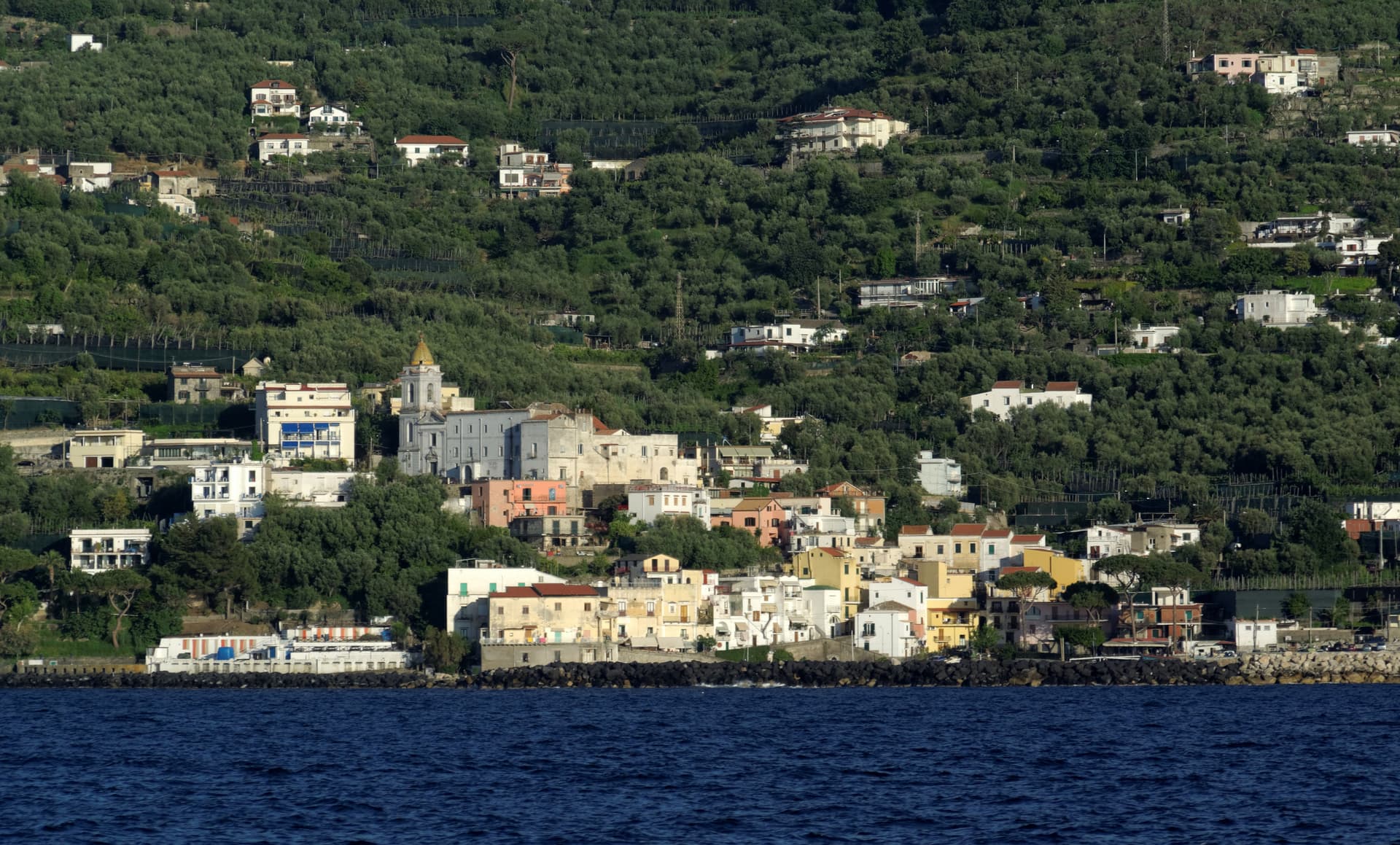
Massa Lubrense
Province: Napoli
The Sorrentine Peninsula's largest commune by area, stretching from Sorrento across Punta Campanella to the Gulf of Salerno, Capri three miles offshore.
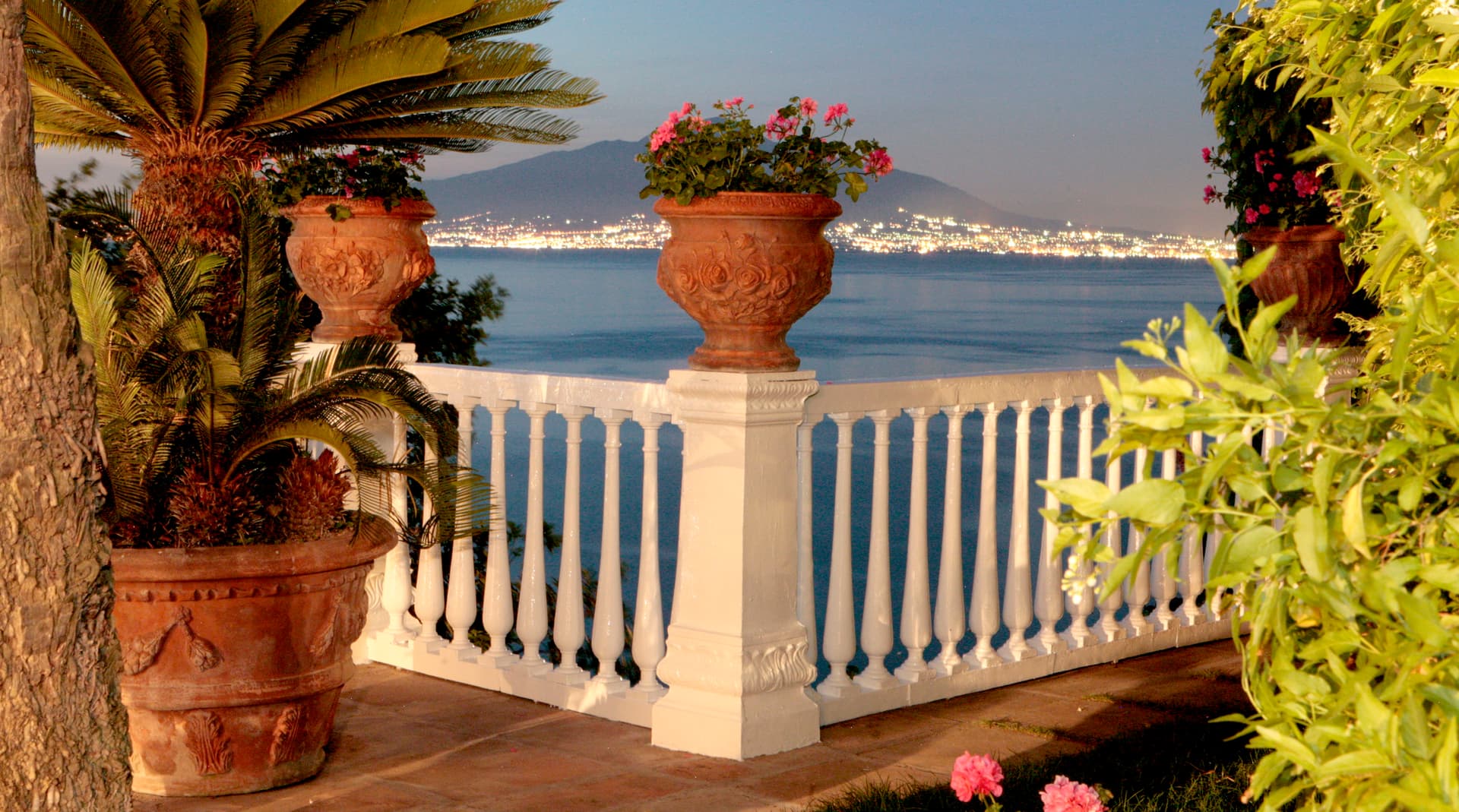
Sorrento
Province: Napoli
The Roman Surrentum on a tuff cliff above the Bay of Napoli, birthplace of Torquato Tasso, sacked by the Turks in 1558.
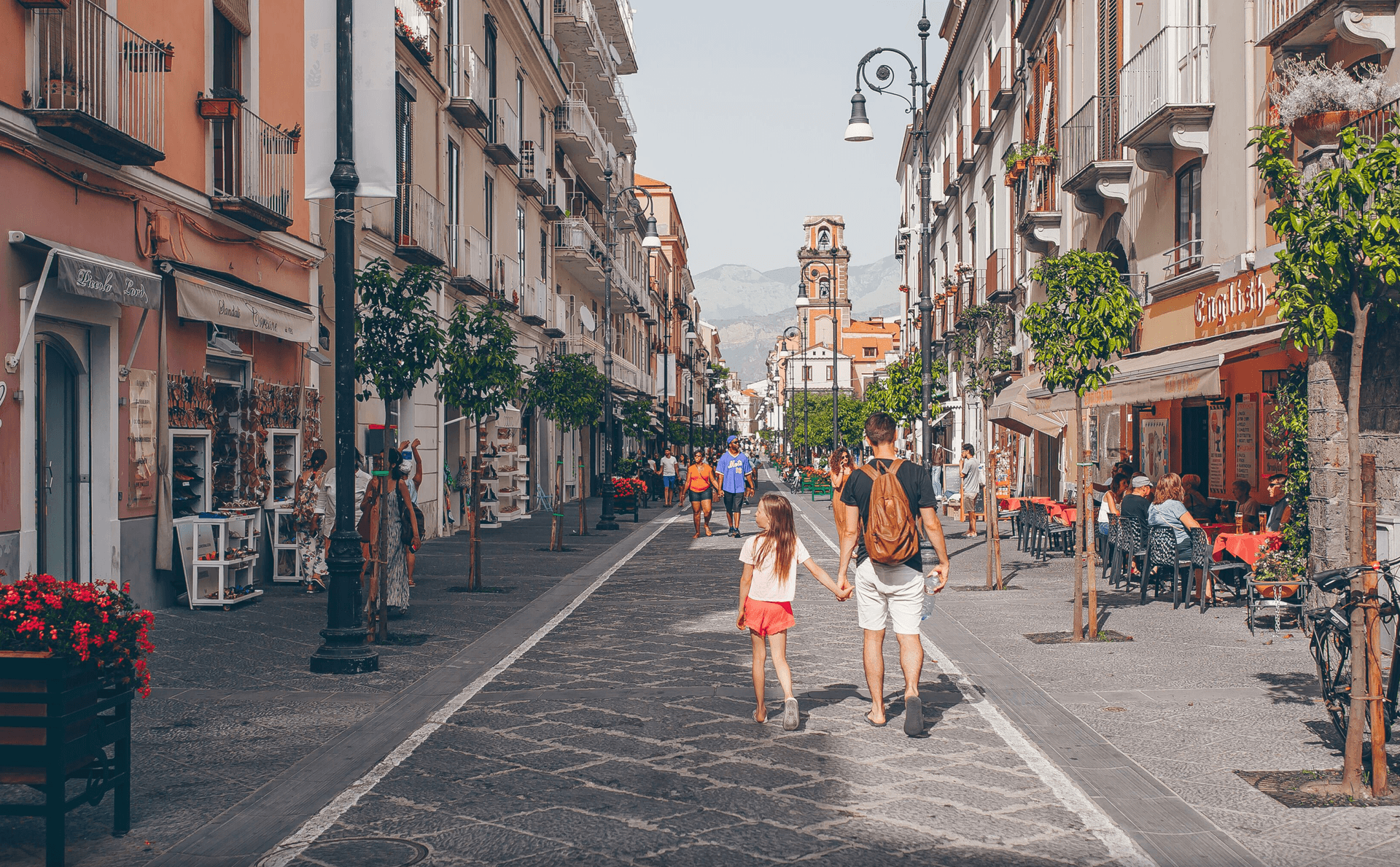
Piano di Sorrento
Province: Napoli
The quieter Sorrentine plain four kilometers from Sorrento, autonomous since 1808, with prehistoric Gaudo pottery and a black-sand marina at the foot of the cliff.
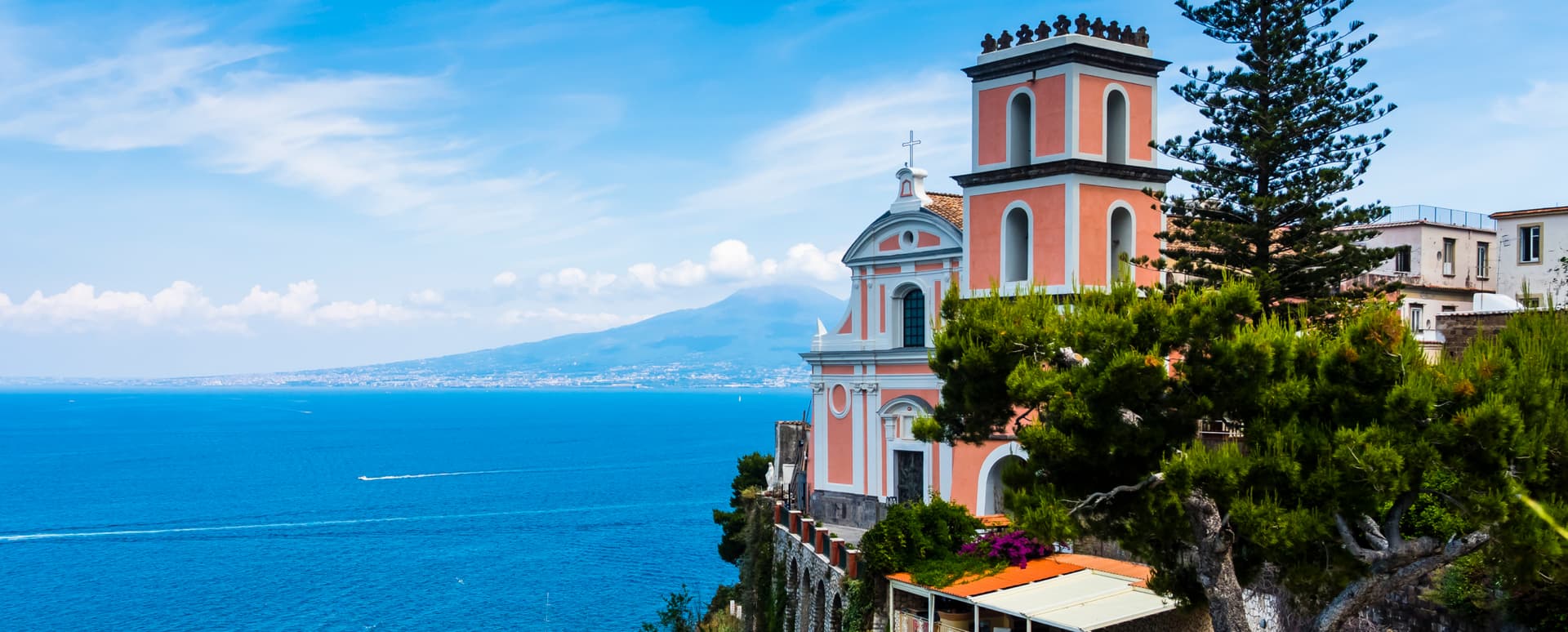
Vico Equense
Province: Napoli
The northern gate of the Sorrento peninsula at 90 meters, the Roman Aequana, where Luigi Dell'Amura invented pizza al metro in 1930.