
Umbria · Terni
Narni
Italy's geographical centre and the etymological 'Narnia' — a 17,900-resident hilltop town on a travertine outcrop above the Nera valley, with the Rocca Albornoz papal fortress, a 30m Roman arch of the Ponte d'Augusto, a hidden underground complex containing a 13th-c Inquisition cell with original prisoner graffiti, and the documented Latin name (Narnia) that C.S. Lewis lifted for his fictional kingdom.
Known for
GEOGRAPHICAL CENTRE OF ITALY
Sasso di Narni — documented by the Istituto Geografico Militare in 1900. The marker is on the SS3 below the centro.
THE ETYMOLOGICAL 'NARNIA'
Roman city Narnia. C.S. Lewis took the name from his boyhood Atlas of the Roman Empire and used it for the Chronicles. Confirmed in his 1963 letters.
NARNI SOTTERRANEA
13th-c Inquisition complex rediscovered 1979 — original prisoner graffiti including a decipherable Freemason code. Guided tours only.
PONTE D'AUGUSTO
27 BC Roman bridge, surviving 30m arch. Among the largest Roman bridge arches anywhere. Painted by Corot + Turner.
When to visit
Best · Apr–Jun, Sep–Oct
- J
- F
- M
- A
- M
- J
- J
- A
- S
- O
- N
- D
- Best
- Hot or crowded
- Quiet
- Mostly closed
The festa: Giovenale di Narni, 3 May
Why come
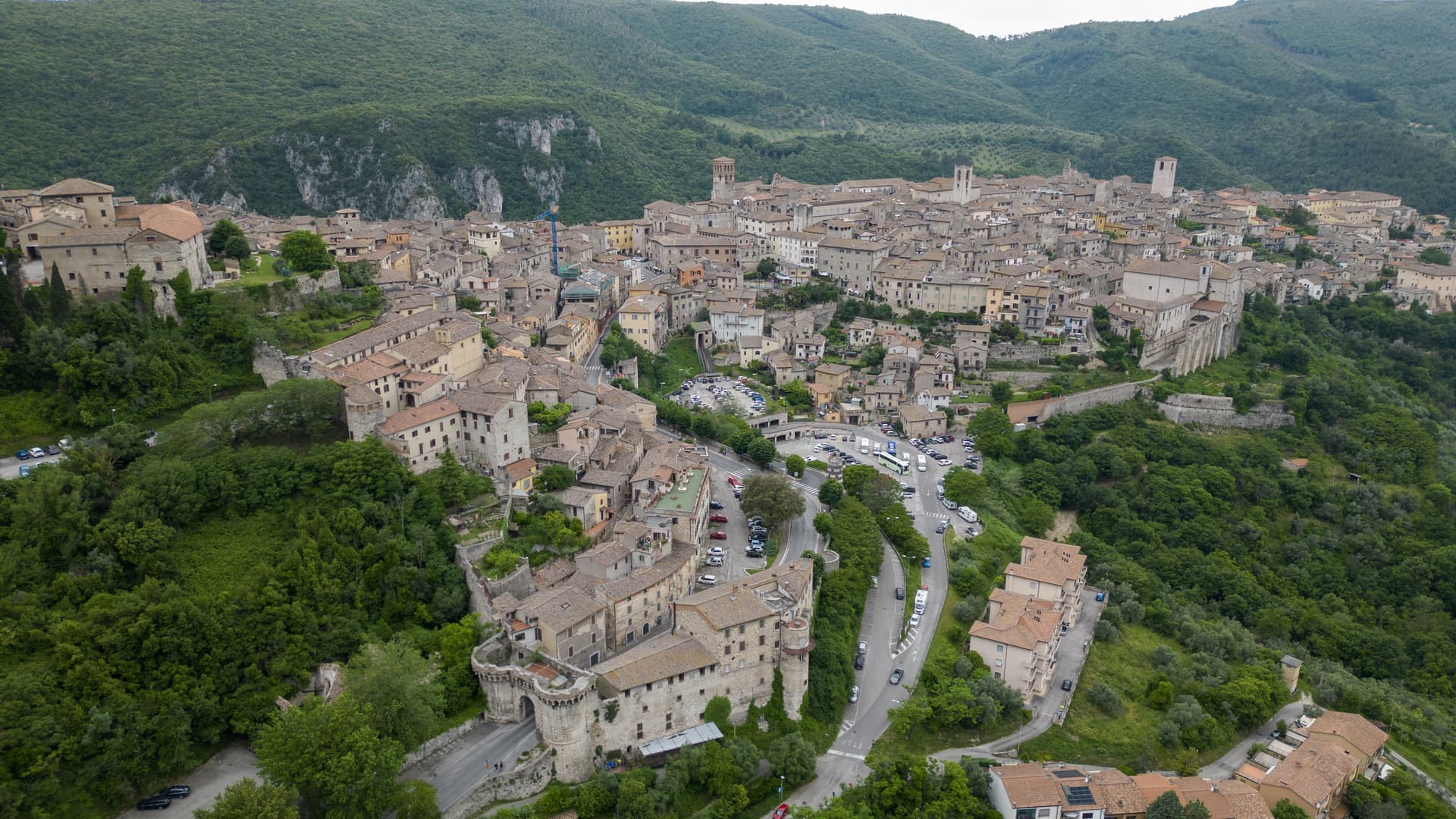
Narni is here for three things at once. First, geography: the Sasso di Narni at the foot of the old town is the documented geographical centre of Italy (calculated by the Istituto Geografico Militare in 1900 — the marker is on the side of the SS3 below the centro). Second, etymology: the Roman city was called Narnia (after the Nar river, modern Nera), and when C.
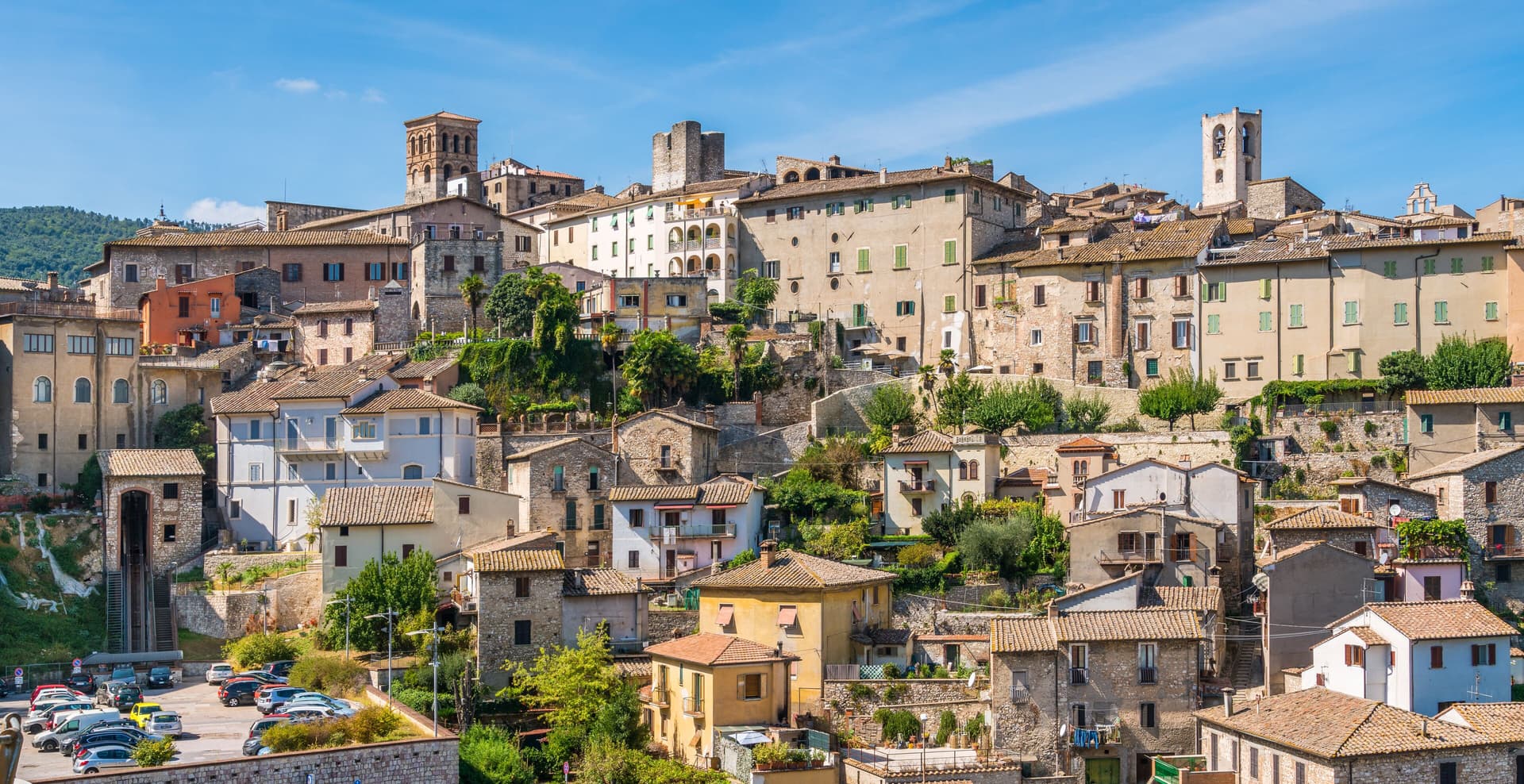
S. Lewis read about it in his Atlas of the Roman Empire as a boy he liked the name and saved it for The Chronicles of Narnia thirty years later — confirmed in his 1963 letters; the comune has leveraged this with the annual 'Le notti di Narnia' summer festival and a small Narnia-themed museum, though Lewis never visited and the resemblance ends with the name. Third, the actual historic city: a medieval-Renaissance hilltop town on a travertine outcrop 240m above the Nera valley, with the Rocca Albornoz (Cardinal Albornoz's 1370 papal fortress on the high point, square plan with 4 corner towers, panoramic view across the Nera + Tiber confluence), the Piazza dei Priori (medieval set-piece with the 13th-c Palazzo dei Priori), the Cattedrale di San Giovenale (12th-c Romanesque with a 14th-c Gothic façade), and below the centro the spectacular Ponte d'Augusto (the surviving 30m arch of a 27 BC Roman bridge that originally crossed the Nera height — one of the largest Roman bridge arches anywhere in the empire, painted by Corot in 1826 + Turner in 1819).
And underneath all of that, accessed via the deceptively normal-looking Chiesa di San Domenico, is the Narni Sotterranea — a hidden 13th-c Inquisition complex (church + cells + torture chamber) rediscovered by accident in 1979 by local cavers, with original prisoner graffiti scratched into the cell walls including a complete personal-symbology code by a Freemason inmate that took decades to decipher. Visits since 2000 are by guided tour only. The Corsa all'Anello (Race of the Ring, second Sunday of May) is a medieval pageant + horse-jousting competition between the city's three terzieri (Mezule, Fraporta, Santa Maria) — running since 1371 in its current form. The food is Umbrian: strangozzi with truffle (Narni is on the edge of the Valnerina truffle zone), porchetta, pecorino, the local Ciliegiolo + Sangiovese reds.
The Sunday letter
We haven’t written Narni’s letter yet.
One town every Sunday, with the photo, the food, the festa. Be there when this one comes up. Free, by Peter & Sophia from Pietrasanta.
By subscribing you agree to Substack’s Terms of Use, our Privacy Policy and our Information collection notice.
What to see
Narni Sotterranea
Hidden 13th-c Inquisition complex (church + cells + torture chamber) under the Chiesa di San Domenico, rediscovered 1979. Original prisoner graffiti including a complete decipherable Freemason code. Guided tours only.
Rocca Albornoz
Cardinal Albornoz's 1370 papal fortress on the high point — square plan, 4 corner towers, panoramic view across the Nera + Tiber confluence valley.
Ponte d'Augusto
Surviving 30m arch of a 27 BC Roman bridge that originally crossed the Nera at 60m height. One of the largest Roman bridge arches anywhere in the empire. Painted by Corot + Turner.
Sasso di Narni (geographical centre of Italy)
Documented by the Istituto Geografico Militare in 1900 — the marker is on the side of the SS3 below the centro storico.
Corsa all'Anello (Race of the Ring)
Medieval pageant + horse-jousting between the 3 city terzieri, running since 1371 in its current form. Second Sunday of May.
The slow-trip planner
Building a trip? Find where Narni fits in a slow Italy circuit.
Answer five questions. We will shape a geographically coherent slow trip from the 1,000 Italian towns most travelers skip. Yours to save and share.
Living here
- Population 17,914
- Commuter belti
- Pharmacy in town
- High school within a 30-minute drive
- Train station in the comune
- Nearest airport Rome, 1 h 45 min drive
- Regional capital Perugia, 1 h 8 min drive
Tags & datadesignations · numbers · sources
The numbers
- Elevation: 240 m
- Population: 17,914
- Surface area: 197.99 km²
These figures were compiled from public directories — ISTAT, OpenStreetMap, Wikidata — and from the official listings of the guides named on this page. Town details change; verify with official sources before you travel.
Close by
More towns near Narni
San Gemini
Province: Terni
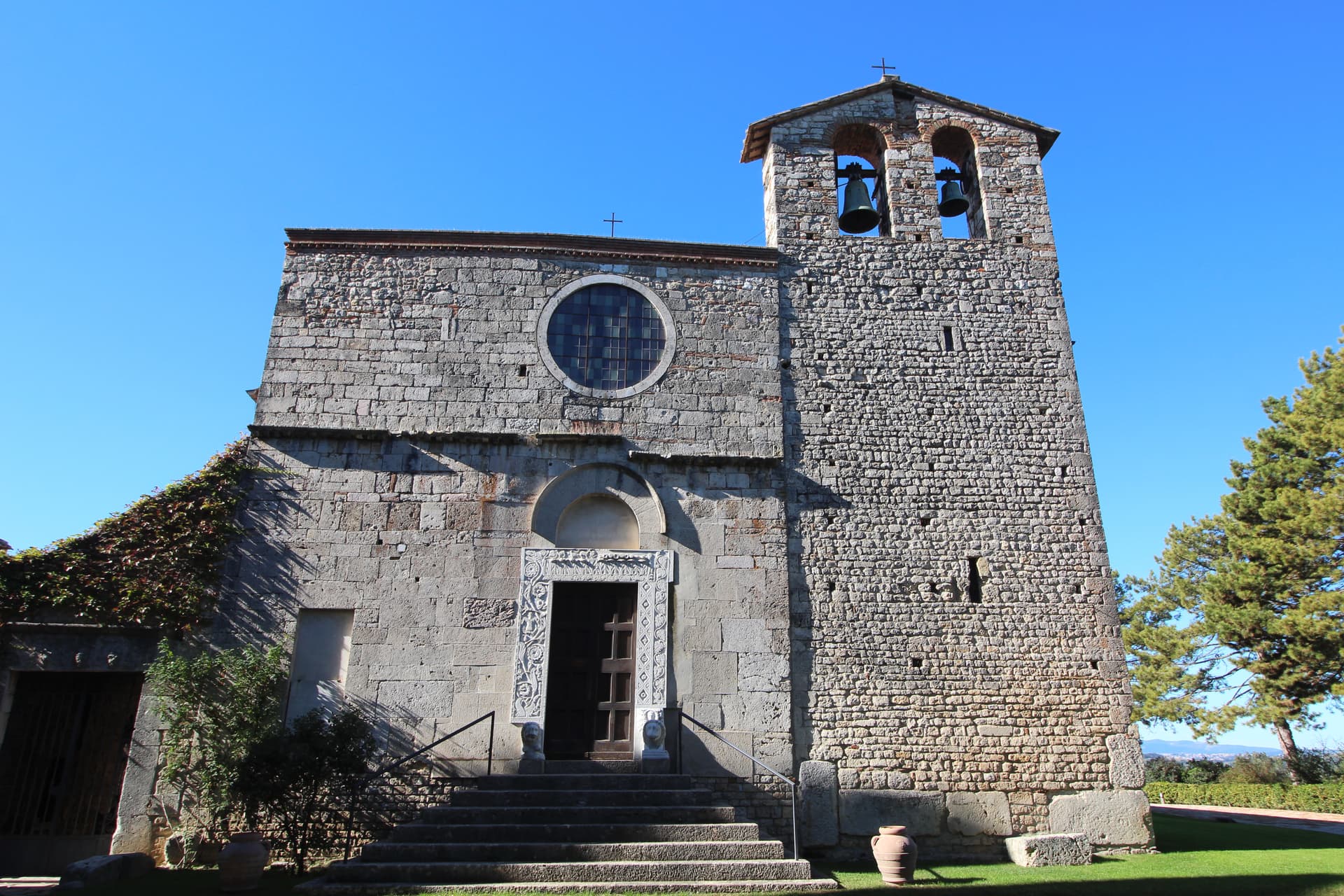
A medieval borgo at 337 meters above the Via Flaminia, four kilometers below the ruins of Roman Carsulae.
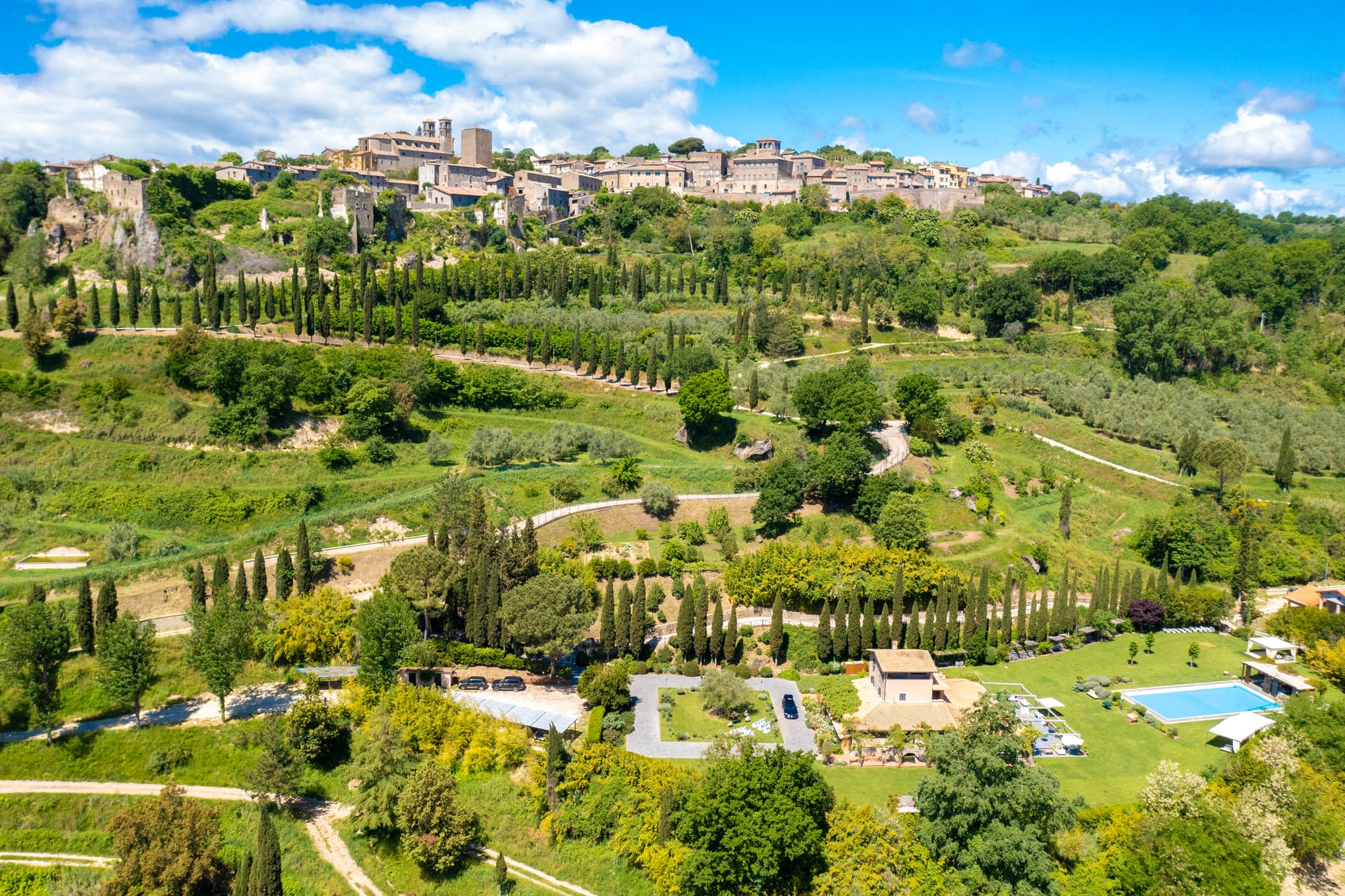
Bassano in Teverina
Province: Viterbo
A tufa-spur borgo of 1,260 above the Tiber valley between Lazio and Umbria, with a clock tower that hides an eleventh-century animated bell tower.
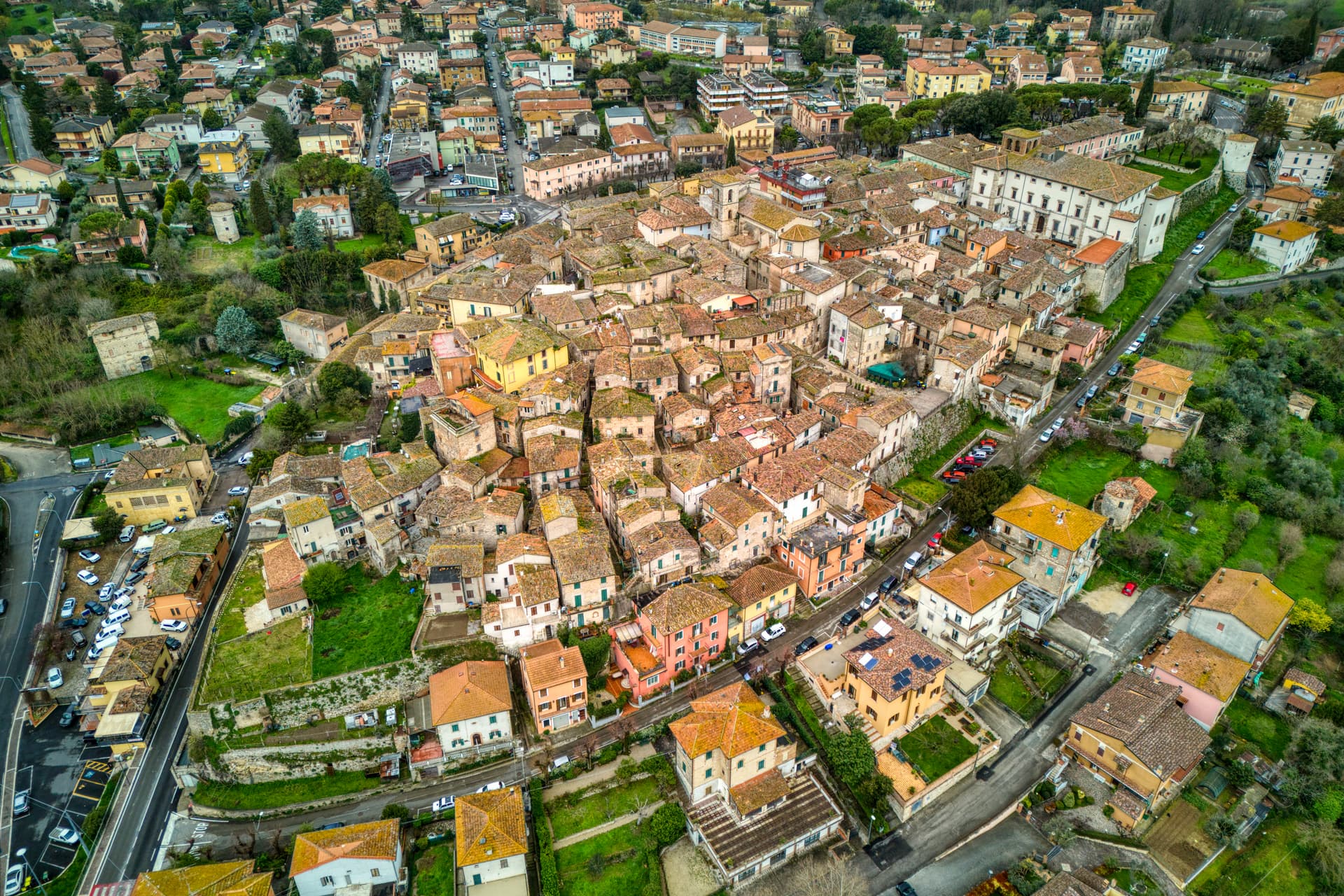
Acquasparta
Province: Terni
A hill town at 350 meters above the Naia valley, where Federico Cesi convened the first Accademia dei Lincei in his Palazzo Cesi in 1603.
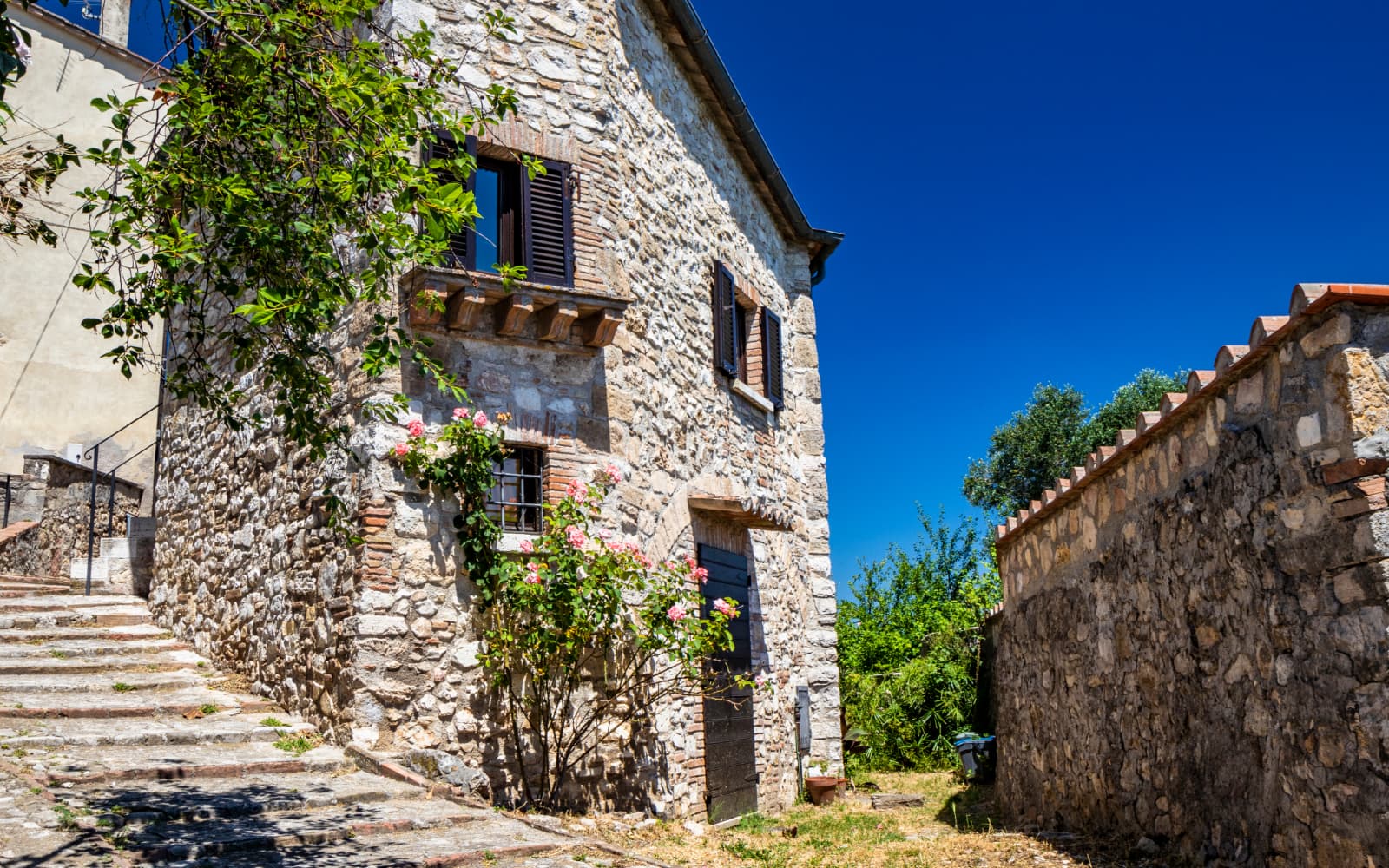
Amelia
Province: Terni
A pre-Roman hilltown at 406 meters ringed by polygonal walls of the fourth century BC, with ten barrel-vaulted Roman cisterns under the main square.
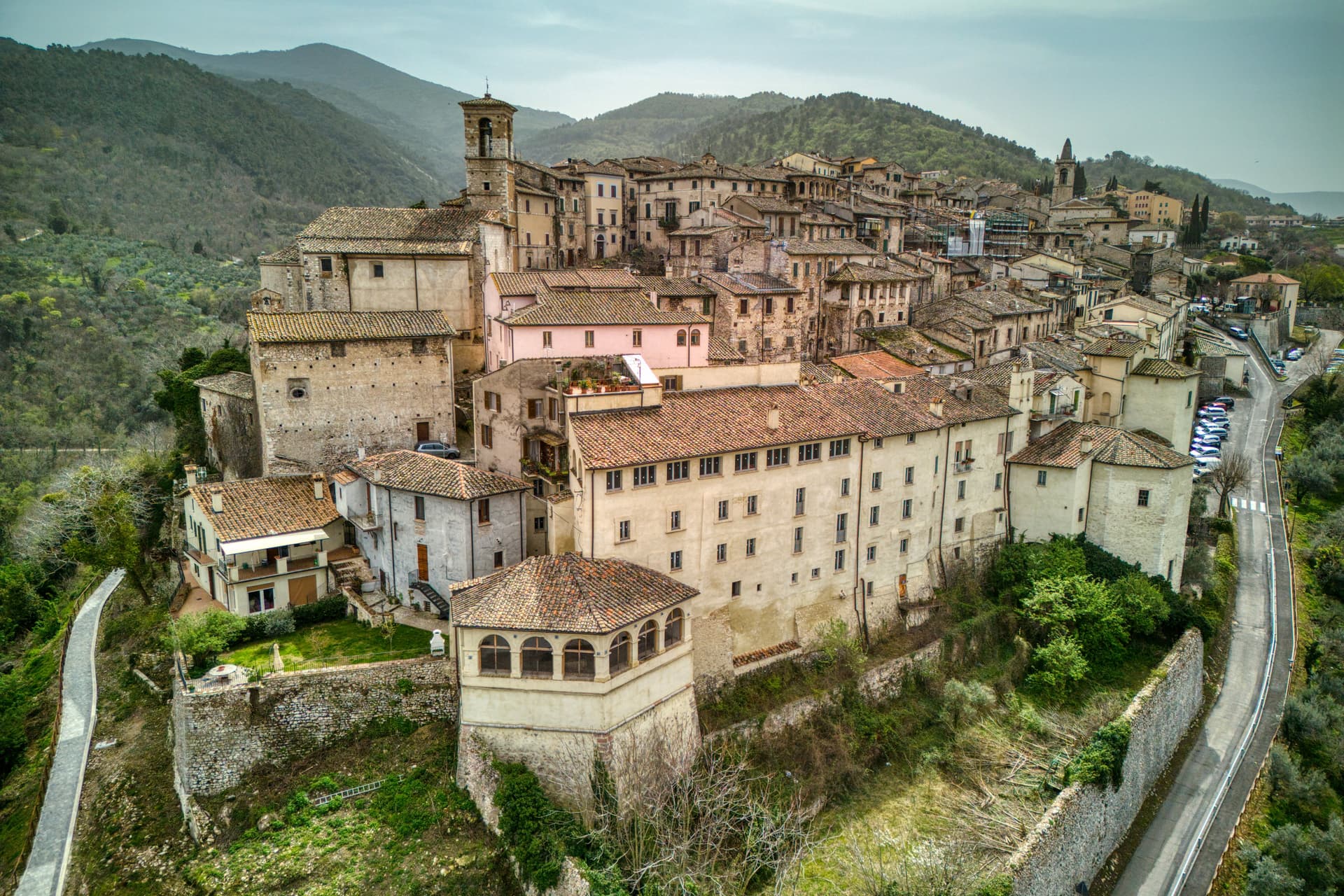
Stroncone
Province: Terni
A walled medieval borgo at 451 meters eight kilometers south of Terni, with a Franciscan convent traditionally founded by Francis himself in 1213.