

Tuscany · Pisa
Pontedera
The Valdera's working capital on the Pisa–Florence line, where Piaggio turned a bombed aircraft plant into the birthplace of the Vespa in 1946.
Known for
THE VESPA
The Museo Piaggio holds the world’s largest Vespa collection, in the old tooling workshop where Corradino D’Ascanio’s first 1946 machine was built.
THE PIAGGIO WORKS
A factory town since the 1920s aircraft plant; bombed flat in 1943–44 and rebuilt into the engine of the postwar Italian scooter.
THE JUNCTION
A frequent-train stop halfway on the Pisa–Florence line, which is why the museum is an easy half-day from either city.
When to visit
Best · Apr–Oct
- J
- F
- M
- A
- M
- J
- J
- A
- S
- O
- N
- D
- Best
- Hot or crowded
- Quiet
- Mostly closed
Why come
Pontedera is a working town on the flat land where the Era meets the Arno, halfway along the railway between Pisa and Florence. Piaggio moved its aircraft works here in the 1920s; the Allies bombed the plant flat in 1943 and 1944, and out of the rebuilt halls in 1946 came Corradino D'Ascanio's first Vespa. The town has run on that factory ever since.
The Museo Piaggio, set in the old tooling workshop by the station, holds the world's largest Vespa collection, from the first 98cc series to the machines that crossed continents. Around it is an ordinary Tuscan market city: a long pedestrian corso, a street market that serves the whole Valdera, and frequent trains in both directions. Nobody stays the night for postcards. You come for the museum, the shopping streets, and the feel of the Tuscany that works for a living.


What to see
Museo Piaggio
The world's largest Vespa collection, kept in the former tooling workshop on Viale Rinaldo Piaggio where Corradino D'Ascanio's 1946 prototype was built, alongside Gileras and the Ape in every variant.
Teatro Era
The theatre that made a factory town matter to actors worldwide: Jerzy Grotowski moved his Workcenter here in 1986 and ran it until his death in 1999, and the research company still works inside the building.
PALP Palazzo Pretorio
The old praetorian palace at the head of the corso, reworked as the town's exhibition hall, with rotating art shows carrying names far bigger than the town.
Villaggio Piaggio
The workers' village the company built beside the plant in the late 1930s, low rows of houses with gardens that still read as a company town in brick.
The slow-trip planner
Building a trip? Find where Pontedera fits in a slow Italy circuit.
Answer five questions. We will shape a geographically coherent slow trip from the 1,000 Italian towns most travelers skip. Yours to save and share.
The Sunday letter
Pontedera got its letter. One town every Sunday, free — the photo, the food, the festa.
By subscribing you agree to Substack’s Terms of Use, our Privacy Policy and our Information collection notice.
Living here
- Population 29,393
- A local hubi
- Pharmacy in town
- High school within a 30-minute drive
- Train station in the comune
- Nearest airport Florence / Pisa, 39 min drive
- Regional capital Firenze, 1 h 2 min drive
Tags & datadesignations · numbers · sources
The numbers
- Elevation: 14 m
- Population: 29,393
- Surface area: 46.02 km²
These figures were compiled from public directories — ISTAT, OpenStreetMap, Wikidata — and from the official listings of the guides named on this page. Town details change; verify with official sources before you travel.
Close by
More towns near Pontedera
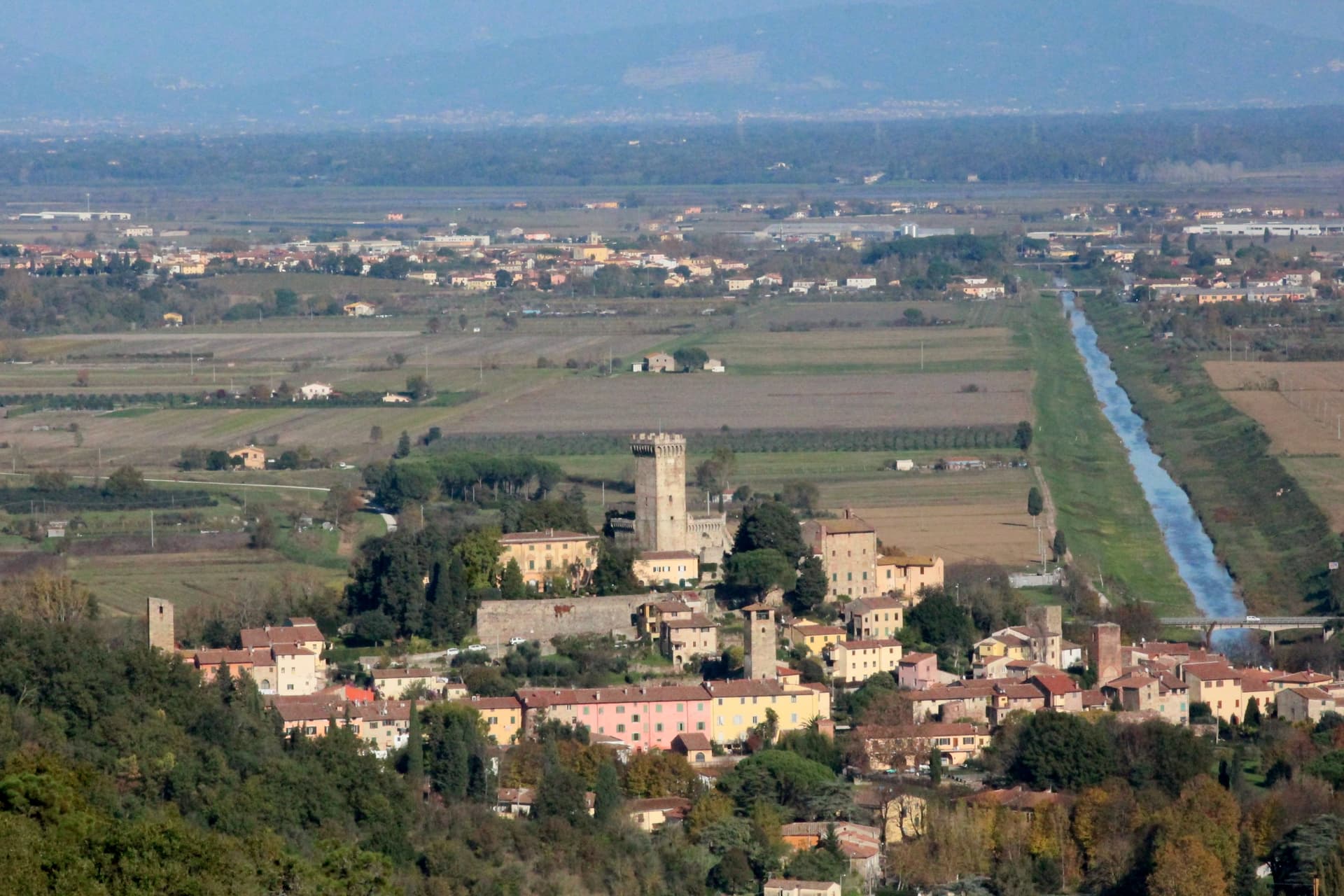
Vicopisano
Province: Pisa
A medieval river port on the southern slope of Monte Pisano, rebuilt by Brunelleschi in 1434 after Florence took the town from Pisa.
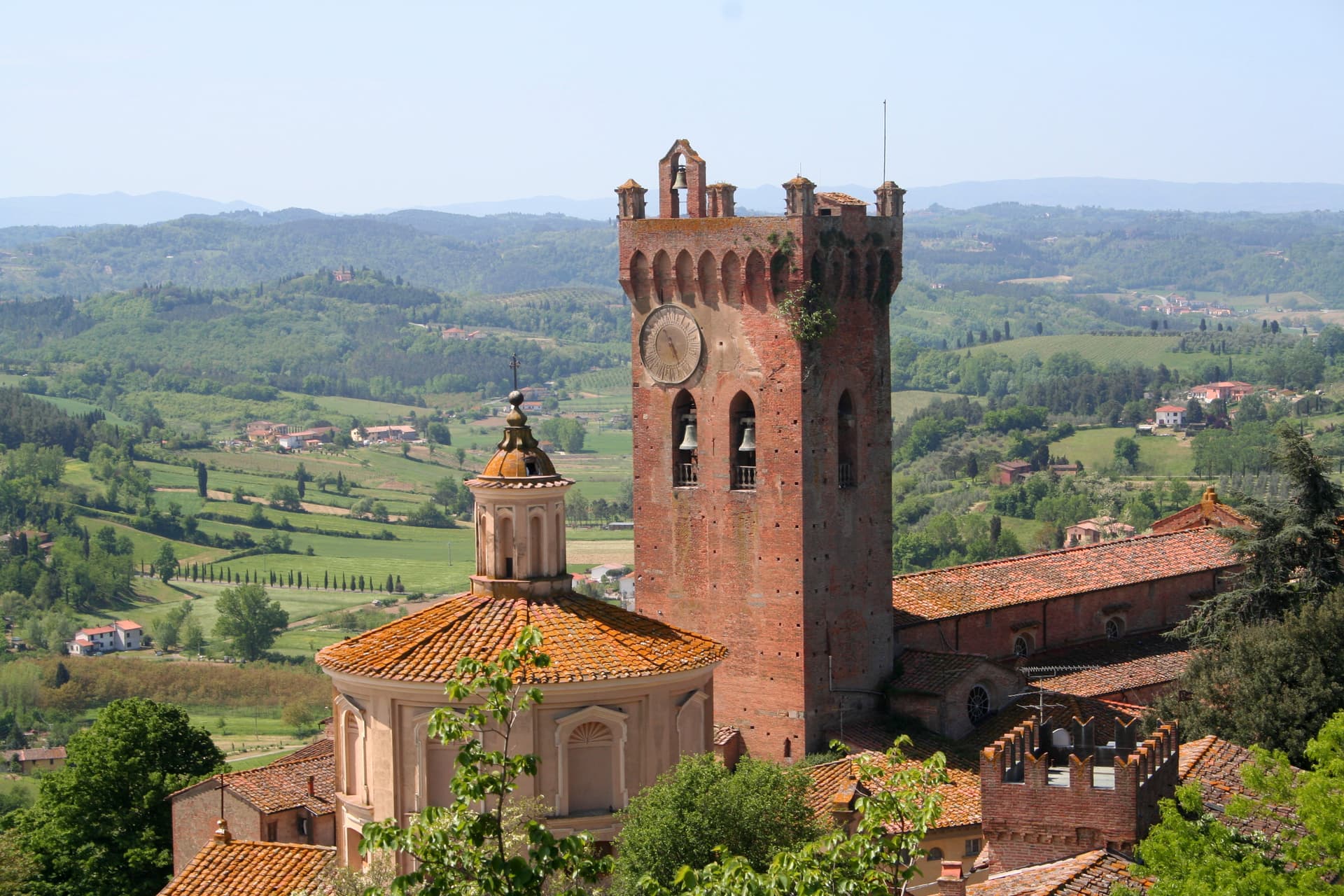
San Miniato
Province: Pisa
The hilltop town between Pisa and Florence that produces a quarter of Tuscany's white truffles and once held the imperial seat of Otto I.
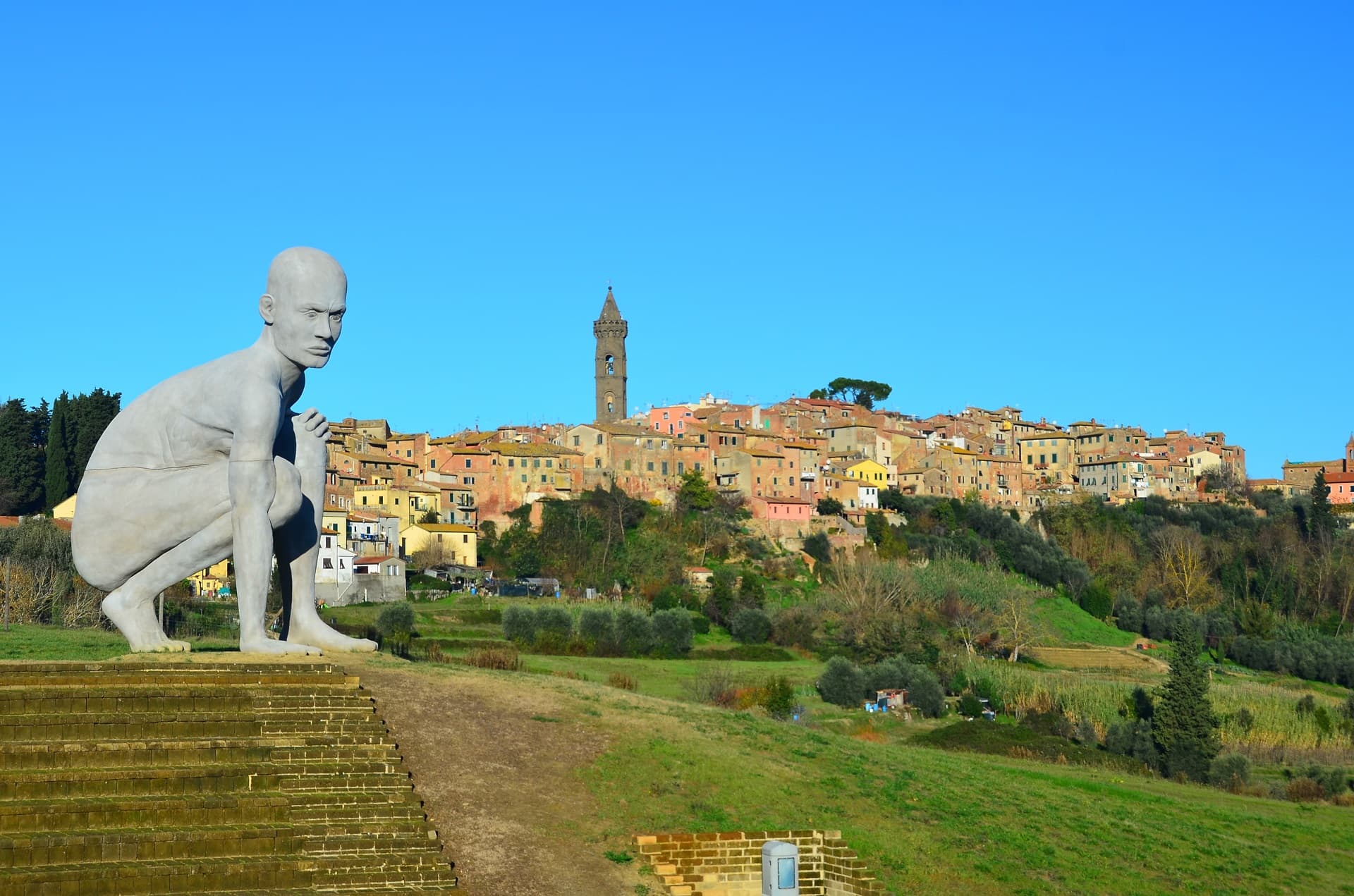
Peccioli
Province: Pisa
Borgo dei Borghi 2024 in the Valdera hills, a medieval village that funded a public contemporary-art program with revenue from its landfill plant.
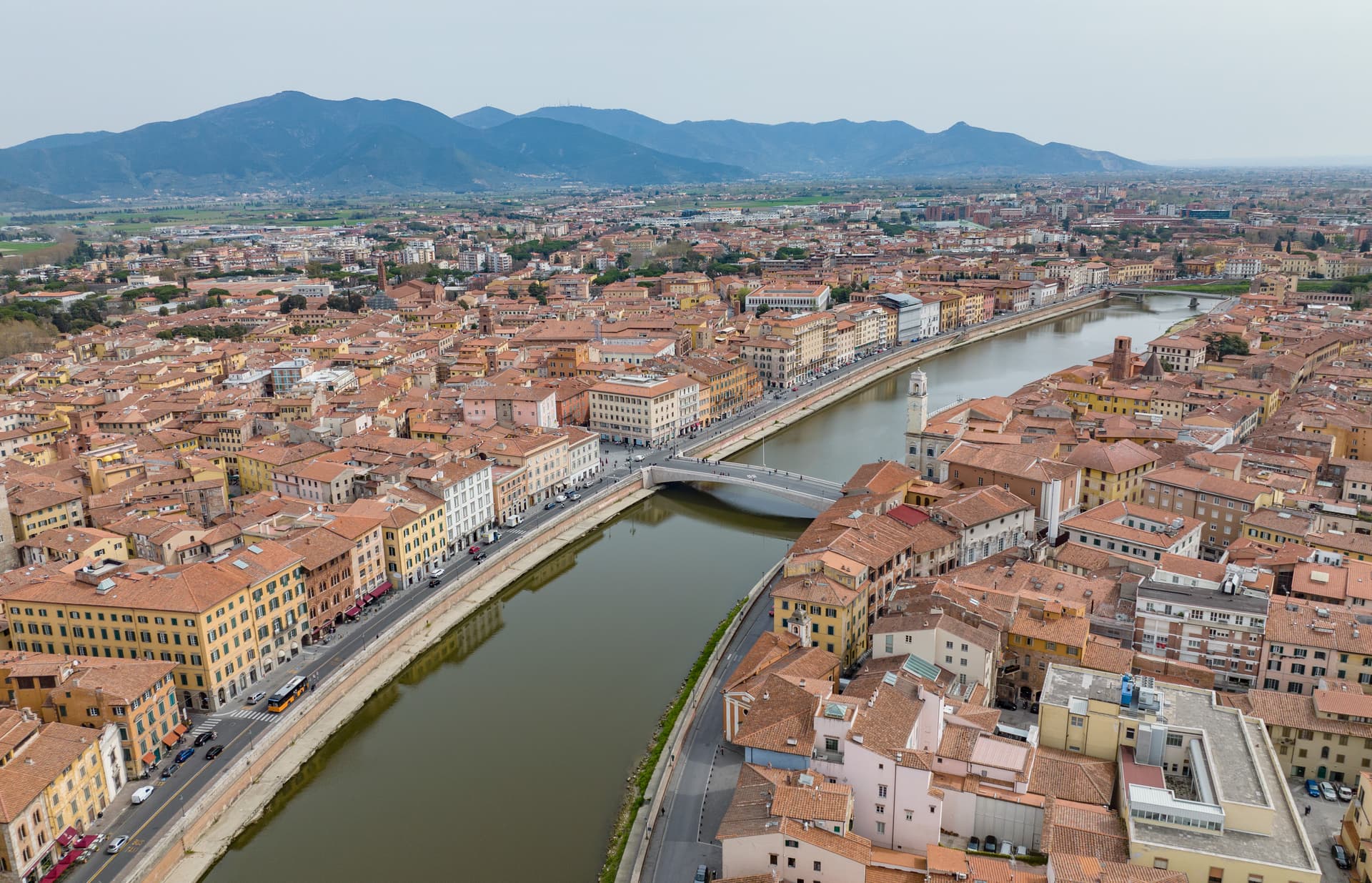
Pisa
Province: Pisa
Maritime republic on the Arno, twelve kilometers from the Ligurian Sea, with the leaning bell tower at the center of a single UNESCO-listed walled compound.
Cerreto Guidi
Province: Firenze
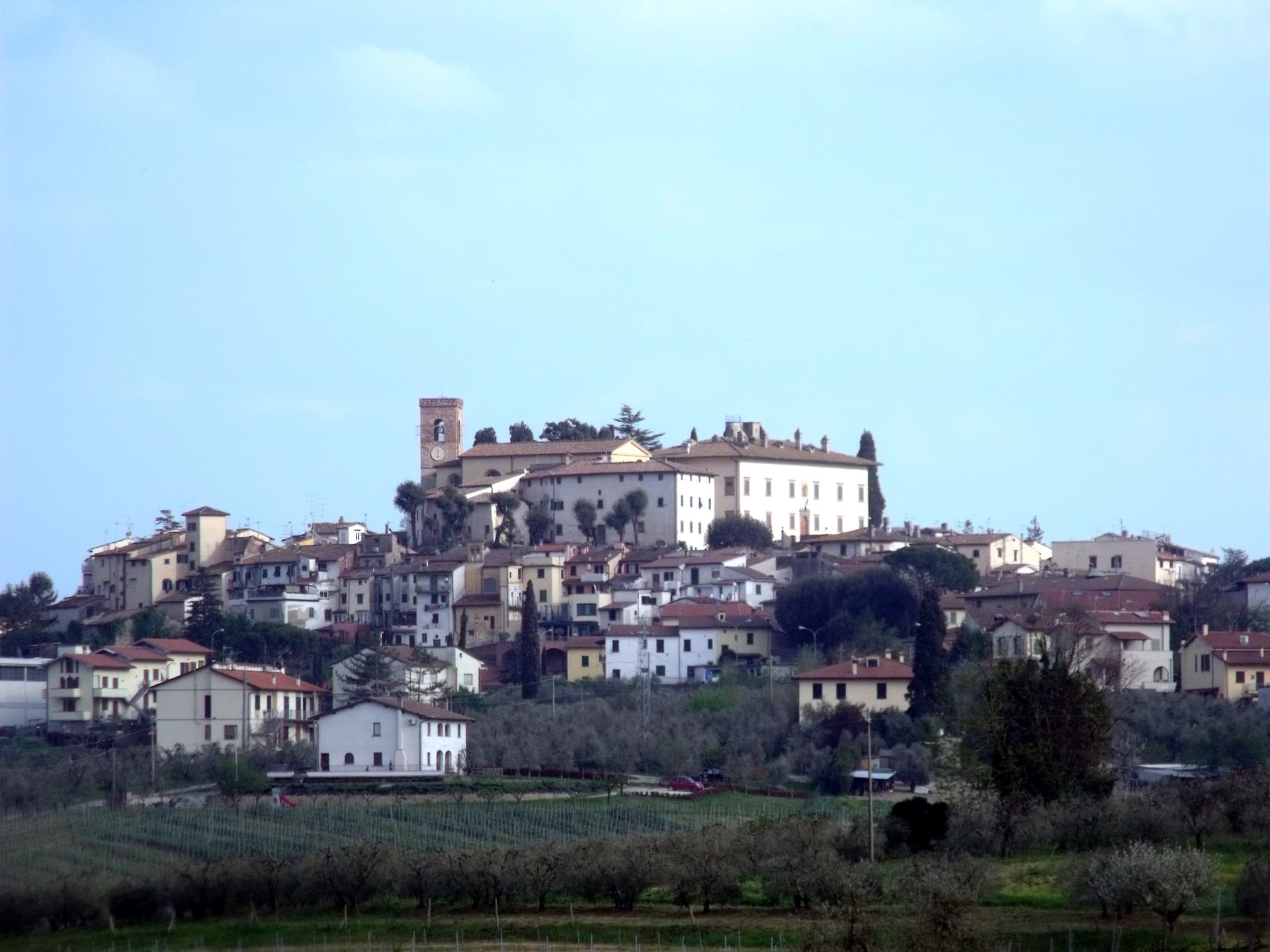
The Medici hunting villa above the Padule di Fucecchio, where Cosimo I sent his court for the marshland game and Buontalenti built four ramps of stairs.