

Tuscany · Pisa
Pisa
Maritime republic on the Arno, twelve kilometers from the Ligurian Sea, with the leaning bell tower at the center of a single UNESCO-listed walled compound.
Known for
TORRE PENDENTE
Bell tower of the Duomo begun 1173, leaning four degrees after subsidence on alluvial soil, stabilized by engineering work concluded in 2008.
MARITIME REPUBLIC
One of the four Italian maritime republics from the eleventh to the thirteenth century, with a fleet that took Sardinia, the Balearics and Mediterranean trade routes.
UNIVERSITY
Università di Pisa founded 1343, Scuola Normale since 1810 at Piazza dei Cavalieri, both still central to the working city beyond the tower.
When to visit
Best · May–Sep
- J
- F
- M
- A
- M
- J
- J
- A
- S
- O
- N
- D
- Best
- Hot or crowded
- Quiet
- Mostly closed
Why come
Pisa sits on the Arno twelve kilometers before the river empties into the Ligurian Sea. From the eleventh to the thirteenth century it was one of the four maritime republics, with a fleet that took Sardinia and the Balearics and an Arsenal that built galleys for the Crusades. Wealth from the Mediterranean trade paid for the Piazza dei Miracoli, the walled compound northwest of the centro that holds four buildings of the same Pisan Romanesque school: the Duomo begun 1064, the Battistero of 1152, the Camposanto Monumentale of 1278, and the Torre Pendente of 1173, which started leaning before the third story was finished.
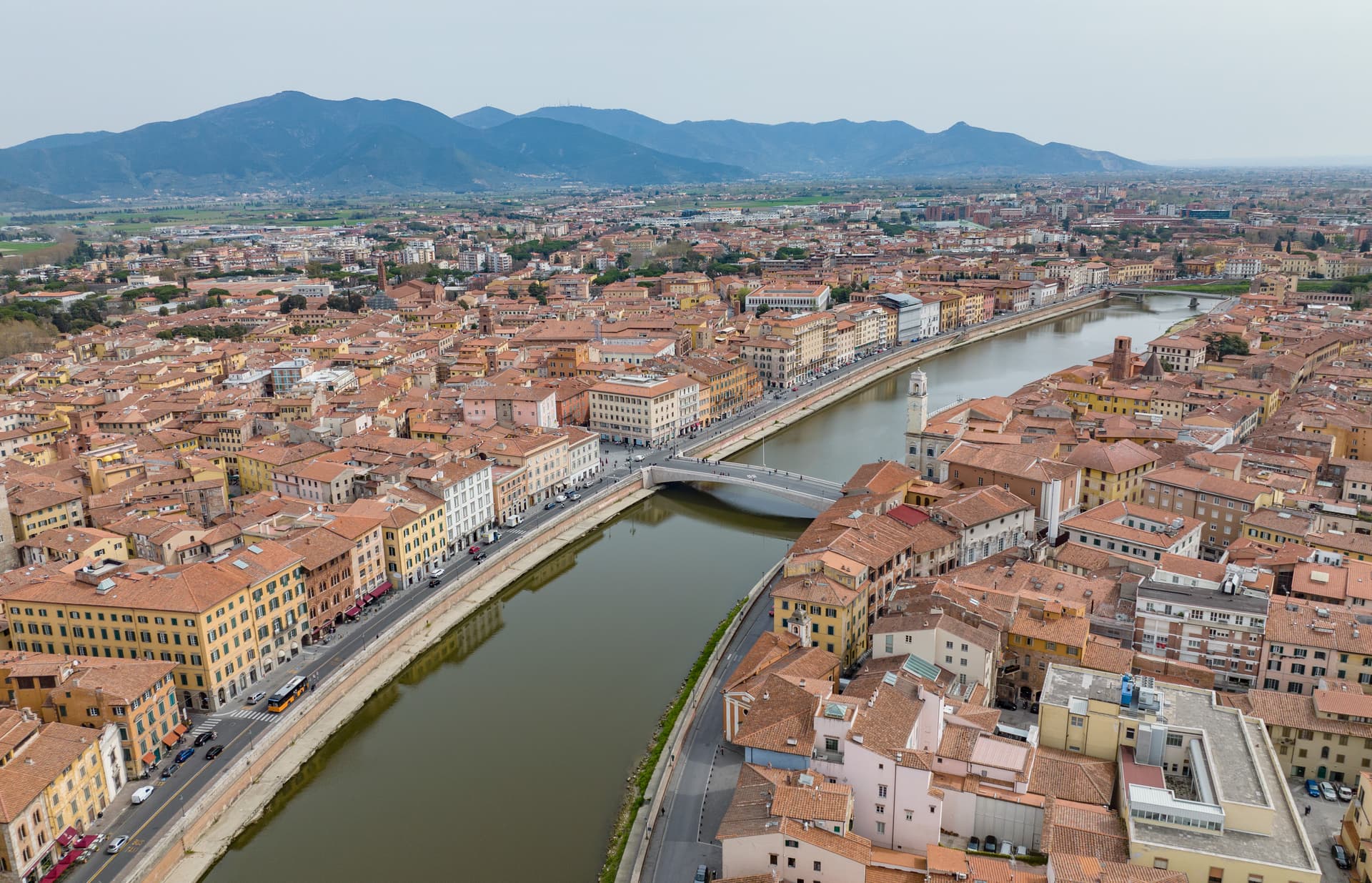
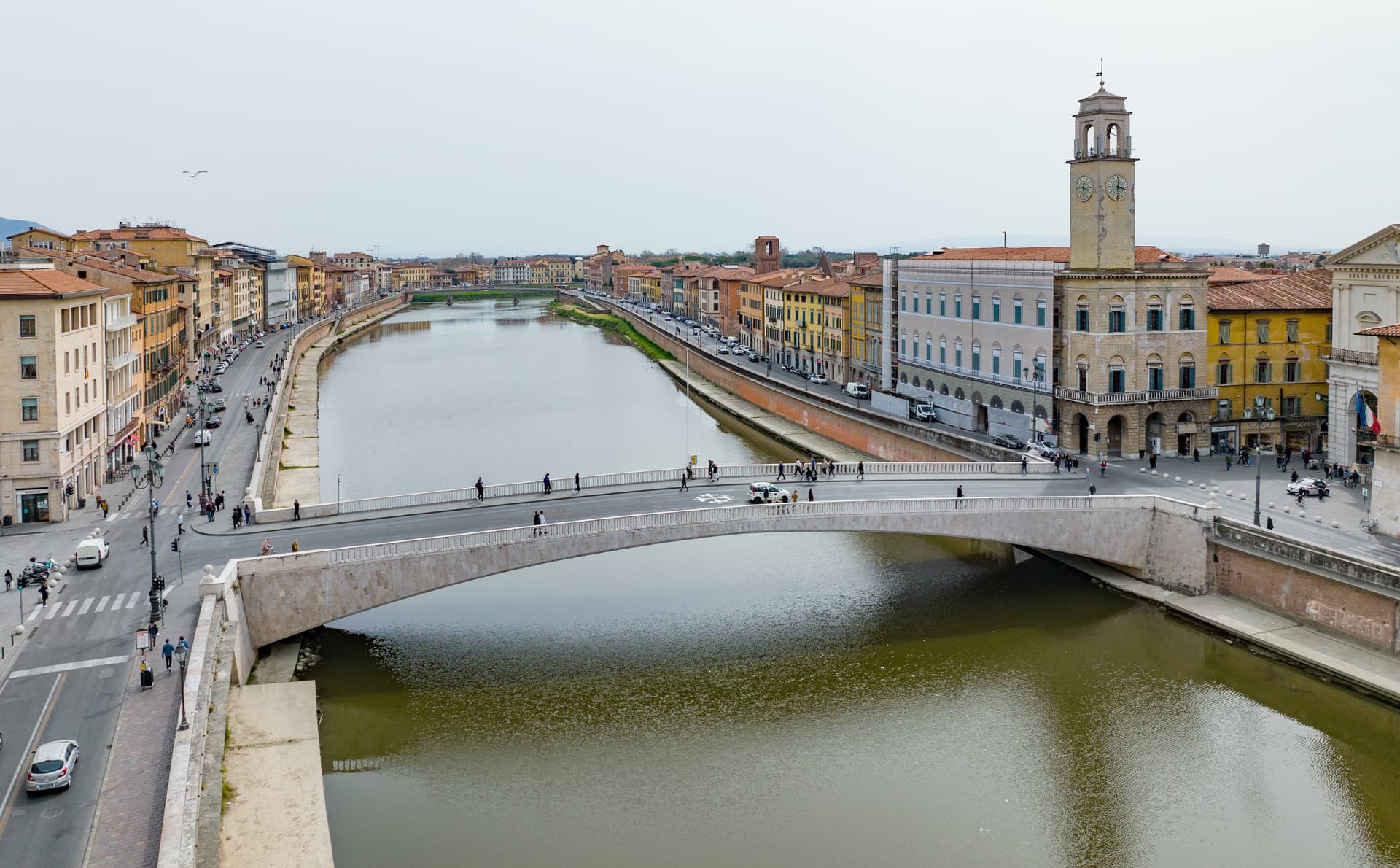
UNESCO inscribed the compound as one of the first Italian sites in 1987. The university, founded 1343, and the Scuola Normale at Piazza dei Cavalieri, the Vasari-designed square that was the Medici political center after the fall of the republic, keep the city working between the day-tripper waves. The river is the other Pisa: the Lungarni curve through the city in two parallel quays.
What to see
Torre Pendente
Bell tower of the cathedral begun 1173, finished 1372, leaning four degrees south of vertical after centuries of subsidence on Pisan alluvial soil.
Duomo di Pisa
Pisan Romanesque cathedral begun 1064 by Buscheto, financed from the Mediterranean trade, with bronze doors by Bonanno Pisano and a pulpit by Giovanni Pisano.
Battistero di San Giovanni
Largest baptistery in Italy at 54.86 meters tall, begun 1152, Romanesque base and Gothic upper level, with a pulpit by Nicola Pisano.
Camposanto Monumentale
Walled cloister begun 1278 around soil brought back from Golgotha, 43 blind arches, with damaged Trecento frescoes including the Triumph of Death.
Piazza dei Cavalieri
Vasari-designed square at the political center of Medici Pisa, with Palazzo della Carovana, headquarters of the Scuola Normale since 1810.
Lungarni
Riverside quays curving through the city on both banks of the Arno, with palazzi from the twelfth century to the nineteenth and the Luminara festival in June.
Museo dell'Opera del Duomo
Cathedral works museum on the south side of Piazza dei Miracoli, holding sculpture by Nicola and Giovanni Pisano removed from the four monuments.
The slow-trip planner
Building a trip? Find where Pisa fits in a slow Italy circuit.
Answer five questions. We will shape a geographically coherent slow trip from the 1,000 Italian towns most travelers skip. Yours to save and share.
We recommend
Where to eat and stay
Not our picks, but places the guides put their name to — a Michelin star, a Gambero Rosso fork, a Slow Food snail, a Michelin Key for the hotels. Worth a table, a counter, or a night when you pass through.
ErbaluigiaTrattoria
Two Gambero Rosso prawns for Erbaluigia, and a spot in the Michelin Guide.
Caffè dell'UsseroCaffè
Caffè dell'Ussero holds a place on Italy's historic-locali register.
Ristorante PoldinoRistorante
A place on Italy's historic-locali register, at Ristorante Poldino.
Vicolo diVinoWine Bar
Vicolo diVino has a Gambero Rosso listing to its name.
Royal Victoria HotelHotel
A place on Italy's historic-locali register, at Royal Victoria Hotel.
The Sunday letter
Pisa got its letter. One town every Sunday, free — the photo, the food, the festa.
By subscribing you agree to Substack’s Terms of Use, our Privacy Policy and our Information collection notice.
Living here
- Population 88,737
- A local hubi
- Pharmacy in town
- High school within a 30-minute drive
- Train station in the comune
- Nearest airport Florence / Pisa, 25 min drive
- Regional capital Firenze, 1 h 19 min drive
Tags & datadesignations · numbers · sources
Recognised as
The numbers
- Elevation: 4 m
- Population: 88,737
- Surface area: 185.07 km²
These figures were compiled from public directories — ISTAT, OpenStreetMap, Wikidata — and from the official listings of the guides named on this page. Town details change; verify with official sources before you travel.
Close by
More towns near Pisa
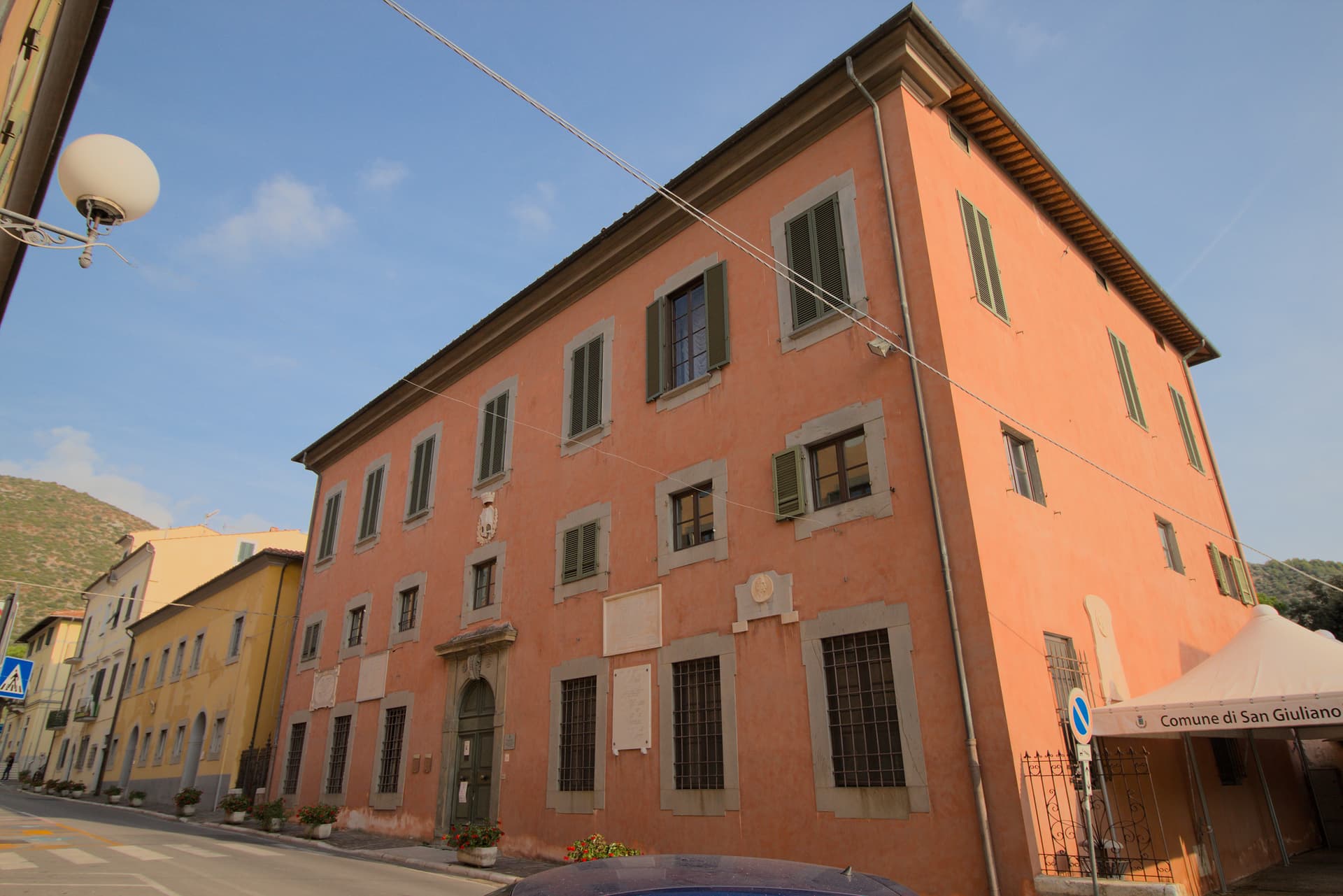
San Giuliano Terme
Province: Pisa
A thermal spa at the foot of Monte Pisano, ten kilometers from Pisa, where the springs were bathed since the Romans called them Aquae Pisanae.
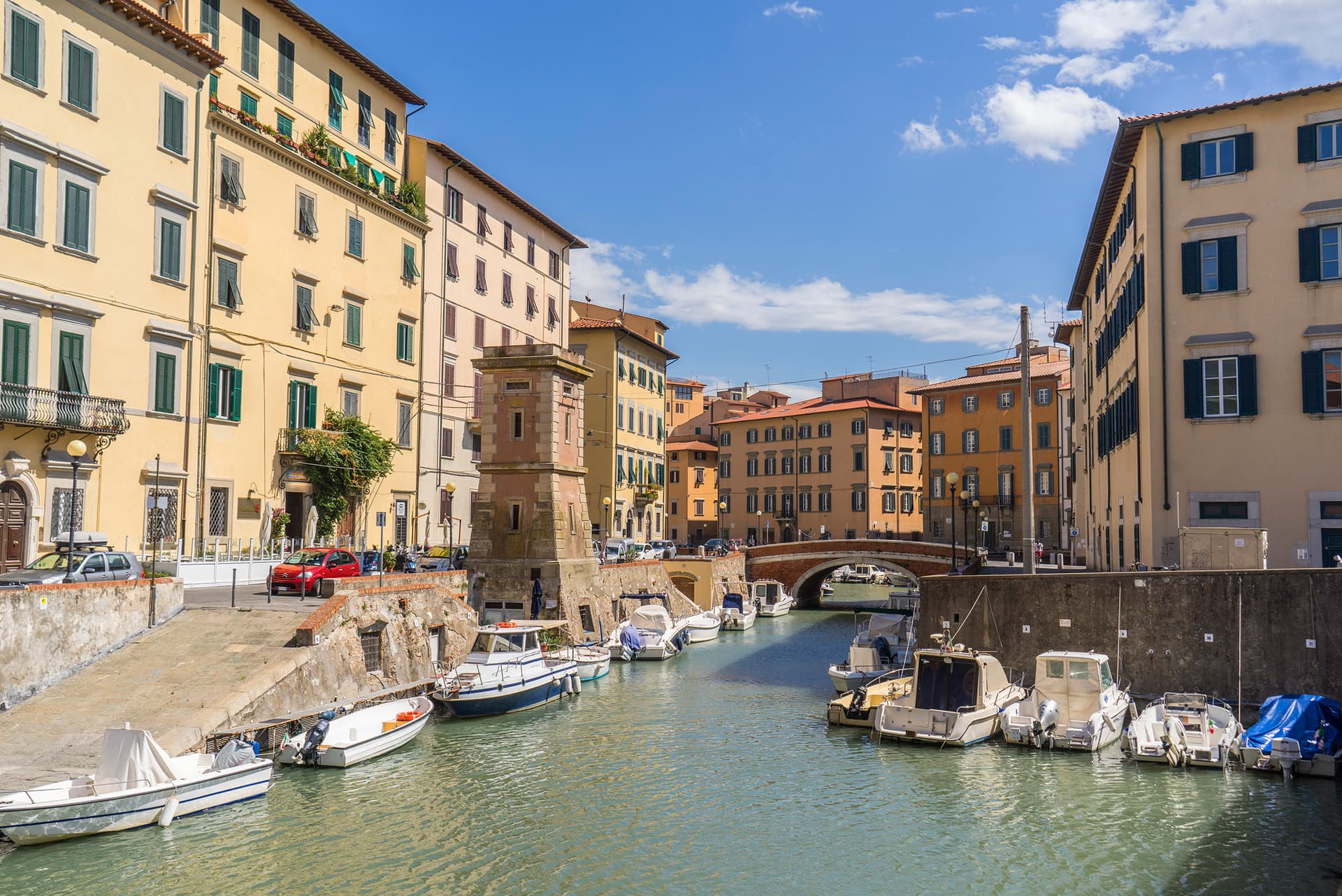
Livorno
Province: Livorno
Tuscany's working port and Medici-planned 'New City' — a 16th-century planned town built on reclaimed coast, with a Venice-like canal quarter, the Quattro Mori monument, and a 1.5-km seafront promenade that locals call the world's most beautiful balcony.
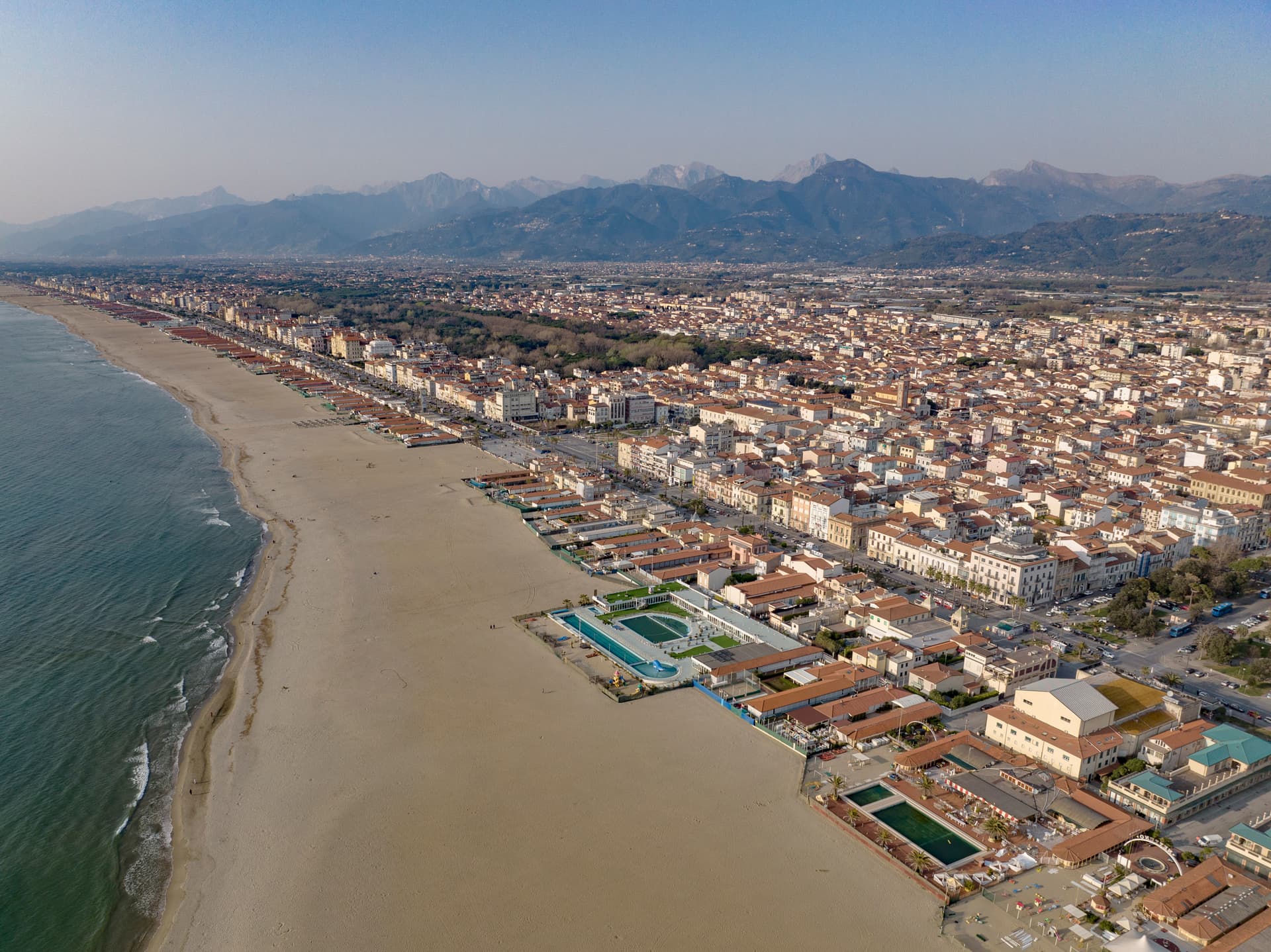
Viareggio
Province: Lucca
The Versilia capital, a Liberty-architecture seafront built around the 1873 Carnival and the 254-kilogram papier-mâché floats that still parade every February.
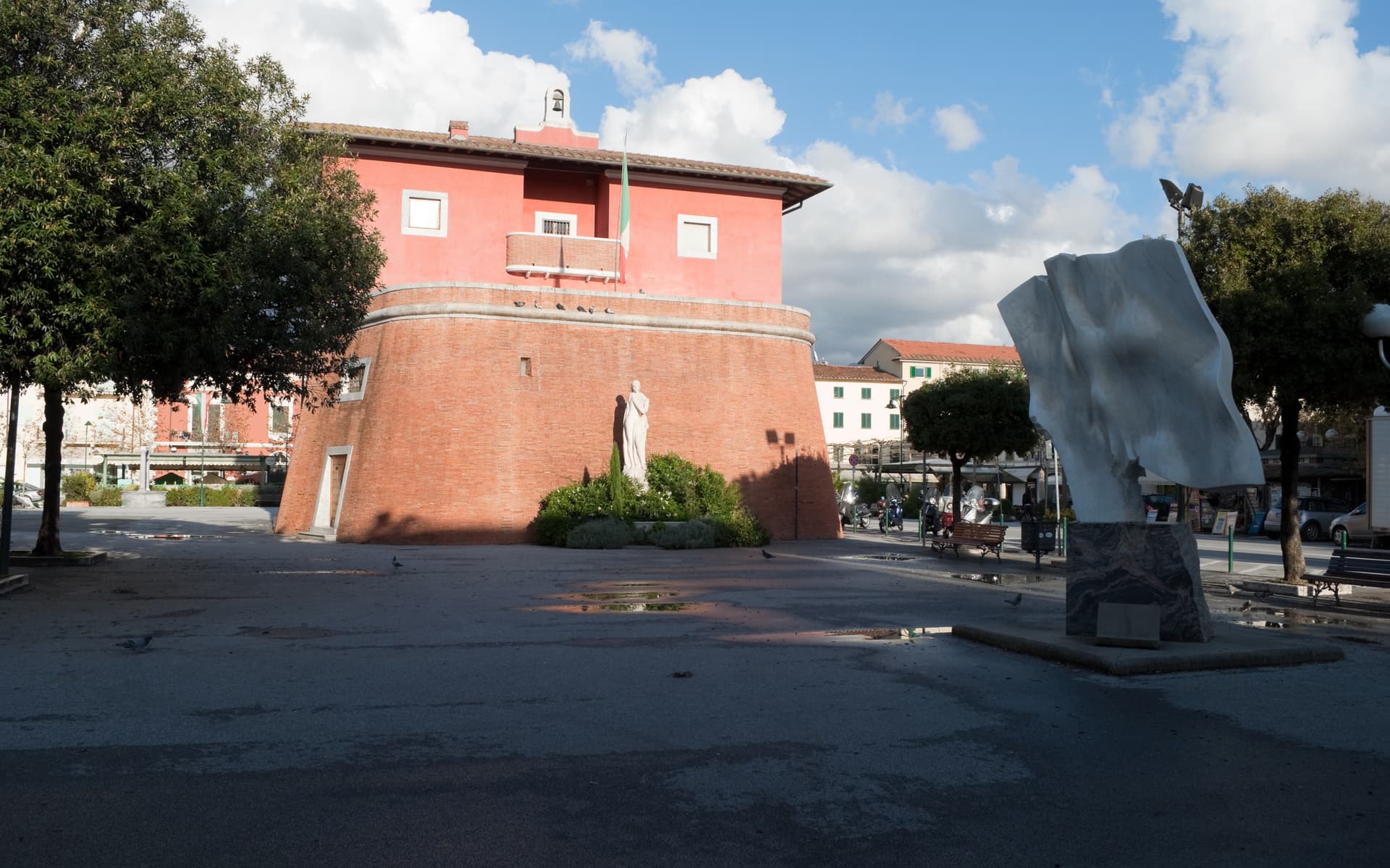
Forte dei Marmi
Province: Lucca
The Versilia luxury beach built around an eighteenth-century marble-loading fort, with 99 bagni concessions and a Wednesday market that draws Milan.
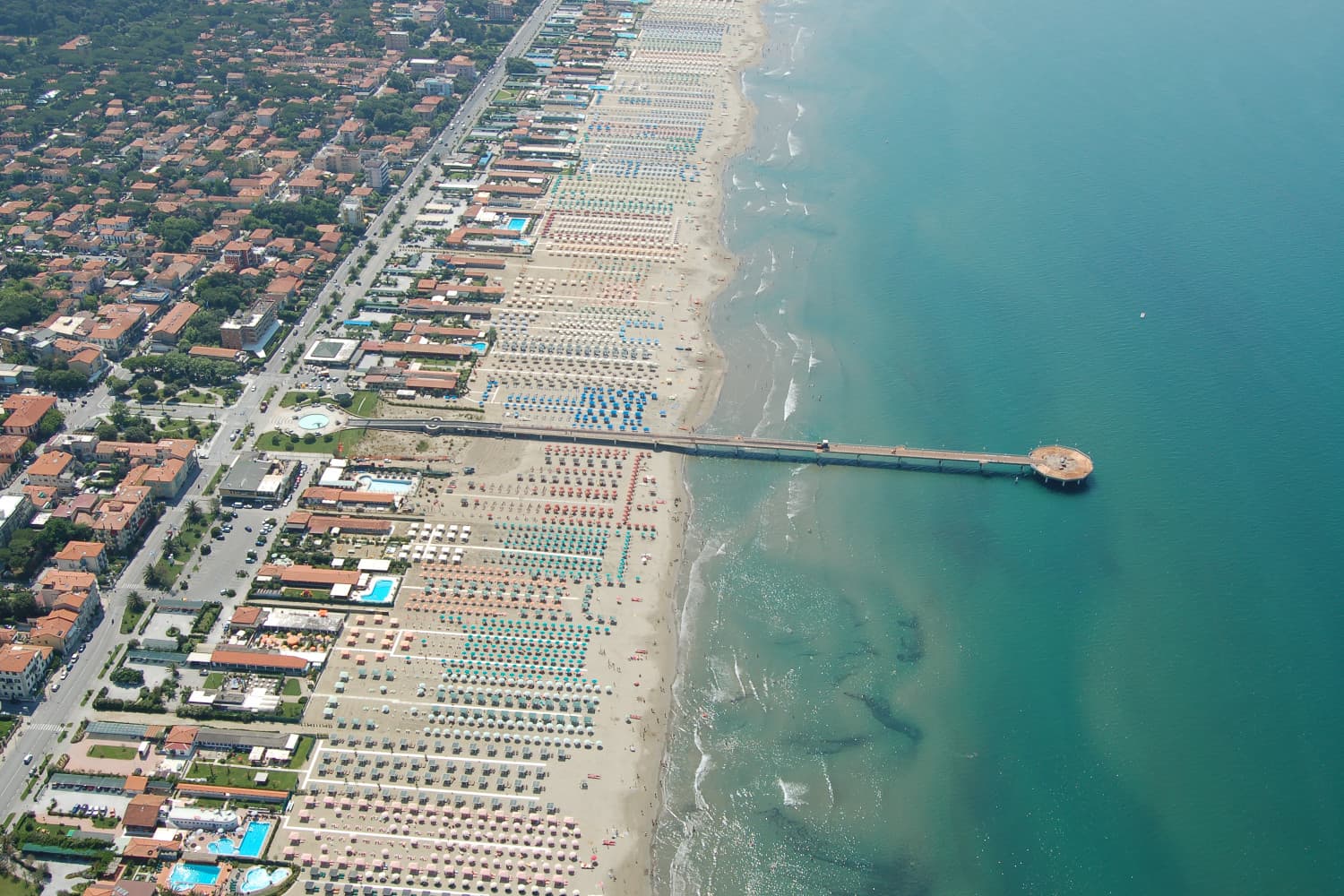
Pietrasanta
Province: Lucca
The marble-processing town under the Apuan Alps, founded in 1255 and worked since by Michelangelo, Henry Moore, Joan Miró and Fernando Botero.
🏛️ UNESCO
More UNESCO towns in Tuscany
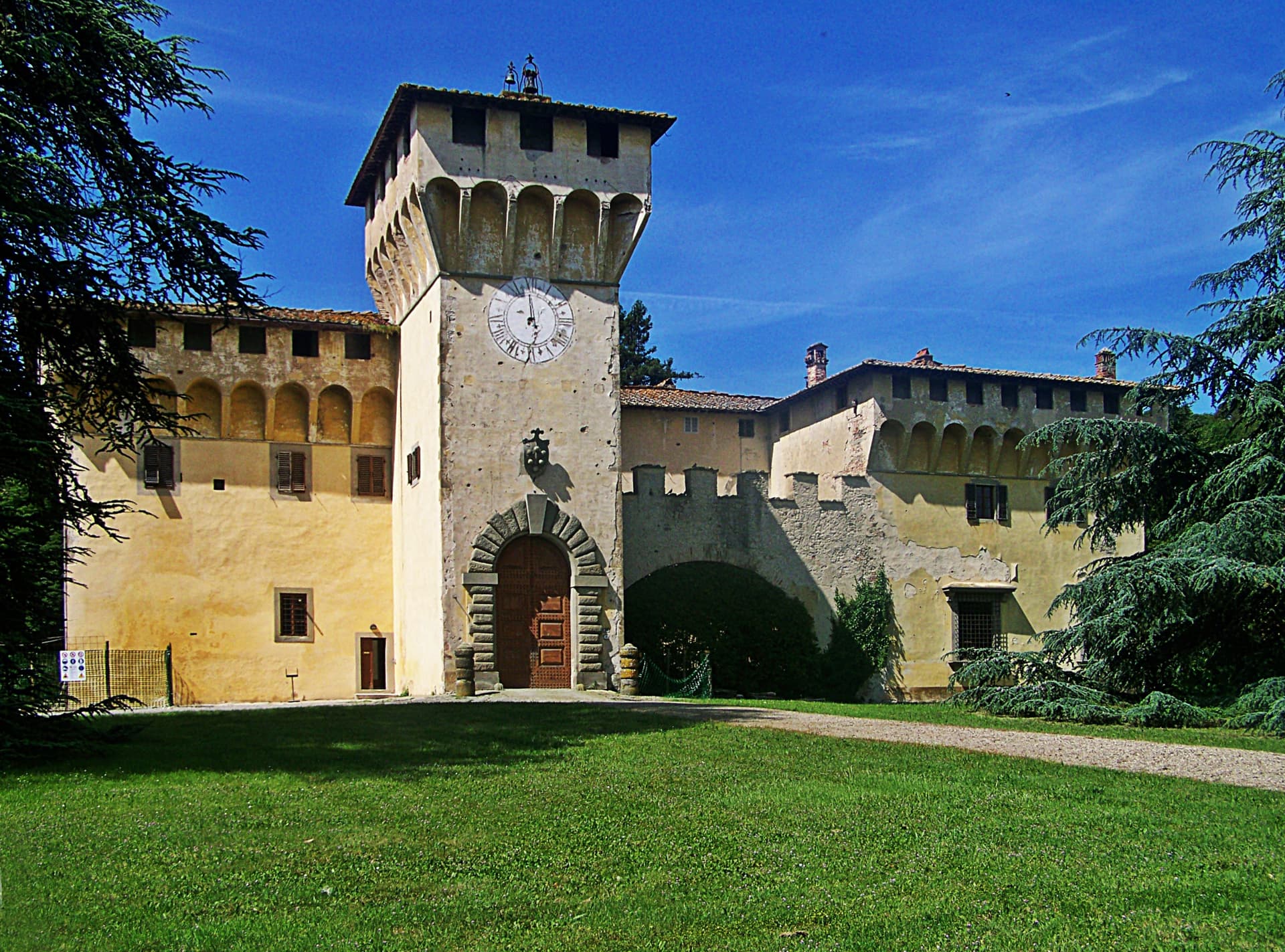
Barberino di Mugello
Province: Firenze
The Mugello gateway at 272 meters where the Medici family kept its first country villas, with Michelozzo's Cafaggiolo and the artificial Lago di Bilancino below.
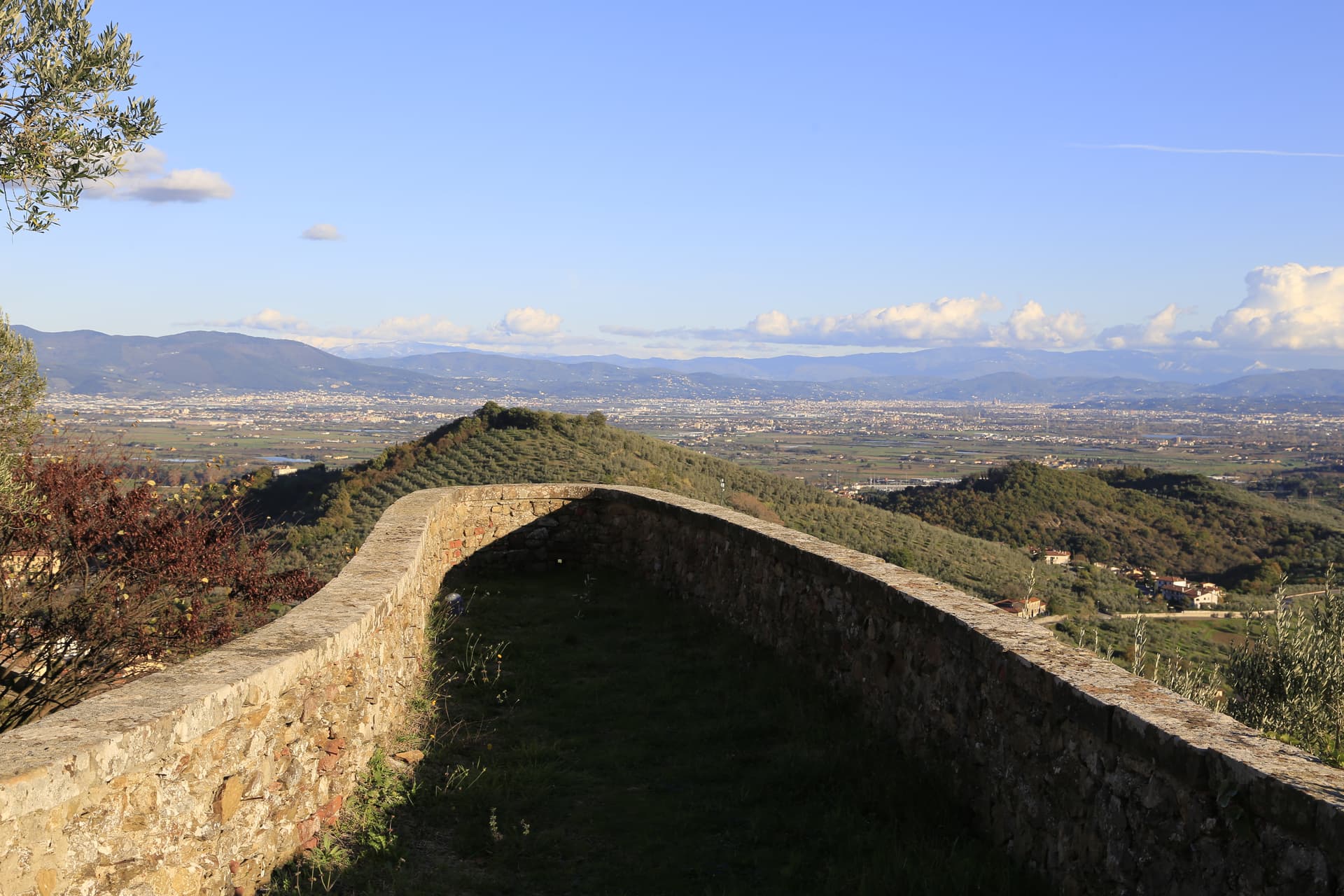
Carmignano
Province: Prato
A Medici village at 189 meters on the Montalbano slopes, where Pontormo's Visitation hangs in the parish church and Etruscan tumuli sit below the Renaissance villas.
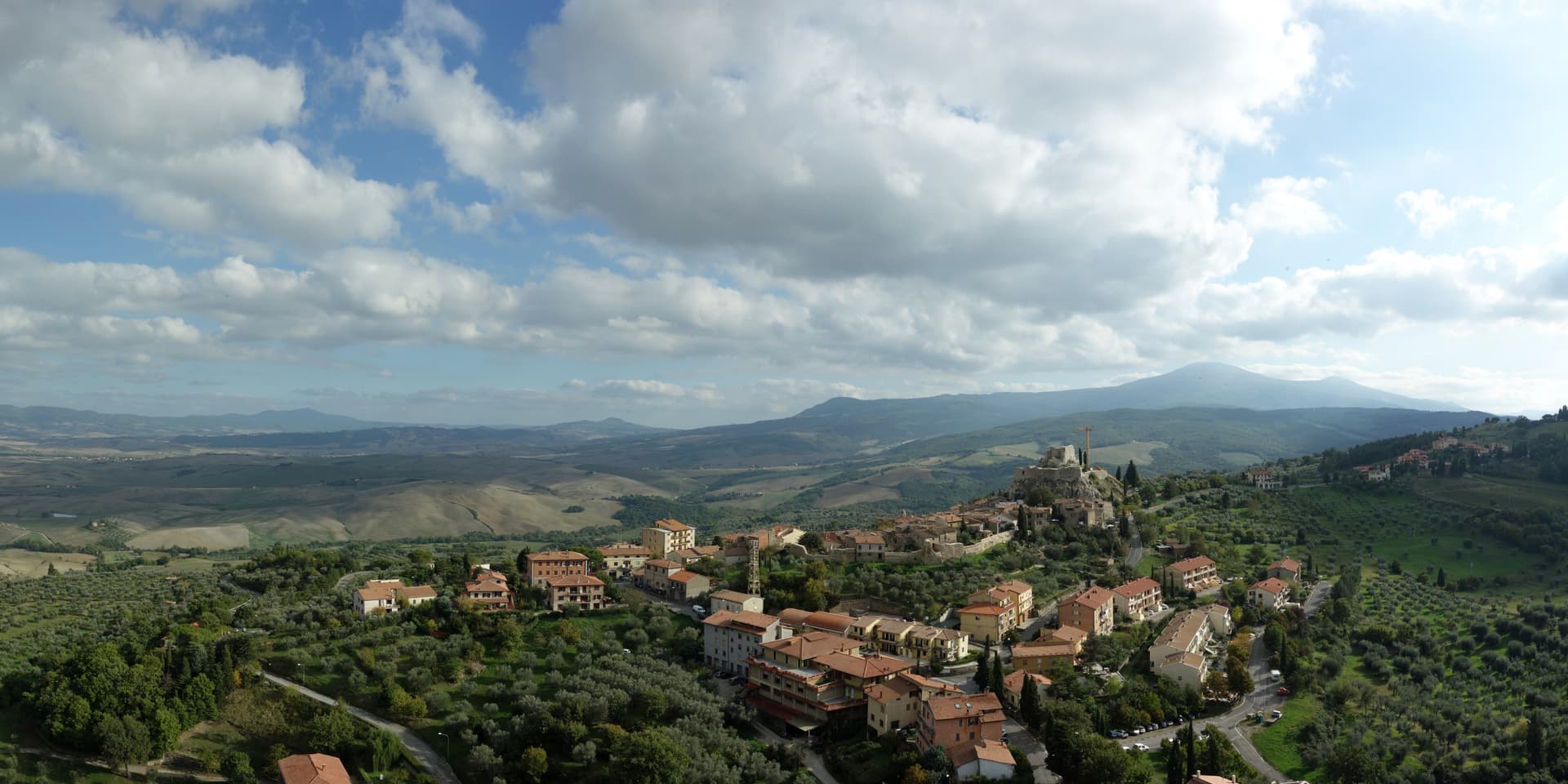
Castiglione d'Orcia
Province: Siena
A stone borgo at 540 meters in the UNESCO Val d'Orcia, first recorded in 714, with two fortresses guarding the road from Amiata to the Via Francigena.
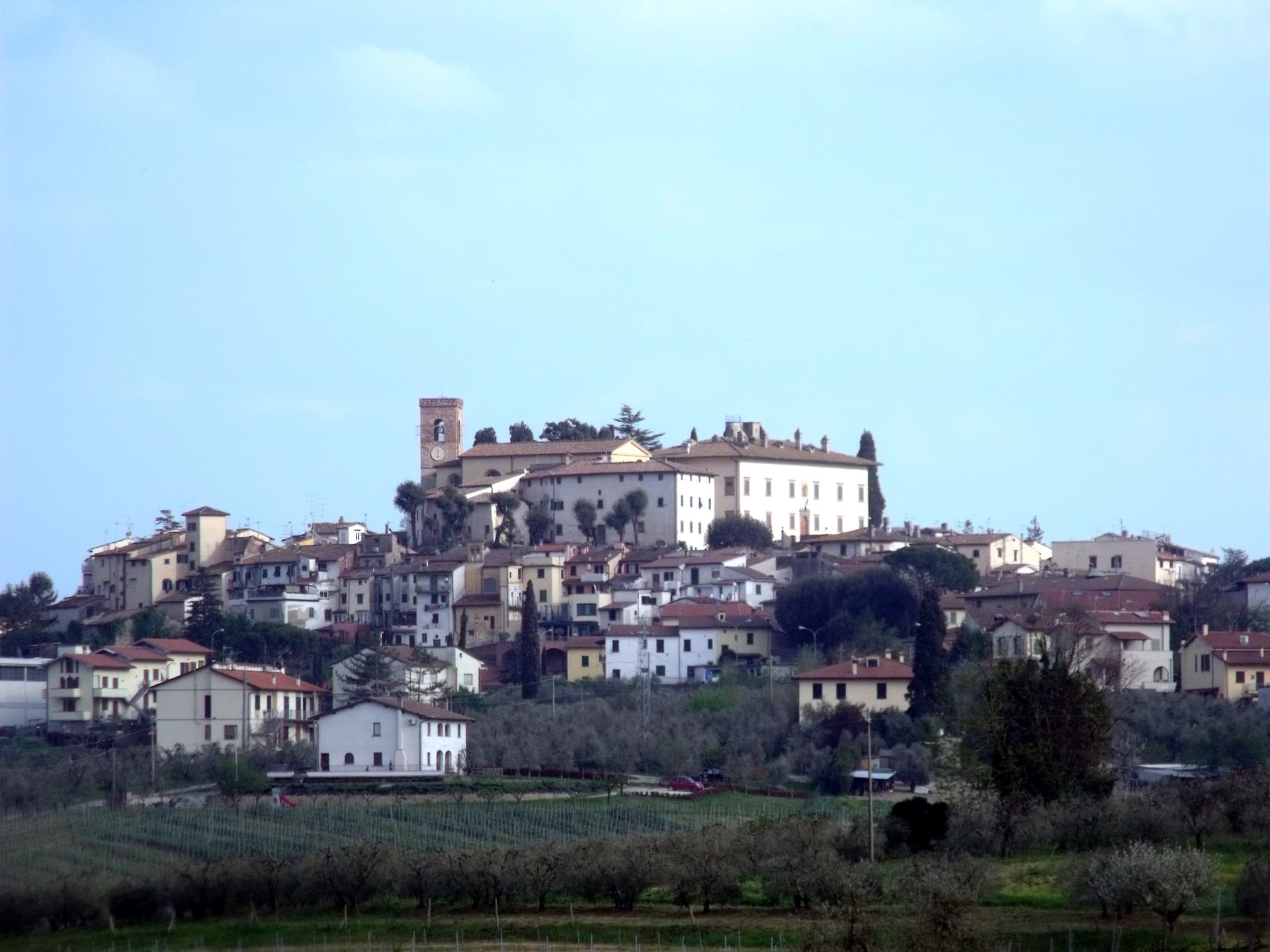
Cerreto Guidi
Province: Firenze
The Medici hunting villa above the Padule di Fucecchio, where Cosimo I sent his court for the marshland game and Buontalenti built four ramps of stairs.
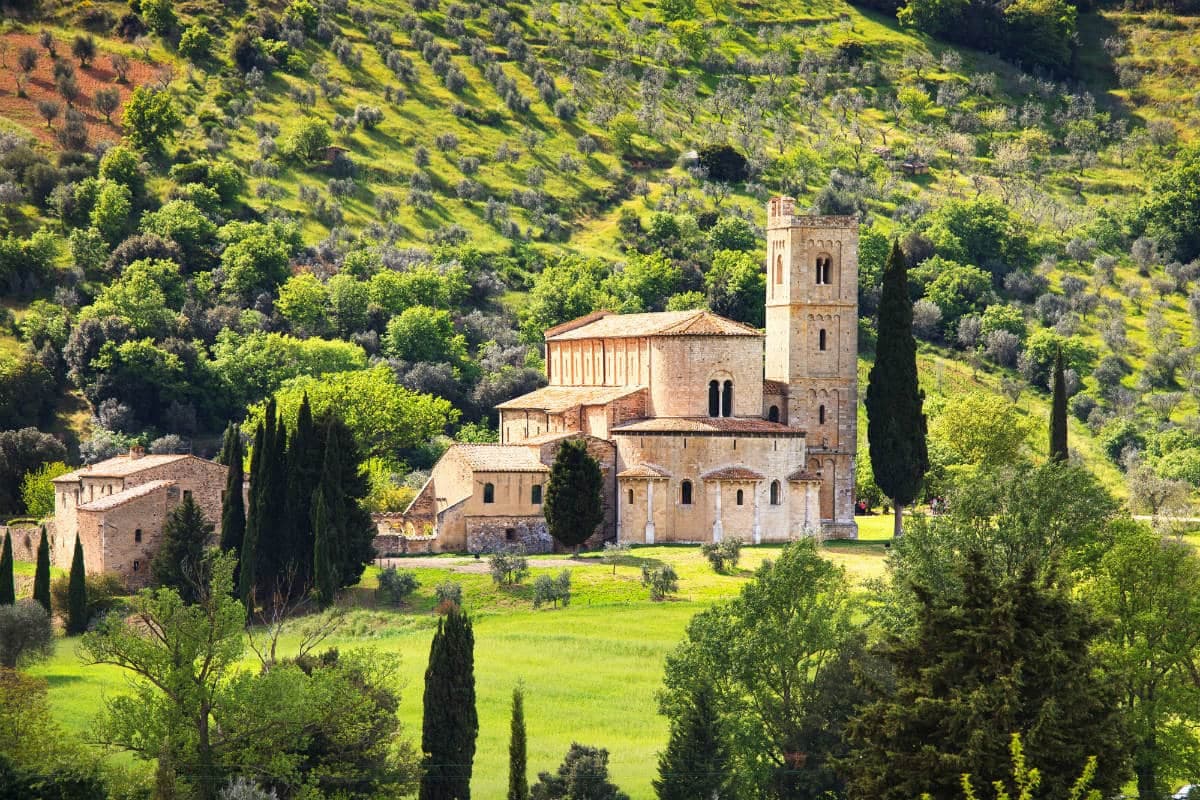
Montalcino
Province: Siena
A walled hill town at 564 meters above the Val d'Orcia, the last fortress to hold out for the Sienese Republic and the birthplace of Brunello.