

Tuscany · Siena
Castiglione d'Orcia
A stone borgo at 540 meters in the UNESCO Val d'Orcia, first recorded in 714, with two fortresses guarding the road from Amiata to the Via Francigena.
Known for
VAL D'ORCIA UNESCO
One of three communes that share the 2004 UNESCO listing of the Val d'Orcia cultural landscape between Siena and Monte Amiata.
ROCCA A TENTENNANO
Twelfth-century Salimbeni stronghold in the frazione of Rocca d'Orcia, where Catherine of Siena retired and learned to write in 1377.
IL VECCHIETTA
Painter, sculptor and architect Lorenzo di Pietro, born here around 1410, central figure of fifteenth-century Sienese art.
When to visit
Best · Apr–Oct
- J
- F
- M
- A
- M
- J
- J
- A
- S
- O
- N
- D
- Best
- Hot or crowded
- Quiet
- Mostly closed
Why come
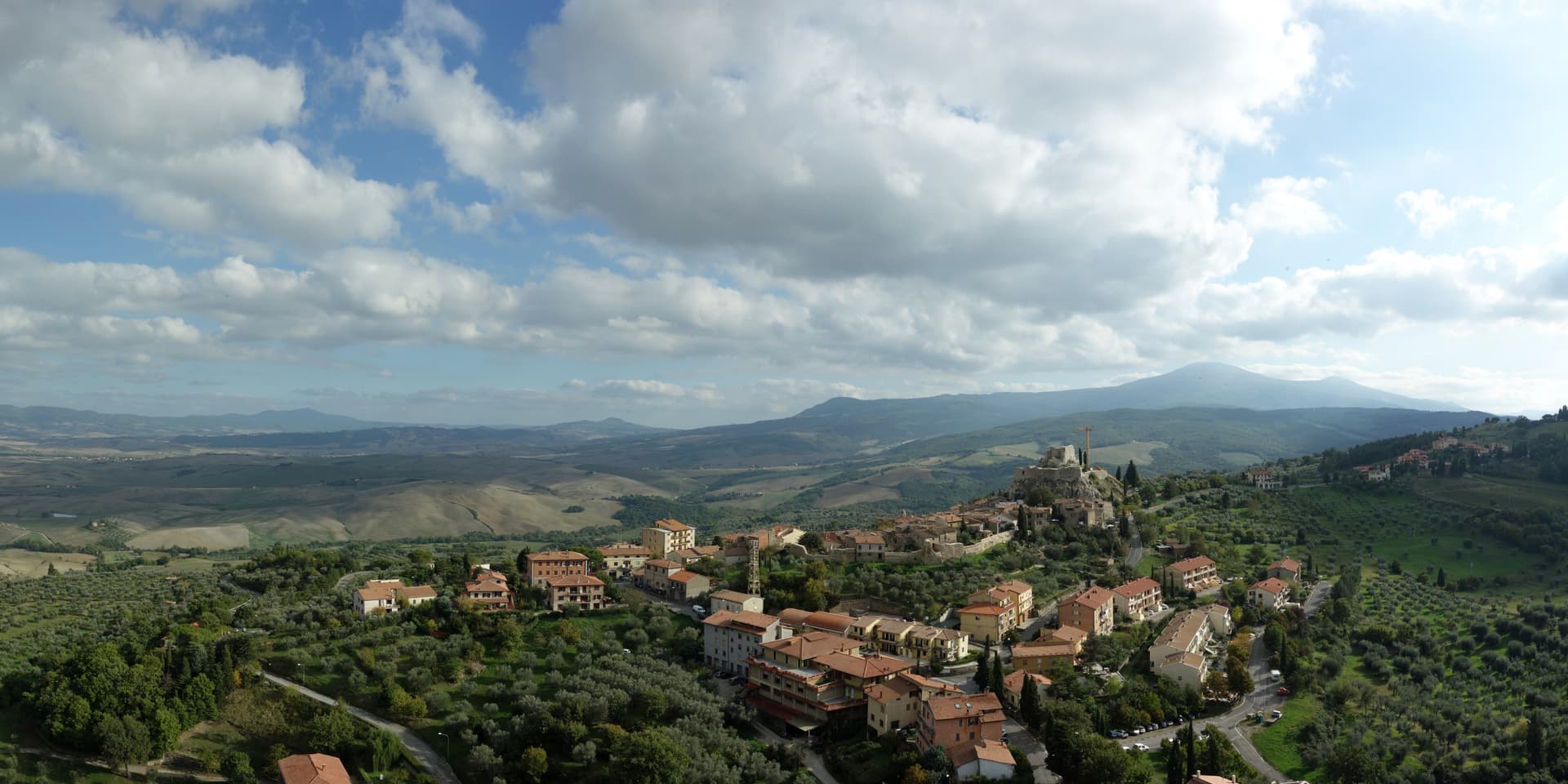
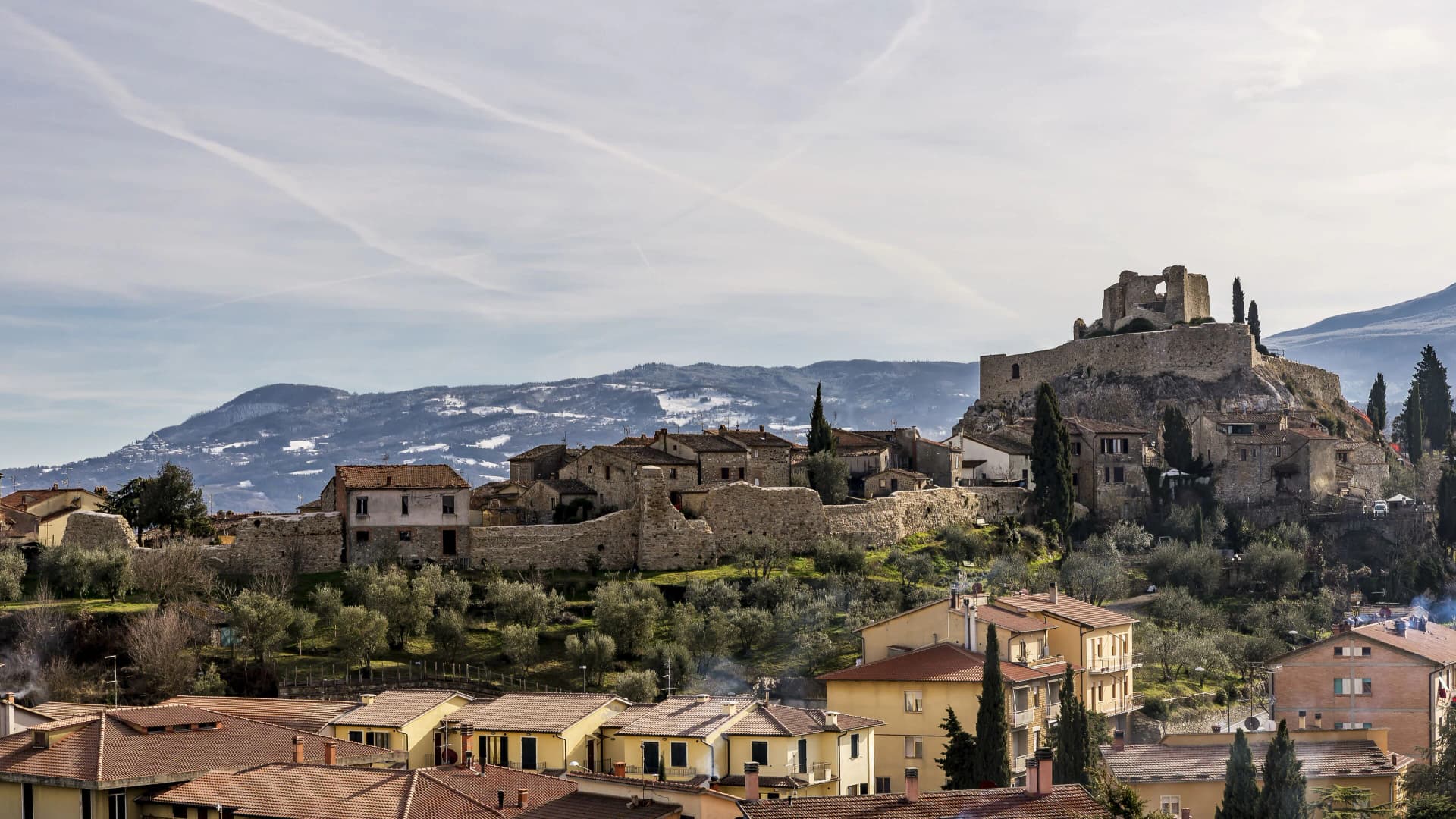
Castiglione d'Orcia sits at 540 meters on a ridge above the Val d'Orcia, the agricultural landscape between Siena and Monte Amiata that UNESCO listed in 2004 as a cultural site shaped by Sienese painters and Renaissance estate managers. The settlement was first documented in 714, when it was a possession of the Aldobrandeschi. The Rocca Aldobrandesca above the village and the Rocca a Tentennano on the neighboring outcrop, in the frazione of Rocca d'Orcia, controlled the medieval road between Mount Amiata and the Via Francigena.
Siena took the town in 1251 and entrusted it to the Salimbeni and Piccolomini. Saint Catherine of Siena retired to Rocca a Tentennano in 1377 and learned to write there. Piazza Vecchietta, the small civic space in the centro storico, is named for the painter and architect Lorenzo di Pietro known as il Vecchietta, born here around 1410. The territory is one of three communes in the comprensorio that share the UNESCO inscription.
What to see
Rocca Aldobrandesca
Aldobrandeschi fortress above the village, documented from the eighth century, walls and keep open as an archaeological site.
Rocca a Tentennano
Twelfth-century Salimbeni stronghold on a basalt outcrop in the frazione of Rocca d'Orcia, where Catherine of Siena learned to write in 1377.
Piazza Vecchietta
Small triangular civic square in the centro storico, named for the painter Lorenzo di Pietro known as il Vecchietta, born here around 1410.
Pieve dei Santi Stefano e Degna
Romanesque parish church on the main square, holding a fourteenth-century panel of the Madonna by Pietro Lorenzetti.
Val d'Orcia panorama
Continuous view from the ridge over the UNESCO-listed agricultural landscape, with Pienza, Montalcino and Monte Amiata visible on a clear day.
The slow-trip planner
Building a trip? Find where Castiglione d'Orcia fits in a slow Italy circuit.
Answer five questions. We will shape a geographically coherent slow trip from the 1,000 Italian towns most travelers skip. Yours to save and share.
The Sunday letter
Castiglione d'Orcia got its letter. One town every Sunday, free — the photo, the food, the festa.
By subscribing you agree to Substack’s Terms of Use, our Privacy Policy and our Information collection notice.
Living here
- Population 2,144
- Off the beaten pathi
- Pharmacy in town
- Nearest high school over ~30 minutes away
- Nearest airport Florence / Pisa, 3 h 45 min drive
- Regional capital Firenze, 2 h 50 min drive
Thermal baths in town: La Balena Bianca, Il Bollore, Terme San Filippo.
Tags & datadesignations · numbers · sources
The numbers
- Elevation: 540 m
- Population: 2,144
- Surface area: 141.66 km²
These figures were compiled from public directories — ISTAT, OpenStreetMap, Wikidata — and from the official listings of the guides named on this page. Town details change; verify with official sources before you travel.
Close by
More towns near Castiglione d'Orcia
San Quirico d'Orcia
Province: Siena
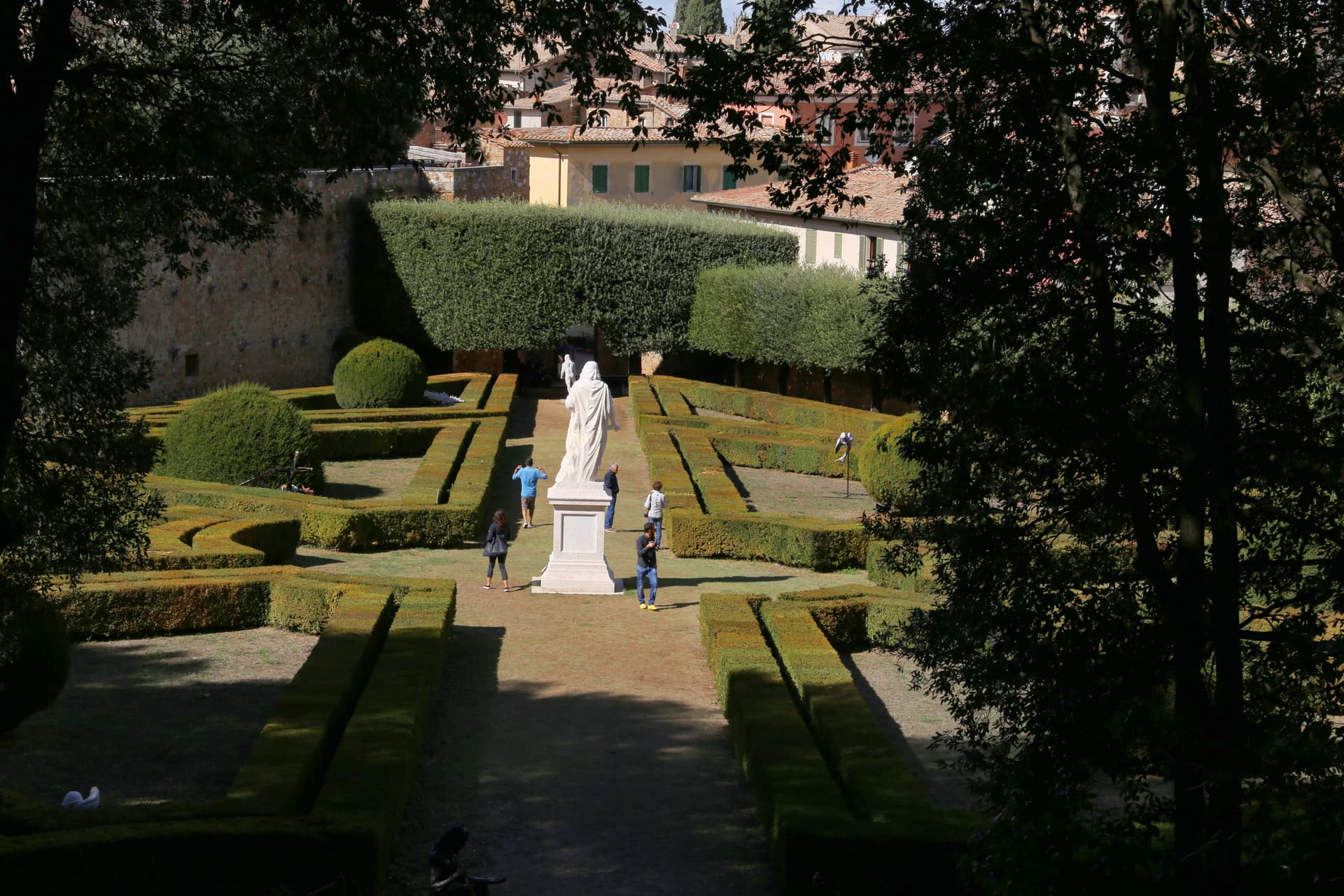
A walled stop on the Via Francigena at 409 meters in the UNESCO Val d'Orcia, where a twelfth-century Collegiata, a Renaissance garden and the Bagno Vignoni thermal pool sit within fifteen kilometers of each other.
Radicofani
Province: Siena
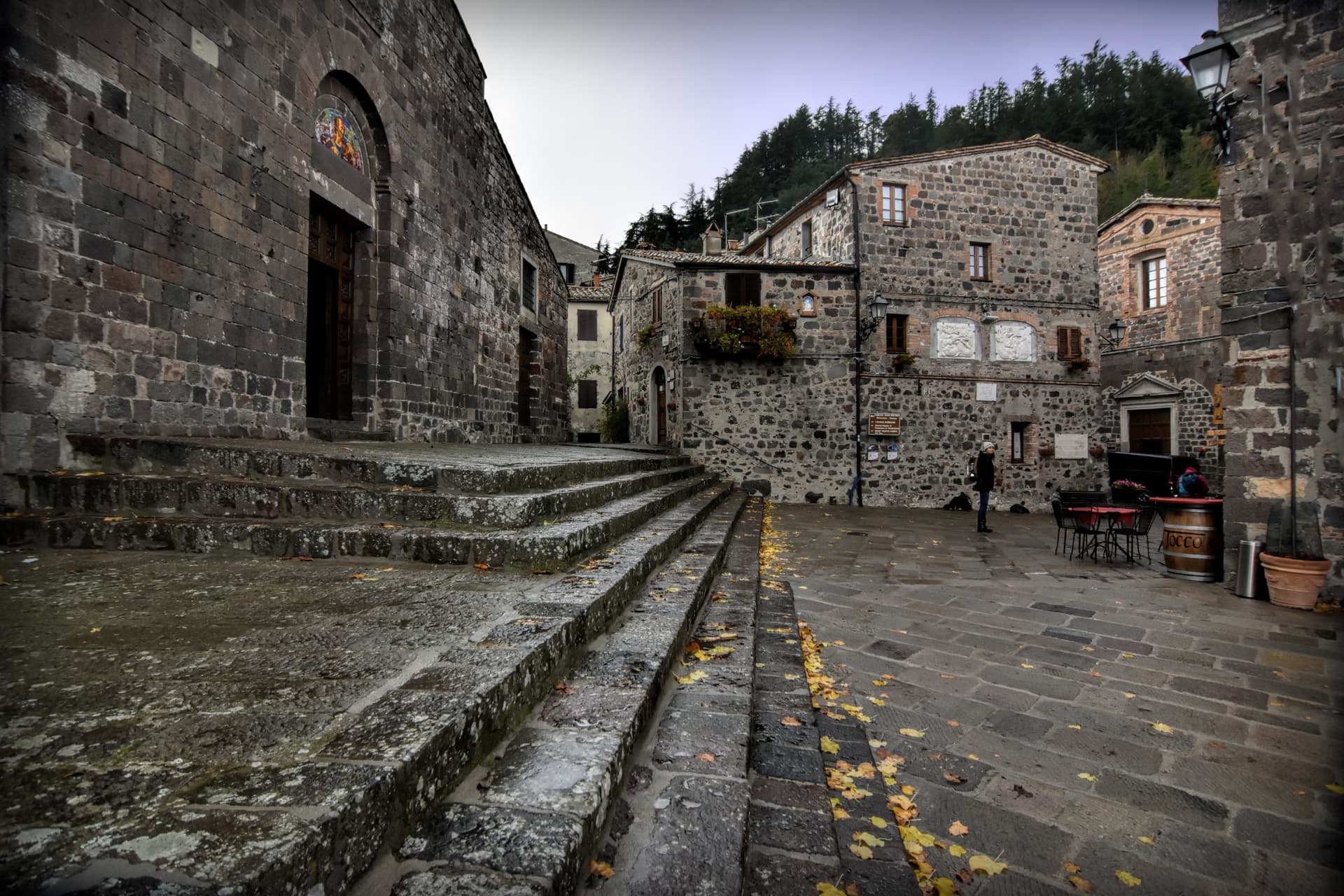
The Val d'Orcia's basalt watchtower — a 1,060-resident UNESCO-inscribed borgo at 814m on a volcanic basalt outcrop visible across half of southern Tuscany, with the spectacular Rocca di Radicofani (Ghino di Tacco's outlaw fortress, mentioned by Dante in Purgatorio + Boccaccio in the Decameron), the 16th-c Posta Medicea on the Via Francigena, and Bandiera Arancione + UNESCO + Via Francigena triple signal.
Montalcino
Province: Siena
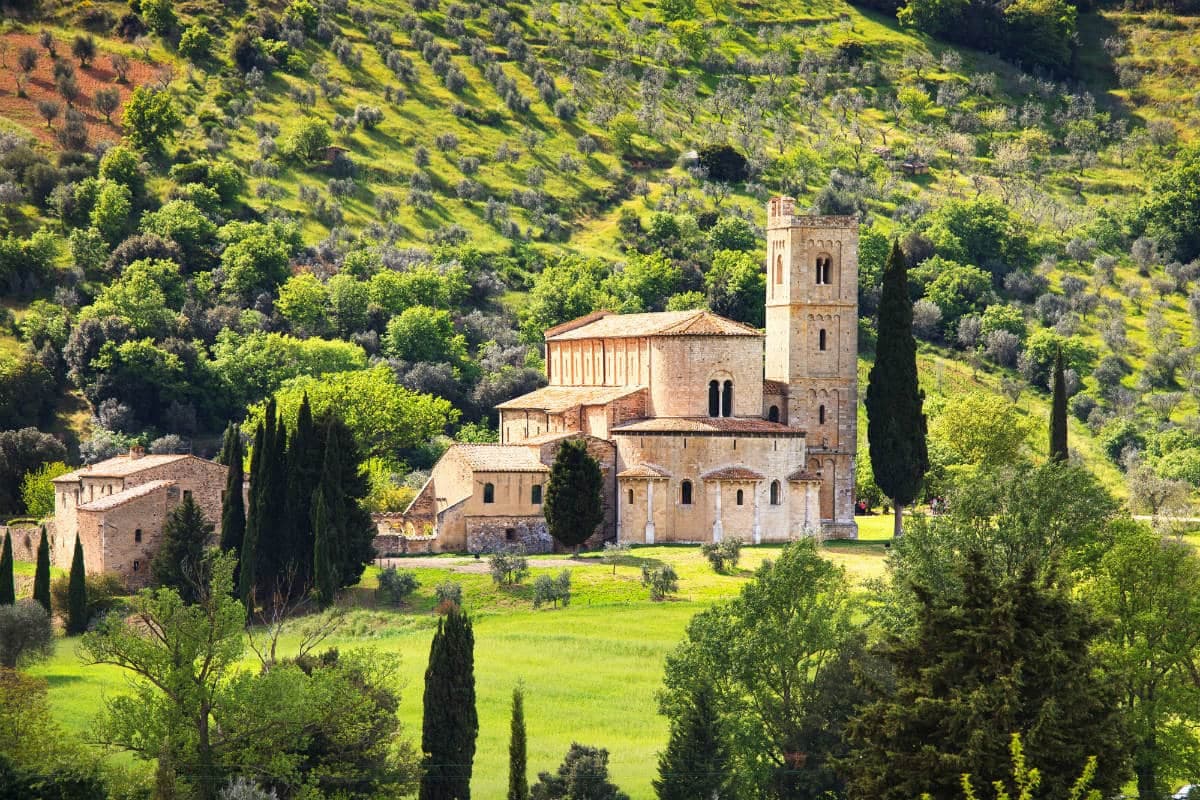
A walled hill town at 564 meters above the Val d'Orcia, the last fortress to hold out for the Sienese Republic and the birthplace of Brunello.
Santa Fiora
Province: Grosseto
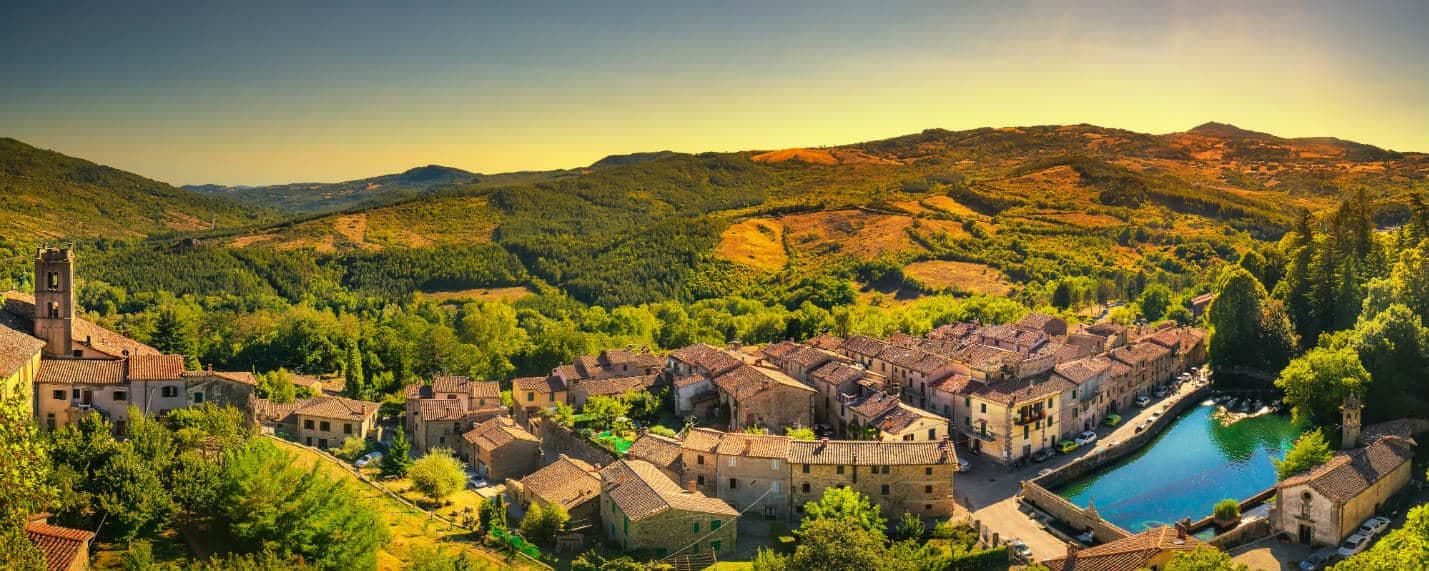
An Aldobrandeschi and Sforza mountain borgo on Monte Amiata at 687 meters, holding one of the world's largest collections of Della Robbia terracotta.
Pienza
Province: Siena
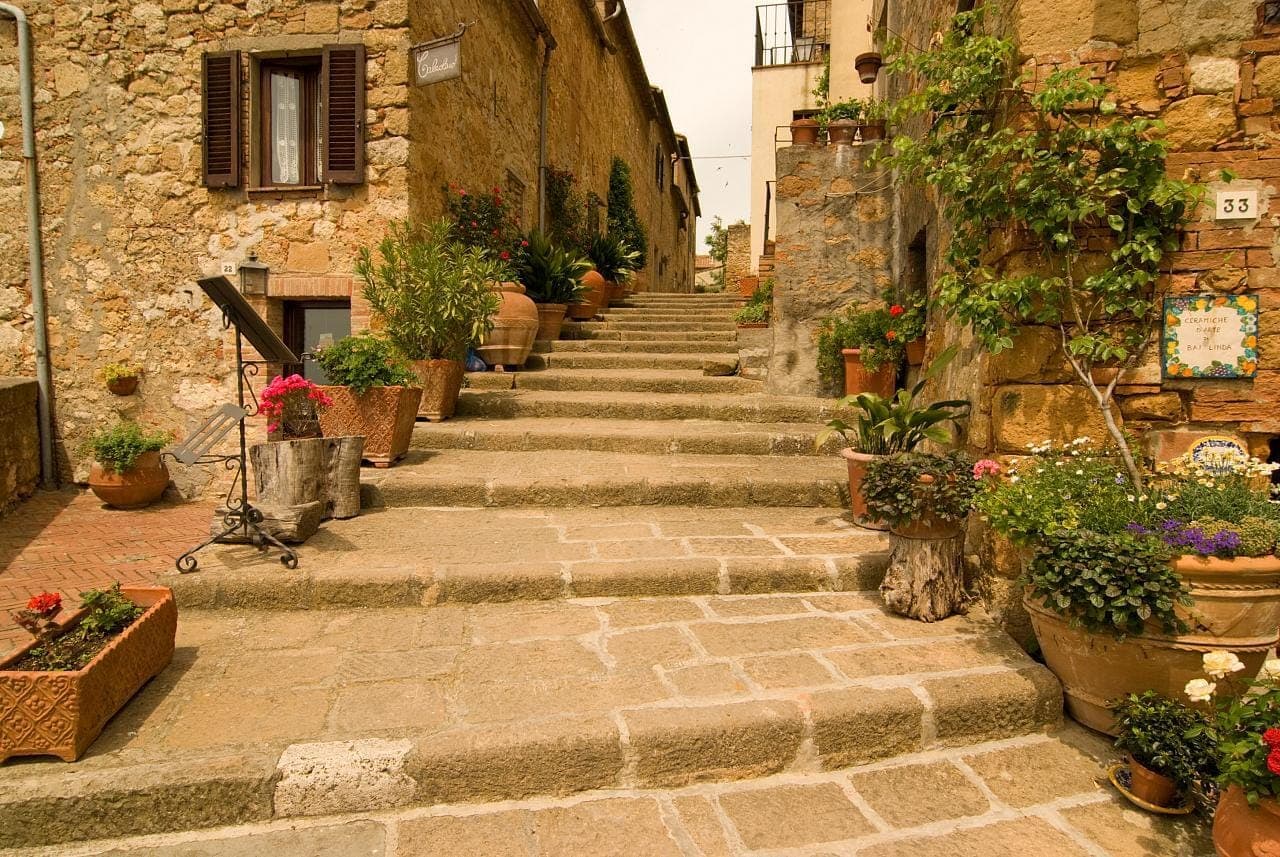
The first Renaissance ideal city, built from 1459 by Bernardo Rossellino for Pope Pius II on the Val d'Orcia ridge.
🏛️ UNESCO
More UNESCO towns in Tuscany
Barberino di Mugello
Province: Firenze
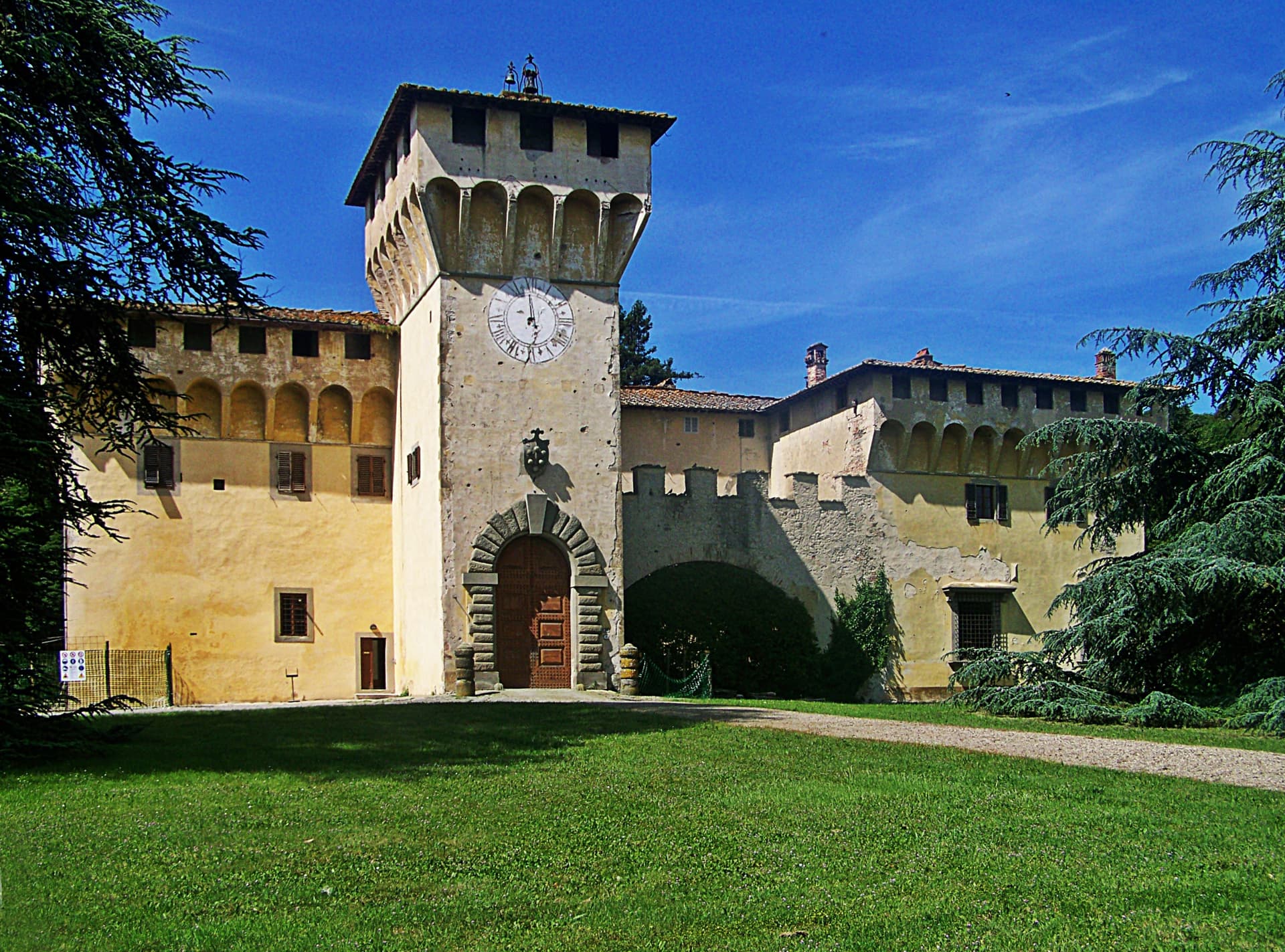
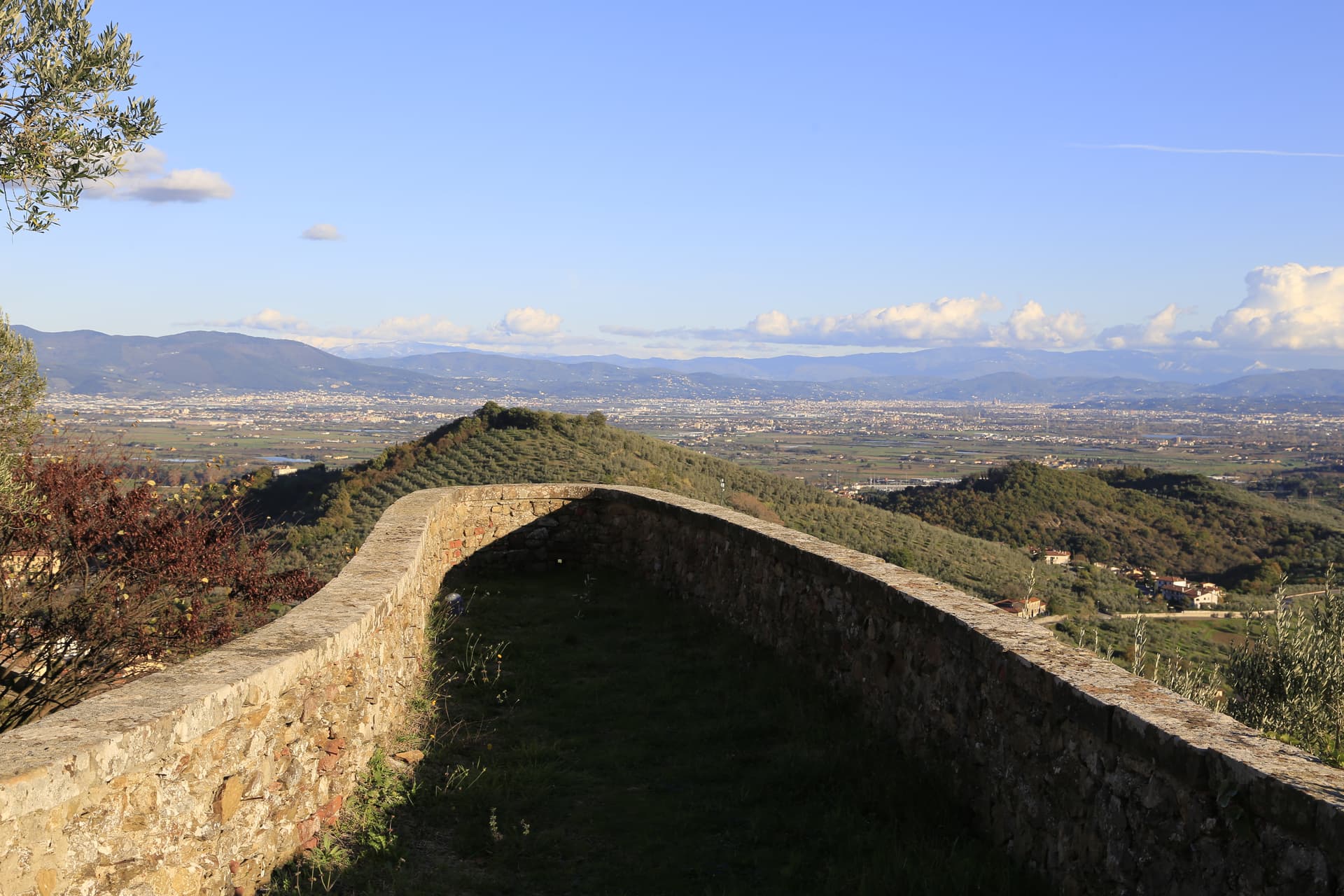
The Mugello gateway at 272 meters where the Medici family kept its first country villas, with Michelozzo's Cafaggiolo and the artificial Lago di Bilancino below.
Carmignano
Province: Prato
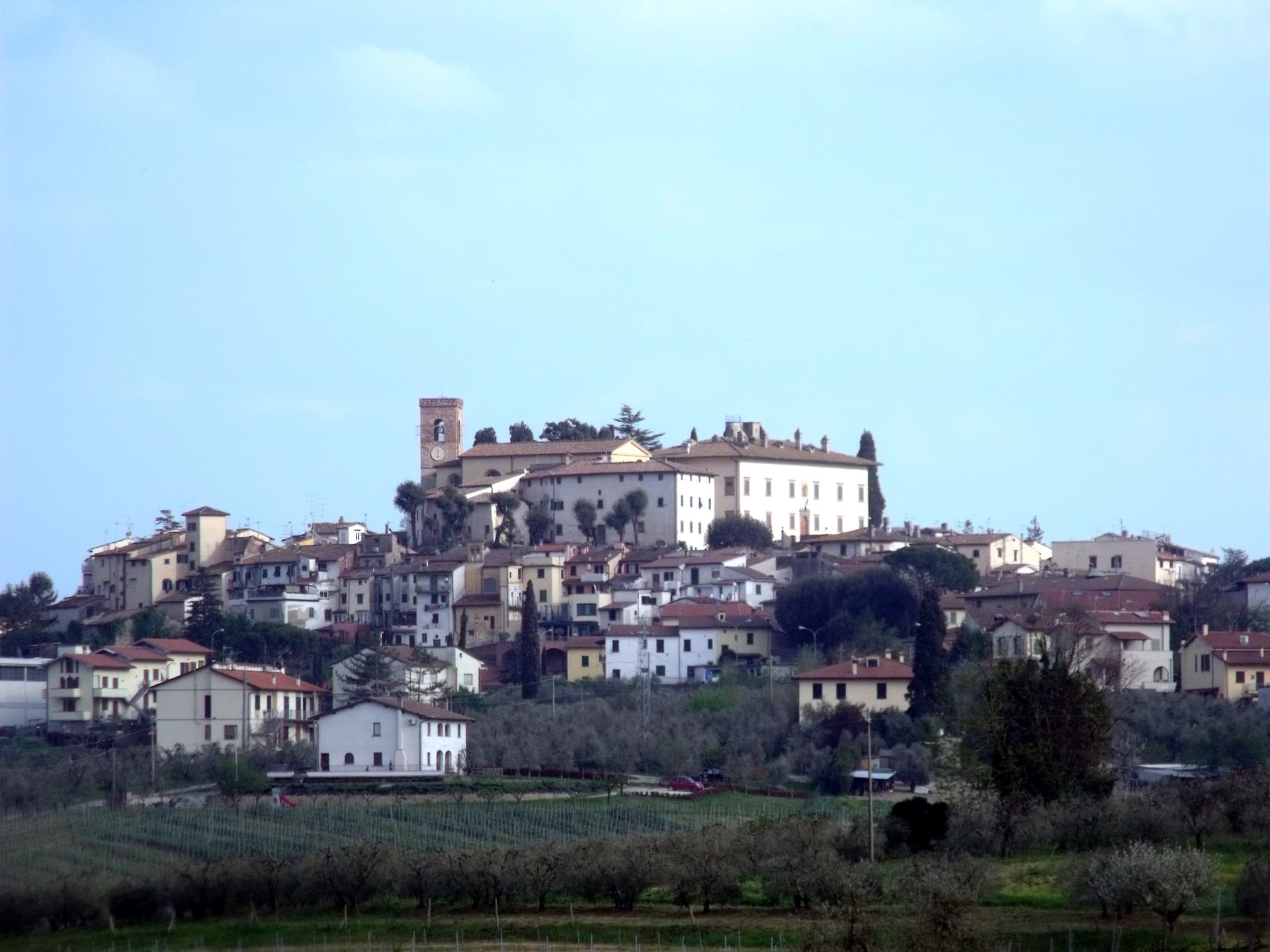
A Medici village at 189 meters on the Montalbano slopes, where Pontormo's Visitation hangs in the parish church and Etruscan tumuli sit below the Renaissance villas.
Cerreto Guidi
Province: Firenze
The Medici hunting villa above the Padule di Fucecchio, where Cosimo I sent his court for the marshland game and Buontalenti built four ramps of stairs.
Montecatini-Terme
Province: Pistoia
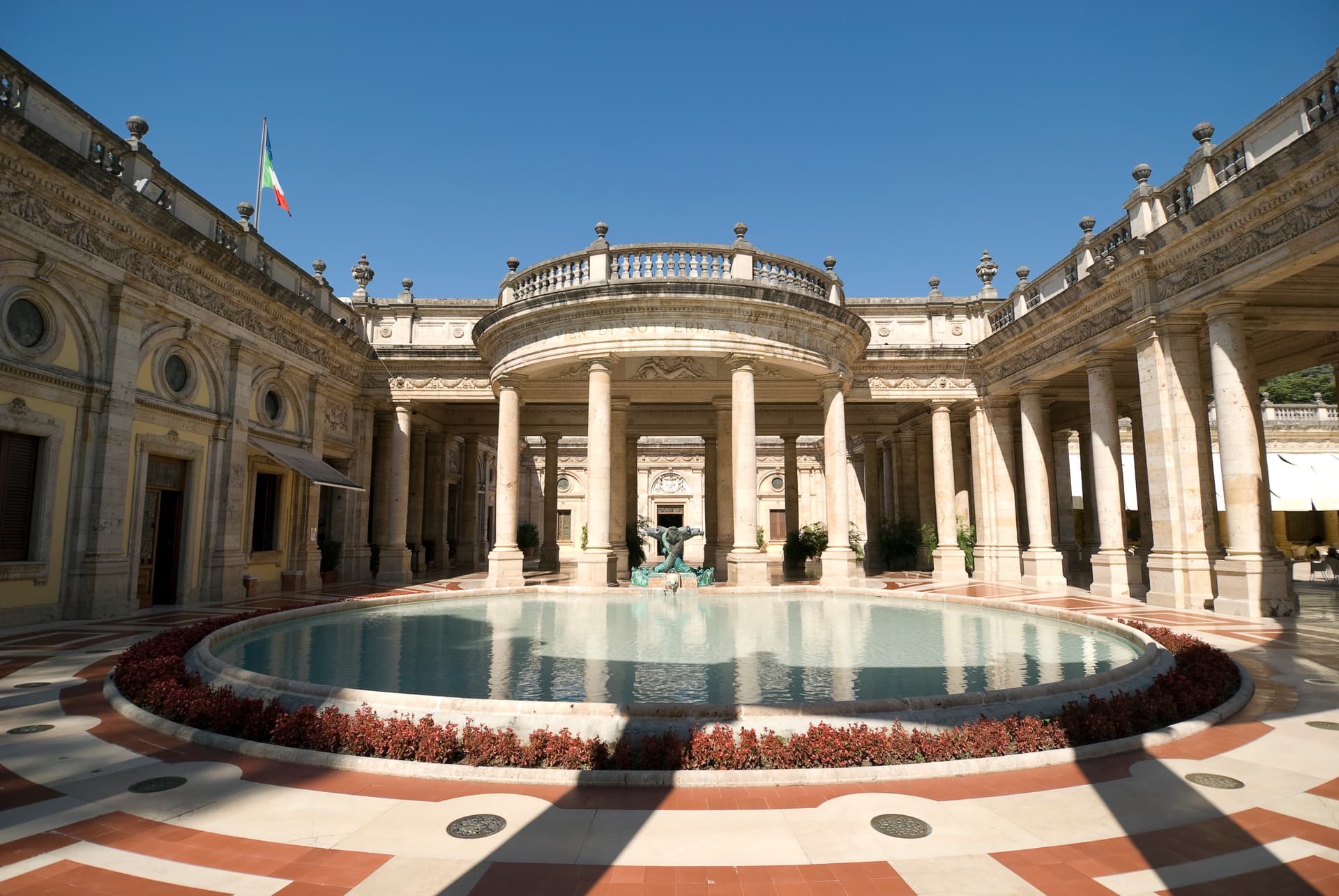
Eleven thermal springs in a Liberty-style park at the foot of the Apennines, one of the Great Spa Towns of Europe inscribed by UNESCO in 2021.