

Tuscany · Siena
Montalcino
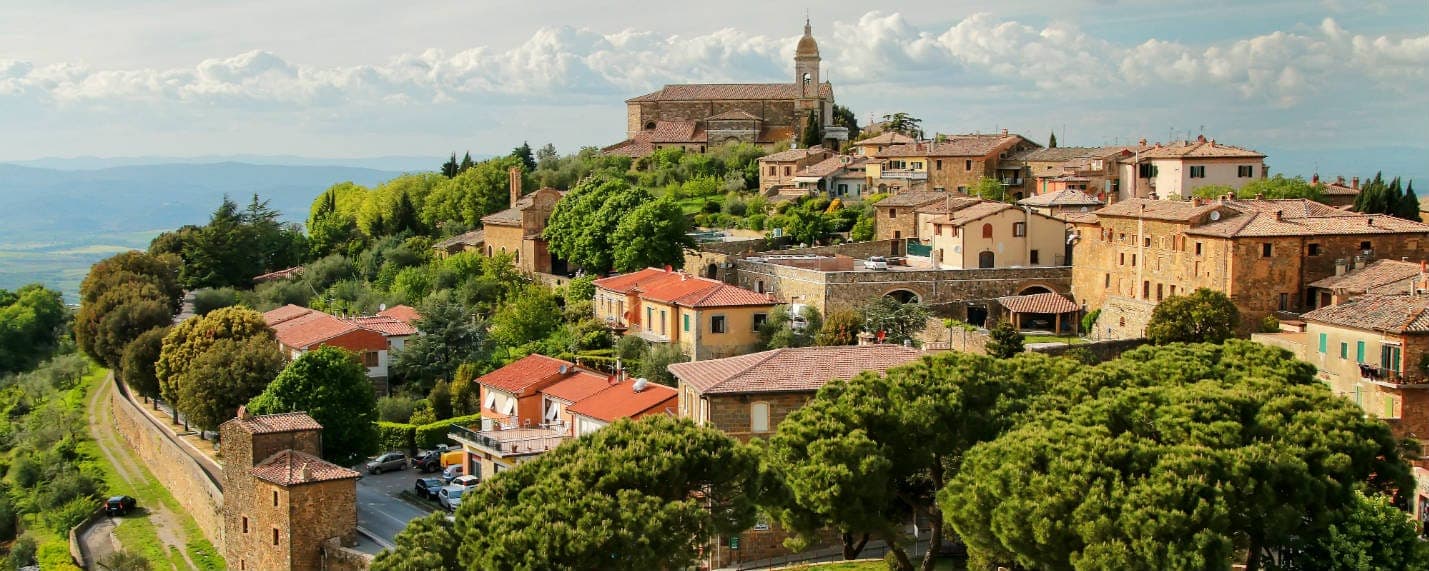
A walled hill town at 564 meters above the Val d'Orcia, the last fortress to hold out for the Sienese Republic and the birthplace of Brunello.
Known for
BRUNELLO
Sangiovese Grosso wine that received DOCG status in 1980, grown on galestro soils between 200 and 600 meters around the town.
THE LAST FORTRESS
After Florence took Siena in 1555, Montalcino held out for almost four years as capital of the Republic of Siena in exile.
SANT'ANTIMO
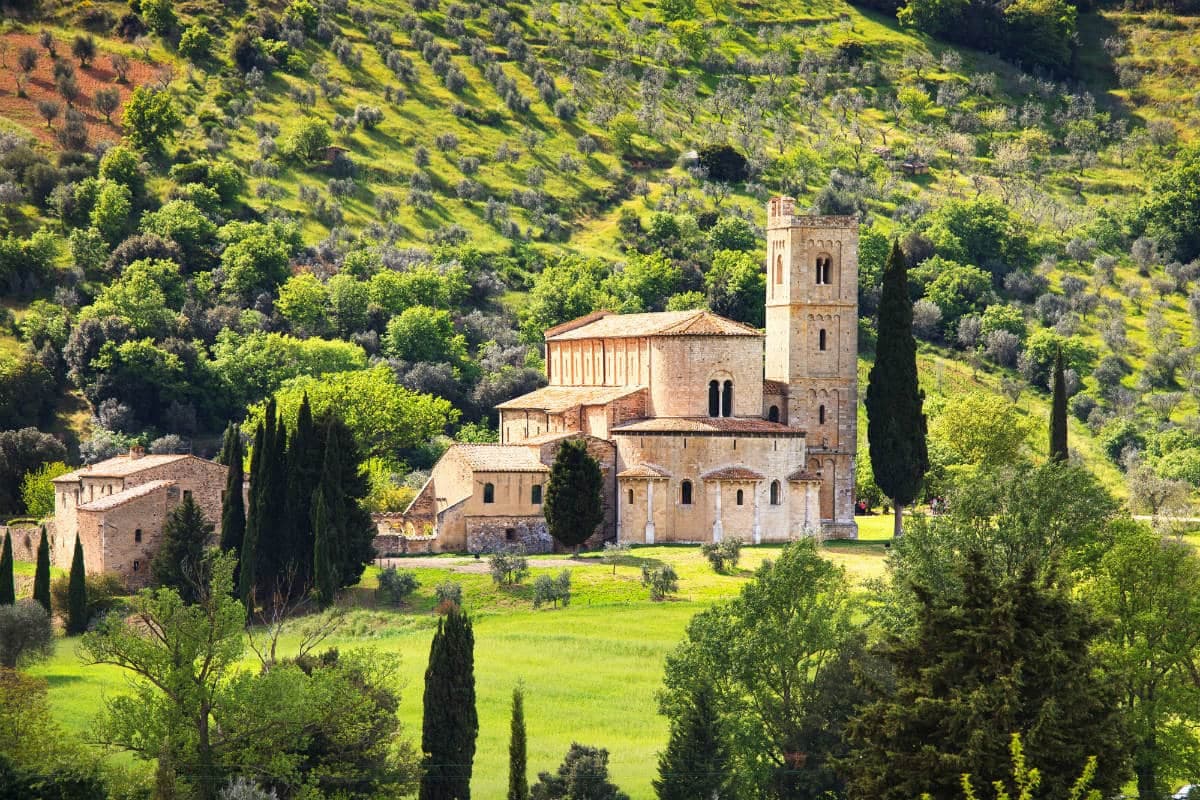
Romanesque abbey ten kilometers south, documented from 814, tied by local tradition to a vow by Charlemagne.
When to visit
Best · Apr–Oct
- J
- F
- M
- A
- M
- J
- J
- A
- S
- O
- N
- D
- Best
- Hot or crowded
- Quiet
- Mostly closed
Why come
Montalcino sits at 564 meters on a hill south of Siena, the centro storico ringed by walls and crowned by a pentagonal fortress built in 1361. When Florence took Siena in 1555, the Sienese exiles regrouped here and held out for almost four years; the Rocca itself never fell. That date matters less to most visitors than 1980, when Brunello di Montalcino was named one of the first four Italian wines to receive DOCG status.
The vineyards run from the town at 600 meters down to plots at 200, on stony galestro soils that ripen Sangiovese Grosso into a wine that ages for decades. The Abbey of Sant'Antimo, ten kilometers south, is a Romanesque church first documented in 814 and tied by local legend to a vow by Charlemagne. The town also produces miele, olio, and the white truffles of the surrounding woods. It carries seven institutional signals at once, more than any other commune in this batch.
What to see
Rocca di Montalcino
Pentagonal fortress built in 1361 by Sienese architects Mino Foresi and Domenico di Feo, refuge of the Sienese Republic after 1555.
Abbazia di Sant'Antimo
Romanesque abbey ten kilometers south, first documented in 814, set among olive groves below the town with Gregorian chant still sung.
Palazzo dei Priori
Thirteenth-century town hall on Piazza del Popolo, slender tower attached, civic seat of the medieval commune.
Duomo di San Salvatore
Neoclassical cathedral rebuilt in the 1820s on the site of an earlier Romanesque church, the parish seat of the centro storico.
Museo Civico e Diocesano
Civic and diocesan museum in the former monastery of Sant'Agostino, holding works by Bartolo di Fredi and Sano di Pietro.
The slow-trip planner
Building a trip? Find where Montalcino fits in a slow Italy circuit.
Answer five questions. We will shape a geographically coherent slow trip from the 1,000 Italian towns most travelers skip. Yours to save and share.
We recommend
Where to eat and stay
Not our picks, but places the guides put their name to — a Michelin star, a Gambero Rosso fork, a Slow Food snail, a Michelin Key for the hotels. Worth a table, a counter, or a night when you pass through.
Campo del DragoRistorante
Two Michelin stars for Campo del Drago, along with two Gambero Rosso forks (85/100) and a place in L'Espresso's Top 300, among other nods.
La Sala dei GrappoliRistorante
One Michelin star for La Sala dei Grappoli, and two Gambero Rosso forks (81/100).
Alle Logge di PiazzaWine Bar
Alle Logge di Piazza holds two Gambero Rosso bottles.
Boccon DiVinoRistorante
A spot in the Michelin Guide, at Boccon DiVino.
Caffè Fiaschetteria ItalianaCaffè
Caffè Fiaschetteria Italiana carries a place on Italy's historic-locali register.
Drogheria FranciRistorante
Drogheria Franci has one Gambero Rosso fork (78/100) to its name.
Il GiglioTrattoria
Il Giglio holds two Gambero Rosso prawns.
Il Passaggio by CapannaRistorante
Il Passaggio by Capanna has a place in L'Espresso's Top 300 to its name.
Il PozzoTrattoria
Il Pozzo carries two Gambero Rosso prawns.
Maccari - Pura CrocusAgriturismo
Maccari - Pura Crocus holds a Gambero Rosso listing.
Mastrojanni RelaisRistorante
Mastrojanni Relais holds one Gambero Rosso fork (79/100).
Taverna del Grappolo BluRistorante
Taverna del Grappolo Blu carries a Michelin Bib Gourmand.
Vineria ApertaWine Bar
Two Gambero Rosso bottles, at Vineria Aperta.
Vineria Le PotazzineWine Bar
Two Gambero Rosso bottles, at Vineria Le Potazzine.
Castello Banfi - Il BorgoHotel
Castello Banfi - Il Borgo has one Michelin Key to its name.
Castiglion del Bosco, A Rosewood HotelHotel
Three Michelin Keys, at Castiglion del Bosco, A Rosewood Hotel.
Mastrojanni RelaisHotel
Mastrojanni Relais holds a place in the Michelin hotel guide.
Rosewood Castiglion del BoscoHotel
Rosewood Castiglion del Bosco holds a La Liste score of 99.
Villa le Prata - Residenza del VescovoHotel
Villa le Prata - Residenza del Vescovo carries one Michelin Key.
Casanova di NeriCantina
A top-100 spot on the World's Best Vineyards, at Casanova di Neri.
Castello BanfiCantina
Castello Banfi carries a top-100 spot on the World's Best Vineyards.
Signature product
Brunello di Montalcino DOCGDOCG
100% Sangiovese, aged five years, the wine that put Montalcino on the world map.
See every town in our catalogue producing Brunello di Montalcino DOCG.
The Sunday letter
Montalcino got its letter. One town every Sunday, free — the photo, the food, the festa.
By subscribing you agree to Substack’s Terms of Use, our Privacy Policy and our Information collection notice.
Living here
- Population 5,611
- Off the beaten pathi
- Pharmacy in town
- High school within a 30-minute drive
- Train station in the comune
- Nearest airport Florence / Pisa, 2 h 48 min drive
- Regional capital Firenze, 1 h 59 min drive
Tags & datadesignations · numbers · sources
Recognised as
The numbers
- Elevation: 564 m
- Population: 5,611
- Surface area: 310.31 km²
These figures were compiled from public directories — ISTAT, OpenStreetMap, Wikidata — and from the official listings of the guides named on this page. Town details change; verify with official sources before you travel.
Close by
More towns near Montalcino
San Quirico d'Orcia
Province: Siena
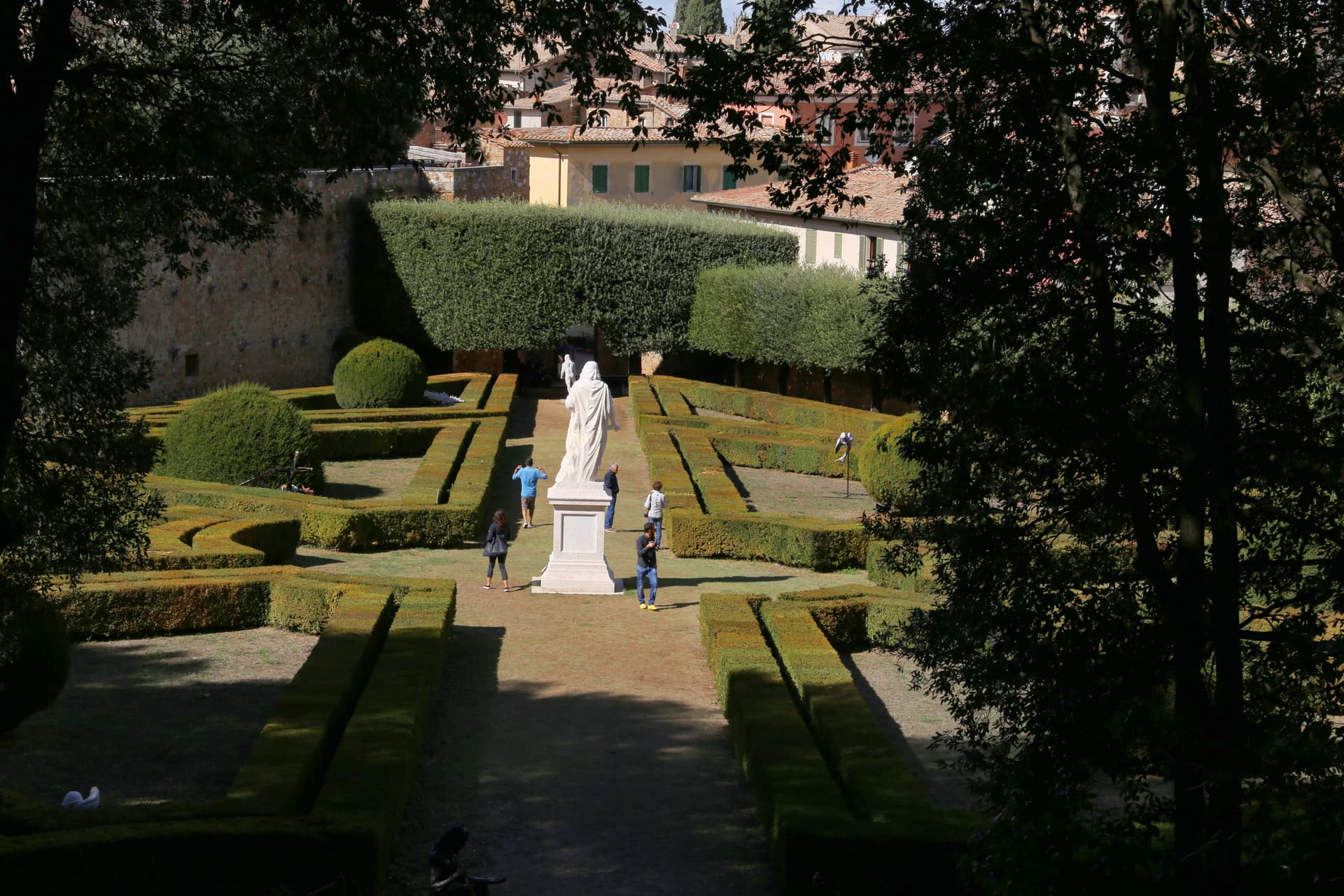
A walled stop on the Via Francigena at 409 meters in the UNESCO Val d'Orcia, where a twelfth-century Collegiata, a Renaissance garden and the Bagno Vignoni thermal pool sit within fifteen kilometers of each other.
Buonconvento
Province: Siena
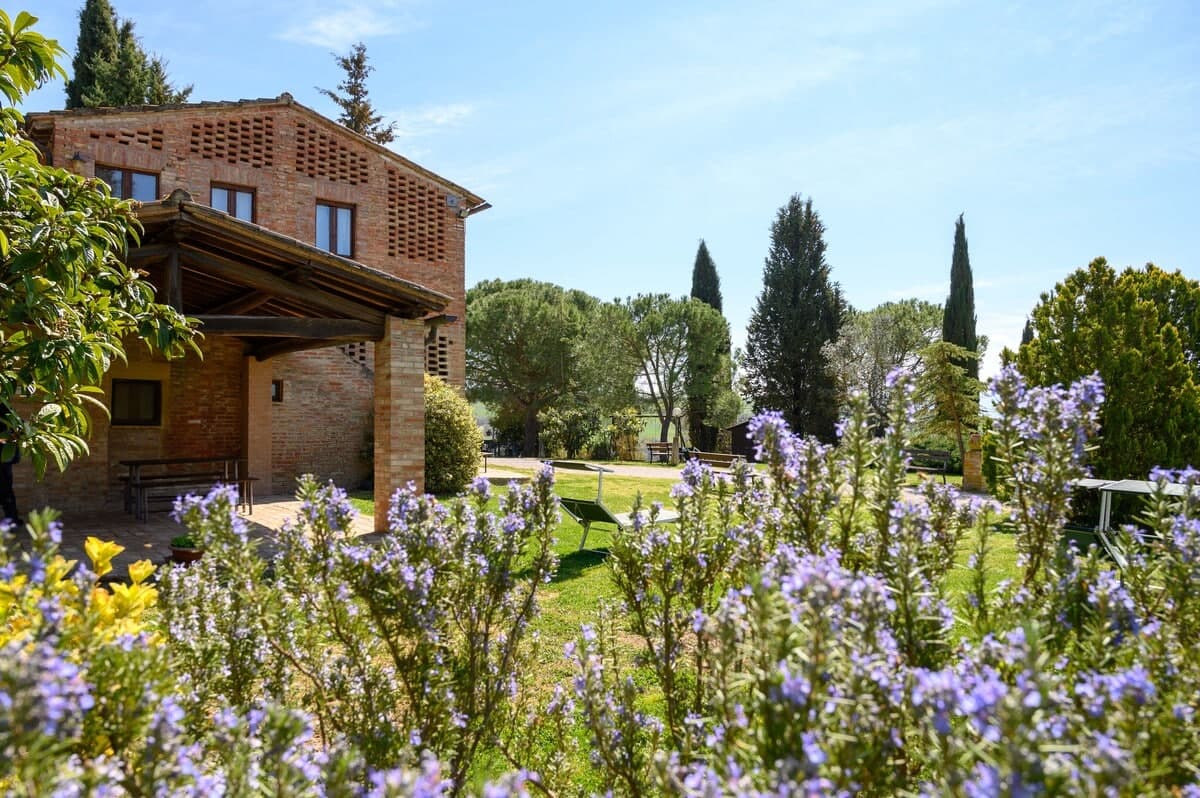
The walled brick borgo in the Crete Senesi where Emperor Henry VII died in 1313, on the Via Cassia at the confluence of the Arbia and Ombrone.
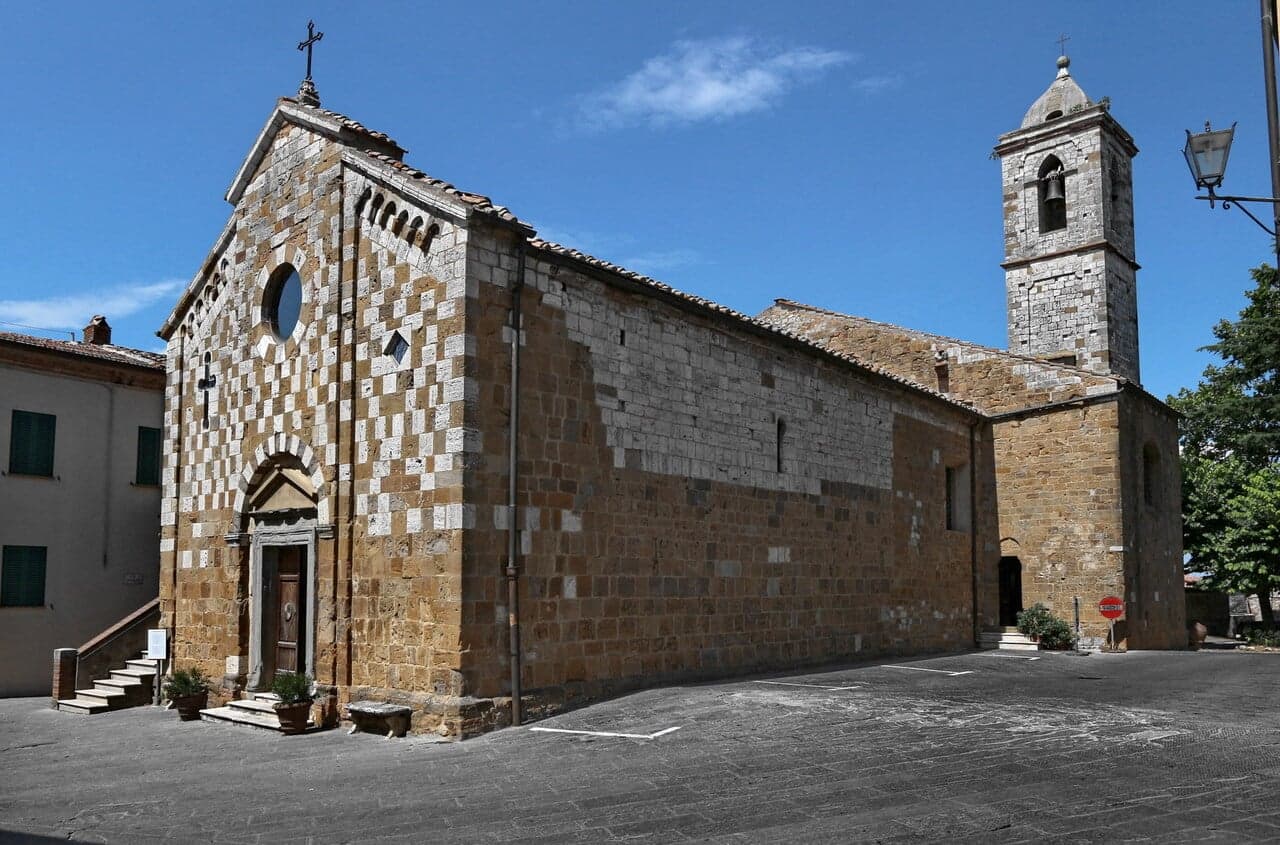
Trequanda
Province: Siena
A village of 1,166 in three hilltop borghi between Crete Senesi and Val di Chiana, with the terracotta workshops of Petroio holding to a five-hundred-year craft.
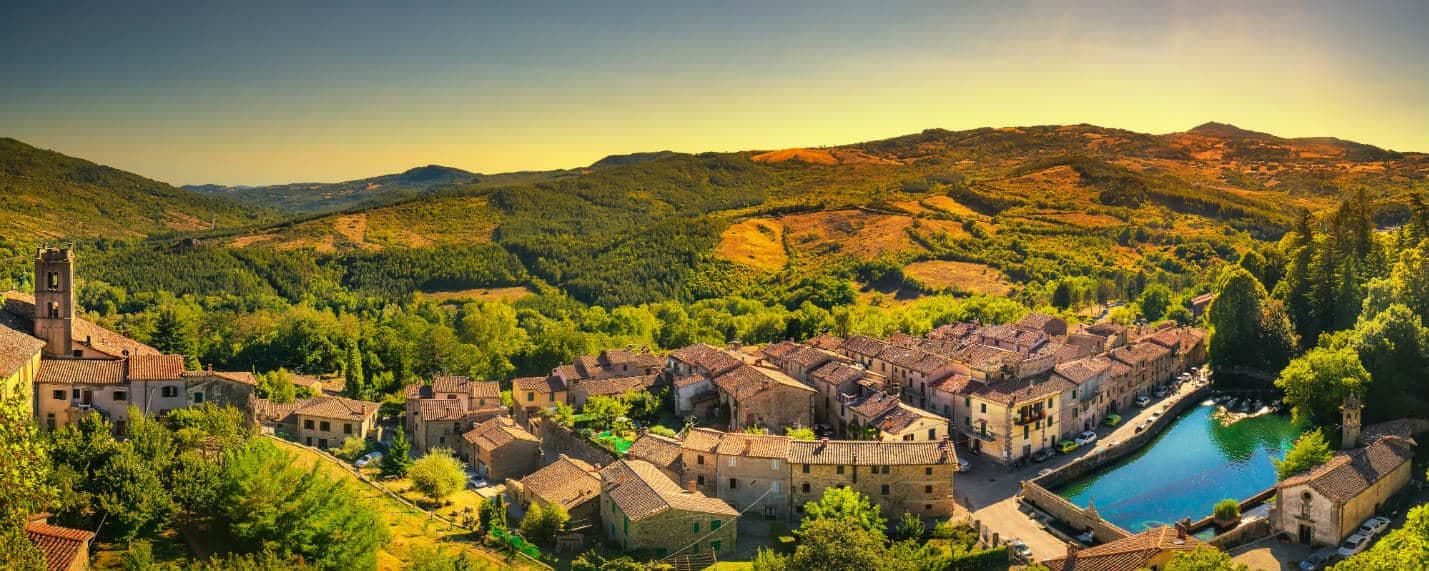
Santa Fiora
Province: Grosseto
An Aldobrandeschi and Sforza mountain borgo on Monte Amiata at 687 meters, holding one of the world's largest collections of Della Robbia terracotta.
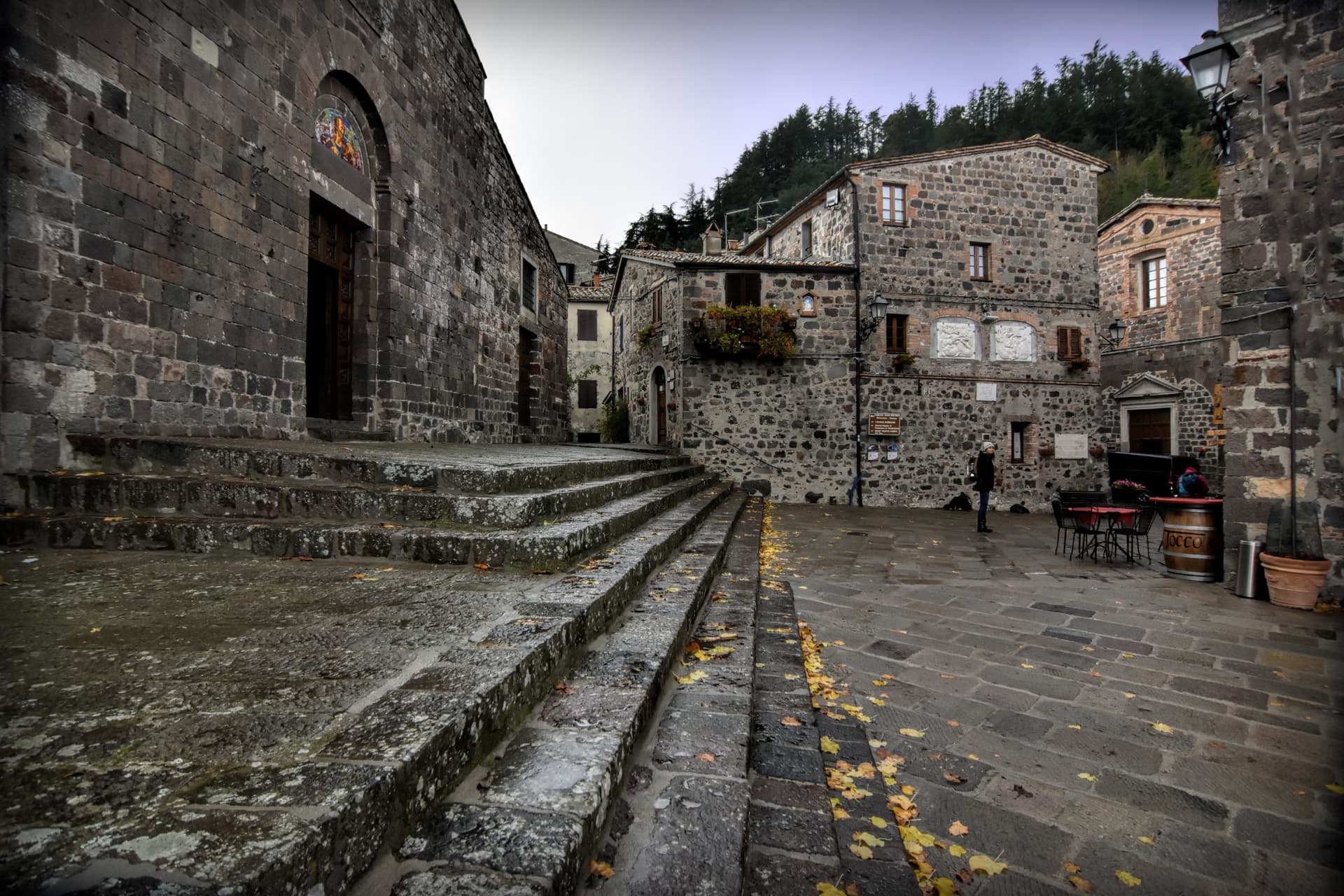
Radicofani
Province: Siena
The Val d'Orcia's basalt watchtower — a 1,060-resident UNESCO-inscribed borgo at 814m on a volcanic basalt outcrop visible across half of southern Tuscany, with the spectacular Rocca di Radicofani (Ghino di Tacco's outlaw fortress, mentioned by Dante in Purgatorio + Boccaccio in the Decameron), the 16th-c Posta Medicea on the Via Francigena, and Bandiera Arancione + UNESCO + Via Francigena triple signal.
🏛️ UNESCO
More UNESCO towns in Tuscany
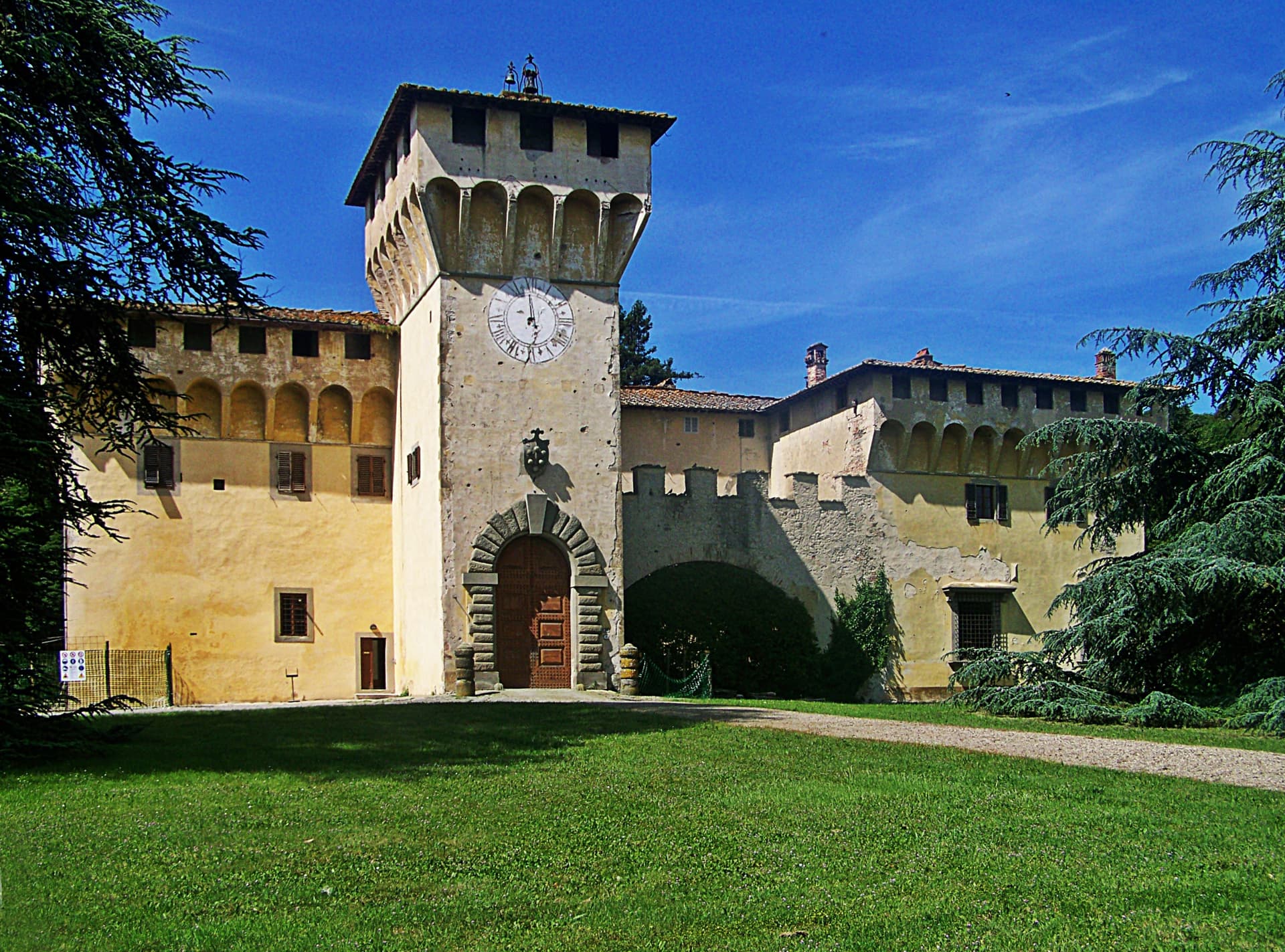
Barberino di Mugello
Province: Firenze
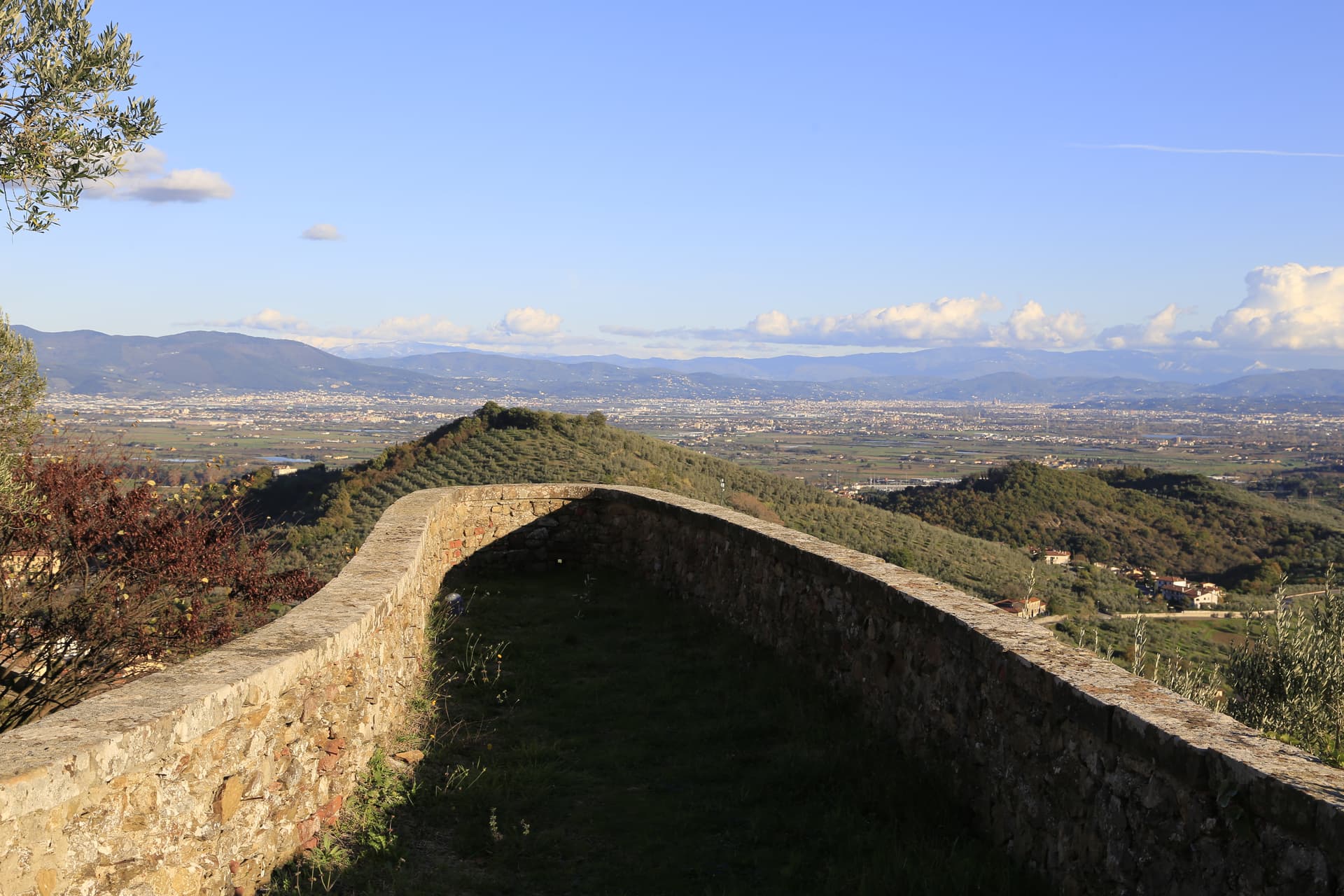
The Mugello gateway at 272 meters where the Medici family kept its first country villas, with Michelozzo's Cafaggiolo and the artificial Lago di Bilancino below.
Carmignano
Province: Prato
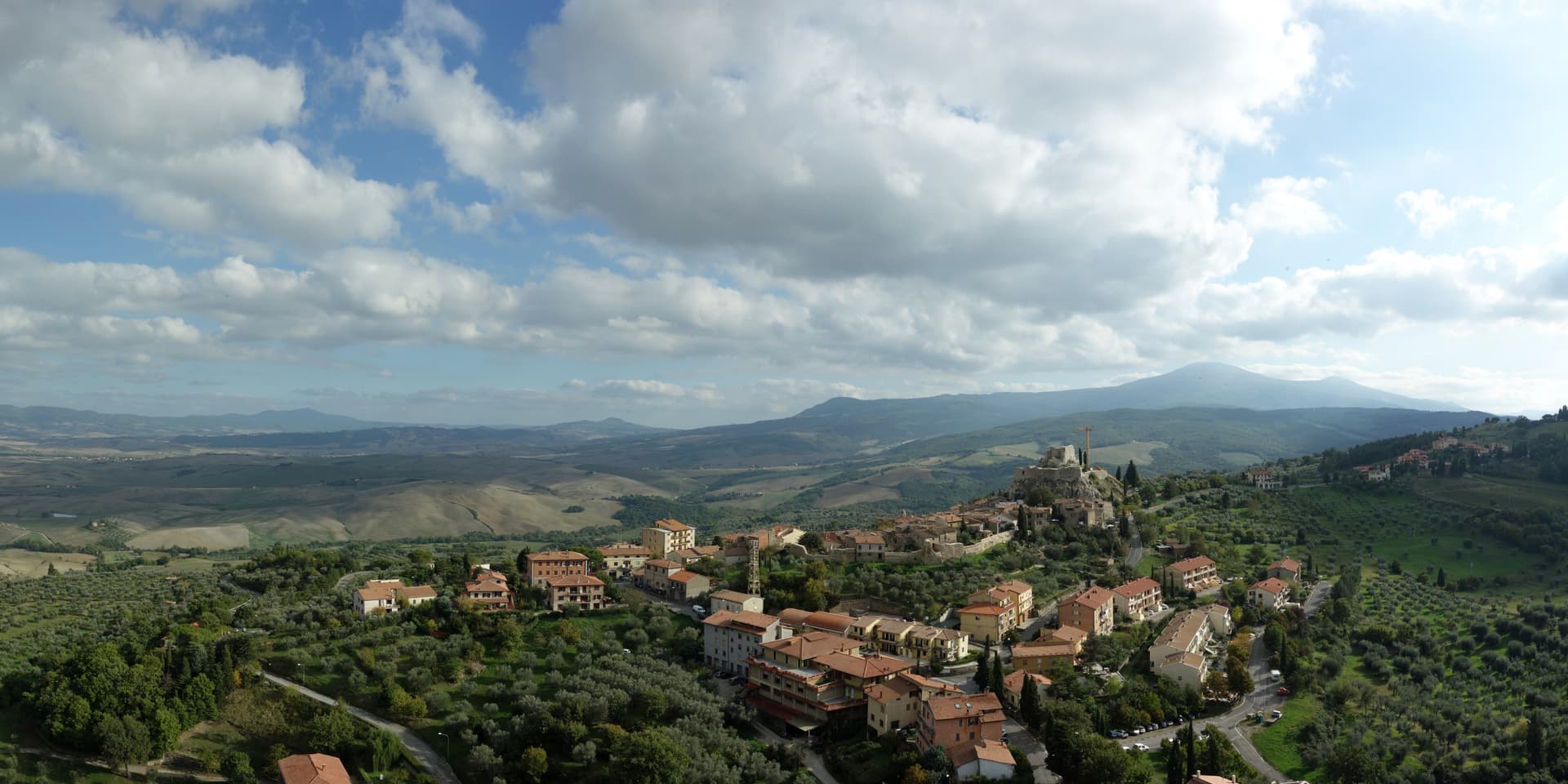
A Medici village at 189 meters on the Montalbano slopes, where Pontormo's Visitation hangs in the parish church and Etruscan tumuli sit below the Renaissance villas.
Castiglione d'Orcia
Province: Siena
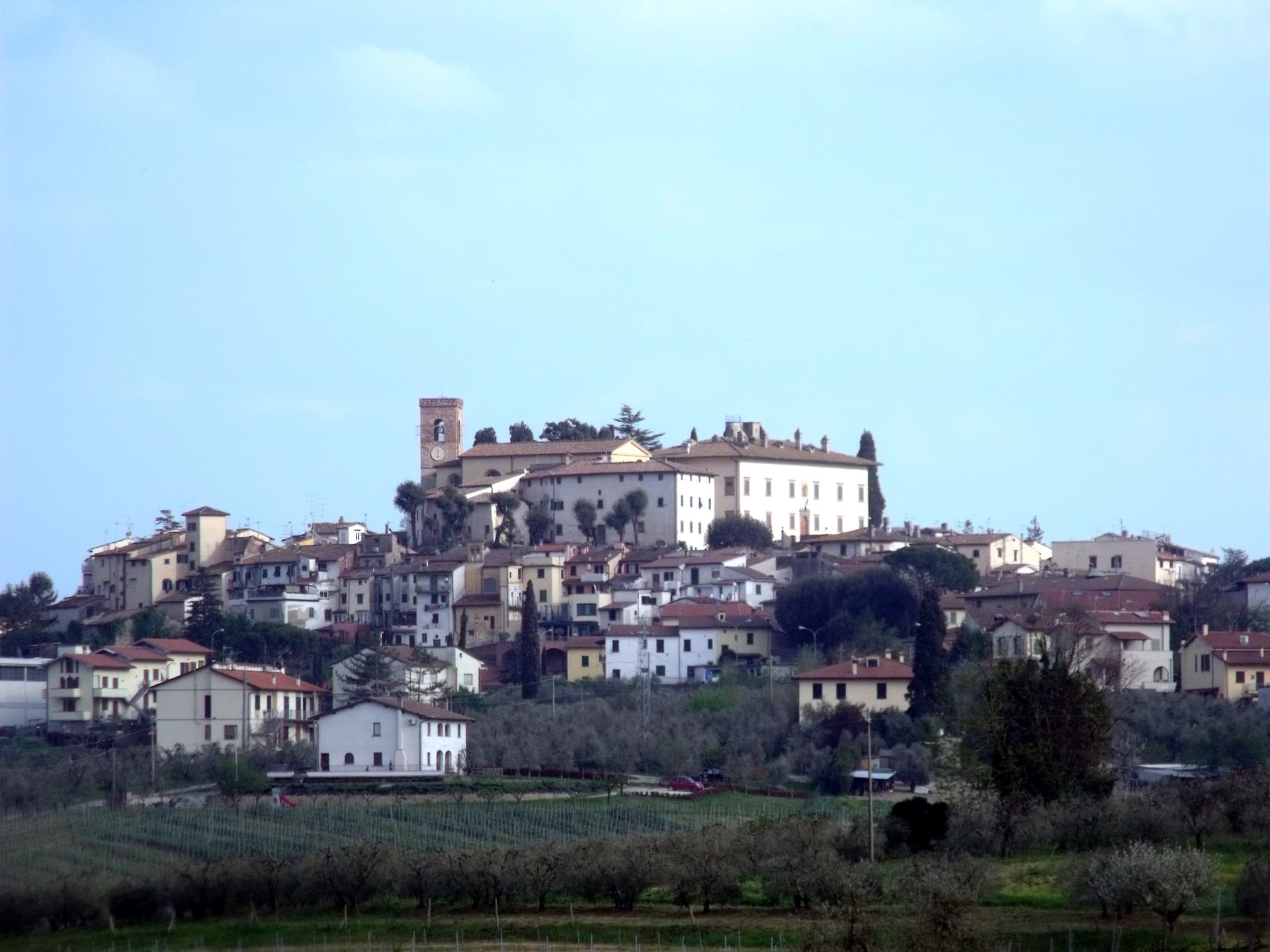
A stone borgo at 540 meters in the UNESCO Val d'Orcia, first recorded in 714, with two fortresses guarding the road from Amiata to the Via Francigena.
Cerreto Guidi
Province: Firenze
The Medici hunting villa above the Padule di Fucecchio, where Cosimo I sent his court for the marshland game and Buontalenti built four ramps of stairs.
Montecatini-Terme
Province: Pistoia
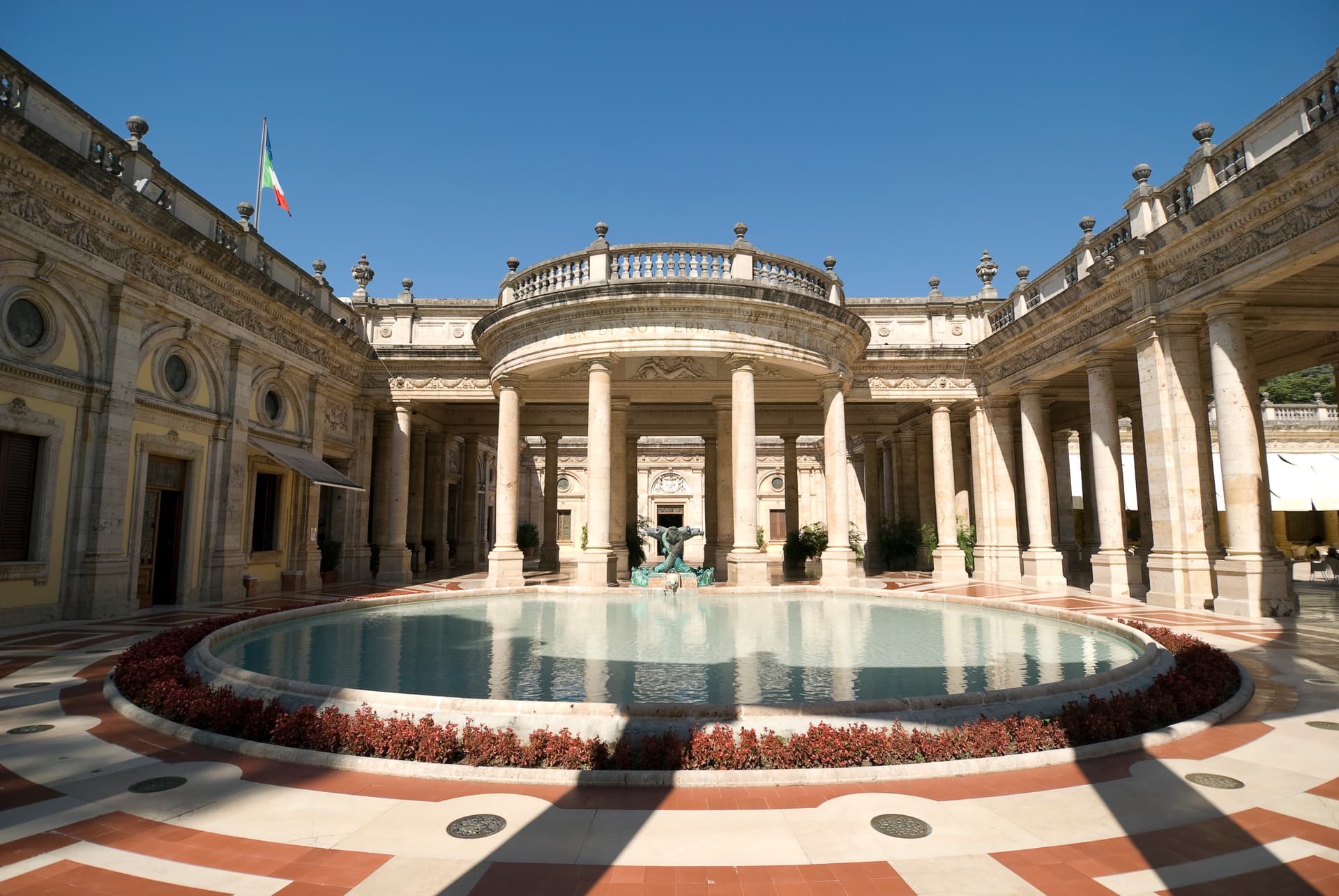
Eleven thermal springs in a Liberty-style park at the foot of the Apennines, one of the Great Spa Towns of Europe inscribed by UNESCO in 2021.