

Tuscany · Siena
San Quirico d'Orcia
A walled stop on the Via Francigena in the UNESCO Val d'Orcia, where a twelfth-century Collegiata, a Renaissance garden and the Bagno Vignoni thermal pool sit within fifteen kilometers of each other.
Known for
VAL D'ORCIA
UNESCO World Heritage cultural landscape inscribed in 2004, the rolling country shaped by Sienese governance in the fourteenth and fifteenth centuries.
VIA FRANCIGENA
Working stop on the pilgrim route from Canterbury to Rome since Sigeric described it in the tenth century, with the medieval hospital still standing.
BAGNO VIGNONI
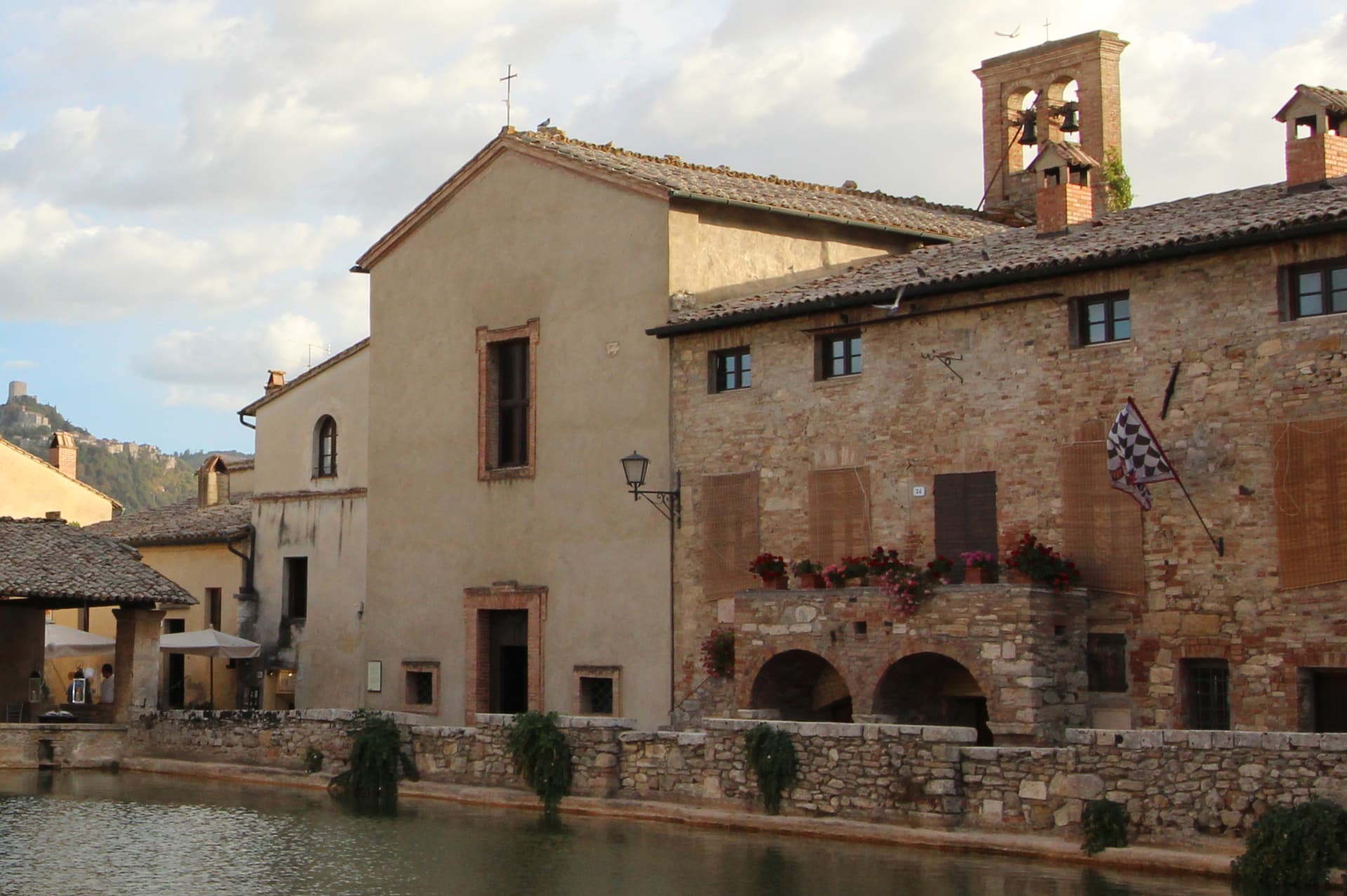
Thermal frazione where the village piazza is a sixteenth-century pool fed by hot springs at 49 degrees, used since the Etruscans.
When to visit
Best · Apr–Oct
- J
- F
- M
- A
- M
- J
- J
- A
- S
- O
- N
- D
- Best
- Hot or crowded
- Quiet
- Mostly closed
Why come
San Quirico d'Orcia sits on a low rise in the Val d'Orcia, the rolling clay-and-tufa landscape inscribed by UNESCO in 2004 as a cultural landscape shaped by fourteenth and fifteenth-century Sienese governance. The town was a stage on Sigeric the Serious's tenth-century Via Francigena from Canterbury to Rome and has remained a working stop on the route ever since. The Collegiata dei Santi Quirico e Giulitta was built at the end of the twelfth century over an eighth-century baptistery; the lateral portal added in 1288 is attributed to Giovanni Pisano, then working on the Siena cathedral.
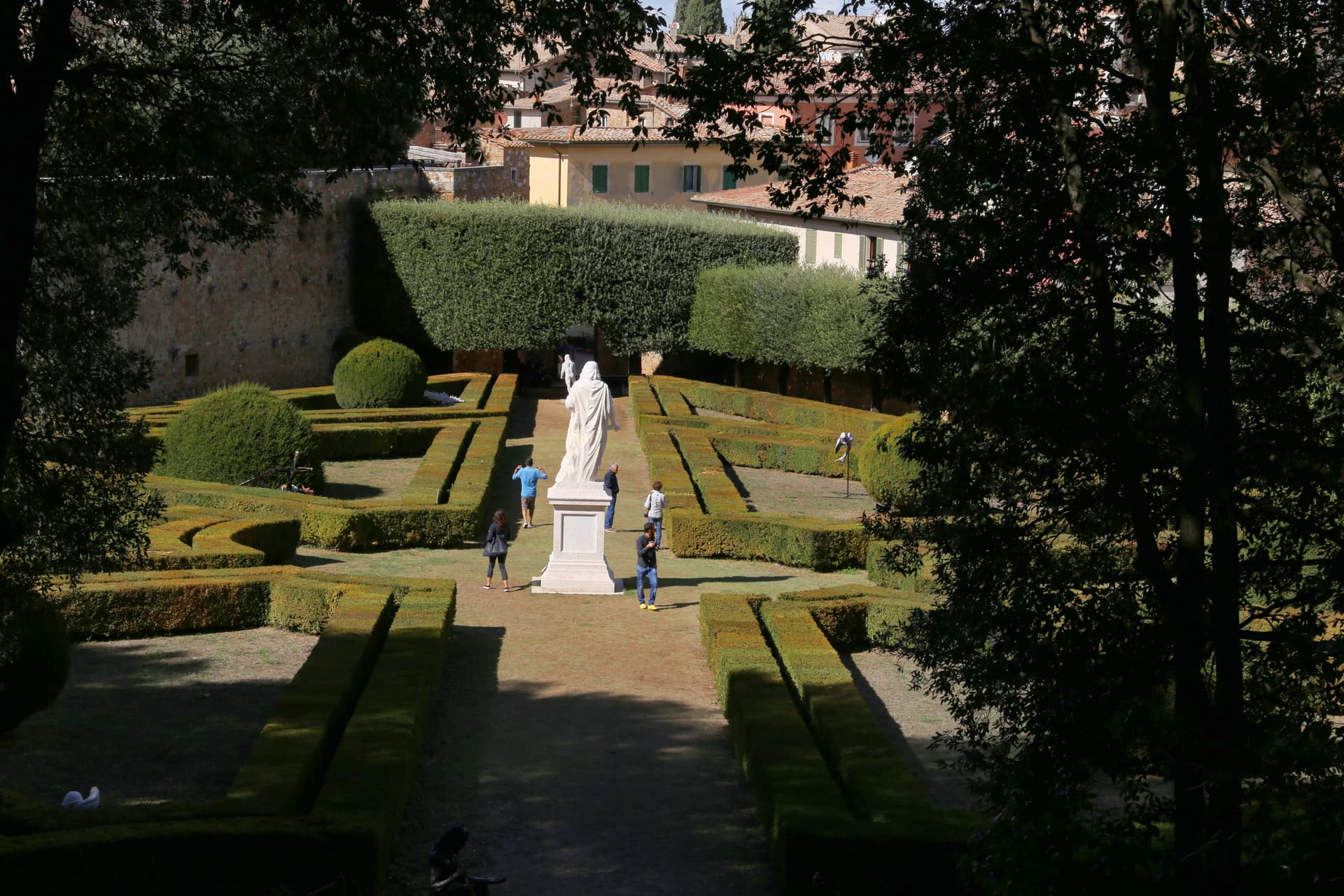
The Horti Leonini, the geometric boxwood garden laid out by Diomede Leoni around 1580 inside the town walls, hosts the Forme nel Verde sculpture exhibition every summer since 1971. Bagno Vignoni, the frazione five kilometers down the road, has a thermal pool at the center of its piazza, used since Etruscan times. Few comuni this small carry UNESCO, thermal and Francigena signals at once.
What to see
Collegiata dei Santi Quirico e Giulitta
Romanesque parish church built late twelfth century over an eighth-century baptistery, with the 1288 lateral portal attributed to Giovanni Pisano.
Horti Leonini
Italianate boxwood garden laid out by Diomede Leoni around 1580 inside the town walls, hosting the Forme nel Verde sculpture exhibition since 1971.
Bagno Vignoni
Frazione five kilometers south, with a sixteenth-century thermal pool at the center of its piazza, fed by springs used since Etruscan times.
Palazzo Chigi
Late seventeenth-century palace on the main street, built for the Chigi-Zondadari family of Siena, now used for cultural exhibitions and concerts.
Chiesa di Santa Maria Assunta
Smaller Romanesque church near Porta Cappuccini, with thirteenth-century fresco fragments and a single nave.
Val d'Orcia
UNESCO cultural landscape of cypress-lined ridges, clay crete and farmland inscribed in 2004, visible from every approach to the town.
The slow-trip planner
Building a trip? Find where San Quirico d'Orcia fits in a slow Italy circuit.
Answer five questions. We will shape a geographically coherent slow trip from the 1,000 Italian towns most travelers skip. Yours to save and share.
We recommend
Where to eat and stay
Not our picks, but places the guides put their name to — a Michelin star, a Gambero Rosso fork, a Slow Food snail, a Michelin Key for the hotels. Worth a table, a counter, or a night when you pass through.
Da CiaccoRistorante
Da Ciacco has a spot in the Michelin Guide to its name.
Trattoria Toscana al Vecchio FornoRistorante
Trattoria Toscana al Vecchio Forno holds a spot in the Michelin Guide.
The Sunday letter
San Quirico d'Orcia got its letter. One town every Sunday, free — the photo, the food, the festa.
By subscribing you agree to Substack’s Terms of Use, our Privacy Policy and our Information collection notice.
Living here
- Population 2,572
- Off the beaten pathi
- Pharmacy in town
- High school within a 30-minute drive
- Nearest airport Bologna, 2 h 50 min drive
- Regional capital Firenze, 1 h 50 min drive
Thermal baths in town: Piscina Termale Val di Sole, Bagno Vignoni Terme Libere, Bagno Vignoni.
Tags & datadesignations · numbers · sources
Recognised as
The numbers
- Elevation: 409 m
- Population: 2,572
- Surface area: 42.12 km²
These figures were compiled from public directories — ISTAT, OpenStreetMap, Wikidata — and from the official listings of the guides named on this page. Town details change; verify with official sources before you travel.
Close by
More towns near San Quirico d'Orcia
Montalcino
Province: Siena
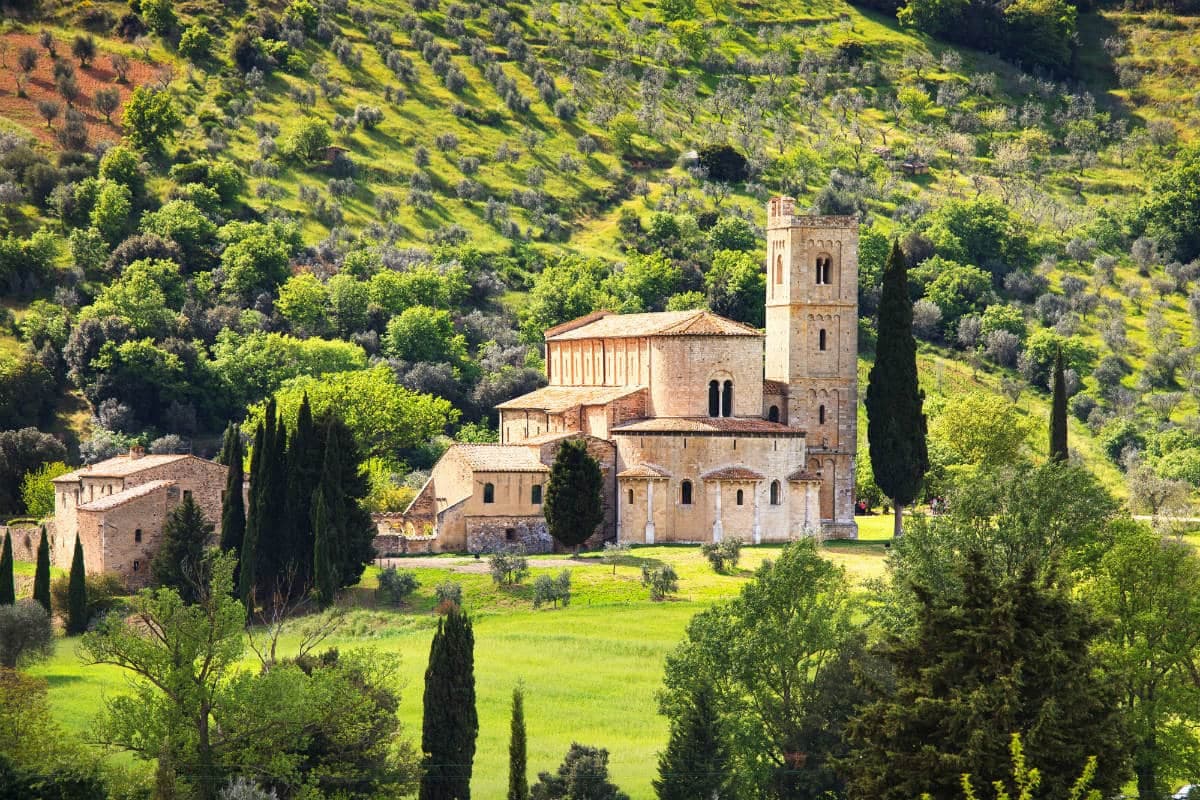
A walled hill town at 564 meters above the Val d'Orcia, the last fortress to hold out for the Sienese Republic and the birthplace of Brunello.
Buonconvento
Province: Siena
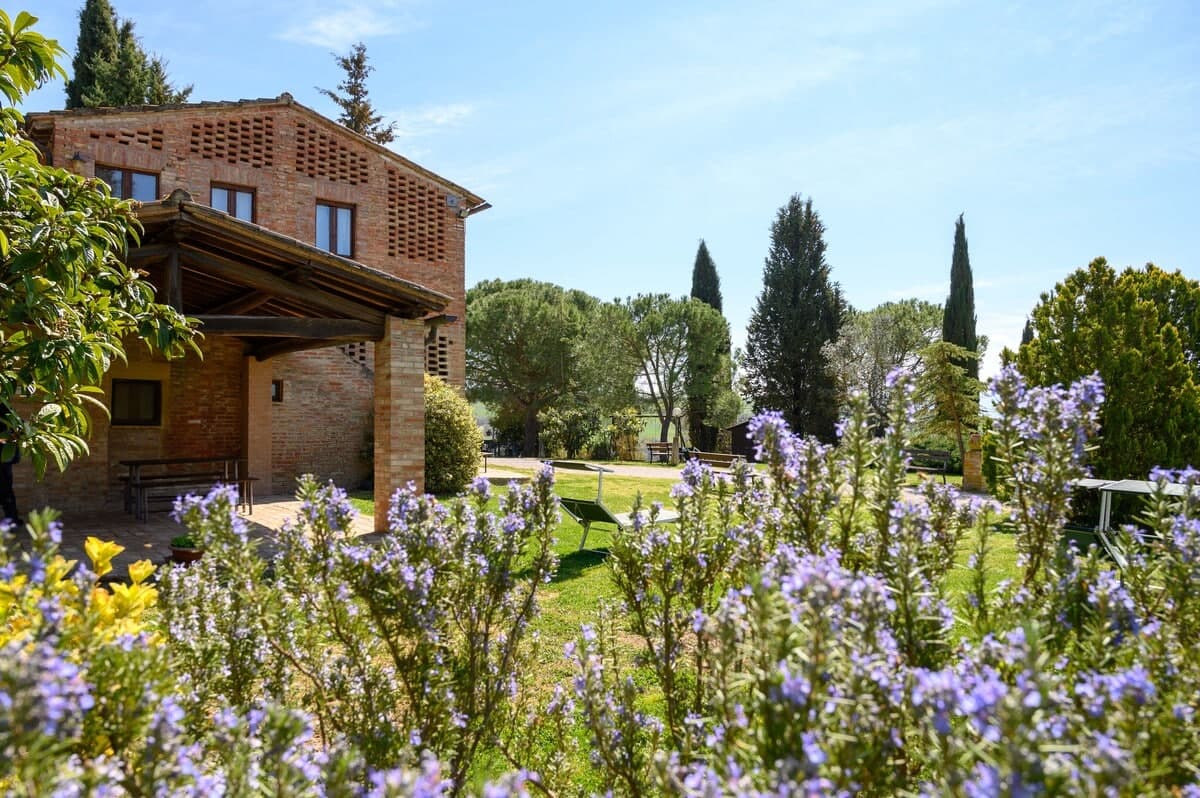
The walled brick borgo in the Crete Senesi where Emperor Henry VII died in 1313, on the Via Cassia at the confluence of the Arbia and Ombrone.
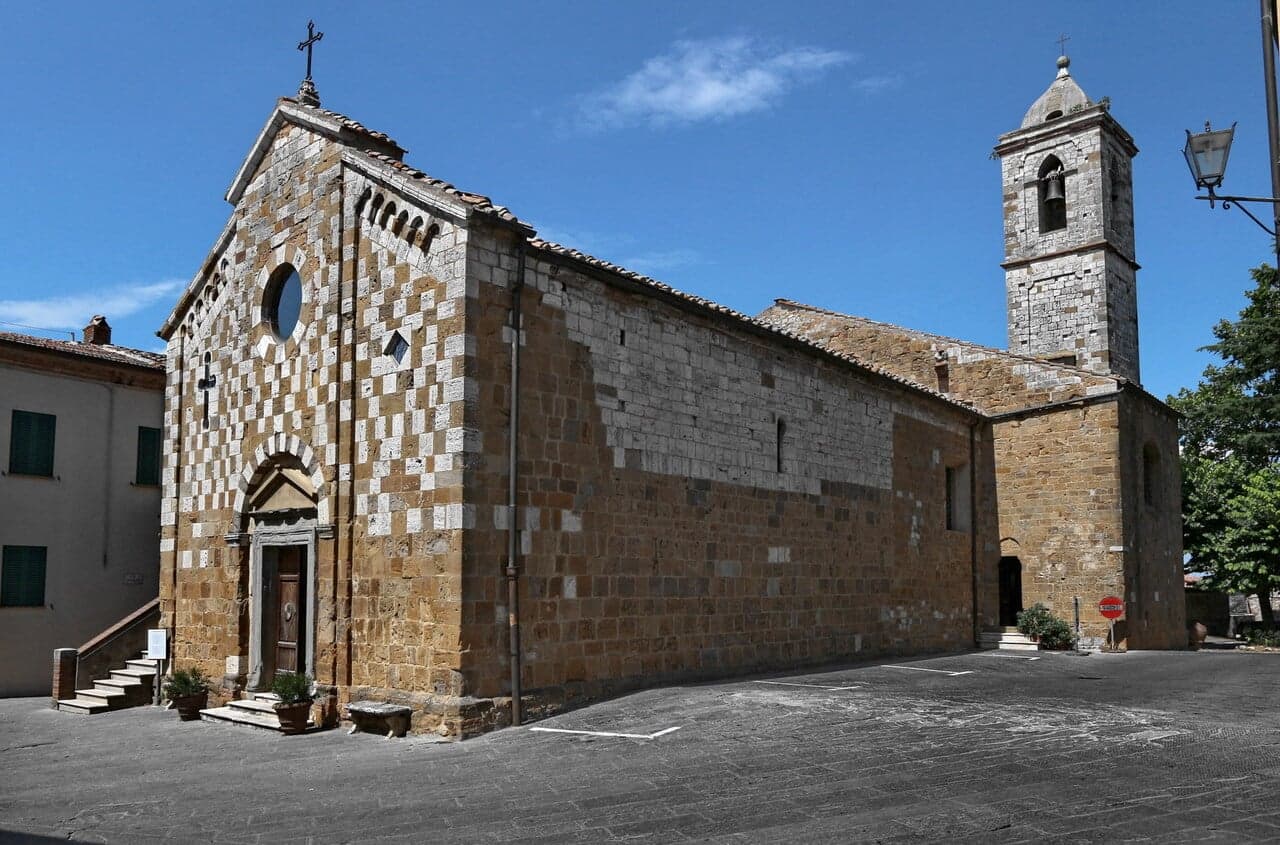
Trequanda
Province: Siena
A village of 1,166 in three hilltop borghi between Crete Senesi and Val di Chiana, with the terracotta workshops of Petroio holding to a five-hundred-year craft.
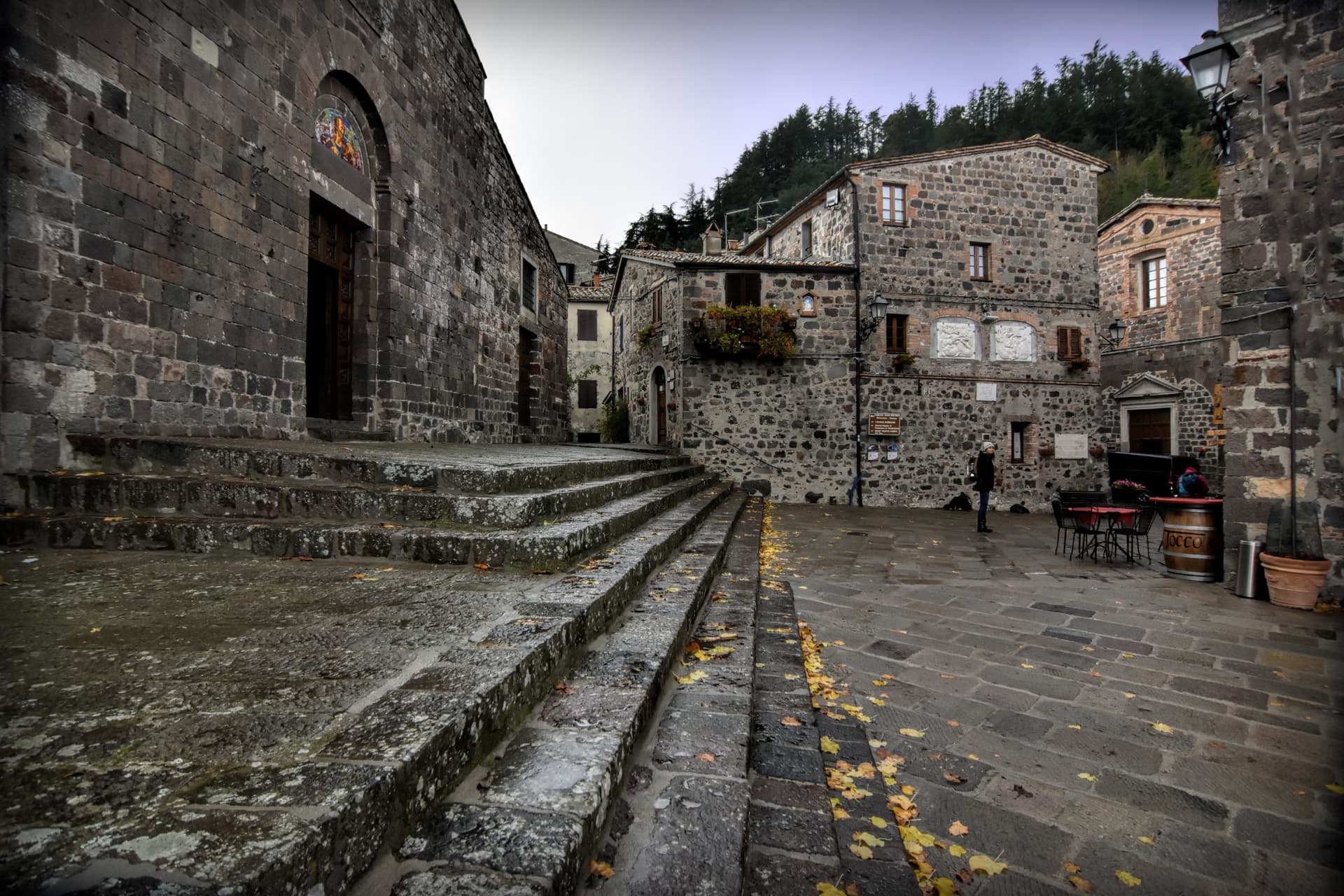
Radicofani
Province: Siena
The Val d'Orcia's basalt watchtower — a 1,060-resident UNESCO-inscribed borgo at 814m on a volcanic basalt outcrop visible across half of southern Tuscany, with the spectacular Rocca di Radicofani (Ghino di Tacco's outlaw fortress, mentioned by Dante in Purgatorio + Boccaccio in the Decameron), the 16th-c Posta Medicea on the Via Francigena, and Bandiera Arancione + UNESCO + Via Francigena triple signal.
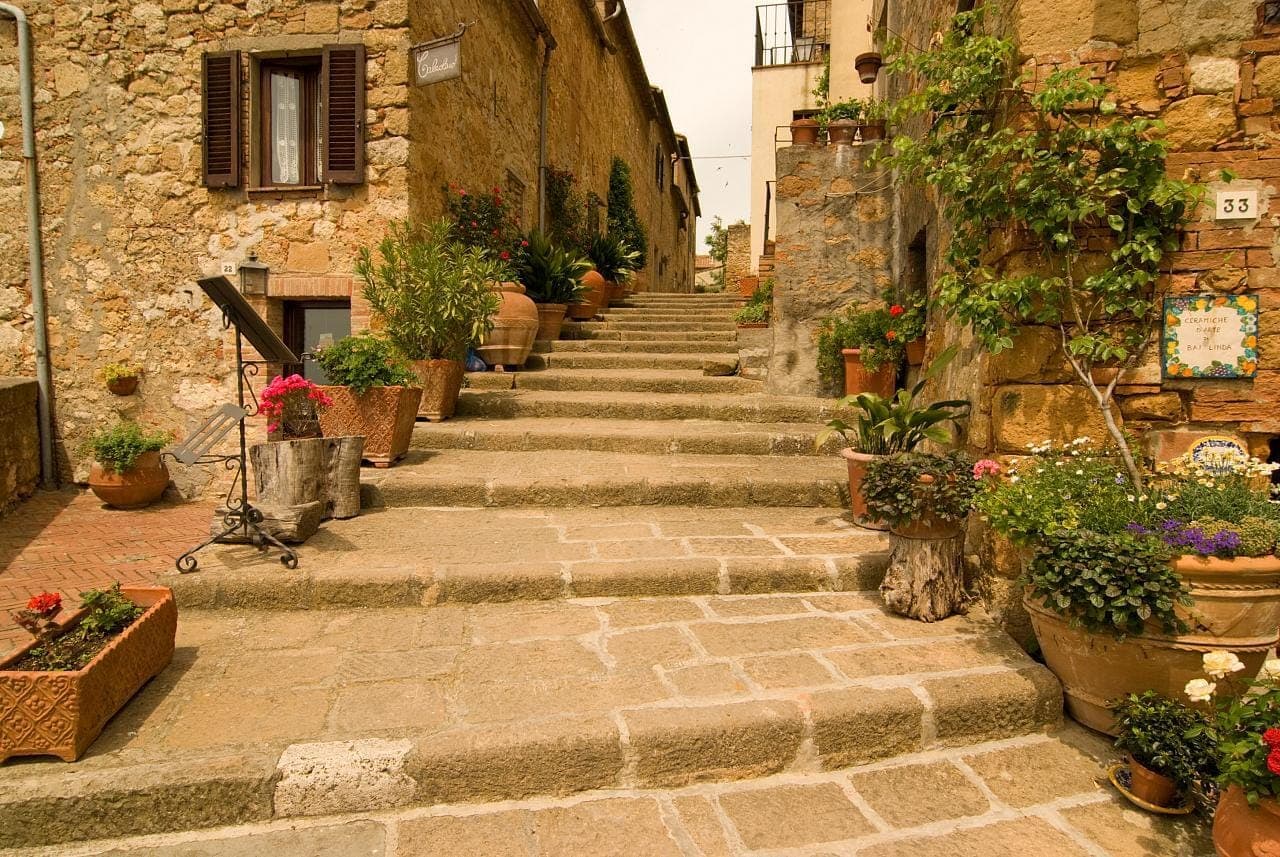
Pienza
Province: Siena
The first Renaissance ideal city, built from 1459 by Bernardo Rossellino for Pope Pius II on the Val d'Orcia ridge.
🏛️ UNESCO
More UNESCO towns in Tuscany
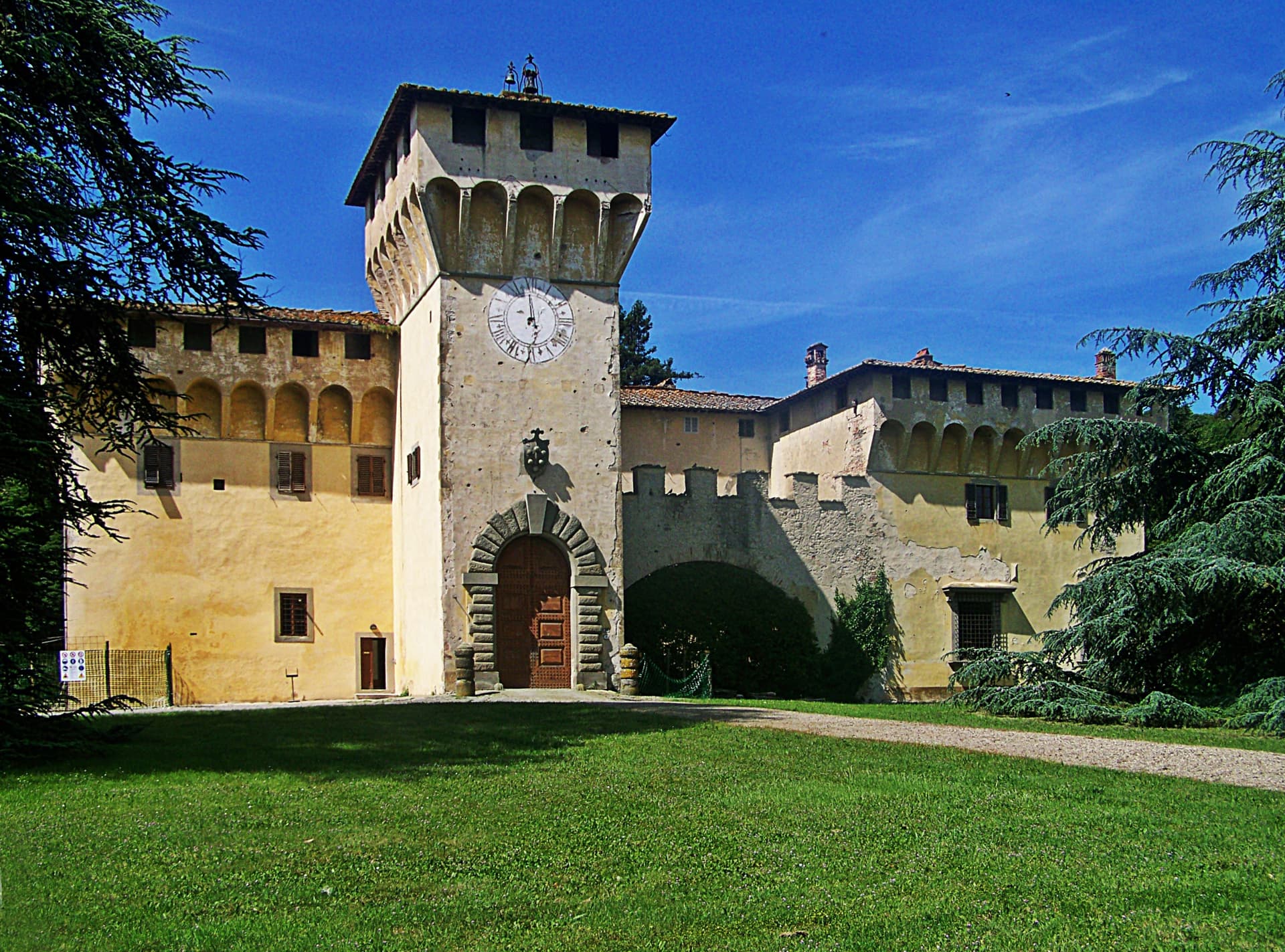
Barberino di Mugello
Province: Firenze
The Mugello gateway at 272 meters where the Medici family kept its first country villas, with Michelozzo's Cafaggiolo and the artificial Lago di Bilancino below.
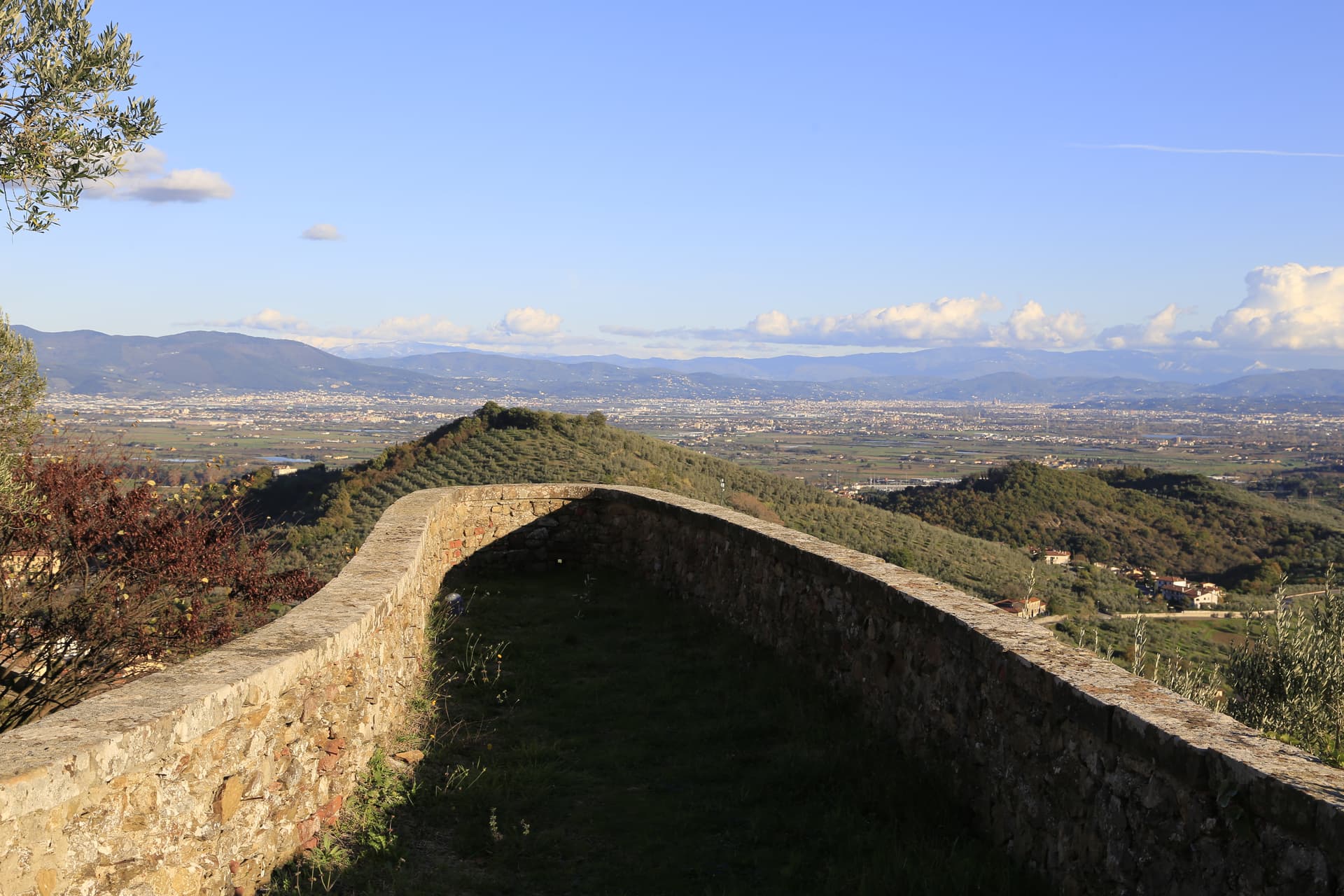
Carmignano
Province: Prato
A Medici village at 189 meters on the Montalbano slopes, where Pontormo's Visitation hangs in the parish church and Etruscan tumuli sit below the Renaissance villas.
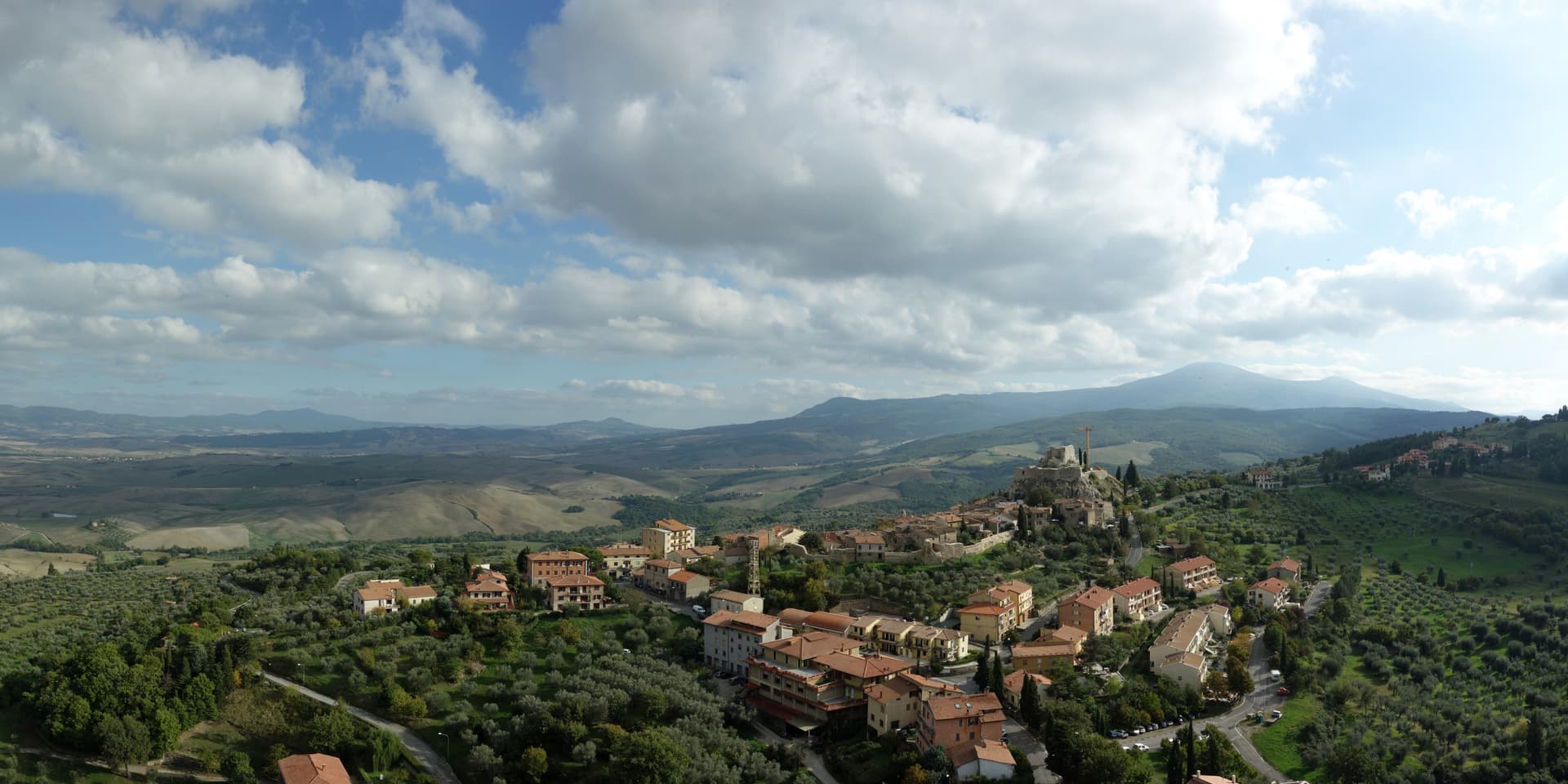
Castiglione d'Orcia
Province: Siena
A stone borgo at 540 meters in the UNESCO Val d'Orcia, first recorded in 714, with two fortresses guarding the road from Amiata to the Via Francigena.
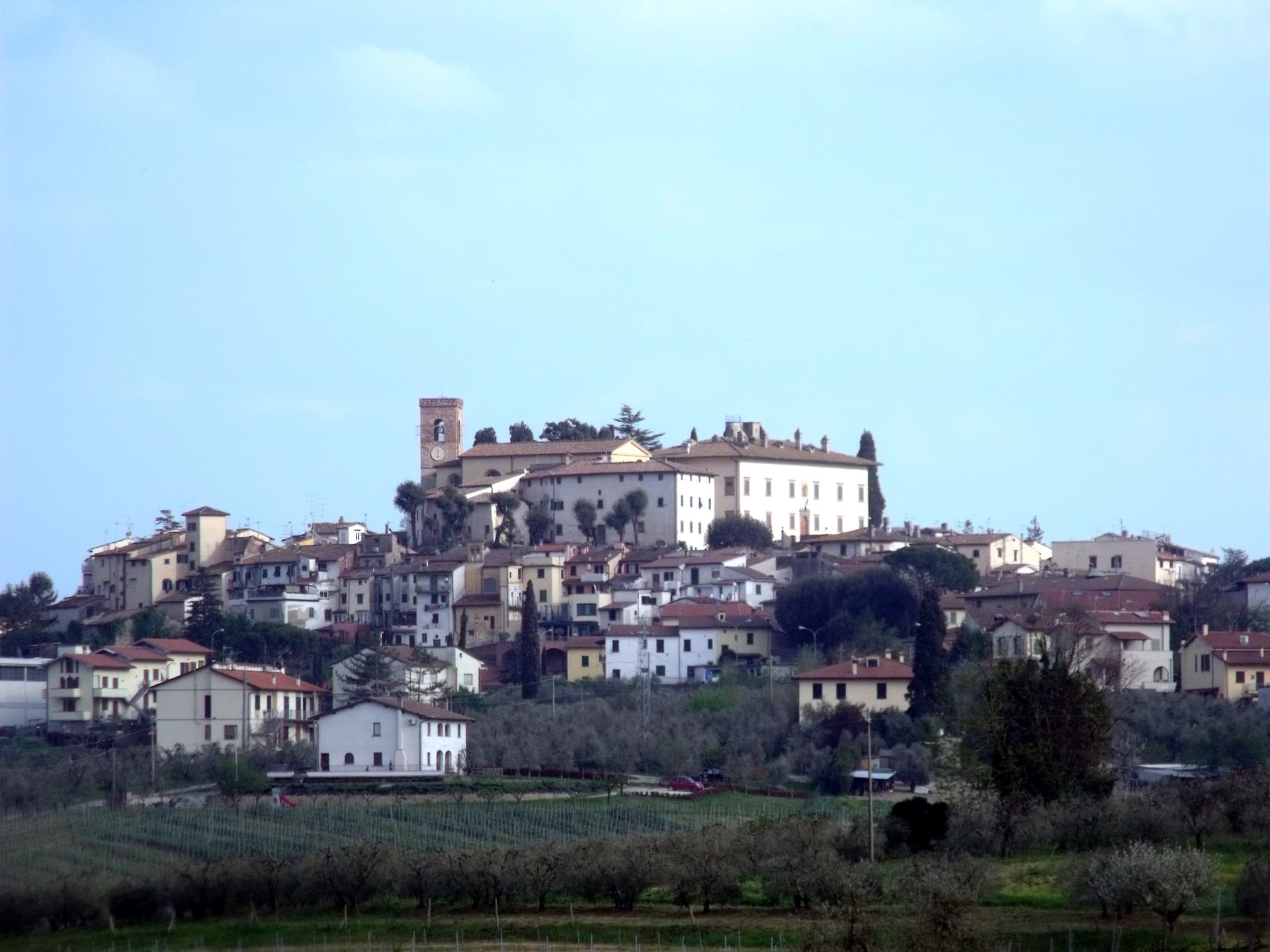
Cerreto Guidi
Province: Firenze
The Medici hunting villa above the Padule di Fucecchio, where Cosimo I sent his court for the marshland game and Buontalenti built four ramps of stairs.
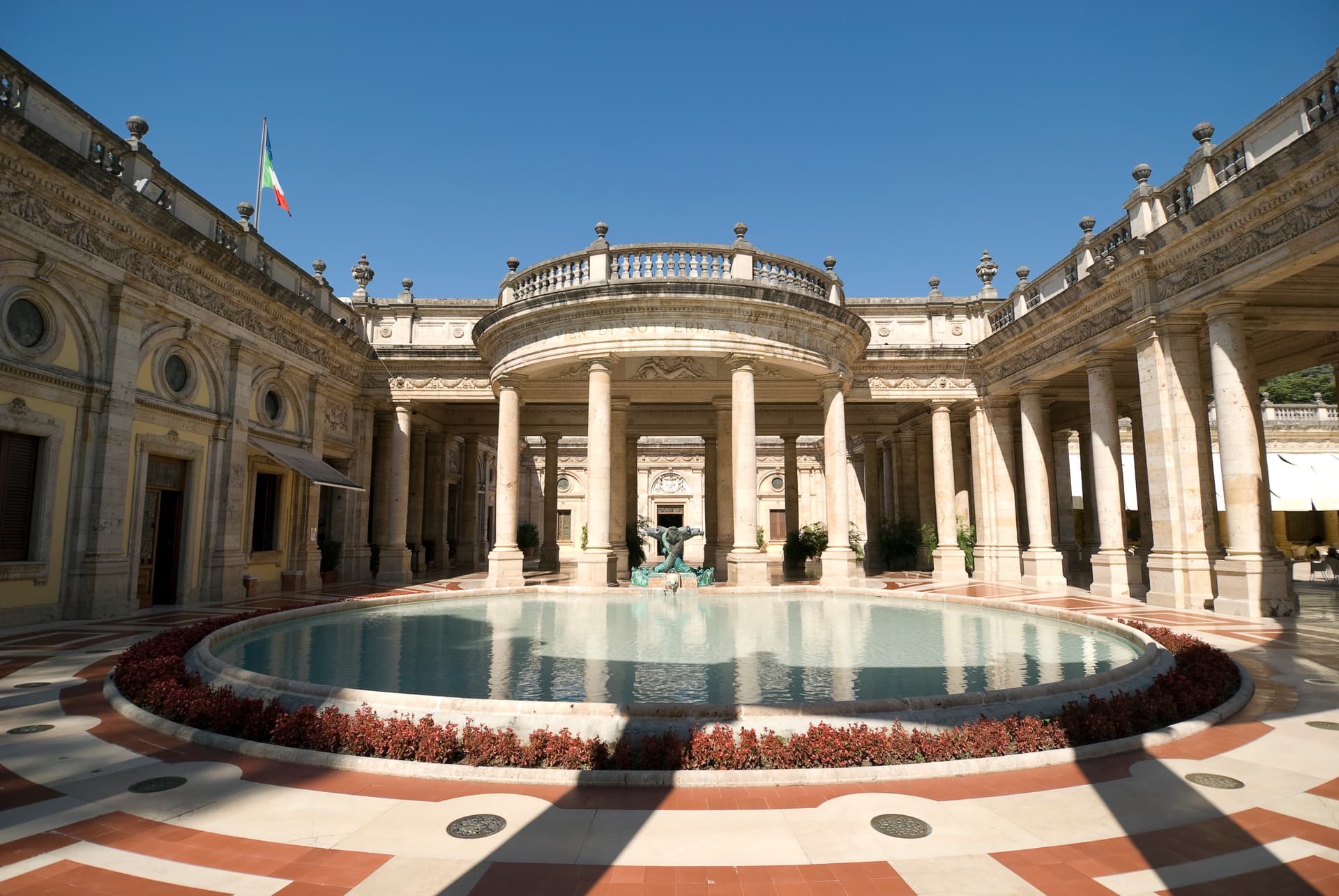
Montecatini-Terme
Province: Pistoia
Eleven thermal springs in a Liberty-style park at the foot of the Apennines, one of the Great Spa Towns of Europe inscribed by UNESCO in 2021.