

Tuscany · Grosseto
Santa Fiora
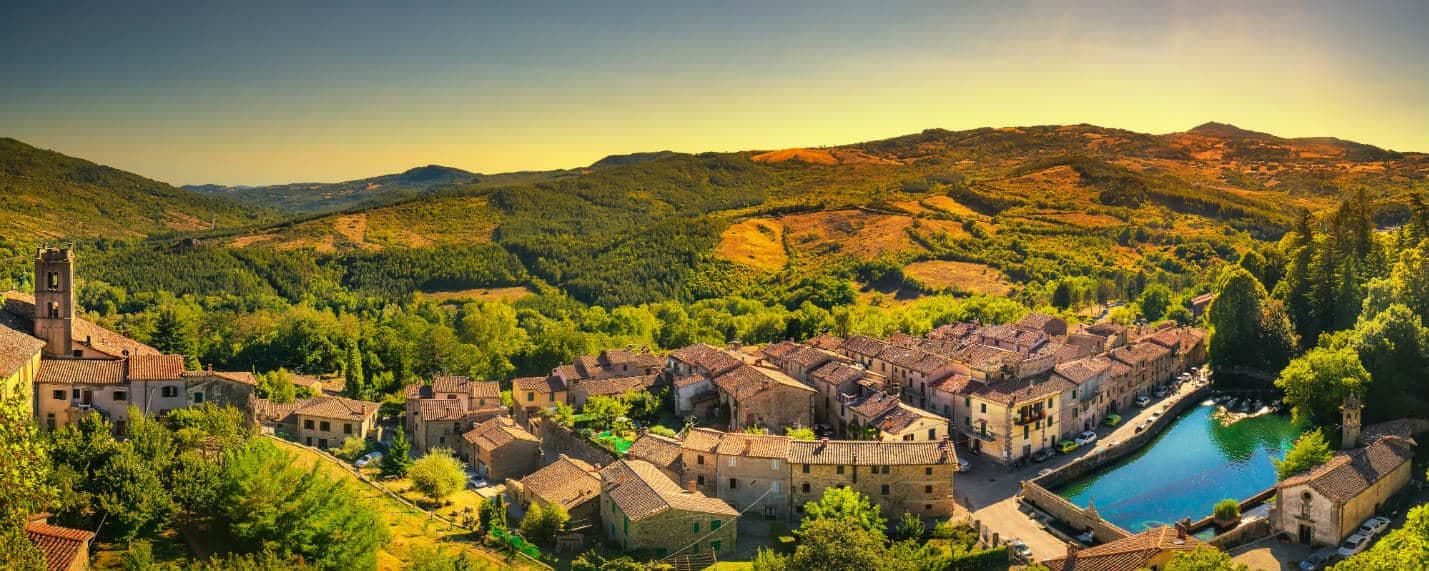
An Aldobrandeschi and Sforza mountain borgo on Monte Amiata at 687 meters, holding one of the world's largest collections of Della Robbia terracotta.
Known for
DELLA ROBBIA
One of the world's largest collections of Andrea della Robbia glazed terracotta, commissioned by the Sforza counts between 1480 and 1495.
PESCHIERA SFORZESCA
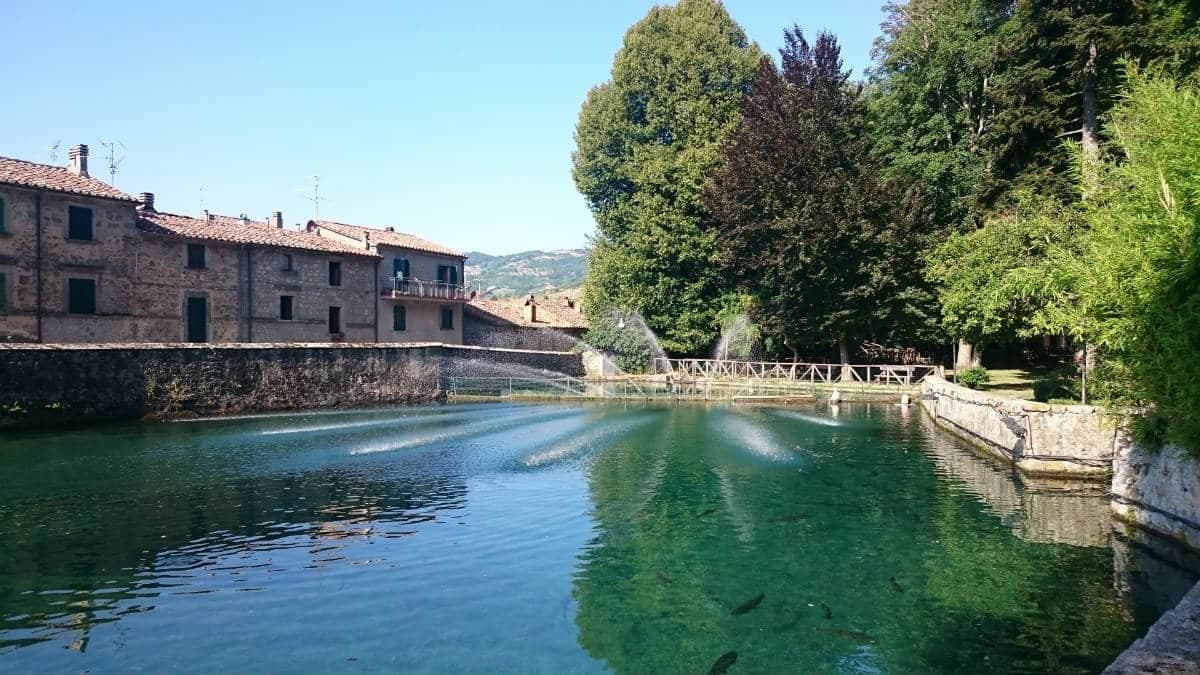
Sixteenth-century walled pool at the source of the Fiora river, built by the Sforza counts as a private fish reserve under a hilltop chapel.
MONTE AMIATA
Extinct volcano of southern Tuscany, beech and chestnut forests on the slopes above Santa Fiora, source of the Fiora and Albegna rivers.
When to visit
Best · May–Oct
- J
- F
- M
- A
- M
- J
- J
- A
- S
- O
- N
- D
- Best
- Hot or crowded
- Quiet
- Mostly closed
The festa: Flora, Lucilla, Eugenio e compagni, 29 July
Why come
Santa Fiora sits on the wooded southern slope of Monte Amiata at 687 meters, forty kilometers east of Grosseto. The Aldobrandeschi held the hill from the eleventh century, walling the borgo and starting the Castello Aldobrandesco in 1082; through the late Middle Ages and Renaissance it passed to the Sforza branch that produced the Sforza-Cesarini, Counts of Santa Fiora. Inside the Pieve delle Sante Flora e Lucilla, founded before the year 1000 and rebuilt in the thirteenth century, the family commissioned a series of glazed terracotta works from the Andrea della Robbia workshop between 1480 and 1495, including the Baptism of Christ, the Coronation of the Virgin and the pulpit Last Supper.
The Peschiera, the walled pool the Sforza created in the sixteenth century from the spring of the Fiora river, holds carp and trout in clear water under a small chapel with another della Robbia inside. The Fiora river leaves Santa Fiora and runs all the way down to the Tyrrhenian.
The Sunday letter
We haven’t written Santa Fiora’s letter yet.
One town every Sunday, with the photo, the food, the festa. Be there when this one comes up. Free, by Peter & Sophia from Pietrasanta.
By subscribing you agree to Substack’s Terms of Use, our Privacy Policy and our Information collection notice.
What to see
Pieve delle Sante Flora e Lucilla
Twelfth-century parish church with one of the world's largest collections of glazed terracotta by Andrea della Robbia, commissioned 1480-1495.
Peschiera Sforzesca
Walled pool built by the Sforza in the sixteenth century at the source of the Fiora river, with the small Chapel of the Madonna delle Nevi alongside.
Castello Aldobrandesco
Aldobrandeschi castle started in 1082, the original walled core of the borgo, later residence of the Sforza-Cesarini counts.
Chiesa della Santissima Trinità
Sixteenth-century church on the lower edge of the borgo, with simple stone façade and an interior holding a further della Robbia relief.
Fiume Fiora
River that takes its name from the borgo and rises at the Peschiera, running 78 kilometers down through Maremma to the Tyrrhenian at Montalto di Castro.
The slow-trip planner
Building a trip? Find where Santa Fiora fits in a slow Italy circuit.
Answer five questions. We will shape a geographically coherent slow trip from the 1,000 Italian towns most travelers skip. Yours to save and share.
Living here
- Population 2,490
- Off the beaten pathi
- Pharmacy in town
- High school within a 30-minute drive
- Nearest airport Florence / Pisa, 2 h 51 min drive
- Regional capital Firenze, 2 h 27 min drive
Tags & datadesignations · numbers · sources
Recognised as
The numbers
- Elevation: 687 m
- Population: 2,490
- Surface area: 63.45 km²
These figures were compiled from public directories — ISTAT, OpenStreetMap, Wikidata — and from the official listings of the guides named on this page. Town details change; verify with official sources before you travel.
Close by
More towns near Santa Fiora
Piancastagnaio
Province: Siena
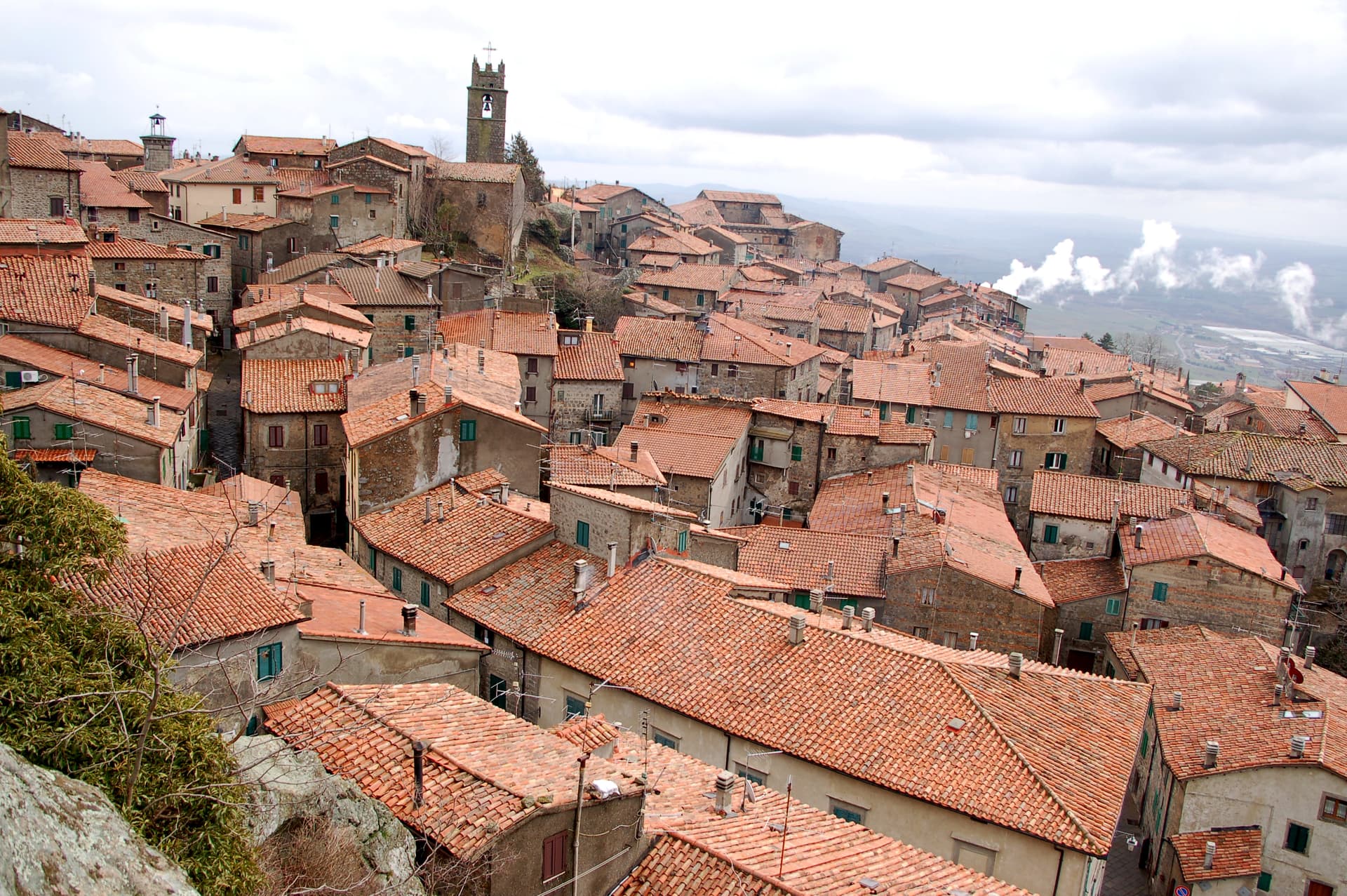
A chestnut-belt borgo at 772 meters on the southern slope of Monte Amiata, where four contrade still race for the Palio delle Contrade each August.
San Casciano dei Bagni
Province: Siena
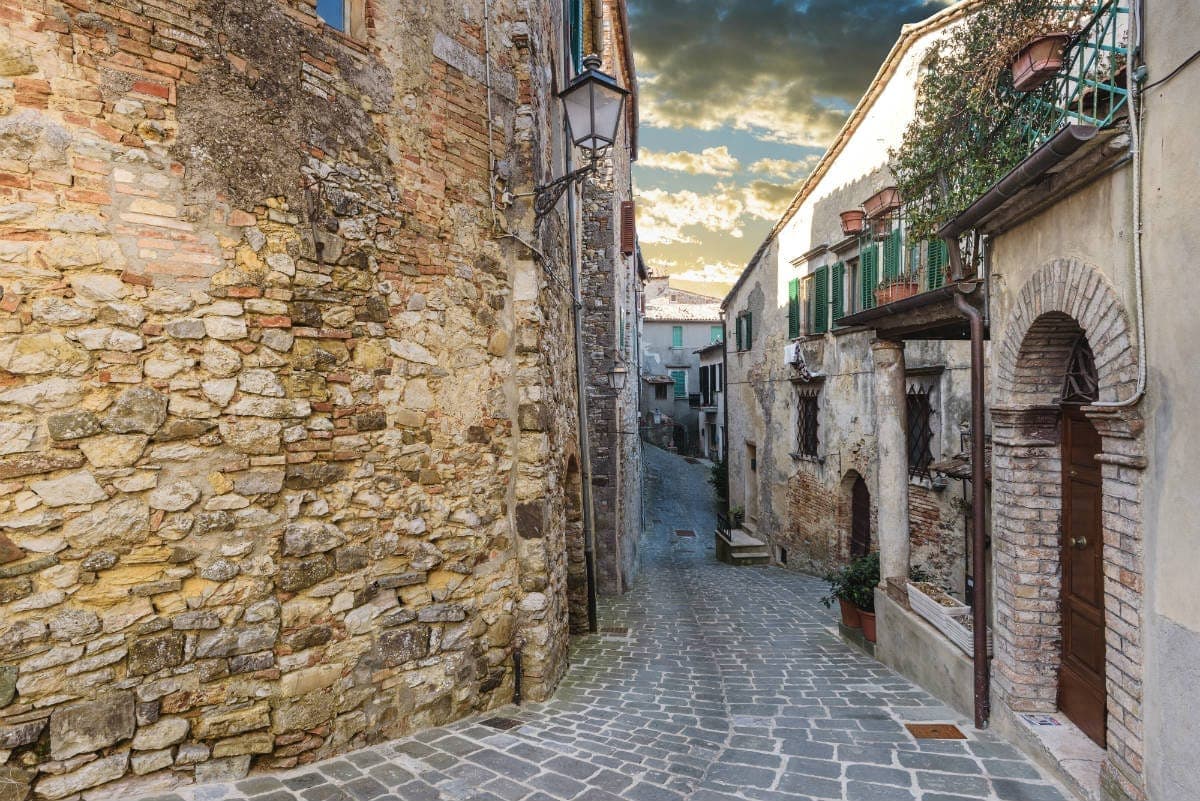
A hilltop borgo at 582 meters above 42 hot springs that produced the largest Etruscan bronze hoard of the last fifty years.
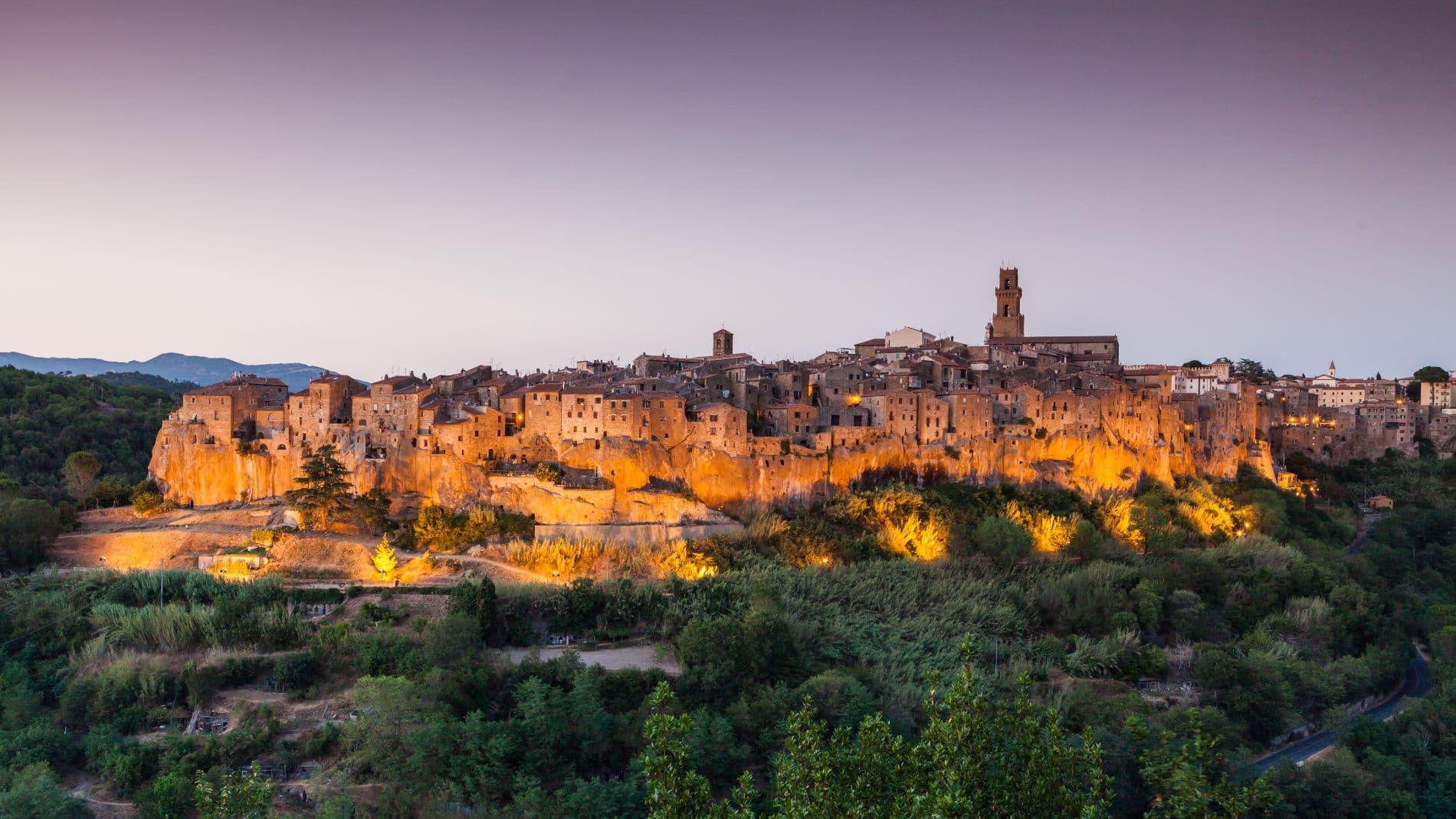
Pitigliano
Province: Grosseto
The Little Jerusalem of southern Tuscany, carved into a tuff spur in the Maremma, where the houses, the synagogue and the streets are all cut from the same volcanic rock.
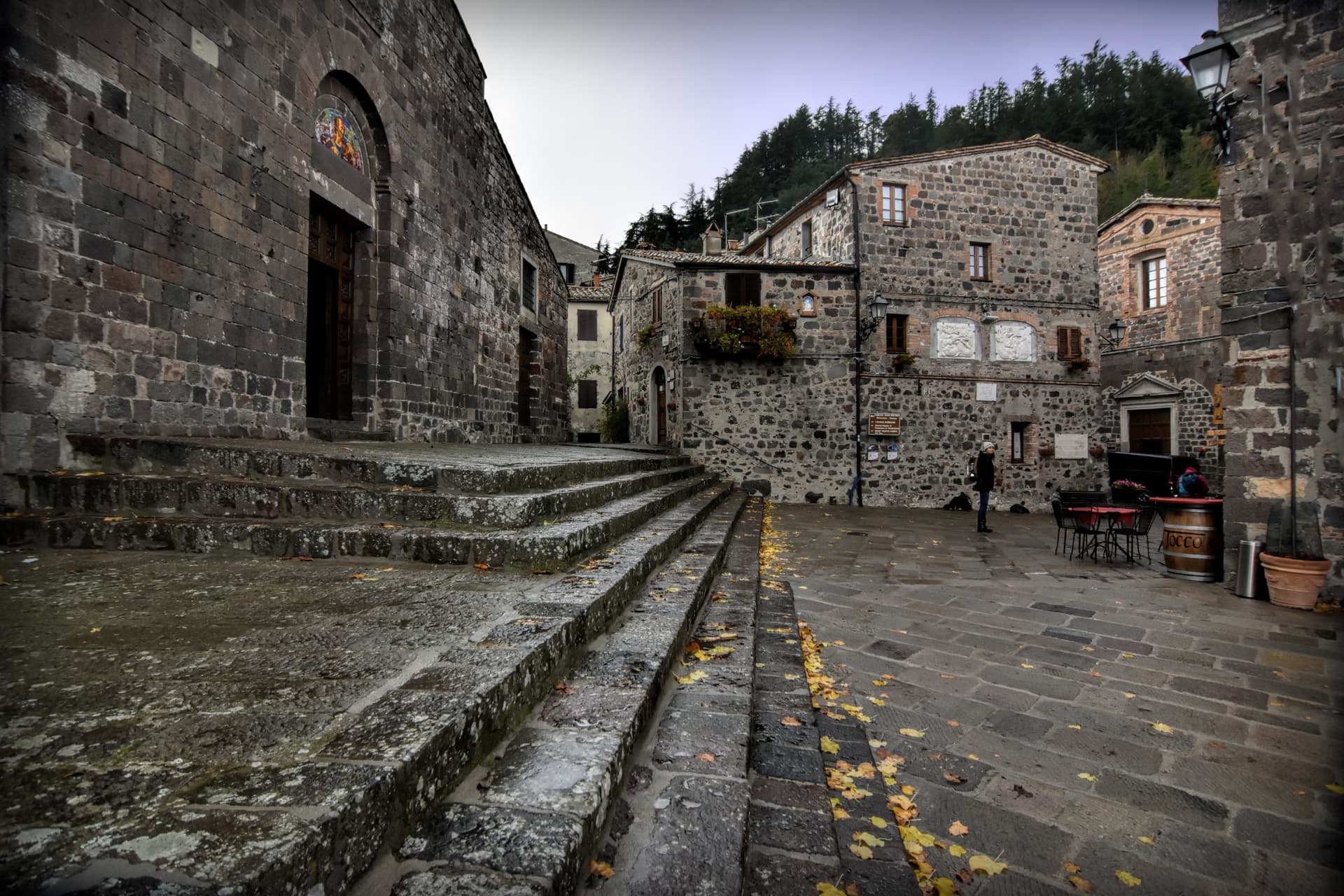
Radicofani
Province: Siena
The Val d'Orcia's basalt watchtower — a 1,060-resident UNESCO-inscribed borgo at 814m on a volcanic basalt outcrop visible across half of southern Tuscany, with the spectacular Rocca di Radicofani (Ghino di Tacco's outlaw fortress, mentioned by Dante in Purgatorio + Boccaccio in the Decameron), the 16th-c Posta Medicea on the Via Francigena, and Bandiera Arancione + UNESCO + Via Francigena triple signal.
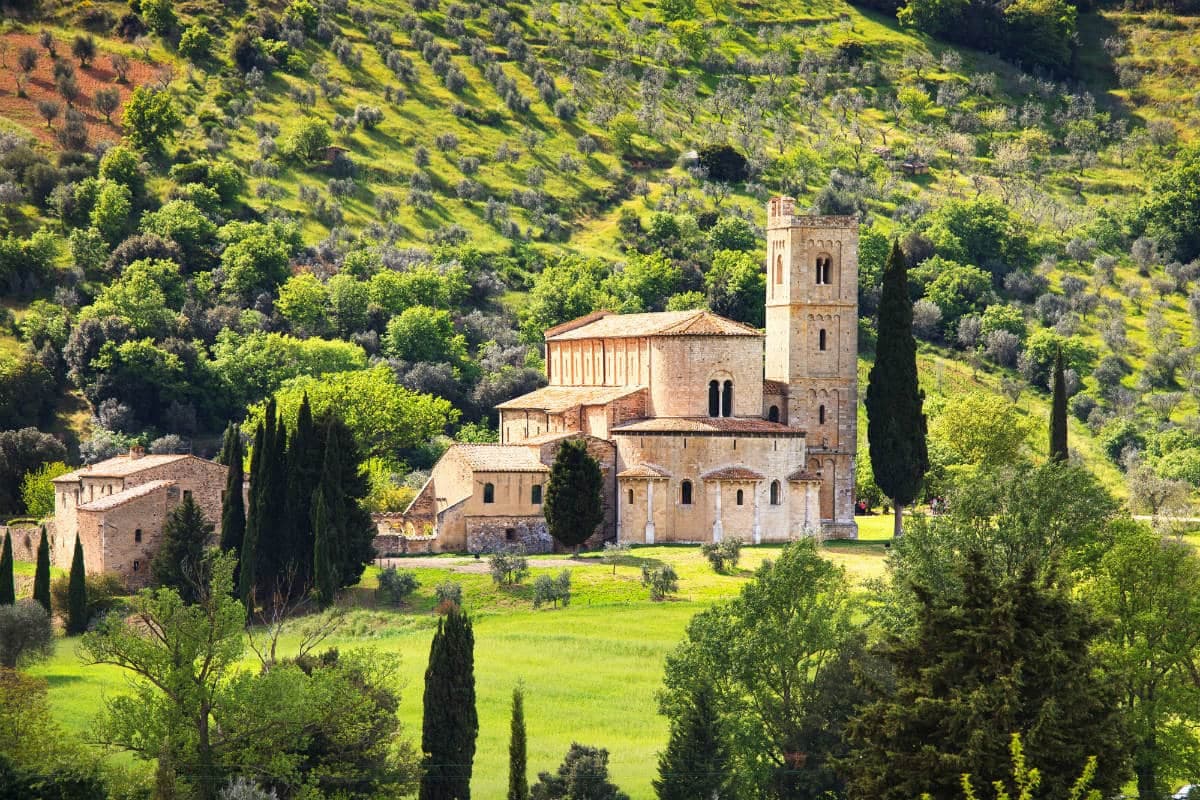
Montalcino
Province: Siena
A walled hill town at 564 meters above the Val d'Orcia, the last fortress to hold out for the Sienese Republic and the birthplace of Brunello.
🎨 Borghi più belli d'Italia
More Borghi più belli d'Italia towns in Tuscany
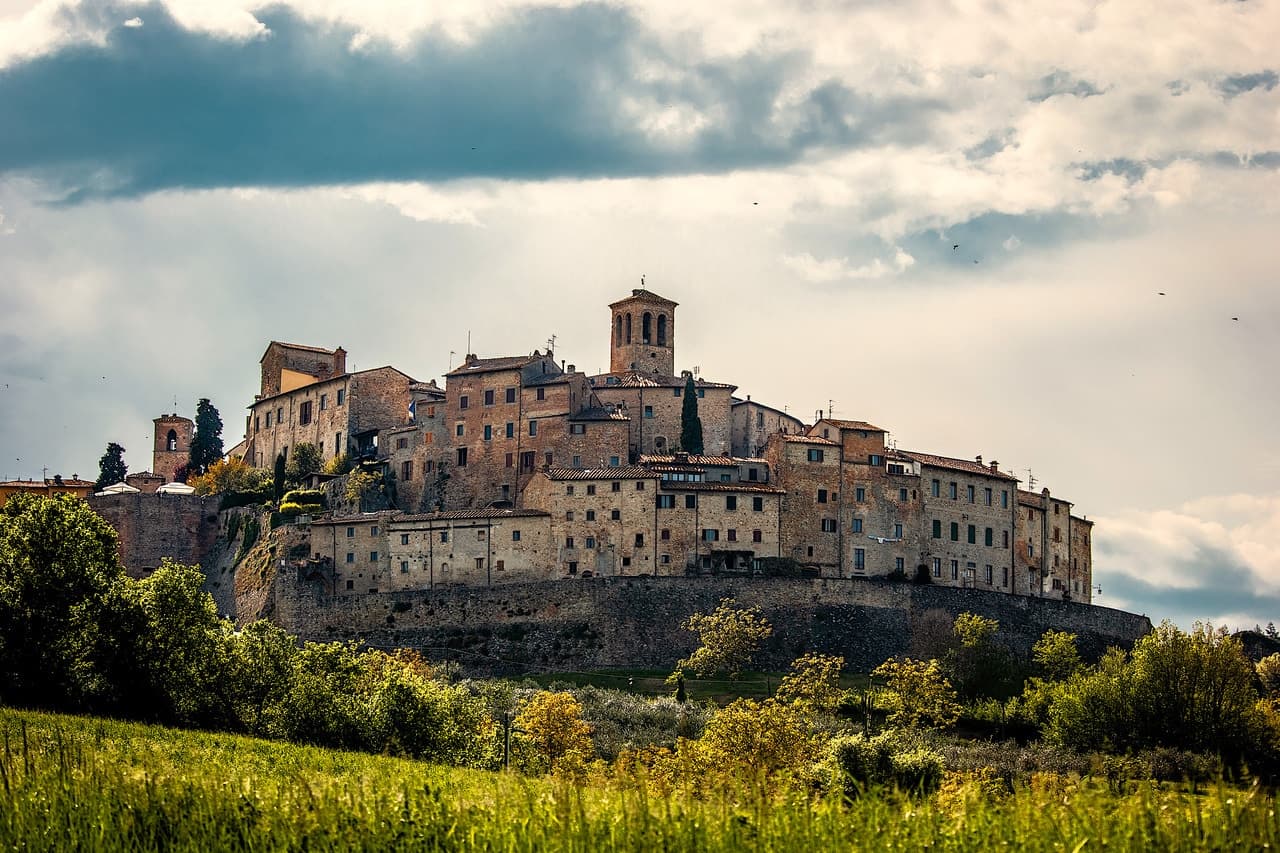
Anghiari
Province: Arezzo
A walled medieval town at 430 meters over the upper Tiber valley, where Florence beat Milan in 1440 and Leonardo started the fresco he never finished.
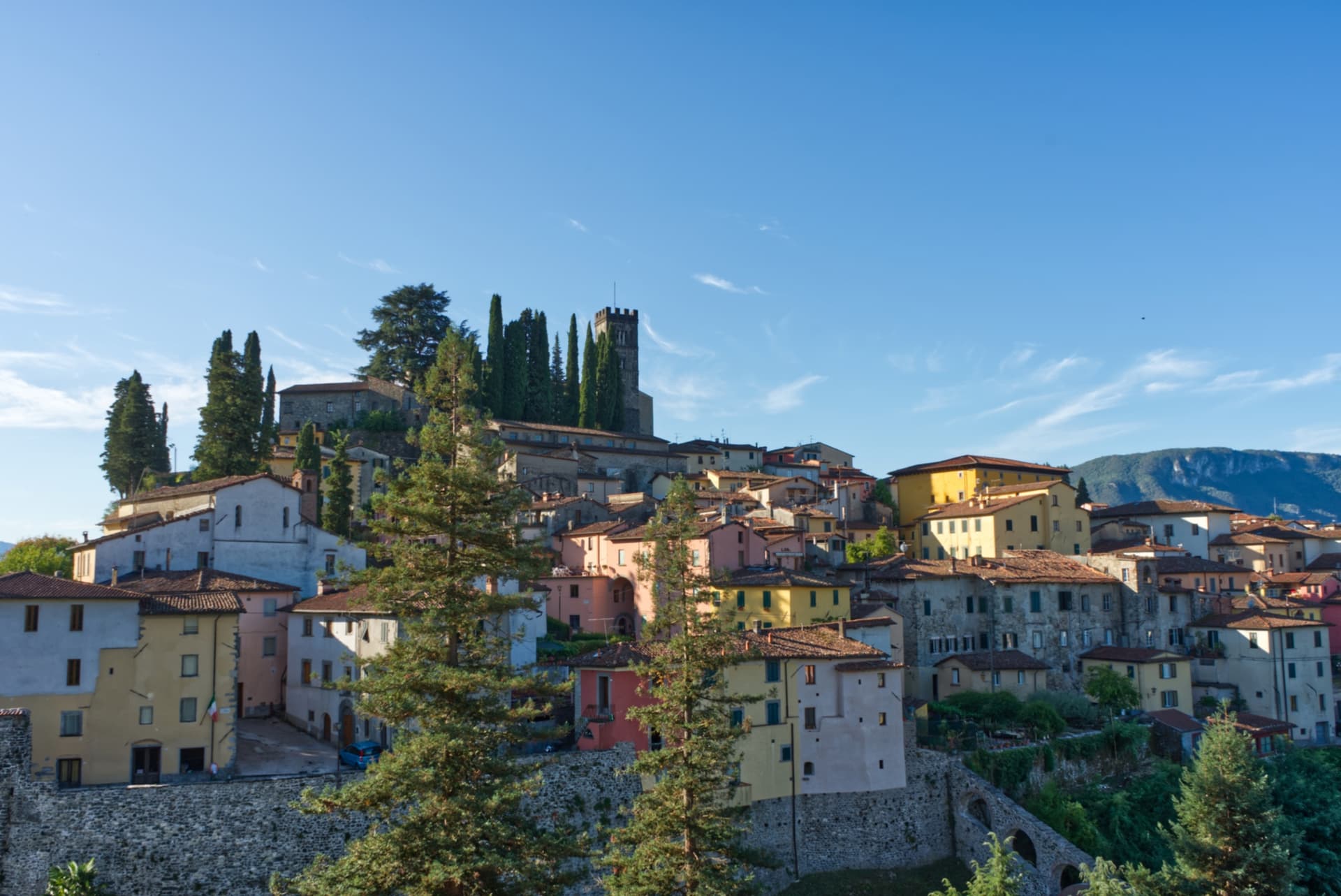
Barga
Province: Lucca
A medieval hilltop town at 410 meters in the Serchio valley between the Apuan Alps and the Apennines, where Giovanni Pascoli wrote his last poems and the August festival serves fish and chips.
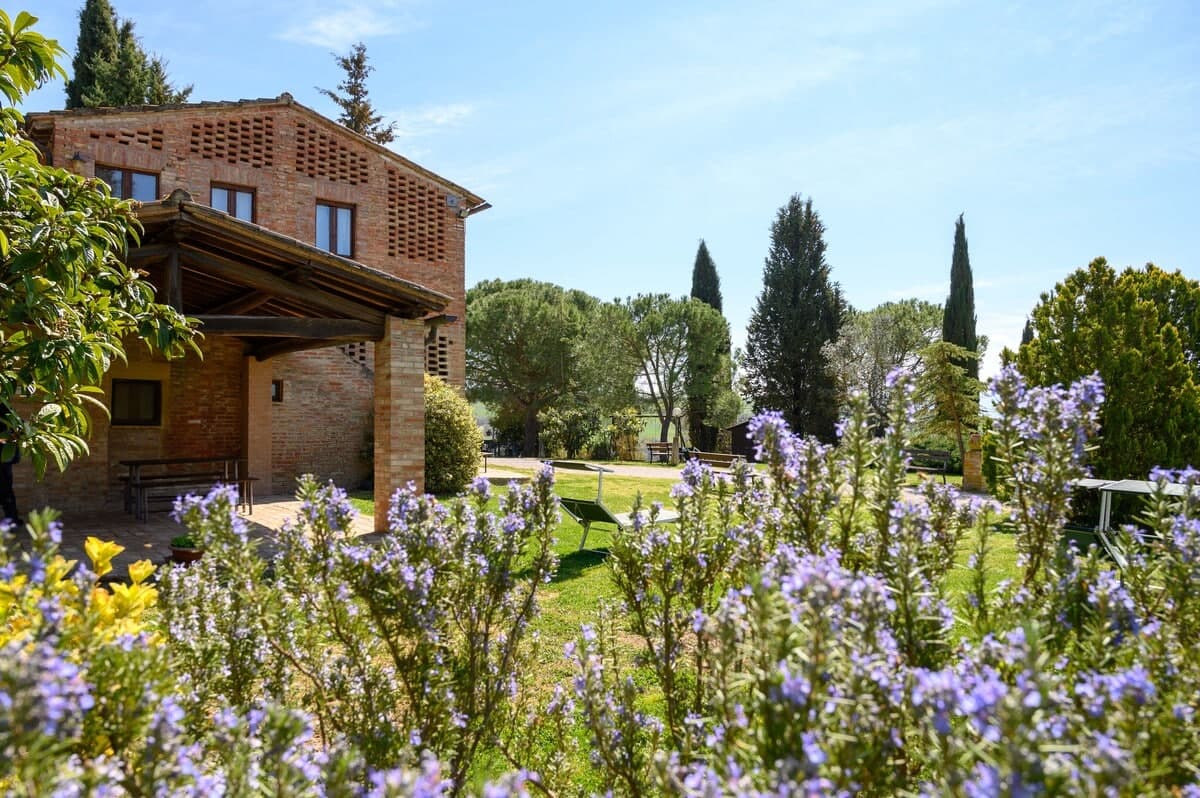
Buonconvento
Province: Siena
The walled brick borgo in the Crete Senesi where Emperor Henry VII died in 1313, on the Via Cassia at the confluence of the Arbia and Ombrone.
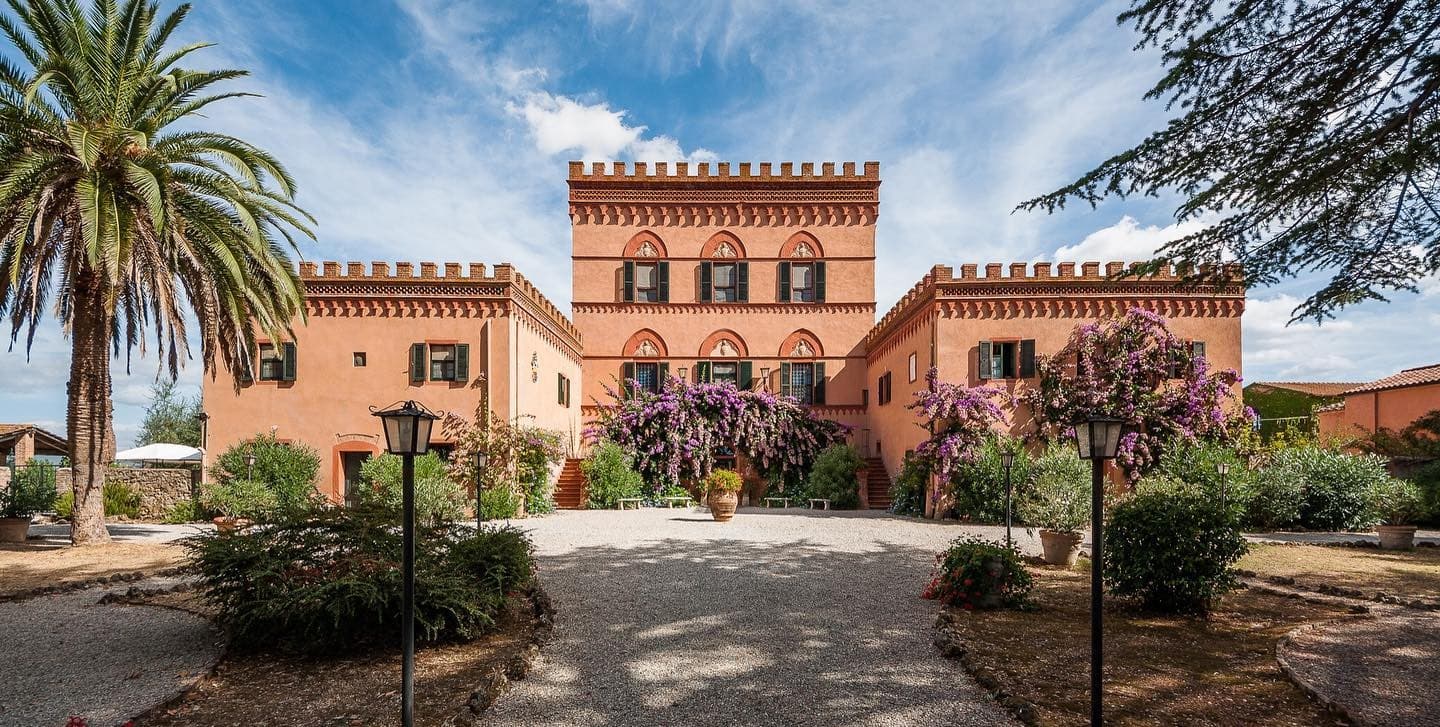
Campiglia Marittima
Province: Livorno
A walled hilltop borgo above the Val di Cornia, where the Rocca tower watches a mining landscape worked from the Etruscans to 1976.
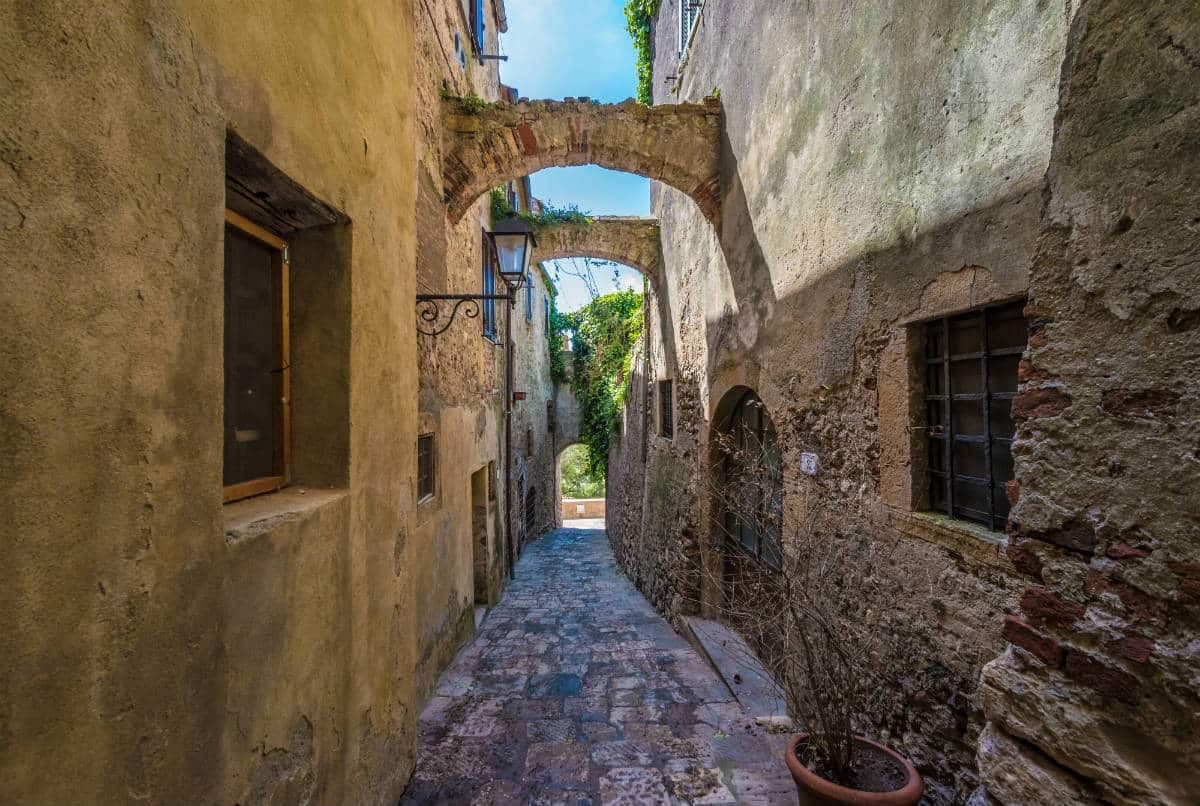
Capalbio
Province: Grosseto
A walled hilltop borgo at 217 meters in the southern Maremma, donated to the Abbey of Tre Fontane by Charlemagne and home of Niki de Saint Phalle's Tarot Garden.