

Tuscany · Siena
San Casciano dei Bagni
A hilltop borgo at 582 meters above 42 hot springs that produced the largest Etruscan bronze hoard of the last fifty years.
Known for
FORTY-TWO SPRINGS
Hot springs averaging 42 degrees Celsius, used from the second century BC and developed into a Roman thermal sanctuary.
THE BRONZES
24 Etruscan bronze votive statues found in 2022 with 6,000 coins, the largest Italic bronze find of the last fifty years.
BORGHI PIÙ BELLI
Joined the Borghi più belli d'Italia network in 2014, one of Italy's smallest communes to carry the label alongside Bandiera Arancione.
When to visit
Best · All year
- J
- F
- M
- A
- M
- J
- J
- A
- S
- O
- N
- D
- Best
- Hot or crowded
- Quiet
- Mostly closed
The festa: Cassiano di Imola, 13 August
Why come
San Casciano dei Bagni sits at 582 meters at the southern edge of the province of Siena, above 42 hot springs that average 42 degrees Celsius. The baths were used continuously from Etruscan through Roman times and again from the Renaissance, when visitors came from across Europe. In 2022, an excavation that began in 2019 at the ancient sanctuary turned up 24 bronze votive statues protected by mud, with around 6,000 coins in gold, silver and bronze.
The find was the largest of its kind in fifty years; most surviving Etruscan votive material is terracotta. The 1,500 residents live on a basalt outcrop above the Roman thermal complex, in a centro storico of stone houses and three small churches. The borgo joined the Borghi più belli network in 2014 and remains one of the smallest communes in Toscana to carry both that label and Bandiera Arancione.
The Sunday letter
We haven’t written San Casciano dei Bagni’s letter yet.
One town every Sunday, with the photo, the food, the festa. Be there when this one comes up. Free, by Peter & Sophia from Pietrasanta.
By subscribing you agree to Substack’s Terms of Use, our Privacy Policy and our Information collection notice.
What to see
Santuario Ritrovato
Etruscan-Roman thermal sanctuary excavated since 2019, where 24 bronze votives and around 6,000 coins were recovered in 2022.
Bagno Grande
The principal natural pool of the 42 hot springs, used from the second century BC through the Renaissance and reopened to the public.
Collegiata di San Leonardo
Romanesque parish church in the centro storico, restored in the seventeenth century, with a baptismal font carved from local travertine.
Centro storico
Stone borgo on a basalt outcrop above the springs, encircled by medieval walls and stitched with stepped alleys.
The slow-trip planner
Building a trip? Find where San Casciano dei Bagni fits in a slow Italy circuit.
Answer five questions. We will shape a geographically coherent slow trip from the 1,000 Italian towns most travelers skip. Yours to save and share.
We recommend
Where to eat and stay
Not our picks, but places the guides put their name to — a Michelin star, a Gambero Rosso fork, a Slow Food snail, a Michelin Key for the hotels. Worth a table, a counter, or a night when you pass through.
Castello di FighineRistorante
Castello di Fighine has two Gambero Rosso forks (84/100) to its name.
DanielaRistorante
Daniela holds a spot in the Michelin Guide.
Fonteverde Thermal Spa ResortHotel
Fonteverde Thermal Spa Resort has a Leading Hotels of the World listing to its name.
Living here
- Population 1,500
- Off the beaten pathi
- Pharmacy: none mapped
- High school within a 30-minute drive
- Nearest airport Rome, 2 h 39 min drive
- Regional capital Firenze, 1 h 43 min drive
Thermal baths in town: Bagno Bossolo, San Casciano dei Bagni.
Tags & datadesignations · numbers · sources
Recognised as
The numbers
- Elevation: 582 m
- Population: 1,500
- Surface area: 92.14 km²
These figures were compiled from public directories — ISTAT, OpenStreetMap, Wikidata — and from the official listings of the guides named on this page. Town details change; verify with official sources before you travel.
Close by
More towns near San Casciano dei Bagni
Radicofani
Province: Siena
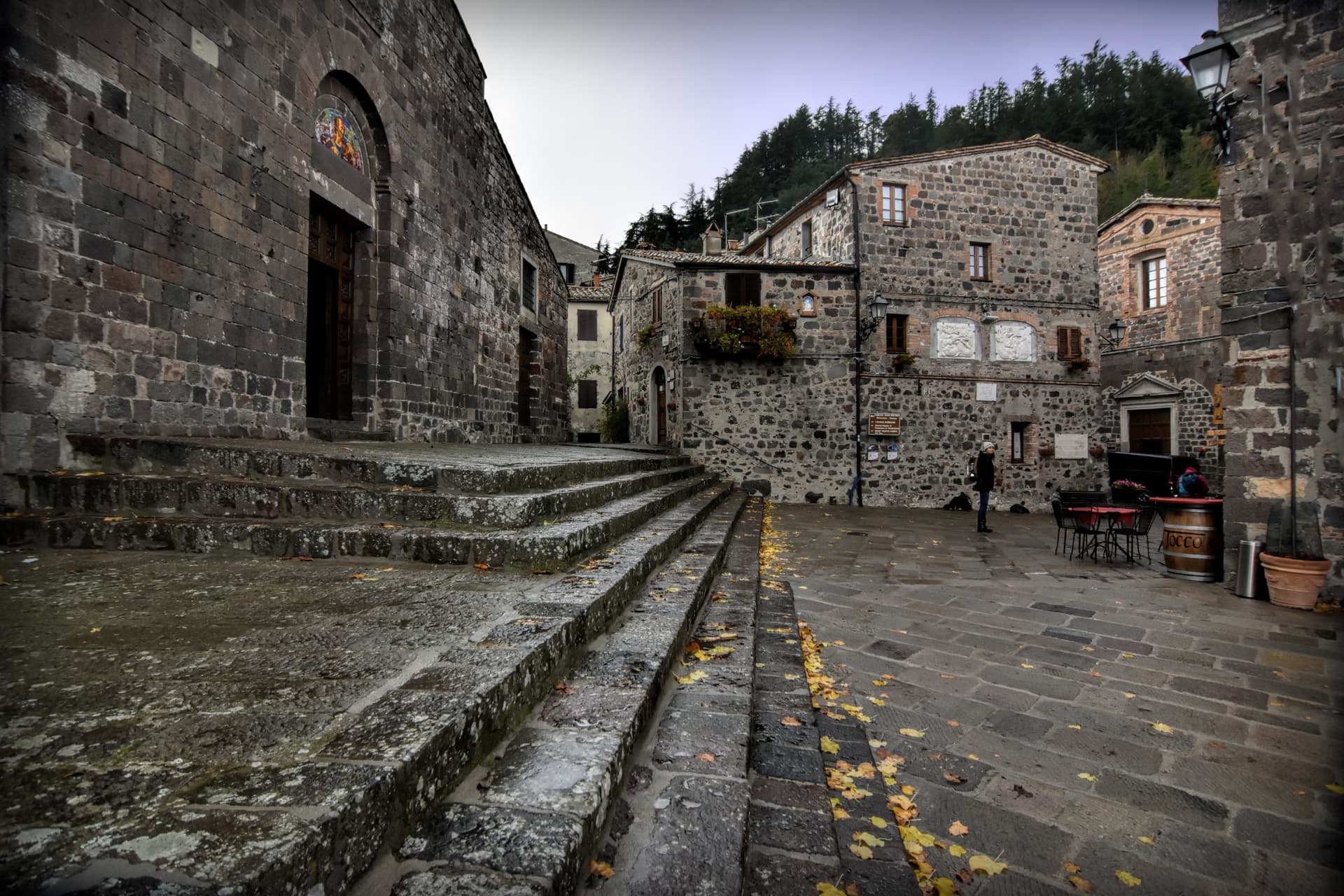
The Val d'Orcia's basalt watchtower — a 1,060-resident UNESCO-inscribed borgo at 814m on a volcanic basalt outcrop visible across half of southern Tuscany, with the spectacular Rocca di Radicofani (Ghino di Tacco's outlaw fortress, mentioned by Dante in Purgatorio + Boccaccio in the Decameron), the 16th-c Posta Medicea on the Via Francigena, and Bandiera Arancione + UNESCO + Via Francigena triple signal.
Allerona
Province: Terni
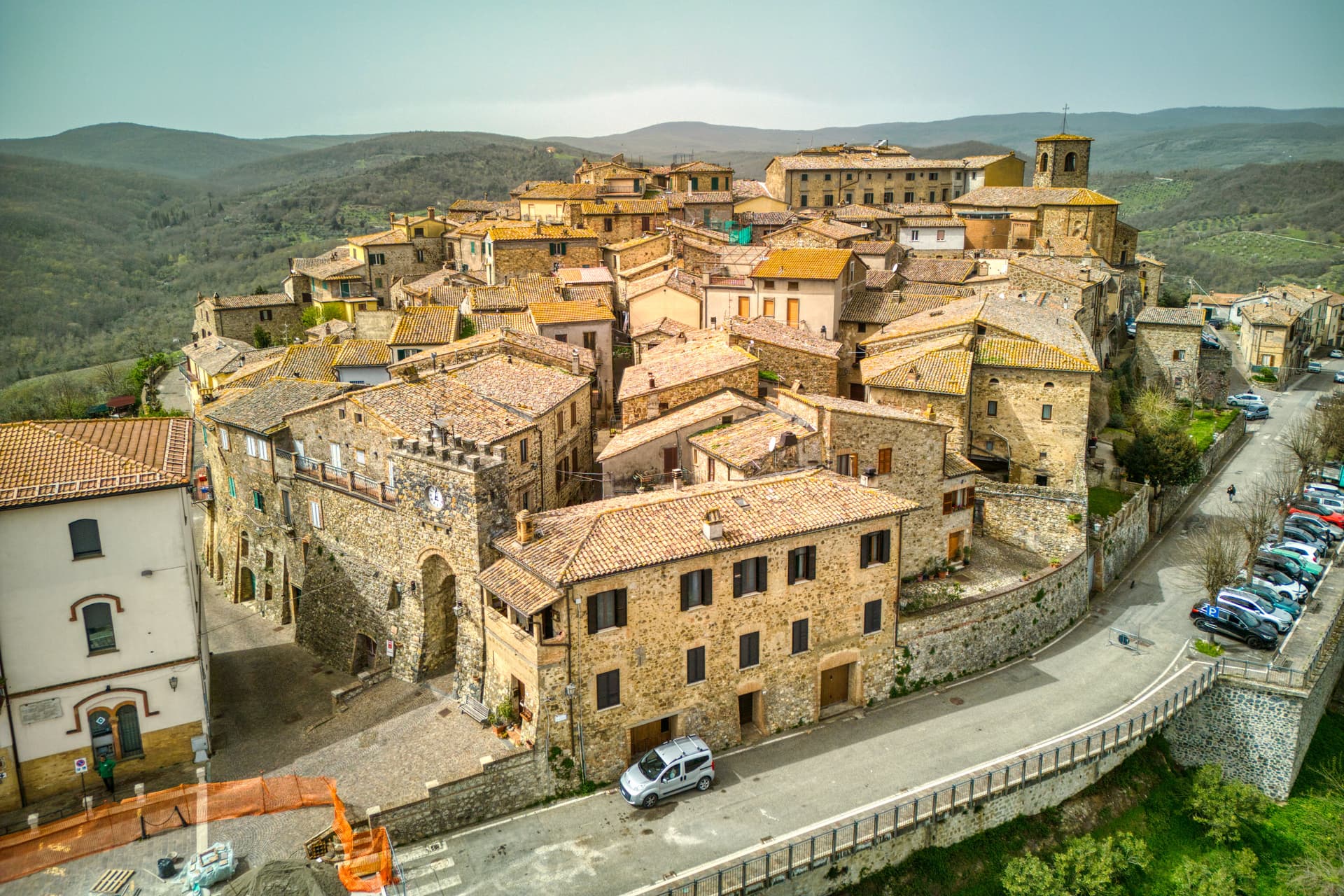
A stone borgo at 472 meters between the Paglia valley and the Valdichiana, an Orvieto outpost whose Monaldeschi castle fell to Charles V.
Città della Pieve
Province: Perugia
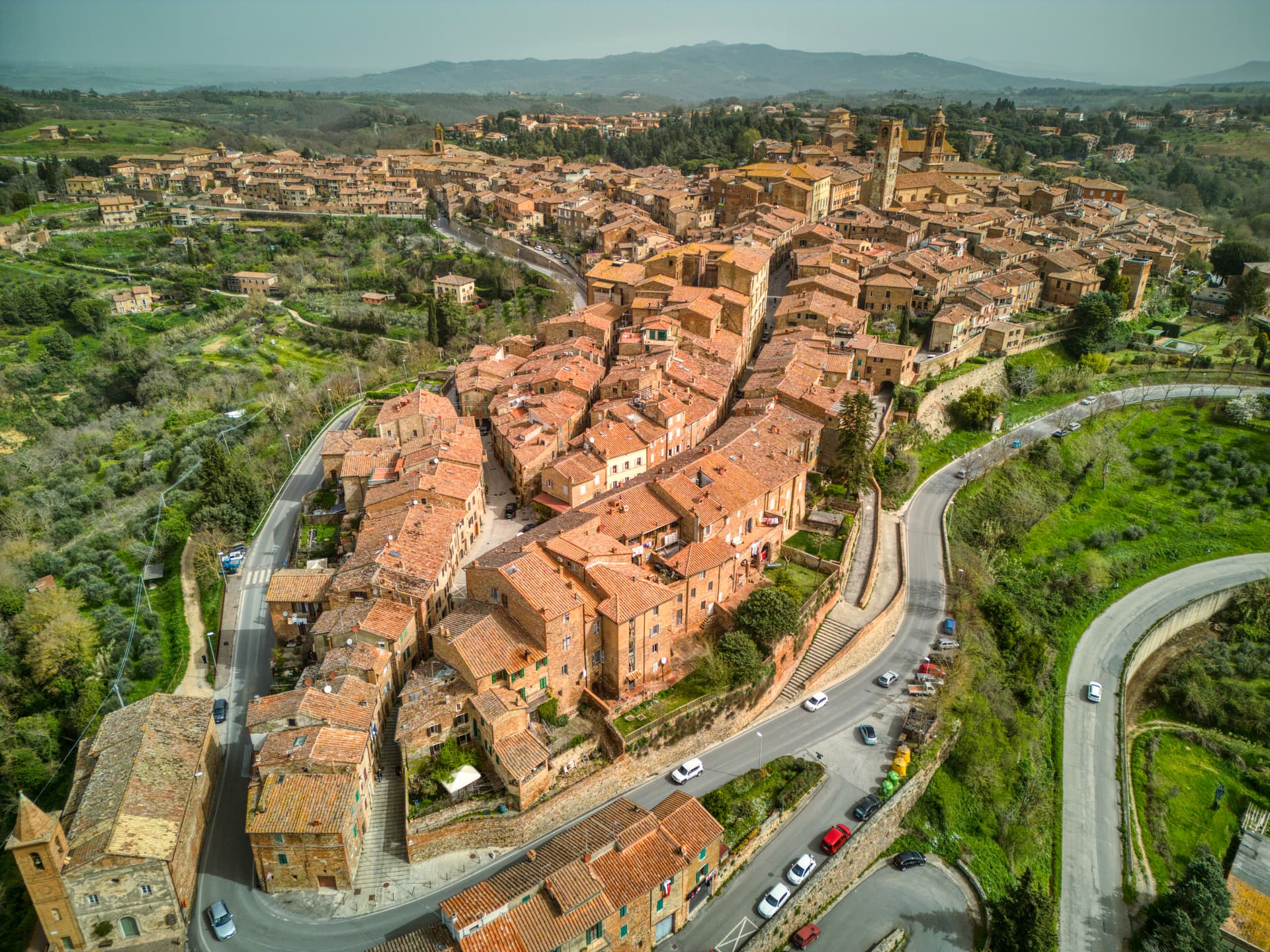
A red-brick hill town at 508 meters above the Valdichiana, the birthplace of Perugino and the home of Italy's narrowest alley.
Cetona
Province: Siena
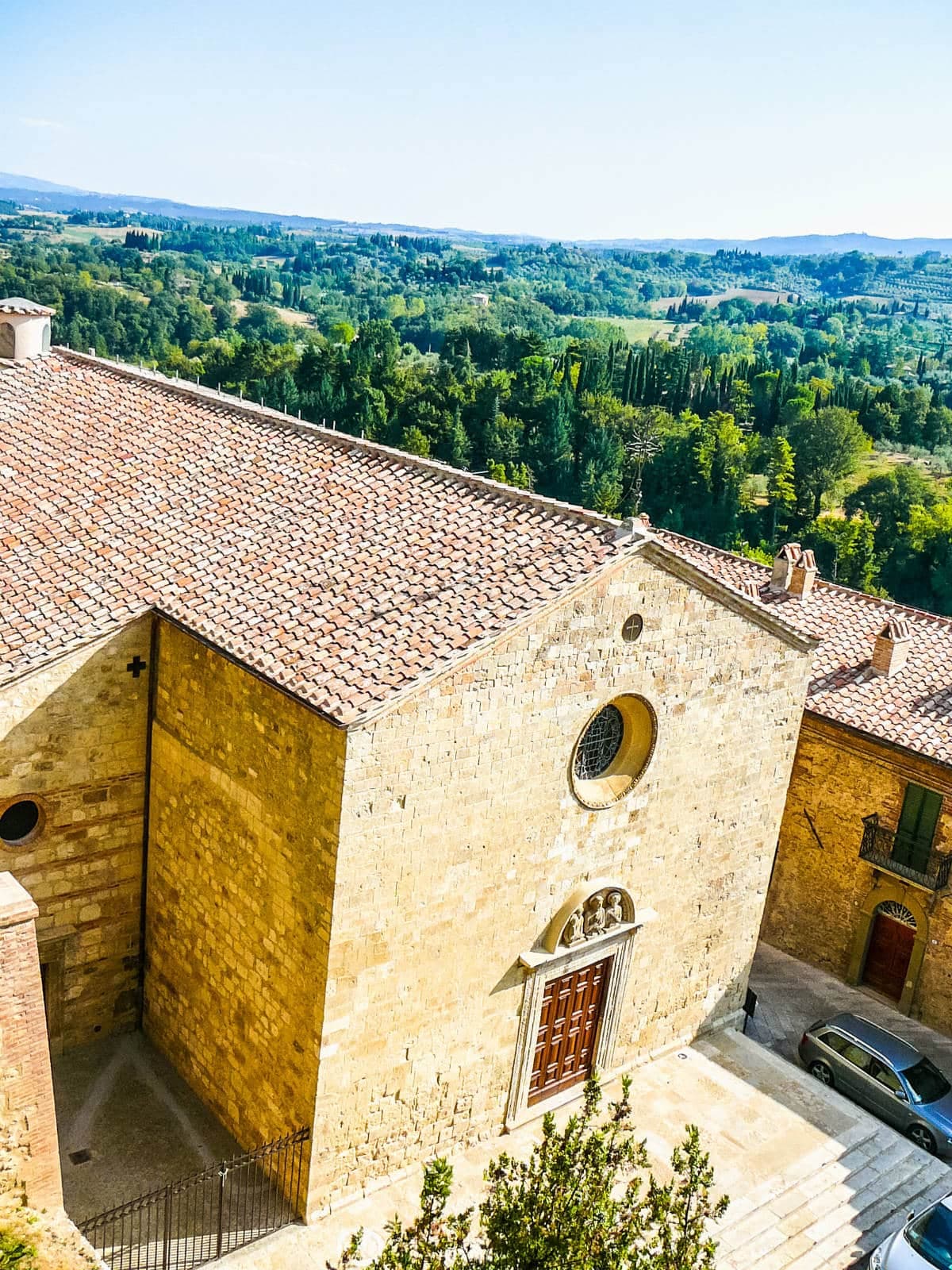
A medieval borgo at 384 meters below Monte Cetona, sold by Cosimo I to the Vitelli in 1556 and the centro storico still shaped by their fortress reconstruction.
Acquapendente
Province: Viterbo
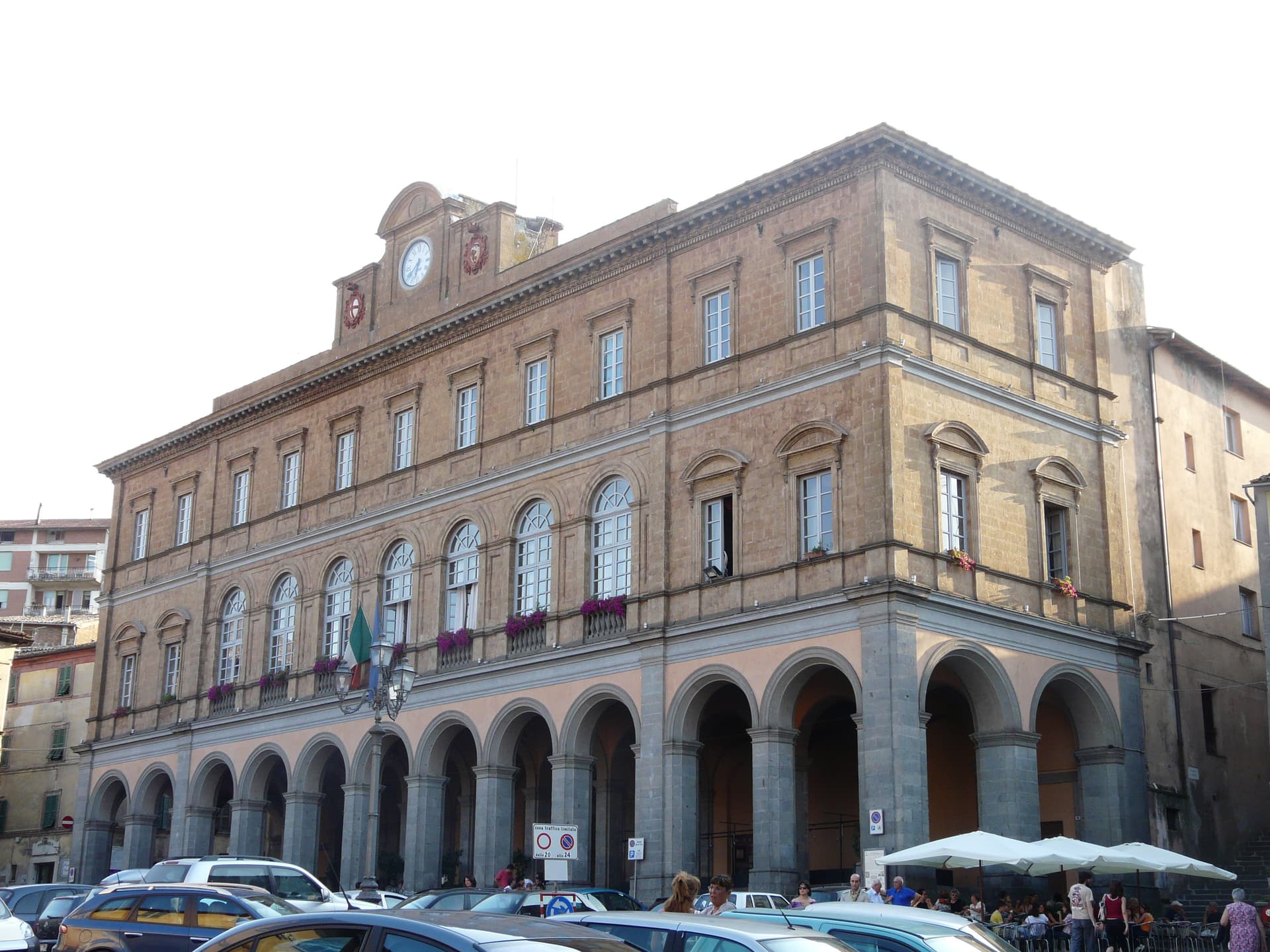
The northernmost town in Lazio on the Via Francigena, at 420 meters above the Paglia, named in 964 for its waterfalls.
🎨 Borghi più belli d'Italia
More Borghi più belli d'Italia towns in Tuscany
Anghiari
Province: Arezzo
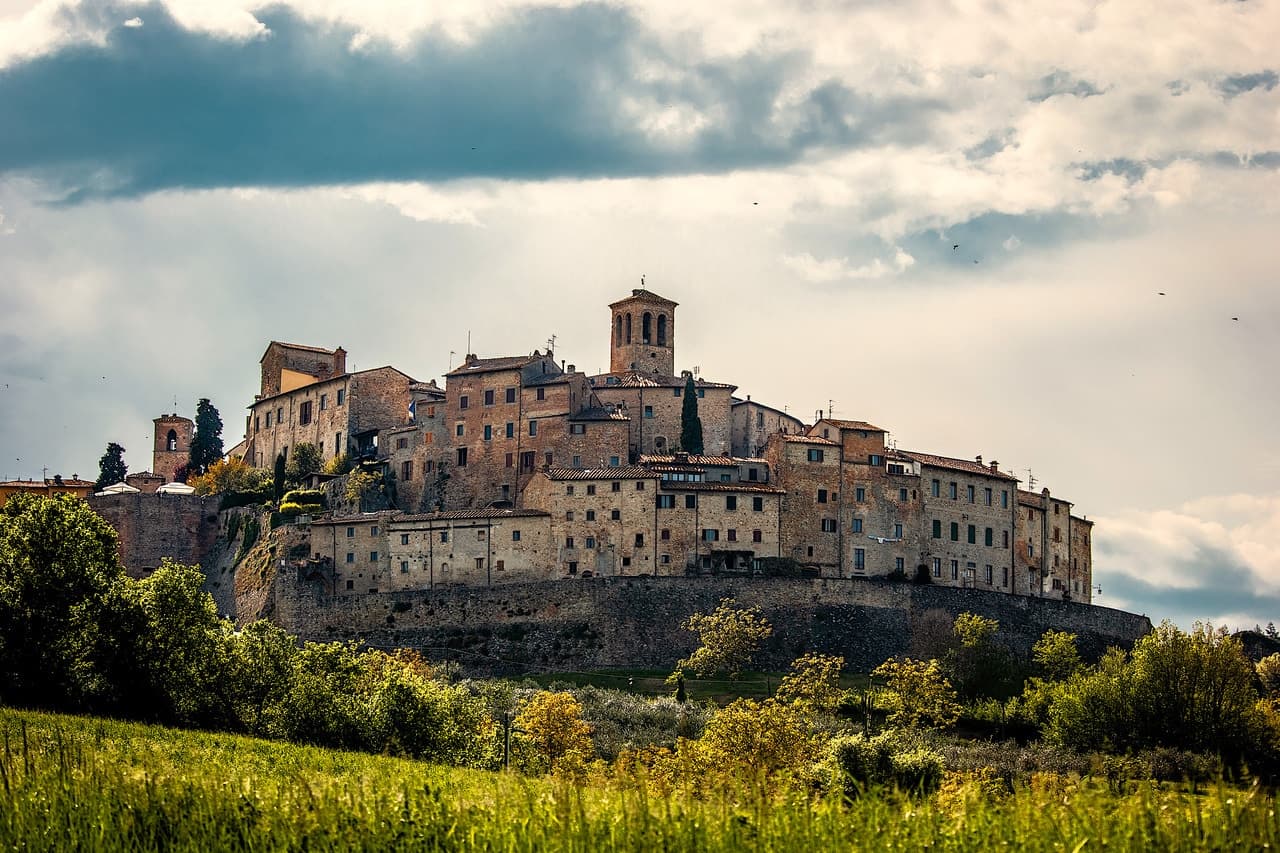
A walled medieval town at 430 meters over the upper Tiber valley, where Florence beat Milan in 1440 and Leonardo started the fresco he never finished.
Barga
Province: Lucca
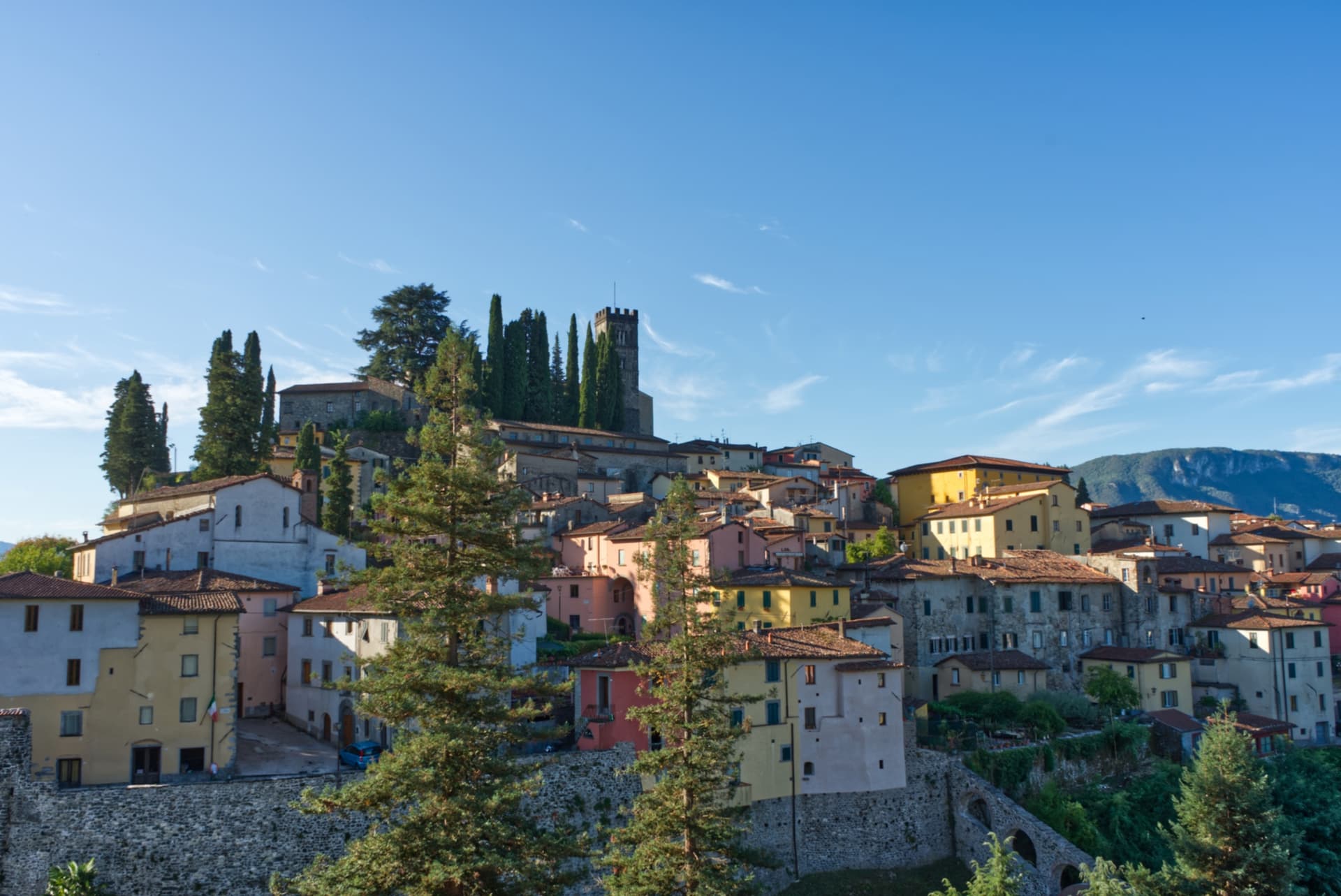
A medieval hilltop town at 410 meters in the Serchio valley between the Apuan Alps and the Apennines, where Giovanni Pascoli wrote his last poems and the August festival serves fish and chips.
Buonconvento
Province: Siena
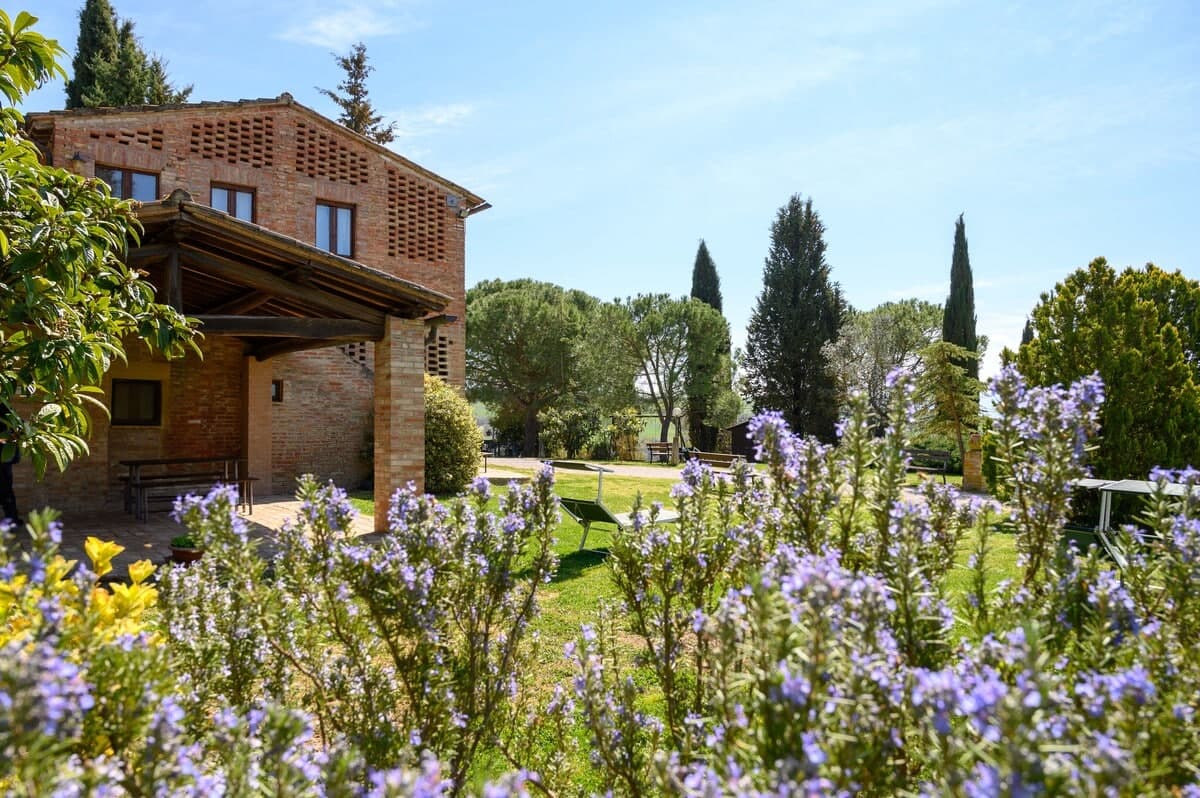
The walled brick borgo in the Crete Senesi where Emperor Henry VII died in 1313, on the Via Cassia at the confluence of the Arbia and Ombrone.
Campiglia Marittima
Province: Livorno
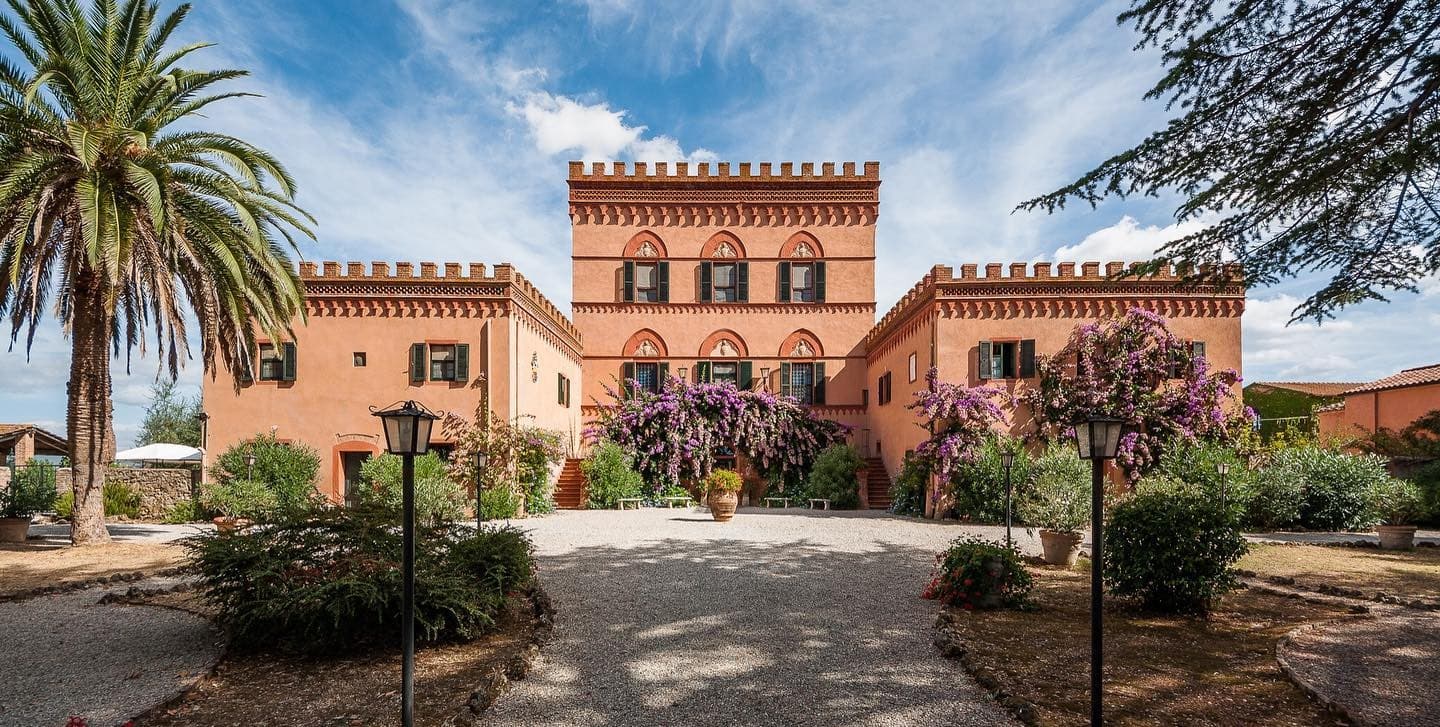
A walled hilltop borgo above the Val di Cornia, where the Rocca tower watches a mining landscape worked from the Etruscans to 1976.
Capalbio
Province: Grosseto
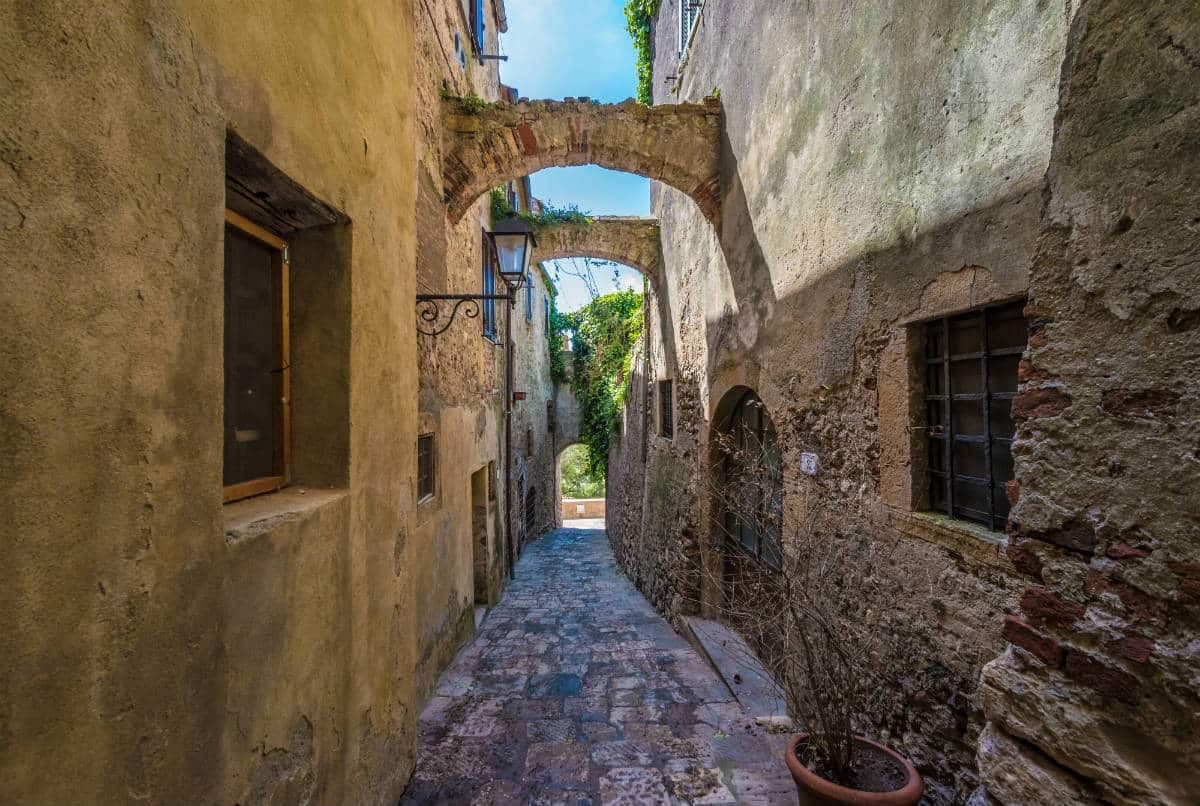
A walled hilltop borgo at 217 meters in the southern Maremma, donated to the Abbey of Tre Fontane by Charlemagne and home of Niki de Saint Phalle's Tarot Garden.