

Lazio · Viterbo
Acquapendente
The northernmost town in Lazio on the Via Francigena above the Paglia, named in 964 for its waterfalls.
Known for
PUGNALONI
Floral mosaic festival dating to 1166, when the town freed itself from Frederick Barbarossa; held each third Sunday of May.
GREEN JERUSALEM
Old nickname earned by the Basilica del Santo Sepolcro and its sacellum, a stone copy of the Jerusalem tomb in the Romanesque crypt.
VIA FRANCIGENA
The northernmost Lazio stage on the pilgrim road to Rome, with a continuous tradition of hostels from the medieval period.
When to visit
Best · Apr–Oct
- J
- F
- M
- A
- M
- J
- J
- A
- S
- O
- N
- D
- Best
- Hot or crowded
- Quiet
- Mostly closed
Why come
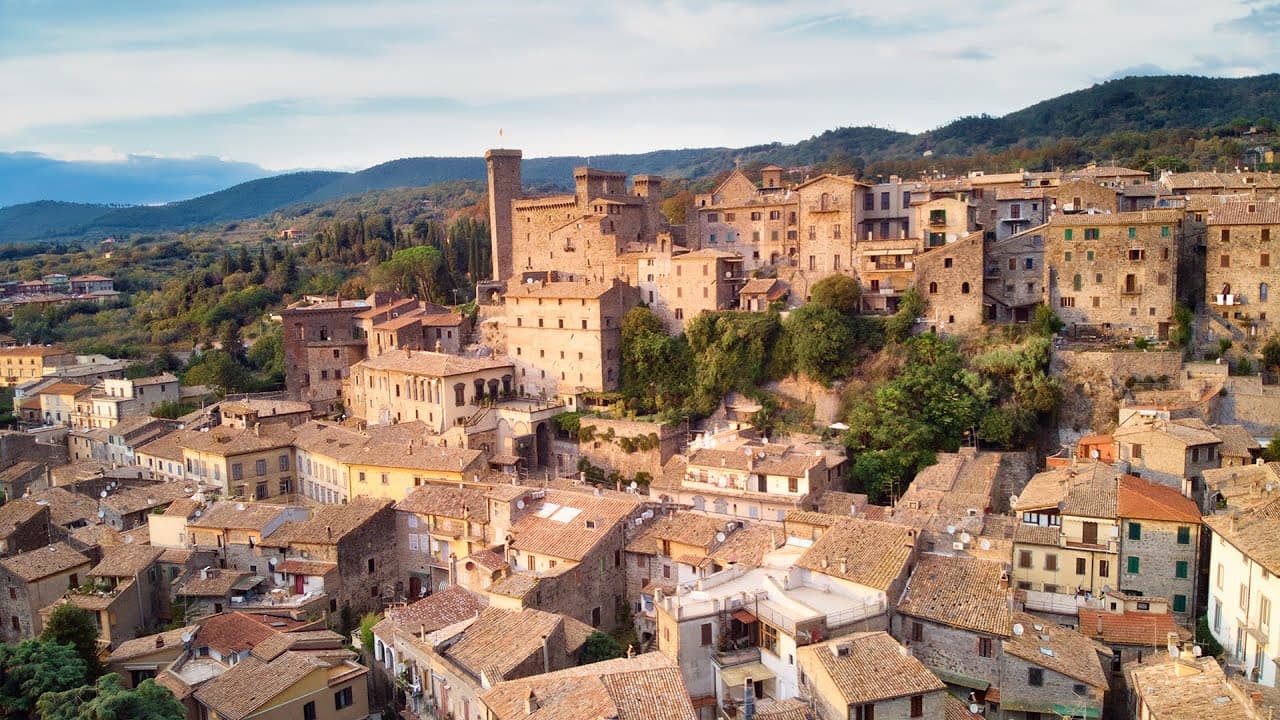
Acquapendente sits on the northern edge of Lazio, where the Paglia river marks the boundary with Tuscany. The name first appears in a document of Emperor Otto I dated 964, taken from the small waterfalls that drop the river toward the plain. The town grew up on the Via Francigena, the medieval pilgrim road from Canterbury to Rome, and the Basilica del Santo Sepolcro at its center holds one of the most important Romanesque crypts in Italy.
Twenty-four columns divide the eleventh-century space into nine naves; a sacellum carved into the rock at its center copies the form of the Holy Sepulchre in Jerusalem and gave the town its old nickname, the Green Jerusalem. The third Sunday of May brings the Pugnaloni, floral mosaics on wooden panels carried through the streets by each quarter, a tradition that began in 1166 when the town rose against Frederick Barbarossa. The frazione of Torre Alfina, with its restored neo-Gothic castle, is itself one of the Borghi più belli d'Italia.
The Sunday letter
We haven’t written Acquapendente’s letter yet.
One town every Sunday, with the photo, the food, the festa. Be there when this one comes up. Free, by Peter & Sophia from Pietrasanta.
By subscribing you agree to Substack’s Terms of Use, our Privacy Policy and our Information collection notice.
What to see
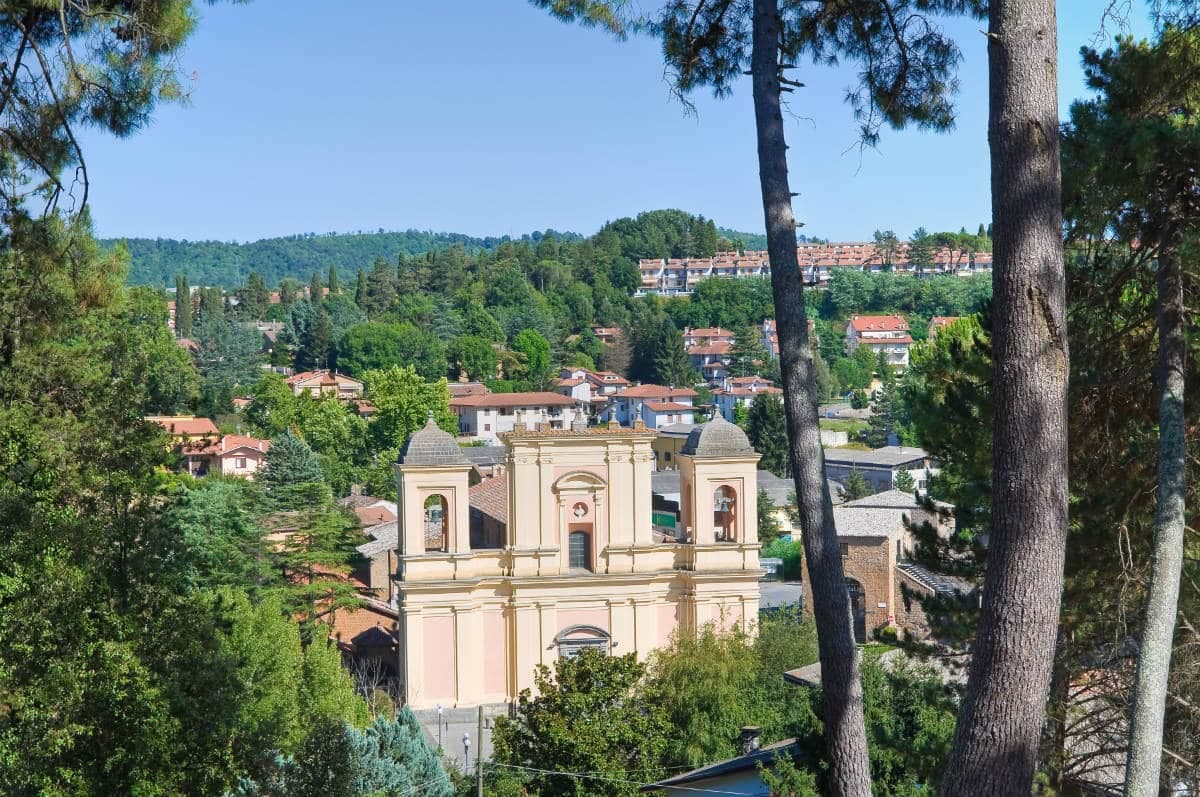
Basilica Concattedrale del Santo Sepolcro
Romanesque cathedral with eleventh-century crypt of twenty-four columns and a sacellum reproducing the Holy Sepulchre of Jerusalem.
Pugnaloni
Floral mosaic panels carried through the streets each third Sunday of May, commemorating the 1166 uprising against Barbarossa.
Castello di Torre Alfina
Neo-Gothic restored fortress in the frazione of Torre Alfina, itself listed among I Borghi più belli d'Italia.
Via Francigena stage
First Lazio stage of the pilgrim road from Canterbury to Rome, with pilgrim hostels still operating along the historic route.
Riserva Naturale Monte Rufeno
Nearly 3,000 hectares of oak and beech forest north of town, with marked trails and the Museo del Fiore at its edge.
The slow-trip planner
Building a trip? Find where Acquapendente fits in a slow Italy circuit.
Answer five questions. We will shape a geographically coherent slow trip from the 1,000 Italian towns most travelers skip. Yours to save and share.
Living here
- Population 5,266
- In-betweeni
- Pharmacy in town
- High school within a 30-minute drive
- Nearest airport Rome, 2 h 39 min drive
- Regional capital Roma, 2 h 8 min drive
Tags & datadesignations · numbers · sources
The numbers
- Elevation: 420 m
- Population: 5,266
- Surface area: 131.61 km²
These figures were compiled from public directories — ISTAT, OpenStreetMap, Wikidata — and from the official listings of the guides named on this page. Town details change; verify with official sources before you travel.
Close by
More towns near Acquapendente
San Casciano dei Bagni
Province: Siena
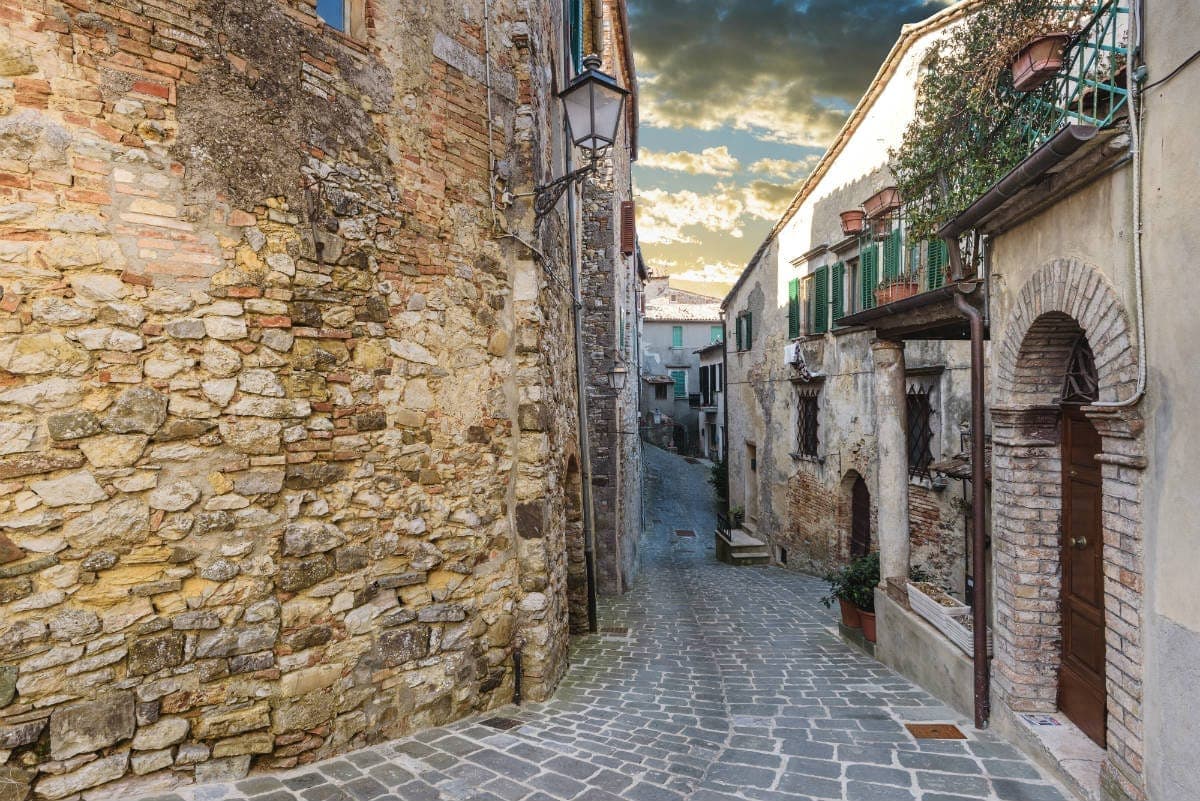
A hilltop borgo at 582 meters above 42 hot springs that produced the largest Etruscan bronze hoard of the last fifty years.
Allerona
Province: Terni
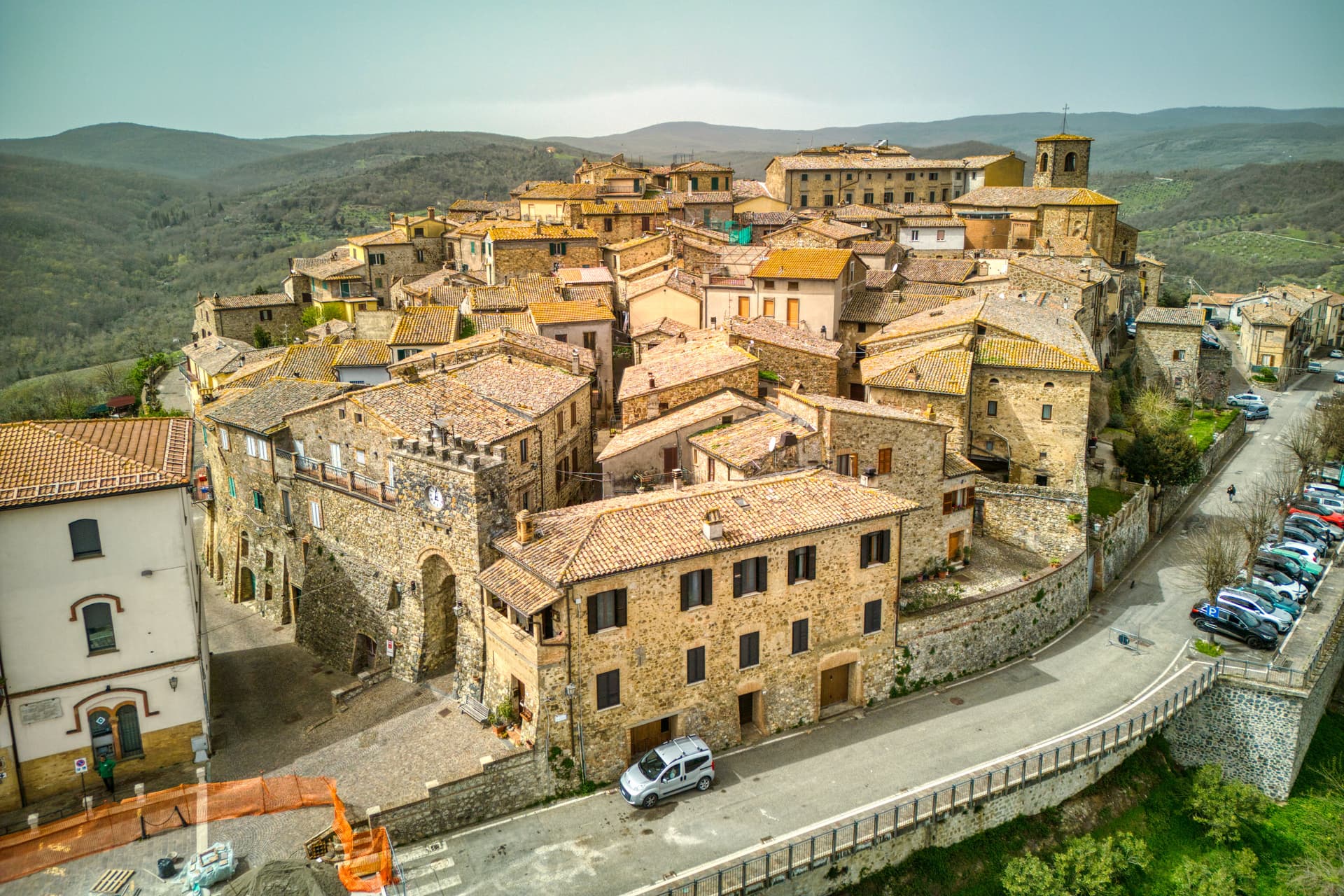
A stone borgo at 472 meters between the Paglia valley and the Valdichiana, an Orvieto outpost whose Monaldeschi castle fell to Charles V.
Bolsena
Province: Viterbo
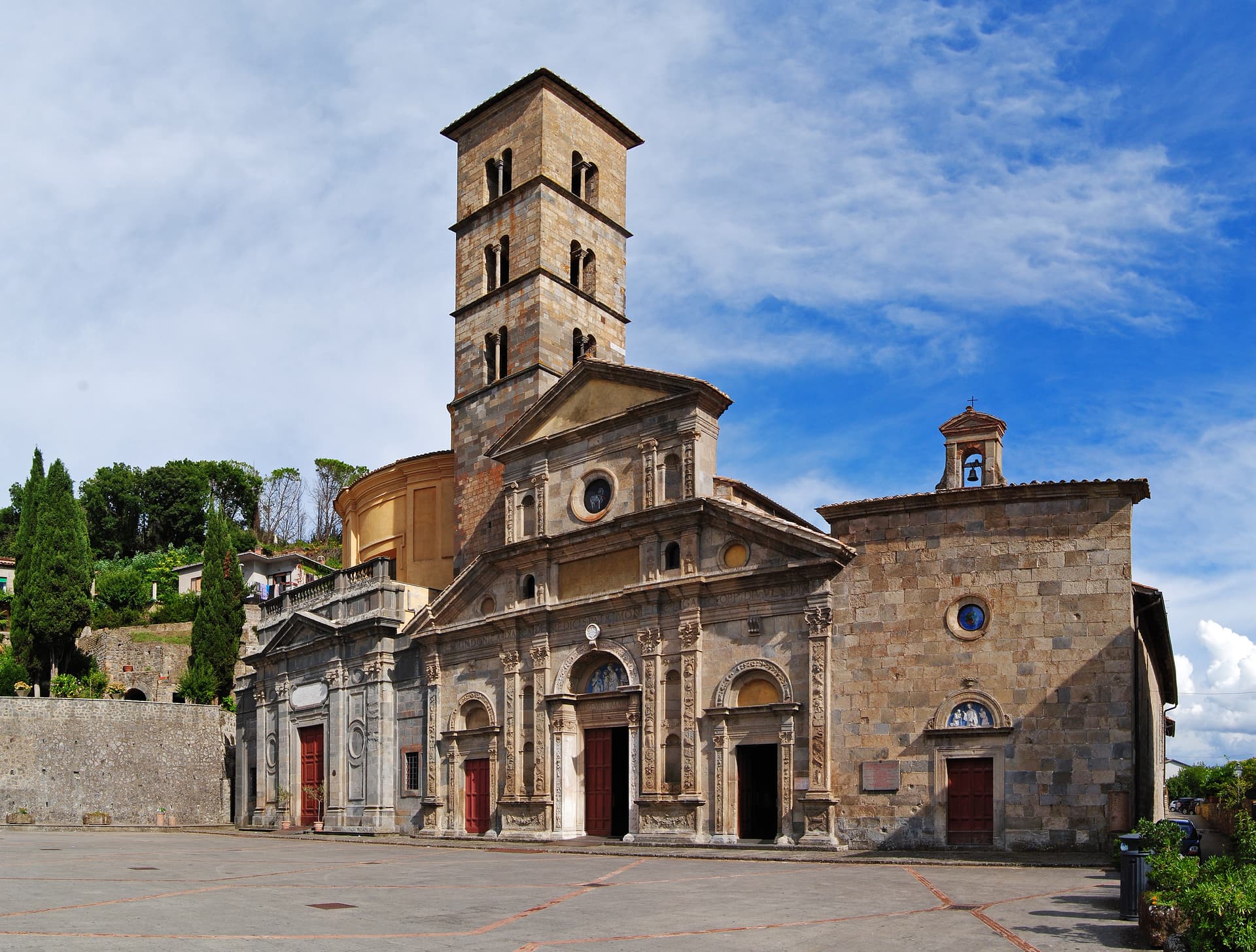
A medieval town at 350 meters on the eastern shore of Europe's largest volcanic lake, where a Bohemian priest reported a Eucharistic miracle in 1263.
Radicofani
Province: Siena
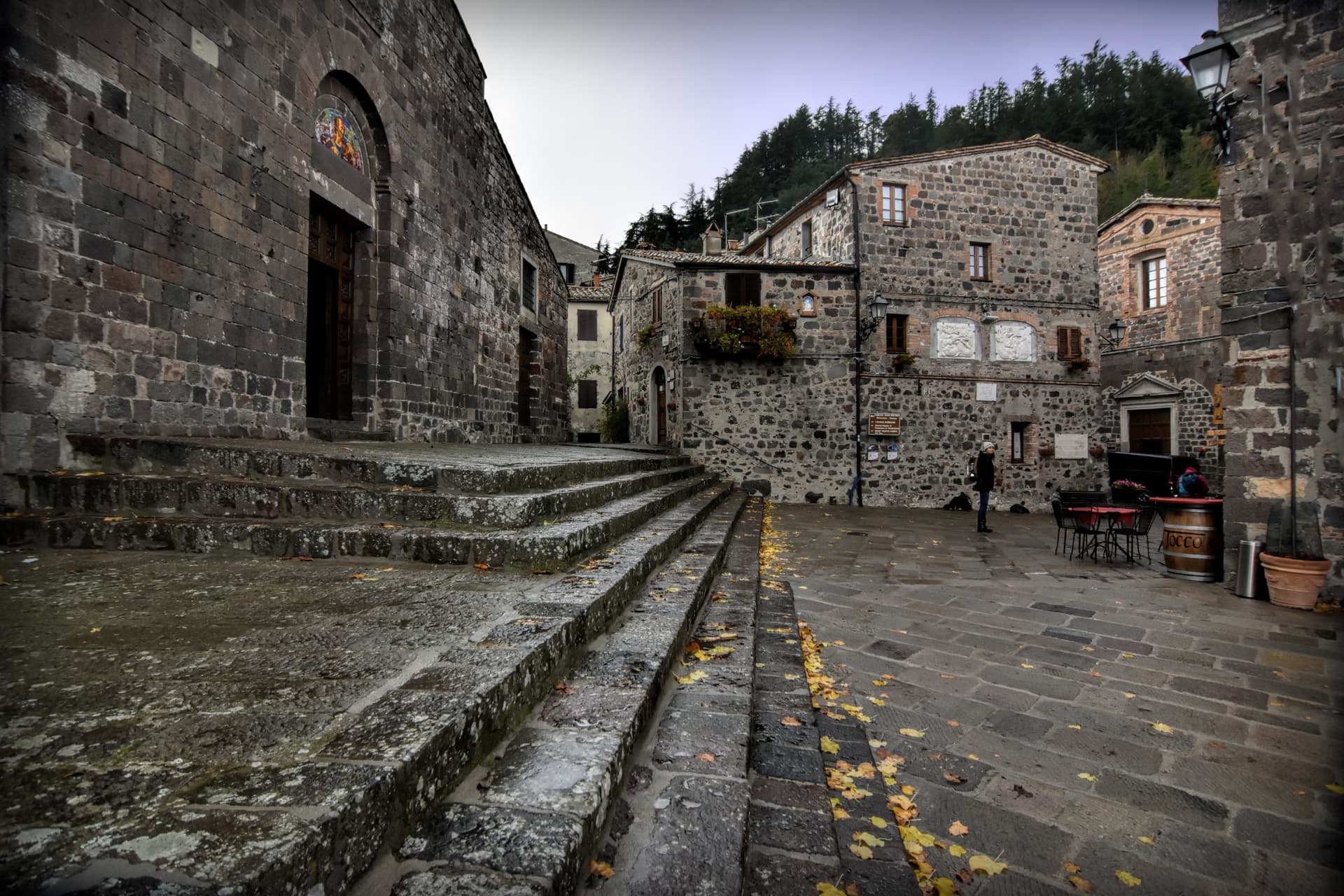
The Val d'Orcia's basalt watchtower — a 1,060-resident UNESCO-inscribed borgo at 814m on a volcanic basalt outcrop visible across half of southern Tuscany, with the spectacular Rocca di Radicofani (Ghino di Tacco's outlaw fortress, mentioned by Dante in Purgatorio + Boccaccio in the Decameron), the 16th-c Posta Medicea on the Via Francigena, and Bandiera Arancione + UNESCO + Via Francigena triple signal.
Capodimonte
Province: Viterbo
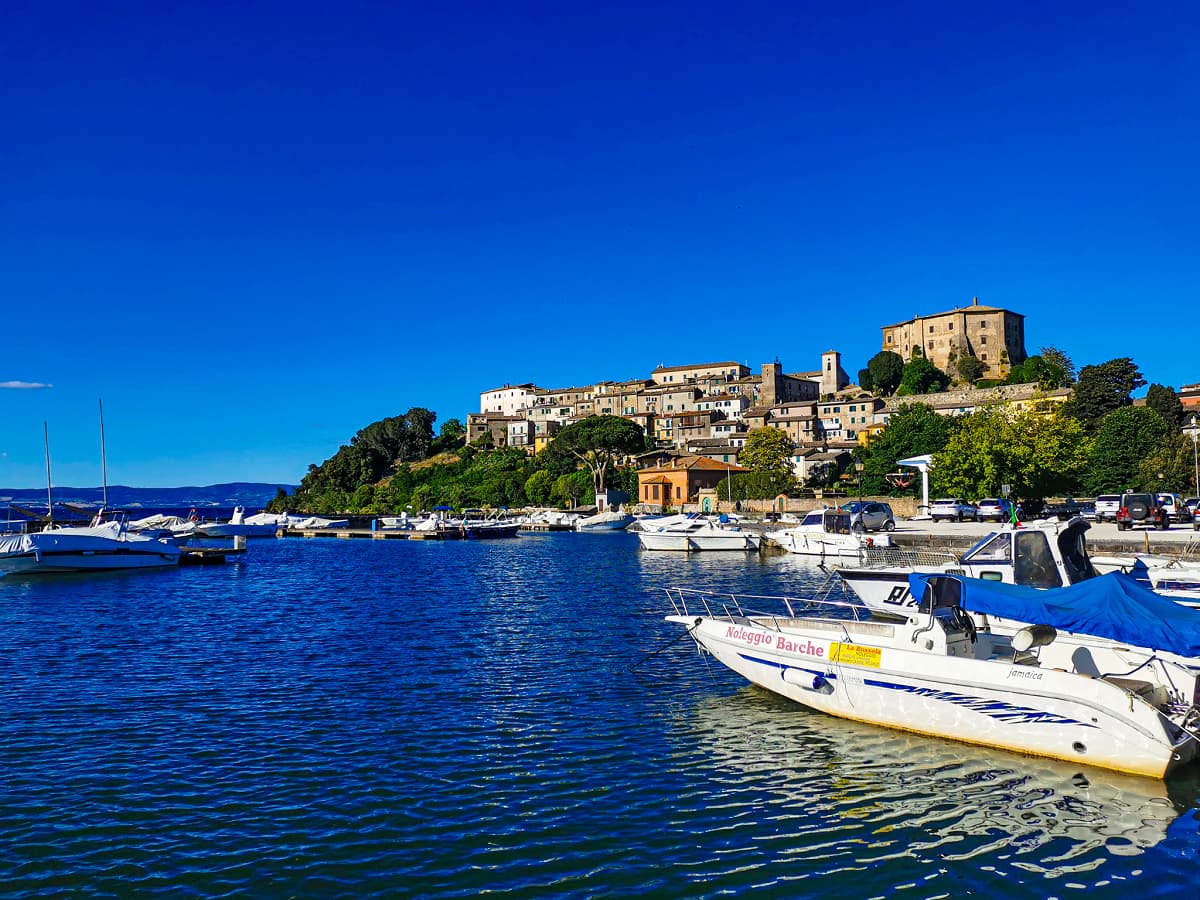
The lakefront Farnese stronghold on Lago di Bolsena — a small Tuscia borgo on a peninsula jutting into Europe's largest volcanic crater lake, with Antonio da Sangallo's octagonal Rocca Farnese, an extra-virgin olive oil tradition (Città dell'Olio), and views across the water to the inhabited Isola Bisentina.
🎨 Borghi più belli d'Italia
More Borghi più belli d'Italia towns in Lazio
Amatrice
Province: Rieti
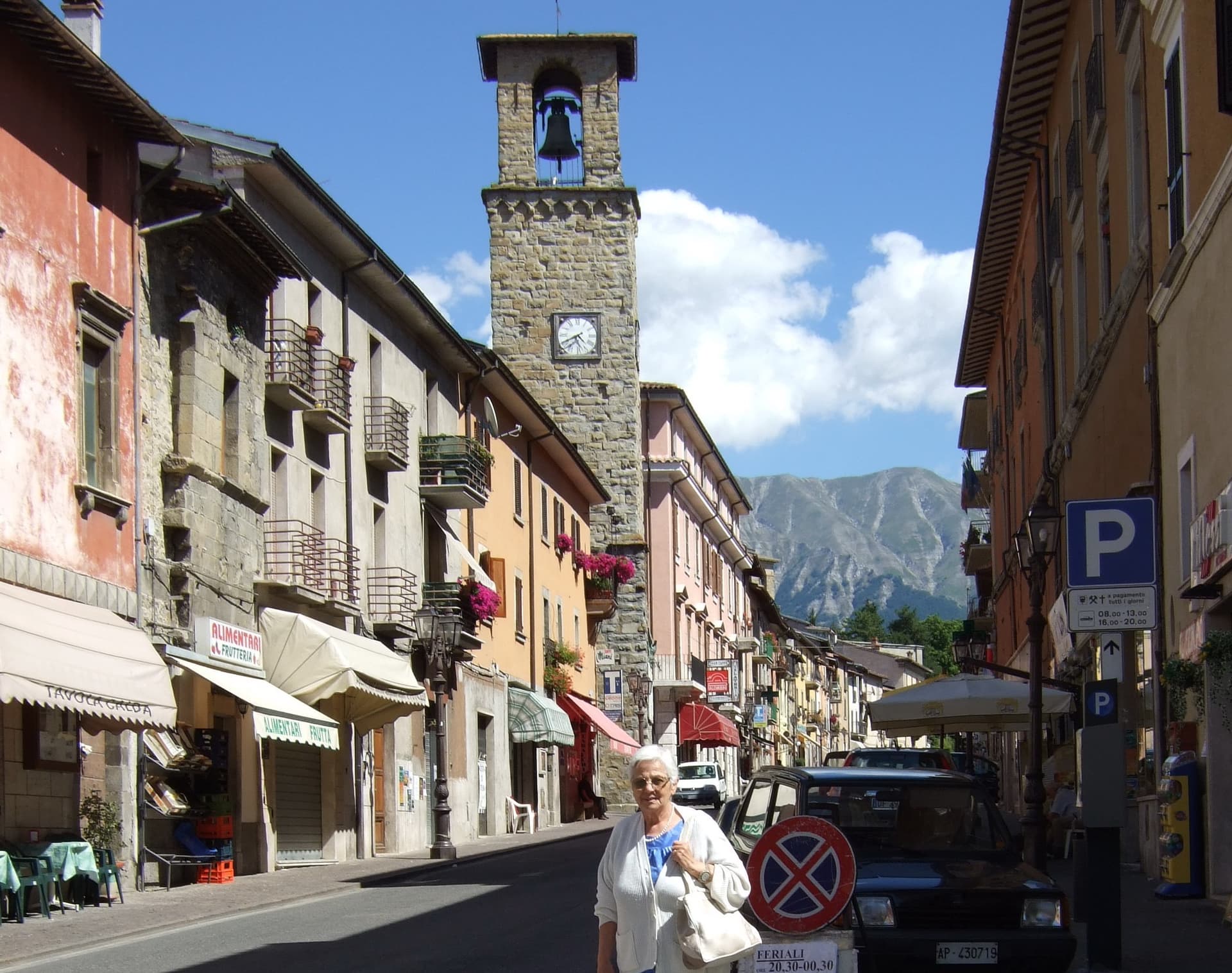
A 955-meter Apennine town leveled by the 24 August 2016 earthquake, slowly rebuilding the streets that gave amatriciana its name.
Atina
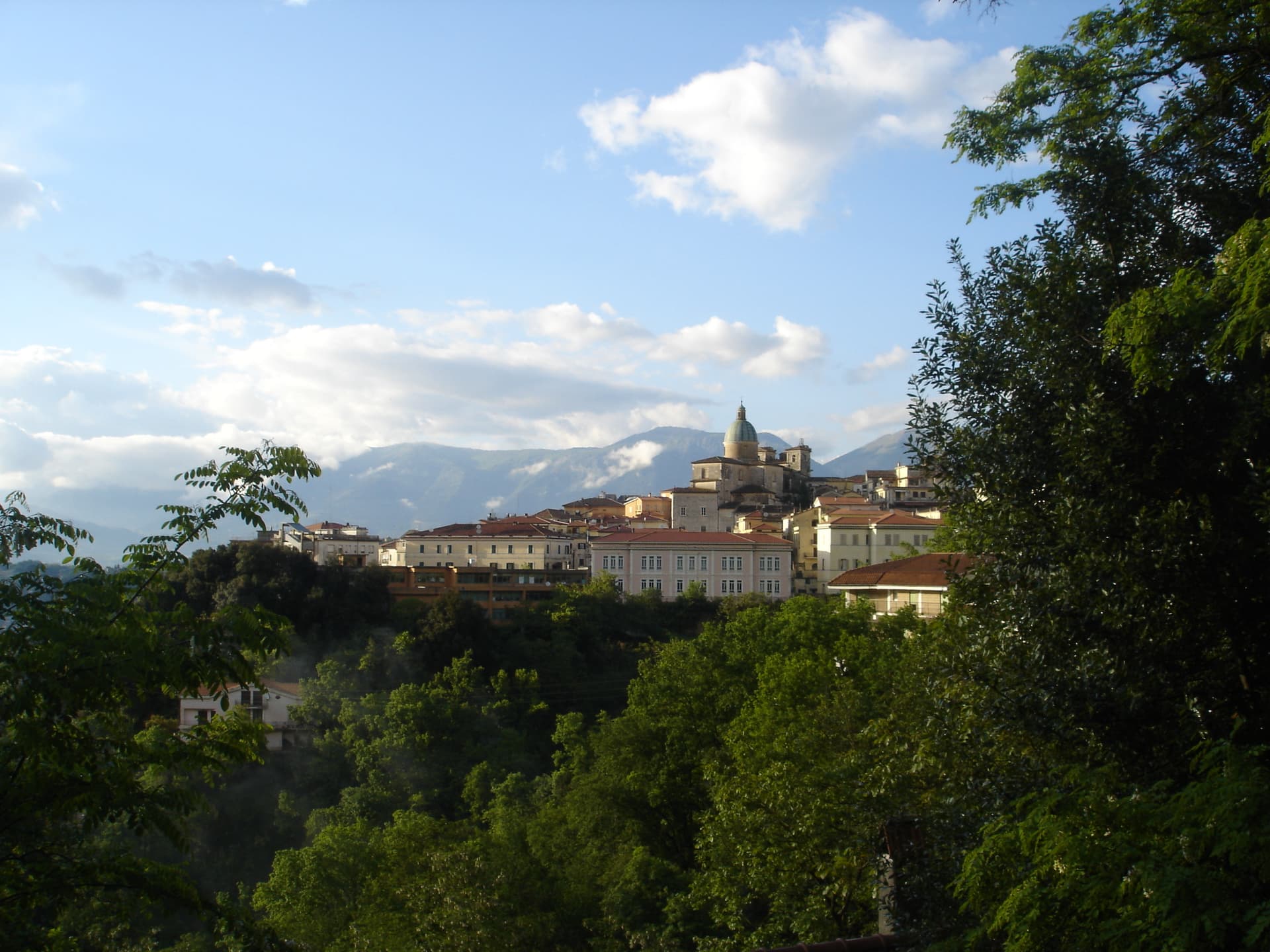
Province: Frosinone
A polygonal-walled town in the Val di Comino at the foot of the Mainarde, and the DOC that makes Cabernet in central Italy.
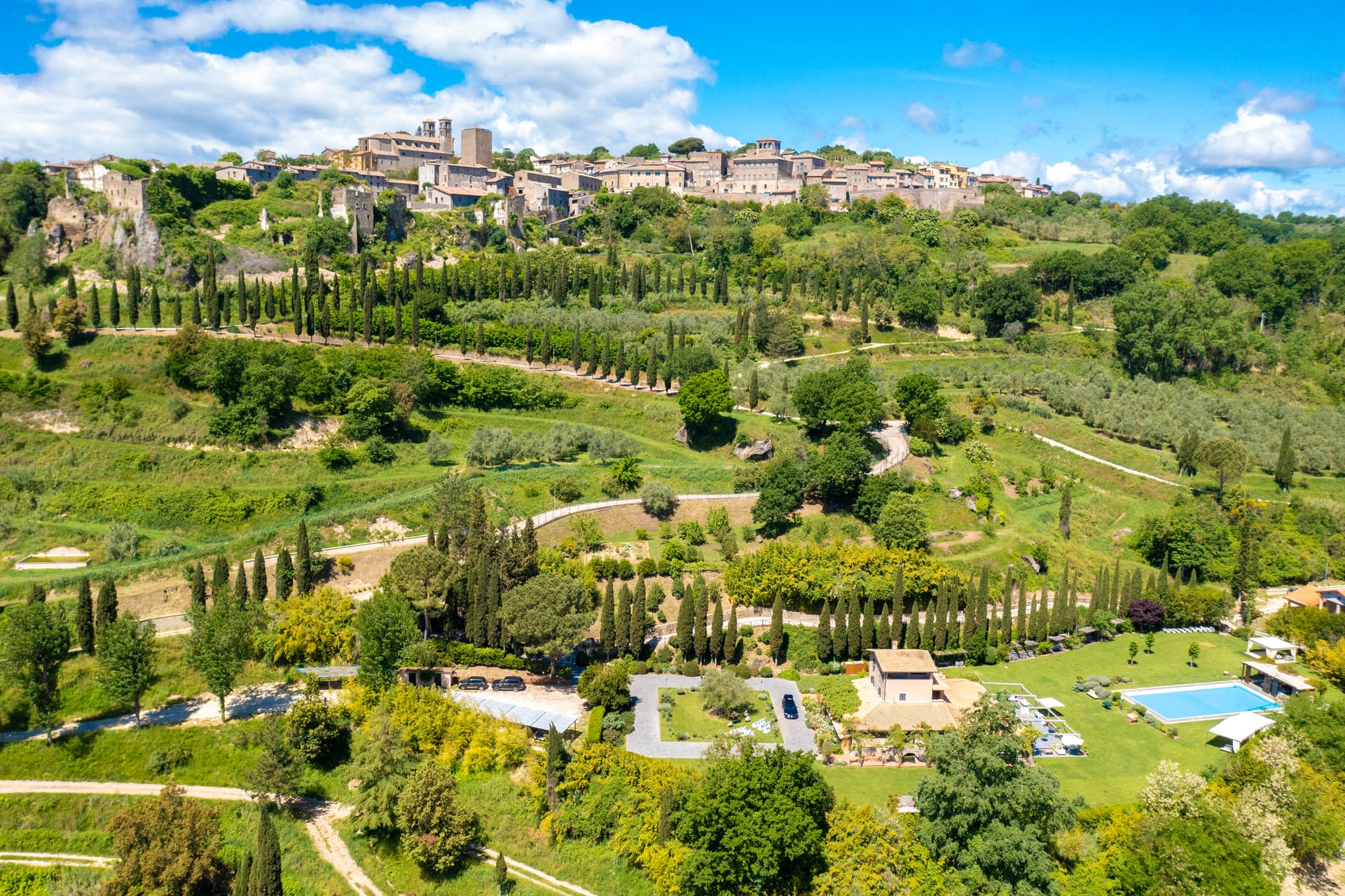
Bassano in Teverina
Province: Viterbo
A tufa-spur borgo of 1,260 above the Tiber valley between Lazio and Umbria, with a clock tower that hides an eleventh-century animated bell tower.
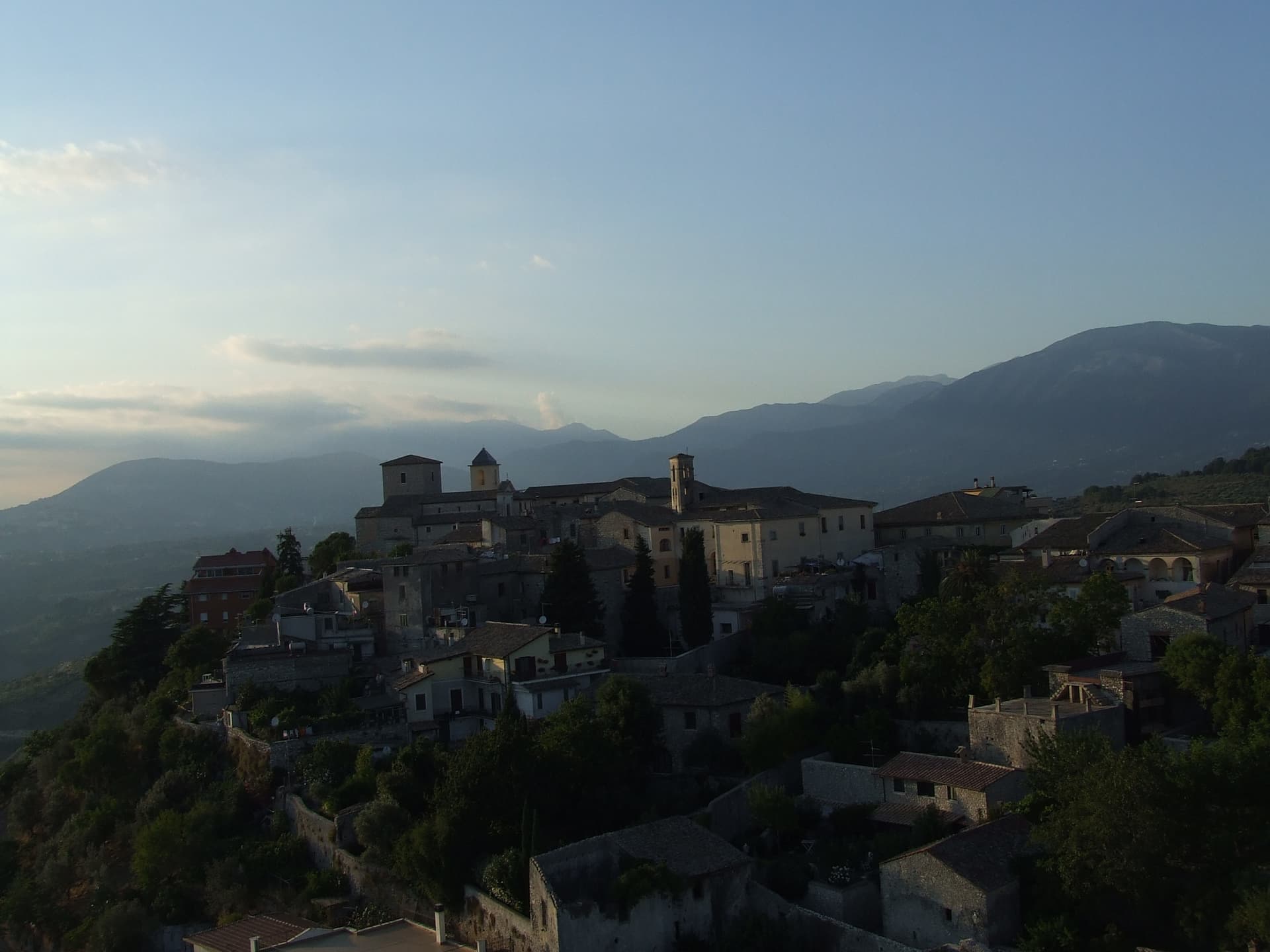
Boville Ernica
Province: Frosinone
A Ciociaria hilltop town with eighteen intact medieval towers and Giotto's only surviving mosaic, the Angelo del Navicella, in San Pietro Ispano.
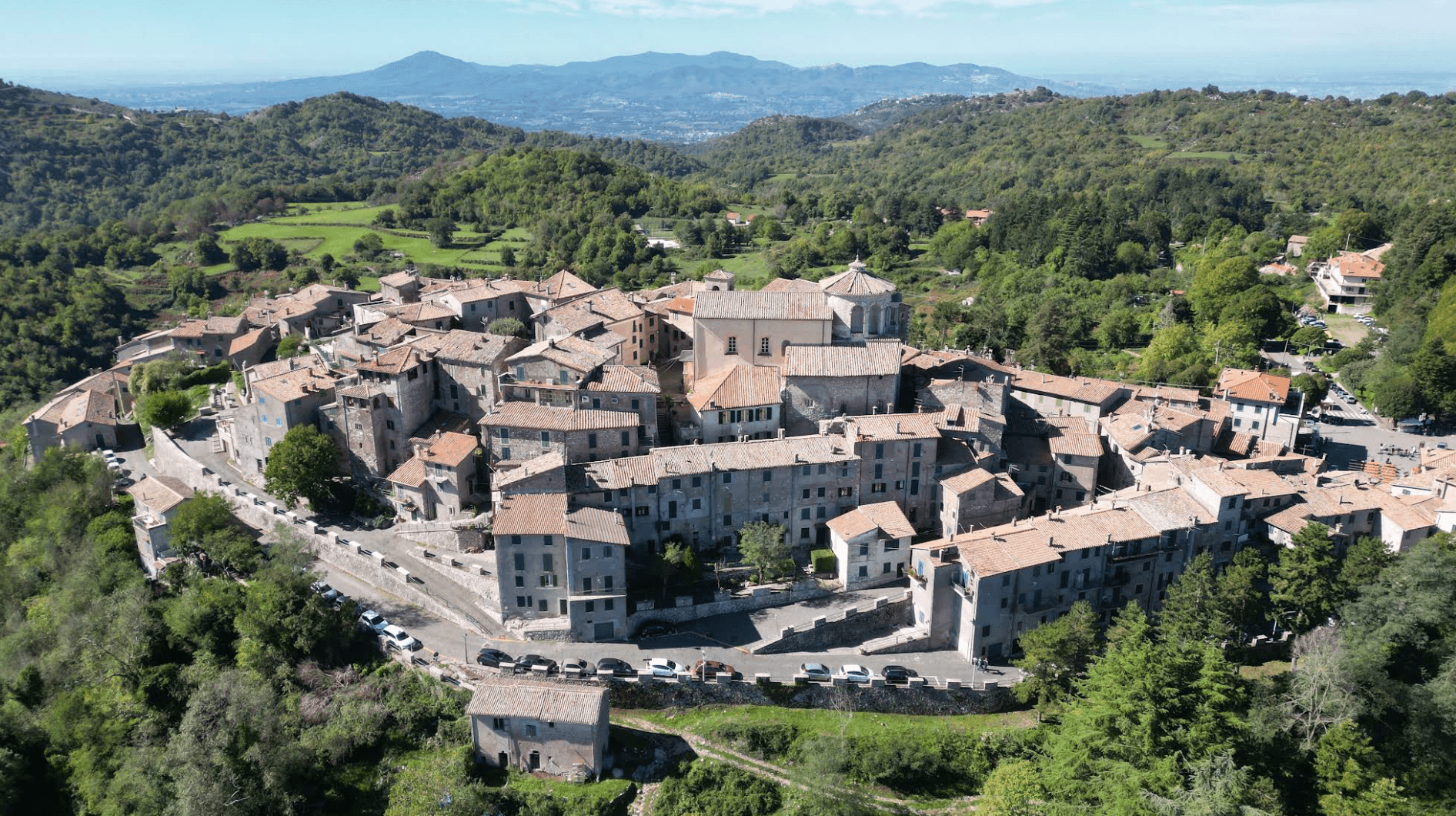
Capranica Prenestina
Province: Roma
A 915-meter ridge village on the Monti Prenestini east of Rome, with the Mentorella sanctuary at 1,018 meters above the Giovenzano valley.