
Tuscany · Lucca
Forte dei Marmi
The Versilia luxury beach built around an eighteenth-century marble-loading fort, with 99 bagni concessions and a Wednesday market that draws Milan.
Known for
BEACH CLUBS
Around 99 bagni concessions along the Bandiera Blu coastline, the most exclusive renting cabanas for over 20,000 euros per season.
THE PONTILE
Wooden marble-loading pier built 1867-1877 with tracks and a steam crane, now the central seafront promenade and viewpoint.
WEDNESDAY MARKET
Piazza Marconi market running since the 1930s, with leather and cashmere stalls that pull weekday shoppers from Milan and Bologna.
When to visit
Best · May–Sep
- J
- F
- M
- A
- M
- J
- J
- A
- S
- O
- N
- D
- Best
- Hot or crowded
- Quiet
- Mostly closed
The festa: Ermete martire, 28 August
Why come
Forte dei Marmi sits at sea level on the Versilia coast, 8. 9 square kilometers of flat ground between the Apuan Alps and the Ligurian Sea. The town takes its name from a small fort built in 1788 under Grand Duke Leopold to defend the coast and used through the nineteenth century to stockpile marble shipped down from the Carrara and Seravezza quarries before loading onto ships at the wooden pier.
The Pontile, built between 1867 and 1877, carried tracks and a steam crane for the marble trade and is now the central promenade landmark. The town became a Belle Époque resort in the early twentieth century, then a luxury destination from the 1960s. Russian buyers arrived in the 1990s, the press named the seafront Piccola Russia, and by 2023 around 99 bagni concessions operate along the beach, the most prestigious cabins renting at over 20,000 euros per season.
What to see
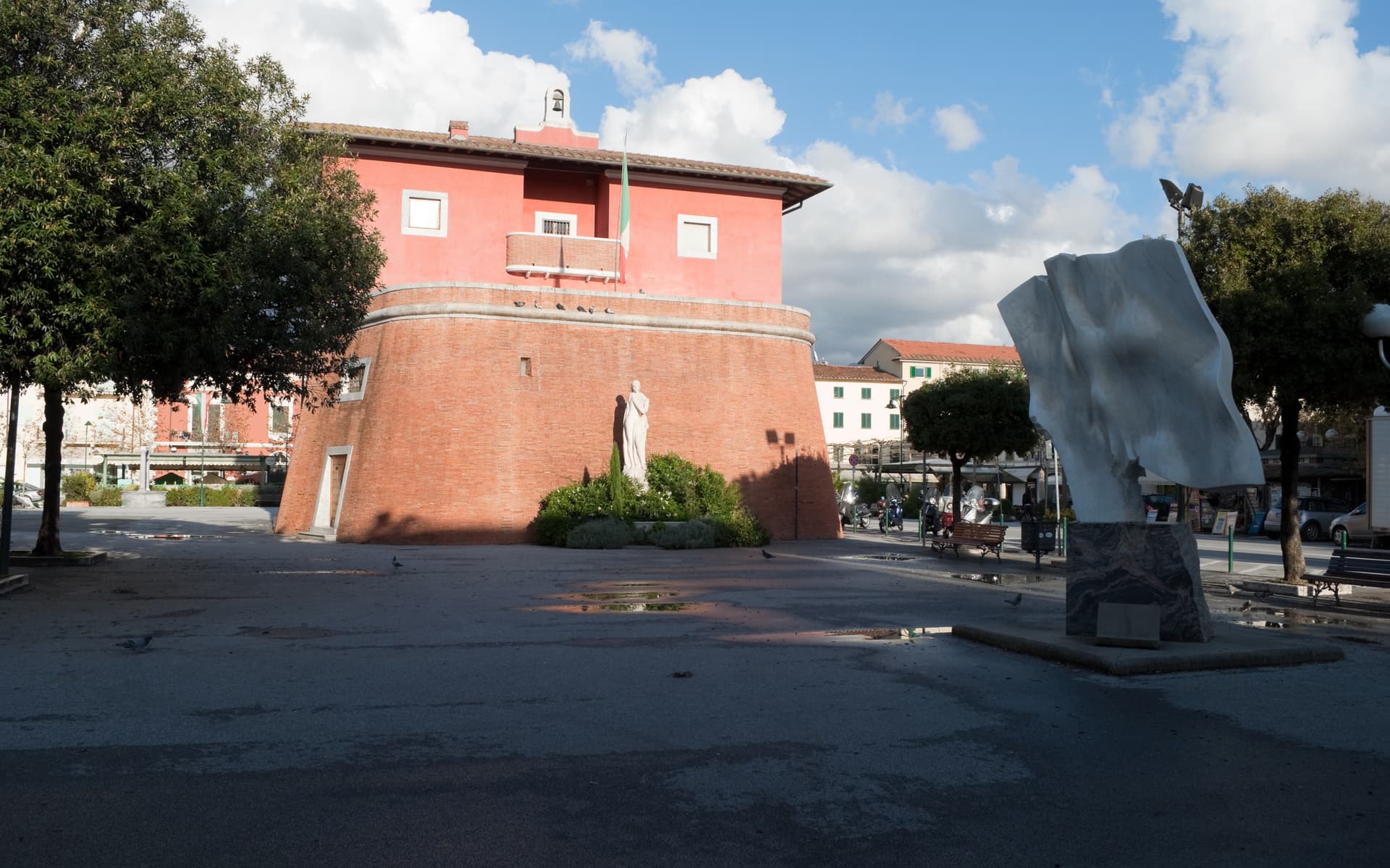
Fortino di Leopoldo
The 1788 marble-loading fortress that gave the town its name, on the central piazza, now housing the Museo della Satira e della Caricatura.
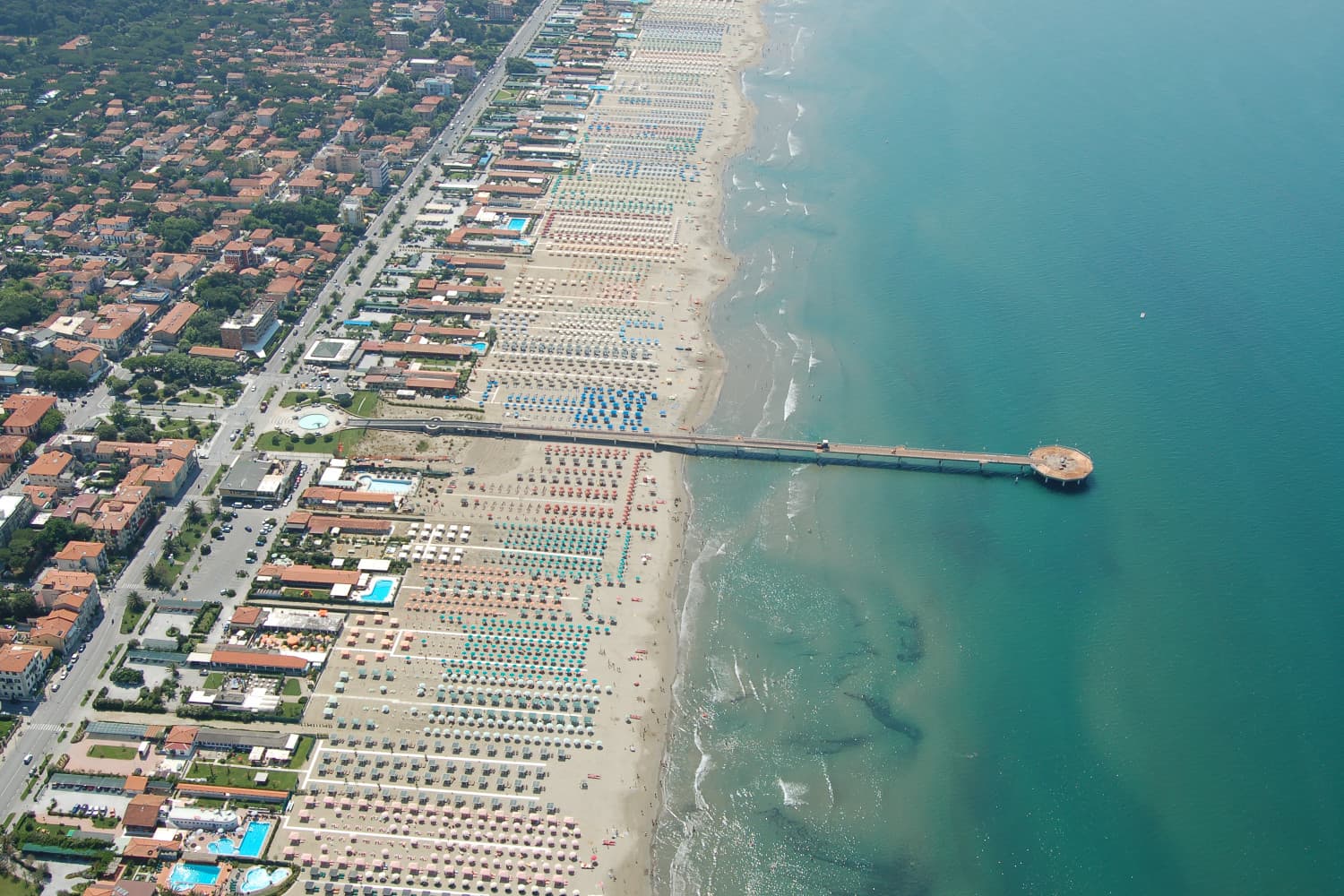
Pontile
Wooden marble-loading pier built between 1867 and 1877, with tracks and a steam crane, now the central seafront promenade.
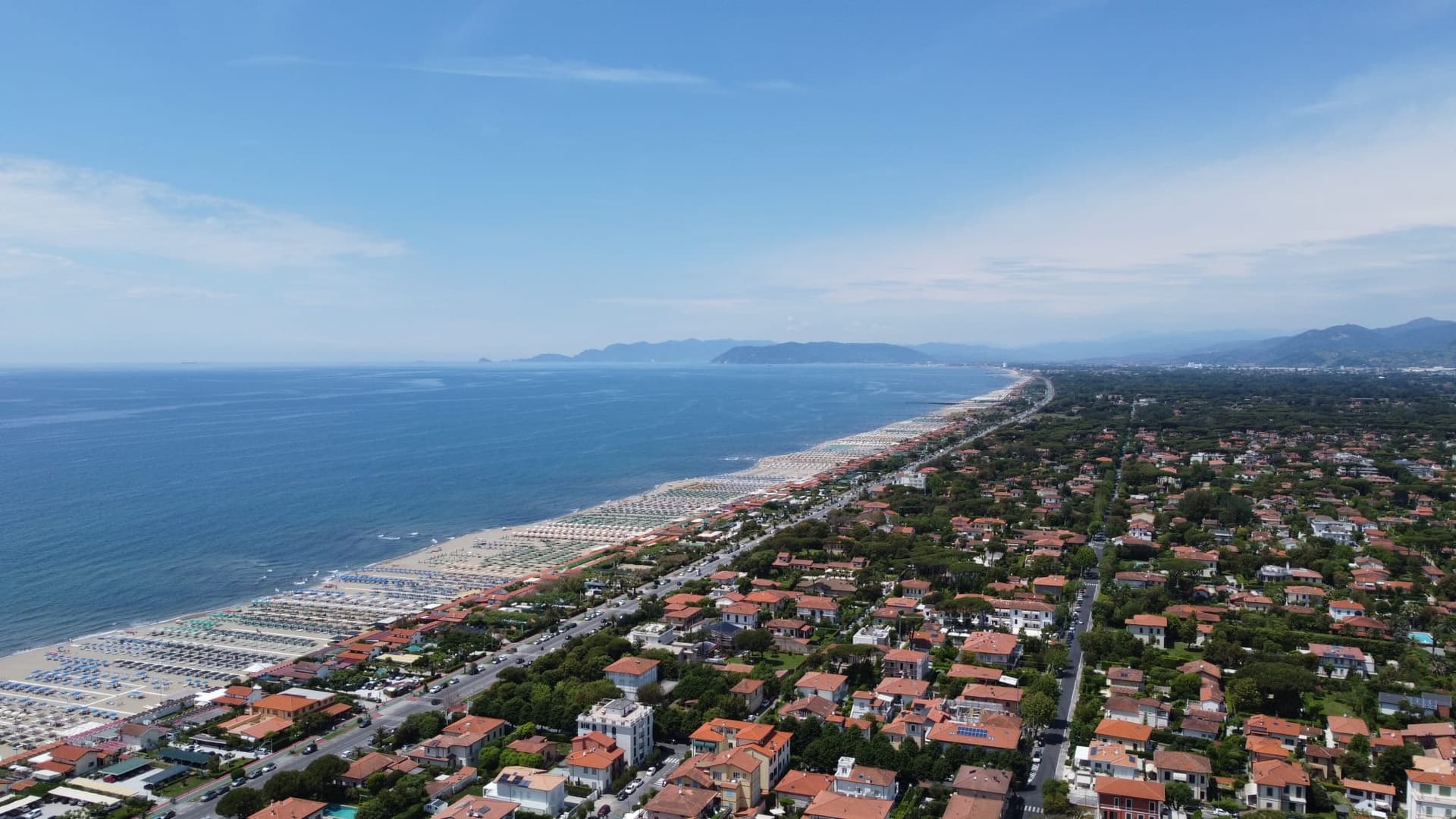
Spiaggia di Forte dei Marmi
Wide Versilia Bandiera Blu beach with around 99 bagni concessions running back to the Belle Époque, fine golden sand and the Apuan Alps as backdrop.
Mercato del Mercoledì
Wednesday market on Piazza Marconi running since the 1930s, with clothing, leather and cashmere stalls that draw shoppers from Milan and Bologna.
Museo della Satira e della Caricatura
Civic museum inside the Fortino, with 35,000 satirical drawings and political cartoons, founded 1992 from the Mauro Bambi bequest.
The slow-trip planner
Building a trip? Find where Forte dei Marmi fits in a slow Italy circuit.
Answer five questions. We will shape a geographically coherent slow trip from the 1,000 Italian towns most travelers skip. Yours to save and share.
We’ve tried
What we got up to
Restaurants, walks, swims — the things we actually did in and around Forte dei Marmi, each with the piece we wrote about it.
The tordello, the meat-stuffed pasta that is Versilia telling you it isn't Lucca.
We recommend
Where to eat and stay
Not our picks, but places the guides put their name to — a Michelin star, a Gambero Rosso fork, a Slow Food snail, a Michelin Key for the hotels. Worth a table, a counter, or a night when you pass through.
LorenzoRistorante
Lorenzo carries one Michelin star, two Gambero Rosso forks (89/100), plus a place in L'Espresso's Top 300, among other nods.
Lux Lucis - Hotel Principe Forte dei MarmiRistorante
One Michelin star for Lux Lucis - Hotel Principe Forte dei Marmi, along with two Gambero Rosso forks (88/100) and a place in L'Espresso's Top 300, among other nods.
BistrotRistorante
Bistrot carries one Michelin star, plus two Gambero Rosso forks (86/100).
La MagnoliaRistorante
La Magnolia carries one Michelin star, plus two Gambero Rosso forks (87/100).
SciabolaRistorante
One Michelin star for Sciabola, and two Gambero Rosso forks (82/100).
Osteria del MareRistorante
Osteria del Mare carries one Gambero Rosso fork (78/100).
Pesce BaraccaBistrot
Pesce Baracca carries two Gambero Rosso tables.
Pensione AmericaHotel
One Michelin Key for Pensione America, along with a Leading Hotels of the World listing and a place on Italy's historic-locali register.
Principe Forte dei MarmiHotel
One Michelin Key for Principe Forte dei Marmi, and a Leading Hotels of the World listing.
Grand Hotel ImperialeHotel
Grand Hotel Imperiale has a place in the Michelin hotel guide to its name.
The Magic Forte dei MarmiHotel
The Magic Forte dei Marmi has a place in the Michelin hotel guide to its name.
The Sunday letter
Forte dei Marmi got its letter. One town every Sunday, free — the photo, the food, the festa.
By subscribing you agree to Substack’s Terms of Use, our Privacy Policy and our Information collection notice.
Living here
- Population 6,861
- Commuter belti
- Pharmacy in town
- High school within a 30-minute drive
- Nearest airport Florence / Pisa, 47 min drive
- Regional capital Firenze, 1 h 24 min drive
Tags & datadesignations · numbers · sources
Recognised as
The numbers
- Elevation: 2 m
- Population: 6,861
- Surface area: 8.88 km²
These figures were compiled from public directories — ISTAT, OpenStreetMap, Wikidata — and from the official listings of the guides named on this page. Town details change; verify with official sources before you travel.
Close by
More towns near Forte dei Marmi
Pietrasanta
Province: Lucca
The marble-processing town under the Apuan Alps, founded in 1255 and worked since by Michelangelo, Henry Moore, Joan Miró and Fernando Botero.
Montignoso
Province: Massa-Carrara
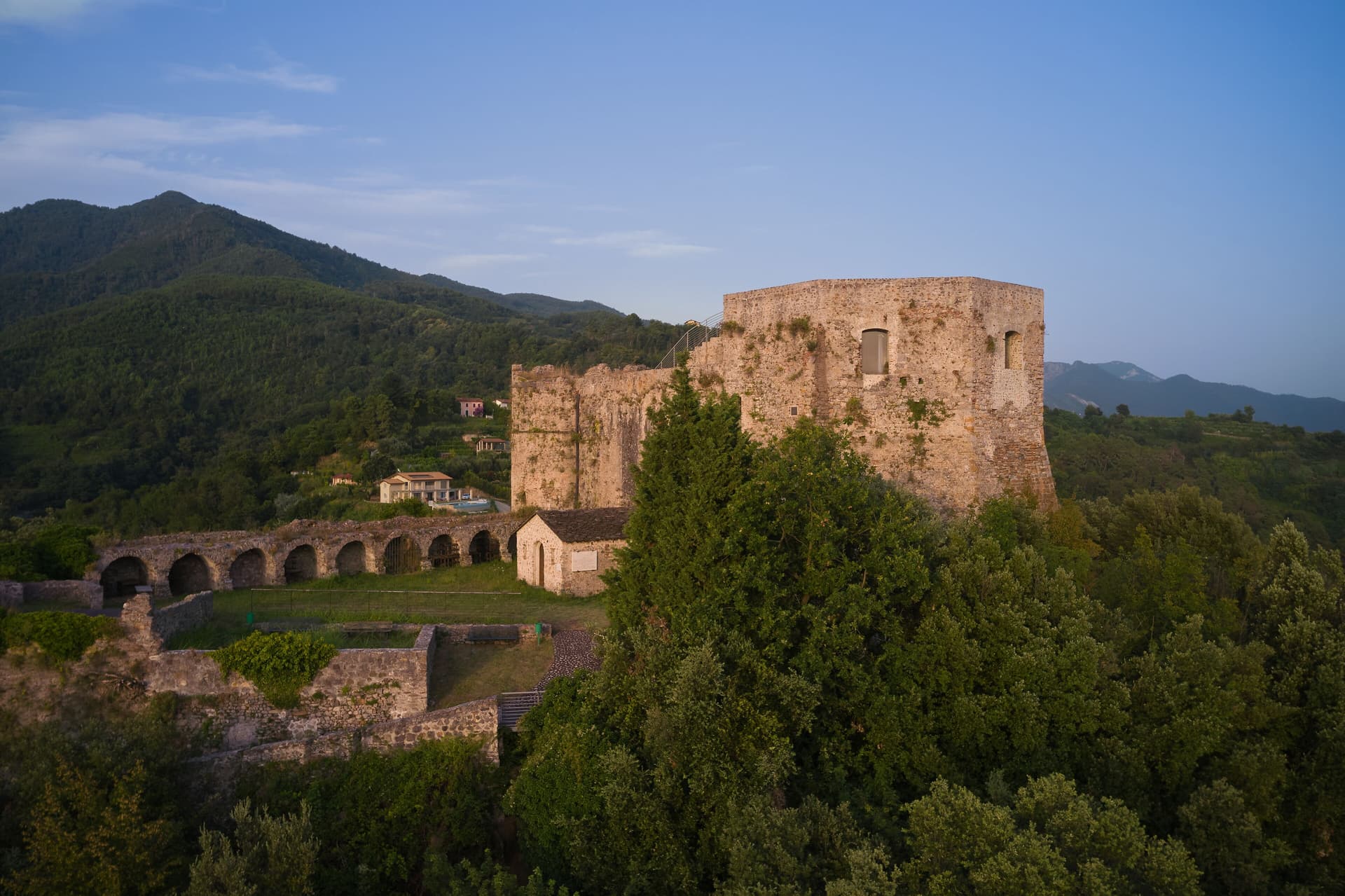
A Riviera Apuana commune split between the Cinquale coastal frazione, the Castello Aghinolfi on the hill, and the Lago di Porta wetland on the Versilia plain.
Viareggio
Province: Lucca
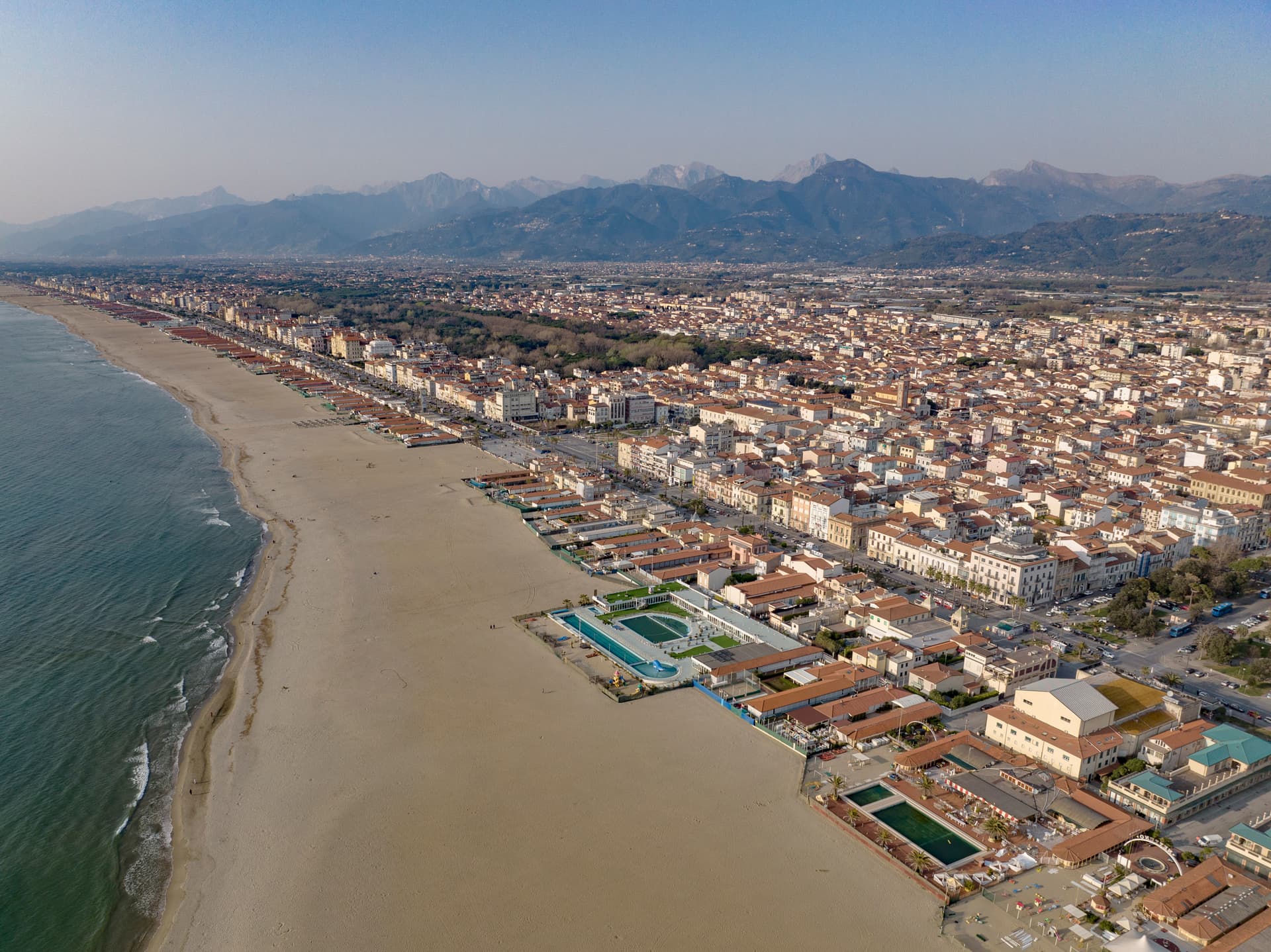
The Versilia capital, a Liberty-architecture seafront built around the 1873 Carnival and the 254-kilogram papier-mâché floats that still parade every February.
Camaiore
Province: Lucca
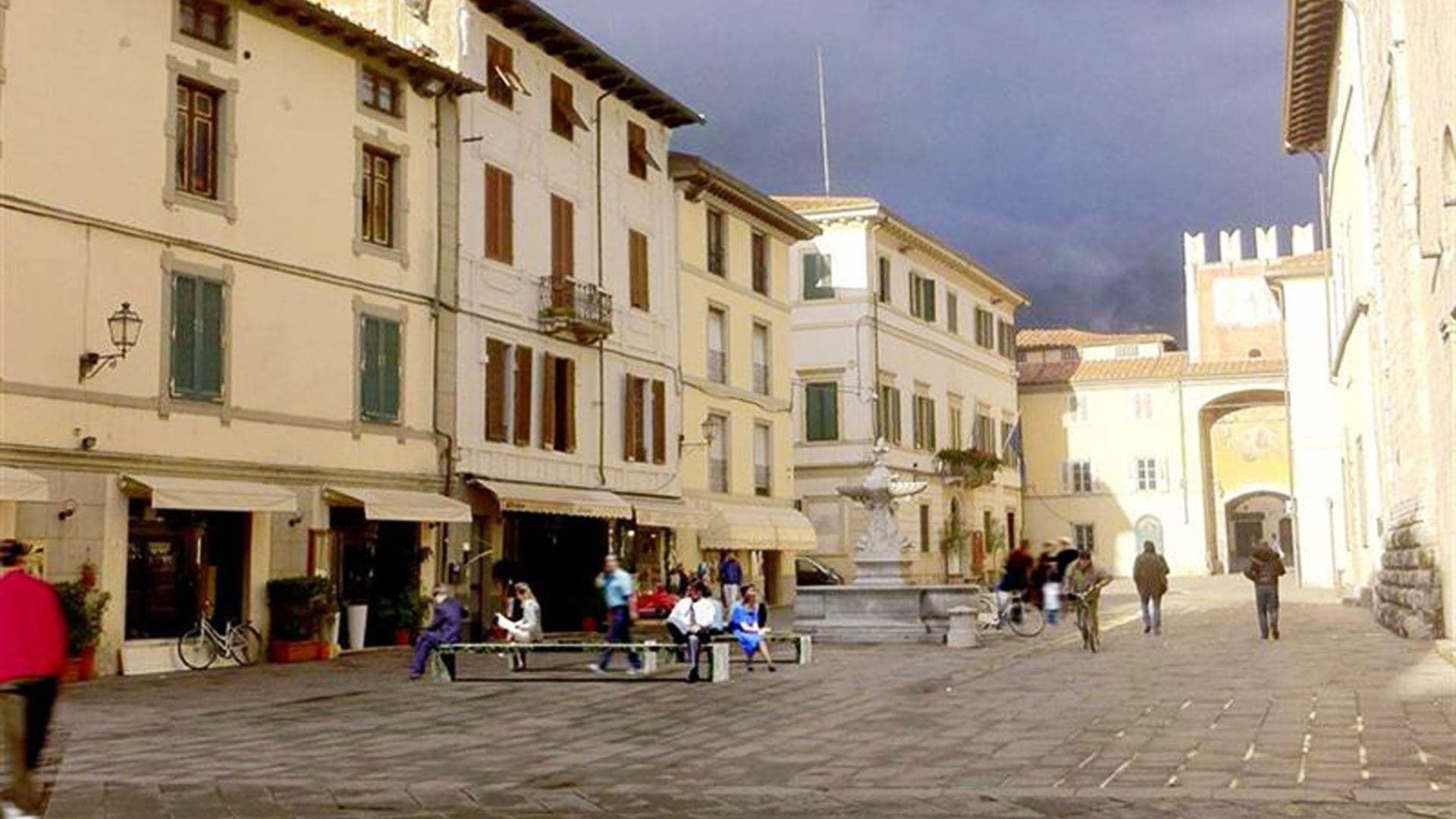
The Versilia commune that runs from the Apuan Alps to the sea, a Roman Campus Maior on the Via Francigena with a beach at its western end.
Seravezza
Province: Lucca
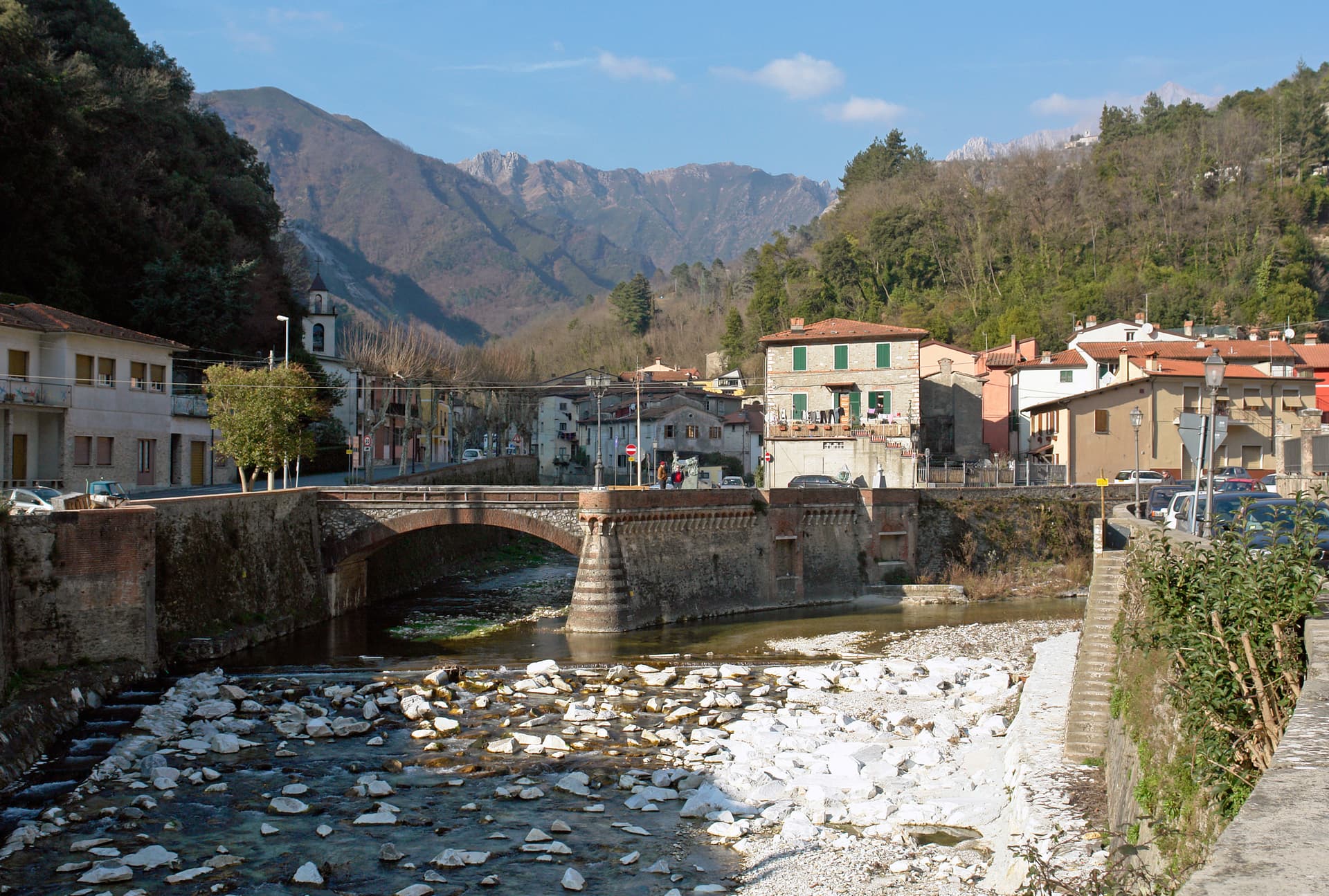
The Versilia town at the foot of Monte Altissimo where Michelangelo opened the Pope's marble quarries and Cosimo I built his summer palace.
🟦 Bandiera Blu
More Bandiera Blu towns in Tuscany
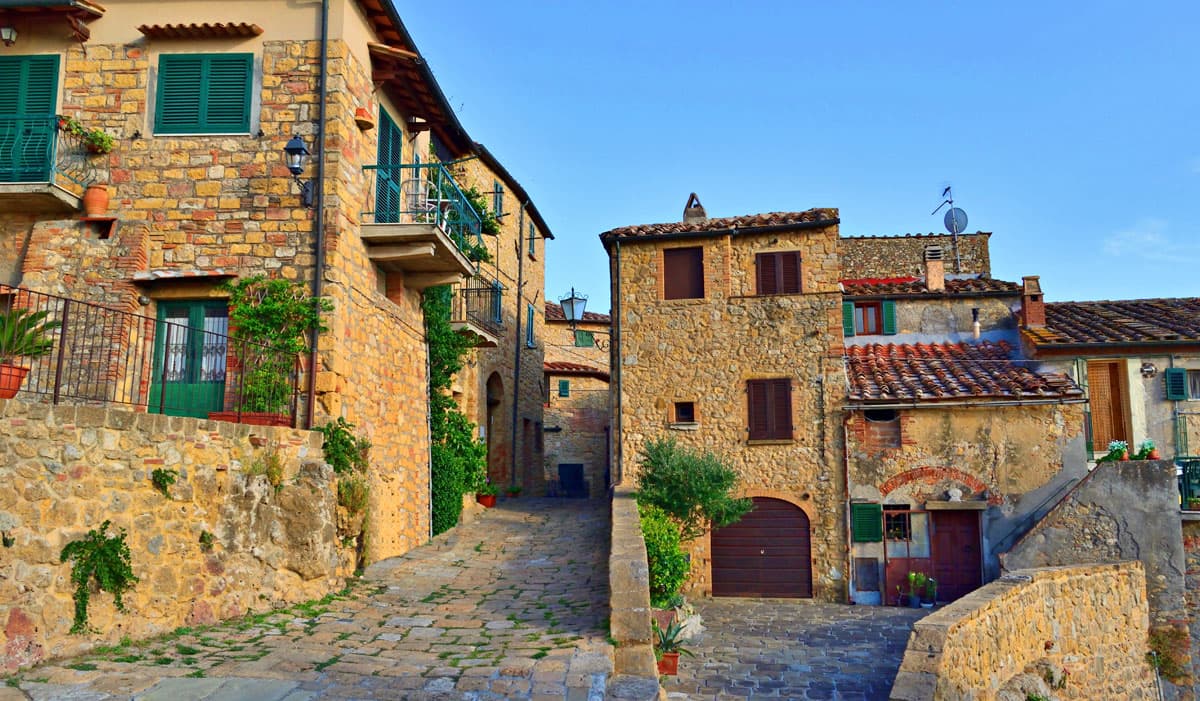
Bibbona
Province: Livorno
An Etruscan-origin hill village above the Costa degli Etruschi, with a Romanesque parish church and a Lorraine-built coastal fort eight kilometers down the road at Marina di Bibbona.
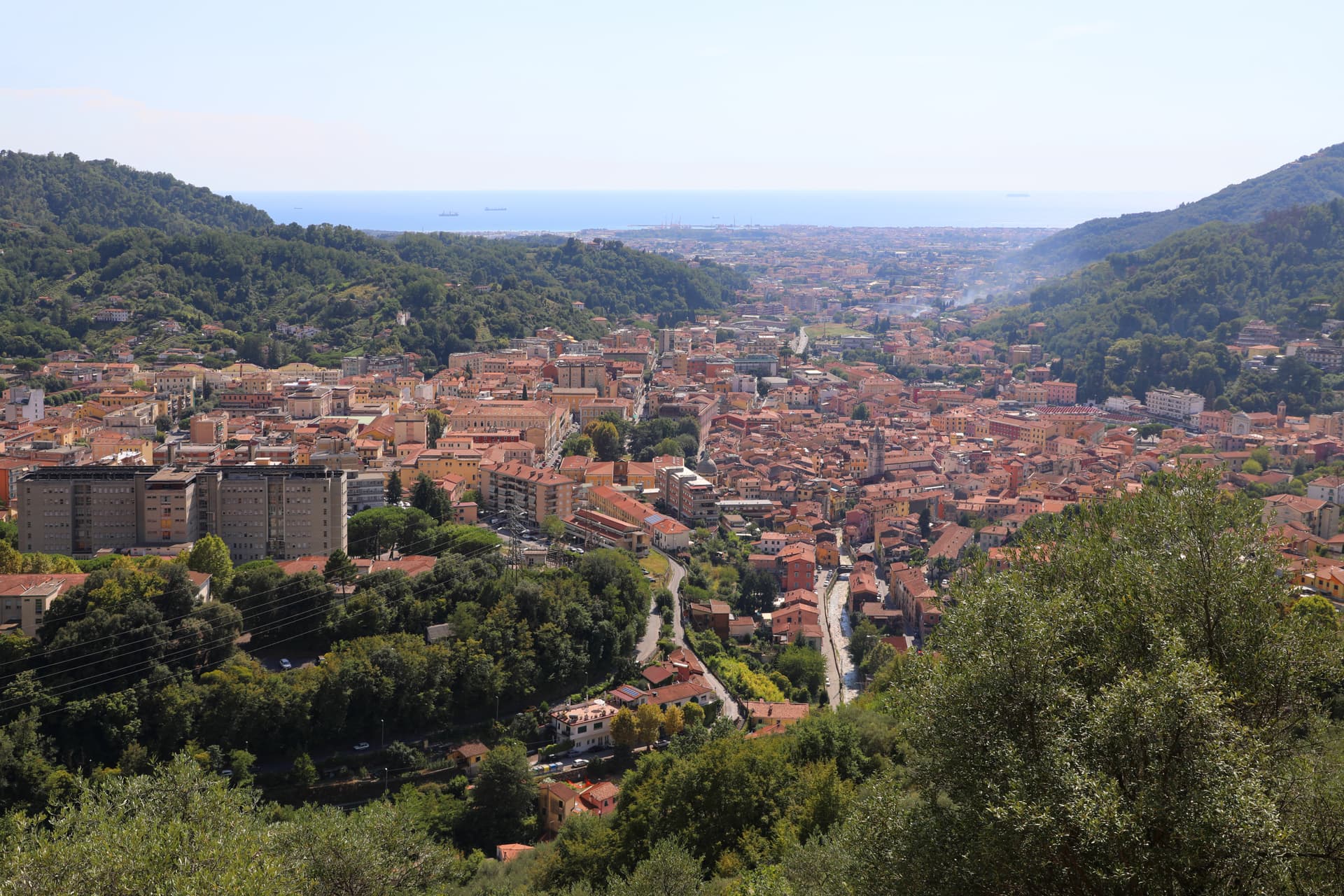
Carrara
Province: Massa-Carrara
The marble town at the foot of the Apuan Alps, with over 650 quarry sites in the valleys above and the stone that built the Pantheon, the Pietà and Michelangelo's David.

Castagneto Carducci
Province: Livorno
A hilltop borgo at 194 meters above the Costa degli Etruschi, renamed for the poet Carducci in 1907 and the home of Bolgheri and Sassicaia.
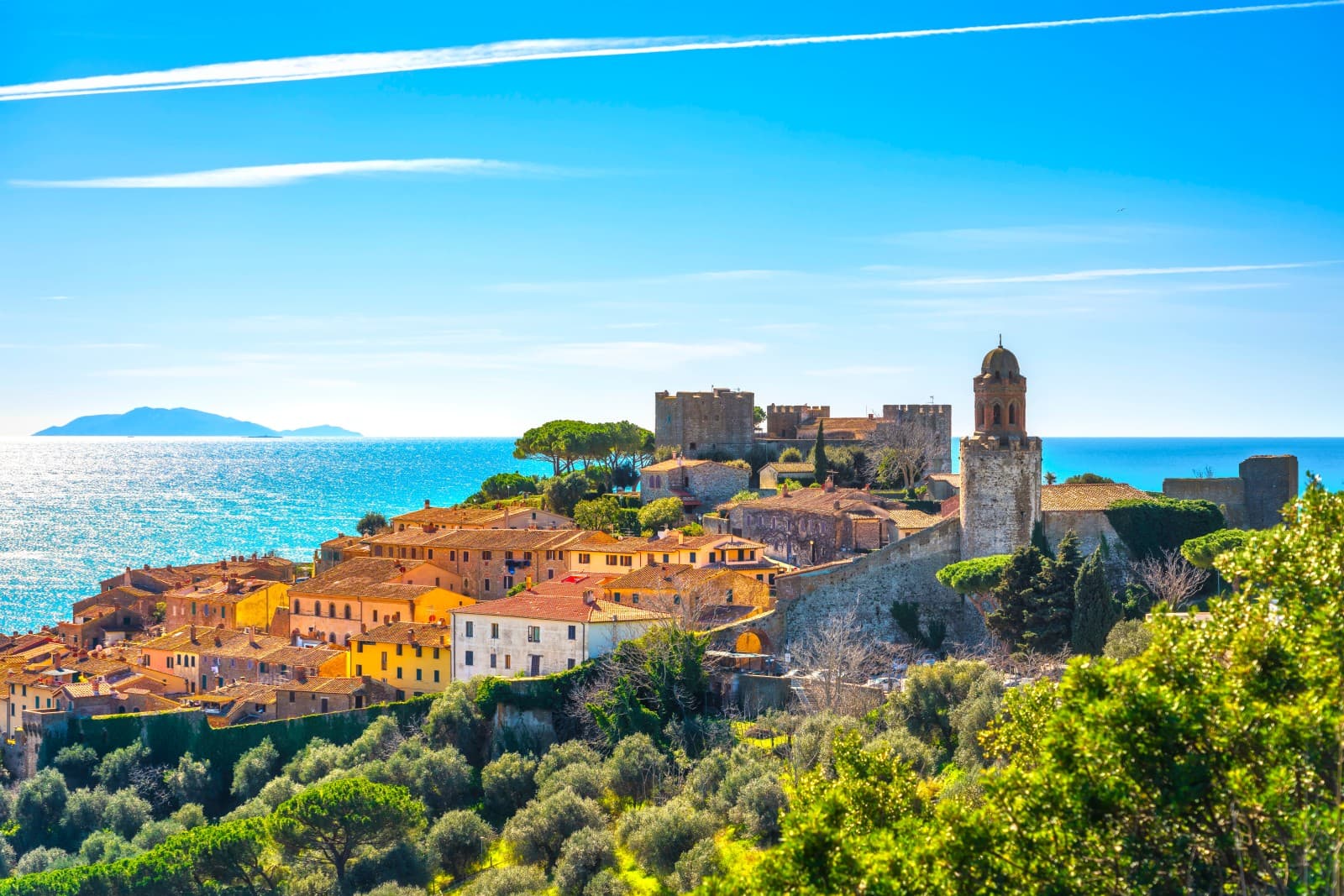
Castiglione della Pescaia
Province: Grosseto
A Maremma seaside town under an Aragonese castle, with the Vetulonia necropolis behind it, the Diaccia Botrona wetland beside it, and Italo Calvino buried on the hill.
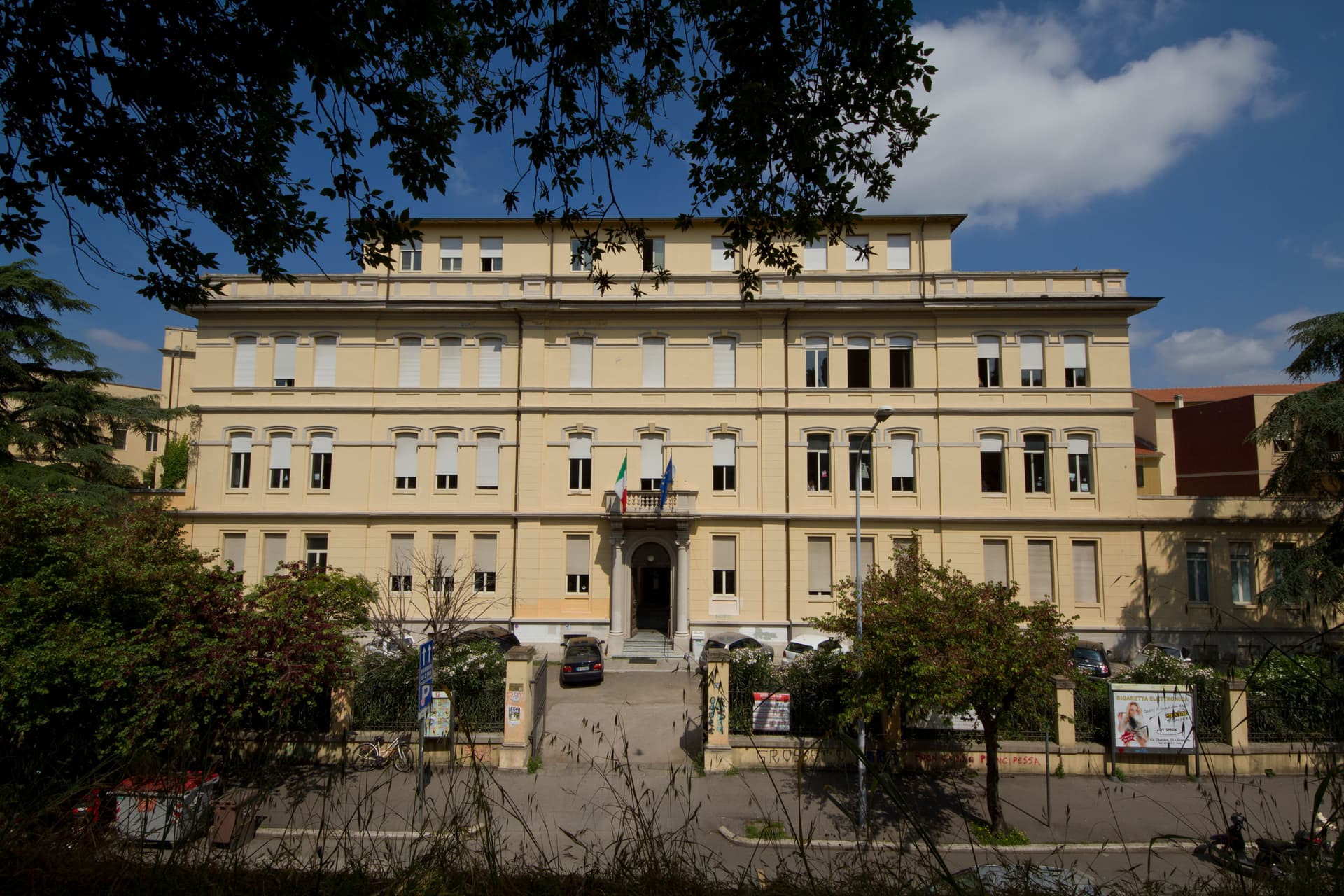
Grosseto
Province: Grosseto
The Maremma capital on the Ombrone river, ringed by hexagonal Medici walls of 1564 that now serve as the city's public park.