

Tuscany · Lucca
Camaiore
The Versilia commune that runs from the Apuan Alps to the sea, a Roman Campus Maior on the Via Francigena with a beach at its western end.
Known for
LIDO DI CAMAIORE
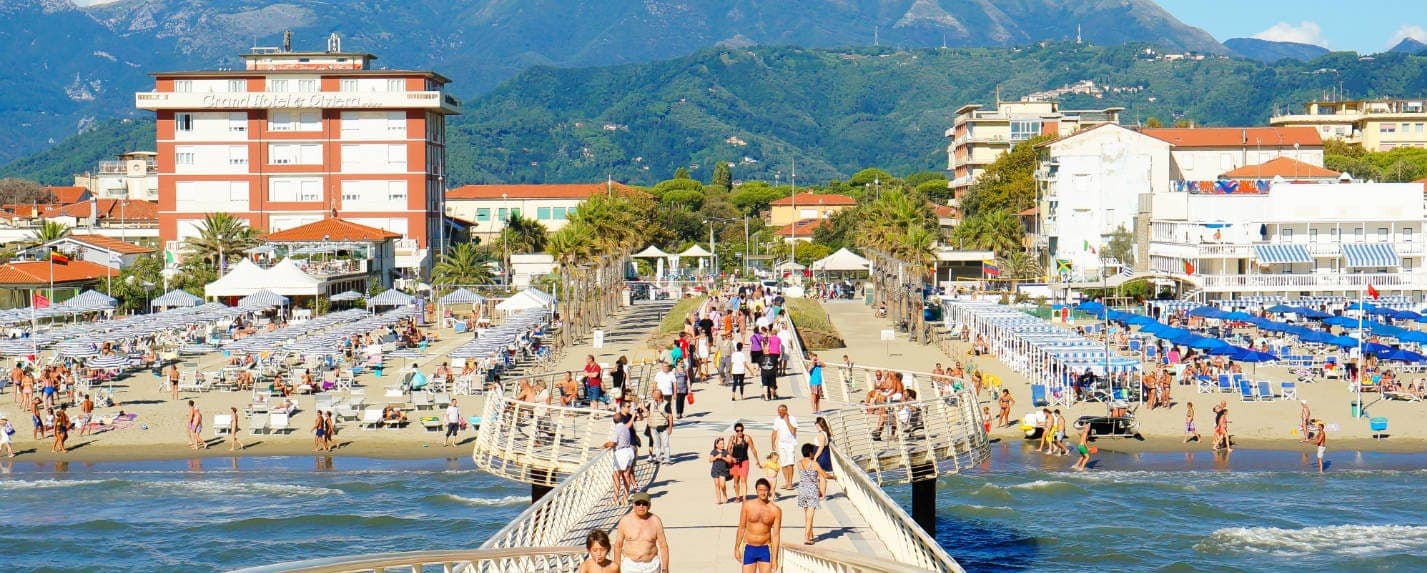
Wide Versilia beach with Bandiera Blu and a row of bagni concessions running back to the early 1900s belle époque.
VIA FRANCIGENA
The pilgrimage route from Canterbury to Rome enters Camaiore at the Badia di San Pietro and leaves it eastbound for Lucca.
BADIA DI SAN PIETRO
Twelfth-century Romanesque church, the surviving piece of a Benedictine monastery first documented in 761 under Lombard rule.
When to visit
Best · May–Sep
- J
- F
- M
- A
- M
- J
- J
- A
- S
- O
- N
- D
- Best
- Hot or crowded
- Quiet
- Mostly closed
The festa: Santissimo Nome di Gesù, 1 June
Why come
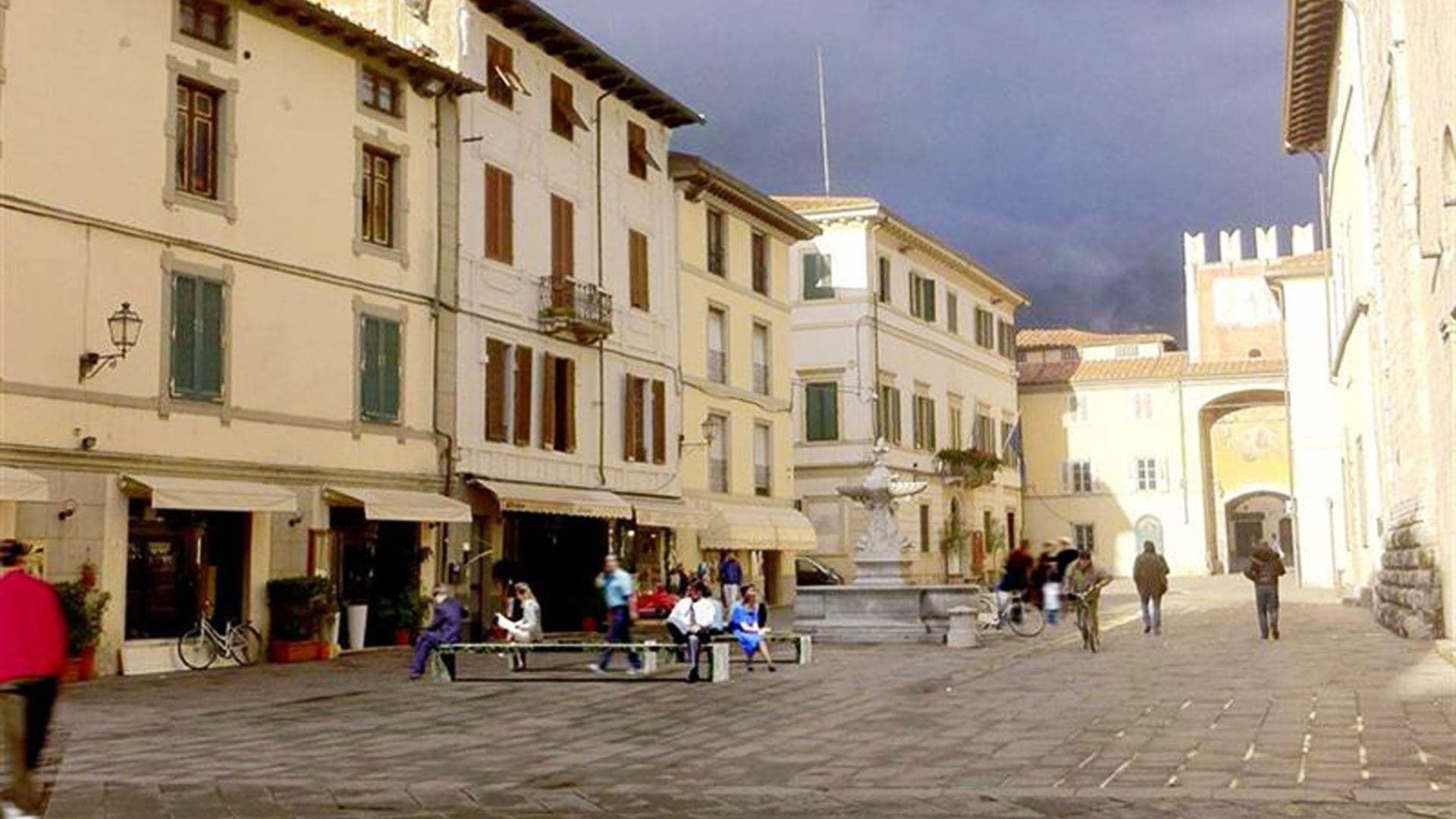
Camaiore stretches from the Apuan Alps to the Versilia coastline, the only Versilia commune with substantial territory in both. The town center sits on the alluvial plain, named Campus Maior by the Romans for a military encampment on the road from Lucca to Luni. The Via Francigena runs through it, Stage 26 from Massa arriving at the Badia di San Pietro and Stage 27 leaving for Lucca.
The Badia, a twelfth-century Romanesque church, is the surviving piece of a Benedictine monastery first documented in 761 under Lombard rule. The Collegiata di Santa Maria Assunta dates from the thirteenth century and the bell tower from the fourteenth. Six kilometers west, Lido di Camaiore opens onto a wide Versilia beach with the Apuan Alps as backdrop, granted Bandiera Blu status and lined with the bagni concessions that have stood since Gabriele D'Annunzio summered here in the 1900s.
What to see
Collegiata di Santa Maria Assunta
Thirteenth-century parish church with a fourteenth-century bell tower, the central religious building of the inland town.
Badia di San Pietro
Twelfth-century Romanesque church, the surviving structure of a Benedictine monastery documented in 761 during Lombard rule.
Lido di Camaiore
Bandiera Blu beach six kilometers from the town center, with fine sand and the Apuan Alps rising directly behind it.
Centro storico
Medieval grid along Via Vittorio Emanuele, walking distance from the original Roman castrum perimeter.
Via Francigena
Stage 26 from Massa enters at the Badia di San Pietro; Stage 27 leaves for Lucca through the eastern olive groves.
Grotta all'Onda
Prehistoric cave on the Casoli hill above the town, with Mesolithic and Neolithic finds in the Pisa archaeological museum.
The slow-trip planner
Building a trip? Find where Camaiore fits in a slow Italy circuit.
Answer five questions. We will shape a geographically coherent slow trip from the 1,000 Italian towns most travelers skip. Yours to save and share.
We’ve tried
What we got up to
Restaurants, walks, swims — the things we actually did in and around Camaiore, each with the piece we wrote about it.
The mountain hamlet that scratched its dead into the walls: Casoli.
The tordello, the meat-stuffed pasta that is Versilia telling you it isn't Lucca.
Erbe, the bitter boiled greens that make a kilo of rare beef sit like a virtue.
We recommend
Where to eat and stay
Not our picks, but places the guides put their name to — a Michelin star, a Gambero Rosso fork, a Slow Food snail, a Michelin Key for the hotels. Worth a table, a counter, or a night when you pass through.
Il MerloRistorante
Il Merlo has two Gambero Rosso forks (82/100) and a spot in the Michelin Guide.
La DoganaRistorante
La Dogana has a Gambero Rosso listing to its name.
NanniTrattoria
Nanni carries one Gambero Rosso prawn.
Quinto QuartoRistorante
A Slow Food snail, at Quinto Quarto.
Locanda al ColleHotel
Locanda al Colle carries one Michelin Key.
Relais Corte RodeschiHotel
Relais Corte Rodeschi carries a place in the Michelin hotel guide.
The Sunday letter
Camaiore got its letter. One town every Sunday, free — the photo, the food, the festa.
By subscribing you agree to Substack’s Terms of Use, our Privacy Policy and our Information collection notice.
Living here
- Population 31,842
- A local hubi
- Pharmacy in town
- High school within a 30-minute drive
- Train station in the comune
- Nearest airport Florence / Pisa, 54 min drive
- Regional capital Firenze, 1 h 29 min drive
Tags & datadesignations · numbers · sources
Recognised as
The numbers
- Elevation: 34 m
- Population: 31,842
- Surface area: 85.43 km²
These figures were compiled from public directories — ISTAT, OpenStreetMap, Wikidata — and from the official listings of the guides named on this page. Town details change; verify with official sources before you travel.
Close by
More towns near Camaiore
Pietrasanta
Province: Lucca
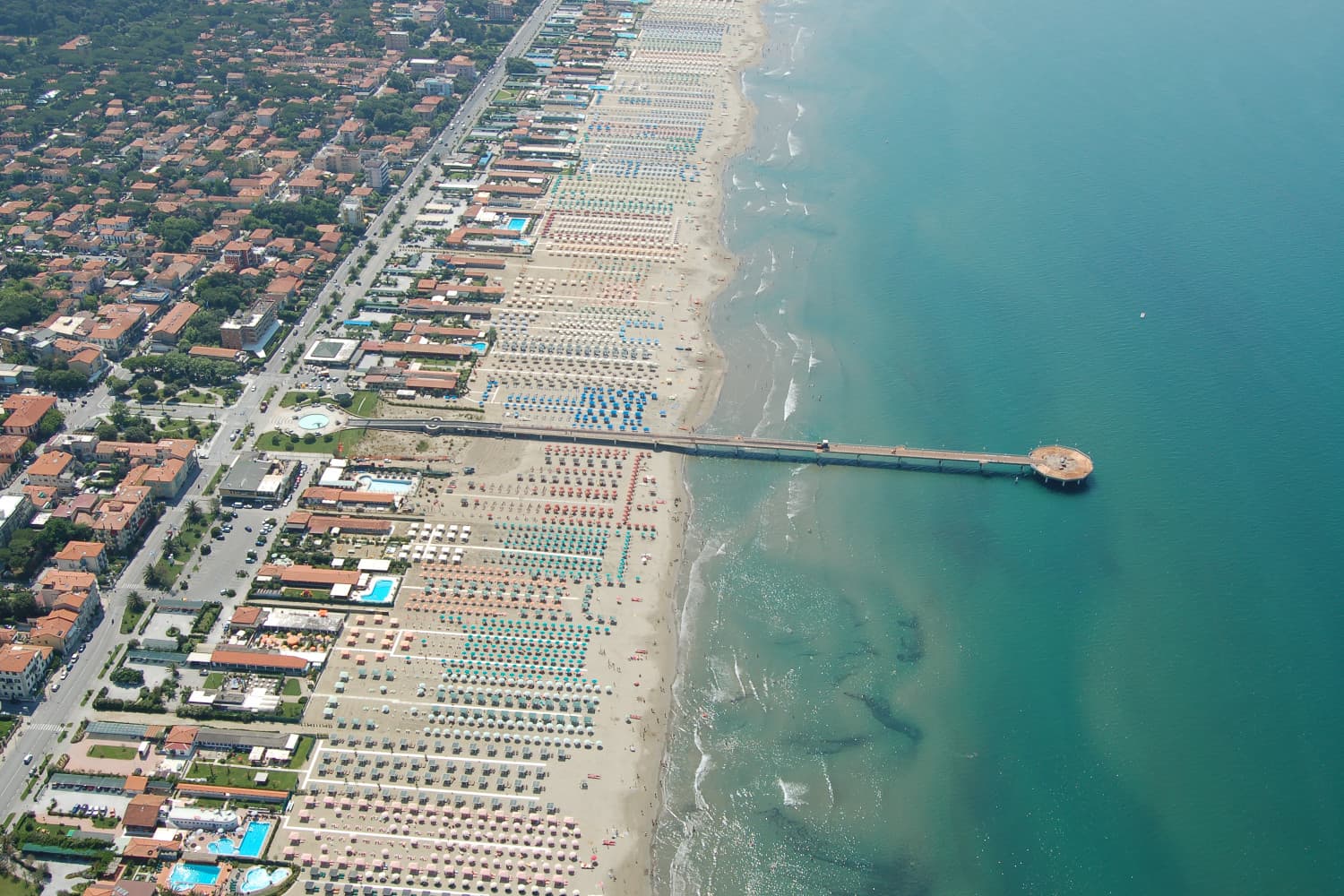
The marble-processing town under the Apuan Alps, founded in 1255 and worked since by Michelangelo, Henry Moore, Joan Miró and Fernando Botero.
Viareggio
Province: Lucca
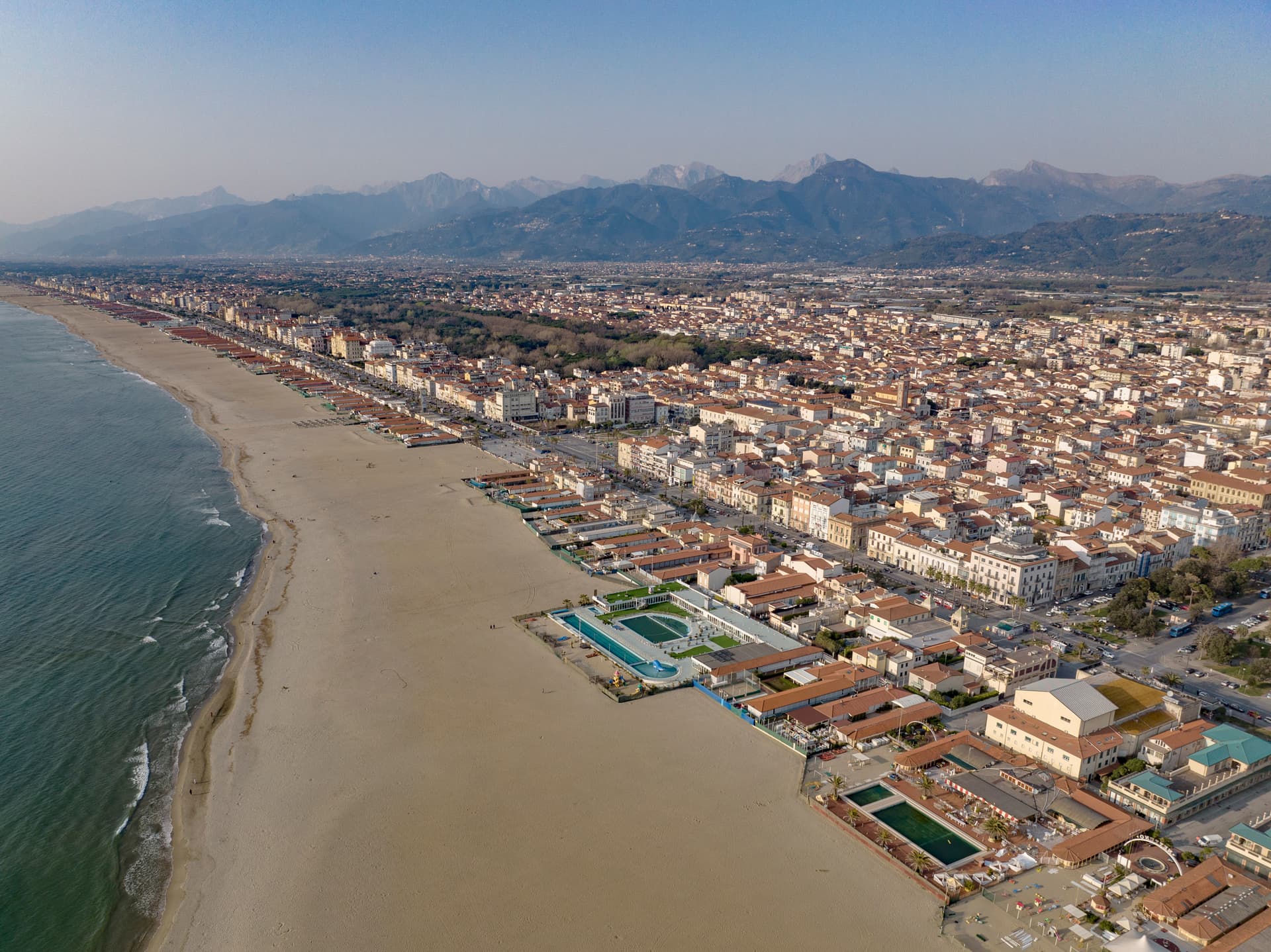
The Versilia capital, a Liberty-architecture seafront built around the 1873 Carnival and the 254-kilogram papier-mâché floats that still parade every February.
Forte dei Marmi
Province: Lucca
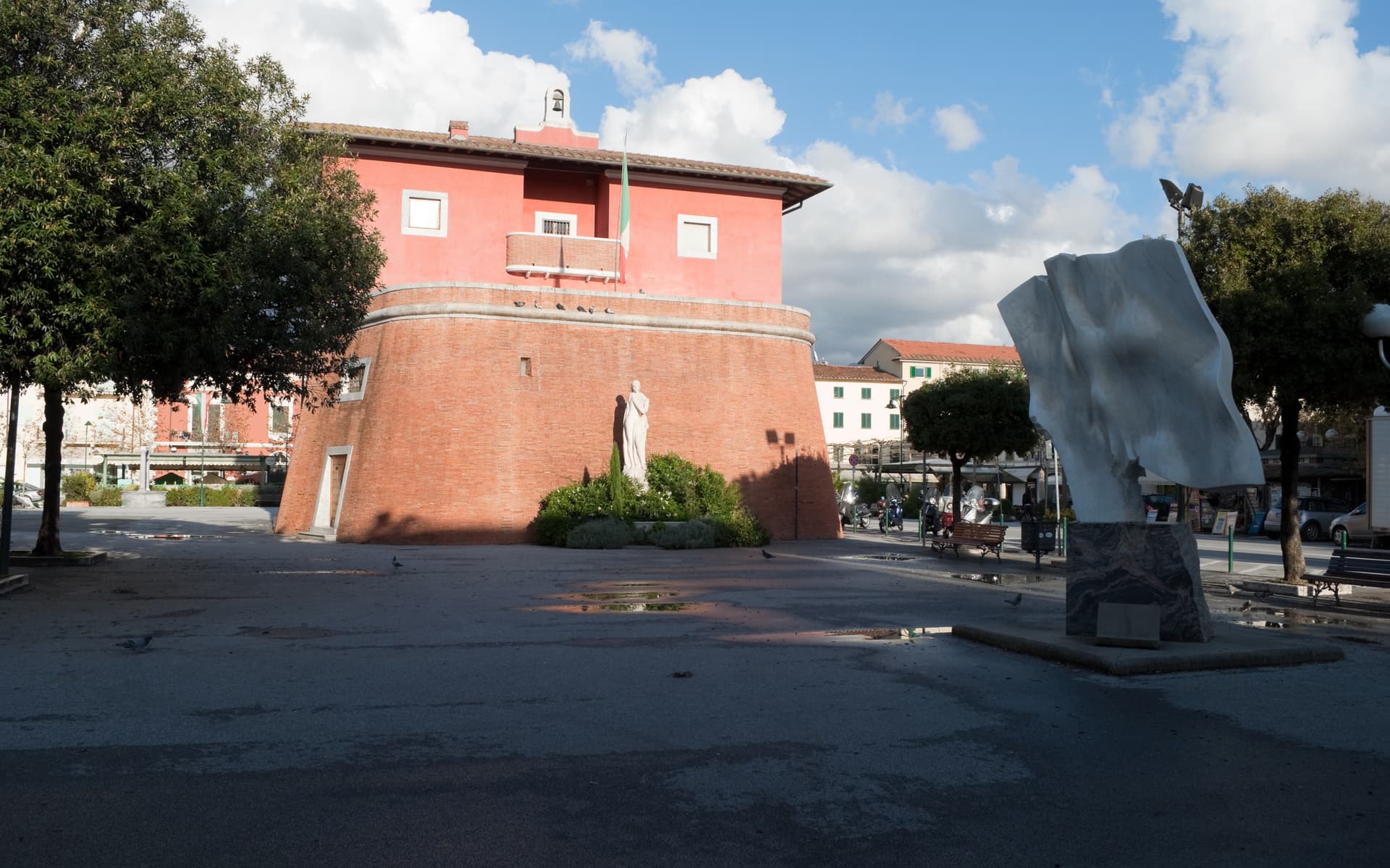
The Versilia luxury beach built around an eighteenth-century marble-loading fort, with 99 bagni concessions and a Wednesday market that draws Milan.
Lucca
Province: Lucca
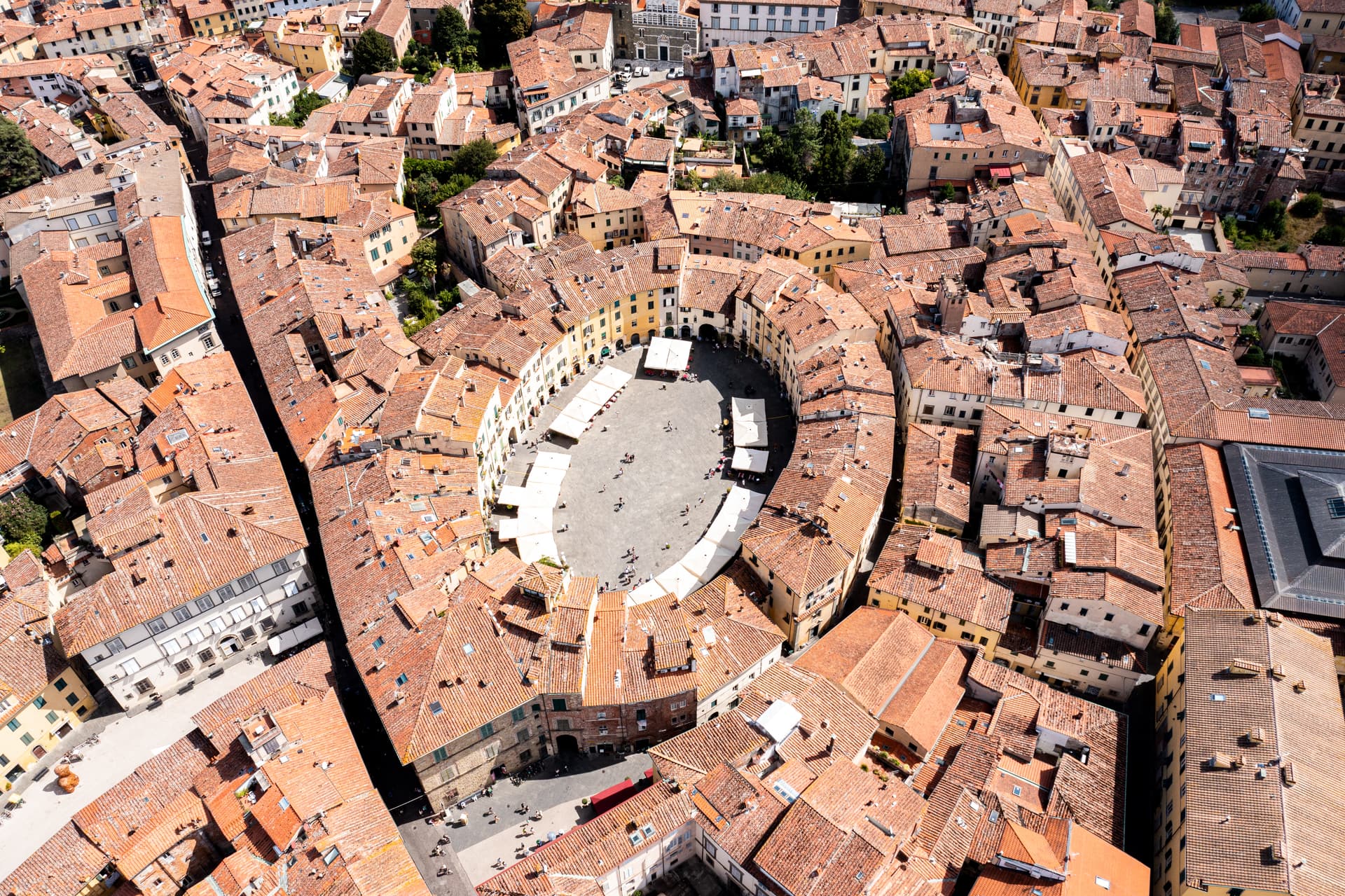
The provincial capital ringed by four kilometers of intact sixteenth-century walls, birthplace of Puccini and the only fully walled Italian city of its scale.
Montignoso
Province: Massa-Carrara
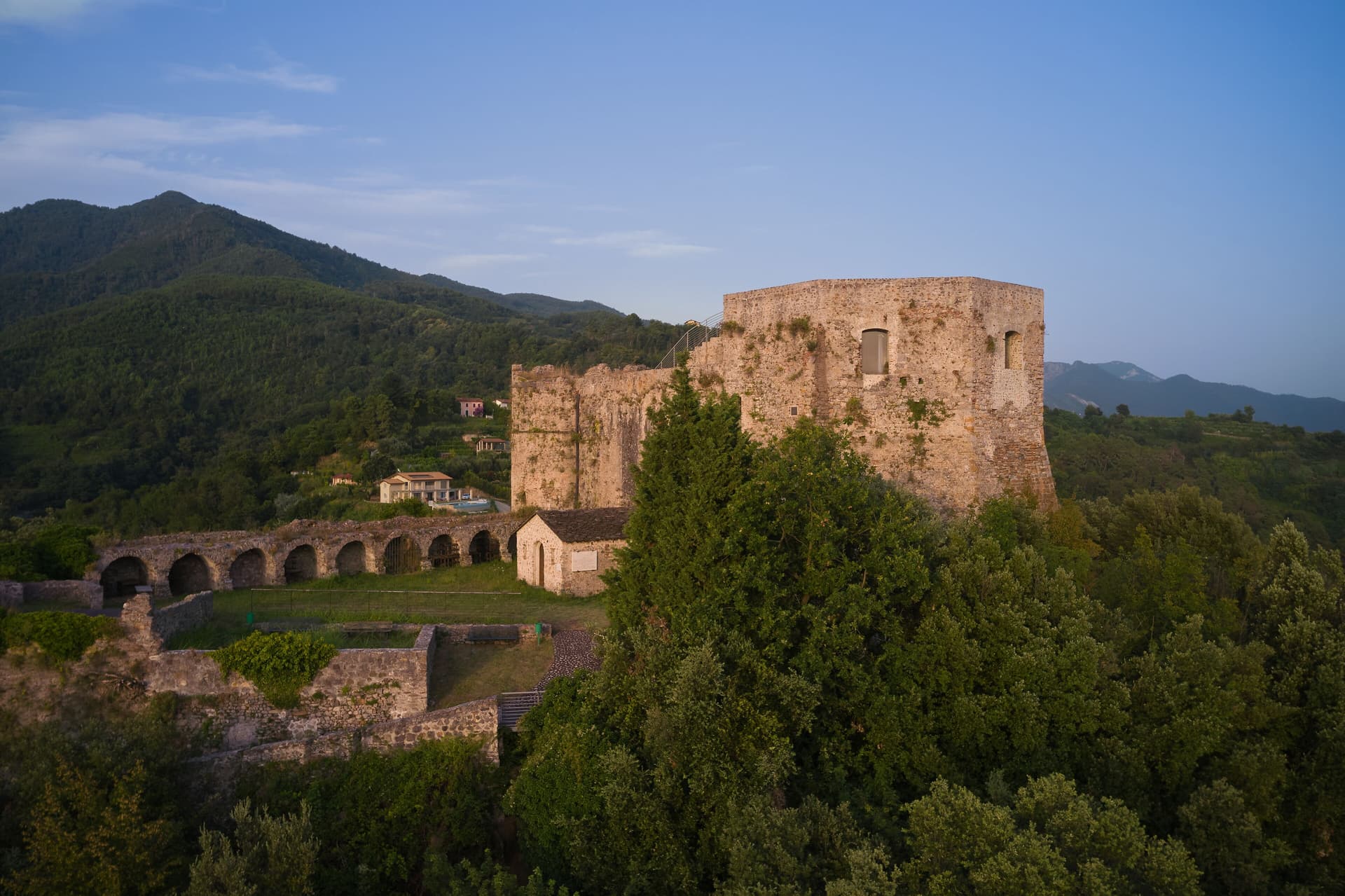
A Riviera Apuana commune split between the Cinquale coastal frazione, the Castello Aghinolfi on the hill, and the Lago di Porta wetland on the Versilia plain.
🟦 Bandiera Blu
More Bandiera Blu towns in Tuscany
Bibbona
Province: Livorno
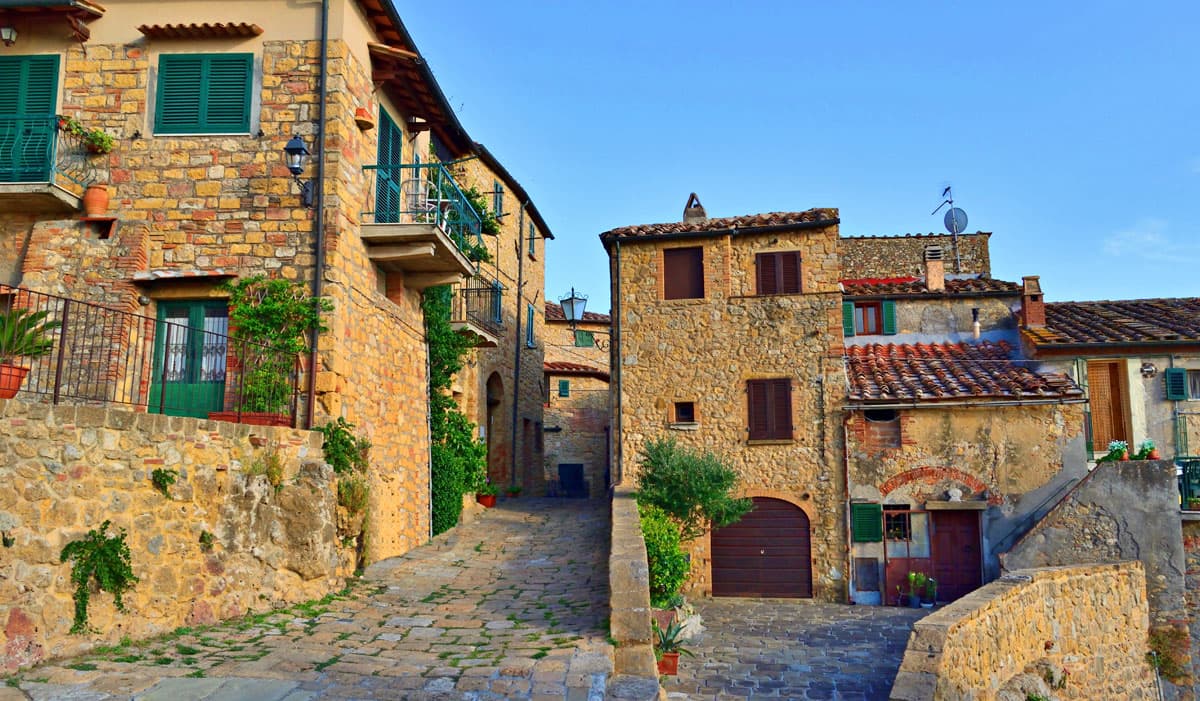
An Etruscan-origin hill village above the Costa degli Etruschi, with a Romanesque parish church and a Lorraine-built coastal fort eight kilometers down the road at Marina di Bibbona.
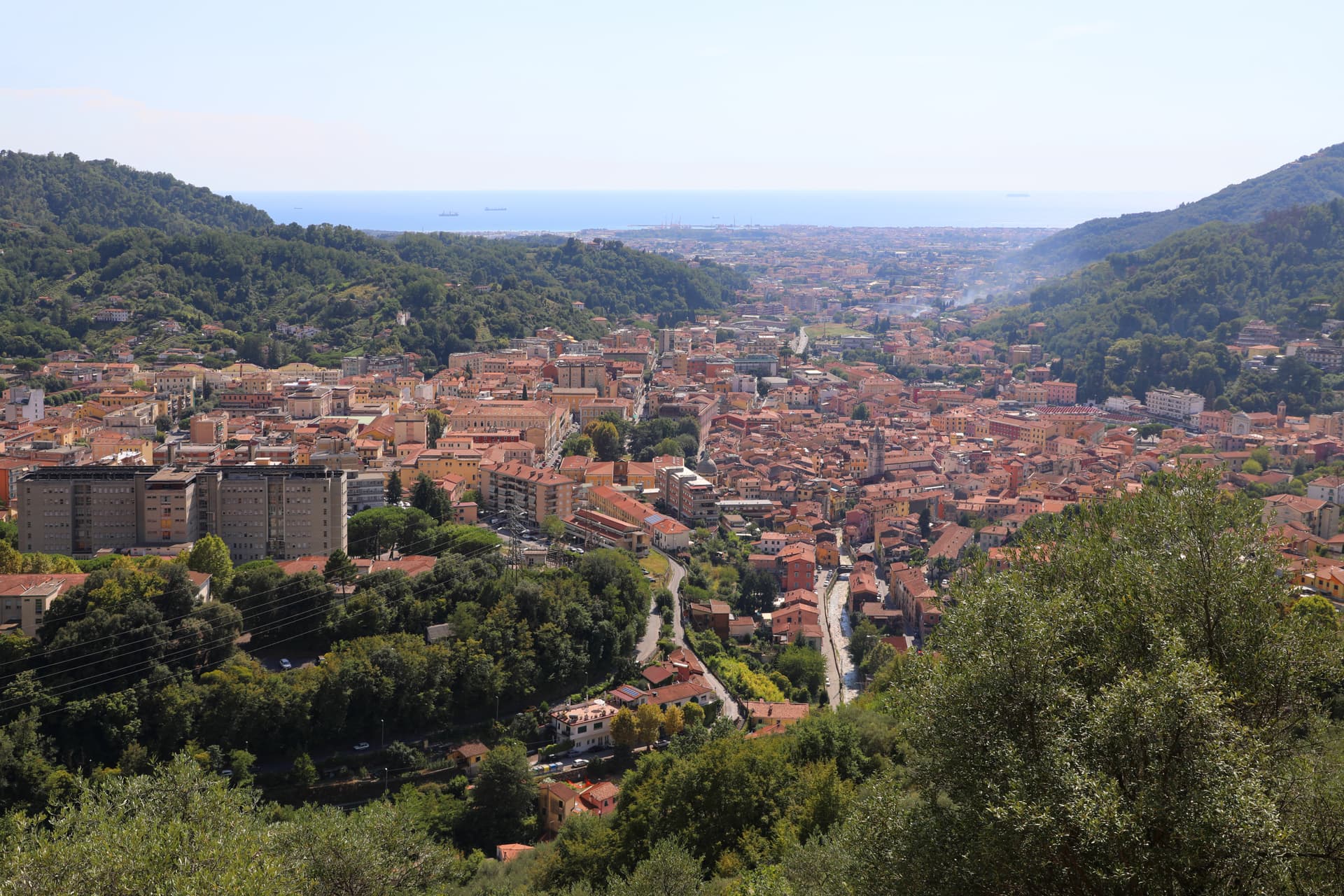
Carrara
Province: Massa-Carrara
The marble town at the foot of the Apuan Alps, with over 650 quarry sites in the valleys above and the stone that built the Pantheon, the Pietà and Michelangelo's David.

Castagneto Carducci
Province: Livorno
A hilltop borgo at 194 meters above the Costa degli Etruschi, renamed for the poet Carducci in 1907 and the home of Bolgheri and Sassicaia.
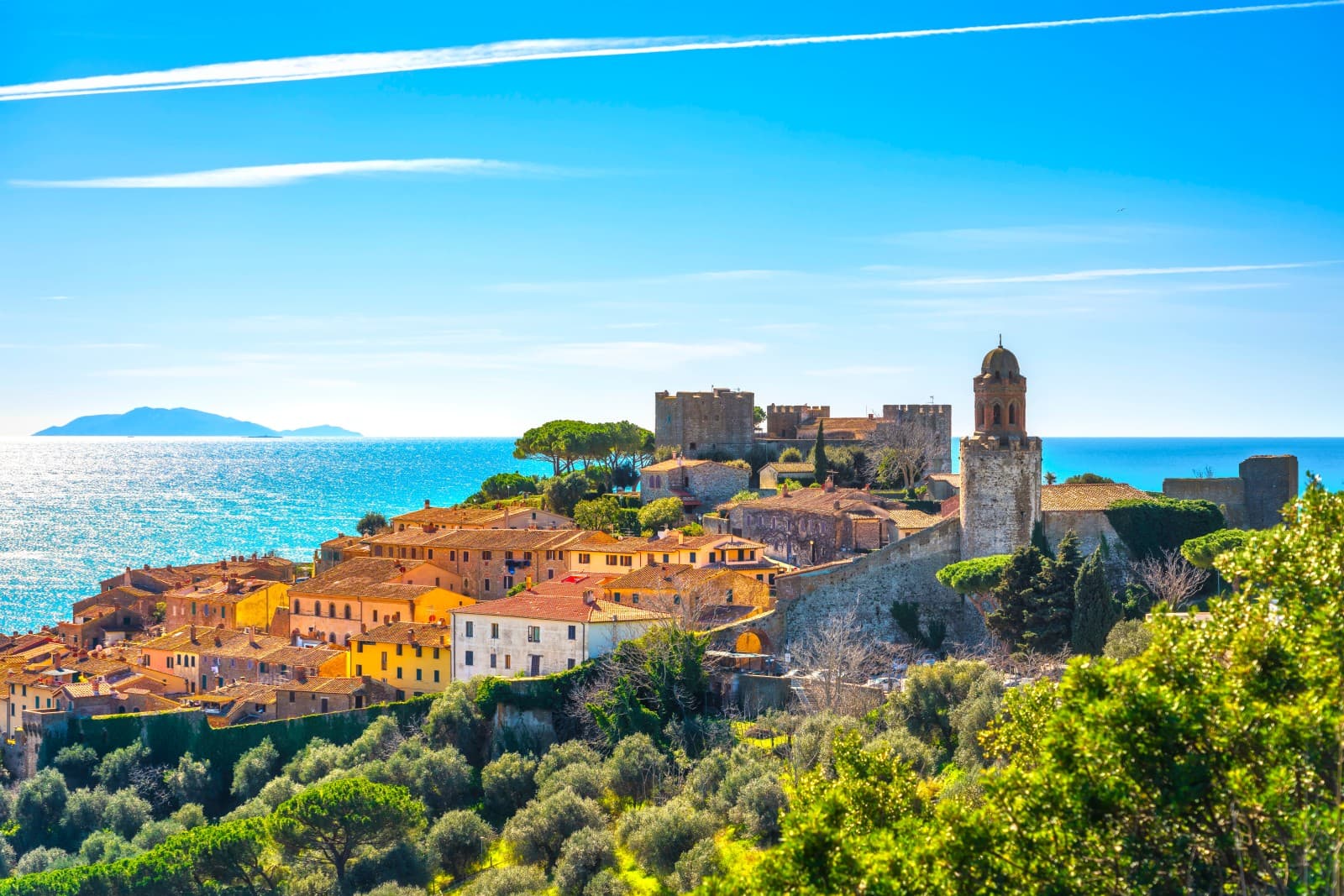
Castiglione della Pescaia
Province: Grosseto
A Maremma seaside town under an Aragonese castle, with the Vetulonia necropolis behind it, the Diaccia Botrona wetland beside it, and Italo Calvino buried on the hill.
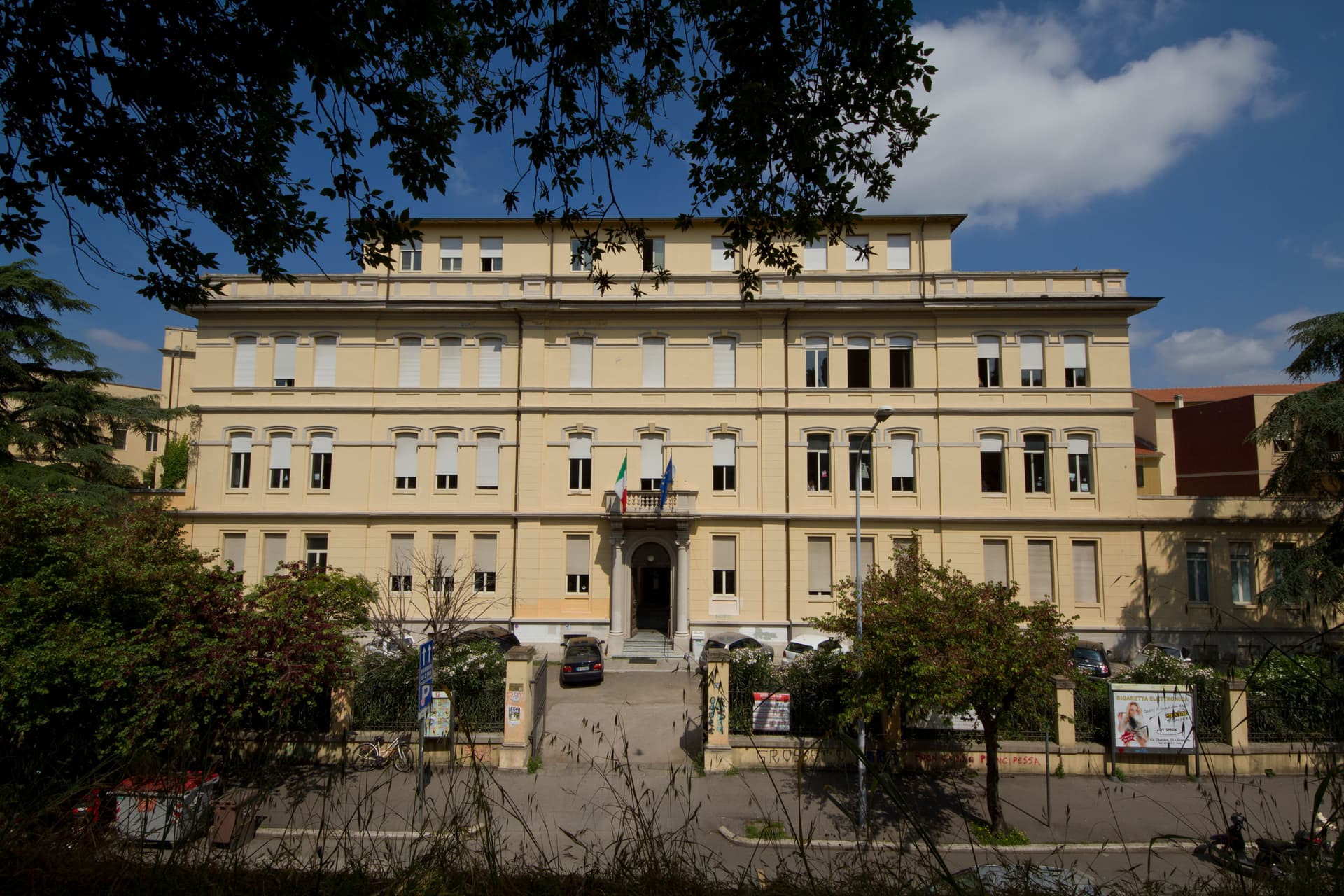
Grosseto
Province: Grosseto
The Maremma capital on the Ombrone river, ringed by hexagonal Medici walls of 1564 that now serve as the city's public park.