
Marche · Fermo
Amandola
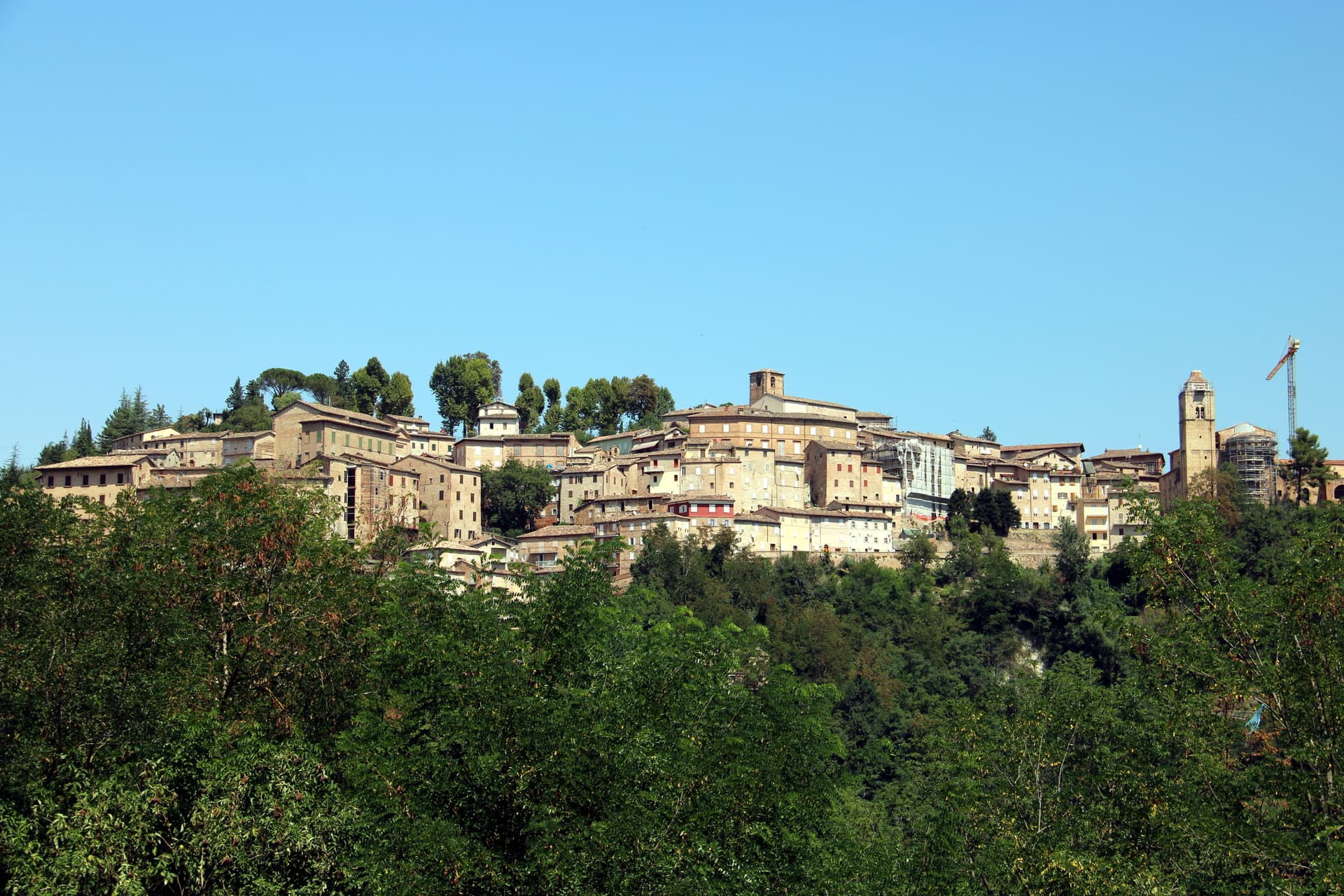
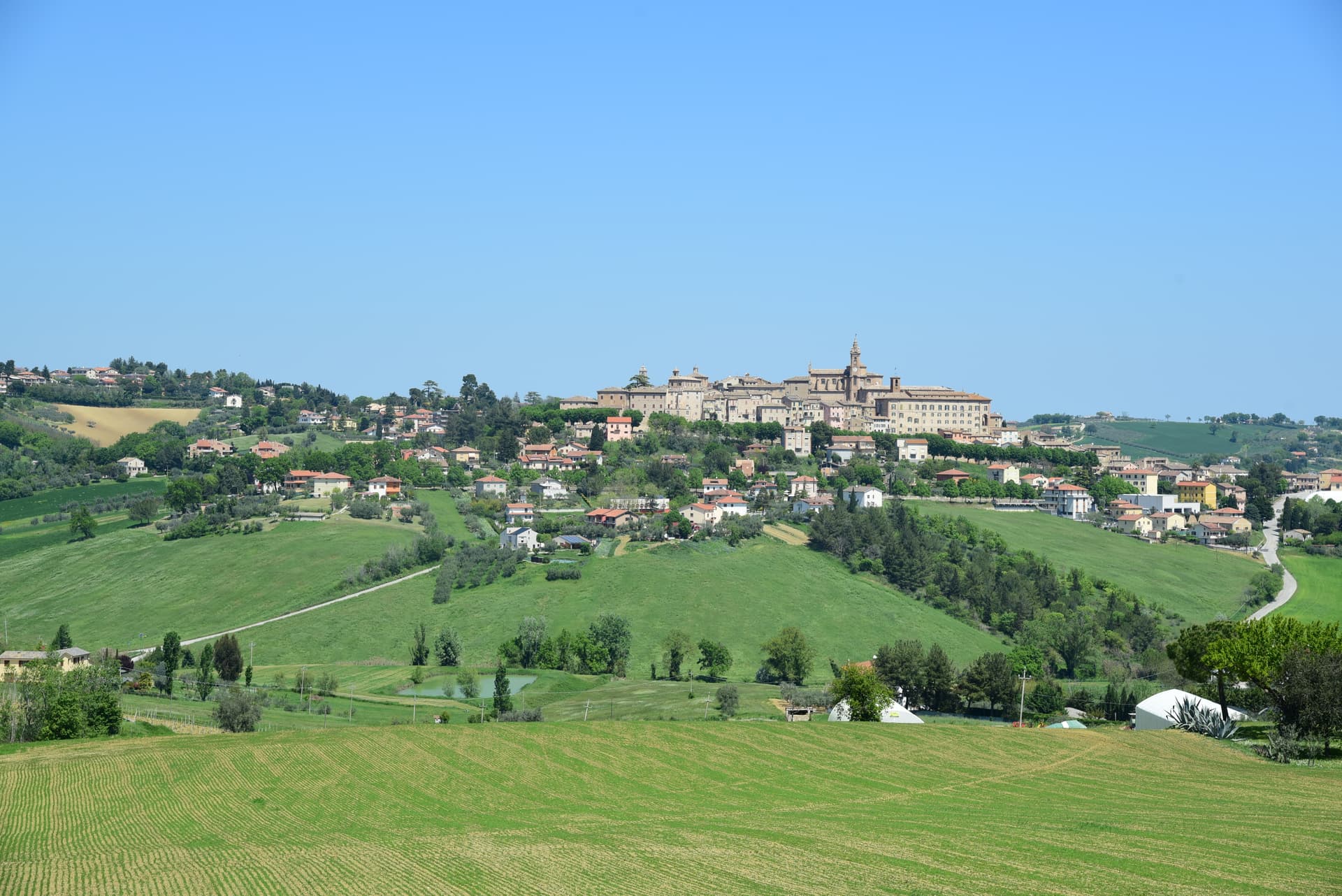
A Sibillini gateway at 550 meters on three hills above the Tenna valley, founded 1248 and damaged but not levelled in 2016.
Known for
SIBILLINI GATEWAY
Eastern entrance commune to the Monti Sibillini National Park, with trail access toward Monte Sibilla and the Lago di Pilato.
WHITE TRUFFLE
Prized white truffles from the surrounding hardwood slopes, celebrated annually at the autumn truffle fair.
2016 EARTHQUAKE
The 24 August 2016 earthquake damaged civic buildings and churches; artworks were moved to the Ex Collegiata while reconstruction continues.
When to visit
Best · Apr–Oct
- J
- F
- M
- A
- M
- J
- J
- A
- S
- O
- N
- D
- Best
- Hot or crowded
- Quiet
- Mostly closed
The festa: Antonio Migliorati, 25 January
Why come
Amandola spreads across three hills, Marrubbione, Castel Leone and Agello, on the eastern slope of the Sibillini at 550 meters, above the left bank of the Tenna river. The town was founded in 1248 from the merger of three earlier castles and grew into one of the main civic centers of the Sibillini area, with the Palazzo del Podestà built in 1352 and the tower rebuilt in 1547. The Chiesa di San Francesco, Romanesque-gothic in the lower town, preserves a twelfth-century wooden crucifix and a cloister that now houses the Museo Antropogeografico and the museum of peasant culture.
The 24 August 2016 earthquake damaged many buildings; the artworks were moved into the deconsecrated Collegiata for safekeeping while reconstruction continues. The territory is the third largest in the Fermo province and includes 48 frazioni, beekeepers, truffle hunters and the eastern access trails into the Monti Sibillini National Park.
The Sunday letter
We haven’t written Amandola’s letter yet.
One town every Sunday, with the photo, the food, the festa. Be there when this one comes up. Free, by Peter & Sophia from Pietrasanta.
By subscribing you agree to Substack’s Terms of Use, our Privacy Policy and our Information collection notice.
What to see
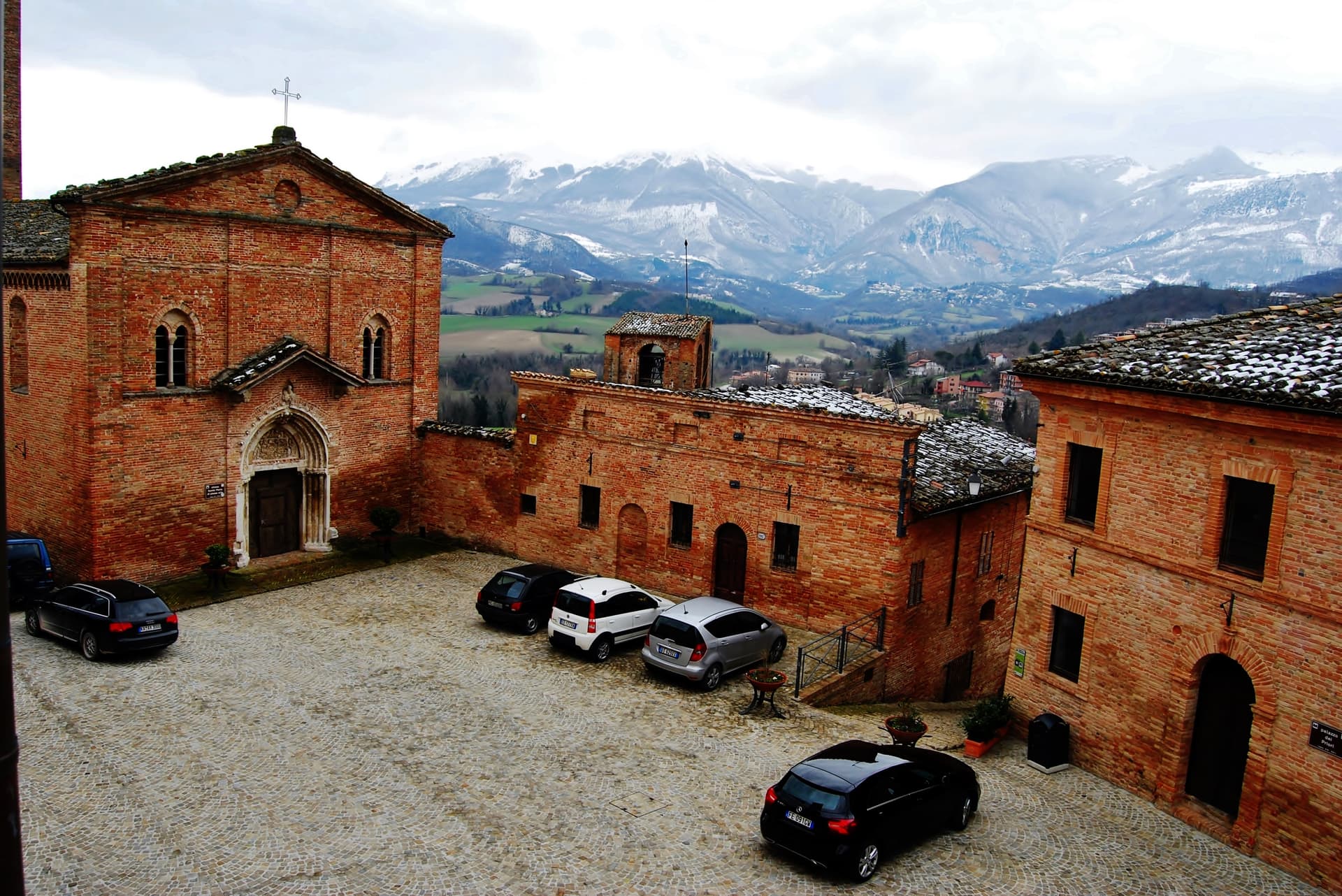
Chiesa di San Francesco
Romanesque-gothic church with twelfth-century wooden crucifix and a cloister that holds the Museo Antropogeografico and the museum of peasant culture.
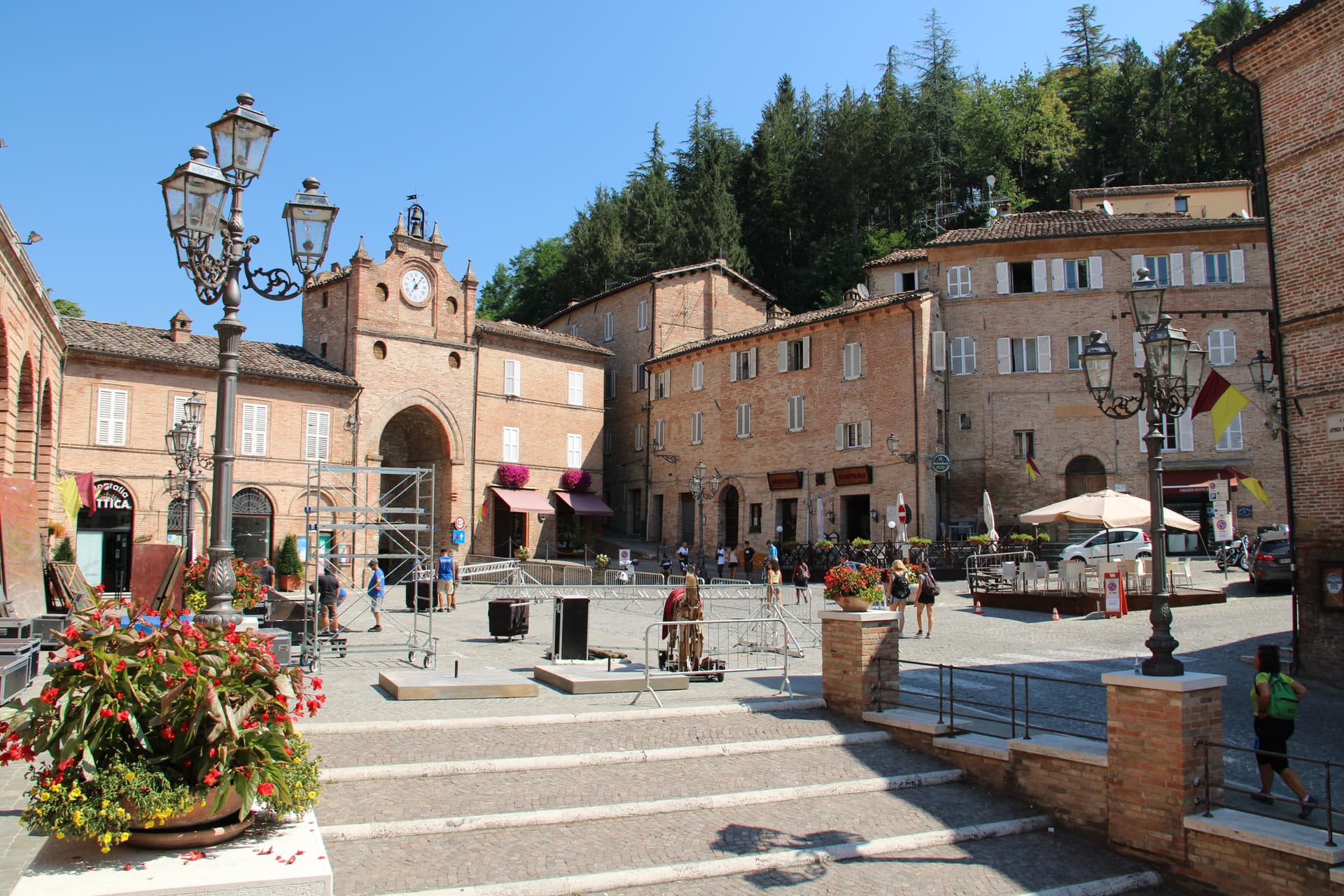
Palazzo del Podestà
Built 1352, with the tower partially rebuilt in 1547, the civic anchor of the centro storico across the Agello hilltop.
Ex Collegiata di Santa Maria Assunta
Deconsecrated former collegiate church, now used to house artworks recovered from buildings damaged in the 2016 earthquake.
Abbazia dei Santi Rufino e Vitale
Romanesque abbey 8 km northeast of town, with three naves and apses and a vaulted crypt, one of the oldest religious foundations in the Sibillini.
Parco Nazionale dei Monti Sibillini
Amandola is the eastern gateway commune to the park, with trails climbing toward Monte Sibilla and the Lago di Pilato above.
The slow-trip planner
Building a trip? Find where Amandola fits in a slow Italy circuit.
Answer five questions. We will shape a geographically coherent slow trip from the 1,000 Italian towns most travelers skip. Yours to save and share.
Living here
- Population 3,266
- Off the beaten pathi
- Pharmacy in town
- High school within a 30-minute drive
- Nearest airport Ancona / Pescara, 1 h 38 min drive
- Regional capital Ancona, 1 h 32 min drive
Tags & datadesignations · numbers · sources
The numbers
- Elevation: 550 m
- Population: 3,266
- Surface area: 69.5 km²
These figures were compiled from public directories — ISTAT, OpenStreetMap, Wikidata — and from the official listings of the guides named on this page. Town details change; verify with official sources before you travel.
Close by
More towns near Amandola
Sarnano
Province: Macerata
A 539-meter medieval borgo of baked brick at the foot of the Sibillini, with thermal springs that ran for 84 years until the 2016 earthquake.
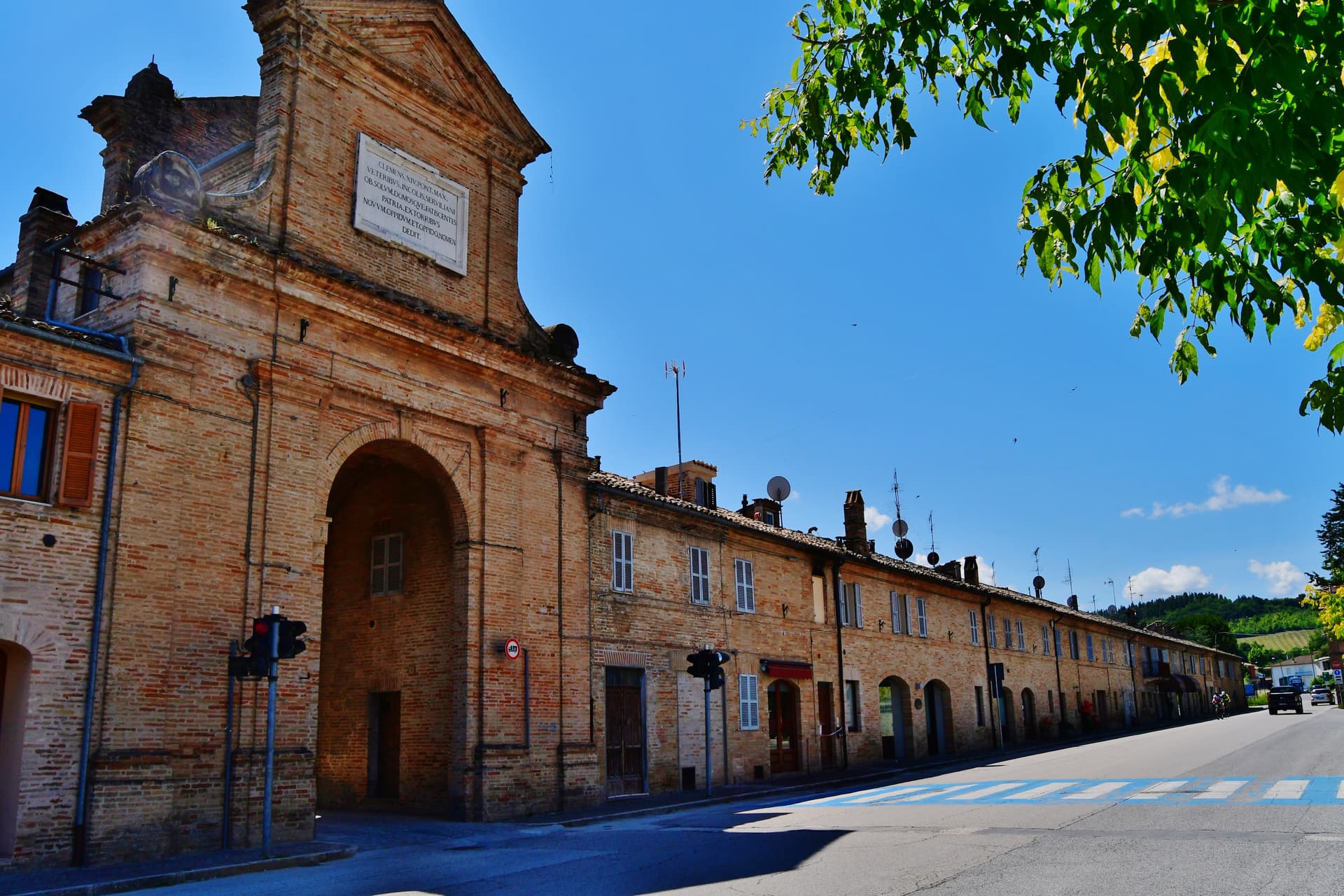
Servigliano
Province: Fermo
An eighteenth-century ideal city at 215 meters in the Tenna valley, rebuilt by papal commission on a 137-by-144-meter quadrangle after the old hill village collapsed.
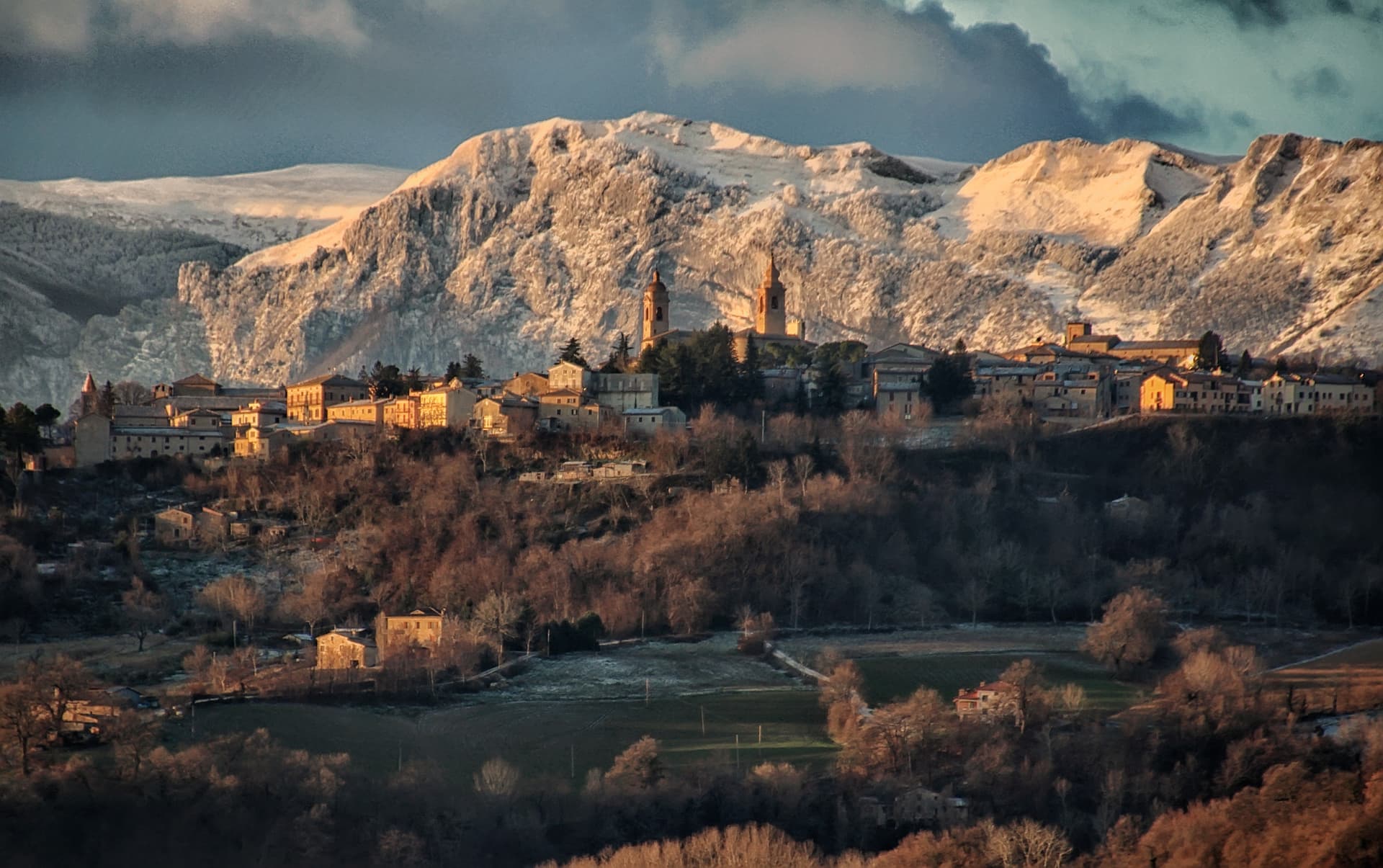
San Ginesio
Province: Macerata
The Balcony of the Sibillini at 680 meters, with a 1295 pilgrim hospital and the only flowery gothic collegiate church in the Marche.
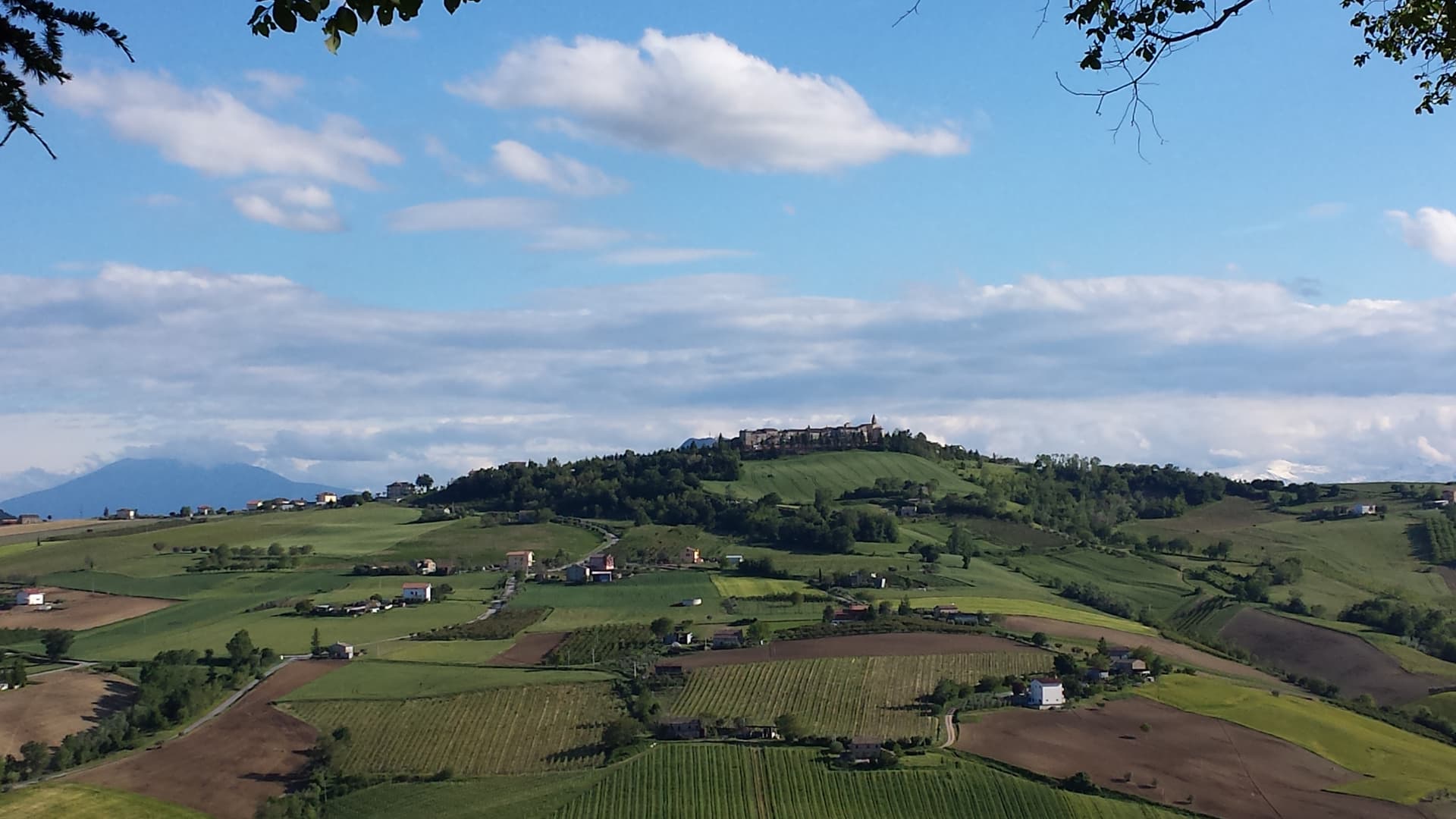
Monte Rinaldo
Province: Fermo
A 317-resident village on a 478-meter ridge of the Aso valley in the Marche interior, anchored by the 1st-century BC Roman sanctuary of La Cuma — the largest pre-imperial sanctuary excavated in the central Adriatic.
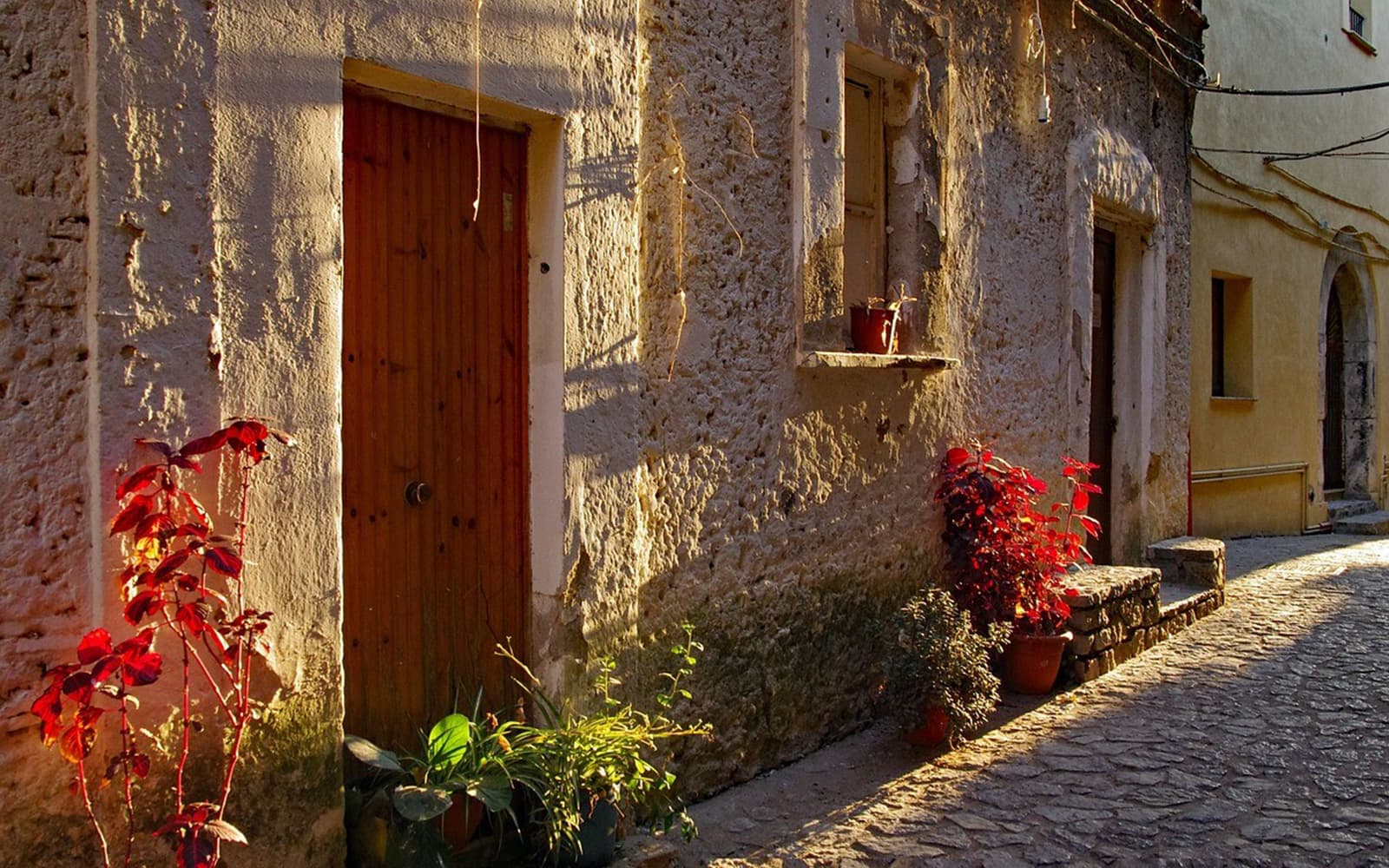
Magliano di Tenna
Province: Fermo
A small Fermo-province borgo at 281 meters above the Tenna river, ringed by fourteenth-century walls with two of its six original towers still standing.
🟠 Bandiera Arancione
More Bandiera Arancione towns in Marche
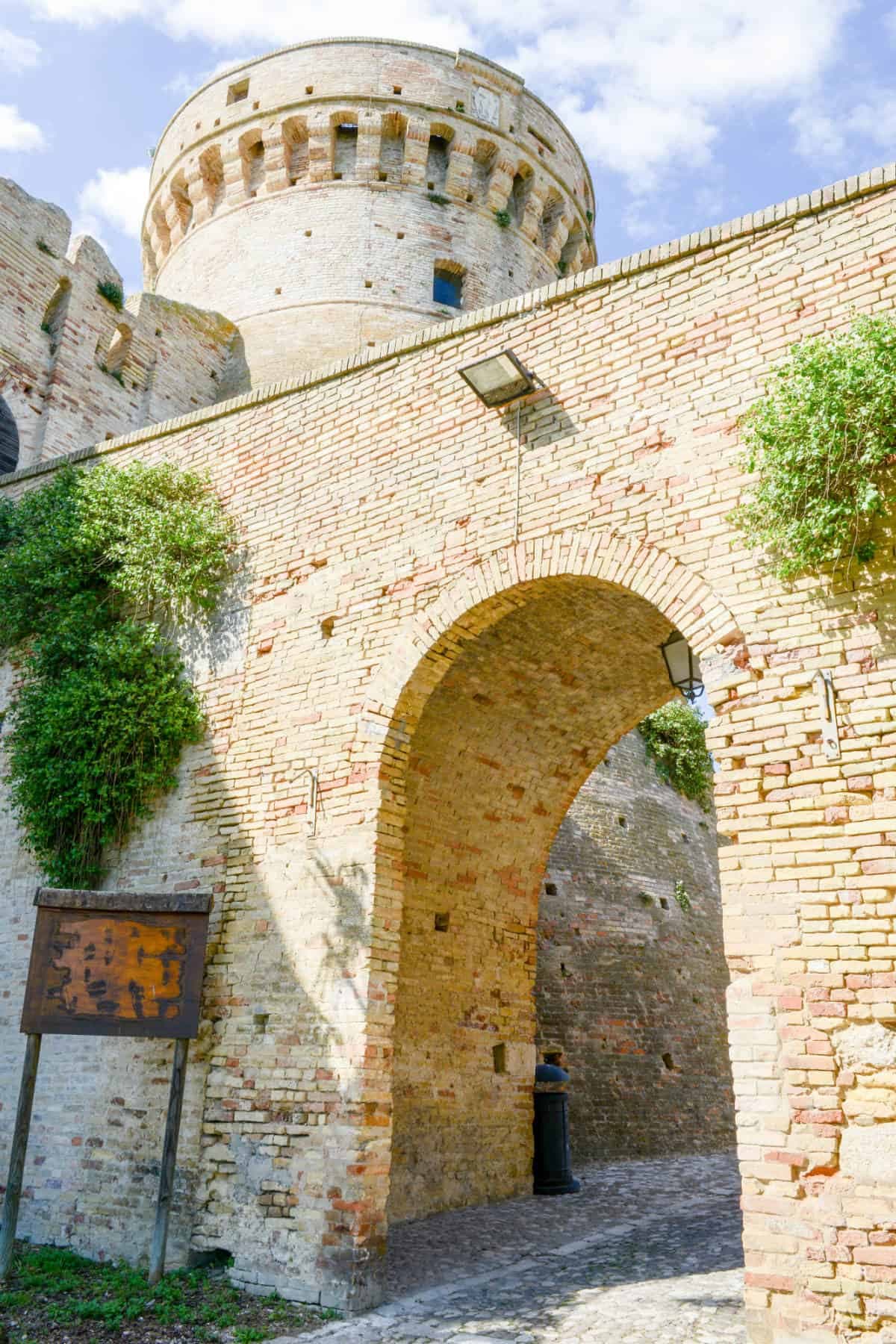
Acquaviva Picena
Province: Ascoli Piceno
A walled hill borgo at 359 meters six kilometers from the Adriatic, anchored by a Baccio Pontelli fortress and the surviving pajarola craft.
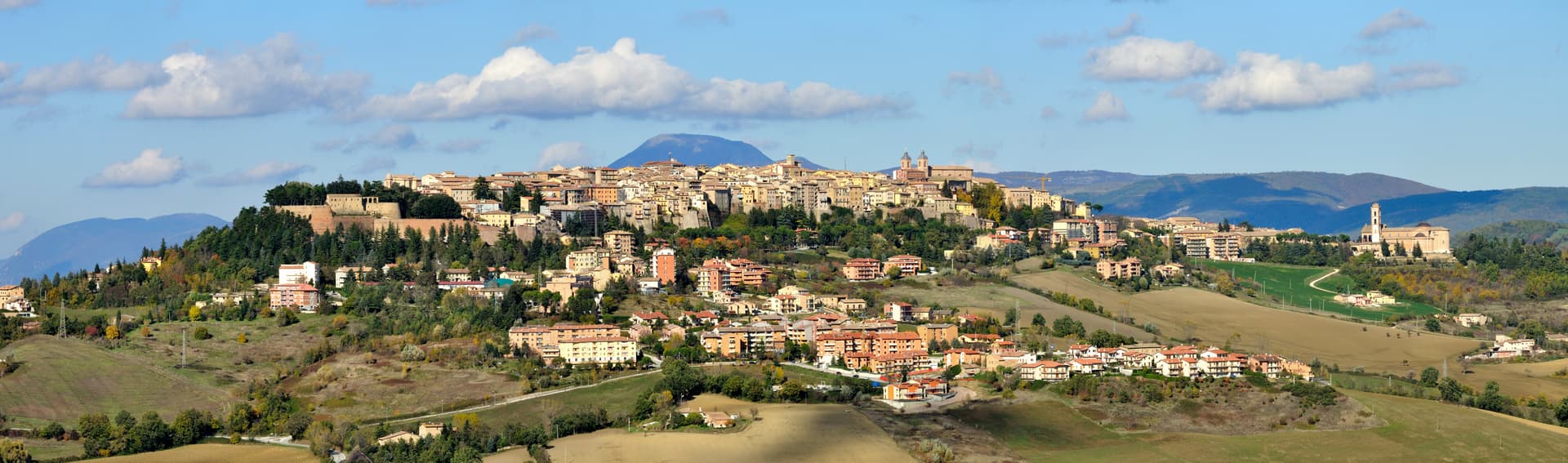
Camerino
Province: Macerata
A university city at 661 meters on the ridge between the Chienti and Potenza, Da Varano capital from 1259 to 1539, rebuilding after 2016.
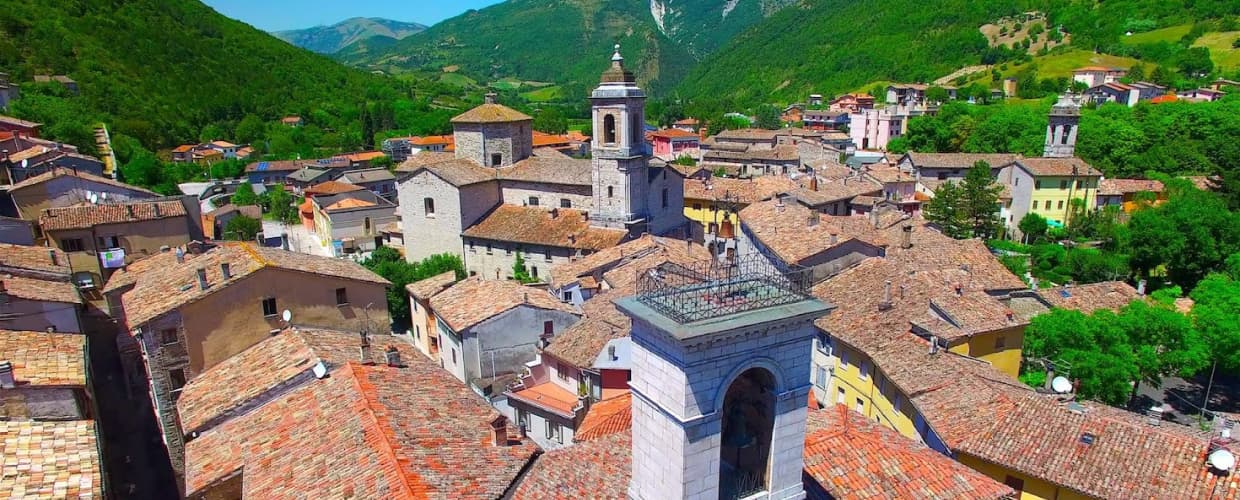
Cantiano
Province: Pesaro e Urbino
A border borgo at 374 meters under Monte Catria on the old Via Flaminia, known for the Good Friday Turba and the sour-cherry visciola harvest.
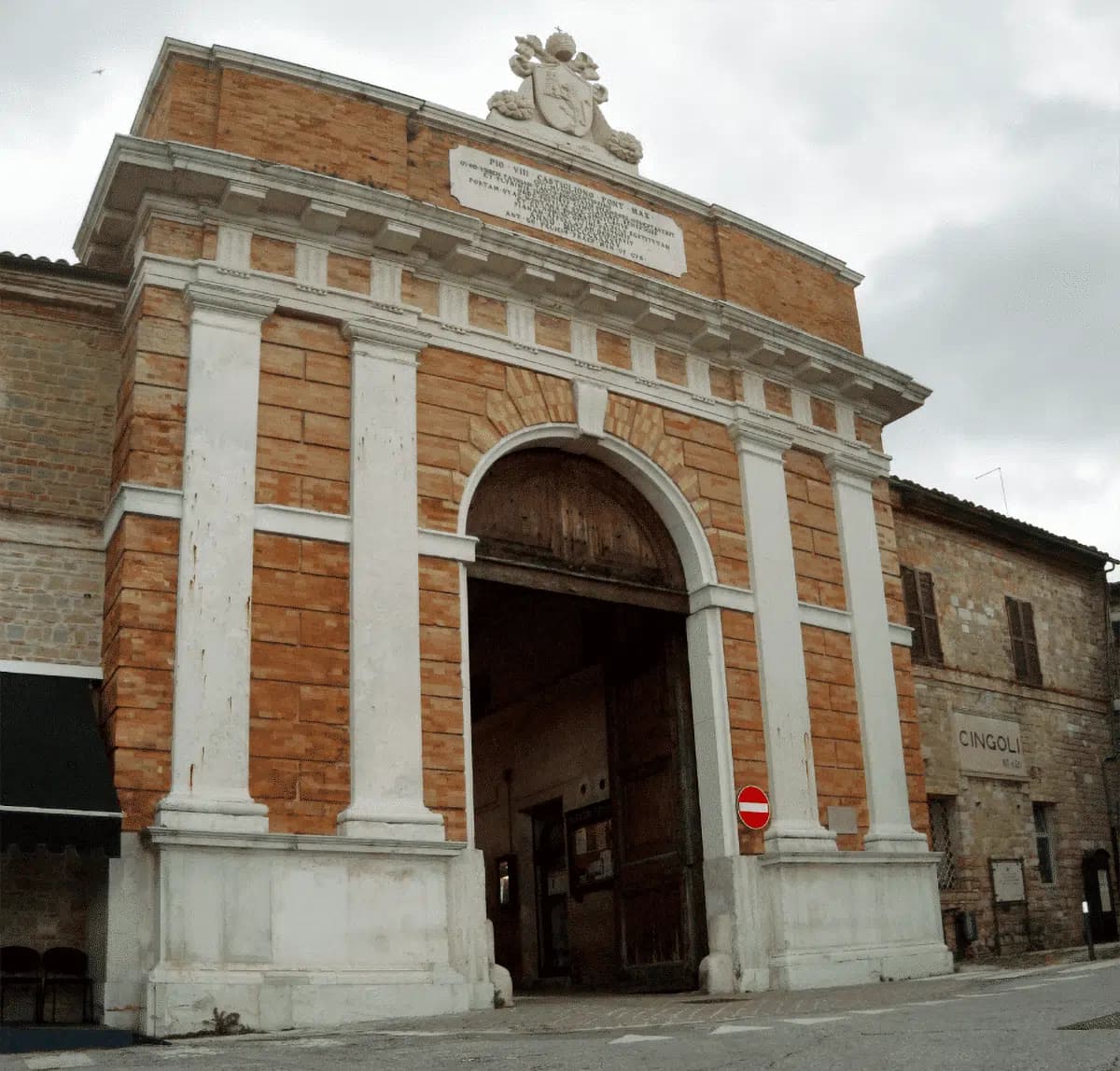
Cingoli
Province: Macerata
The Balcone delle Marche at 631 meters, a hilltop borgo where on clear days the view runs from the Sibillini to the Croatian coast.
Corinaldo
Province: Ancona
A walled hill borgo at 203 meters with 912 meters of intact medieval walls, the birthplace of Saint Maria Goretti and the Pozzo della Polenta.