

Calabria · Cosenza
Cerchiara di Calabria
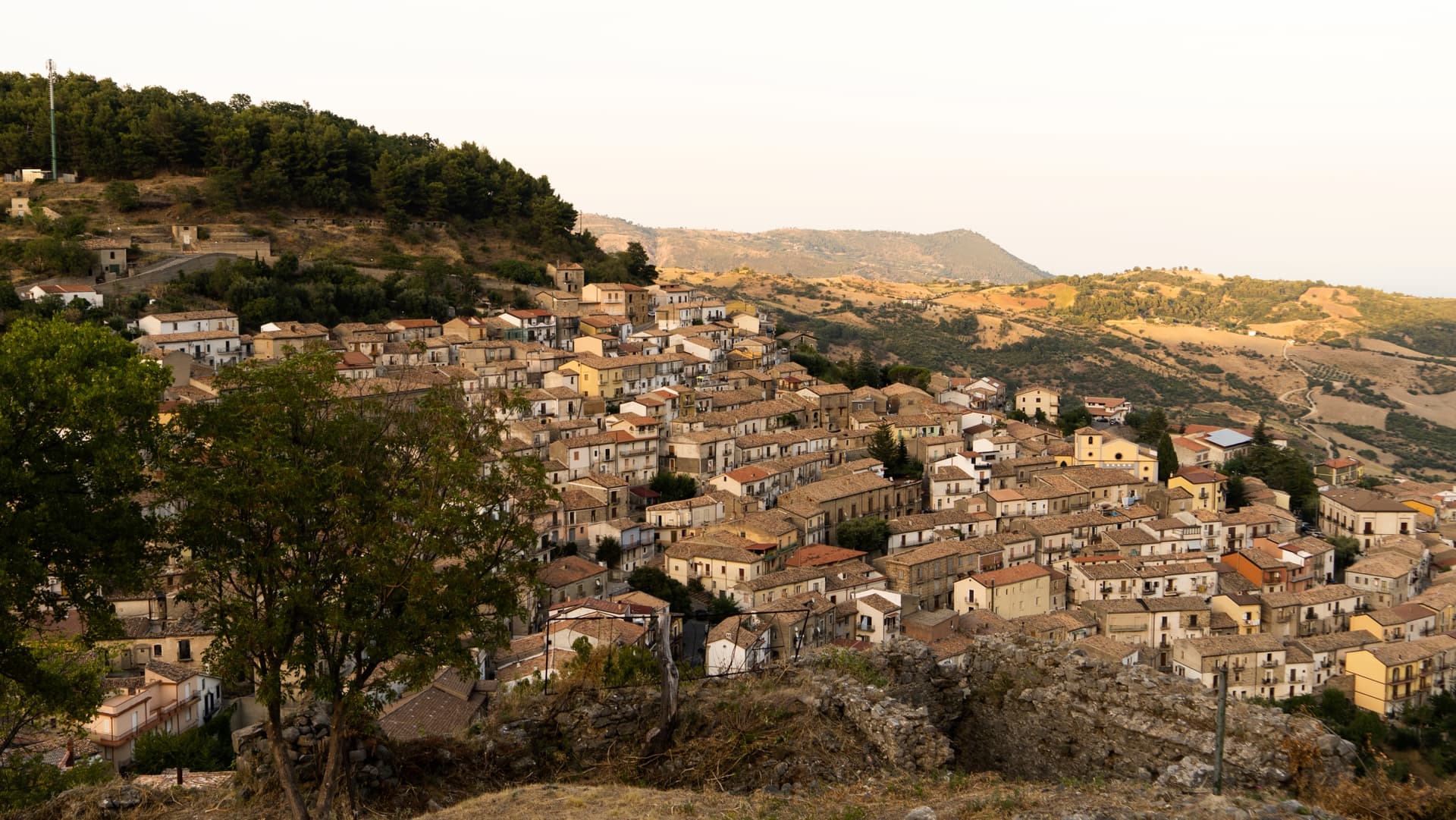
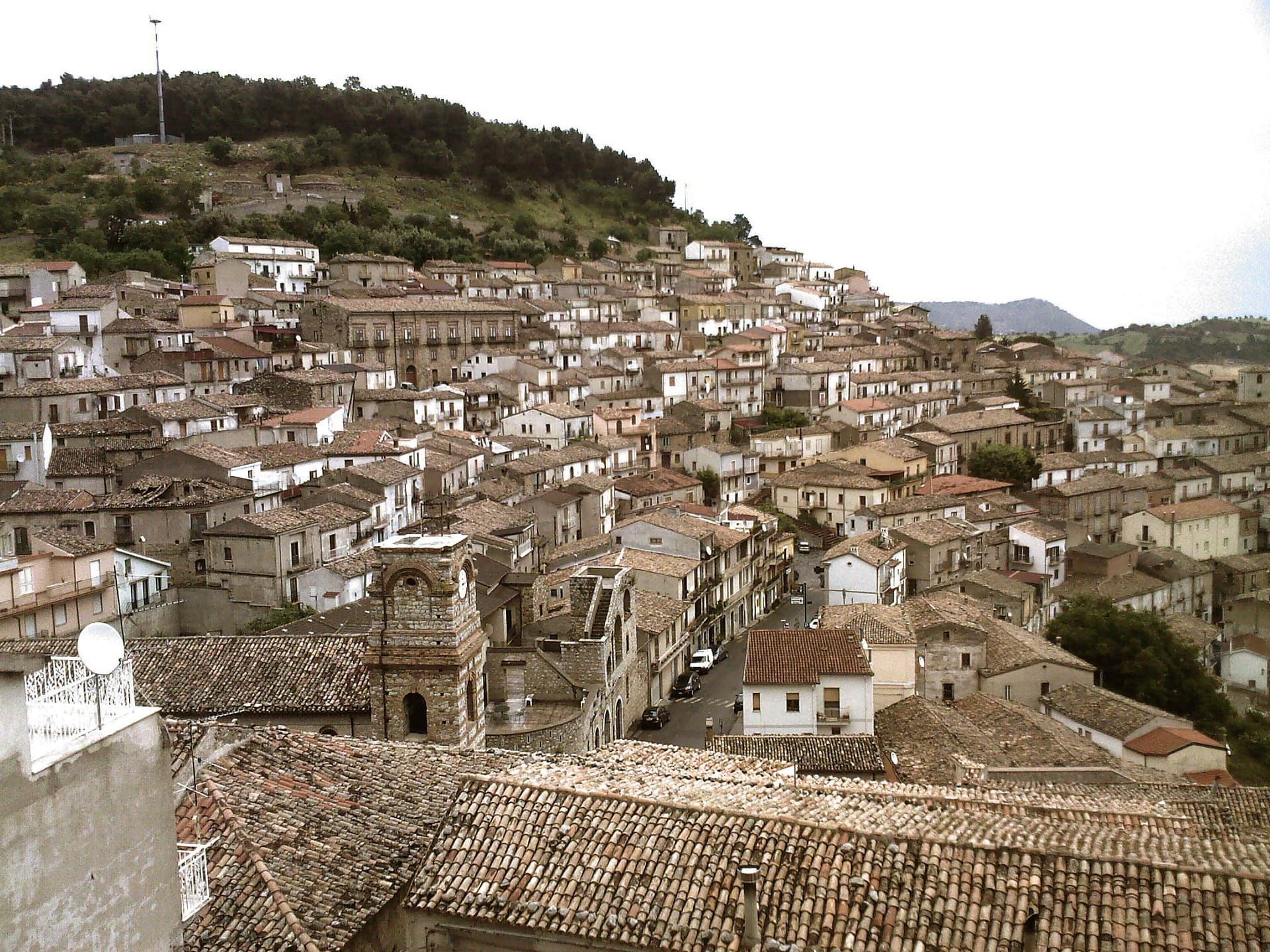
A Città del Pane at 650 meters under Mount Sellaro, with a rock sanctuary at 1,015 meters and a sulphurous Cave of the Nymphs feeding the thermal springs.
Known for
MADONNA DELLE ARMI
Rock sanctuary on Mount Sellaro at 1,015 meters, built around fifteenth-century Byzantine icons, feast day 25 April.
GROTTA DELLE NINFE
Sulphurous hot spring inside a cave at the foot of Sellaro, feeding the Cerchiara thermal complex below the village.
PANE DI CERCHIARA
Large round loaves baked in wood ovens, a Città del Pane tradition with its own museum in the centro storico.
When to visit
Best · Apr–Oct
- J
- F
- M
- A
- M
- J
- J
- A
- S
- O
- N
- D
- Best
- Hot or crowded
- Quiet
- Mostly closed
Why come
Cerchiara di Calabria sits at 650 meters at the foot of Mount Sellaro, on the eastern flank of the Pollino massif inside the national park. The site has been settled since the Magna Graecia period under the name Arponium, later Byzantine Circlarium, with hermit cells documented on Sellaro by the tenth century. The Santuario di Santa Maria delle Armi, at 1,015 meters above the village, grew in the mid-fifteenth century around Byzantine icons; a small rock chapel was enlarged in the early sixteenth century, the feast falls on 25 April.
Below the village, the Grotta delle Ninfe is a cavity whose sulphurous waters feed a working thermal complex; the Serra del Gufo caves and the Balze di Cristo cliffs add the rest of the geology. Cerchiara is a Città del Pane: large round loaves baked in wood ovens, with a dedicated bread museum in the centro storico.
The Sunday letter
We haven’t written Cerchiara di Calabria’s letter yet.
One town every Sunday, with the photo, the food, the festa. Be there when this one comes up. Free, by Peter & Sophia from Pietrasanta.
By subscribing you agree to Substack’s Terms of Use, our Privacy Policy and our Information collection notice.
What to see
Santuario di Santa Maria delle Armi
Rock sanctuary at 1,015 meters on Mount Sellaro, built around fifteenth-century Byzantine icons, with the patronal feast on 25 April.
Terme della Grotta delle Ninfe
Working thermal complex fed by the sulphurous waters of the Cave of the Nymphs, a natural hot spring at the foot of Mount Sellaro.
Museo del Pane
Civic museum in the centro storico dedicated to the Cerchiara wood-oven bread tradition, with the tools and large ovens of the Città del Pane.
Ruderi del Castello
Ruins of the medieval castle above the village, a vantage point over the Sibari plain and the Ionian beyond.
Grotte della Serra del Gufo
Karst cave system on the slopes above the village, alongside the Balze di Cristo limestone cliffs.
The slow-trip planner
Building a trip? Find where Cerchiara di Calabria fits in a slow Italy circuit.
Answer five questions. We will shape a geographically coherent slow trip from the 1,000 Italian towns most travelers skip. Yours to save and share.
Living here
- Population 2,178
- Off the beaten pathi
- Pharmacy in town
- Nearest high school over ~30 minutes away
- Nearest airport Lamezia / Reggio, 2 h 12 min drive
- Regional capital Catanzaro, 2 h 27 min drive
This is a thermal town — terme operate here.
Tags & datadesignations · numbers · sources
Recognised as
The numbers
- Elevation: 650 m
- Population: 2,178
- Surface area: 81.97 km²
These figures were compiled from public directories — ISTAT, OpenStreetMap, Wikidata — and from the official listings of the guides named on this page. Town details change; verify with official sources before you travel.
Close by
More towns near Cerchiara di Calabria
Villapiana
Province: Cosenza
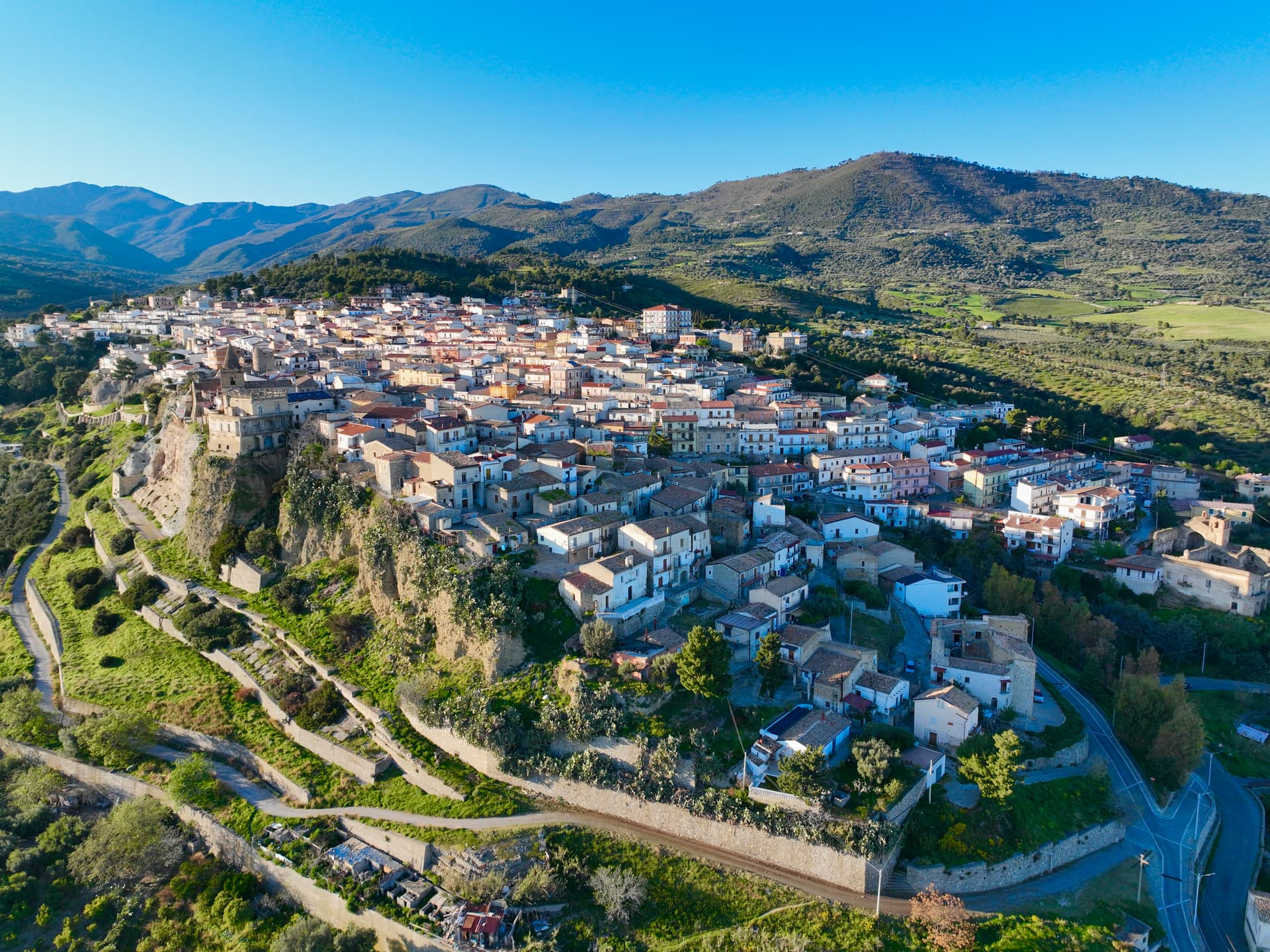
An Ionian commune on the edge of the Sibari plain, dorato sand at the Lido and Pollino peaks rising twenty kilometers inland.
Trebisacce
Province: Cosenza
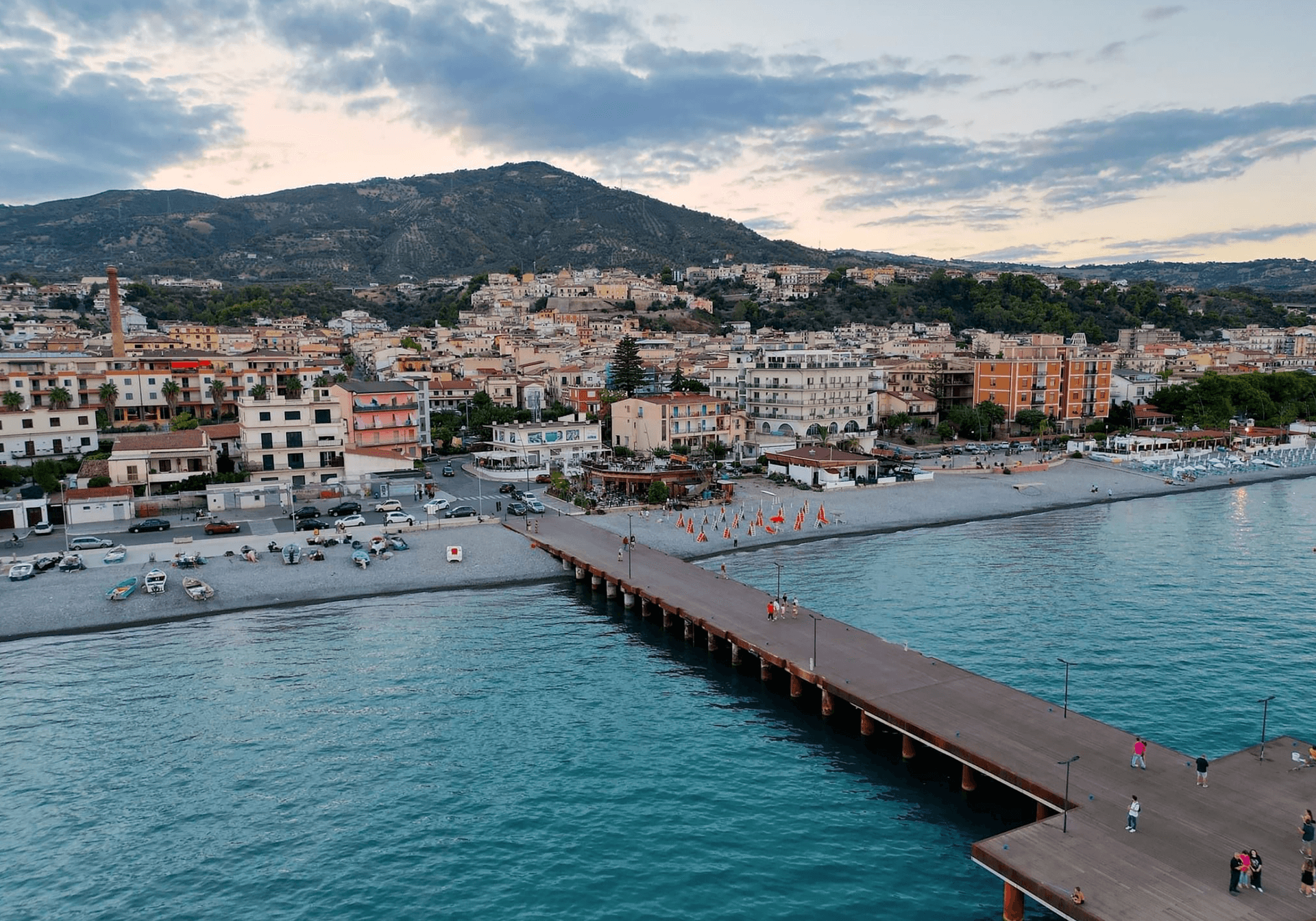
A Bronze Age plateau above the Ionian Gulf of Taranto whose name comes from the Greek for small table, with a Byzantine mother church below.
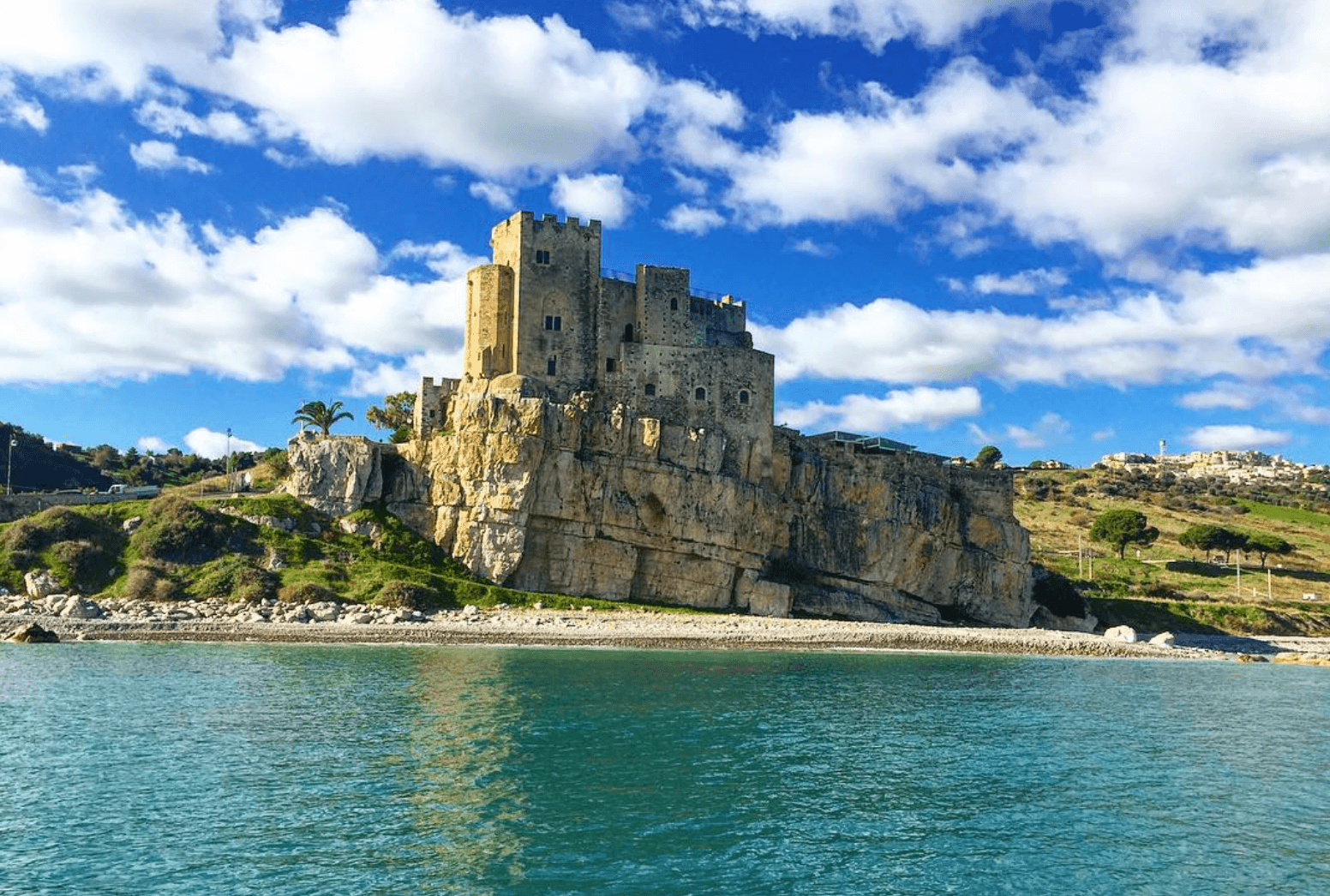
Roseto Capo Spulico
Province: Cosenza
A Frederician castle on a rock above the Ionian, a former Sybaris satellite city founded in the seventh century BC, Templar legend included.
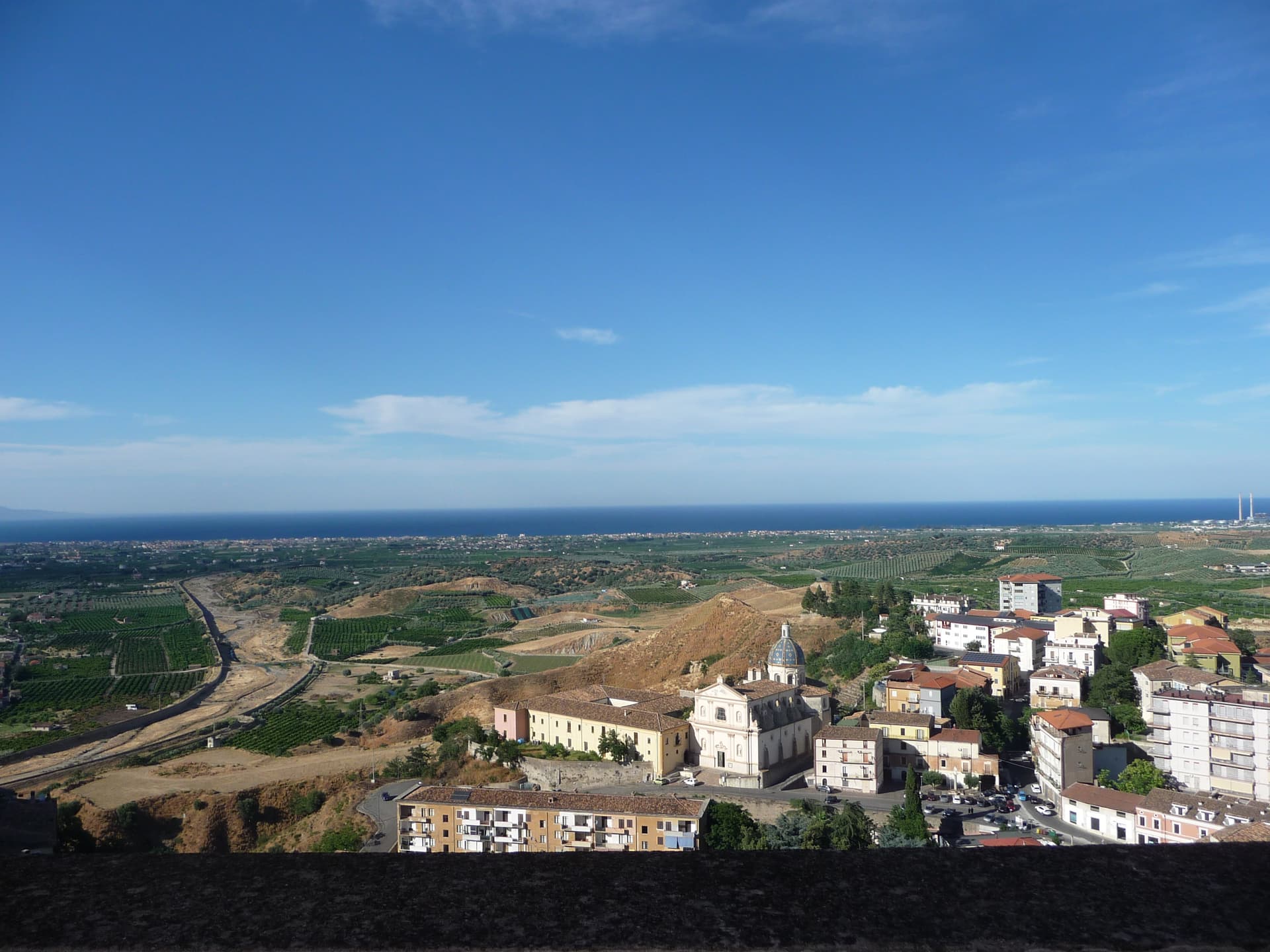
Corigliano-Rossano
Province: Cosenza
The Sibari plain city merged in 2018, home of the UNESCO-listed sixth-century Codex Purpureus and the 1731 Amarelli liquorice dynasty.
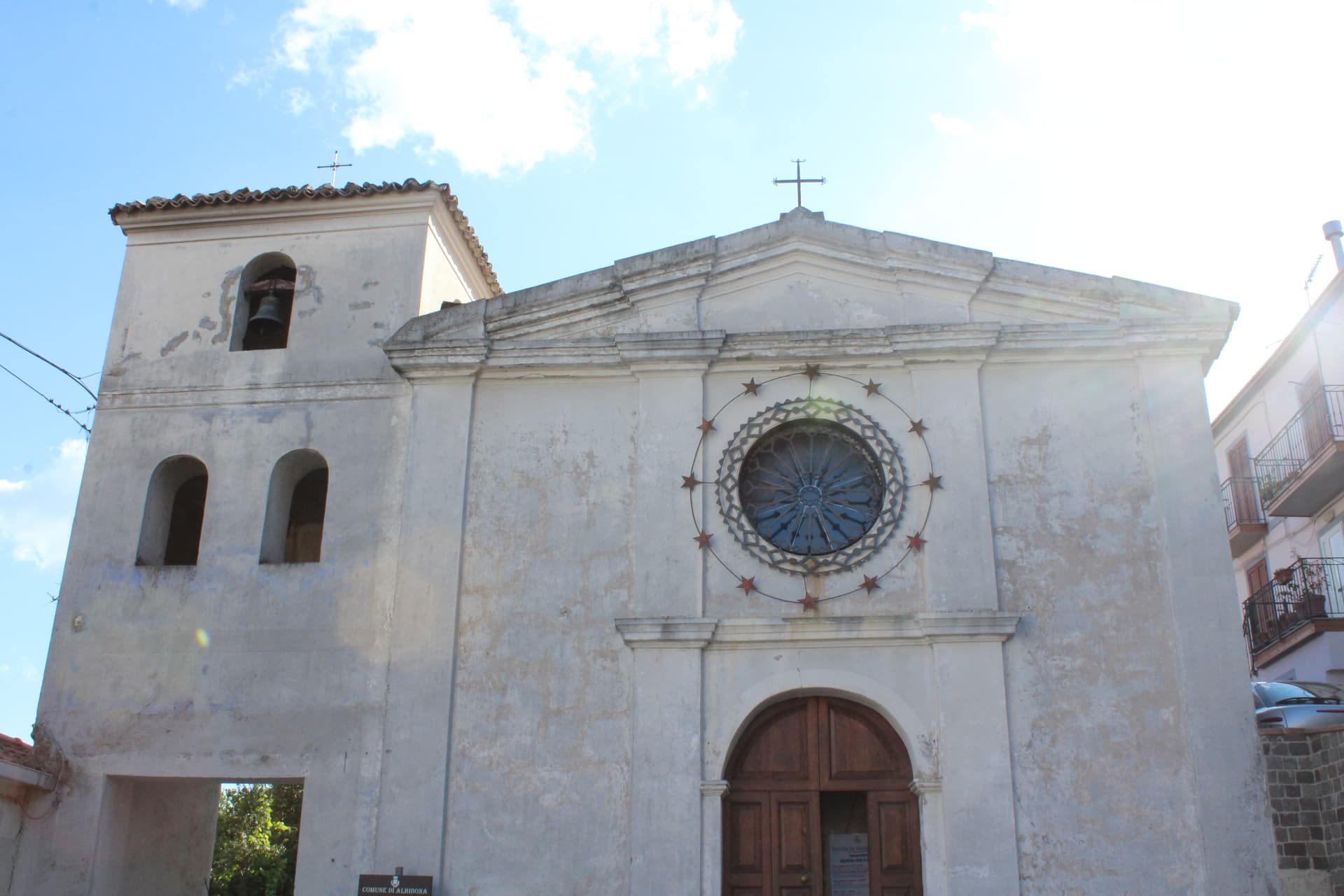
Albidona
Province: Cosenza
A hill village at 810 meters between the Pollino and the Ionian, identified by ancient writers as Leutarnia, the city founded by Calchas after Troy.
🌲 Parco Nazionale
More Parco Nazionale towns in Calabria
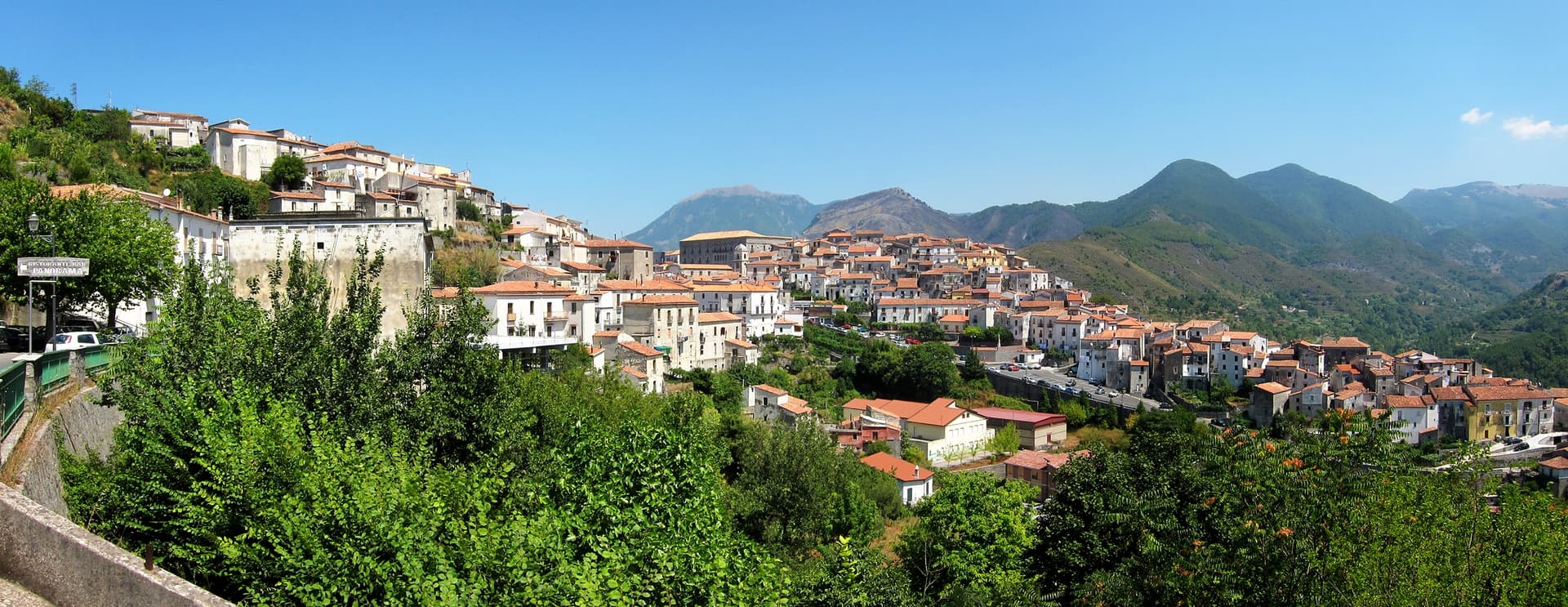
Aieta
Province: Cosenza
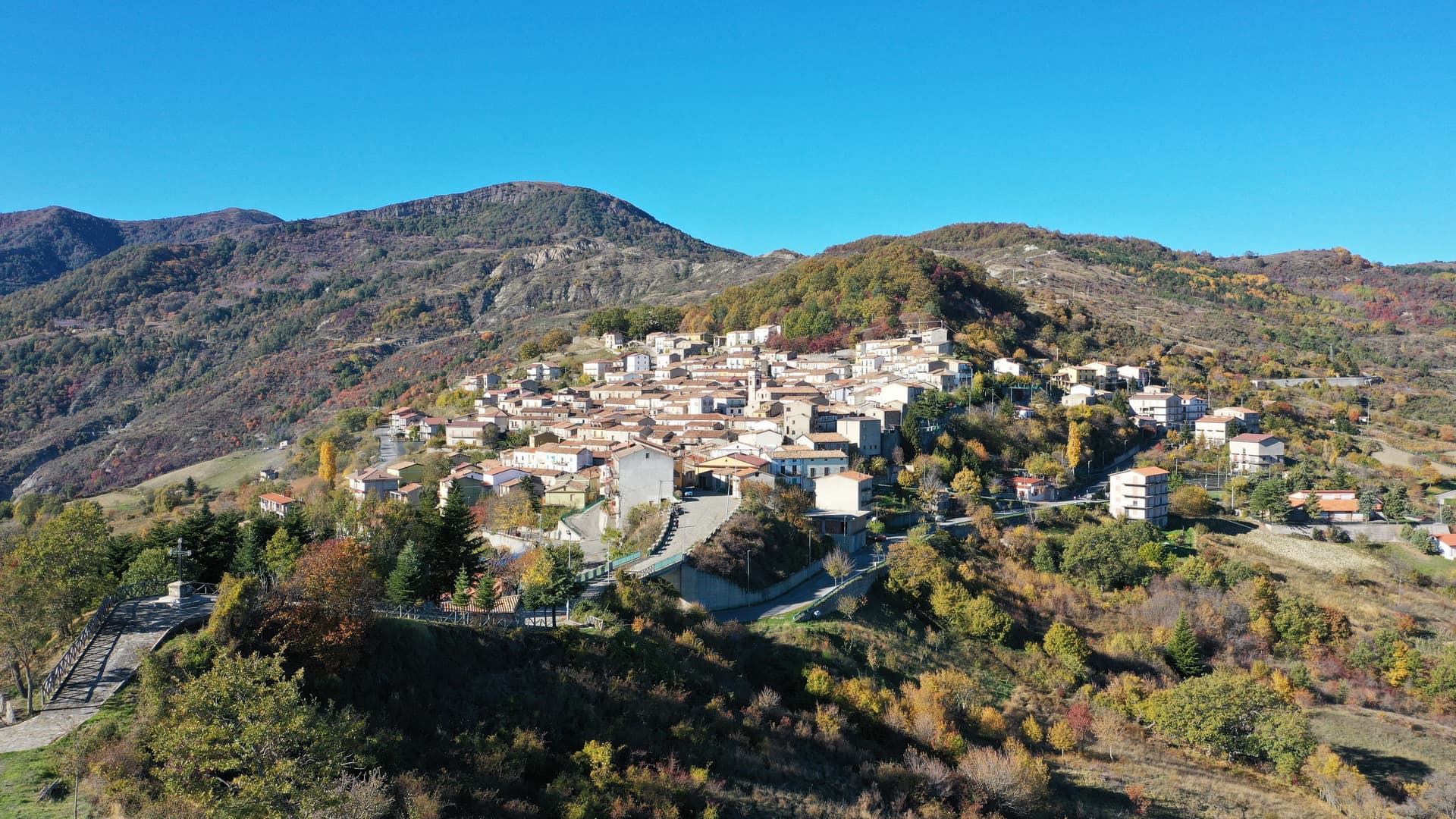
An eagle's-nest village in the western Pollino, with one of the few sixteenth-century Renaissance palazzi standing in Calabria.
Alessandria del Carretto
Province: Cosenza
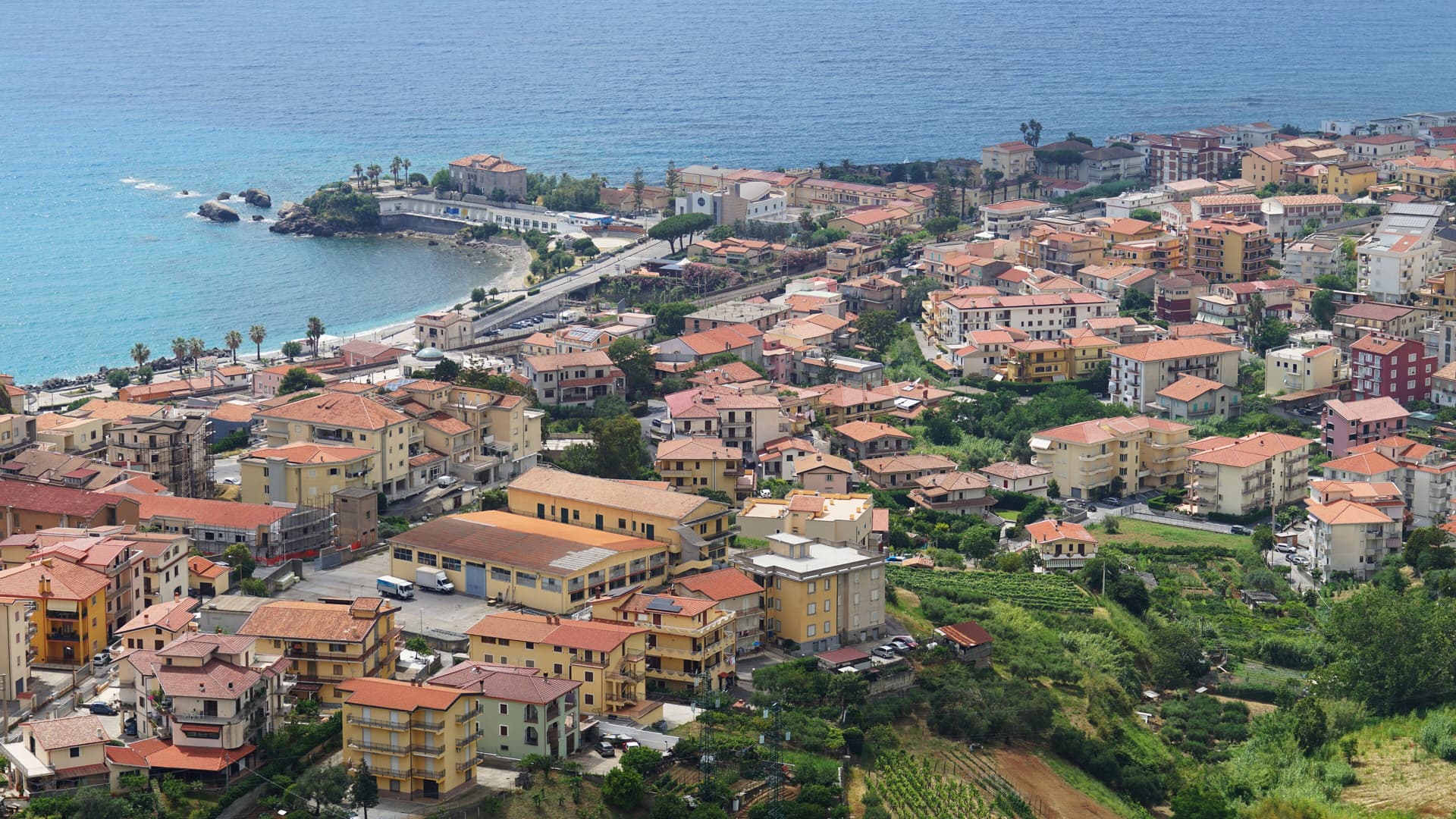
The highest village in the Pollino at 1,043 meters, the only Italian commune carrying its founder's full name, with a fir-tree ritual every 3 May.
Belvedere Marittimo
Province: Cosenza
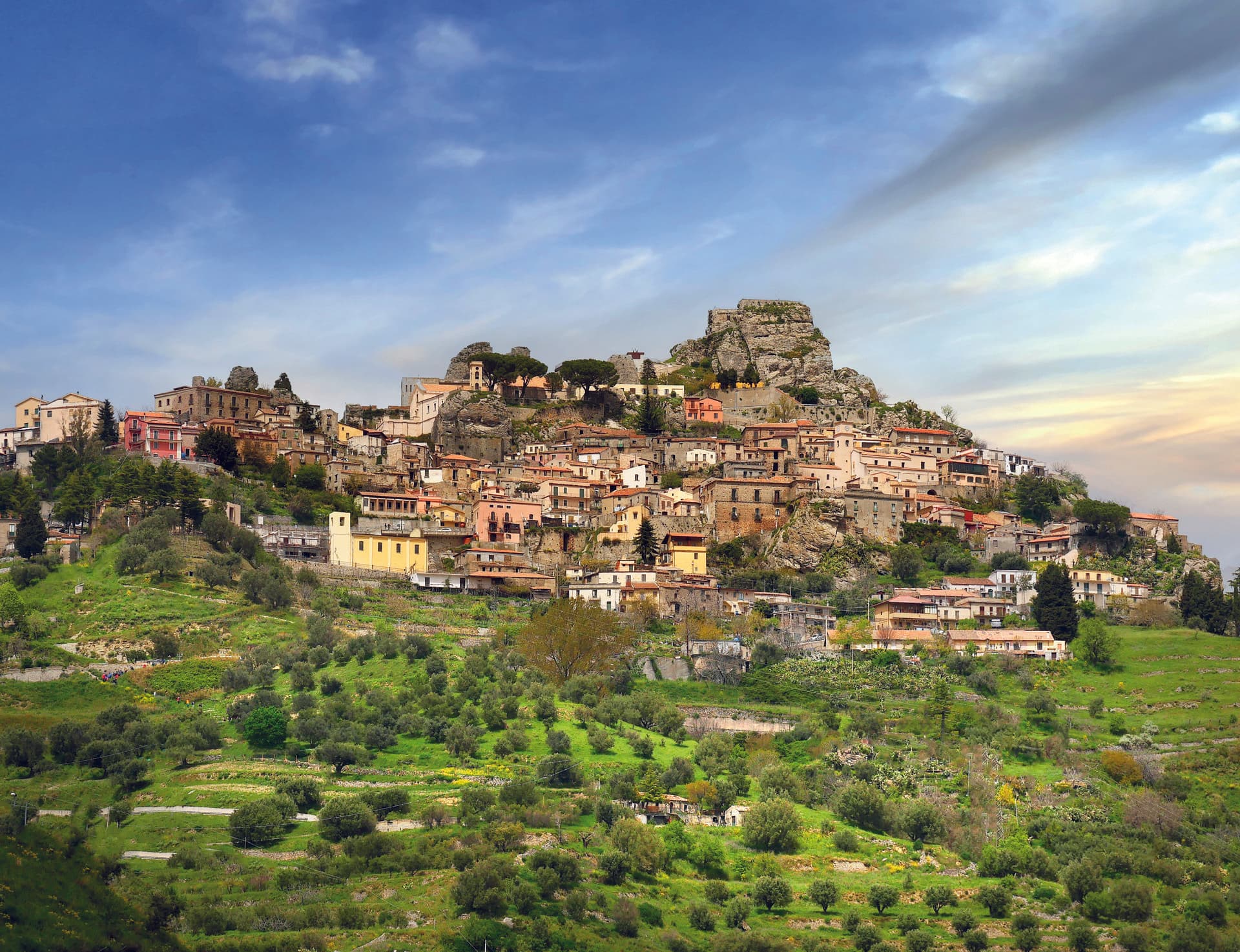
A Riviera dei Cedri town on the Tyrrhenian, its Aragonese castle on the highest coastal hill and the relics of San Valentino in the Capuchin convent for three centuries.
Bova
Province: Reggio di Calabria
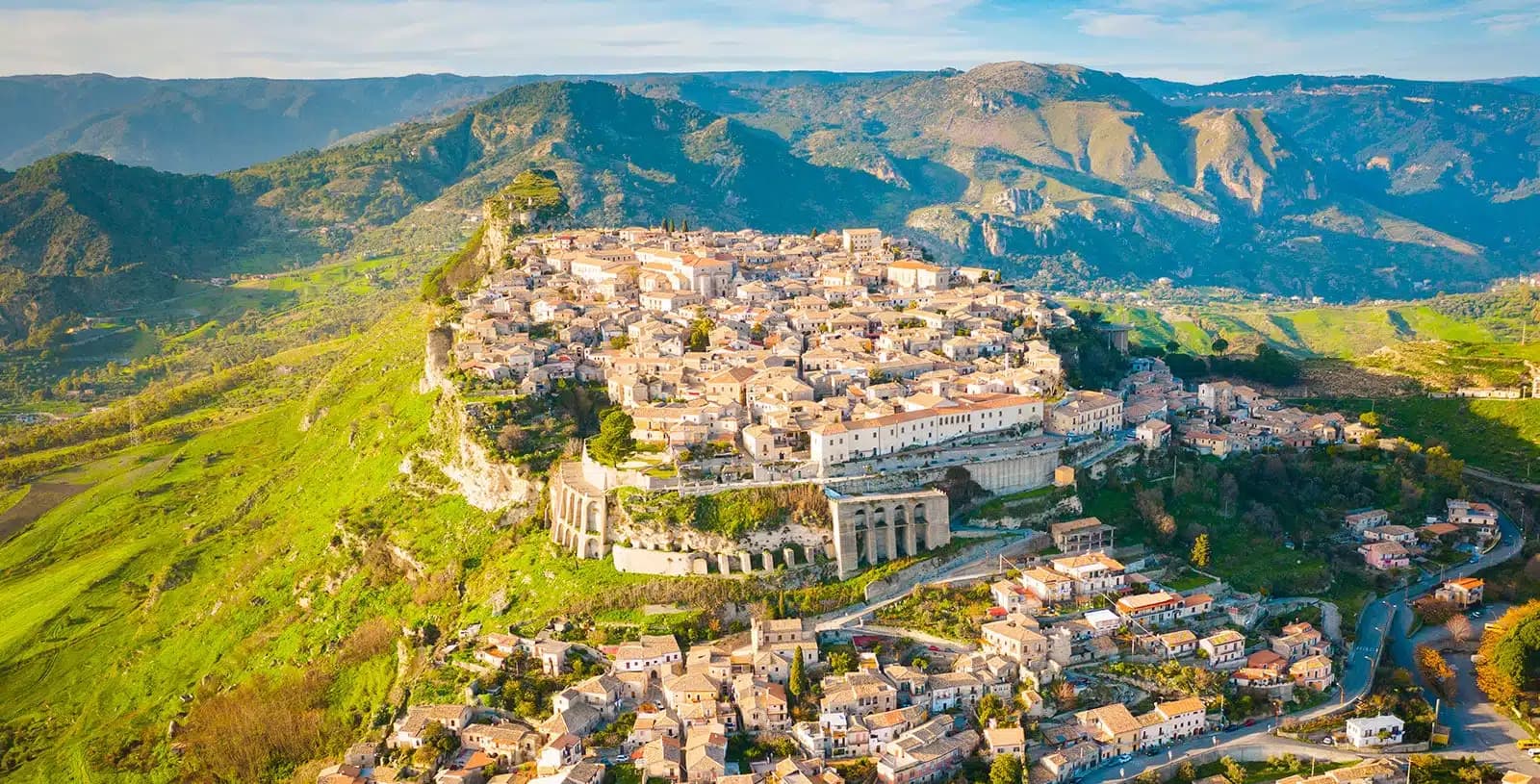
The capital of the Bovesìa — a 416-resident Aspromonte hilltop borgo at 820m that is the cultural centre of the Grecanic minority, where the Calabrian-Greek dialect (a direct descendant of Byzantine-era Greek) is still spoken by elders, with the triple Borghi più belli + Bandiera Arancione + Parco Nazionale dell'Aspromonte signal.
Gerace
Province: Reggio di Calabria
A 470-meter conglomerate rock above Locri, founded by Locri Epizefiri refugees, with Calabria's largest cathedral on Roman columns from Magna Graecia temples.