

Veneto · Treviso
Farra di Soligo
The heart of the Prosecco Hills UNESCO landscape — an 8,477-resident comune in the Conegliano-Valdobbiadene DOCG zone (UNESCO World Heritage since 2019), with the three medieval Torri di Credazzo crowning a hilltop above its vineyards, Cittaslow + Città del Vino signals, and direct walking access to the most photographed stretch of the hogback ridge.
Known for
UNESCO PROSECCO HILLS
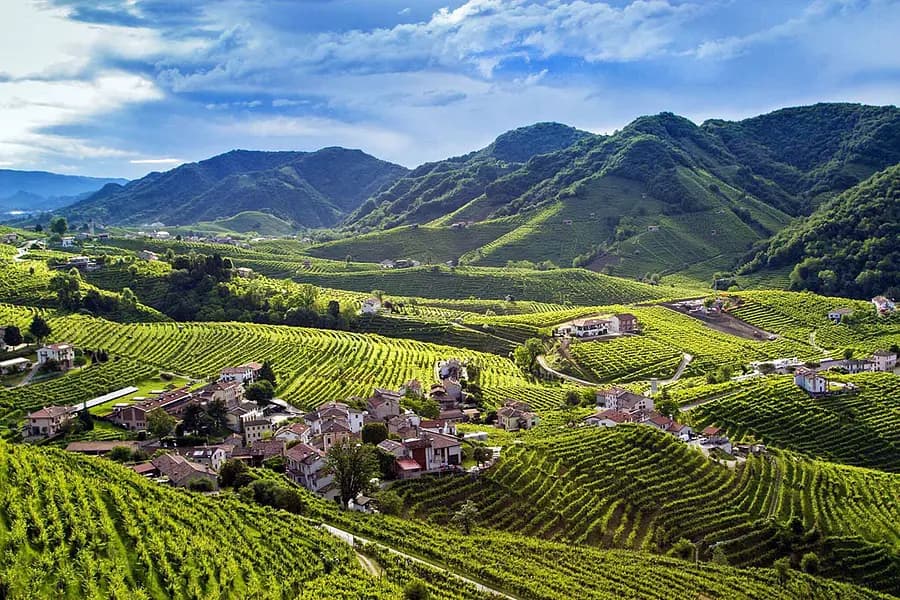
Heart of the Conegliano-Valdobbiadene DOCG zone (UNESCO 2019). The rive corrugated ridge landscape that produces Italy's most exported sparkling wine.
TORRI DI CREDAZZO
Three 12th-c medieval watchtowers on a single hilltop — Italy's only surviving triple-tower medieval ensemble. Direct walking access from the village.
CITTASLOW + CITTÀ DEL VINO
Both Italian quality marks on top of the UNESCO inscription — the rare triple-signal small Veneto town.
MOLINETTO DELLA CRODA
Working wooden watermill on the Lierza river. Photogenic centrepiece of the Rive Vive cellar-walking circuit.
When to visit
Best · Apr–Jun, Sep–Oct
- J
- F
- M
- A
- M
- J
- J
- A
- S
- O
- N
- D
- Best
- Hot or crowded
- Quiet
- Mostly closed
The festa: Stefano, 26 December
Why come
Farra di Soligo sits at the literal centre of the Conegliano-Valdobbiadene Prosecco Hills — the corrugated landscape of steep hogback ridges (locally called rive) covered in Glera vineyards that produces the cru-level Prosecco Superiore DOCG (and the Cartizze grand-cru subzone, the highest legal classification of Italian sparkling wine). The whole landscape was inscribed on the UNESCO World Heritage list in 2019 as 'Le Colline del Prosecco di Conegliano e Valdobbiadene', recognizing both the vineyard cultivation system and the 1,000+ years of human-shaped hillside terracing. Farra is one of the 15 comuni inside the inscribed area, an 8,477-resident commune altitude between Conegliano (10 km east) and Valdobbiadene (5 km west), and the most-photographed stretch of the rive runs through its territory.
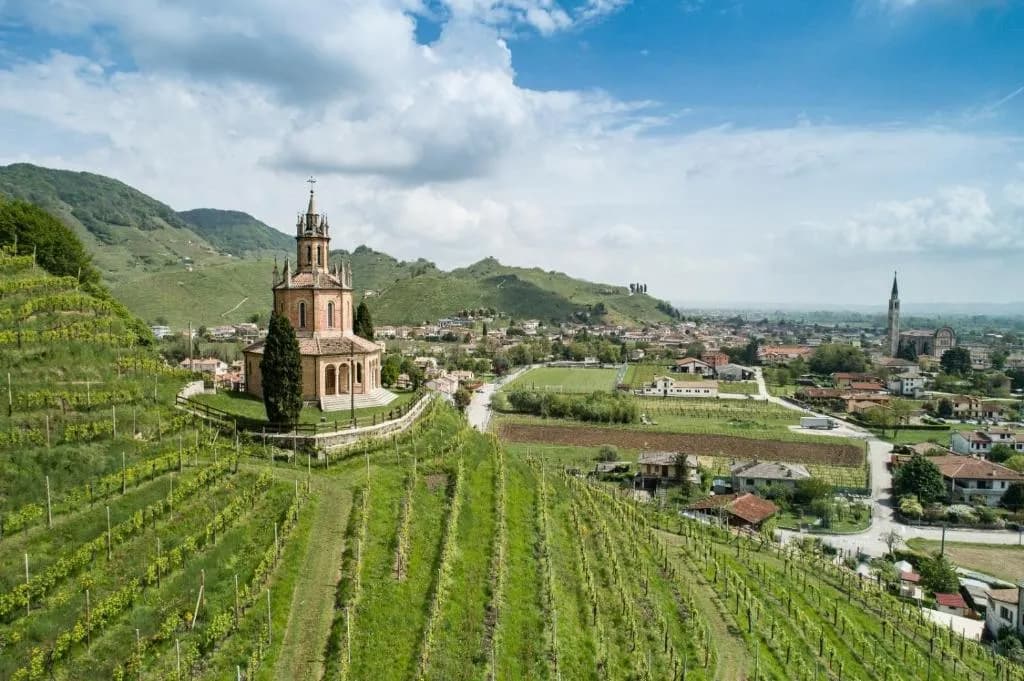
The visual set-piece is the Torri di Credazzo — three 12th-c medieval watchtowers on a single hilltop above Soligo (a frazione of Farra), Italy's only surviving triple-tower medieval ensemble, with marked walking paths up from the village. Beyond the towers + vineyards: the Pieve di San Pietro (Romanesque, 11th-c, with detached campanile), the Pieve di San Vigilio at Col San Martino (12th-c with later frescoes), the Molinetto della Croda watermill (a working wooden watermill on the Lierza river, photogenic centrepiece of the Rive Vive walking circuit), and the Abbazia di Follina (11th-c Cistercian, 4 km southeast). Farra holds Cittaslow + Città del Vino on top of the UNESCO inscription.
The wine: 200+ producers across the comune + immediate neighbours, all working the DOCG zone, with the famous extra-dry Prosecco Superiore + the dry Cartizze grand-cru + the rare col fondo (lees-aged, unfiltered, naturally cloudy — the historical traditional version). The food is Veneto-prealpine: spaghetti al ragù di anatra, baccalà alla vicentina, tiramisù (invented 30 km south at Treviso), formaggio di Malga, and obviously the Prosecco itself paired with everything. The Festa del Vino (May) and the Sagra dell'Uva (October) are the year's main events. The 'Rive Vive' Sunday walking circuit (April-October) closes selected vineyard roads to cars and opens them to cellar-hopping walkers.
The Sunday letter
We haven’t written Farra di Soligo’s letter yet.
One town every Sunday, with the photo, the food, the festa. Be there when this one comes up. Free, by Peter & Sophia from Pietrasanta.
By subscribing you agree to Substack’s Terms of Use, our Privacy Policy and our Information collection notice.
What to see
Conegliano-Valdobbiadene Prosecco Hills (UNESCO)
UNESCO World Heritage 2019 — the corrugated rive landscape of steep hogback ridges with Glera vineyards. Farra is centrally located in the inscribed area with the most-photographed stretch.
Torri di Credazzo
Three 12th-c medieval watchtowers on a single hilltop above Soligo — Italy's only surviving triple-tower medieval ensemble. Marked walking paths up from the village.
Molinetto della Croda
Working wooden watermill on the Lierza river — photogenic centrepiece of the Rive Vive walking circuit. One of the most-photographed mills in the Veneto.
Pieve di San Pietro + Abbazia di Follina
11th-c Romanesque parish church with detached campanile (in Farra) + the 11th-c Cistercian Abbazia di Follina (4 km southeast, one of the most important Veneto monastic ensembles).
Cartizze + Rive Vive walks
Grand-cru Cartizze + extra-dry Prosecco Superiore from 200+ producers in the comune + immediate neighbours. Rive Vive Sundays (April-October) close vineyard roads to cars for cellar-hopping walks.
The slow-trip planner
Building a trip? Find where Farra di Soligo fits in a slow Italy circuit.
Answer five questions. We will shape a geographically coherent slow trip from the 1,000 Italian towns most travelers skip. Yours to save and share.
We recommend
Where to eat and stay
Not our picks, but places the guides put their name to — a Michelin star, a Gambero Rosso fork, a Slow Food snail, a Michelin Key for the hotels. Worth a table, a counter, or a night when you pass through.
Locanda da CondoRistorante
Locanda da Condo has a Michelin Bib Gourmand to its name.
SedaRistorante
Two Gambero Rosso forks (81/100), at Seda.
Tino Gourmet dell'Hotel Villa SoligoRistorante
Tino Gourmet dell'Hotel Villa Soligo holds one Gambero Rosso fork (79/100).
Living here
- Population 8,477
- Commuter belti
- Pharmacy in town
- High school within a 30-minute drive
- Nearest airport Venice, 52 min drive
- Regional capital Venezia, 1 h 8 min drive
Tags & datadesignations · numbers · sources
Recognised as
The numbers
- Elevation: 161 m
- Population: 8,477
- Surface area: 28.34 km²
These figures were compiled from public directories — ISTAT, OpenStreetMap, Wikidata — and from the official listings of the guides named on this page. Town details change; verify with official sources before you travel.
Close by
More towns near Farra di Soligo
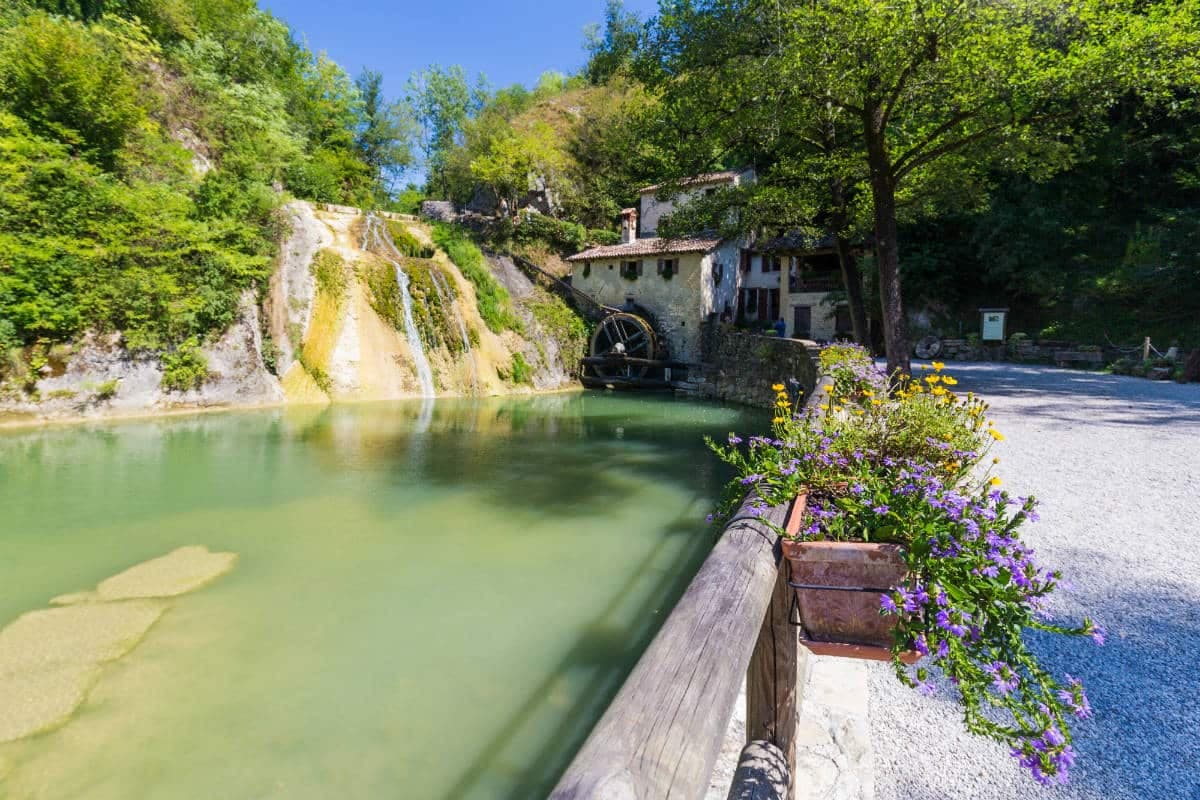
Pieve di Soligo
Province: Treviso
The market town between the Soligo and Lierza rivers in the Prosecco UNESCO zone, birthplace of the twentieth-century poet Andrea Zanzotto.
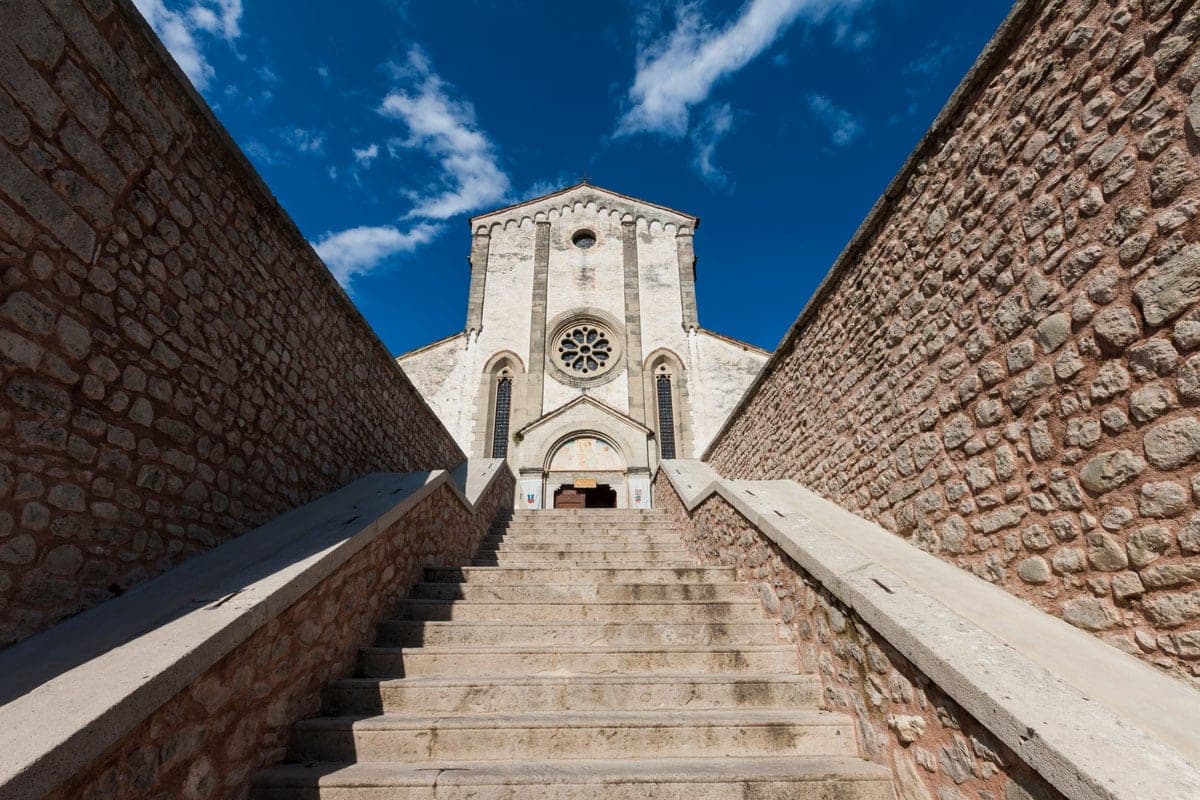
Follina
Province: Treviso
A Prosecco-hills borgo at 191 meters around the Cistercian Abbey of Santa Maria, with a cloister finished in 1268.
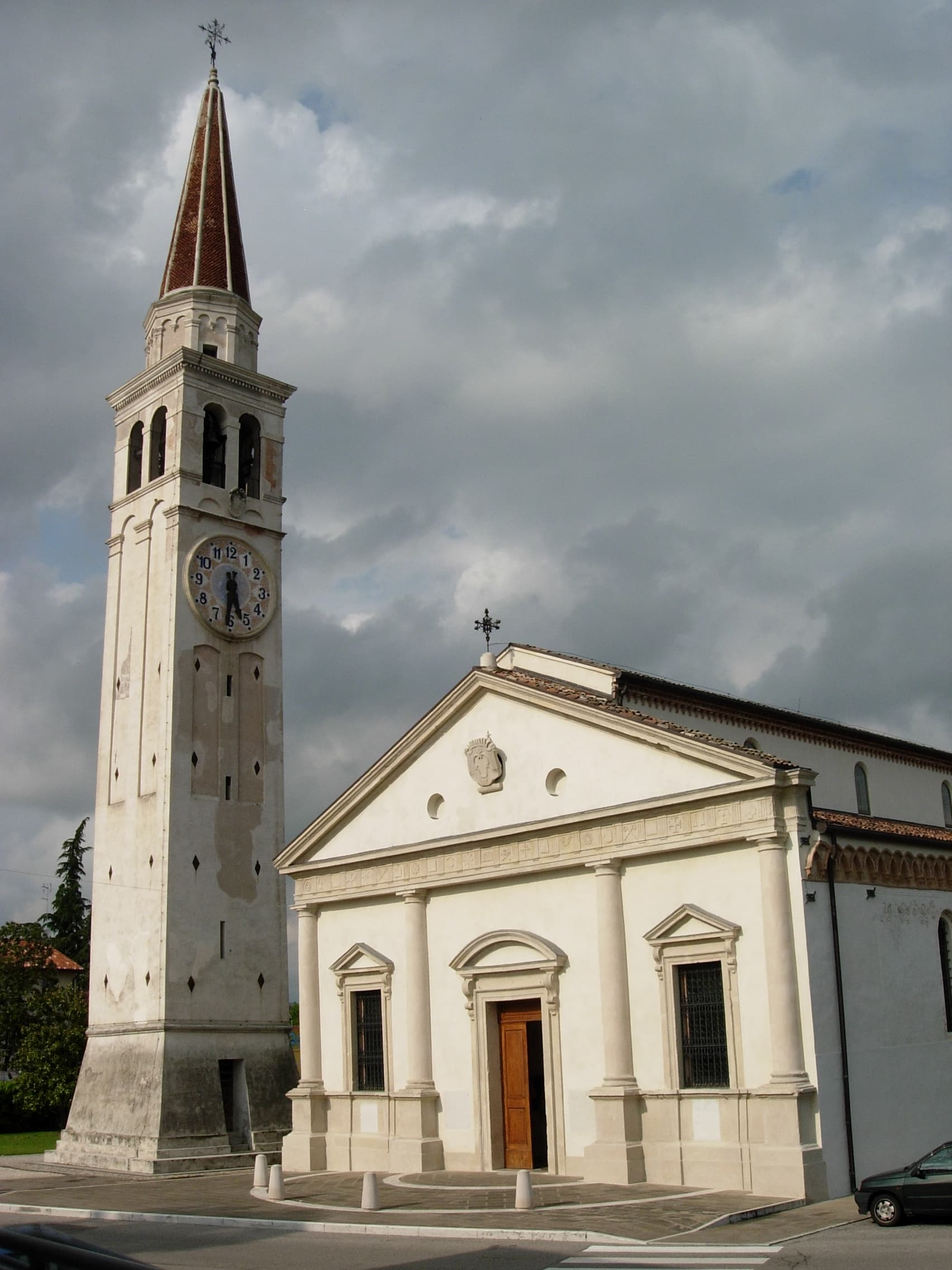
Susegana
Province: Treviso
The Collalto castle town at 76 meters on the left bank of the Piave, with one of the largest medieval fortresses in northern Italy.
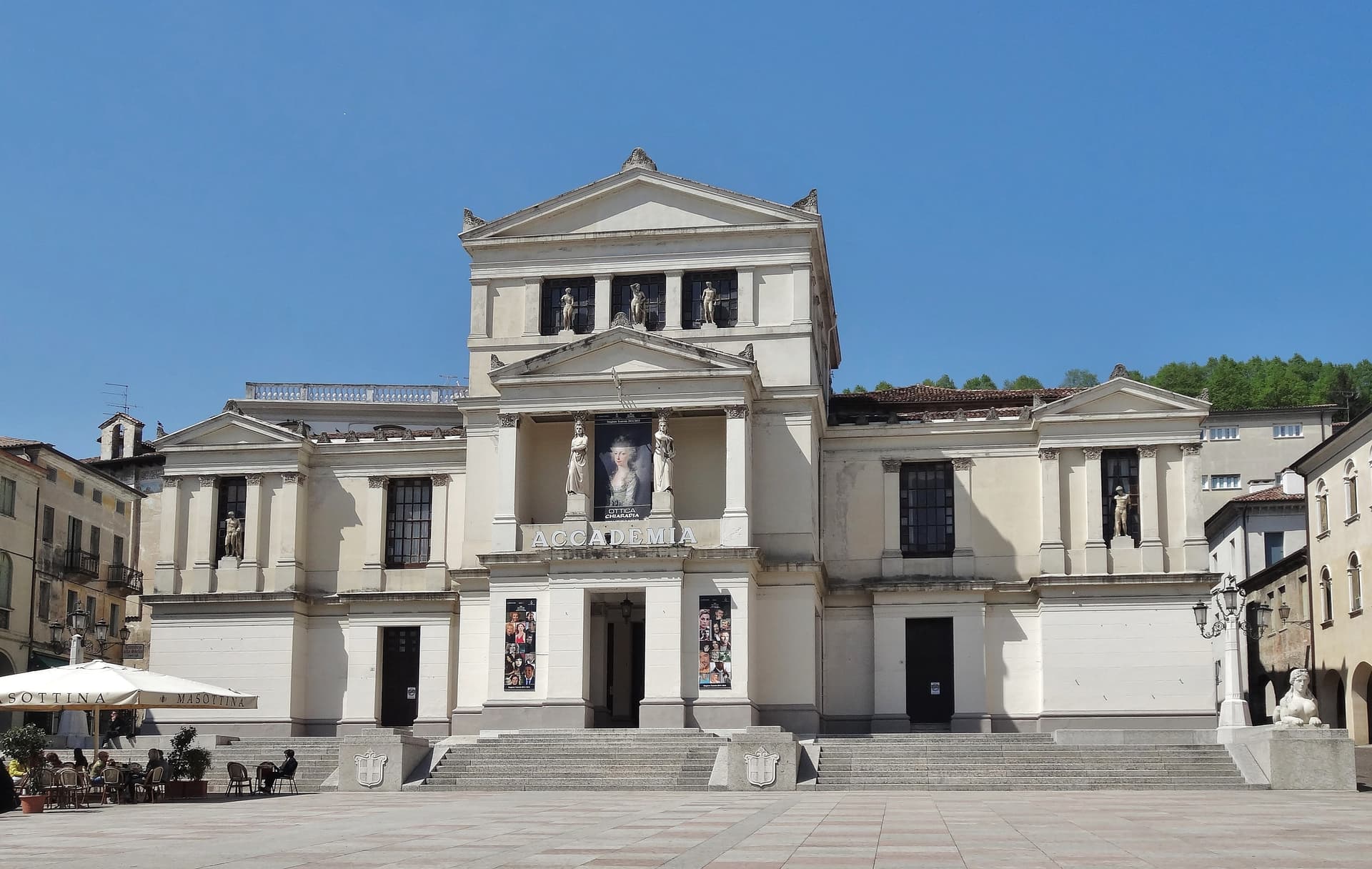
Conegliano
Province: Treviso
The Prosecco capital at 65 meters, birthplace of the painter Cima and home of Italy's first oenology school, opened in 1876.
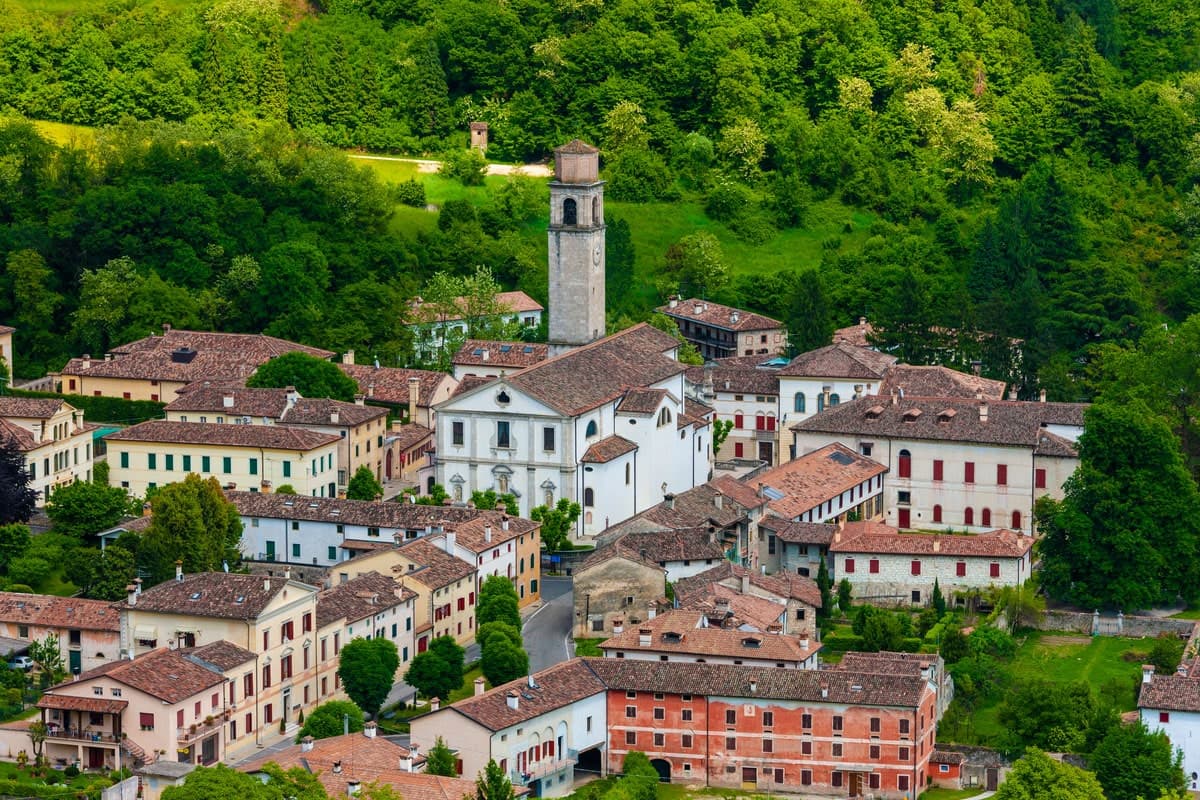
Cison di Valmarino
Province: Treviso
A Prosecco hills borgo at 261 meters under the dolomite rock of CastelBrando, the largest inhabited castle complex in Europe.
🏛️ UNESCO
More UNESCO towns in Veneto
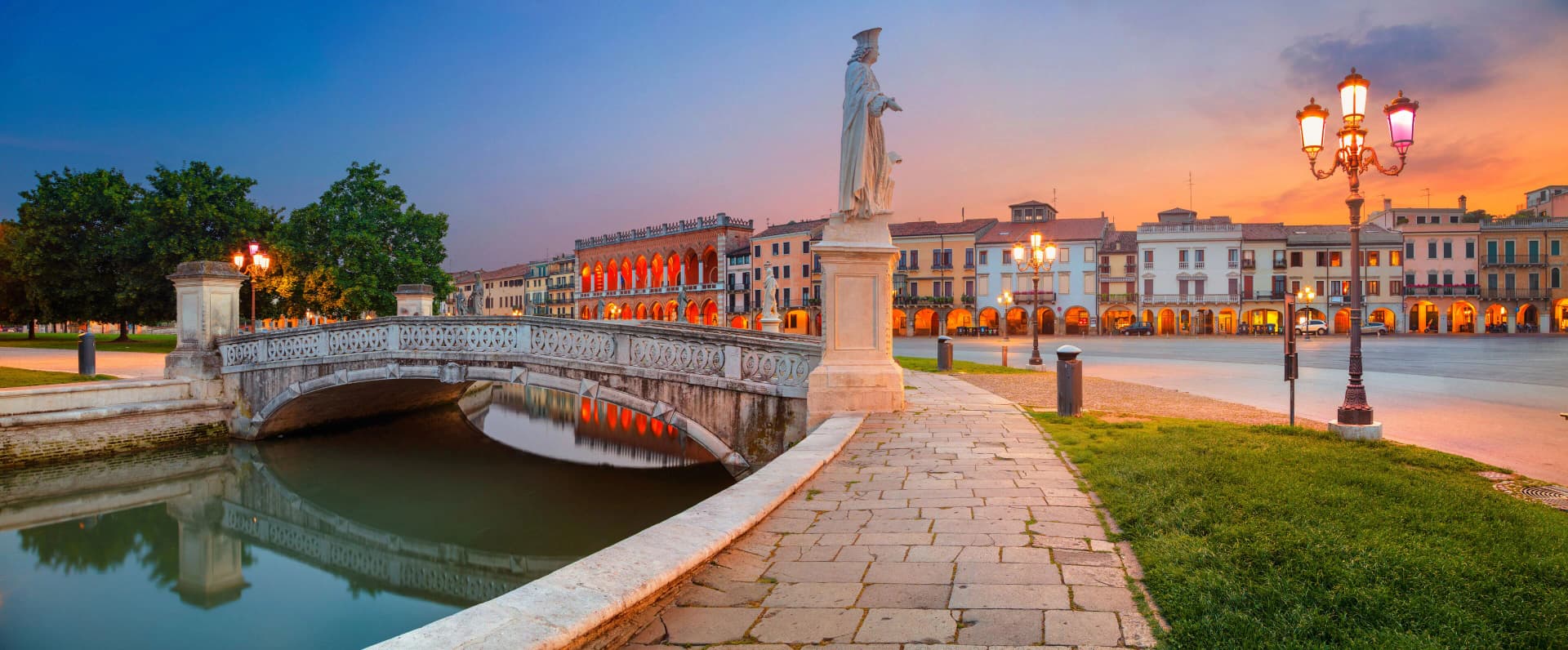
Padova
Province: Padova
The university town that gave Giotto a chapel and the world a science of plants — TWO UNESCO inscriptions inside one city (Padua's 14th-century fresco cycles + the 1545 Orto Botanico, the world's first), plus Prato della Valle, Italy's largest piazza, and Galileo's old lecture hall.
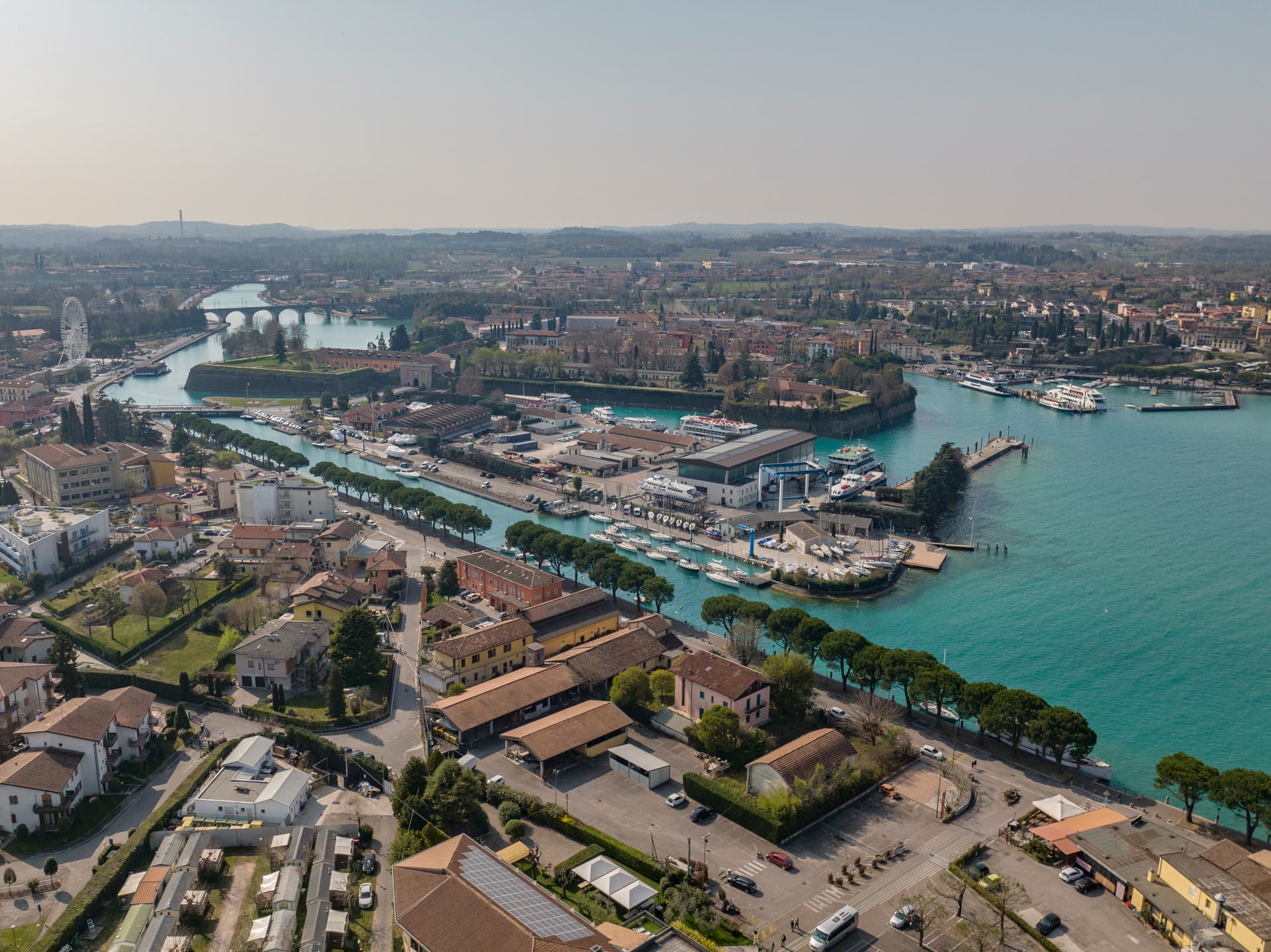
Peschiera del Garda
Province: Verona
The Venetian fortress town on a Mincio island at the southern outlet of Lake Garda, UNESCO-listed in 2017 for its Sanmicheli bastions.