

Veneto · Verona
Peschiera del Garda
The Venetian fortress town on a Mincio island at the southern outlet of Lake Garda, UNESCO-listed in 2017 for its Sanmicheli bastions.
Known for
SANMICHELI FORTRESS
Pentagonal Venetian fortress rebuilt from 1549 by Michele Sanmicheli, UNESCO-listed in 2017 as part of the Stato da Terra defensive network.
THE QUADRILATERO
Austrian-era four-fortress system anchored by Peschiera in the northwest with Verona, Mantua and Legnago, controlling Lombardy-Venetia from 1815 to 1866.
PALAFITTE
Bronze Age pile-dwelling settlements at the Frassino marsh, on the UNESCO Prehistoric Pile-Dwellings list since 2011.
When to visit
Best · Apr–Oct
- J
- F
- M
- A
- M
- J
- J
- A
- S
- O
- N
- D
- Best
- Hot or crowded
- Quiet
- Mostly closed
The festa: Martino di Tours, 11 November
Why come
Peschiera sits on the Mincio at the point where the river leaves Lake Garda, twenty-five kilometers west of Verona. The Romans called it Ardelica; the Republic of Venice rebuilt it in 1549 around a pentagonal fortress designed by Guidobaldo della Rovere and executed by Michele Sanmicheli, with five bastions on the corners of the medieval walls and a moat fed by the Mincio. UNESCO inscribed the bastions in 2017 as part of Venetian Works of Defence between the 16th and 17th Centuries: Stato da Terra-Stato da Mar.
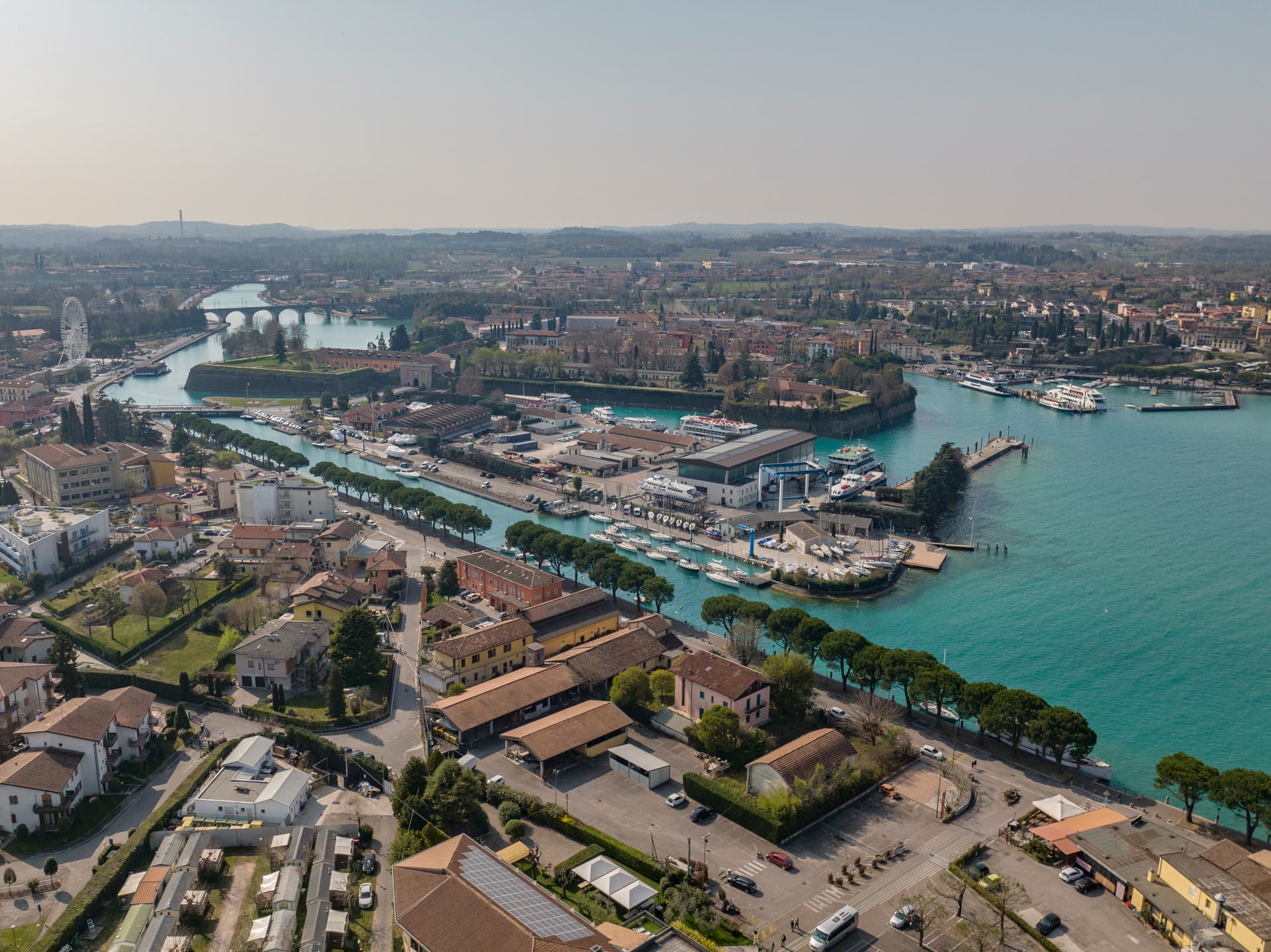
Austria took the town in 1815 and made it the northwest anchor of the Quadrilatero, with Verona, Mantua and Legnago; the four together held Lombardy-Venetia until 1866. The pile-dwelling sites at the Frassino marsh, registered separately by UNESCO in 2011, document Bronze Age lake settlements. The Mincio leaves the fortress in three canals and rejoins below the railway bridge.
The Sunday letter
We haven’t written Peschiera del Garda’s letter yet.
One town every Sunday, with the photo, the food, the festa. Be there when this one comes up. Free, by Peter & Sophia from Pietrasanta.
By subscribing you agree to Substack’s Terms of Use, our Privacy Policy and our Information collection notice.
What to see
Mura veneziane
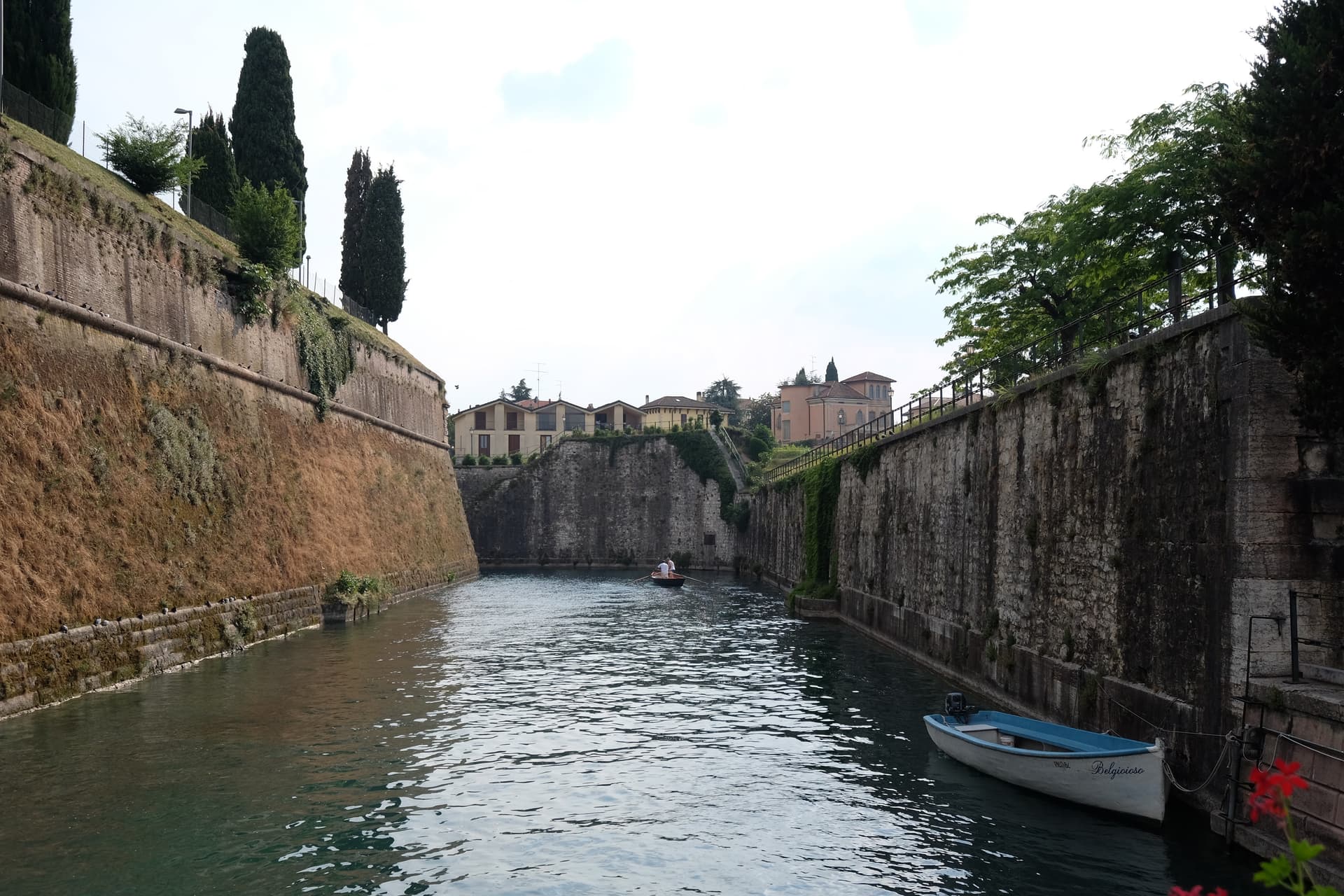
Pentagonal fortress designed by Michele Sanmicheli for Venice from 1549, with five bastions, a moat fed by the Mincio and three water gates.
Canali del Mincio
Three Mincio canals that cross the fortress and rejoin below the railway bridge; the central one runs through Piazza Ferdinando di Savoia.
Piazza Ferdinando di Savoia
Main square inside the walls, bordered by the Palazzo del Comando, the Voltoni arches over the Mincio and the Caserma Catterin.
Santuario della Madonna del Frassino
Sixteenth-century sanctuary outside the walls built after a 1510 Marian apparition, with frescoes by Paolo Farinati and a Franciscan convent attached.
Palafitte del Frassino
Bronze Age pile-dwelling site at the Frassino marsh, registered by UNESCO in 2011 as part of the Prehistoric Pile-Dwellings around the Alps.
The slow-trip planner
Building a trip? Find where Peschiera del Garda fits in a slow Italy circuit.
Answer five questions. We will shape a geographically coherent slow trip from the 1,000 Italian towns most travelers skip. Yours to save and share.
Living here
- Population 10,961
- Commuter belti
- Pharmacy in town
- High school within a 30-minute drive
- Train station in the comune
- Nearest airport Verona, 33 min drive
- Regional capital Venezia, 1 h 33 min drive
Tags & datadesignations · numbers · sources
Recognised as
The numbers
- Elevation: 68 m
- Population: 10,961
- Surface area: 18.27 km²
These figures were compiled from public directories — ISTAT, OpenStreetMap, Wikidata — and from the official listings of the guides named on this page. Town details change; verify with official sources before you travel.
Featured on
Peschiera del Garda appears on 2 themed picks from our Collections:
Close by
More towns near Peschiera del Garda
Castellaro Lagusello
Province: Mantova
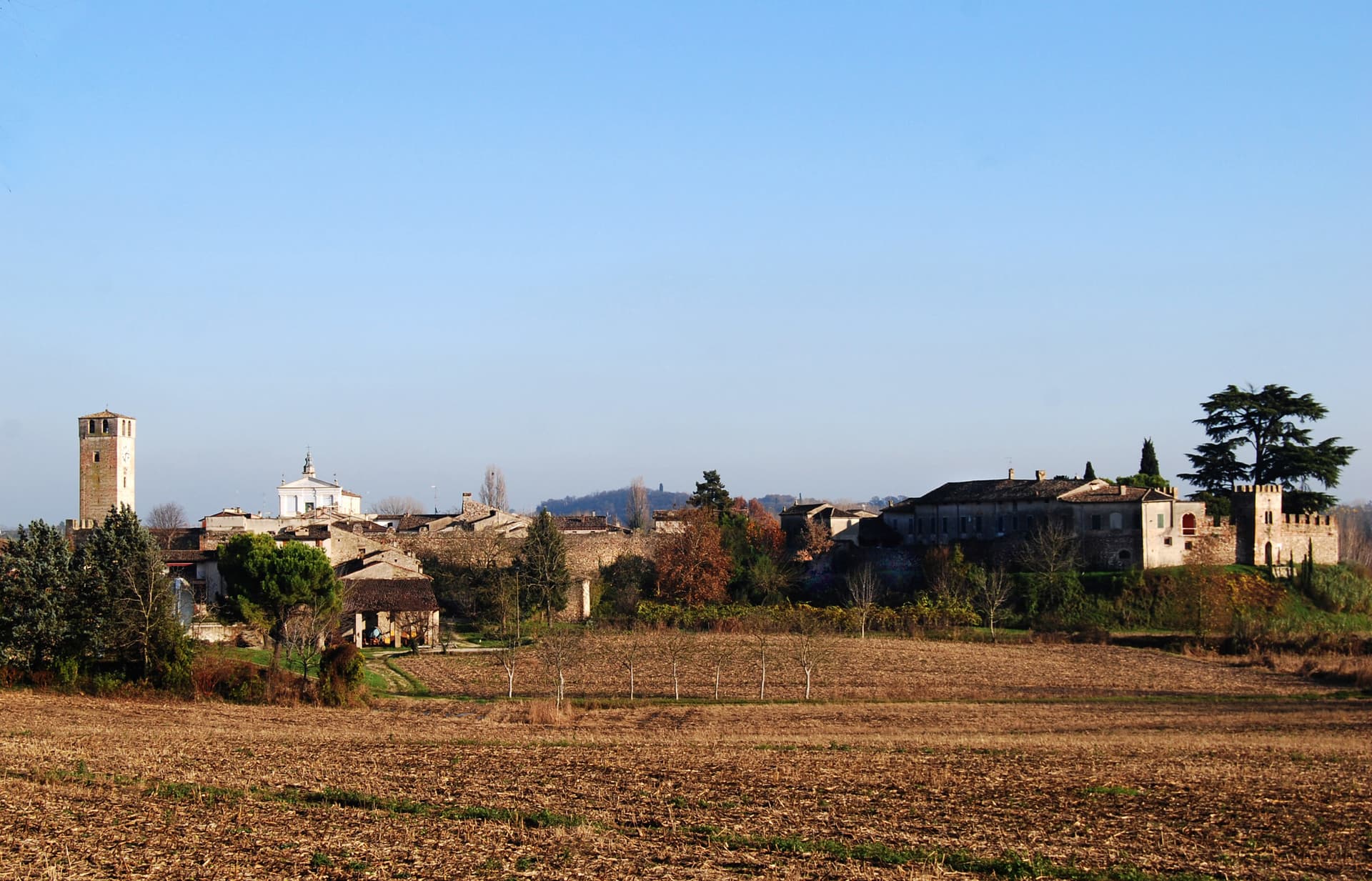
A walled medieval borgo south of Lake Garda, ringed by 13th-century stone walls and overlooking a small heart-shaped natural lake that gives the village its second name and most-photographed silhouette.
Sirmione
Province: Brescia
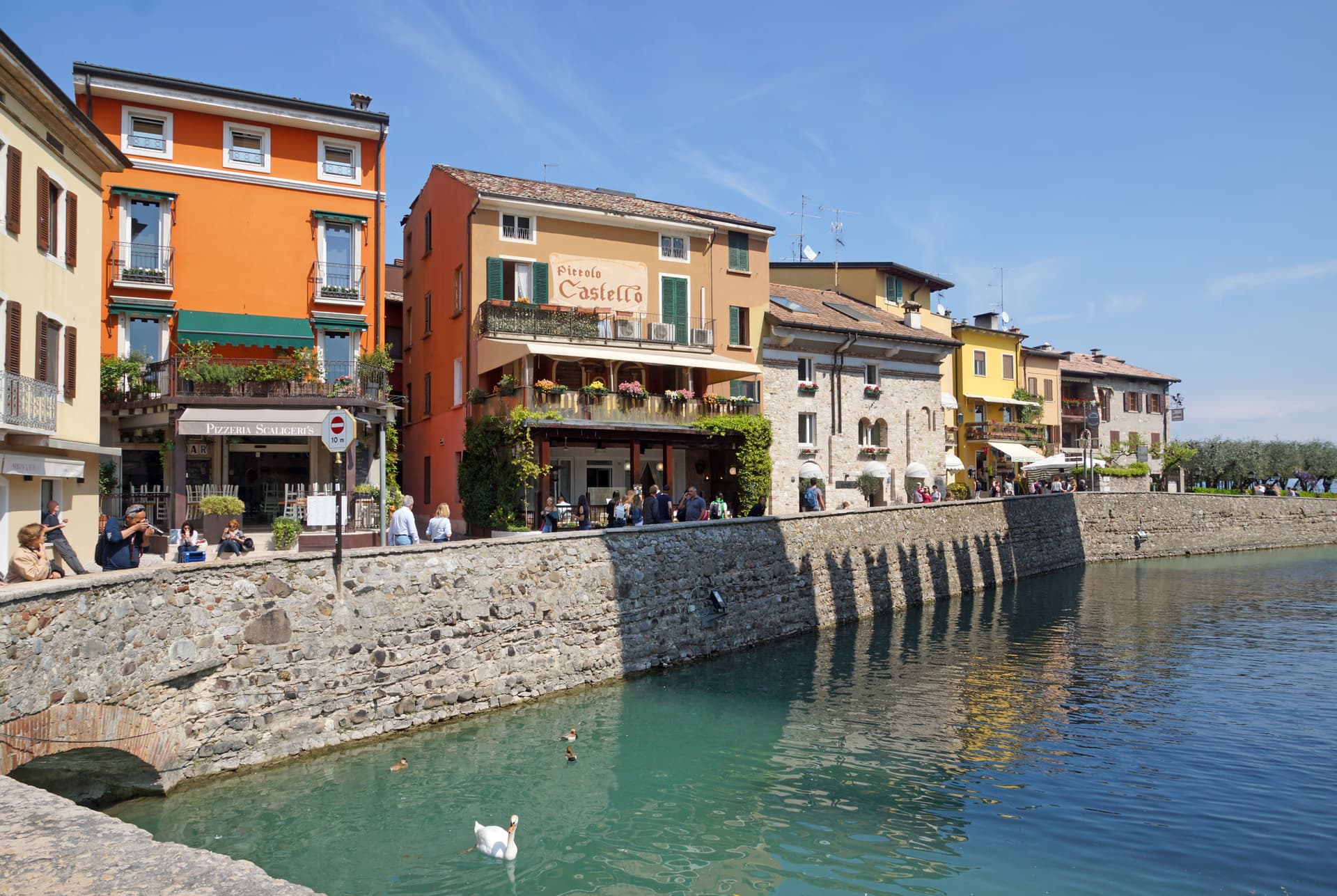
A 4-kilometer peninsula reaching into the southern Garda, with the Scaliger fortified port and the Roman villa called the Grotte di Catullo at its tip.
Monzambano
Province: Mantova
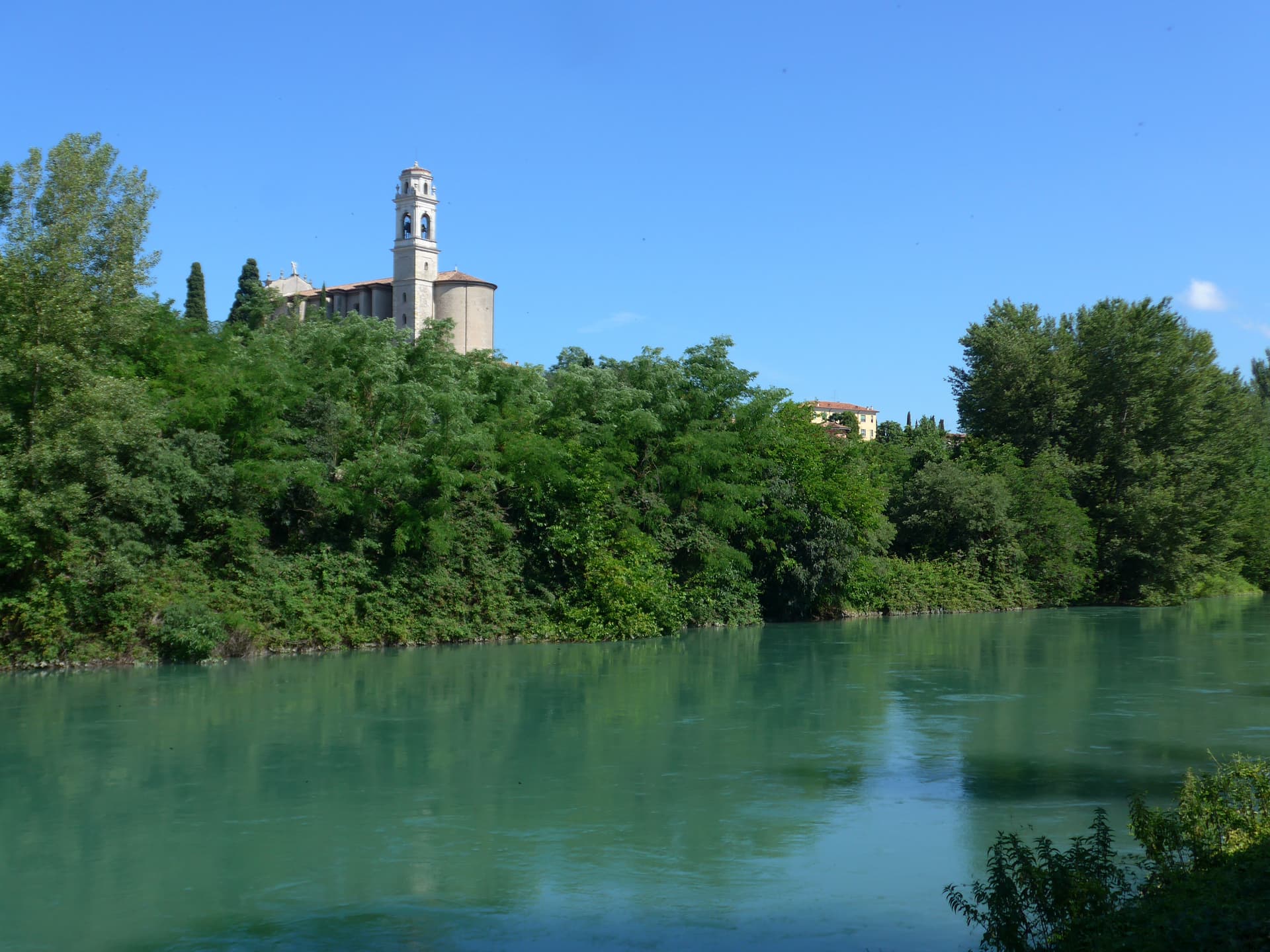
A Mincio commune at 88 meters in the moraine hills west of Mantova, whose frazione Castellaro Lagusello sits on a heart-shaped lake inside fortified walls.
Lazise
Province: Verona
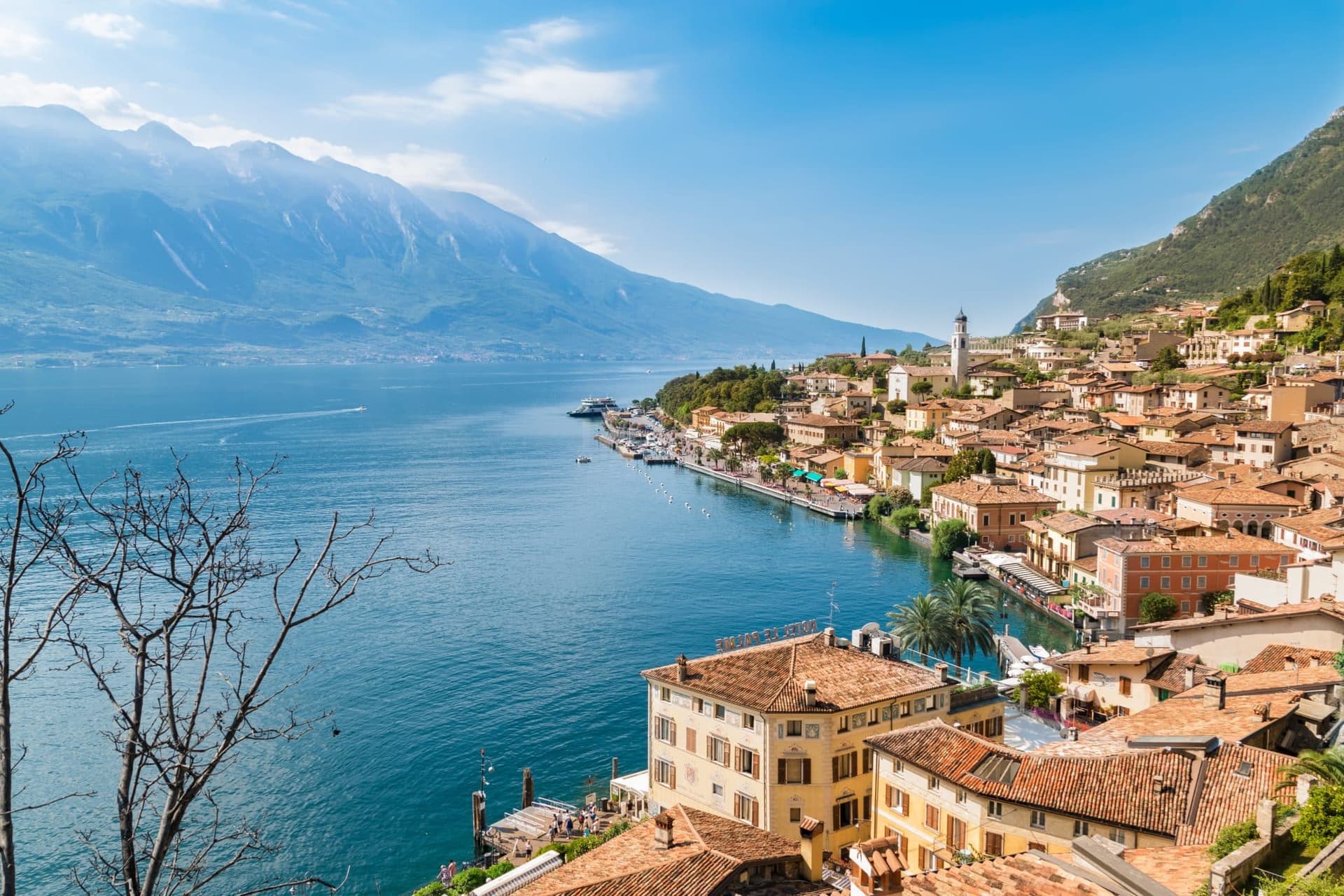
The walled port on the southeastern shore of Lake Garda granted the right to fortify in 983, considered the first comune in Italy.
Valeggio sul Mincio
Province: Verona
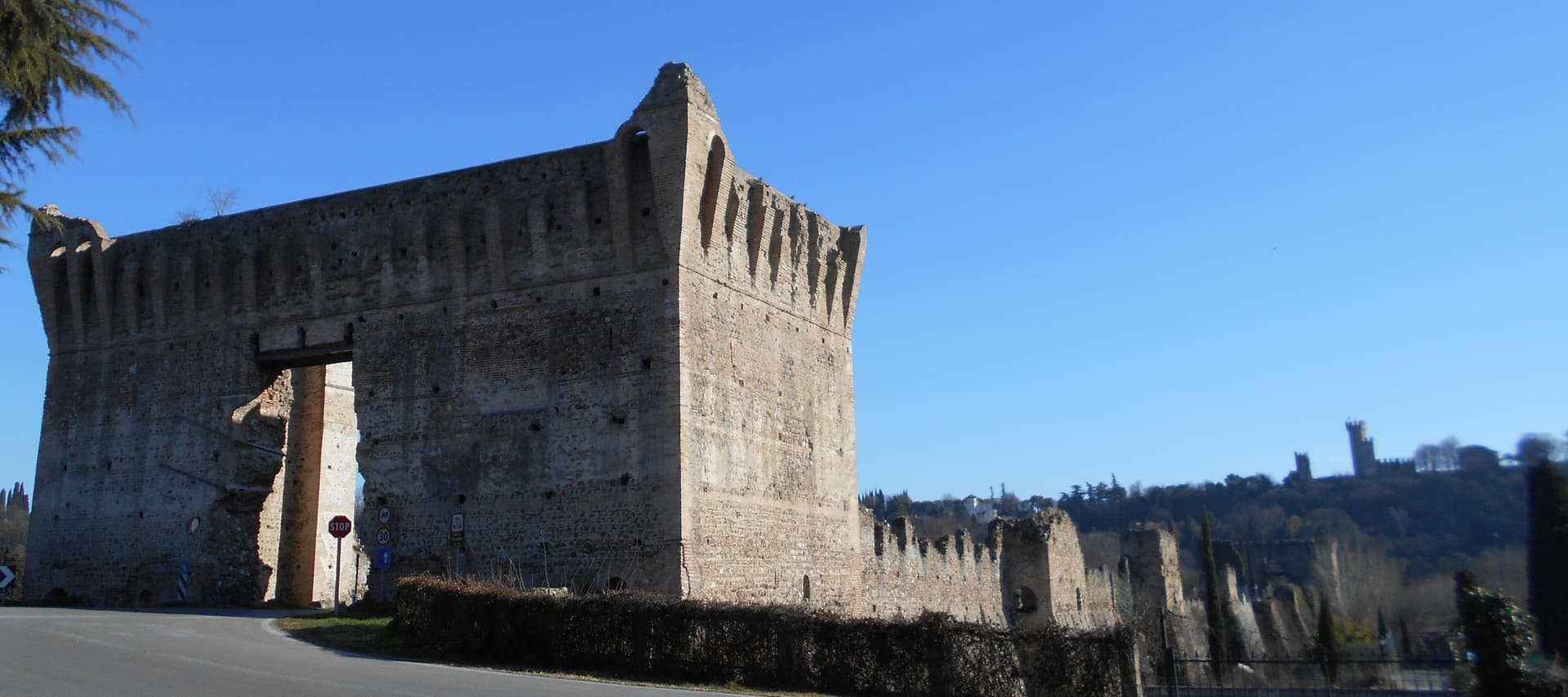
A moraine-hills town at 88 meters between Garda and Mantua, with a 1393 Visconti bridge-dam over the Mincio and a tortellino called the love knot.
🏛️ UNESCO
More UNESCO towns in Veneto
Cison di Valmarino
Province: Treviso
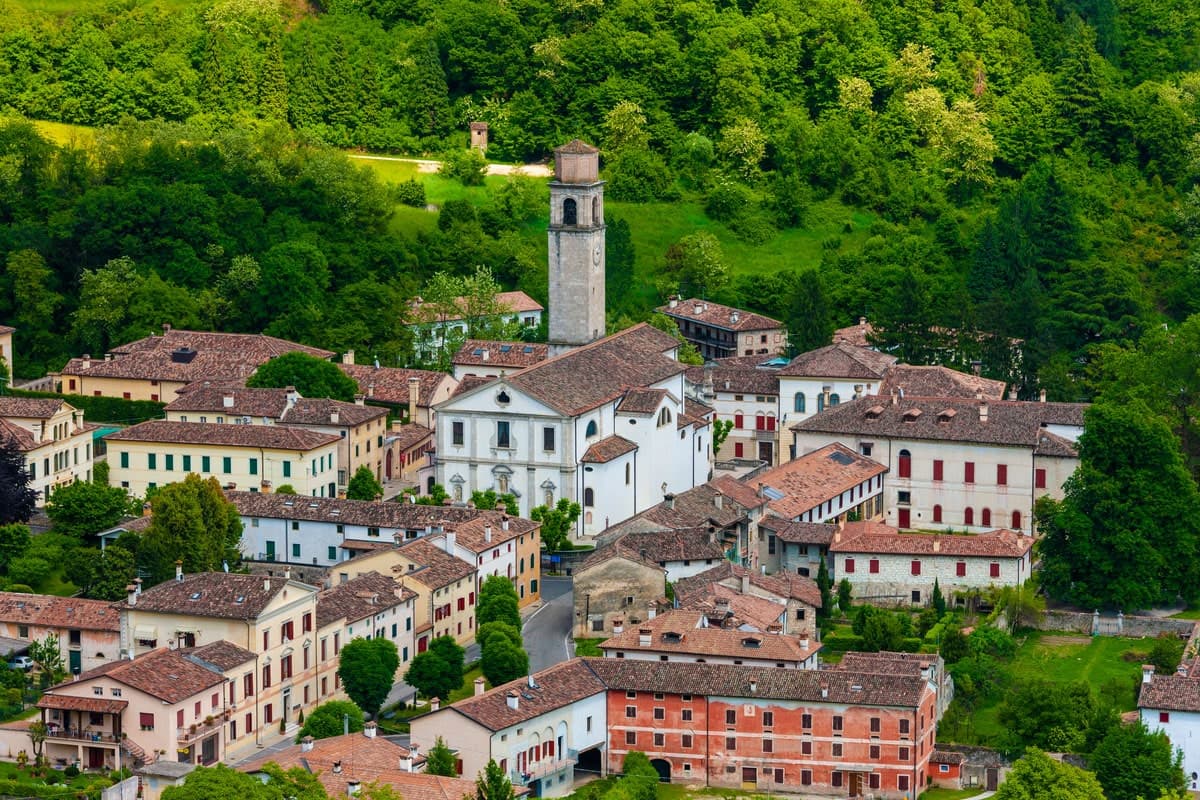
A Prosecco hills borgo at 261 meters under the dolomite rock of CastelBrando, the largest inhabited castle complex in Europe.
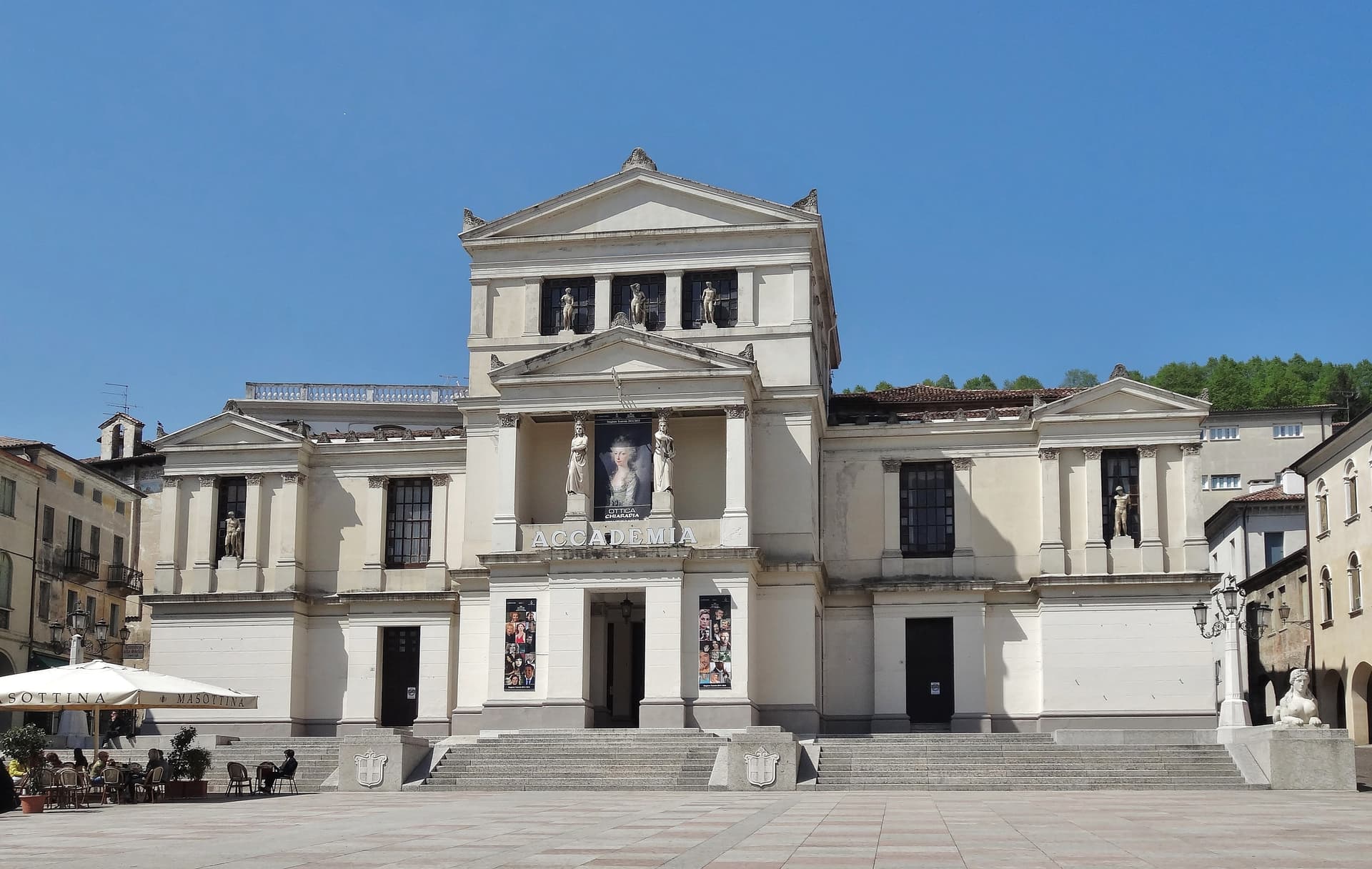
Conegliano
Province: Treviso
The Prosecco capital at 65 meters, birthplace of the painter Cima and home of Italy's first oenology school, opened in 1876.
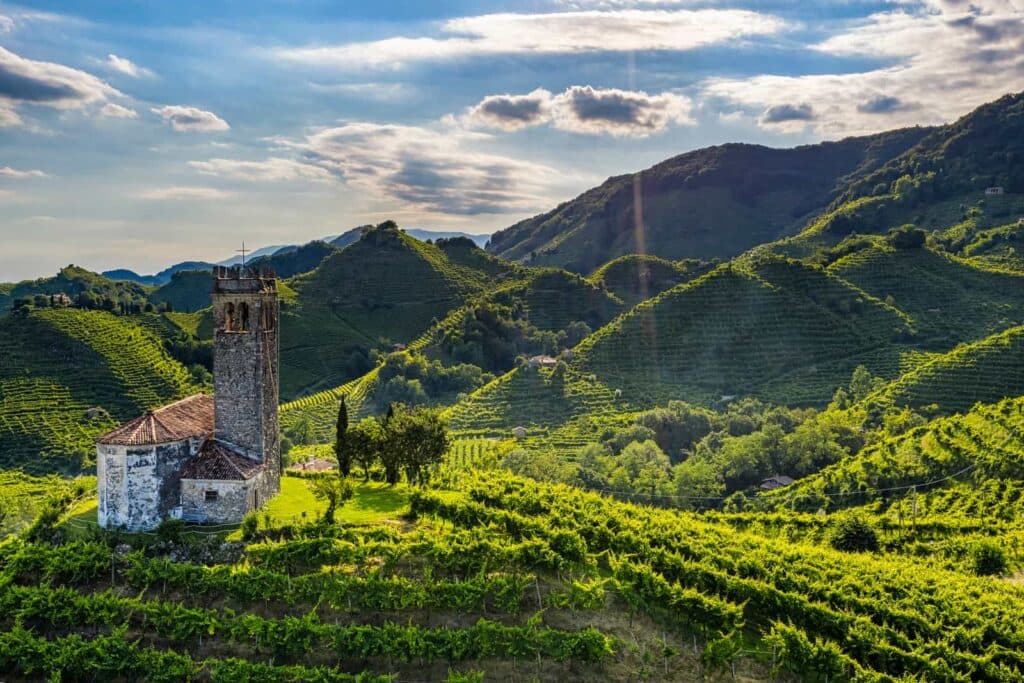
Farra di Soligo
Province: Treviso
The heart of the Prosecco Hills UNESCO landscape — an 8,477-resident comune in the Conegliano-Valdobbiadene DOCG zone (UNESCO World Heritage since 2019), with the three medieval Torri di Credazzo crowning a hilltop above its vineyards, Cittaslow + Città del Vino signals, and direct walking access to the most photographed stretch of the hogback ridge.
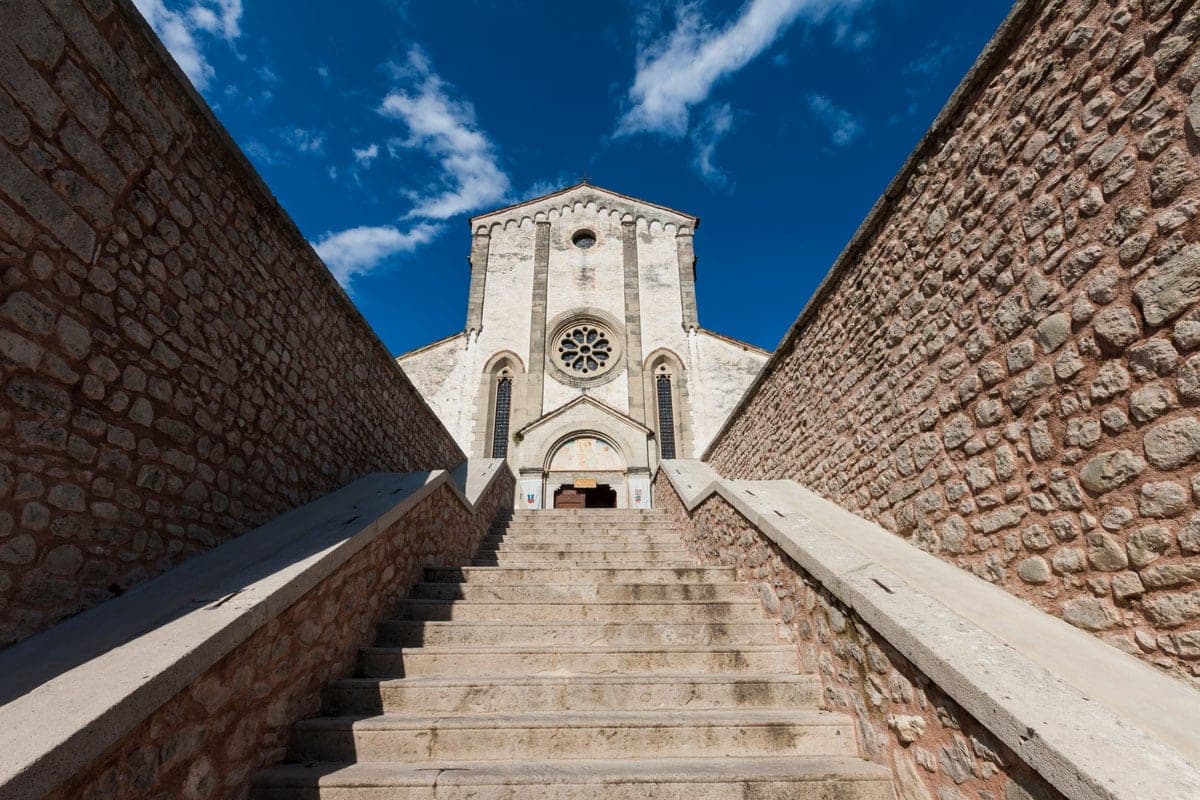
Follina
Province: Treviso
A Prosecco-hills borgo at 191 meters around the Cistercian Abbey of Santa Maria, with a cloister finished in 1268.
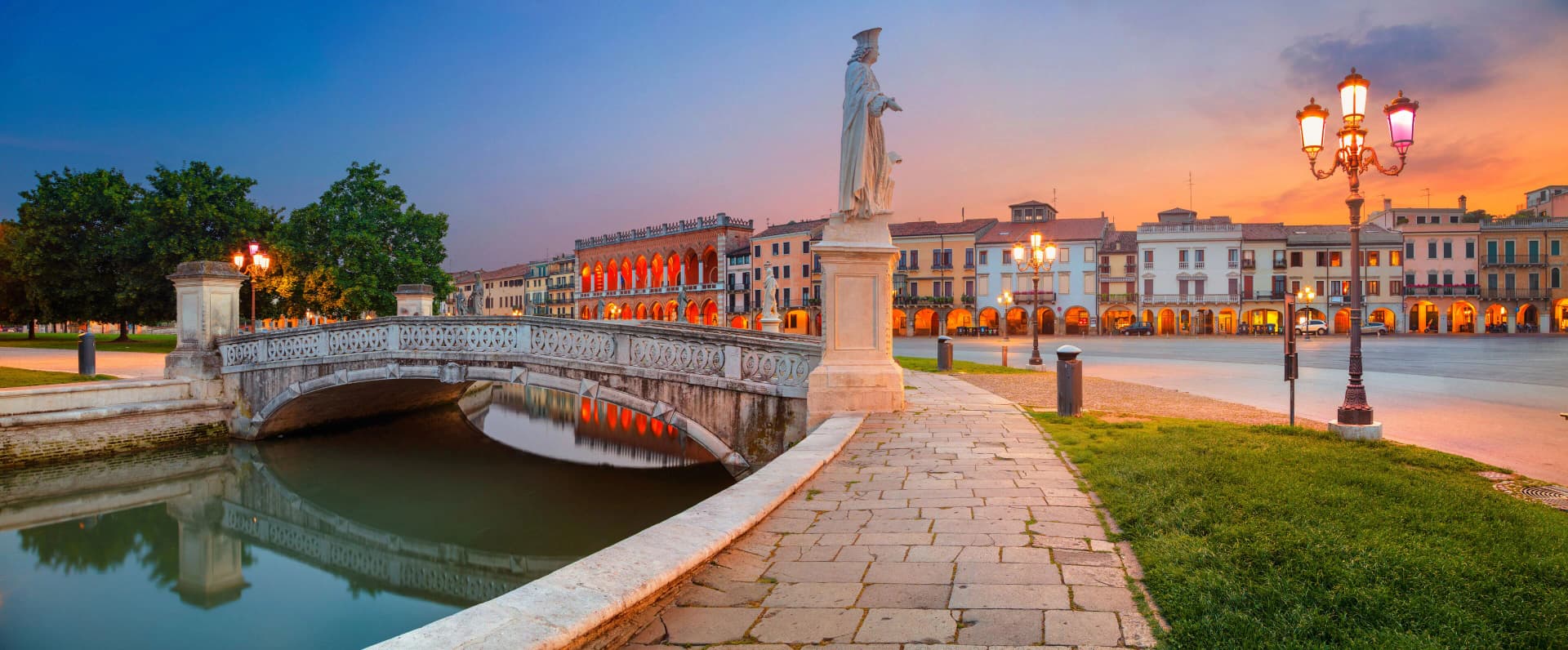
Padova
Province: Padova
The university town that gave Giotto a chapel and the world a science of plants — TWO UNESCO inscriptions inside one city (Padua's 14th-century fresco cycles + the 1545 Orto Botanico, the world's first), plus Prato della Valle, Italy's largest piazza, and Galileo's old lecture hall.