

Veneto · Verona
Valeggio sul Mincio
A moraine-hills town between Garda and Mantua, with a 1393 Visconti bridge-dam over the Mincio and a tortellino called the love knot.
Known for
PONTE VISCONTEO
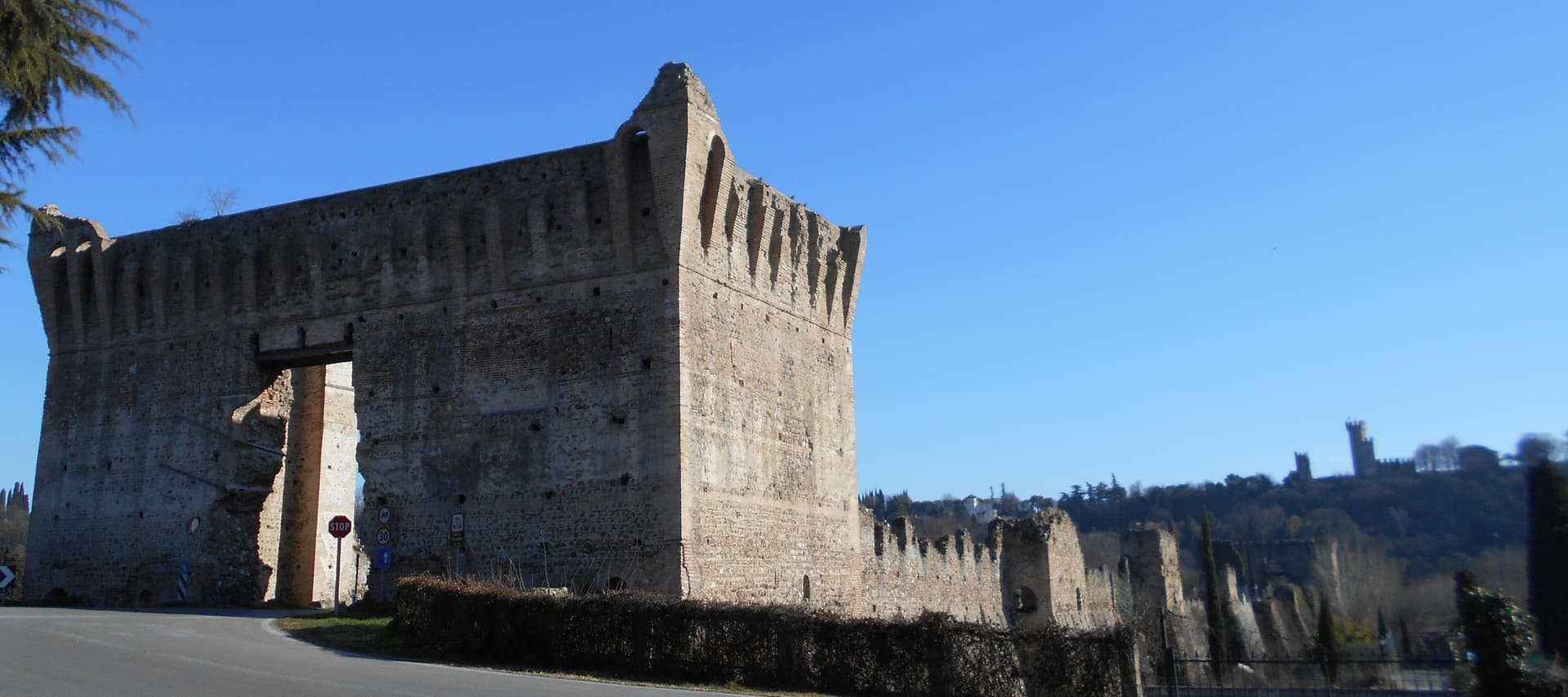
650-meter fortified bridge-dam built in 1393 by Gian Galeazzo Visconti, the working anchor of the medieval Serraglio.
NODO D'AMORE
Oversize meat tortellino called the love knot; on the third Tuesday of June, four thousand diners eat it together on the Visconti bridge.
PARCO SIGURTÀ
Sixty-hectare landscape garden two kilometers north of town, over half a million visitors a year and the Tulipanomania bloom every April.
When to visit
Best · Apr–Jun, Sep–Oct
- J
- F
- M
- A
- M
- J
- J
- A
- S
- O
- N
- D
- Best
- Hot or crowded
- Quiet
- Mostly closed
Why come
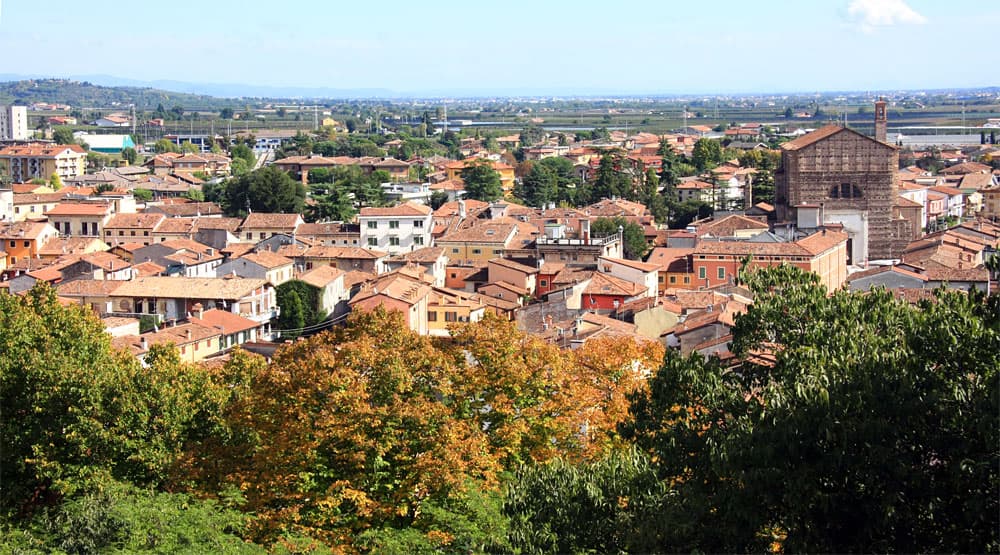
Valeggio sul Mincio sits on the morainic hills shaped by the Garda glaciers, twenty kilometers southwest of Verona and ten kilometers from the southern end of Lake Garda. The Mincio cuts north-south through the commune and was the Veneto-Lombardy military frontier for centuries. The frazione of Borghetto on the river is one of I Borghi più belli d'Italia, a single line of houses and water mills along the left bank under the Castello Scaligero.
The fortified Ponte Visconteo, built in 1393 by Gian Galeazzo Visconti of Milan as part of the sixteen-kilometer Serraglio defensive line, is 650 meters long and 25 meters wide and still spans the valley above the village. The local pasta is the Nodo d'Amore, an oversize hand-rolled tortellino with meat filling; the third Tuesday of June it is served to four thousand diners at a single table laid across the Visconti bridge. The Parco Giardino Sigurtà, a sixty-hectare landscape garden two kilometers north, draws over half a million visitors a year, peaking with the Tulipanomania bloom in April.
The Sunday letter
We haven’t written Valeggio sul Mincio’s letter yet.
One town every Sunday, with the photo, the food, the festa. Be there when this one comes up. Free, by Peter & Sophia from Pietrasanta.
By subscribing you agree to Substack’s Terms of Use, our Privacy Policy and our Information collection notice.
What to see
Borghetto sul Mincio
Riverside hamlet on the left bank of the Mincio, one of I Borghi più belli d'Italia, with surviving water mills and a single arcaded line of houses.
Ponte Visconteo
Fortified bridge-dam built in 1393 by Gian Galeazzo Visconti, 650 meters long and 25 wide, anchor of the Serraglio defensive line.
Castello Scaligero
Della Scala fortress on the hill above Borghetto, built in the thirteenth century as the southern hinge of the Verona defensive line.
Parco Giardino Sigurtà
Sixty-hectare landscape garden two kilometers north, drawing over half a million visitors a year and famous for the April Tulipanomania.
Santuario della Madonna del Frassino
Sixteenth-century sanctuary built after a 1510 apparition reported on an ash tree, with frescoes by Bertanza and Farinati.
The slow-trip planner
Building a trip? Find where Valeggio sul Mincio fits in a slow Italy circuit.
Answer five questions. We will shape a geographically coherent slow trip from the 1,000 Italian towns most travelers skip. Yours to save and share.
We recommend
Where to eat and stay
Not our picks, but places the guides put their name to — a Michelin star, a Gambero Rosso fork, a Slow Food snail, a Michelin Key for the hotels. Worth a table, a counter, or a night when you pass through.
Alla BorsaTrattoria
Alla Borsa holds two Gambero Rosso prawns.
Ristorante Antica Locanda MincioRistorante
Ristorante Antica Locanda Mincio carries a place on Italy's historic-locali register.
Living here
- Population 15,943
- Commuter belti
- Pharmacy in town
- High school within a 30-minute drive
- Nearest airport Verona, 26 min drive
- Regional capital Venezia, 1 h 38 min drive
Tags & datadesignations · numbers · sources
The numbers
- Elevation: 88 m
- Population: 15,943
- Surface area: 63.96 km²
These figures were compiled from public directories — ISTAT, OpenStreetMap, Wikidata — and from the official listings of the guides named on this page. Town details change; verify with official sources before you travel.
Featured on
Valeggio sul Mincio appears on this themed pick from our Collections:
Close by
More towns near Valeggio sul Mincio
Monzambano
Province: Mantova
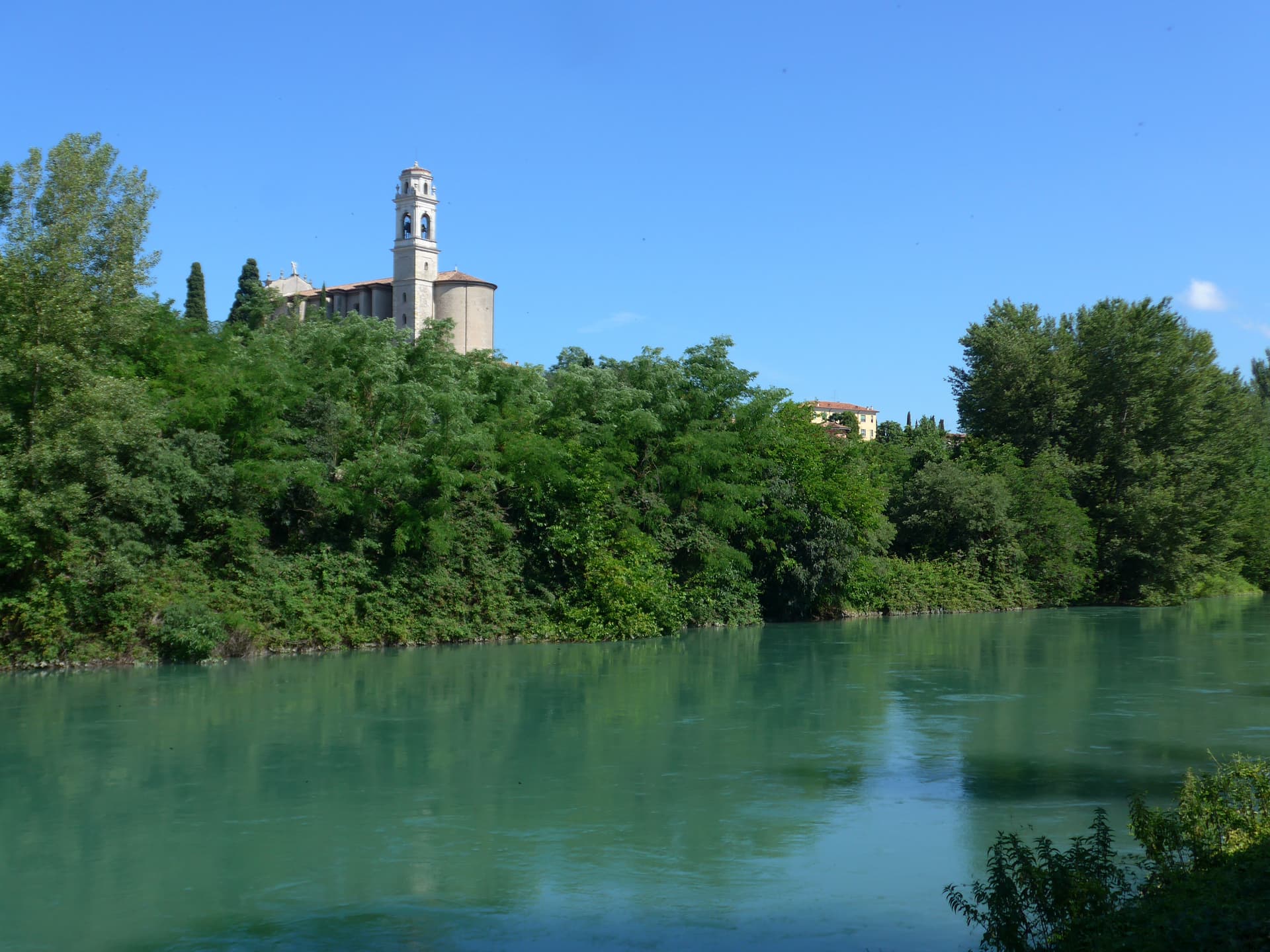
A Mincio commune at 88 meters in the moraine hills west of Mantova, whose frazione Castellaro Lagusello sits on a heart-shaped lake inside fortified walls.
Castellaro Lagusello
Province: Mantova
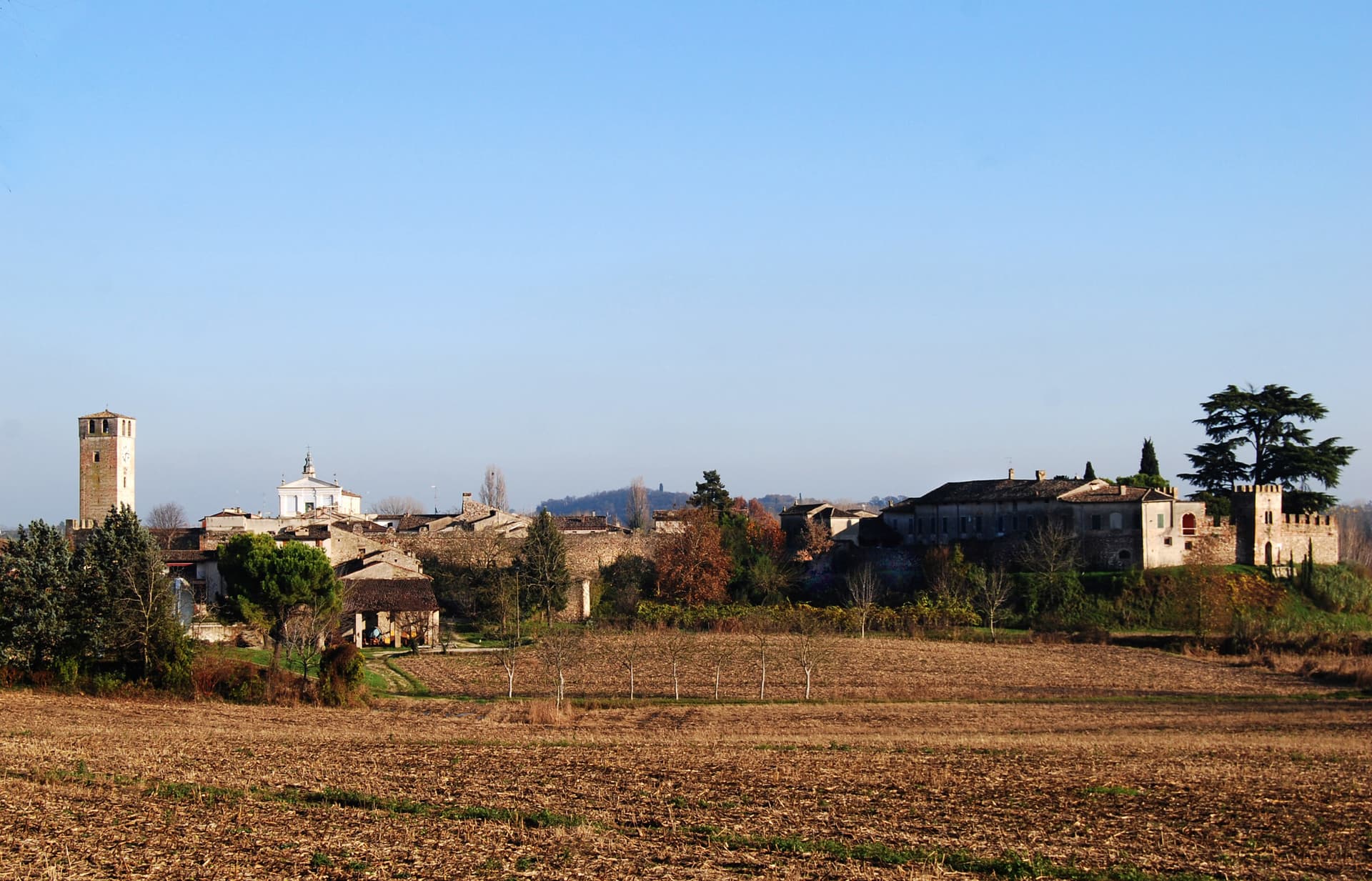
A walled medieval borgo south of Lake Garda, ringed by 13th-century stone walls and overlooking a small heart-shaped natural lake that gives the village its second name and most-photographed silhouette.
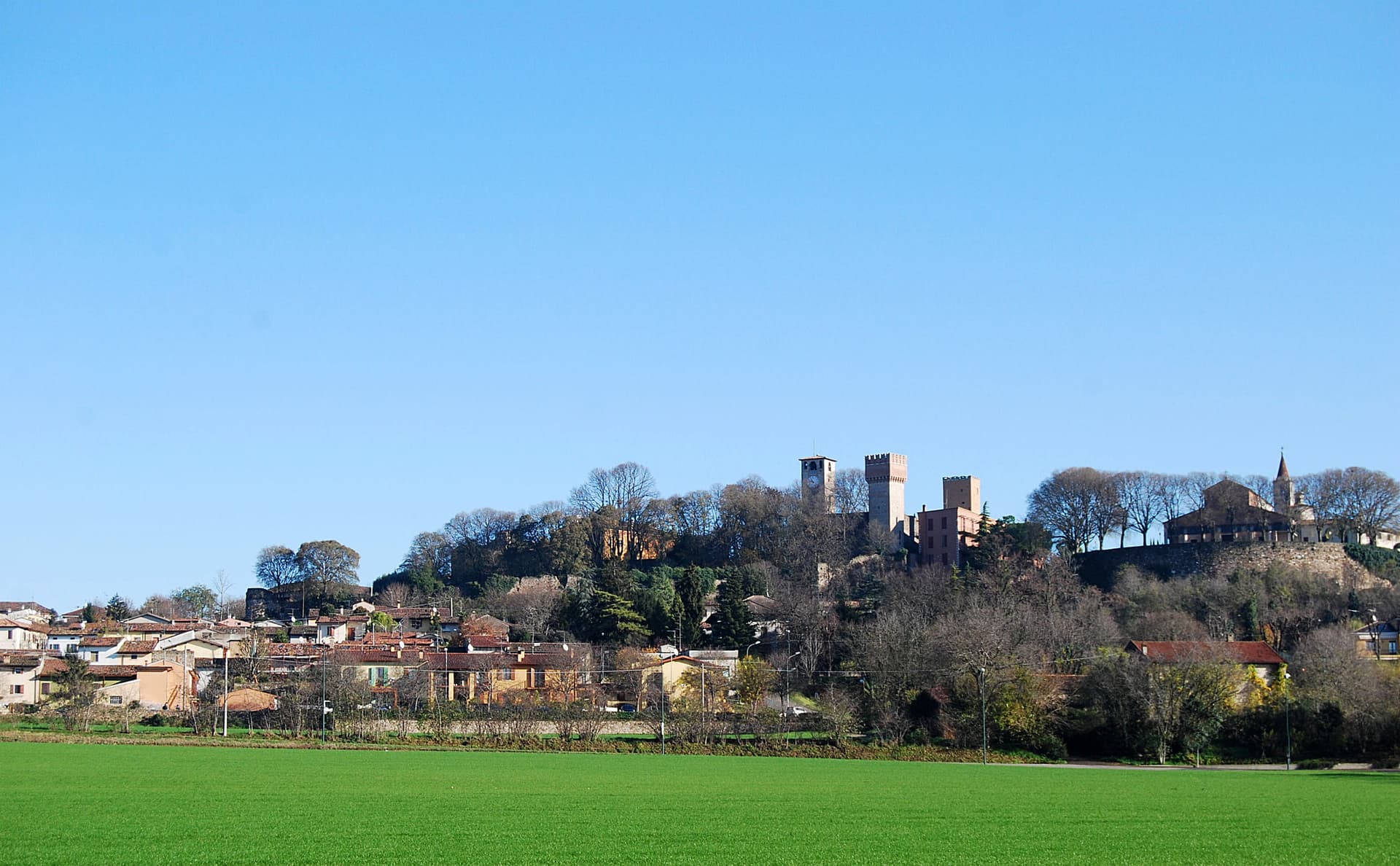
Volta Mantovana
Province: Mantova
A morainic hill town between Mantua and Lake Garda where Ludovico Gonzaga built a country palace inside the old medieval castle.
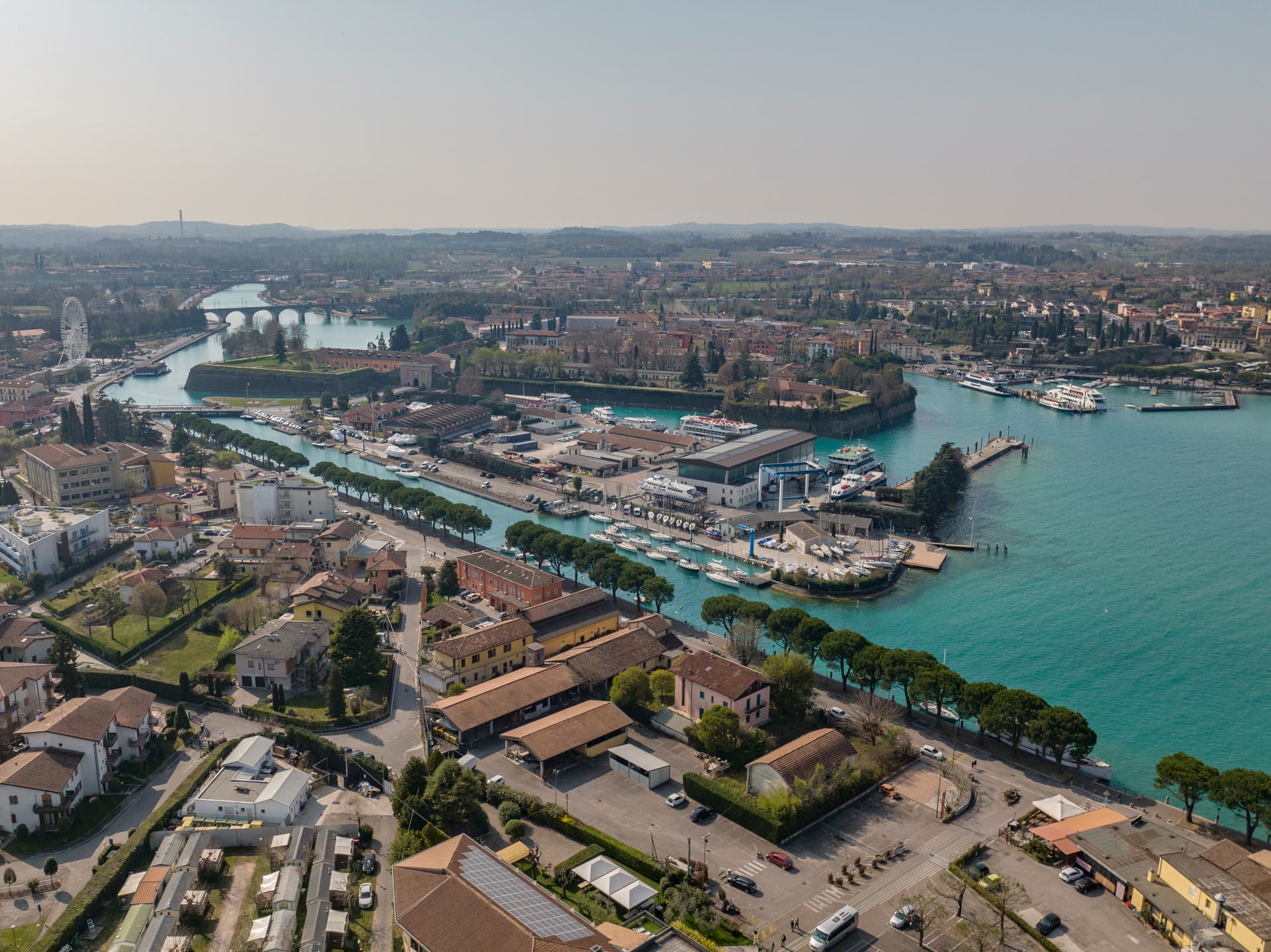
Peschiera del Garda
Province: Verona
The Venetian fortress town on a Mincio island at the southern outlet of Lake Garda, UNESCO-listed in 2017 for its Sanmicheli bastions.
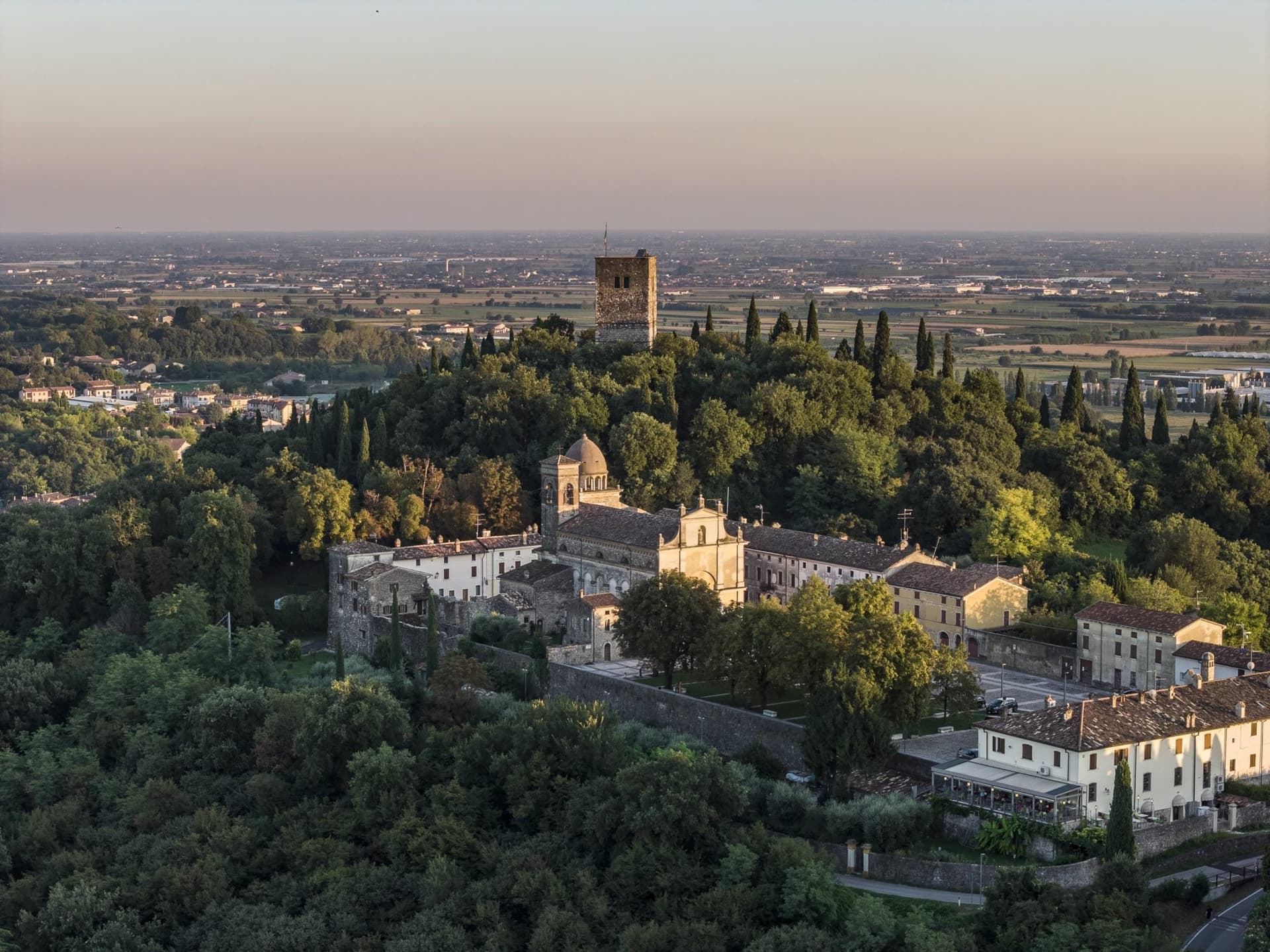
Solferino
Province: Mantova
The morainic hill where 300,000 soldiers met on 24 June 1859, the battle whose wounded gave Henry Dunant the idea of the Red Cross.
🎨 Borghi più belli d'Italia
More Borghi più belli d'Italia towns in Veneto
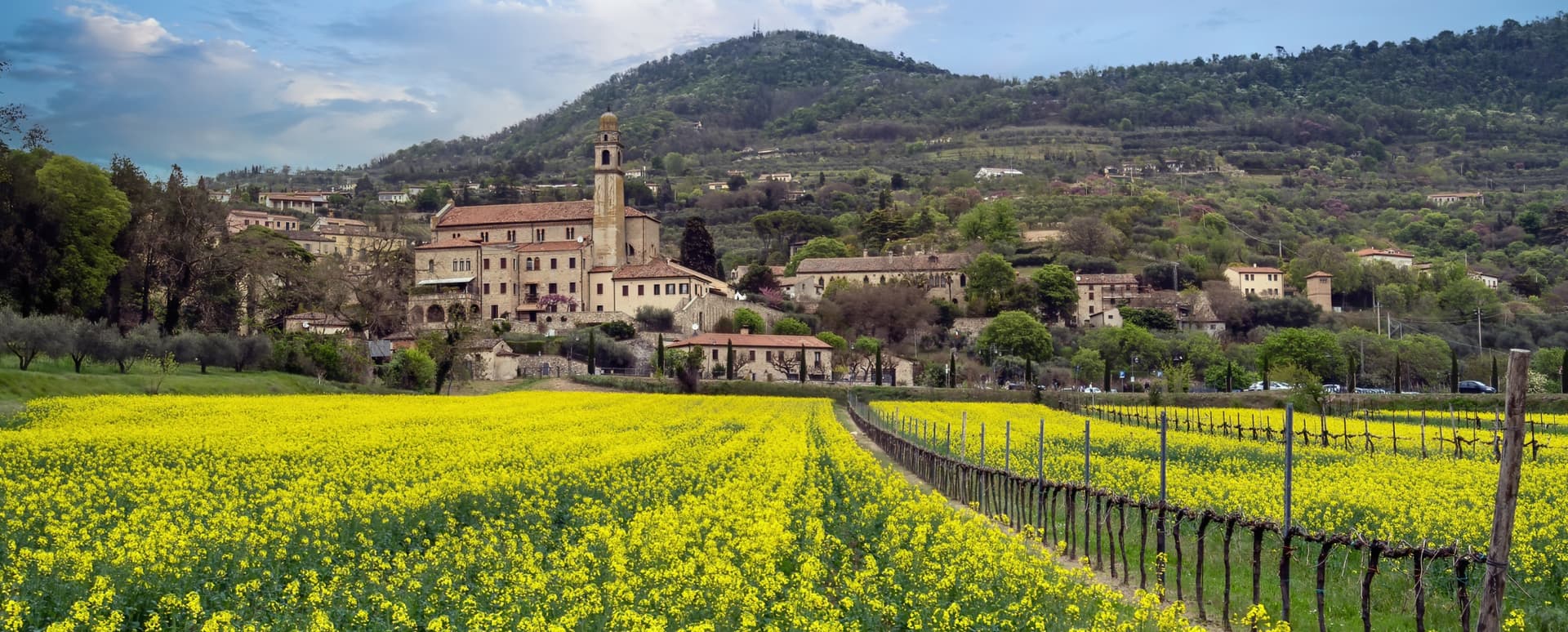
Arquà Petrarca
Province: Padova
The Euganean Hills village where Francesco Petrarca spent his last four years and died in 1374, renamed in his honor in 1868.
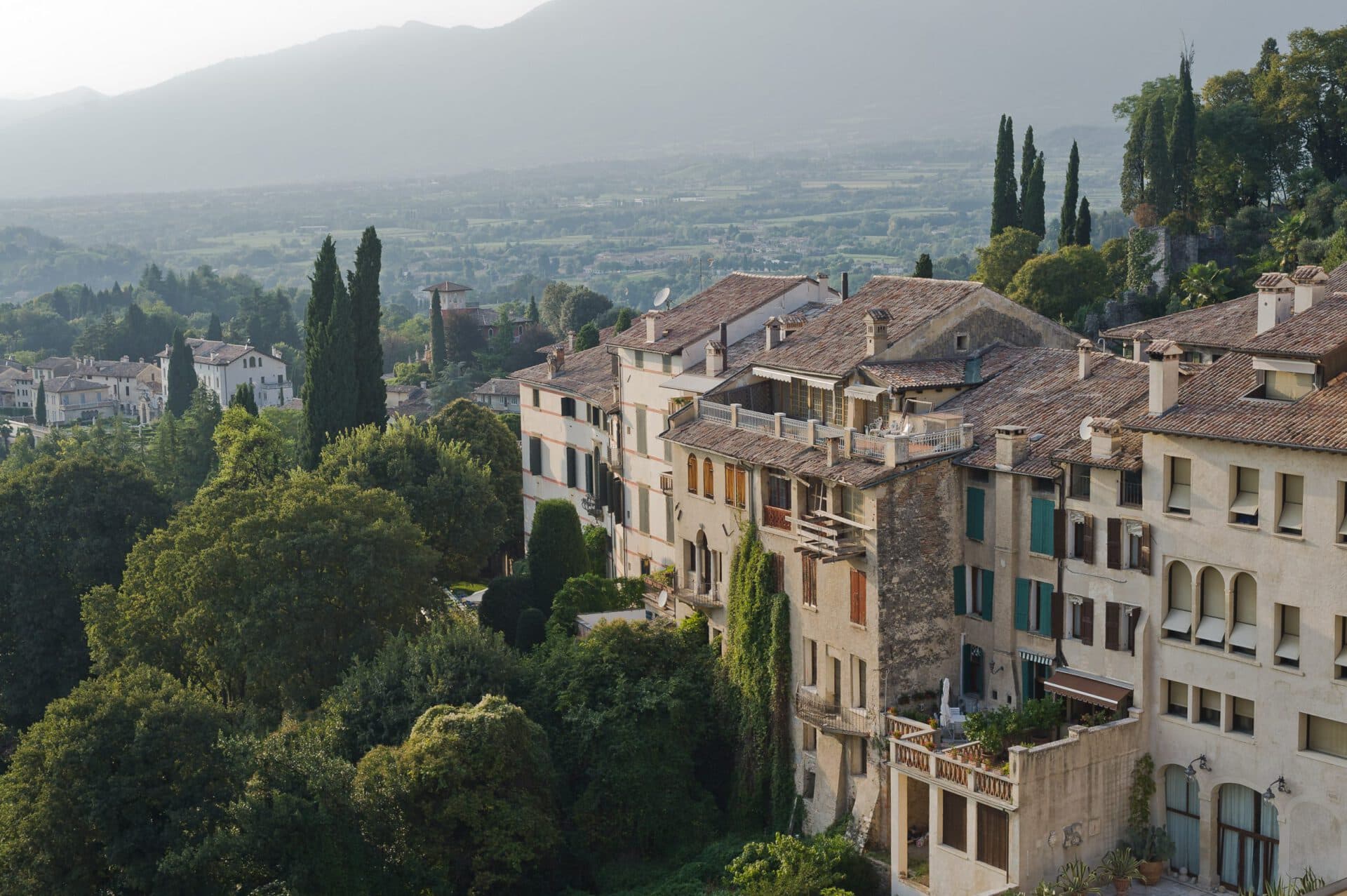
Asolo
Province: Treviso
A walled hill town at 205 meters that Caterina Cornaro ran as her court after trading Cyprus to Venice in 1489.
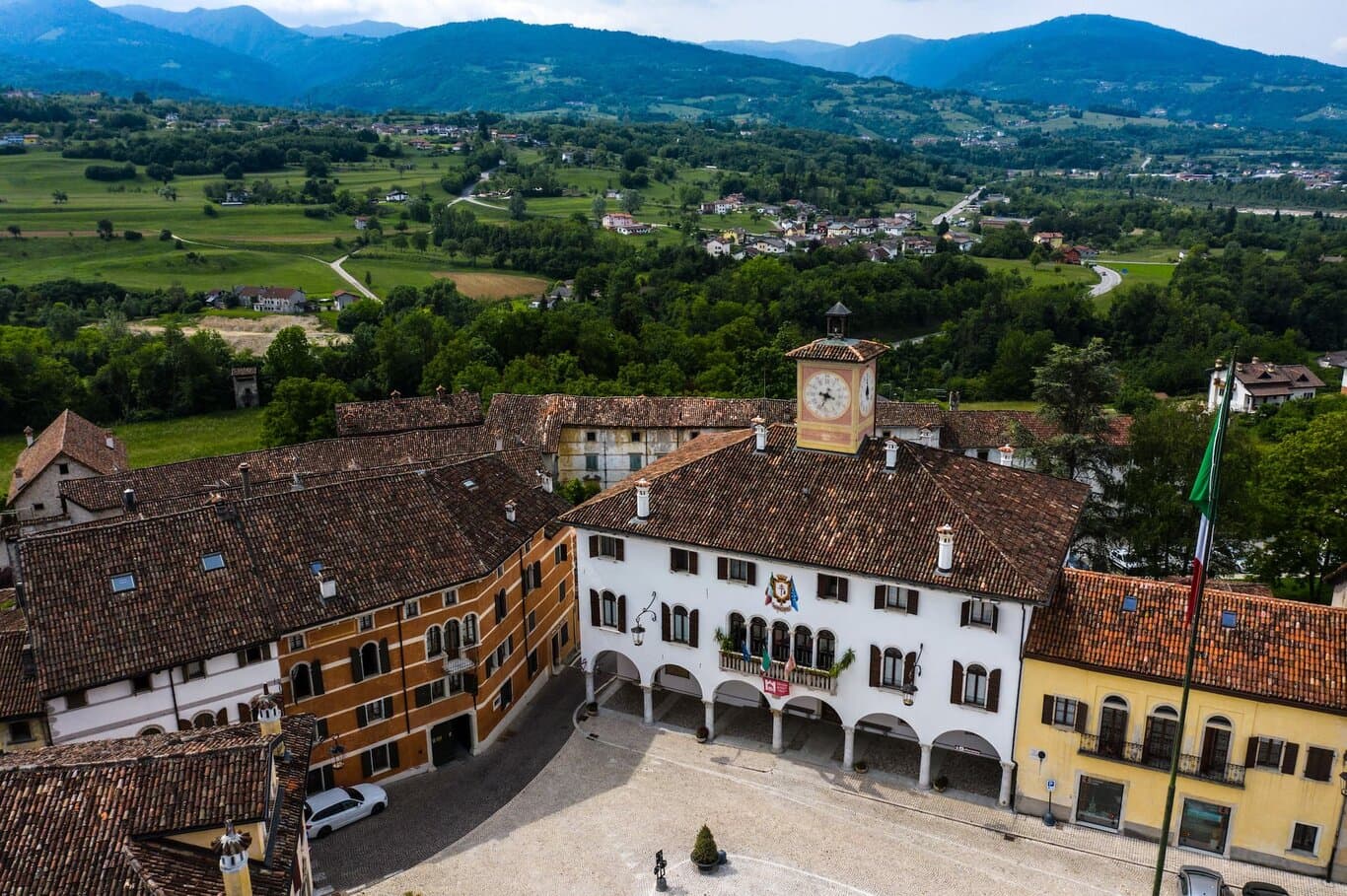
Borgo Valbelluna
Province: Belluno
Veneto's youngest comune anchored by an old Borgo — a 13,410-resident comune formed in 2019 by the fusion of Mel + Trichiana + Lentiai in the Belluno-province pre-Dolomite Piave valley, with the BPB-inscribed Mel centro storico (a perfectly preserved 16th-c Venetian terraferma piazza) and the 11th-c Castello di Zumelle on a forested ridge above.
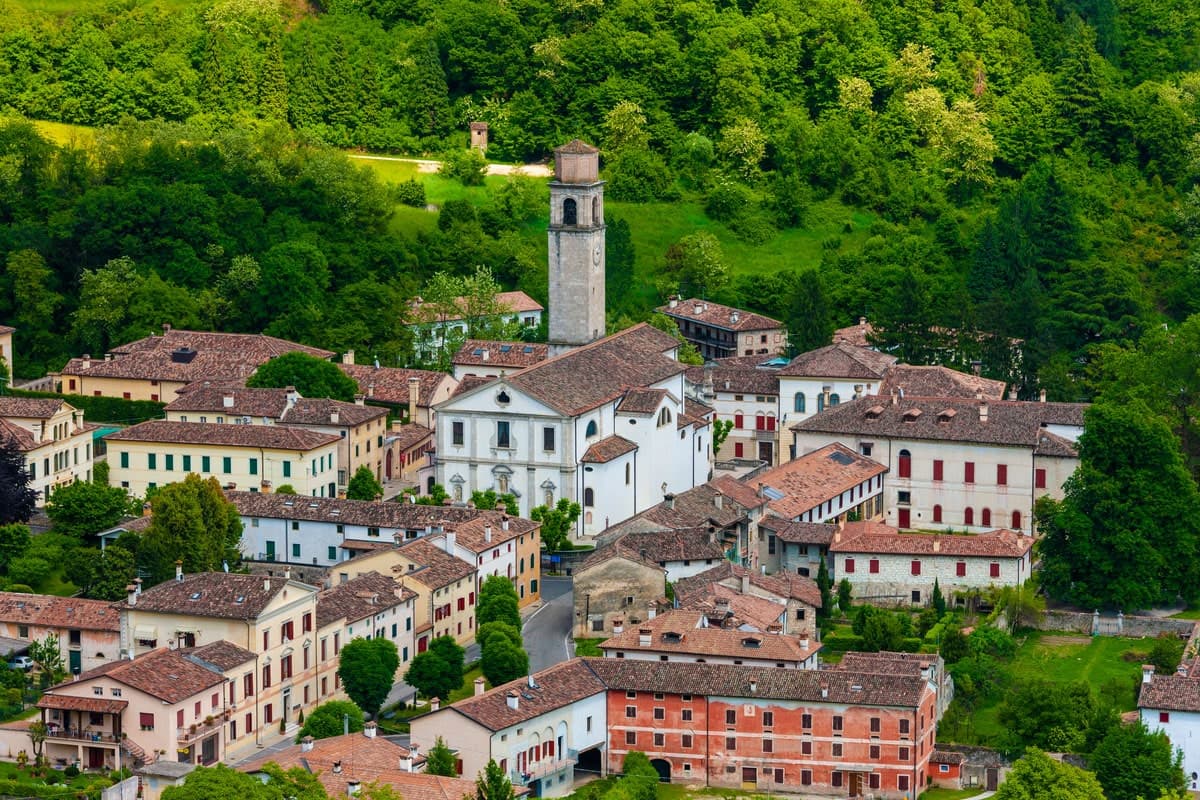
Cison di Valmarino
Province: Treviso
A Prosecco hills borgo at 261 meters under the dolomite rock of CastelBrando, the largest inhabited castle complex in Europe.
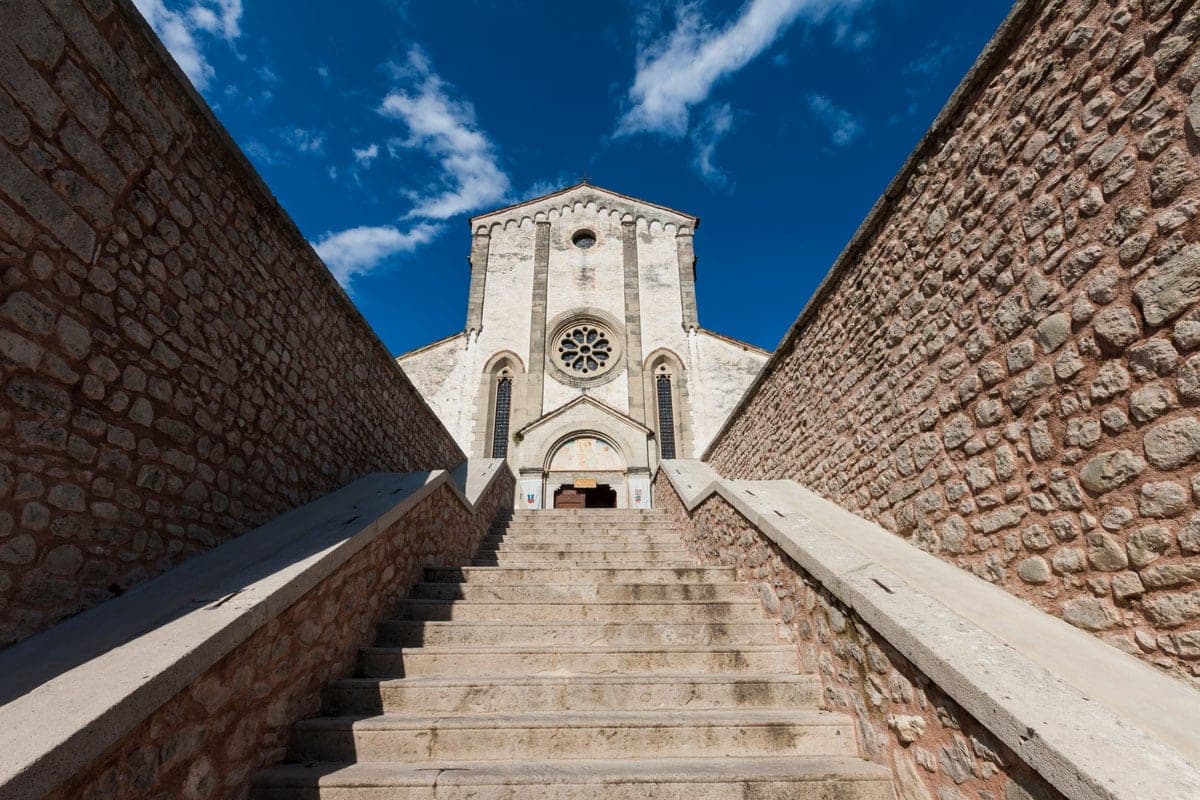
Follina
Province: Treviso
A Prosecco-hills borgo at 191 meters around the Cistercian Abbey of Santa Maria, with a cloister finished in 1268.