

Veneto · Padova
Arquà Petrarca
The Euganean Hills village where Francesco Petrarca spent his last four years and died in 1374, renamed in his honor in 1868.
Known for
PETRARCA
Francesco Petrarca lived his last four years here, died at his desk in 1374, and is buried in the churchyard below his house.
GIUGGIOLE
Jujube fruit grown on the village slopes; the Brodo di Giuggiole liqueur and the October Festa delle Giuggiole built around it.
MEDIEVAL LAYOUT
Two piazzas on different levels, the Casa above and the church and tomb below, intact since the fourteenth century.
When to visit
Best · Apr–Oct
- J
- F
- M
- A
- M
- J
- J
- A
- S
- O
- N
- D
- Best
- Hot or crowded
- Quiet
- Mostly closed
Why come
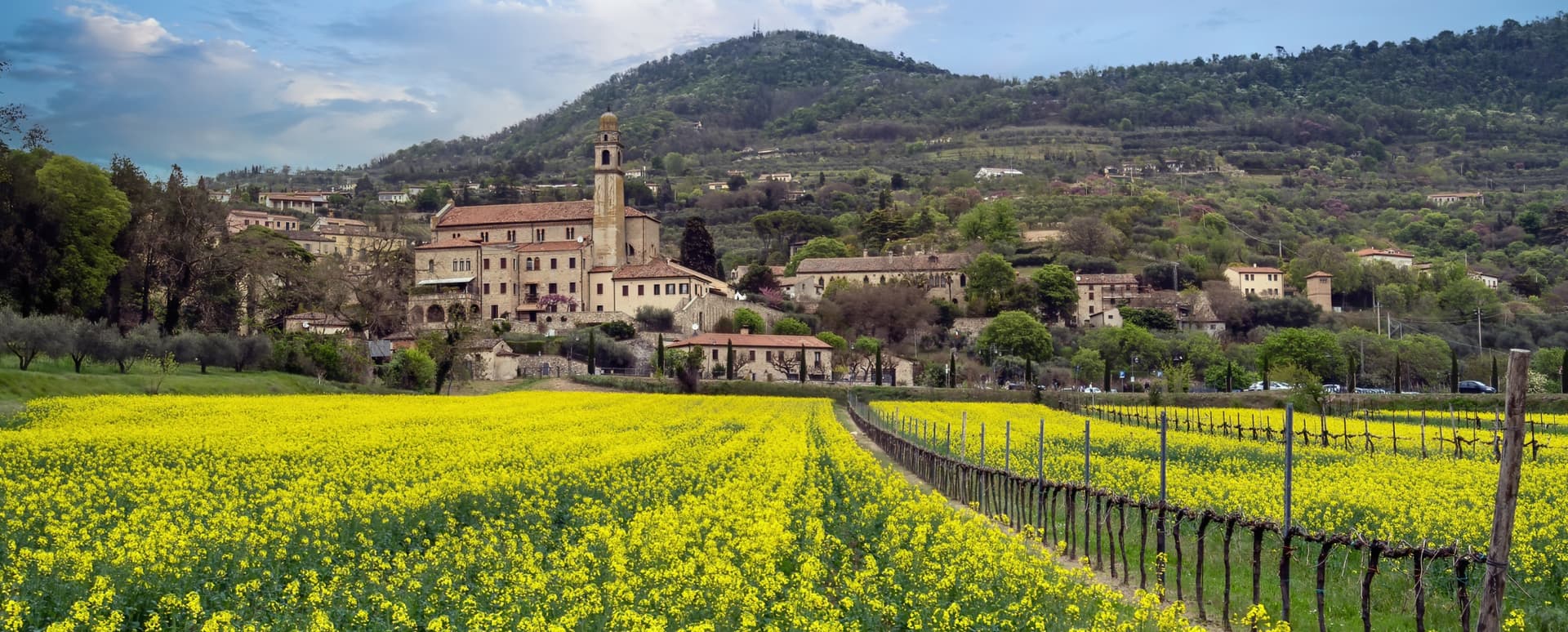
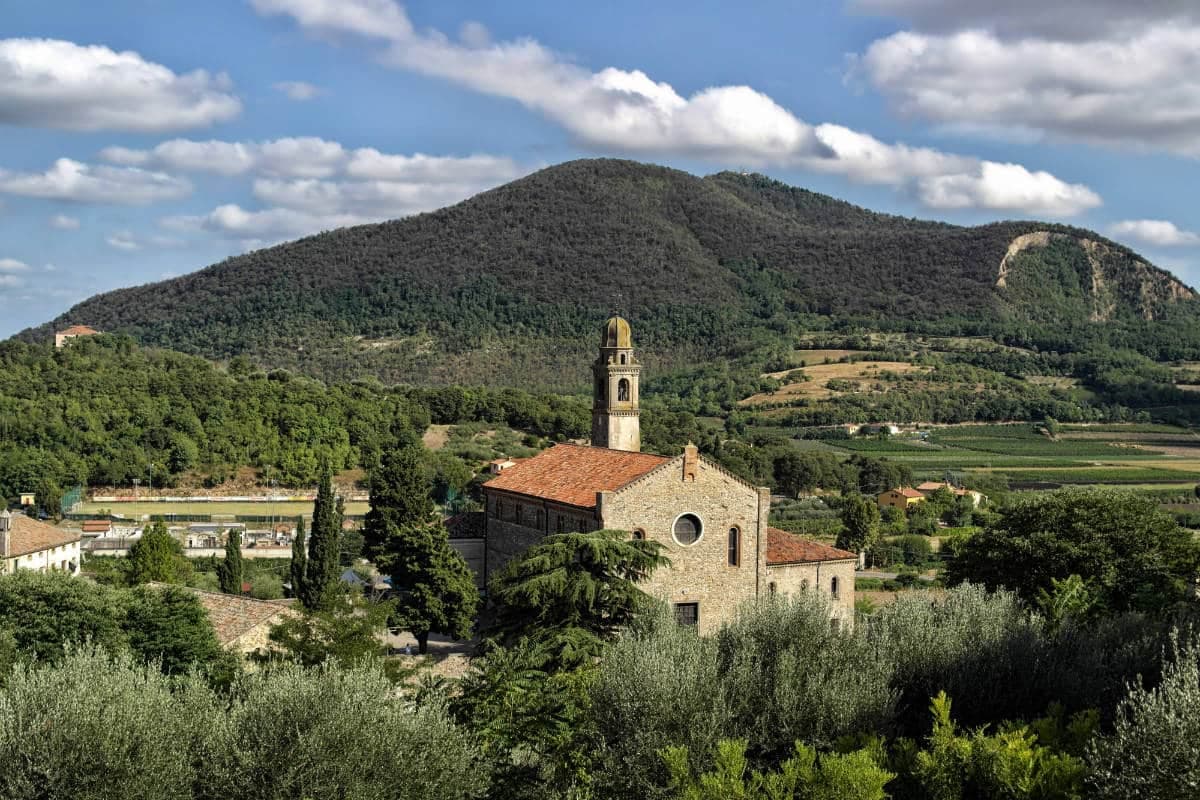
Arquà sits between Monte Ventolone and Monte Castello, in the Euganean Hills south of Padova. The name dates to medieval records; the suffix Petrarca was added in 1868, after the Veneto's annexation to the Kingdom of Italy, as a public homage to the poet who chose to die here. Francesco Petrarca arrived in 1370 and lived in a thirteenth-century house he renovated himself across two stories, the Casa del Petrarca, now a museum with frescoes from the fifteenth and sixteenth centuries.
He died at his desk on the night of 18-19 July 1374. His tomb, an ark in red Verona marble inspired by Roman sarcophagi, was placed in the churchyard of Santa Maria Assunta in 1380 and reset in 1965. The village kept its medieval layout: two piazzas linked by a stepped path, the Casa above and the church and tomb below. The hills around it grow Colli Euganei DOC wine, olives, and the giuggiole that go into the local liqueur Brodo di Giuggiole.
The Sunday letter
We haven’t written Arquà Petrarca’s letter yet.
One town every Sunday, with the photo, the food, the festa. Be there when this one comes up. Free, by Peter & Sophia from Pietrasanta.
By subscribing you agree to Substack’s Terms of Use, our Privacy Policy and our Information collection notice.
What to see
Casa di Francesco Petrarca
The poet's thirteenth-century house, renovated by him on two floors and now a museum with frescoes added by later owners in the fifteenth and sixteenth centuries.
Tomba di Petrarca
Sarcophagus in red Verona marble in the churchyard of Santa Maria Assunta, placed in 1380, six years after the poet's death.
Chiesa di Santa Maria Assunta
Parish church first documented in 1026, enlarged through the centuries, with frescoes of the Venetian-Byzantine school up to the fifteenth century.
Piazza Roma e Piazza San Marco
The two squares of the medieval borgo, the upper one near the Casa, the lower around the church and tomb, linked by stone steps.
Colli Euganei
Volcanic hills around the village, a regional park with walking trails between Monte Castello, Monte Piccolo and Monte Ventolone.
The slow-trip planner
Building a trip? Find where Arquà Petrarca fits in a slow Italy circuit.
Answer five questions. We will shape a geographically coherent slow trip from the 1,000 Italian towns most travelers skip. Yours to save and share.
Living here
- Population 1,810
- Commuter belti
- Pharmacy in town
- High school within a 30-minute drive
- Train station in the comune
- Nearest airport Venice, 1 h 4 min drive
- Regional capital Venezia, 50 min drive
This is a thermal town — terme operate here.
Tags & datadesignations · numbers · sources
Recognised as
The numbers
- Elevation: 56 m
- Population: 1,810
- Surface area: 12.52 km²
These figures were compiled from public directories — ISTAT, OpenStreetMap, Wikidata — and from the official listings of the guides named on this page. Town details change; verify with official sources before you travel.
Featured on
Arquà Petrarca appears on 2 themed picks from our Collections:
Close by
More towns near Arquà Petrarca
Battaglia Terme
Province: Padova
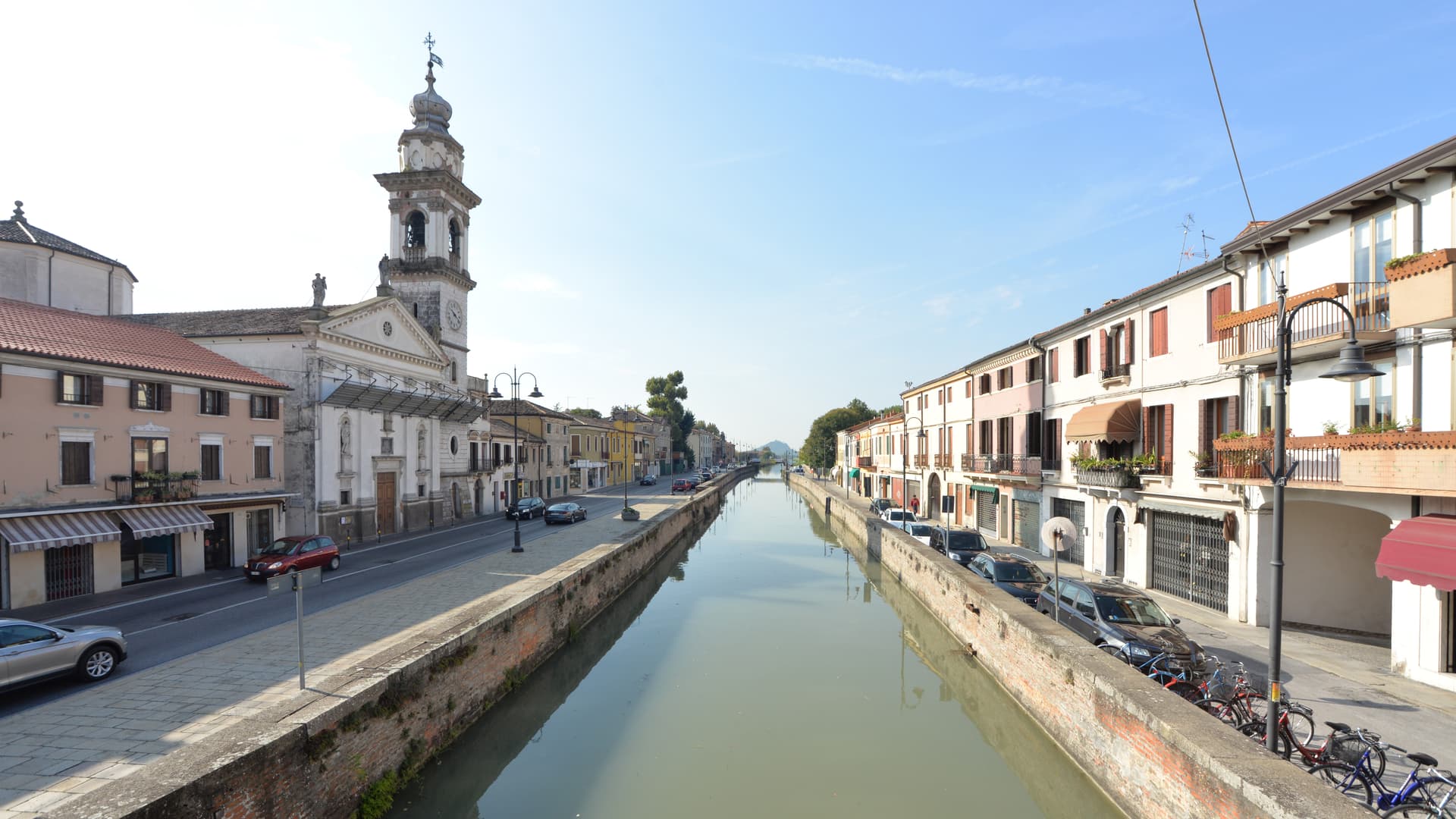
A barge village at the foot of the Euganean Hills, built around the 1201 canal and Italy's only river navigation museum.
Abano Terme
Province: Padova
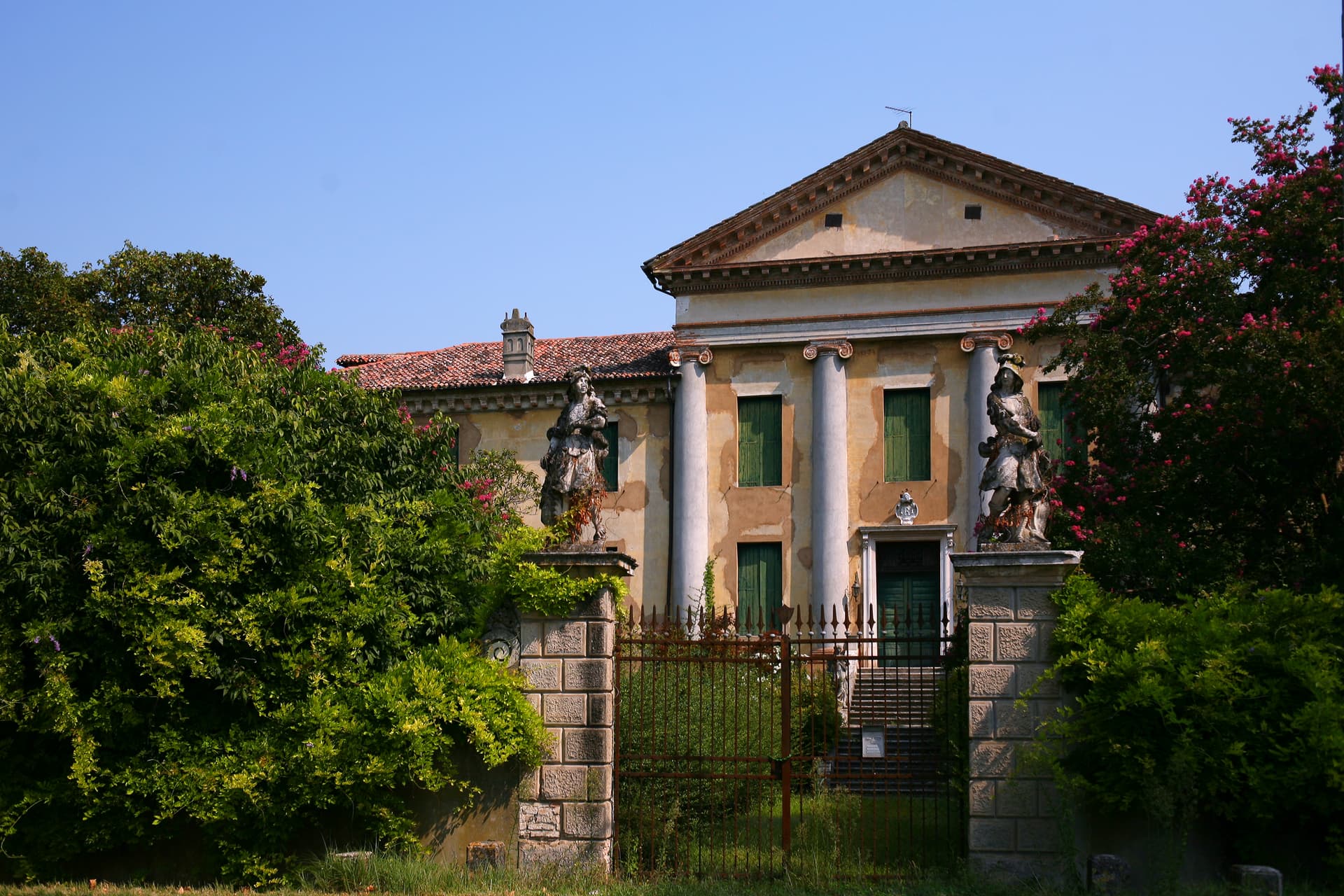
Europe's oldest thermal town on the Euganean Hills' eastern slope, where 80°C bromo-iodine springs have been drawing bathers since the eighth century BC.
Padova
Province: Padova
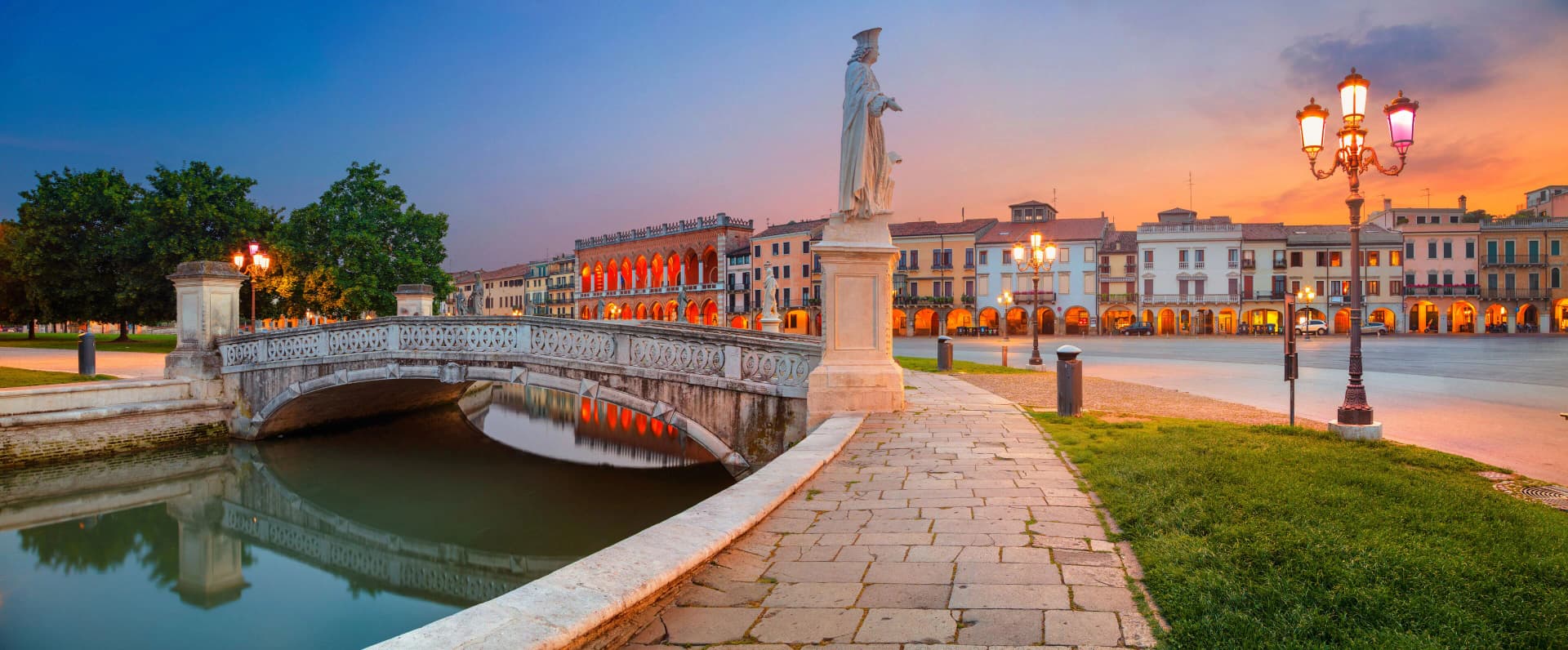
The university town that gave Giotto a chapel and the world a science of plants — TWO UNESCO inscriptions inside one city (Padua's 14th-century fresco cycles + the 1545 Orto Botanico, the world's first), plus Prato della Valle, Italy's largest piazza, and Galileo's old lecture hall.
Montagnana
Province: Padova
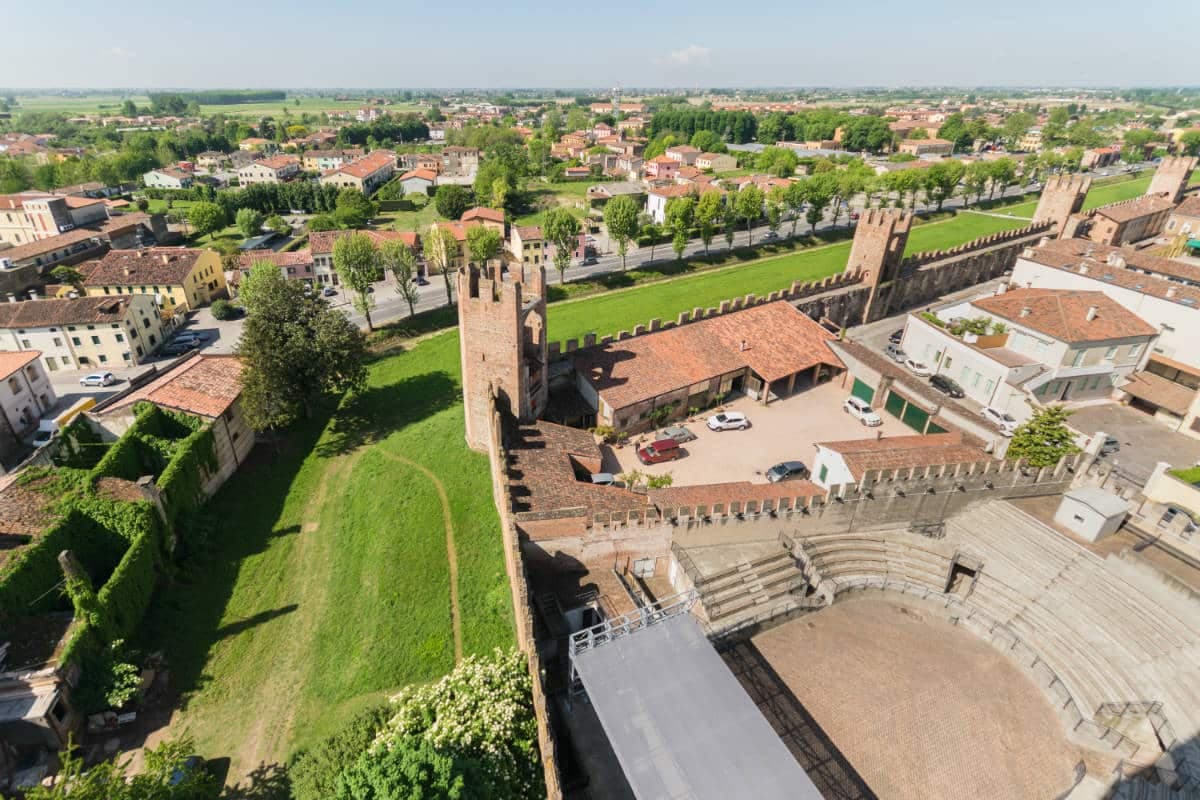
A walled town on the lower Padova plain with two kilometers of medieval ramparts and 24 hexagonal towers, headquarters of Prosciutto Veneto DOP.
Vicenza
Province: Vicenza
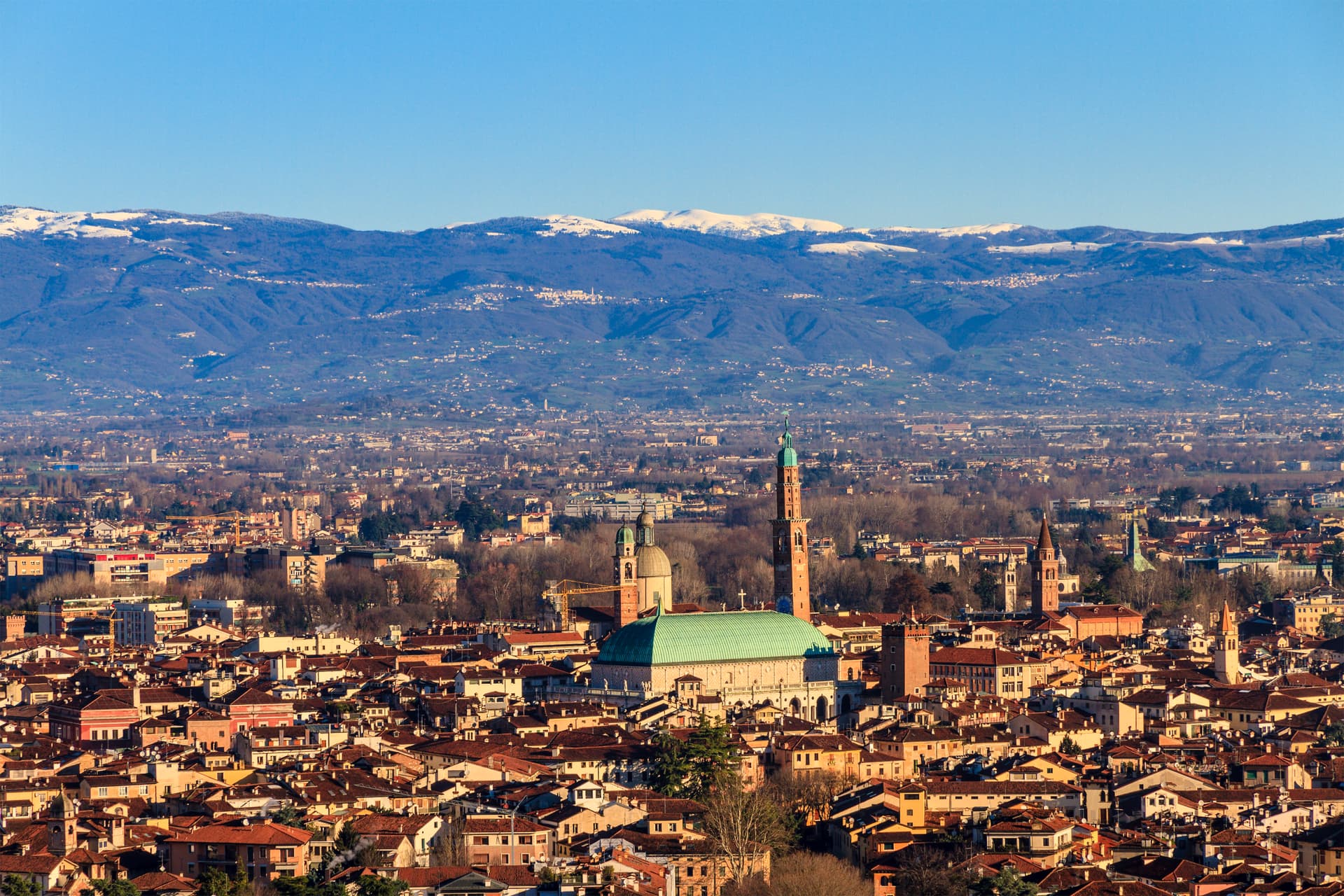
Andrea Palladio's home city — a UNESCO-inscribed open-air museum of the architect who reshaped Western architecture, with 23 Palladian buildings inside the centro and the Villa Rotonda + Teatro Olimpico just outside it.
🎨 Borghi più belli d'Italia
More Borghi più belli d'Italia towns in Veneto
Asolo
Province: Treviso
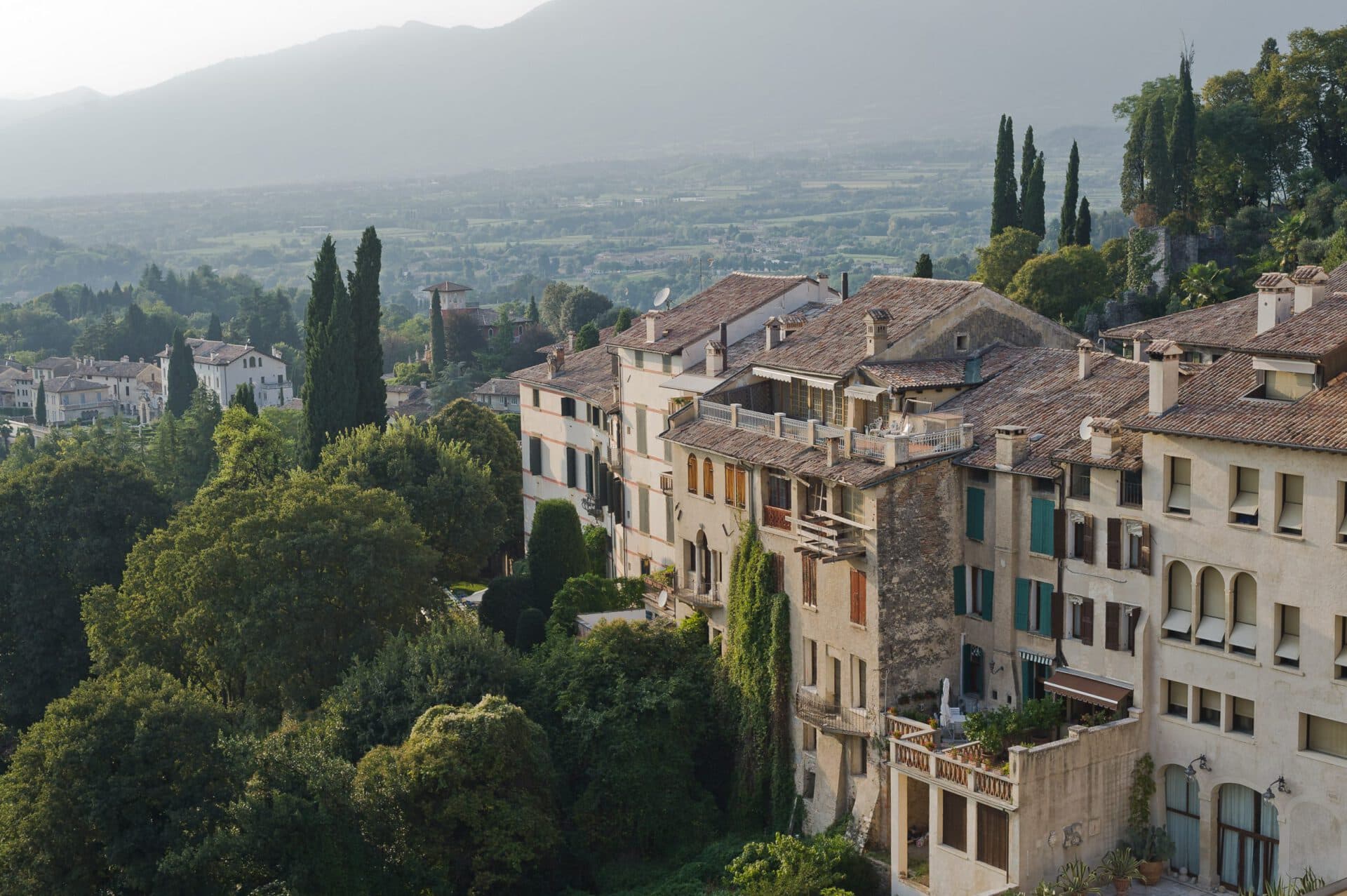
A walled hill town at 205 meters that Caterina Cornaro ran as her court after trading Cyprus to Venice in 1489.
Borgo Valbelluna
Province: Belluno
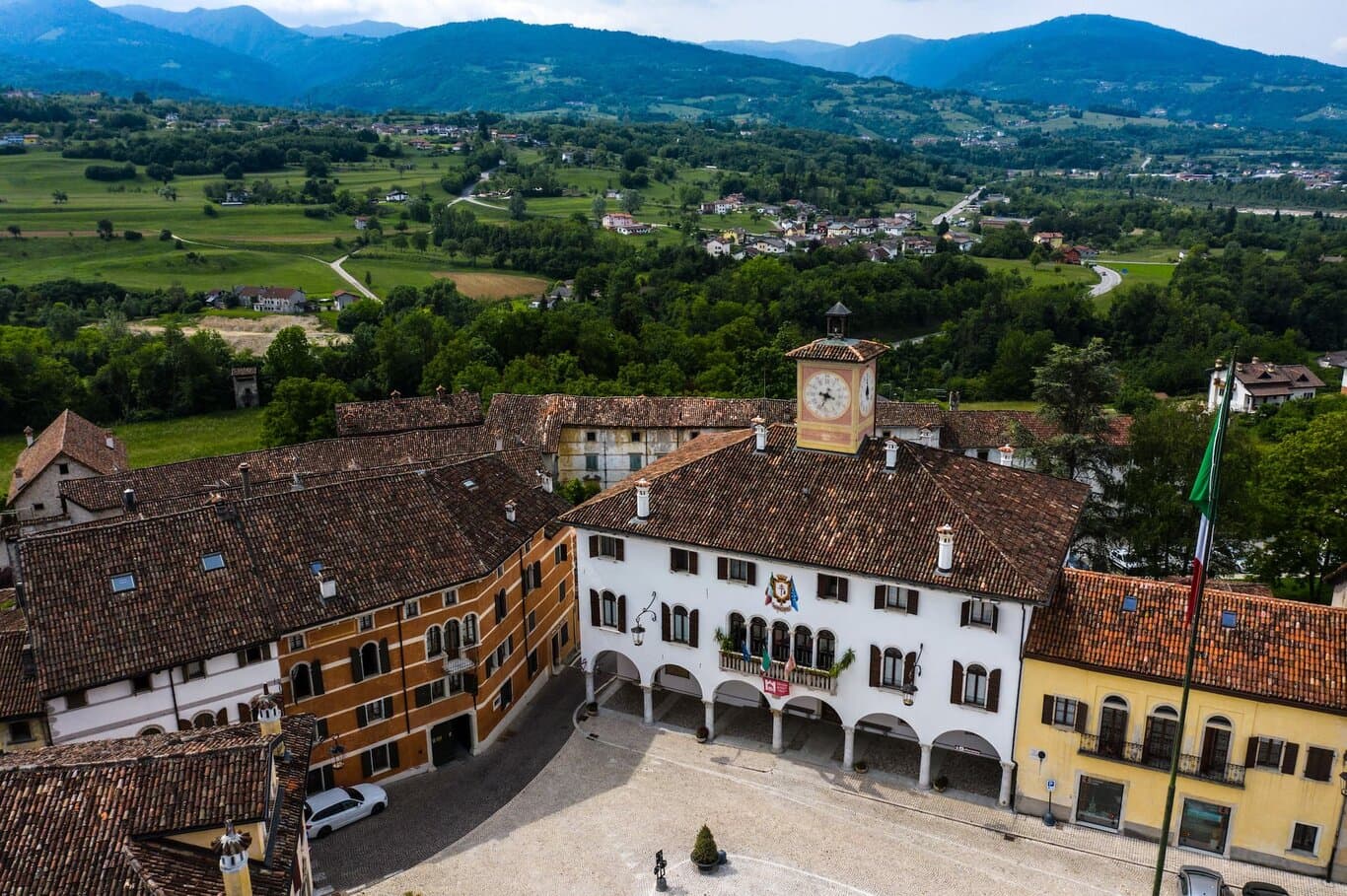
Veneto's youngest comune anchored by an old Borgo — a 13,410-resident comune formed in 2019 by the fusion of Mel + Trichiana + Lentiai in the Belluno-province pre-Dolomite Piave valley, with the BPB-inscribed Mel centro storico (a perfectly preserved 16th-c Venetian terraferma piazza) and the 11th-c Castello di Zumelle on a forested ridge above.
Cison di Valmarino
Province: Treviso
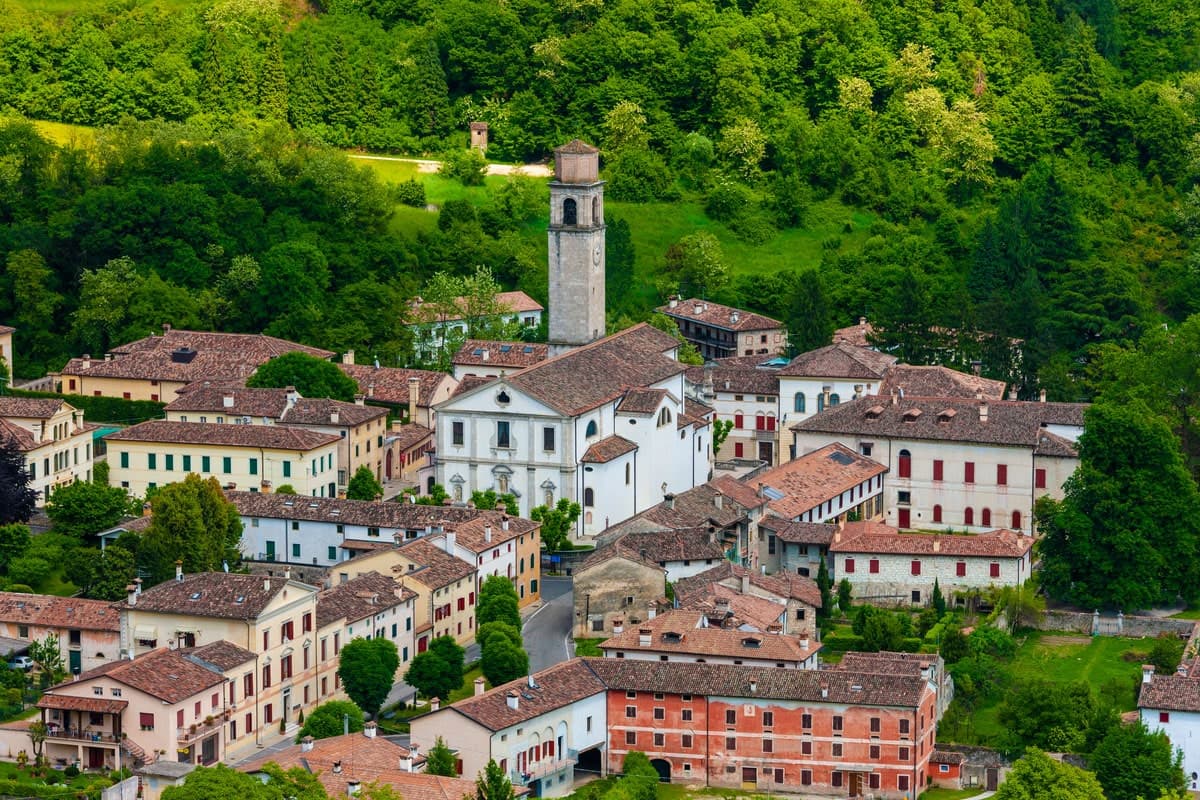
A Prosecco hills borgo at 261 meters under the dolomite rock of CastelBrando, the largest inhabited castle complex in Europe.
Follina
Province: Treviso
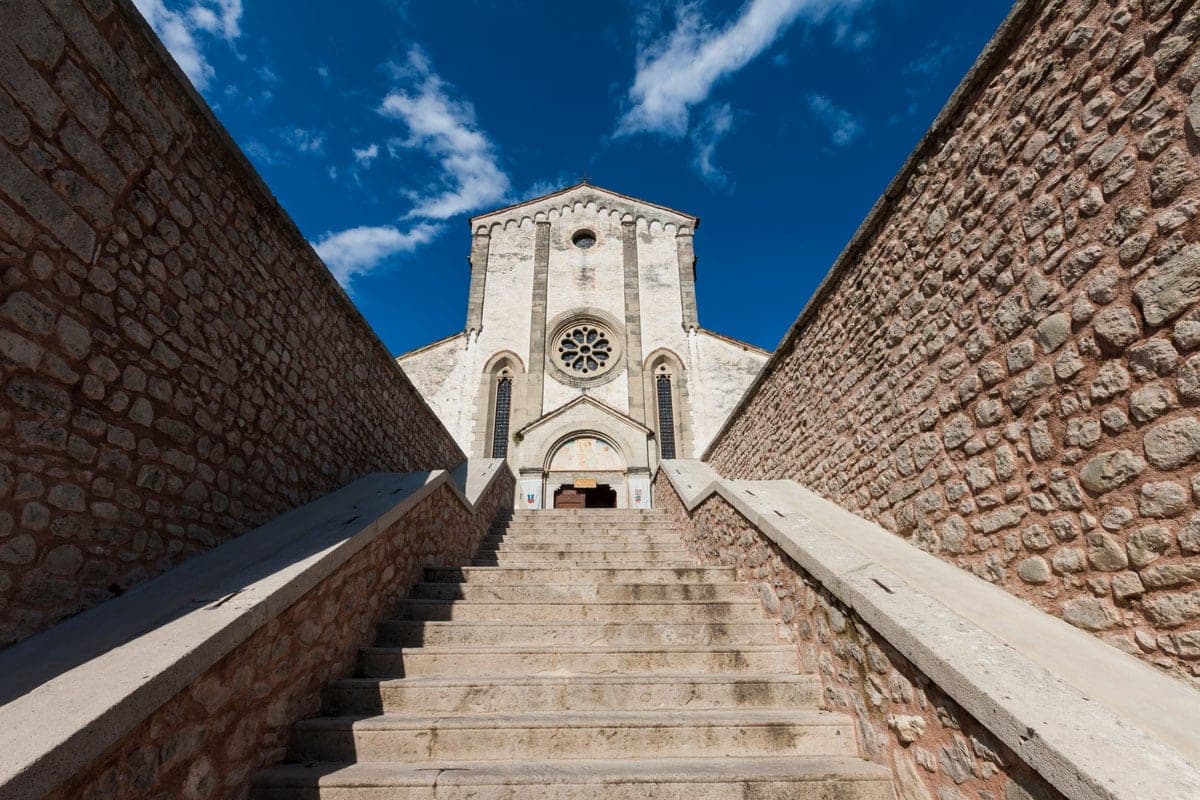
A Prosecco-hills borgo at 191 meters around the Cistercian Abbey of Santa Maria, with a cloister finished in 1268.
Malcesine
Province: Verona
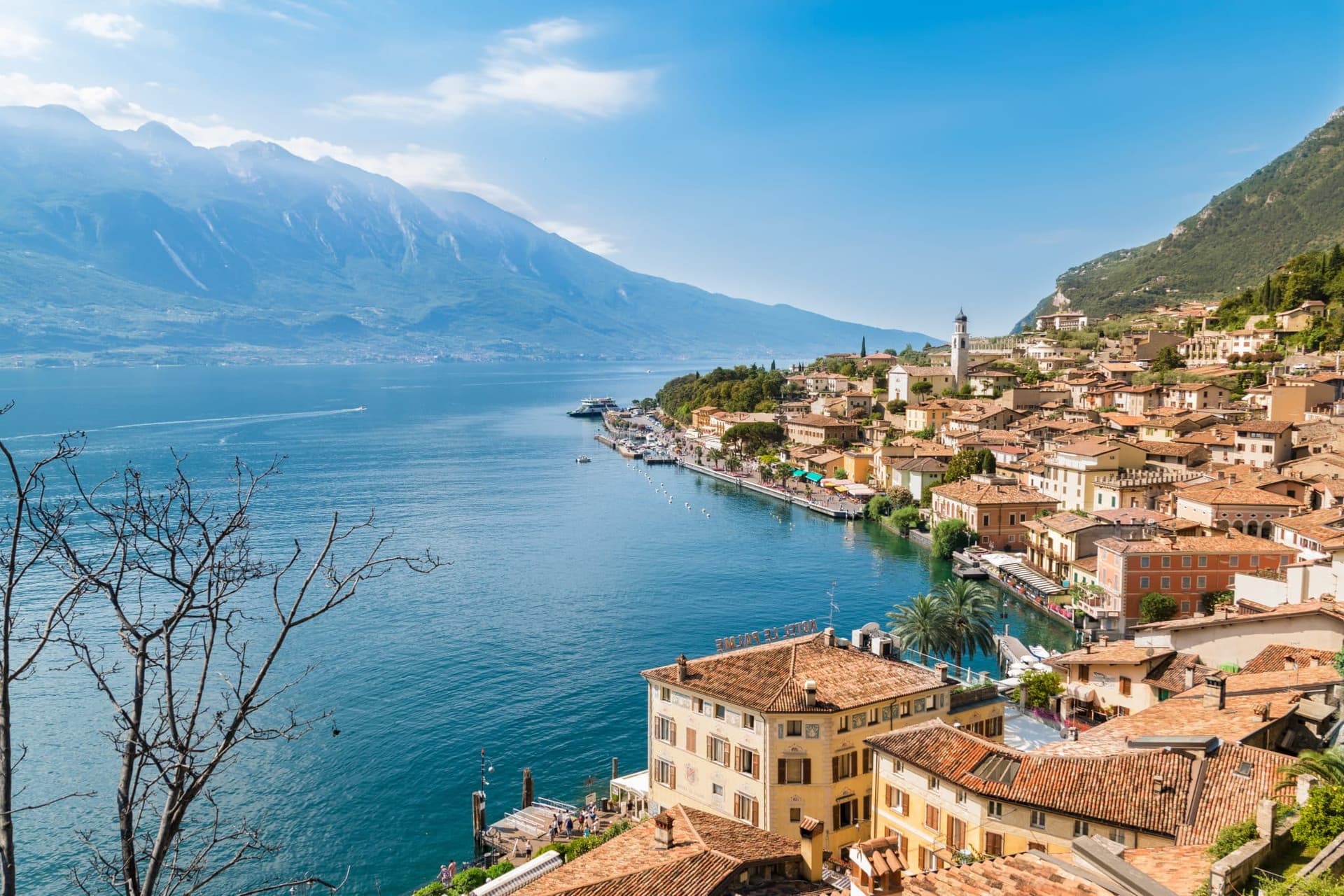
The northernmost Veneto town on Lake Garda, where Goethe was nearly arrested for sketching the Castello Scaligero in September 1786.