

Veneto · Vicenza
Vicenza
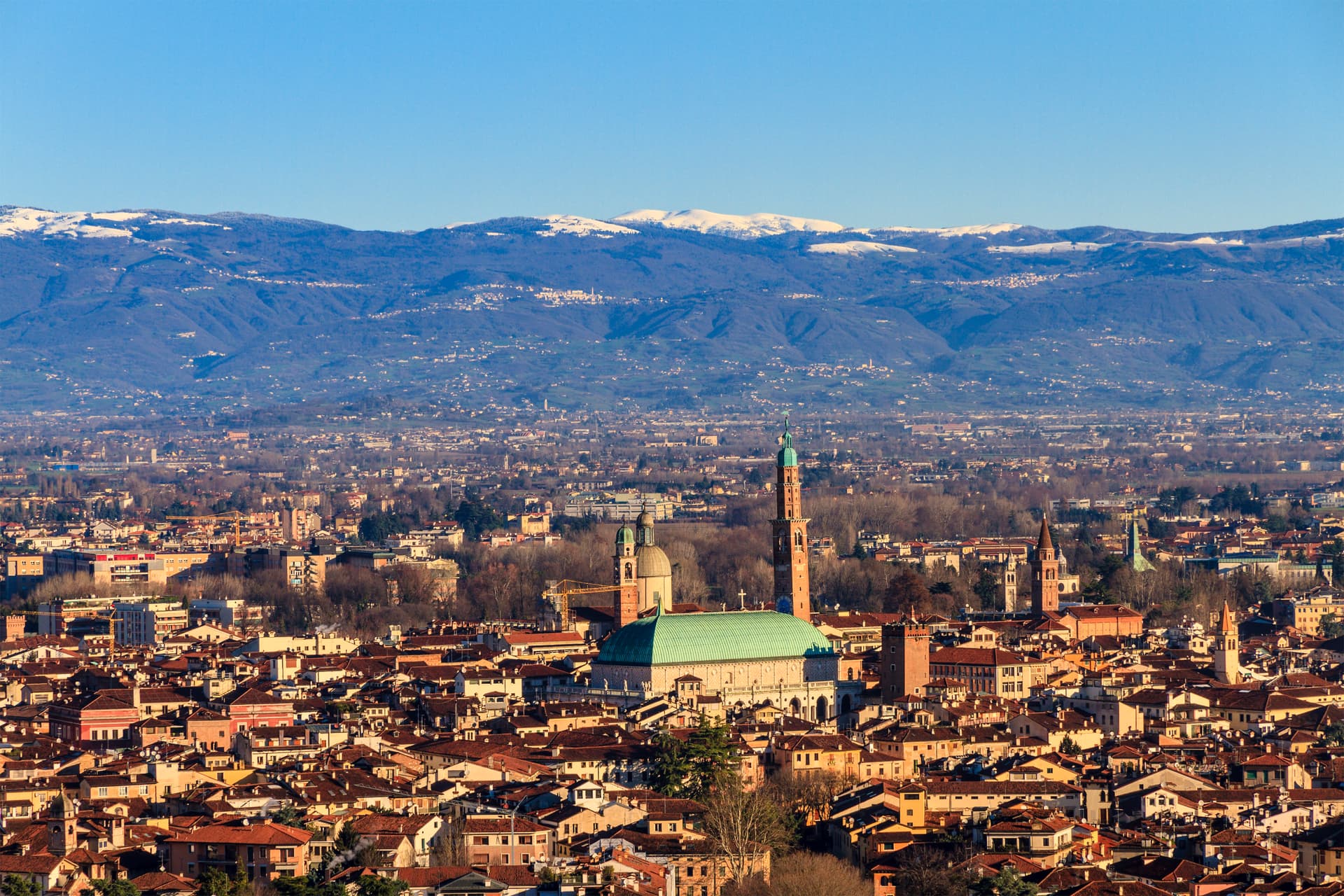
Andrea Palladio's home city — a UNESCO-inscribed open-air museum of the architect who reshaped Western architecture, with 23 Palladian buildings inside the centro and the Villa Rotonda + Teatro Olimpico just outside it.
Known for
UNESCO PALLADIAN CITY
23 Palladian buildings inside the walls + the Villa Rotonda outside — the architect who shaped Western neoclassicism worked his entire career here.
WORLD'S OLDEST INDOOR THEATRE
Teatro Olimpico (1580–85) — Palladio's final building, with Scamozzi's original trompe-l'œil stage set still in place.
EUROPE'S GOLD CAPITAL
Half of Italy's gold jewellery flows through Vicenza's goldsmith district. Vicenzaoro fair (Jan + Sep) is the world's biggest.
BACCALÀ ALLA VICENTINA
Salt cod, onions, anchovies, milk and white pepper over polenta — the city's totemic dish since the 15th century.
When to visit
Best · Apr–Jun, Sep–Oct
- J
- F
- M
- A
- M
- J
- J
- A
- S
- O
- N
- D
- Best
- Hot or crowded
- Quiet
- Mostly closed
The festa: Madonna di Monte Berico, 8 September
Why come
Vicenza is the city that made Palladio and that Palladio made. Andrea della Gondola — better known as Palladio — was a stonemason's apprentice in Vicenza in the 1520s, was renamed by his patron Trissino after the Greek goddess Pallas Athena, and spent the next 50 years building villas, palazzi and churches for the local Venetian-territory aristocracy. The result: a 16th-century city of unprecedented architectural coherence, UNESCO-inscribed in 1994 as 'The City of Vicenza and the Palladian Villas of the Veneto'.
The greatest hits cluster inside the walls: the Basilica Palladiana on Piazza dei Signori (his first major commission, 1549 — a Gothic medieval town hall wrapped in a white loggia of perfectly proportioned arches), Palazzo Chiericati (now the Pinacoteca), Loggia del Capitaniato, Palazzo Thiene, and the Teatro Olimpico — his final building (1580–1585), the world's oldest surviving indoor theatre, with a permanent trompe-l'œil stage set by Scamozzi depicting 'the seven streets of Thebes' in forced perspective. A 20-minute walk south of the centro: Villa La Rotonda (1567), the symmetrical perfect-square villa that every American state capitol and Monticello copied. Vicenza also has Venice's gold and silver — half the gold sold in Italy passes through here annually (it's Europe's largest gold-jewellery district), and Vicenzaoro is the world's biggest gold trade fair. Plus the Veneto kitchen: baccalà alla vicentina (salt cod with milk, anchovies and onions, served over polenta), bigoli with duck ragù, the local Lessini Durello sparkling wine, and Vicenza's own asparago bianco DOP in May.
The Sunday letter
We haven’t written Vicenza’s letter yet.
One town every Sunday, with the photo, the food, the festa. Be there when this one comes up. Free, by Peter & Sophia from Pietrasanta.
By subscribing you agree to Substack’s Terms of Use, our Privacy Policy and our Information collection notice.
What to see
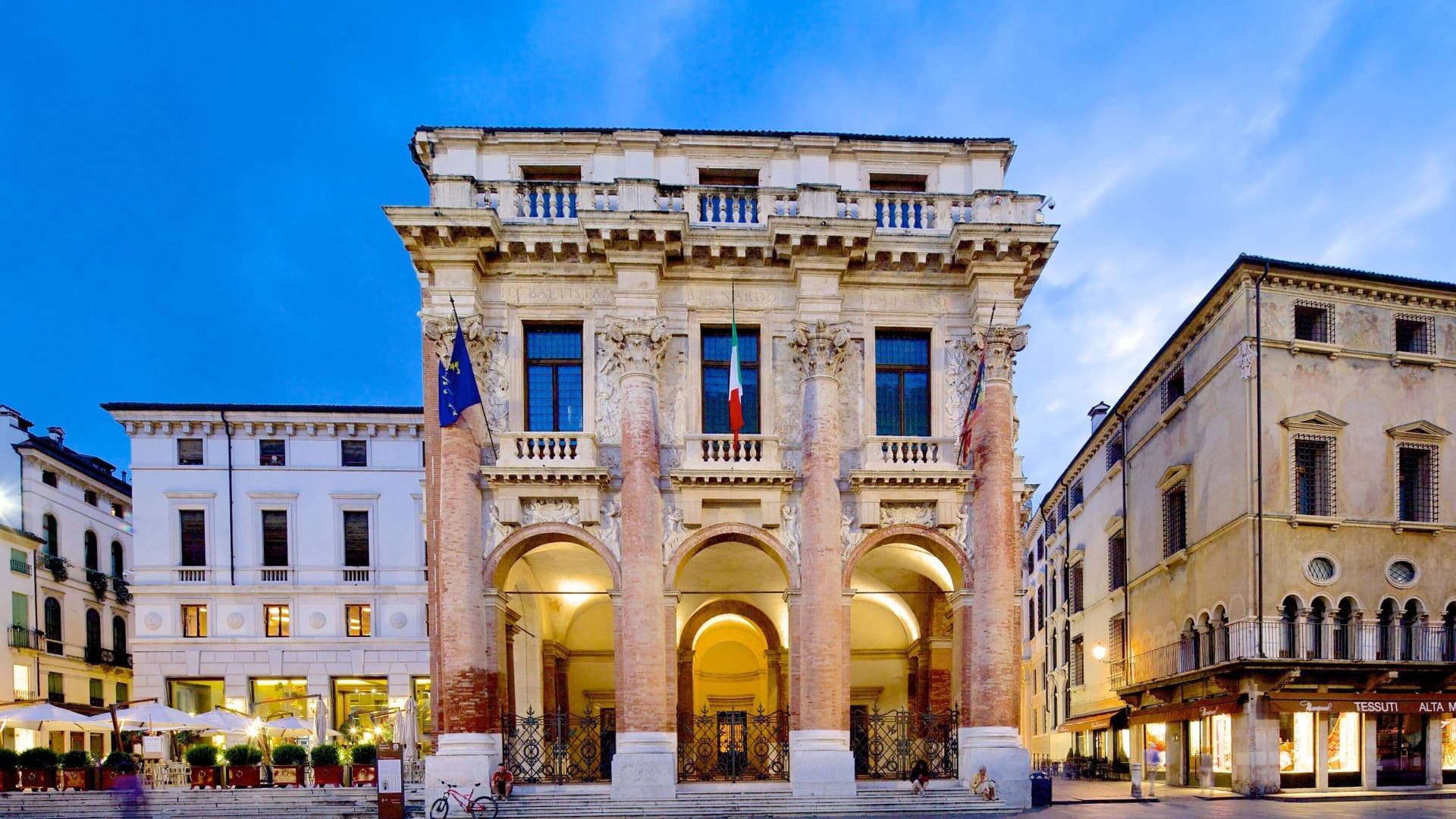
Basilica Palladiana + Piazza dei Signori
Palladio's 1549 wrap of perfect-proportioned white arches around the medieval Palazzo della Ragione — his first major commission, the building that made his name. The rooftop terrace is open and free.
Teatro Olimpico
Palladio's final work (1580–85) and the world's oldest surviving indoor theatre. Scamozzi's permanent stage set shows 'the seven streets of Thebes' in trompe-l'œil forced perspective — they still perform here.
Villa Capra 'La Rotonda'
The perfectly symmetrical 1567 villa on a hilltop 2 km south — a square plan with four identical pedimented porticoes, copied by Jefferson at Monticello and every state capitol in America.
Corso Palladio
The straight 700m main street is lined with Palladio's palazzi: Chiericati, Thiene, Barbaran da Porto, Iseppo da Porto. Pinacoteca inside Chiericati.
Monte Berico + Villa Valmarana ai Nani
Climb the 192 portico-covered steps for the Veneto-plain view, then visit the 1669 sanctuary basilica and Tiepolo's frescoes at the nearby villa.
The slow-trip planner
Building a trip? Find where Vicenza fits in a slow Italy circuit.
Answer five questions. We will shape a geographically coherent slow trip from the 1,000 Italian towns most travelers skip. Yours to save and share.
We recommend
Where to eat and stay
Not our picks, but places the guides put their name to — a Michelin star, a Gambero Rosso fork, a Slow Food snail, a Michelin Key for the hotels. Worth a table, a counter, or a night when you pass through.
Matteo Grandi in BasilicaRistorante
Two Gambero Rosso forks (85/100) for Matteo Grandi in Basilica, and a place in L'Espresso's Top 300.
FuoriModena - Cucina km 200Trattoria
FuoriModena - Cucina km 200 carries two Gambero Rosso prawns.
La MeneghinaBistrot
One Gambero Rosso table, at La Meneghina.
Osteria BertolianaRistorante
Osteria Bertoliana holds a Slow Food snail.
Living here
- Population 109,823
- A local hubi
- Pharmacy in town
- High school within a 30-minute drive
- Train station in the comune
- Nearest airport Verona, 1 h 1 min drive
- Regional capital Venezia, 52 min drive
Tags & datadesignations · numbers · sources
Recognised as
The numbers
- Elevation: 39 m
- Population: 109,823
- Surface area: 80.57 km²
These figures were compiled from public directories — ISTAT, OpenStreetMap, Wikidata — and from the official listings of the guides named on this page. Town details change; verify with official sources before you travel.
Close by
More towns near Vicenza
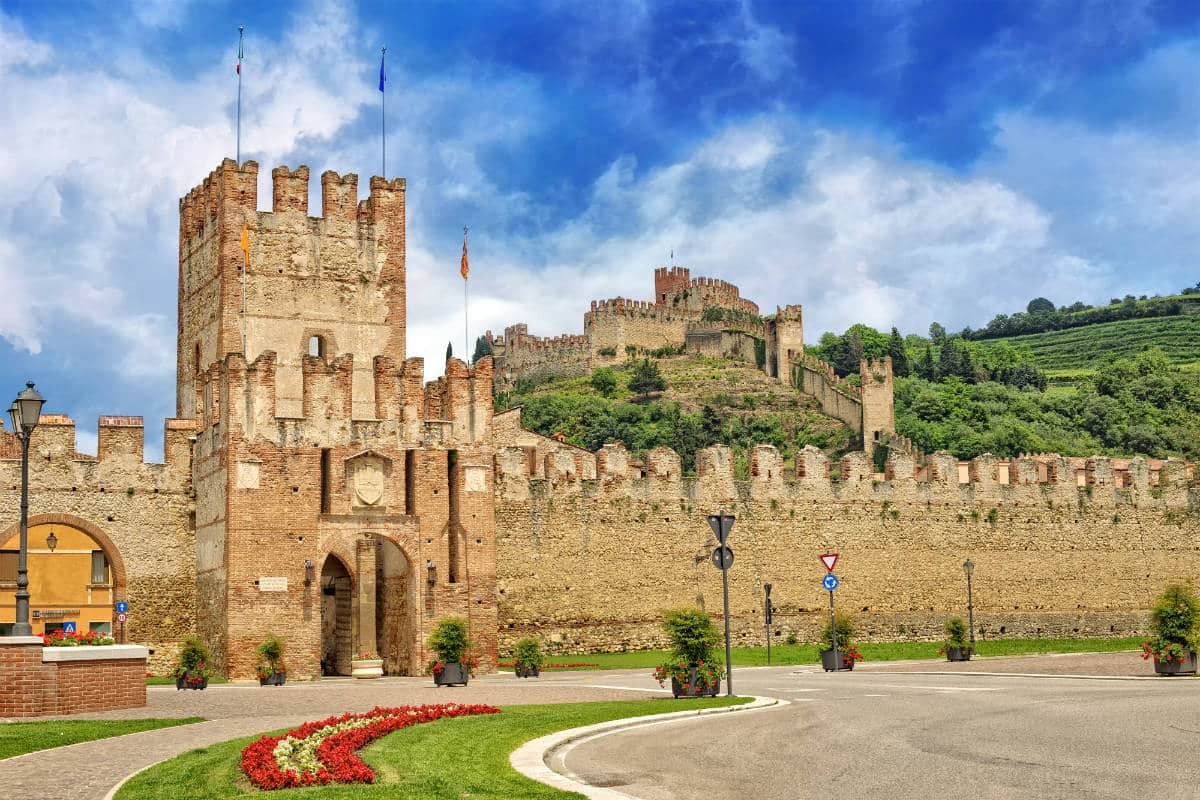
Soave
Province: Verona
A walled wine town twenty kilometers east of Verona, 2022 Borgo dei Borghi winner, where Garganega vineyards climb to the Scaligeri castle on Colle Tenda.
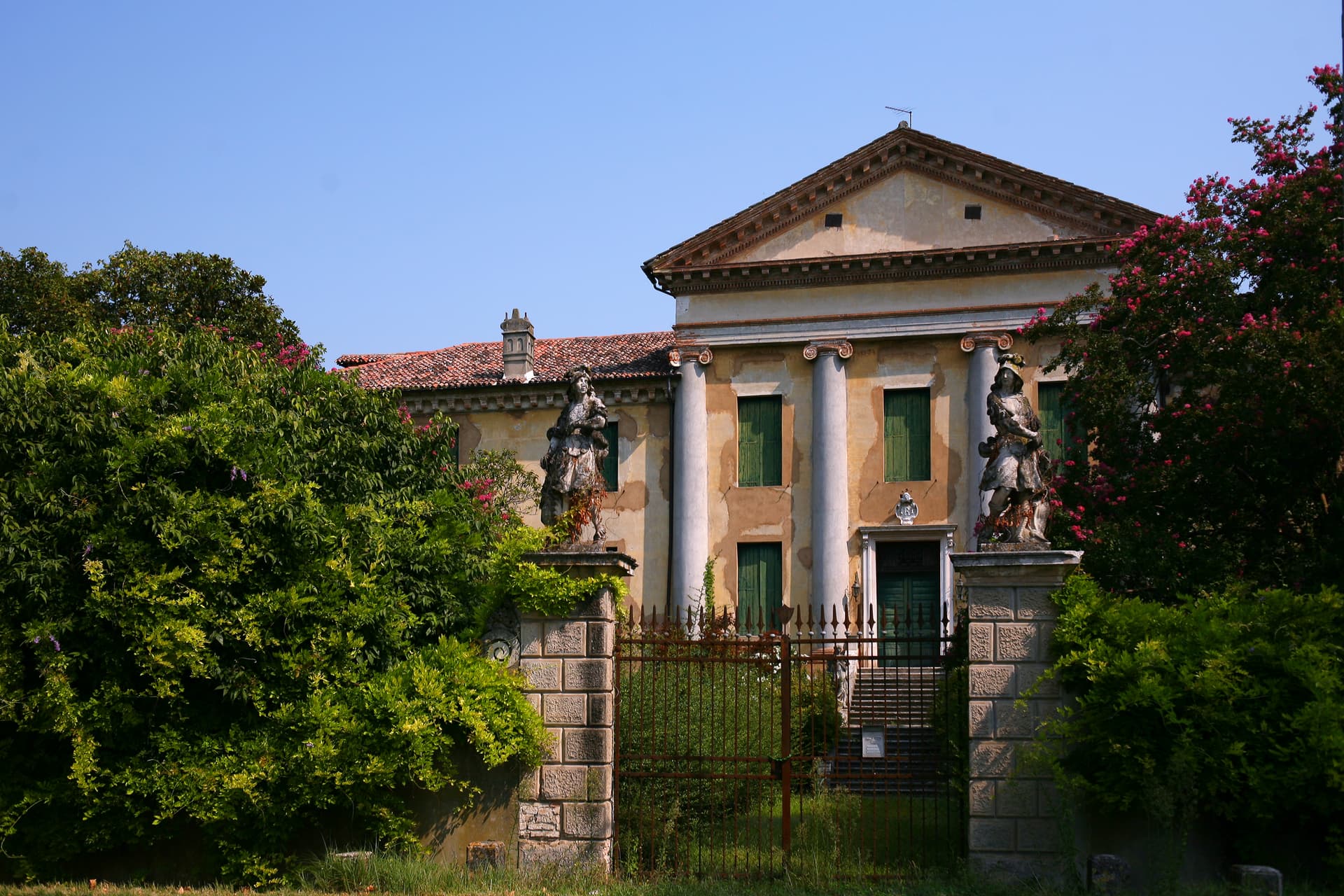
Abano Terme
Province: Padova
Europe's oldest thermal town on the Euganean Hills' eastern slope, where 80°C bromo-iodine springs have been drawing bathers since the eighth century BC.
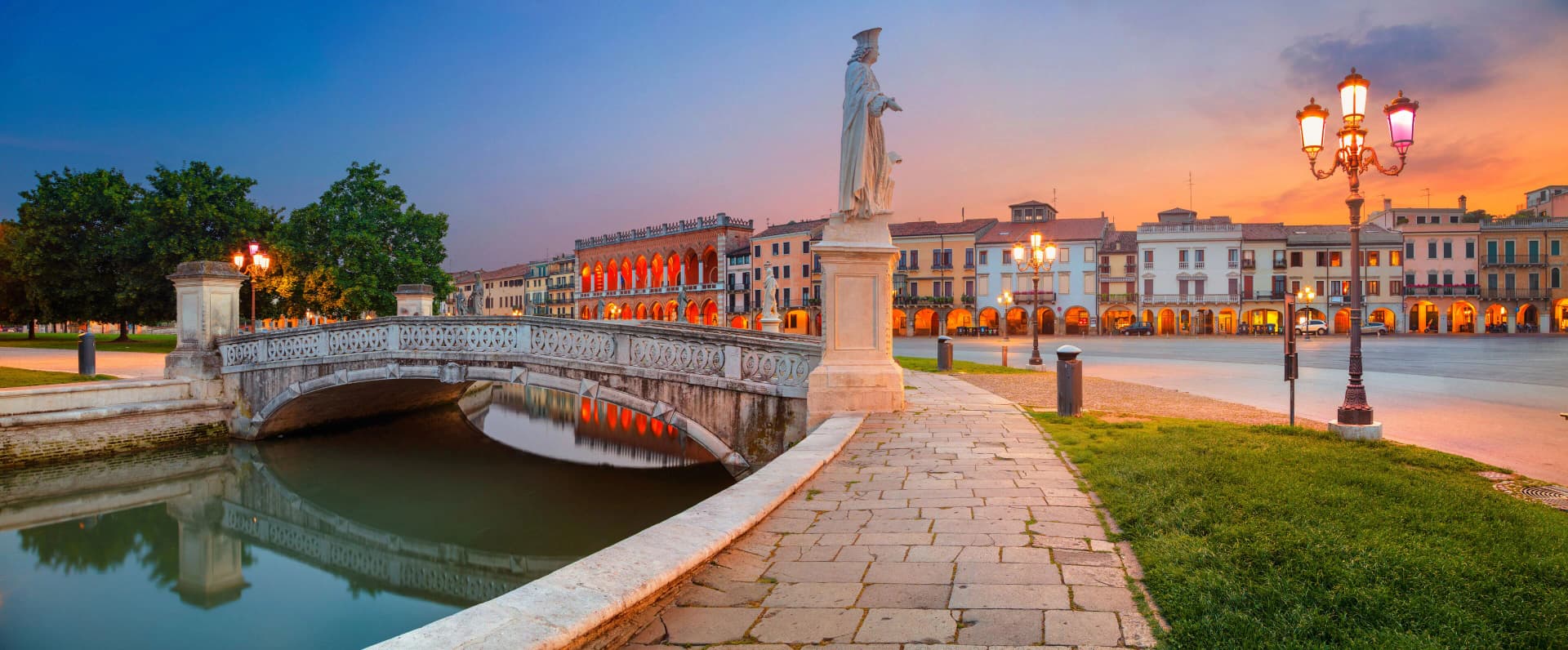
Padova
Province: Padova
The university town that gave Giotto a chapel and the world a science of plants — TWO UNESCO inscriptions inside one city (Padua's 14th-century fresco cycles + the 1545 Orto Botanico, the world's first), plus Prato della Valle, Italy's largest piazza, and Galileo's old lecture hall.
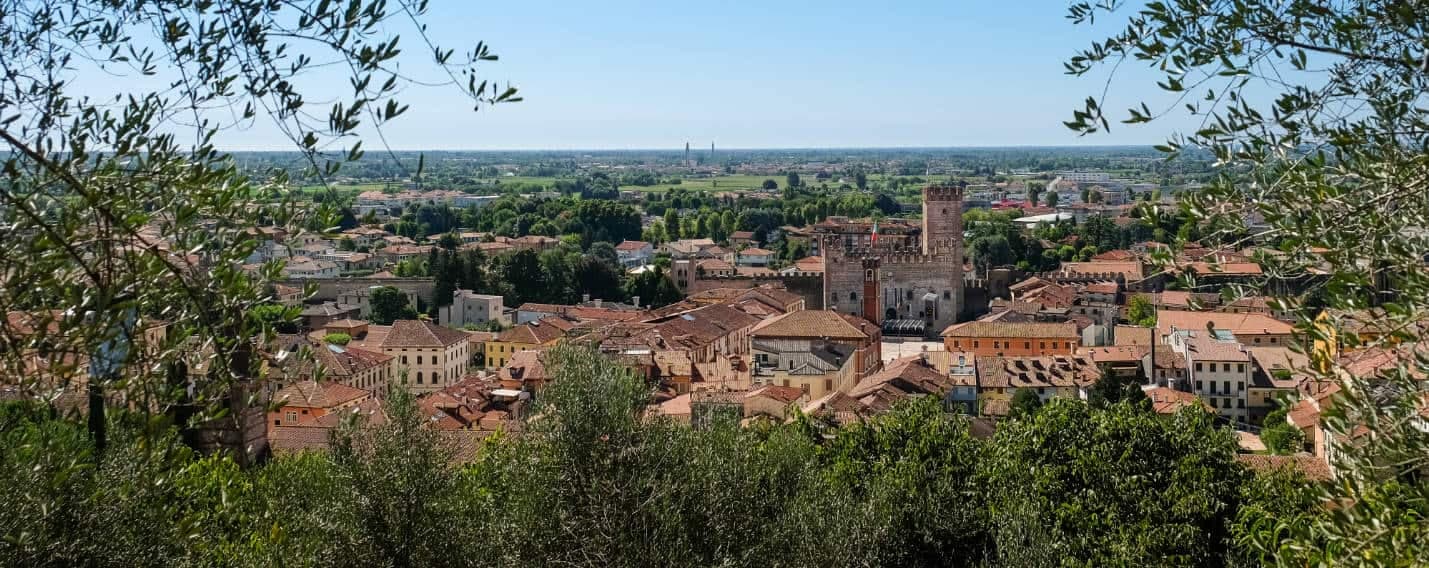
Marostica
Province: Vicenza
The walled chess town below Vicenza, where two castles linked by a hill rampart stage a costumed reenactment of a 1454 match every two years.
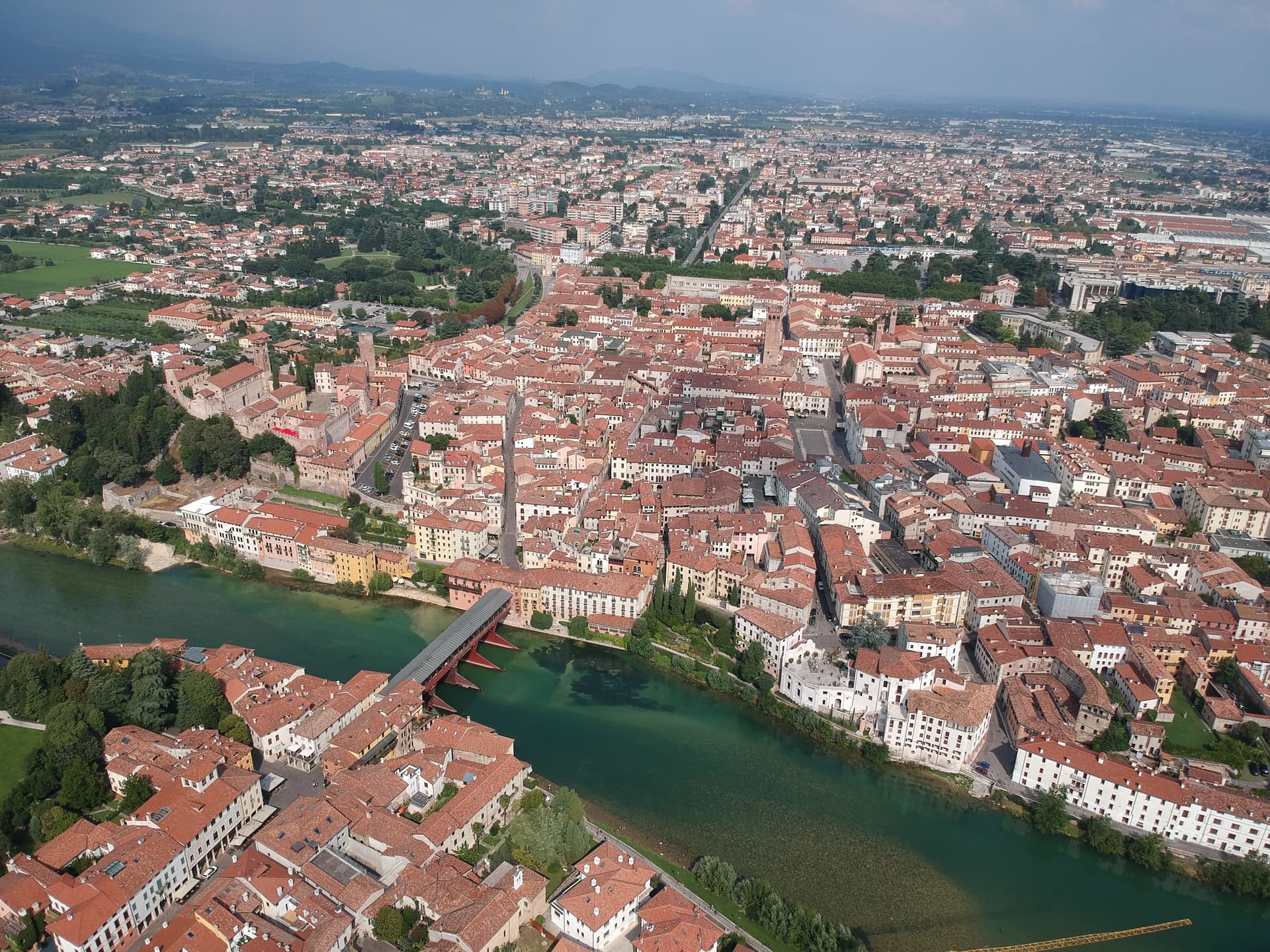
Bassano del Grappa
Province: Vicenza
The Brenta River town at 129 meters where Palladio drew the covered bridge in 1569 and Nardini has been distilling grappa since 1779.
🏛️ UNESCO
More UNESCO towns in Veneto
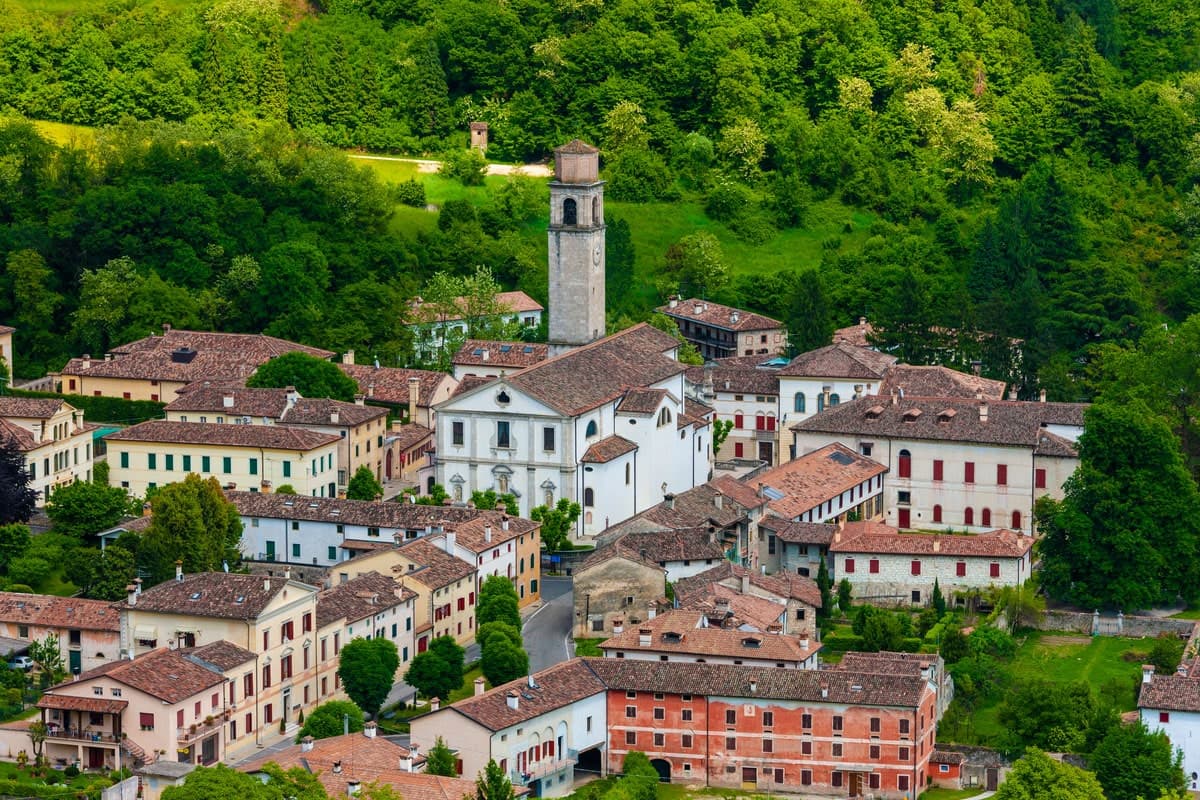
Cison di Valmarino
Province: Treviso
A Prosecco hills borgo at 261 meters under the dolomite rock of CastelBrando, the largest inhabited castle complex in Europe.
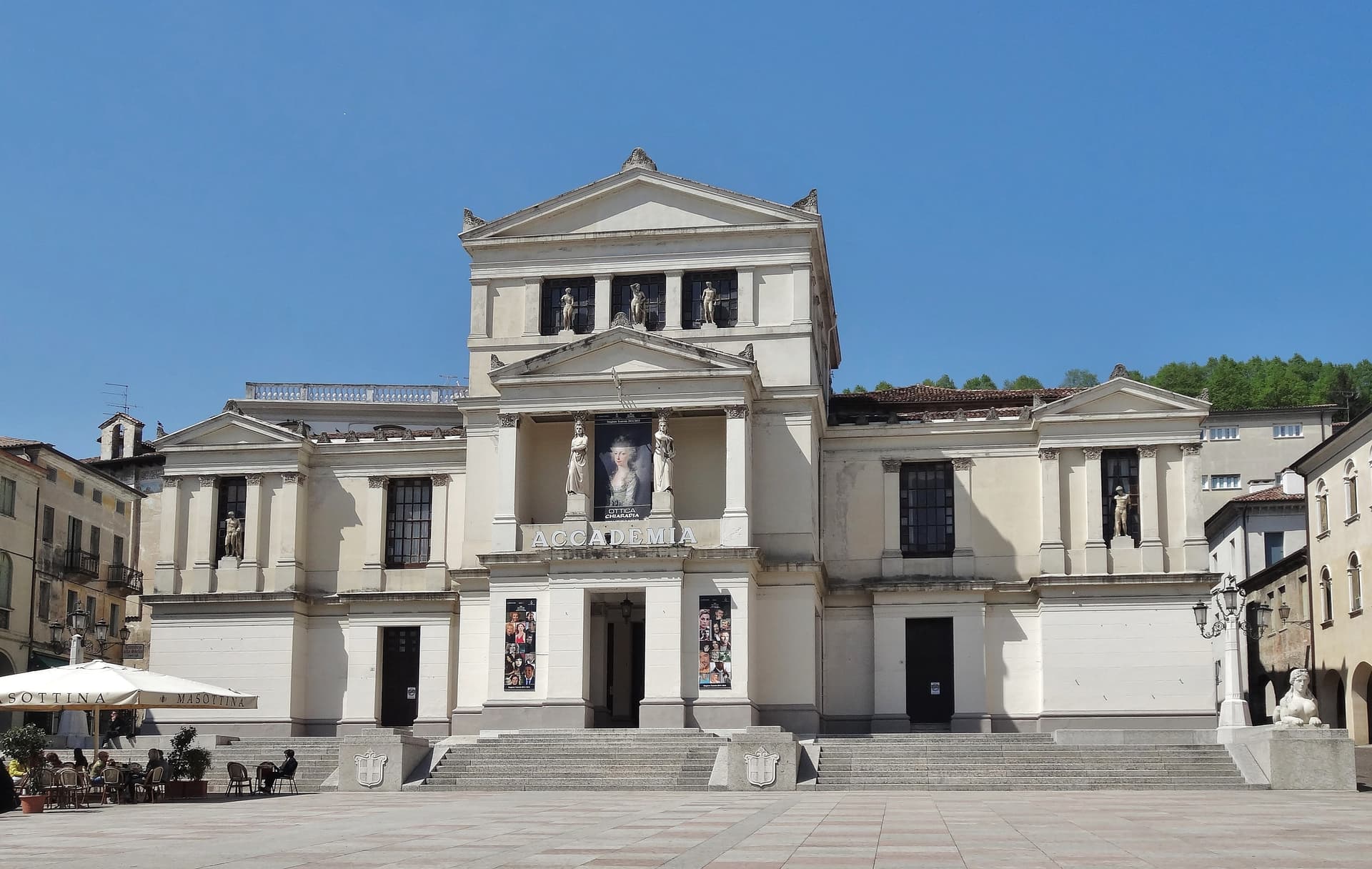
Conegliano
Province: Treviso
The Prosecco capital at 65 meters, birthplace of the painter Cima and home of Italy's first oenology school, opened in 1876.
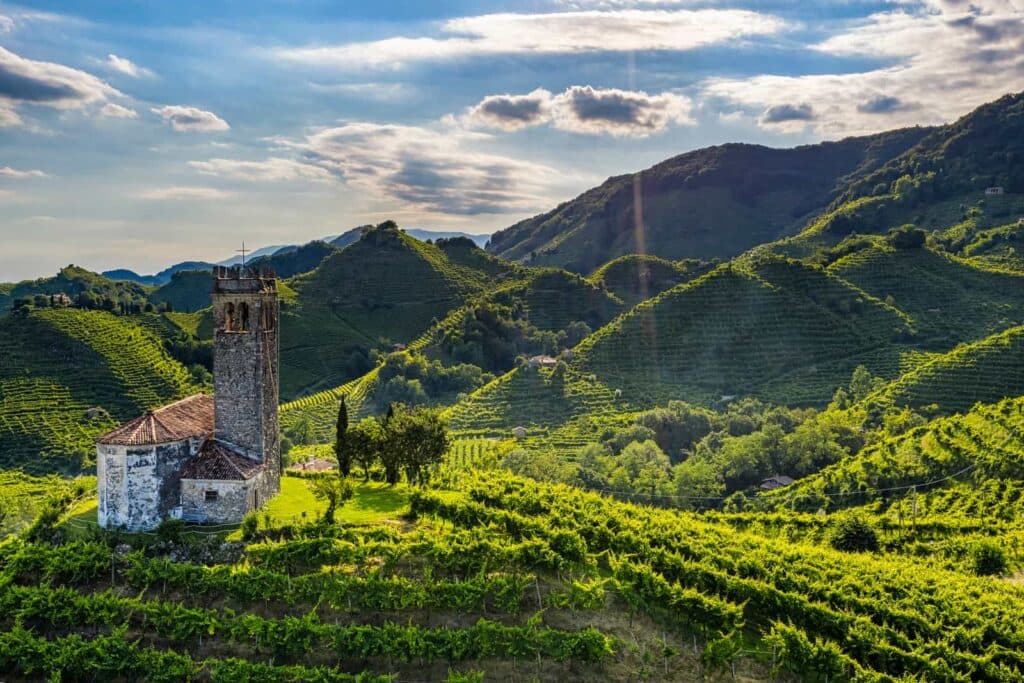
Farra di Soligo
Province: Treviso
The heart of the Prosecco Hills UNESCO landscape — an 8,477-resident comune in the Conegliano-Valdobbiadene DOCG zone (UNESCO World Heritage since 2019), with the three medieval Torri di Credazzo crowning a hilltop above its vineyards, Cittaslow + Città del Vino signals, and direct walking access to the most photographed stretch of the hogback ridge.
Follina
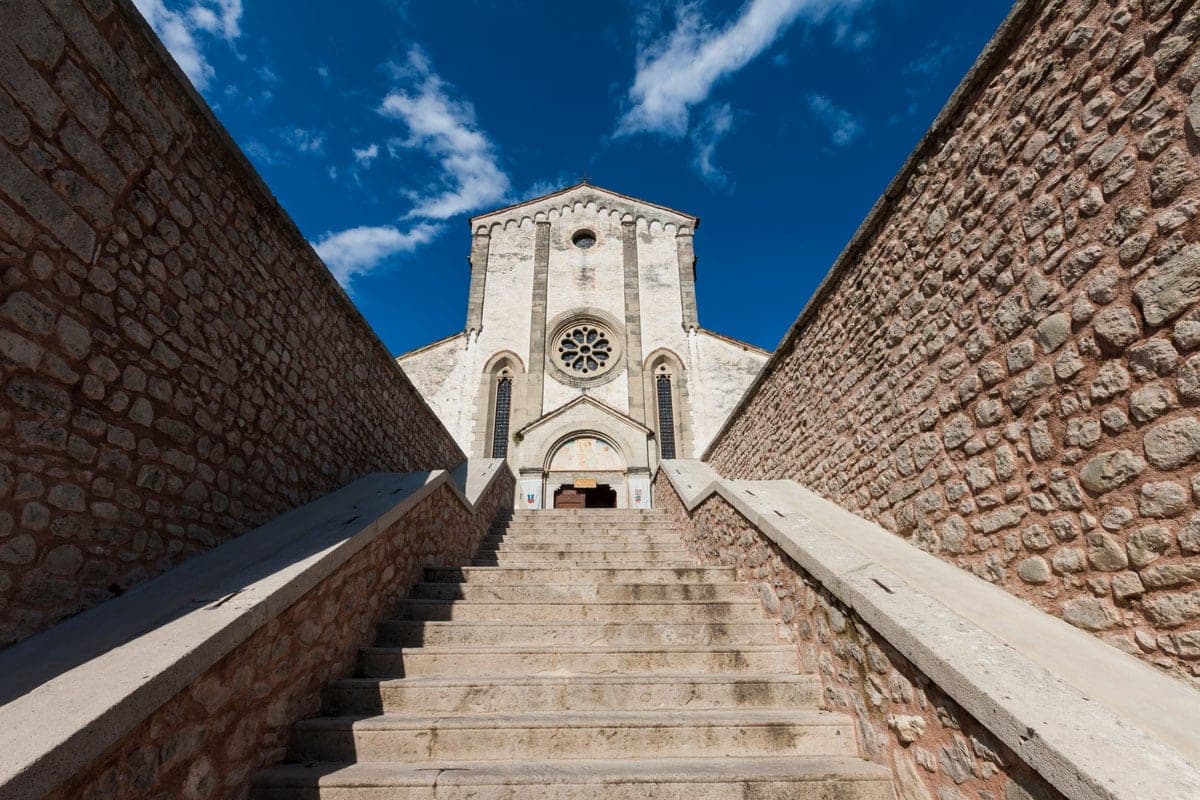
Province: Treviso
A Prosecco-hills borgo at 191 meters around the Cistercian Abbey of Santa Maria, with a cloister finished in 1268.
Peschiera del Garda
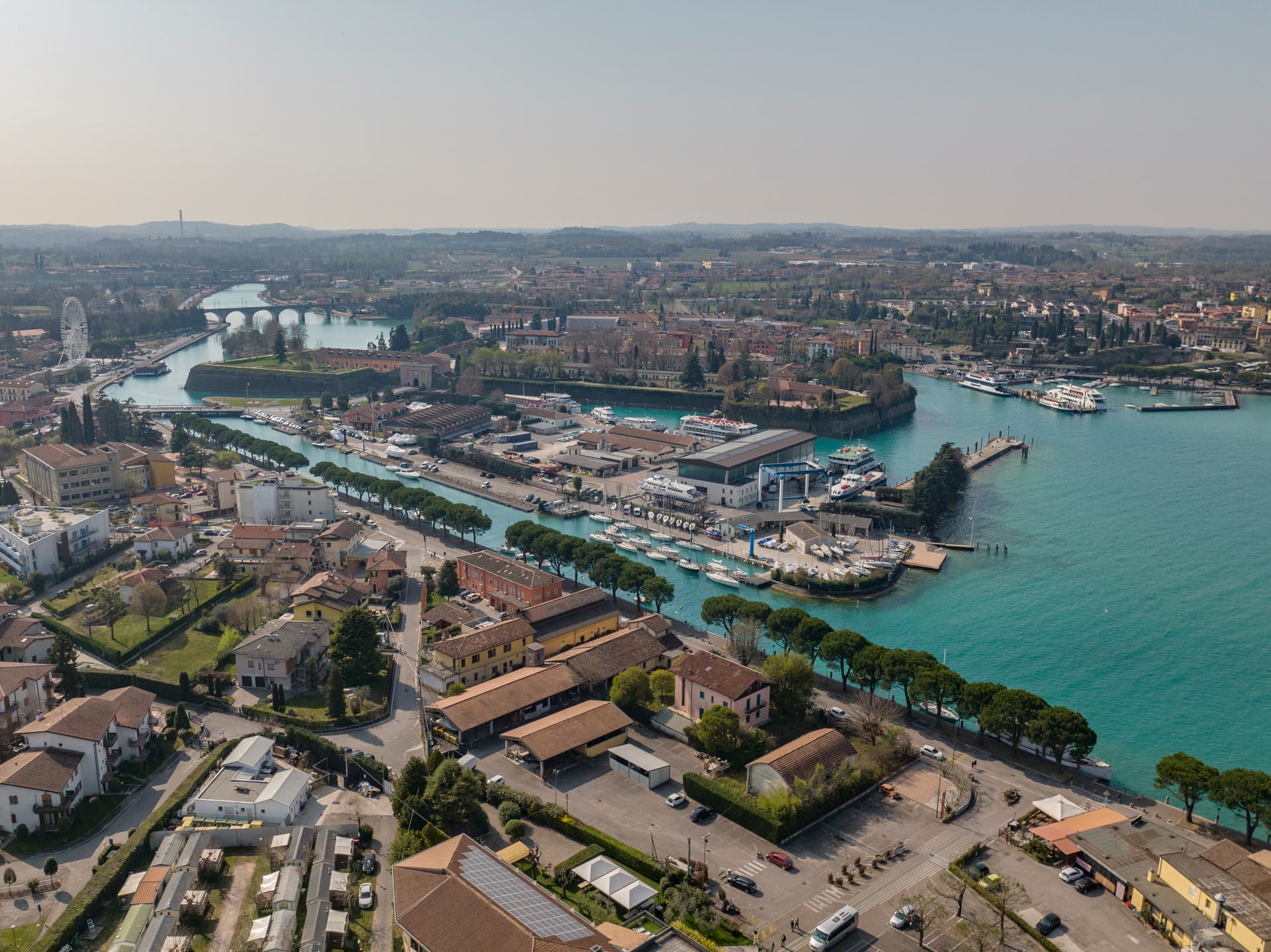
Province: Verona
The Venetian fortress town on a Mincio island at the southern outlet of Lake Garda, UNESCO-listed in 2017 for its Sanmicheli bastions.