

Liguria · La Spezia
Portovenere
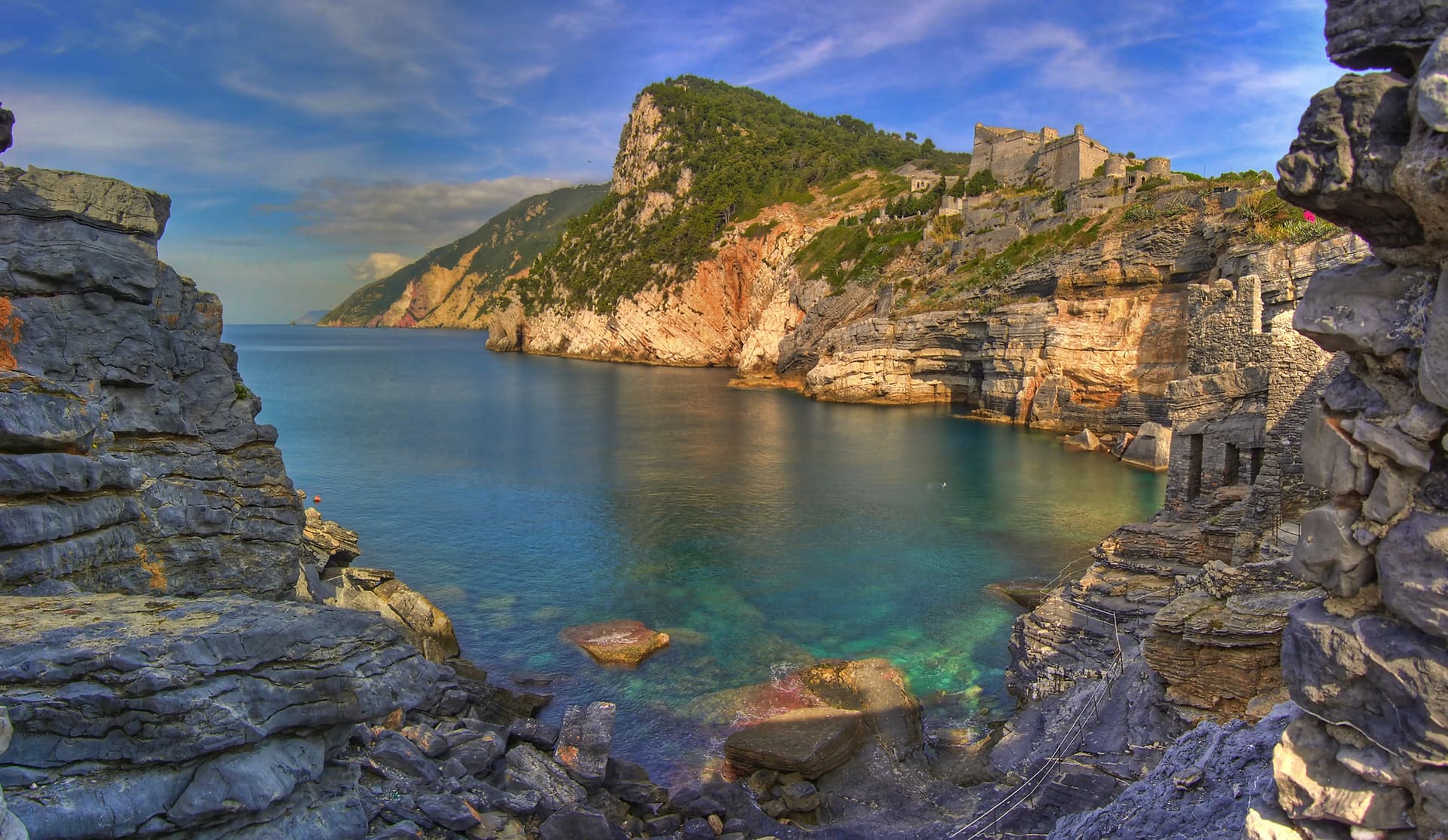
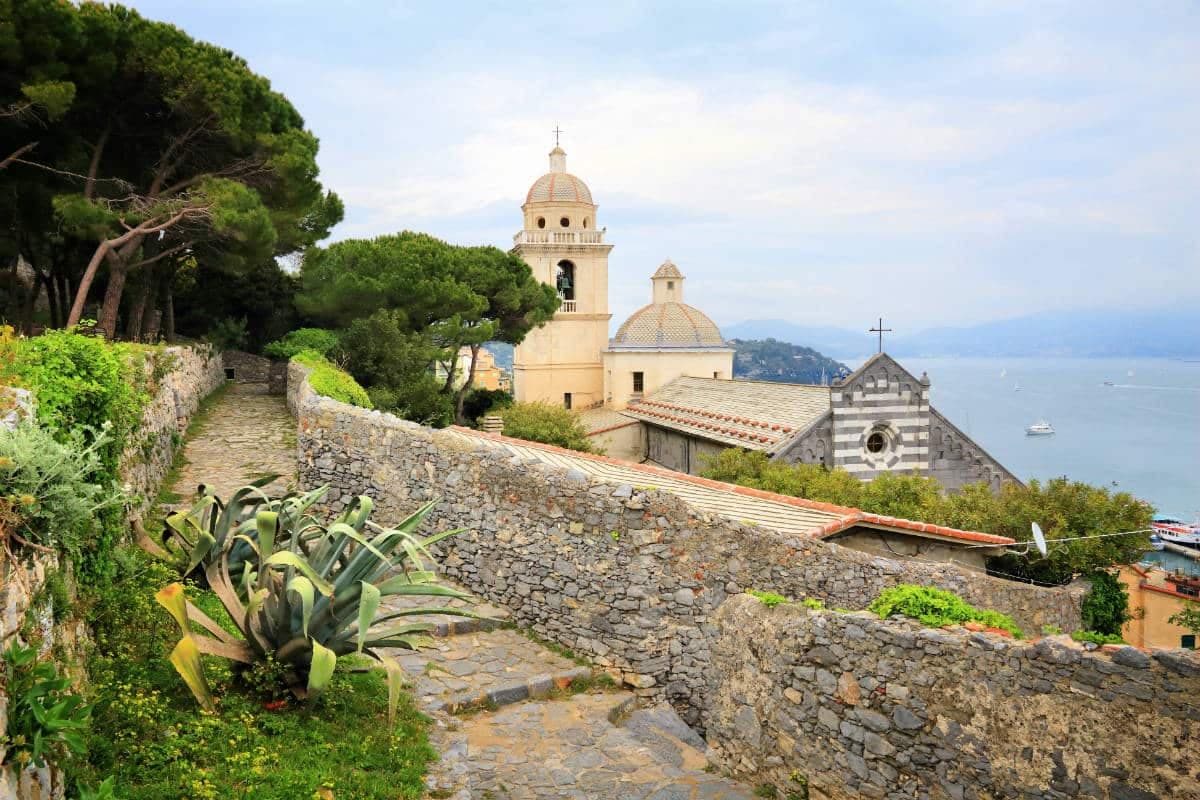
A Genoese fortress at the western mouth of the Gulf of Poets, the black-and-white church of San Pietro on the Venus-temple rock.
Known for
SAN PIETRO
The thirteenth-century black-and-white striped church on the rocky promontory, the most photographed building on the eastern Ligurian coast.
BYRON'S SWIM
Lord Byron swam from Portovenere to Lerici across the gulf to visit Shelley; the sea cave below San Pietro carries his name.
UNESCO 1997
Inscribed with the Cinque Terre and the islands of Palmaria, Tino and Tinetto as a cultural landscape of stone fortifications and terraces.
When to visit
Best · Apr–Oct
- J
- F
- M
- A
- M
- J
- J
- A
- S
- O
- N
- D
- Best
- Hot or crowded
- Quiet
- Mostly closed
Why come
Portovenere closes the western mouth of the Gulf of La Spezia, three kilometers south of the city by water, opposite the islands of Palmaria, Tino and Tinetto. The Roman Portus Veneris dates to at least the first century BC, named for a temple to Venus on the rocky promontory where the Chiesa di San Pietro now stands. Genoa took control in 1113 and fortified the town as the southern anchor of its Riviera defences, opposite Pisan Lerici across the gulf.
The Castello Doria was first cited in 1139 and rebuilt in 1161, expanded again from the fifteenth to seventeenth centuries. San Pietro, consecrated in 1198, holds the alternating black and white stone bands of the thirteenth-century rebuild between 1256 and 1277. Below the church, the sea cave called Grotta dell'Arpaia took its English name from Lord Byron, who swam from Portovenere to Lerici across the gulf to visit Shelley. UNESCO inscribed Portovenere with the Cinque Terre and the islands in 1997.
What to see
Chiesa di San Pietro
Consecrated 1198, black and white striped Gothic rebuild from 1256-1277, on the rocky promontory where the Roman temple of Venus stood.
Castello Doria
First cited 1139, rebuilt 1161, expanded into the seventeenth century, the Genoese fortress above the harbour, prison under Napoleonic rule.
Grotta dell'Arpaia
Sea cave below San Pietro, also called Byron's Grotto for the English poet who swam from here to Lerici across the gulf to visit Shelley.
Isola Palmaria
Largest of three offshore islands, 75 meters high, ferry from the Portovenere quay, marble quarries and Grotta Azzurra sea cave.
Carruggio di Portovenere
Single medieval street running parallel to the harbour with tall narrow houses, the original Genoese twelfth-century plan intact.
Chiesa di San Lorenzo
Twelfth-century Romanesque parish church above the harbour, rebuilt after the 1340 Aragonese fire that damaged the upper town.
The slow-trip planner
Building a trip? Find where Portovenere fits in a slow Italy circuit.
Answer five questions. We will shape a geographically coherent slow trip from the 1,000 Italian towns most travelers skip. Yours to save and share.
We recommend
Where to eat and stay
Not our picks, but places the guides put their name to — a Michelin star, a Gambero Rosso fork, a Slow Food snail, a Michelin Key for the hotels. Worth a table, a counter, or a night when you pass through.
Ristorante PortiveneRistorante
Ristorante Portivene holds a Gambero Rosso listing.
Tre TorriTrattoria
Tre Torri has two Gambero Rosso prawns to its name.
The Sunday letter
Portovenere got its letter. One town every Sunday, free — the photo, the food, the festa.
By subscribing you agree to Substack’s Terms of Use, our Privacy Policy and our Information collection notice.
Living here
- Population 3,268
- Commuter belti
- Pharmacy in town
- High school within a 30-minute drive
- Nearest airport Florence / Pisa, 1 h 32 min drive
- Regional capital Genova, 1 h 44 min drive
Tags & datadesignations · numbers · sources
Recognised as
The numbers
- Elevation: 37 m
- Population: 3,268
- Surface area: 7.66 km²
These figures were compiled from public directories — ISTAT, OpenStreetMap, Wikidata — and from the official listings of the guides named on this page. Town details change; verify with official sources before you travel.
Close by
More towns near Portovenere
Lerici
Province: La Spezia
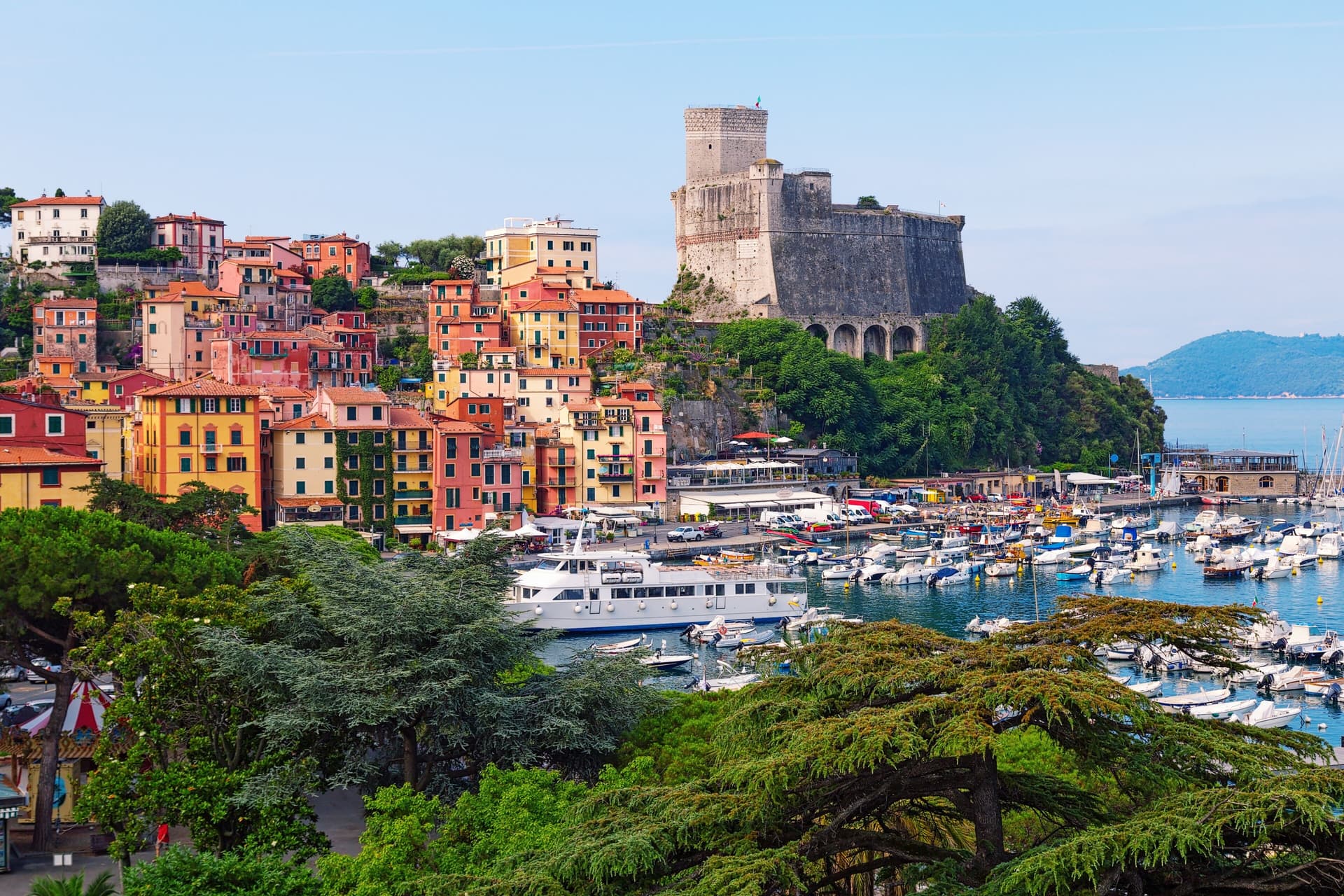
The northern anchor of the Bay of Poets, a fishing harbour under a Pisan-Genoese castle where Byron and Shelley wrote and where the frazione of Tellaro hangs over the rocks at the bay's southern edge.
Sarzana
Province: La Spezia
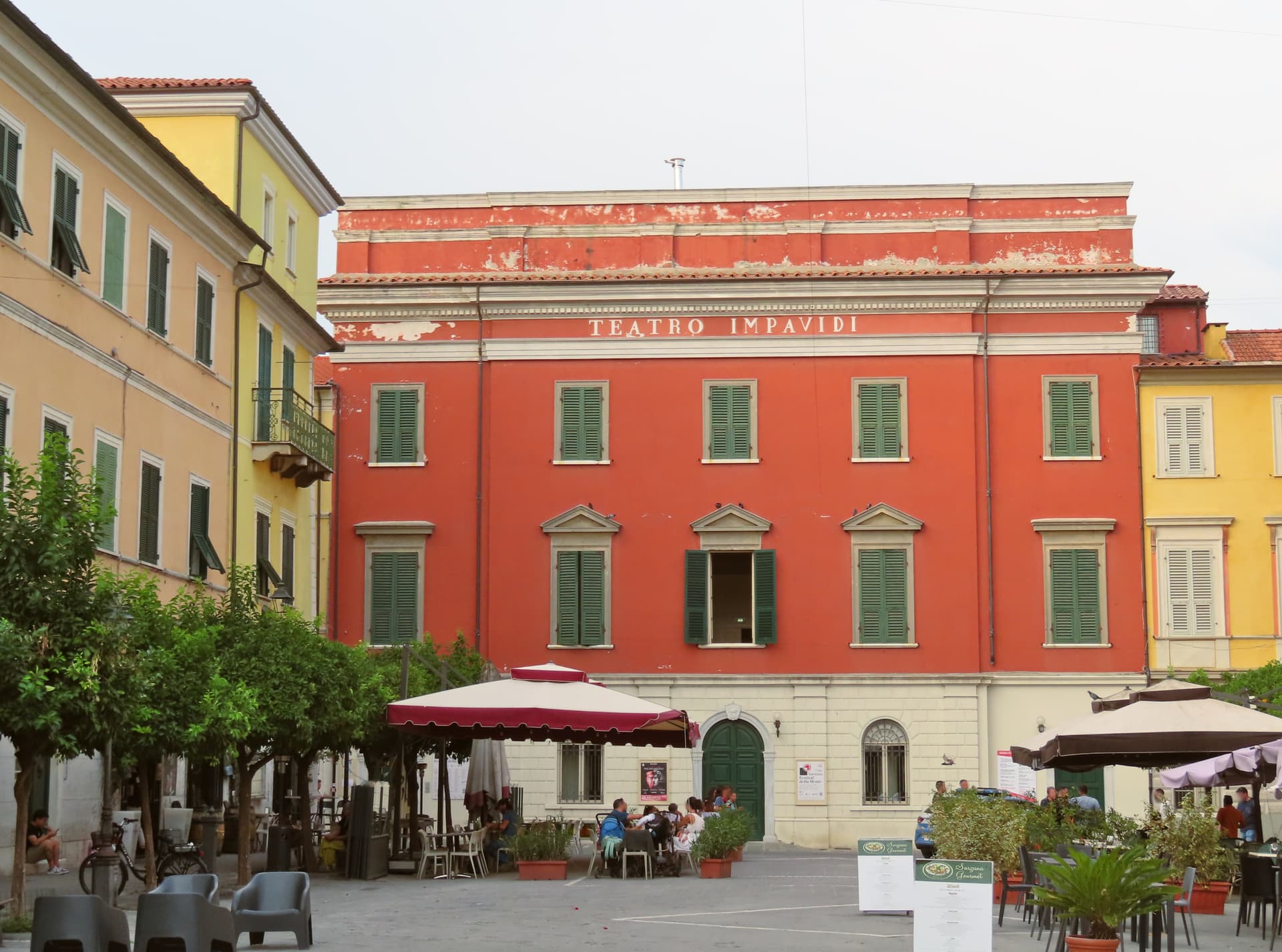
The unofficial capital of the Lunigiana on the Magra plain, birthplace of Pope Niccolò V and home to Italy's oldest dated painted crucifix.
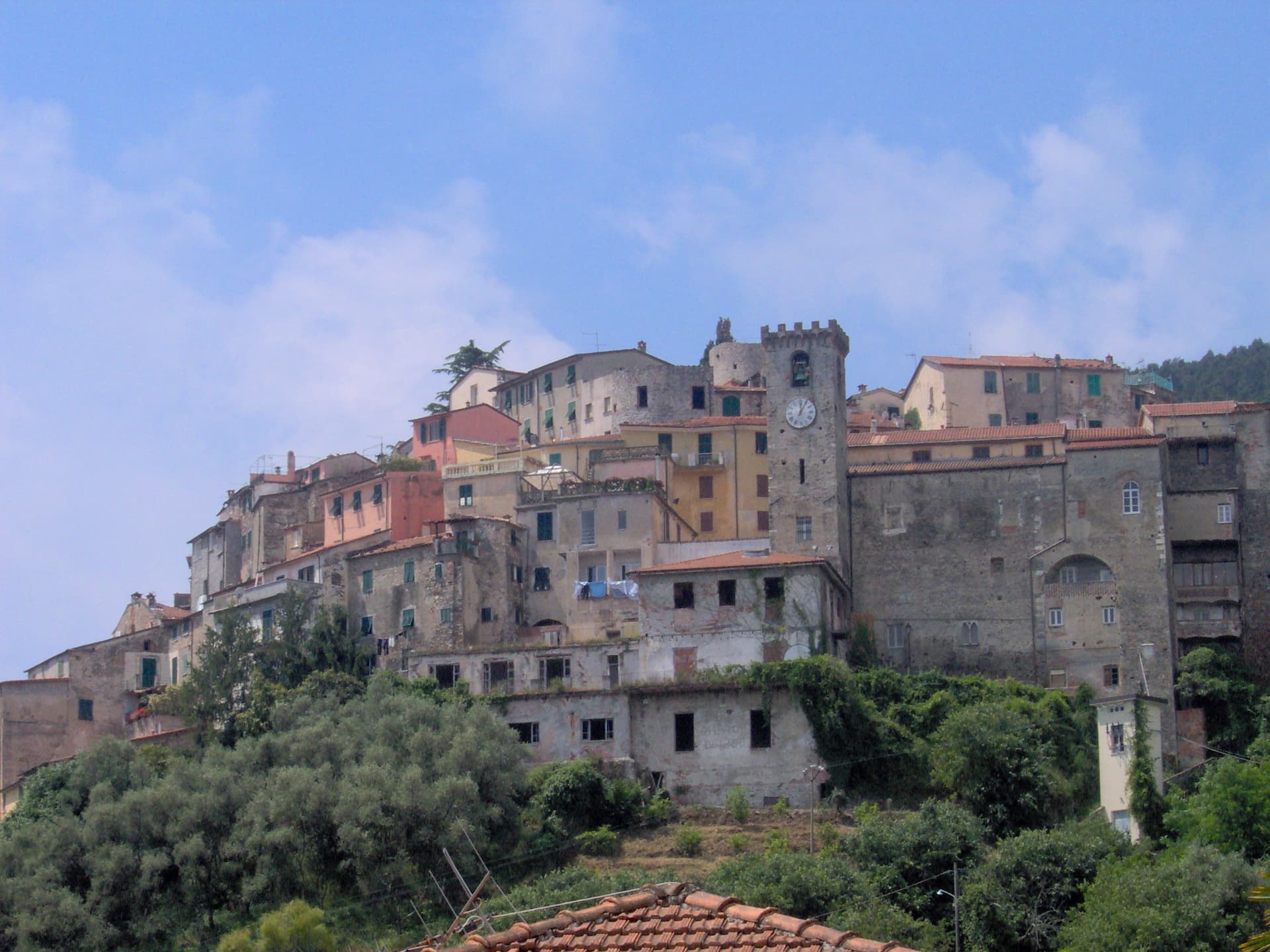
Ameglia
Province: La Spezia
A hilltop borgo at 89 meters above the mouth of the Magra, the Lunigiana edge of Liguria where the river meets the Gulf of Poets.
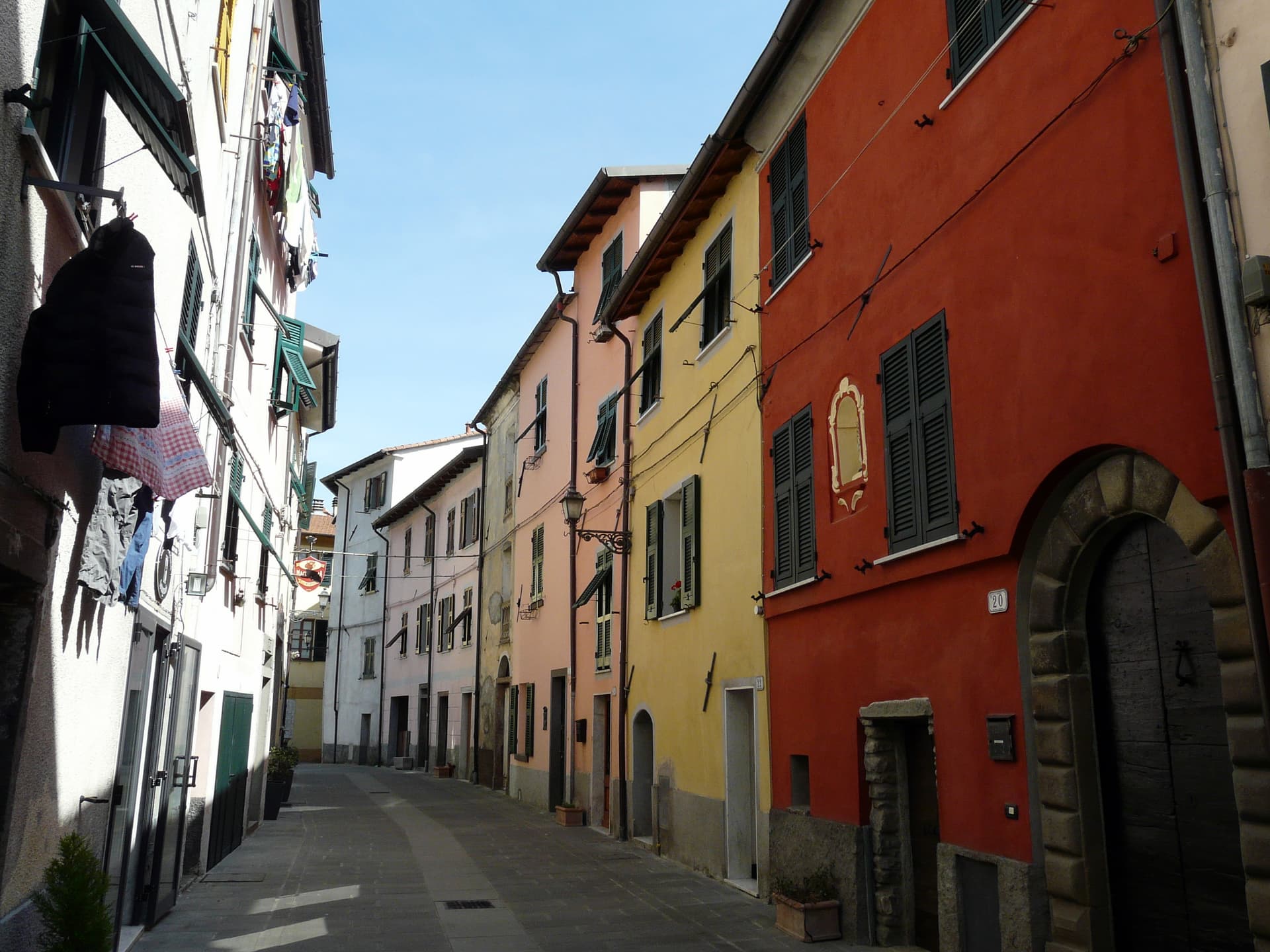
Brugnato
Province: La Spezia
The medieval ecclesiastical capital of the Val di Vara, seat of a diocese from 1133 to 1820, with a co-cathedral built over a Columban monastery.
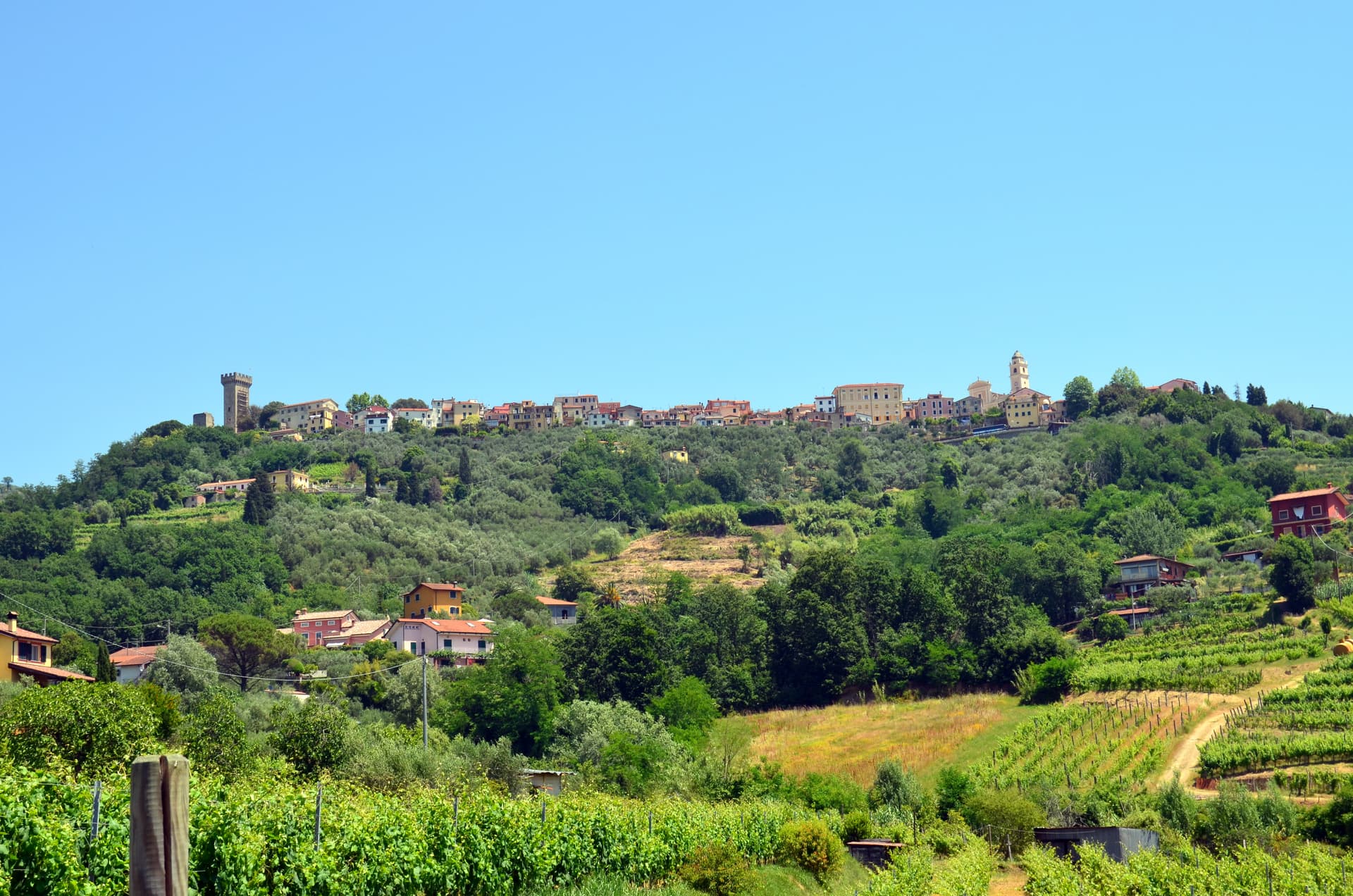
Castelnuovo Magra
Province: La Spezia
A ridge village on the Liguria-Tuscany border where Dante Alighieri signed the 1306 Peace of Castelnuovo on behalf of the Malaspina marquises.
🏛️ UNESCO
More UNESCO towns in Liguria
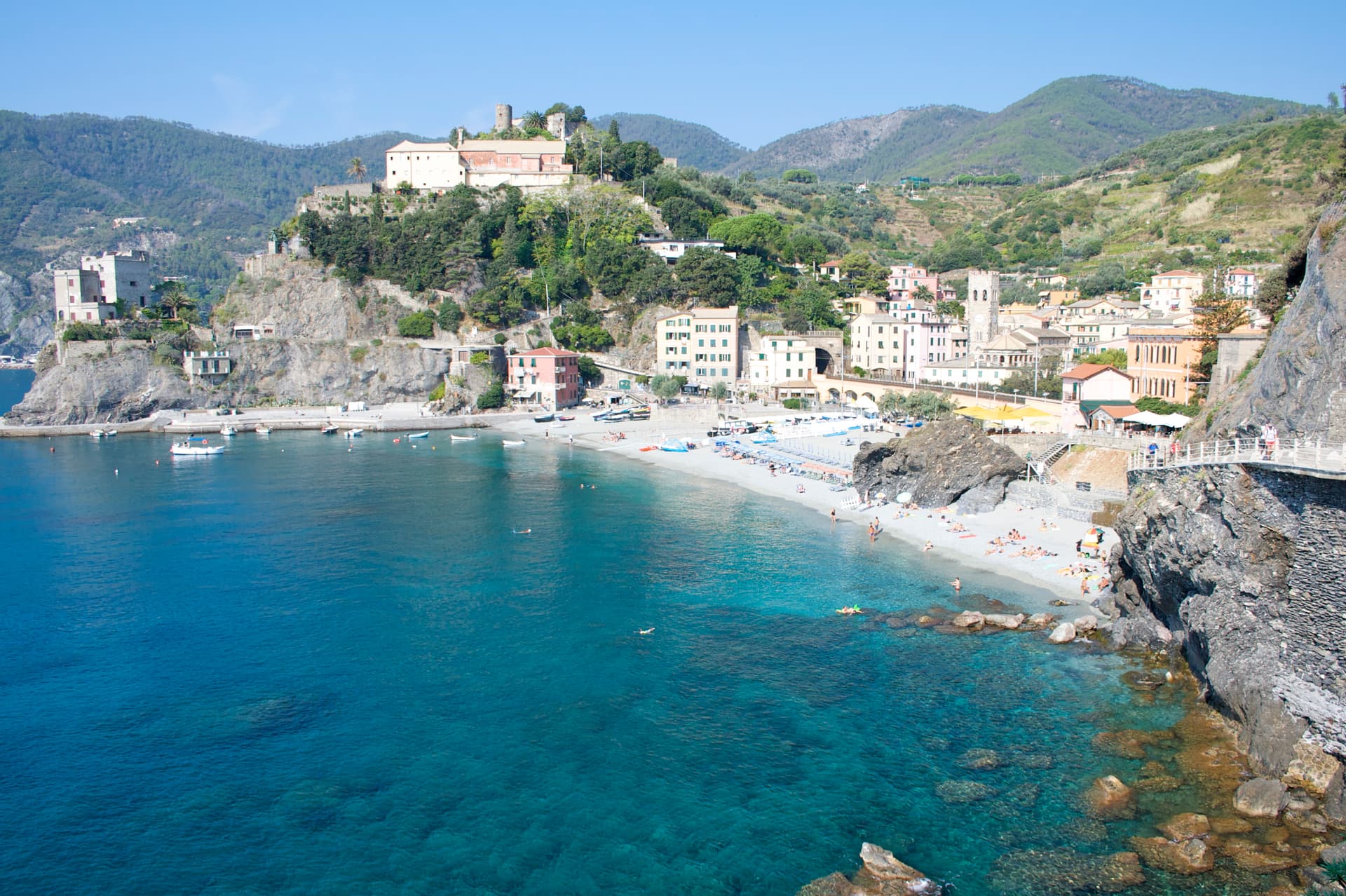
Monterosso al Mare
Province: La Spezia
The westernmost and largest of the Cinque Terre, where Eugenio Montale spent the childhood summers that became Ossi di seppia in 1925.
Riomaggiore
Province: La Spezia
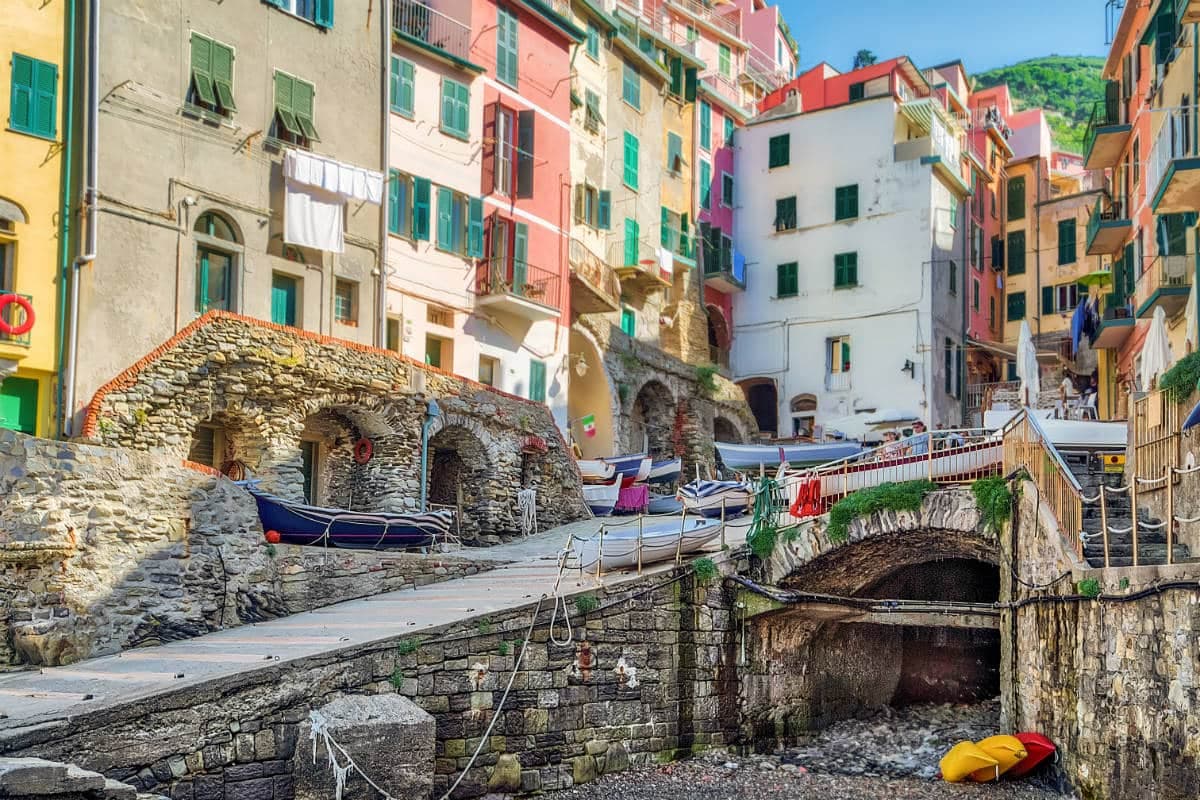
The easternmost of the Cinque Terre, 1,326 people stacked above a fishing inlet, terraced vineyards climbing 250 meters straight off the sea.
Vernazza
Province: La Spezia
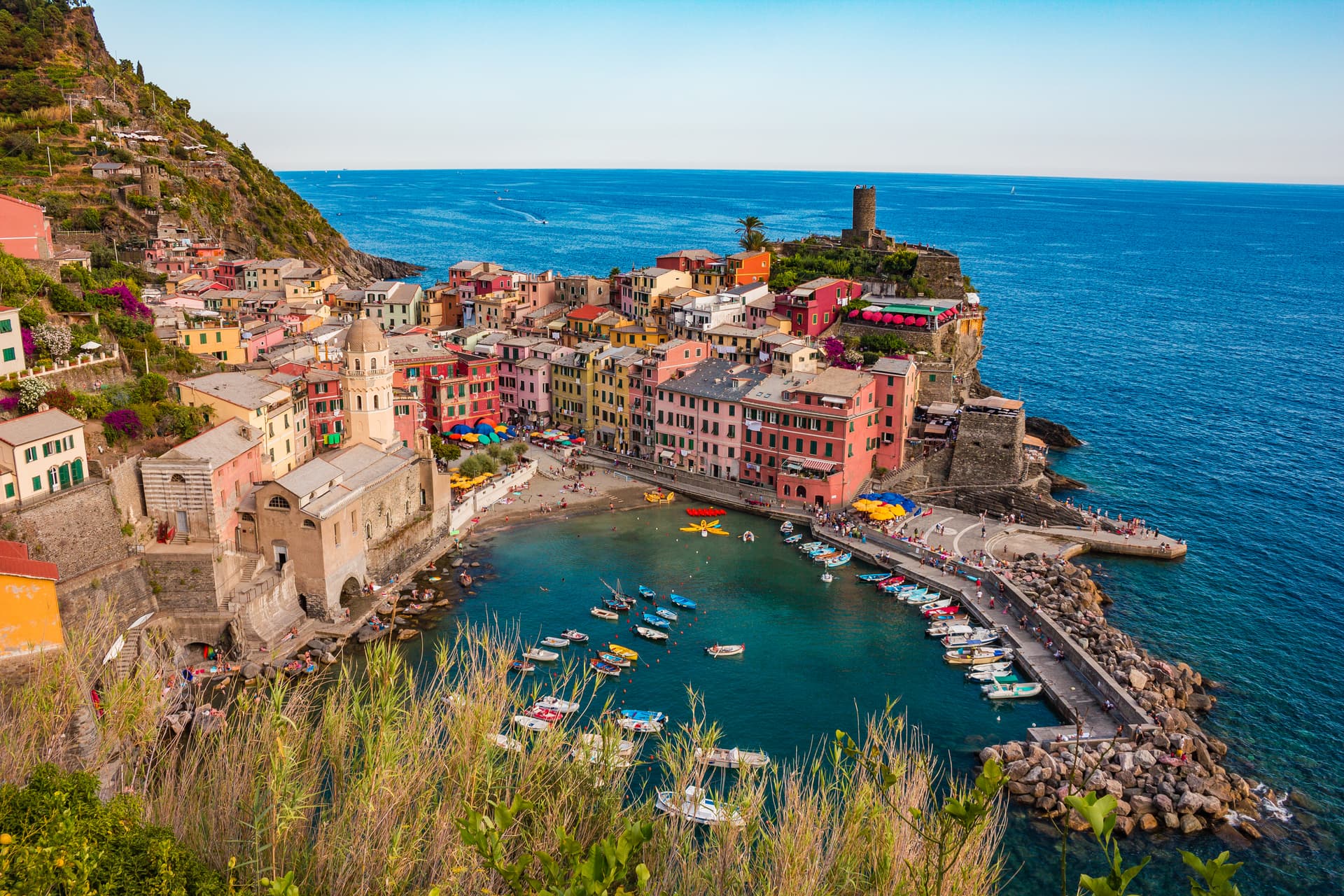
The middle village of the Cinque Terre, the only one with a natural harbor, buried under four meters of mud in October 2011.