

Calabria · Cosenza
Rocca Imperiale
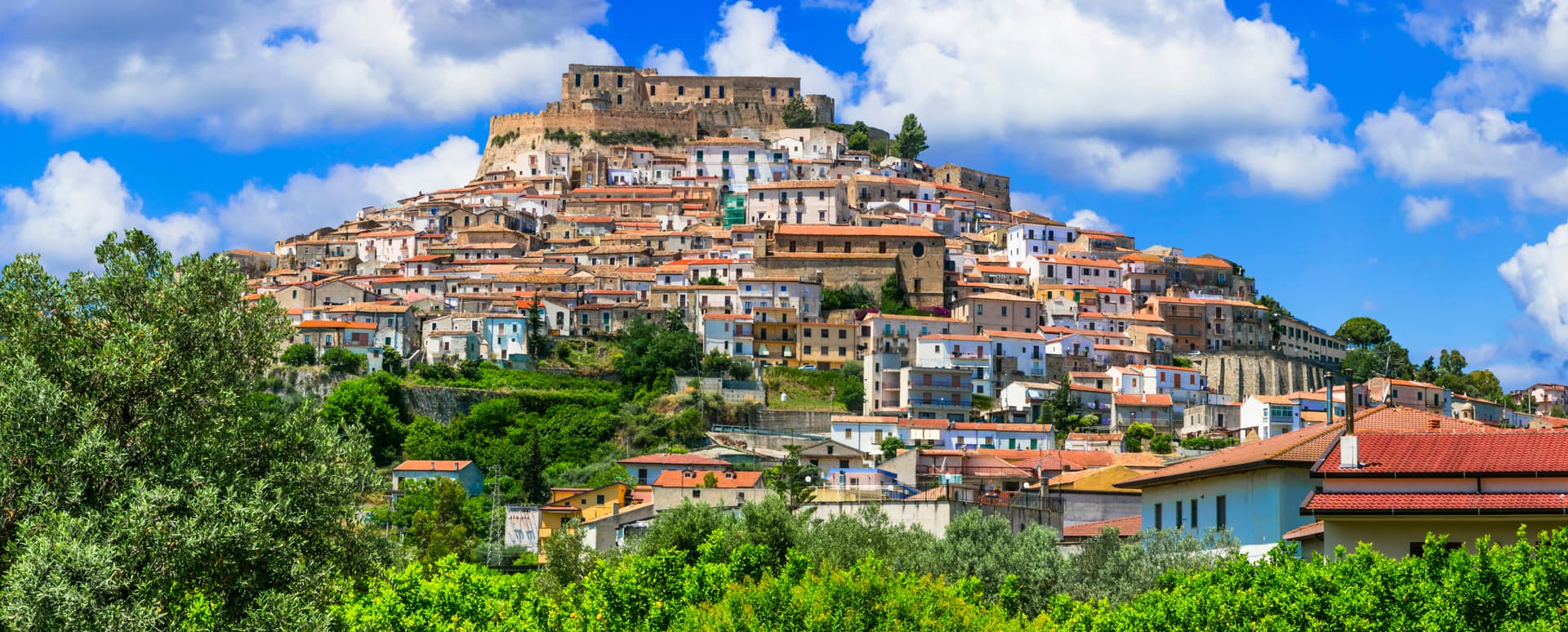
Frederick II's Hohenstaufen fortress at the Calabria–Basilicata border — a Borgo più Bello d'Italia perched on a hill above the Ionian coast, with the 1225 castello at the summit, a Bandiera Blu beach at Rocca Imperiale Marina below, and the locally-grown limone di Rocca Imperiale IGP scenting the orchards.
Known for
FREDERICK II'S CASTLE
1225 Hohenstaufen fortress, one of the Stupor Mundi's network of Apulian-Lucanian-Calabrian strongholds. Square plan, four corner towers, two cylindrical.
BORGHI PIÙ BELLI
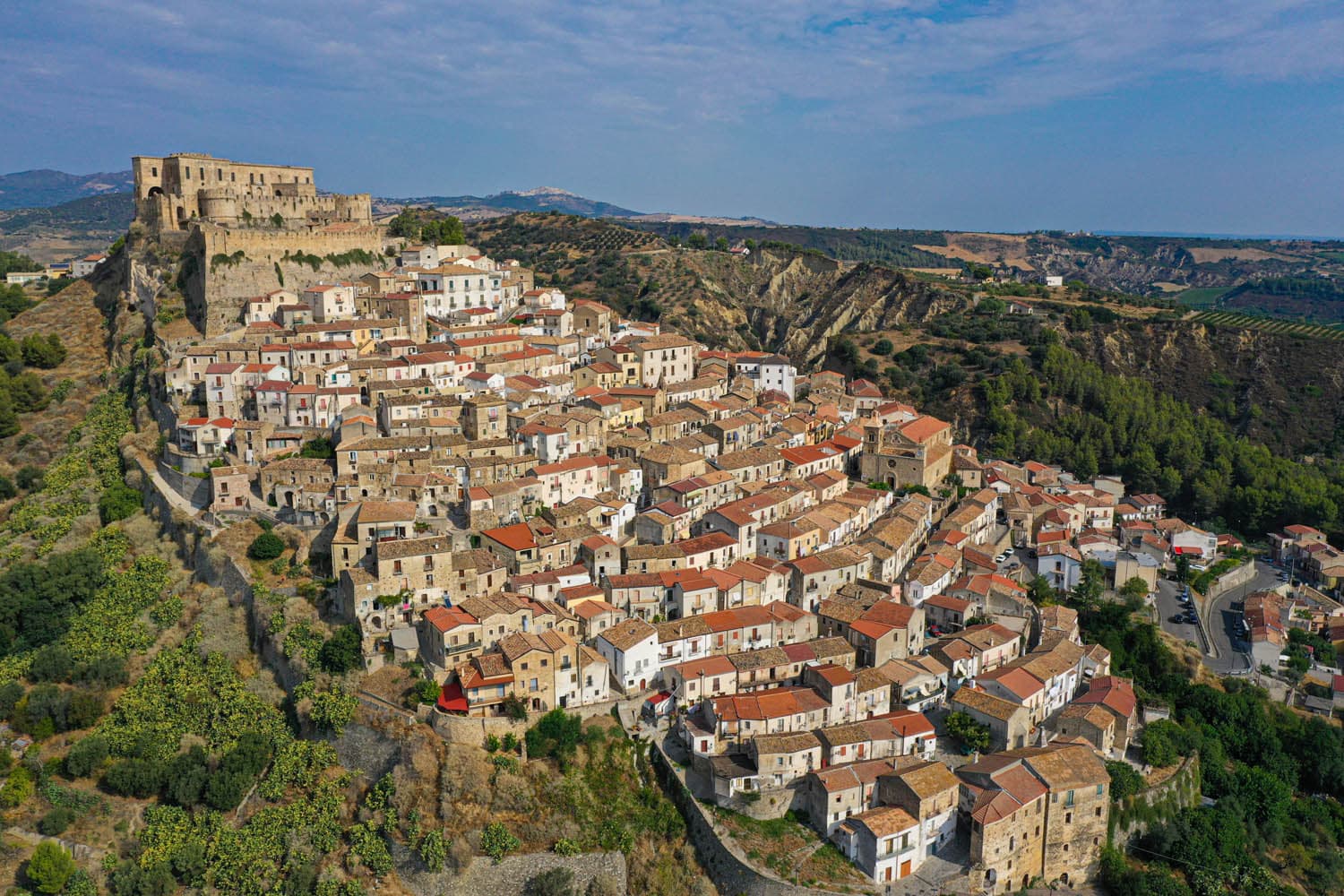
On the official Most Beautiful Villages of Italy list — the whitewashed borgo cascading downhill from the castle is exceptionally photogenic.
BANDIERA BLU MARINA
The long sandy coast 1 km downhill holds the Bandiera Blu every year for water and beach quality.
LIMONE IGP
A small acidic lemon grown only here — IGP-protected, central to the local liqueur and pasta tradition. Festa del Limone in early August.
When to visit
Best · May–Jun, Sep–Oct
- J
- F
- M
- A
- M
- J
- J
- A
- S
- O
- N
- D
- Best
- Hot or crowded
- Quiet
- Mostly closed
Why come
Rocca Imperiale is the northernmost commune of Calabria — pressed against the Basilicata border on the Ionian coast, with the steep hilltop borgo and its imposing castle a kilometre inland from the long sandy Marina. The castle is the point: Federico II di Svevia (Frederick II Hohenstaufen, the Stupor Mundi) built the Castello di Rocca Imperiale between 1225 and 1235 as one of his network of Apulian-Lucanian-Calabrian fortresses, on a defensible hill commanding the coastal route between Taranto and Reggio Calabria. The square Hohenstaufen plan with four corner towers, two of them cylindrical, is intact and partially restored as a cultural centre.
The borgo grew downhill from the castle in tight medieval grids of whitewashed houses and narrow vicoli, with the Chiesa Madre dell'Assunta (15th-c, with a Madonna by Pietro Bernini, father of Gian Lorenzo) anchoring the central piazza. Rocca Imperiale is on the official Borghi più belli d'Italia list — the Pollino park is 30 km west, the Sila highlands further south, and the long sandy Marina (Rocca Imperiale Marina, the modern coastal frazione, holds the Bandiera Blu for water and beach quality every recent year). The food is north-Calabrian-meets-Lucanian: peperoni cruschi, pasta with lardo and chilli, pesce azzurro from the Ionian, and the famous limone di Rocca Imperiale IGP (a small acidic lemon grown only in the surrounding belt, used in liqueurs and the local pasta al limone). The Festa del Limone in early August is the year's main event.
The Sunday letter
We haven’t written Rocca Imperiale’s letter yet.
One town every Sunday, with the photo, the food, the festa. Be there when this one comes up. Free, by Peter & Sophia from Pietrasanta.
By subscribing you agree to Substack’s Terms of Use, our Privacy Policy and our Information collection notice.
What to see
Castello Federiciano (1225)
Frederick II Hohenstaufen's square fortress with four corner towers (two cylindrical) commanding the Ionian coastal route. Open as a cultural centre.
Centro storico (Borghi più belli)
Whitewashed houses in tight medieval vicoli cascading downhill from the castle. The Chiesa Madre dell'Assunta has a Pietro Bernini Madonna.
Rocca Imperiale Marina (Bandiera Blu)
Long sandy Ionian beach 1 km below the borgo — Bandiera Blu every recent year for water clarity and beach management.
Limone di Rocca Imperiale IGP
Small acidic lemon grown only in the surrounding belt — used in liqueurs, the local pasta al limone, and the Festa del Limone in early August.
Pollino + Sila excursions
Parco Nazionale del Pollino is 30 km west (Italy's largest national park); the Sila highlands further south. Rocca is a good base for both.
The slow-trip planner
Building a trip? Find where Rocca Imperiale fits in a slow Italy circuit.
Answer five questions. We will shape a geographically coherent slow trip from the 1,000 Italian towns most travelers skip. Yours to save and share.
Living here
- Population 3,204
- Off the beaten pathi
- Pharmacy: none mapped
- High school within a 30-minute drive
- Train station in the comune
- Nearest airport Bari / Brindisi, 2 h 8 min drive
- Regional capital Catanzaro, 2 h 55 min drive
Tags & datadesignations · numbers · sources
Recognised as
The numbers
- Elevation: 210 m
- Population: 3,204
- Surface area: 55.03 km²
These figures were compiled from public directories — ISTAT, OpenStreetMap, Wikidata — and from the official listings of the guides named on this page. Town details change; verify with official sources before you travel.
Close by
More towns near Rocca Imperiale
Policoro
Province: Matera
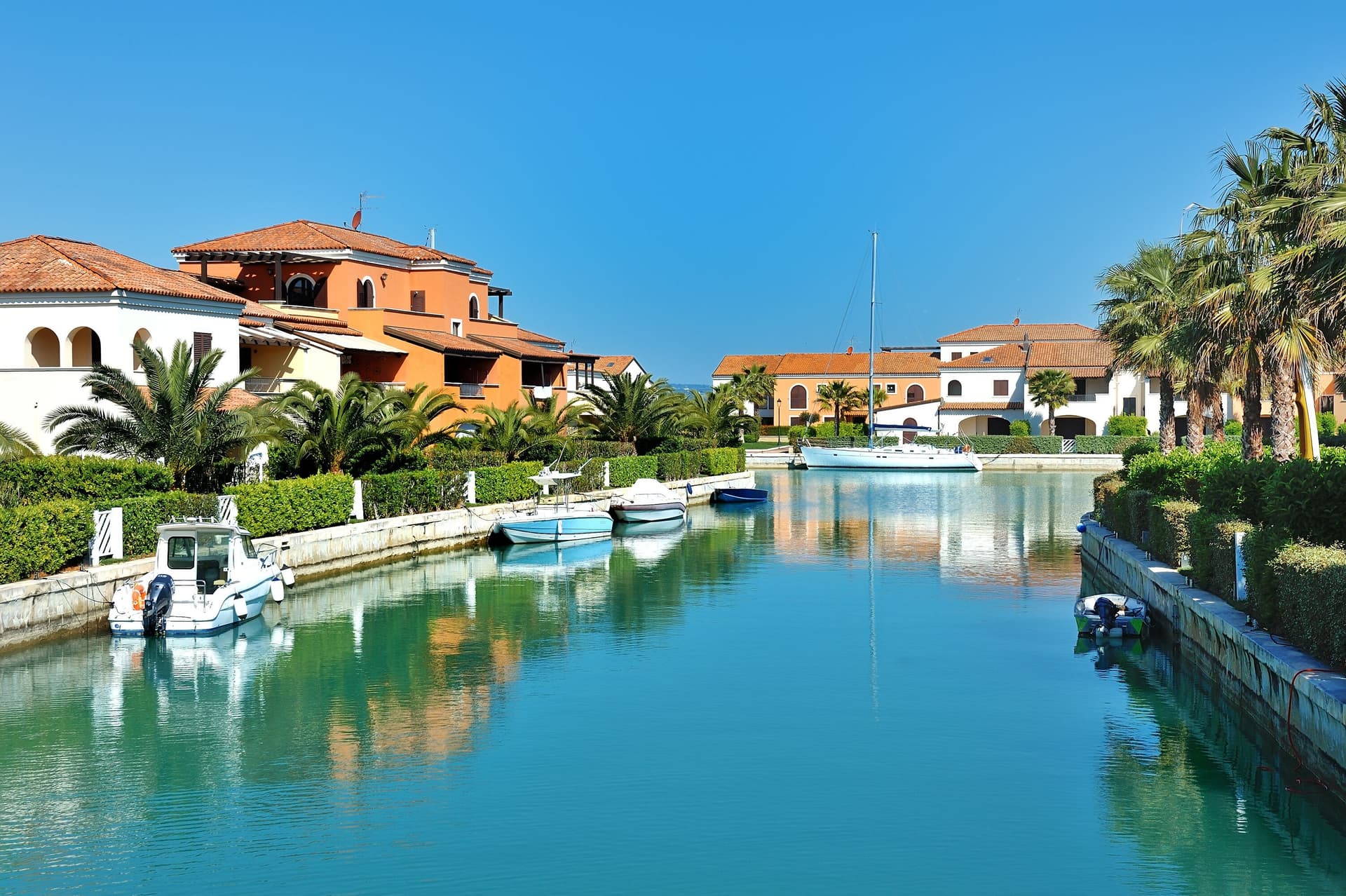
A Ionian-coast town on the Gulf of Taranto built on the ruins of the Greek polis of Heraclea — birthplace of the Tavole di Eraclea bronze inscriptions and home to one of the region's most-visited Bandiera Blu beaches and the National Museum of the Siritide.
Nova Siri
Province: Matera
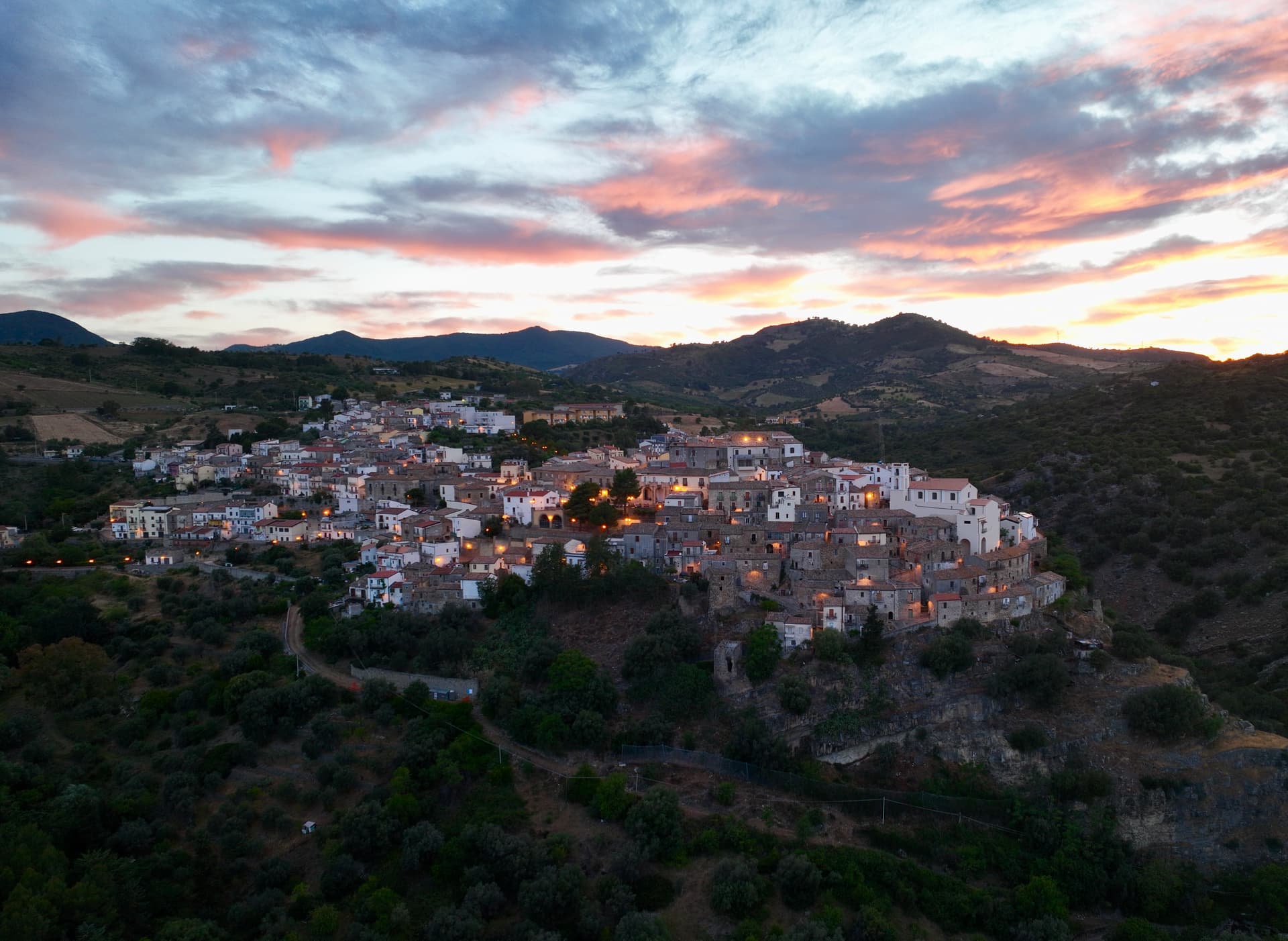
A 350-meter Ionian hill town with a Blue Flag beach nine kilometers below, near the site of the ancient Greek colony of Siris.
Montegiordano
Province: Cosenza
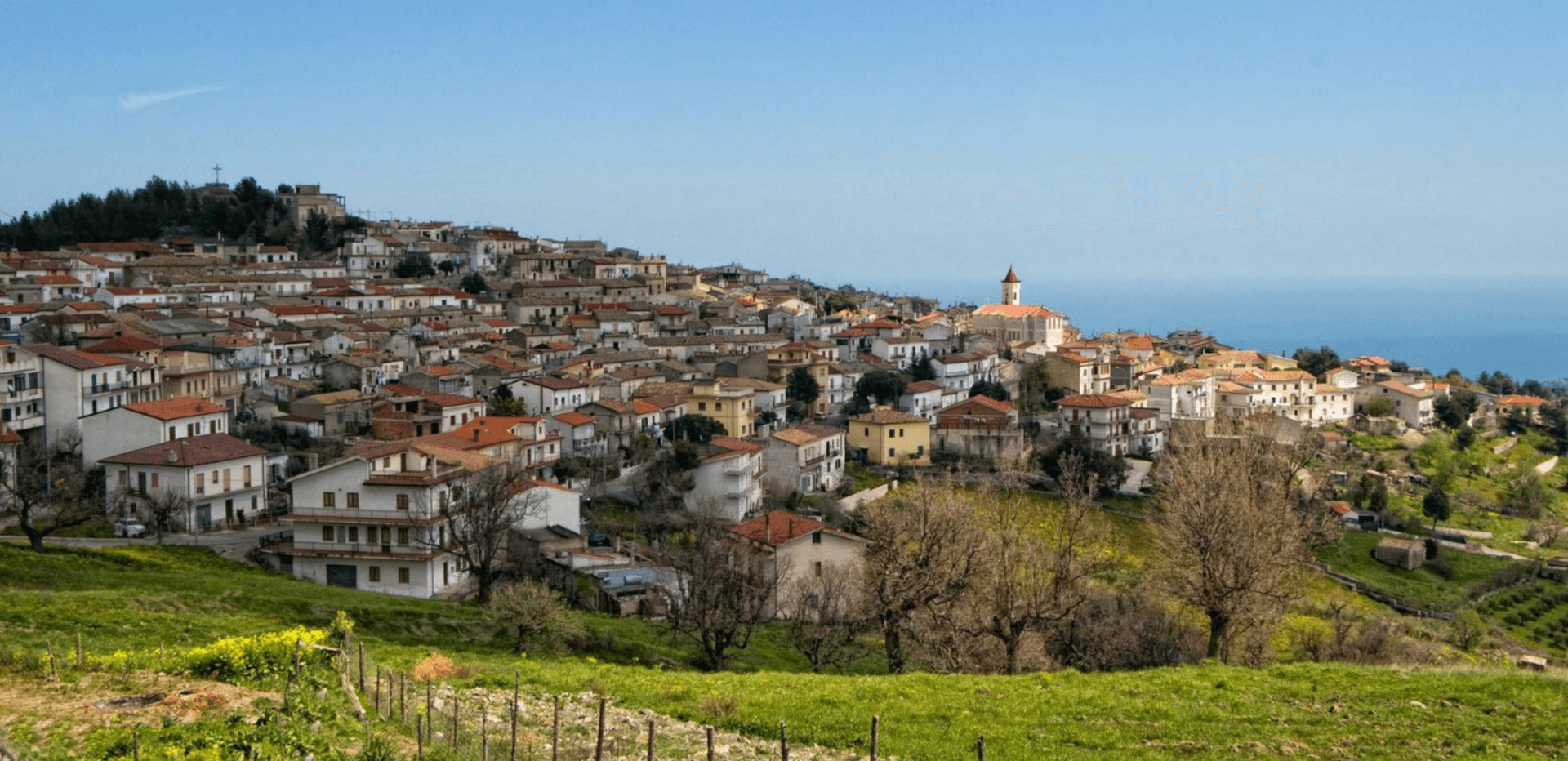
A 619-meter Alto Jonio hill town with a Pignone del Carretto hunting castle and more than two hundred murals across its centro storico.
Rotondella
Province: Matera
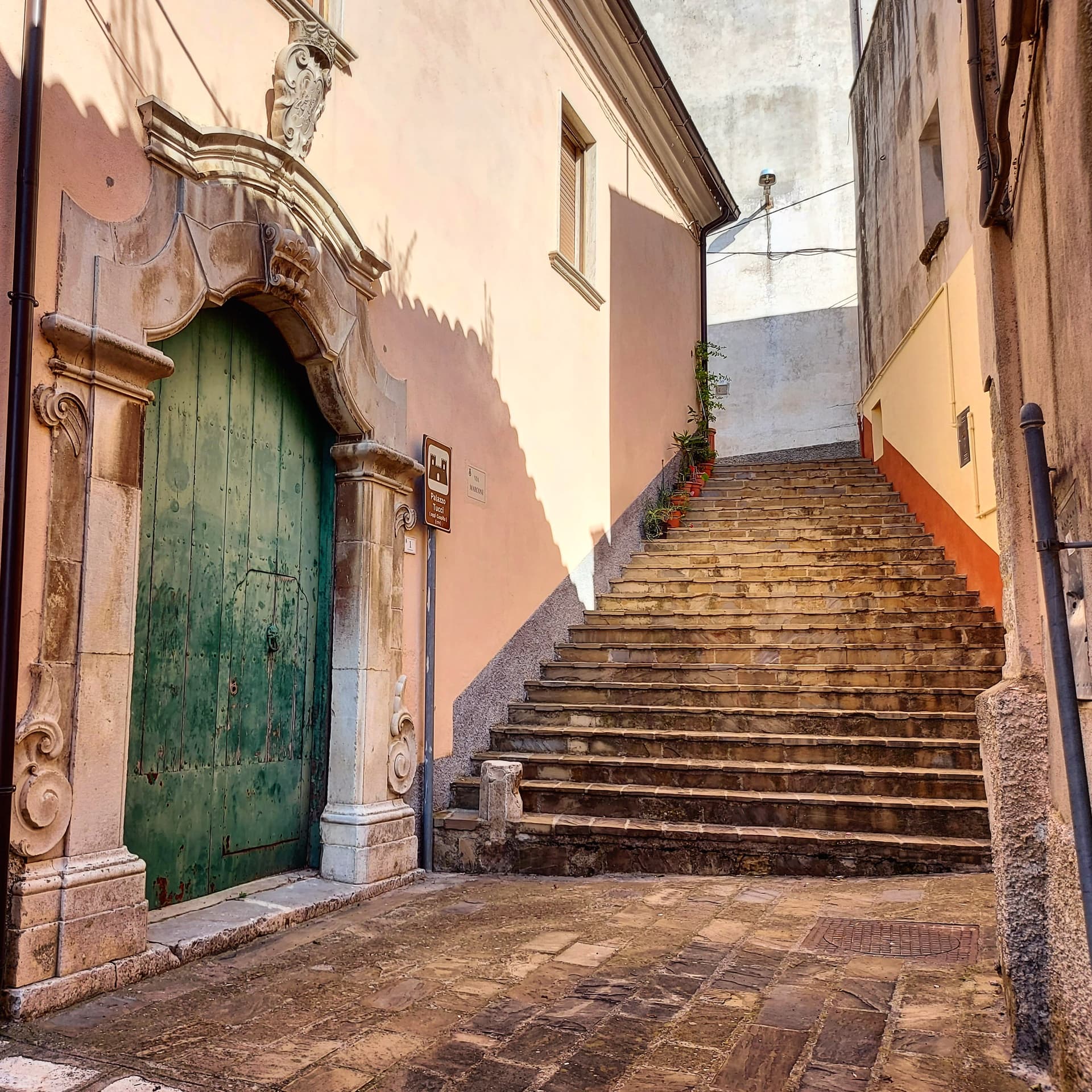
The 'Balcony of the Ionian' — a 2,400-resident Lucanian borgo on a 576m hilltop overlooking the Metapontino plain and the Ionian Sea, with intact medieval streets, the Chiesa di Santa Maria della Neve, and a high-quality DOP olive oil from the surrounding terraced groves.
Roseto Capo Spulico
Province: Cosenza
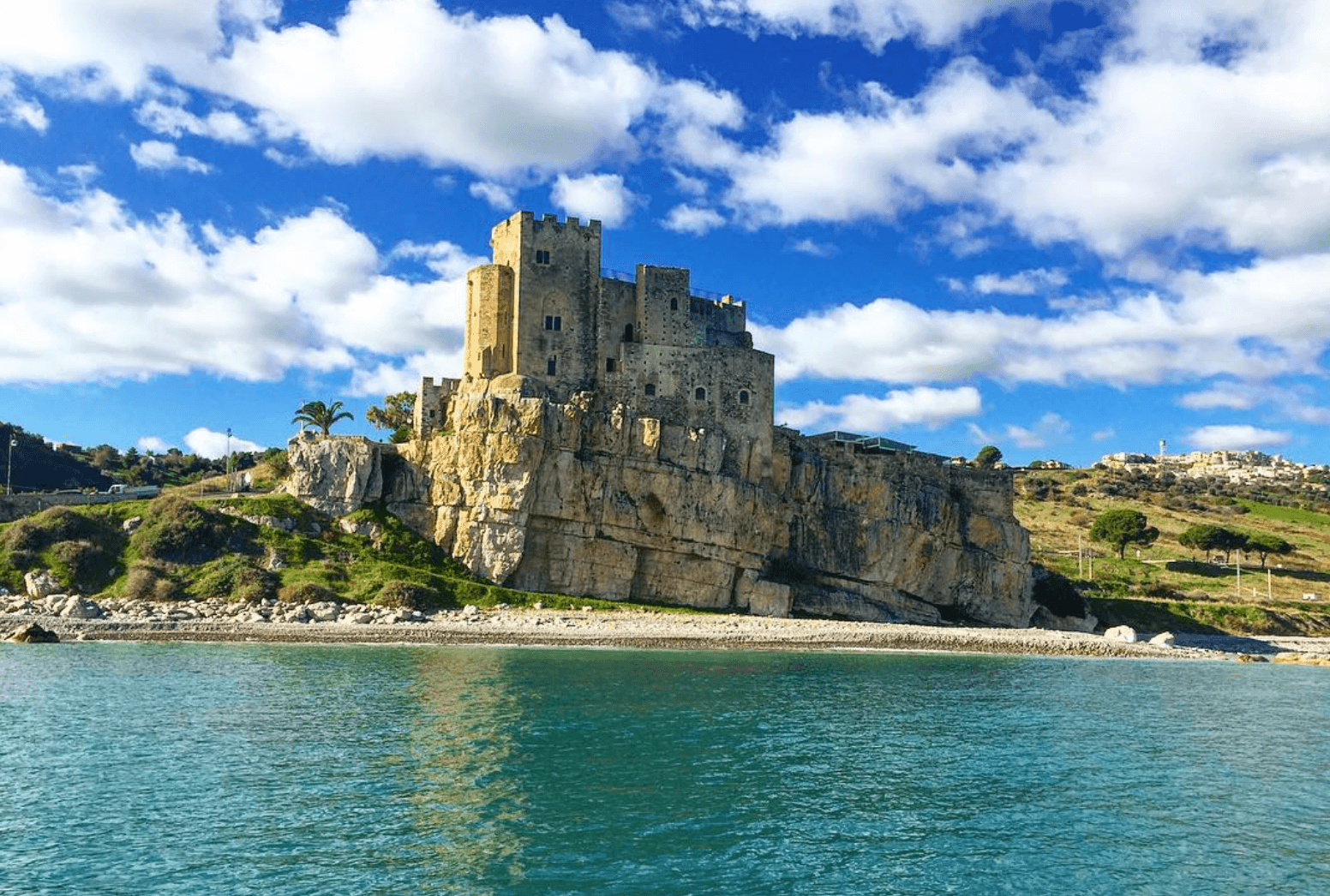
A Frederician castle on a rock above the Ionian, a former Sybaris satellite city founded in the seventh century BC, Templar legend included.
🎨 Borghi più belli d'Italia
More Borghi più belli d'Italia towns in Calabria
Aiello Calabro
Province: Cosenza
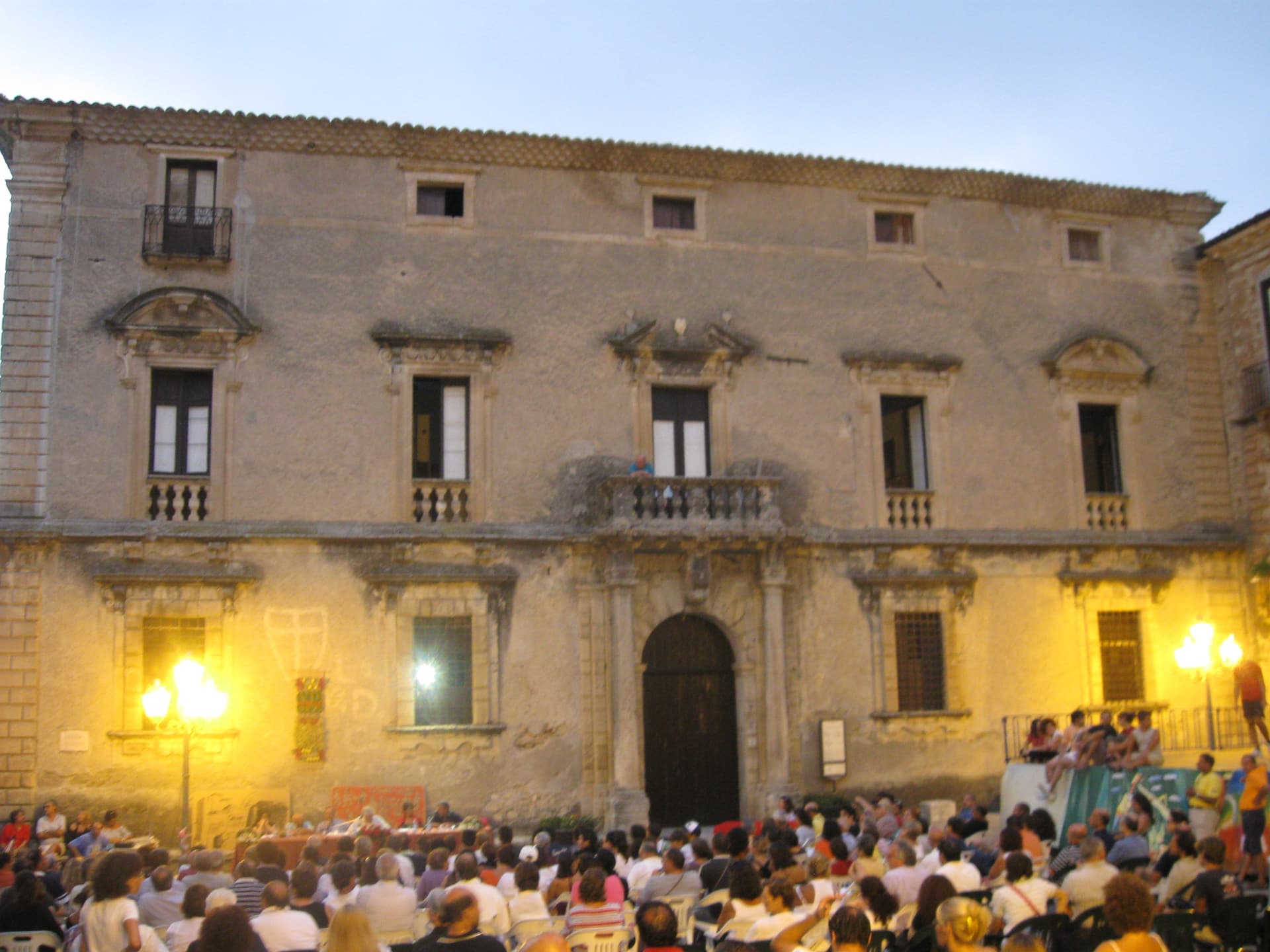
A hilltop borgo at 502 meters in the Tyrrhenian hinterland of Cosenza, ruled for two centuries by the Cybo-Malaspina from Massa Carrara.
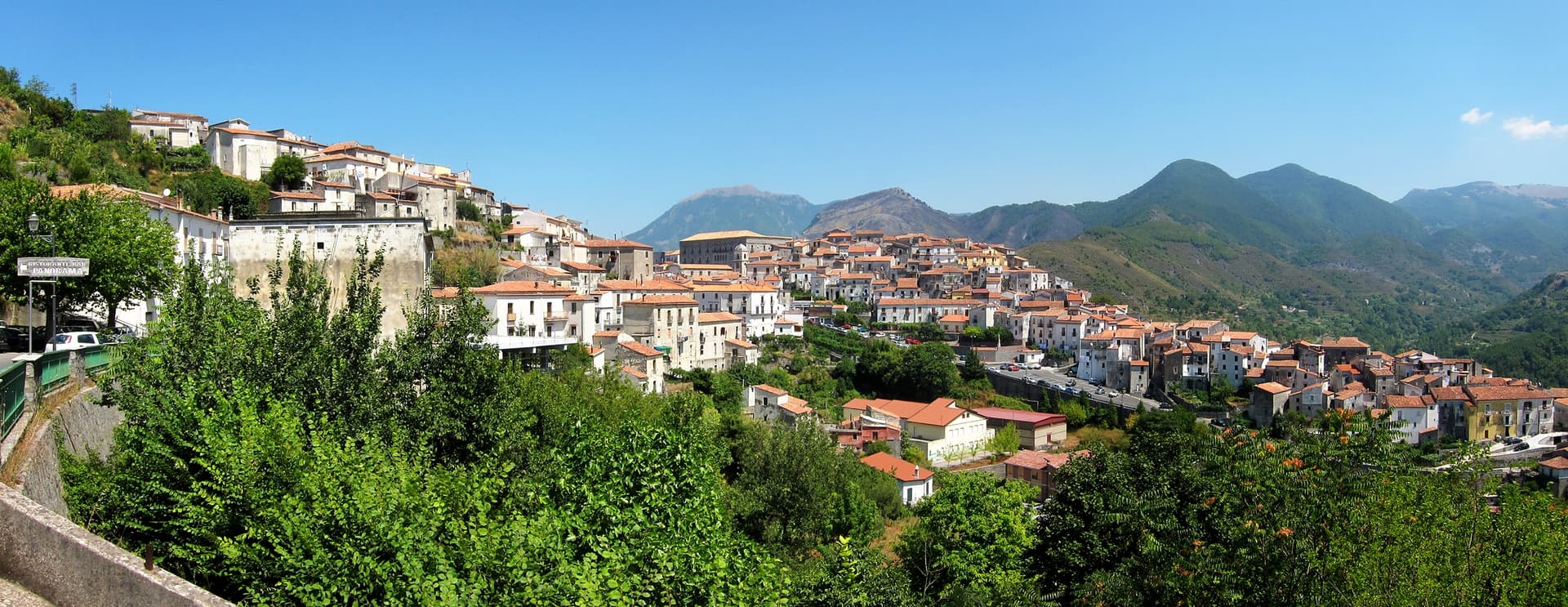
Aieta
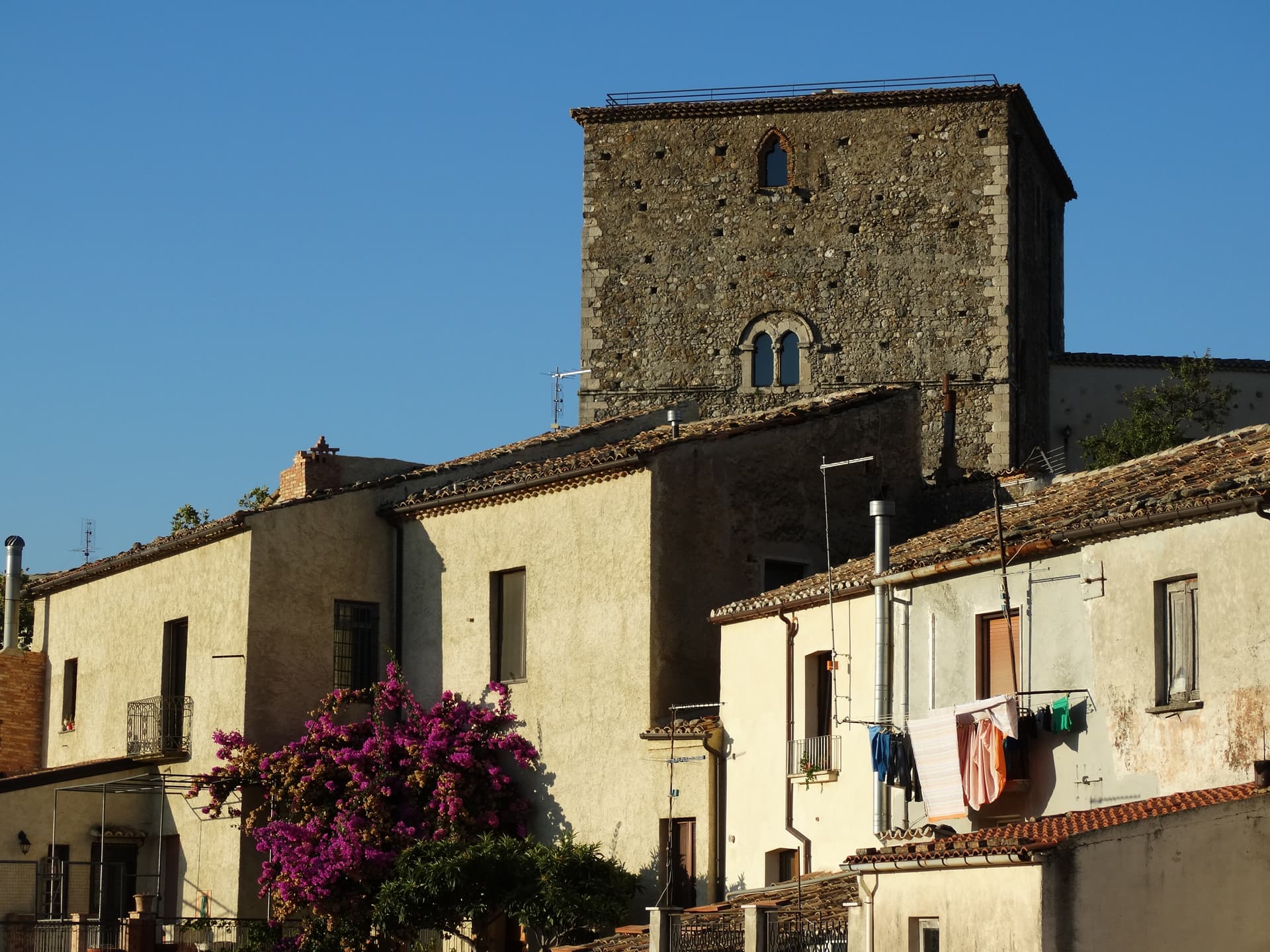
Province: Cosenza
An eagle's-nest village in the western Pollino, with one of the few sixteenth-century Renaissance palazzi standing in Calabria.
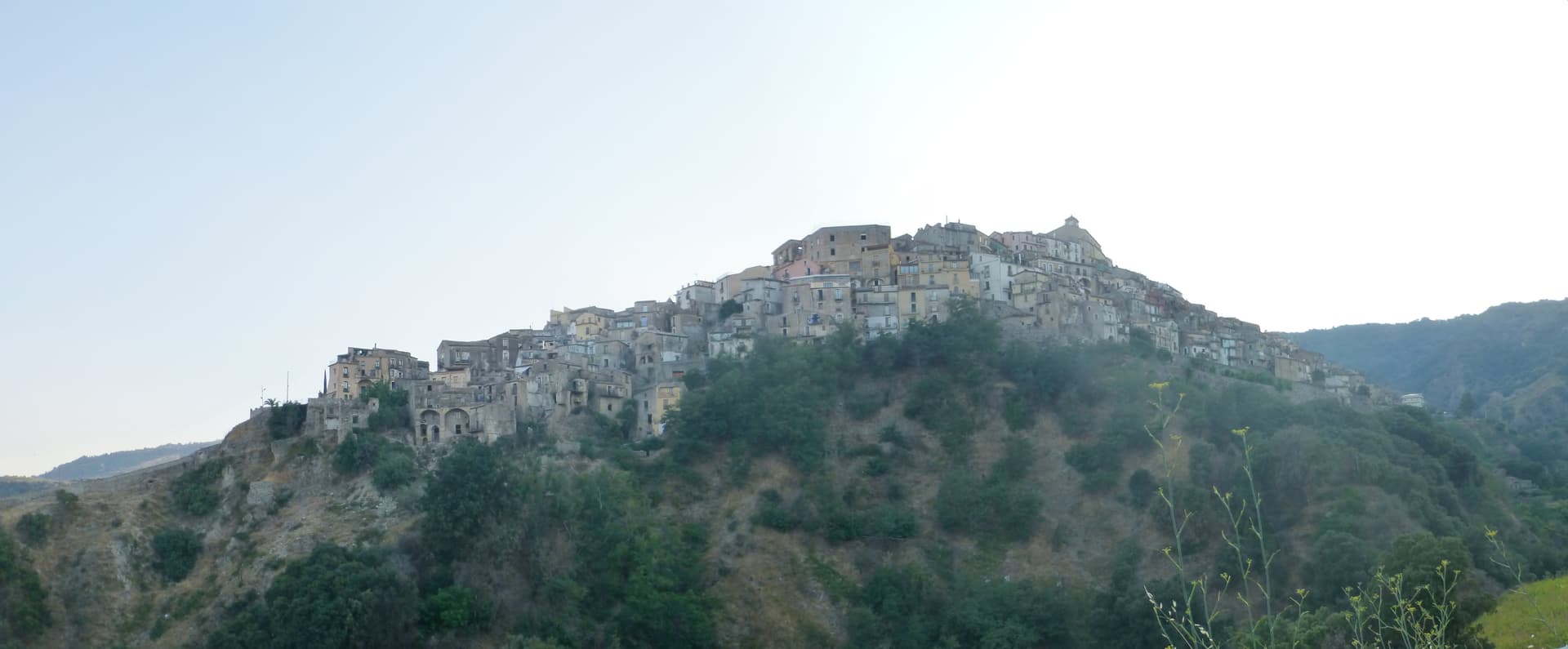
Altomonte
Province: Cosenza
The highest Gothic-Angevin church in Calabria, a Simone Martini panel commissioned in 1326, and a hill of 455 meters in the Esaro valley.
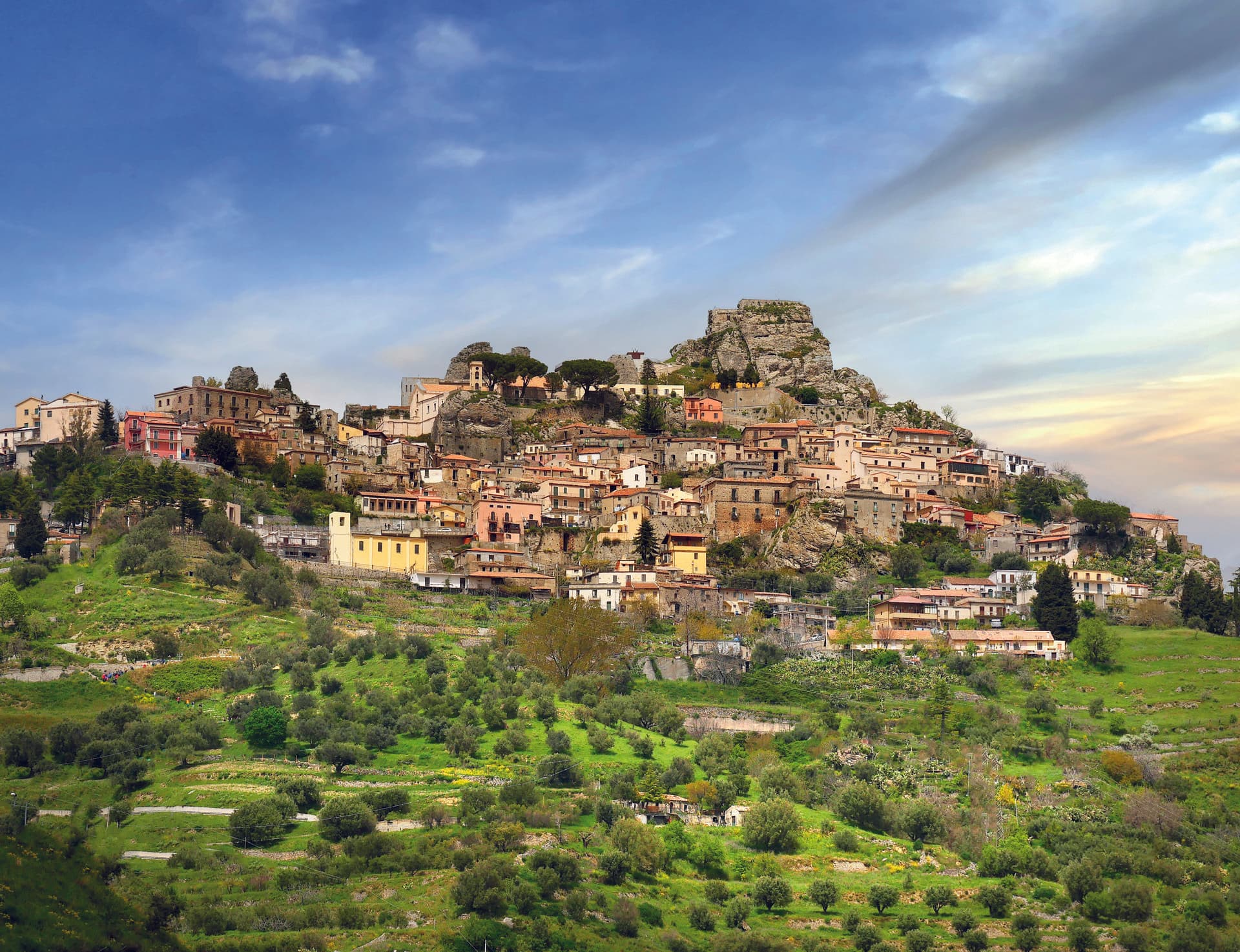
Badolato
Province: Catanzaro
A medieval borgo of thirteen churches at 240 meters above the Ionian, which took in 350 Kurdish refugees in 1997 and started its own slow rebirth.
Bova
Province: Reggio di Calabria
The capital of the Bovesìa — a 416-resident Aspromonte hilltop borgo at 820m that is the cultural centre of the Grecanic minority, where the Calabrian-Greek dialect (a direct descendant of Byzantine-era Greek) is still spoken by elders, with the triple Borghi più belli + Bandiera Arancione + Parco Nazionale dell'Aspromonte signal.