
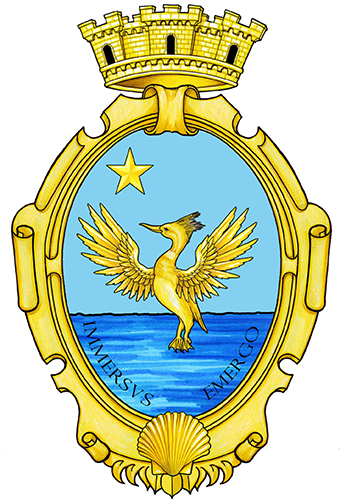
Basilicata · Potenza
Lagonegro
A 666-meter Valle del Noce town founded by Byzantine monks, where local legend places the burial of Lisa del Giocondo, Leonardo's Mona Lisa.
Known for
LISA DEL GIOCONDO
Local tradition holds that Leonardo's Mona Lisa model died in Lagonegro in 1506, tomb claimed inside the Chiesa di San Nicola.
MONTE SIRINO
Mountain wall of 2,005 meters above town, ski terrain in winter and Lake Laudemio, Italy's southernmost glacial lake, on its flank.
DOUBLE TOWN
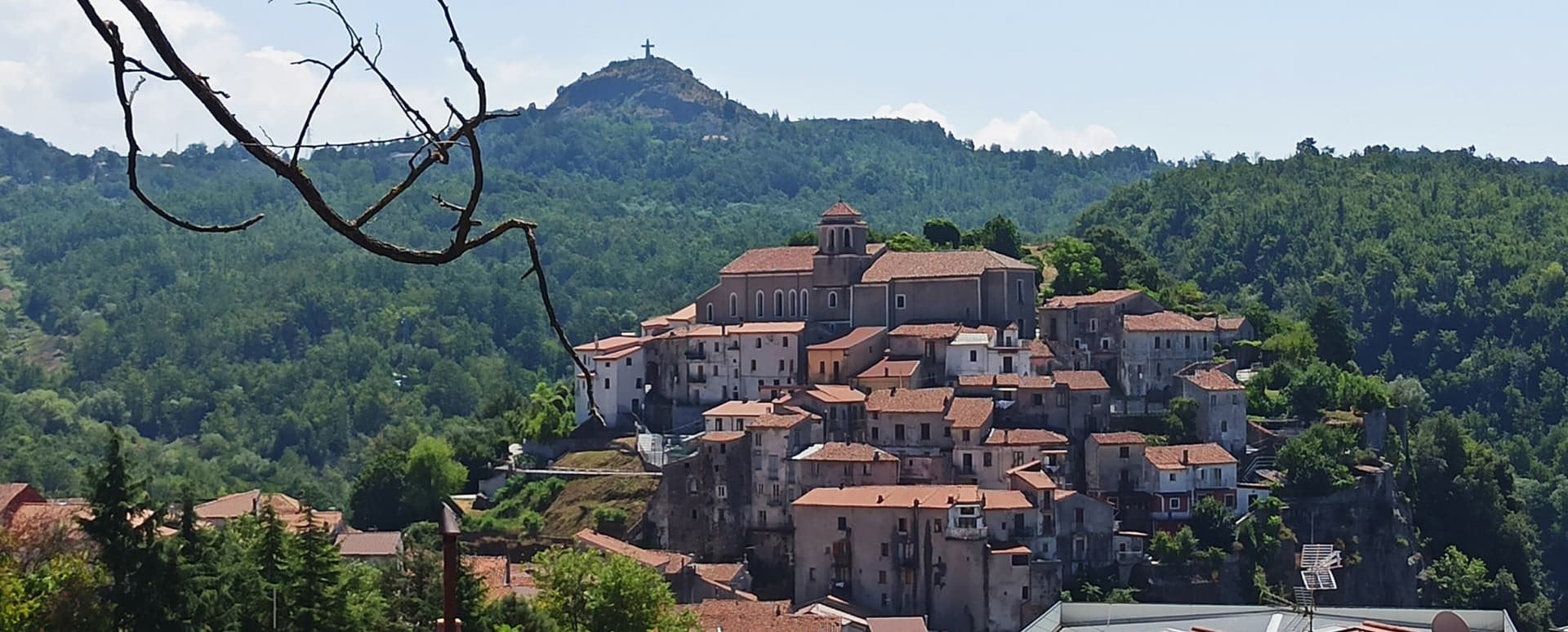
Medieval old village on the castle promontory and tree-lined modern Piano below, joined by the wooded slope that separates them.
When to visit
Best · May–Oct
- J
- F
- M
- A
- M
- J
- J
- A
- S
- O
- N
- D
- Best
- Hot or crowded
- Quiet
- Mostly closed
The festa: Nicola di Bari, ultima domenica di maggio
Why come
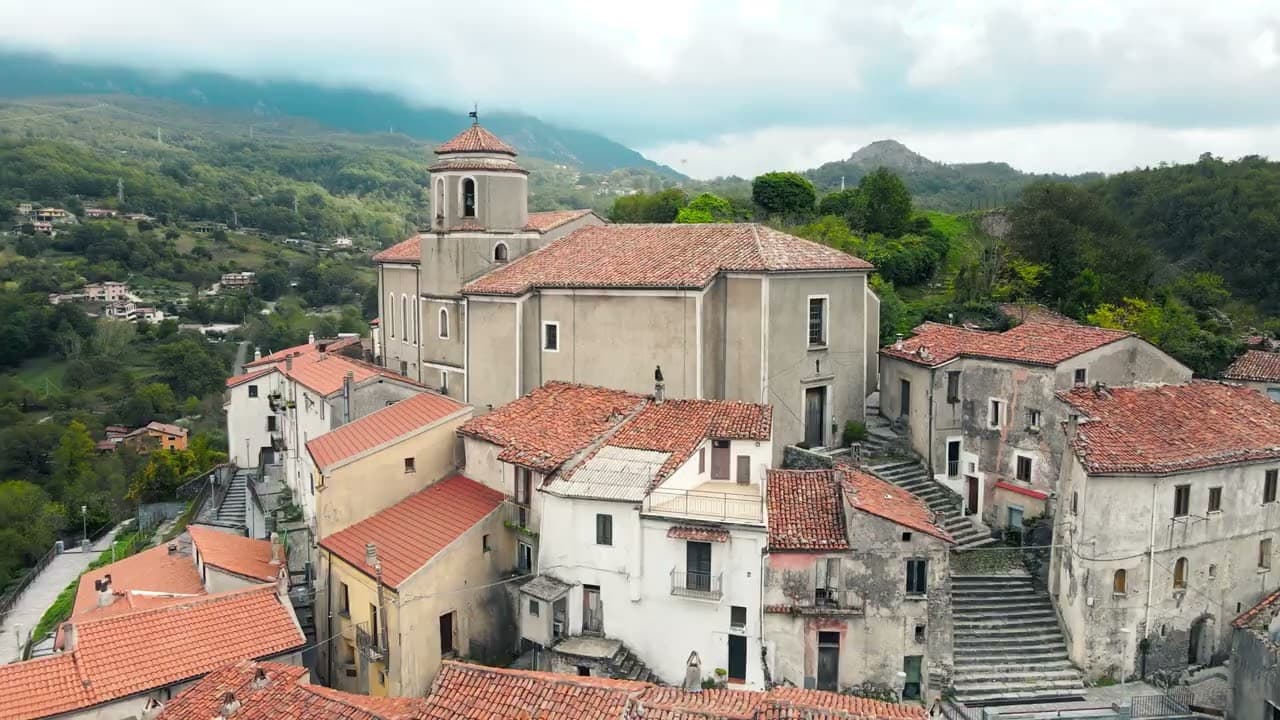
Lagonegro sits at 666 meters in the Valle del Noce, under the 2,005-meter wall of Monte Sirino on the southern fringe of the Appennino Lucano park. Byzantine monks established the settlement between the ninth and tenth centuries on a defensive promontory between the Noce and Cogliandrino streams. The town divides cleanly in two: the old village climbs around the ruins of the feudal castello and the tenth-century Chiesa di San Nicola, while the modern town spreads from the tree-lined Piano square below.
The Chiesa di San Nicola holds the tomb local tradition assigns to Lisa del Giocondo, the Florentine model of Leonardo's Mona Lisa, said to have died here in 1506; the claim has been disputed since the 2005 Heidelberg discovery confirmed she died in Florence in 1542, but Lagonegro keeps the legend. Lake Sirino at 788 meters and the glacial Lake Laudemio at 1,525 meters are both within twenty minutes of the town.
The Sunday letter
We haven’t written Lagonegro’s letter yet.
One town every Sunday, with the photo, the food, the festa. Be there when this one comes up. Free, by Peter & Sophia from Pietrasanta.
By subscribing you agree to Substack’s Terms of Use, our Privacy Policy and our Information collection notice.
What to see
Chiesa di San Nicola
Tenth-century church in the old village, holds the tomb local tradition assigns to Lisa del Giocondo and two sculptures by Altobello Persio.
Castello feudale
Ruins of the feudal fortress on the promontory of the old village, the original Byzantine and later Norman defensive anchor of the Valle del Noce.
Borgo antico
Stone-built medieval core climbing around the castle ruins, separated by the wooded slope from the modern town below.
Piano
Large tree-lined square of the lower town, the social centre of modern Lagonegro and the main civic axis since the nineteenth century.
Lago Laudemio (Remmo)
Glacial lake at 1,525 meters on the northern slope of Monte Sirino, the southernmost glacial lake in Italy and a national park reserve.
Monte Sirino
Mountain wall at 2,005 meters above the town, ski station on the northern slope and walking territory in summer for the Appennino Lucano park.
The slow-trip planner
Building a trip? Find where Lagonegro fits in a slow Italy circuit.
Answer five questions. We will shape a geographically coherent slow trip from the 1,000 Italian towns most travelers skip. Yours to save and share.
Living here
- Population 5,042
- Off the beaten pathi
- Pharmacy in town
- High school within a 30-minute drive
- Train station in the comune
- Nearest airport Naples / Salerno, 2 h 8 min drive
- Regional capital Potenza, 1 h 20 min drive
Tags & datadesignations · numbers · sources
Recognised as
The numbers
- Elevation: 666 m
- Population: 5,042
- Surface area: 113.07 km²
These figures were compiled from public directories — ISTAT, OpenStreetMap, Wikidata — and from the official listings of the guides named on this page. Town details change; verify with official sources before you travel.
Close by
More towns near Lagonegro
Rivello
Province: Potenza
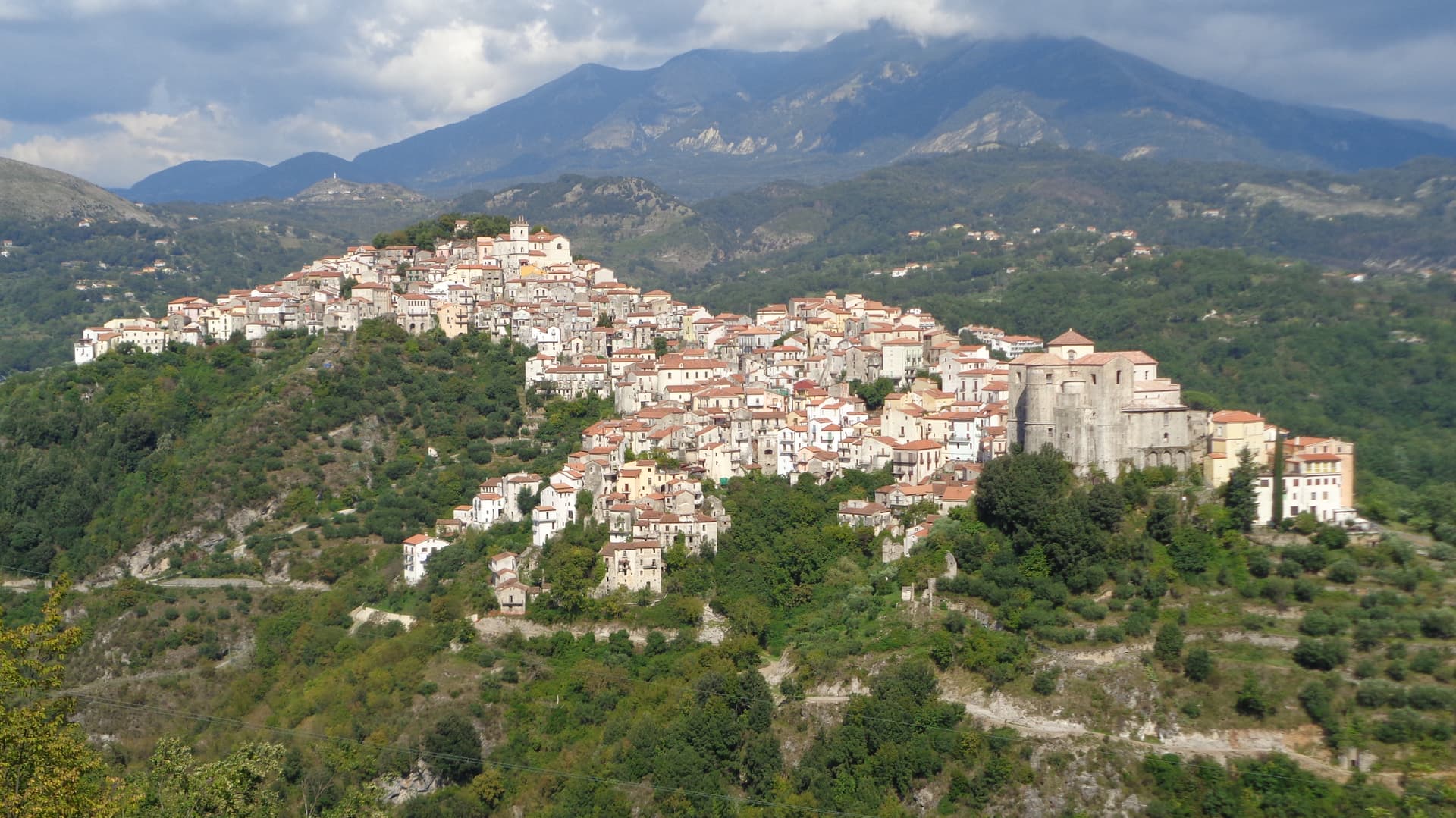
A 479-meter ridge above the Noce valley where Lombards and Byzantines lived side by side, holding Latin and Greek rites until the seventeenth century.
Laino Borgo
Province: Cosenza
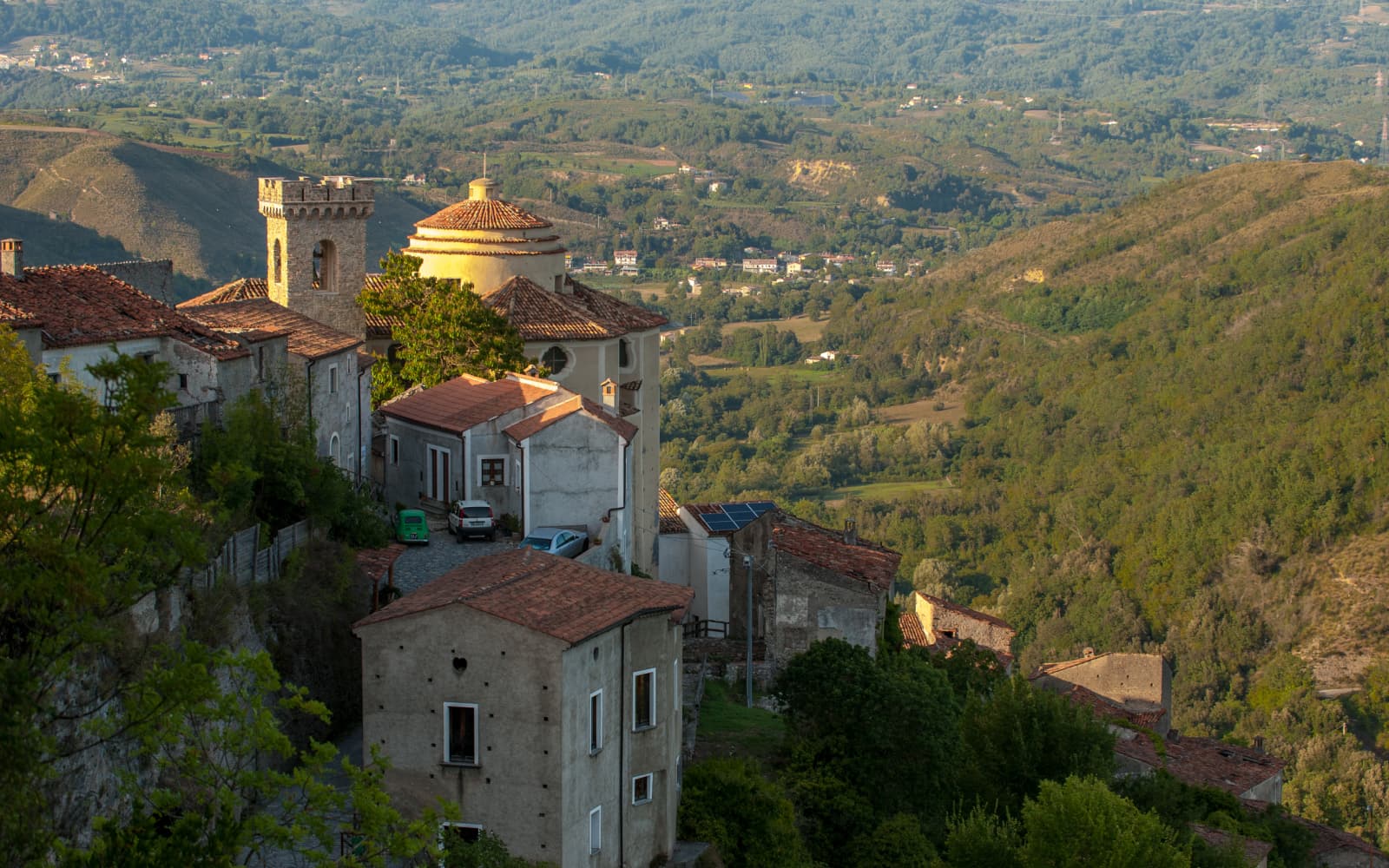
Southern Italy's only Sacro Monte, sixteen pilgrimage chapels begun in 1557, on the Lao river canyon that made it Calabria's rafting capital.
Padula
Province: Salerno
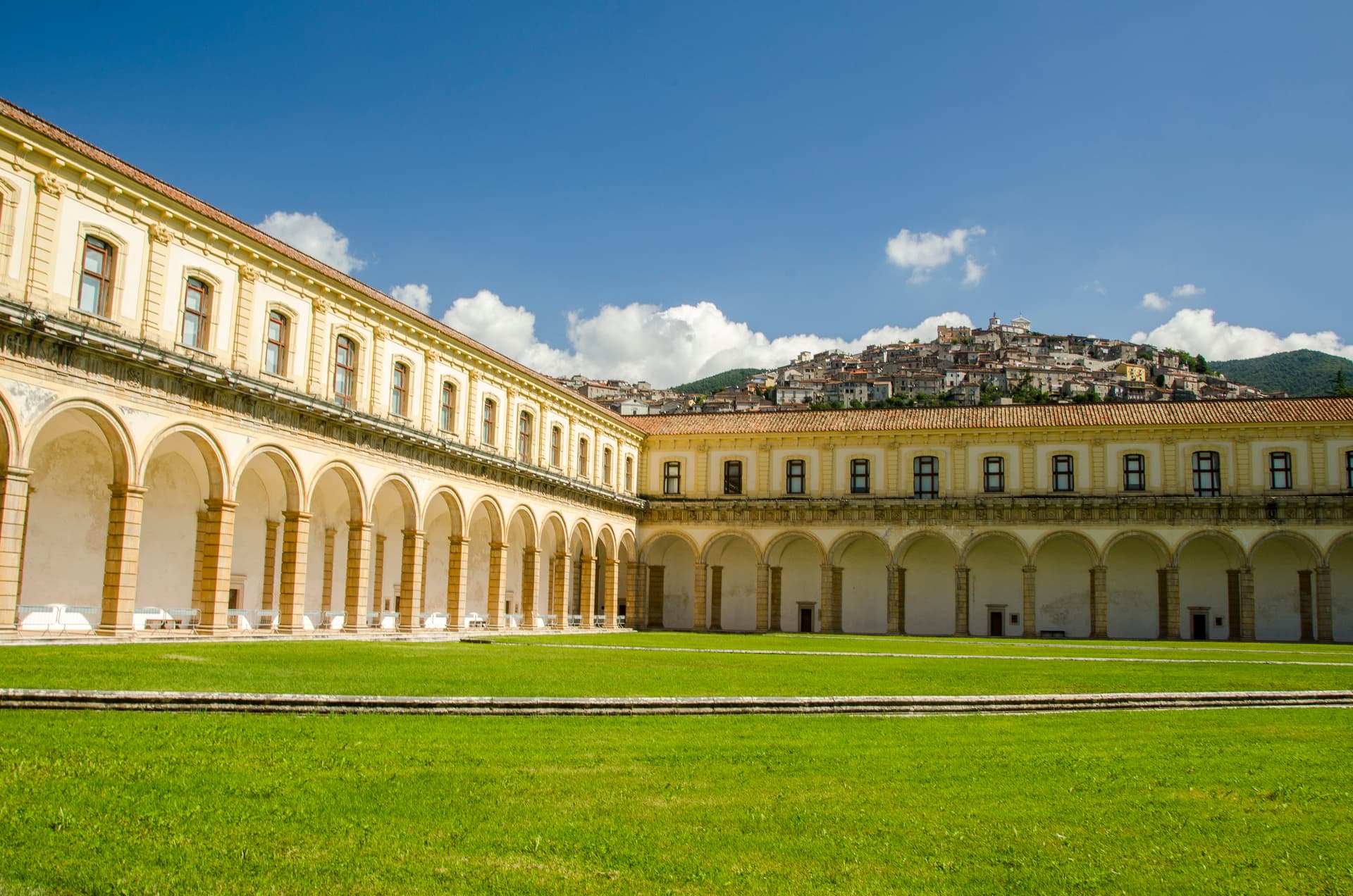
A hill town at 699 meters above the Vallo di Diano, holding the Certosa di San Lorenzo and the world's largest cloister.
Latronico
Province: Potenza
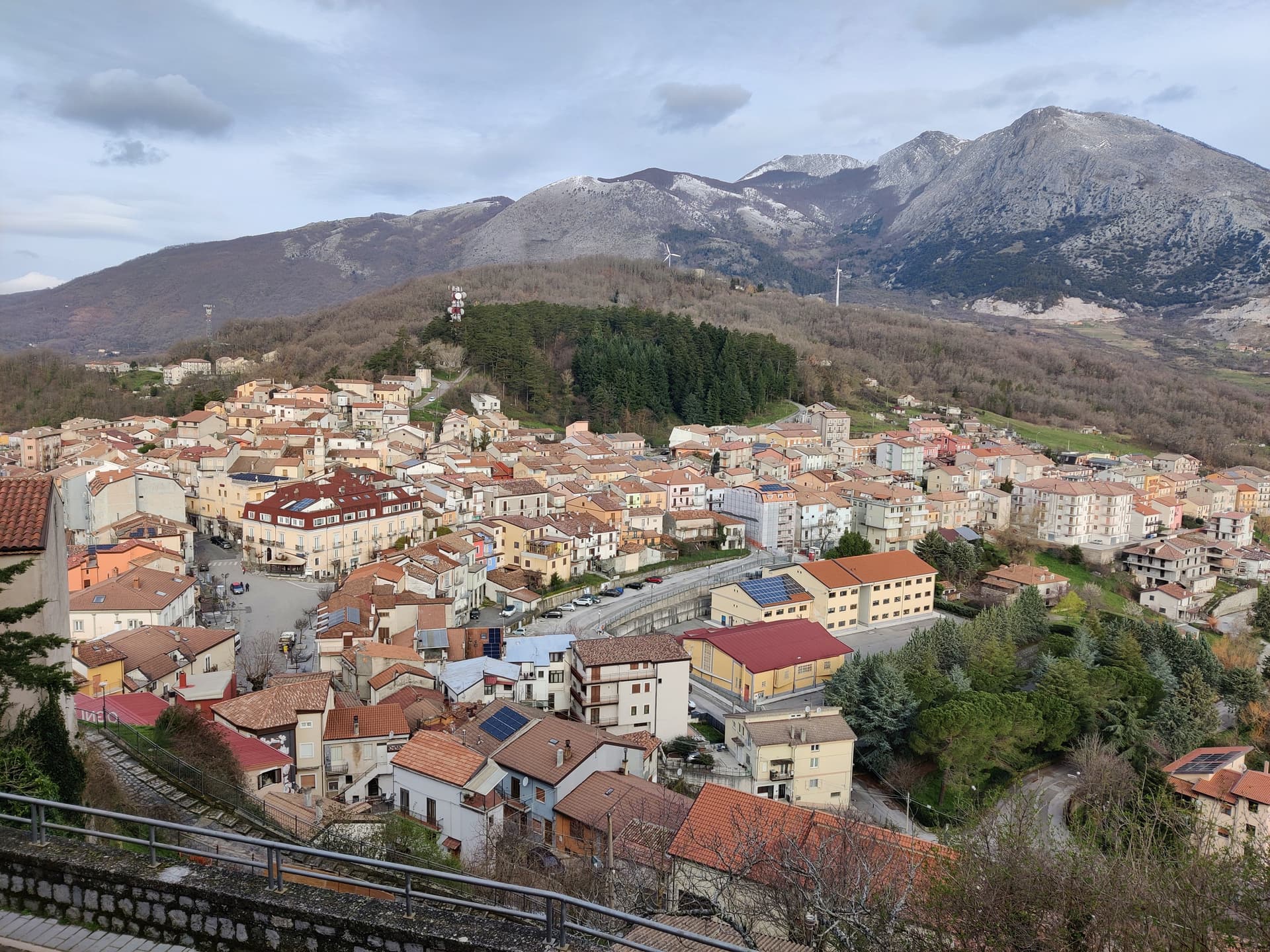
A mountain town at 888 meters on the northern edge of the Pollino, with two prehistoric thermal springs at the Calda hamlet below.
Maratea
Province: Potenza
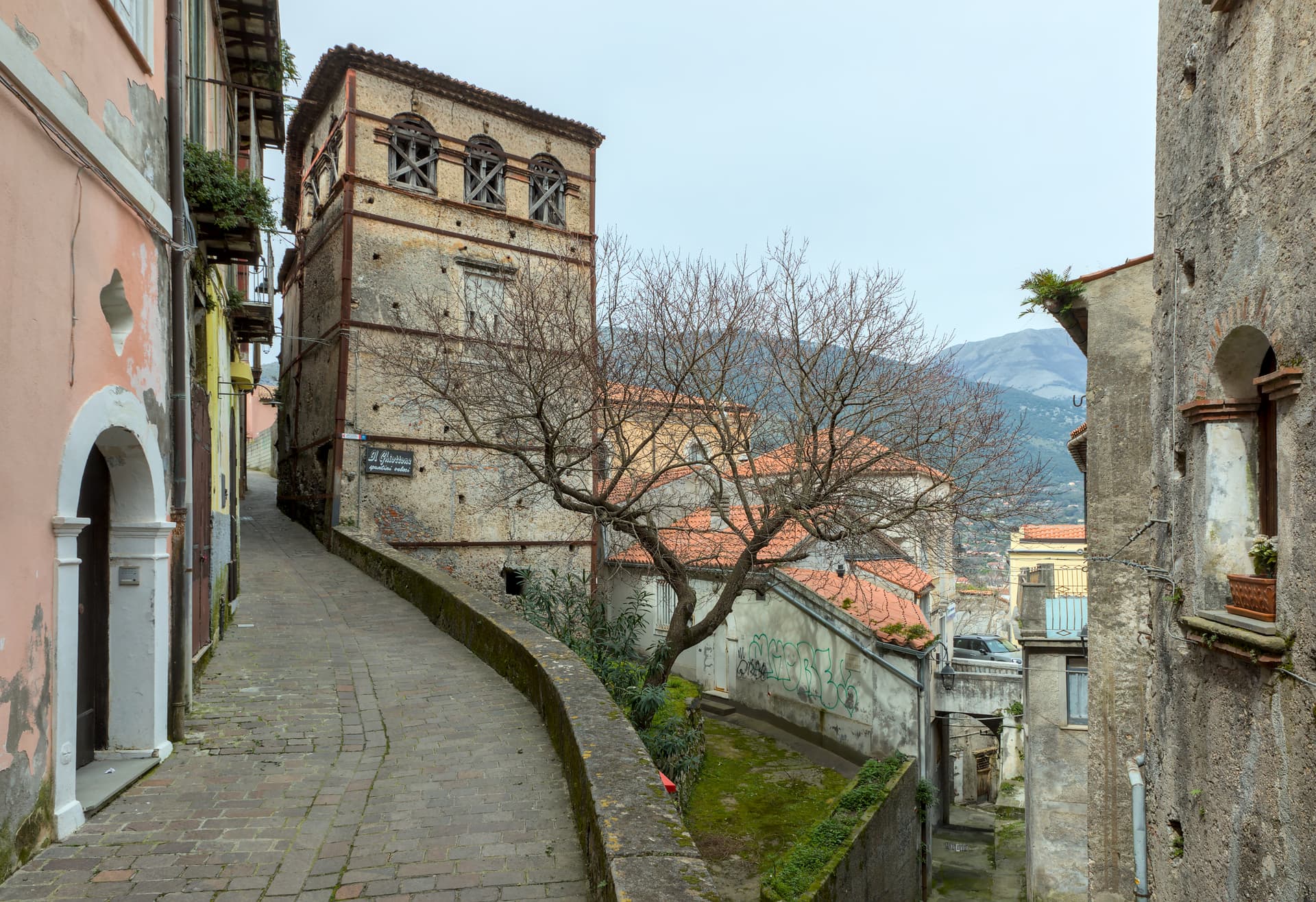
Basilicata's only commune on the Tyrrhenian, thirty-two kilometers of rocky coast under a twenty-one meter marble Christ raised over Monte San Biagio in 1965.
🌲 Parco Nazionale
More Parco Nazionale towns in Basilicata
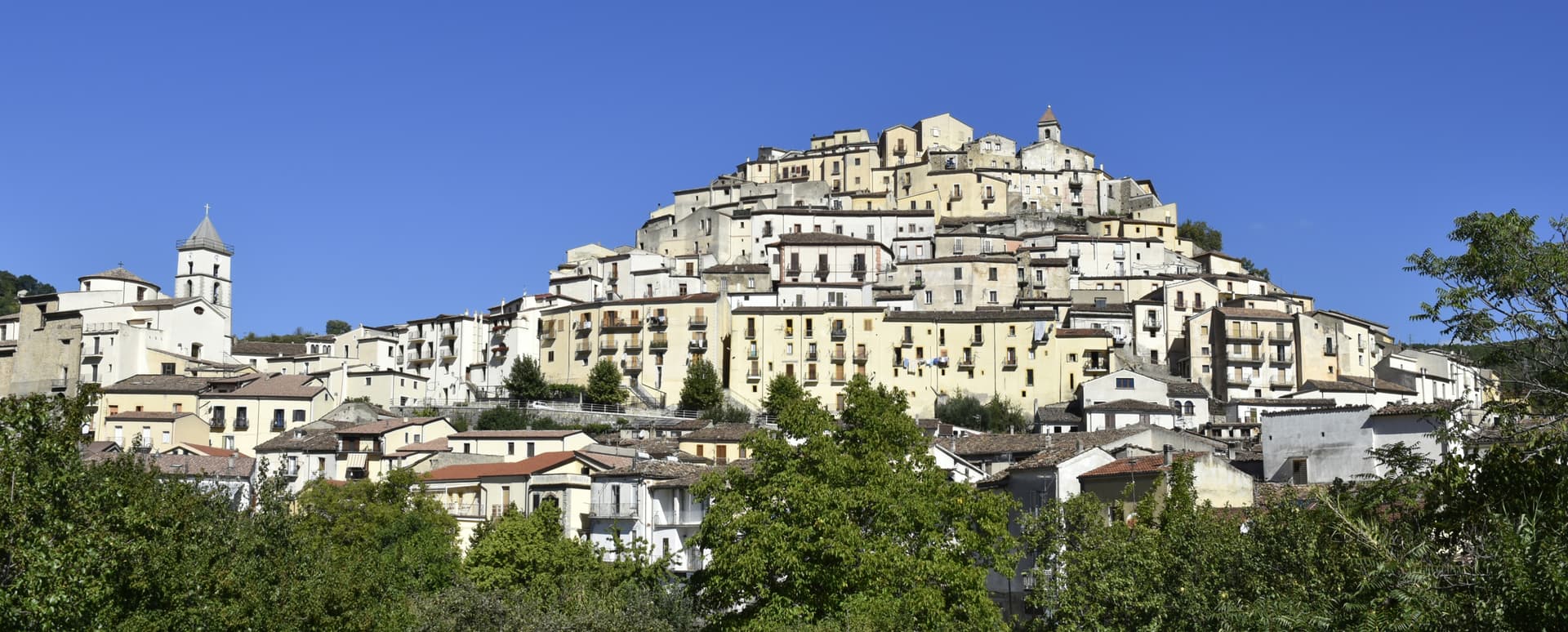
Calvello
Province: Potenza
A 730-meter ceramic town at the foot of Monte Venturino, working clay since 1200 when Benedictines from Faenza brought the wheel south.
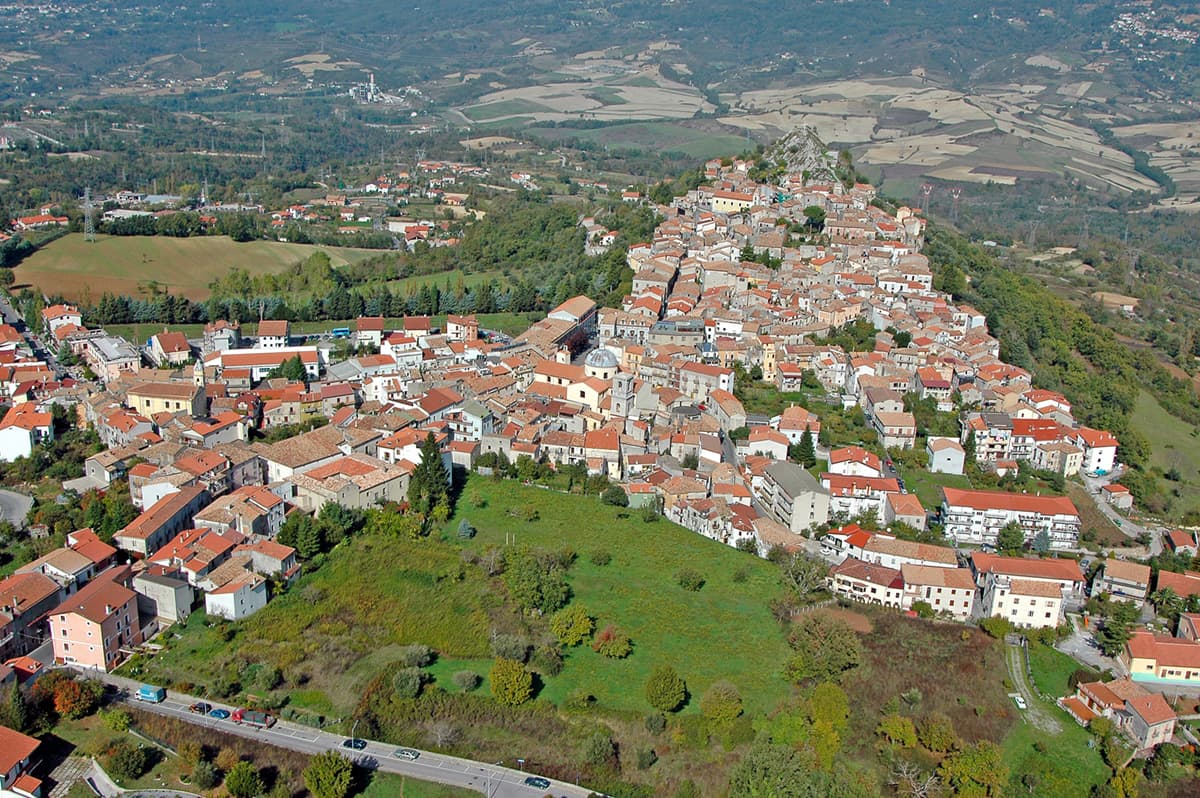
Rotonda
Province: Potenza
The Pollino park's Lucanian gateway — a 3,171-resident borgo at 626m on the Basilicata/Calabria border, headquartered HQ for the Parco Nazionale del Pollino (Italy's largest national park), with the Fagiolo Bianco Poverello + Melanzana Rossa di Rotonda DOP slow-food products, the Borgo Autentico mark, and the Loricato pine forests immediately above town.
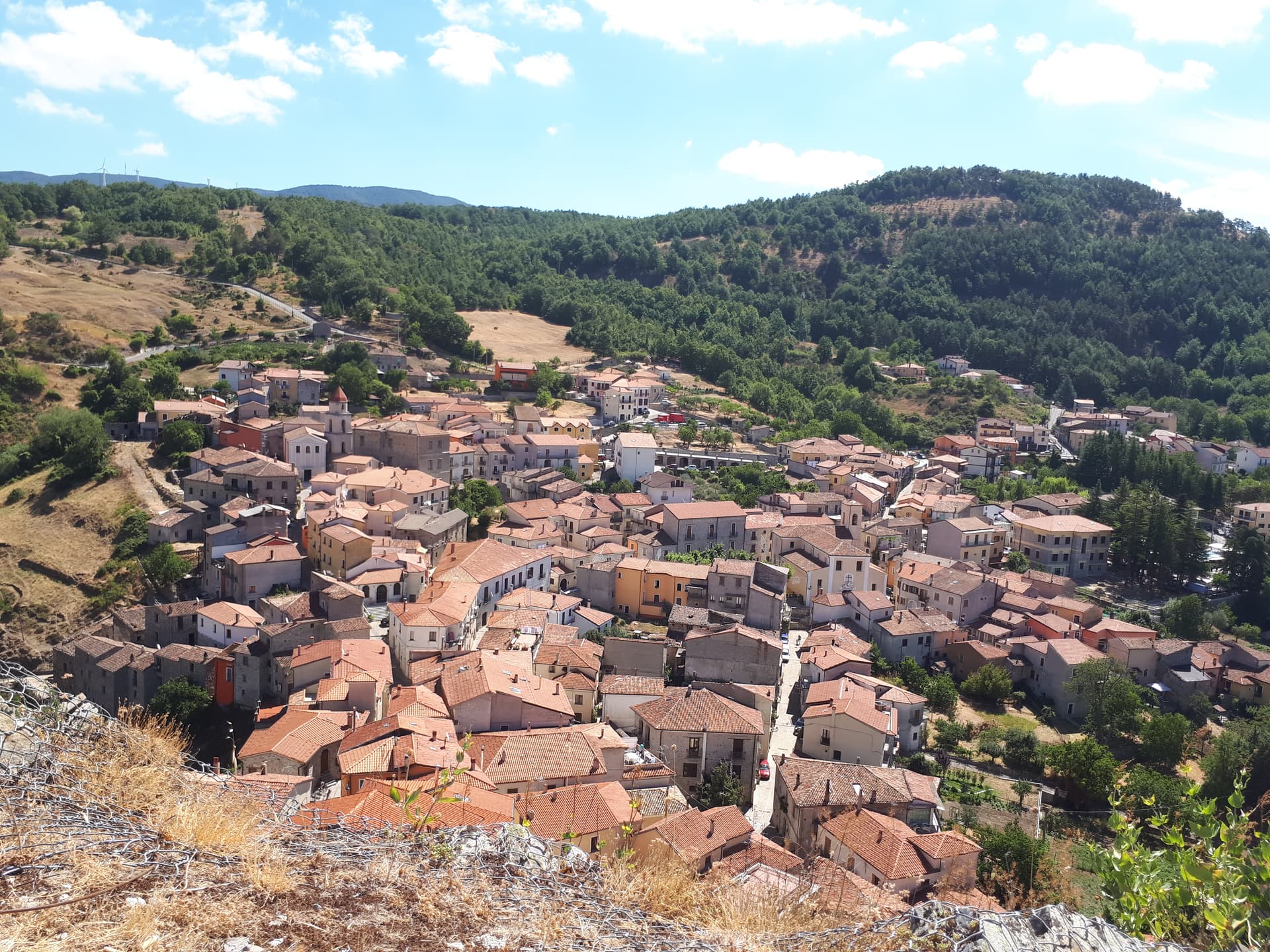
Sasso di Castalda
Province: Potenza
A 949-meter village in the Lucanian Apennines whose emigrants produced the engineer who launched Apollo 11, now crossed by a 300-meter Tibetan footbridge.
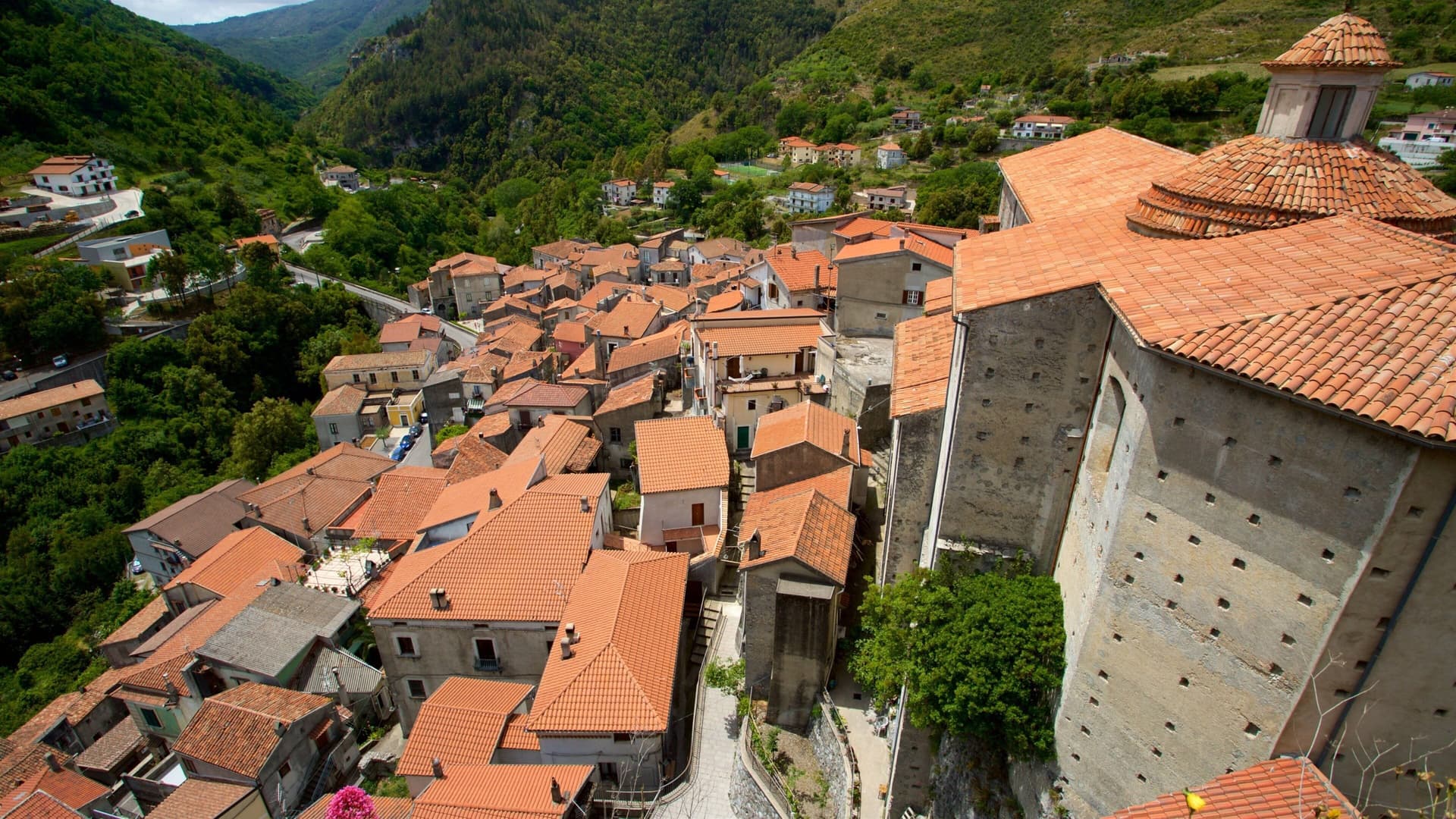
Terranova di Pollino
Province: Potenza
At 926 meters on the Lucanian side of the Pollino, the gateway into Italy's largest national park, home of the Sarmento red potato.