

Apulia · Bari
Polignano a Mare
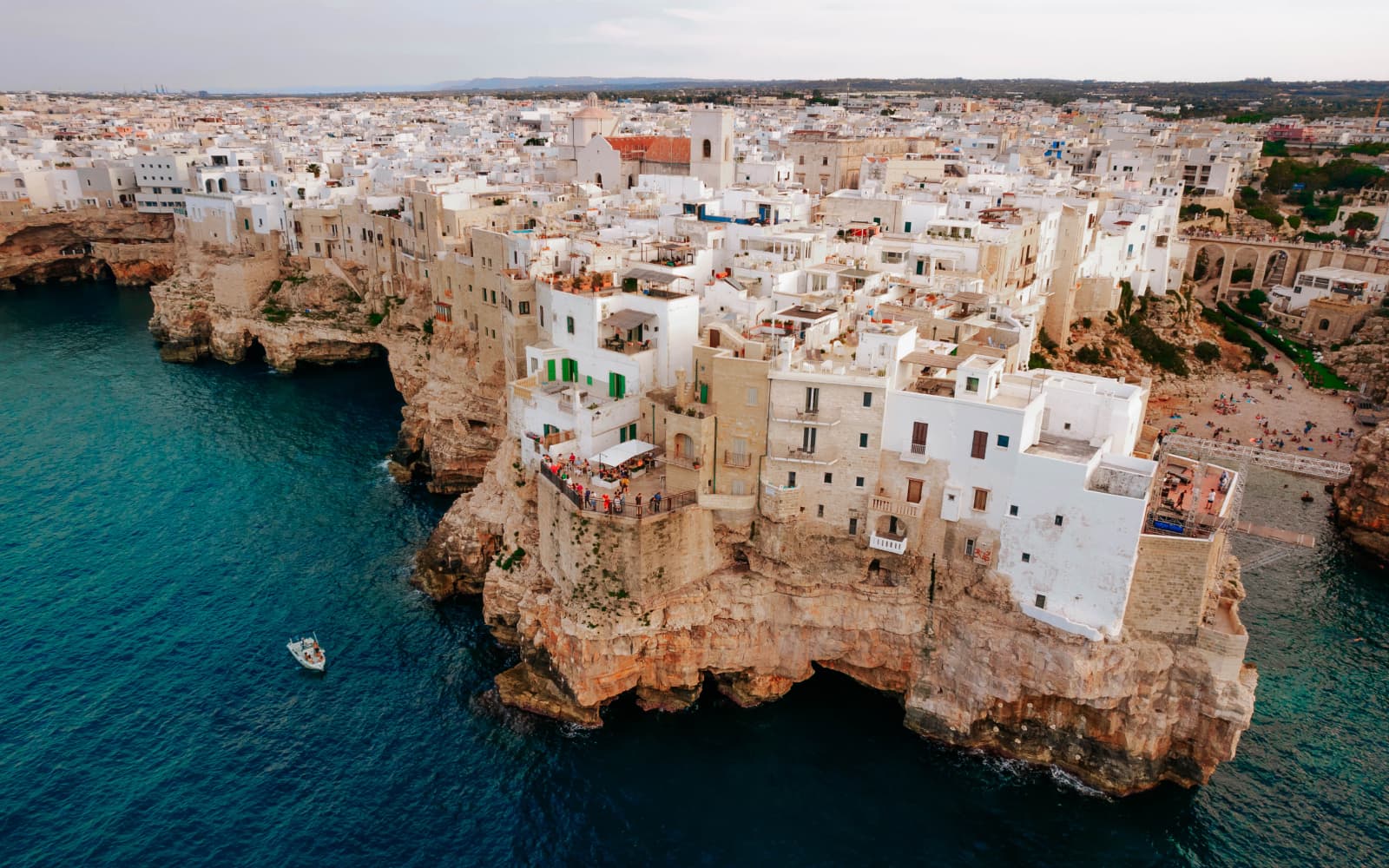
The Adriatic cliff town thirty kilometers south of Bari, built on a twenty-metre limestone bluff, birthplace of Domenico Modugno.
Known for
LAMA MONACHILE
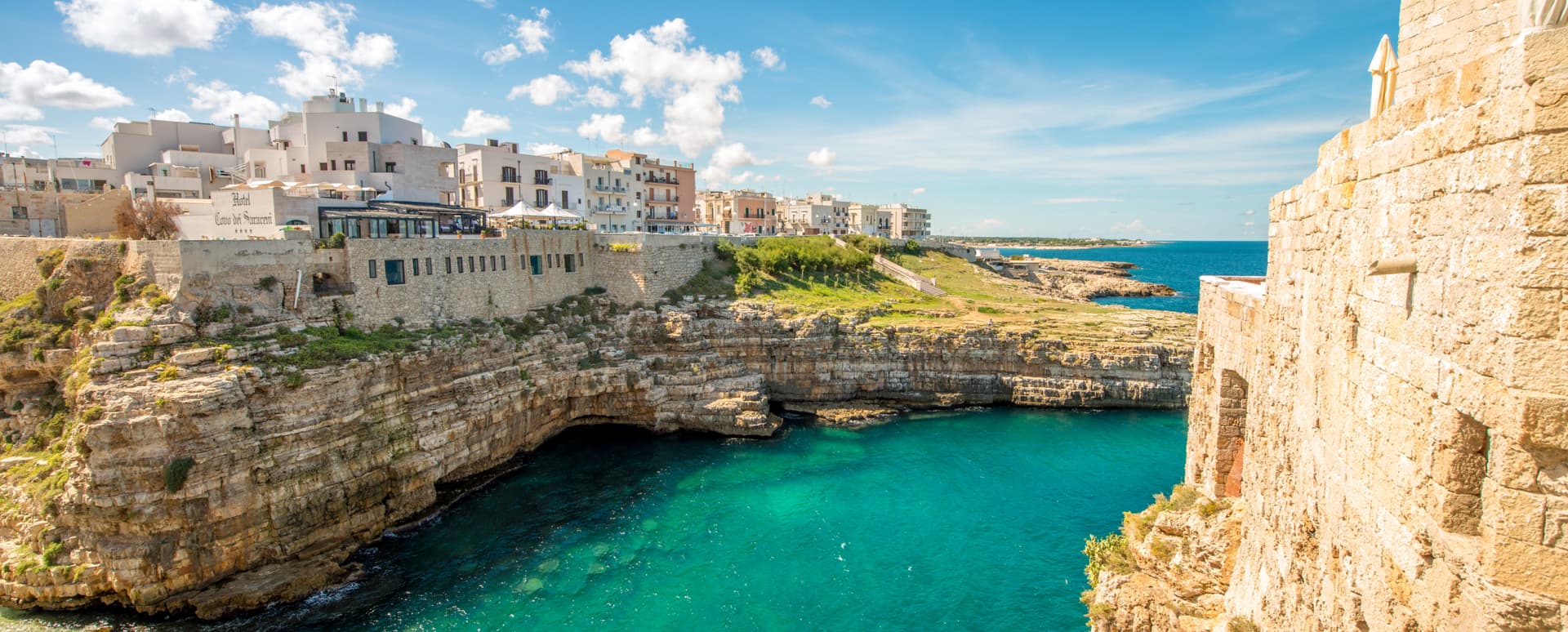
Cove beach under the Roman bridge between the cliff walls of the centro storico, the most-photographed view in Puglia.
DOMENICO MODUGNO
Born here in 1928, wrote Volare, won the 1958 Grammy Award for Record of the Year, the most internationally famous Italian song ever recorded.
GROTTA PALAZZESE
Sea cave restaurant under the old town, used for noble banquets since the eighteenth century, now booked months in advance.
When to visit
Best · May–Sep
- J
- F
- M
- A
- M
- J
- J
- A
- S
- O
- N
- D
- Best
- Hot or crowded
- Quiet
- Mostly closed
The festa: San Vito, 14 June
Why come
Polignano a Mare sits on a limestone cliff twenty to twenty-seven meters above the Adriatic, thirty kilometers south of Bari. The historic centre is a maze of whitewashed lanes cut into the rock, dropping down to the Lama Monachile cove, the narrow beach between two rock walls and under the arches of the Roman bridge of the Via Traiana. Archaeology in the Santa Barbara district shows continuous settlement since prehistory, and the site has been identified with the ancient Greek Neapolis of Apulia, possibly founded by Dionysius II of Syracuse in the fourth century BC.
Julius Caesar features in another origin claim along the Via Traiana. Domenico Modugno, who wrote and sang "Nel blu dipinto di blu" and won the 1958 Grammy with it, was born here in 1928; his statue stands on the lungomare that bears his name. The Grotta Palazzese, a sea cave under the old town, has held a restaurant since the eighteenth century when the Leto princes used it for banquets.
The Sunday letter
We haven’t written Polignano a Mare’s letter yet.
One town every Sunday, with the photo, the food, the festa. Be there when this one comes up. Free, by Peter & Sophia from Pietrasanta.
By subscribing you agree to Substack’s Terms of Use, our Privacy Policy and our Information collection notice.
What to see
Lama Monachile
Narrow cove between two cliff walls in the centre of town, under the arches of the Roman bridge of the Via Traiana, the town's signature postcard.
Centro storico
Whitewashed old town on the limestone cliff, narrow lanes, balconies hanging over the sea, and three surviving medieval gates.
Grotta Palazzese
Sea cave under the cliff used by the Leto princes for banquets in the eighteenth century, now a restaurant carved into the rock.
Ponte Romano di Lama Monachile
Stone bridge of the Via Traiana spanning the lama, the original Roman crossing rebuilt over the cove.
Statua di Domenico Modugno
Bronze of the singer with arms open in the gesture of Volare, on the seafront promenade that bears his name.
The slow-trip planner
Building a trip? Find where Polignano a Mare fits in a slow Italy circuit.
Answer five questions. We will shape a geographically coherent slow trip from the 1,000 Italian towns most travelers skip. Yours to save and share.
We recommend
Where to eat and stay
Not our picks, but places the guides put their name to — a Michelin star, a Gambero Rosso fork, a Slow Food snail, a Michelin Key for the hotels. Worth a table, a counter, or a night when you pass through.
PashàRistorante
One Michelin star for Pashà, along with three Gambero Rosso forks (90/100) and a place in L'Espresso's Top 300.
CasanovaRistorante
Casanova has two Gambero Rosso forks (81/100) and a spot in the Michelin Guide.
JamantèRistorante
A Gambero Rosso listing for Jamantè, and a spot in the Michelin Guide.
MeravigliosoRistorante
Meraviglioso holds one Gambero Rosso fork (77/100) and a spot in the Michelin Guide.
L'Osteria di ChichibioTrattoria
L'Osteria di Chichibio has two Gambero Rosso prawns to its name.
Masseria Le TorriHotel
Masseria Le Torri carries a La Liste score of 94.
Living here
- Population 17,531
- In-betweeni
- Pharmacy in town
- High school within a 30-minute drive
- Train station in the comune
- Nearest airport Bari / Brindisi, 48 min drive
- Regional capital Bari, 36 min drive
Tags & datadesignations · numbers · sources
Recognised as
The numbers
- Elevation: 24 m
- Population: 17,531
- Surface area: 63.09 km²
These figures were compiled from public directories — ISTAT, OpenStreetMap, Wikidata — and from the official listings of the guides named on this page. Town details change; verify with official sources before you travel.
Featured on
Polignano a Mare appears on this themed pick from our Collections:
Close by
More towns near Polignano a Mare
Monopoli
Province: Bari
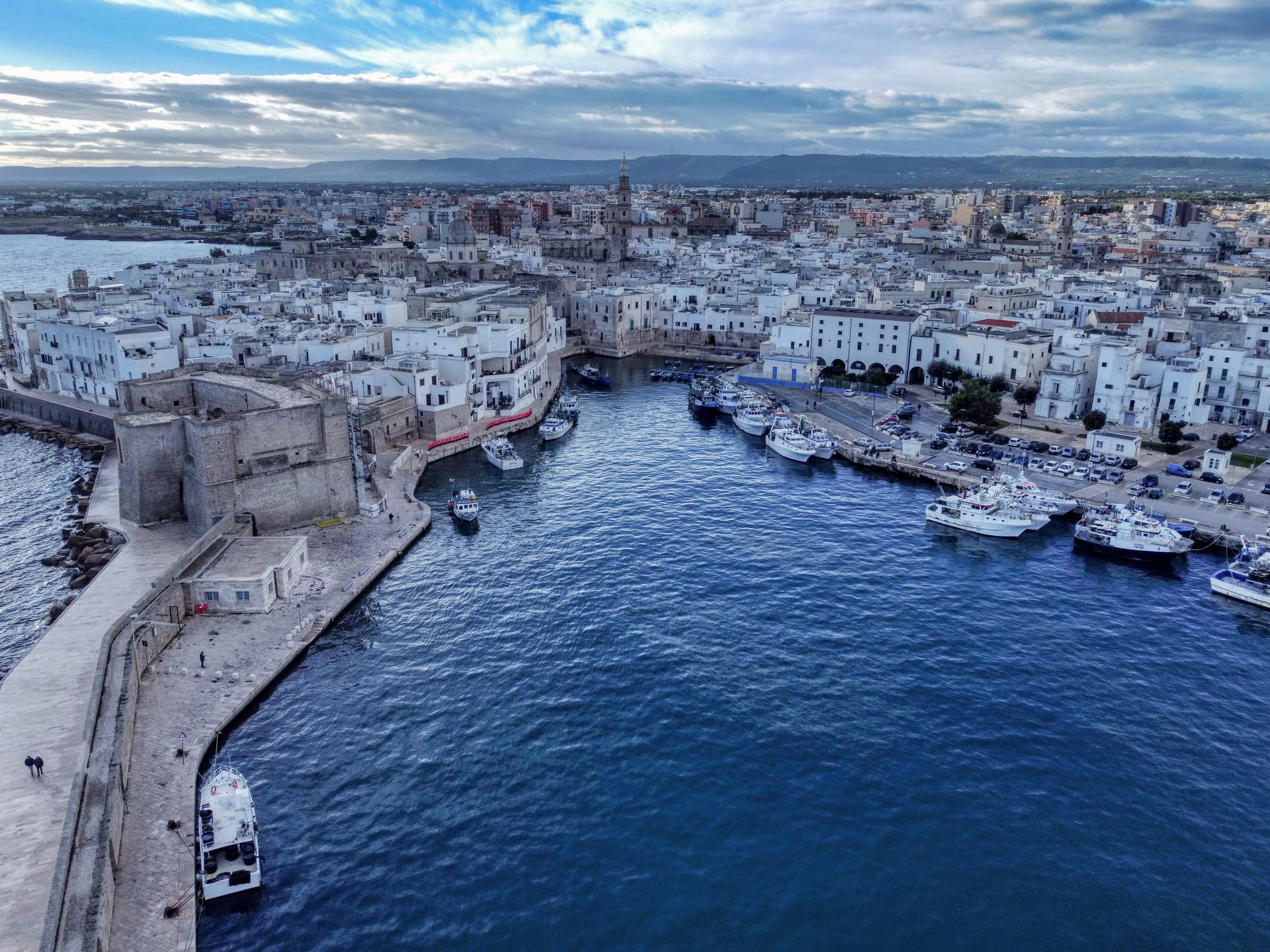
An Adriatic walled town forty kilometers south of Bari, the Charles V castle on the headland, 156 square kilometers of coastline behind it.
Conversano
Province: Bari
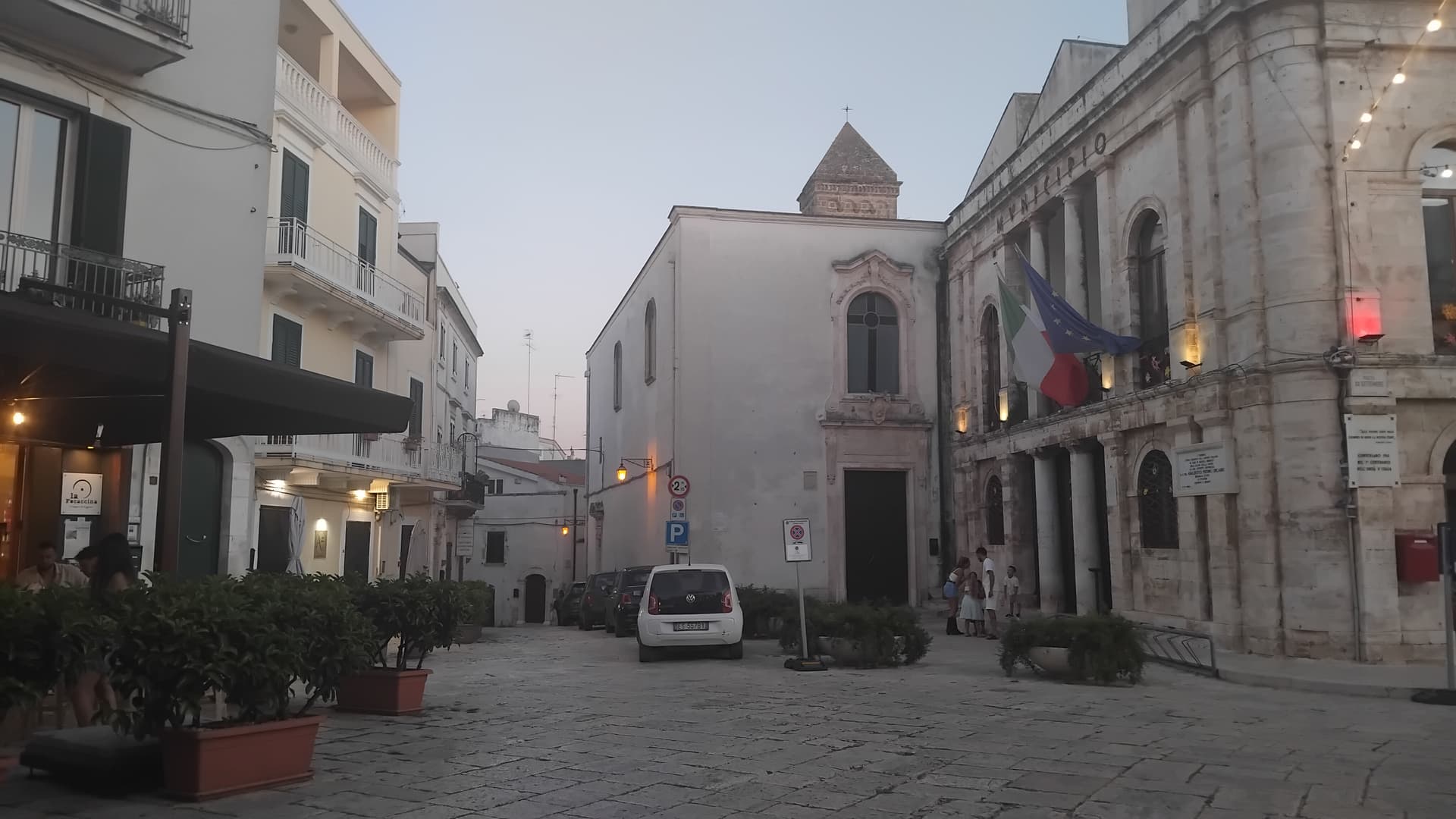
A pre-Murge hill town at 219 meters, three centuries seat of the Acquaviva counts, with the abbey-monastery once called the Wonder of Puglia.
Castellana Grotte
Province: Bari
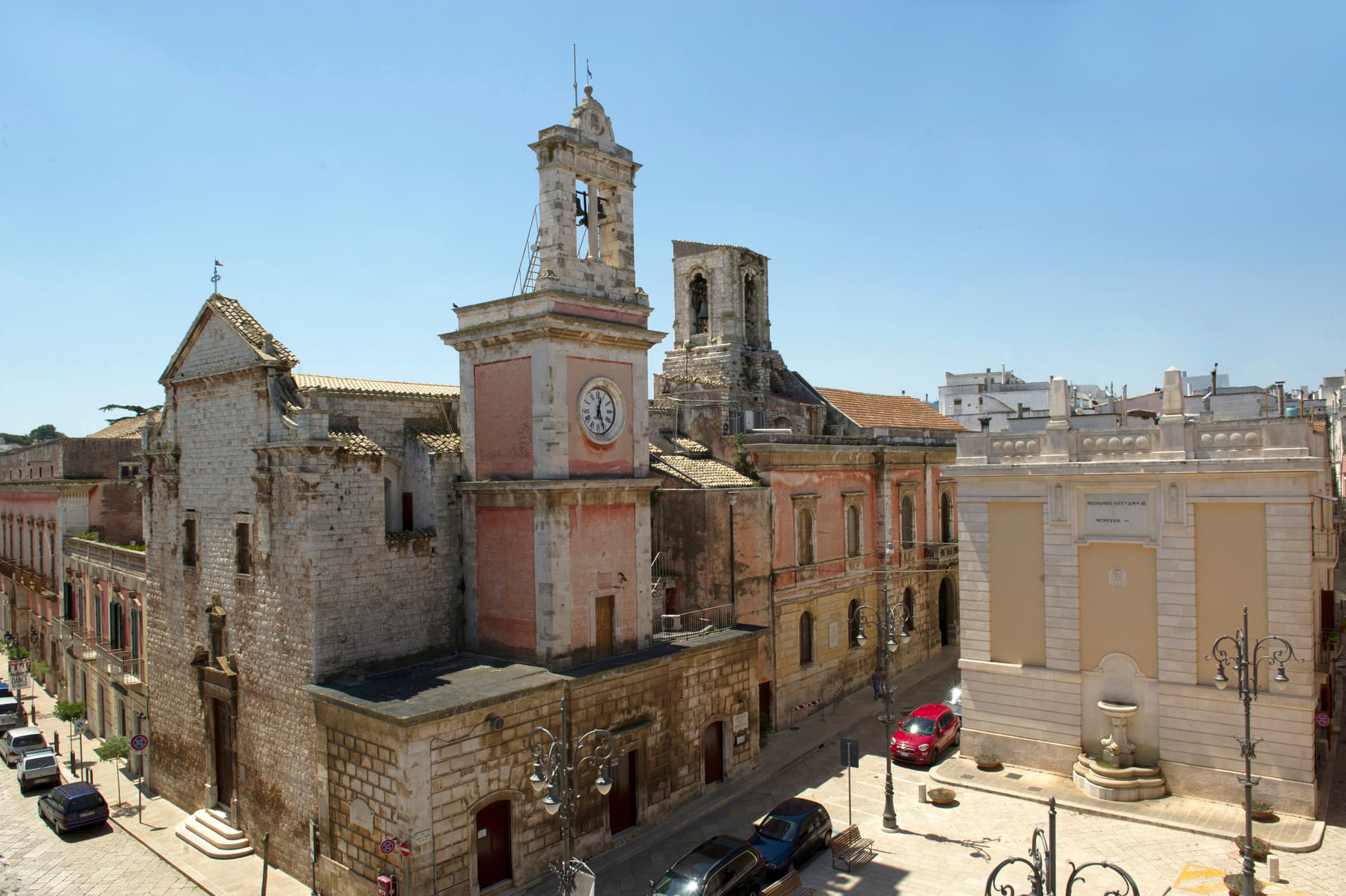
A Murge town at 290 meters above the karst cave system discovered in 1938, with a 3-kilometer subterranean route 60 meters deep.
Fasano
Province: Brindisi
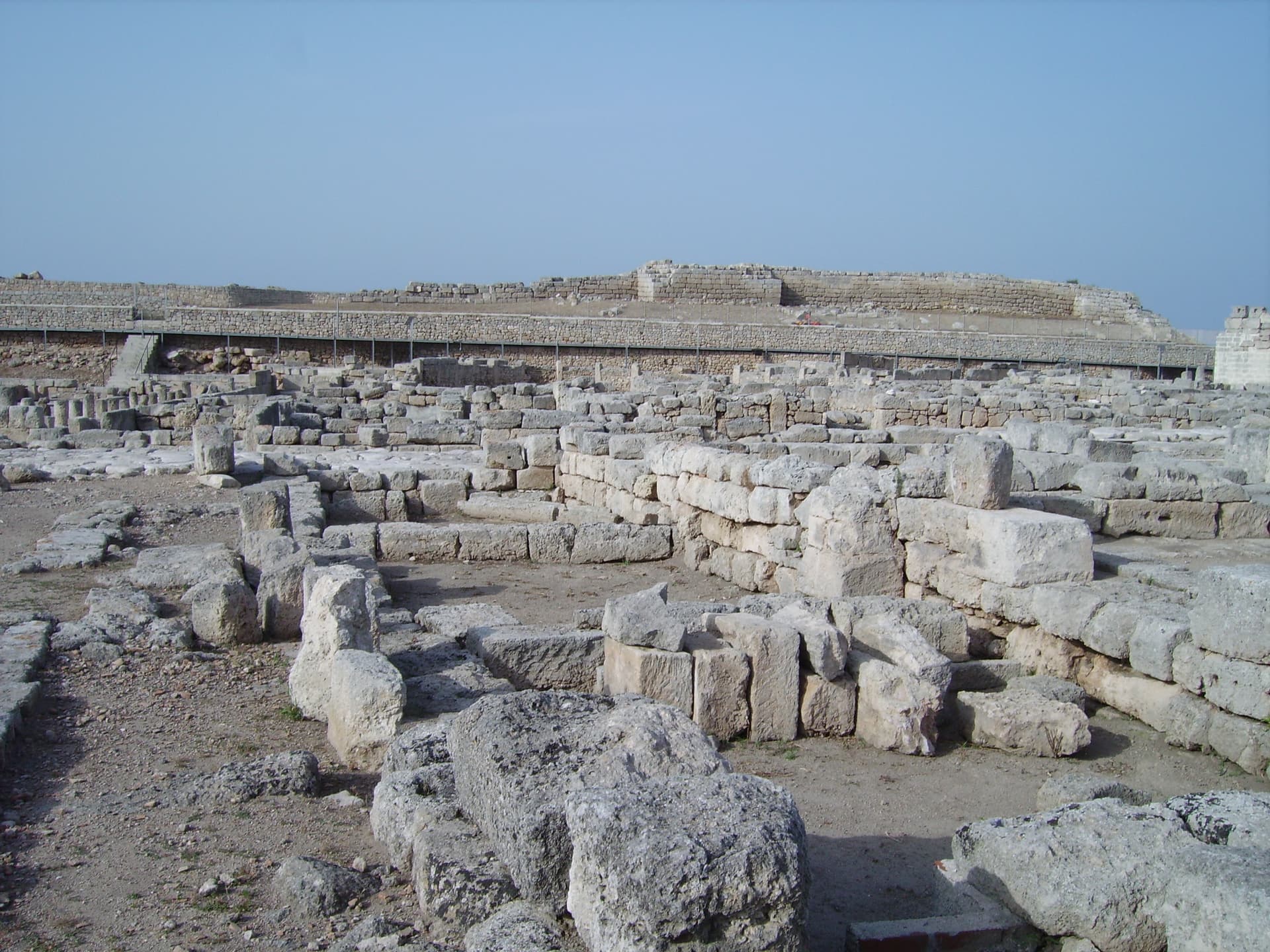
A Brindisi-province town from the Adriatic up to the Itria escarpment, holding the Roman ruins of Egnazia, the Selva, and Europe's second-largest safari park.
Putignano
Province: Bari
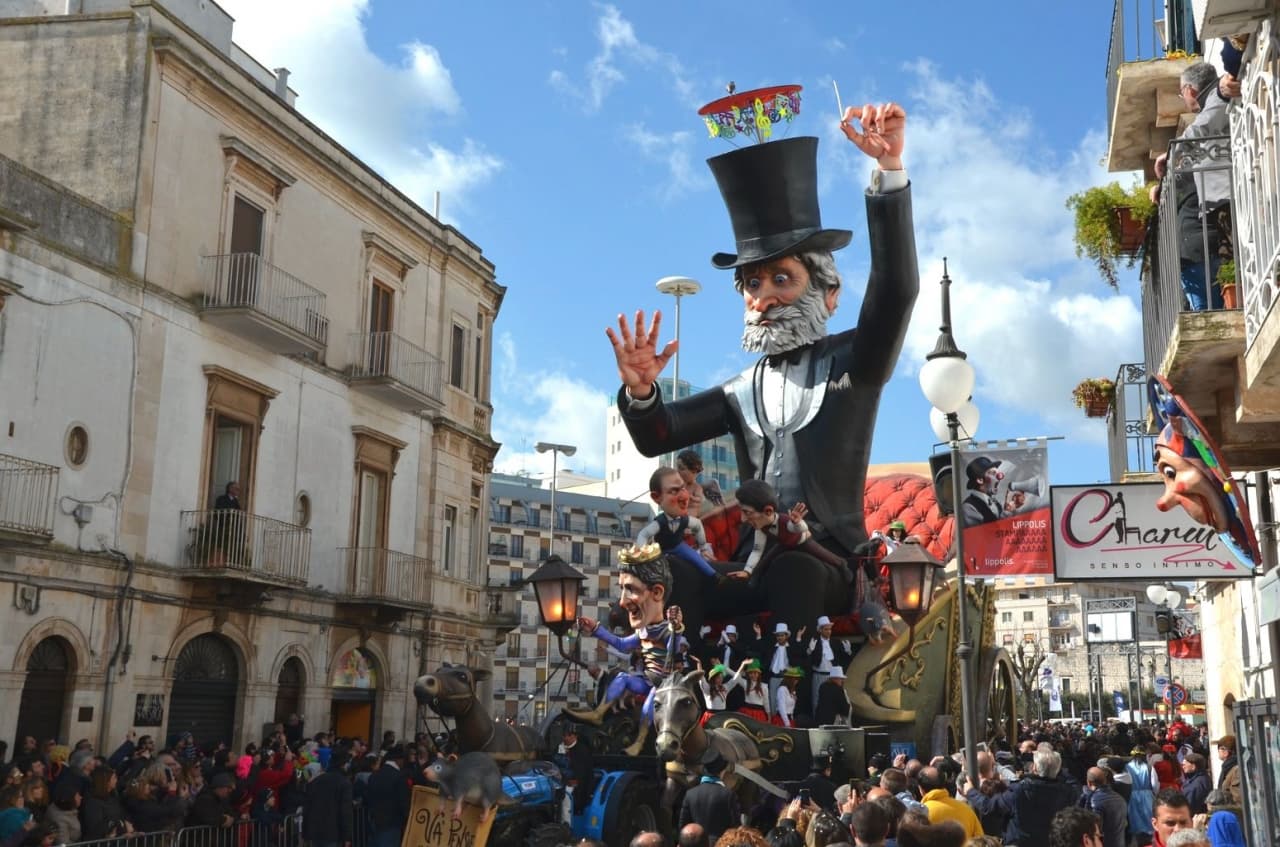
Europe's longest-running carnival — Putignano Carnevale has run continuously since 1394, with 631 years of cartapesta papier-mâché floats, a 26,000-resident Murgia town on the Bari–Lecce plateau, and the Grotta del Trullo karst cave inside the centro.
🟦 Bandiera Blu
More Bandiera Blu towns in Apulia
Bisceglie
Province: Barletta-Andria-Trani
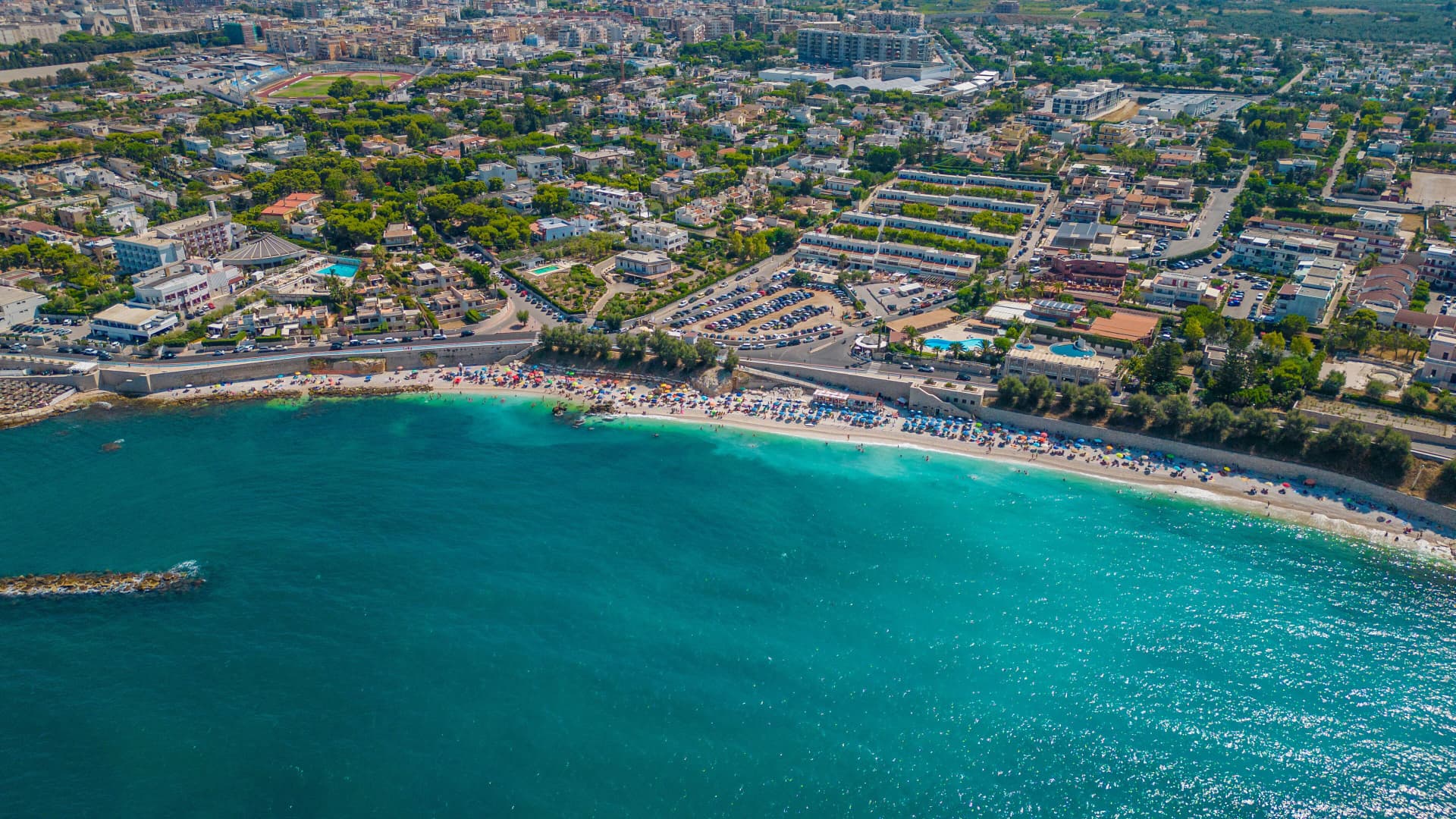
An Adriatic port town between Trani and Molfetta, named for Roman watchtowers, with five dolmens around it and a Norman cathedral begun in 1073.
Carovigno
Province: Brindisi
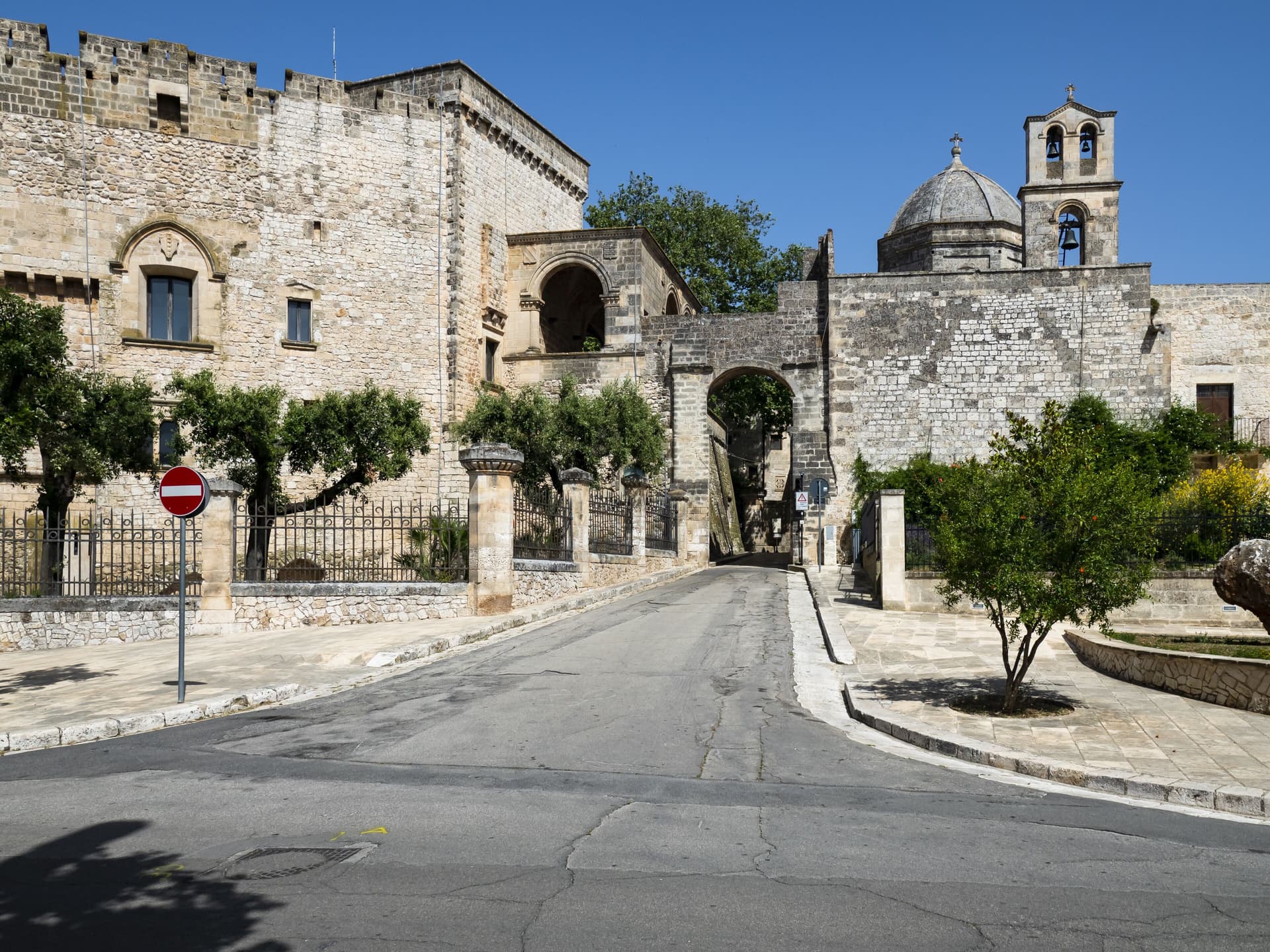
An upper Salento town between Brindisi and Ostuni, built on the Messapian Carbina destroyed in 473 BC, with the Torre Guaceto marine reserve offshore.
Castellaneta
Province: Taranto
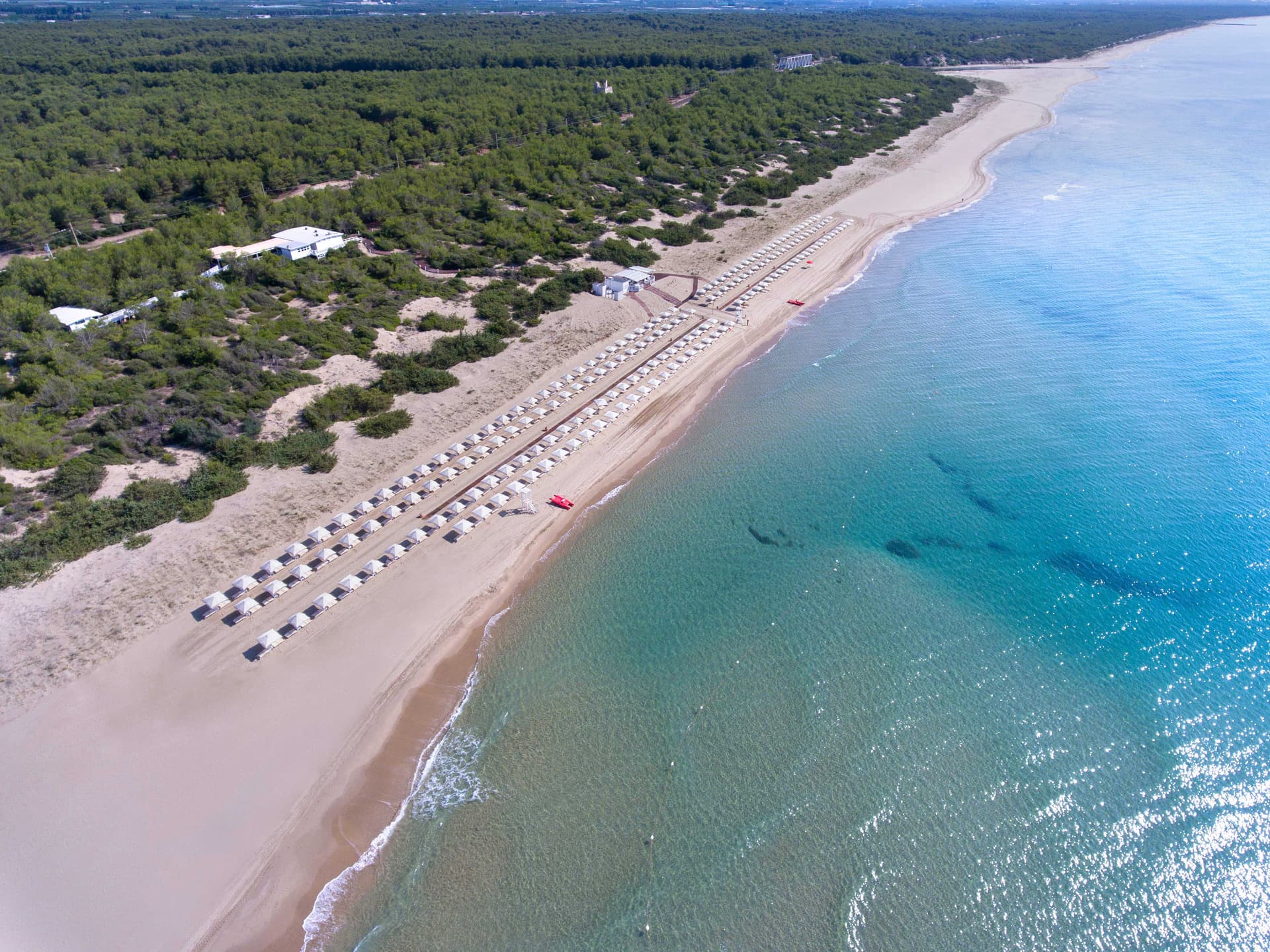
A cliff-edge Murge town at 235 meters above the Gravina Grande canyon, birthplace of Rudolph Valentino in 1895, with a Bandiera Blu Ionian marina.
Gallipoli
Province: Lecce
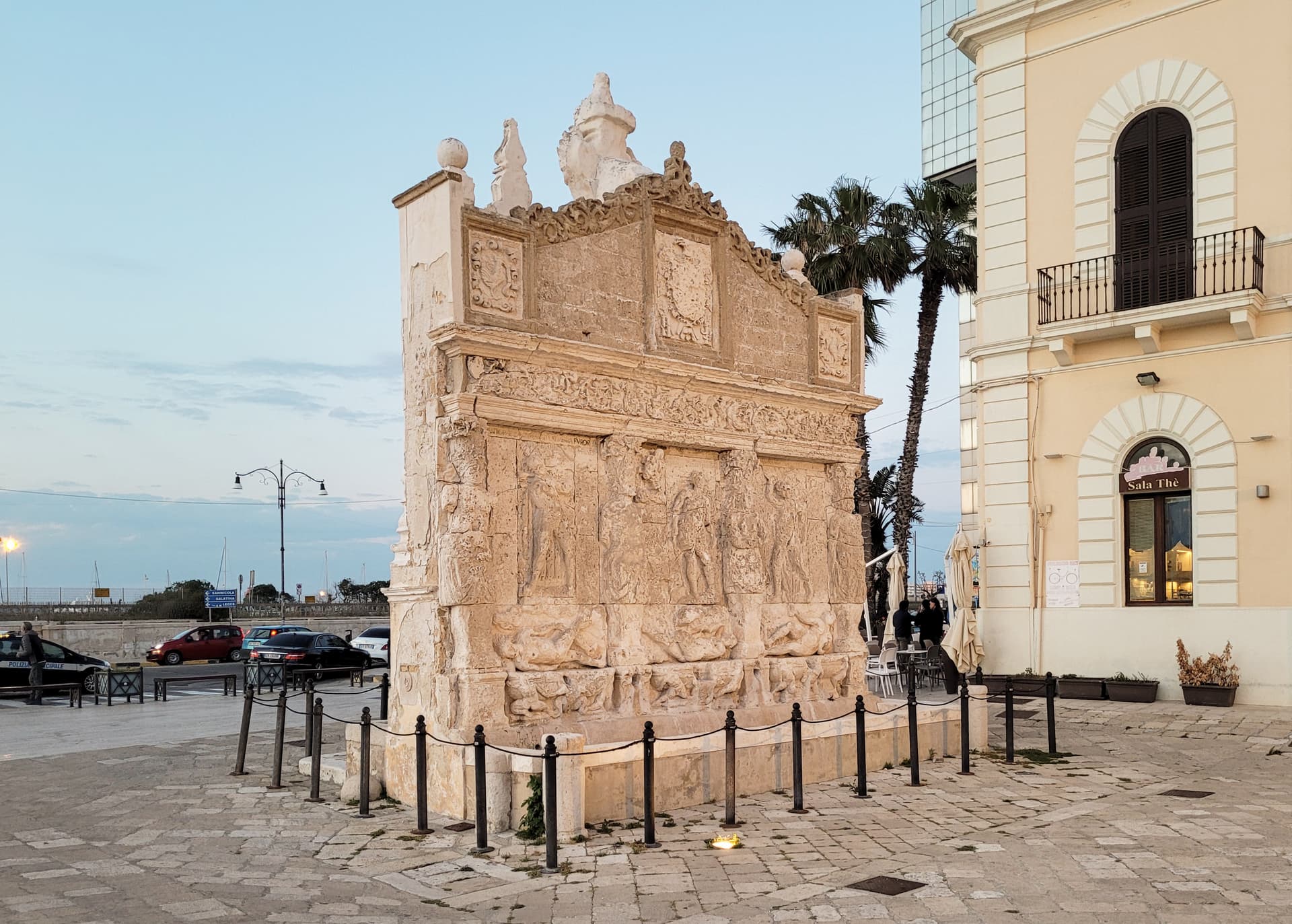
The Ionian beach city on a limestone island, Greek Kallipolis meaning beautiful city, tied to the mainland by a seventeenth-century bridge.
Isole Tremiti
Province: Foggia
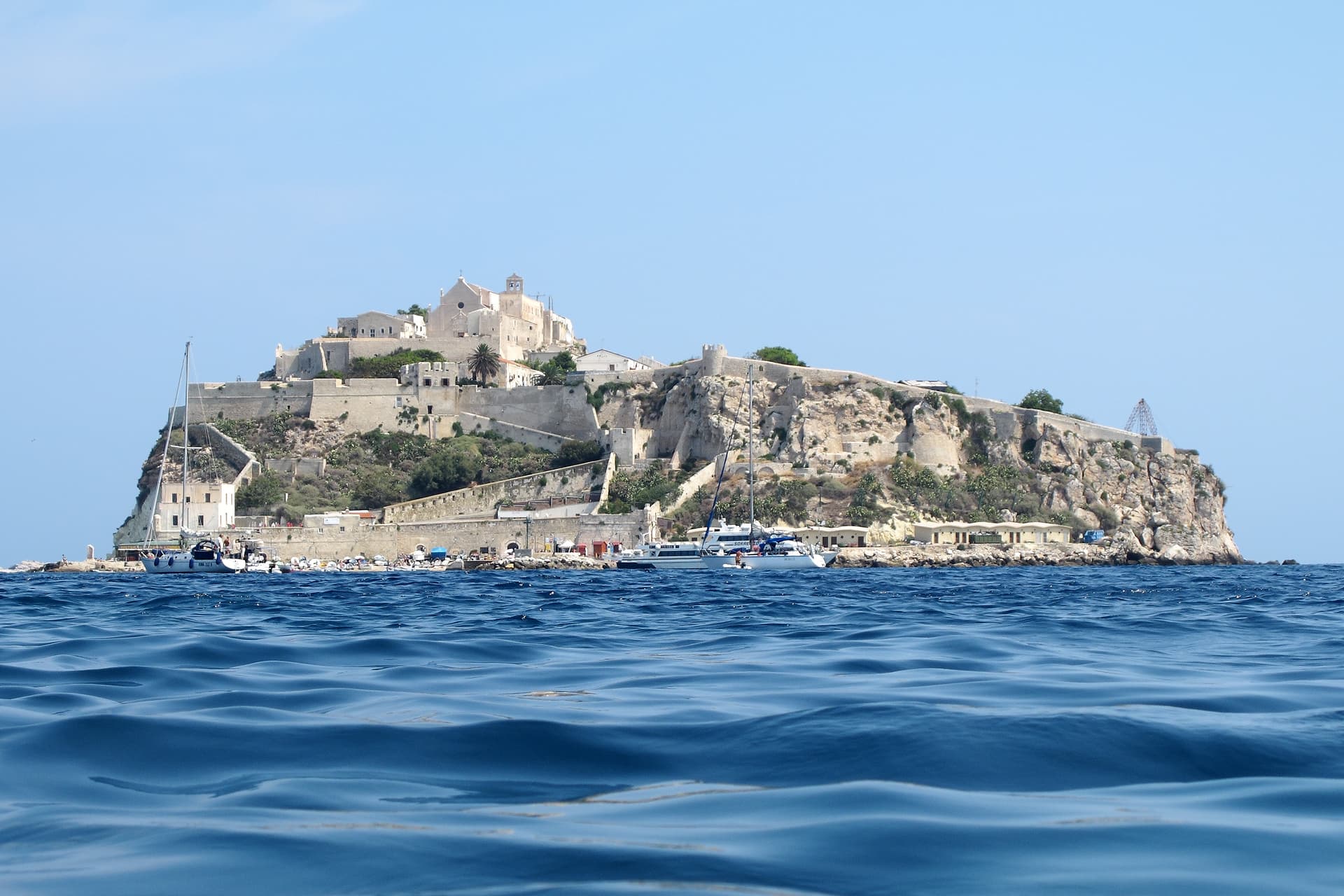
An Adriatic archipelago of five islands twenty-two kilometers off the Gargano, the only Italian commune scattered across an open-sea group.