

Liguria · Imperia
Sanremo
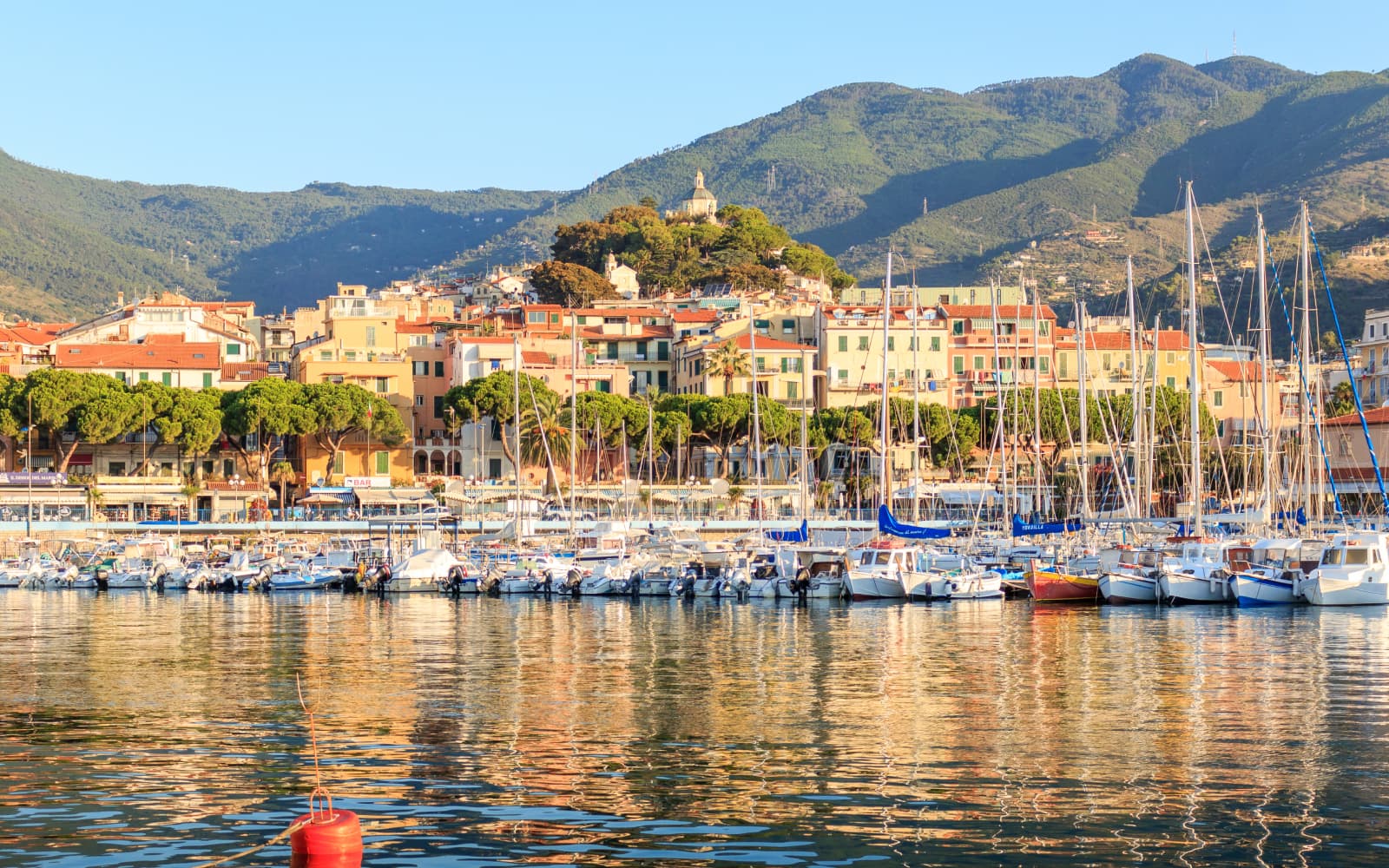
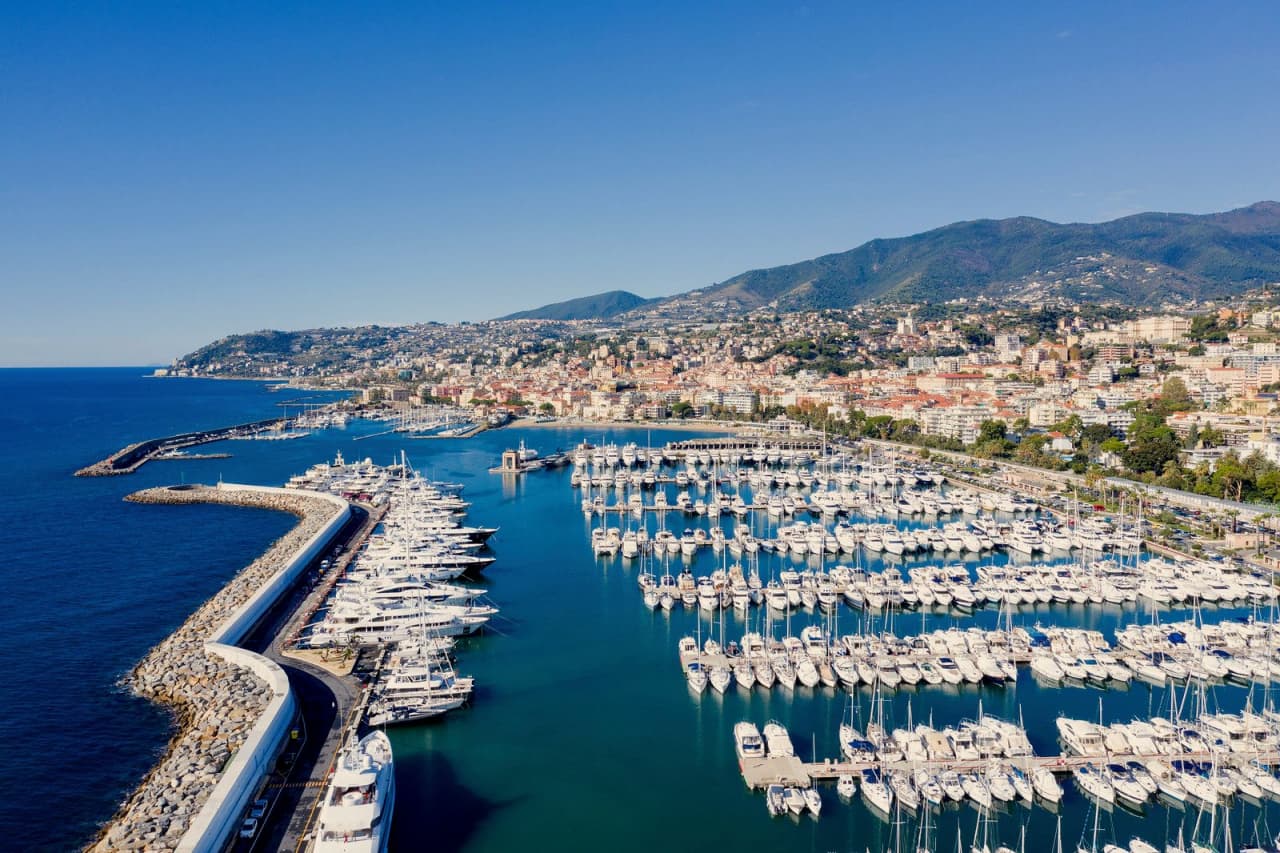
The capital of the Italian Riviera dei Fiori — Belle Époque casino and palm-lined Lungomare on the seafront, the medieval labyrinth of La Pigna climbing the hill behind, and a year-round mild climate that built the original Northern European winter trade.
Known for
MUSIC
Festival della Canzone Italiana — the Italian pop song contest run at the Teatro Ariston every February since 1951.
CASINO
1905 Belle Époque casino, one of only four legal casinos in Italy, and a Liberty-style landmark in its own right.
CYCLING
Finish line of the Milano-Sanremo Classicissima, the longest one-day race on the professional cycling calendar (since 1907).
FLOWERS
Capital of the Riviera dei Fiori; the surrounding hills supply carnations, roses and ranunculus to the European market via the Mercato dei Fiori.
When to visit
Best · Year-round
- J
- F
- M
- A
- M
- J
- J
- A
- S
- O
- N
- D
- Best
- Hot or crowded
- Quiet
- Mostly closed
The festa: Romolo di Genova, 13 October
Why come
Sanremo is the largest town between Imperia and the French border and the historic capital of the Riviera dei Fiori. The site was settled by the Romans (the name almost certainly contracts Sant'Eremo, after a 5th-century hermit Romolus), but the modern city was made by two waves of European wealth: the Russian and English aristocracy who built winter villas along the seafront from the 1860s, and the Italian post-war music industry that has used the Teatro Ariston as its annual anchor since 1951. The medieval old town La Pigna corkscrews up the hill behind the seafront in a series of covered alleys and stone stairs; at its top is the Madonna della Costa sanctuary with views back over the bay.
The Lungomare Imperatrice, named for the Russian Empress Maria Aleksandrovna who wintered here, runs along the seafront under date palms; the Belle Époque Casinò Municipale and the Russian Orthodox Cristo Salvatore church bracket it at either end. The town's name is in the global cycling calendar as the finish of the Milano-Sanremo Classicissima, run since 1907 and the longest single-day race on the professional calendar. The hills behind grow flowers for the European market — carnations, roses, ranuncoli — and the agricultural quarter around the Mercato dei Fiori is part of the Spighe Verdi rural-quality network.
The Sunday letter
We haven’t written Sanremo’s letter yet.
One town every Sunday, with the photo, the food, the festa. Be there when this one comes up. Free, by Peter & Sophia from Pietrasanta.
By subscribing you agree to Substack’s Terms of Use, our Privacy Policy and our Information collection notice.
What to see
La Pigna (centro storico)
Medieval old town stacked up the hillside behind the seafront in covered alleys and stone stairs, named for its pinecone-like layout. Topped by the Madonna della Costa sanctuary.
Casinò Municipale
Belle Époque casino opened in 1905, one of only four legal casinos in Italy. The building is itself a Liberty-style landmark on Corso degli Inglesi.
Lungomare Imperatrice
Palm-lined seafront promenade named for the Russian Empress Maria Aleksandrovna who wintered in Sanremo in the 1870s. Bracketed by the Casinò and the Russian Orthodox church.
Cristo Salvatore (Chiesa Russa)
Russian Orthodox church built 1913 for the Russian winter colony, with three onion-domed cupolas in classical Russian style on the western end of the Lungomare.
Teatro Ariston
Home of the Festival della Canzone Italiana since 1977 (the festival itself started in 1951 at the Casinò), the anchor of the Italian pop music calendar each February.
The slow-trip planner
Building a trip? Find where Sanremo fits in a slow Italy circuit.
Answer five questions. We will shape a geographically coherent slow trip from the 1,000 Italian towns most travelers skip. Yours to save and share.
We recommend
Where to eat and stay
Not our picks, but places the guides put their name to — a Michelin star, a Gambero Rosso fork, a Slow Food snail, a Michelin Key for the hotels. Worth a table, a counter, or a night when you pass through.
BabeufBistrot
Babeuf has one Gambero Rosso table to its name.
La PigneseRistorante
La Pignese carries a Gambero Rosso listing.
Paolo e BarbaraRistorante
Paolo e Barbara has two Gambero Rosso forks (82/100) to its name.
SoulBistrot
Soul has two Gambero Rosso tables to its name.
Royal Hotel SanremoHotel
Royal Hotel Sanremo carries a Leading Hotels of the World listing, plus a place on Italy's historic-locali register.
Europa Palace SanremoHotel
Europa Palace Sanremo has a place in the Michelin hotel guide to its name.
Living here
- Population 52,787
- A local hubi
- Pharmacy in town
- High school within a 30-minute drive
- Train station in the comune
- Nearest airport Genoa, 1 h 54 min drive
- Regional capital Genova, 1 h 59 min drive
Tags & datadesignations · numbers · sources
Recognised as
The numbers
- Elevation: 10 m
- Population: 52,787
- Surface area: 55.96 km²
These figures were compiled from public directories — ISTAT, OpenStreetMap, Wikidata — and from the official listings of the guides named on this page. Town details change; verify with official sources before you travel.
Close by
More towns near Sanremo
Ceriana
Province: Imperia
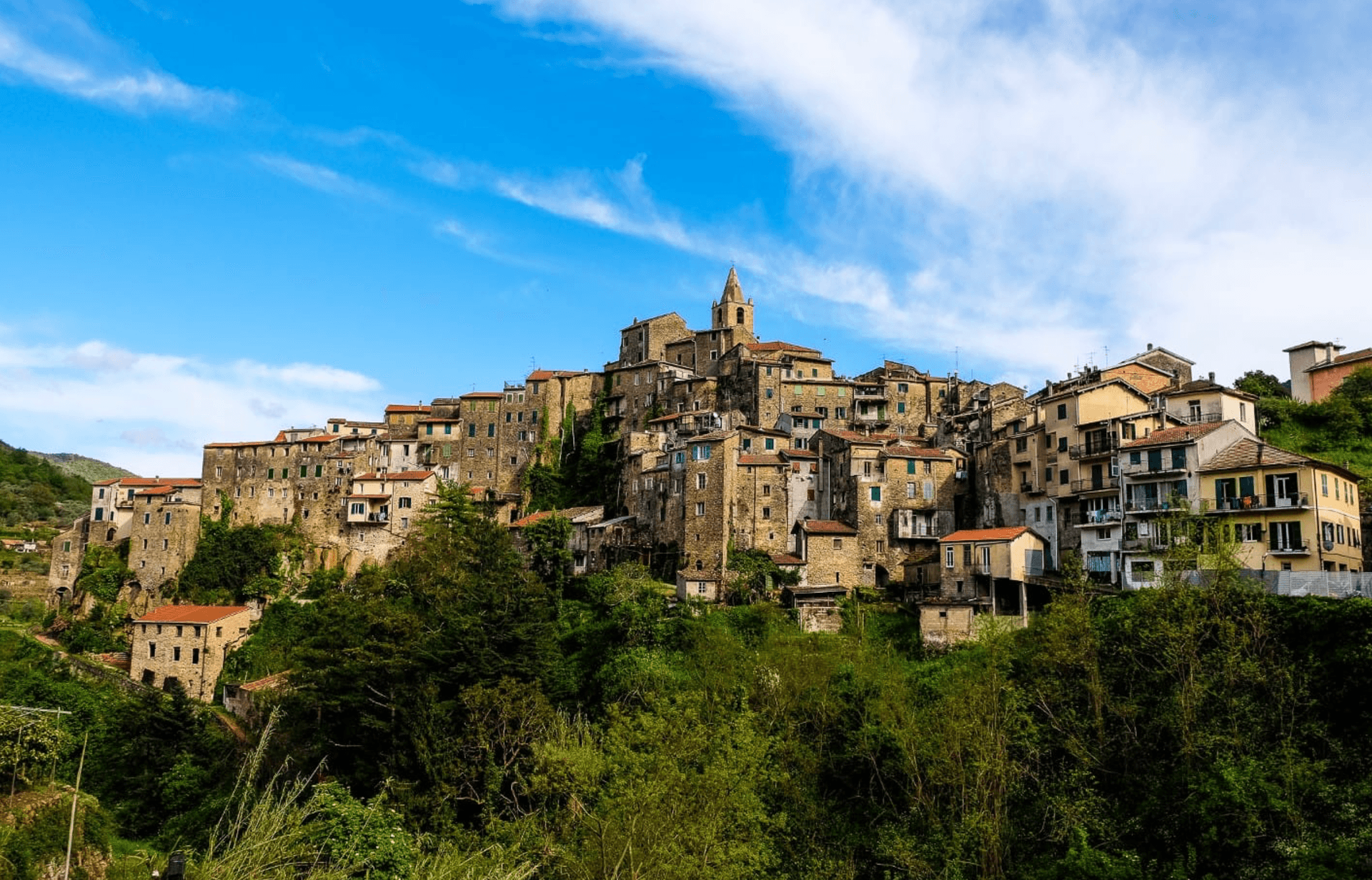
A medieval village at 369 meters above the Valle Armea, inland from Sanremo, built on the Roman castrum that gave it its name.
Taggia
Province: Imperia
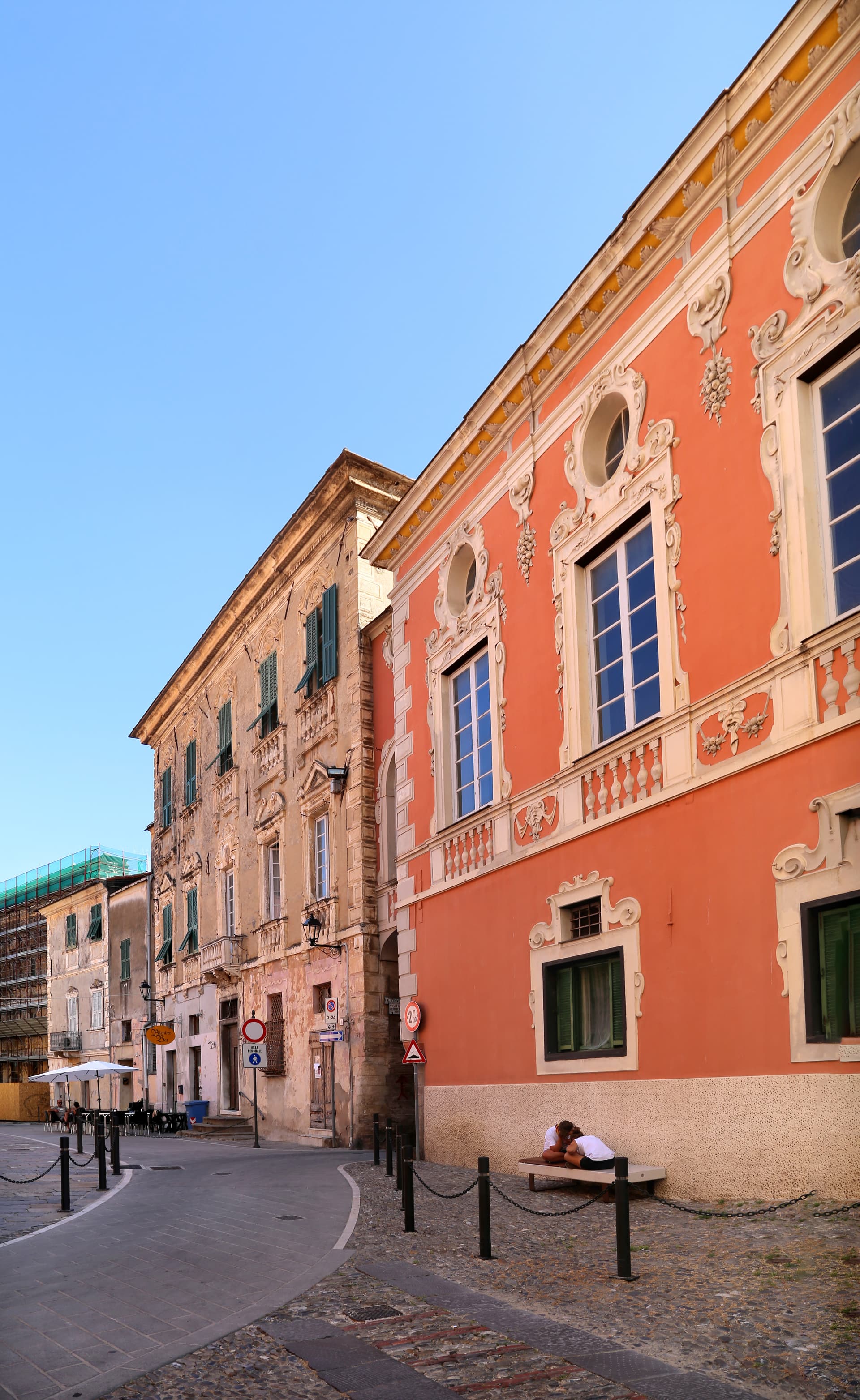
The Argentina valley's medieval seat above the Riviera dei Fiori, the town that gave its name to the Taggiasca olive grown across western Liguria.
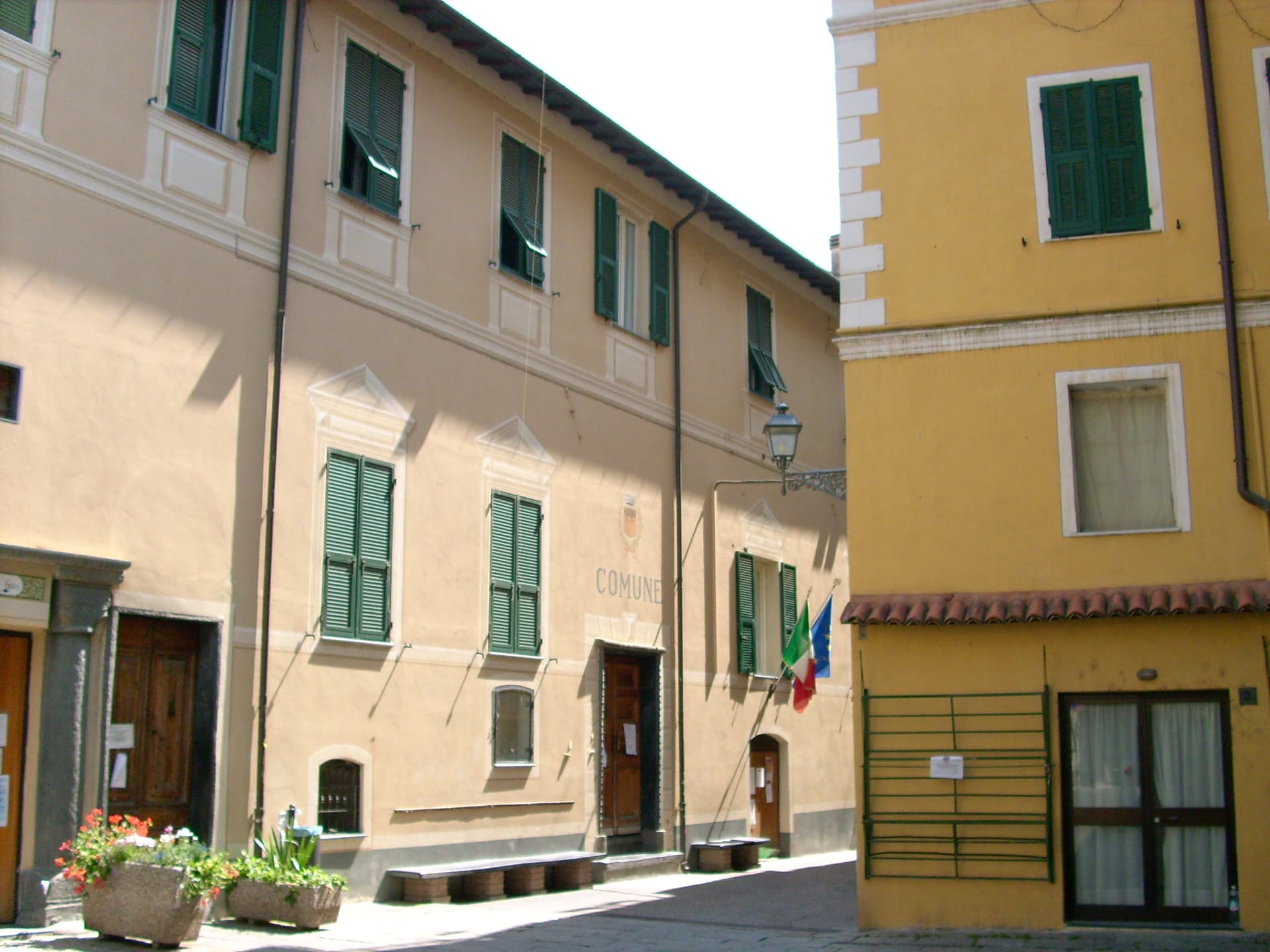
Badalucco
Province: Imperia
A medieval village wrapped in a bend of the Argentina torrent, with murals on its caruggi and a Slow Food bean on its terraces.
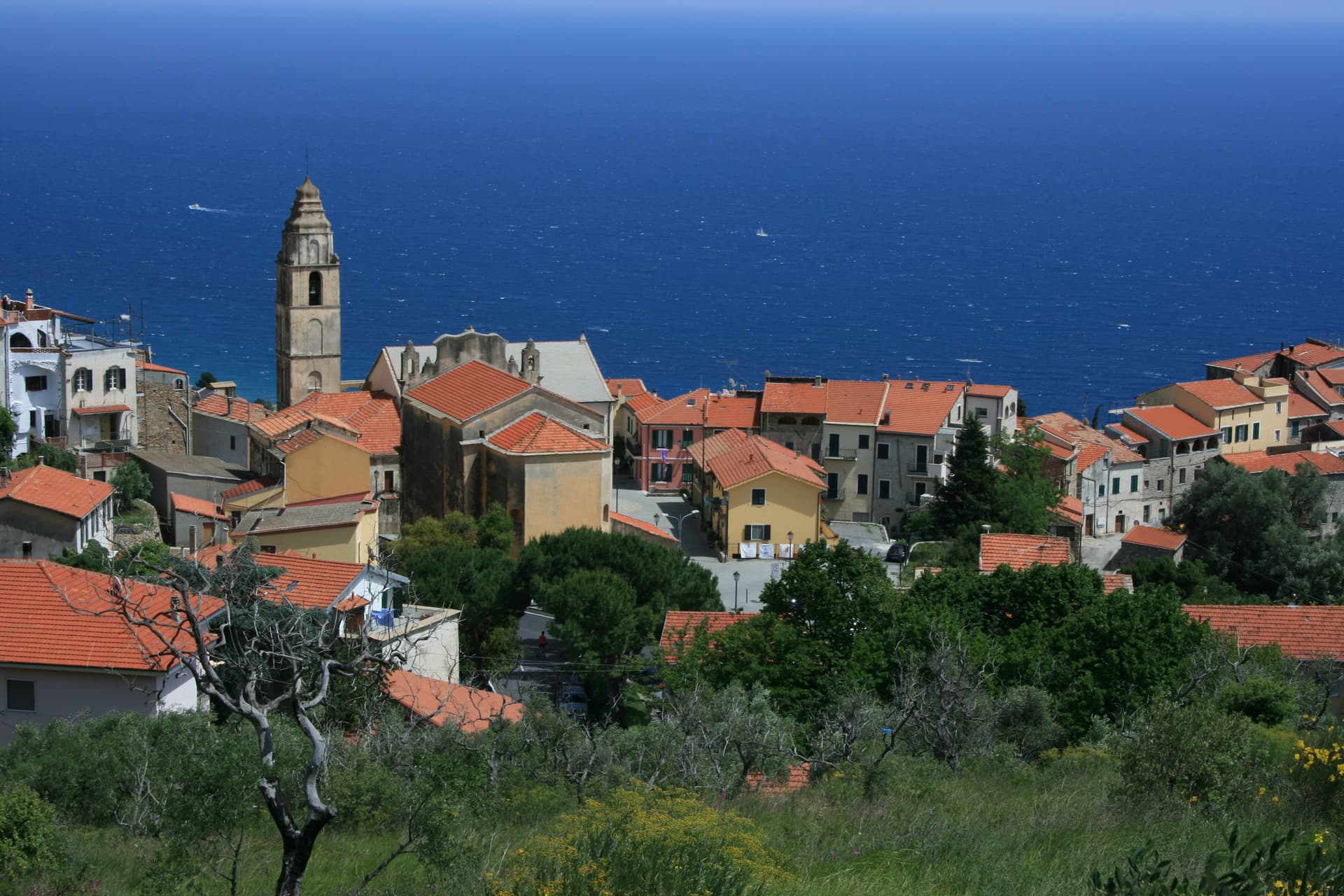
Cipressa
Province: Imperia
A ridgeline village at 232 meters above the Riviera dei Fiori, the climb that decides Milan-San Remo and a sixteenth-century Saracen-defence tower as its summit.
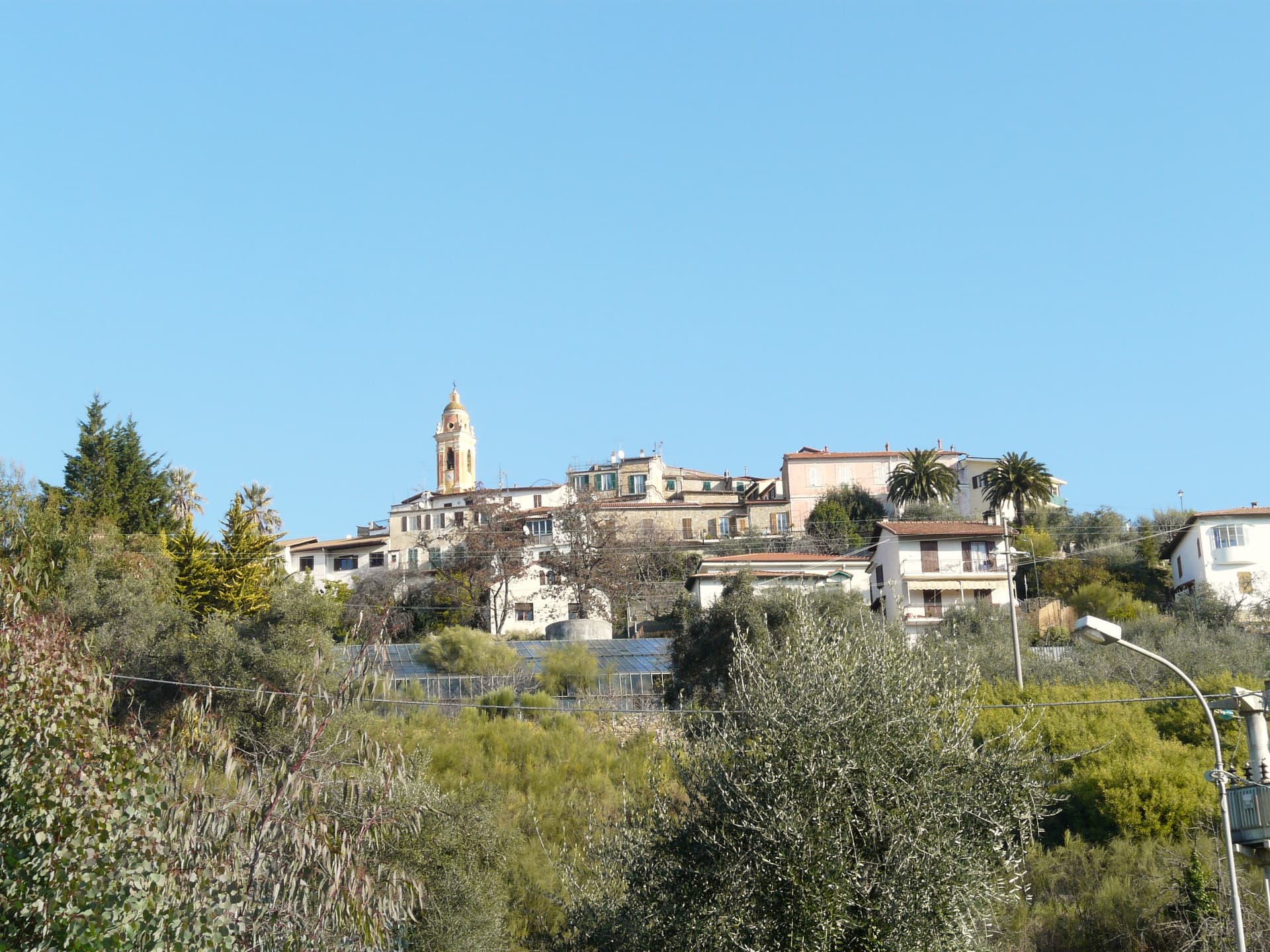
Seborga
Province: Imperia
A hilltop village at 517 meters above Bordighera that calls itself a principality, 276 residents, its own coins and stamps since 1963.
🟦 Bandiera Blu
More Bandiera Blu towns in Liguria
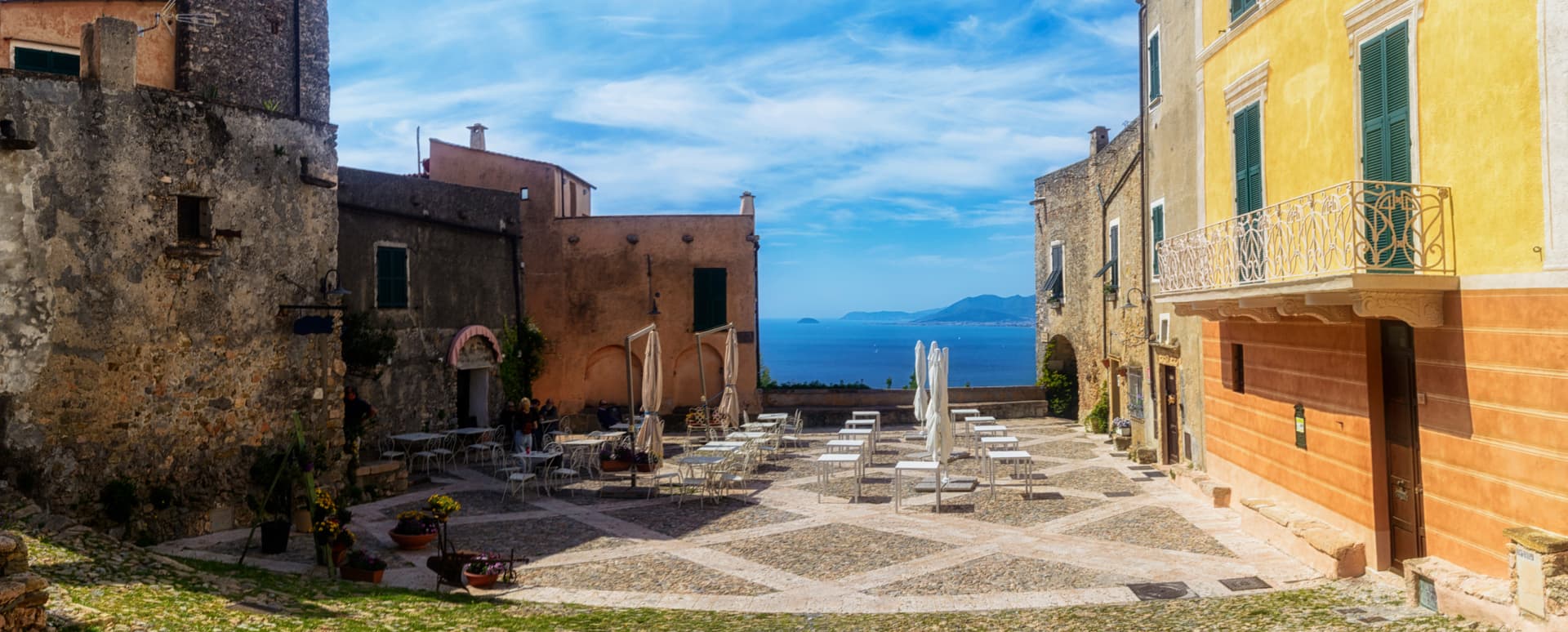
Borgio Verezzi
Province: Savona
Two villages joined under one comune in 1933: Borgio on the Bandiera Blu beach and Verezzi at 200 meters on the pink-stone hill above.
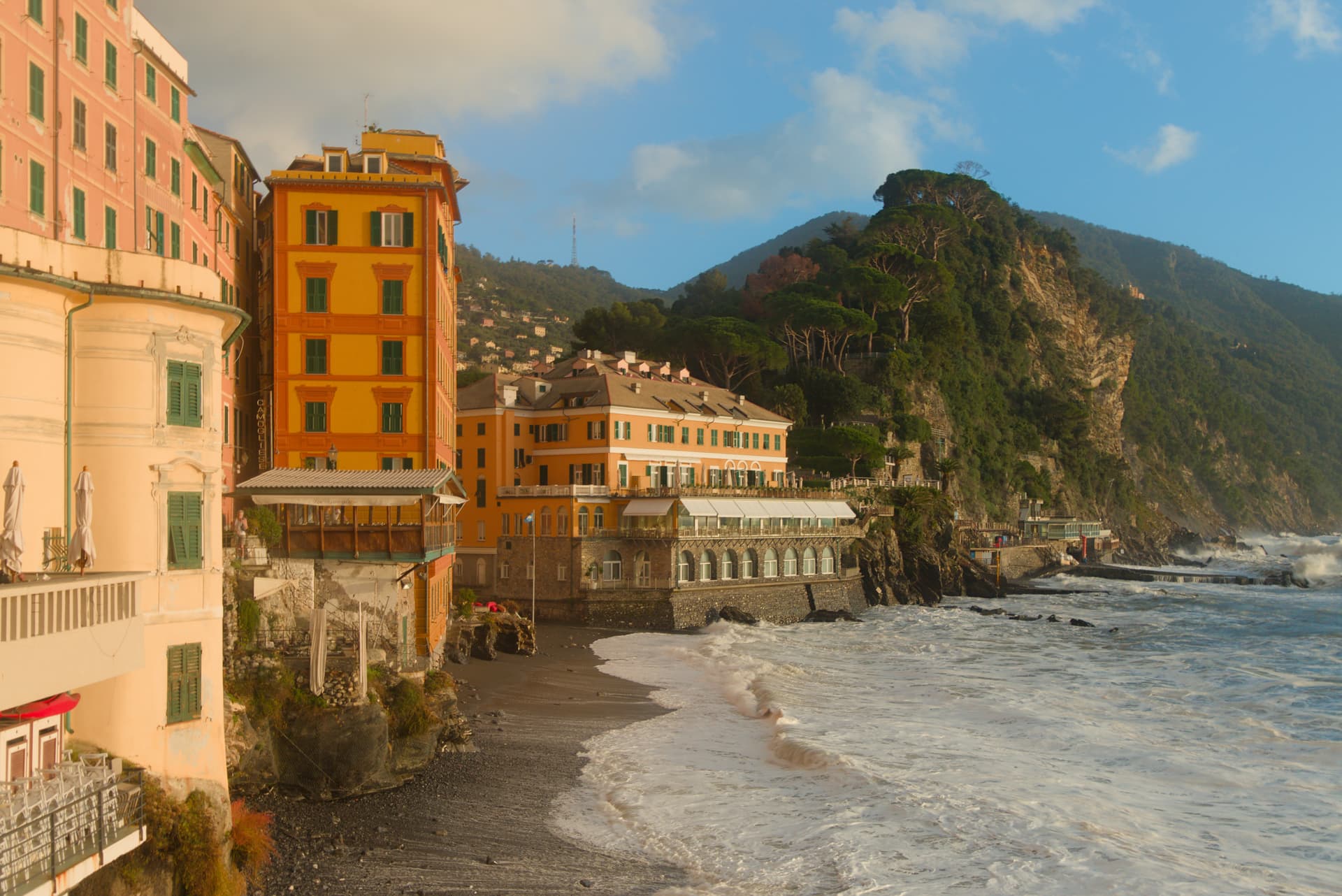
Camogli
Province: Genova
A fishing village on the Golfo Paradiso whose nineteenth-century fleet of a thousand white sails made it Italy's third maritime power in the Mediterranean.
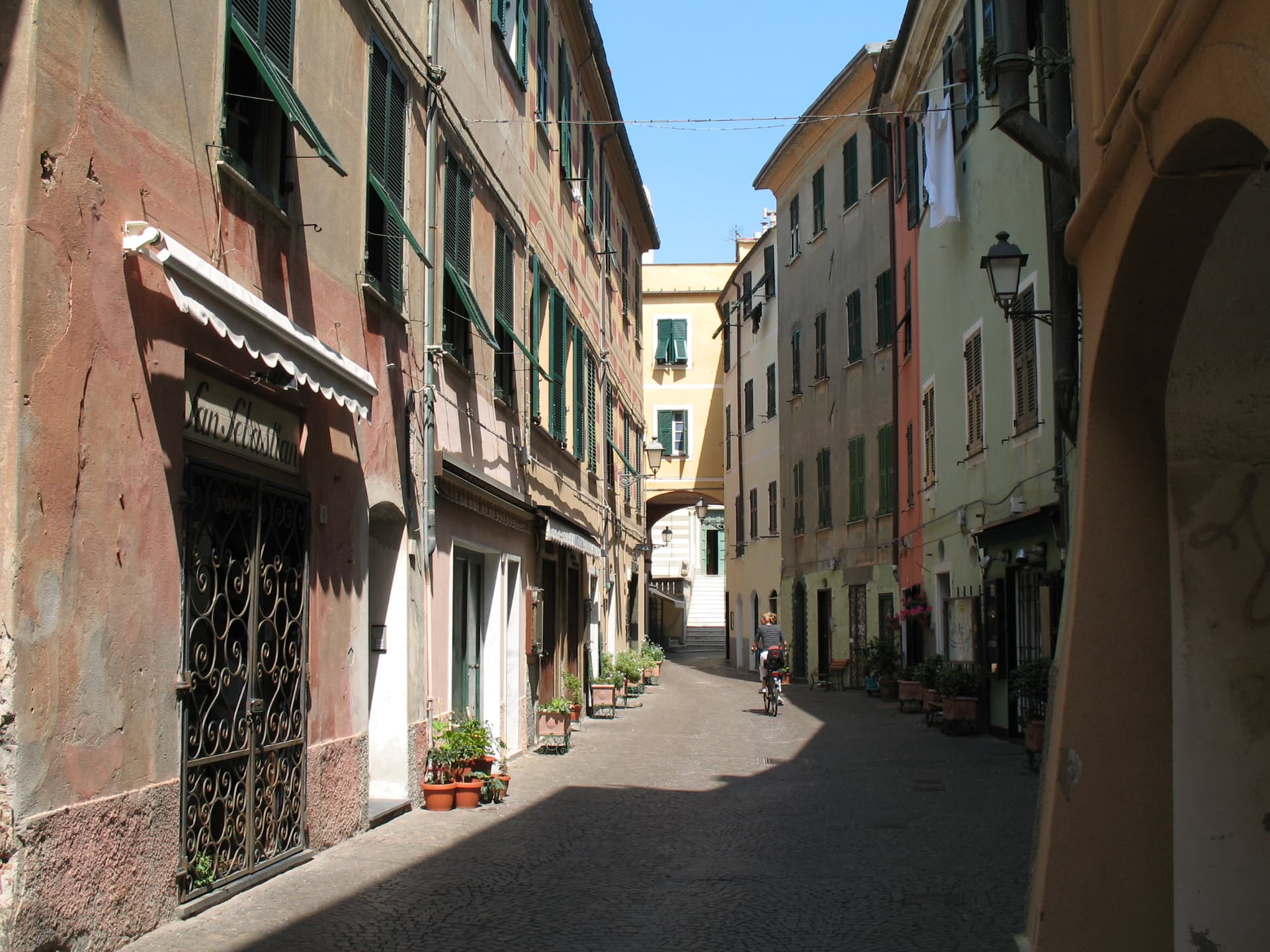
Celle Ligure
Province: Savona
A Riviera di Ponente beach town with kilns firing since the 1600s and a Lucio Fontana ceramic on the parish church façade.
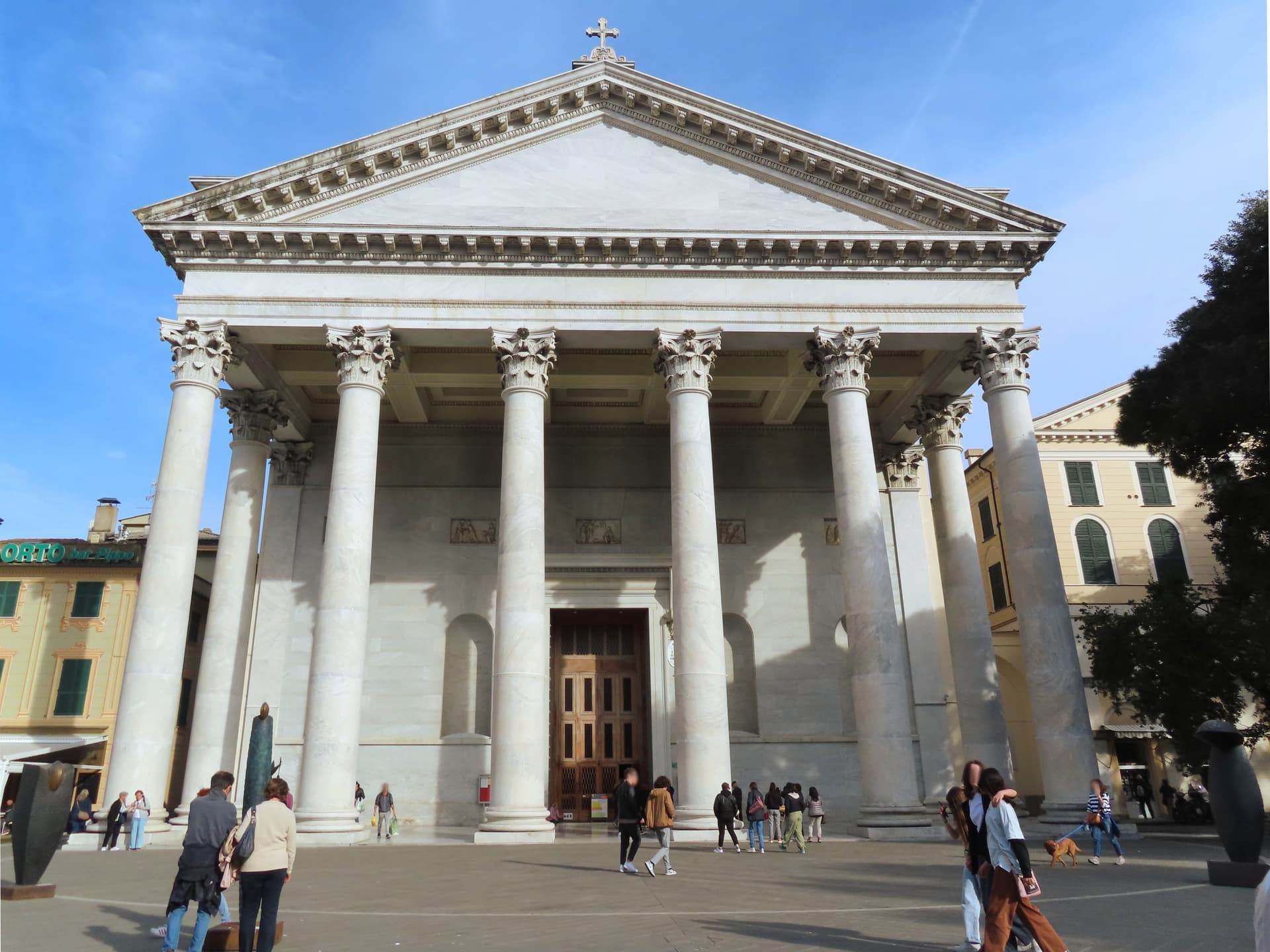
Chiavari
Province: Genova
The Tigullio capital between Portofino and the Cinque Terre, a 27,000-person Genoese trading town built around a thirteenth-century grid of porticoed streets.
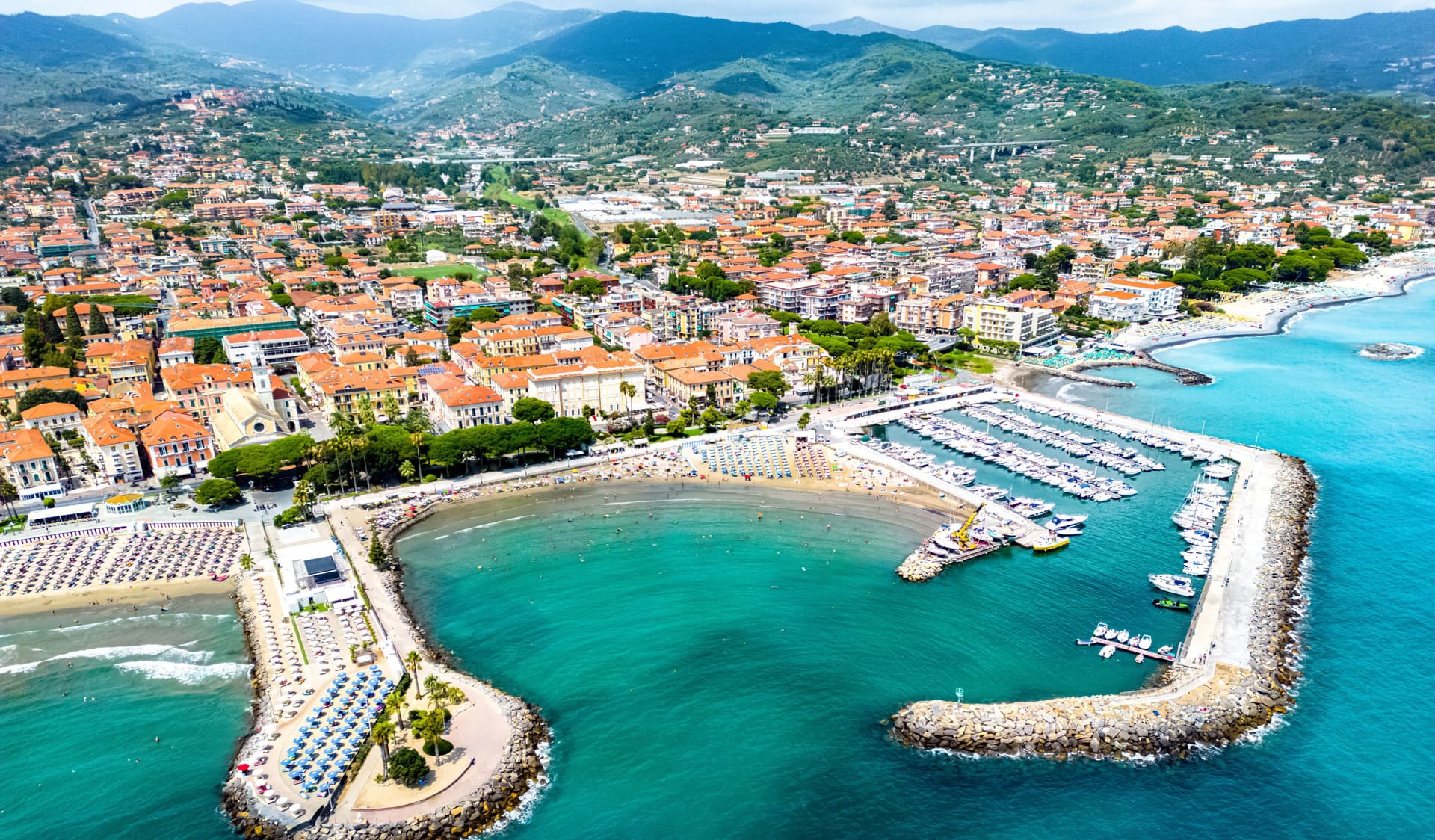
Diano
Province: Imperia
A twin destination on the Riviera dei Fiori — the medieval hilltop borgo of Diano Castello above and the palm-fronted beach resort of Diano Marina below — sharing one Bay of Diano, one Taggiasca olive valley, and the longest Bandiera Blu beach in western Liguria.