

Liguria · Genova
Lavagna
The Tigullio town that gave its name to slate and to Pope Innocent IV, host each 14 August of the Torta dei Fieschi pageant.
Known for
ARDESIA / SLATE
The dark slate of the San Giacomo mountains, source of the Italian word lavagna for chalkboard and roofing material across Genova.
I FIESCHI
Powerful Genovese family descended from the Counts of Lavagna, producing Pope Innocent IV in 1243 and Pope Adrian V in 1276.
TORTA DEI FIESCHI
Each 14 August, reenactment of the 1230 wedding of Count Opizzo Fiesco with a giant cake distributed in Piazza Marconi.
When to visit
Best · Apr–Oct
- J
- F
- M
- A
- M
- J
- J
- A
- S
- O
- N
- D
- Best
- Hot or crowded
- Quiet
- Mostly closed
The festa: Nostra Signora del Monte Carmelo, 16 July
Why come
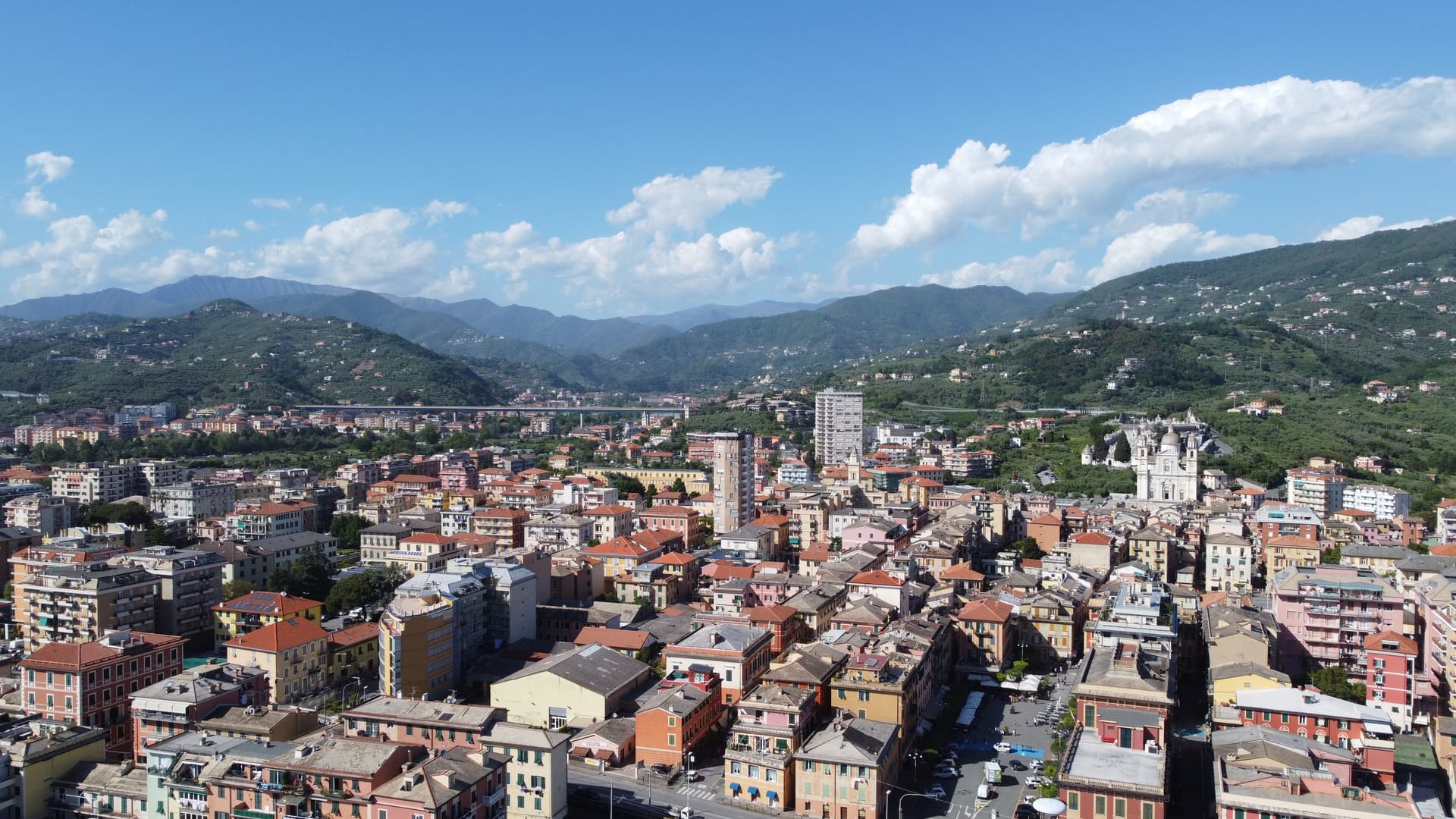
Lavagna sits at sea level on the eastern Tigullio, thirty-five kilometers southeast of Genova. The town gives its name to the slate, lavagna, quarried from the San Giacomo mountains behind it; the stone roofed the Genovese palazzi and lined the schoolrooms of half of Italy, which is why the Italian word for chalkboard is also lavagna. Around the year 1000 the Counts of Lavagna held the territory; the Fieschi descended from them and produced two popes, Innocent IV and Adrian V.
Innocent IV ordered the Basilica di San Salvatore dei Fieschi in 1244, white marble and slate in alternating bands, in the frazione of San Salvatore above the town. On 14 August Lavagna stages the Torta dei Fieschi: a reenactment of the 1230 wedding of Count Opizzo Fiesco and his Sienese bride, with a giant cake distributed in Piazza Marconi at the foot of the Basilica di Santo Stefano staircase. The beach holds Bandiera Blu.
The Sunday letter
We haven’t written Lavagna’s letter yet.
One town every Sunday, with the photo, the food, the festa. Be there when this one comes up. Free, by Peter & Sophia from Pietrasanta.
By subscribing you agree to Substack’s Terms of Use, our Privacy Policy and our Information collection notice.
What to see
Basilica di Santo Stefano
Parish church rebuilt over a sixth-century foundation, crowning Piazza Marconi at the top of a wide staircase, the starting point of the Torta dei Fieschi.
Basilica di San Salvatore dei Fieschi
Thirteenth-century basilica in the frazione of San Salvatore, ordered by Pope Innocent IV in 1244, façade in alternating bands of white marble and local slate.
Spiaggia di Lavagna
Long Bandiera Blu beach on the Tigullio, with one of the largest tourist ports in northern Italy at the western end.
Piazza Marconi
Main square at the foot of the Basilica di Santo Stefano staircase, the stage for the 14 August Torta dei Fieschi each year.
Cave di Ardesia
Working slate quarries in the hills behind the town, the source of the dark stone that gave Lavagna its name and roofed the palaces of Genova.
The slow-trip planner
Building a trip? Find where Lavagna fits in a slow Italy circuit.
Answer five questions. We will shape a geographically coherent slow trip from the 1,000 Italian towns most travelers skip. Yours to save and share.
We recommend
Where to eat and stay
Not our picks, but places the guides put their name to — a Michelin star, a Gambero Rosso fork, a Slow Food snail, a Michelin Key for the hotels. Worth a table, a counter, or a night when you pass through.
RaieüTrattoria
Raieü carries a Michelin Bib Gourmand, two Gambero Rosso prawns, plus a Slow Food snail.
AriaRistorante
Aria carries two Gambero Rosso forks (80/100), plus a spot in the Michelin Guide.
Impronta d'AcquaRistorante
Impronta d'Acqua holds one Michelin star and two Gambero Rosso forks (83/100).
Radical FarmhouseAgriturismo
Radical Farmhouse has a Gambero Rosso listing to its name.
Living here
- Population 12,296
- A local hubi
- Pharmacy in town
- High school within a 30-minute drive
- Train station in the comune
- Nearest airport Genoa, 54 min drive
- Regional capital Genova, 44 min drive
Tags & datadesignations · numbers · sources
Recognised as
The numbers
- Elevation: 6 m
- Population: 12,296
- Surface area: 13.88 km²
These figures were compiled from public directories — ISTAT, OpenStreetMap, Wikidata — and from the official listings of the guides named on this page. Town details change; verify with official sources before you travel.
Close by
More towns near Lavagna
Chiavari
Province: Genova
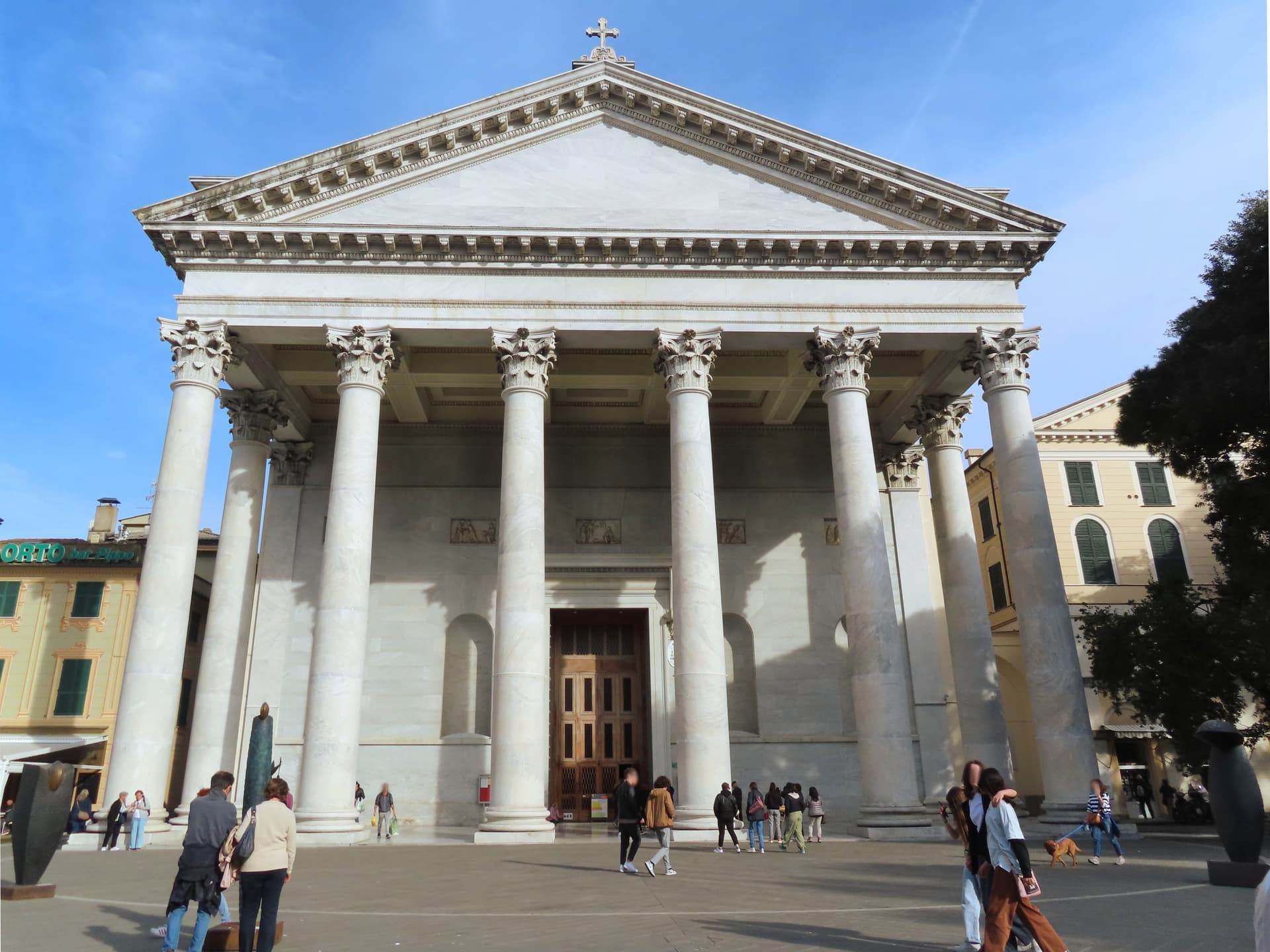
The Tigullio capital between Portofino and the Cinque Terre, a 27,000-person Genoese trading town built around a thirteenth-century grid of porticoed streets.
Sestri Levante
Province: Genova
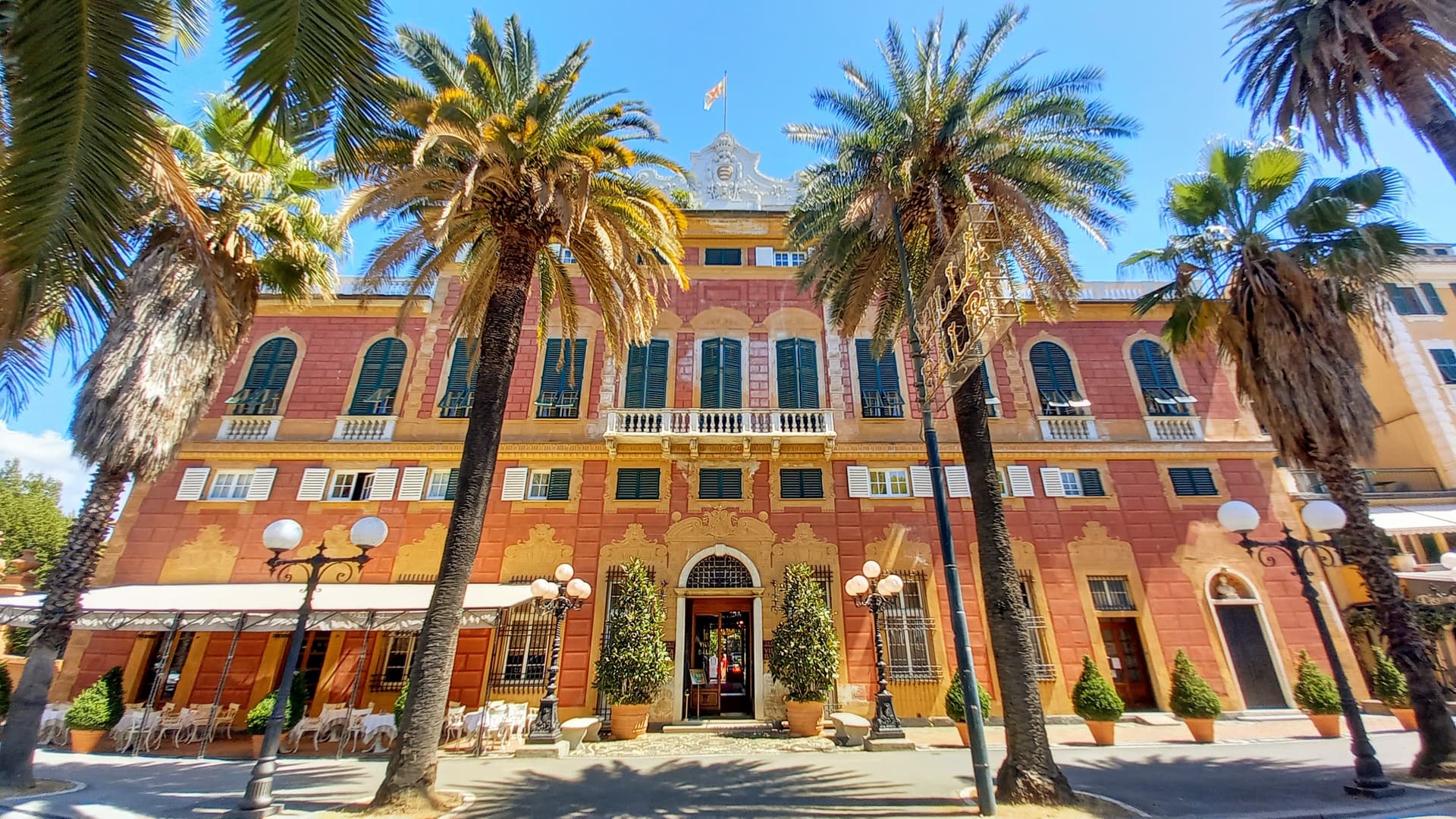
The Tigullio town of two bays, where Hans Christian Andersen stayed in 1833 and Guglielmo Marconi ran his shortwave radio experiments.
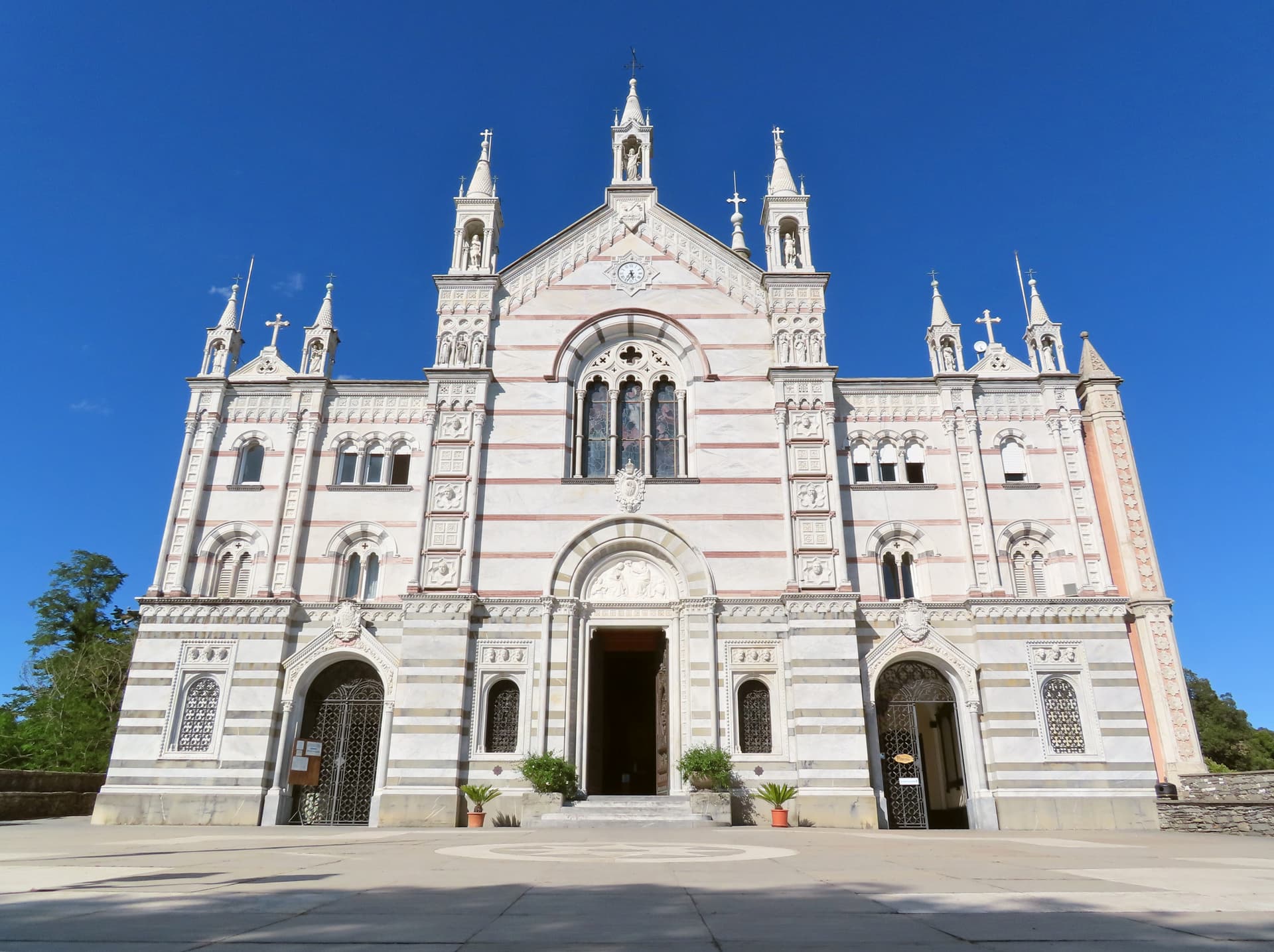
Rapallo
Province: Genova
The largest town on the Tigullio gulf, twice the location of treaties that redrew borders in postwar Europe.
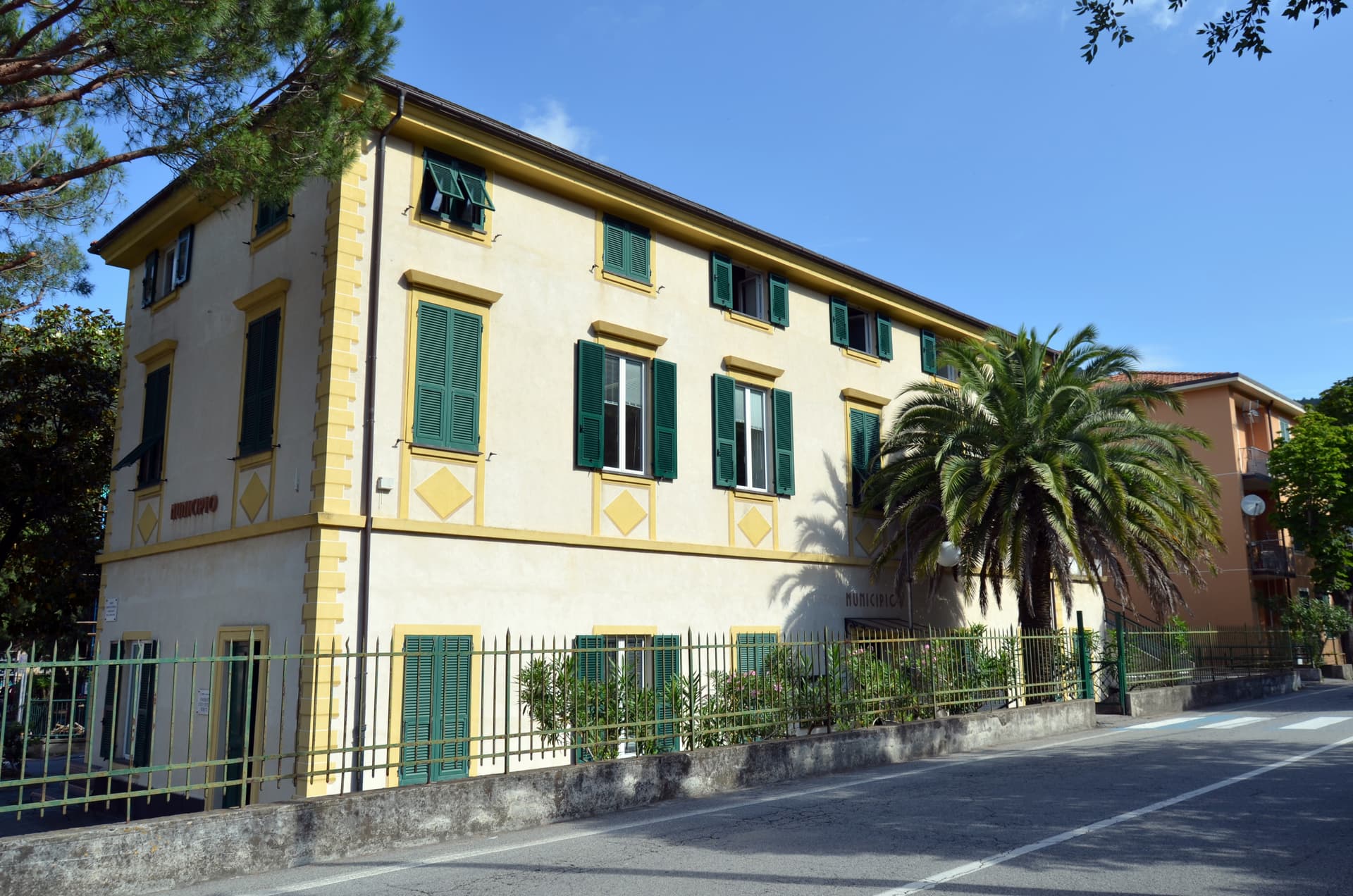
Deiva Marina
Province: La Spezia
A Riviera di Levante seaside commune between Sestri Levante and the Cinque Terre, reachable by sea only after the 1874 railway.
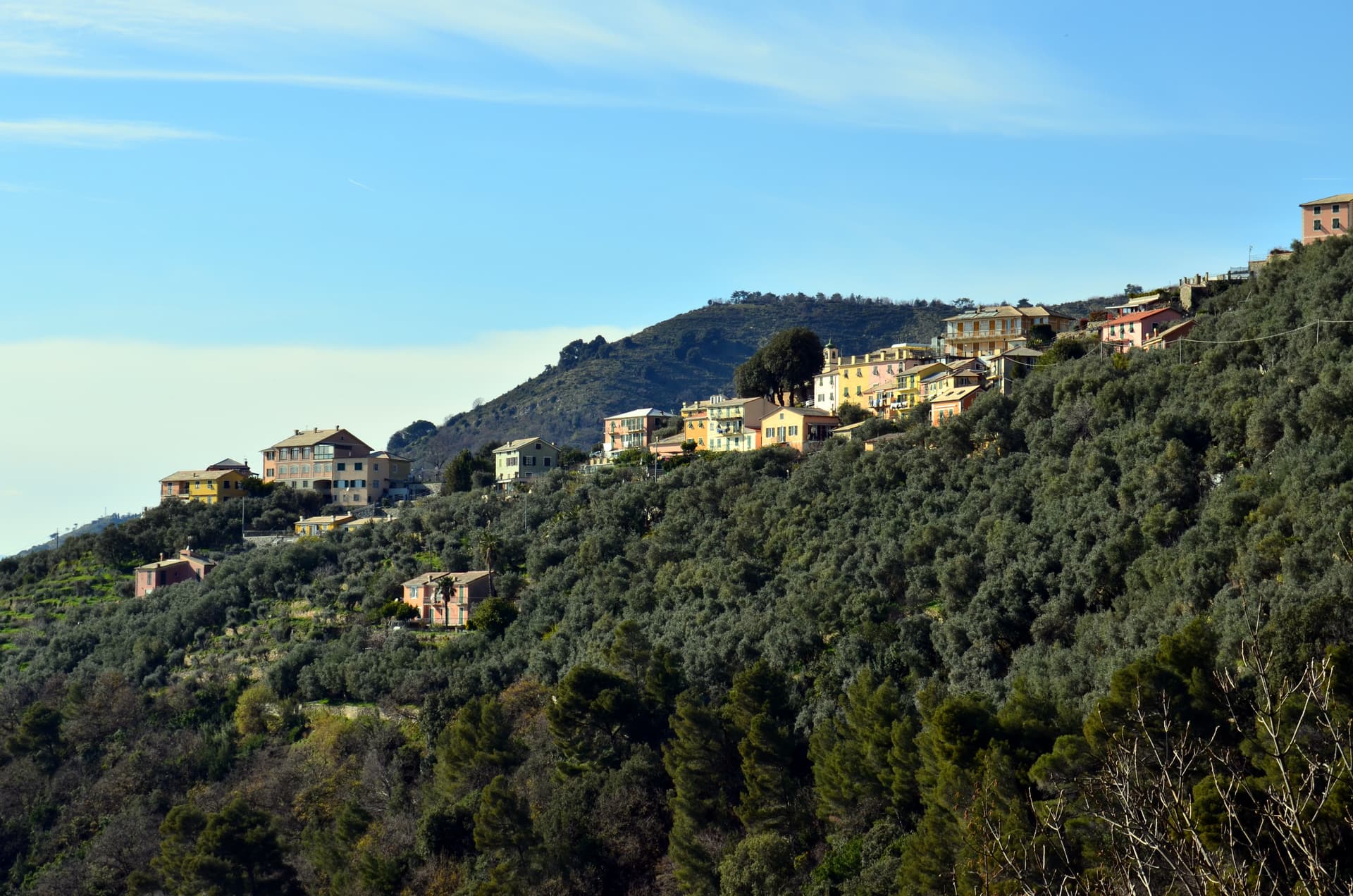
Bogliasco
Province: Genova
A fishing village on the Riviera di Levante just east of Genoa, built around a 13th-century stone bridge over the Bogliasco torrent and a tight grid of pastel-coloured houses opening onto a pebble cove.
🟦 Bandiera Blu
More Bandiera Blu towns in Liguria
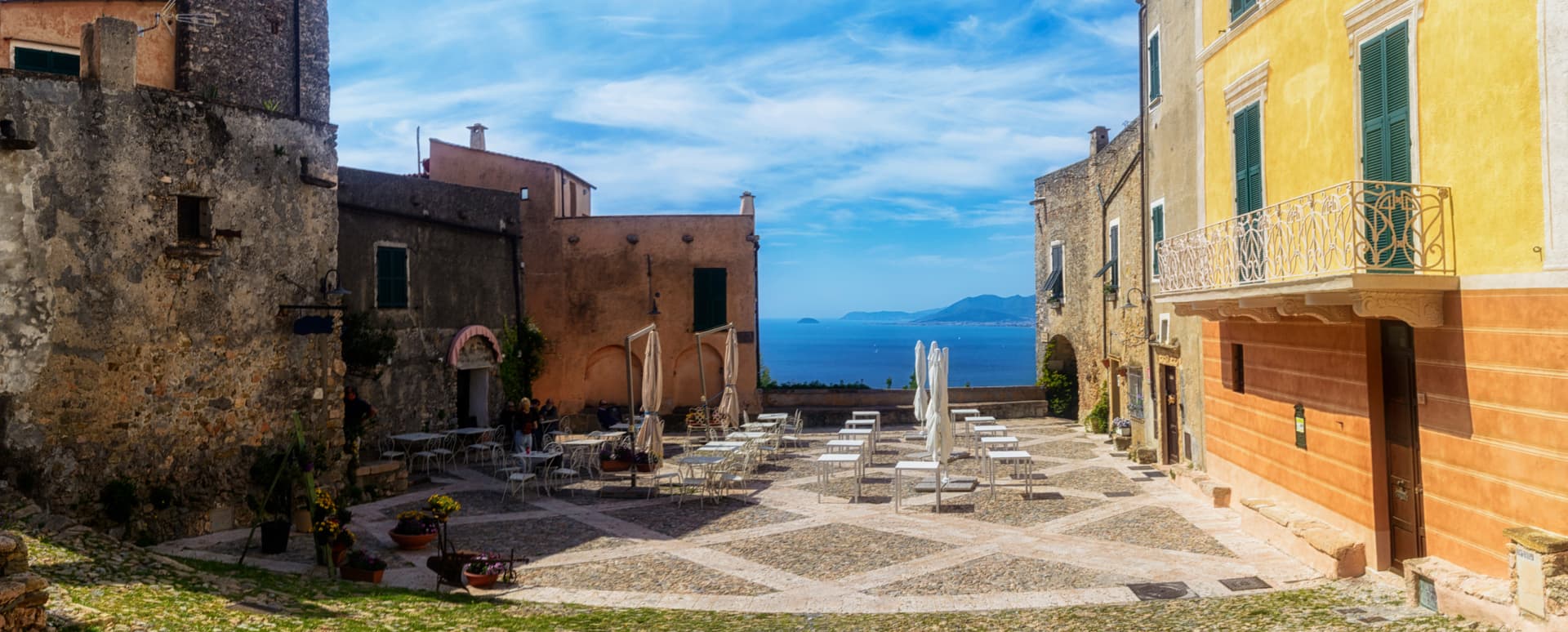
Borgio Verezzi
Province: Savona
Two villages joined under one comune in 1933: Borgio on the Bandiera Blu beach and Verezzi at 200 meters on the pink-stone hill above.
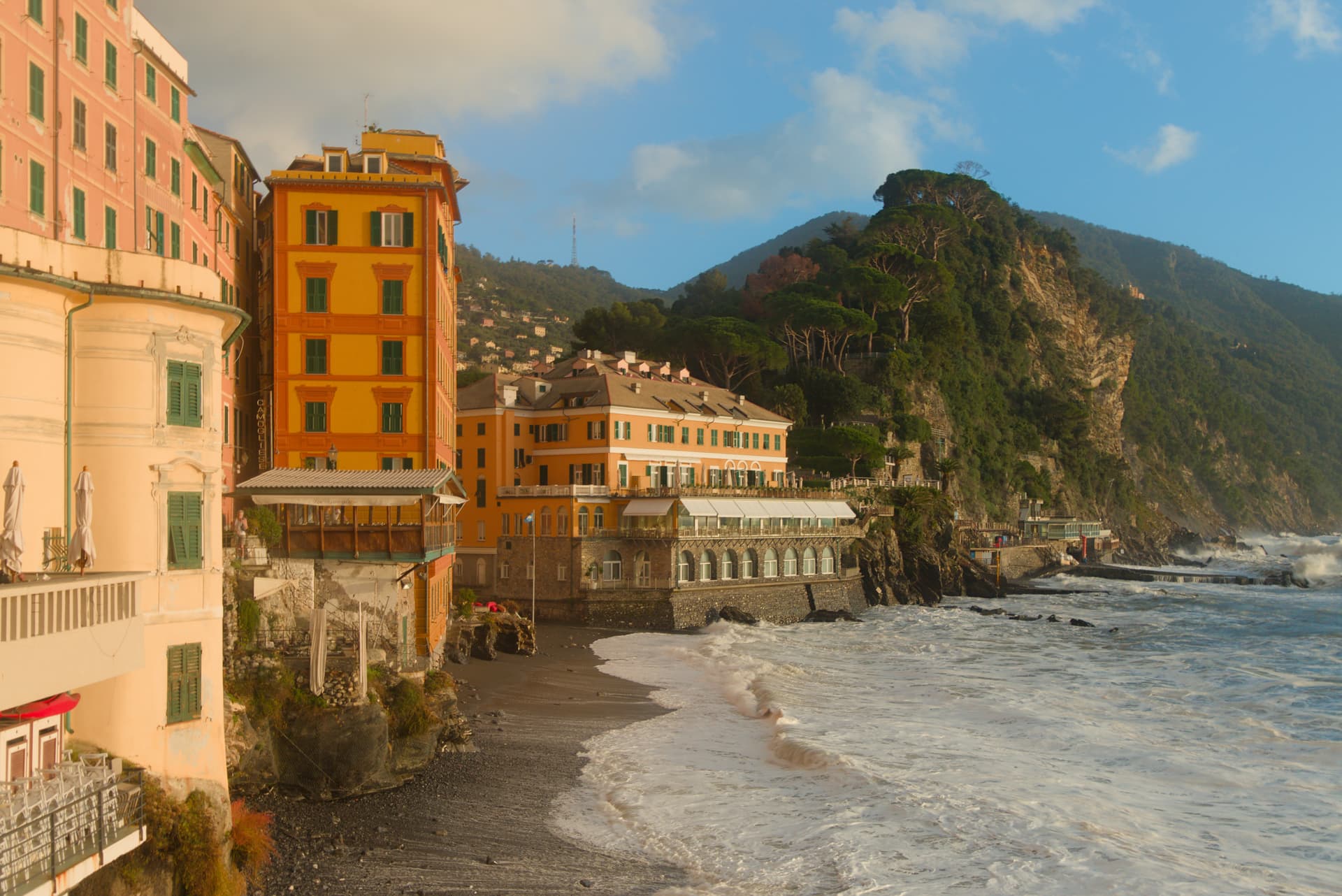
Camogli
Province: Genova
A fishing village on the Golfo Paradiso whose nineteenth-century fleet of a thousand white sails made it Italy's third maritime power in the Mediterranean.
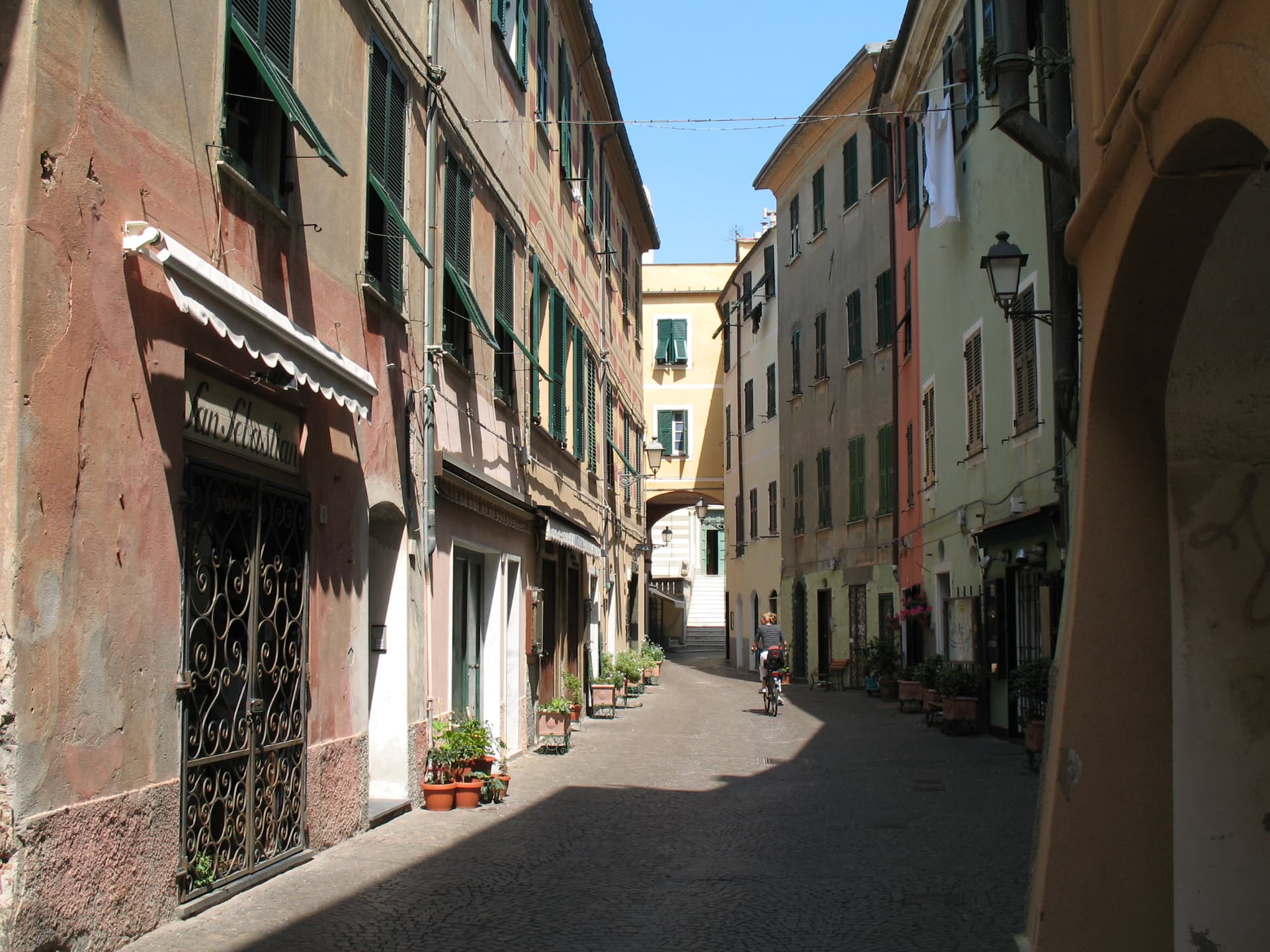
Celle Ligure
Province: Savona
A Riviera di Ponente beach town with kilns firing since the 1600s and a Lucio Fontana ceramic on the parish church façade.
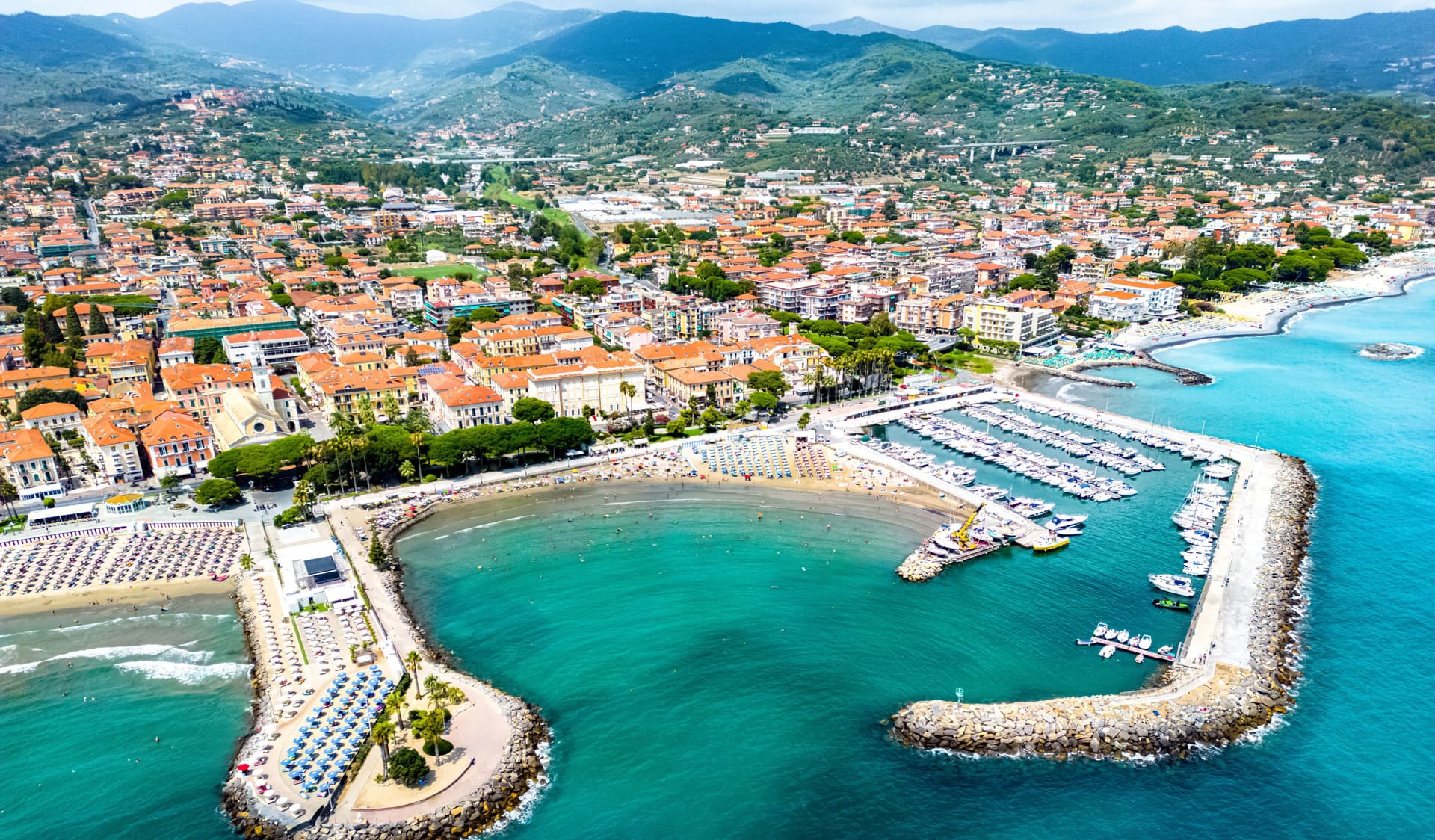
Diano
Province: Imperia
A twin destination on the Riviera dei Fiori — the medieval hilltop borgo of Diano Castello above and the palm-fronted beach resort of Diano Marina below — sharing one Bay of Diano, one Taggiasca olive valley, and the longest Bandiera Blu beach in western Liguria.
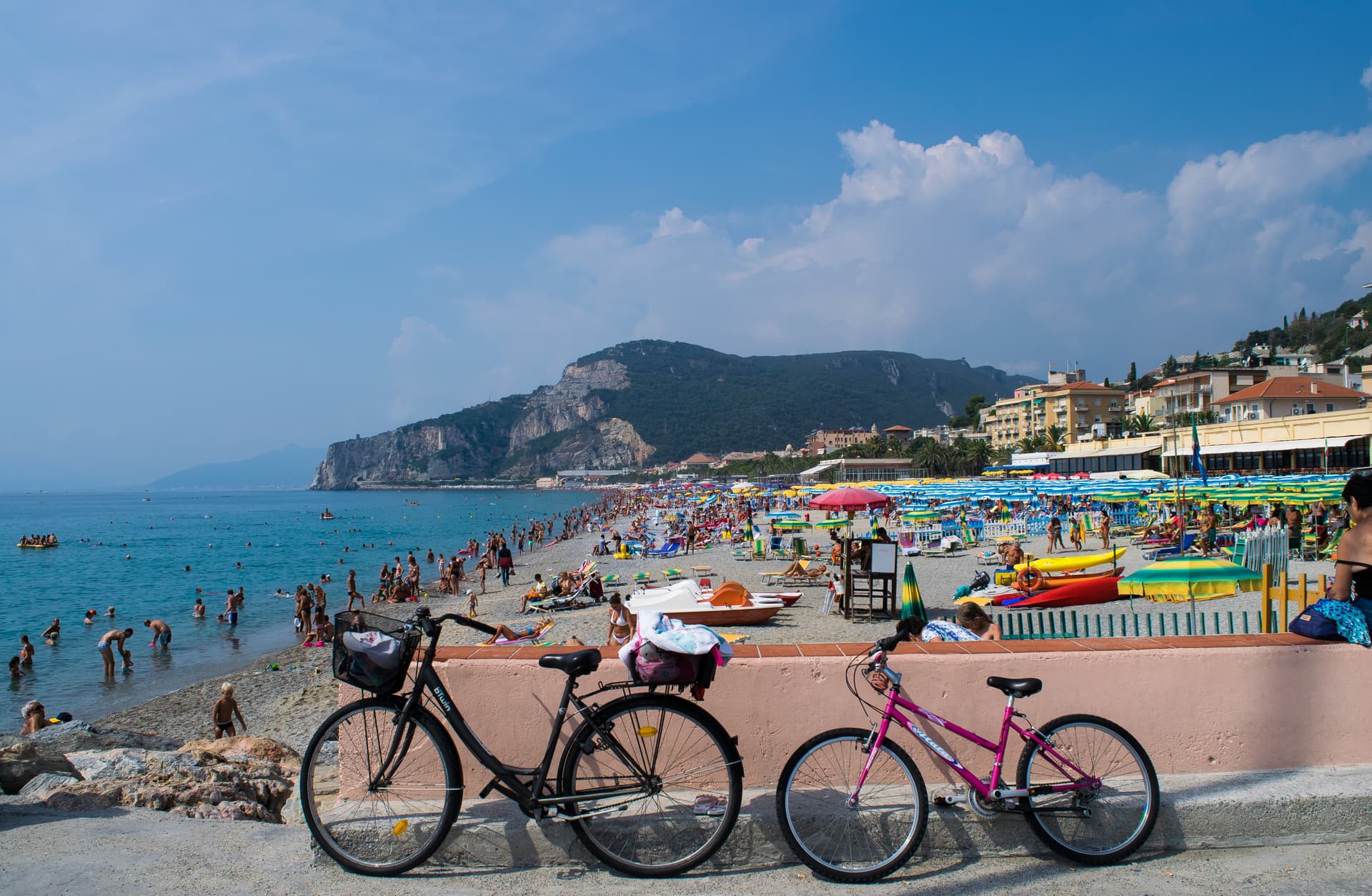
Finale Ligure
Province: Savona
Three boroughs on the Gulf of Genoa, with walled Finalborgo as the Del Carretto seat and a Bandiera Blu beachfront below.