
Themed picks · Reggio Calabria · Aspromonte
10 Aspromonte hill towns near Reggio Calabria
10 comuni · within 150 minutes of Reggio Calabria · drive times OSRM-computed
Calabria is the longest peninsula on the Italian mainland and the least travelled of the southern regions. Its mountain spine, the Apennines, runs unbroken from the Basilicata border down to the Aspromonte massif that ends in the Strait of Messina. The interior of that range holds two national parks (Sila to the north, Aspromonte to the south), the last Greek-speaking villages of mainland Italy (the Grecanico-dialect comuni of Roghudi, Gallicianò, Bova), and the source of two distinctive foods that have only recently found their way north: bergamot (grown nowhere else, the citrus that goes into Earl Grey tea), and 'nduja (the spreadable spicy salami from the inland comune of Spilinga).
Reggio Calabria is the obvious southern base. The city itself reads as a working port that fronts onto the Strait of Messina, with Etna visible across the water on clear days, and holds the Museo Archeologico Nazionale (the Bronzi di Riace are here, the two life-size Greek bronzes pulled from the sea in 1972). The motorway A2 runs north from the city up the Tyrrhenian coast; the SS106 and SS183 climb into the Aspromonte; the regional rail handles the coastal strips and the Sila gateway towns.
We picked ten comuni with deliberate spread across the Aspromonte and the Sila ranges, with weight toward the highest-elevation Borghi più belli and the Grecanico-dialect villages. Drive times below are OSRM-computed from Reggio Calabria Centrale by car and reflect the steep mountain roads honestly; the inland comuni take longer than the map distances suggest. Some entries are reachable by regional rail (the Reggio-Cosenza line handles the western Sila gateway).
 1
1Catanzaro · Calabria · 29 min from Reggio Calabria
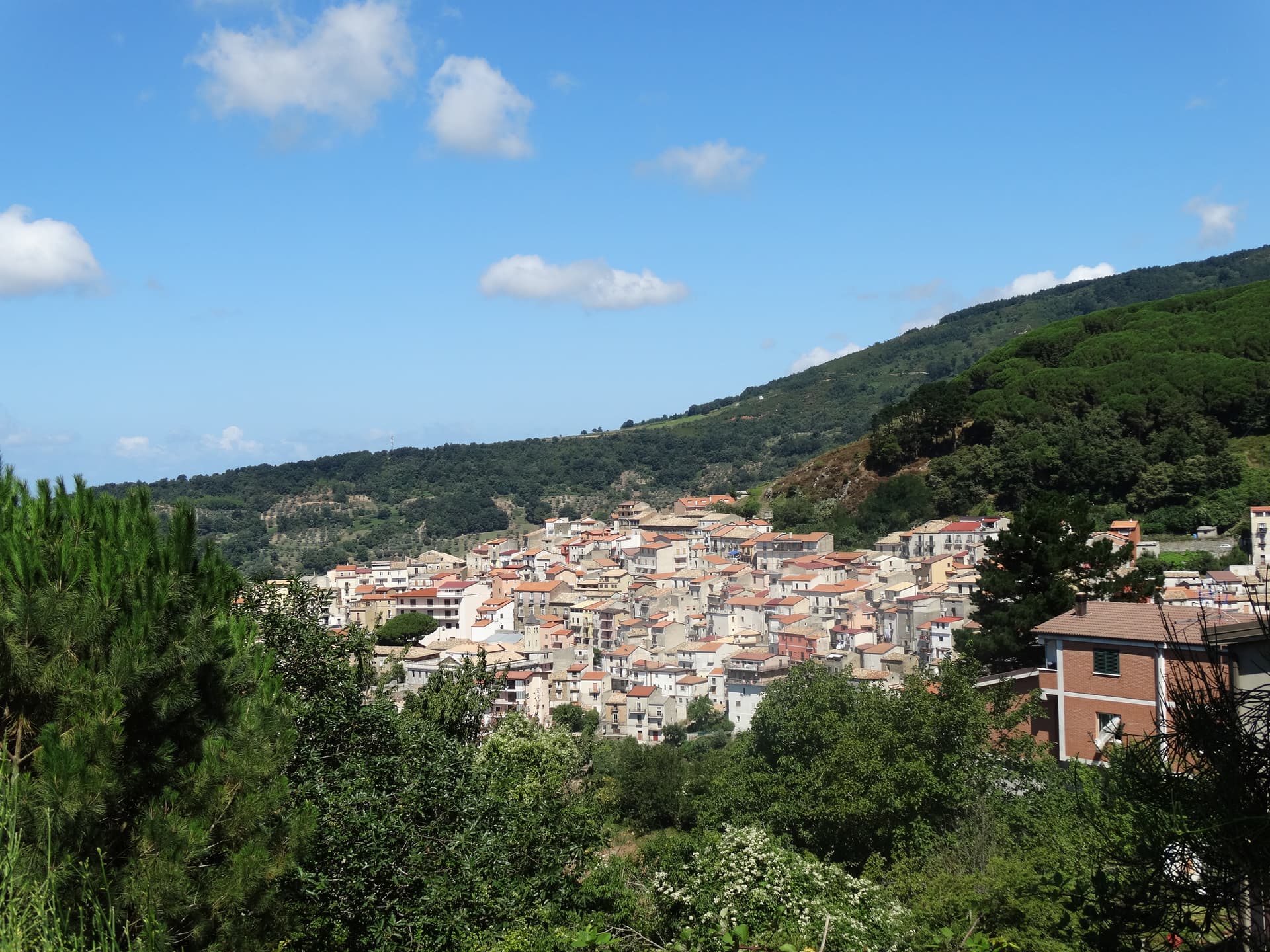
Gizzeria
An Arbëreshë hill village at 600 meters above the Gulf of Sant'Eufemia, with kitesurf beaches and brackish lagoons on the Tyrrhenian below.
Founded between 1448 and 1450 by Albanian troops under Demetrio Reres, sent by Skanderbeg; the linguistic minority is protected by law 482 of 1999.
Borghi Autentici network member.
 2
2Catanzaro · Calabria · 48 min from Reggio Calabria
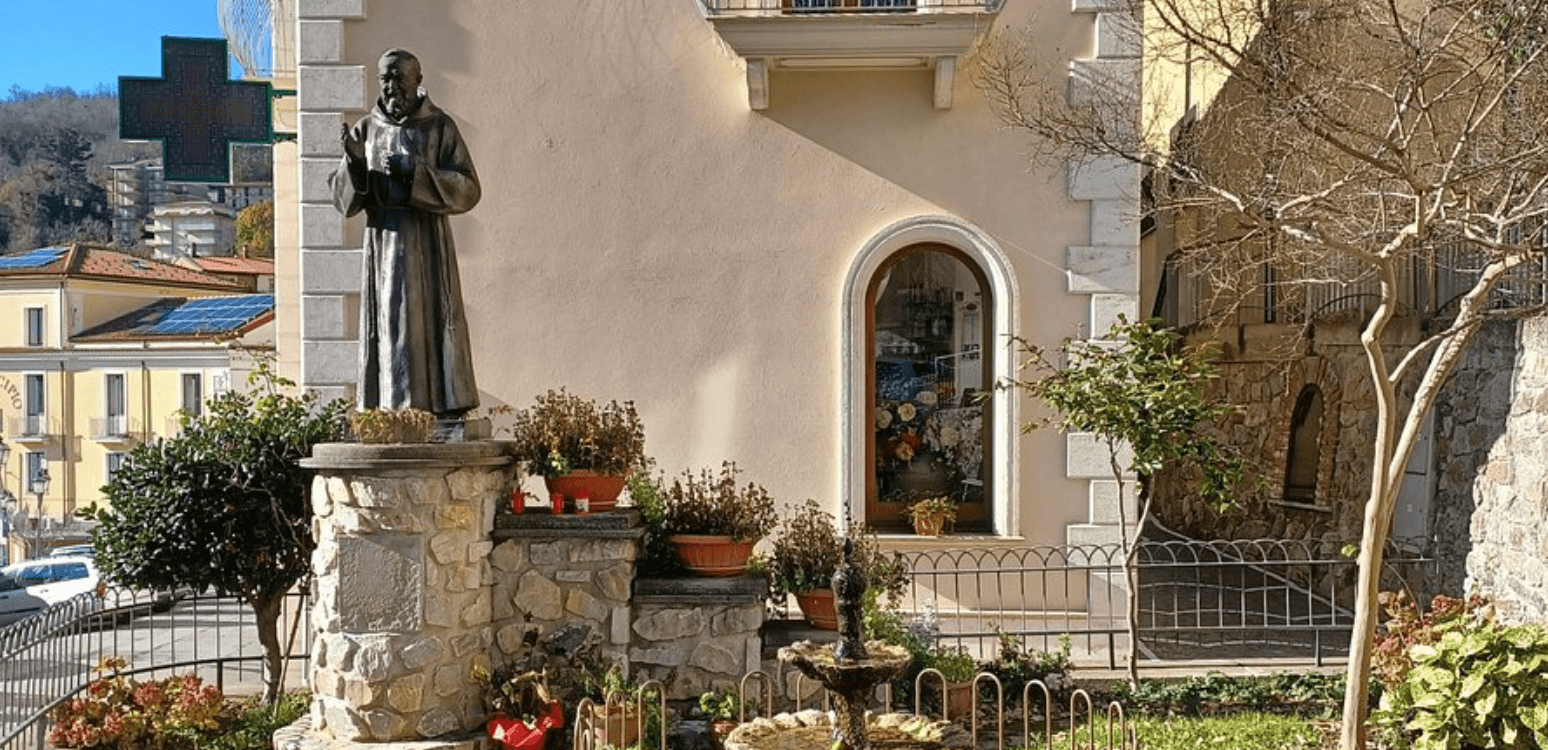
Serrastretta
The chair town of the Reventino massif, founded in 1383 in a narrow gorge between two mountain ranges, still weaving straw seats by hand.
Hand-woven vuda-and-beech chairs produced for centuries along the Via dei Sediari, the town's signature craft.
 3
3Catanzaro · Calabria · 50 min from Reggio Calabria
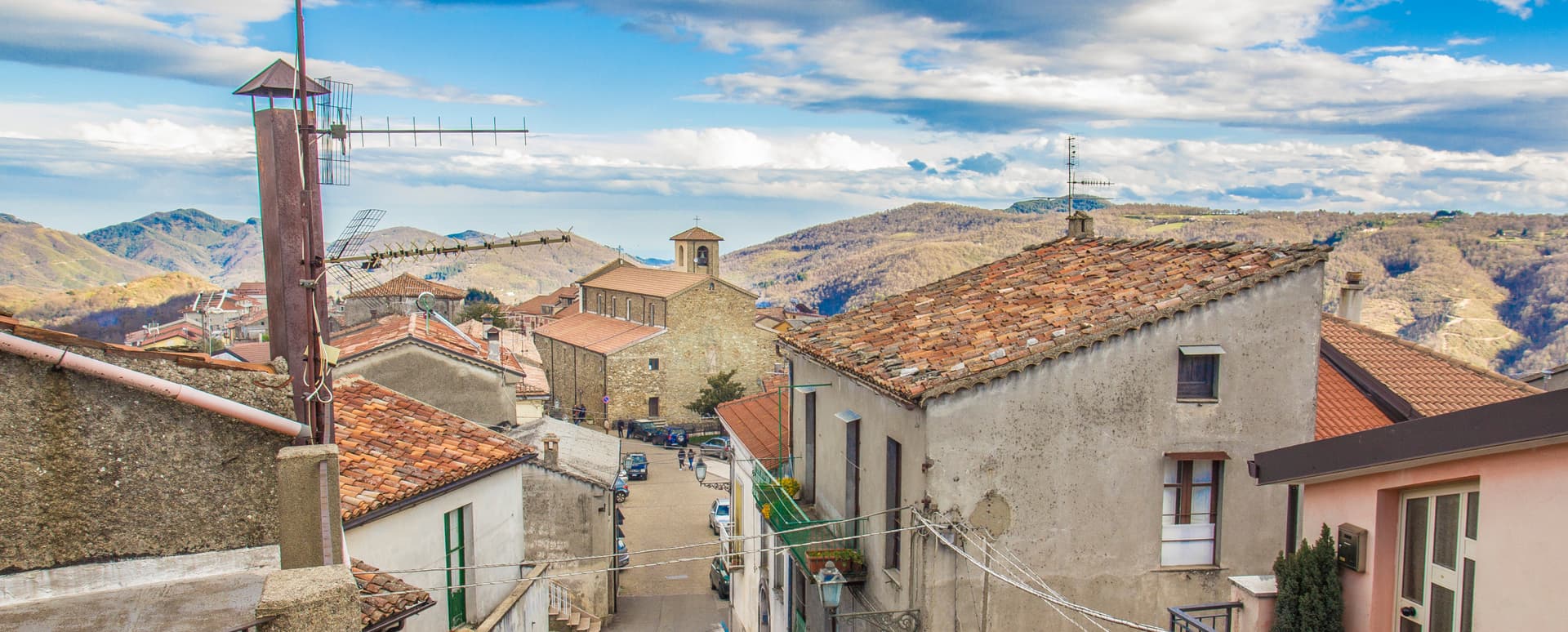
Cicala
A village of 887 people at 829 meters on the western foothills of the Sila Piccola, founded in 1616 by farmers asking the Count Cigala for land.
The village took its name from Count Cigala, who in 1616 granted land at Trempa di Castagna to local farmers.
 4
4Cosenza · Calabria · 49 min from Reggio Calabria
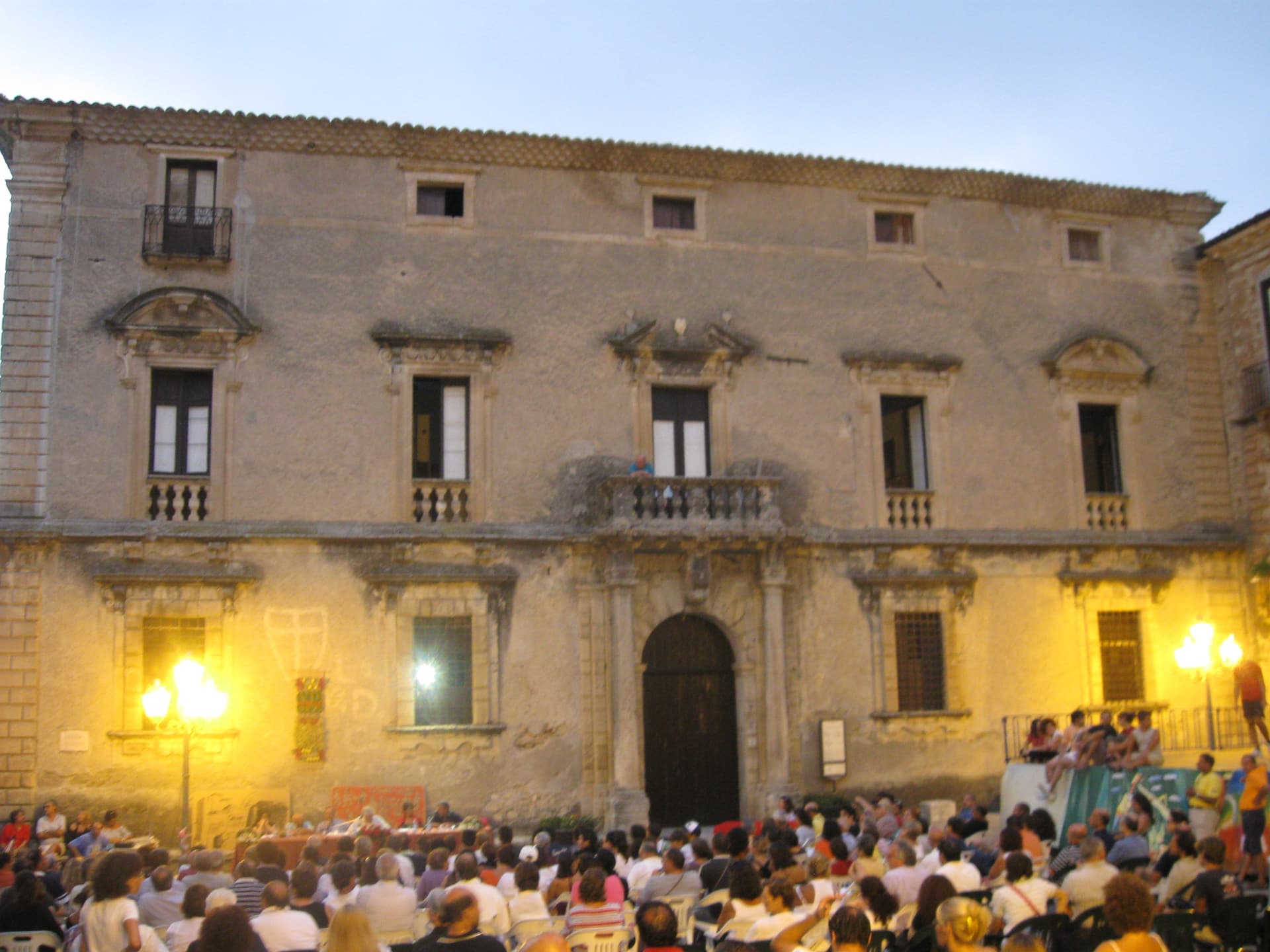
Aiello Calabro
A hilltop borgo at 502 meters in the Tyrrhenian hinterland of Cosenza, ruled for two centuries by the Cybo-Malaspina from Massa Carrara.
Ligurian-Tuscan family from Massa Carrara who bought the fief in 1566 for 38,000 ducats and held it as duchy until 1806.
Listed in I Borghi più belli d'Italia, 502 m.
 5
5Cosenza · Calabria · 121 min from Reggio Calabria
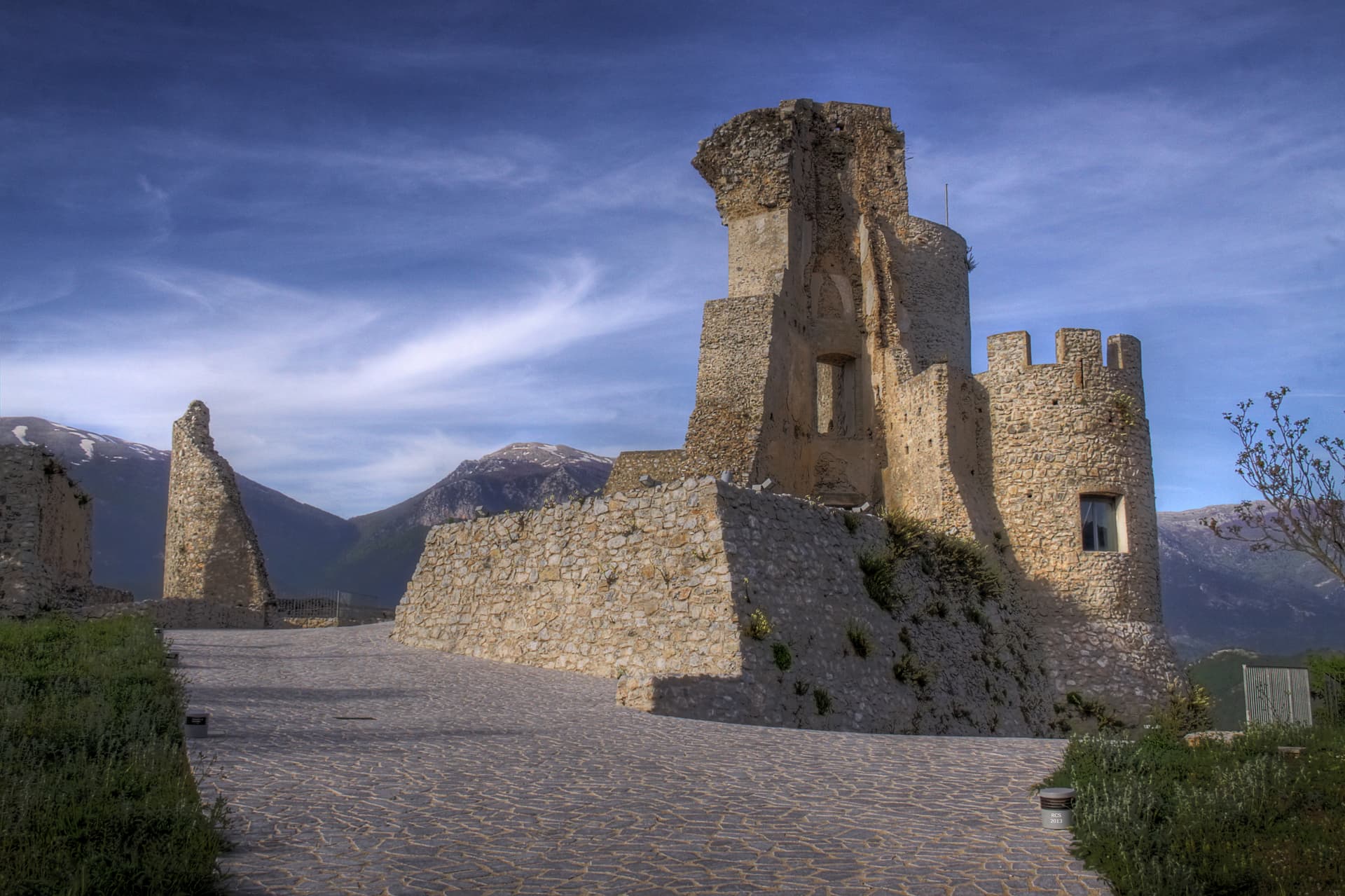
Morano Calabro
A conical hill of stone houses stacked under a Norman-Swabian castle at the southern gate of the Pollino, called Italy's nativity village.
Houses stack in concentric rings on a conical hill under the castle ruins, the postcard image that earned the presepe nickname.
Listed in I Borghi più belli d'Italia, 694 m.
The slow-trip planner
Building a trip? Find where Reggio Calabria fits in a slow Italy circuit.
Answer five questions. We will shape a geographically coherent slow trip from the 1,000 Italian towns most travelers skip. Yours to save and share.
 6
6Reggio di Calabria · Calabria · 105 min from Reggio Calabria
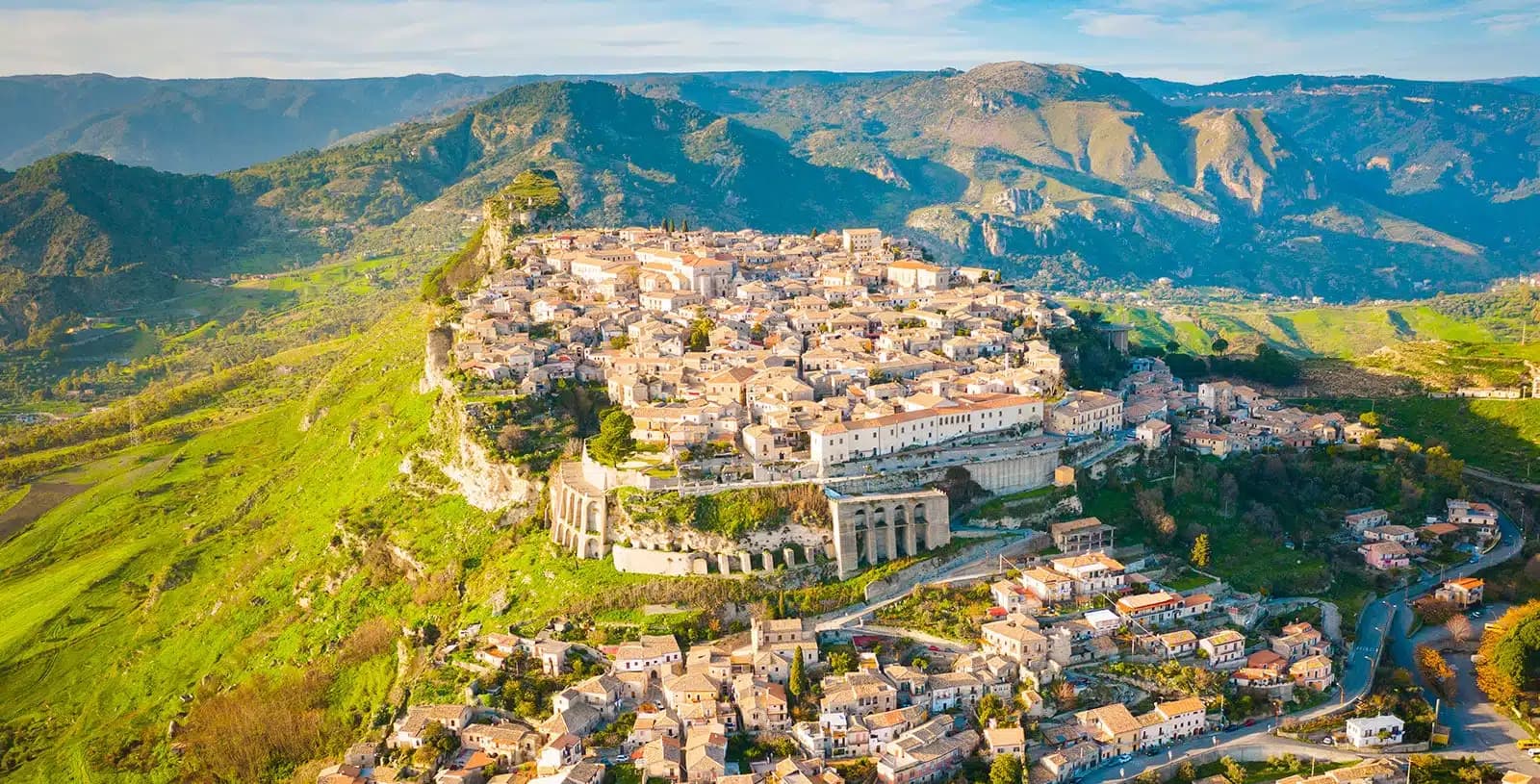
Gerace
A 470-meter conglomerate rock above Locri, founded by Locri Epizefiri refugees, with Calabria's largest cathedral on Roman columns from Magna Graecia temples.
Calabria's largest cathedral, Norman 1100, with twenty-six mismatched Roman columns in the crypt taken from the temples of Locri Epizefiri.
Listed in I Borghi più belli d'Italia, 470 m.
 7
7Potenza · Basilicata · 139 min from Reggio Calabria
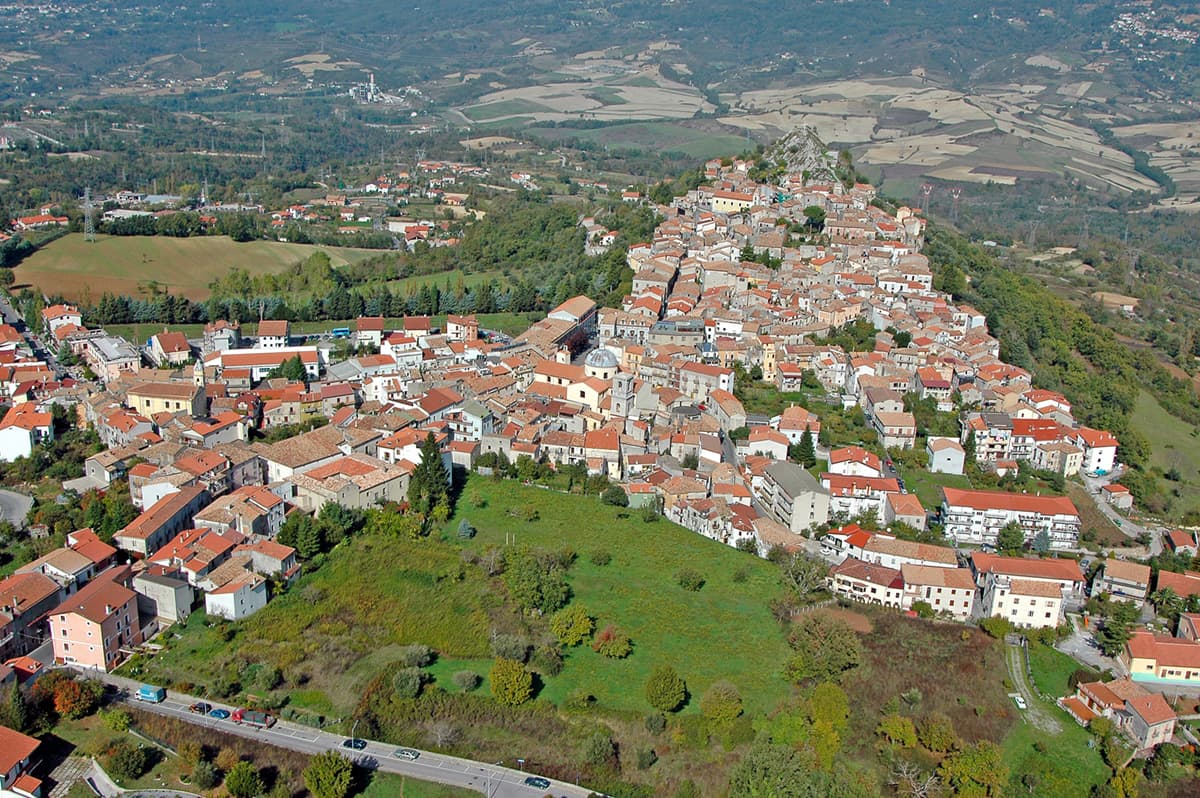
Rotonda
The Pollino park's Lucanian gateway — a 3,171-resident borgo at 626m on the Basilicata/Calabria border, headquartered HQ for the Parco Nazionale del Pollino (Italy's largest national park), with the Fagiolo Bianco Poverello + Melanzana Rossa di Rotonda DOP slow-food products, the Borgo Autentico mark, and the Loricato pine forests immediately above town.
Italy's largest national park HQ in town. Loricato pine forests with 1,000-year-old specimens accessible from the centro by marked trail.
Inside Aspromonte or Sila national park.
 8
8Cosenza · Calabria · 133 min from Reggio Calabria
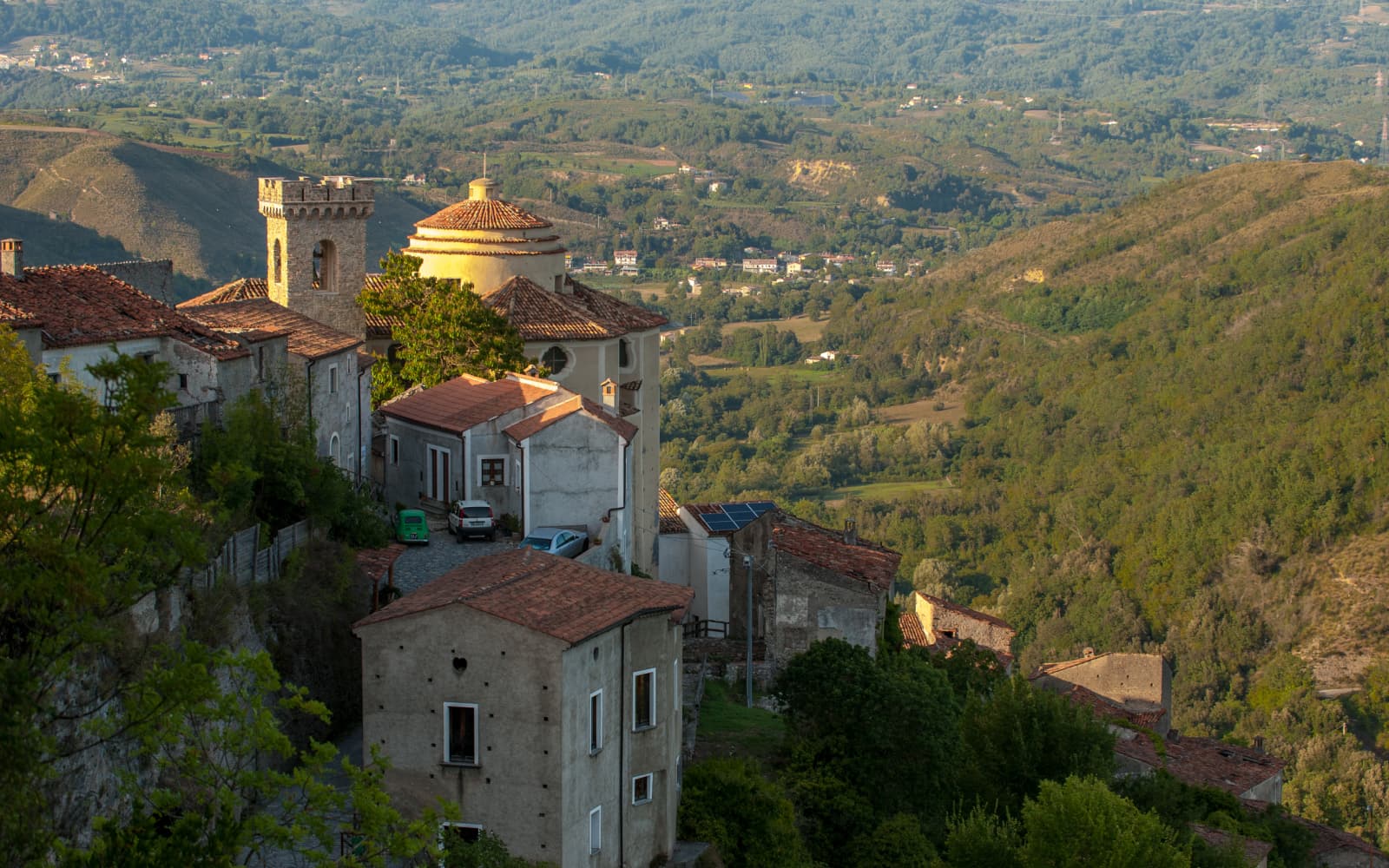
Laino Borgo
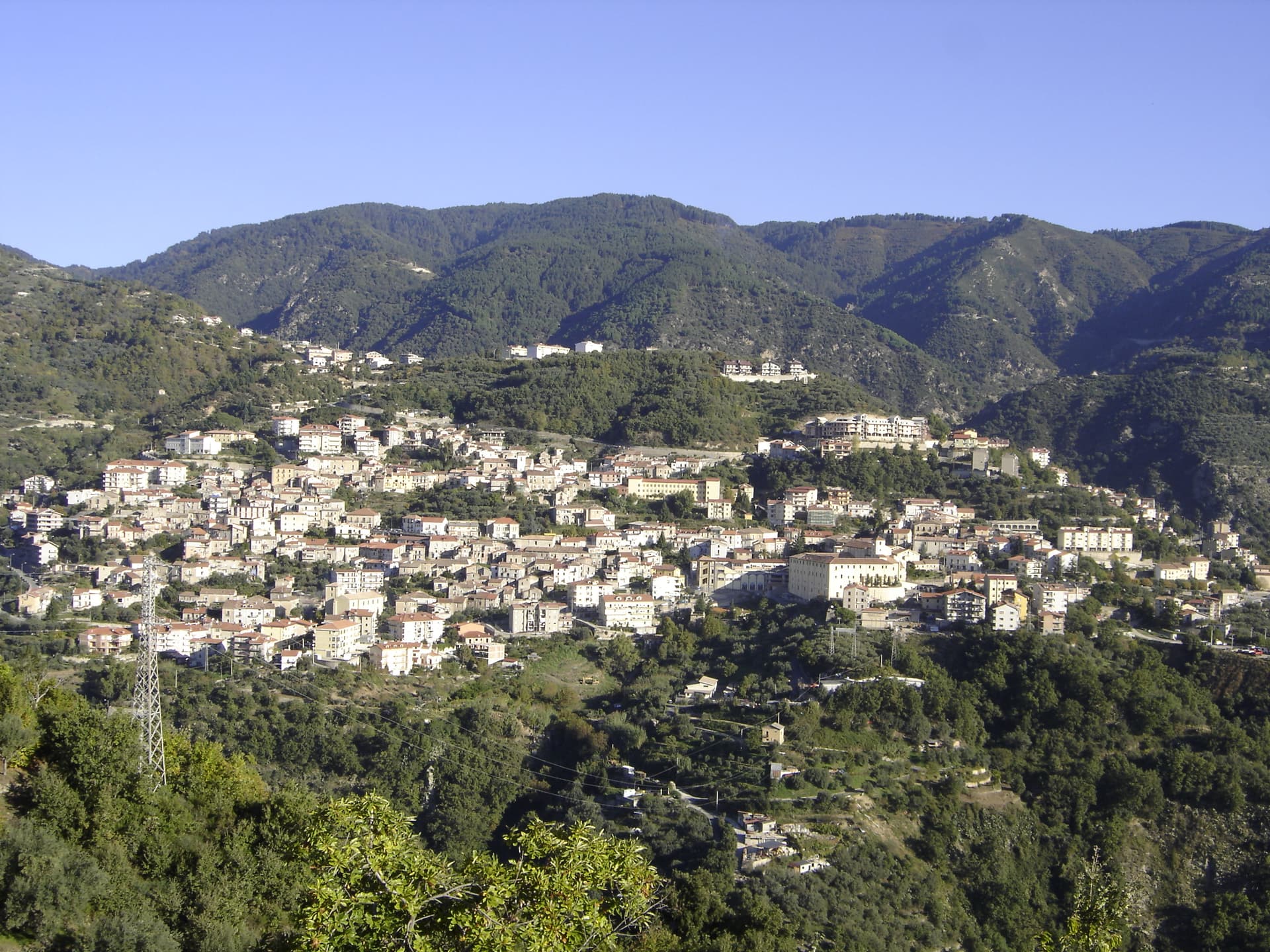
Southern Italy's only Sacro Monte, sixteen pilgrimage chapels begun in 1557, on the Lao river canyon that made it Calabria's rafting capital.
Sixteen pilgrimage chapels begun 1557 by Domenico Longo after a Holy Land journey, the only Sacro Monte in southern Italy.
 9
9Catanzaro · Calabria · 90 min from Reggio Calabria
Taverna
The birthplace of Mattia Preti at the foot of the Sila Piccola, where the church of San Domenico holds eleven of the Cavaliere Calabrese's paintings.
Baroque painter born in Taverna in 1613, the Cavaliere Calabrese; eleven of his canvases hang in San Domenico.
 10
10Cosenza · Calabria · 67 min from Reggio Calabria
Fiumefreddo Bruzio
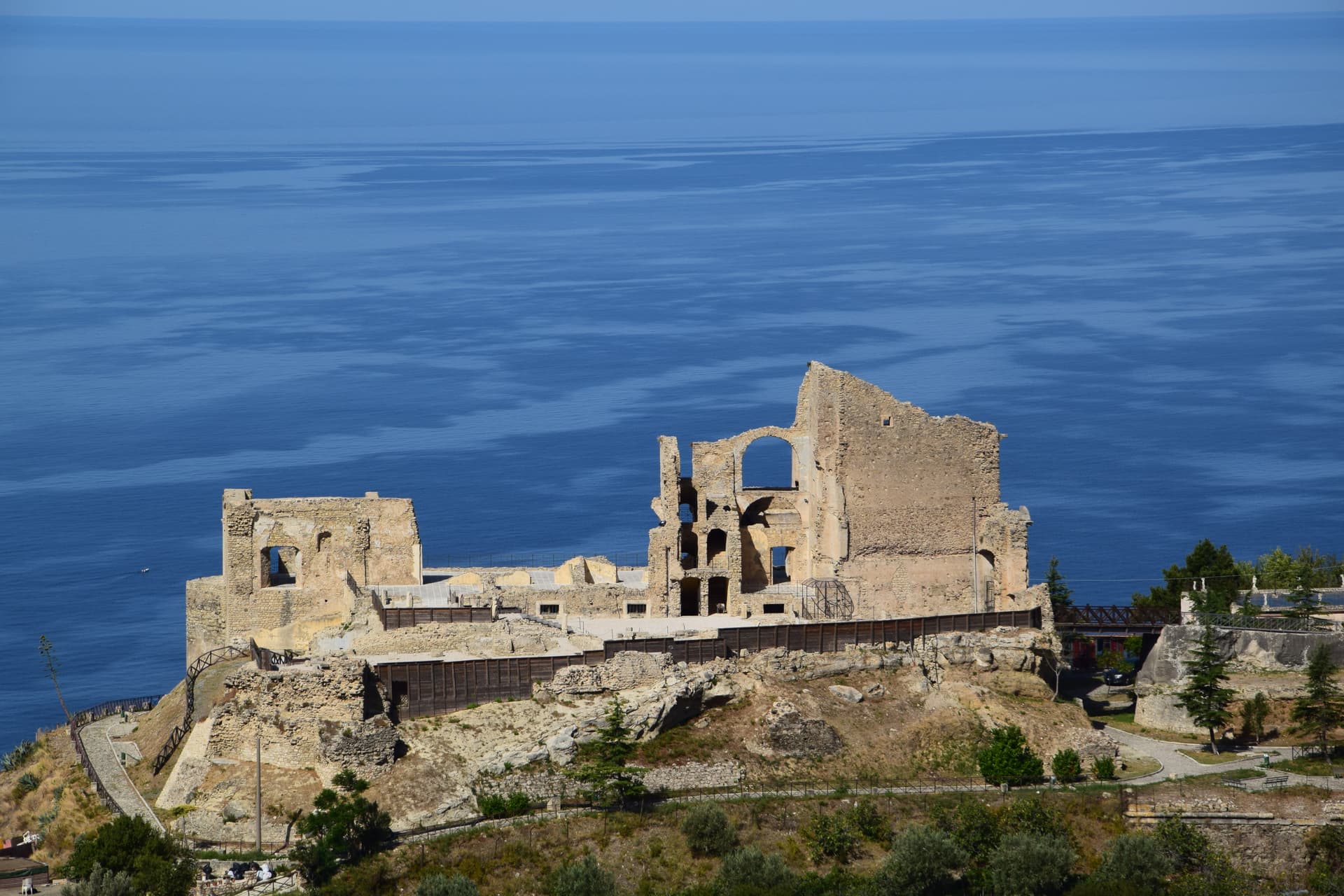
A Tyrrhenian hill town under Monte Cocuzzo, with a thirteenth-century castle frescoed in the 1990s by the Sicilian painter Salvatore Fiume.
Sicilian painter who summered here from the 1970s, frescoing the castle's Stanza dei Desideri at 81 and painting the San Rocco dome.
Listed in I Borghi più belli d'Italia, 220 m.
We write about towns like these every Sunday, one town a week, with the photo, the food, the festa. Free, from Pietrasanta.
By subscribing you agree to Substack’s Terms of Use, our Privacy Policy and our Information collection notice.
Why Reggio Calabria is the base
Reggio Calabria has the only mainland airport in the deep south (REG), a working Centrale station with direct service to Milan and Rome, and the closest motorway approach to both national parks. The city itself is small enough to walk in two days and big enough to absorb a base stay (the Lungomare Falcomatà is the long seafront, the Cathedral was rebuilt after the 1908 earthquake, the Aragonese Castle anchors the historic centre). The food on the Reggio coast (swordfish prepared every way, the local rosamarina sea-anchovy paste) sets up the inland trips, where the food shifts to mountain salumi, bergamot in jams and oils, and the local Cirò wines.
When to go
May, June, September and October are the strongest windows for the inland comuni. The Aspromonte road system is at its best in late spring and early autumn; summer is bearable inland because the elevation drops the temperatures, but the access roads dry out and dust up. Winter brings real snow to the upper Sila (Camigliatello, San Giovanni in Fiore) and the Aspromonte's higher villages; the coastal comuni stay open year-round. Bergamot harvest is October through February (the picking happens in November), which is the strongest reason to come in winter.
Questions people ask
- What is the Aspromonte?
- The southernmost massif of the Apennines, a granite range that ends at the Strait of Messina. Maximum elevation 1,955 m (Montalto). The Aspromonte National Park covers 64,000 hectares and is one of Italy's youngest (established 1989). The park's inland villages are the source of the bergamot industry and of the Grecanico-dialect culture.
- Where are the Grecanico-dialect villages?
- Bova, Gallicianò, Roghudi, and Condofuri are the four main comuni where Greco-Calabrian (Grico) is still spoken, though only by older speakers. All sit in the southern Aspromonte at 700–900 m elevation. Bova has a small museum of Grecanico language and culture.
- Is the Bronzi di Riace really worth a visit to Reggio?
- Yes. The two 5th-century BC Greek bronzes are among the only large-scale ancient Greek bronze sculptures to survive; they were recovered from the seabed in 1972 by a snorkeller off Riace Marina. The Museo Archeologico Nazionale in Reggio displays them in a dedicated climate-controlled room. The museum visit takes 2 hours minimum.
- What is the difference between 'nduja and other Calabrian salumi?
- 'Nduja is a spreadable, intensely spicy pork salami from the inland comune of Spilinga (north of Reggio, on the western Tyrrhenian coast). It is fermented and smoked with a high percentage of Calabrian peperoncino. Unlike soppressata, capocollo, or salsiccia (the other Calabrian salumi), 'nduja is soft enough to spread on bread and is used as a cooking base across the regional cuisine.
How we picked these · We filtered every Calabrian and Basilicatan town within 150 minutes of Reggio Calabria to those carrying a Borgo più bello, Bandiera Arancione, Parco Nazionale, or Borghi Autentici designation, and ranked by signal density plus elevation. The Aspromonte gateway comuni anchor the list; the Grecanico villages and the southern Sila entries round it out. The wider drive radius (up to two-and-a-half hours) reflects how steep and slow the Calabrian mountain roads are.
Subscribe — free
Get the best guides on hidden Italian towns.
One letter on Sundays. The week’s town, with the photo, the food, the festa. Free, by Peter & Sophia from Pietrasanta.
Substack sends a confirmation link to your inbox. The signup finishes when it’s clicked.
From elsewhere in Italy
Five more towns to discover
Putignano
Province: Bari
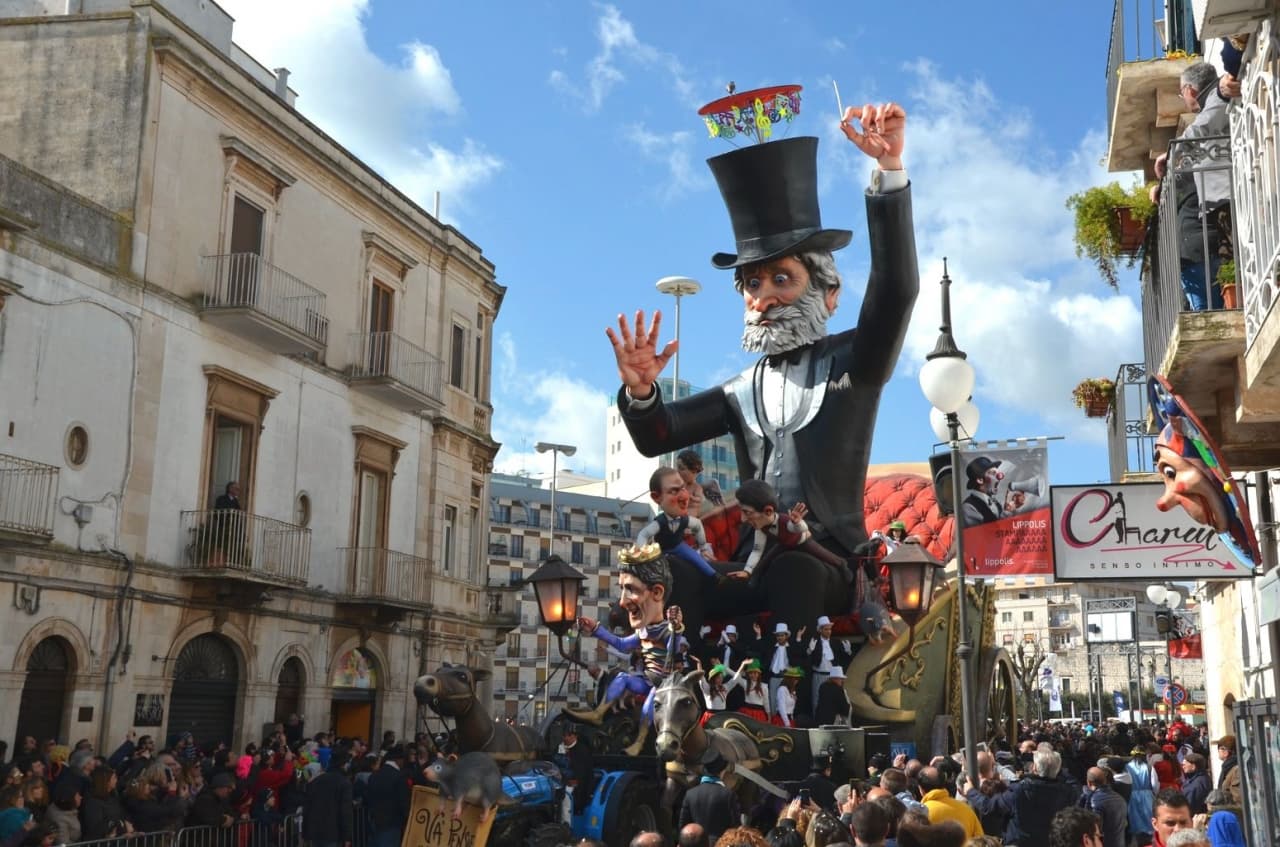
Europe's longest-running carnival — Putignano Carnevale has run continuously since 1394, with 631 years of cartapesta papier-mâché floats, a 26,000-resident Murgia town on the Bari–Lecce plateau, and the Grotta del Trullo karst cave inside the centro.

Pistoia
Province: Pistoia
Italy's nursery capital and the medieval Tuscan rival that gave its name to the pistol — a quietly extraordinary centro storico of zebra-striped Romanesque churches, Andrea della Robbia's polychrome frieze on the Ospedale del Ceppo, and Italy's Capital of Culture 2017, all 30 minutes from Florence by train.
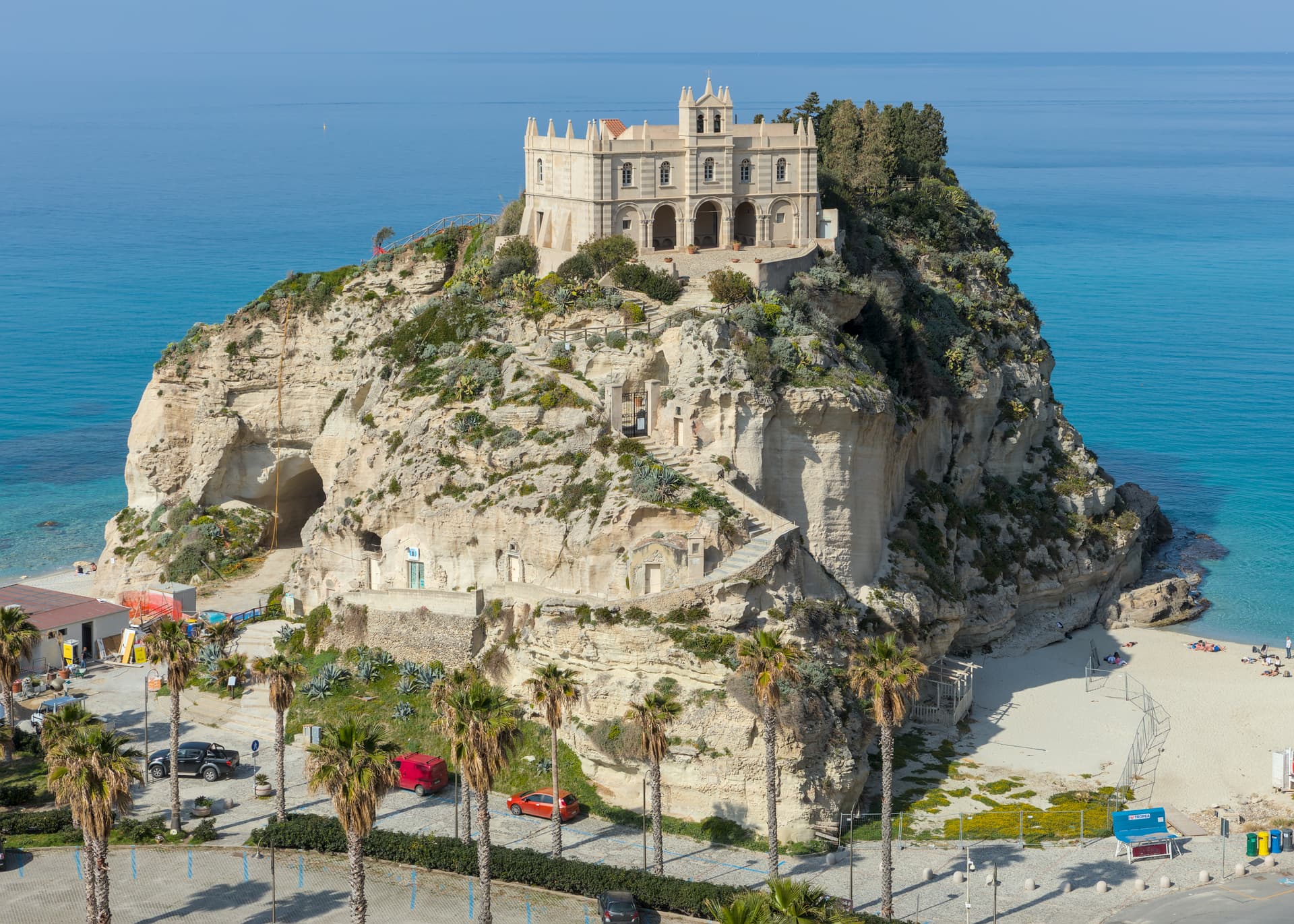
Tropea
Province: Vibo Valentia
Cliff town on a tufa headland over the Tyrrhenian Coast of the Gods, with a Norman monastery on a sea rock.
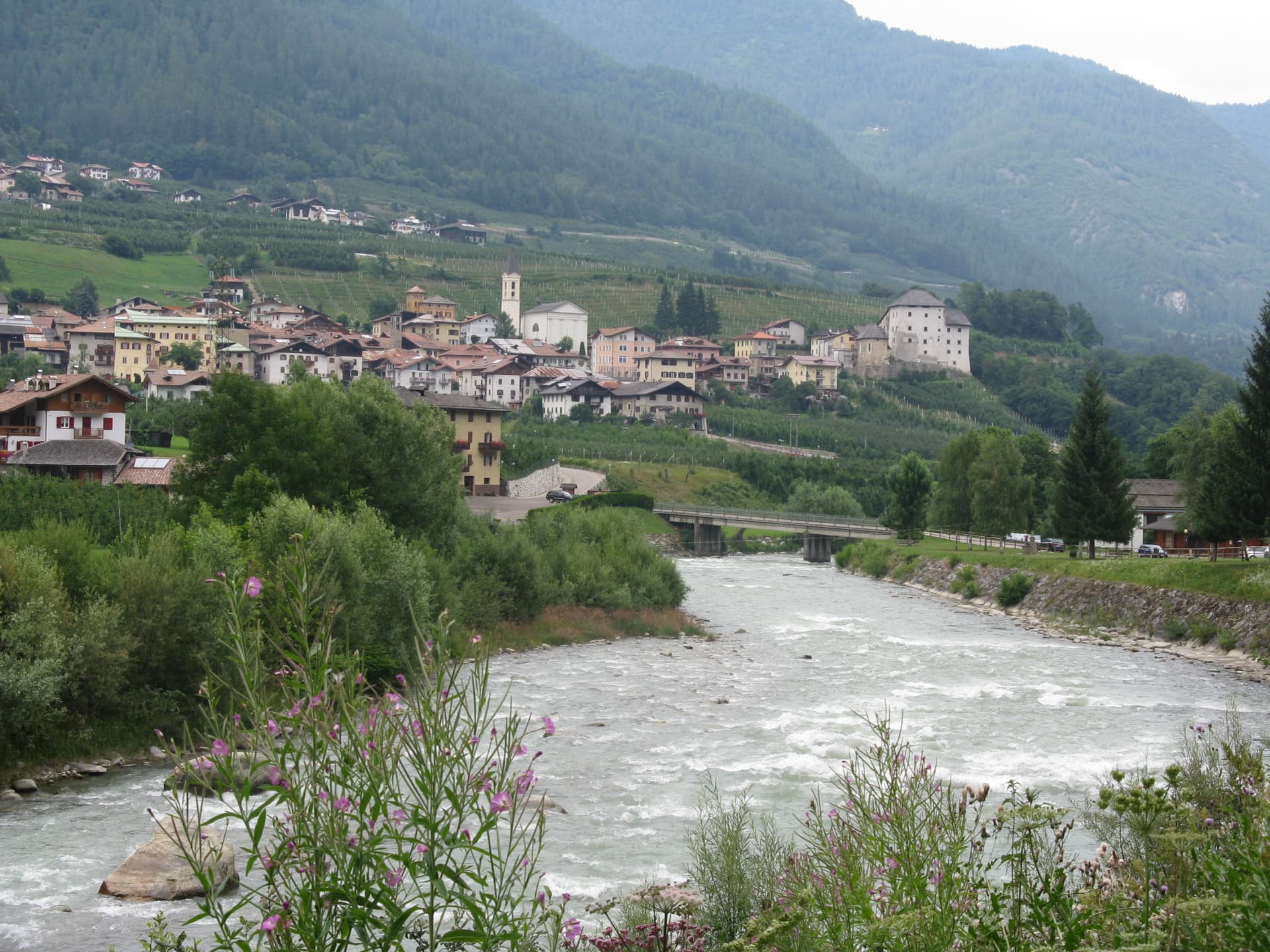
Caldes
Province: Trento
A scattered Val di Sole commune on the Noce, six hamlets gathered around a thirteenth-century tower-house castle that once belonged to the Thun family.
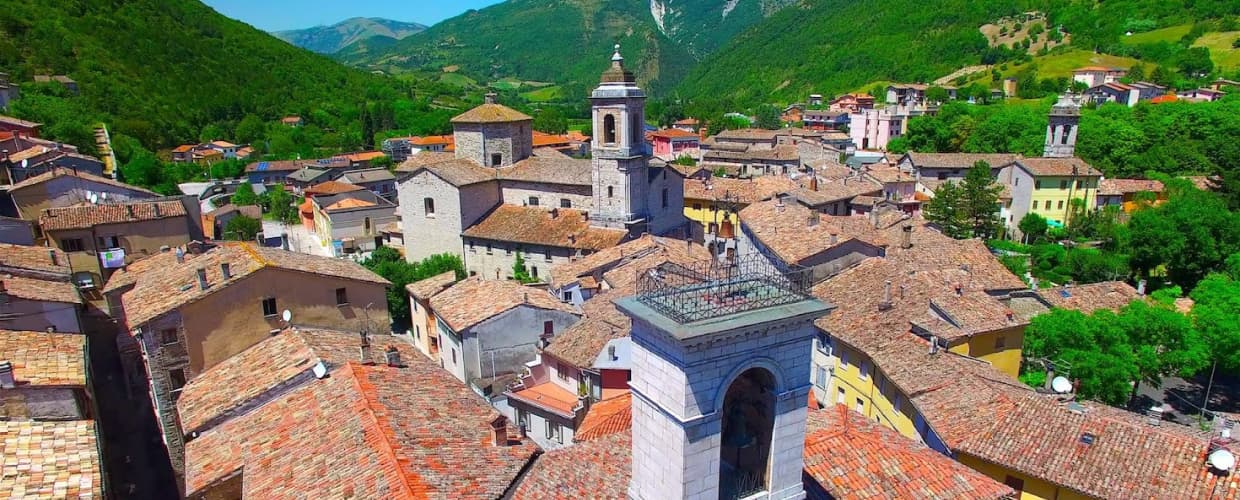
Cantiano
Province: Pesaro e Urbino
A border borgo at 374 meters under Monte Catria on the old Via Flaminia, known for the Good Friday Turba and the sour-cherry visciola harvest.