
Themed picks · Florence · Food
10 hidden food towns near Florence
10 comuni · within 90 minutes of Firenze · drive times OSRM-computed
Tuscany sells most of its food through three Florence postcards: the bistecca, the pici cacio e pepe, the Chianti bottle on the white tablecloth. What the postcards skip is that the produce on those plates is shipped in, often from less than ninety minutes away, from comuni most visitors never name. The oil comes from the hills behind Lucca. The white truffle comes from San Miniato. The pecorino comes from Pienza but the harder, sharper version comes from the small ridge towns around it.
These are the ten towns we keep going back to when we want the source, not the showroom. Each sits inside a ninety-minute radius of Florence, every one of them named on at least one of the official Italian food trails (Città dell'Olio, Città del Vino, Città del Tartufo) or carrying a DOP or DOCG product that anchors its kitchen. None of them is famous for the wrong reasons, the way San Gimignano now is, but none of them is invented either: they are working comuni with a sagra, a co-op or consortium, and at least one trattoria that has been pouring the same oil for thirty years.
We have ranked them by how legible the food story is on the ground, not by population or beauty. A town with one excellent producer beats a prettier town with none. The drive times are real, OSRM-computed from Florence city centre, with no toll-shaving or Sunday-morning optimism. Read this as a series of day trips you can string together from a single base in Florence, or as a route you peel off into a longer slow trip through Toscana, Emilia and northern Umbria.
 1
1Pisa · Tuscany · 57 min from Firenze
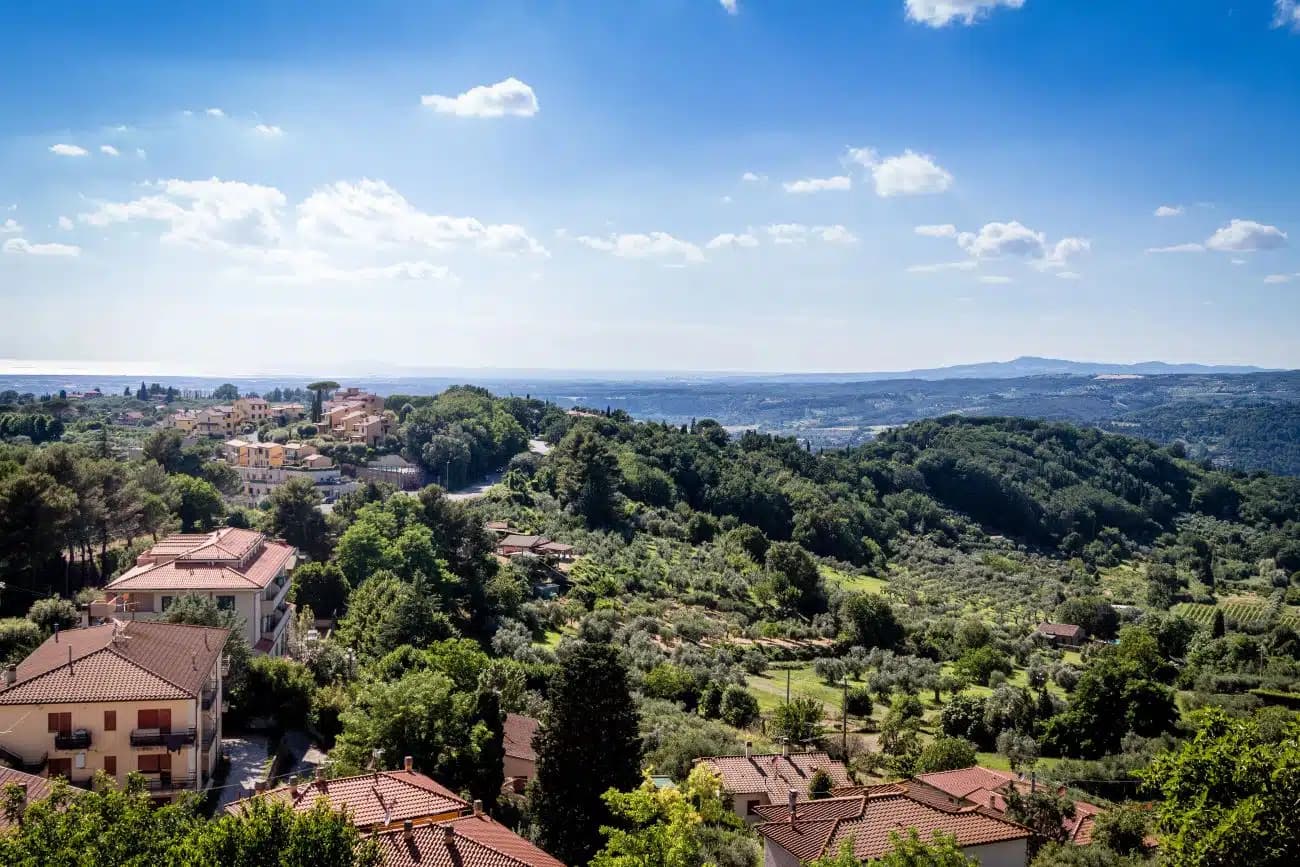
Montescudaio
A fortified hill borgo at 242 meters above the Val di Cecina, named for a mountain of shields, with DOC wine since 1977 and bread, oil and grape all stamped in its identity.
DOC registered in 1977 covering the Cecina valley: Sangiovese-based red, Trebbiano-Malvasia-Vermentino white, grown on the slopes below the borgo.
Named on the Città del Vino wine-territory trail.
 2
2Pisa · Tuscany · 41 min from Firenze
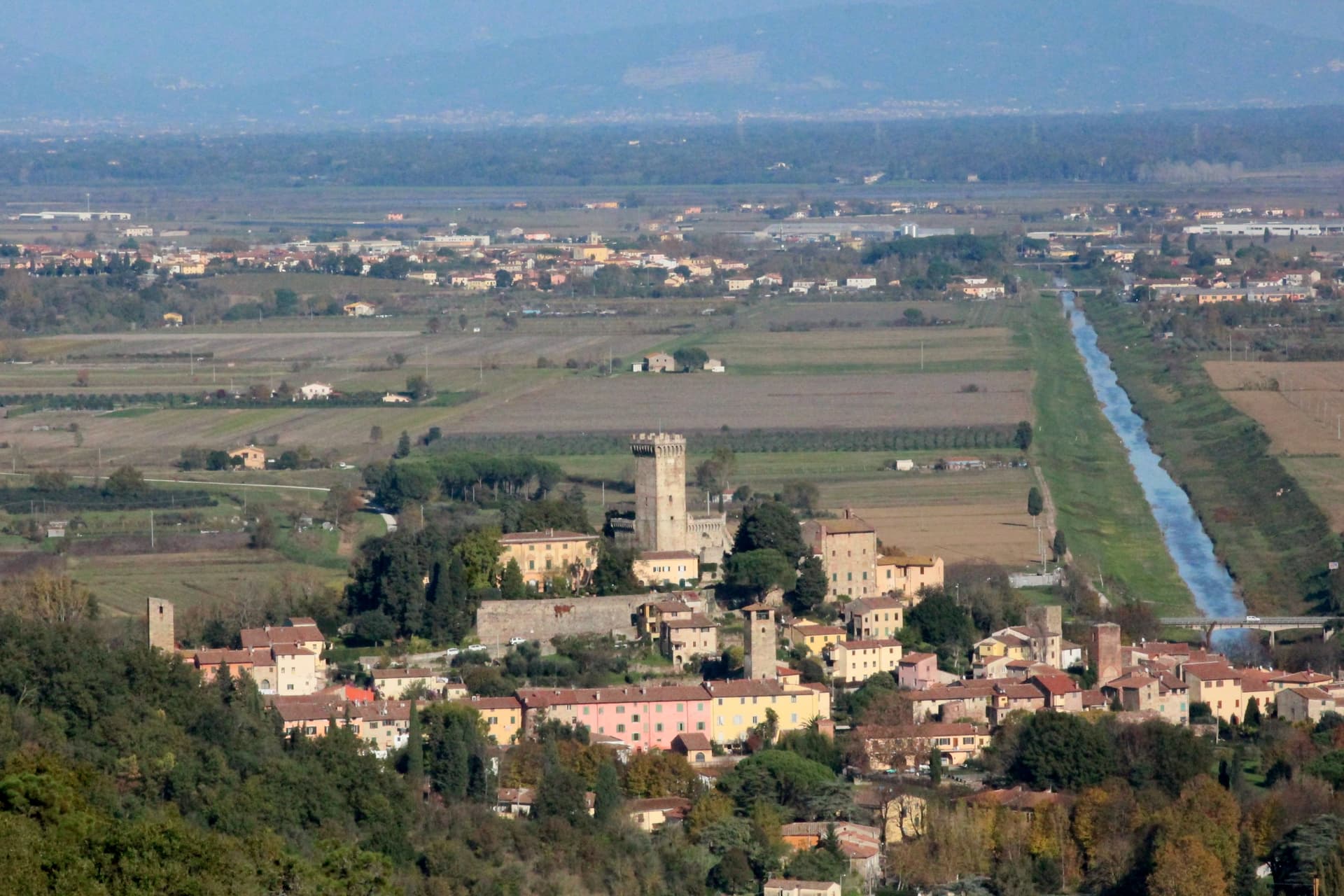
Vicopisano
A medieval river port on the southern slope of Monte Pisano, rebuilt by Brunelleschi in 1434 after Florence took the town from Pisa.
The Florentine architect spent six years rebuilding the fortress and connecting passage, his only completed military commission.
Olive oil country, on the Città dell'Olio trail.
 3
3Firenze · Tuscany · 75 min from Firenze
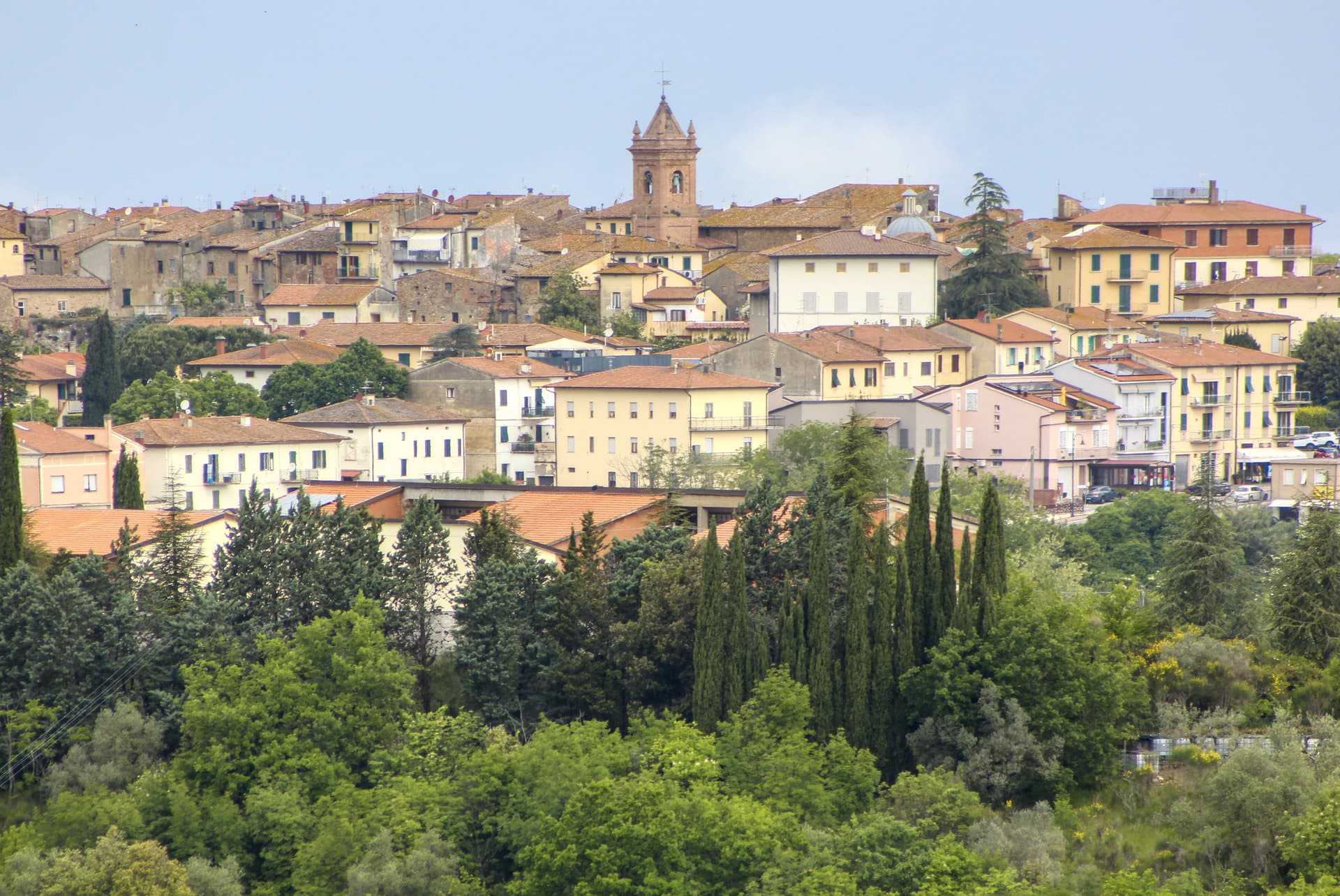
Montaione
A medieval glassmaking and truffle borgo at 341 meters above the Valdelsa, with a Franciscan replica of Jerusalem in the woods at San Vivaldo.
Franciscan Sacro Monte built between 1500 and 1515 as a topographical replica of the holy sites of Jerusalem, seventeen chapels in oak woods.
 4
4Livorno · Tuscany · 68 min from Firenze
Castagneto Carducci
A hilltop borgo at 194 meters above the Costa degli Etruschi, renamed for the poet Carducci in 1907 and the home of Bolgheri and Sassicaia.
Cabernet Sauvignon planted at Tenuta San Guido in Bolgheri in 1944, released commercially in 1968, the first Supertuscan.
 5
5Firenze · Tuscany · 69 min from Firenze
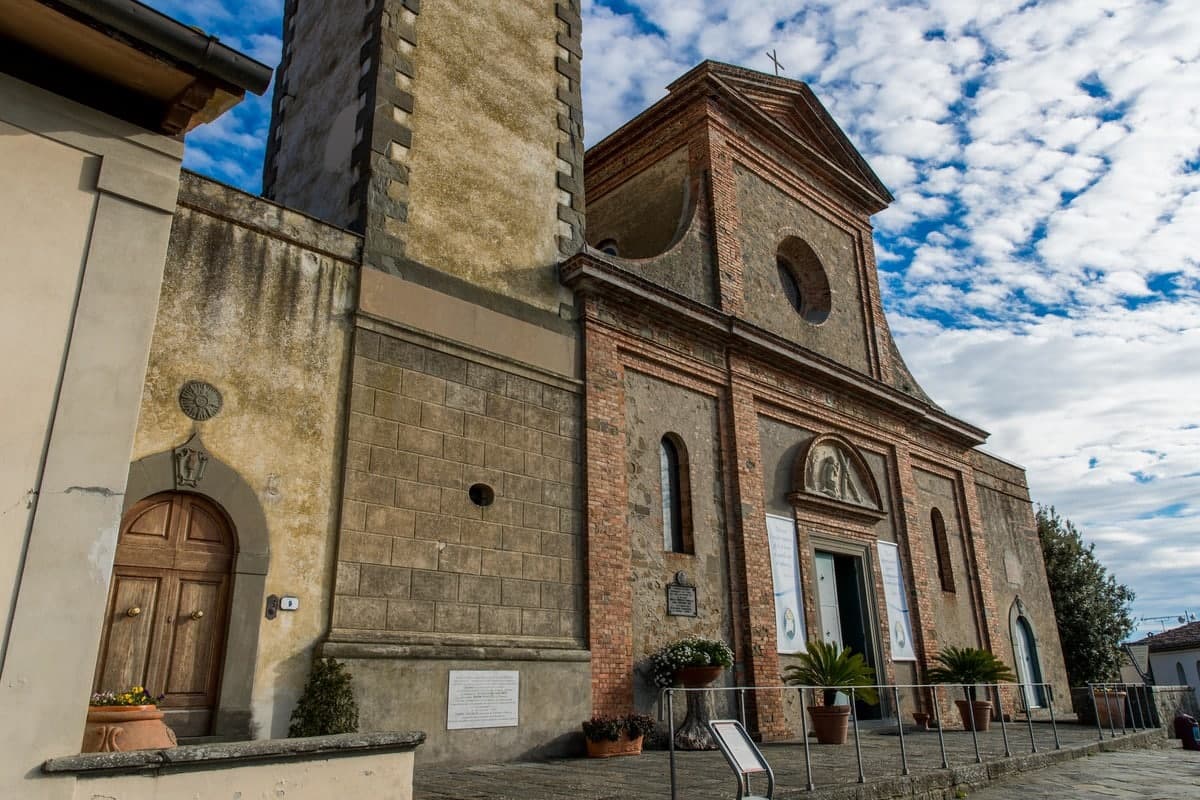
Vinci
The hill town on Montalbano where Leonardo was born in 1452, with a ship-shaped castle that now holds his machines.
Born 15 April 1452 at Anchiano, raised in Vinci, baptized in Santa Croce; the town carries his name for the Museo Leonardiano.
The slow-trip planner
Building a trip? Find where Florence fits in a slow Italy circuit.
Answer five questions. We will shape a geographically coherent slow trip from the 1,000 Italian towns most travelers skip. Yours to save and share.
 6
6Pisa · Tuscany · 56 min from Firenze
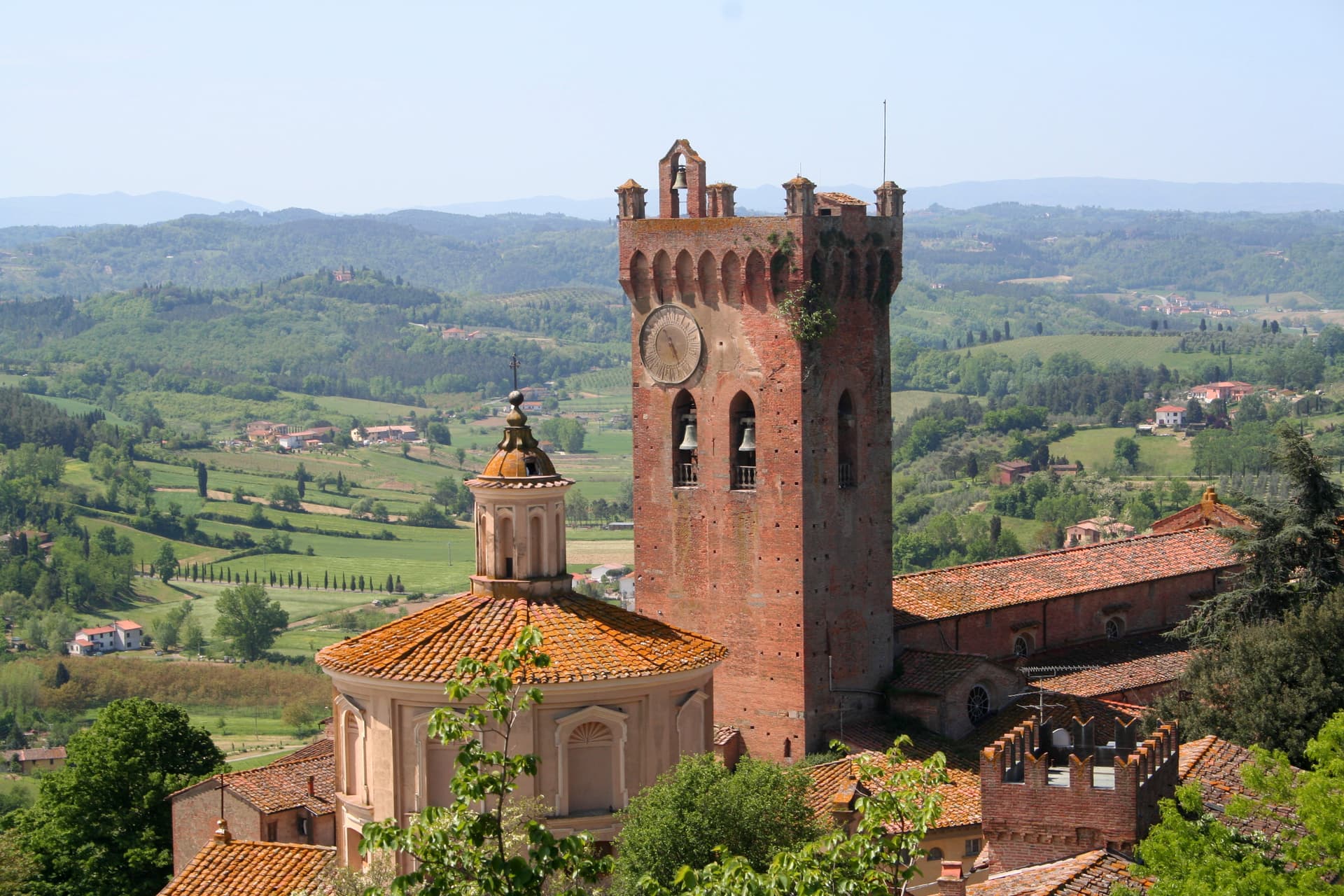
San Miniato
The hilltop town between Pisa and Florence that produces a quarter of Tuscany's white truffles and once held the imperial seat of Otto I.
Tuber magnatum from the surrounding woods, a quarter of Tuscany's annual crop, celebrated each November in Piazza del Duomo since 1969.
Truffle country, on the Città del Tartufo trail.
 7
7Lucca · Tuscany · 57 min from Firenze
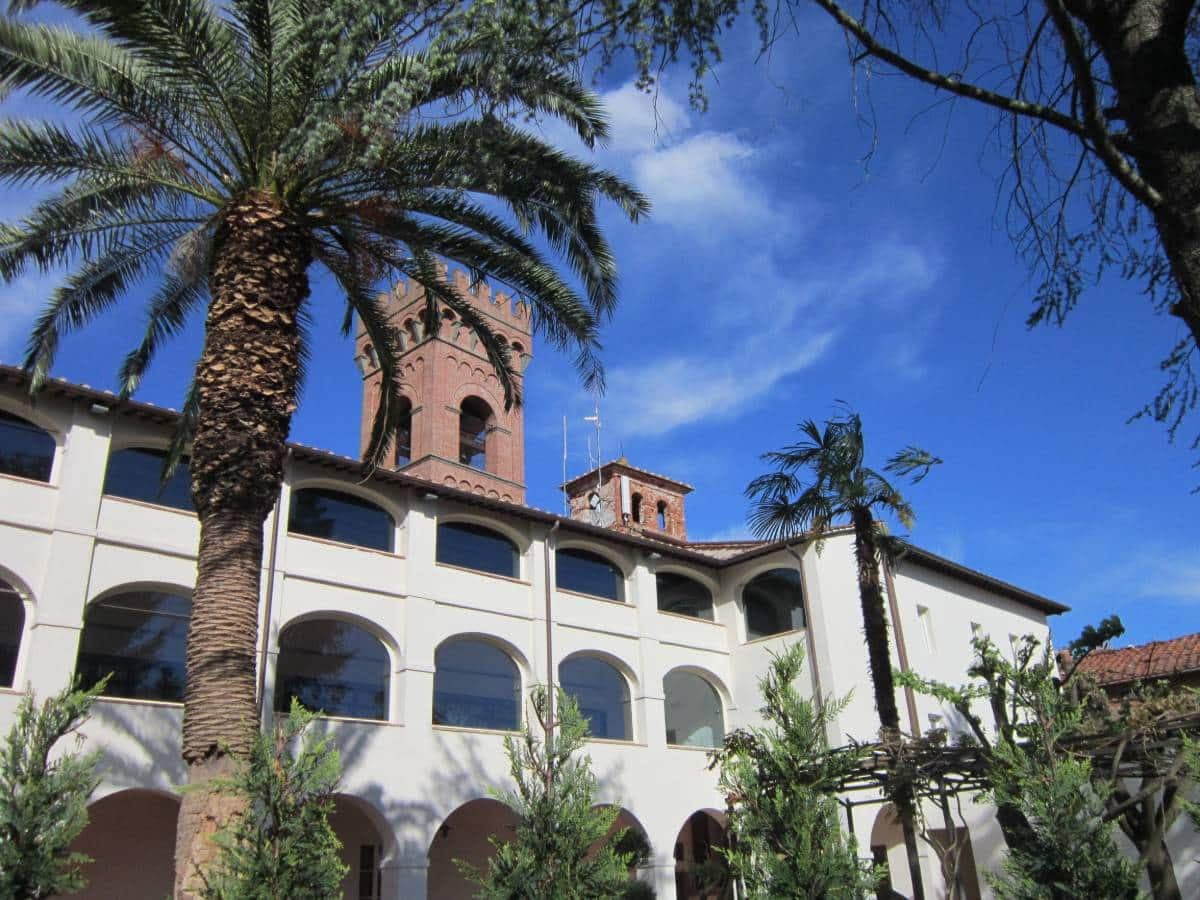
Montecarlo
A walled hill village at 163 meters above the Lucca plain, founded by Emperor Charles IV in 1333 and named for him, surrounded by twenty wineries.
1969 DOC for a Trebbiano-French white blend and a Sangiovese-led red, with around twenty wineries inside the commune.
 8
8Pisa · Tuscany · 58 min from Firenze
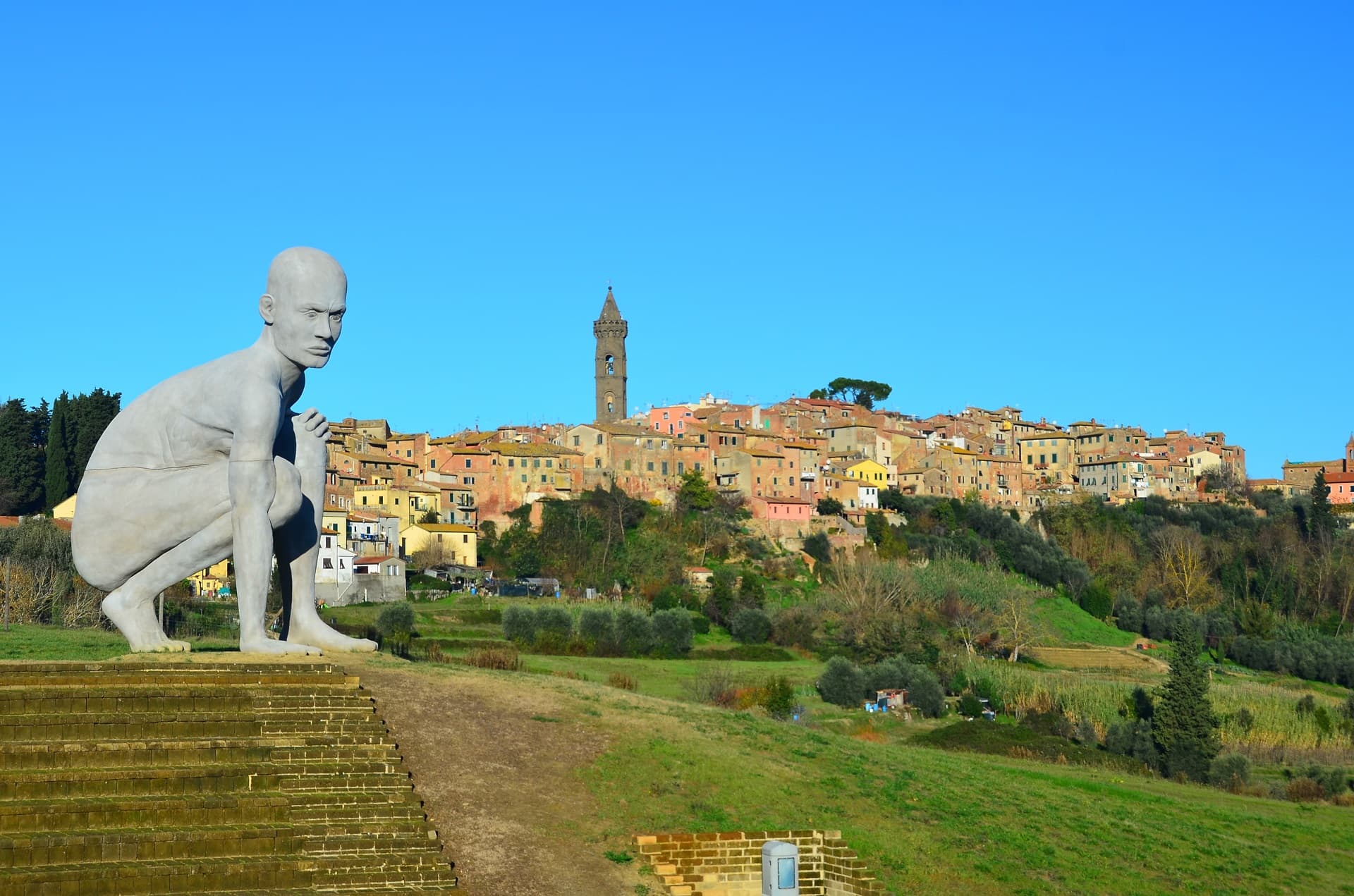
Peccioli
Borgo dei Borghi 2024 in the Valdera hills, a medieval village that funded a public contemporary-art program with revenue from its landfill plant.
Won the RAI contest for the most beautiful village in Italy in April 2024, the first Pisa-province winner of the program.
 9
9Livorno · Tuscany · 80 min from Firenze
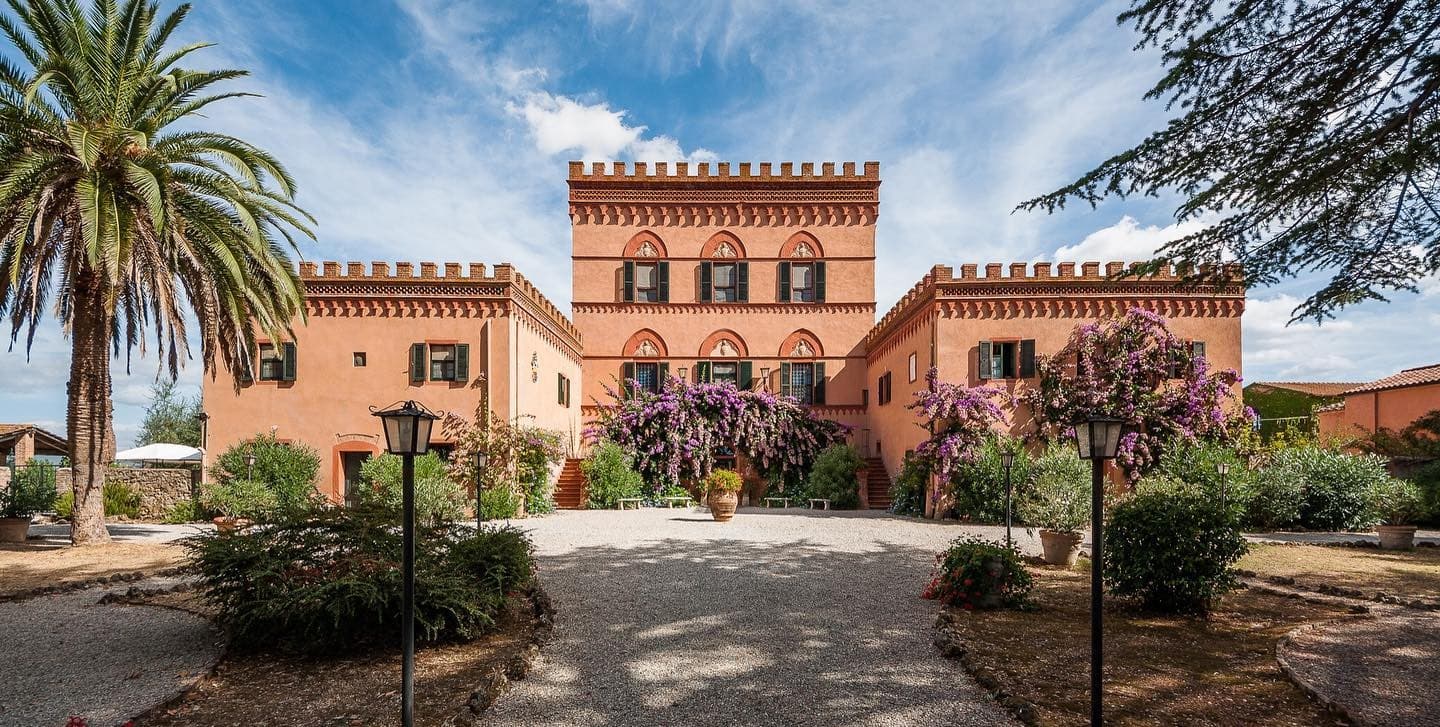
Campiglia Marittima
A walled hilltop borgo above the Val di Cornia, where the Rocca tower watches a mining landscape worked from the Etruscans to 1976.
Continuous extraction of copper, silver, lead and tin from the Colline Metallifere from the Etruscans to 1976, now the Parco Archeominerario di San Silvestro.
 10
10Siena · Tuscany · 87 min from Firenze
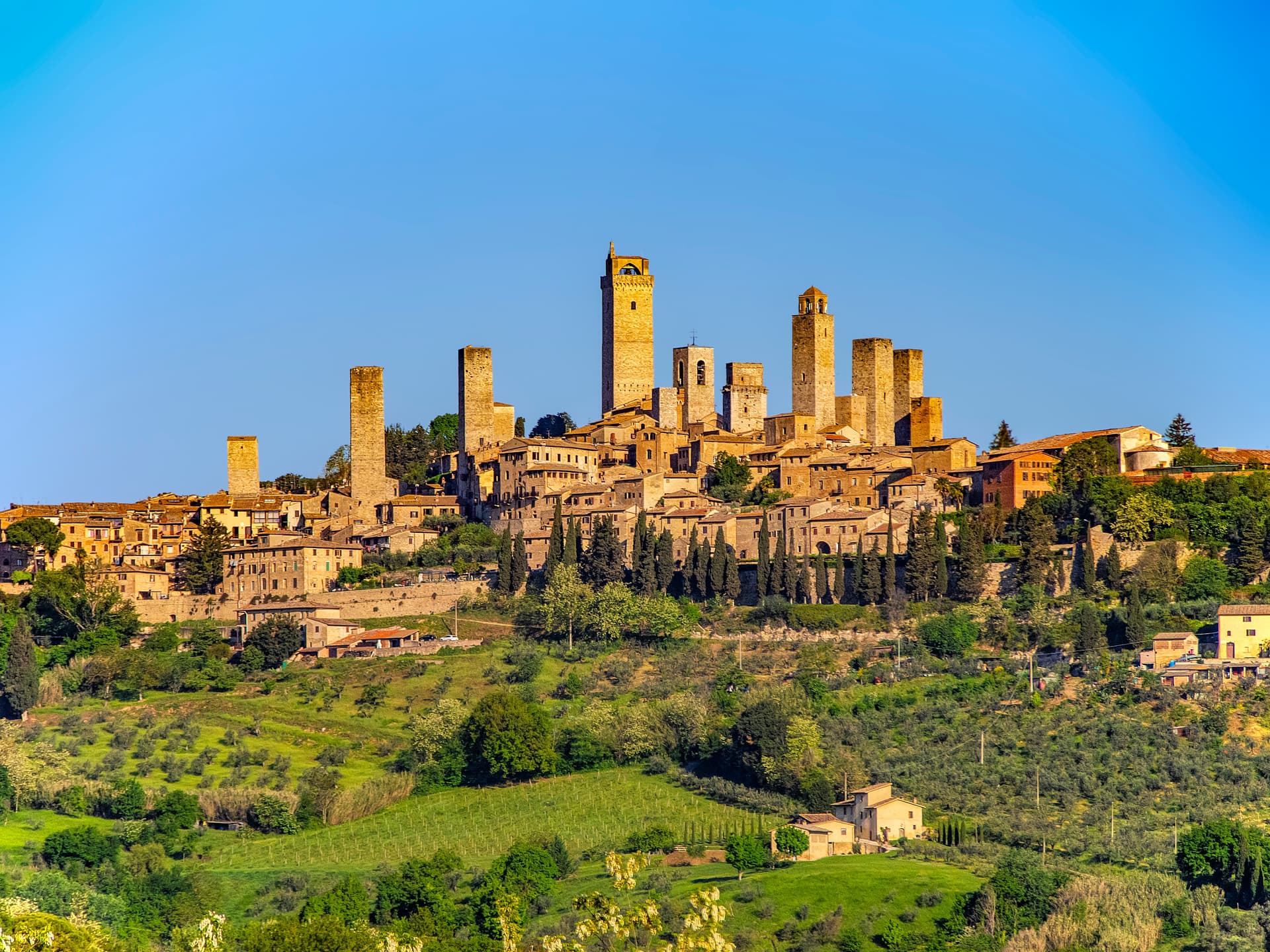
San Gimignano
A walled hill town at 334 meters with 14 surviving medieval towers, UNESCO listed since 1990 and the home of Vernaccia.
Surviving tower-houses out of 72 built between the twelfth and fourteenth centuries by patrician families, the skyline UNESCO listed since 1990.
We write about towns like these every Sunday, one town a week, with the photo, the food, the festa. Free, from Pietrasanta.
By subscribing you agree to Substack’s Terms of Use, our Privacy Policy and our Information collection notice.
Why Firenze is the base
Florence is the only Tuscan city with a Centrale-grade rail station, three motorways converging on it, and an airport (FLR) plus a second within an hour (PSA). Most visitors over-index on its centre; the food work happens at the edges. From a single hotel in Firenze you can reach the Garfagnana, the Chianti hills, the Mugello, San Miniato's truffle ridge and the lower Lunigiana on separate day trips, eat your way through each, and be back for dinner in a city that still rewards a long walk after dark.
When to go
Late April through early June and again from late September through November. Spring brings new oil from the previous October's harvest still tasting green, asparagus in the markets, and the first artichokes from the coastal plain. Autumn is the heavier season: porcini in the Mugello, white truffle in San Miniato (the sagra runs the last three weekends of November), new wine in the Chianti hills. Avoid July and August unless you are committed to lunch indoors with the air conditioning on.
Questions people ask
- What is the closest food-trail town to Florence?
- Greve in Chianti sits about 35 minutes south of Florence and is the gateway town for the entire Chianti Classico designation, with the Saturday morning oil and wine market in Piazza Matteotti from October through May.
- Where do Florence chefs source their olive oil?
- Most serious restaurants buy their cooking oil from the larger frantoi in the Mugello or the Chianti hills, and reserve a higher-grade finishing oil from a single producer in towns like Bagno a Ripoli or Reggello, both inside this list's radius.
- Is San Miniato worth the drive for truffle season?
- Yes, if you go in November. The Mostra Mercato del Tartufo Bianco runs the last three weekends of the month, and the surrounding ridge towns (Montopoli Val d'Arno, Palaia, Peccioli) all hold smaller sagre in the same window. Outside November, San Miniato is calmer but the truffle bars and shops stay open year-round.
- Can I do these as day trips from Florence by train?
- Some. Greve, Pistoia, Lucca and Pisa are reachable by direct regional rail. Most of the inland hill comuni need a car. Where rail works, we flag it on the individual town page.
How we picked these · We started with every town within 90 minutes of Florence by car (38 candidates), filtered to those carrying a Città dell'Olio, Città del Vino, or Città del Tartufo designation or a signature DOP product, then ranked by drive-time tightness and the number of corroborating signals. The shortlist favours towns with a working consortium or co-op over towns with only a label.
Subscribe — free
Get the best guides on hidden Italian towns.
One letter on Sundays. The week’s town, with the photo, the food, the festa. Free, by Peter & Sophia from Pietrasanta.
Substack sends a confirmation link to your inbox. The signup finishes when it’s clicked.
From elsewhere in Italy
Five more towns to discover
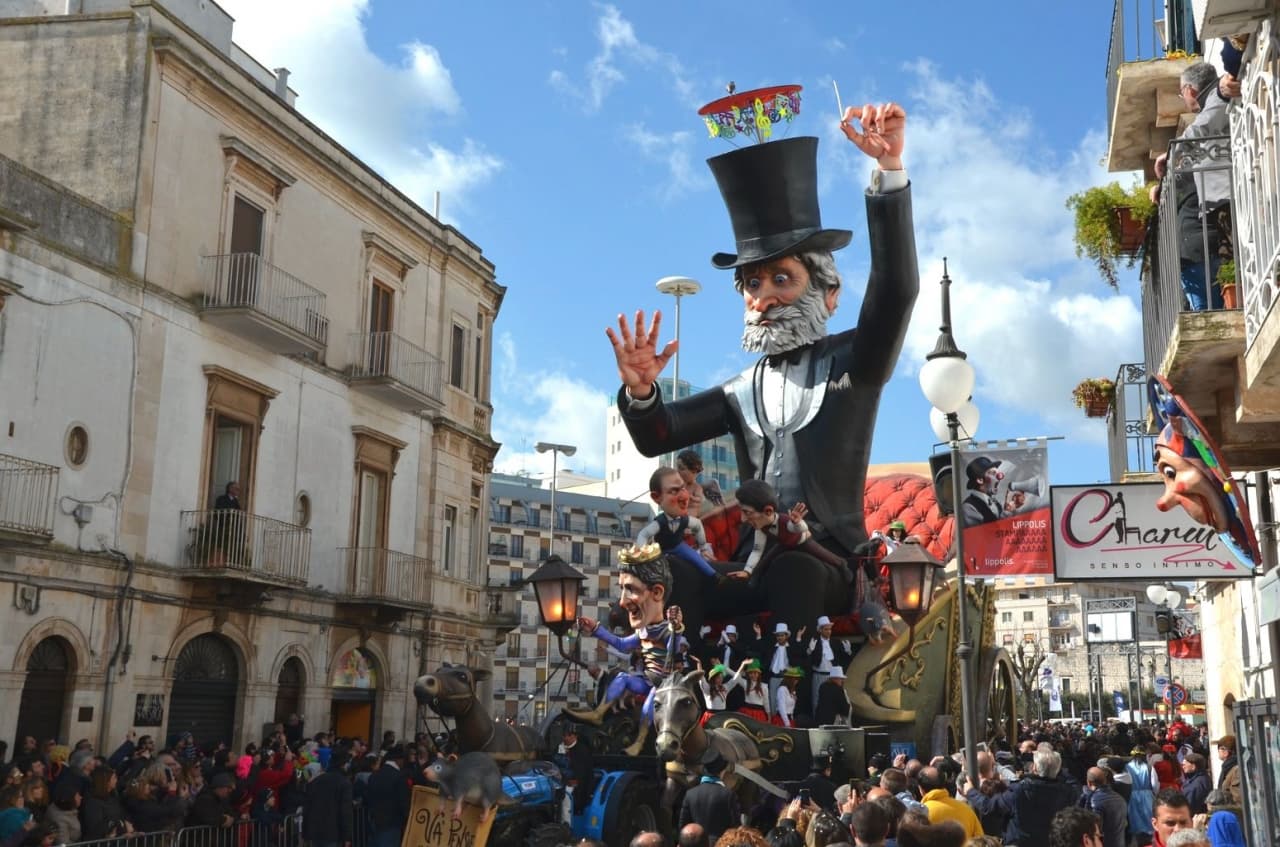
Putignano
Province: Bari
Europe's longest-running carnival — Putignano Carnevale has run continuously since 1394, with 631 years of cartapesta papier-mâché floats, a 26,000-resident Murgia town on the Bari–Lecce plateau, and the Grotta del Trullo karst cave inside the centro.

Pistoia
Province: Pistoia
Italy's nursery capital and the medieval Tuscan rival that gave its name to the pistol — a quietly extraordinary centro storico of zebra-striped Romanesque churches, Andrea della Robbia's polychrome frieze on the Ospedale del Ceppo, and Italy's Capital of Culture 2017, all 30 minutes from Florence by train.
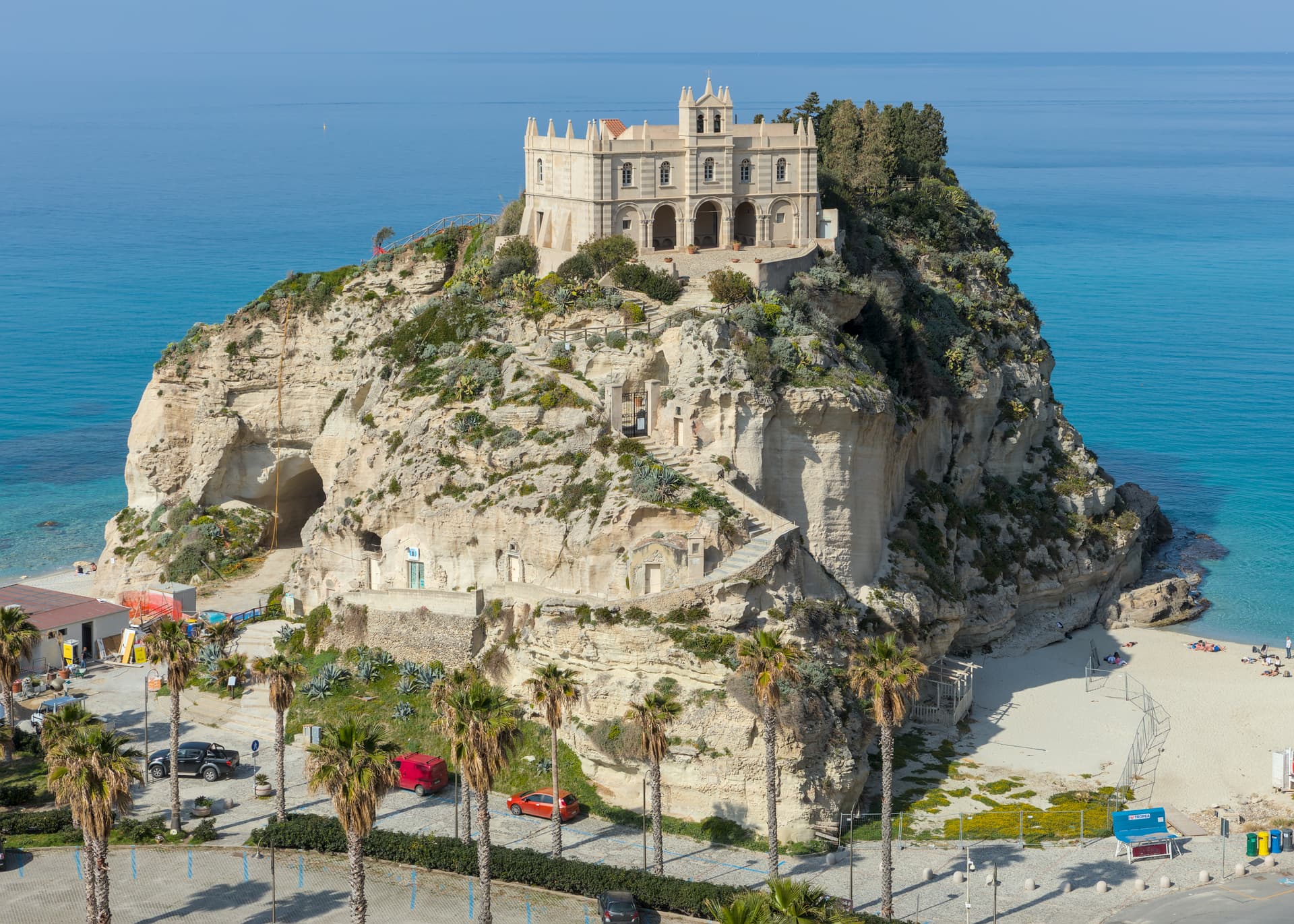
Tropea
Province: Vibo Valentia
Cliff town on a tufa headland over the Tyrrhenian Coast of the Gods, with a Norman monastery on a sea rock.
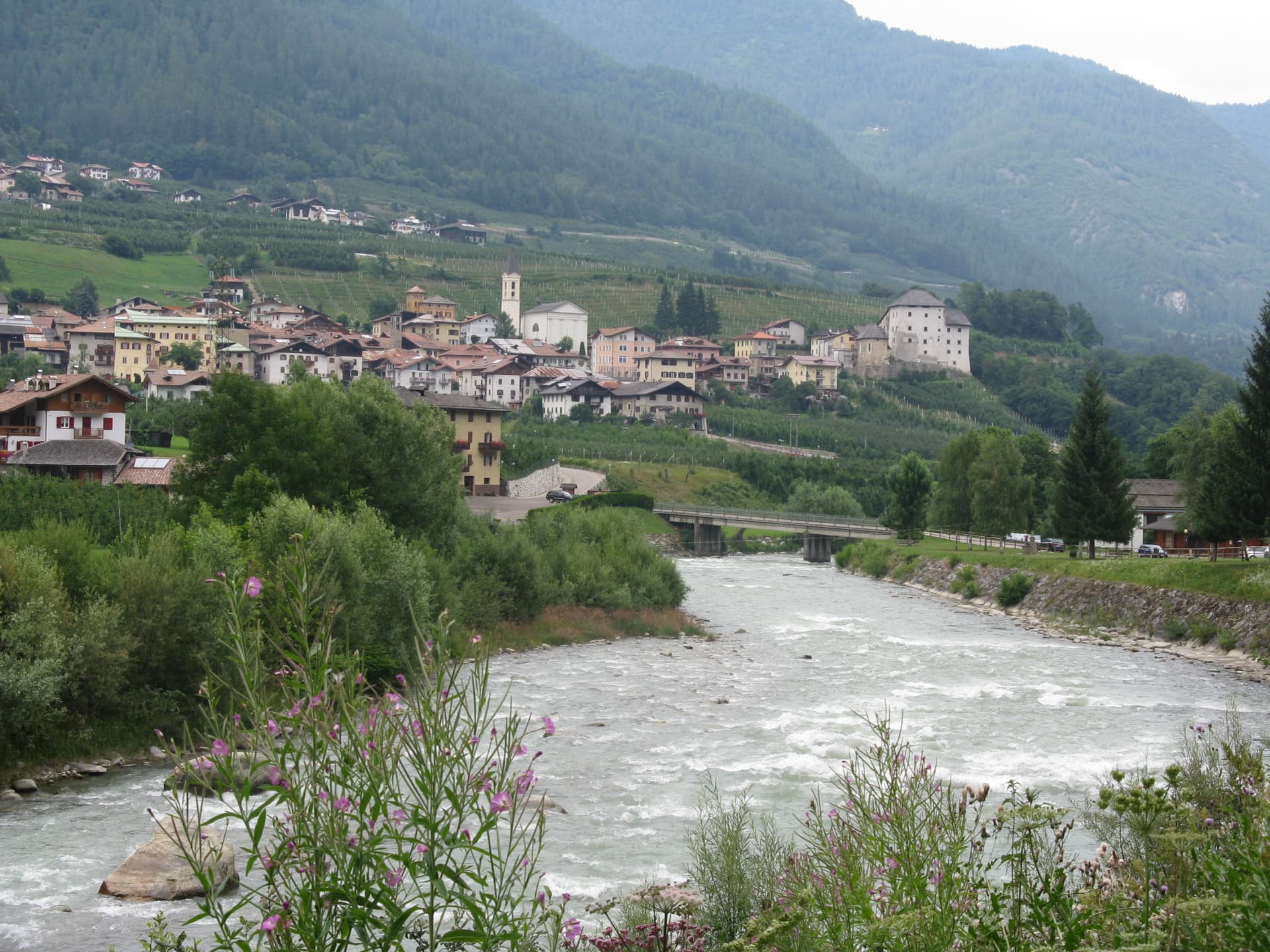
Caldes
Province: Trento
A scattered Val di Sole commune on the Noce, six hamlets gathered around a thirteenth-century tower-house castle that once belonged to the Thun family.
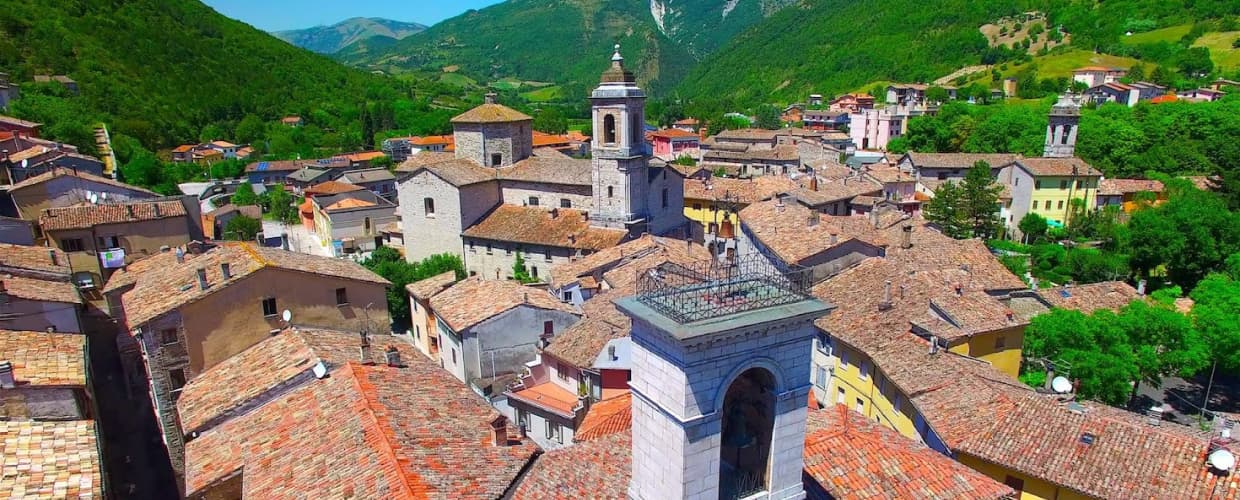
Cantiano
Province: Pesaro e Urbino
A border borgo at 374 meters under Monte Catria on the old Via Flaminia, known for the Good Friday Turba and the sour-cherry visciola harvest.