
Themed picks · Rome · Hill towns
10 hill towns within an hour of Rome
10 comuni · within 120 minutes of Roma · drive times OSRM-computed
The hill country around Rome reads as one landscape on a map and four very different places on the ground. South of the city, the Colli Albani are a volcanic complex of two crater lakes (Albano and Nemi) ringed by small comuni that have served as Rome's summer escape since the Empire. North, the Tuscia opens into tufa country, with towns built into the rock and an Etruscan substrate visible through every modern building. East, the Aniene valley climbs into the Apennine foothills around Tivoli and Subiaco. Northeast, the Sabine hills run toward Rieti with their own oil and dialect.
Rome itself is famously hard to leave, but a single day trip into any of these four directions changes the rhythm of a Roman stay. The hill towns are not curated for tourism the way the Tuscan ones are. They are working comuni with a Saturday market, a piazza-bar at 7pm, and a sagra in October or November tied to whatever the local hill produces (olive oil, chestnuts, porchetta, mushrooms, white wine).
We extended the radius for this list to two hours by car because Rome's traffic and the geography around it (volcanoes south, Apennines east) mean a 90-minute cap loses several towns that are worth the longer drive. All drive times are OSRM-computed from inside the GRA. Some entries are reachable by regional rail (Tivoli, Castelli Romani) and we flag those on the per-town page.
 1
1Roma · Lazio · 78 min from Roma
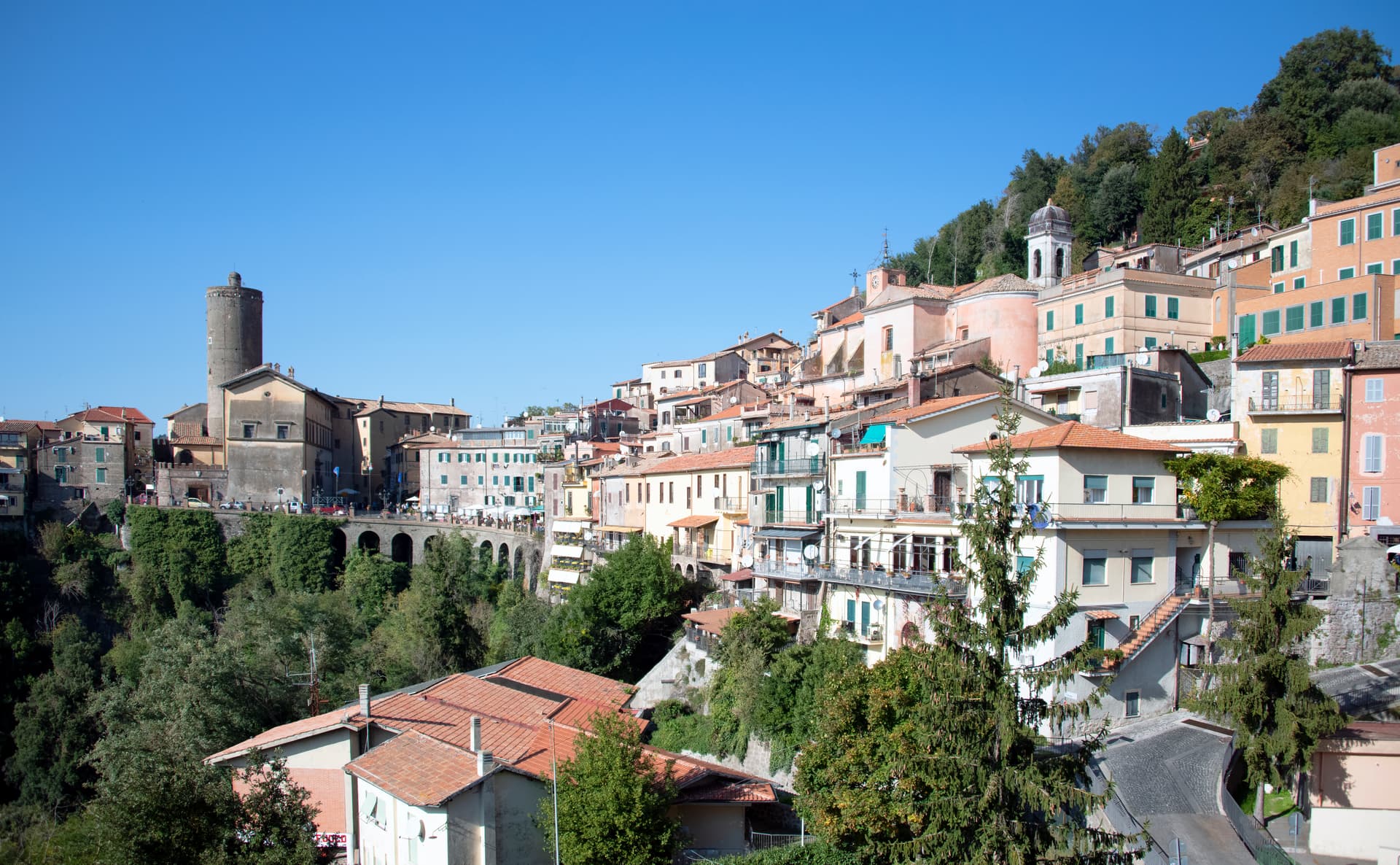
Nemi
The smallest comune in the Castelli Romani, perched at 521 meters above a volcanic crater lake the Romans called the mirror of Diana.
Wild strawberries grown on the inner slopes of the crater, celebrated each June at the Sagra delle Fragole since 1922.
Listed in I Borghi più belli d'Italia.
 2
2Roma · Lazio · 61 min from Roma
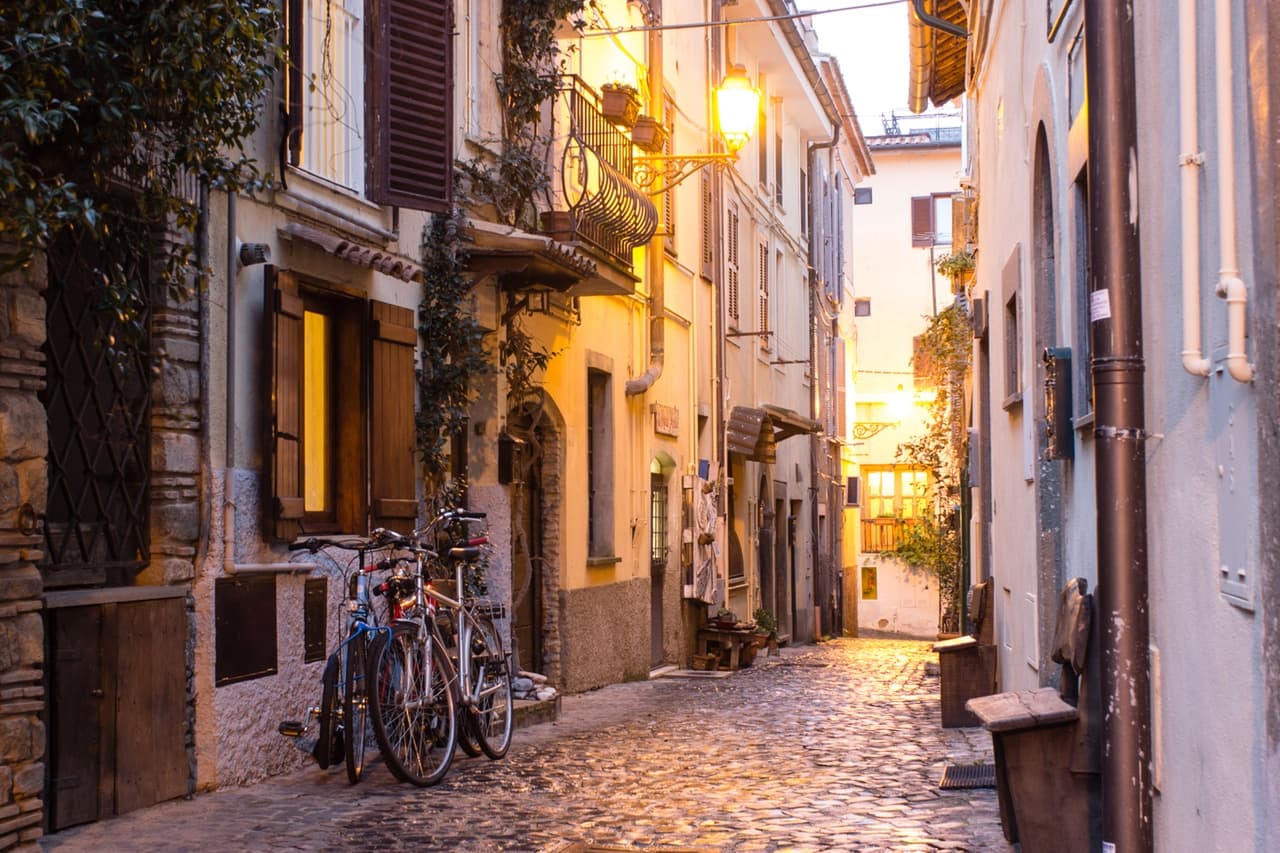
Castel Gandolfo
A papal town on the rim of Lake Albano's volcanic crater, summer residence of the popes since 1626 in the Castelli Romani.
Summer residence of the popes since 1626, designed by Carlo Maderno for Urban VIII Barberini; restored to residential use under Leo XIV in 2025.
 3
3Latina · Lazio · 120 min from Roma
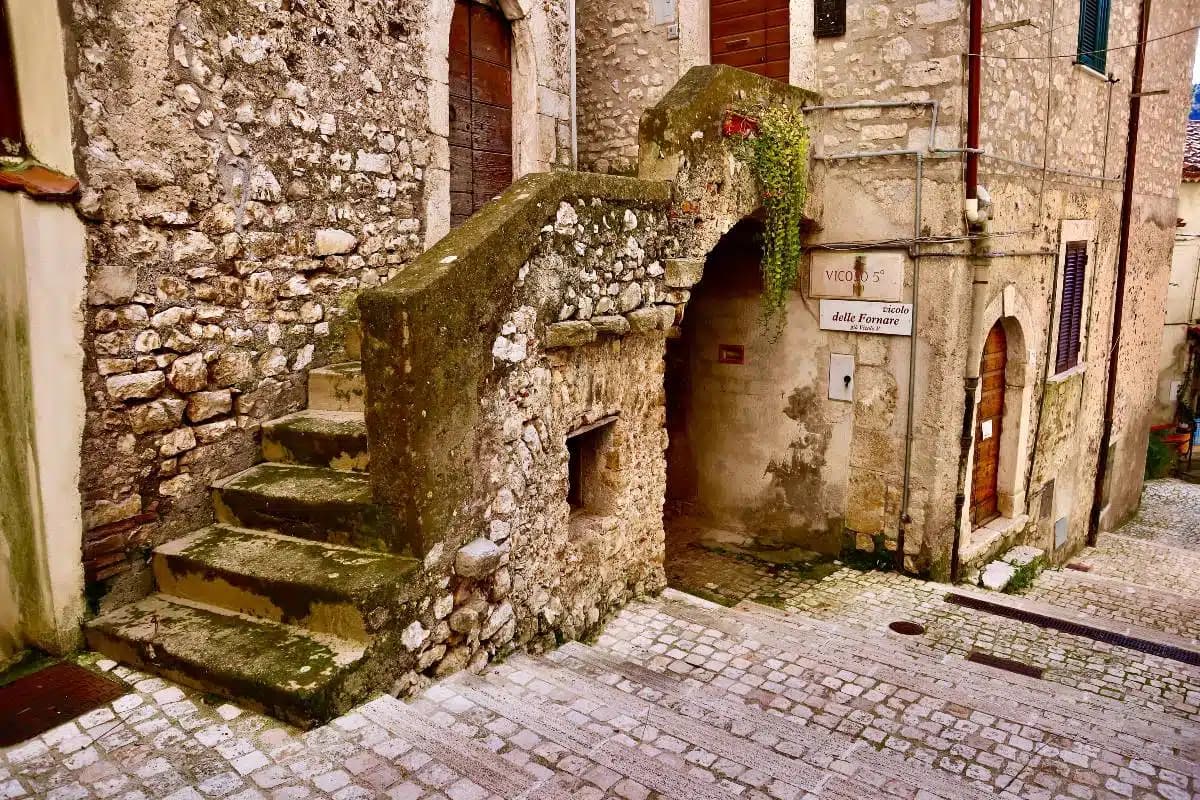
Bassiano
The highest village in the province of Latina at 562 meters, birthplace of Aldo Manuzio, who shrank the book to pocket size.
Aldine Press founder, born here between 1449 and 1452; invented italic type and the pocket-size octavo book.
Carries the TCI Bandiera Arancione for inland quality.
 4
4Roma · Lazio · 111 min from Roma
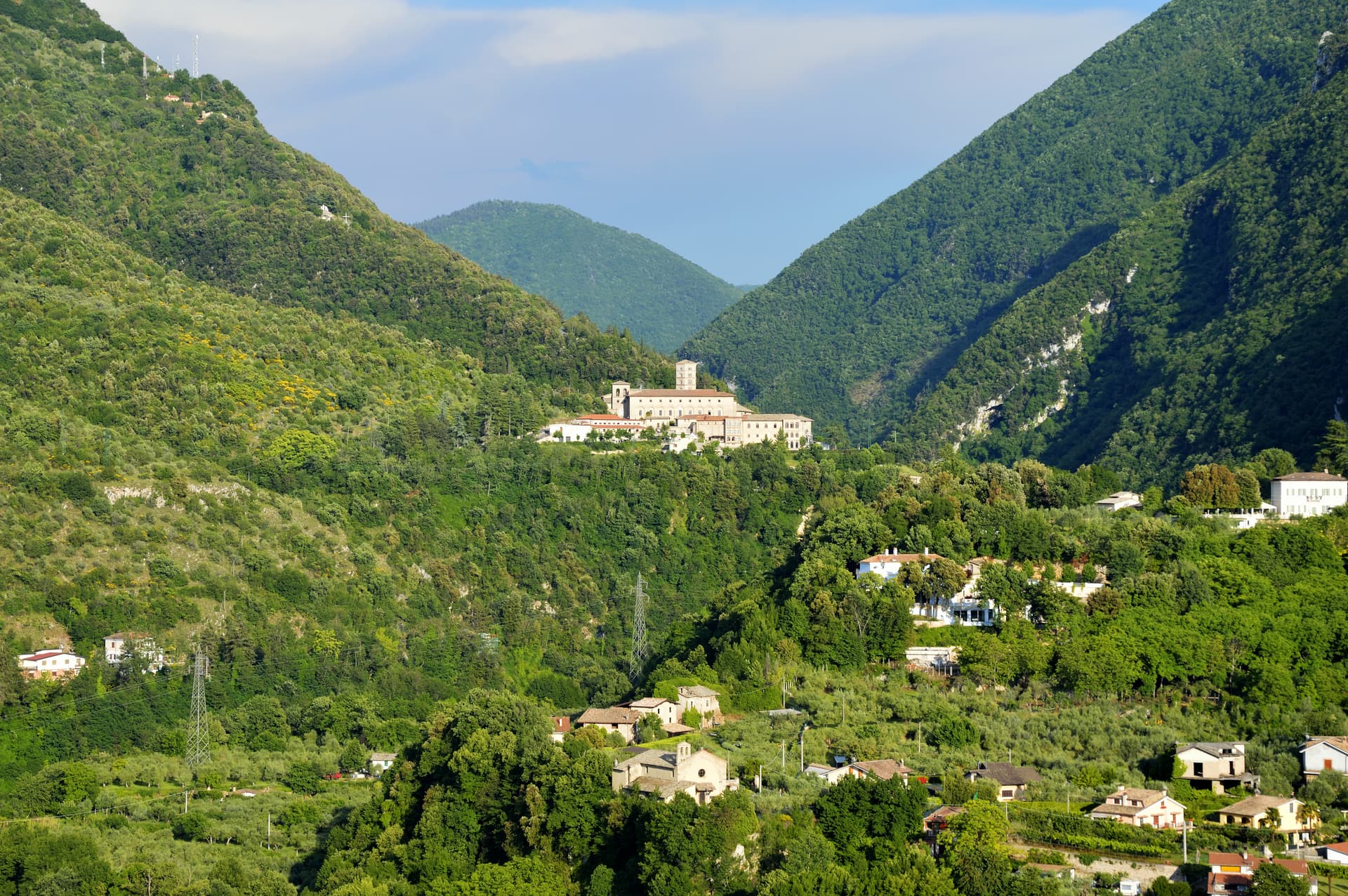
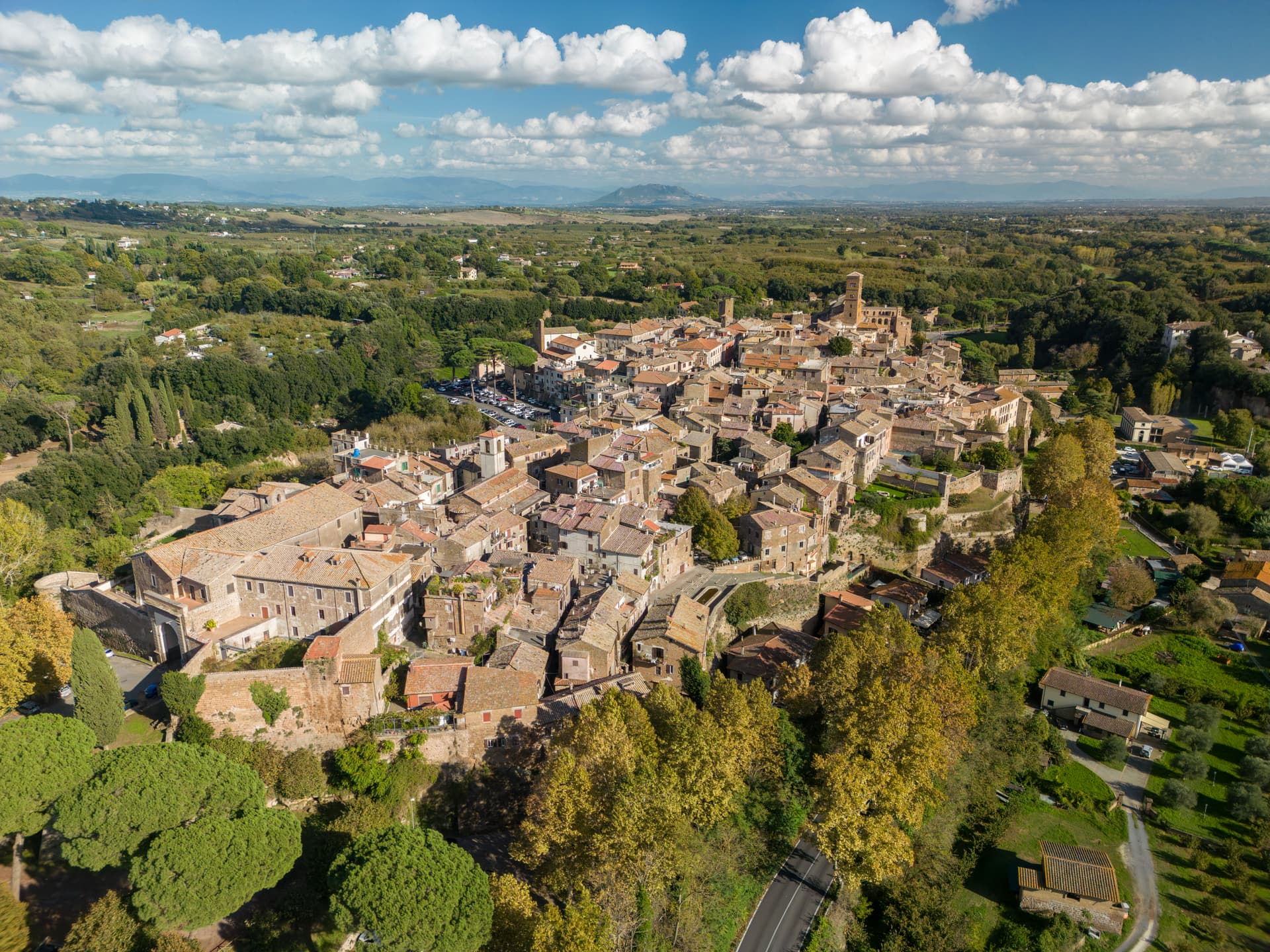
Subiaco
The Aniene valley town where Benedict spent three years in a cliff cave, and where Italy's first printed book appeared in 1465.
Konrad Sweynheim and Arnold Pannartz set up Italy's first printing press at Santa Scolastica in 1464 and printed the Lactantius in October 1465.
 5
5Viterbo · Lazio · 87 min from Roma
Sutri
An Etruscan and Roman town on a tuff spur, with a rock-cut amphitheater carved straight from the volcanic stone of the Cimini.
Roman elliptical arena carved out of the tuff in the first century BC, one of the most unusual surviving amphitheaters in Italy.
The slow-trip planner
Building a trip? Find where Rome fits in a slow Italy circuit.
Answer five questions. We will shape a geographically coherent slow trip from the 1,000 Italian towns most travelers skip. Yours to save and share.
 6
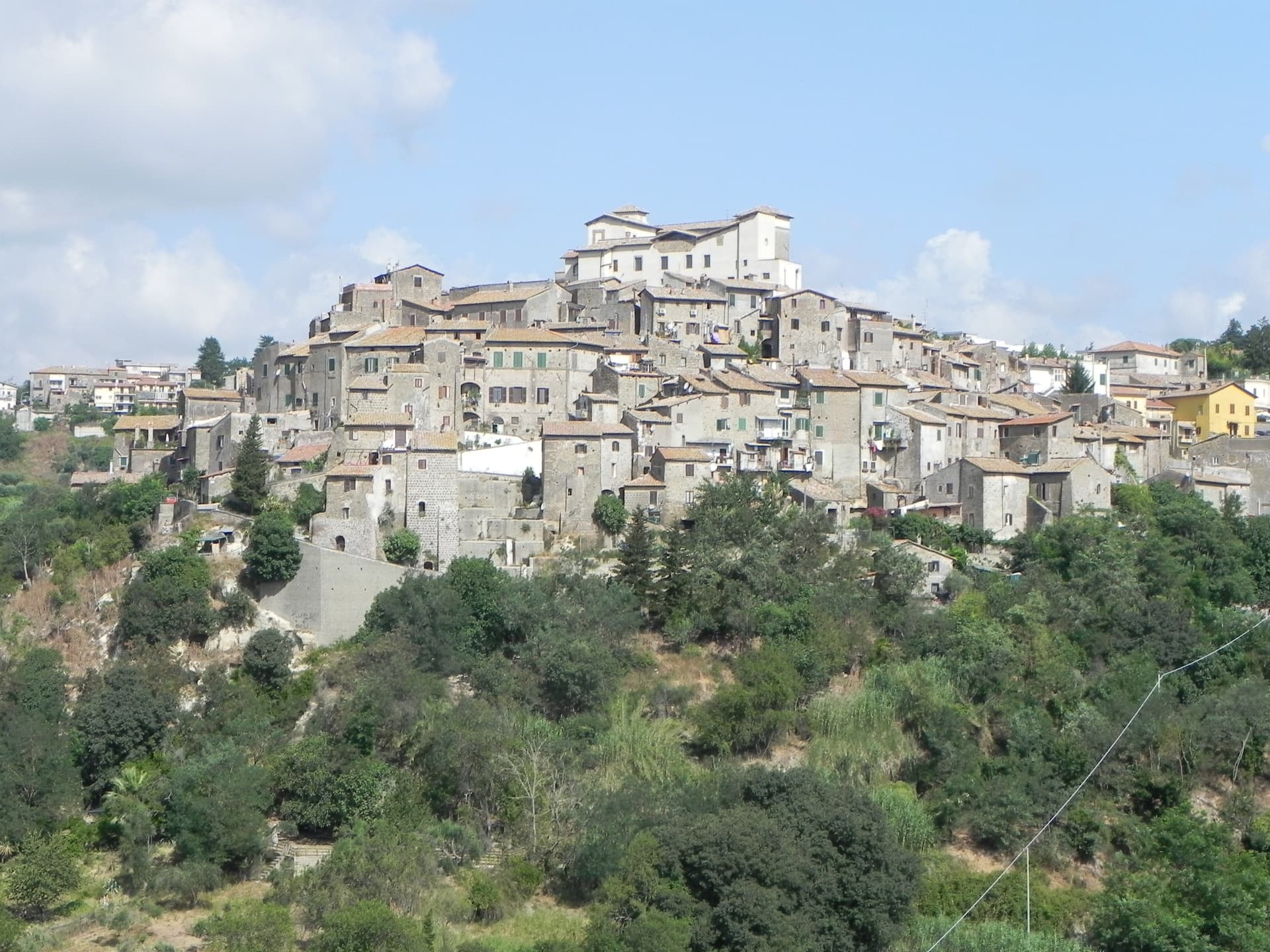
6Roma · Lazio · 72 min from Roma
Castelnuovo di Porto
A tufa-ridge borgo twenty-five kilometers north of Rome inside the Parco di Veio, dominated by the Rocca Colonna above the Tiber valley.
Colonna fortress on the tufa spur, used by Marcantonio Colonna after the Battle of Lepanto in 1571.
 7
7Roma · Lazio · 72 min from Roma
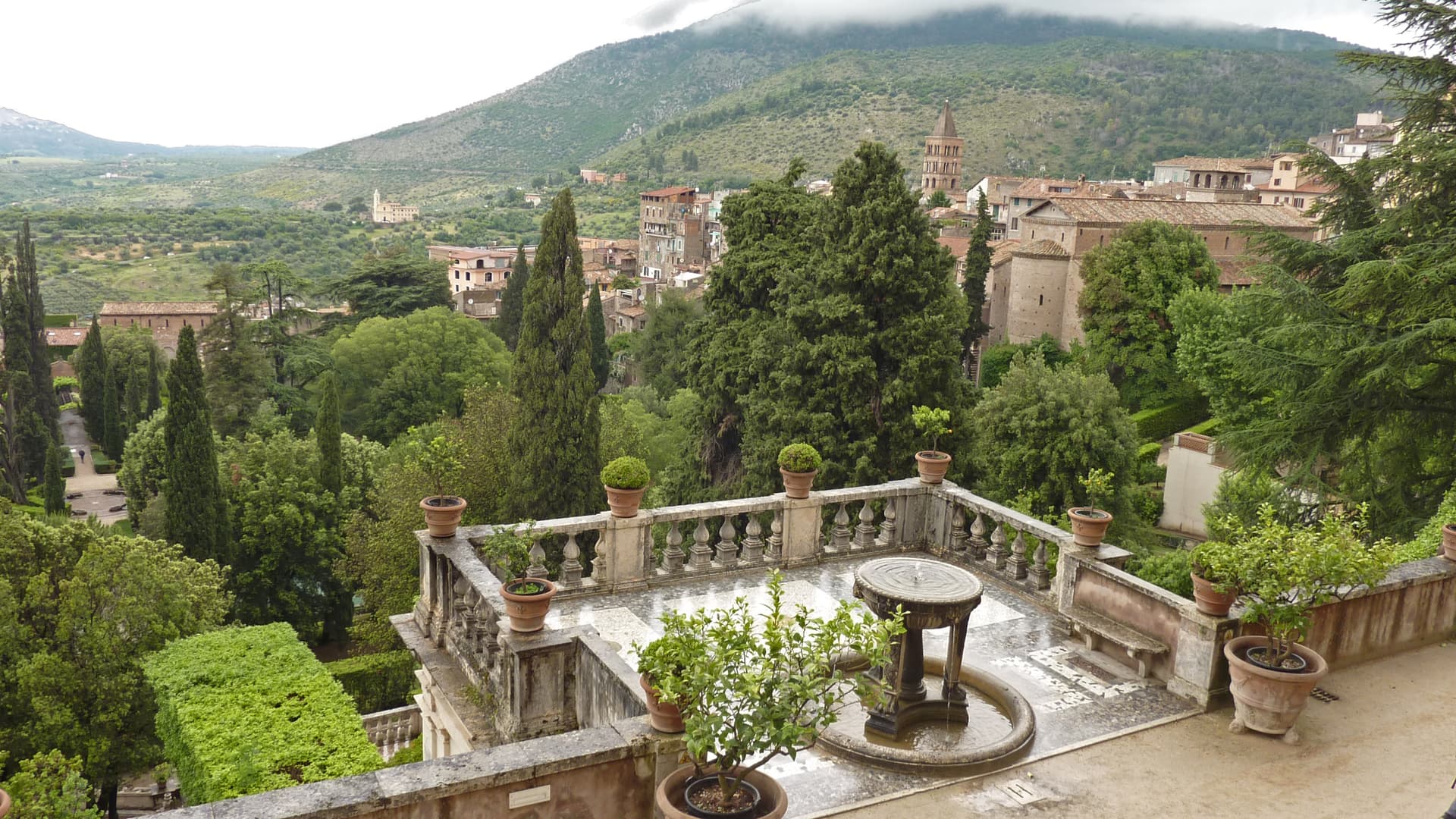
Tivoli
A travertine town on the Aniene falls twenty-five kilometers east of Rome, holding two separate UNESCO sites: Hadrian's villa below and the Villa d'Este above.
Renaissance garden with 51 fountains, all gravity-fed from the Aniene, designed by Pirro Ligorio from 1550 for Cardinal Ippolito d'Este.
Working hill town inside Rome's day-trip radius.
 8
8Roma · Lazio · 89 min from Roma
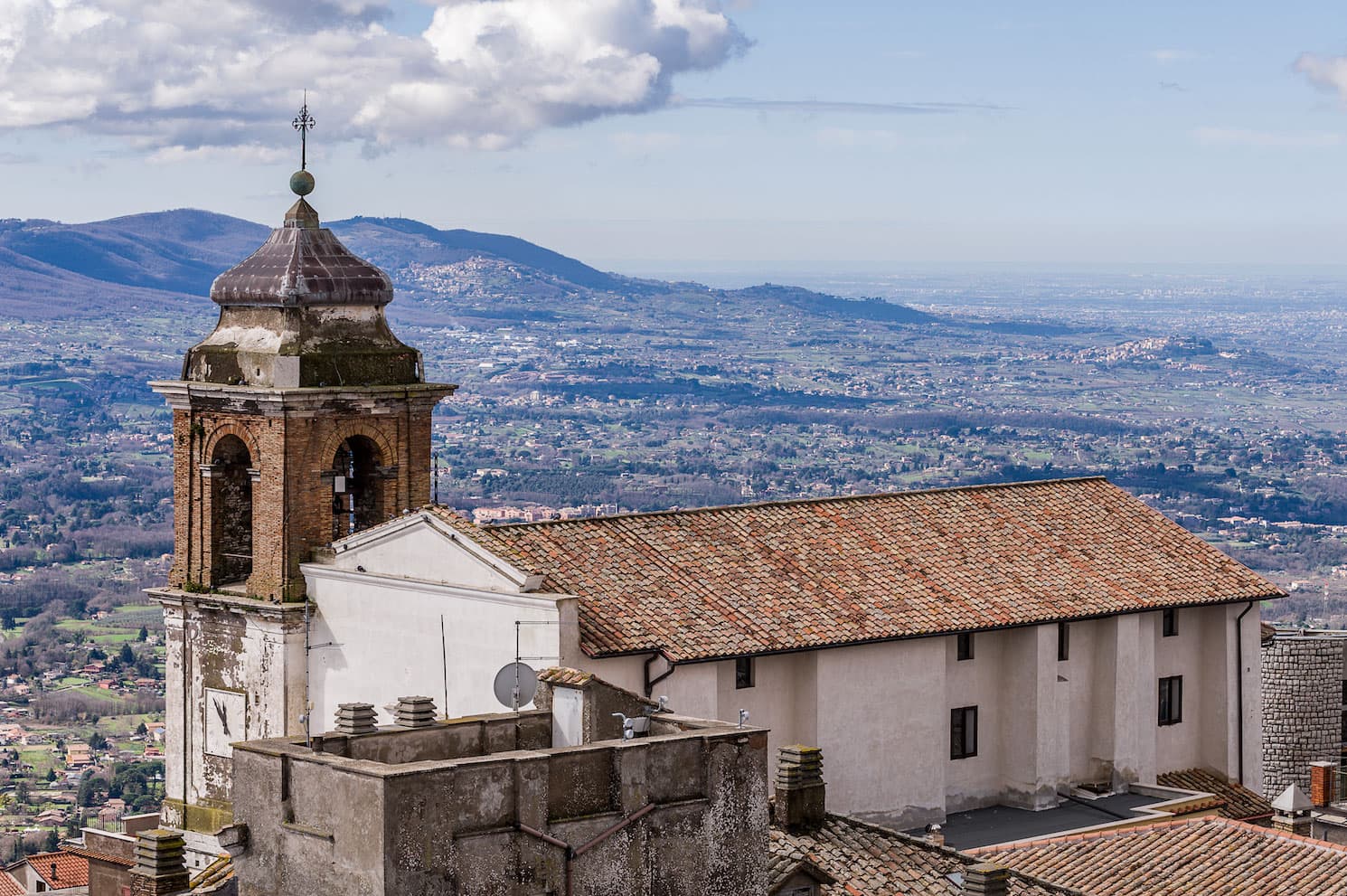
Castel San Pietro Romano
A 763-meter hill village on Monte Ginestro above Palestrina, sitting on the acropolis of ancient Praeneste and inside the Colonna fortress walls.
The Colonna fortress on Monte Ginestro, rebuilt three times between the twelfth and fifteenth centuries before becoming the grain store.
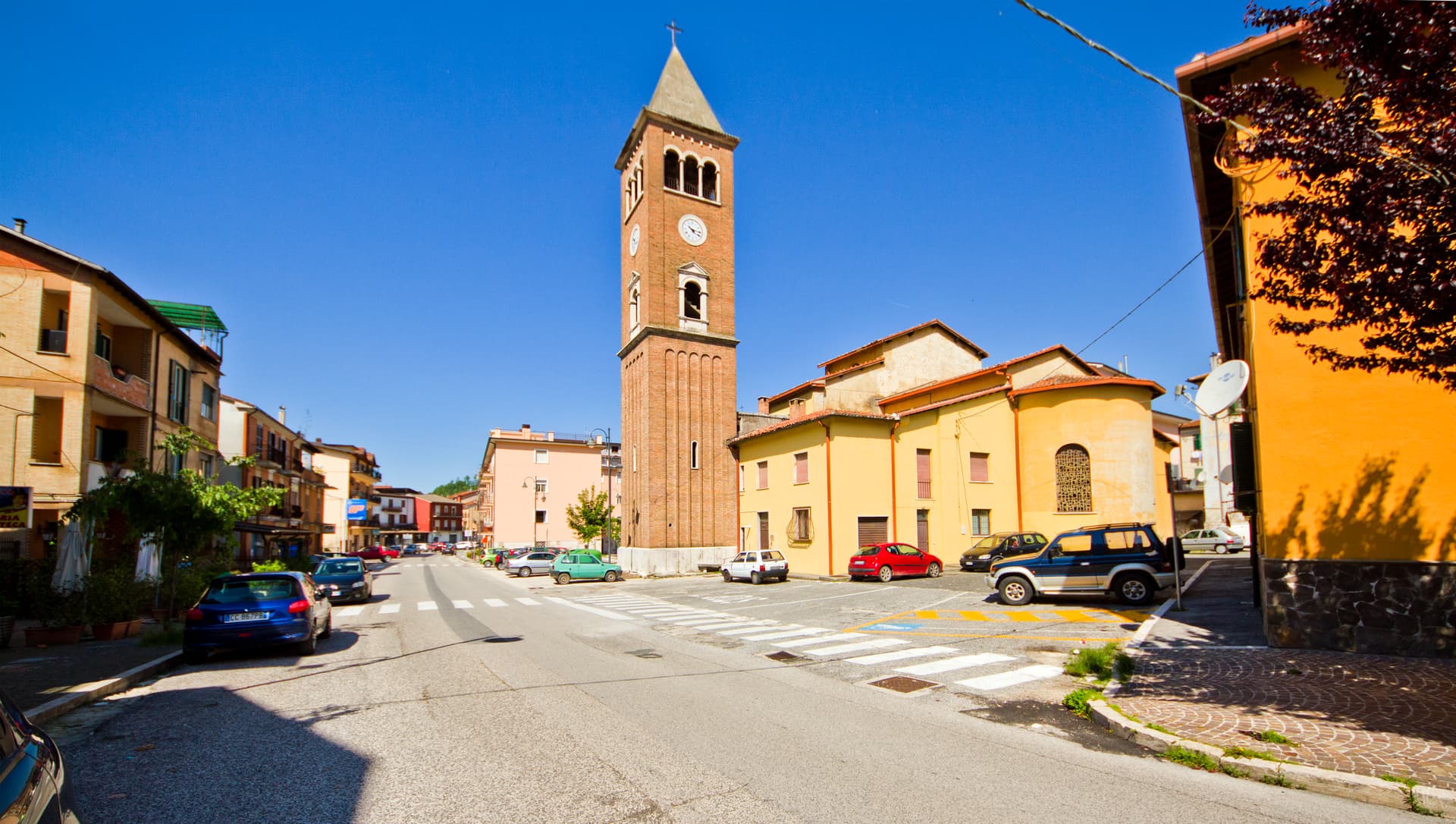 9
9L'Aquila · Abruzzo · 101 min from Roma
Carsoli
A 616-meter mountain town in the Marsica, built next to the ruins of Roman Carsioli, the 4th-century BC fortress on the road to Alba Fucens.
Roman colony founded 302-298 BC to guard the road to Alba Fucens, with surviving walls and aqueduct four km from the modern town.
Member of the Borghi Autentici network.
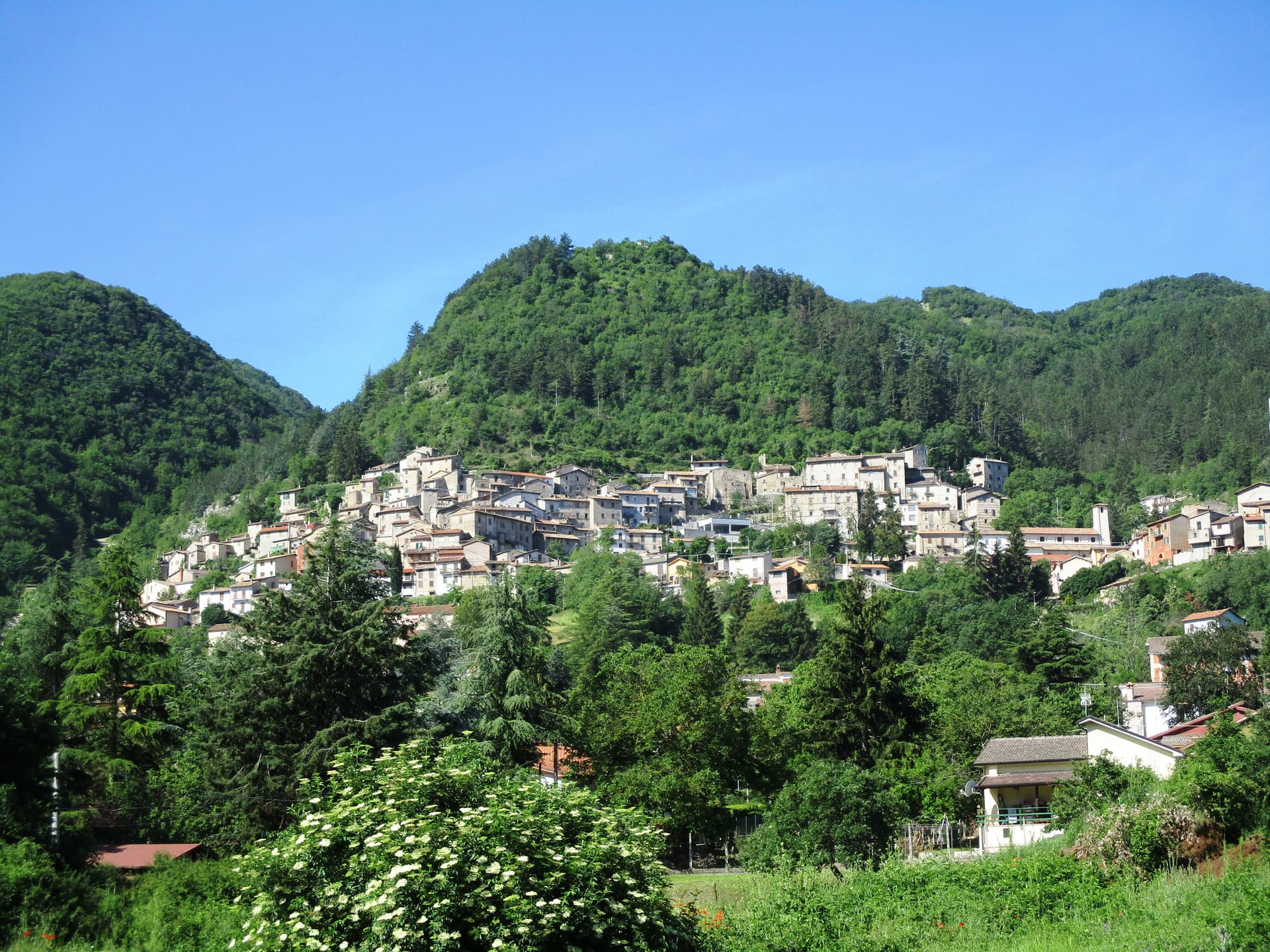 10
10L'Aquila · Abruzzo · 101 min from Roma
Rocca di Botte
At 750 meters on the Carseolani slopes between Abruzzo and Lazio, the birthplace of an eleventh-century hermit and a fief of the Colonna.
Birthplace of the eleventh-century hermit Pietro of Trevi, who refused an arranged marriage and died near Trevi nel Lazio in 1052.
We write about towns like these every Sunday, one town a week, with the photo, the food, the festa. Free, from Pietrasanta.
By subscribing you agree to Substack’s Terms of Use, our Privacy Policy and our Information collection notice.
Why Roma is the base
Rome's airports (FCO, CIA) and rail centrality make it the obvious base, but the real reason for staying in Rome and day-tripping out (rather than basing yourself in a hill town and day-tripping into Rome) is the food. The Castelli wines, the Sabine oil, the Tuscia pecorino, the porchetta of Ariccia all flow back into the city's markets and trattorie, where you can compare them across a single dinner. The hill towns each carry one note of the menu; Rome plays the chord.
When to go
October and November for the porcini, chestnuts, and new oil sagre in the Castelli and Sabine. April and May for the Tuscia and Aniene valley, when the country is green and the volcanic-soil flora is at its peak. Mid-summer is hot and the towns empty out in August (proper, Italian-rhythm August: many trattorie shut between Ferragosto and the first week of September).
Questions people ask
- How long does it take to drive from Rome to the Castelli Romani?
- Frascati, Grottaferrata and Castel Gandolfo are 30 to 45 minutes from central Rome via the Via Tuscolana or Via Appia Nuova outside rush hour. Add 20 minutes during the morning or evening commute.
- Which hill town near Rome is best for a wine day trip?
- Frascati is the obvious answer for the Frascati DOC, but Marino and Velletri also produce serious wines and have lighter crowds. Further afield, Olevano Romano (about 90 minutes east) is the centre of the Cesanese DOCG, Rome's only red DOCG.
- Can I reach these hill towns by train?
- Tivoli and the Castelli Romani are reachable by regional rail from Termini in under an hour. The Tuscia (Tuscania, Vetralla, Tarquinia) needs a car or a bus from Saxa Rubra. The Aniene valley above Subiaco is car-only.
- Is Tivoli worth a half day or a full day?
- A full day. Villa d'Este in the morning, lunch on the via del Trevio, then either Villa Gregoriana (compact, dramatic) or the harder uphill walk to the Sanctuary of Hercules Victor. Hadrian's Villa (Villa Adriana) on the way back to Rome adds another two hours, so plan that for a separate trip.
How we picked these · We filtered every Lazio comune within 120 minutes of Rome (28 candidates), kept those with inland_central geography, and ranked by signal density (Borghi più belli, Bandiera Arancione, Borghi Autentici) plus elevation. Comuni in the Castelli Romani and Tuscia anchor the list; the Sabine and Aniene valleys round it out.
Subscribe — free
Get the best guides on hidden Italian towns.
One letter on Sundays. The week’s town, with the photo, the food, the festa. Free, by Peter & Sophia from Pietrasanta.
Substack sends a confirmation link to your inbox. The signup finishes when it’s clicked.
From elsewhere in Italy
Five more towns to discover
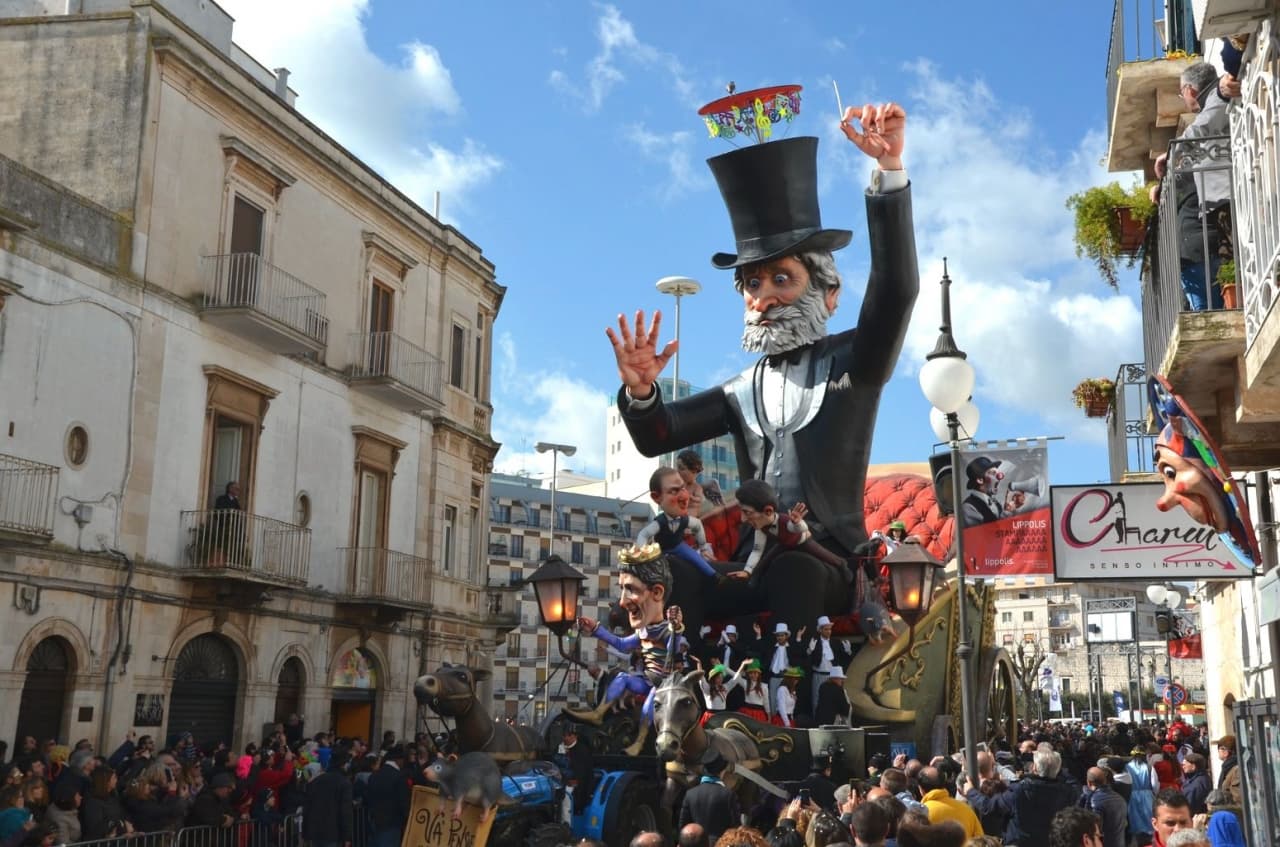
Putignano
Province: Bari
Europe's longest-running carnival — Putignano Carnevale has run continuously since 1394, with 631 years of cartapesta papier-mâché floats, a 26,000-resident Murgia town on the Bari–Lecce plateau, and the Grotta del Trullo karst cave inside the centro.

Pistoia
Province: Pistoia
Italy's nursery capital and the medieval Tuscan rival that gave its name to the pistol — a quietly extraordinary centro storico of zebra-striped Romanesque churches, Andrea della Robbia's polychrome frieze on the Ospedale del Ceppo, and Italy's Capital of Culture 2017, all 30 minutes from Florence by train.
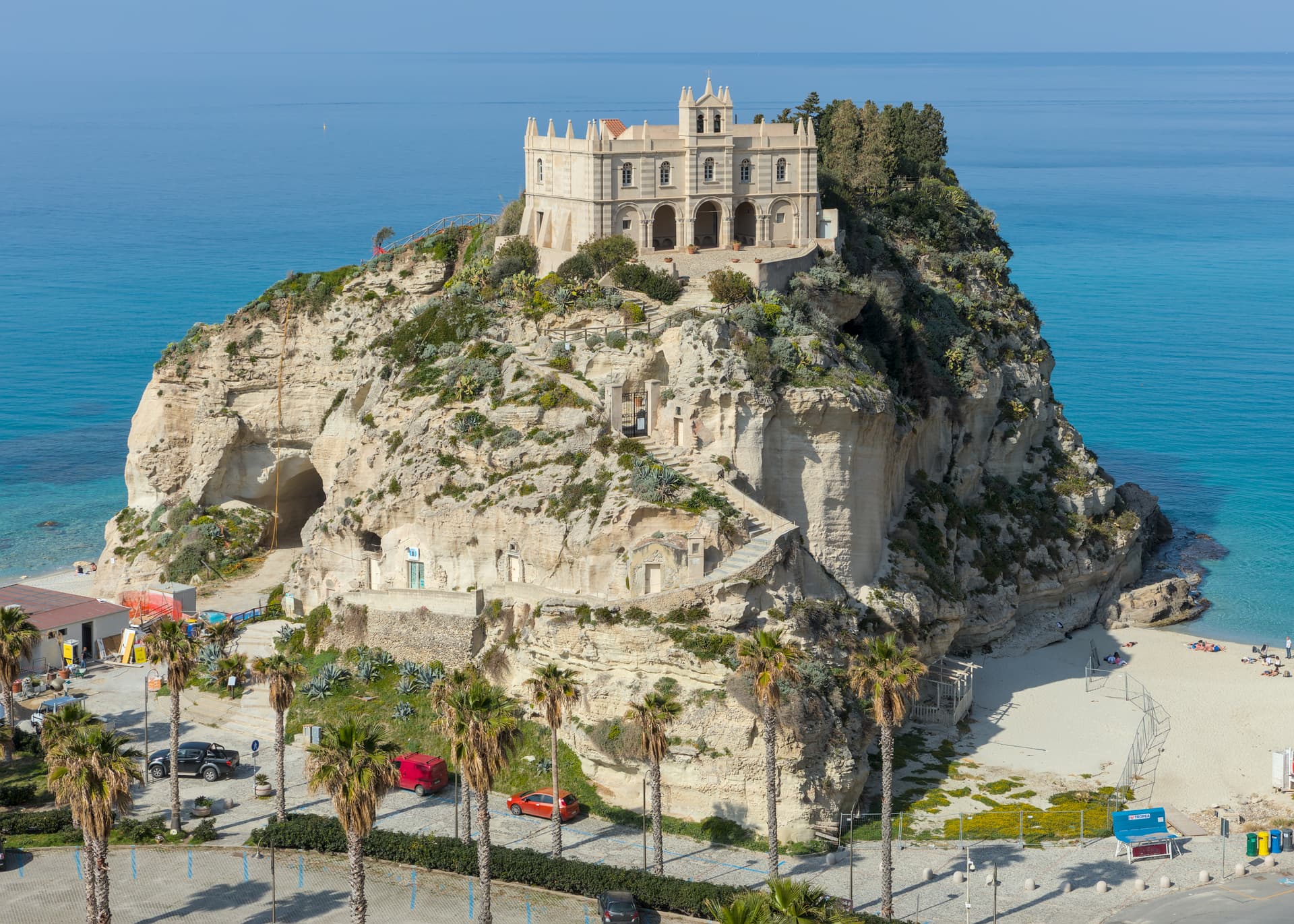
Tropea
Province: Vibo Valentia
Cliff town on a tufa headland over the Tyrrhenian Coast of the Gods, with a Norman monastery on a sea rock.
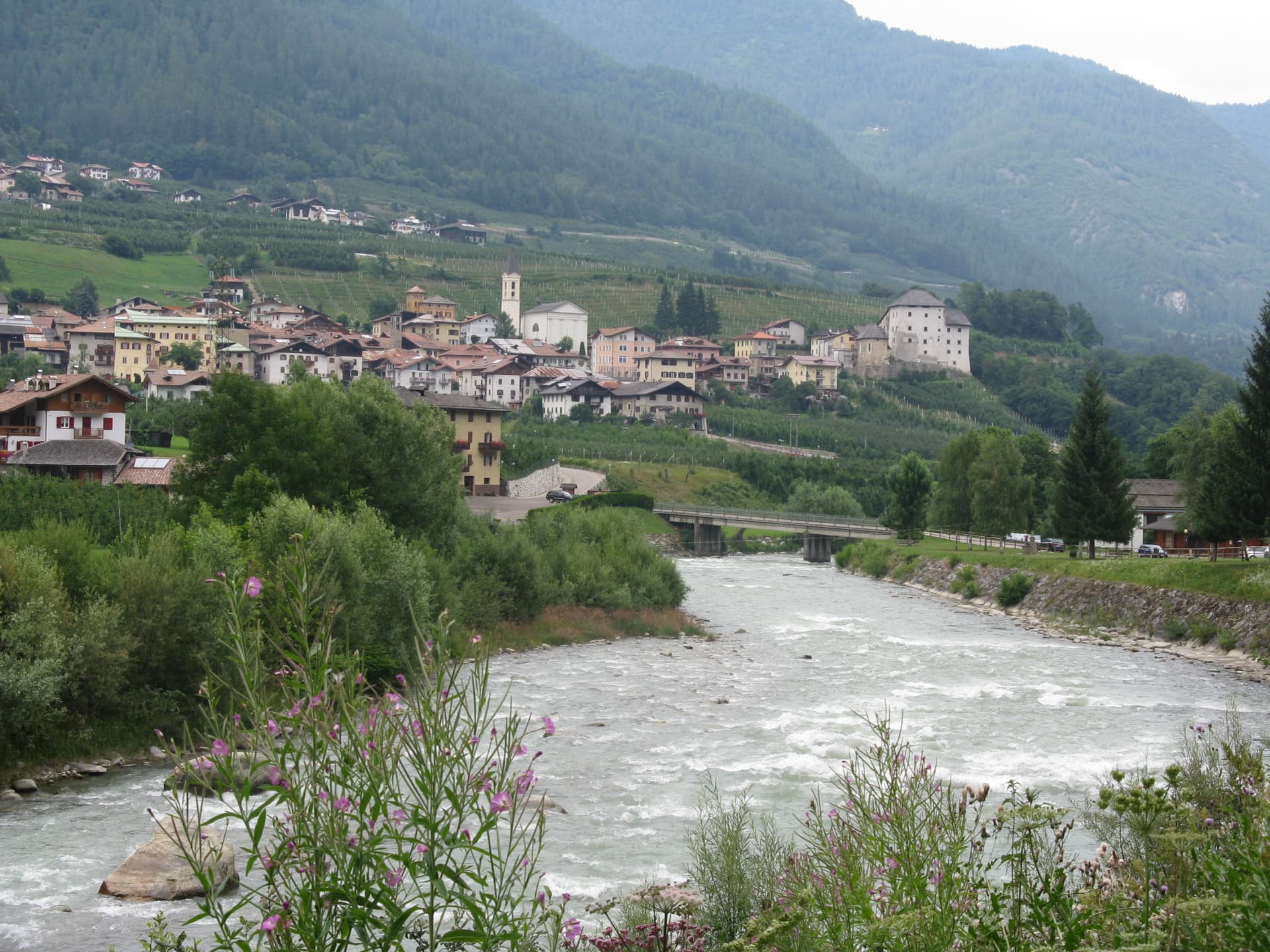
Caldes
Province: Trento
A scattered Val di Sole commune on the Noce, six hamlets gathered around a thirteenth-century tower-house castle that once belonged to the Thun family.
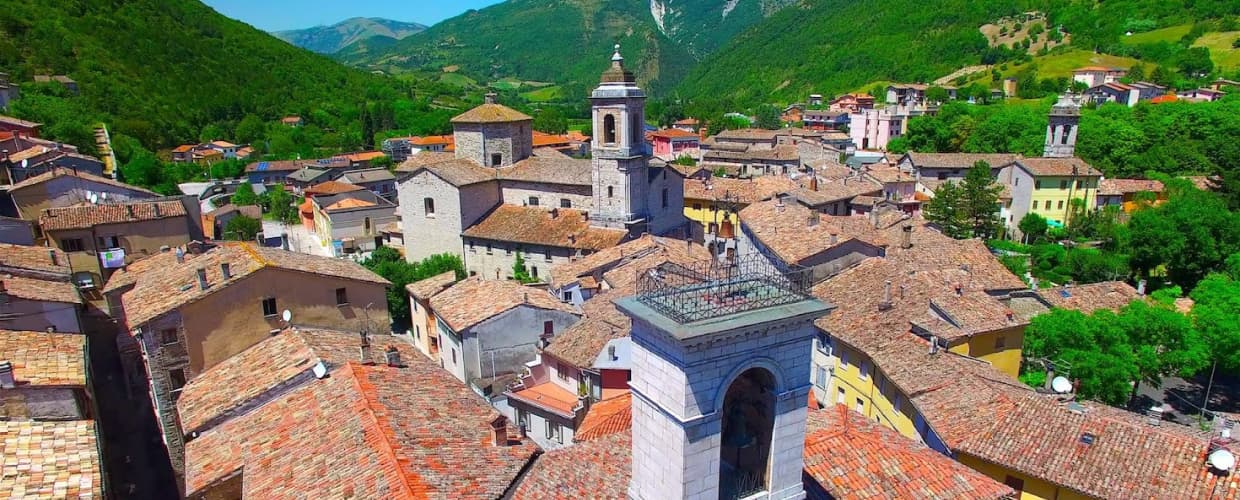
Cantiano
Province: Pesaro e Urbino
A border borgo at 374 meters under Monte Catria on the old Via Flaminia, known for the Good Friday Turba and the sour-cherry visciola harvest.