

Apulia · Lecce
Corigliano d'Otranto
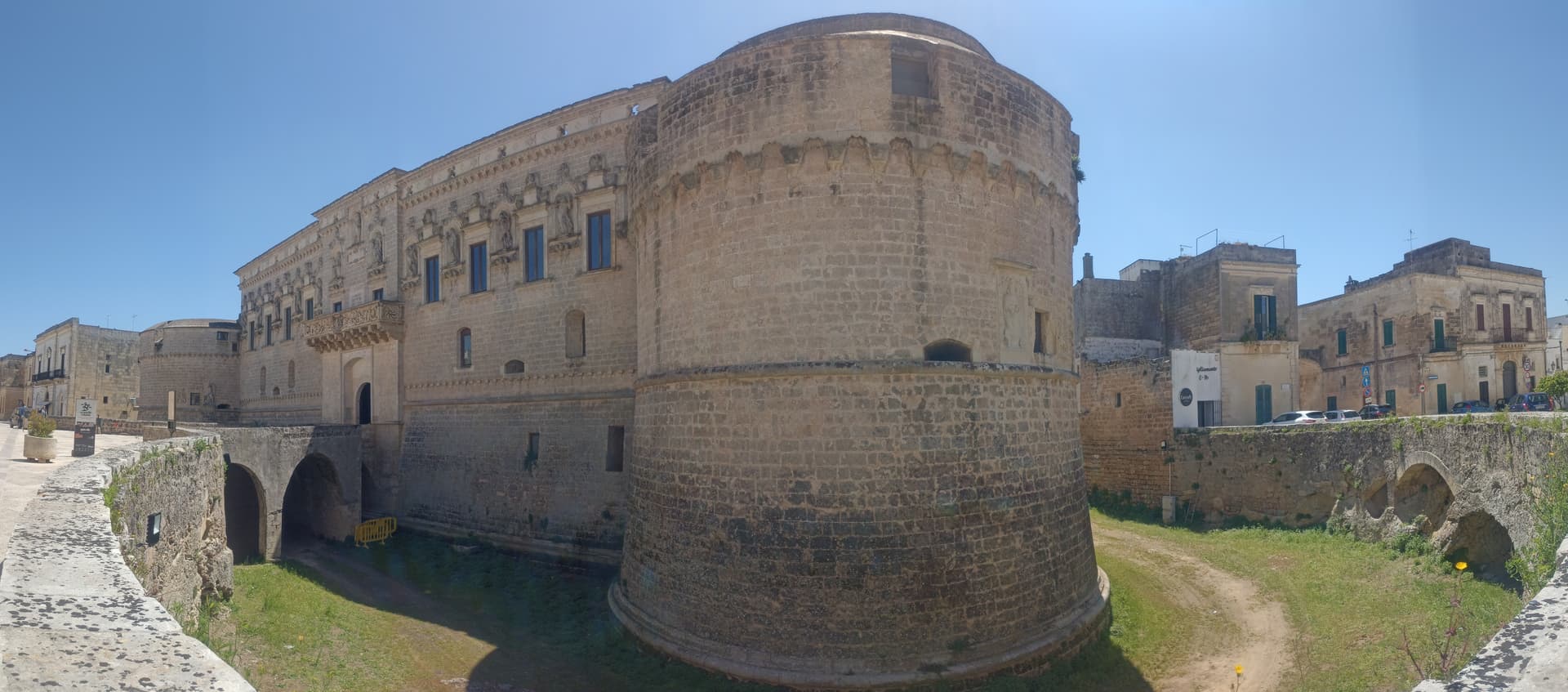
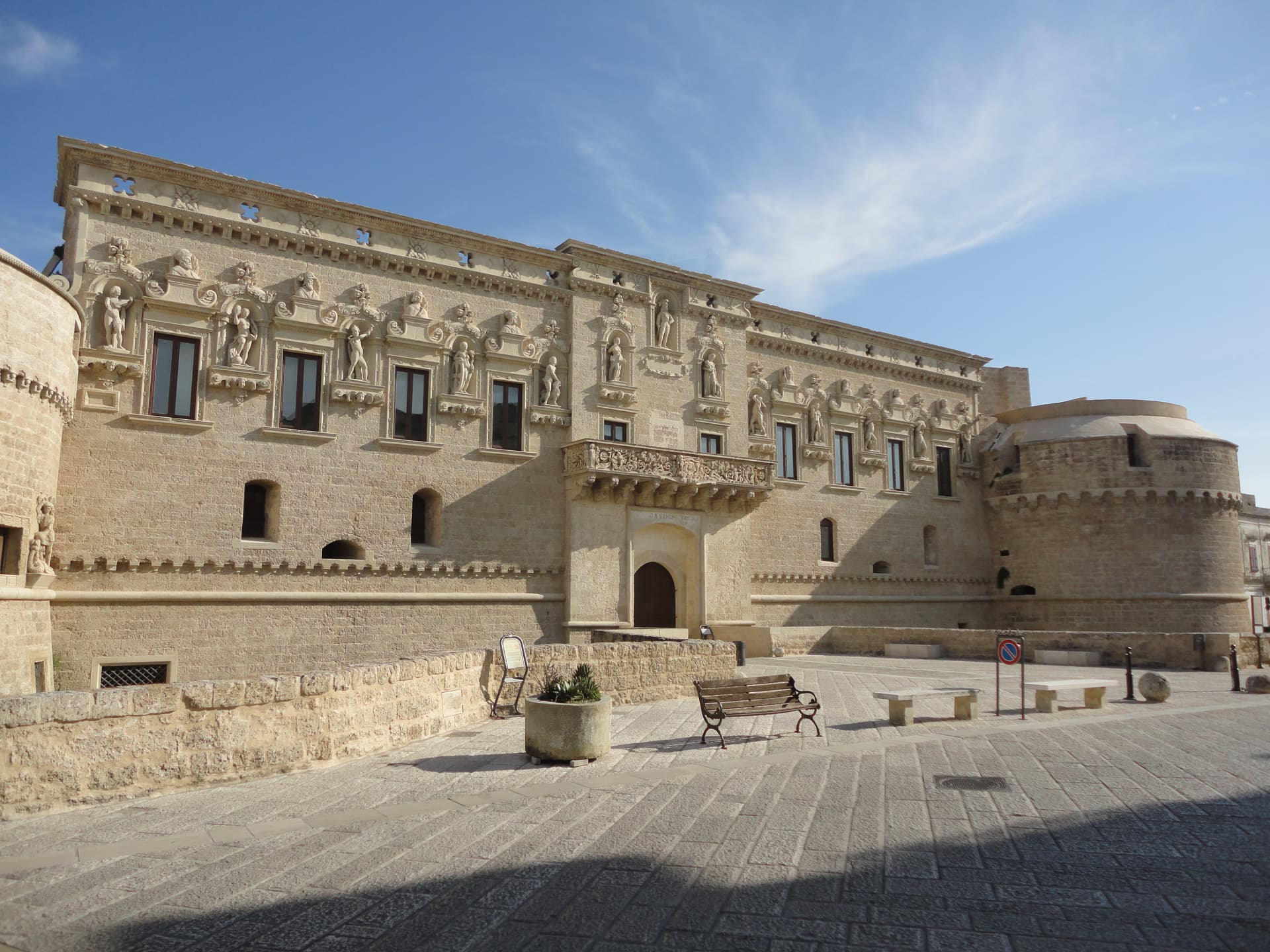
A Grecìa Salentina town twenty-five kilometers south of Lecce, Griko-speaking, with a 1500s Lecce-stone castle of circular towers around a quadrangular plan.
Known for
GRIKO
One of the nine Grecìa Salentina communes where the neo-Greek dialect Griko is still spoken, recognised as a linguistic minority under Italian law 482 of 1999.
CASTELLO DE' MONTI
Lecce-stone castle rebuilt from 1515, one of the first in southern Italy with circular towers around a quadrangular plan, the architectural signature of the town.
MEGALITHS
Bronze Age dolmens, specchie and menhirs across the commune, the Caroppo dolmens discovered in 1993, evidence of habitation around 2000 BC.
When to visit
Best · Apr–Oct
- J
- F
- M
- A
- M
- J
- J
- A
- S
- O
- N
- D
- Best
- Hot or crowded
- Quiet
- Mostly closed
The festa: Nicola di Bari, 23 August
Why come
Corigliano d'Otranto sits on the Salento plateau twenty-five kilometers south of Lecce, one of the nine towns of the Grecìa Salentina where the neo-Greek dialect Griko is still spoken alongside Italian. The Castello de' Monti is the town's centerpiece: a medieval fort acquired in 1465 by the de' Monti family of French origin, given a defensive perimeter and deep moat under Giovan Battista de' Monti around 1515, and then rebuilt in Lecce stone in the early sixteenth century with circular towers around a quadrangular plan, one of the first castles in the south to combine the two geometries. The Parrocchia di San Nicola Vescovo was raised on the foundations of an earlier chapel in the second half of the same century. The municipal territory carries one of the densest concentrations of megalithic remains in Salento: dolmens, specchie and menhirs that record habitation across the Bronze Age, including the Caroppo dolmens unearthed in 1993 just outside the town.
The Sunday letter
We haven’t written Corigliano d'Otranto’s letter yet.
One town every Sunday, with the photo, the food, the festa. Be there when this one comes up. Free, by Peter & Sophia from Pietrasanta.
By subscribing you agree to Substack’s Terms of Use, our Privacy Policy and our Information collection notice.
What to see
Castello de' Monti
Sixteenth-century Lecce-stone castle on medieval foundations, the first in Salento with circular towers around a quadrangular plan, rebuilt by the de' Monti family from 1515.
Chiesa di San Nicola Vescovo
Parish church of the second half of the sixteenth century on the site of an earlier chapel, the religious anchor of the centro storico opposite the castle.
Dolmen Caroppo I e II
Bronze Age megalithic tombs unearthed in 1993 by Oreste Caroppo just outside town, two meters apart on the same rock bank, evidence of habitation around 2000 BC.
Centro storico
Walled old town in pale Lecce stone, narrow lanes, baroque palazzi, Griko-language street signs alongside Italian as part of the Grecìa Salentina identity.
The slow-trip planner
Building a trip? Find where Corigliano d'Otranto fits in a slow Italy circuit.
Answer five questions. We will shape a geographically coherent slow trip from the 1,000 Italian towns most travelers skip. Yours to save and share.
Living here
- Population 5,653
- Commuter belti
- Pharmacy in town
- High school within a 30-minute drive
- Train station in the comune
- Nearest airport Bari / Brindisi, 2 h 31 min drive
- Regional capital Bari, 2 h 19 min drive
Tags & datadesignations · numbers · sources
Recognised as
The numbers
- Elevation: 95 m
- Population: 5,653
- Surface area: 28.41 km²
These figures were compiled from public directories — ISTAT, OpenStreetMap, Wikidata — and from the official listings of the guides named on this page. Town details change; verify with official sources before you travel.
Close by
More towns near Corigliano d'Otranto
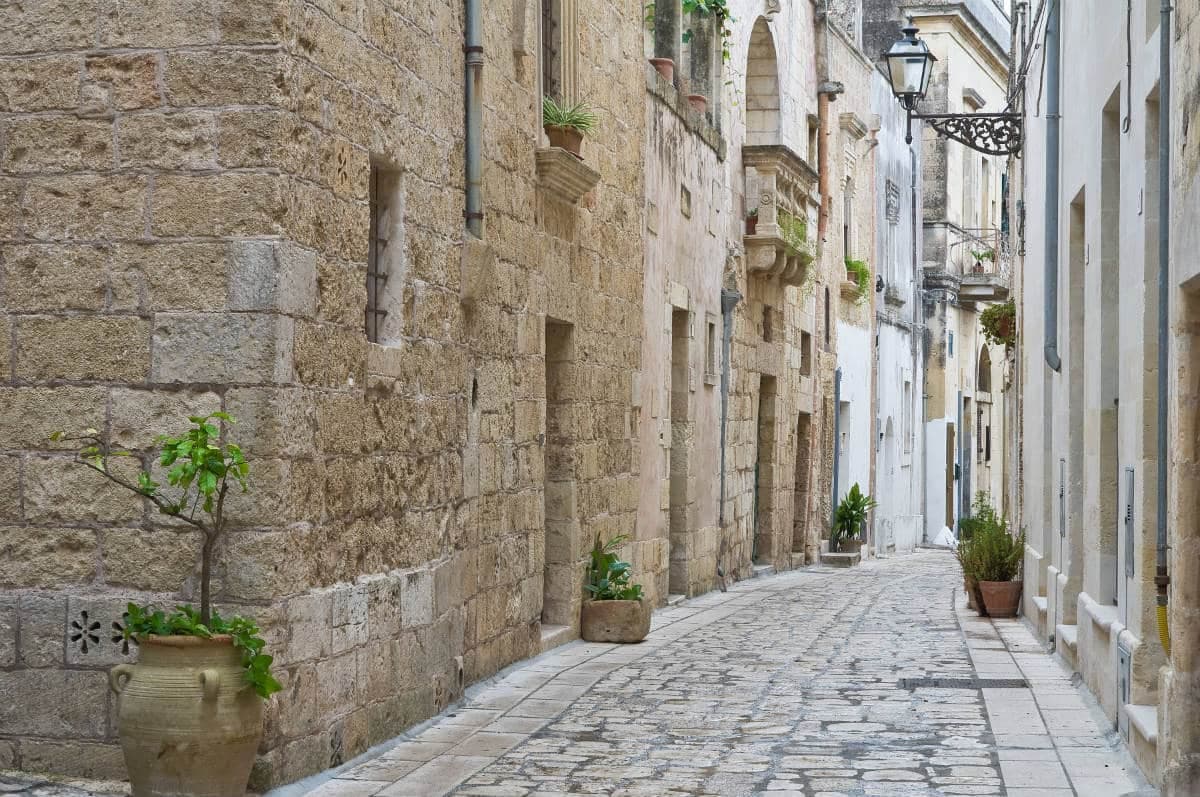
Martano
Province: Lecce
The biggest town in the Grecìa Salentina, twenty kilometers south of Lecce, where the Griko language still survives among older residents.
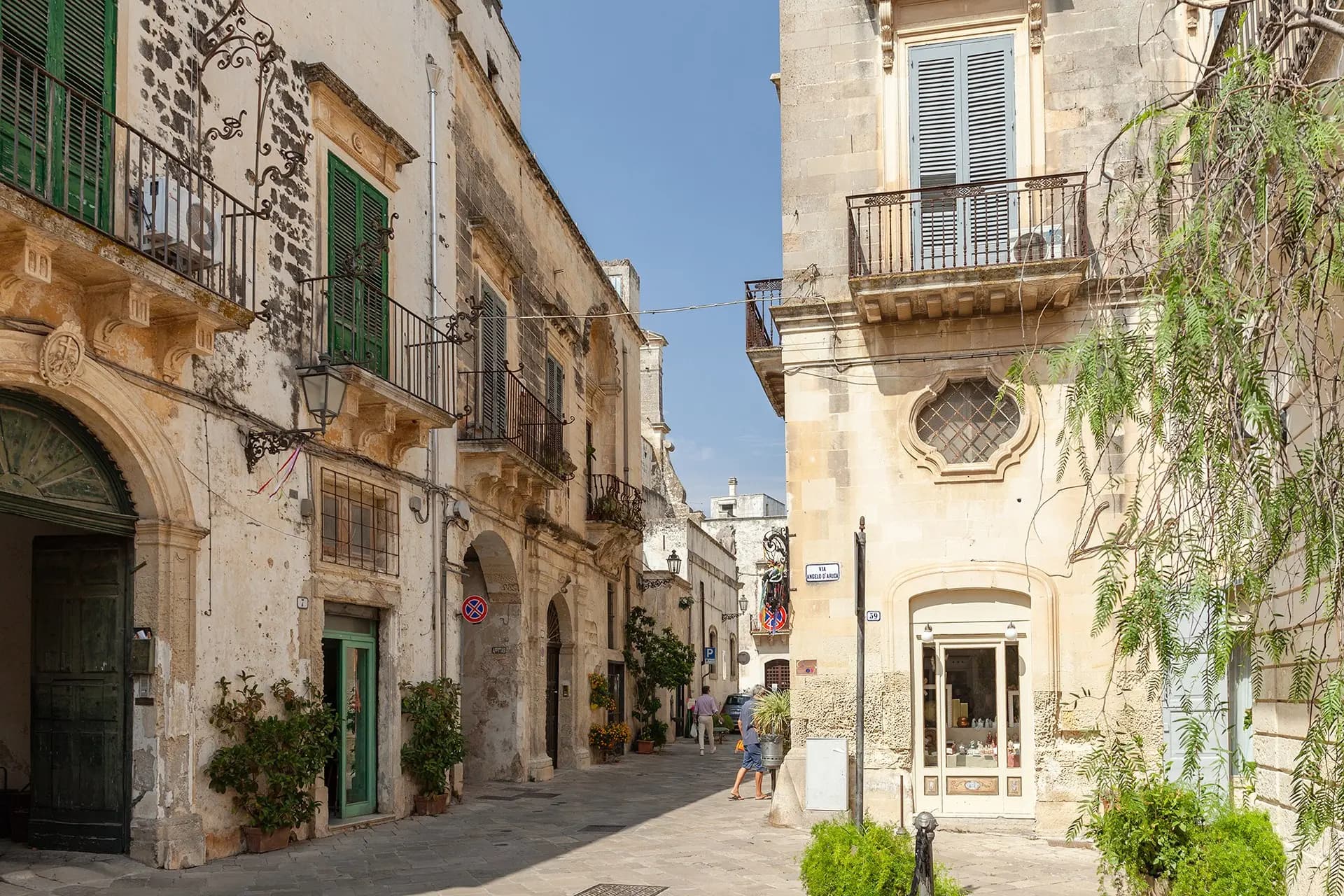
Galatina
Province: Lecce
The Salento town at 78 meters where the cult of San Paolo bred tarantism and gave the pizzica its origin myth.
Giurdignano
Province: Lecce
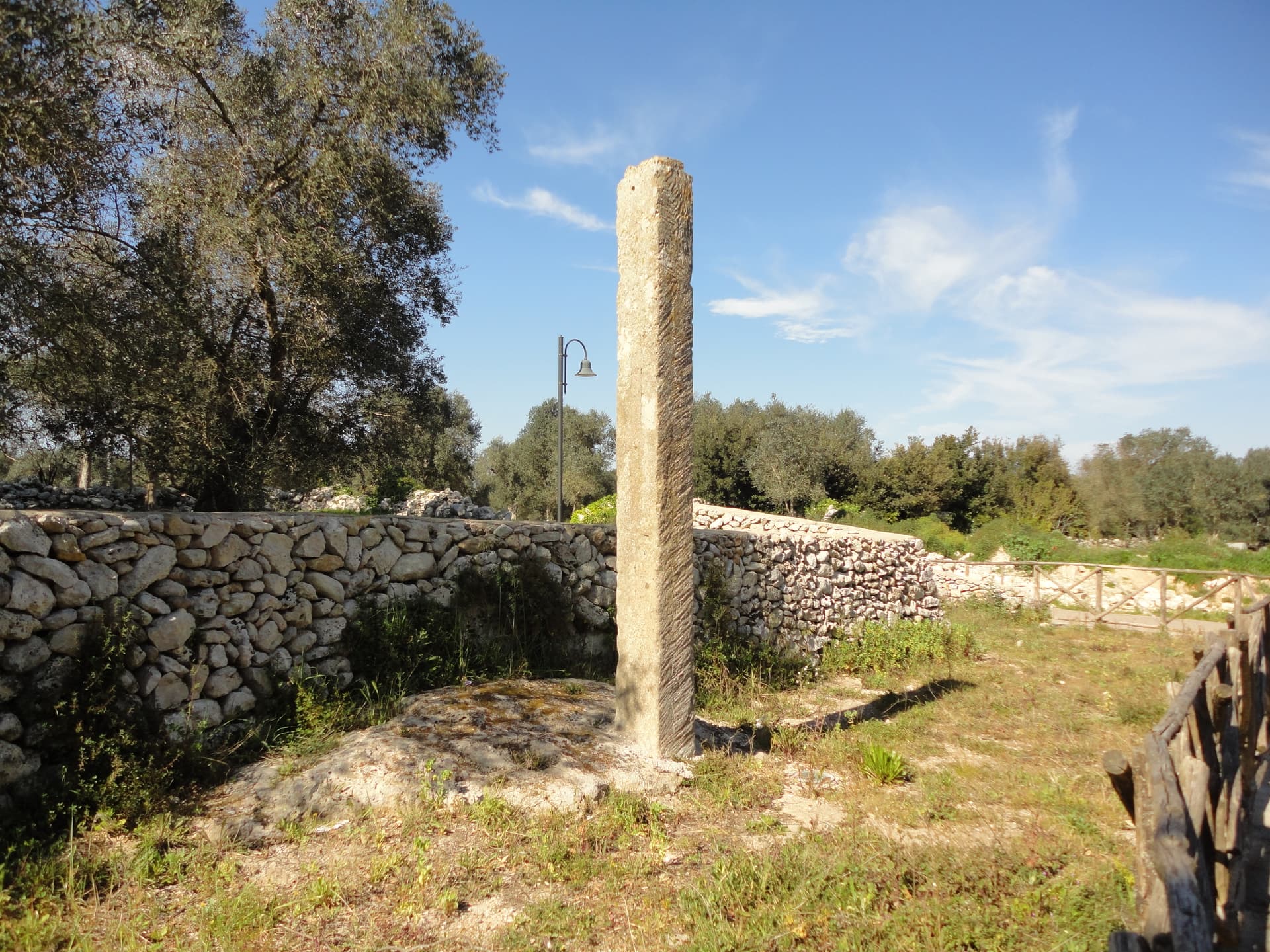
A two-thousand-resident Salento borgo at 78 meters known as the megalithic garden of Italy, with nineteen menhirs and a cluster of dolmens.
Nociglia
Province: Lecce
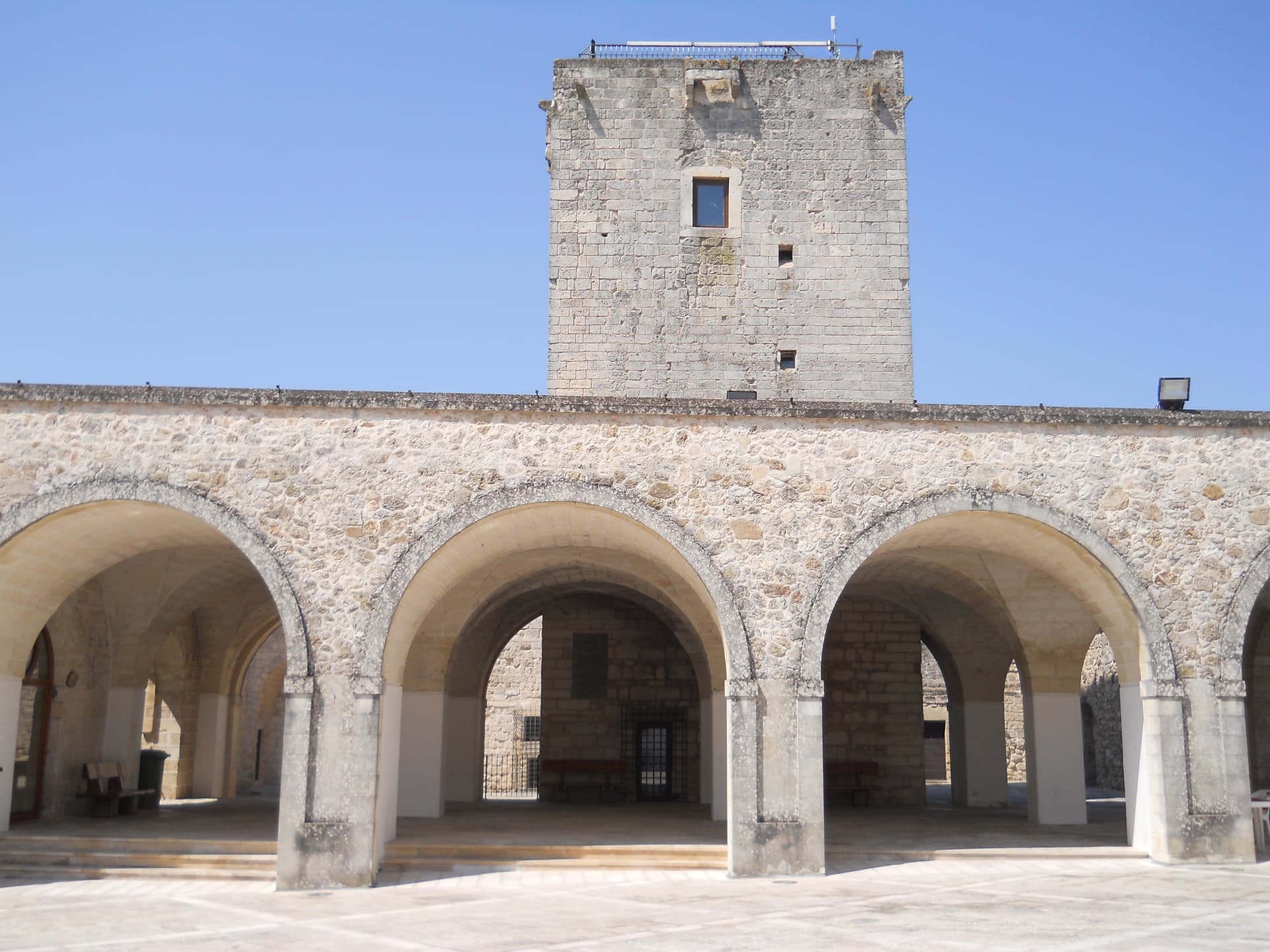
A small Salento interior village forty kilometers south of Lecce, a fourteenth-century baronial castle and a Bosco Belvedere that gave the place its name.
Galatone
Province: Lecce
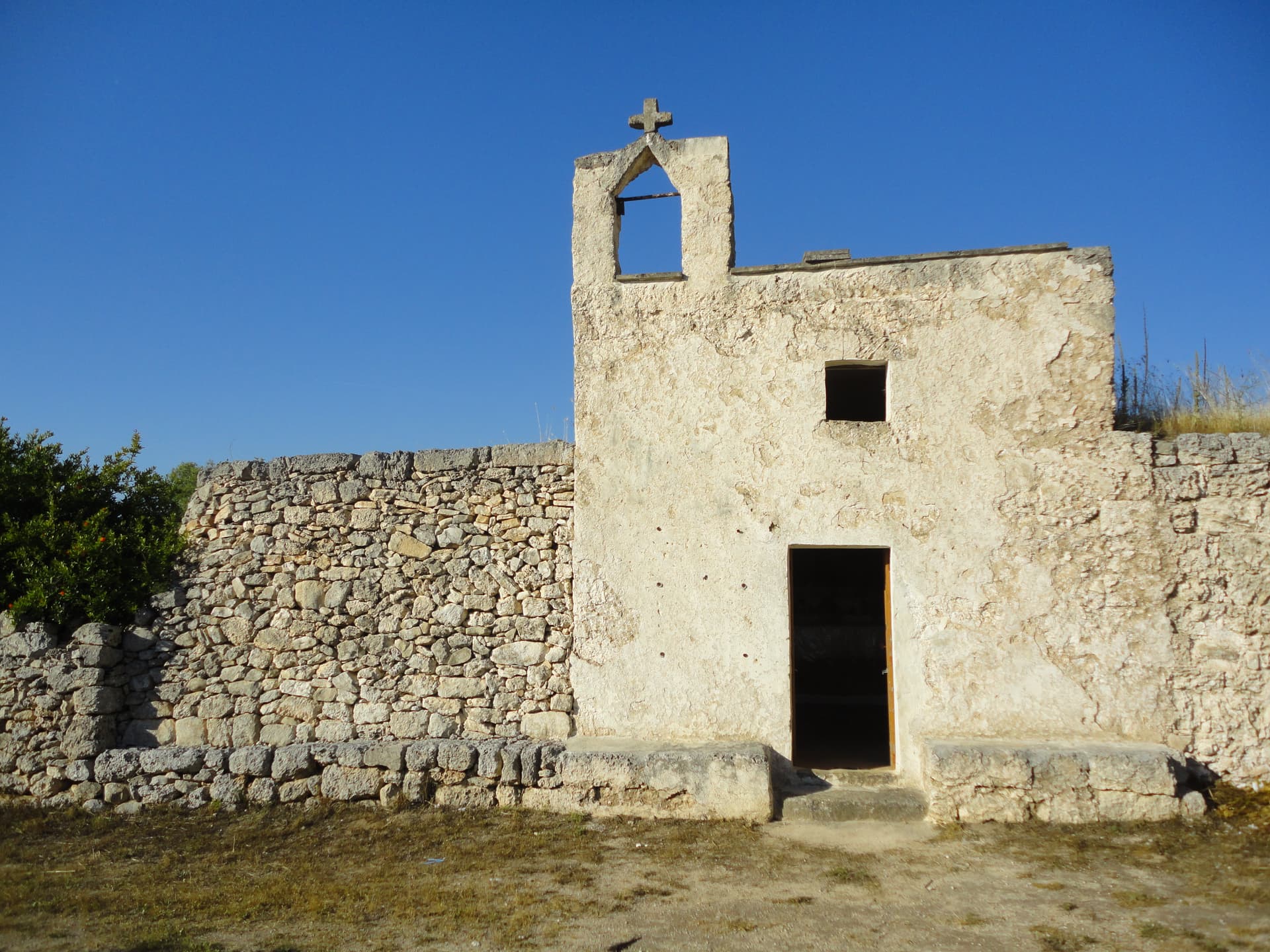
A Salento town at 57 meters thirteen kilometers from Gallipoli, built around a Baroque sanctuary raised over a fourteenth-century Byzantine icon.
🟠 Bandiera Arancione
More Bandiera Arancione towns in Apulia
Biccari
Province: Foggia
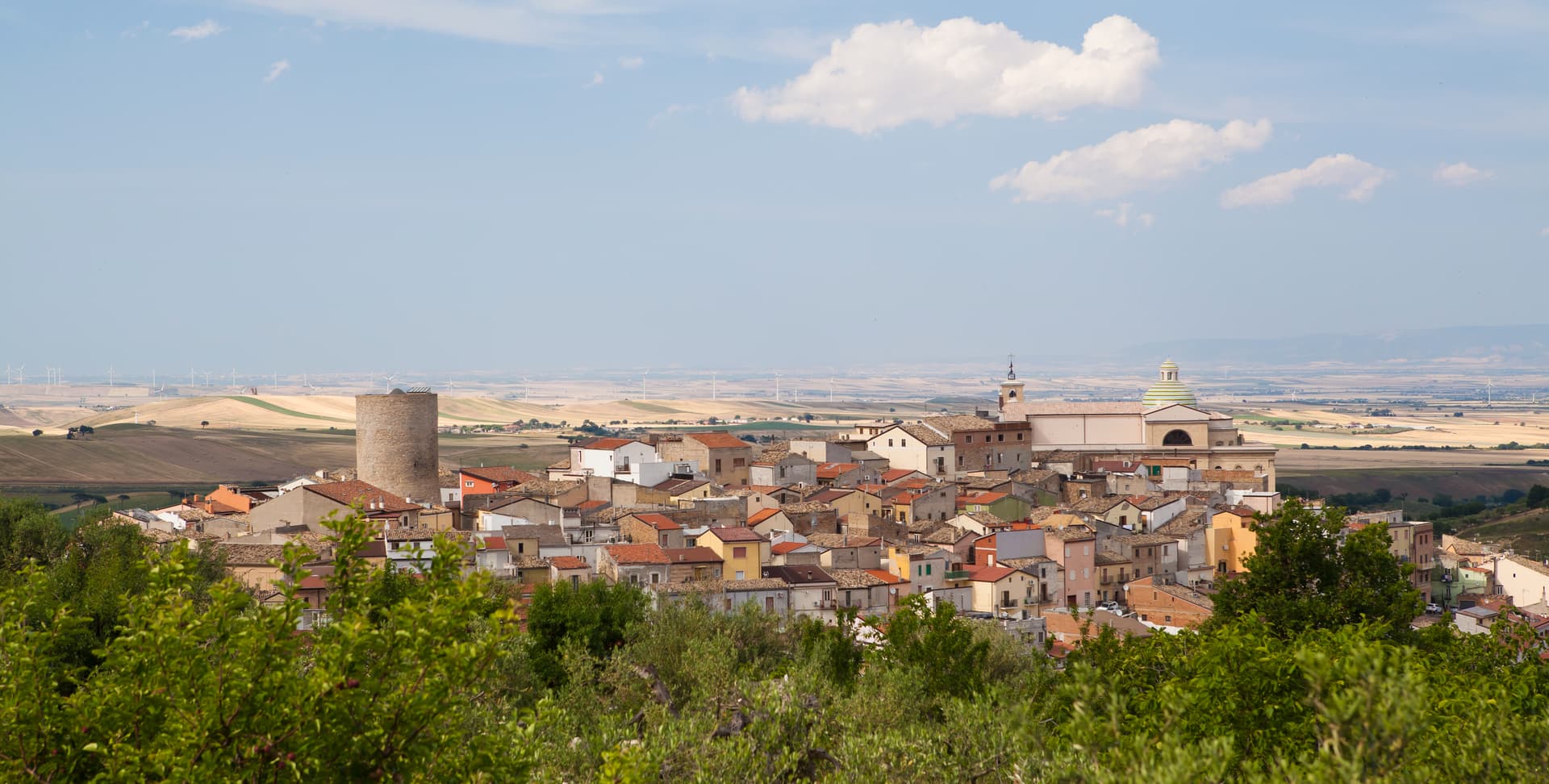
A Subappennino Dauno borgo at 450 meters under Monte Cornacchia, the highest peak in Puglia at 1,151 meters, with a Byzantine tower at its core.
Bovino
Province: Foggia
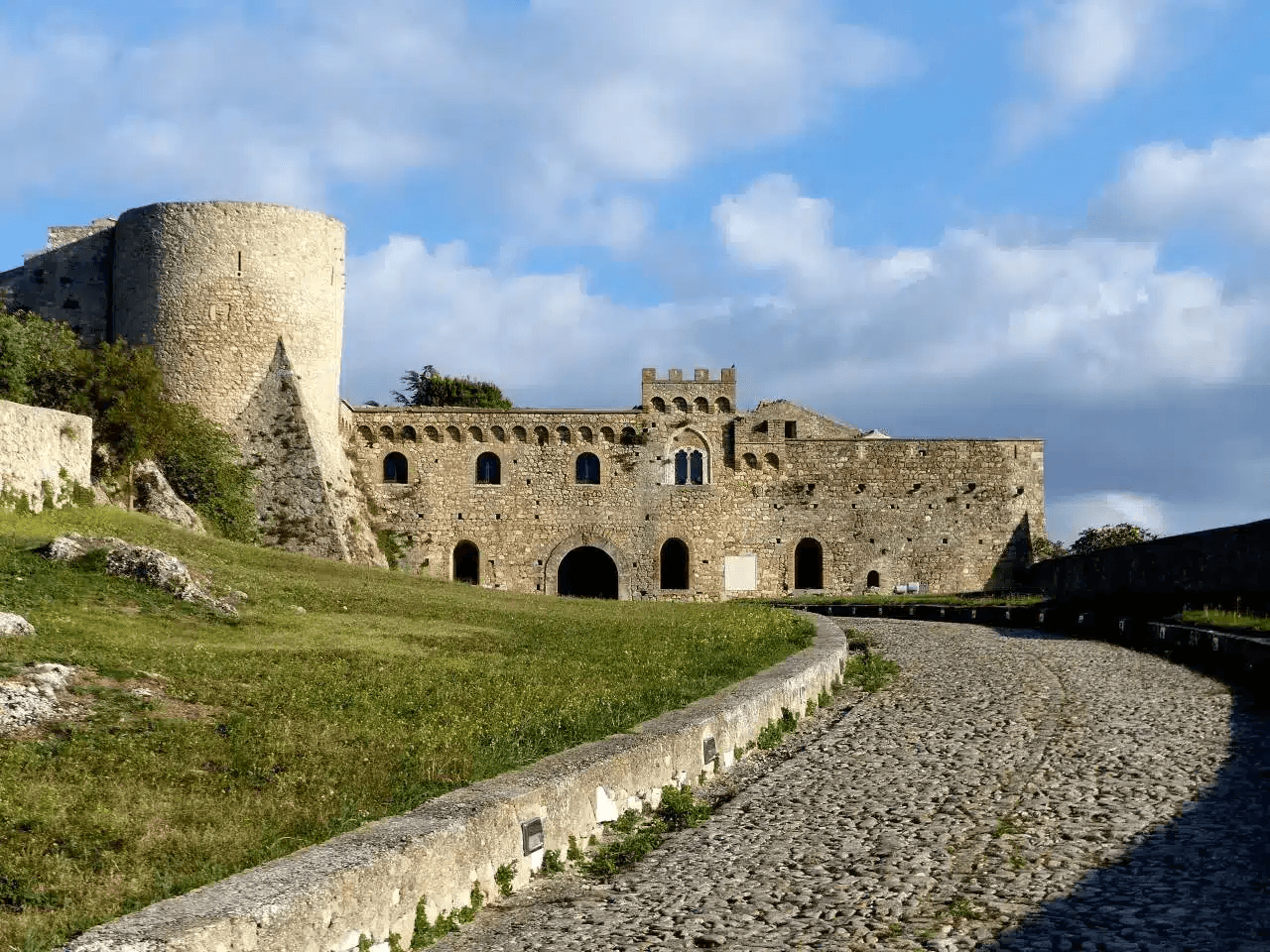
A Daunian Mountains hill town at 646 meters above the Cervaro valley, Roman Vibinum, with a Norman-Swabian castle later turned into a Guevara ducal palace.
Cisternino
Province: Brindisi
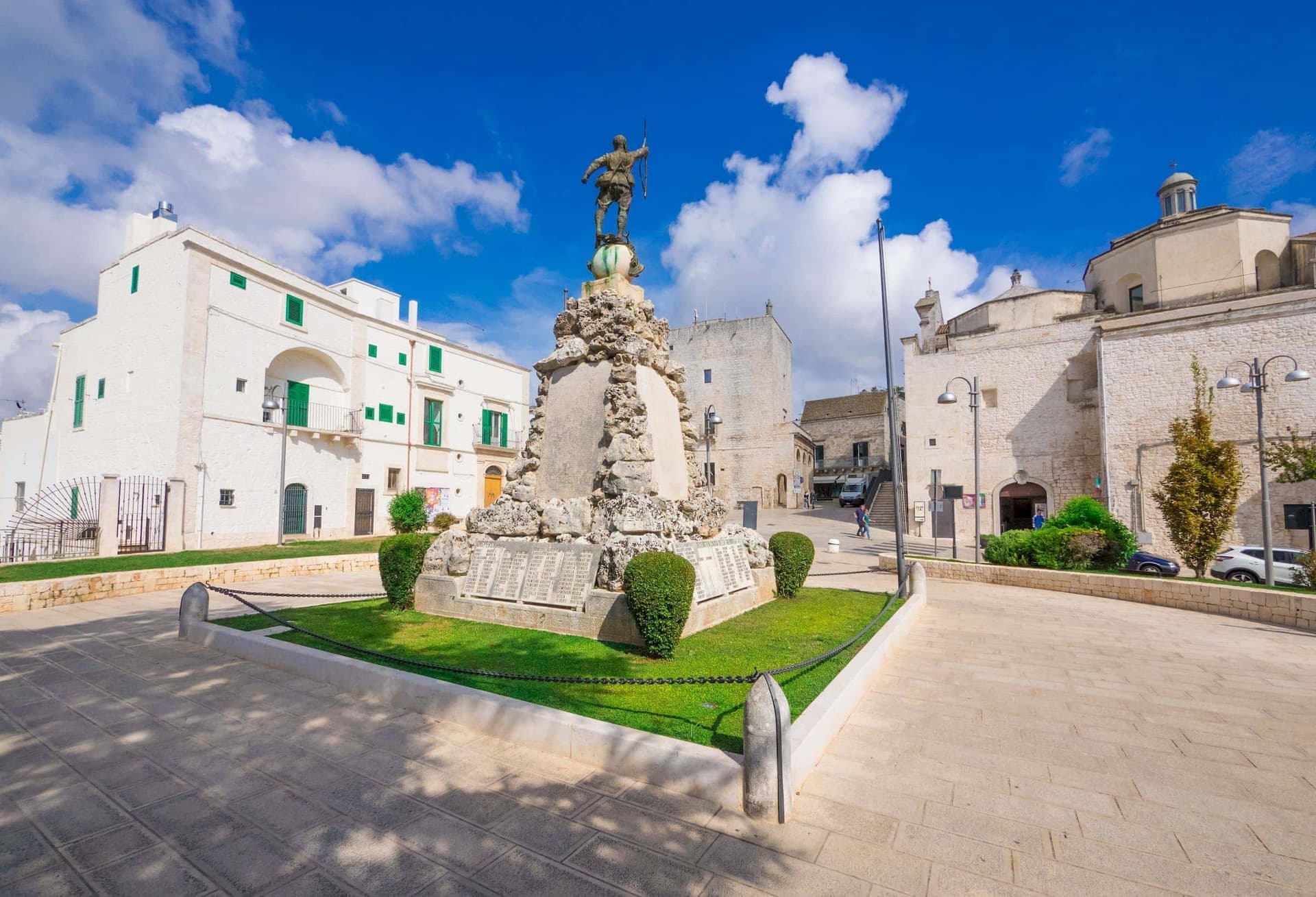
An Itria valley borgo on the southern Murgia at 394 meters, whitewashed, Cittaslow since 2003 and Cittaslow City of the Year in 2014.
Locorotondo
Province: Bari
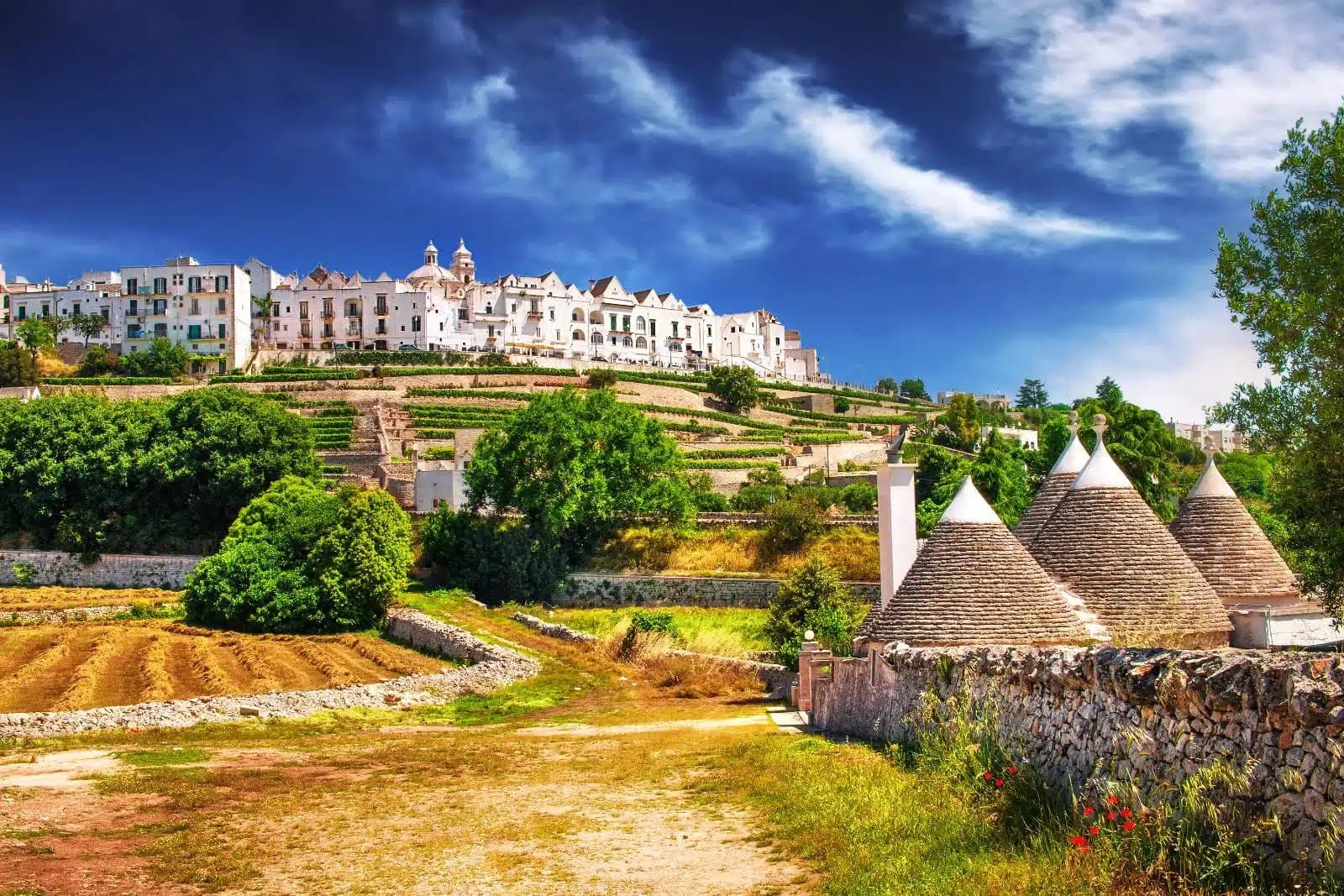
The round white town on the Itria valley ridge at 410 meters, with cummerse roofs the rest of Puglia does not have.
Oria
Province: Brindisi
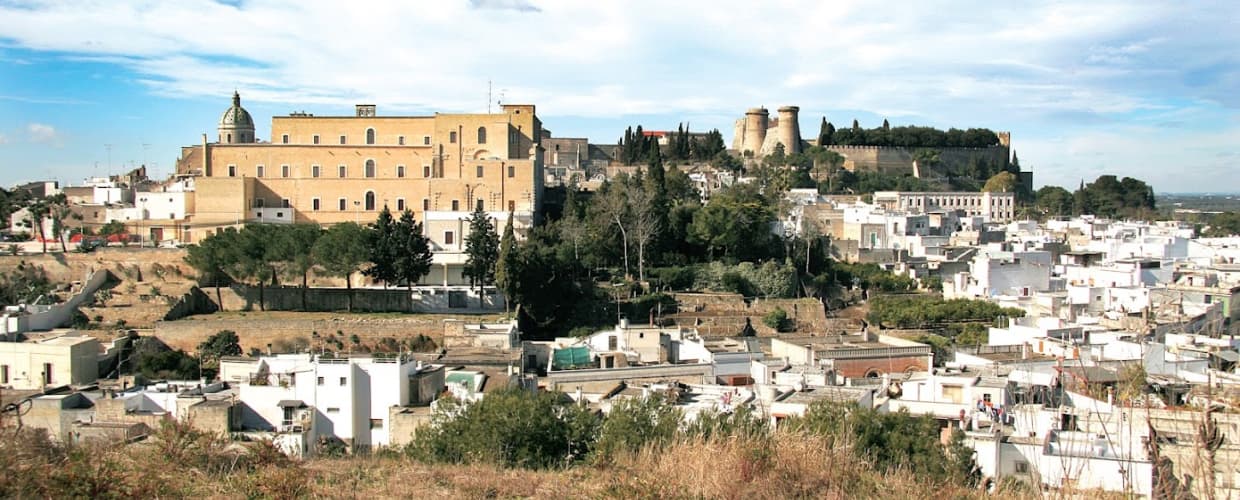
A Messapian acropolis between Taranto and Brindisi crowned by Frederick II's triangular castle, home to one of medieval Europe's oldest Jewish communities.