
Umbria · Perugia
Foligno
A valley town on the Topino, where Dante's Divine Comedy was first printed in 1472.
Known for
DANTE 1472
The first printed edition of the Divina Commedia was produced here on 5-6 April 1472 by Numeister and Angelini, in the Palazzo Orfini.
LA QUINTANA
Jousting tournament first recorded 1448, revived 1946, with ten rioni racing horseback against a wooden Mars to spear three rings.
GENTILE DA FABRIANO
Palazzo Trinci frescoes of 1411-1412 by Gentile and Jacopo Bellini count among the major late-Gothic cycles in central Italy.
When to visit
Best · Apr–Oct
- J
- F
- M
- A
- M
- J
- J
- A
- S
- O
- N
- D
- Best
- Hot or crowded
- Quiet
- Mostly closed
The festa: Feliciano di Foligno, 24 January
Why come
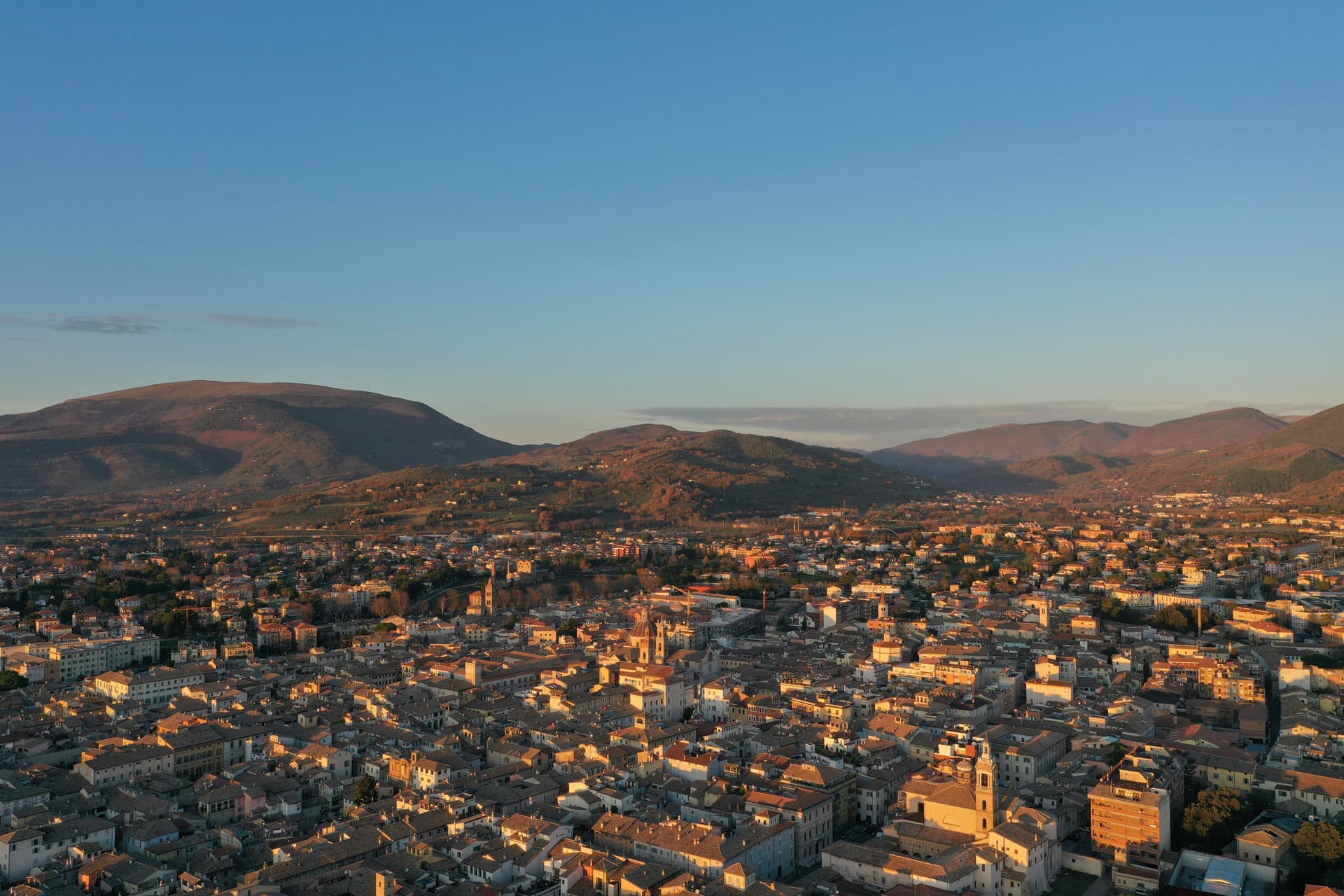
Foligno sits in the Umbrian Valley, on the left bank of the Topino where it leaves the Apennines and meets the plain of the Clitunno. The Romans called it Fulginium; Cicero mentions the prefecture in two surviving fragments. The Trinci family ruled from 1305 to 1439 and built the palace that still carries their name, decorated between 1411 and 1412 by Gentile da Fabriano with the assistance of Jacopo Bellini in late-Gothic frescoes that count among the most important of the early fifteenth century.
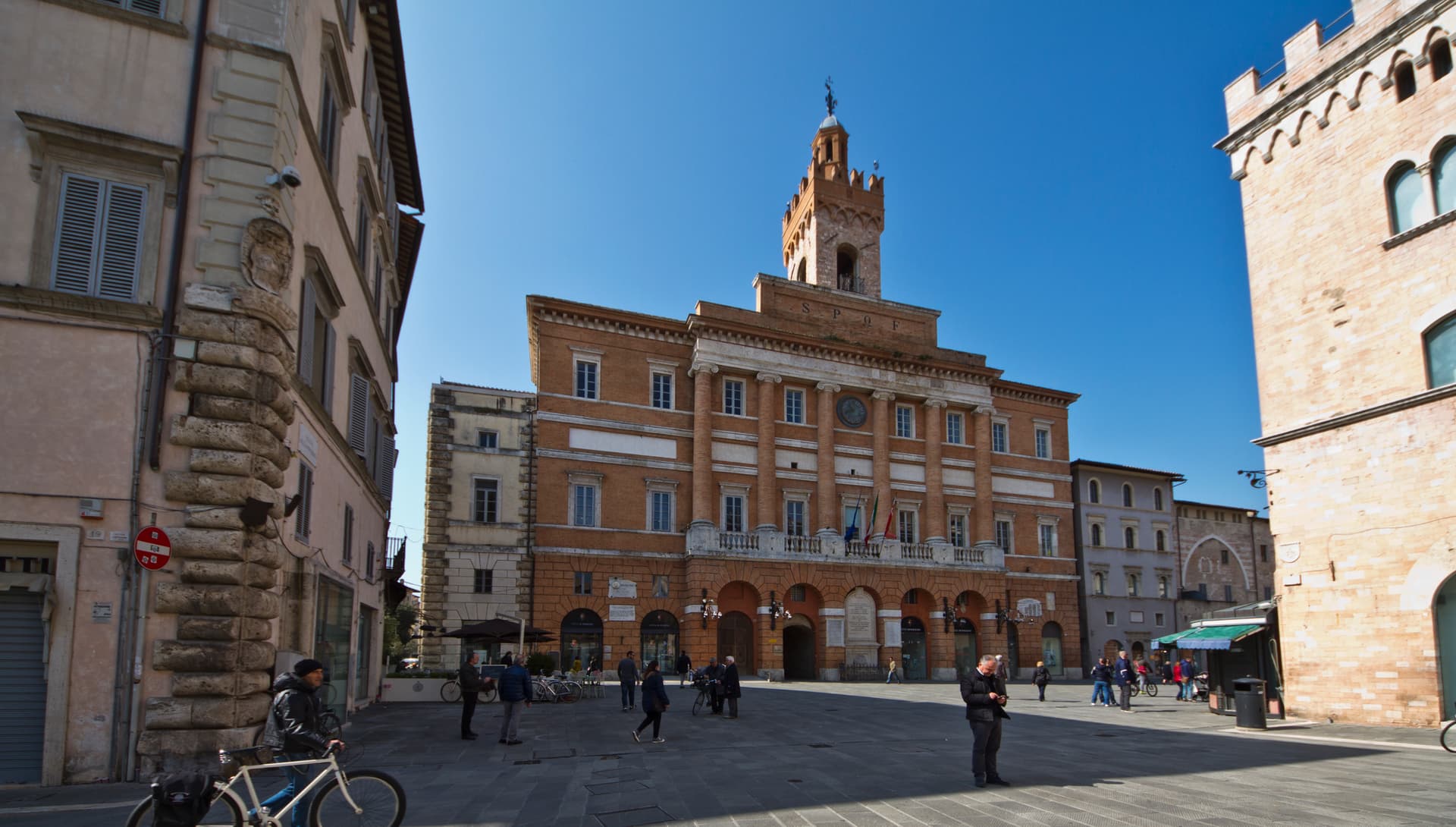
The first printed edition of Dante's Divina Commedia came out of a Foligno workshop in April 1472, printed by Johannes Numeister and Evangelista Angelini. The Giostra della Quintana, a jousting tournament between the ten rioni first recorded in 1448 and revived in 1946, fills the Piazza della Repubblica twice a year in June and September. The town is also the seat of the Cathedral of San Feliciano, built between 1133 and 1201 over the tomb of the city's patron, buried here in 251 AD.
The Sunday letter
We haven’t written Foligno’s letter yet.
One town every Sunday, with the photo, the food, the festa. Be there when this one comes up. Free, by Peter & Sophia from Pietrasanta.
By subscribing you agree to Substack’s Terms of Use, our Privacy Policy and our Information collection notice.
What to see
Palazzo Trinci
Seat of the Trinci signoria 1305-1439, frescoed 1411-1412 by Gentile da Fabriano and Jacopo Bellini, now holding the Pinacoteca and archaeological museum.
Cattedrale di San Feliciano
Romanesque cathedral 1133-1201 on Piazza della Repubblica, built over the tomb of the bishop-martyr buried here in 251 AD.
Basilica di Santa Maria Infraportas
Oldest church in the city on the site of an 8th-century chapel, frescoes by Nelli, Ugolino di Gisberto, Alunno and Mezzastris.
Abbazia di Sassovivo
Benedictine abbey founded 1084 in the hills above town, with a Romanesque cloister of 128 columns completed in 1229.
Giostra della Quintana
Jousting tournament between the ten rioni, first recorded 1448 and revived 1946, contested twice a year in June and September.
Calamita Cosmica
Twenty-four meter Gino De Dominicis skeleton sculpture installed in the deconsecrated Chiesa della Santissima Trinità in Annunziata.
The slow-trip planner
Building a trip? Find where Foligno fits in a slow Italy circuit.
Answer five questions. We will shape a geographically coherent slow trip from the 1,000 Italian towns most travelers skip. Yours to save and share.
We recommend
Where to eat and stay
Not our picks, but places the guides put their name to — a Michelin star, a Gambero Rosso fork, a Slow Food snail, a Michelin Key for the hotels. Worth a table, a counter, or a night when you pass through.
UneRistorante
Two Gambero Rosso forks (86/100) for Une, and a place in L'Espresso's Top 300.
CucinaaBistrot
Cucinaa holds one Gambero Rosso table.
GUS Bottega AlimentareBistrot
GUS Bottega Alimentare carries a Gambero Rosso listing.
Osteria BacerottiTrattoria
Osteria Bacerotti has one Gambero Rosso prawn to its name.
Osteria Dodici RondiniBistrot
Osteria Dodici Rondini holds two Gambero Rosso tables.
Living here
- Population 55,226
- A local hubi
- Pharmacy in town
- High school within a 30-minute drive
- Train station in the comune
- Nearest airport Ancona / Pescara, 1 h 40 min drive
- Regional capital Perugia, 39 min drive
Tags & datadesignations · numbers · sources
The numbers
- Elevation: 235 m
- Population: 55,226
- Surface area: 264.67 km²
These figures were compiled from public directories — ISTAT, OpenStreetMap, Wikidata — and from the official listings of the guides named on this page. Town details change; verify with official sources before you travel.
Close by
More towns near Foligno
Trevi
Province: Perugia
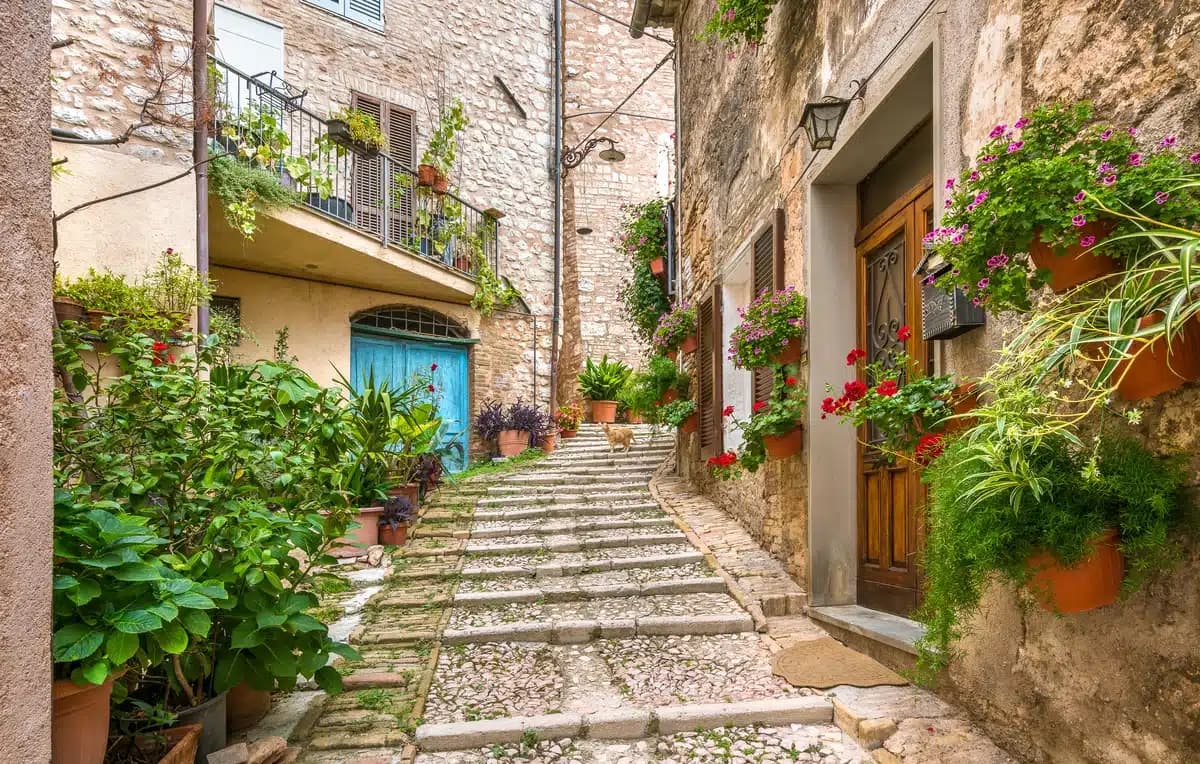
A walled town at 412 meters above the Spoleto valley, ringed by 200,000 olive trees that make it the Umbrian capital of olive oil.
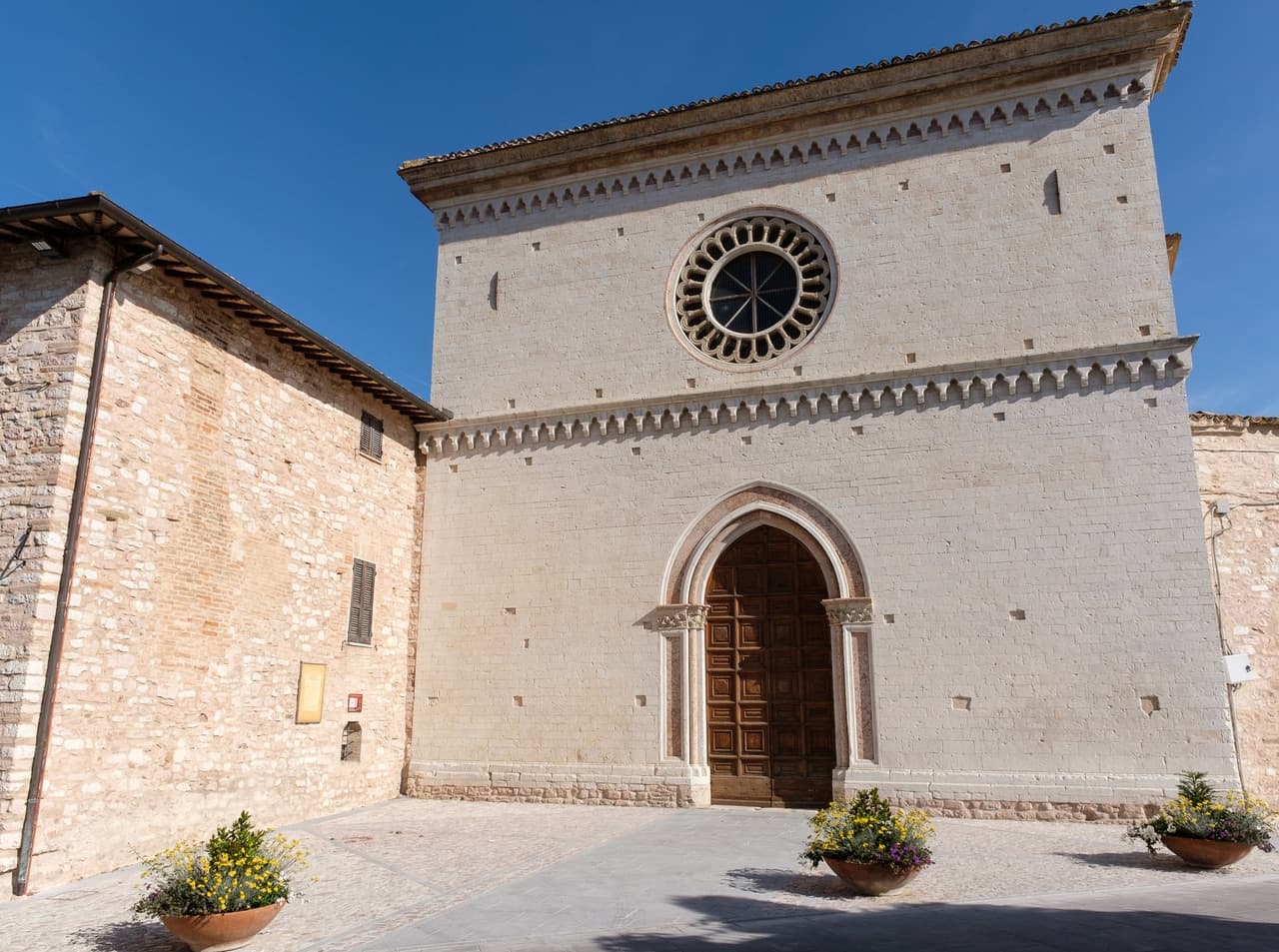
Spello
Province: Perugia
Augustan Hispellum at 280 meters on Monte Subasio, where streets carry flower petals each Corpus Domini and Pinturicchio frescoed the Baglioni Chapel in 1501.
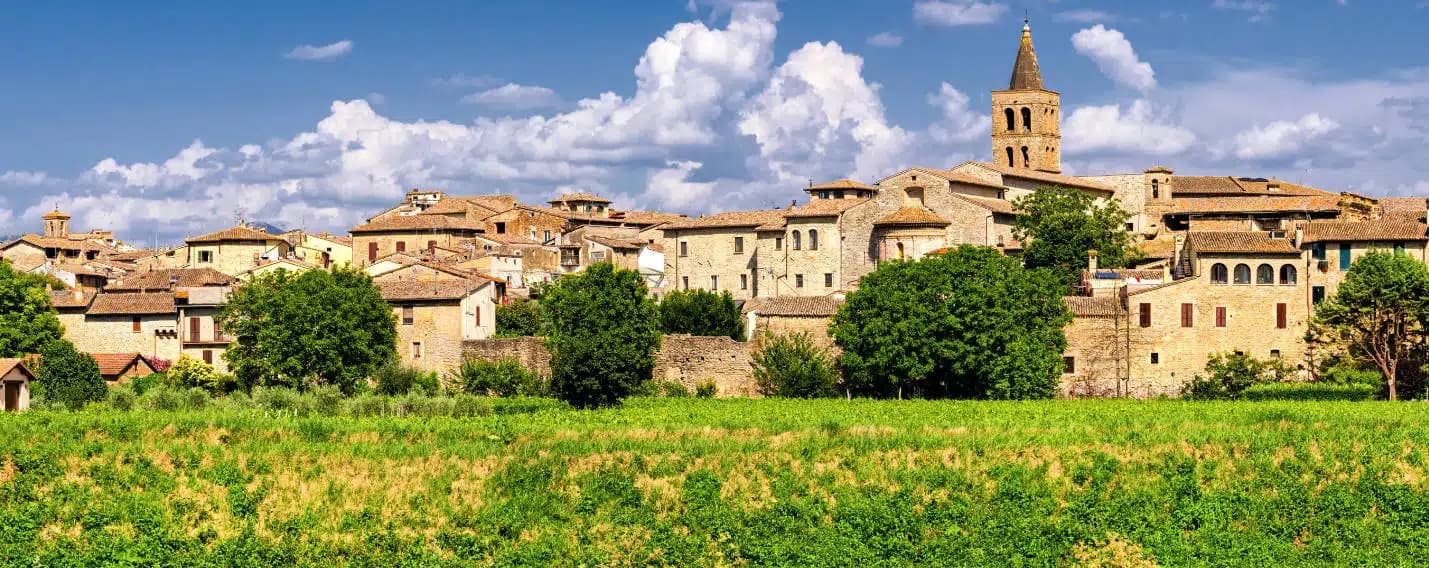
Bevagna
Province: Perugia
Roman Mevania on the Umbrian plain at 225 meters, four medieval quarters that compete every June in a reconstructed market of the 13th century.
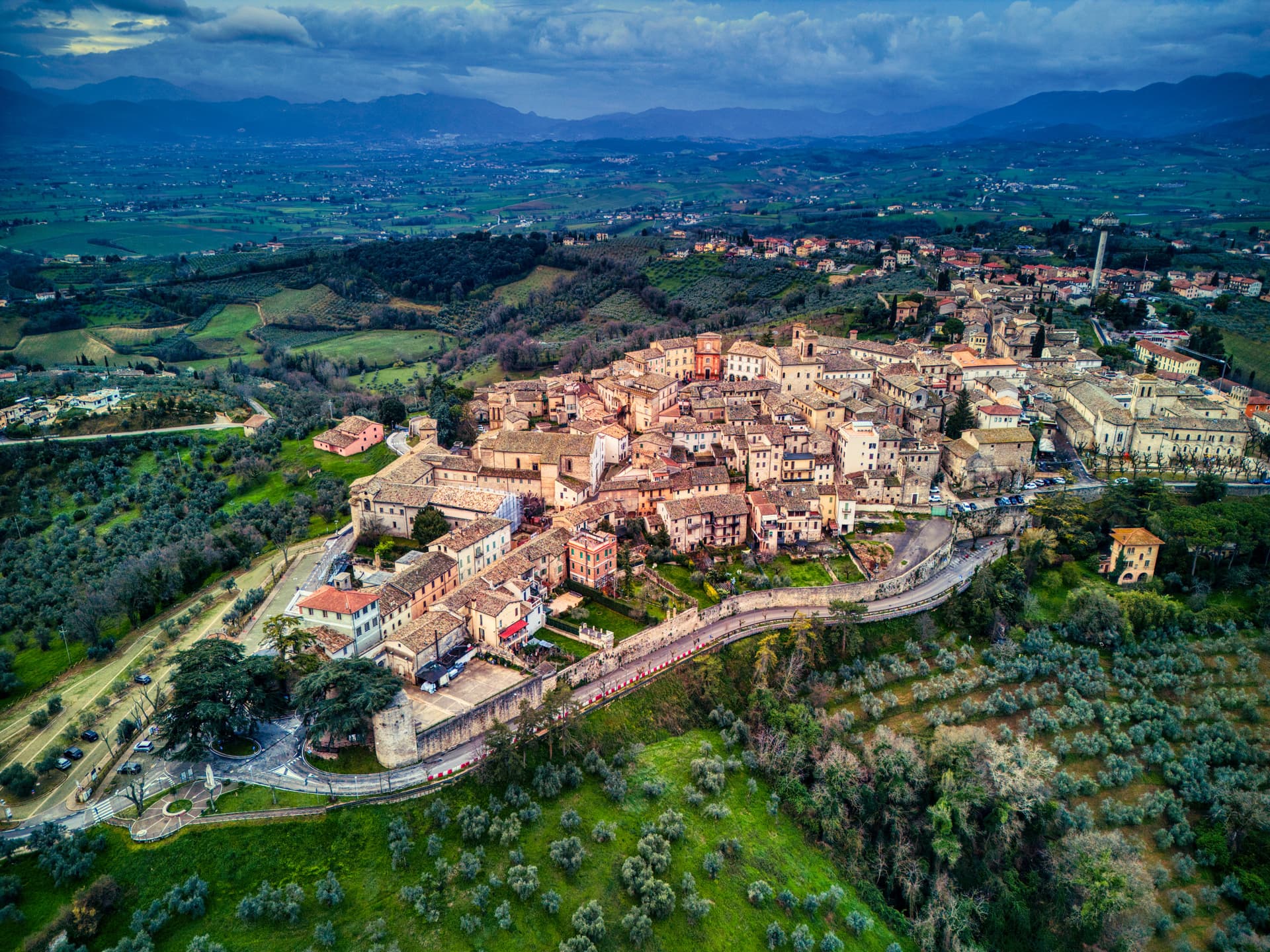
Montefalco
Province: Perugia
The hilltop wine capital of Umbria at 472 meters, where Sagrantino is grown almost nowhere else and Benozzo Gozzoli painted Francis in 1452.
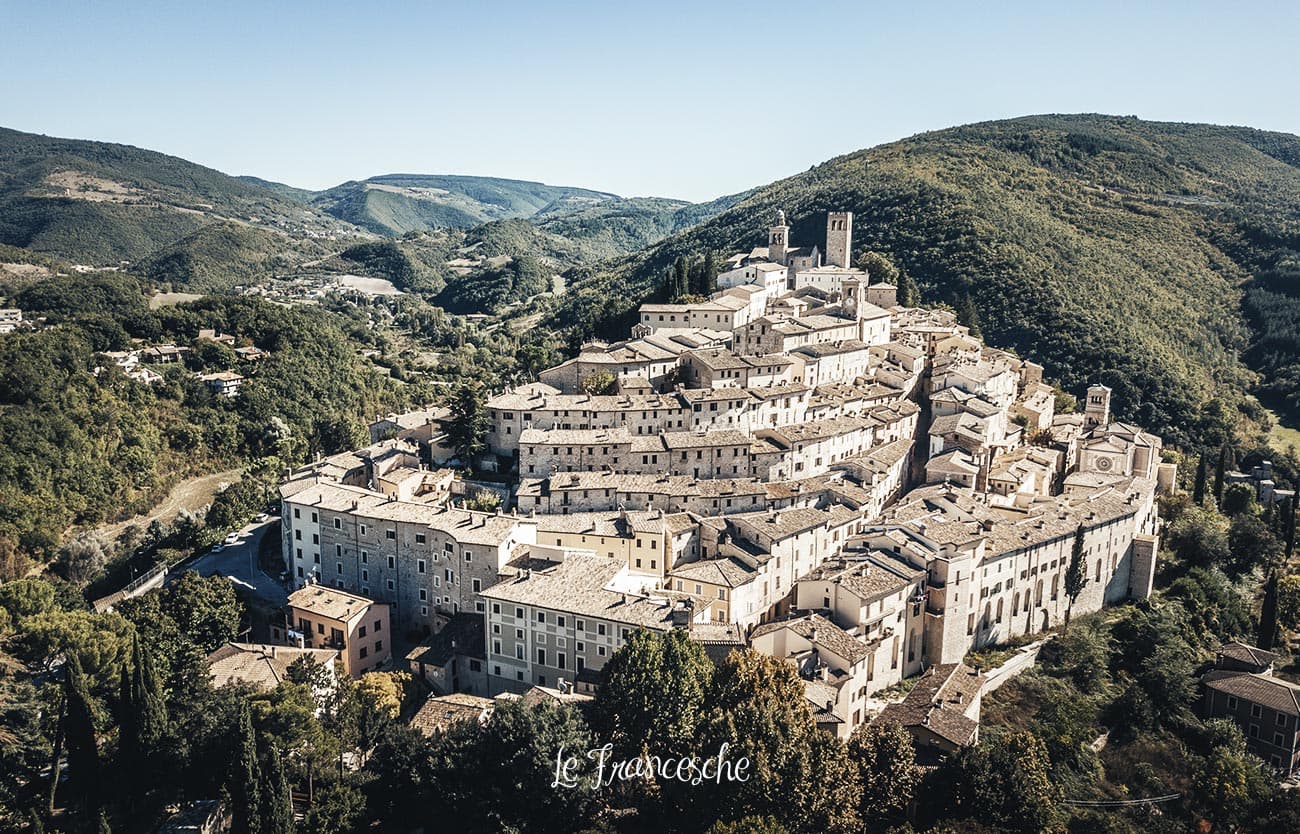
Nocera Umbra
Province: Perugia
A hill town at 520 meters on the Apennine slope, leveled by the 1997 earthquake and rebuilt, with mineral springs flowing since the sixteenth century.
🌳 Parco Regionale
More Parco Regionale towns in Umbria
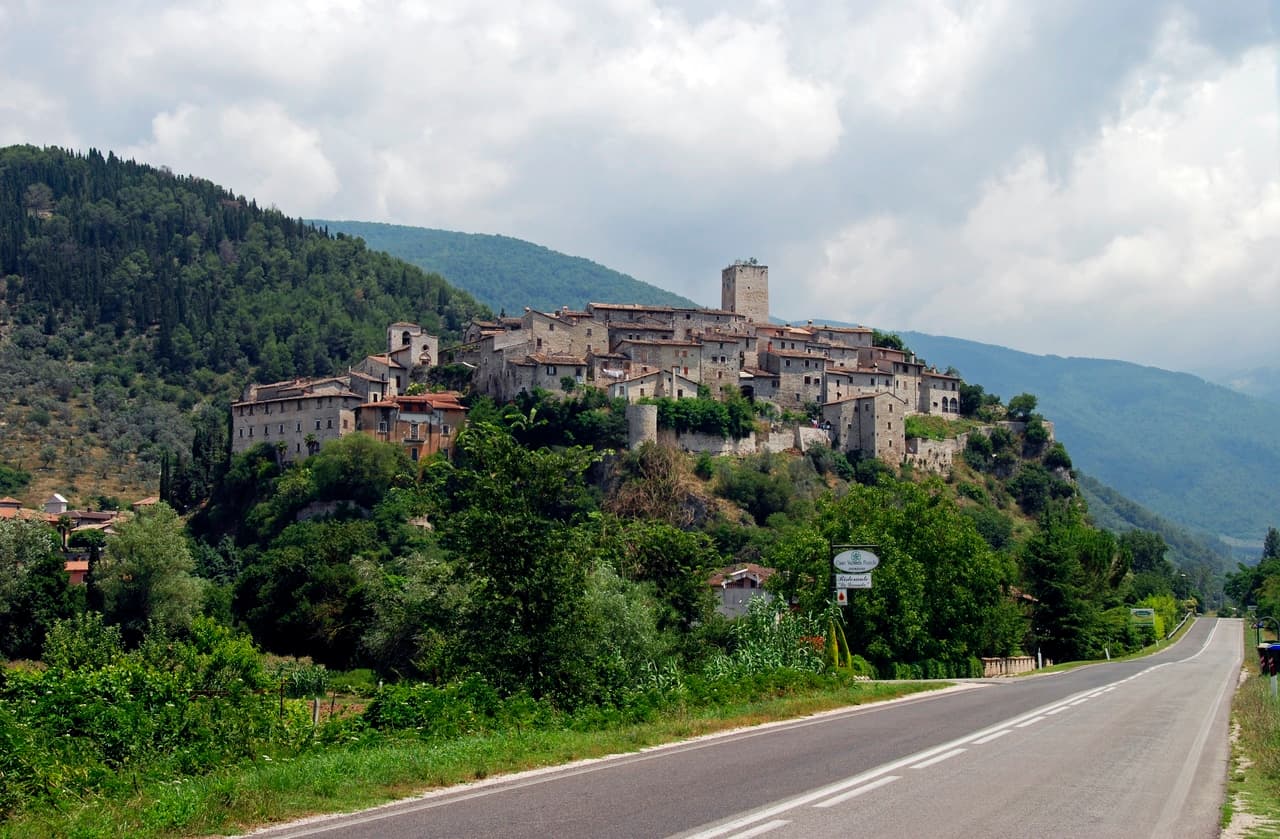
Arrone
Province: Terni
Medieval castle village on the left bank of the Nera at 243 meters, upstream from the largest man-made waterfall in the world.
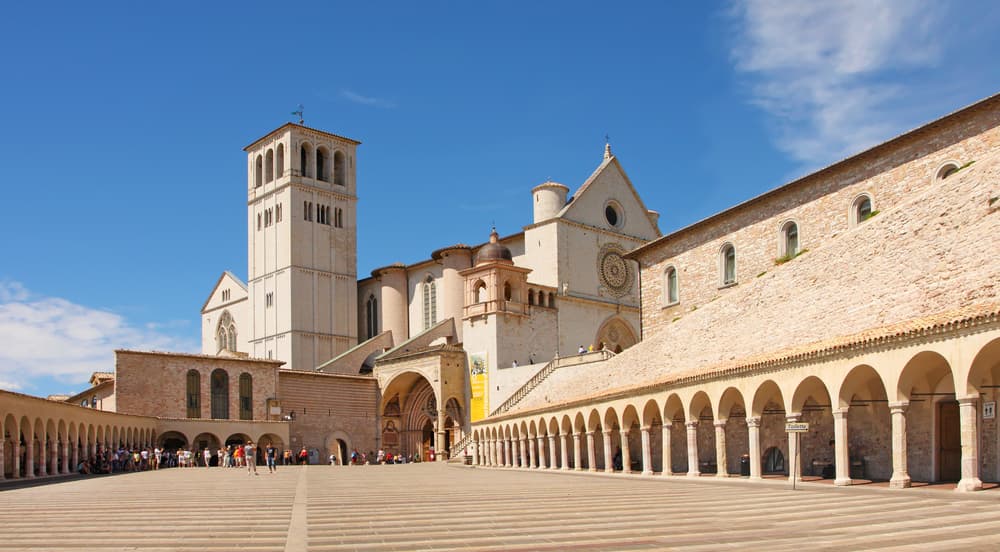
Assisi
Province: Perugia
A pink limestone town at 424 meters on the western flank of Monte Subasio, the birthplace of Francis and a UNESCO site since 2000.
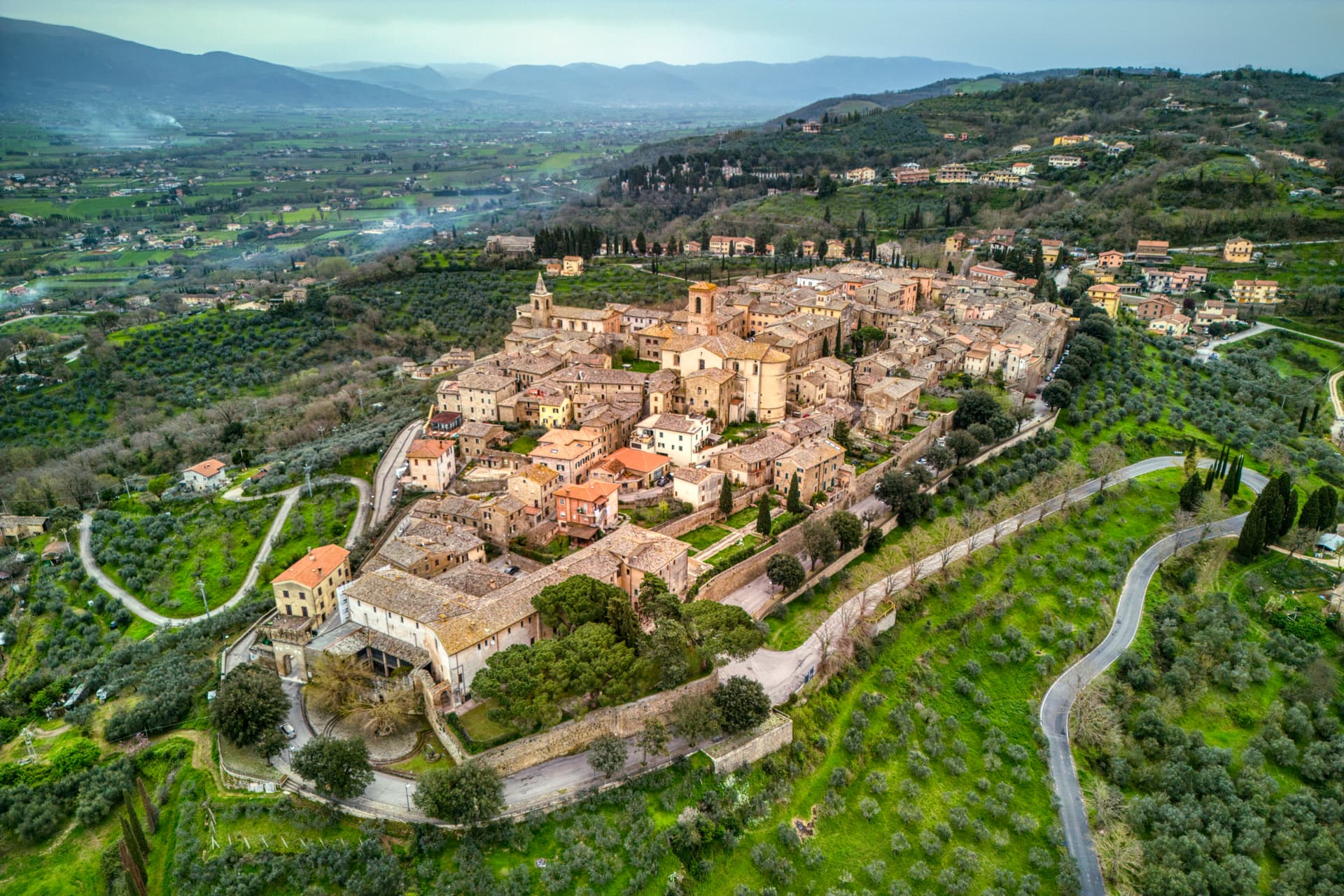
Bettona
Province: Perugia
A hill town at 353 meters between the Topino and Chiascio rivers, the only Etruscan settlement ever built east of the Tiber.
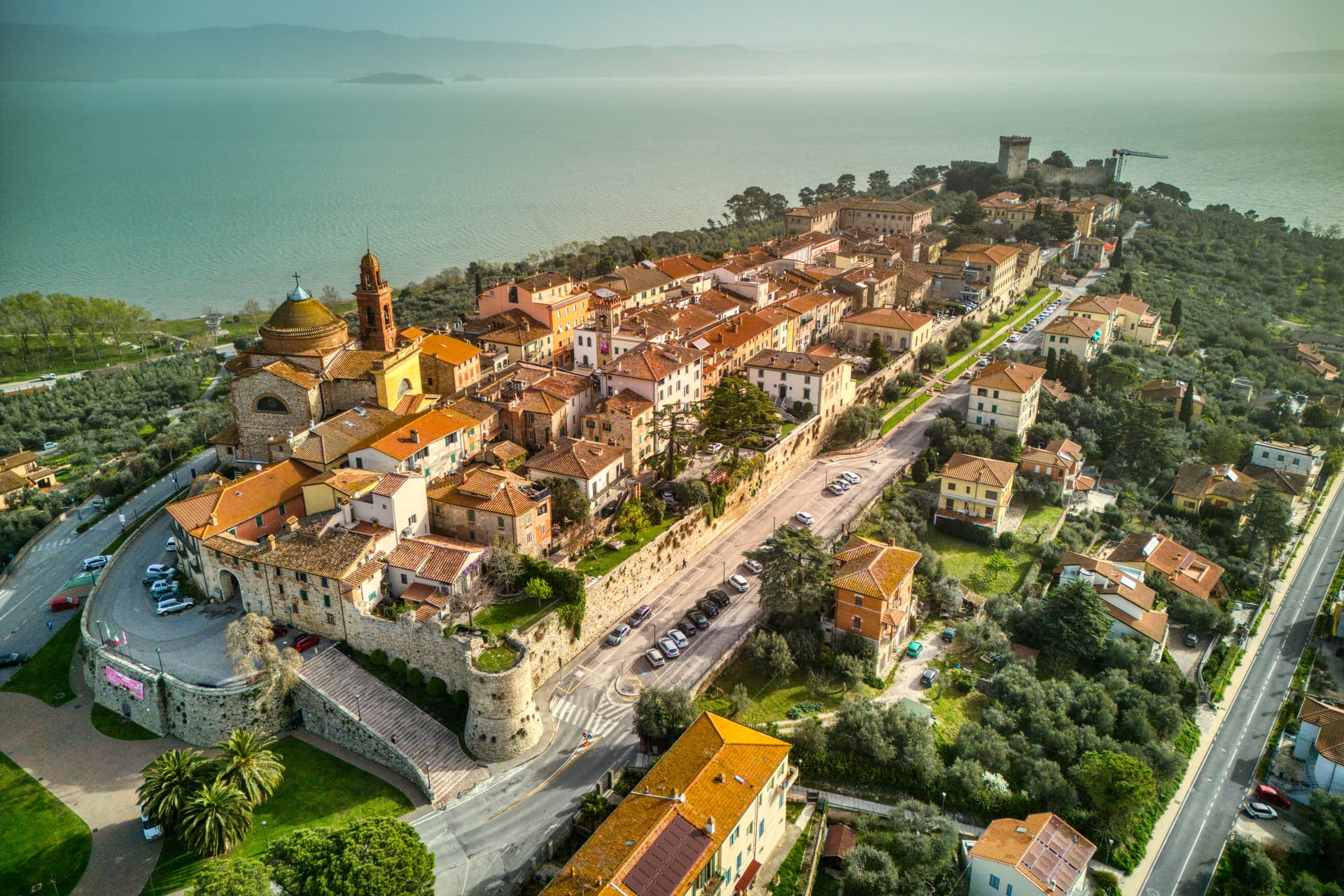
Castiglione del Lago
Province: Perugia
Trasimeno's western promontory, once the lake's fourth island, fortified by Federico II in 1247 and frescoed by Pomarancio for the Corgna marquises.
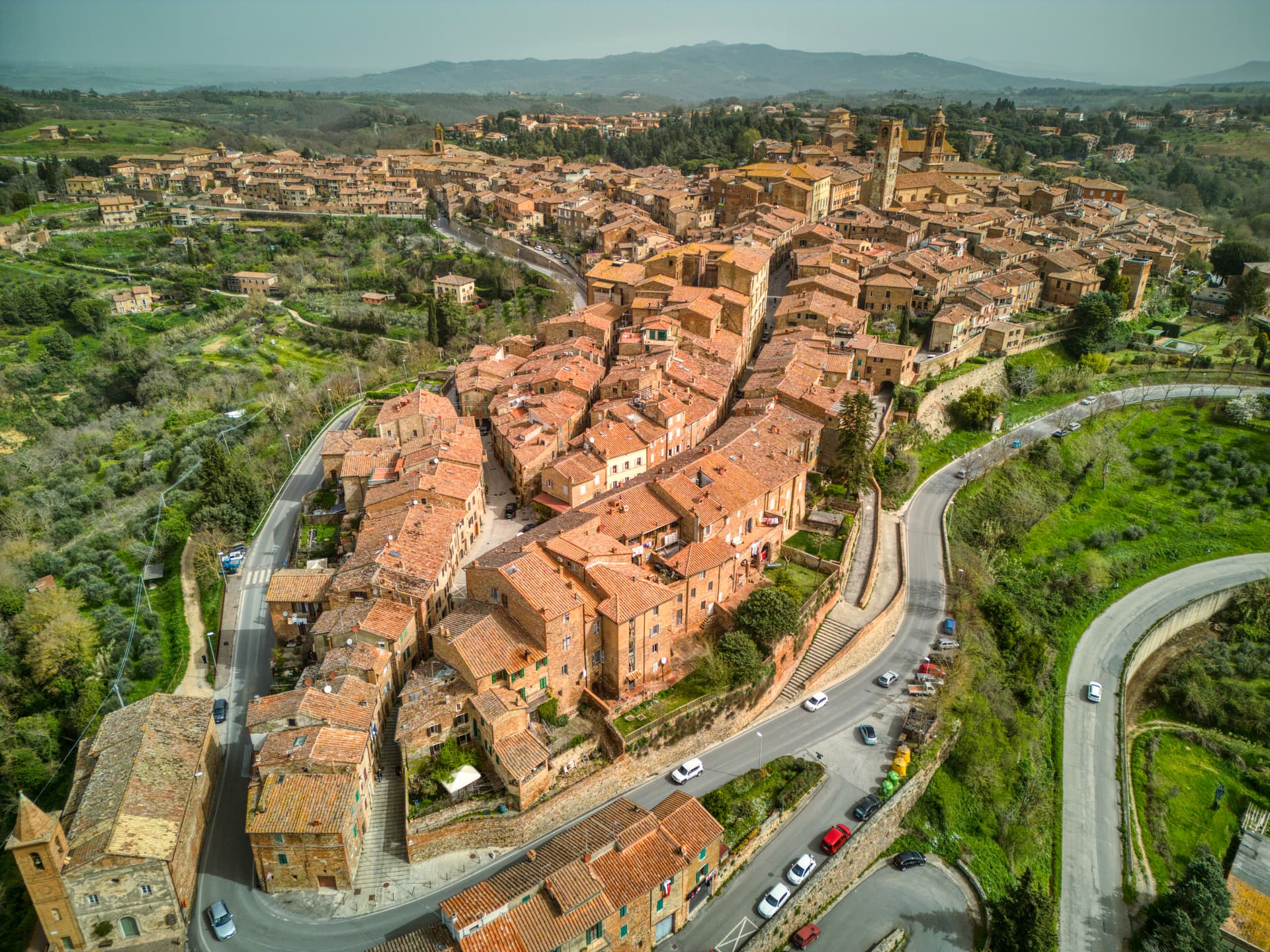
Città della Pieve
Province: Perugia
A red-brick hill town at 508 meters above the Valdichiana, the birthplace of Perugino and the home of Italy's narrowest alley.