

Umbria · Perugia
Bevagna
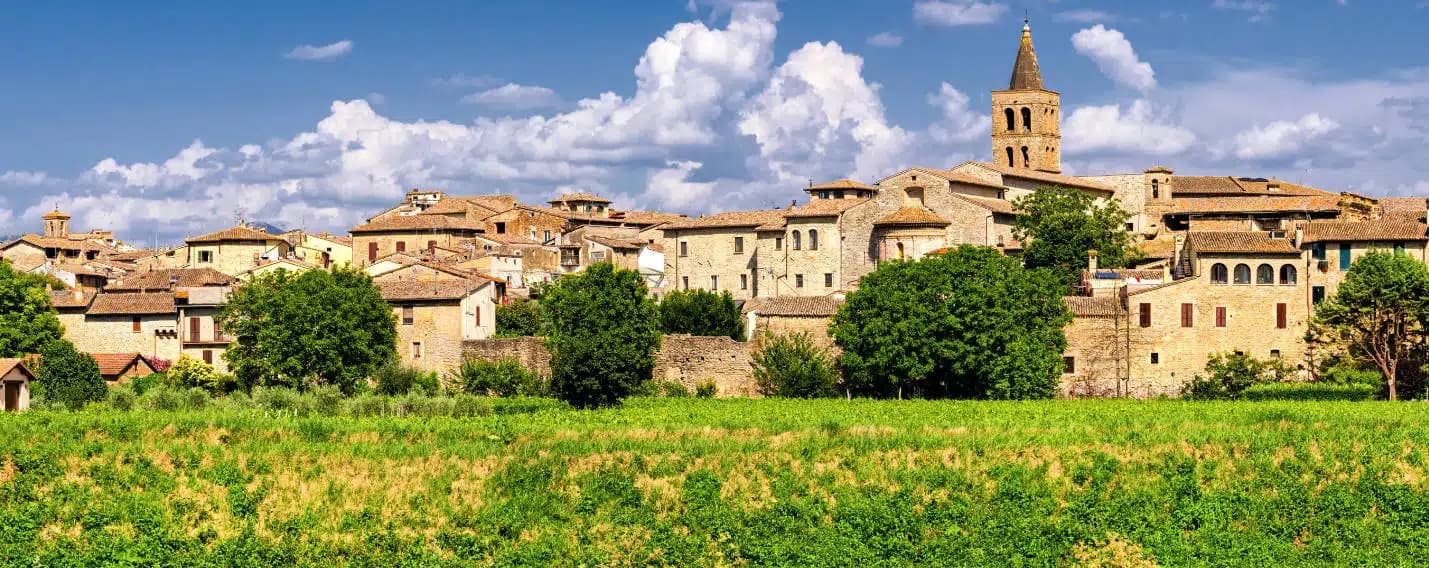
Roman Mevania on the Umbrian plain, four medieval quarters that compete every June in a reconstructed market of the 13th century.
Known for
MERCATO DELLE GAITE
Each June the four quarters of San Giorgio, San Giovanni, San Pietro and Santa Maria reconstruct the daily life of Bevagna between 1250 and 1350.
ROMAN MOSAIC
Black and white frigidarium mosaic of the 2nd century AD, twelve by seven meters, the most intact Roman work in Umbria.
PIAZZA SILVESTRI
Two Romanesque churches face each other across the medieval civic square, both signed by the builder Binello in the late 12th century.
When to visit
Best · Apr–Oct
- J
- F
- M
- A
- M
- J
- J
- A
- S
- O
- N
- D
- Best
- Hot or crowded
- Quiet
- Mostly closed
Why come
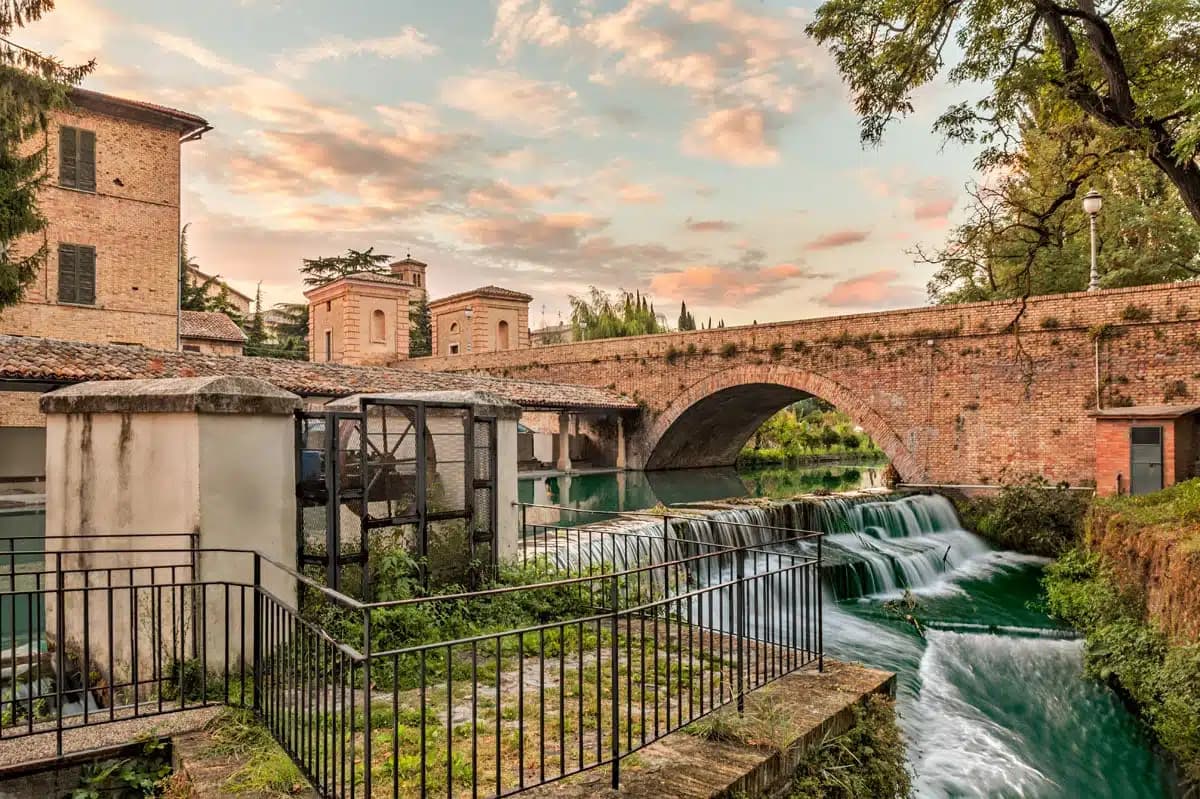
Bevagna sits on the floor of the Umbrian valley, where the Clitunno meets the Timia. Ancient Mevania, the name means she who stands in the middle, was a Roman mansio on the Via Flaminia, listed in the Antonine Itinerary. A black-and-white mosaic of the 2nd century AD survives almost intact in the frigidarium of the Roman baths, twelve meters by seven, octopuses and dolphins in the center, tritons and sea-horses on the short sides.
Piazza Silvestri at the heart of the centro storico holds two Romanesque churches that face each other at odd angles, San Michele Arcangelo and San Silvestro, built within years of each other in the late 12th century. The Mercato delle Gaite each June turns the town into the year 1300 for ten days, four quarters competing on medieval trades and tavern menus, no anachronisms allowed. The Sagrantino slopes of Montefalco are nine kilometers up the road.
The Sunday letter
We haven’t written Bevagna’s letter yet.
One town every Sunday, with the photo, the food, the festa. Be there when this one comes up. Free, by Peter & Sophia from Pietrasanta.
By subscribing you agree to Substack’s Terms of Use, our Privacy Policy and our Information collection notice.
What to see
Piazza Silvestri
Twelfth-century civic square ringed by the Palazzo dei Consoli, the churches of San Silvestro and San Michele, and the fountain of 1896.
Chiesa di San Michele Arcangelo
Romanesque collegiate church built by Binello and Rodolfo at the end of the 12th century, on the main square.
Chiesa di San Silvestro
Romanesque parish church across the piazza, signed and dated 1195 by Binello, the same builder as San Michele.
Mosaico Romano delle Terme
Black and white floor mosaic of the frigidarium, 2nd century AD, twelve by seven meters, marine creatures arranged symmetrically across the bath room.
Teatro Francesco Torti
Nineteenth-century neoclassical theater inside the Palazzo dei Consoli, 350 seats, in continuous use for prose and music seasons.
Roman temple ruins
Remains of a Roman temple and the cavea of the theater are still visible in the upper part of the centro storico, near the medieval walls.
The slow-trip planner
Building a trip? Find where Bevagna fits in a slow Italy circuit.
Answer five questions. We will shape a geographically coherent slow trip from the 1,000 Italian towns most travelers skip. Yours to save and share.
We recommend
Where to eat and stay
Not our picks, but places the guides put their name to — a Michelin star, a Gambero Rosso fork, a Slow Food snail, a Michelin Key for the hotels. Worth a table, a counter, or a night when you pass through.
Ottavi MareRistorante
Ottavi Mare carries two Gambero Rosso forks (82/100), a place in L'Espresso's Top 300, plus a spot in the Michelin Guide.
SerpilloRistorante
Serpillo has a spot in the Michelin Guide to its name.
Living here
- Population 4,797
- Commuter belti
- Pharmacy in town
- High school within a 30-minute drive
- Nearest airport Ancona / Pescara, 1 h 48 min drive
- Regional capital Perugia, 37 min drive
Tags & datadesignations · numbers · sources
Recognised as
The numbers
- Elevation: 225 m
- Population: 4,797
- Surface area: 56.22 km²
These figures were compiled from public directories — ISTAT, OpenStreetMap, Wikidata — and from the official listings of the guides named on this page. Town details change; verify with official sources before you travel.
Close by
More towns near Bevagna
Montefalco
Province: Perugia
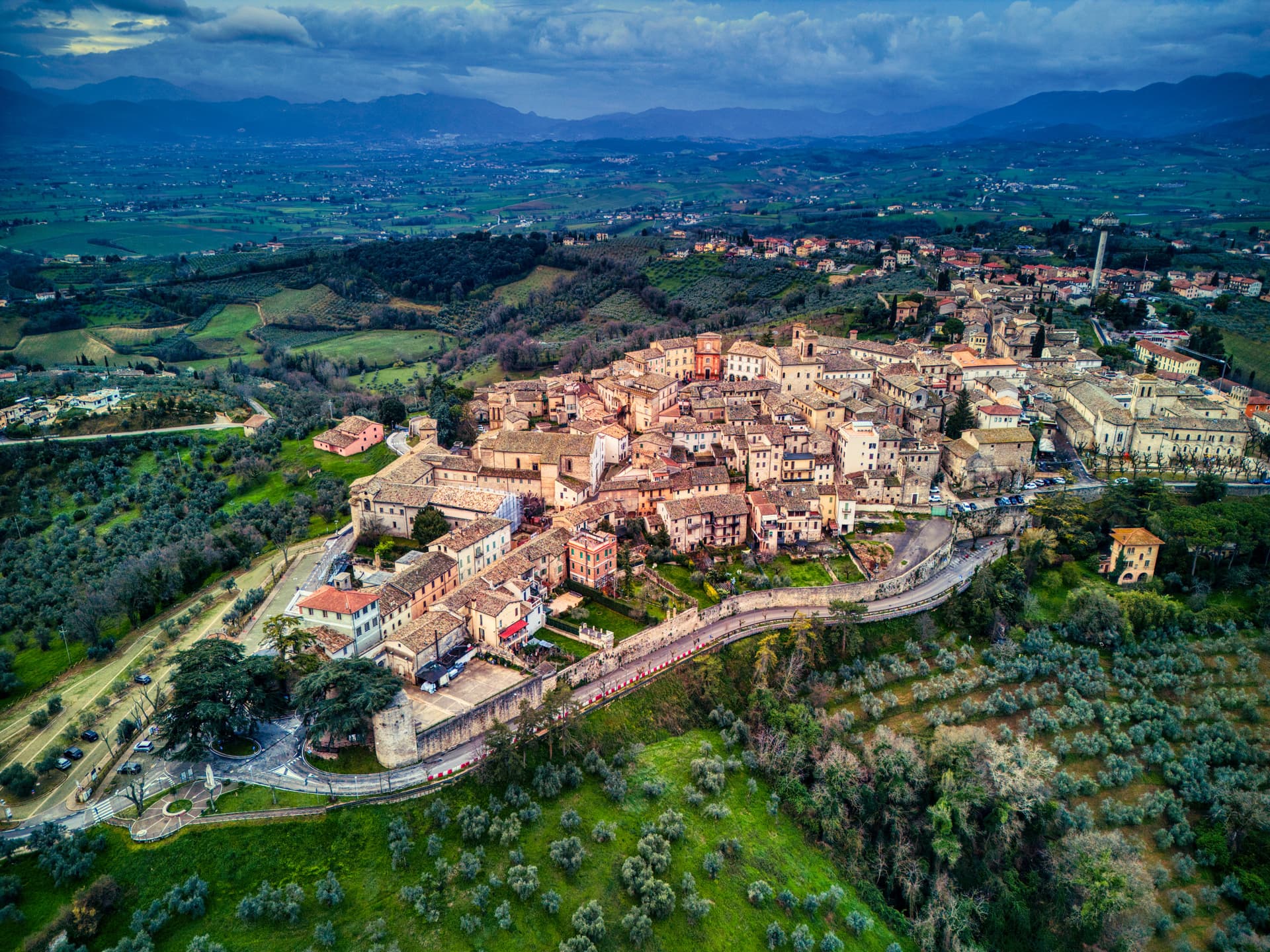
The hilltop wine capital of Umbria at 472 meters, where Sagrantino is grown almost nowhere else and Benozzo Gozzoli painted Francis in 1452.
Bettona
Province: Perugia
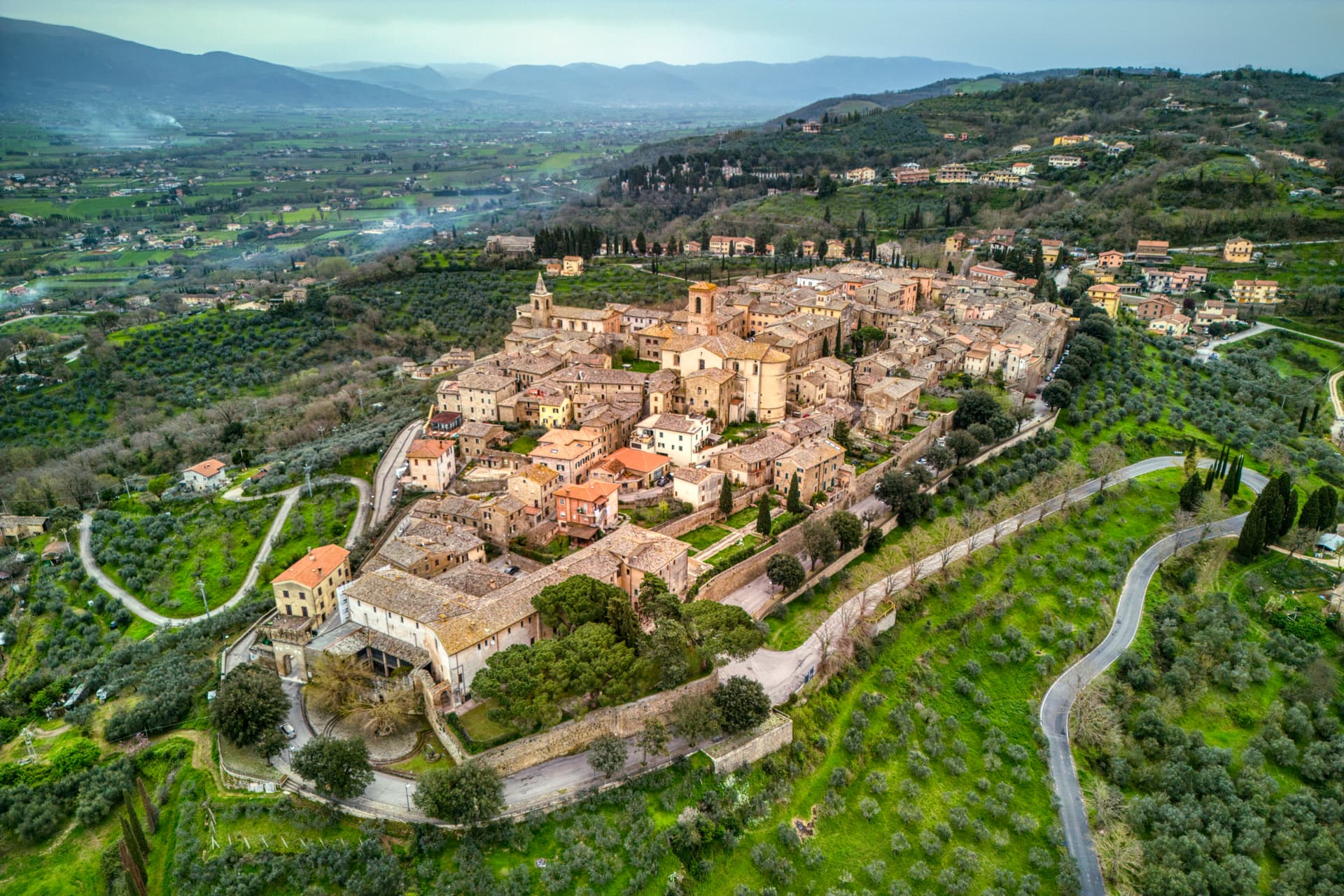
A hill town at 353 meters between the Topino and Chiascio rivers, the only Etruscan settlement ever built east of the Tiber.
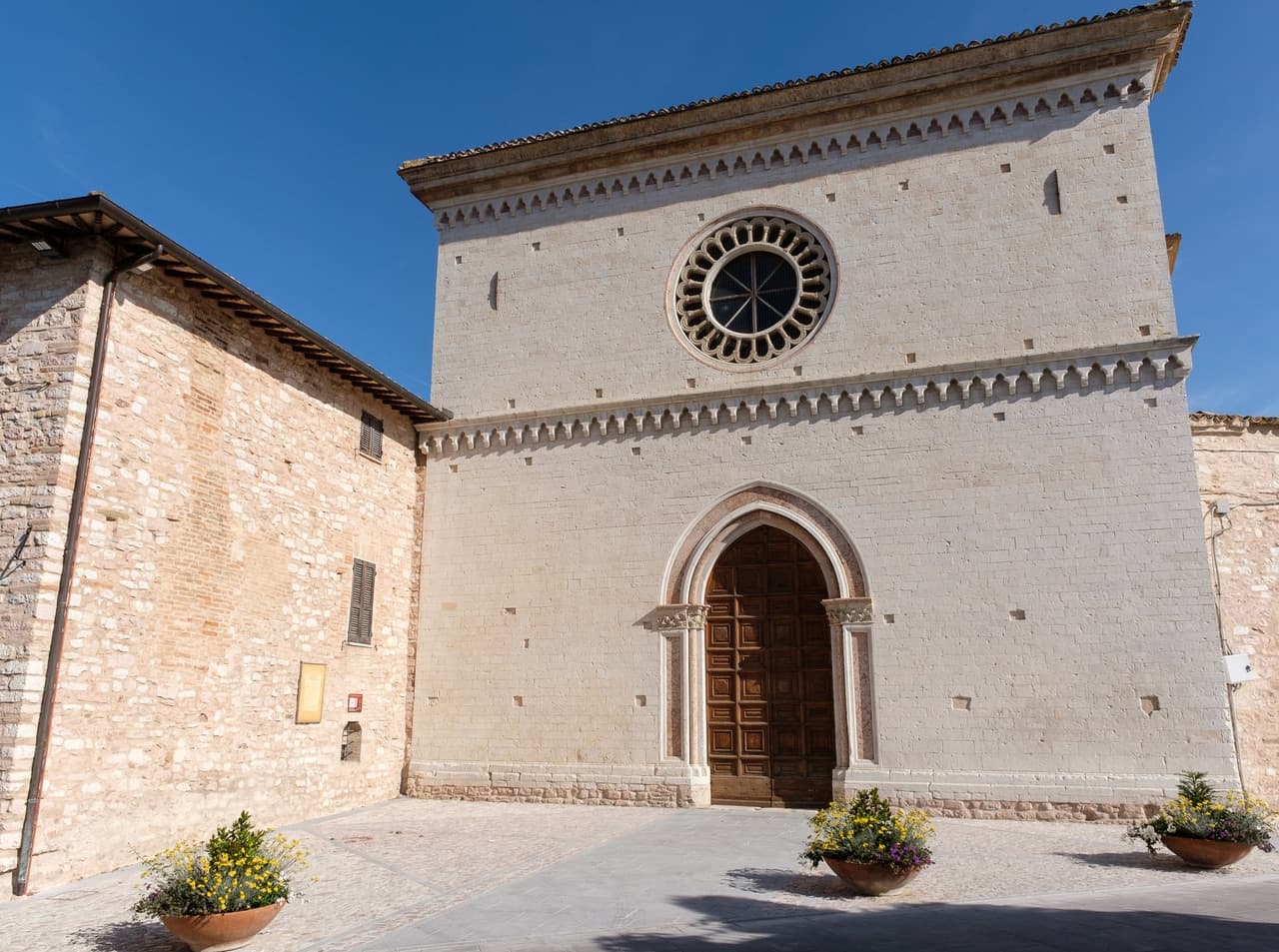
Spello
Province: Perugia
Augustan Hispellum at 280 meters on Monte Subasio, where streets carry flower petals each Corpus Domini and Pinturicchio frescoed the Baglioni Chapel in 1501.
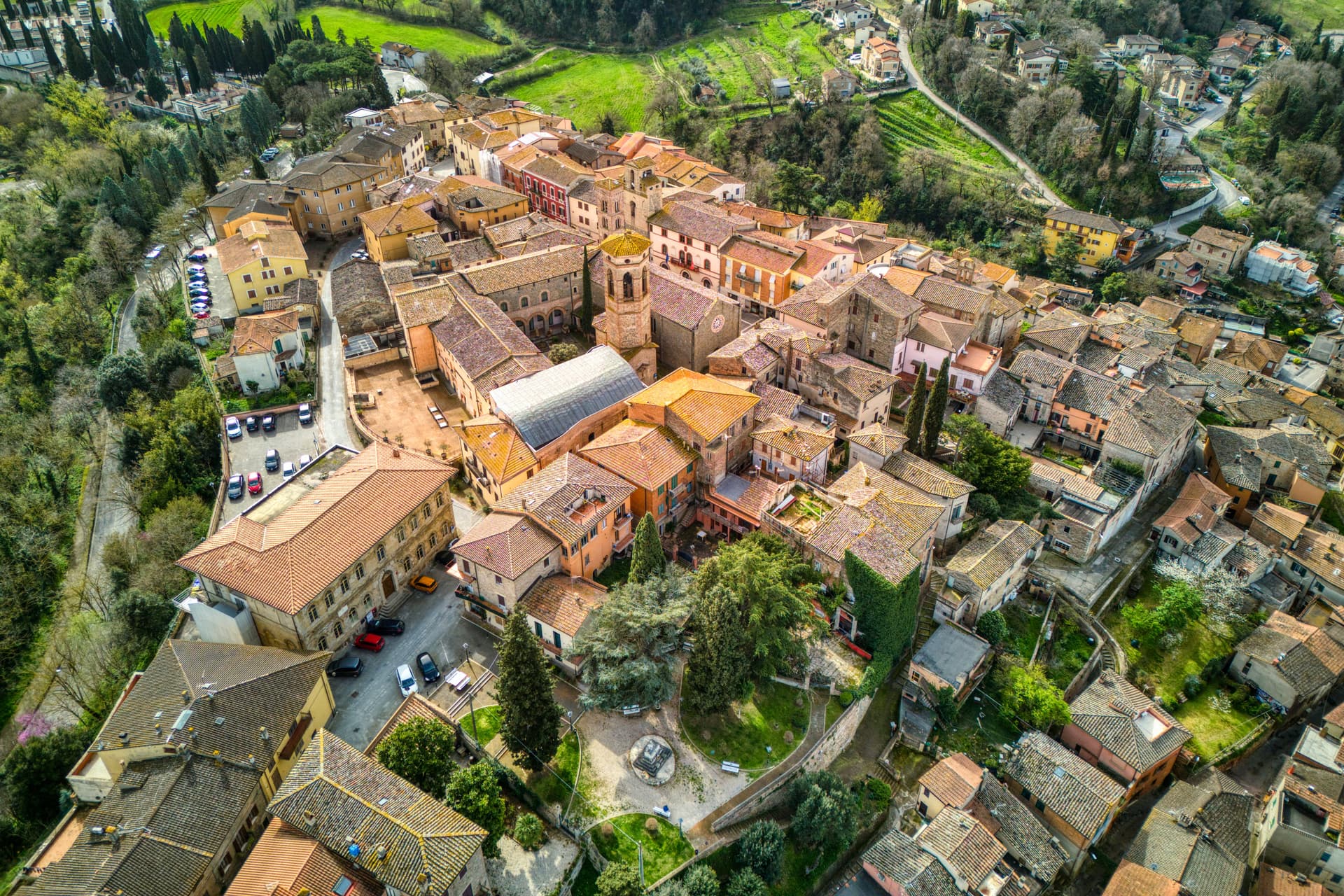
Deruta
Province: Perugia
A hill town at 218 meters on the left bank of the Tiber, the maiolica capital of central Italy since the late thirteenth century.
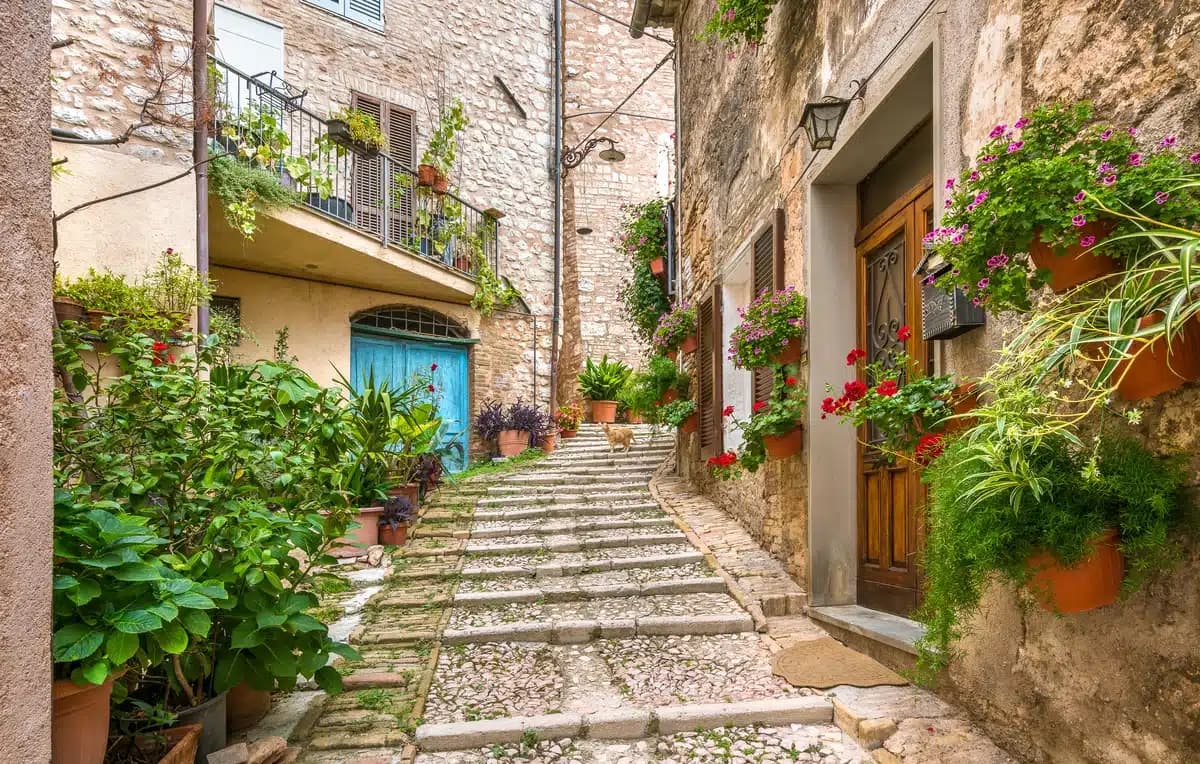
Trevi
Province: Perugia
A walled town at 412 meters above the Spoleto valley, ringed by 200,000 olive trees that make it the Umbrian capital of olive oil.
🎨 Borghi più belli d'Italia
More Borghi più belli d'Italia towns in Umbria
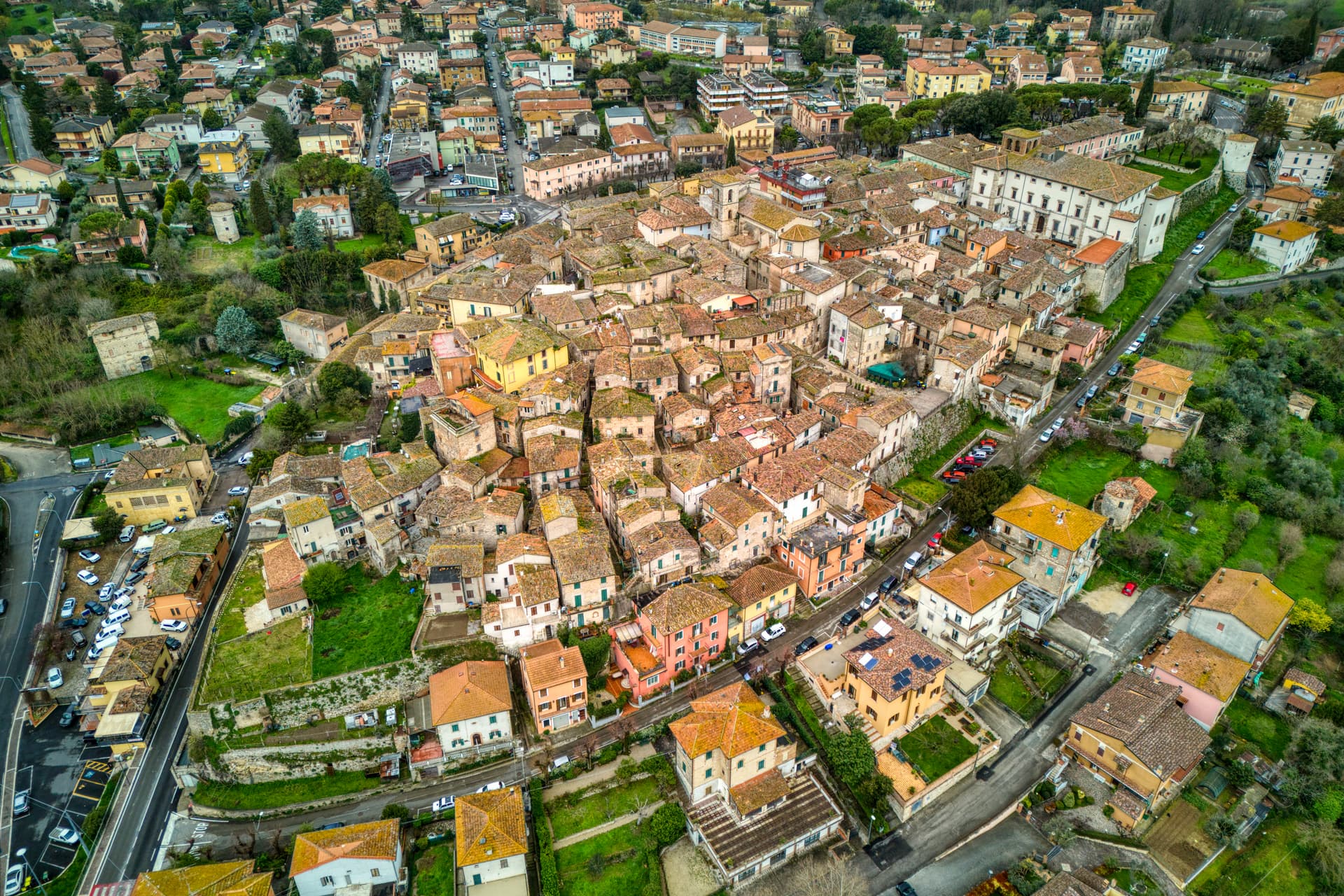
Acquasparta
Province: Terni
A hill town at 350 meters above the Naia valley, where Federico Cesi convened the first Accademia dei Lincei in his Palazzo Cesi in 1603.
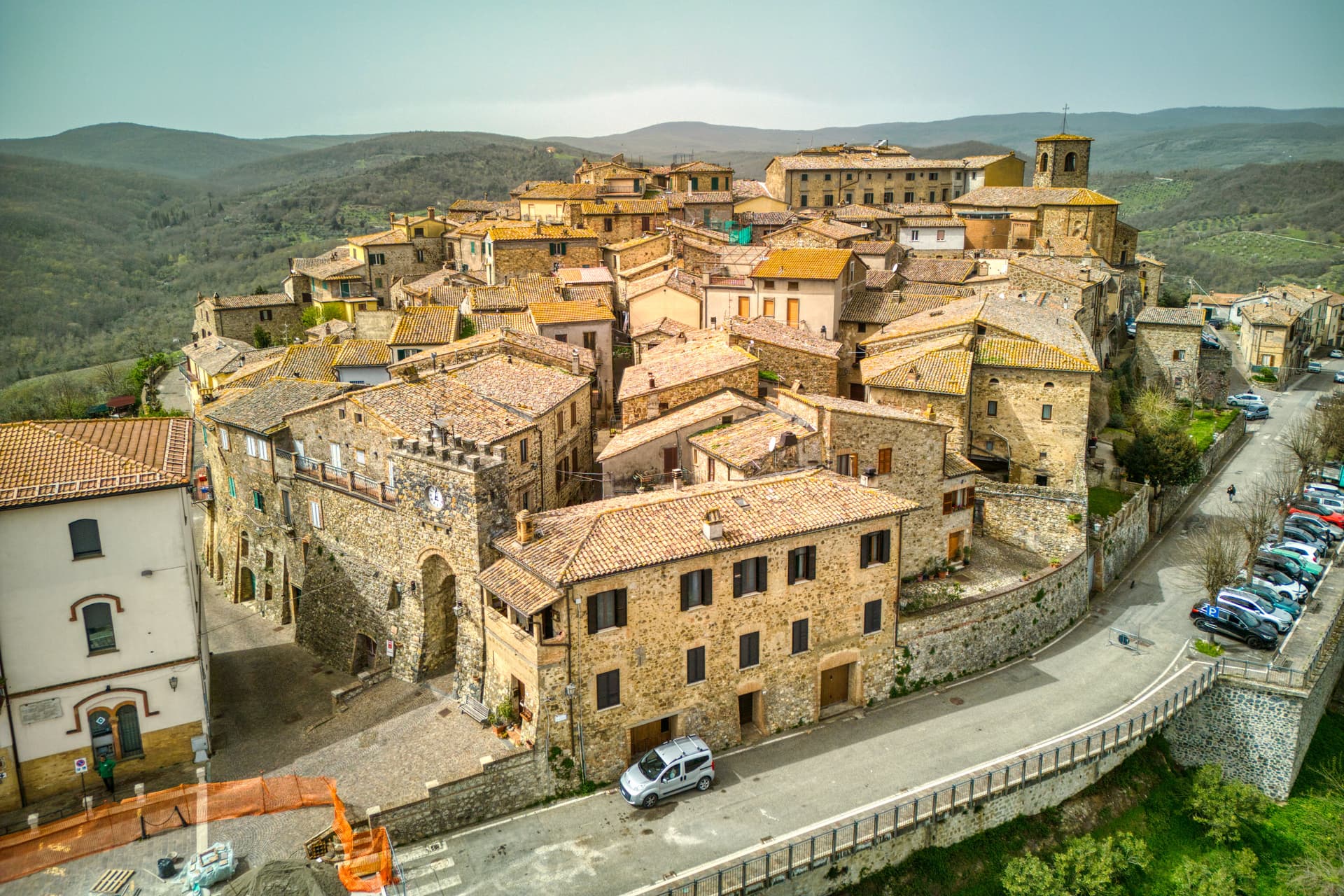
Allerona
Province: Terni
A stone borgo at 472 meters between the Paglia valley and the Valdichiana, an Orvieto outpost whose Monaldeschi castle fell to Charles V.
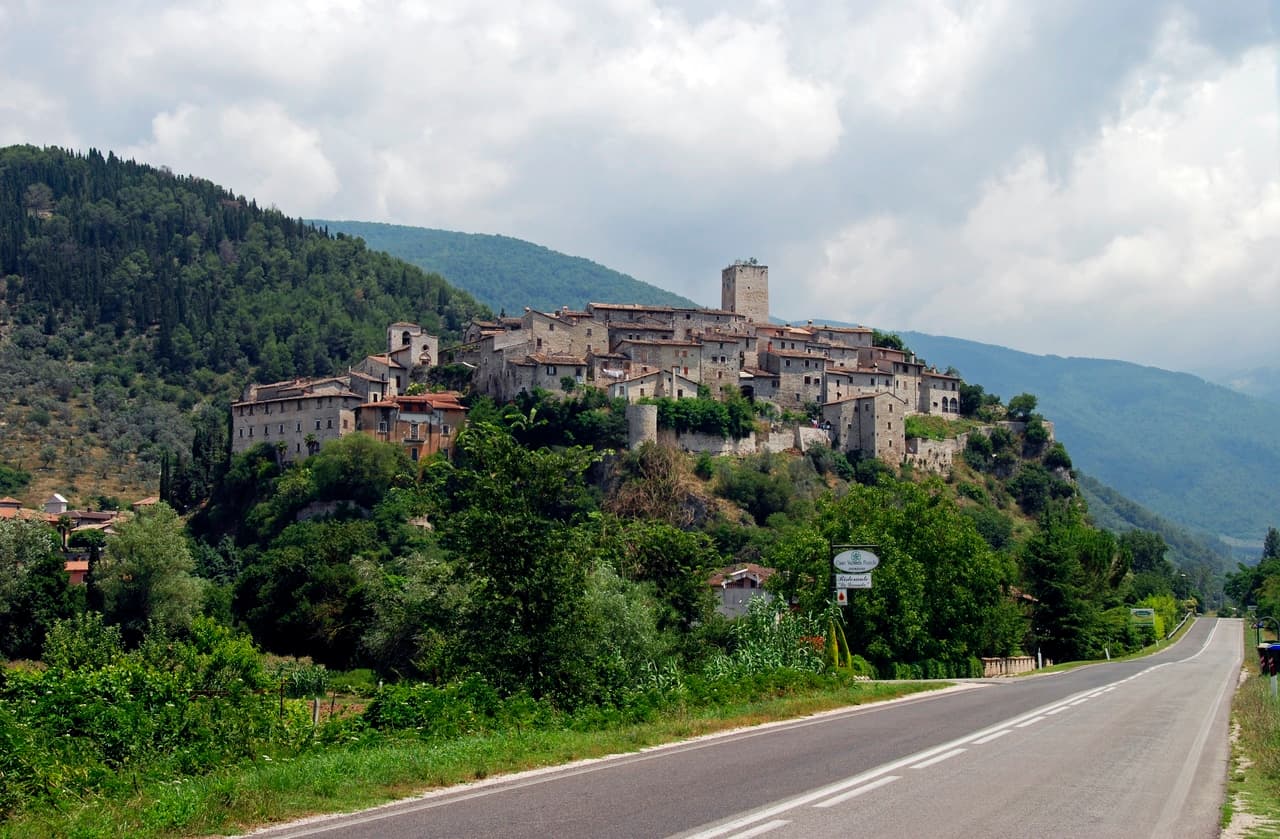
Arrone
Province: Terni
Medieval castle village on the left bank of the Nera at 243 meters, upstream from the largest man-made waterfall in the world.
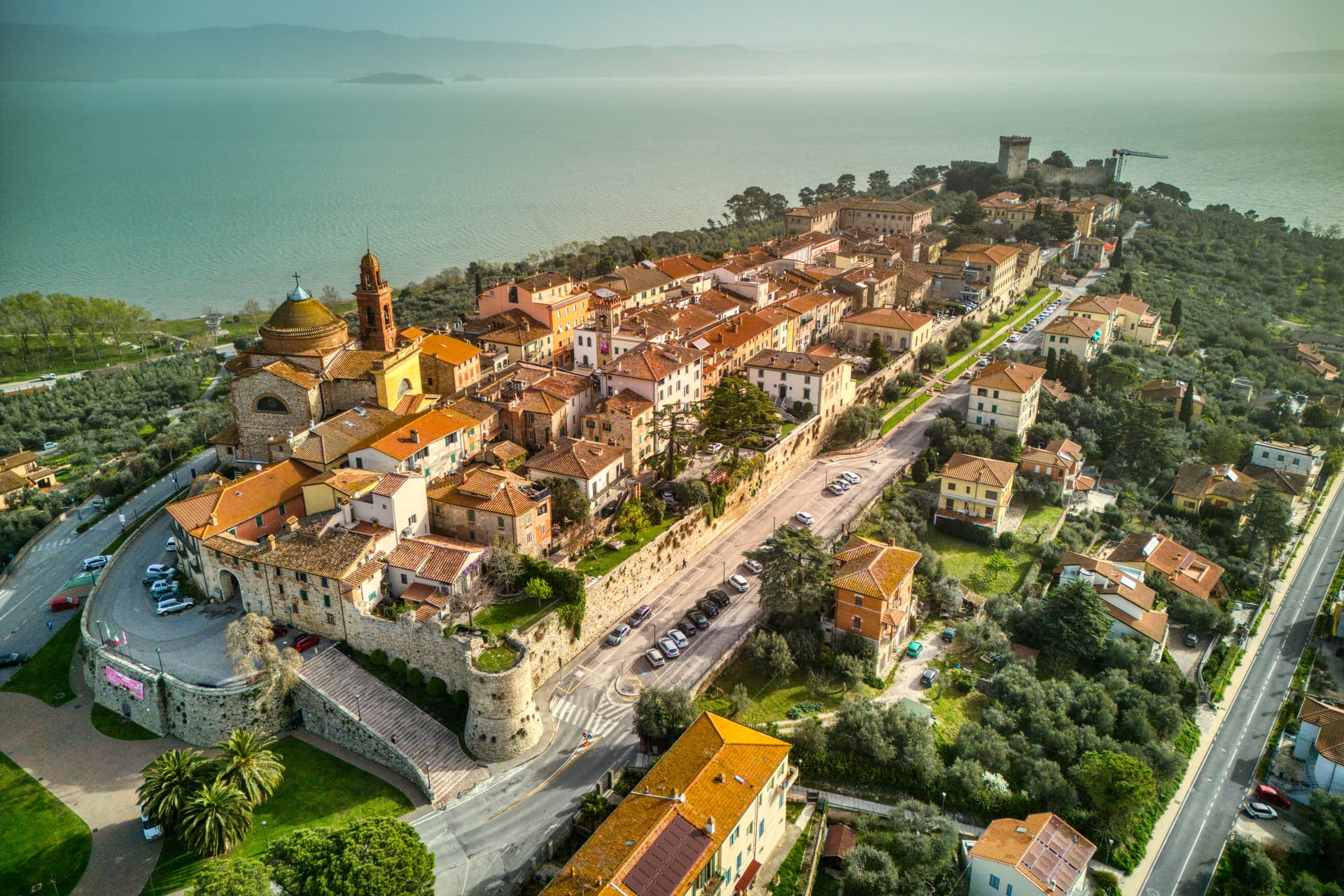
Castiglione del Lago
Province: Perugia
Trasimeno's western promontory, once the lake's fourth island, fortified by Federico II in 1247 and frescoed by Pomarancio for the Corgna marquises.
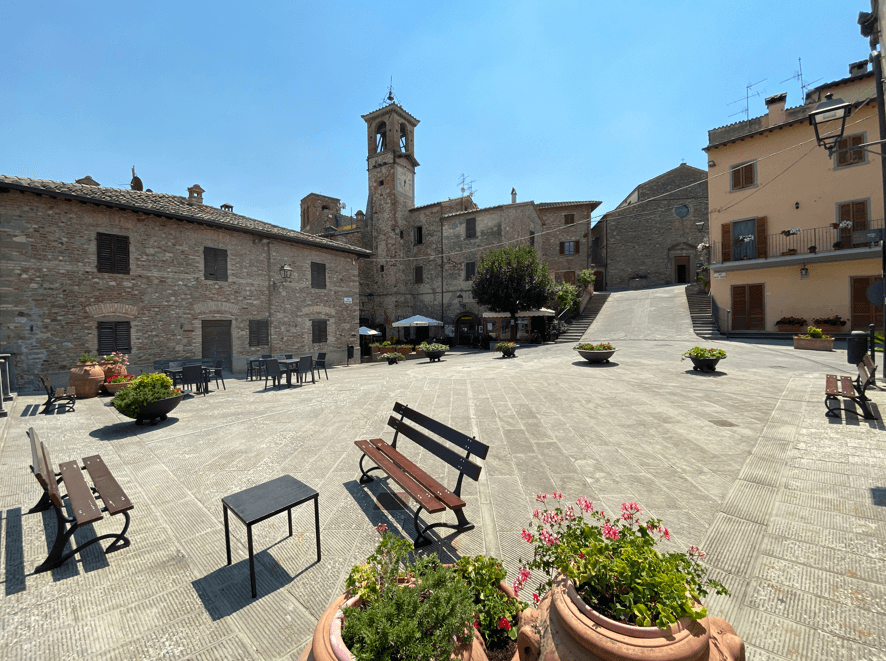
Citerna
Province: Perugia
A medieval borgo at 480 meters above the upper Tiber valley, holding the only sculpture by Donatello in Umbria.