
Umbria · Perugia
Deruta
A hill town on the left bank of the Tiber, the maiolica capital of central Italy since the late thirteenth century.
Known for
MAIOLICA
Continuous ceramic production since the late 13th century, with the lustro and Bella Donna styles defining its 16th-century peak.
OLDEST MUSEUM
Museo Regionale della Ceramica opened in 1898 inside the San Francesco convent, the first ceramics museum founded in Italy.
WORKSHOPS
Family-run botteghe still line the lower town along the Perugia-Rome road, firing and painting most pieces by hand.
When to visit
Best · Apr–Oct
- J
- F
- M
- A
- M
- J
- J
- A
- S
- O
- N
- D
- Best
- Hot or crowded
- Quiet
- Mostly closed
The festa: Caterina d'Alessandria, 25 November
Why come
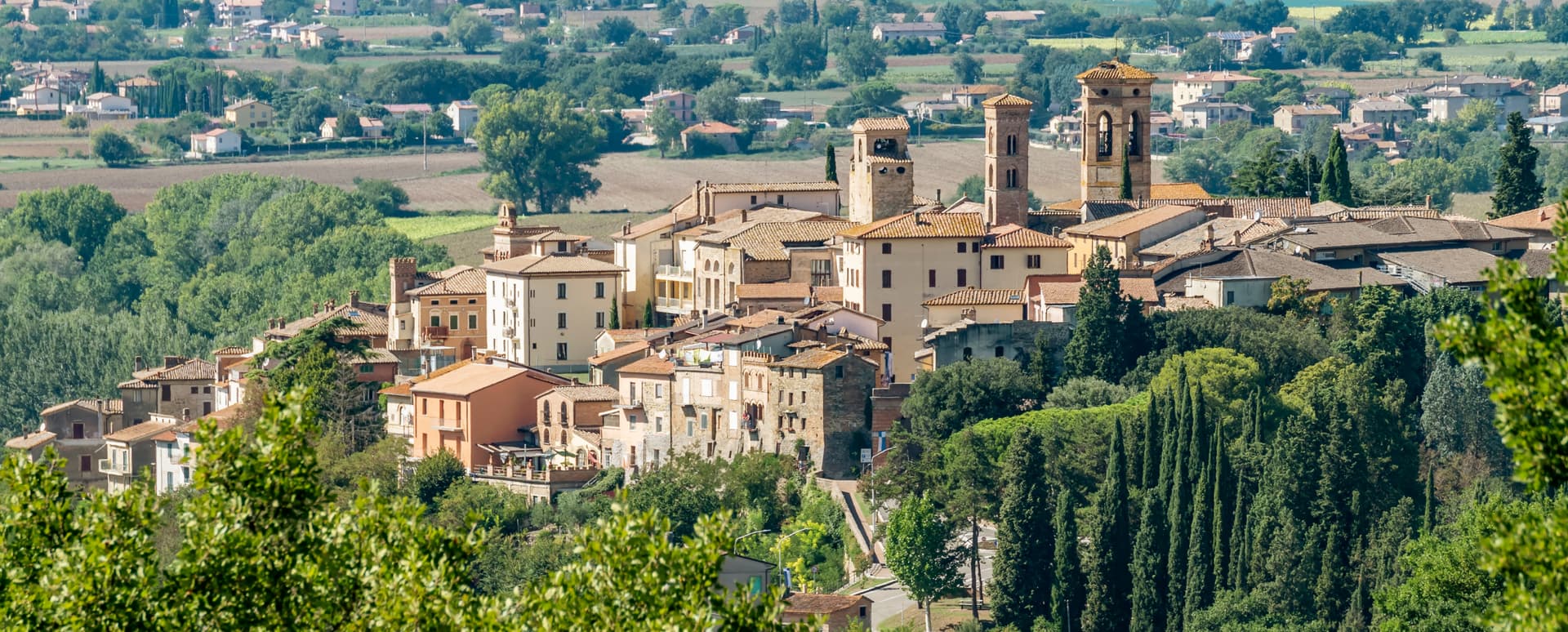
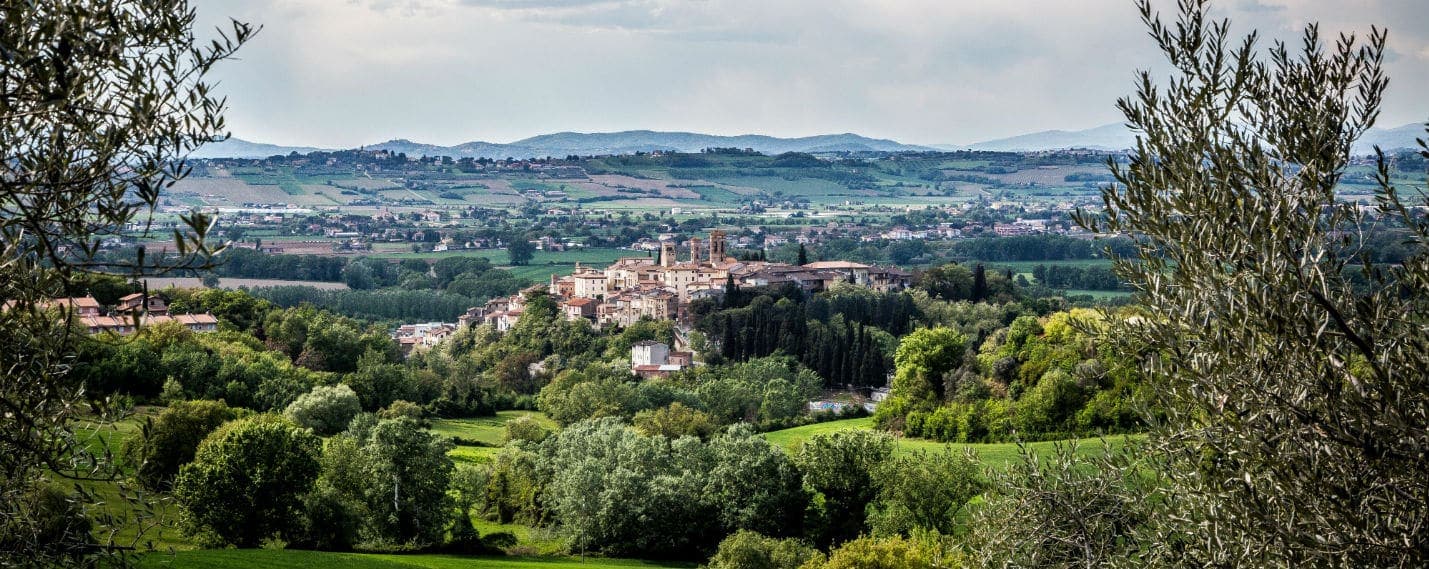
Deruta sits on a hill above the Tiber, fifteen kilometers south of Perugia. The town has been making maiolica continuously since the late thirteenth century, when the first documented kilns appear in the archaeological record. By the early sixteenth century its workshops were producing the lustro that gave Deruta wares their metallic shine and the Bella Donna plates with named portraits of beauties on flattering banderoles.
The Museo Regionale della Ceramica, founded in 1898 inside the fourteenth-century convent of San Francesco, is the oldest ceramics museum in Italy and holds over six thousand pieces. The Pinacoteca Comunale next door keeps an Eterno and Saints Romano e Rocco by Perugino and two works by Niccolò Alunno from the same complex. The road from Perugia to Rome runs through the lower town, lined with workshops still firing pieces by hand, most of them family-run for three or four generations.
The Sunday letter
We haven’t written Deruta’s letter yet.
One town every Sunday, with the photo, the food, the festa. Be there when this one comes up. Free, by Peter & Sophia from Pietrasanta.
By subscribing you agree to Substack’s Terms of Use, our Privacy Policy and our Information collection notice.
What to see
Museo Regionale della Ceramica
Oldest ceramics museum in Italy, founded 1898 in the convent of San Francesco, holding over 6,000 pieces from medieval to modern.
Chiesa di San Francesco
Consecrated 1388 after earthquake reconstruction, Sienese 14th-century frescoes inside, Domenico Alfani Raphael-school panel above an altar.
Pinacoteca Comunale
Civic gallery with Perugino's Eterno and Saints Romano e Rocco, plus two altarpieces by Niccolò Alunno from the surrounding churches.
Centro storico
Walled medieval core organized around Piazza dei Consoli, lined with maiolica workshops still firing by hand.
Santuario della Madonna dei Bagni
Pilgrimage church 5 km south on the Tiber road, walls lined with hundreds of votive ceramic tiles spanning four centuries.
The slow-trip planner
Building a trip? Find where Deruta fits in a slow Italy circuit.
Answer five questions. We will shape a geographically coherent slow trip from the 1,000 Italian towns most travelers skip. Yours to save and share.
Living here
- Population 9,442
- Commuter belti
- Pharmacy: none mapped
- High school within a 30-minute drive
- Train station in the comune
- Nearest airport Ancona / Pescara, 1 h 43 min drive
- Regional capital Perugia, 17 min drive
Tags & datadesignations · numbers · sources
The numbers
- Elevation: 218 m
- Population: 9,442
- Surface area: 44.51 km²
These figures were compiled from public directories — ISTAT, OpenStreetMap, Wikidata — and from the official listings of the guides named on this page. Town details change; verify with official sources before you travel.
Close by
More towns near Deruta
Bettona
Province: Perugia
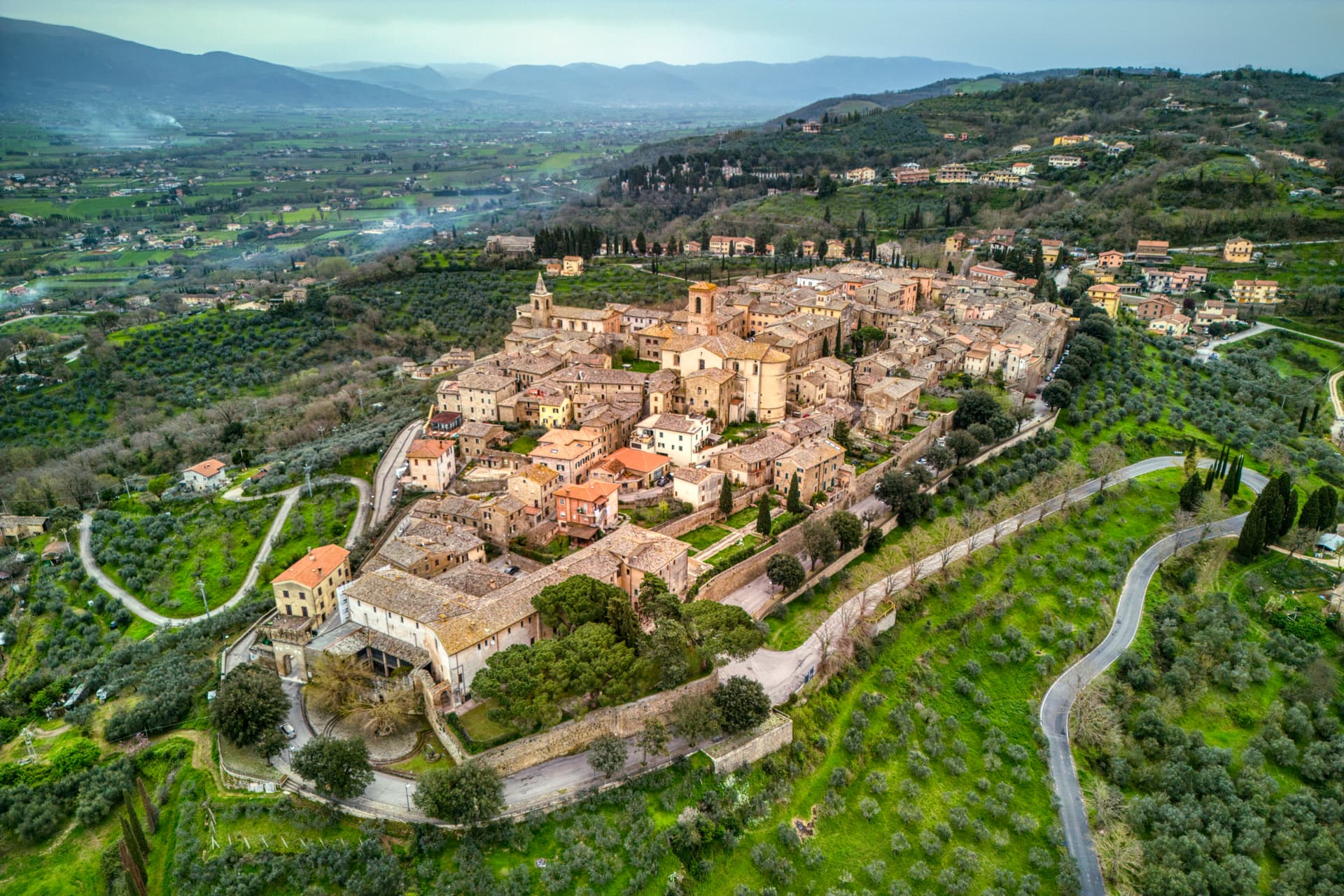
A hill town at 353 meters between the Topino and Chiascio rivers, the only Etruscan settlement ever built east of the Tiber.
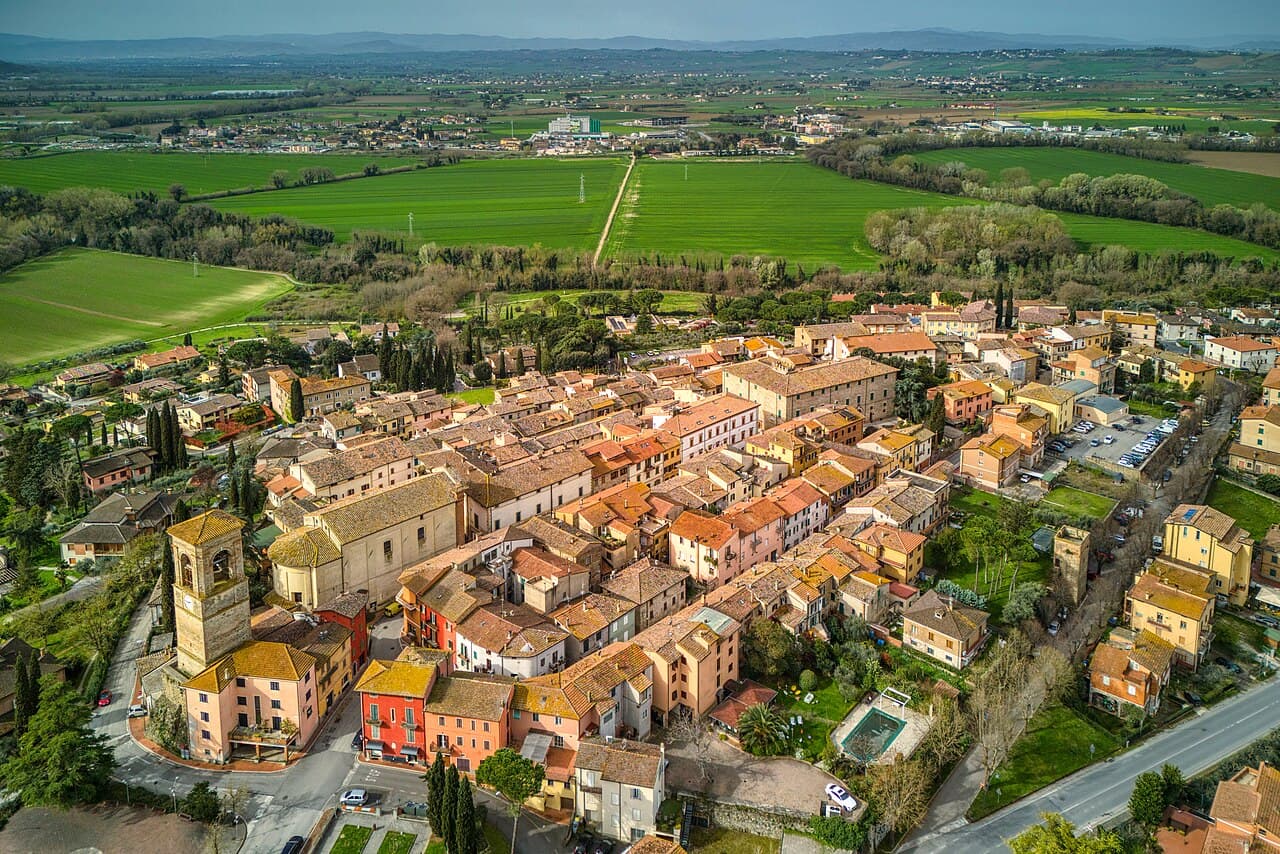
Torgiano
Province: Perugia
A walled river town at 219 meters at the confluence of the Tiber and the Chiascio, the first DOC and DOCG zone in Umbria.
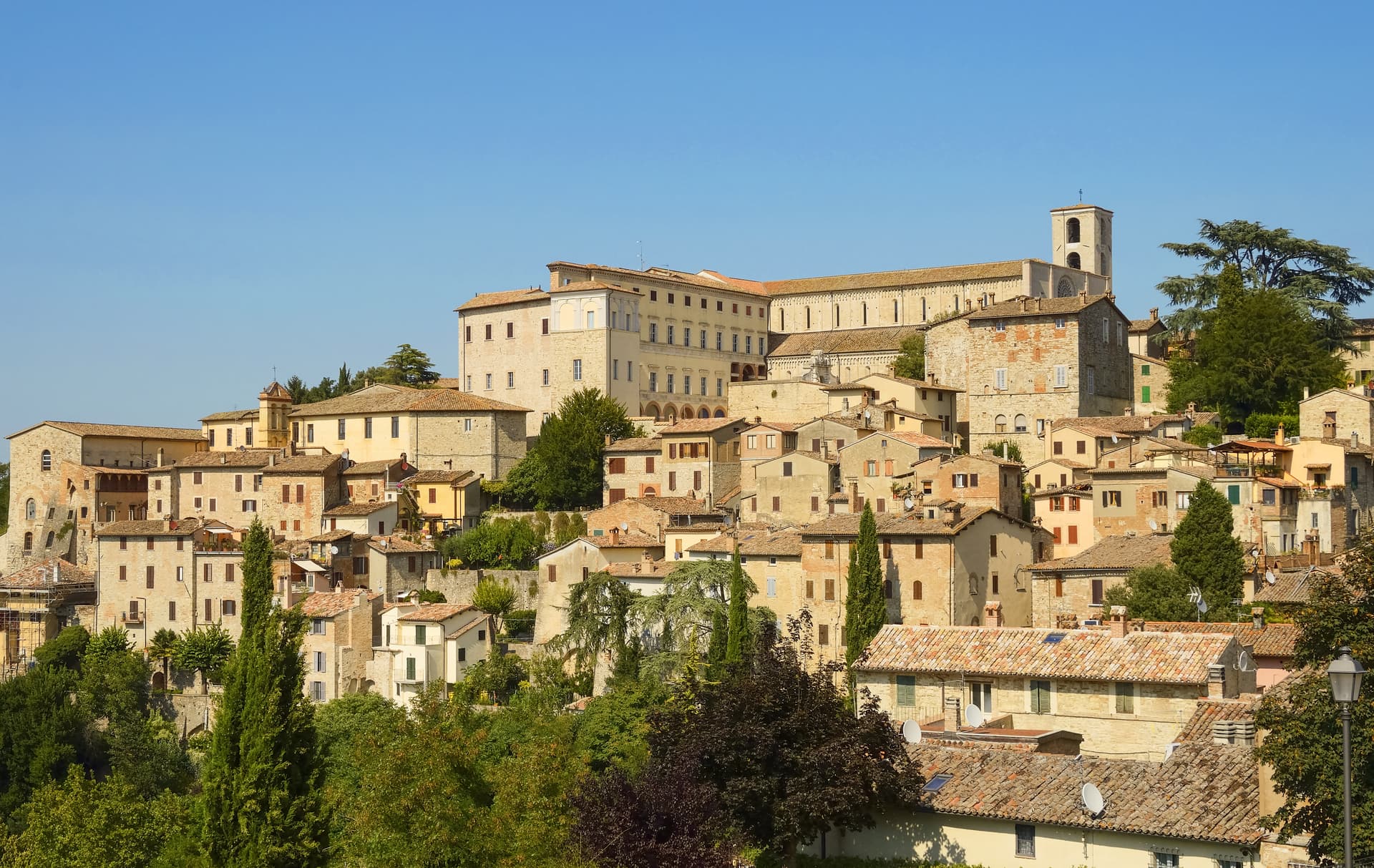
Todi
Province: Perugia
A walled hill town at 398 meters on the Tiber, with Etruscan, Roman, and medieval rings stacked up Colle Nidoli.
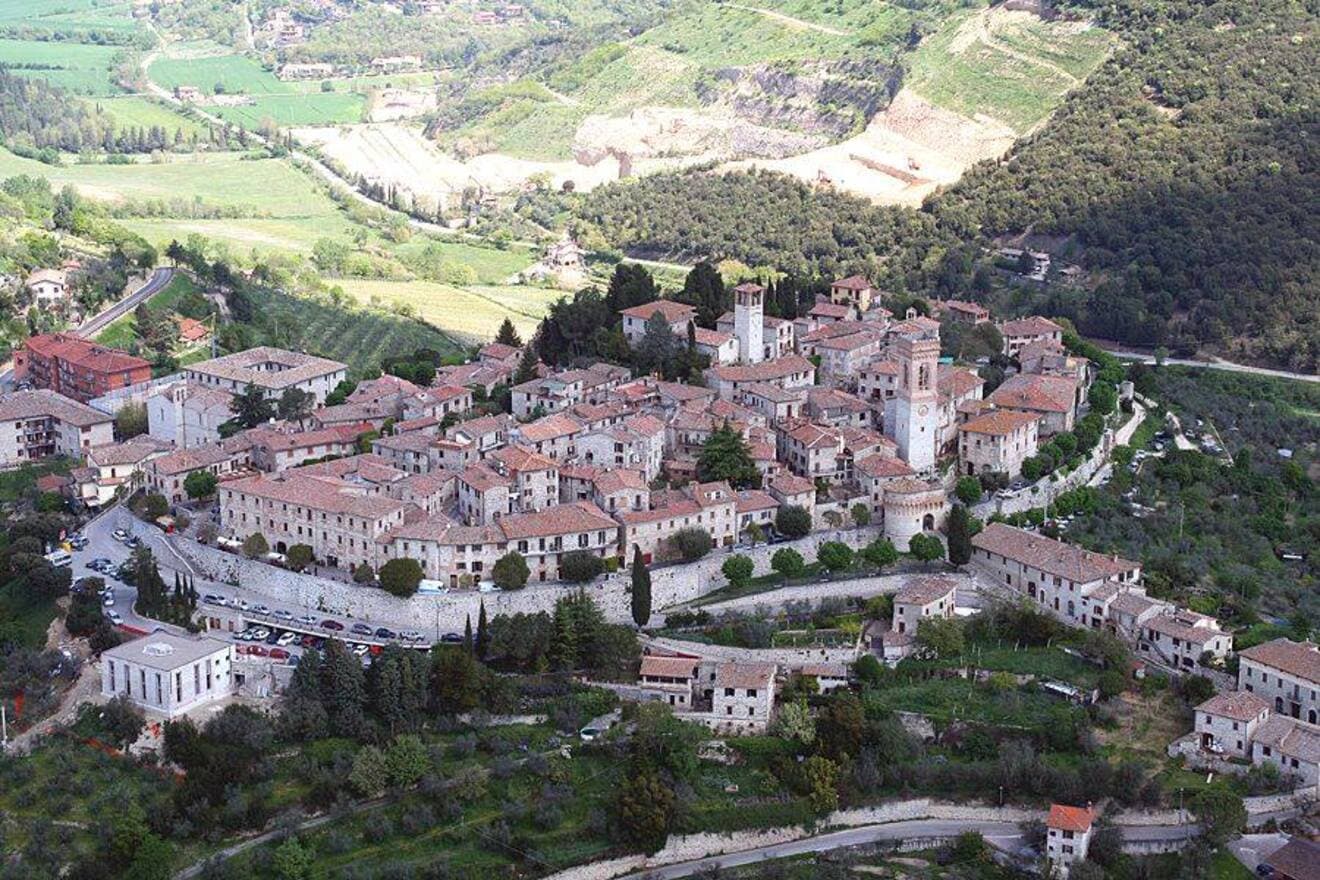
Corciano
Province: Perugia
A walled medieval castello at 408 meters eight kilometers west of Perugia, where Saint Francis stopped on his way back from Isola Maggiore in 1223.
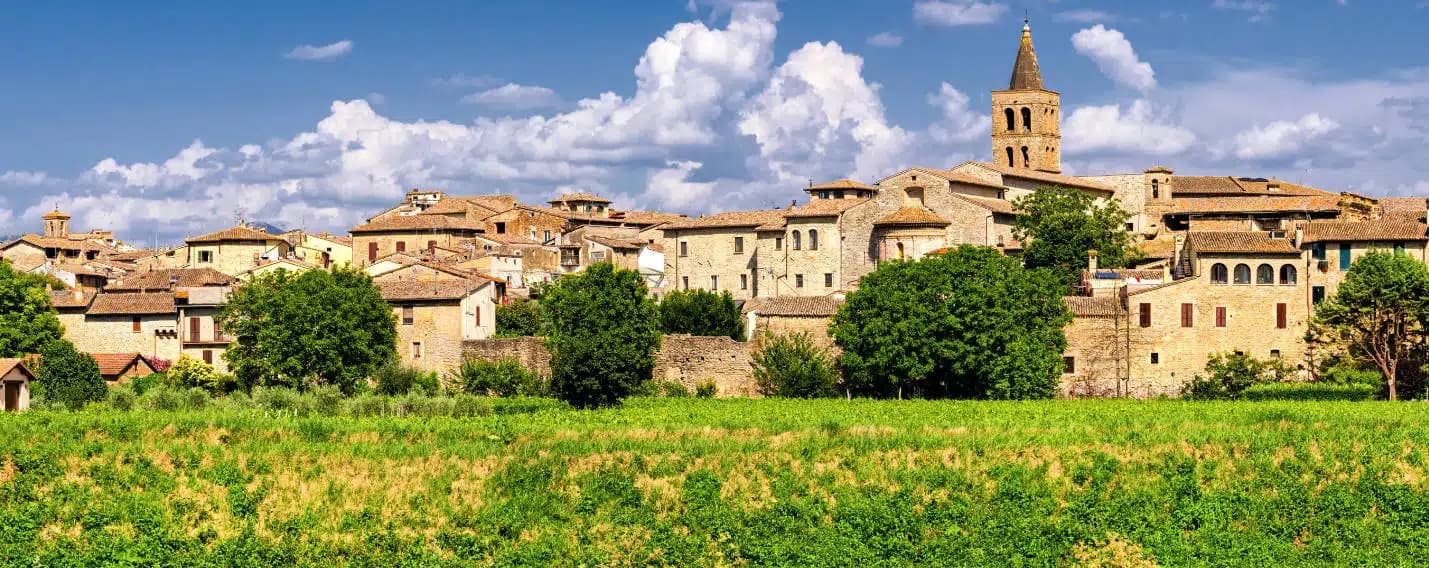
Bevagna
Province: Perugia
Roman Mevania on the Umbrian plain at 225 meters, four medieval quarters that compete every June in a reconstructed market of the 13th century.
🎨 Borghi più belli d'Italia
More Borghi più belli d'Italia towns in Umbria
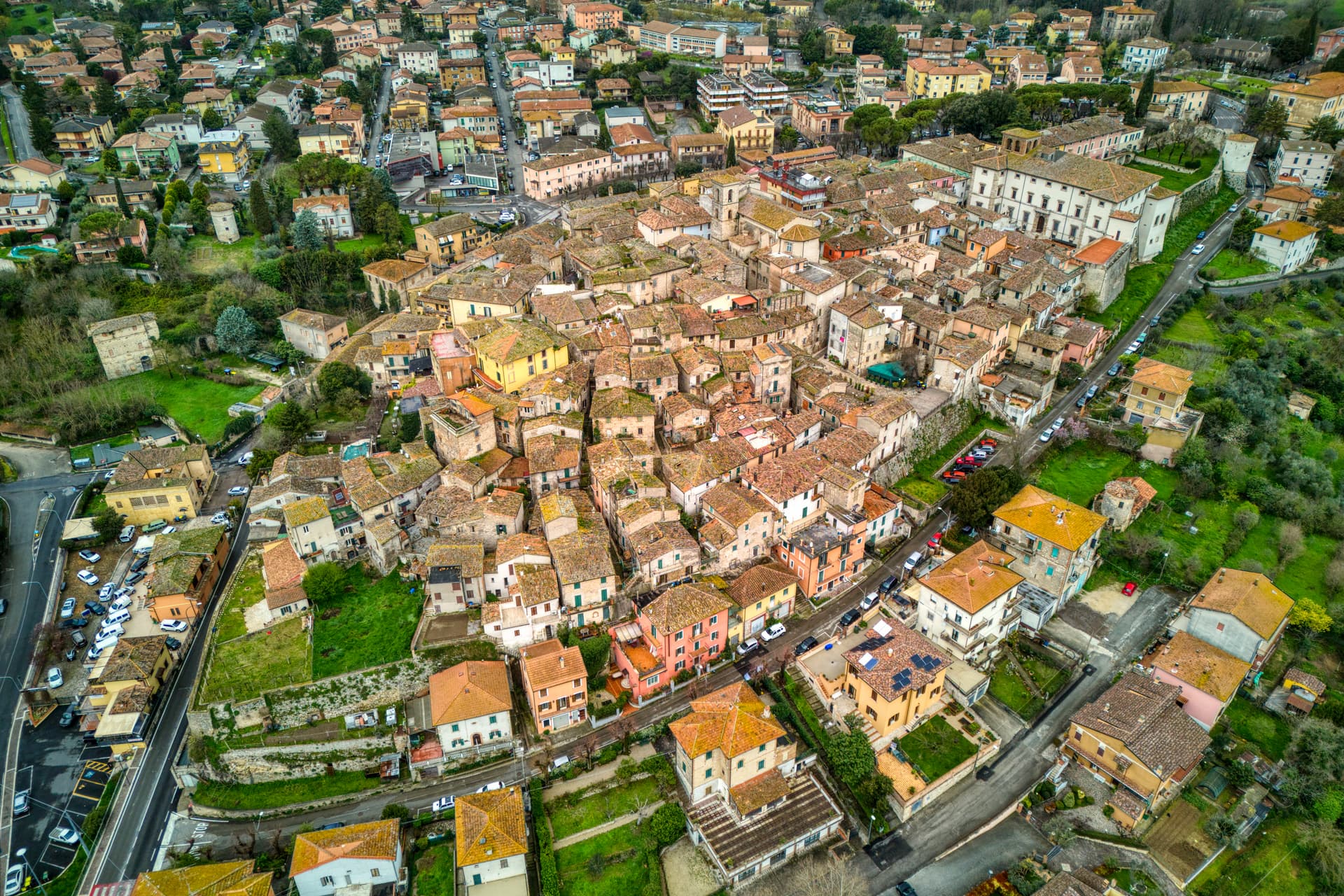
Acquasparta
Province: Terni
A hill town at 350 meters above the Naia valley, where Federico Cesi convened the first Accademia dei Lincei in his Palazzo Cesi in 1603.
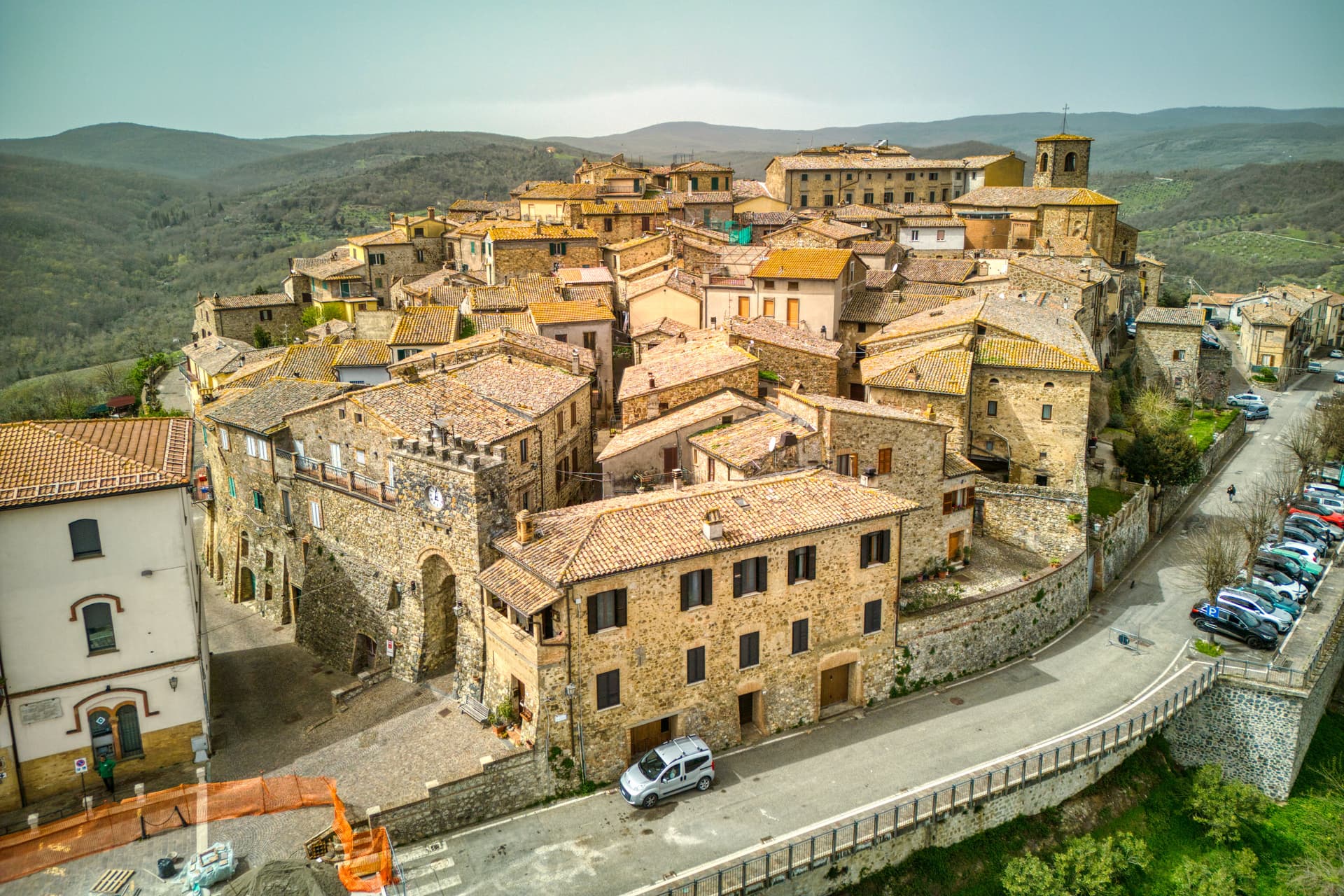
Allerona
Province: Terni
A stone borgo at 472 meters between the Paglia valley and the Valdichiana, an Orvieto outpost whose Monaldeschi castle fell to Charles V.
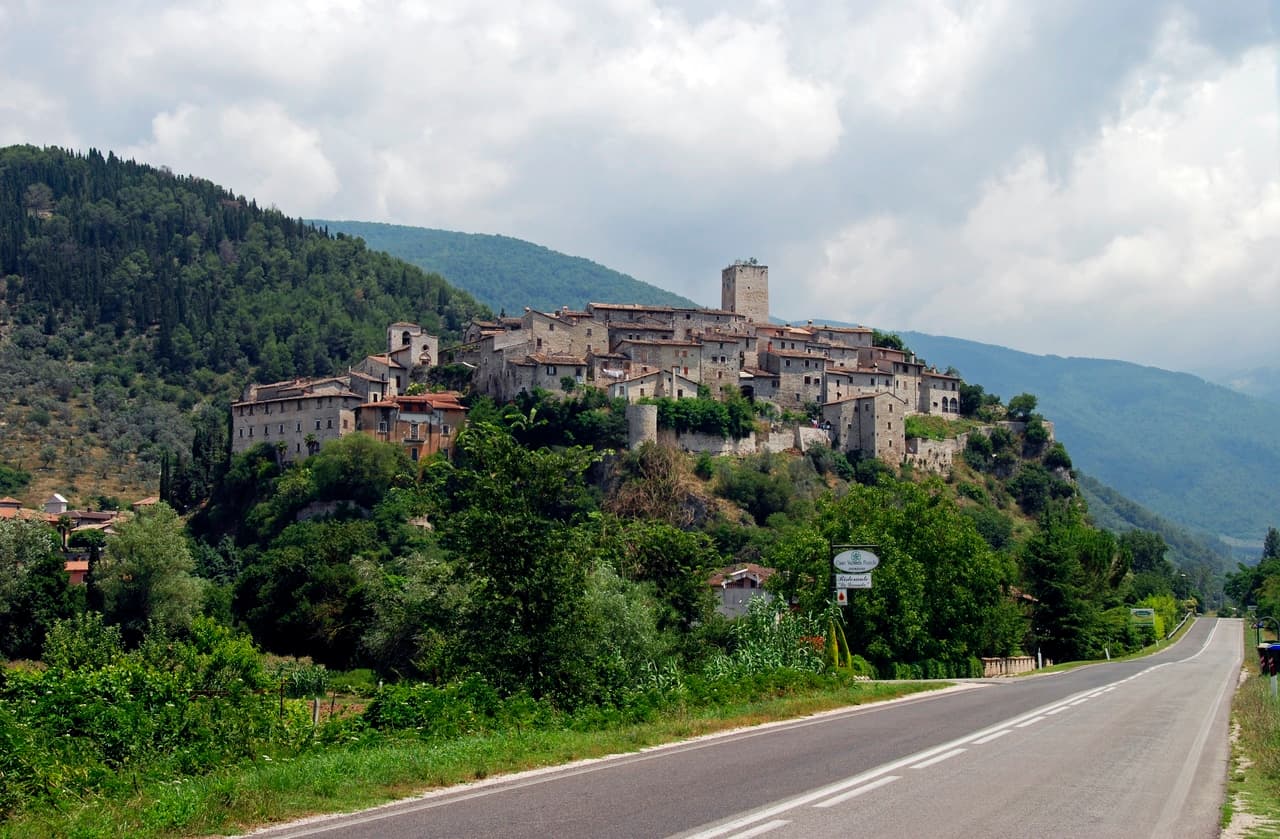
Arrone
Province: Terni
Medieval castle village on the left bank of the Nera at 243 meters, upstream from the largest man-made waterfall in the world.
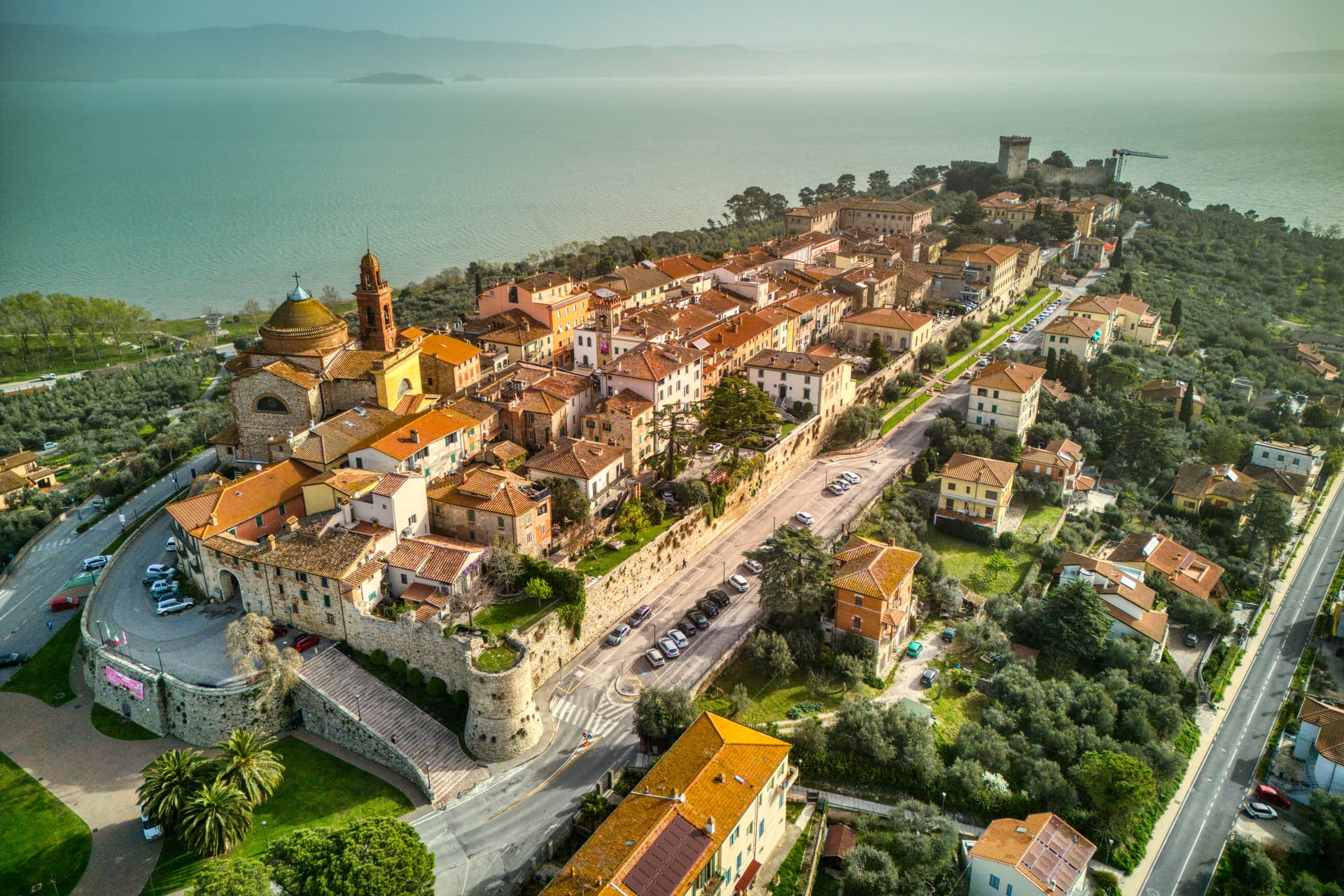
Castiglione del Lago
Province: Perugia
Trasimeno's western promontory, once the lake's fourth island, fortified by Federico II in 1247 and frescoed by Pomarancio for the Corgna marquises.