

Emilia-Romagna · Rimini
San Giovanni in Marignano
A walled Conca-valley borgo, granary of the Malatesta state, where the Notte delle Streghe has marked the summer solstice since 1988.
Known for
MALATESTA GRANARY
Over two hundred underground grain pits beneath the streets, the cereal reserve of the Malatesta state from the fifteenth century onward.
NOTTE DELLE STREGHE
Summer-solstice festival held since 1988 around the legend that witches stopped here on their journey to Benevento on Saint John's Eve.
WALLED CASTRUM
Rectangular Malatesta-plan castrum with fourteenth-century walls, two surviving gates and the original axial street layout in the Conca plain.
When to visit
Best · Apr–Jun, Sep–Oct
- J
- F
- M
- A
- M
- J
- J
- A
- S
- O
- N
- D
- Best
- Hot or crowded
- Quiet
- Mostly closed
The festa: Giovanni Battista, 24 June
Why come
San Giovanni in Marignano sits on the low Conca-valley plain, five kilometers inland from Cattolica and twenty kilometers south of Rimini. Ravenna monasteries reclaimed the marshy ground in the twelfth century, and from the late thirteenth century the village became the principal grain reserve of the Malatesta state. More than two hundred fosse del grano survive beneath the centro storico, underground pits dug along the main streets under the shelter of the medieval walls, used from the 1400s onward for cereal storage.
The Malatesta-period walls are still legible in long sections. The town gives onto the legend of Saint John's Eve: witches were said to pass through here on their summer-solstice journey toward Benevento. Since 1988 the Notte delle Streghe in late June has filled the borgo with reenactments, fire rituals, and crowds from across the Riviera, marking the opening of the Romagna summer.
The Sunday letter
We haven’t written San Giovanni in Marignano’s letter yet.
One town every Sunday, with the photo, the food, the festa. Be there when this one comes up. Free, by Peter & Sophia from Pietrasanta.
By subscribing you agree to Substack’s Terms of Use, our Privacy Policy and our Information collection notice.
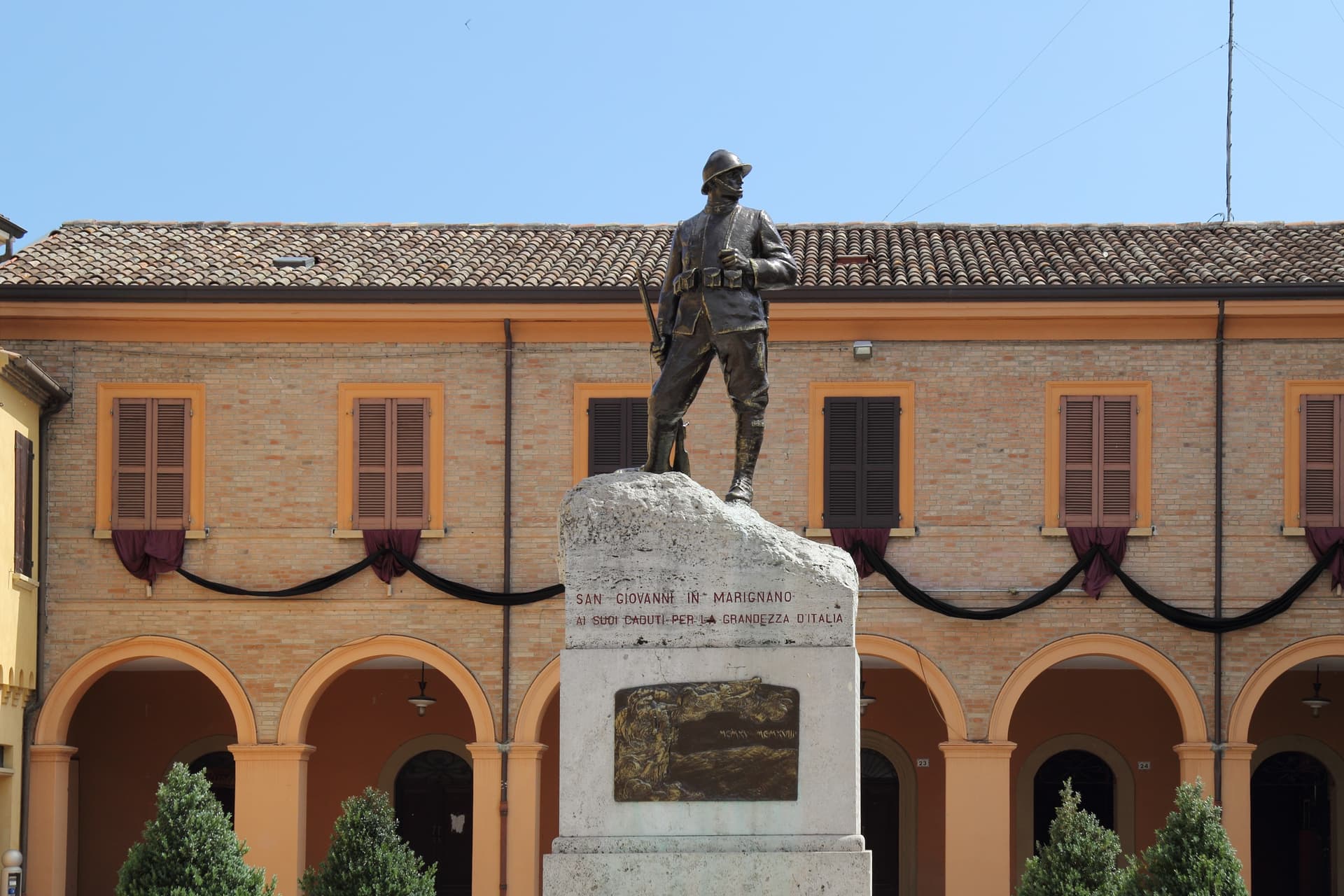
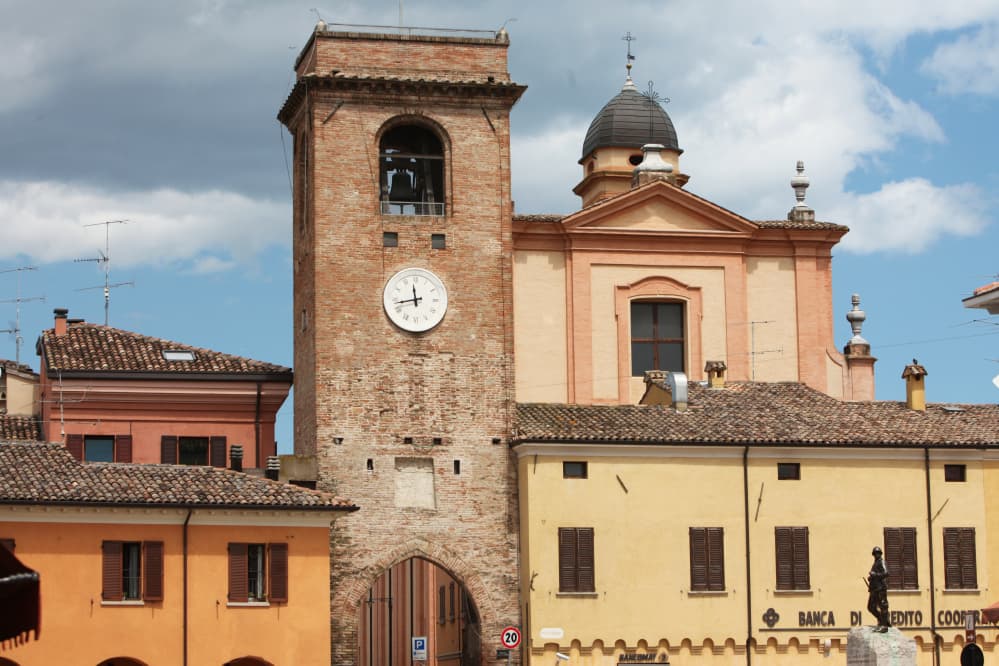
What to see
Centro storico fortificato
Walled medieval nucleus on the rectangular Malatesta plan, with surviving sections of fourteenth-century walls and two gates on the main axis.
Fosse del grano
Over two hundred medieval grain pits beneath the streets, dug from the fifteenth century onward to store cereal as part of the Malatesta granary system.
Chiesa di San Pietro
Eighteenth-century parish church on the main piazza, with a wooden crucifix from the school of Donatello and a Renaissance baptismal font.
Teatro Massari
Late-nineteenth-century horseshoe-plan theatre in the centro storico, restored in 1996 and active with a small annual prose and music program.
The slow-trip planner
Building a trip? Find where San Giovanni in Marignano fits in a slow Italy circuit.
Answer five questions. We will shape a geographically coherent slow trip from the 1,000 Italian towns most travelers skip. Yours to save and share.
Living here
- Population 9,408
- Commuter belti
- Pharmacy in town
- High school within a 30-minute drive
- Nearest airport Rimini, 38 min drive
- Regional capital Bologna, 1 h 32 min drive
Tags & datadesignations · numbers · sources
Recognised as
The numbers
- Elevation: 29 m
- Population: 9,408
- Surface area: 21.37 km²
These figures were compiled from public directories — ISTAT, OpenStreetMap, Wikidata — and from the official listings of the guides named on this page. Town details change; verify with official sources before you travel.
Featured on
San Giovanni in Marignano appears on this themed pick from our Collections:
Close by
More towns near San Giovanni in Marignano
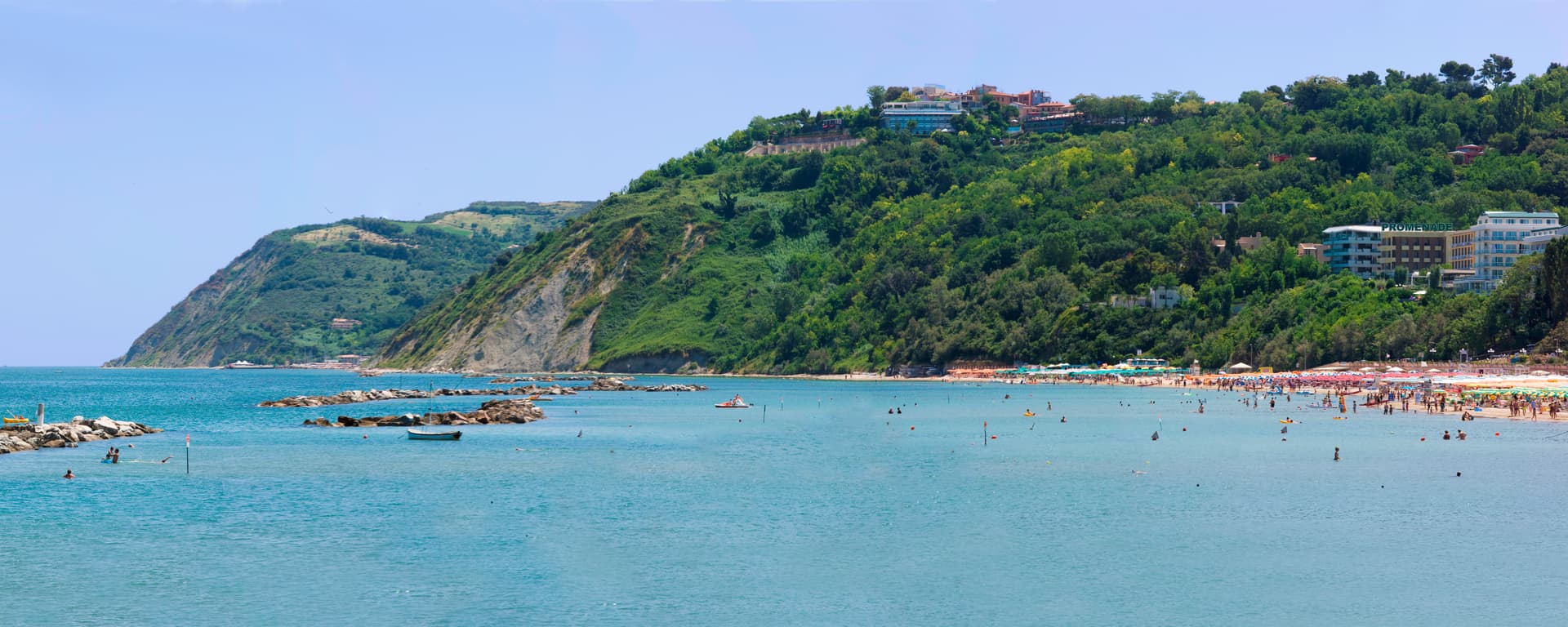
Gabicce Mare
Province: Pesaro e Urbino
The northernmost Marche seaside on the Adriatic, where the Riviera Romagnola meets the cliffs of the Parco del San Bartolo at the Romagna border.
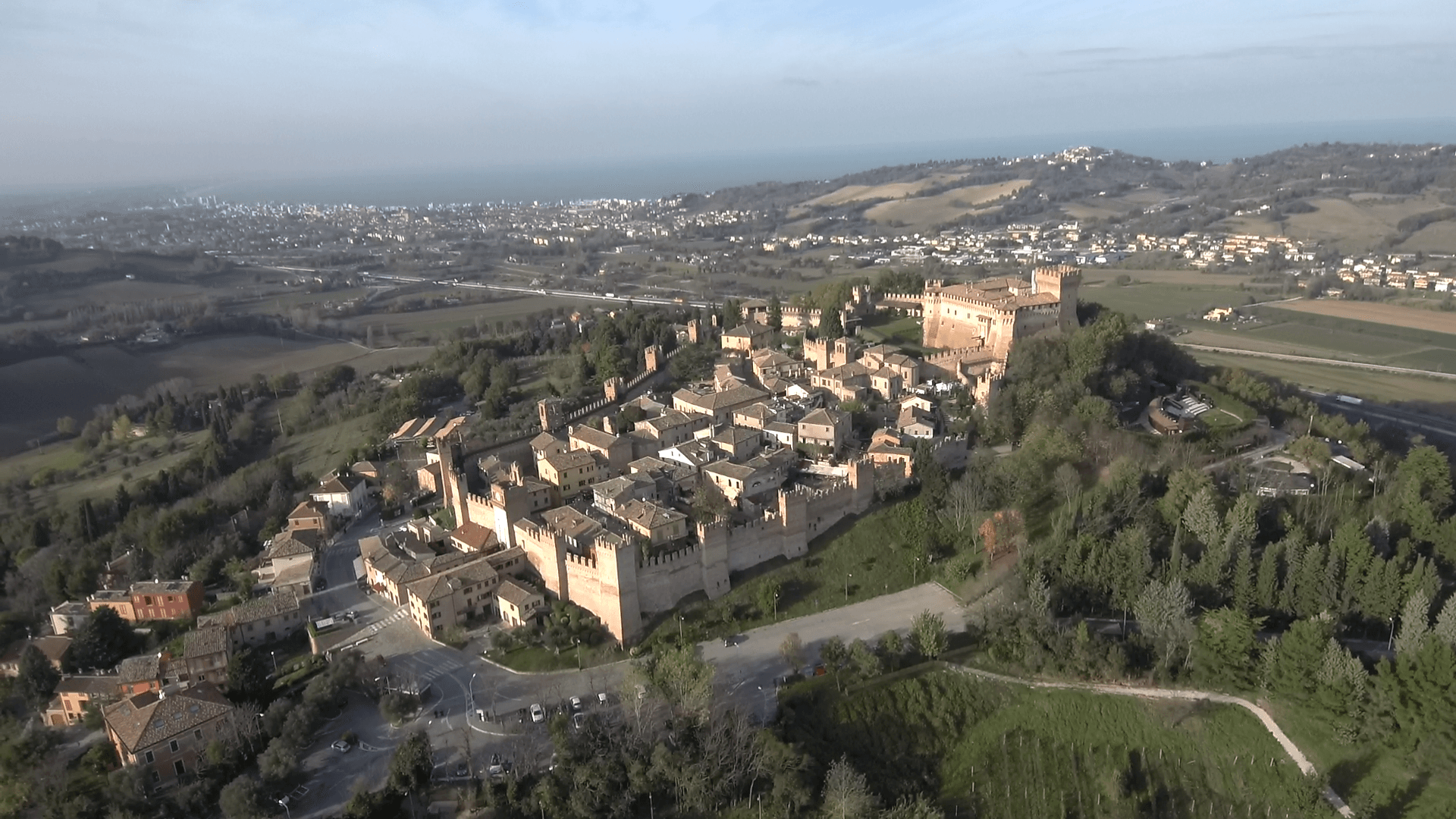
Gradara
Province: Pesaro e Urbino
The walled hill borgo at 142 meters above the Adriatic where Dante set the deaths of Paolo and Francesca, with one of Italy's best-preserved castles.
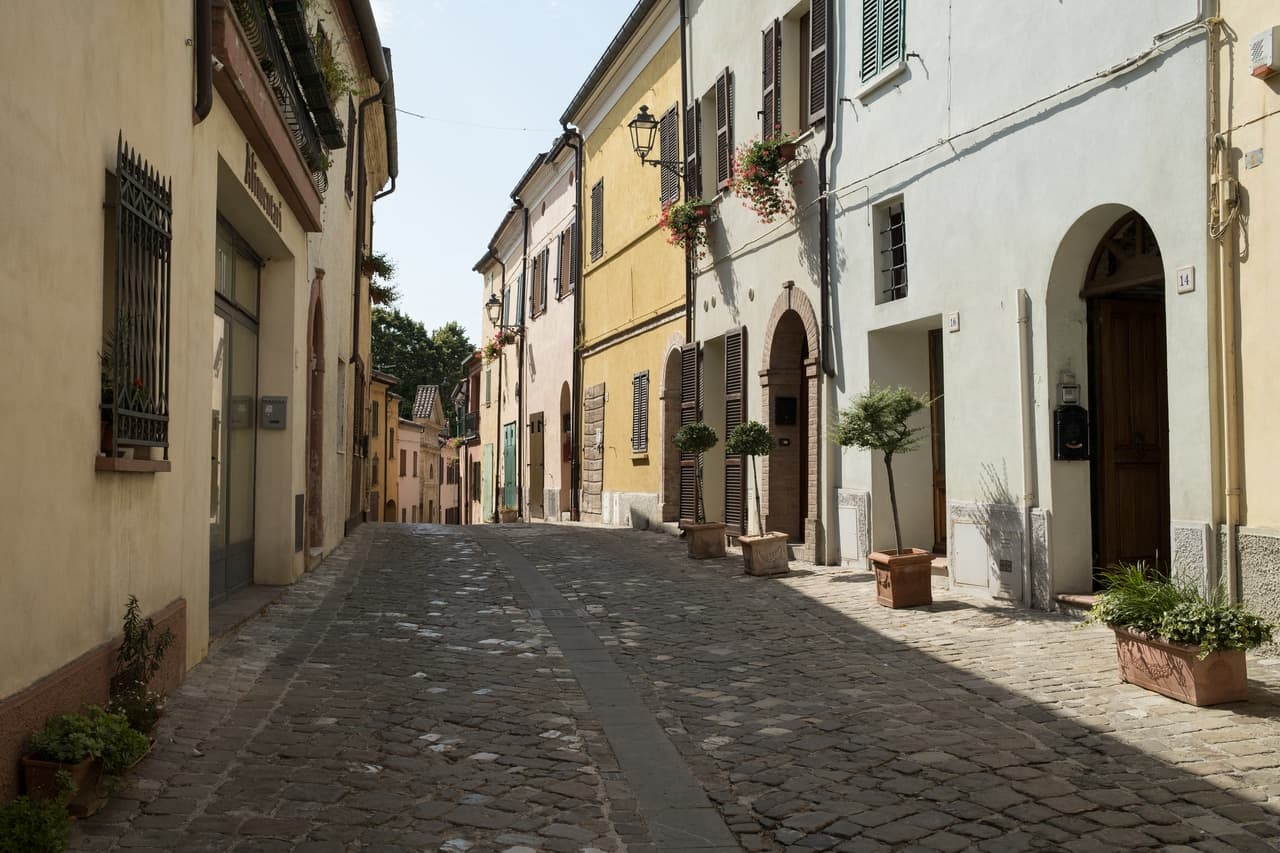
Montefiore Conca
Province: Rimini
A 385-meter Malatesta hilltop above the Conca valley, dominated by a fourteenth-century fortress that was once a summer residence of the lords of Rimini.
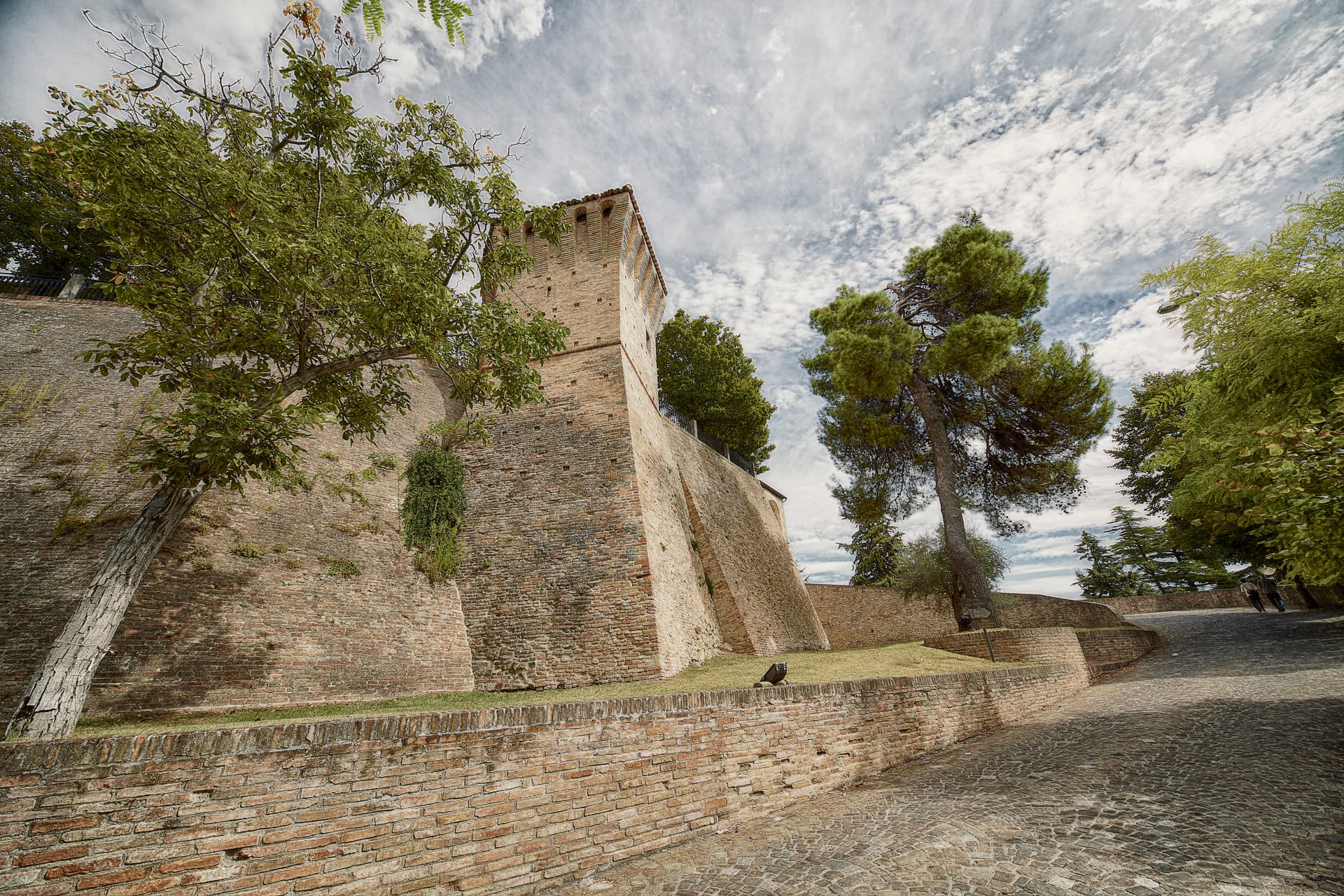
Montegridolfo
Province: Rimini
A walled borgo of fewer than a thousand residents on the Romagna-Marche border, held alternately by the Malatesta and the Montefeltro through the fifteenth century.
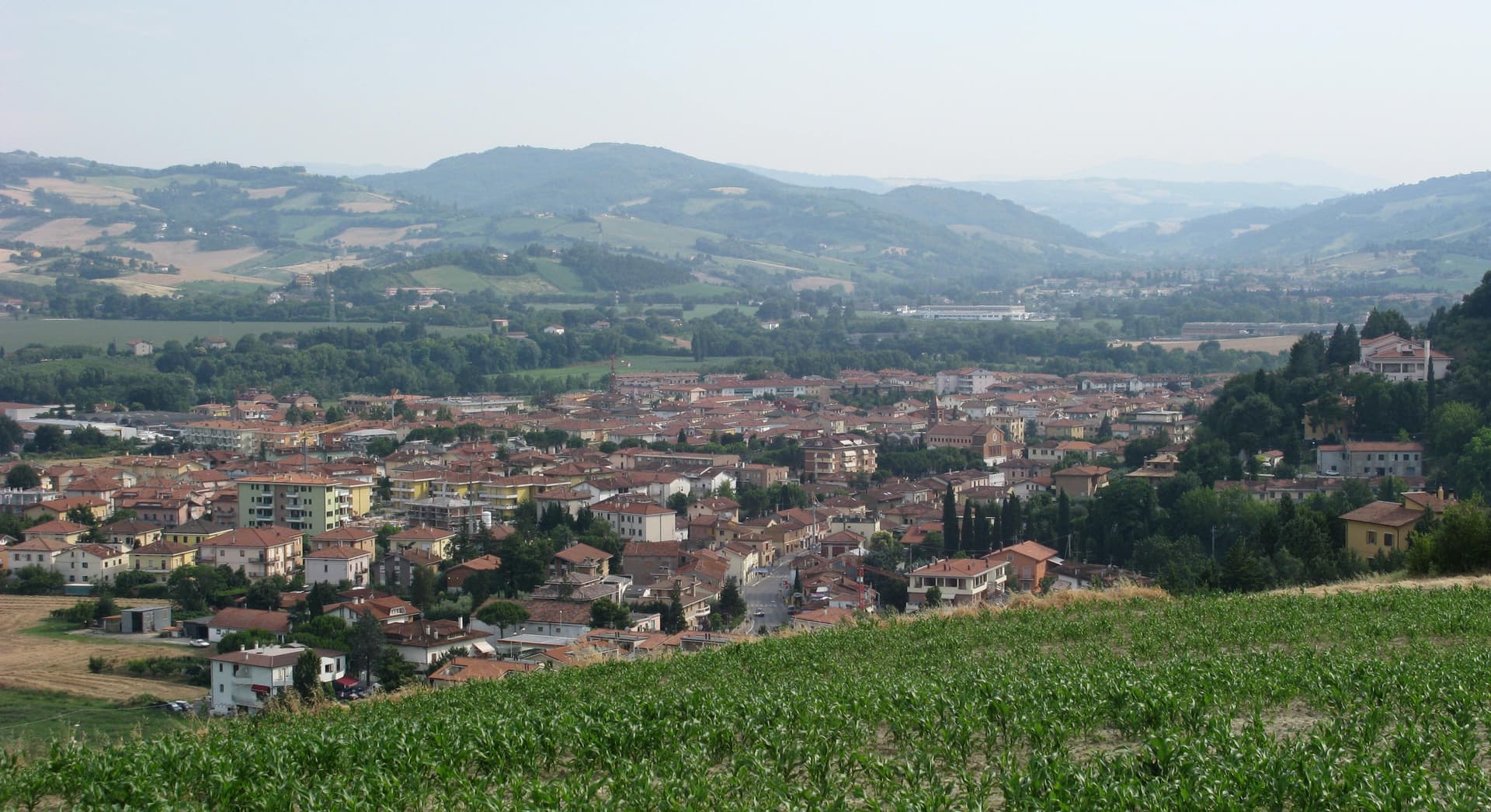
Vallefoglia
Province: Pesaro e Urbino
A 2014 merger commune at 295 meters in the Foglia valley, born from Colbordolo, birthplace of Raffaello's father, and Sant'Angelo in Lizzola.
🎨 Borghi più belli d'Italia
More Borghi più belli d'Italia towns in Emilia-Romagna
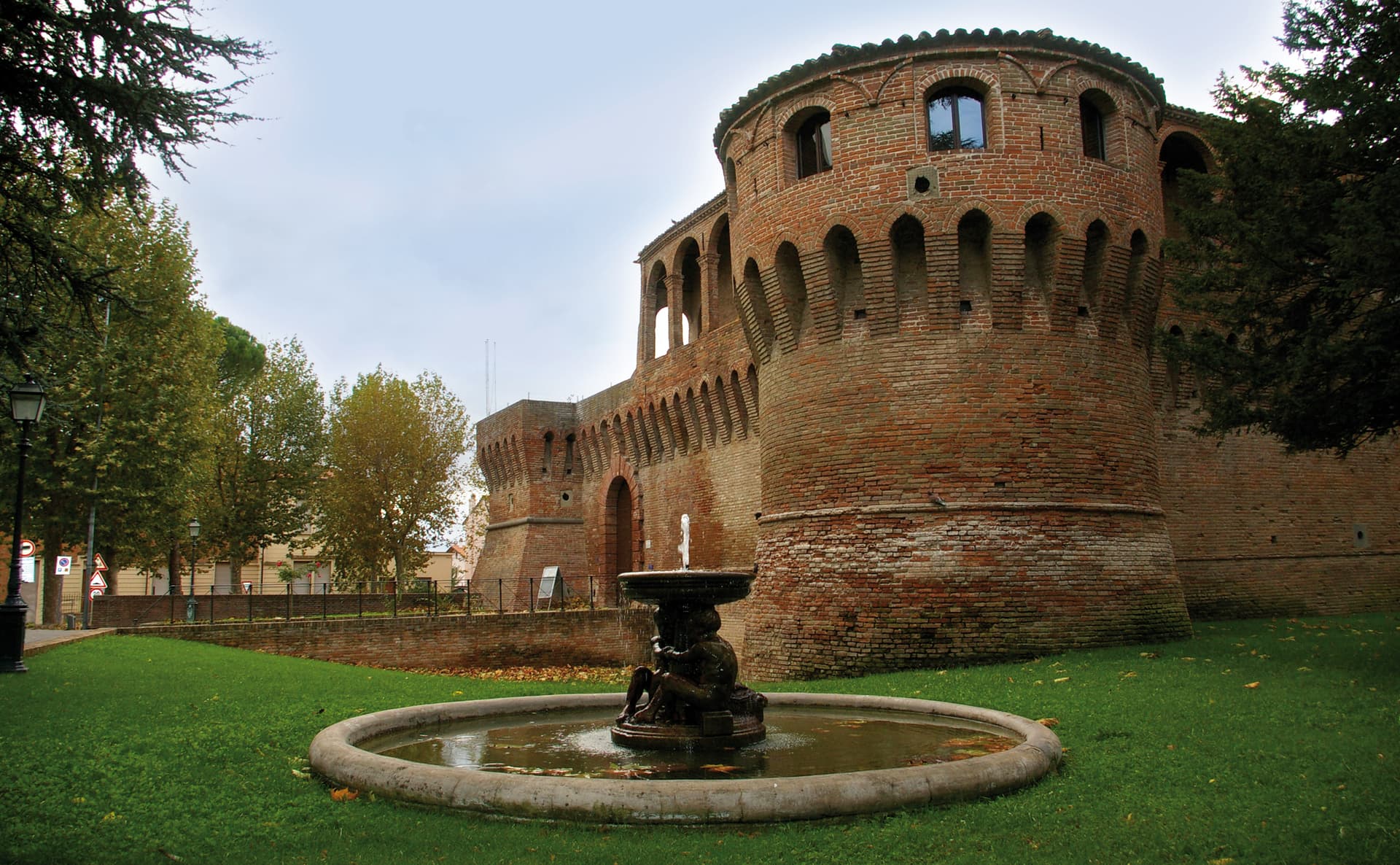
Bagnara di Romagna
Province: Ravenna
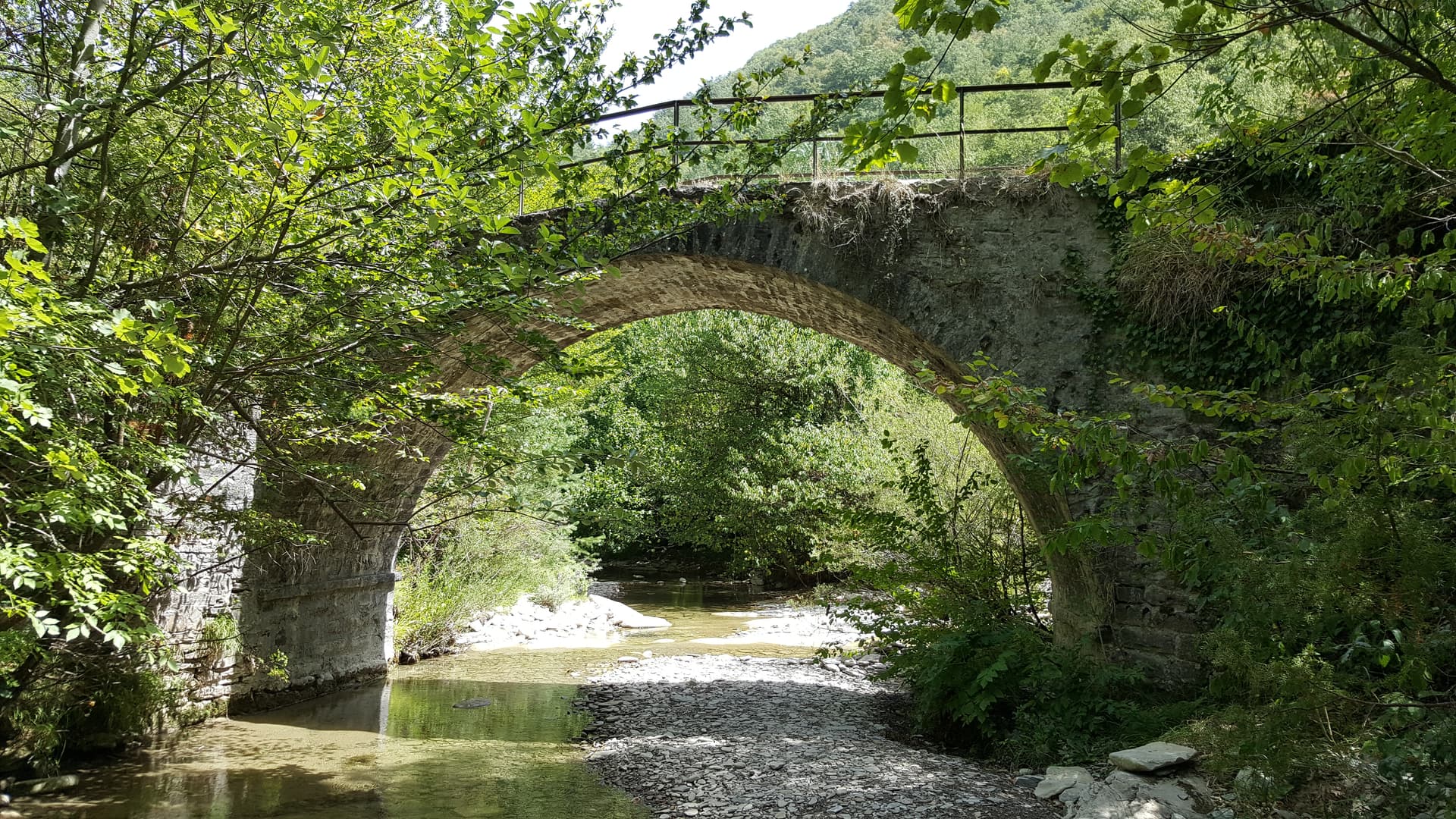
A 22-meter plain commune in the Bassa Romagna, the only fully preserved medieval castrum surviving in the Romagna lowlands.
Bagno di Romagna
Province: Forlì-Cesena
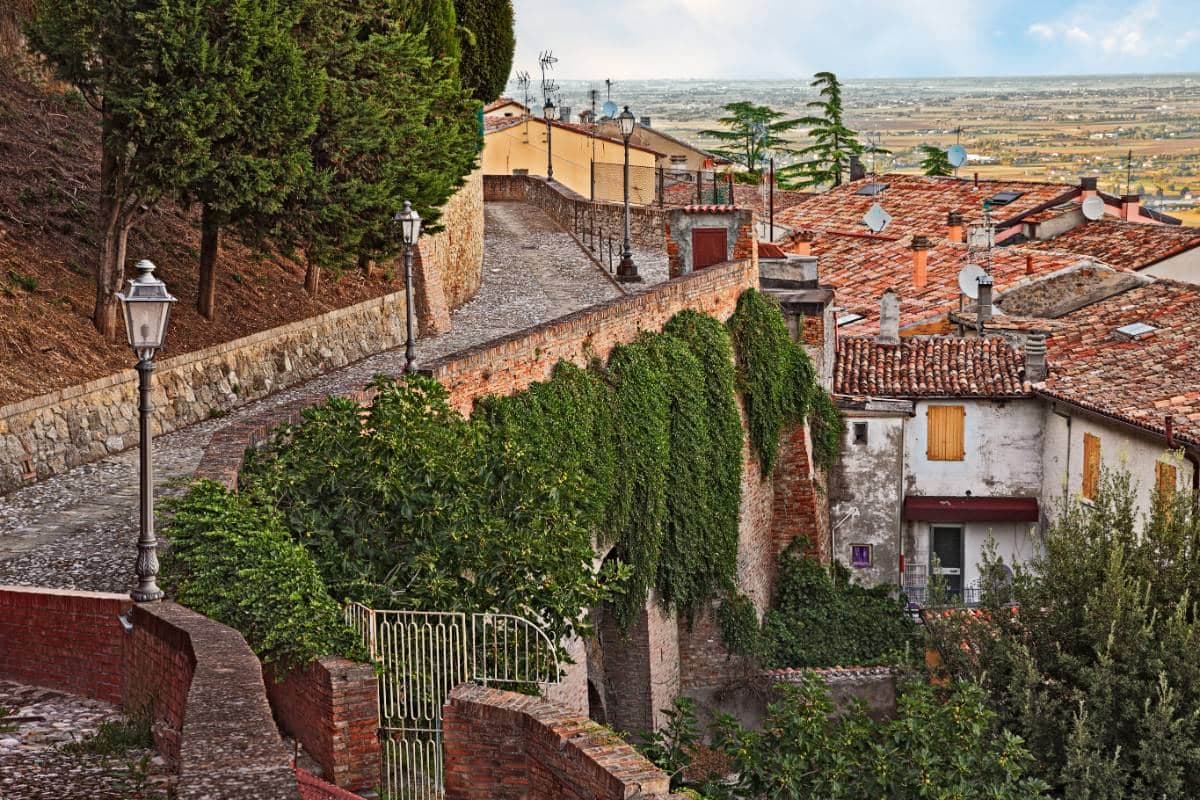
A 491-meter thermal town at the head of the Savio valley, drawing on springs that have run at 47 degrees since Roman times.
Bertinoro
Province: Forlì-Cesena
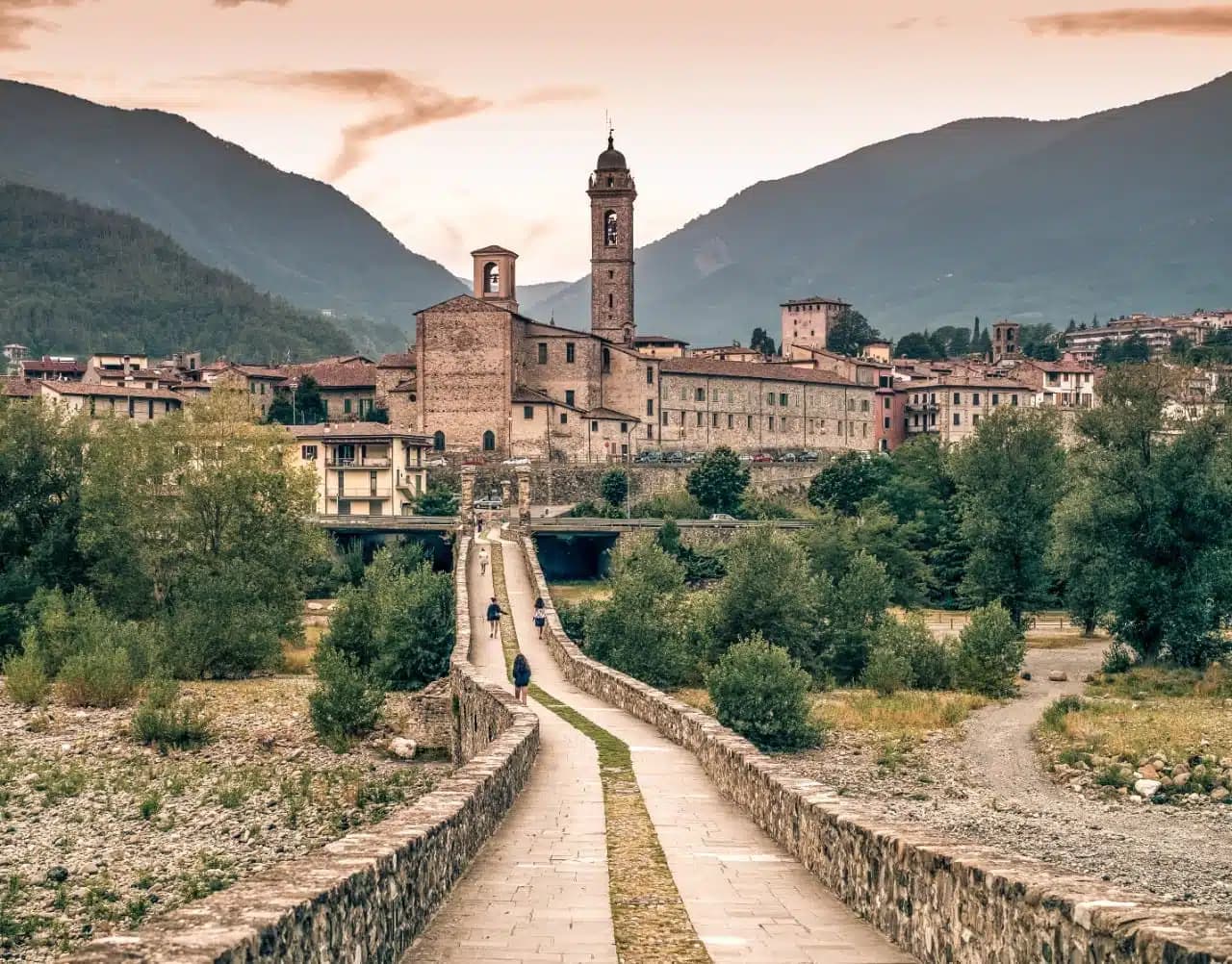
A 254-meter Romagna-hill borgo above the Via Emilia, with a twelve-ring hospitality column from 1300 and the slopes that grow Albana DOCG.
Bobbio
Province: Piacenza
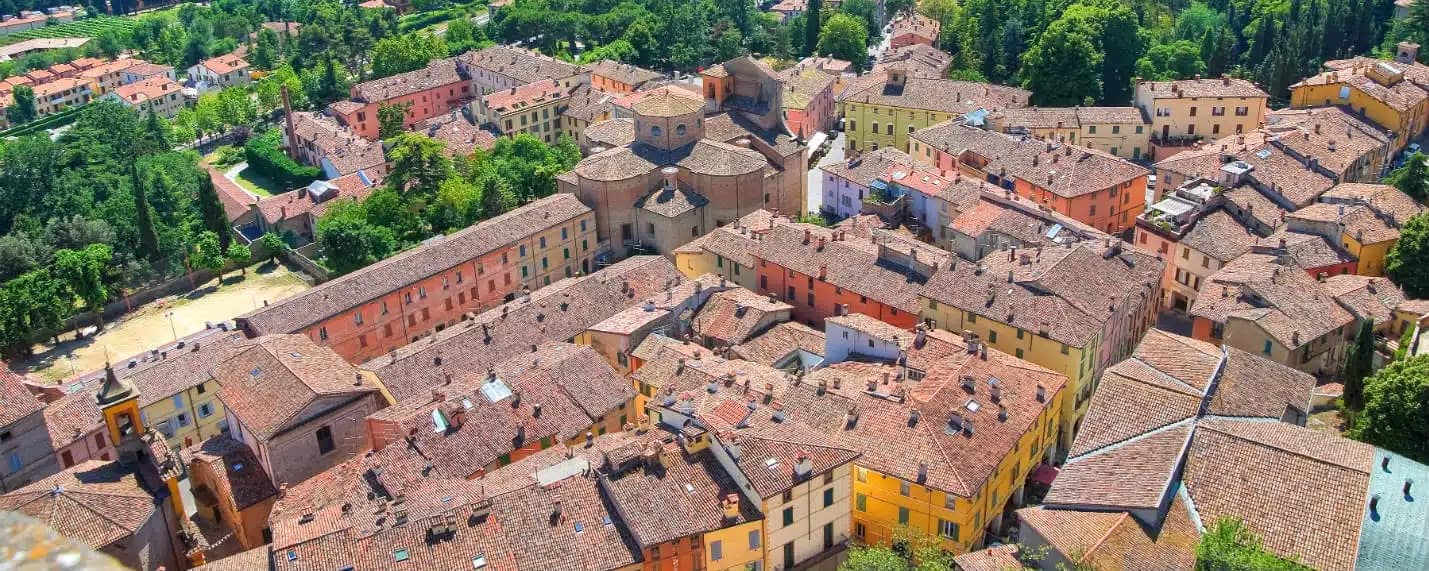
A 272-meter Trebbia-valley town built around the abbey Saint Columbanus founded in 614, named Borgo dei Borghi by RAI in 2019.
Brisighella
Province: Ravenna
A Lamone-valley borgo at 115 meters under three selenite hills crowned by a fortress, a clock tower, and a sanctuary.