
Emilia-Romagna · Forlì-Cesena
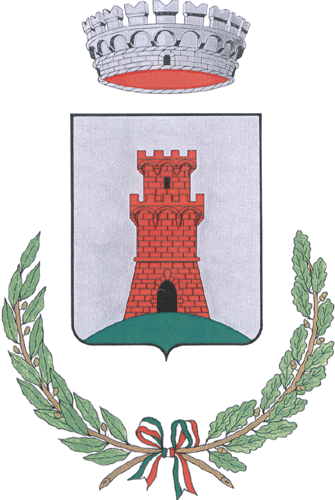
Bagno di Romagna
A 491-meter thermal town at the head of the Savio valley, drawing on springs that have run at 47 degrees since Roman times.
Known for
THERMAL SPRINGS
Sulphurous waters surfacing at 47 degrees, used continuously since the Roman period and still feeding two operating complexes in the centro storico.
FORESTE CASENTINESI
Half the municipality falls inside the national park, the largest old-growth beech and silver-fir forest in central Europe.
TUSCAN BORDER
The town was Tuscan until 1923, when Mussolini redrew the provincial line to put the source of the Tiber inside his native Forlì.
When to visit
Best · All year
- J
- F
- M
- A
- M
- J
- J
- A
- S
- O
- N
- D
- Best
- Hot or crowded
- Quiet
- Mostly closed
The festa: Assunzione di Maria, 15 August
Why come
Bagno di Romagna sits at the head of the Savio valley, on the Apennine ridge that separates Romagna from Tuscany. The town belonged to Tuscany until 1923, when Mussolini moved the provincial border so the source of the Tiber would fall inside his native Forlì. Its name comes from the thermal springs that surface at 47 degrees, rich in sodium-carbonate-sulphur, used by the Romans and continuously since.
Two thermal complexes still operate in the centro storico. The municipality reaches into the Parco Nazionale delle Foreste Casentinesi, the largest old-growth beech and silver-fir forest in central Europe, where the Ridracoli reservoir holds the drinking water for most of Romagna. San Piero in Bagno, the larger frazione four kilometers down the road, was made the administrative seat by royal decree in 1865 while the older Bagno kept the name and the springs. The town carries Borghi più belli, Bandiera Arancione, and Parco Nazionale recognition.
The Sunday letter
We haven’t written Bagno di Romagna’s letter yet.
One town every Sunday, with the photo, the food, the festa. Be there when this one comes up. Free, by Peter & Sophia from Pietrasanta.
By subscribing you agree to Substack’s Terms of Use, our Privacy Policy and our Information collection notice.
What to see
Terme di Sant'Agnese
Sulphurous thermal complex in the centro storico, drawing on springs that surface at 47 degrees and have been in continuous use since Roman times.
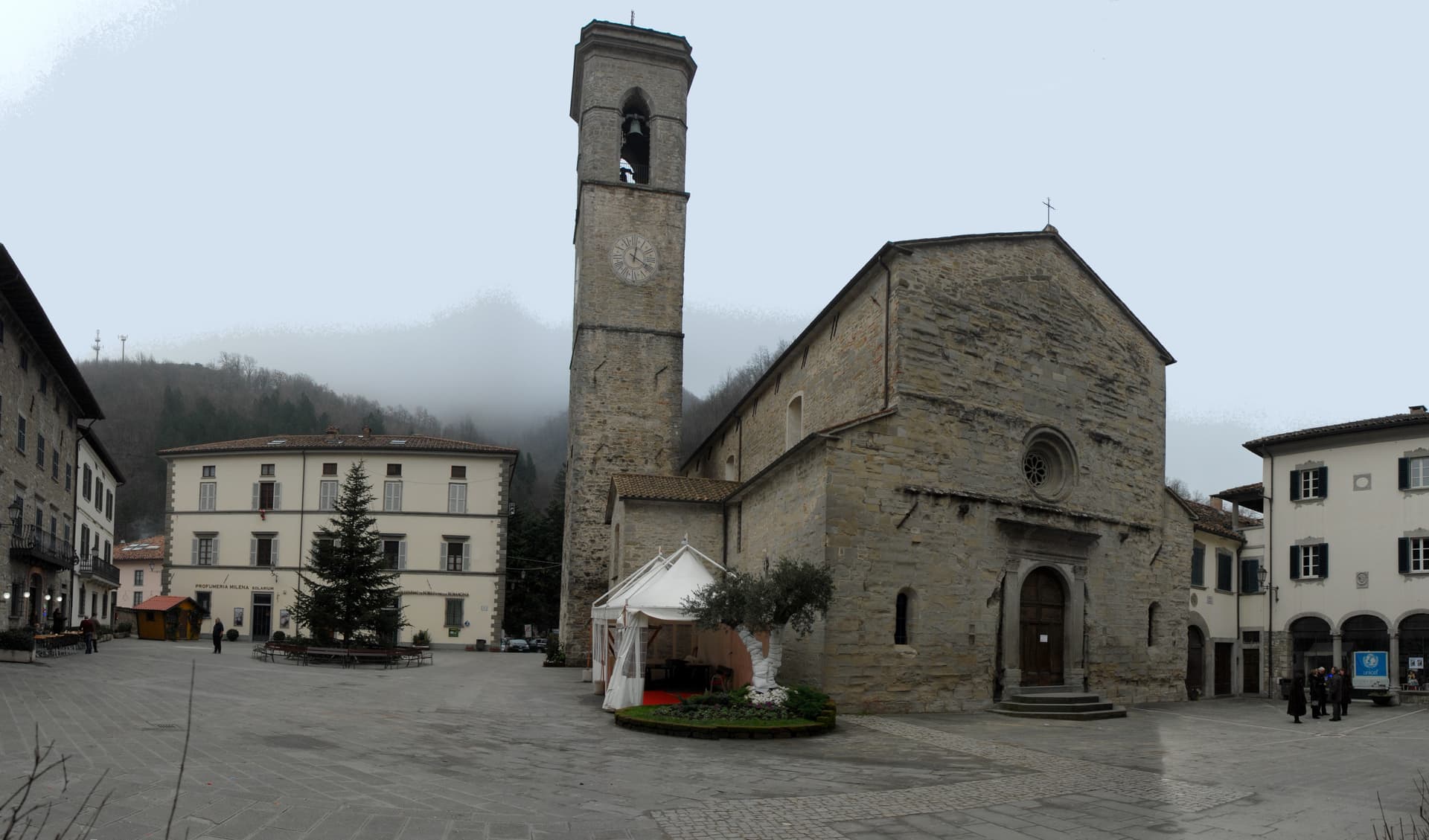
Basilica di Santa Maria Assunta
Twelfth-century church with a fifteenth-century Della Robbia terracotta and a wooden crucifix attributed to the school of Brunelleschi.
Parco Nazionale delle Foreste Casentinesi
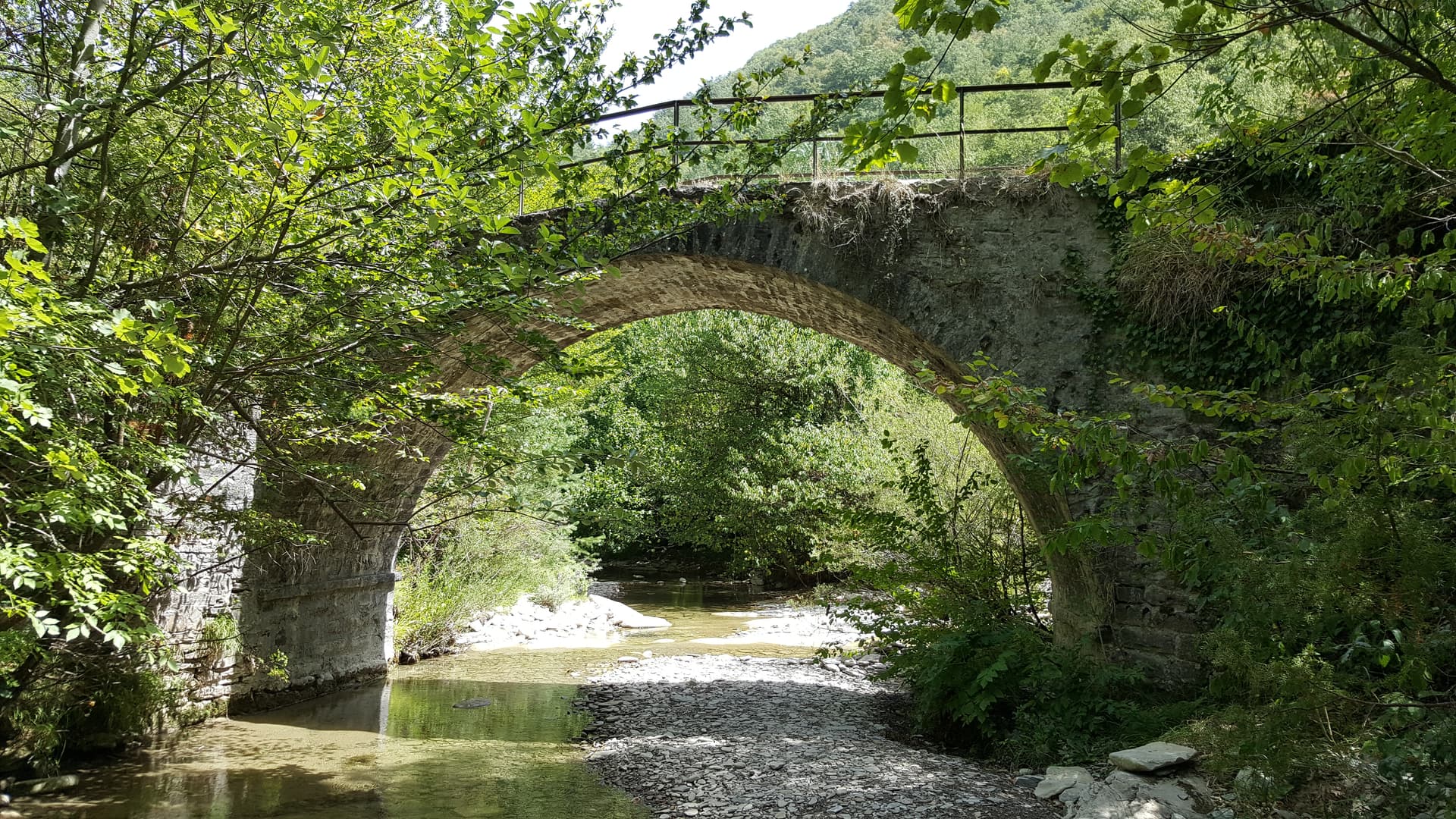
Old-growth beech and silver-fir forest spanning the Apennine ridge, the largest continuous protected forest in central Europe.
Diga di Ridracoli
Reservoir within the national park, completed in 1982, providing drinking water to most of Romagna and accessible by trail and boat.
Palazzo del Capitano
Fifteenth-century civic palace built when the town was a Florentine outpost, with the Medici coat of arms still on the façade.
The slow-trip planner
Building a trip? Find where Bagno di Romagna fits in a slow Italy circuit.
Answer five questions. We will shape a geographically coherent slow trip from the 1,000 Italian towns most travelers skip. Yours to save and share.
We recommend
Where to eat and stay
Not our picks, but places the guides put their name to — a Michelin star, a Gambero Rosso fork, a Slow Food snail, a Michelin Key for the hotels. Worth a table, a counter, or a night when you pass through.
Ristorante del LagoRistorante
One Michelin star for Ristorante del Lago, along with two Gambero Rosso forks (83/100) and a place in L'Espresso's Top 300.
daGoriniRistorante
daGorini holds three Gambero Rosso forks (90/100) and a place in L'Espresso's Top 300.
Paolo TeveriniRistorante
A Gambero Rosso listing for Paolo Teverini, and a spot in the Michelin Guide.
Da GoriniRistorante
Da Gorini has one Michelin star to its name.
Living here
- Population 5,592
- In-betweeni
- Pharmacy in town
- High school within a 30-minute drive
- Nearest airport Rimini, 1 h 48 min drive
- Regional capital Bologna, 2 h 1 min drive
Tags & datadesignations · numbers · sources
The numbers
- Elevation: 491 m
- Population: 5,592
- Surface area: 233.52 km²
These figures were compiled from public directories — ISTAT, OpenStreetMap, Wikidata — and from the official listings of the guides named on this page. Town details change; verify with official sources before you travel.
Close by
More towns near Bagno di Romagna
Sant'Agata Feltria
Province: Rimini
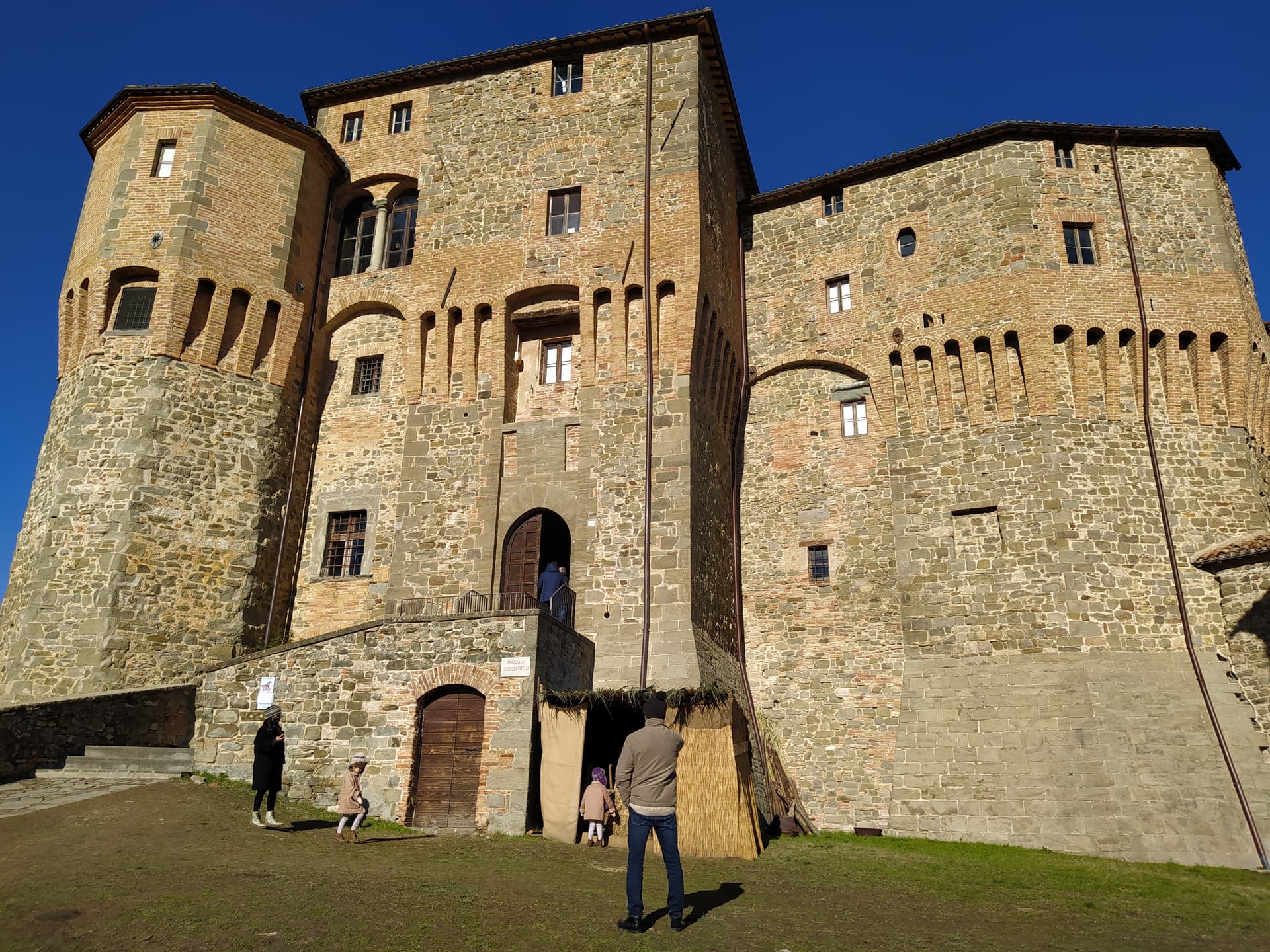
A 607-meter Montefeltro borgo crowned by the Rocca Fregoso on the Sasso del Lupo, host of the national white truffle fair since 1985.
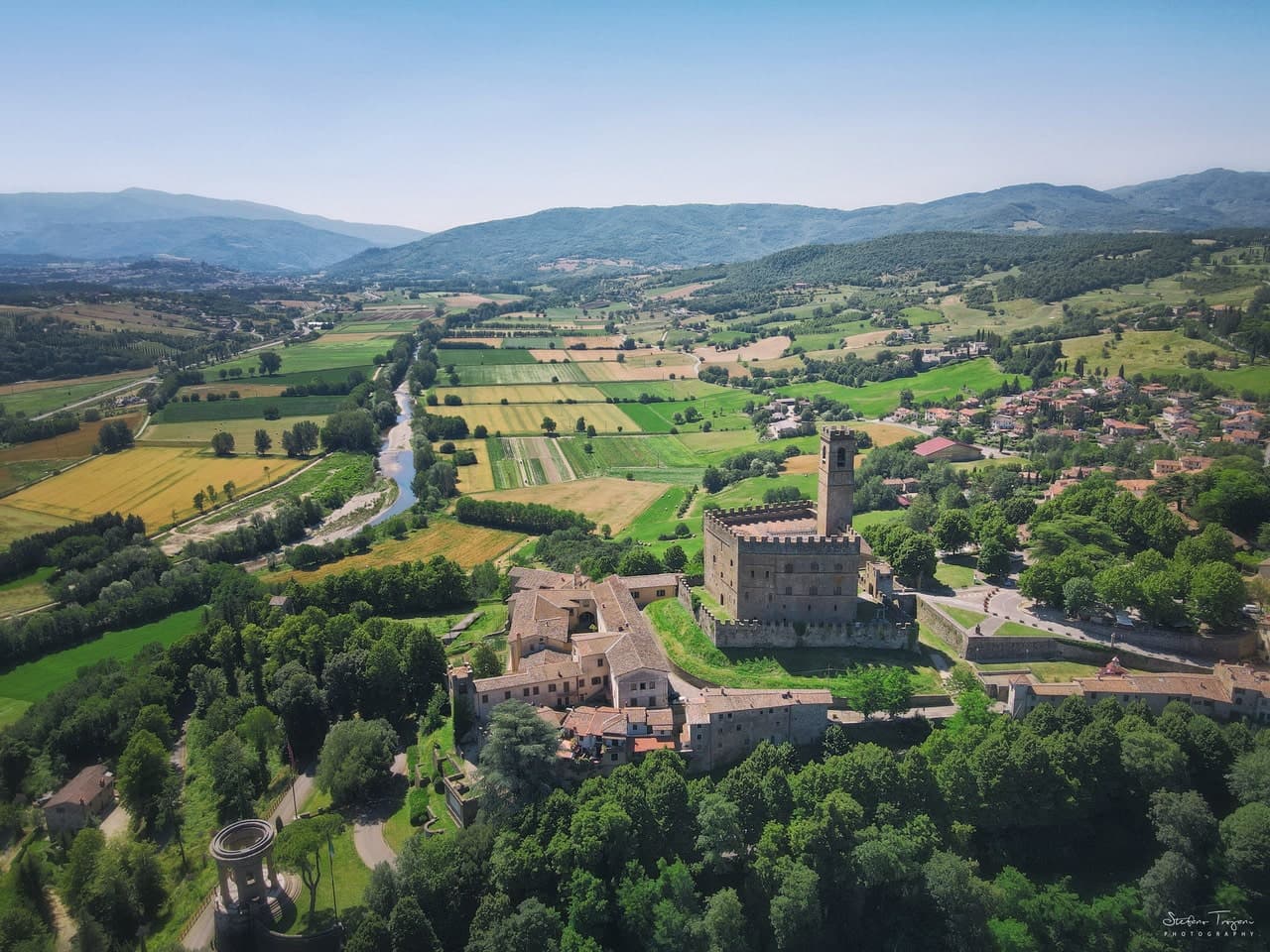
Poppi
Province: Arezzo
The Casentino borgo at 437 meters whose castle sat above the field where Dante fought the Battle of Campaldino in June 1289.
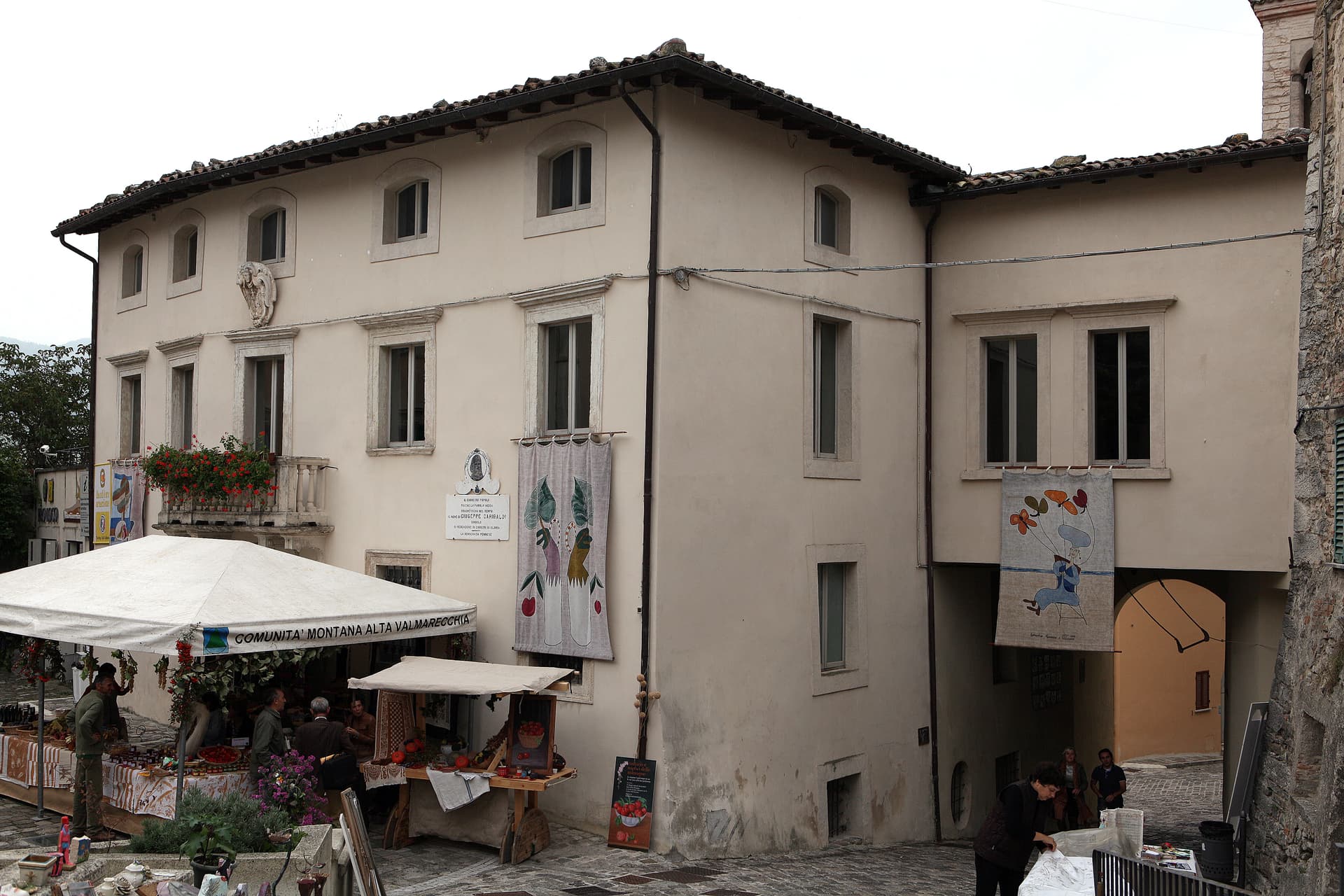
Pennabilli
Province: Rimini
A 629-meter Montefeltro borgo between the Roccione and the Rupe, rebuilt as a poet's open-air museum by Tonino Guerra after 1989.
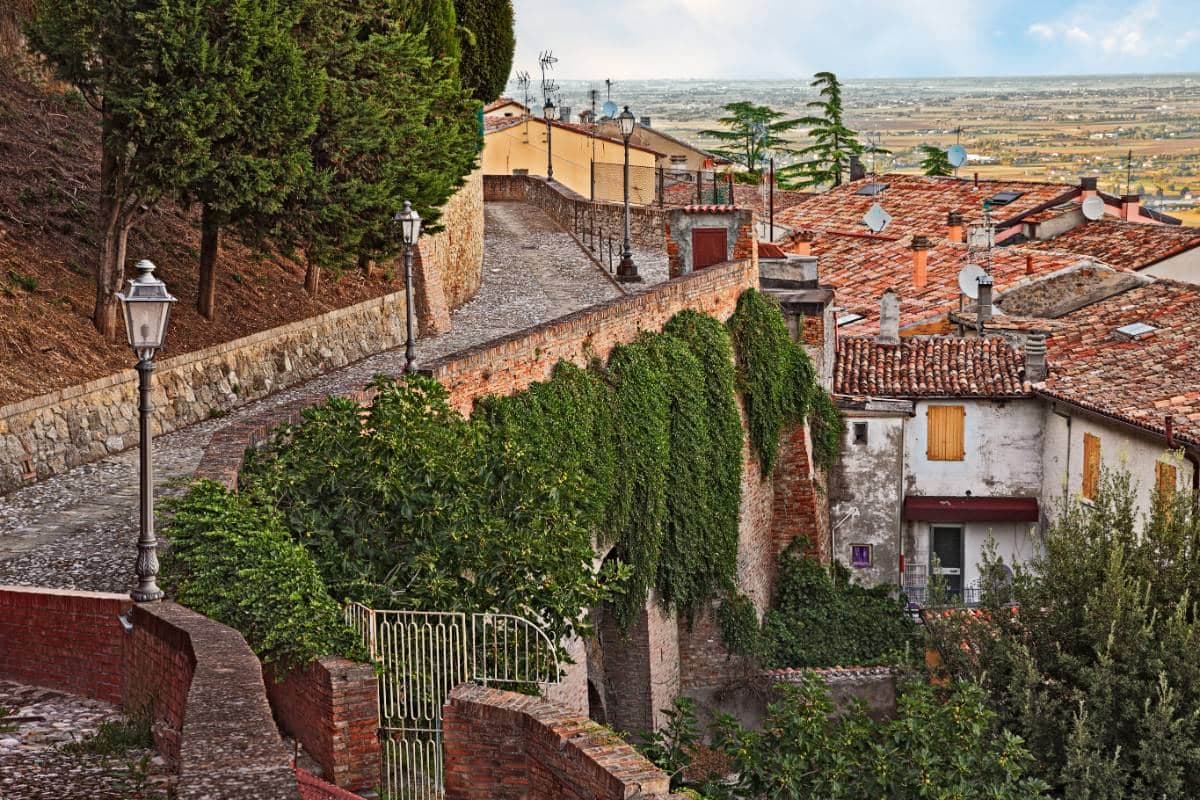
Bertinoro
Province: Forlì-Cesena
A 254-meter Romagna-hill borgo above the Via Emilia, with a twelve-ring hospitality column from 1300 and the slopes that grow Albana DOCG.
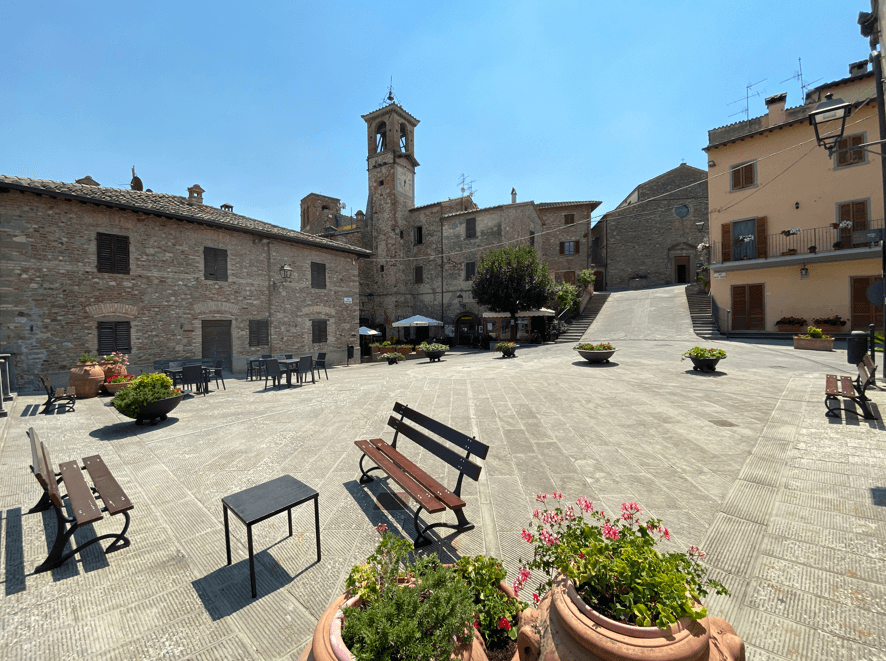
Citerna
Province: Perugia
A medieval borgo at 480 meters above the upper Tiber valley, holding the only sculpture by Donatello in Umbria.
🎨 Borghi più belli d'Italia
More Borghi più belli d'Italia towns in Emilia-Romagna
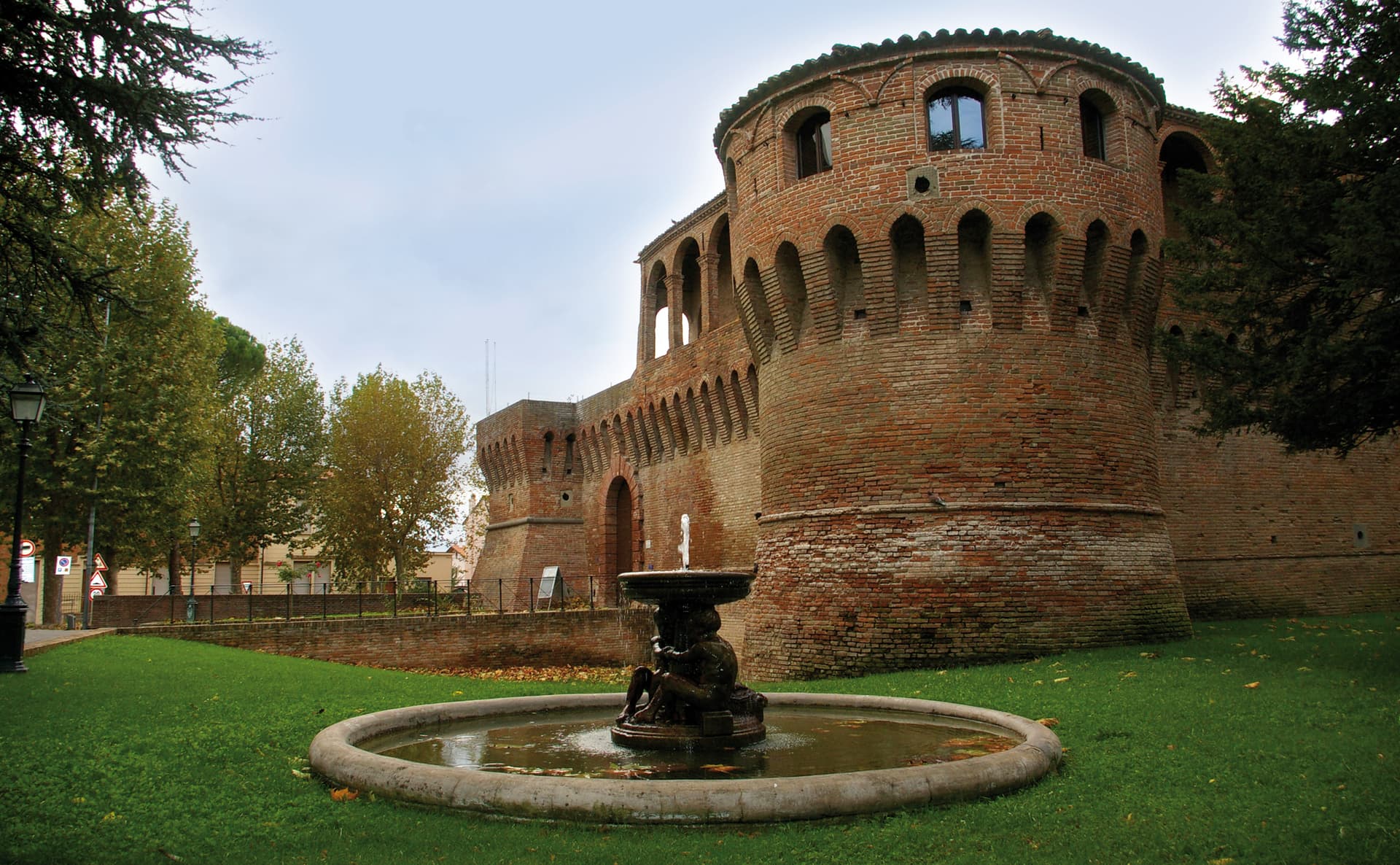
Bagnara di Romagna
Province: Ravenna
A 22-meter plain commune in the Bassa Romagna, the only fully preserved medieval castrum surviving in the Romagna lowlands.
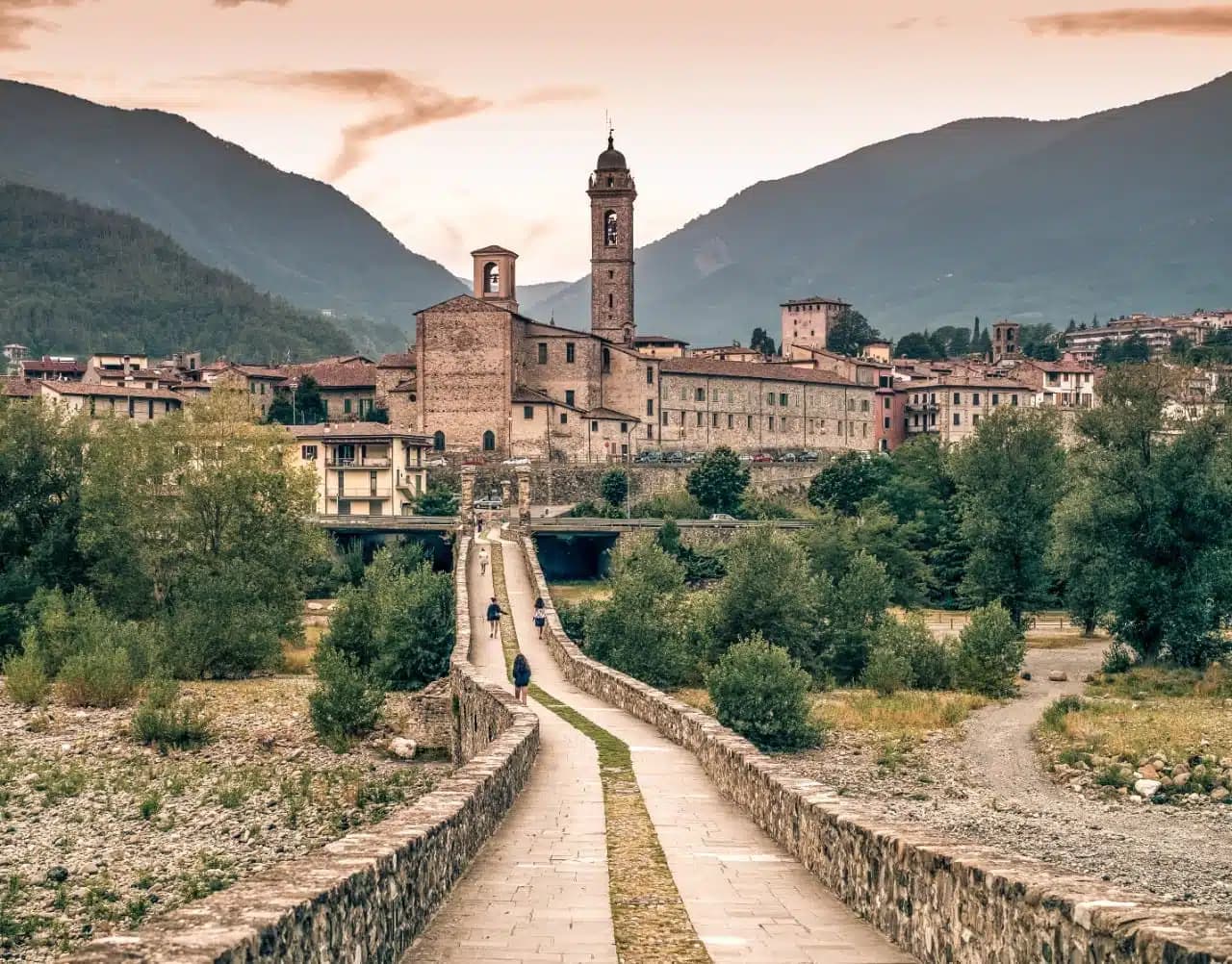
Bobbio
Province: Piacenza
A 272-meter Trebbia-valley town built around the abbey Saint Columbanus founded in 614, named Borgo dei Borghi by RAI in 2019.
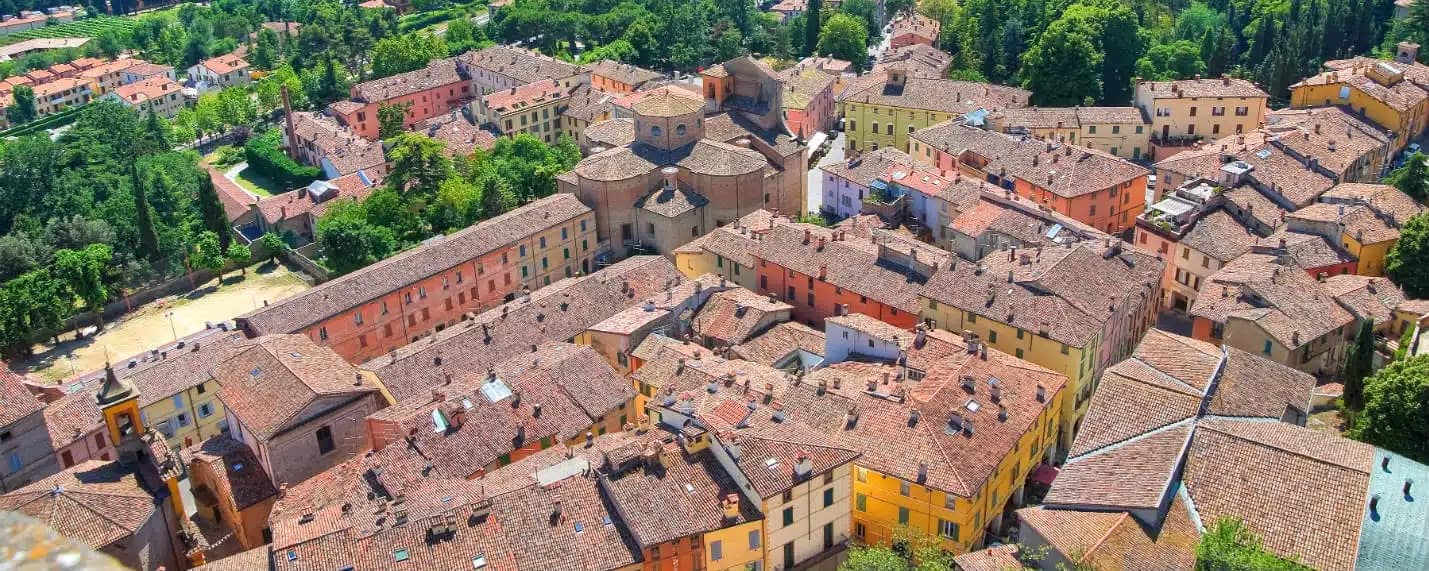
Brisighella
Province: Ravenna
A Lamone-valley borgo at 115 meters under three selenite hills crowned by a fortress, a clock tower, and a sanctuary.
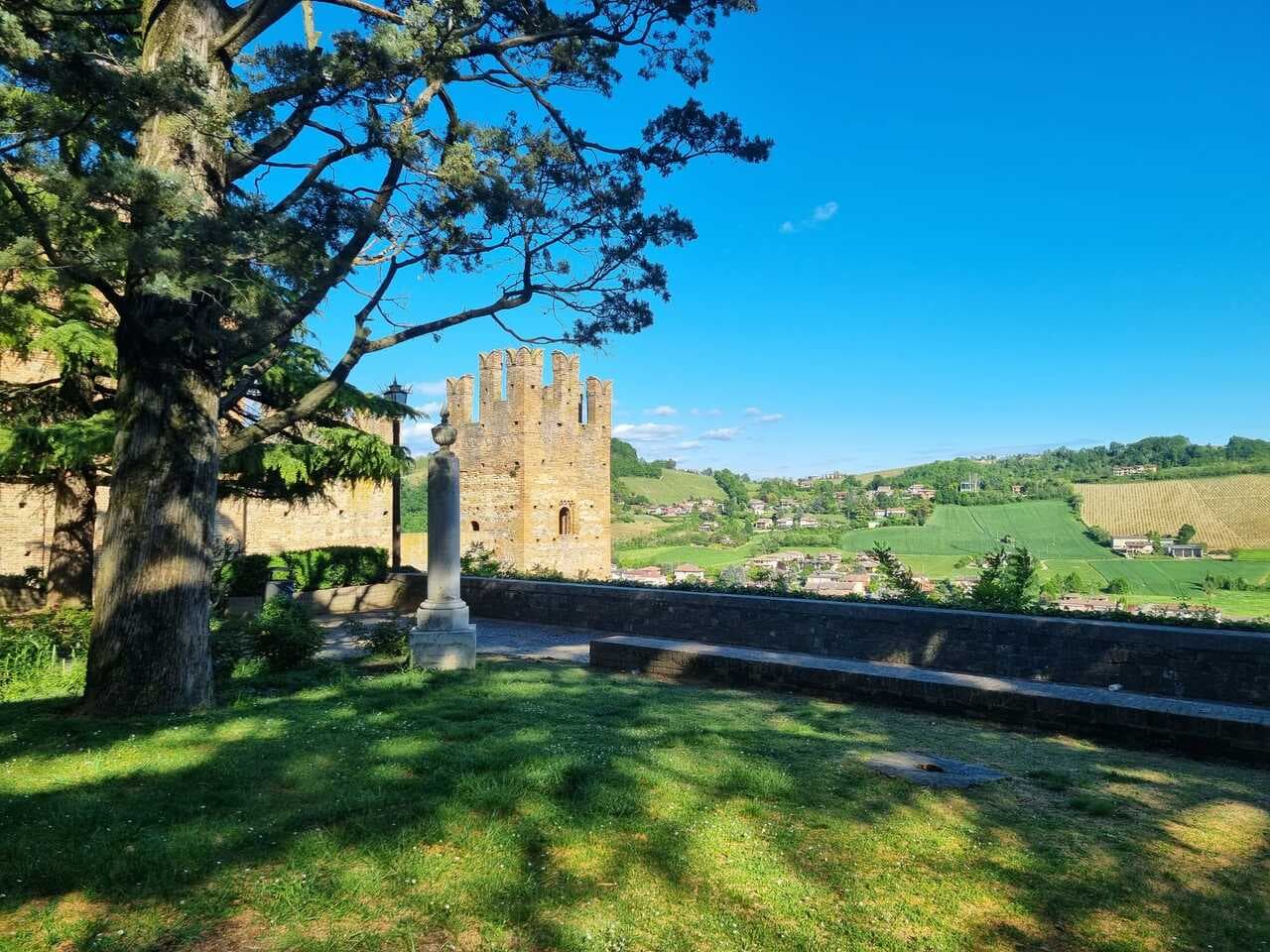
Castell'Arquato
Province: Piacenza
A 224-meter hilltop borgo in the Val d'Arda, kept intact since the tenth century and crowned by Luchino Visconti's 1342 fortress.
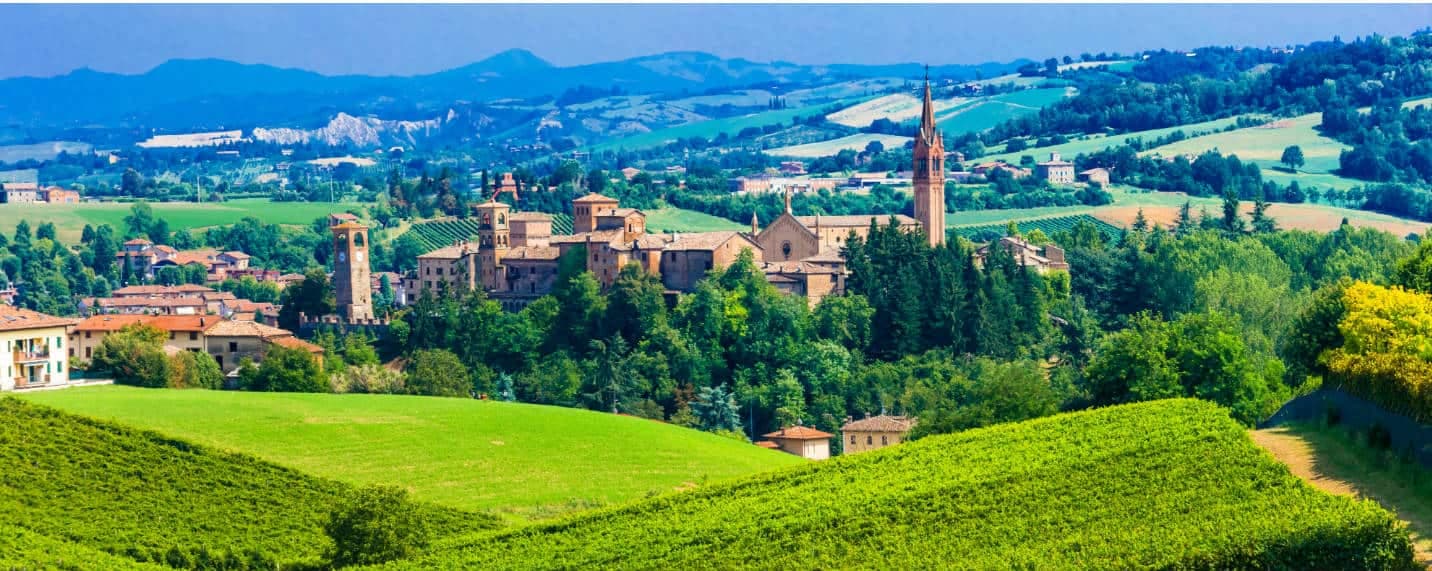
Castelvetro di Modena
Province: Modena
A 152-meter hill borgo south of Modena whose checkerboard piazza sits above the slopes that grow Lambrusco Grasparossa.