

Emilia-Romagna · Rimini
Montefiore Conca
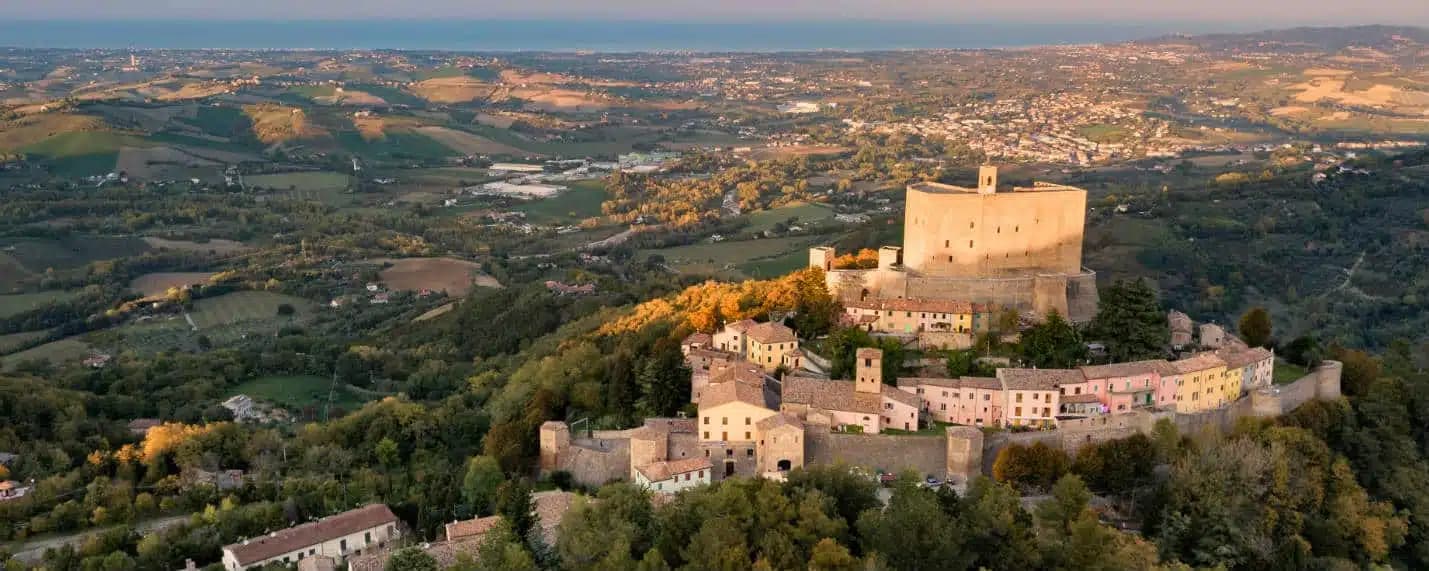
A 385-meter Malatesta hilltop above the Conca valley, dominated by a fourteenth-century fortress that was once a summer residence of the lords of Rimini.
Known for
ROCCA MALATESTIANA
Fourteenth-century Malatesta fortress, both a war machine and a frescoed summer residence that hosted Pope Gregory XII and Louis I of Hungary.
VIEW TO THE ADRIATIC
From 385 meters the Rocca is visible from the coast on clear days, and the hilltop reaches back to the Republic of San Marino and the Apennine ridge.
SANTUARIO BONORA
Fifteenth-century pilgrimage sanctuary on a ridge above the village, with a Marian fresco still drawing devotional traffic from the Romagna interior.
When to visit
Best · Apr–Oct
- J
- F
- M
- A
- M
- J
- J
- A
- S
- O
- N
- D
- Best
- Hot or crowded
- Quiet
- Mostly closed
The festa: Paolo di Tarso, 25 January
Why come
Montefiore Conca sits above the Conca river valley, twenty kilometers south of Rimini, on a hill the Malatesta chose for both military and seasonal reasons. The Rocca, built in the mid-fourteenth century under Malatesta Ungaro, served as a war machine in the family's defensive ring and as a summer residence with frescoed halls that received King Louis I of Hungary, Pope Gregory XII, and Pope Julius II. On a clear day the fortress is visible from the Adriatic coast as a solitary mass rising from green ridges.
After Federico da Montefeltro's troops took the town in the late fifteenth century, control reverted to the Holy See; the gate still carries the arms of Pope Pius II carved by the villagers themselves. The frazioni of Serbadone, Marazzano, and the Santuario della Bonora extend the commune into the surrounding hills. Recognition is double: Borghi più belli d'Italia and Bandiera Arancione.
The Sunday letter
We haven’t written Montefiore Conca’s letter yet.
One town every Sunday, with the photo, the food, the festa. Be there when this one comes up. Free, by Peter & Sophia from Pietrasanta.
By subscribing you agree to Substack’s Terms of Use, our Privacy Policy and our Information collection notice.
What to see
Rocca Malatestiana
Mid-fourteenth-century fortress built under Malatesta Ungaro, combining military bulk with a residential wing whose frescoed halls received Pope Gregory XII and Louis I of Hungary.
Santuario della Madonna di Bonora
Fifteenth-century pilgrimage sanctuary on a wooded ridge two kilometers from the centro storico, with a venerated fresco of the Madonna and Child.
Borgo medievale
Walled hilltop nucleus around the Rocca, with the Porta Curina gate carrying the Piccolomini arms of Pope Pius II carved by the villagers in the late fifteenth century.
Chiesa di San Paolo
Parish church on the main piazza, built in the fourteenth century and rebuilt in the seventeenth, with a wooden crucifix of the same period.
The slow-trip planner
Building a trip? Find where Montefiore Conca fits in a slow Italy circuit.
Answer five questions. We will shape a geographically coherent slow trip from the 1,000 Italian towns most travelers skip. Yours to save and share.
Living here
- Population 2,300
- In-betweeni
- Pharmacy in town
- High school within a 30-minute drive
- Nearest airport Rimini, 49 min drive
- Regional capital Bologna, 1 h 44 min drive
Tags & datadesignations · numbers · sources
Recognised as
The numbers
- Elevation: 385 m
- Population: 2,300
- Surface area: 22.32 km²
These figures were compiled from public directories — ISTAT, OpenStreetMap, Wikidata — and from the official listings of the guides named on this page. Town details change; verify with official sources before you travel.
Featured on
Montefiore Conca appears on this themed pick from our Collections:
Close by
More towns near Montefiore Conca
San Giovanni in Marignano
Province: Rimini
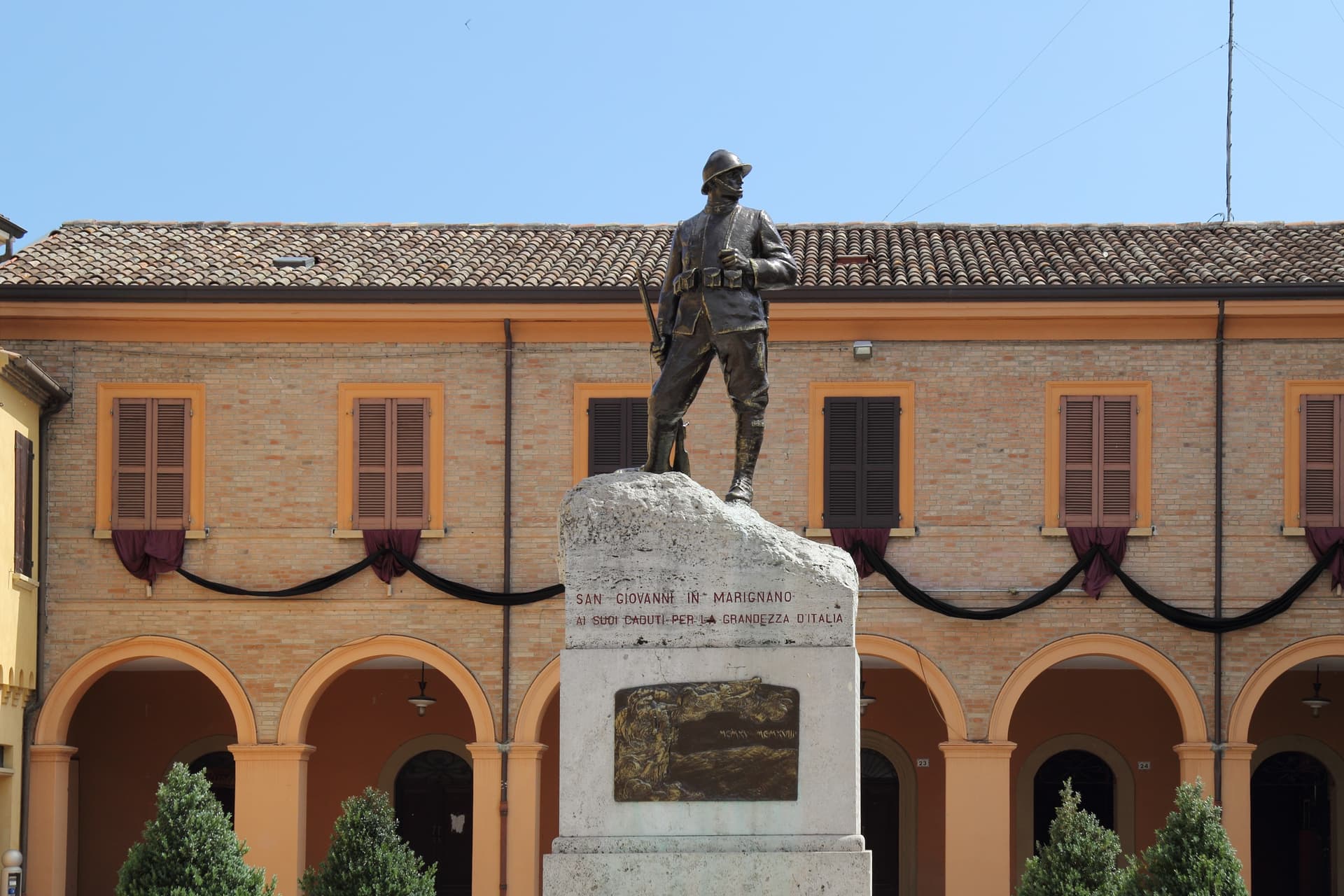
A walled Conca-valley borgo, granary of the Malatesta state, where the Notte delle Streghe has marked the summer solstice since 1988.
Gabicce Mare
Province: Pesaro e Urbino
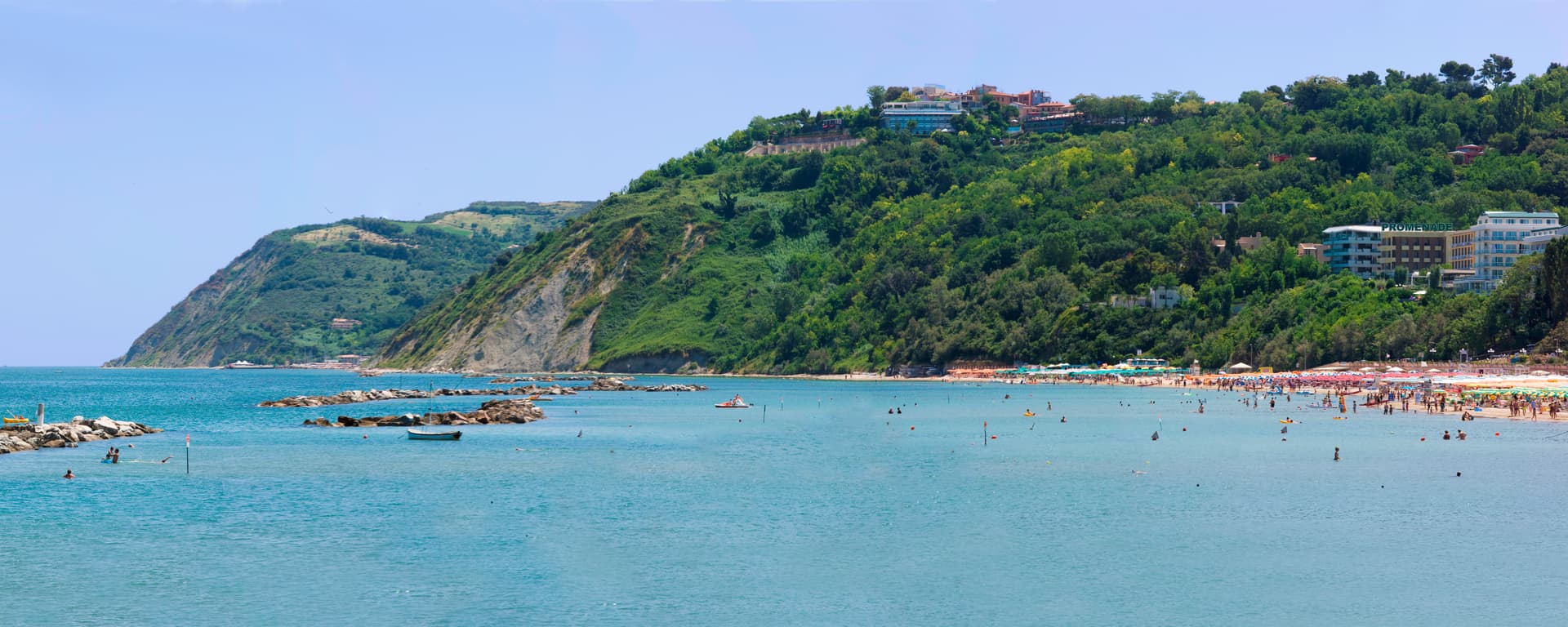
The northernmost Marche seaside on the Adriatic, where the Riviera Romagnola meets the cliffs of the Parco del San Bartolo at the Romagna border.
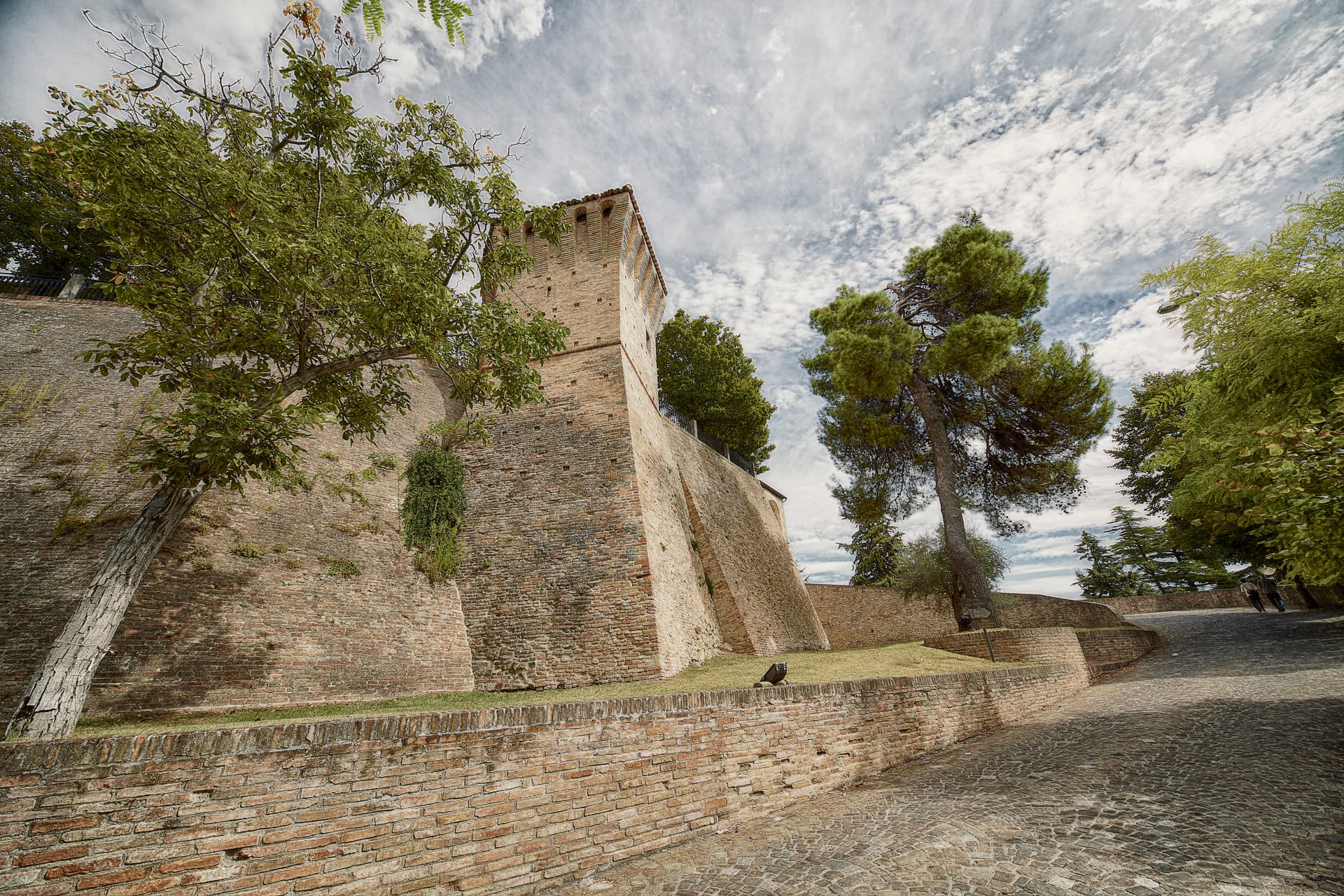
Montegridolfo
Province: Rimini
A walled borgo of fewer than a thousand residents on the Romagna-Marche border, held alternately by the Malatesta and the Montefeltro through the fifteenth century.
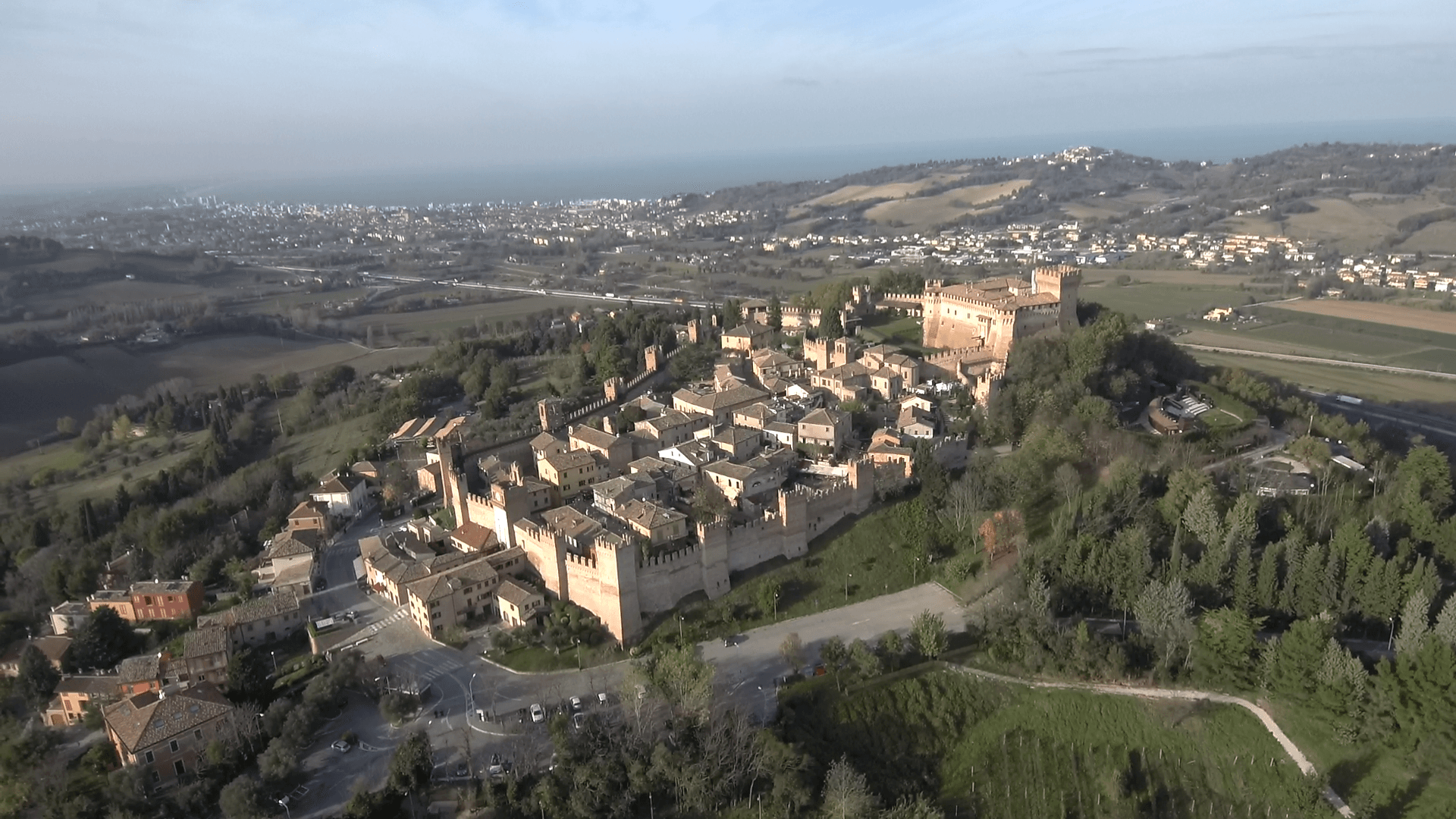
Gradara
Province: Pesaro e Urbino
The walled hill borgo at 142 meters above the Adriatic where Dante set the deaths of Paolo and Francesca, with one of Italy's best-preserved castles.
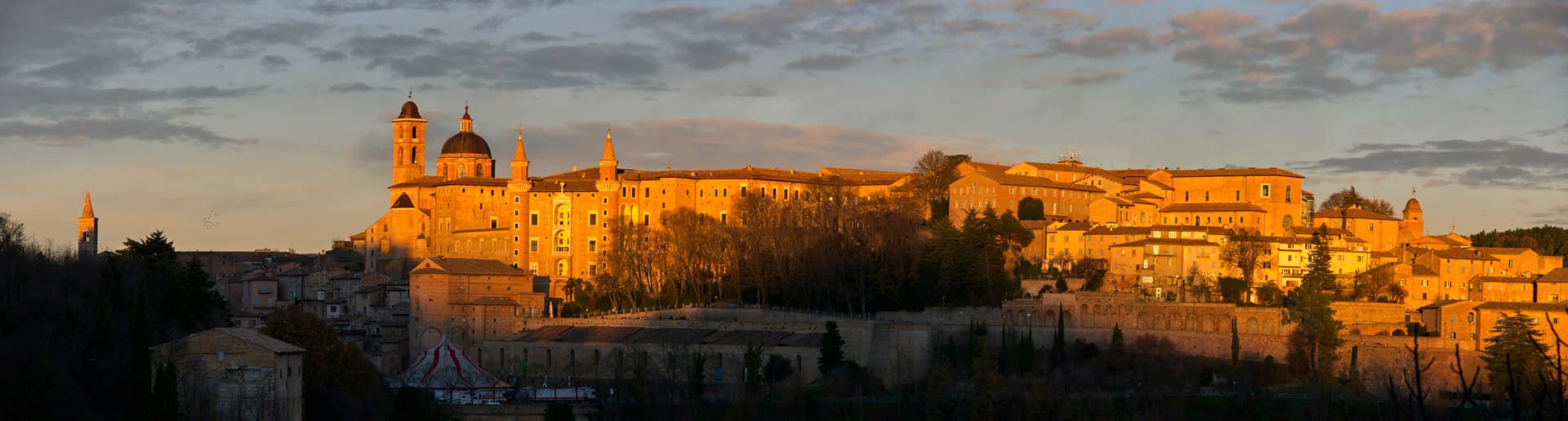
Urbino
Province: Pesaro e Urbino
The Montefeltro capital at 451 meters on twin hills, where Federico II built the Renaissance court that produced Raffaello.
🎨 Borghi più belli d'Italia
More Borghi più belli d'Italia towns in Emilia-Romagna
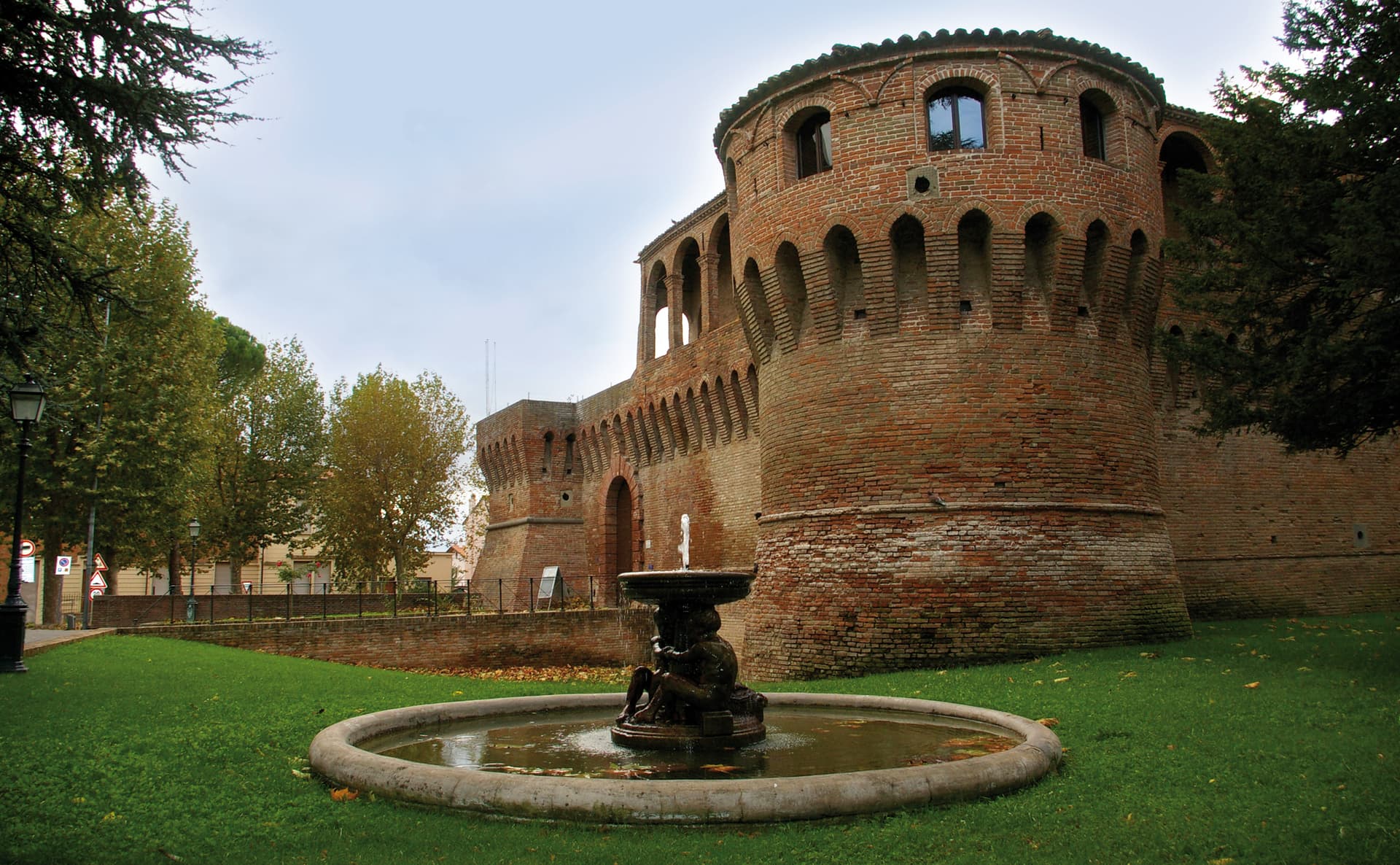
Bagnara di Romagna
Province: Ravenna
A 22-meter plain commune in the Bassa Romagna, the only fully preserved medieval castrum surviving in the Romagna lowlands.
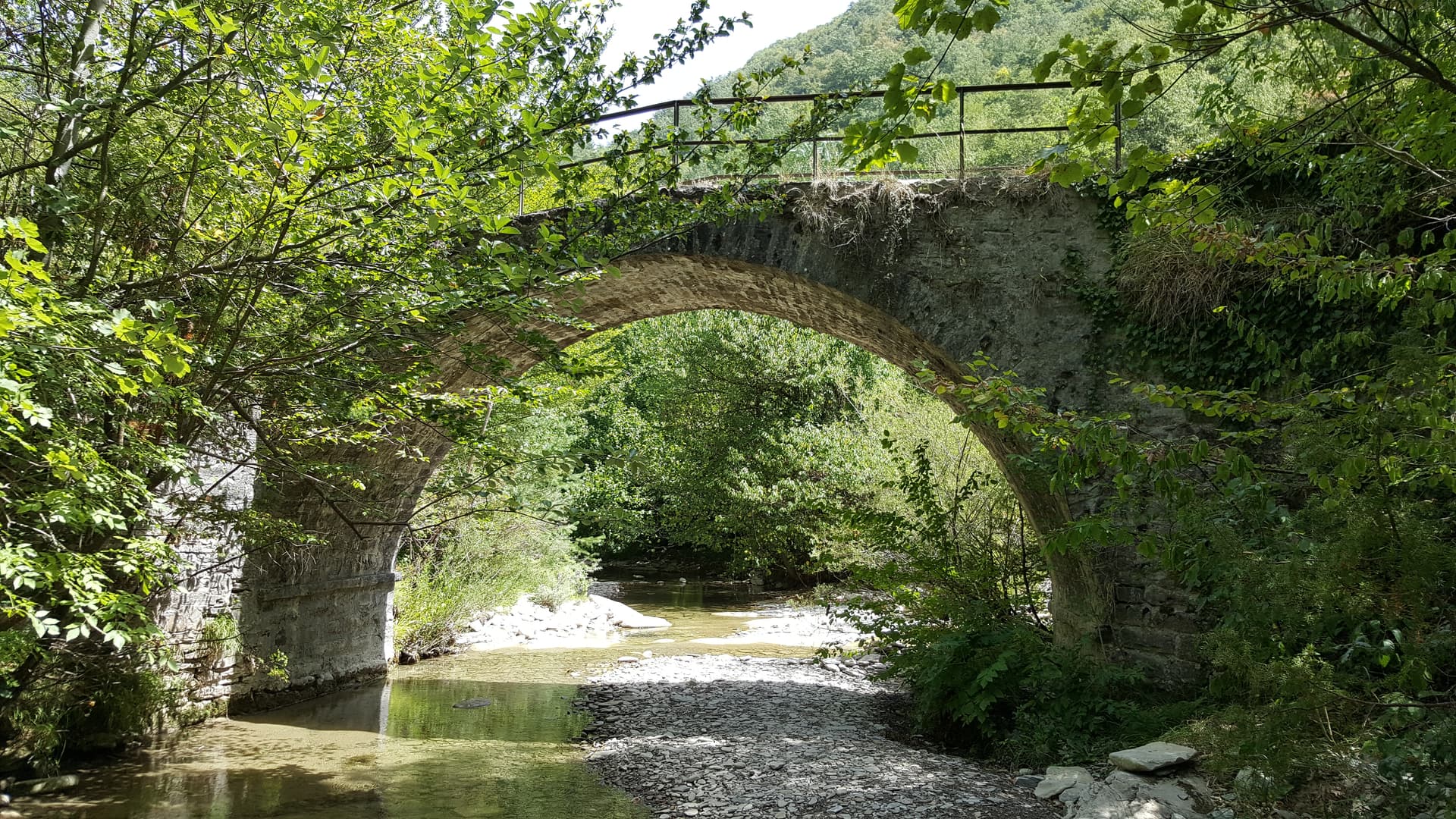
Bagno di Romagna
Province: Forlì-Cesena
A 491-meter thermal town at the head of the Savio valley, drawing on springs that have run at 47 degrees since Roman times.
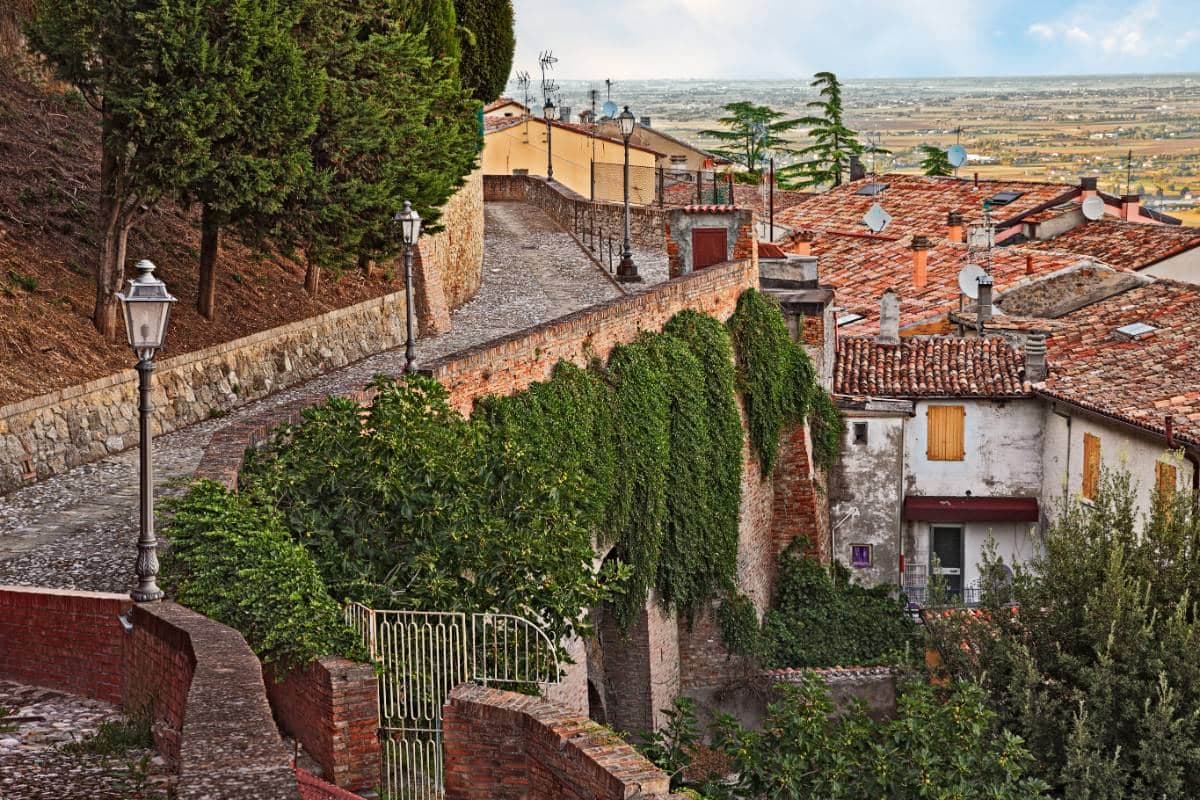
Bertinoro
Province: Forlì-Cesena
A 254-meter Romagna-hill borgo above the Via Emilia, with a twelve-ring hospitality column from 1300 and the slopes that grow Albana DOCG.
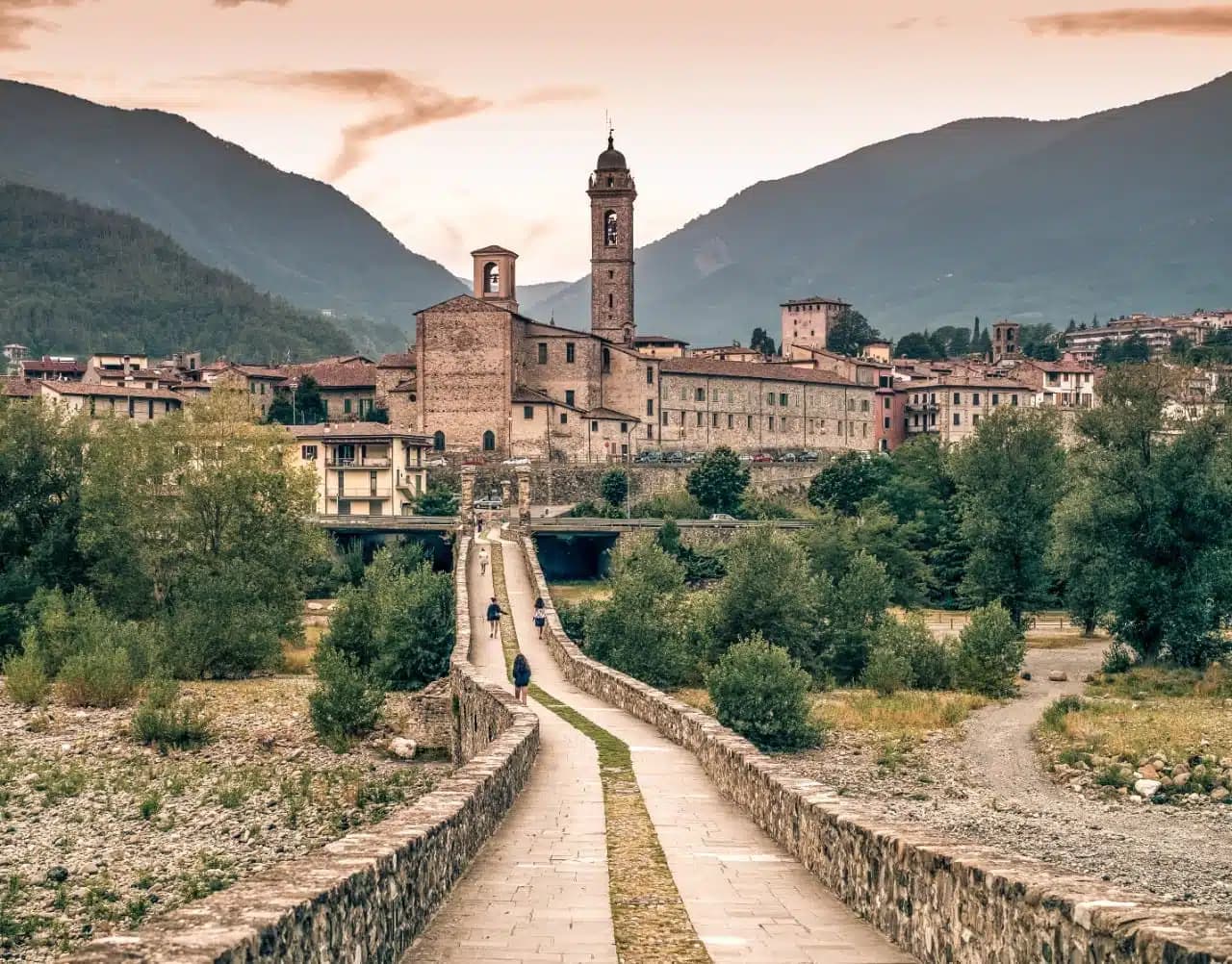
Bobbio
Province: Piacenza
A 272-meter Trebbia-valley town built around the abbey Saint Columbanus founded in 614, named Borgo dei Borghi by RAI in 2019.
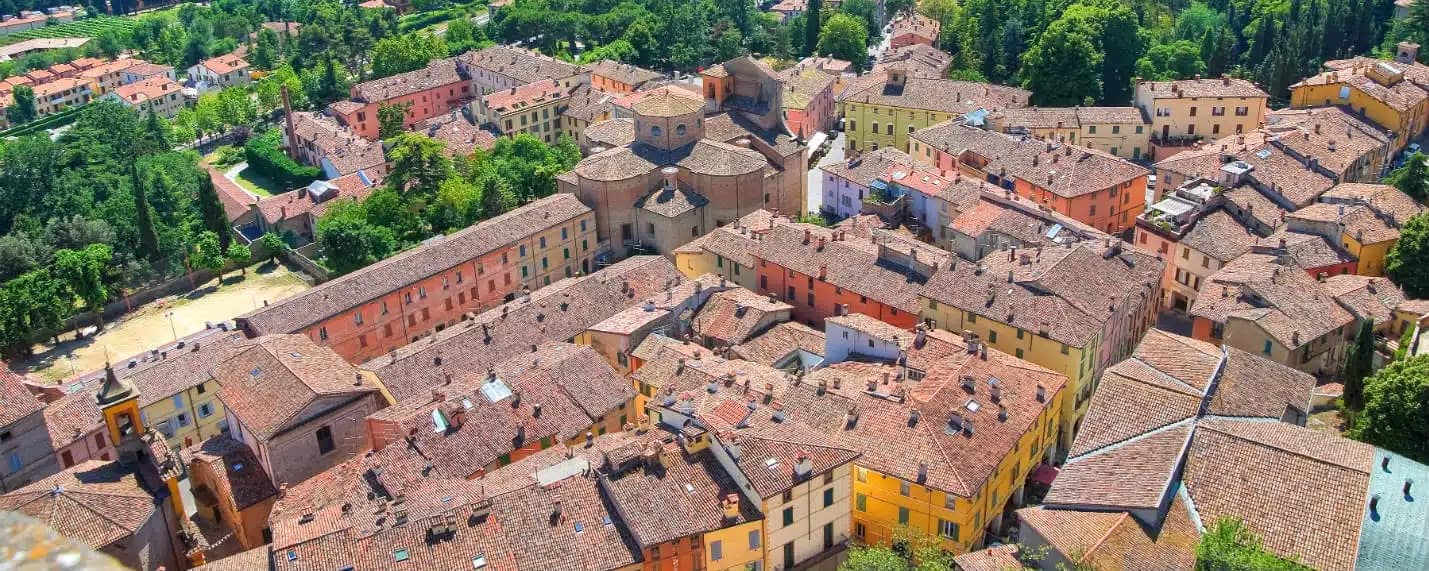
Brisighella
Province: Ravenna
A Lamone-valley borgo at 115 meters under three selenite hills crowned by a fortress, a clock tower, and a sanctuary.