

Friuli-Venezia Giulia · Pordenone
Spilimbergo
A 132-meter Friulian town on the Tagliamento, home since 1922 to the Scuola Mosaicisti, whose alumni made the Library of Congress mosaics.
Known for
MOSAIC SCHOOL
The Scuola Mosaicisti del Friuli has trained mosaicists since 1922; alumni made the Library of Congress and Ground Zero mosaics.
PALAZZO DIPINTO
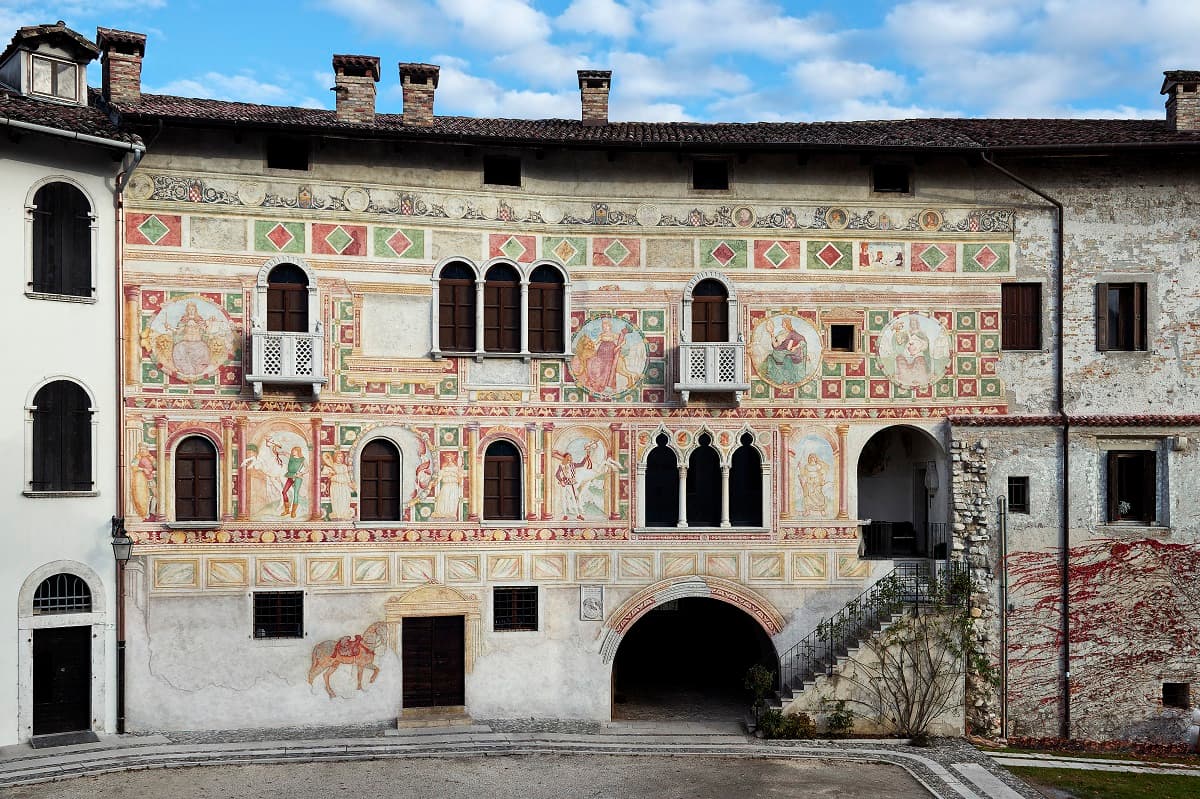
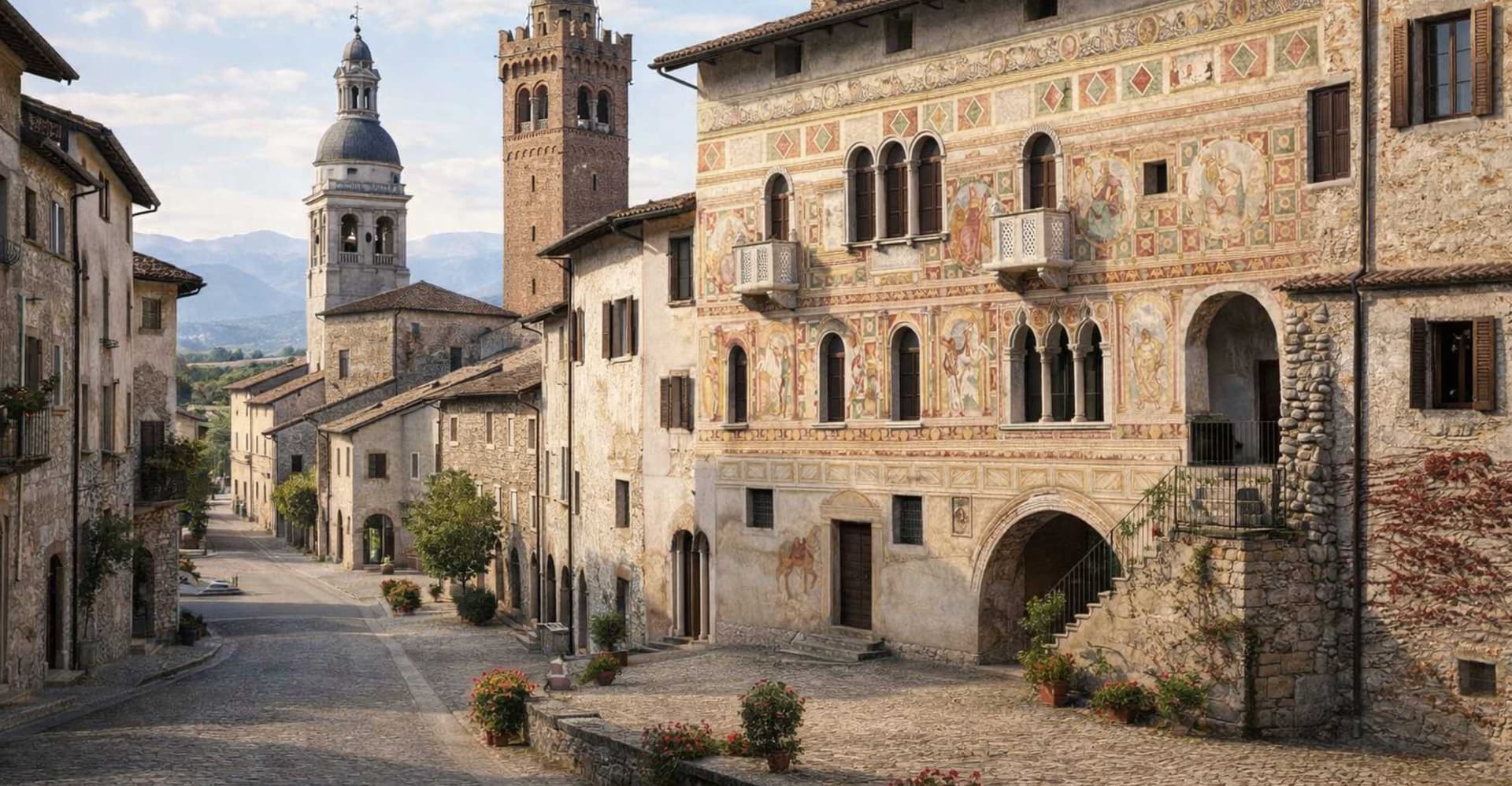
Bellunello frescoed the entire façade around 1480; the palace later hosted Charles V, Bona Sforza, and Henry III of France.
TAGLIAMENTO
The river runs three kilometers wide here in braided channels, the last unaltered Alpine river bed of its kind in Europe.
When to visit
Best · Apr–Oct
- J
- F
- M
- A
- M
- J
- J
- A
- S
- O
- N
- D
- Best
- Hot or crowded
- Quiet
- Mostly closed
Why come
Spilimbergo sits on the right bank of the Tagliamento, where the river broadens to three kilometers and splits into braided channels. The town takes its name from the castrum de Spengenberg, built in the eleventh century by Carinthian counts who came south as vassals of the Patriarch of Aquileia. The castle, the Palazzo Dipinto with its Andrea Bellunello frescoes from the 1480s, and the Romanesque-Gothic Duomo di Santa Maria Maggiore begun in 1284 still anchor the centro storico.
The defining institution is younger: the Scuola Mosaicisti del Friuli, founded in 1922, which has trained the artisans behind the Library of Congress mosaics in Washington, the dome of the Holy Sepulchre in Jerusalem, the Foro Italico in Rome, and the World Trade Center transit hub at Ground Zero. The Folkest folk-music festival runs every July. The town carries Borghi più belli and Borgo dei Borghi finalist recognition, and the river itself is one of the last morphologically intact Alpine braided rivers in Europe.
The Sunday letter
We haven’t written Spilimbergo’s letter yet.
One town every Sunday, with the photo, the food, the festa. Be there when this one comes up. Free, by Peter & Sophia from Pietrasanta.
By subscribing you agree to Substack’s Terms of Use, our Privacy Policy and our Information collection notice.
What to see
Castello di Spilimbergo
Eleventh-century fortress of the Spengenberg counts, burned in the 1511 popular revolt and partially rebuilt; the Palazzo Dipinto survived.
Palazzo Dipinto
Fifteenth-century façade frescoed by Andrea Bellunello around 1480 with prancing horses, ladies, pages, and Theological and Cardinal virtues.
Duomo di Santa Maria Maggiore
Romanesque-Gothic cathedral begun in 1284 by count Walterpertoldo II, with apse frescoes executed between 1350 and 1359.
Scuola Mosaicisti del Friuli
Mosaic school founded in 1922, the most important in the world, with over 800 student and master works displayed across its halls.
Tagliamento riverbed
Braided Alpine river three kilometers wide near the town, one of the last morphologically intact rivers of its kind in Europe.
Corso Roma
Main axis of the centro storico, lined with frescoed Renaissance palazzi and the Macia, the medieval measuring stone used for market trade.
The slow-trip planner
Building a trip? Find where Spilimbergo fits in a slow Italy circuit.
Answer five questions. We will shape a geographically coherent slow trip from the 1,000 Italian towns most travelers skip. Yours to save and share.
We recommend
Where to eat and stay
Not our picks, but places the guides put their name to — a Michelin star, a Gambero Rosso fork, a Slow Food snail, a Michelin Key for the hotels. Worth a table, a counter, or a night when you pass through.
La TorreRistorante
La Torre holds two Gambero Rosso forks (82/100) and a spot in the Michelin Guide.
Osteria da AfroRistorante
Osteria da Afro carries a spot in the Michelin Guide.
Living here
- Population 11,833
- Commuter belti
- Pharmacy in town
- High school within a 30-minute drive
- Nearest airport Venice, 1 h 22 min drive
- Regional capital Trieste, 1 h 34 min drive
Tags & datadesignations · numbers · sources
Recognised as
The numbers
- Elevation: 132 m
- Population: 11,833
- Surface area: 71.88 km²
These figures were compiled from public directories — ISTAT, OpenStreetMap, Wikidata — and from the official listings of the guides named on this page. Town details change; verify with official sources before you travel.
Close by
More towns near Spilimbergo
Valvasone Arzene
Province: Pordenone
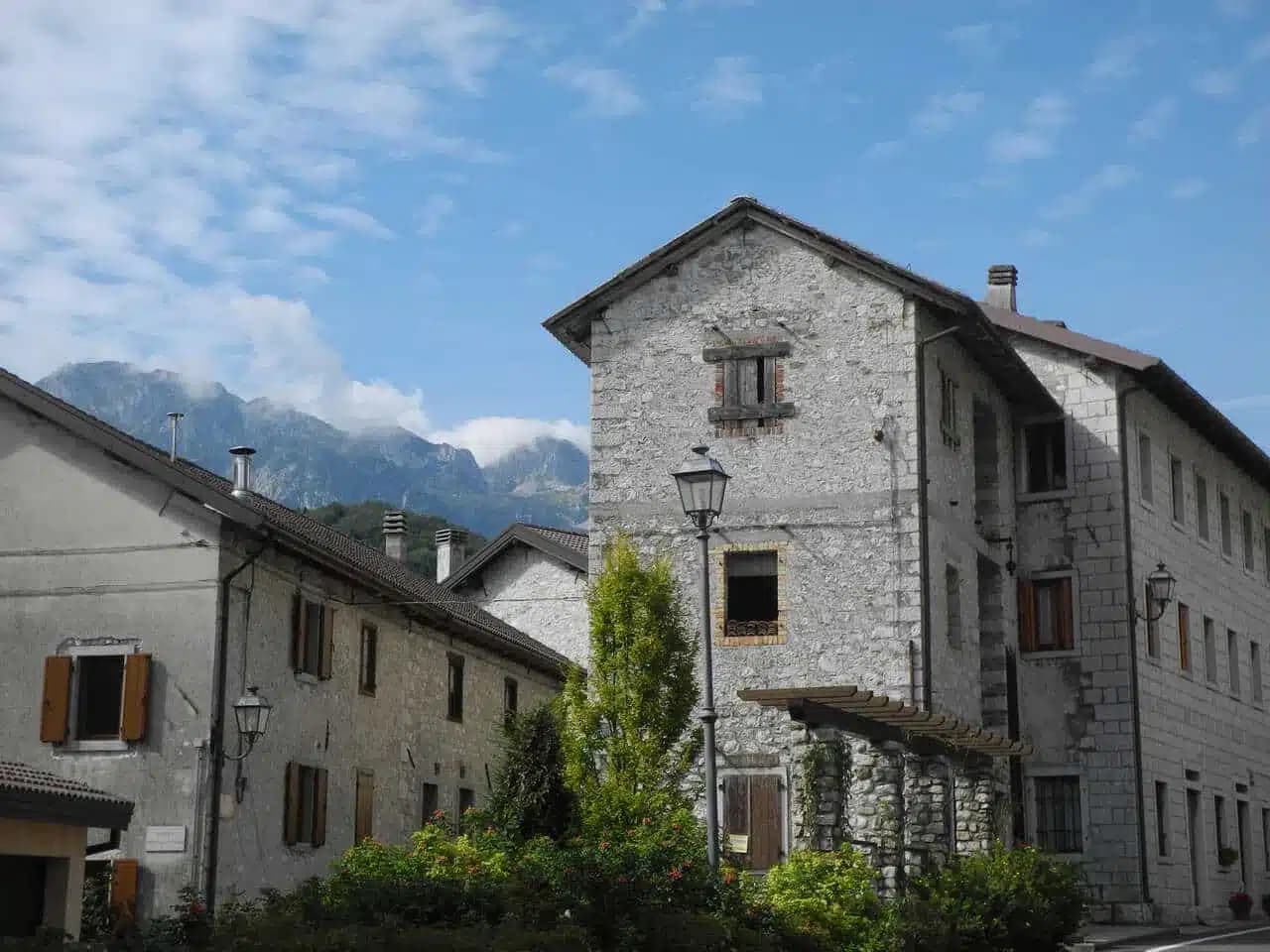
A medieval borgo at 57 meters on the Tagliamento's right bank, organized around a castle and a Duomo with a 1532 Italian-built organ.
San Daniele del Friuli
Province: Udine
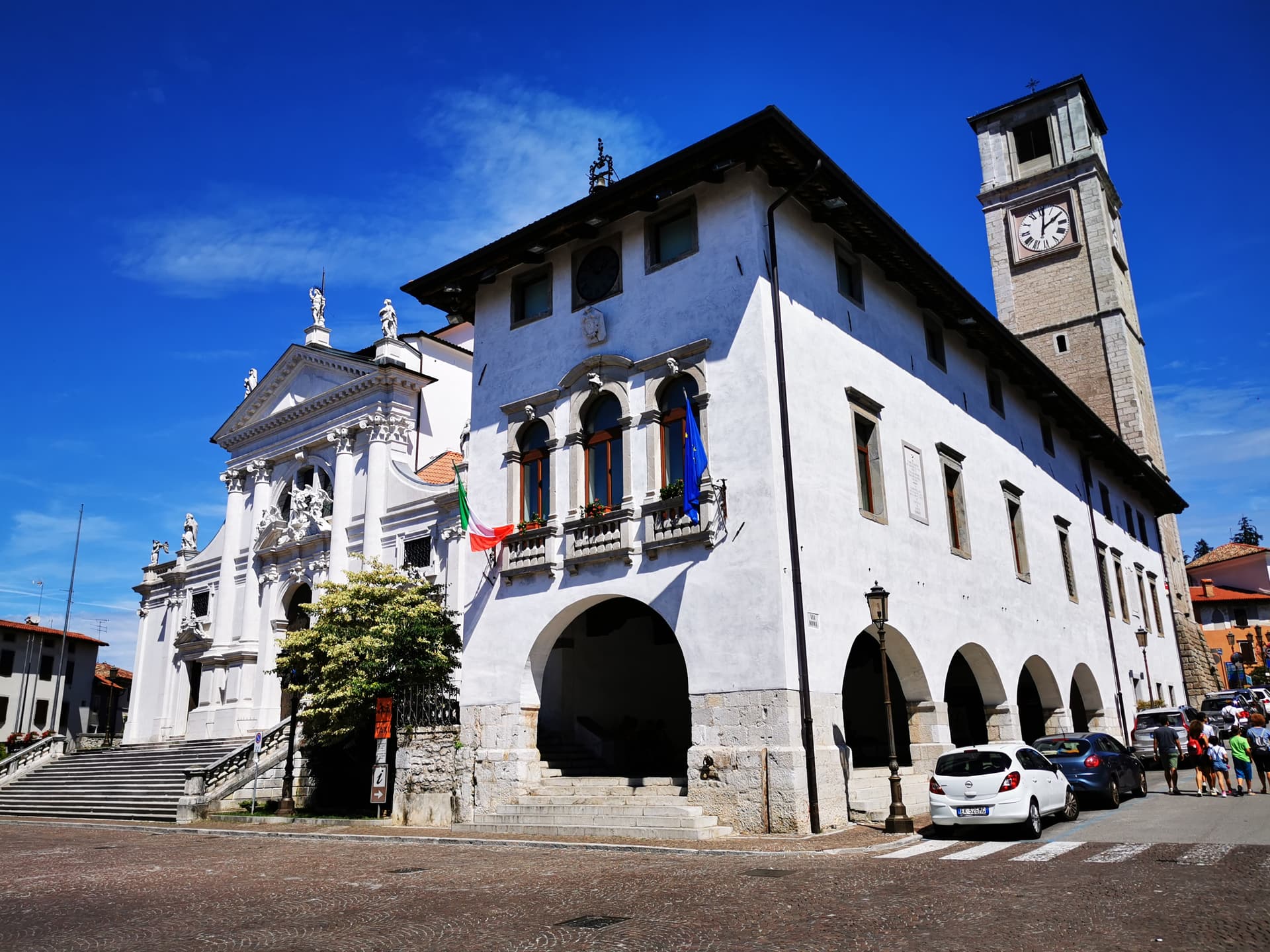
Italy's prosciutto capital — a 7,900-resident hill town in the Friuli morainic amphitheatre where the Tagliamento valley's south winds meet the alpine downdraughts, producing the San Daniele DOP raw-cured ham (31 producers, 14-month minimum cure) and where Pellegrino da San Daniele's 1497–1522 frescoes inside Sant'Antonio Abate are the regional Renaissance set-piece.
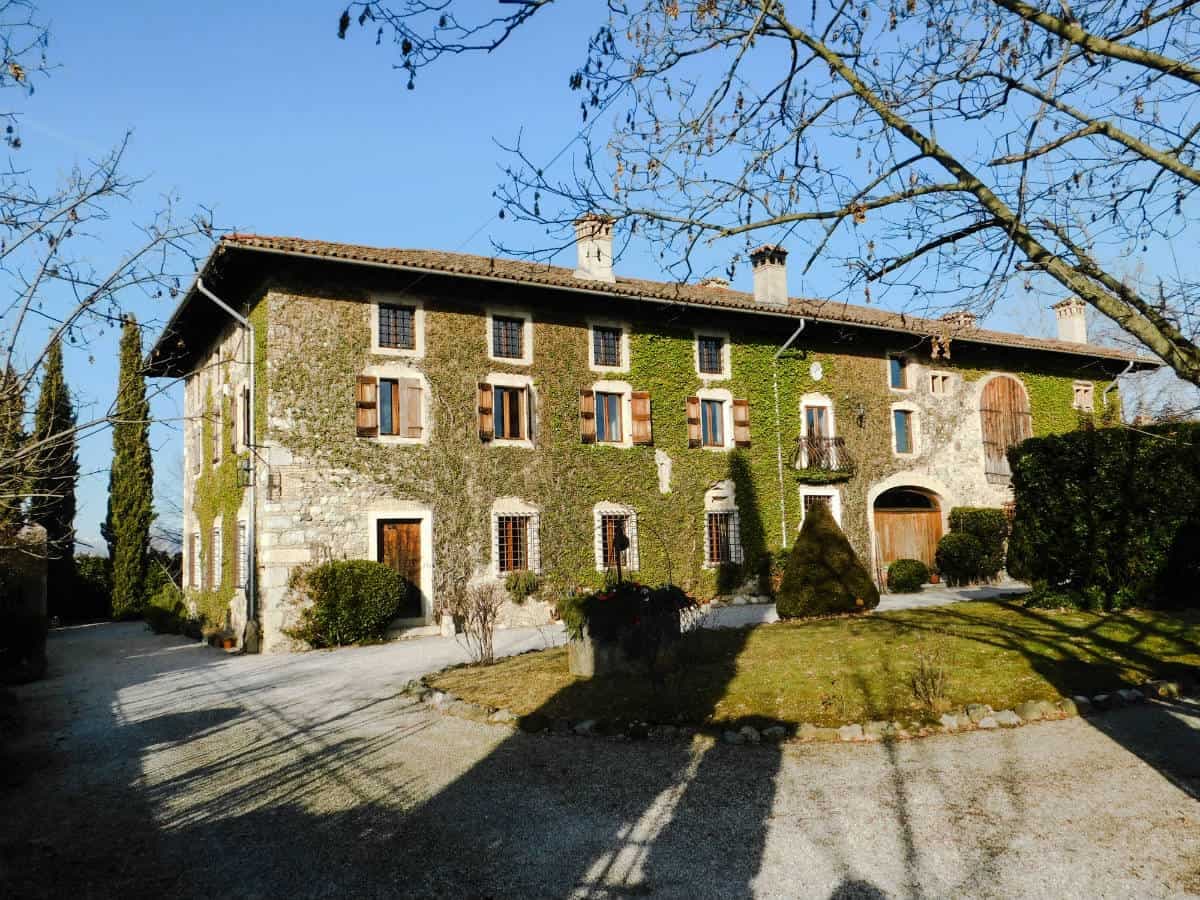
Fagagna
Province: Udine
A 177-meter Friulian hill town northwest of Udine, fortified by Otto II in 983 and racing donkeys in the piazza since 1891.
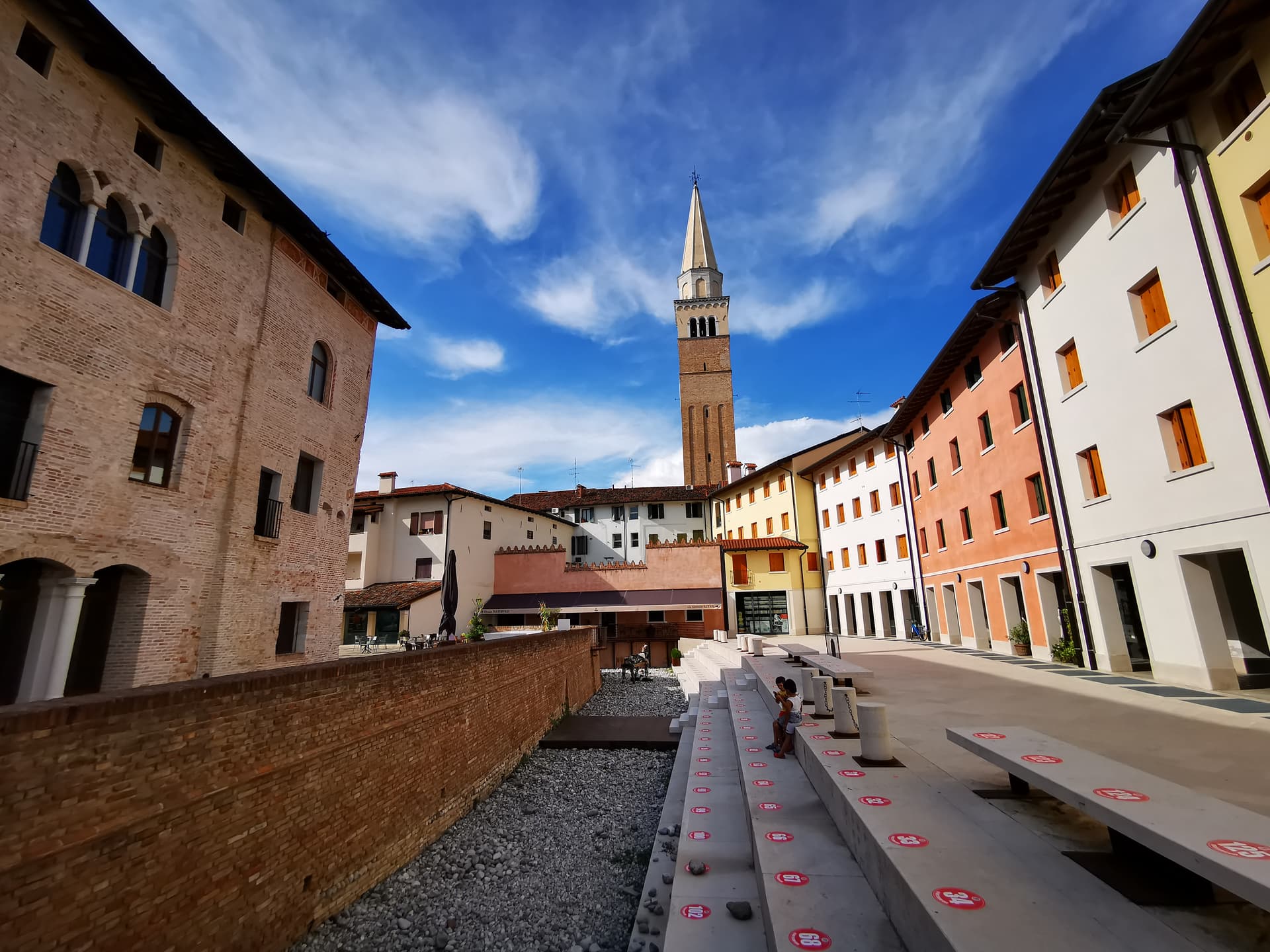
San Vito al Tagliamento
Province: Pordenone
A medieval Tagliamento-plain town inside three rings of moats and three towers, where the Renaissance painter Pomponio Amalteo worked from 1536 until 1588.
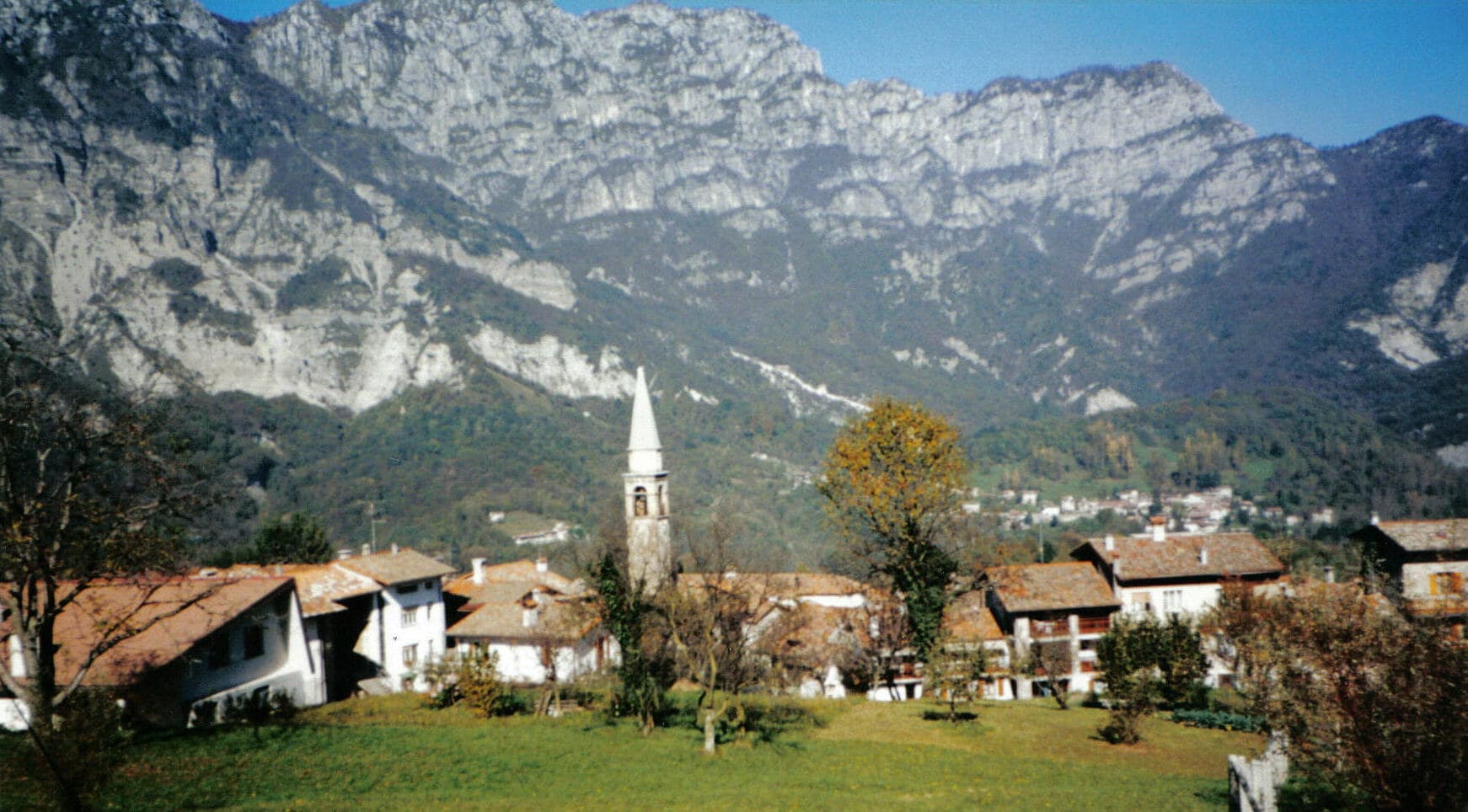
Frisanco
Province: Pordenone
A 572-resident commune in the Val Colvera whose frazione Poffabro, at 525 meters, became a model of Prealpine stone-and-wood vernacular architecture.
🎨 Borghi più belli d'Italia
More Borghi più belli d'Italia towns in Friuli-Venezia Giulia
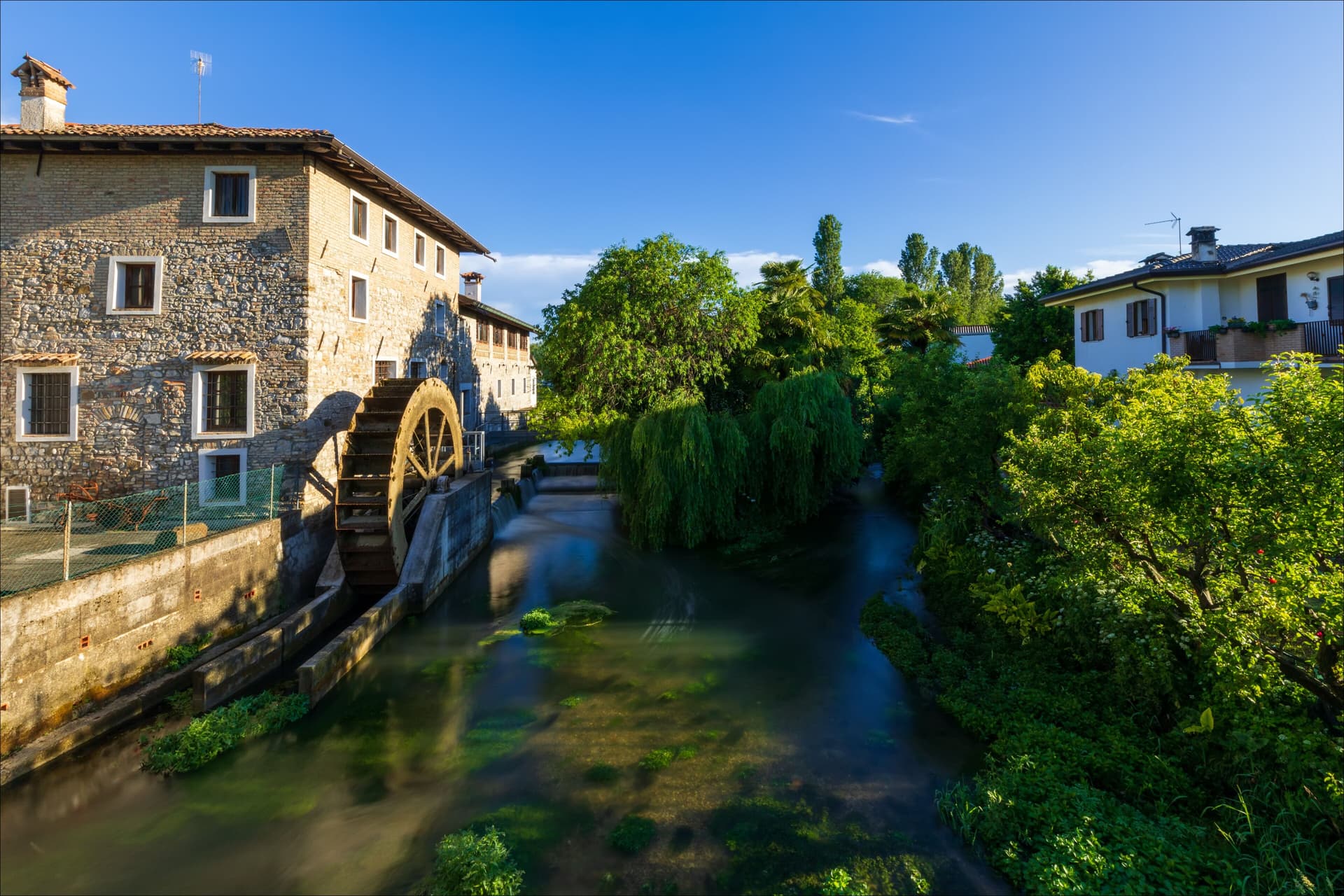
Cervignano del Friuli
Province: Udine
The capital of Bassa Friulana on the Ausa river, an inland river port for Aquileia in 181 BC and a railway junction since 1860.
Cividale del Friuli
Province: Udine
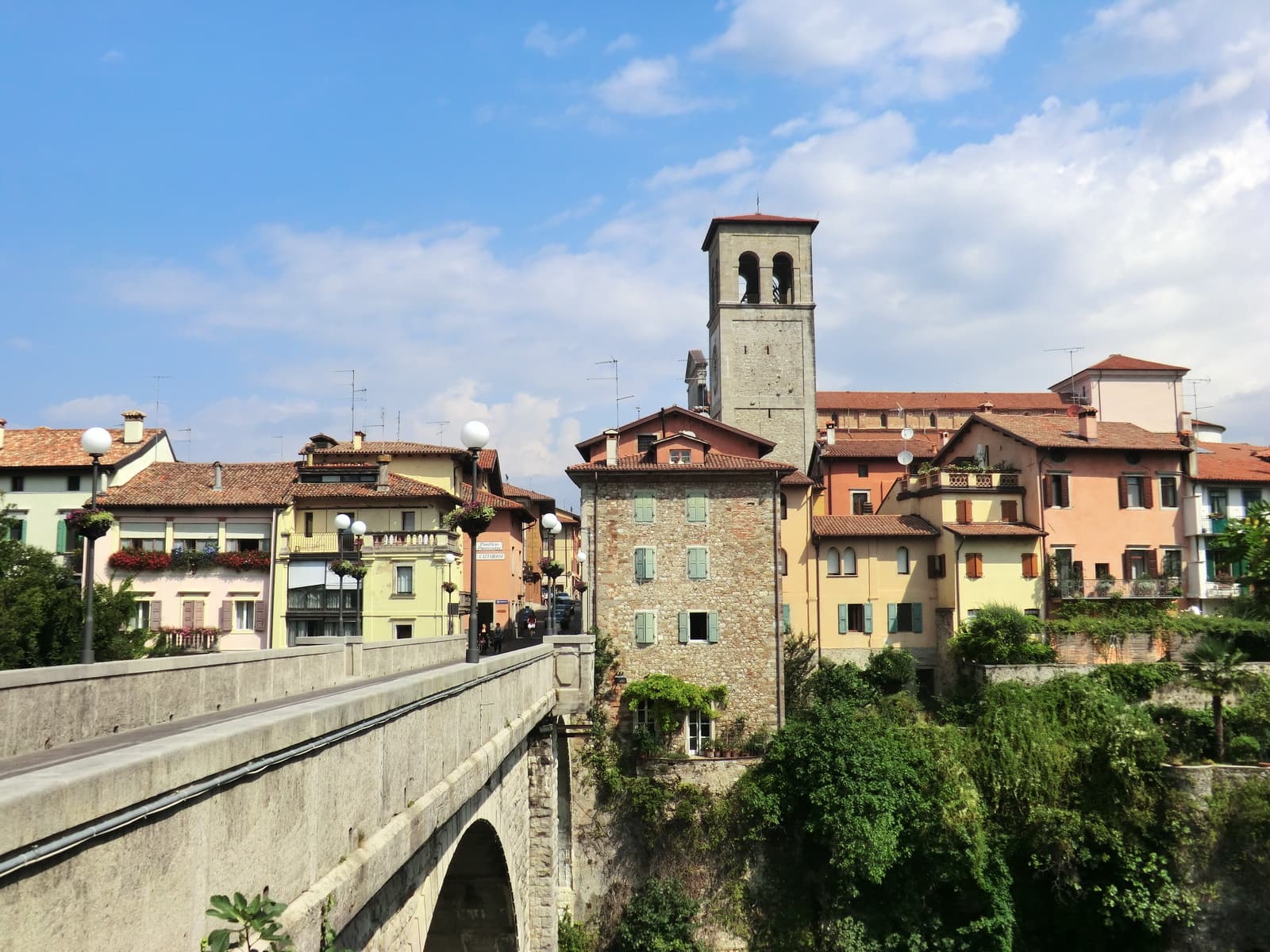
The Lombard capital on the Natisone, founded as Forum Iulii by Julius Caesar, where an eighth-century chapel still holds six stucco saints.
Cordovado
Province: Pordenone
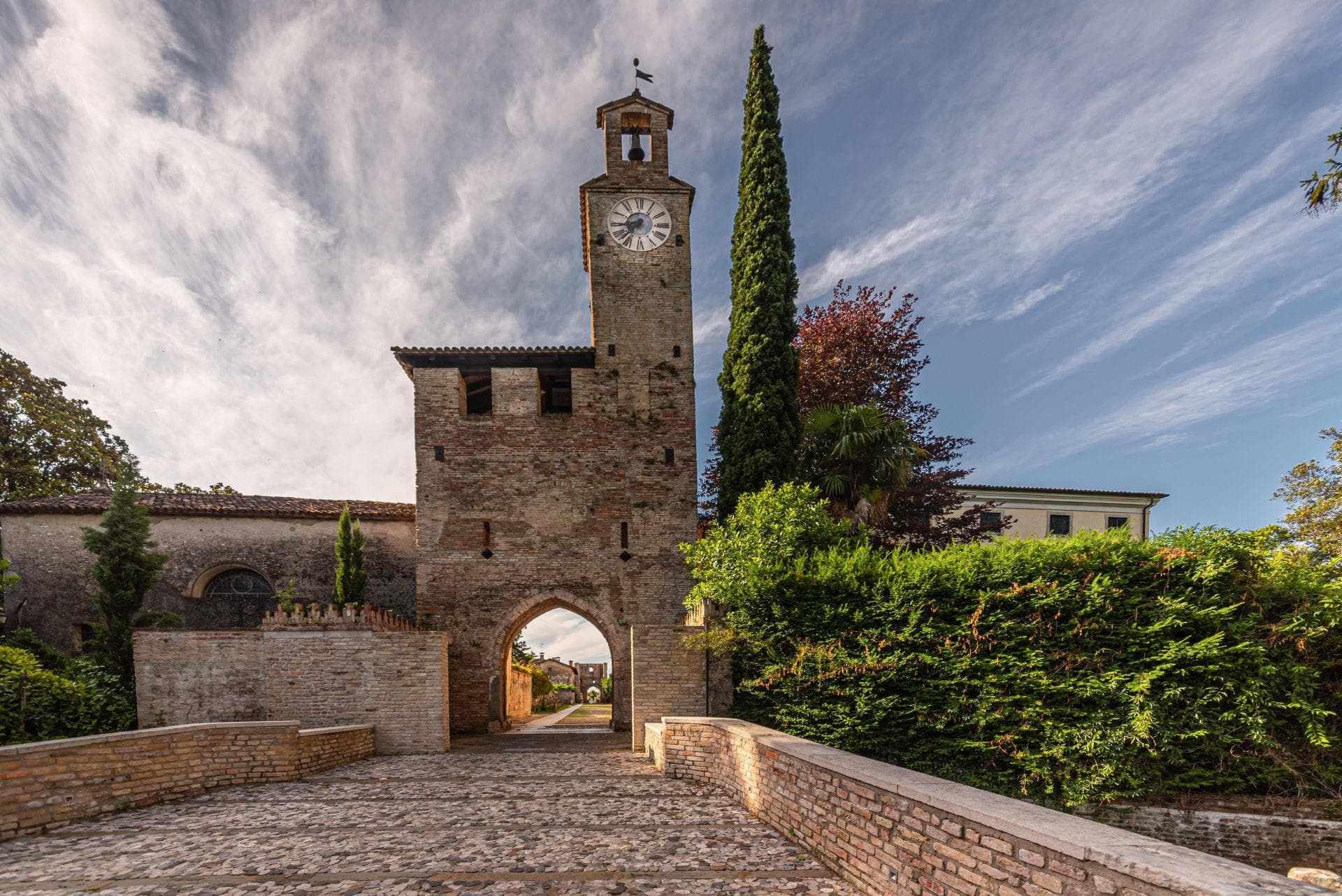
A 15-meter Friulian village in the Pordenone plain, fortified by the bishops of Concordia as their summer seat and described in Ippolito Nievo's Confessions.
Gradisca d'Isonzo
Province: Gorizia
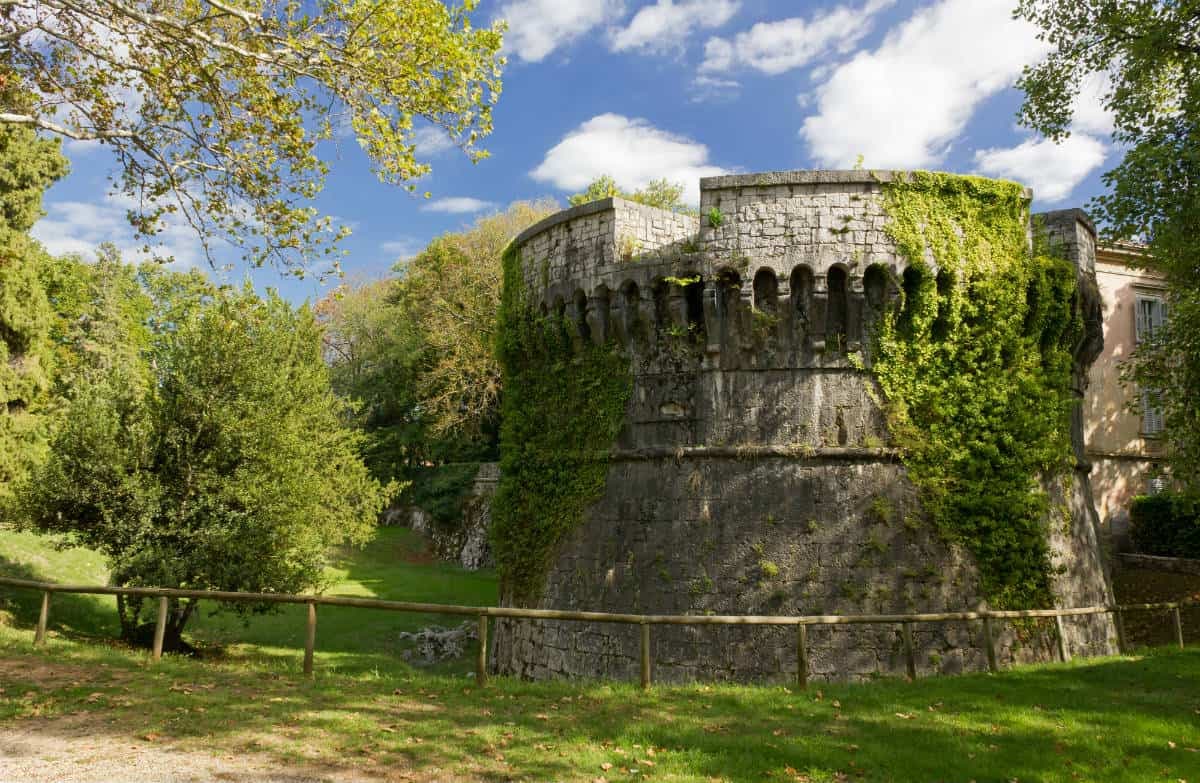
A 1479 Venetian bastion on the right bank of the Isonzo, with seven towers, twenty-meter walls, and a Habsburg court inside.