

Tuscany · Pisa
Volterra
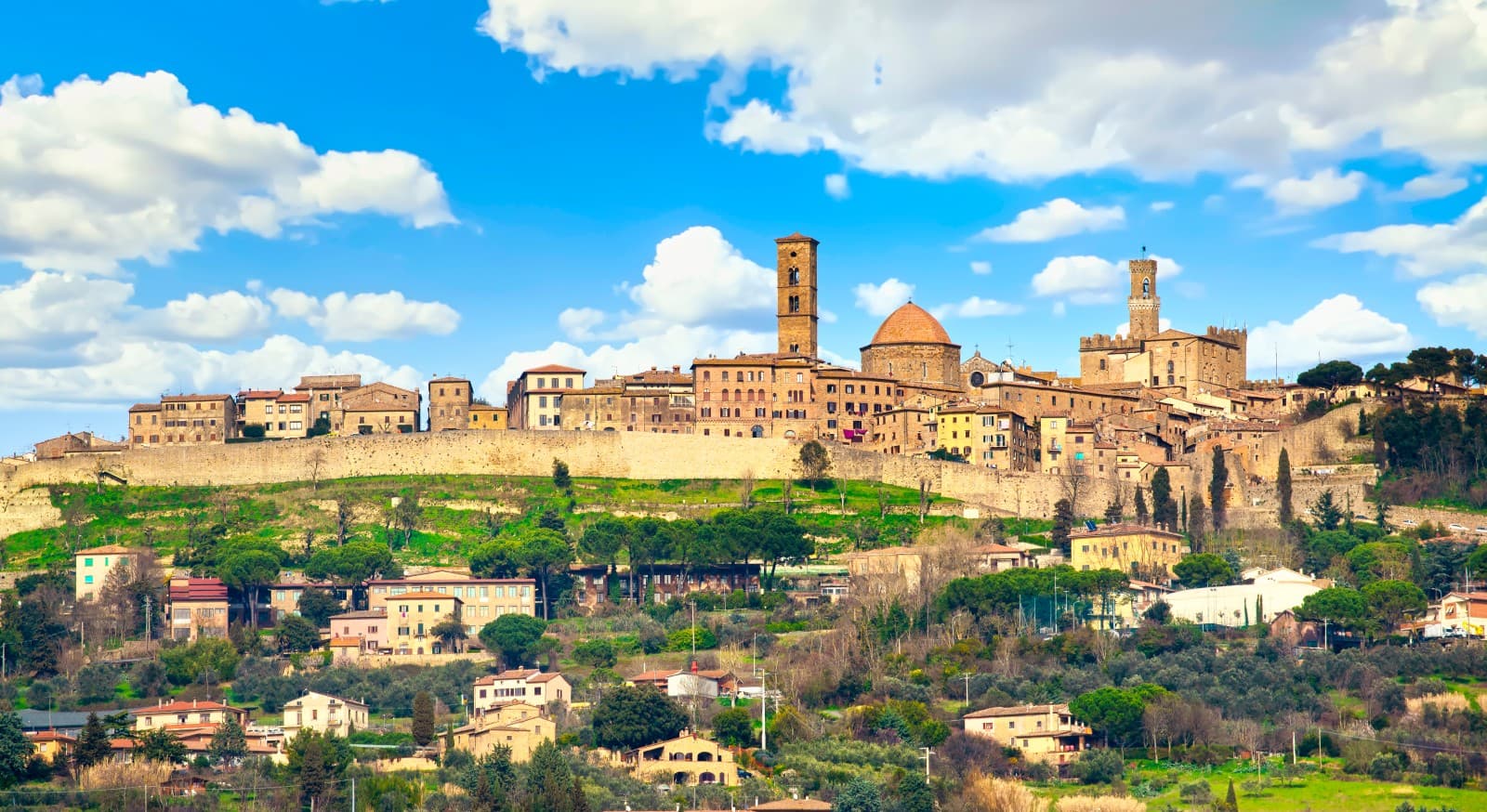
The Etruscan acropolis of Velathri at 531 meters, the alabaster town that has been carving the same stone for three thousand years.
Known for
ALABASTER
Carved here continuously since the Etruscans, the workshops on Via Porta all'Arco still cut and polish the soft local stone.
VELATHRI
One of the twelve Etruscan dodecapolis cities, the only one still occupied on its original ground.
WHITE TRUFFLE
The Volterra hills are part of the Tuscan white-truffle territory, celebrated each October at the Volterragusto fair.
When to visit
Best · Apr–Oct
- J
- F
- M
- A
- M
- J
- J
- A
- S
- O
- N
- D
- Best
- Hot or crowded
- Quiet
- Mostly closed
The festa: Giusto e Clemente, 5 June
Why come
Volterra sits at 531 meters on a long ridge between the Era and Cecina valleys, one of the twelve cities of the Etruscan dodecapolis and the only one still occupied on its original ground. The Etruscans called it Velathri, the Romans Volaterrae; the Porta all'Arco, with three blackened tufa heads of unknown deities, has been the western gate of the town since the fourth century BC. The Roman theater below the walls, excavated in the 1950s, holds two complete rows of columns and the bath complex behind the stage.
Above stands the Palazzo dei Priori, begun in 1208 and the oldest town hall in Tuscany, the model for Florence's Palazzo Vecchio. The town has been carving alabaster since the Etruscans, who used it for funerary urns; the same workshops on Via Porta all'Arco still cut and polish the soft white stone today. Le Balze, the eroded clay cliffs west of town, swallow a few meters of churchyard every century.

What to see
Porta all'Arco
Etruscan city gate from the fourth century BC, with three eroded tufa heads of unknown deities set above the arch.
Teatro Romano
First-century BC Roman theater excavated in the 1950s, with two complete rows of columns and the bath complex behind the stage.
Palazzo dei Priori
Begun in 1208, the oldest town hall in Tuscany, the architectural model for Florence's Palazzo Vecchio.
Museo Etrusco Guarnacci
One of the oldest public museums in Europe (1761), holding more than six hundred Etruscan funerary urns in alabaster and tufa.
Fortezza Medicea
Fifteenth-century Medici fortress, still used as a maximum-security prison, with the famous Mastio circular keep.
Le Balze
Eroded clay cliffs west of town, advancing inward by a few meters per century and swallowing medieval churches at their edge.
Duomo di Santa Maria Assunta
Twelfth-century Romanesque cathedral with a Romanesque-Pisan façade and a polychrome wood Deposition by anonymous Tuscan masters.
The slow-trip planner
Building a trip? Find where Volterra fits in a slow Italy circuit.
Answer five questions. We will shape a geographically coherent slow trip from the 1,000 Italian towns most travelers skip. Yours to save and share.
We recommend
Where to eat and stay
Not our picks, but places the guides put their name to — a Michelin star, a Gambero Rosso fork, a Slow Food snail, a Michelin Key for the hotels. Worth a table, a counter, or a night when you pass through.
Villa PignanoRistorante
Villa Pignano carries two Gambero Rosso forks (81/100), plus a spot in the Michelin Guide.
Enoteca Del DucaRistorante
Enoteca Del Duca holds a spot in the Michelin Guide.
Borgo Pignano Volterra TuscanyHotel
Borgo Pignano Volterra Tuscany has a place in the Michelin hotel guide to its name.
The Sunday letter
Volterra got its letter. One town every Sunday, free — the photo, the food, the festa.
By subscribing you agree to Substack’s Terms of Use, our Privacy Policy and our Information collection notice.
Living here
- Population 9,537
- Off the beaten pathi
- Pharmacy in town
- High school within a 30-minute drive
- Nearest airport Florence / Pisa, 1 h 31 min drive
- Regional capital Firenze, 1 h 25 min drive
Tags & datadesignations · numbers · sources
Recognised as
The numbers
- Elevation: 531 m
- Population: 9,537
- Surface area: 252.85 km²
These figures were compiled from public directories — ISTAT, OpenStreetMap, Wikidata — and from the official listings of the guides named on this page. Town details change; verify with official sources before you travel.
Close by
More towns near Volterra
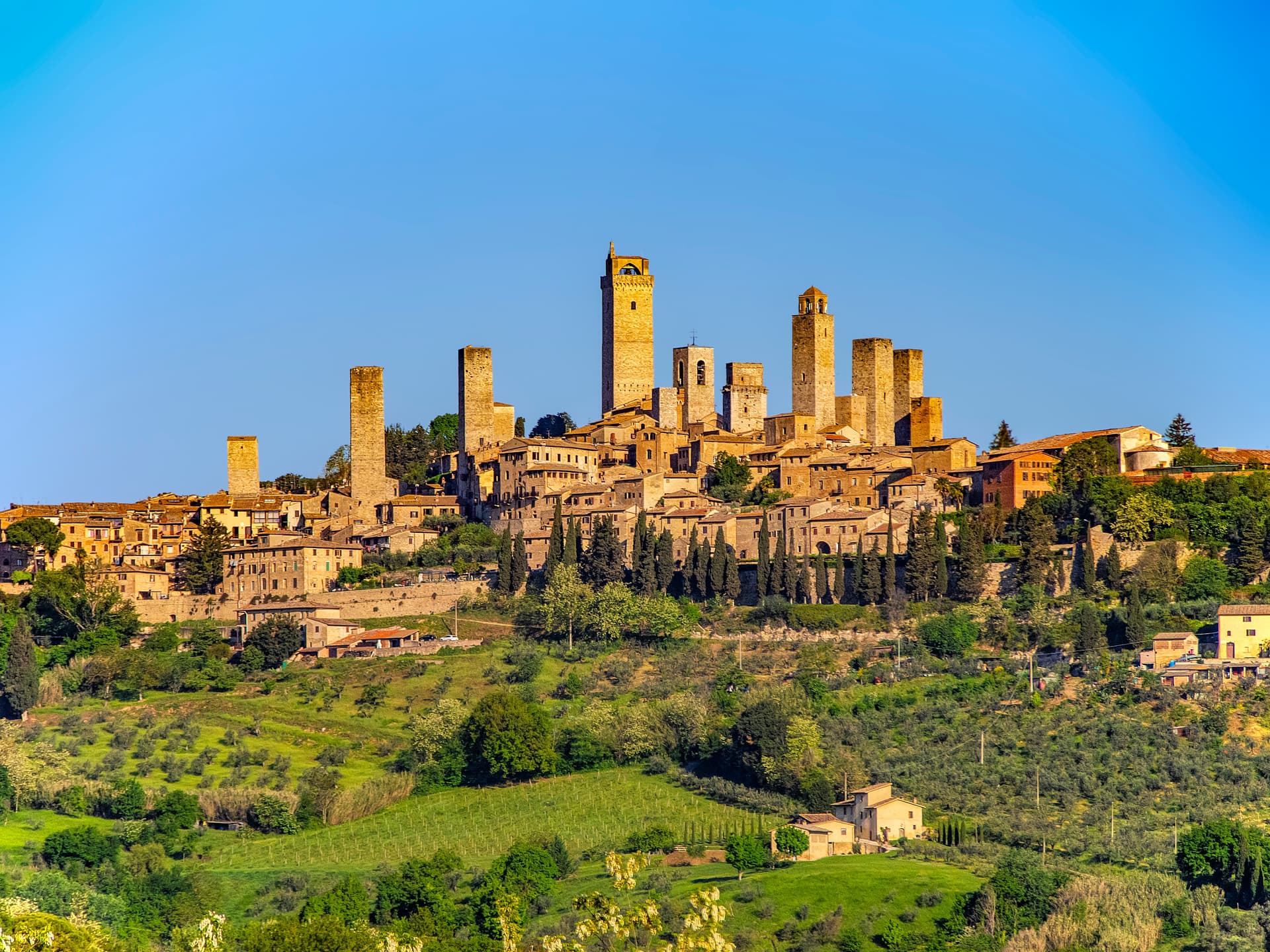
San Gimignano
Province: Siena
A walled hill town at 334 meters with 14 surviving medieval towers, UNESCO listed since 1990 and the home of Vernaccia.
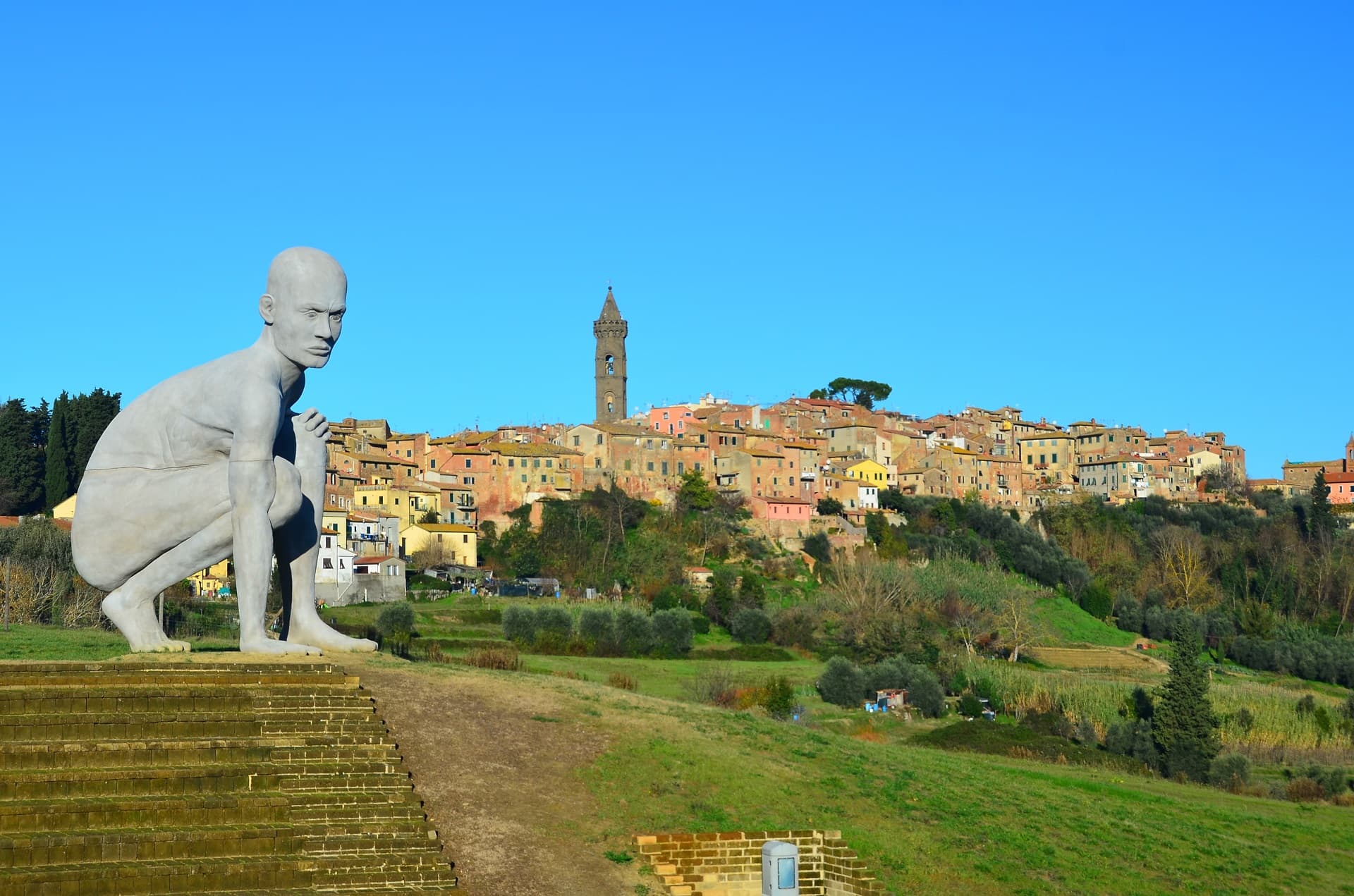
Peccioli
Province: Pisa
Borgo dei Borghi 2024 in the Valdera hills, a medieval village that funded a public contemporary-art program with revenue from its landfill plant.
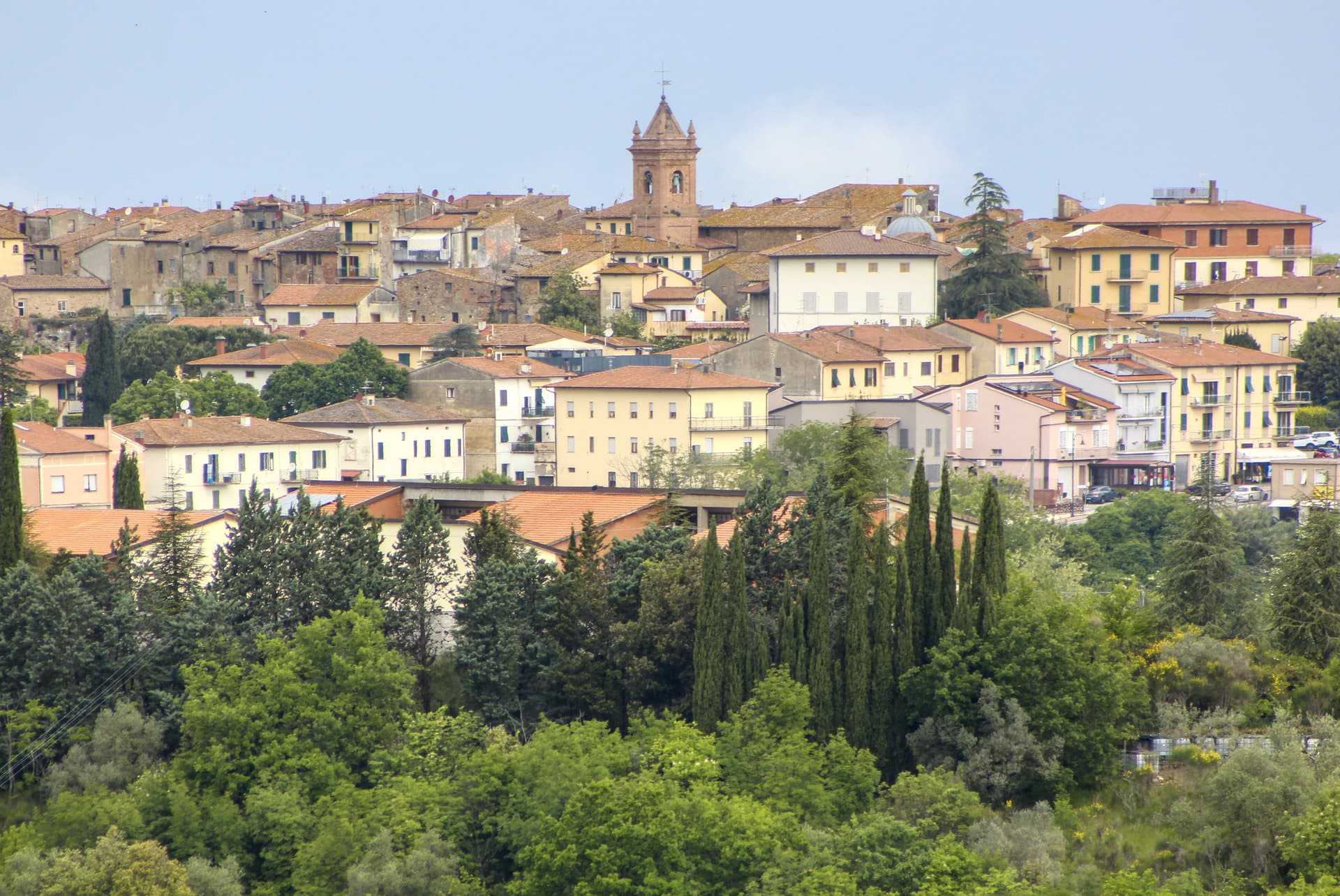
Montaione
Province: Firenze
A medieval glassmaking and truffle borgo at 341 meters above the Valdelsa, with a Franciscan replica of Jerusalem in the woods at San Vivaldo.
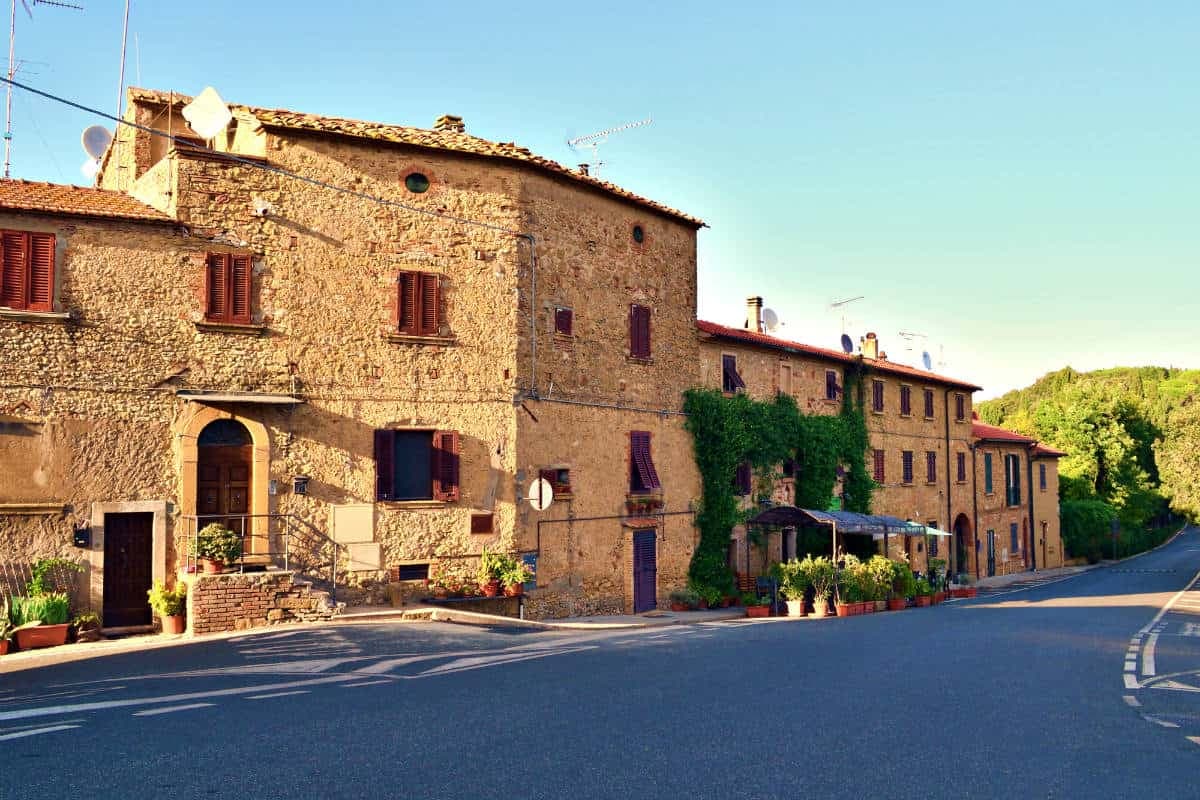
Casale Marittimo
Province: Pisa
A concentric stone borgo at 214 meters above the Val di Cecina, built where a seventh-century BC Etruscan outpost of Volterra once stood.
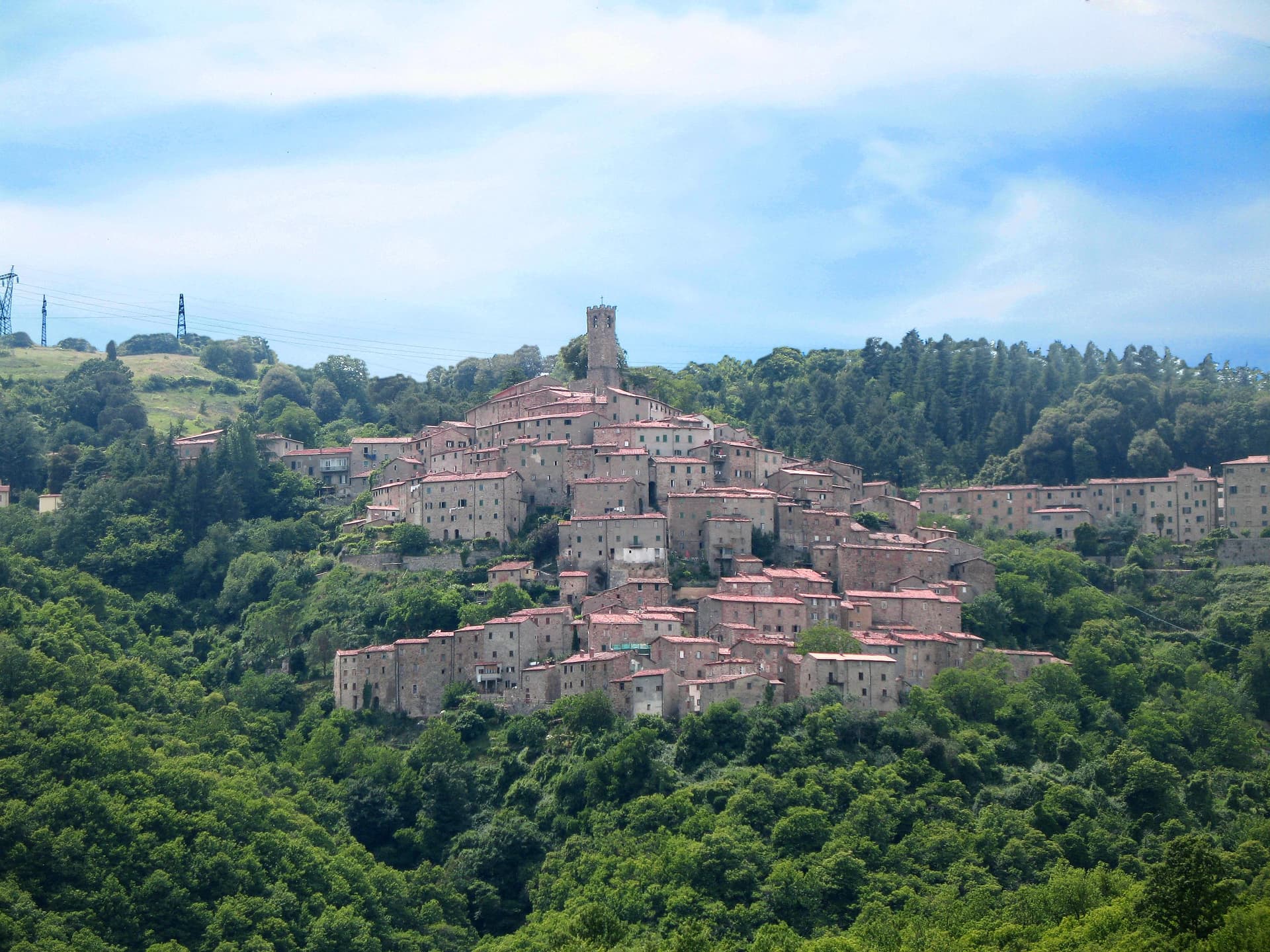
Castelnuovo di Val di Cecina
Province: Pisa
A copper and geothermal borgo at 576 meters in the Cecina valley, where natural steam vents and medieval towers sit on the same hill.
🟠 Bandiera Arancione
More Bandiera Arancione towns in Tuscany
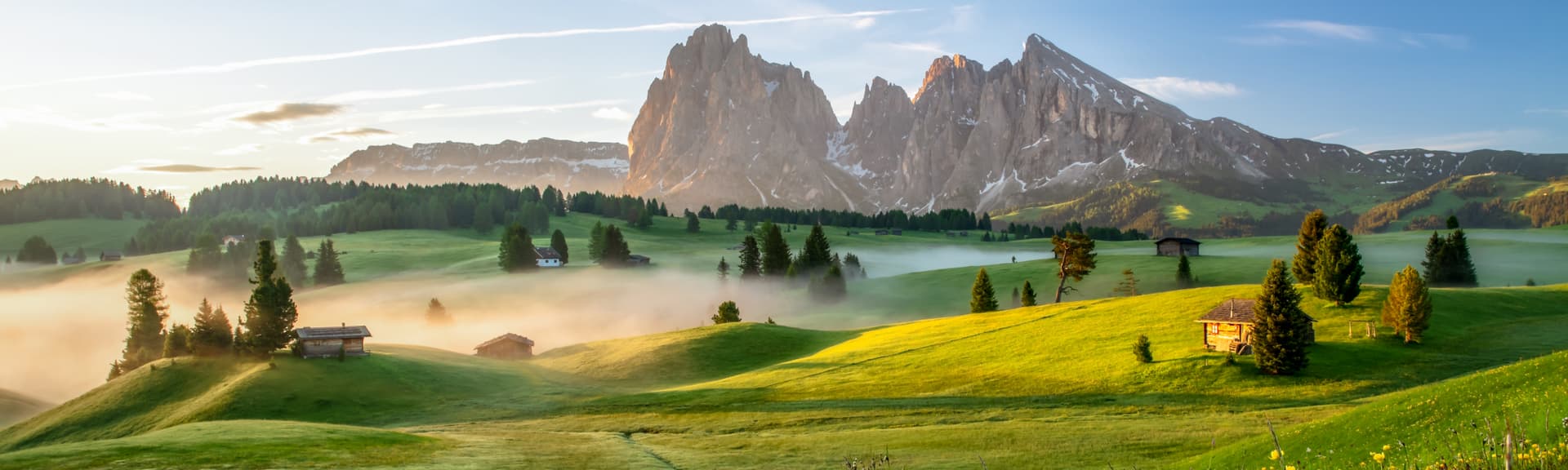
Abetone Cutigliano
Province: Pistoia
The Apennine ski pass at 1,388 meters where the Granduca's two stone pyramids of 1778 mark the old Tuscan-Modenese border.
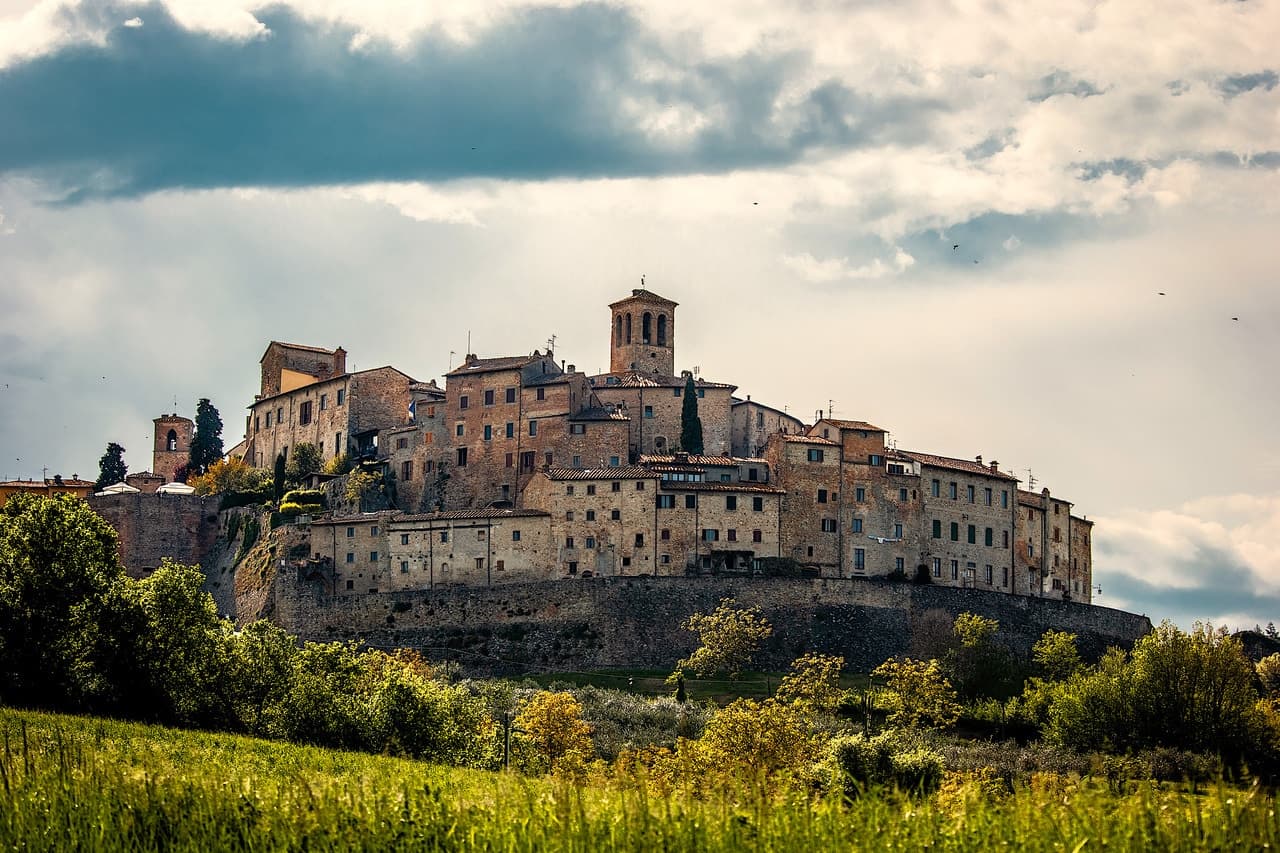
Anghiari
Province: Arezzo
A walled medieval town at 430 meters over the upper Tiber valley, where Florence beat Milan in 1440 and Leonardo started the fresco he never finished.
Barga
Province: Lucca
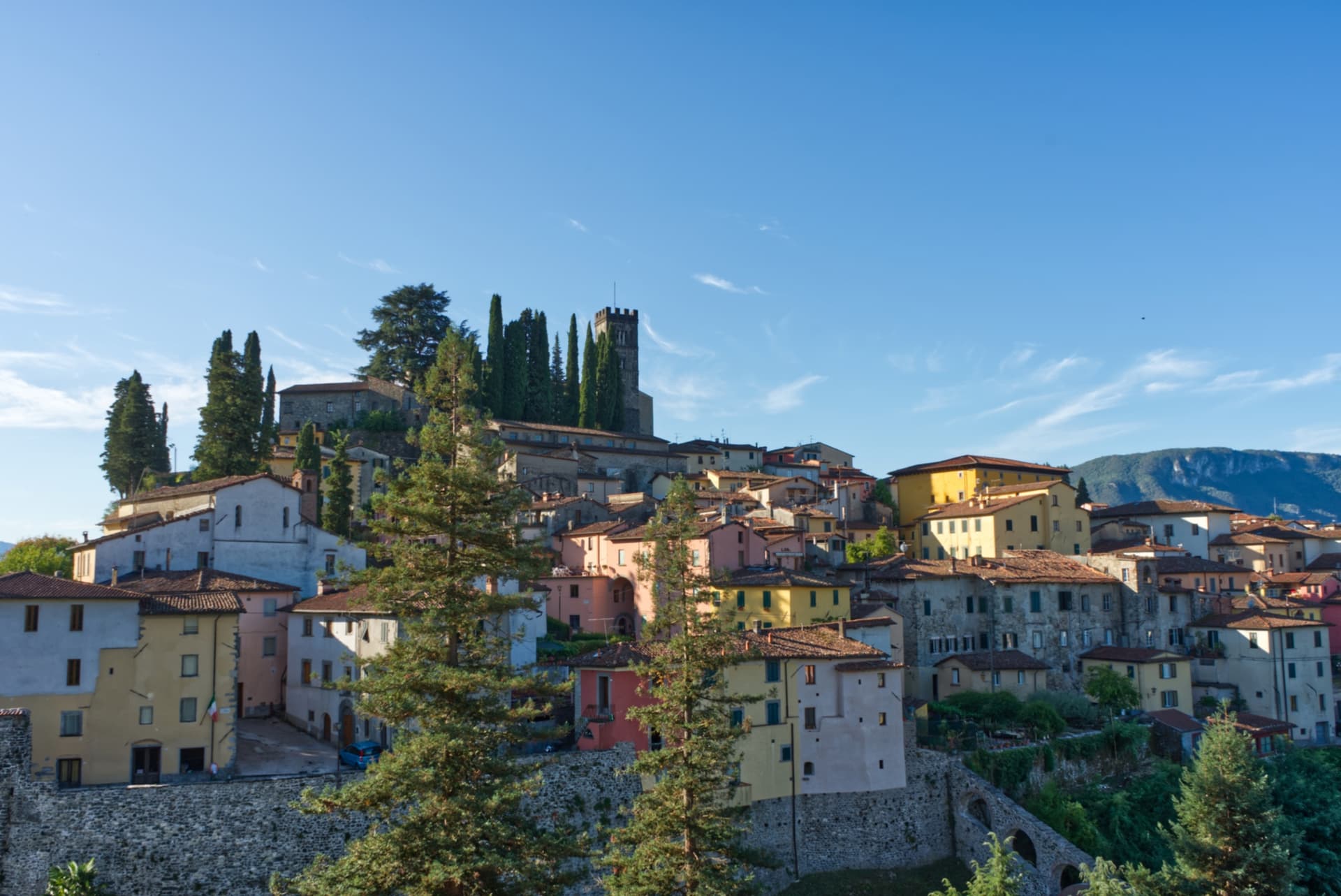
A medieval hilltop town at 410 meters in the Serchio valley between the Apuan Alps and the Apennines, where Giovanni Pascoli wrote his last poems and the August festival serves fish and chips.
Castelnuovo Berardenga
Province: Siena
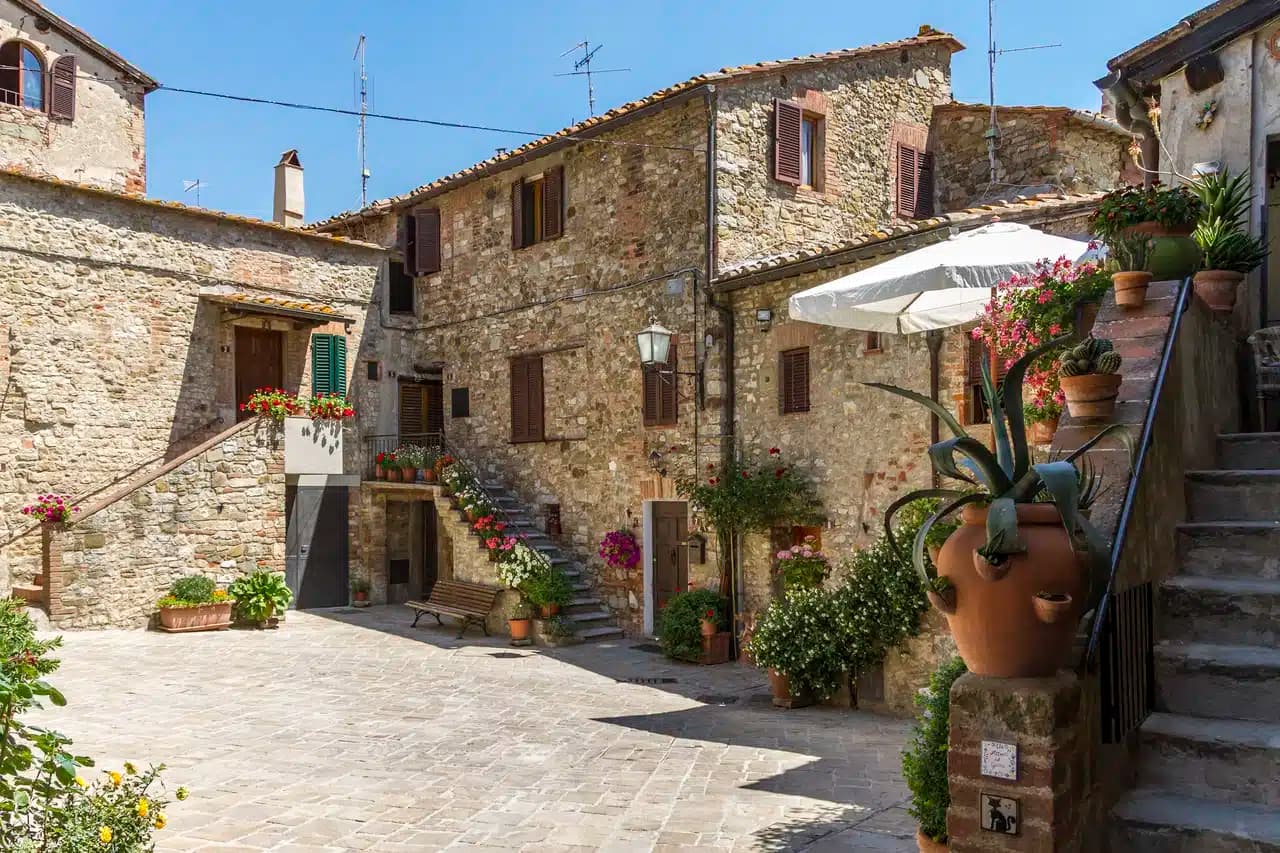
A Chianti Classico commune at 351 meters between the Ombrone and the Crete Senesi, the last castle Siena built against Florence, in 1366.