

Veneto · Vicenza
Asiago
The Sette Comuni plateau capital — a 6,285-resident high-altitude town at 1,001m in the Alpine prealps north of Vicenza, with the eponymous Asiago DOP cheese, the largest WWI ossuary in northern Italy (Sacrario del Leiten, 54,286 fallen soldiers), and Italy's most important professional astronomical observatory.
Known for
ASIAGO DOP CHEESE
320 producers across the Sette Comuni plateau + Veneto/Trentino prealps. Fresh 'Pressato' 4-month cure; aged 'Stagionato' 12+ months.
WWI FRONT LINE
Town completely destroyed by Austrian artillery 1916. Sacrario del Leiten holds 54,286 fallen — largest WWI memorial in northern Italy.
ITALY'S TOP OBSERVATORY
Osservatorio Astrofisico (1942, University of Padua) — Galileo telescope was Europe's largest at construction.
CIMBRIAN HERITAGE
Medieval Bavarian-German dialect spoken on the plateau until the 19th c — still a handful of elderly speakers + a documentation museum.
When to visit
Best · Jan–Mar, Jul–Sep
- J
- F
- M
- A
- M
- J
- J
- A
- S
- O
- N
- D
- Best
- Hot or crowded
- Quiet
- Mostly closed
The festa: Matteo, 21 September
Why come
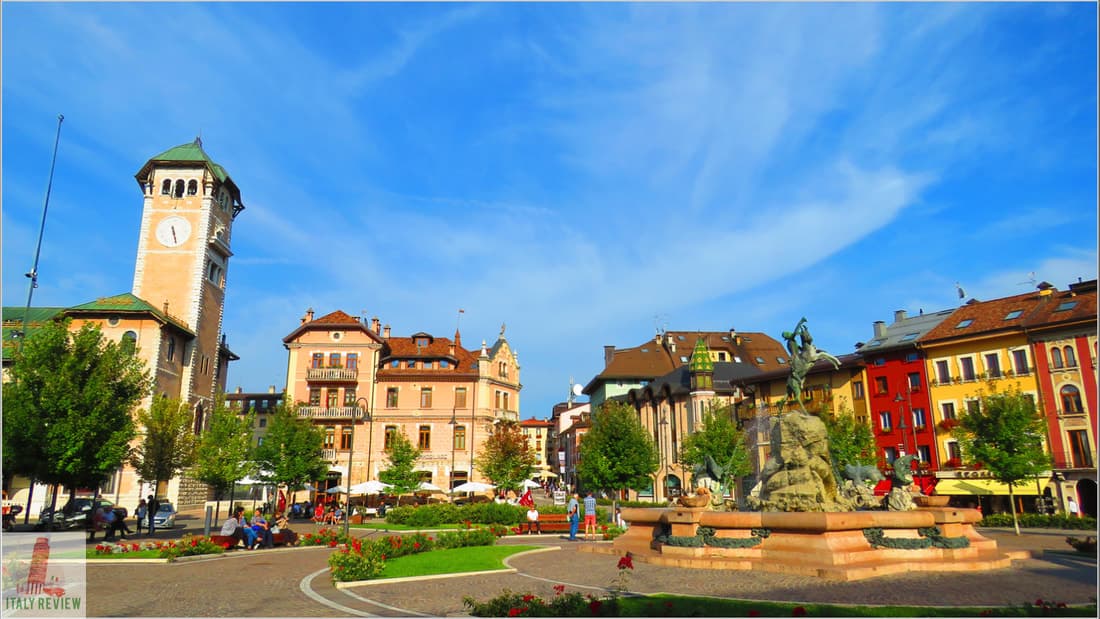
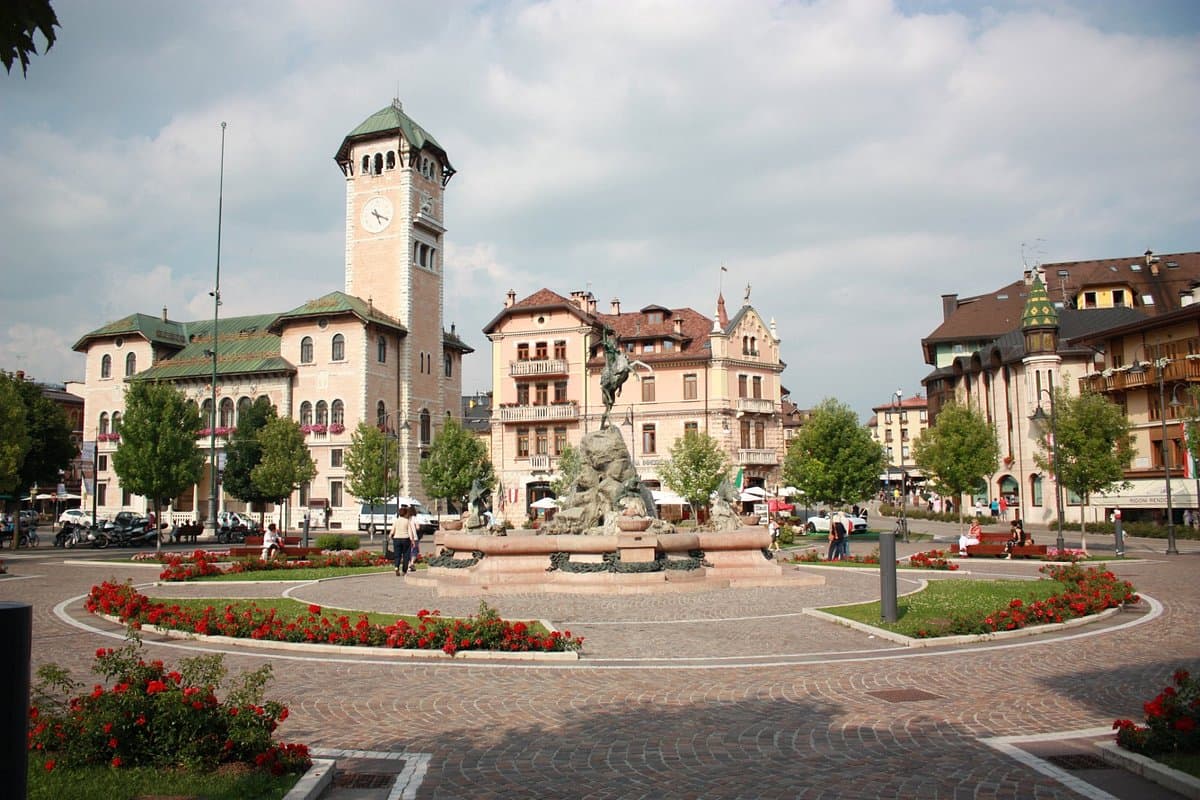
Asiago is the capital of the Altopiano dei Sette Comuni — a 467 km² Alpine plateau at 1,000–2,300m altitude north of Vicenza, historically the territory of seven small communities that spoke Cimbrian, a medieval Bavarian-German dialect, until the 19th century (still spoken by a handful of elderly speakers in the upland frazioni today). The plateau geography defines everything about Asiago: the cool summer climate (year-round average 8°C), the alpine pastures that produce the Asiago DOP cheese (320 producers across the Veneto/Trentino prealps, 4-month minimum cure for fresh 'Pressato', 12+ months for aged 'Stagionato'), the 200+ km of cross-country ski tracks in winter (the plateau hosts FIS Nordic World Cup events), and the trail network in summer. But the heaviest historical layer is World War I: the Altopiano was the front line of the May 1916 Strafexpedition Austrian offensive and the May 1918 Battle of the Three Mountains, and Asiago itself was completely destroyed by Austrian artillery — every standing building today was rebuilt in the 1920s–30s.
The Sacrario Militare del Leiten (1936 neoclassical ossuary on the hill above town) holds 54,286 fallen soldiers (mostly Italian + some Austro-Hungarian) and is the largest WWI war memorial in northern Italy. The Osservatorio Astrofisico di Asiago (1942, run by the University of Padua) is Italy's most important professional optical-astronomy facility — the 122cm Galileo telescope was the largest in Europe when built. Beyond cheese + war + stars: the Museo della Tradizione Cimbra documents the historic Bavarian-German dialect culture, the Sentiero degli Asini (Donkey Trail) walks a network of Cimbrian-era footpaths, and the plateau's altipiani (uplands like Marcesina, the highest at 1,400m) are some of the most striking alpine meadow landscapes in the Veneto. The food is plateau-Cimbrian-Veneto: Asiago DOP itself, polenta with sopressa or pastin sausage, gnocchi di malga, the Cimbrian klemen (sweet-savoury filled pasta), and the local Vespaiolo dell'Altopiano white.
The Sunday letter
We haven’t written Asiago’s letter yet.
One town every Sunday, with the photo, the food, the festa. Be there when this one comes up. Free, by Peter & Sophia from Pietrasanta.
By subscribing you agree to Substack’s Terms of Use, our Privacy Policy and our Information collection notice.
What to see
Sacrario Militare del Leiten
1936 neoclassical WWI ossuary holding 54,286 fallen soldiers — the largest WWI war memorial in northern Italy. On the hill above town with the plateau view.
Asiago DOP cheese + casere
320 producers across the plateau and surrounding prealps. Casere (alpine dairy huts) at Bocchetta Portule and Marcesina open for summer visits + tastings.
Osservatorio Astrofisico di Asiago
Italy's most important professional optical-astronomy facility (1942, University of Padua). The 122cm Galileo telescope was Europe's largest when built. Guided summer visits.
Cross-country ski + summer trails
200+ km of cross-country pistes in winter (FIS Nordic World Cup events). Same network is hiking + MTB trails summer; Sentiero degli Asini follows Cimbrian-era footpaths.
Museo della Tradizione Cimbra
Documents the historic Bavarian-German dialect (Cimbrian) spoken on the Sette Comuni plateau until the 19th c. A handful of elderly speakers in upland frazioni still use it.
The slow-trip planner
Building a trip? Find where Asiago fits in a slow Italy circuit.
Answer five questions. We will shape a geographically coherent slow trip from the 1,000 Italian towns most travelers skip. Yours to save and share.
We recommend
Where to eat and stay
Not our picks, but places the guides put their name to — a Michelin star, a Gambero Rosso fork, a Slow Food snail, a Michelin Key for the hotels. Worth a table, a counter, or a night when you pass through.
La Tana GourmetRistorante
La Tana Gourmet has one Michelin star, two Gambero Rosso forks (89/100) and a place in L'Espresso's Top 300, among other nods.
Osteria della TanaRistorante
Osteria della Tana carries a spot in the Michelin Guide.
Osteria EuropaRistorante
A spot in the Michelin Guide, at Osteria Europa.
Signature product
Asiago DOPDOP
Cow's-milk cheese in pressato (fresh) and d'allevo (aged) styles; the Asiago plateau gives the appellation its name.
See every town in our catalogue producing Asiago DOP.
Living here
- Population 6,285
- Off the beaten pathi
- Pharmacy in town
- High school within a 30-minute drive
- Nearest airport Venice, 2 h 34 min drive
- Regional capital Venezia, 2 h 33 min drive
Tags & datadesignations · numbers · sources
Recognised as
The numbers
- Elevation: 1001 m
- Population: 6,285
- Surface area: 162.95 km²
These figures were compiled from public directories — ISTAT, OpenStreetMap, Wikidata — and from the official listings of the guides named on this page. Town details change; verify with official sources before you travel.
Close by
More towns near Asiago
Lavarone
Province: Trento
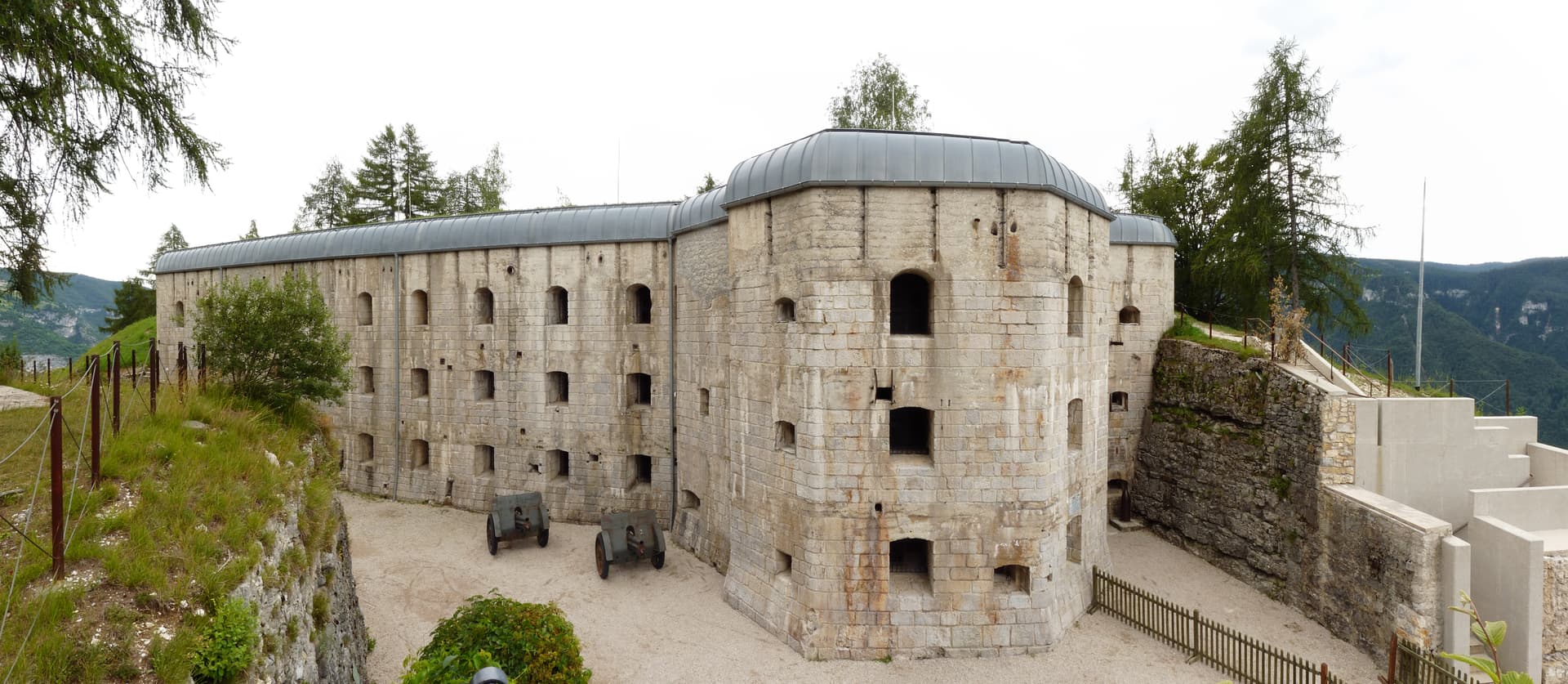
A Cimbrian plateau at 1,172 metres above the Val d'Astico, with a karst lake, an Austro-Hungarian fort, and the woods where Freud walked.
Luserna
Province: Trento
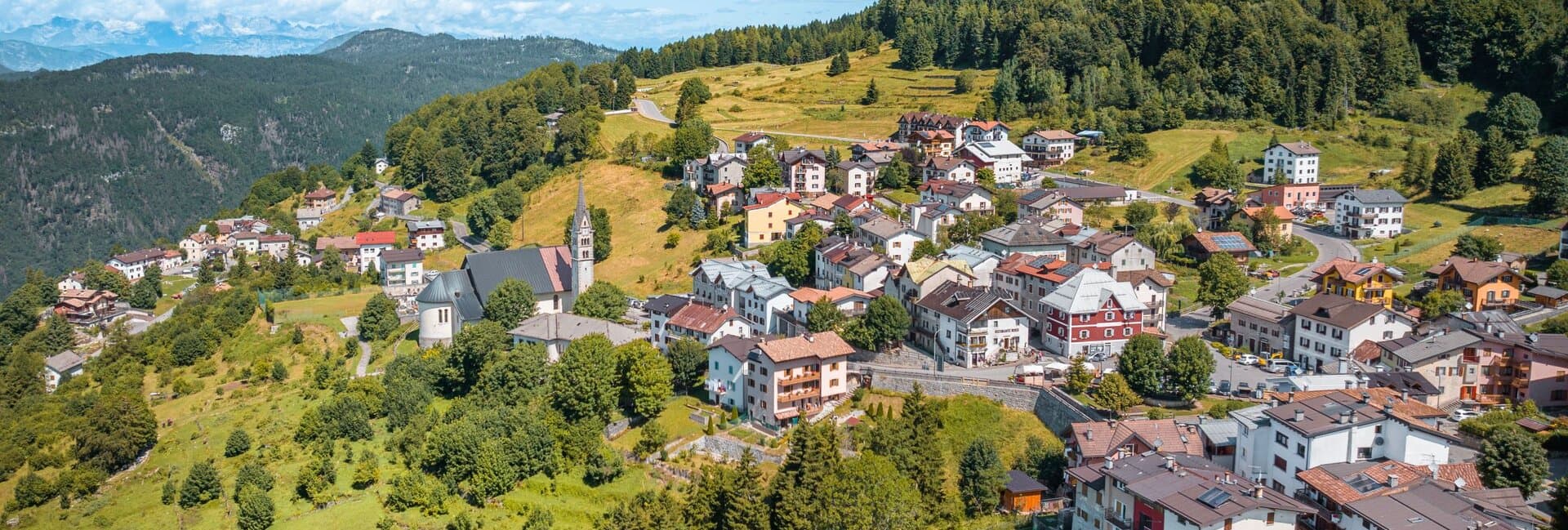
A Cimbrian island at 1,333 metres on the Alpe Cimbra plateau, the last village in Italy where the medieval Bavarian dialect is still spoken at home.
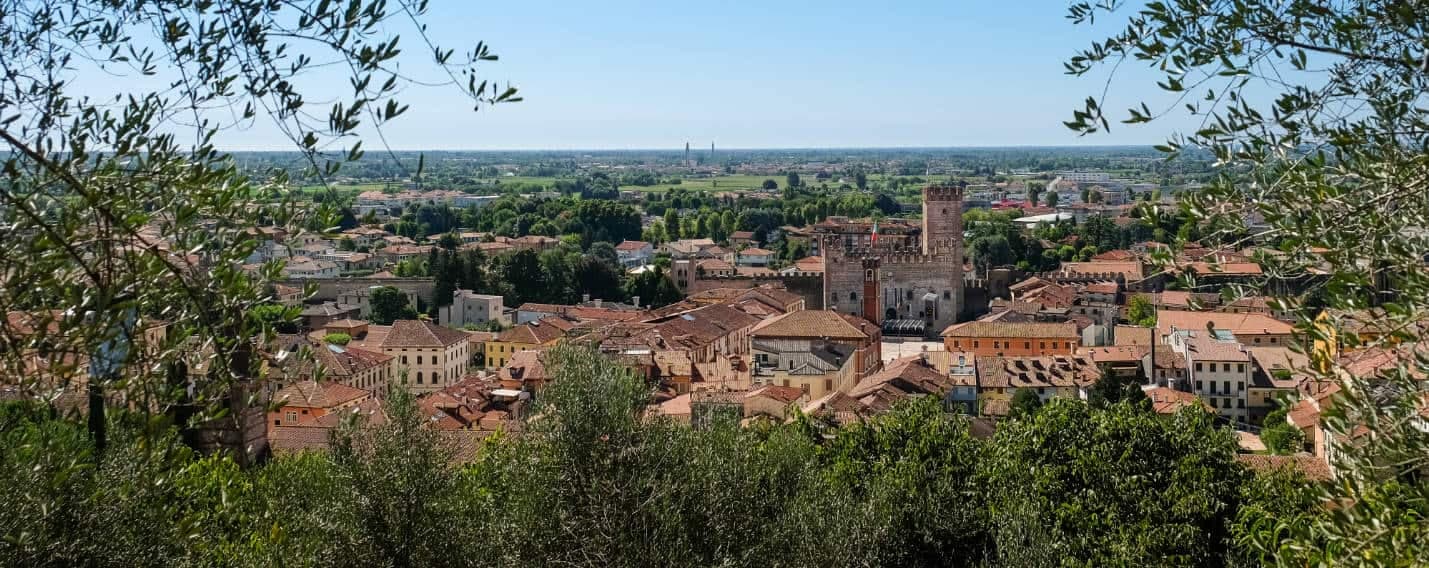
Marostica
Province: Vicenza
The walled chess town below Vicenza, where two castles linked by a hill rampart stage a costumed reenactment of a 1454 match every two years.
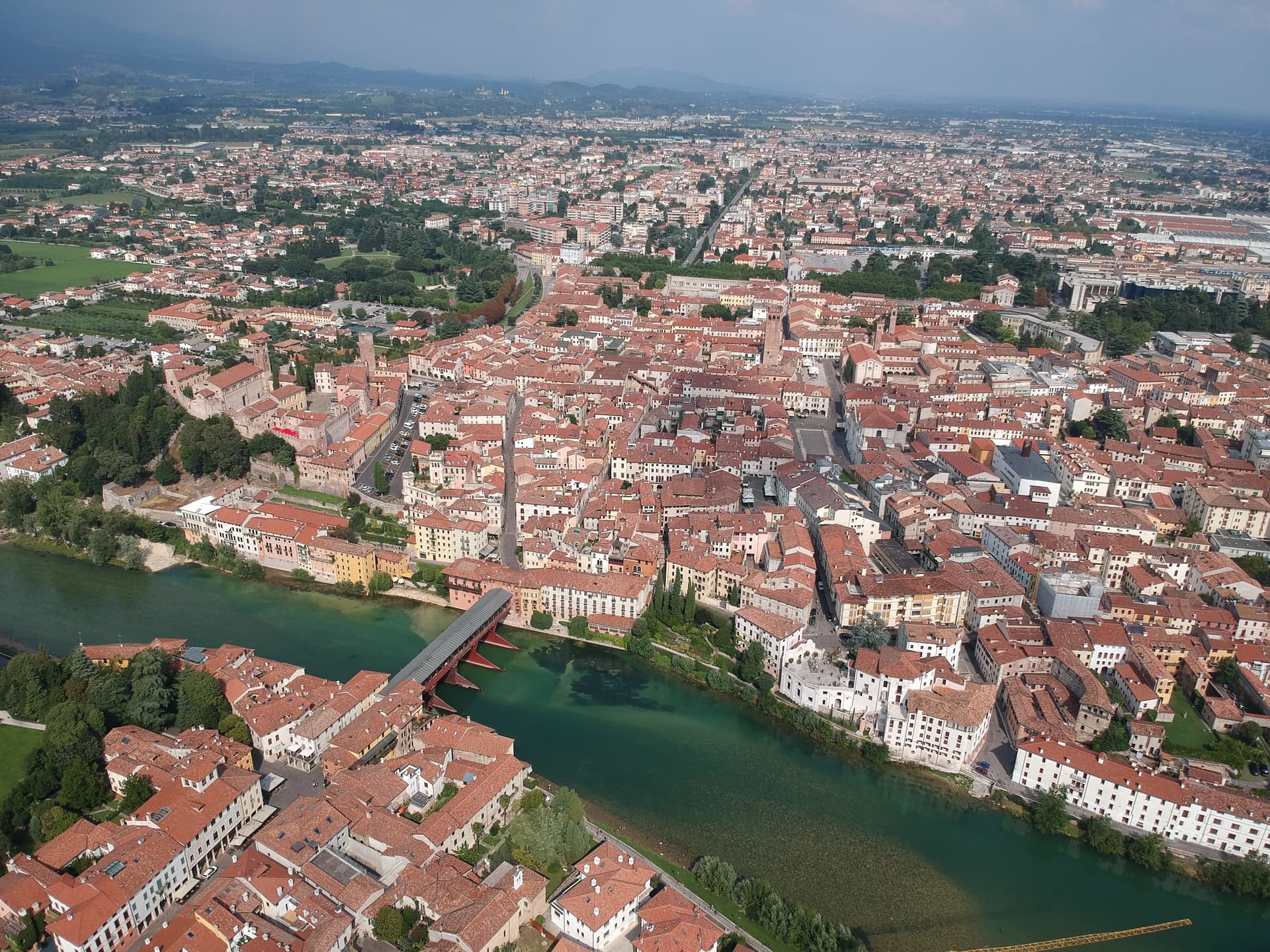
Bassano del Grappa
Province: Vicenza
The Brenta River town at 129 meters where Palladio drew the covered bridge in 1569 and Nardini has been distilling grappa since 1779.
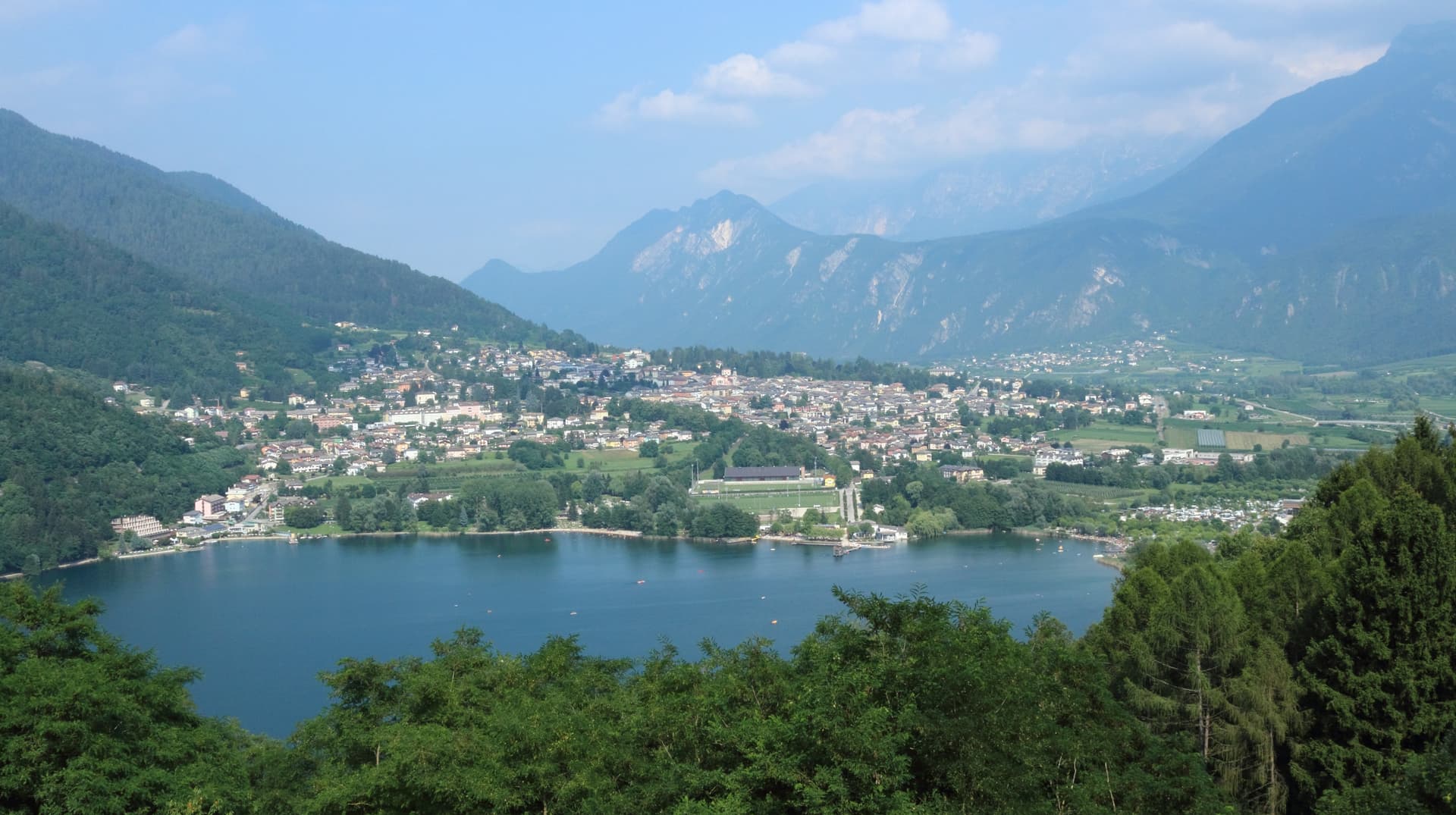
Levico Terme
Province: Trento
A Habsburg spa town in the Valsugana at 520 metres, with arsenic-iron thermal waters, an English park and a Blue Flag lake at the edge of the centre.
⛷️ Ski Area
More Ski Area towns in Veneto
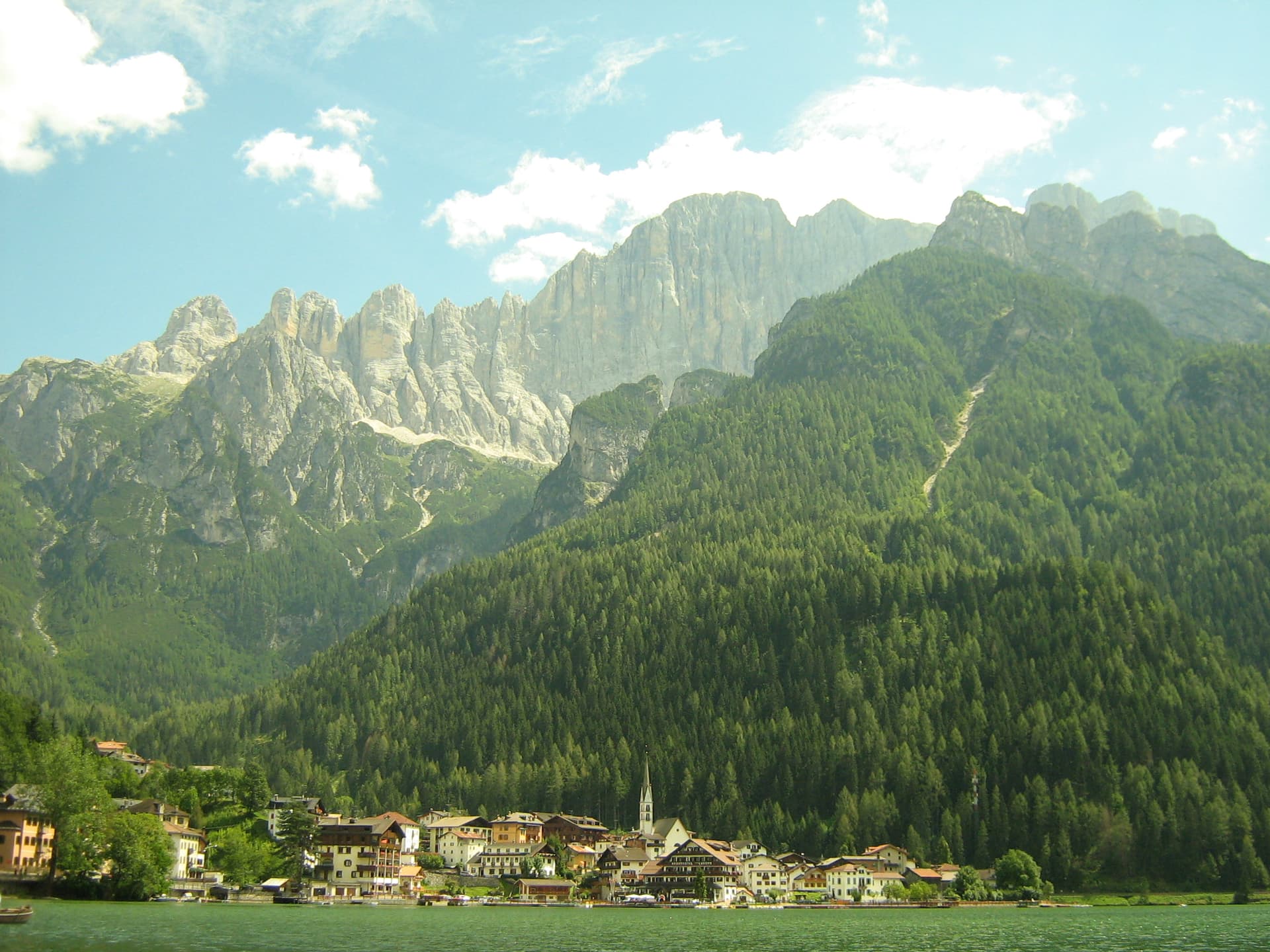
Alleghe
Province: Belluno
A lakeside village at 979 meters under Monte Civetta, formed in 1771 when ten million cubic meters of rock crashed into the Cordevole.
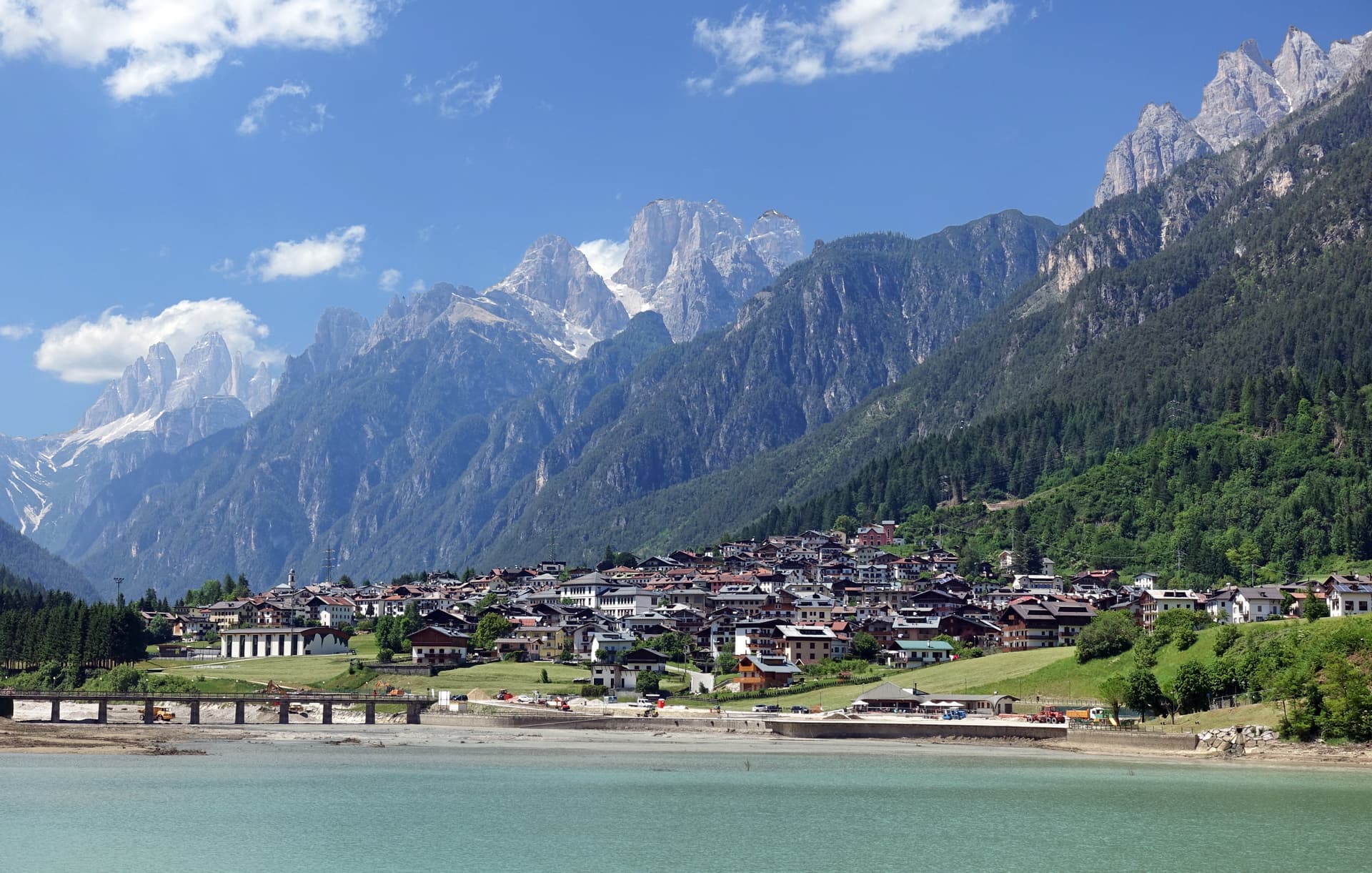
Auronzo di Cadore
Province: Belluno
A five-kilometer ribbon town along an artificial lake at 864 meters, the gateway to the Tre Cime di Lavaredo and Lake Misurina.
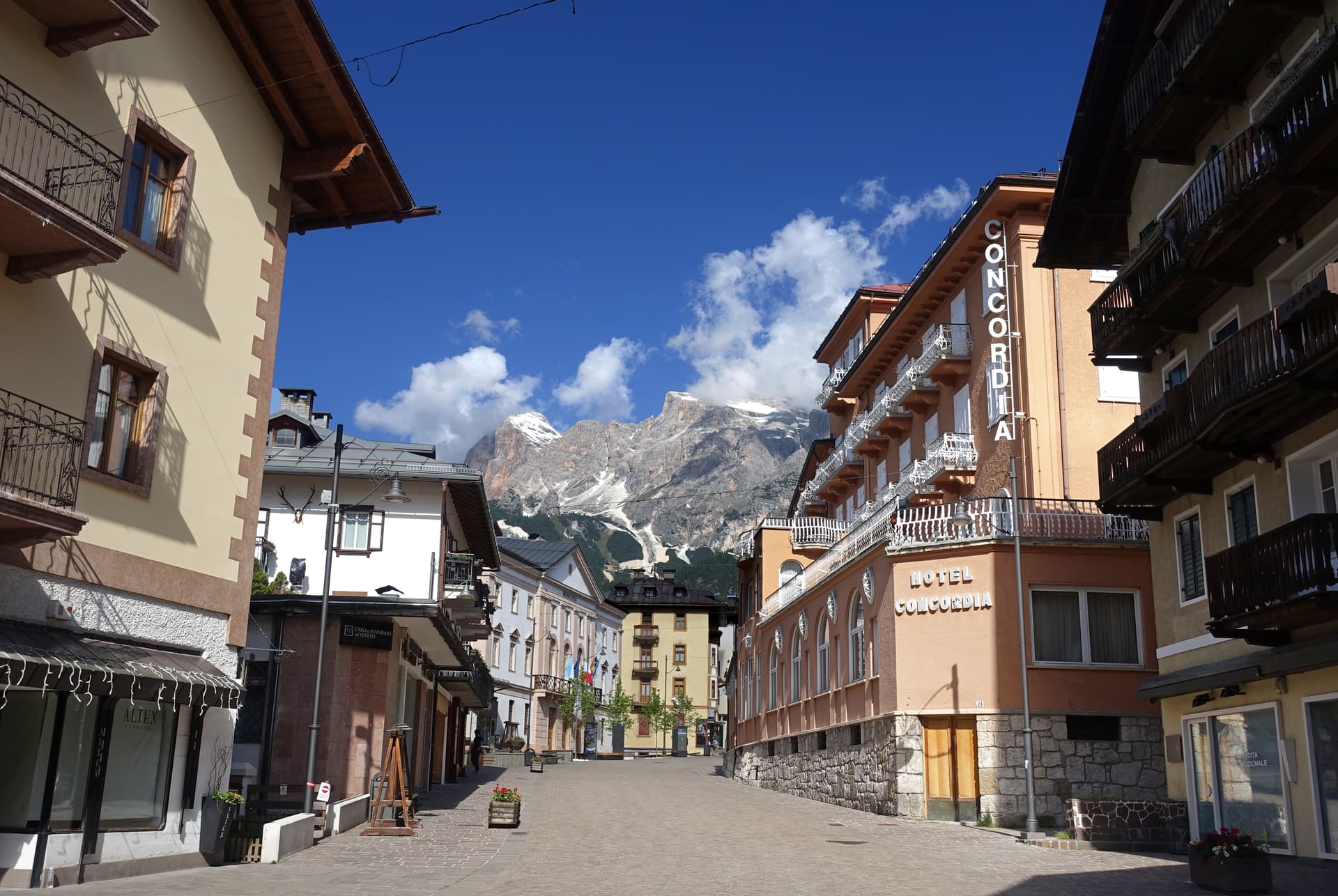
Cortina d'Ampezzo
Province: Belluno
The Queen of the Dolomites at 1,224 meters, host of the 1956 Winter Olympics and co-host of Milano-Cortina 2026.
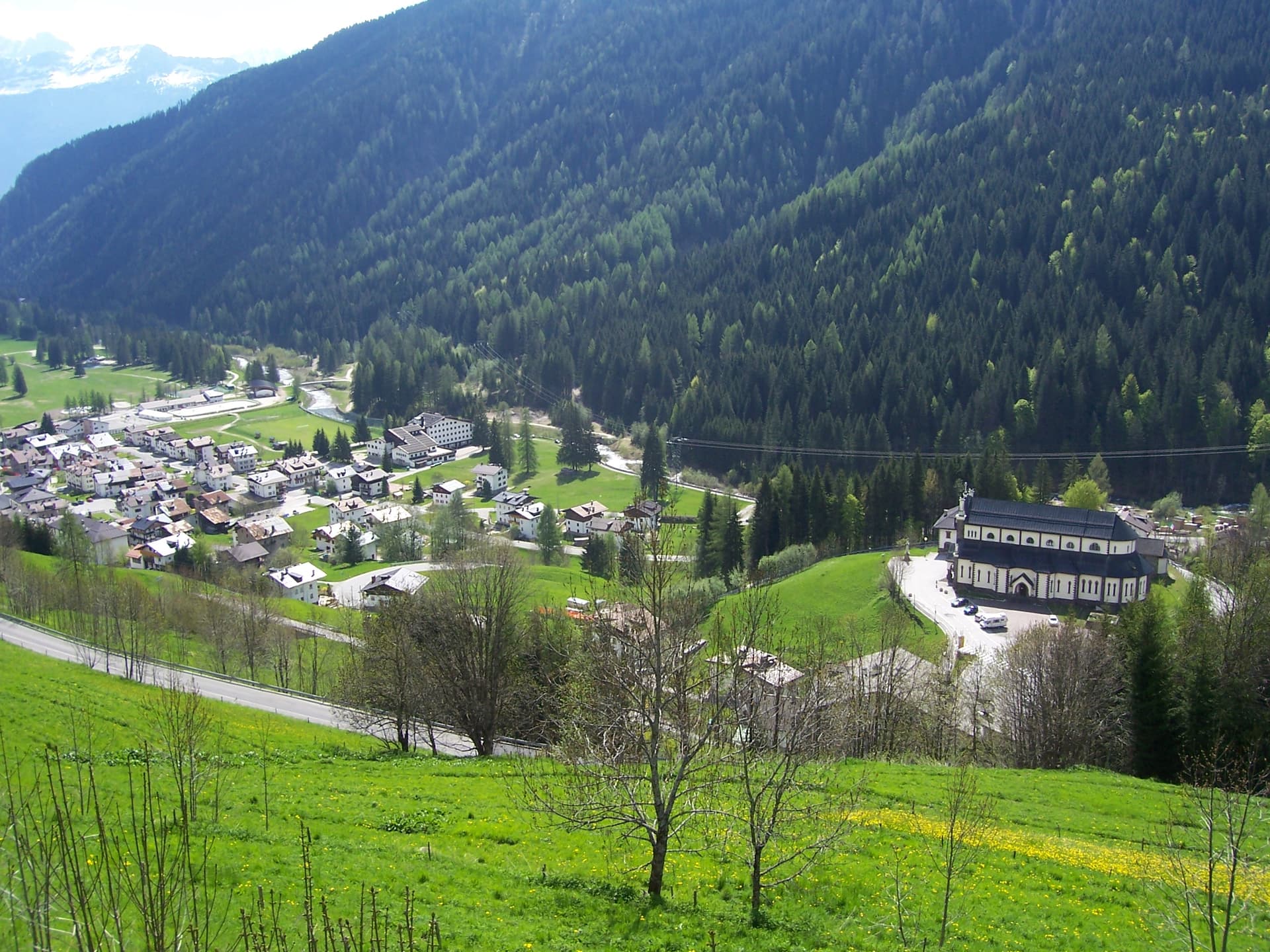
Falcade
Province: Belluno
An Agordino ski village at 1,148 meters under the Focobon spires, with the San Pellegrino pass to the Val di Fiemme.
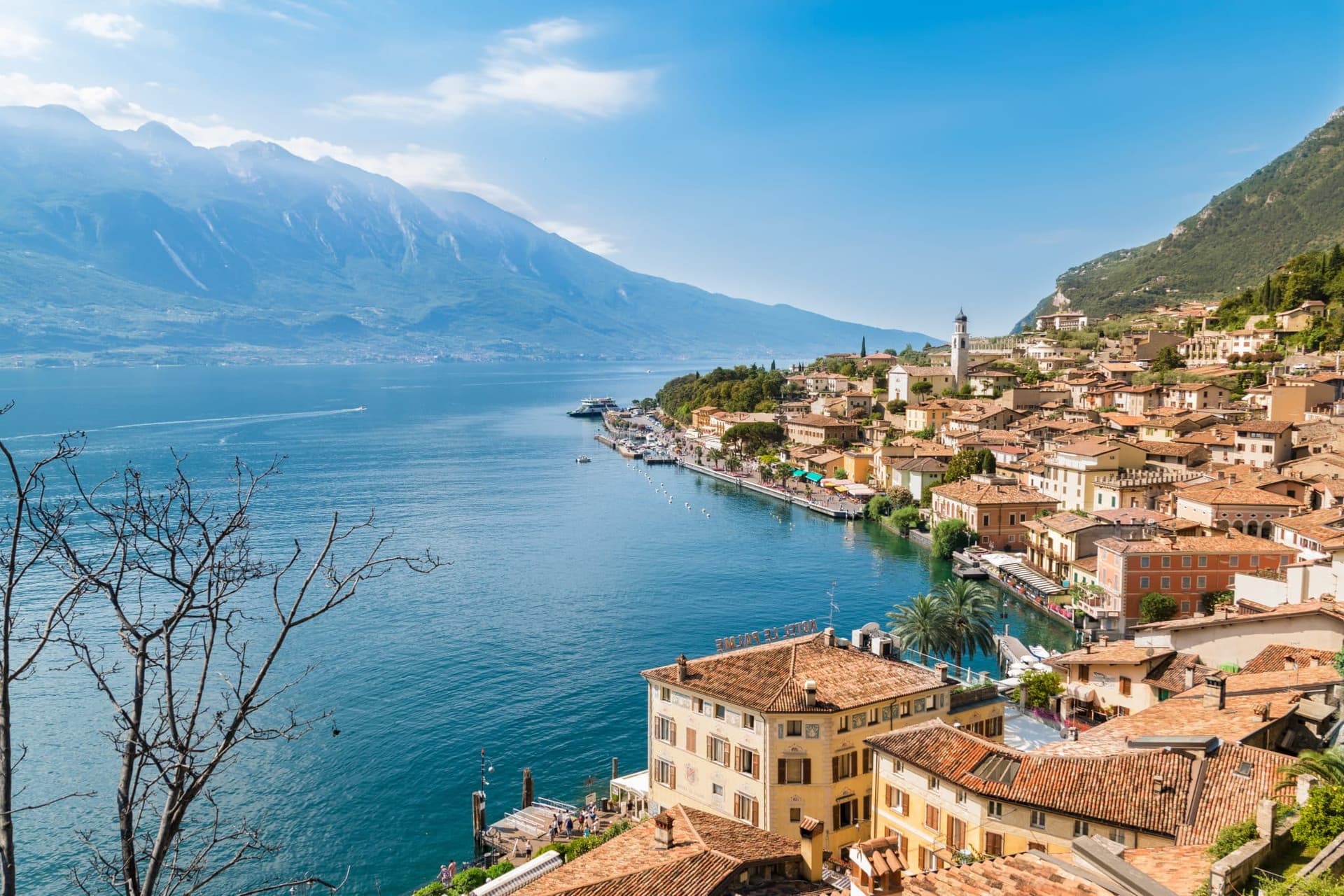
Malcesine
Province: Verona
The northernmost Veneto town on Lake Garda, where Goethe was nearly arrested for sketching the Castello Scaligero in September 1786.