

Marche · Macerata
Esanatoglia
A medieval village of seven bell towers on the Marche-Umbria border, sitting at the source of the Esino river.
Known for
SEVEN BELL TOWERS
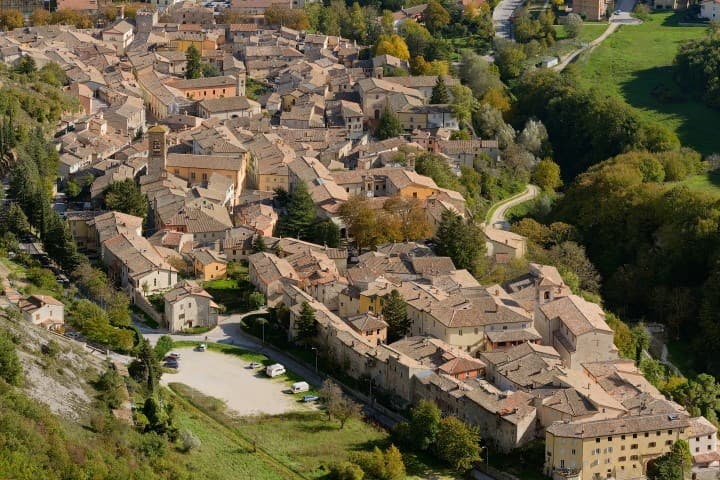
Seven campanili line Corso Vittorio Emanuele from the Sant'Andrea gate to the Panicale gate, the visual signature of the town.
ESINO SOURCE
The Esino river rises at the edge of the historic center, a series of springs and old fountains feeding the upper river.
SANT'ANATOLIA
Third-century Christian martyr who replaced the Roman name Aesa and gave the town its medieval identity through 1862.
When to visit
Best · Apr–Oct
- J
- F
- M
- A
- M
- J
- J
- A
- S
- O
- N
- D
- Best
- Hot or crowded
- Quiet
- Mostly closed
Why come
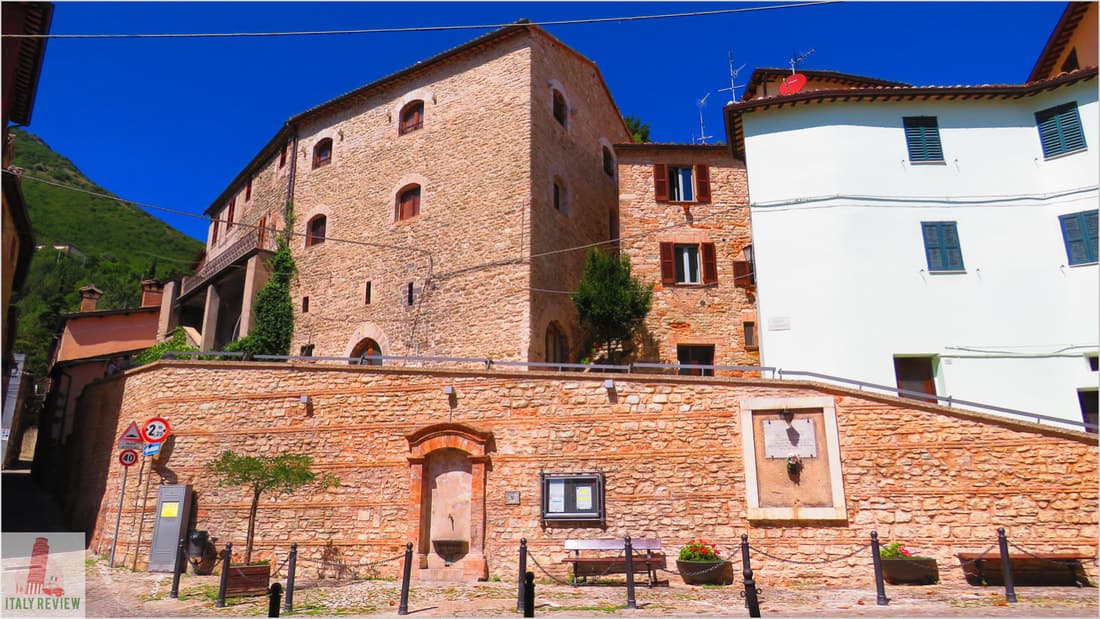
Esanatoglia sits at the source of the Esino river on the Marche-Umbria border, with the long main street, Corso Vittorio Emanuele, running between the Sant'Andrea and Panicale gates. From above, seven bell towers stand along the street, the surviving marker of how many parish churches the town once held. The name fuses two histories: Aesa, a Roman settlement on the Esino, and Santa Anatolia, the third-century Christian martyr whose cult took over as the town's identity through the medieval period.
The current name was made official in 1862. The first surviving document mentioning the place dates to 1015, recording the foundation of the monastery of Sant'Angelo by Count Atto and his wife Berta, the most important religious house in the area for the next two centuries. The hermitage of San Cataldo sits above town on Monte Corsegno; the medieval walls and public fountains still mark the lower village.
The Sunday letter
We haven’t written Esanatoglia’s letter yet.
One town every Sunday, with the photo, the food, the festa. Be there when this one comes up. Free, by Peter & Sophia from Pietrasanta.
By subscribing you agree to Substack’s Terms of Use, our Privacy Policy and our Information collection notice.
What to see
I sette campanili
Seven bell towers visible along Corso Vittorio Emanuele between the Sant'Andrea and Panicale gates, the surviving sign of the town's medieval parish density.
Mura medievali
Surviving medieval walls and fortified gates of Sant'Andrea and Panicale closing the two ends of the main street.
Eremo di San Cataldo
Hermitage perched on Monte Corsegno above the village, reached by a marked footpath through the hills.
Sorgenti dell'Esino
Source of the Esino river at the edge of the historic center, a series of springs and old fountains feeding the river's upper course.
Chiesa di Sant'Anatolia
Parish church dedicated to the third-century martyr who replaced the older name Aesa and gave the town its medieval identity as Santa Anatolia.
The slow-trip planner
Building a trip? Find where Esanatoglia fits in a slow Italy circuit.
Answer five questions. We will shape a geographically coherent slow trip from the 1,000 Italian towns most travelers skip. Yours to save and share.
Living here
- Population 1,899
- Off the beaten pathi
- Pharmacy: none mapped
- High school within a 30-minute drive
- Nearest airport Ancona / Pescara, 1 h 4 min drive
- Regional capital Ancona, 1 h 16 min drive
Tags & datadesignations · numbers · sources
Recognised as
The numbers
- Elevation: 358 m
- Population: 1,899
- Surface area: 47.91 km²
These figures were compiled from public directories — ISTAT, OpenStreetMap, Wikidata — and from the official listings of the guides named on this page. Town details change; verify with official sources before you travel.
Close by
More towns near Esanatoglia
Matelica
Province: Macerata
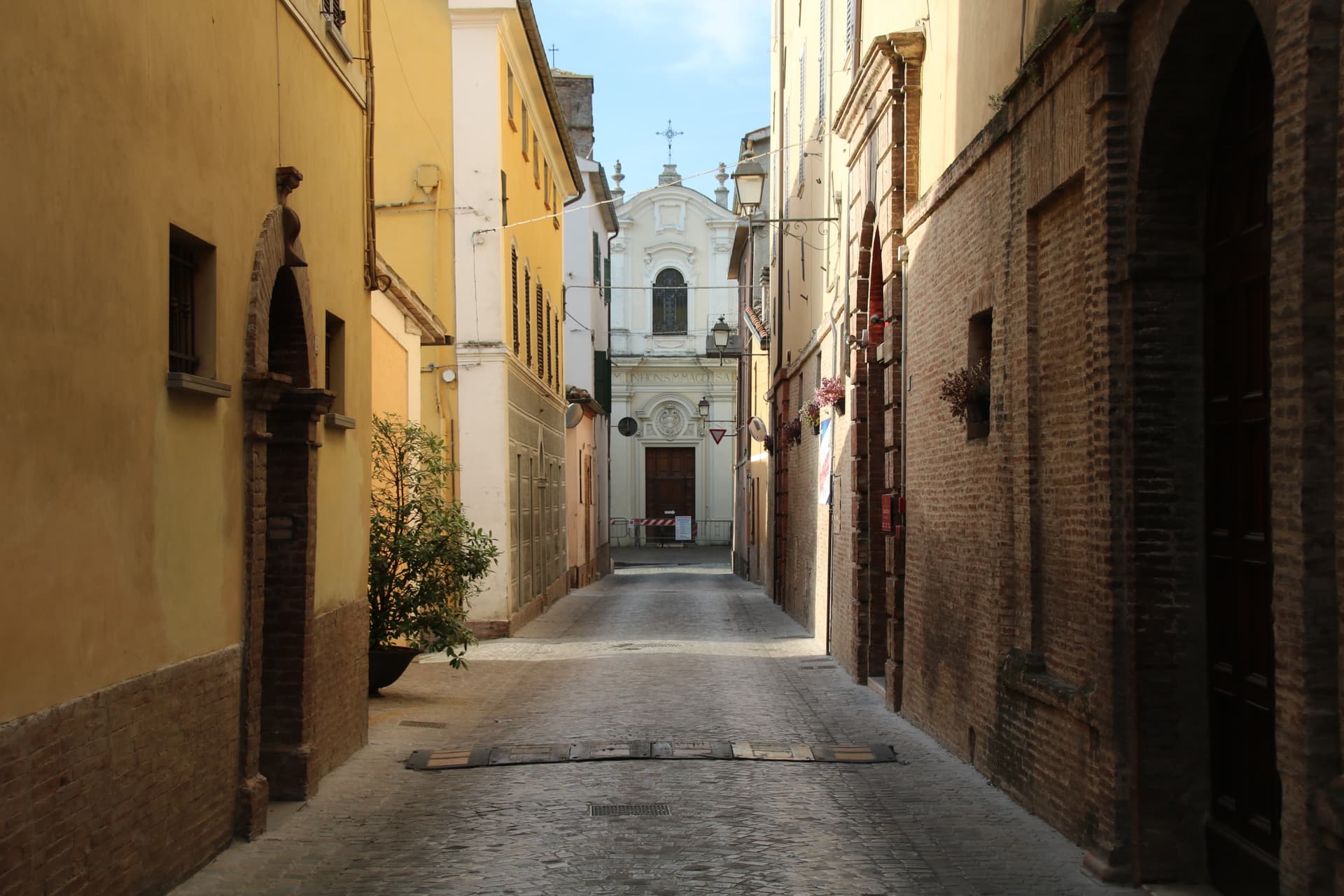
A Verdicchio town at 354 meters in the upper Esino valley, with a Roman marble globe in its archaeological museum.
Fabriano
Province: Ancona
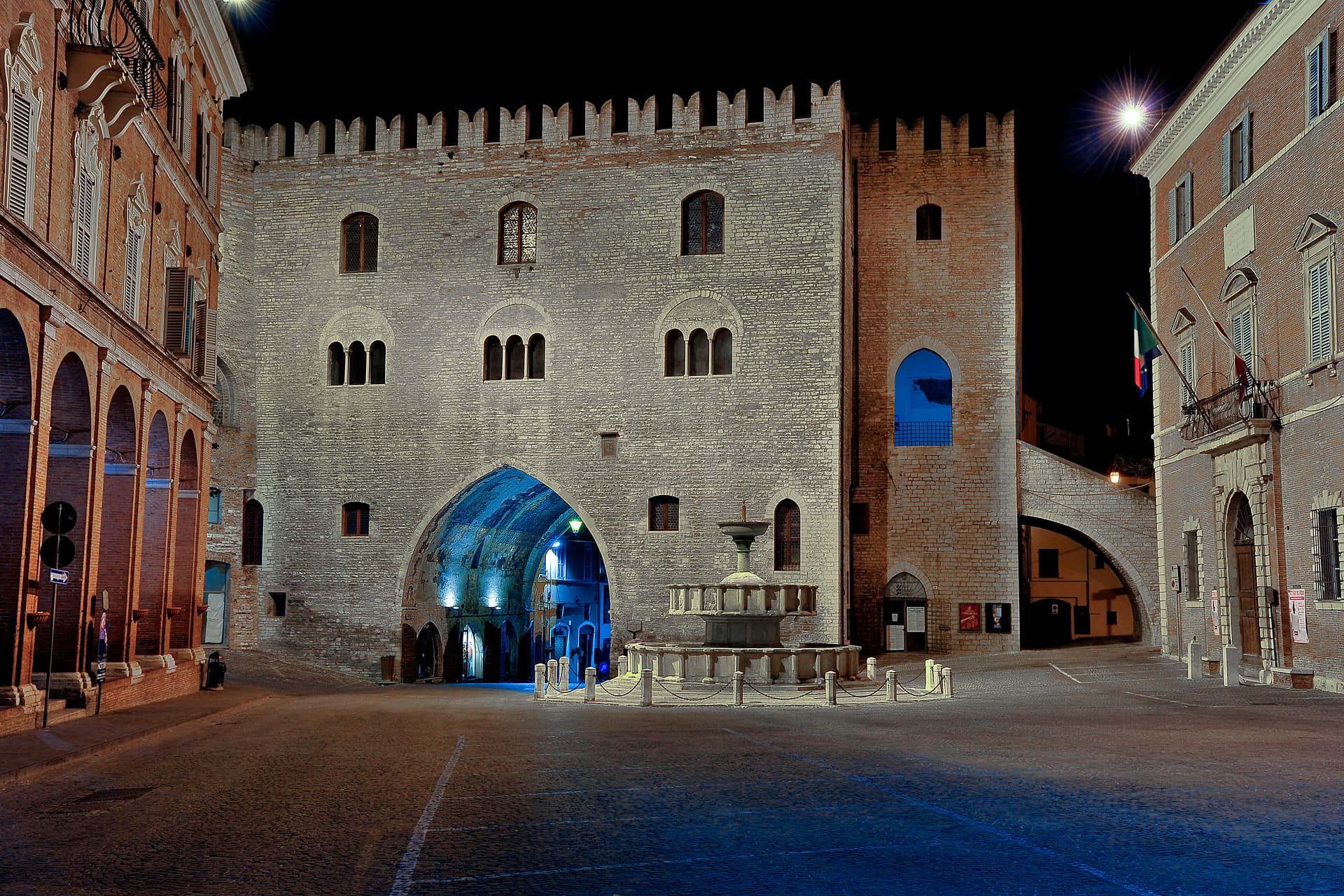
The Italian paper town at 325 meters, making fine watermarked sheets since 1264 and a UNESCO Creative City of Crafts and Folk Art.
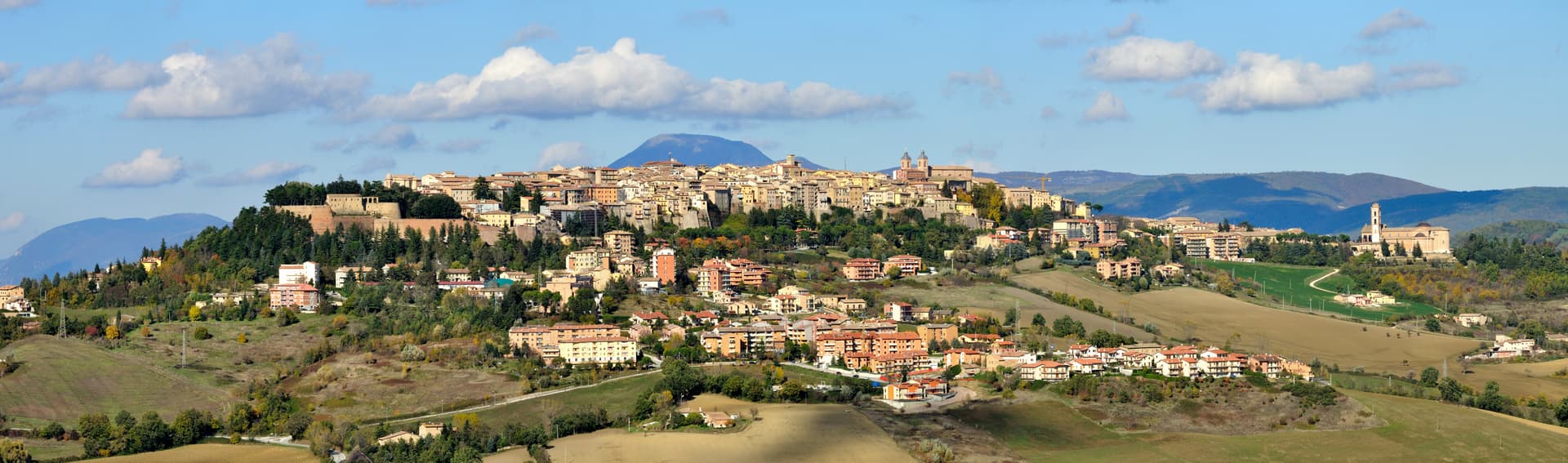
Camerino
Province: Macerata
A university city at 661 meters on the ridge between the Chienti and Potenza, Da Varano capital from 1259 to 1539, rebuilding after 2016.
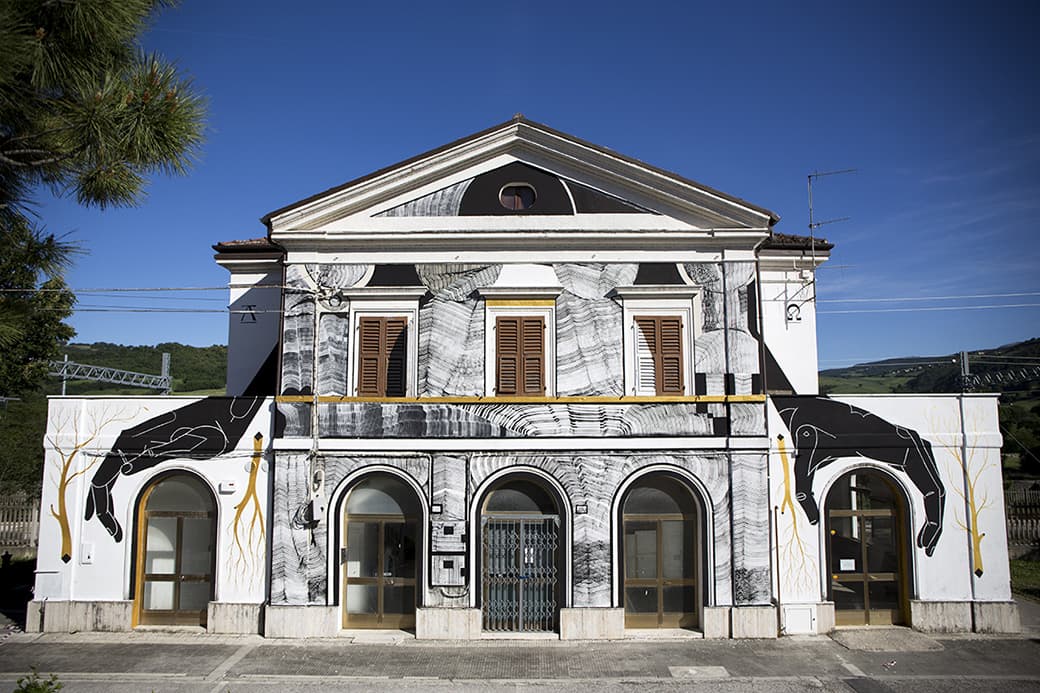
Serra San Quirico
Province: Ancona
A stone borgo on Monte Murano at the entrance to the Gola della Rossa, ringed by 1300 walls with covered passageways called copertelle.
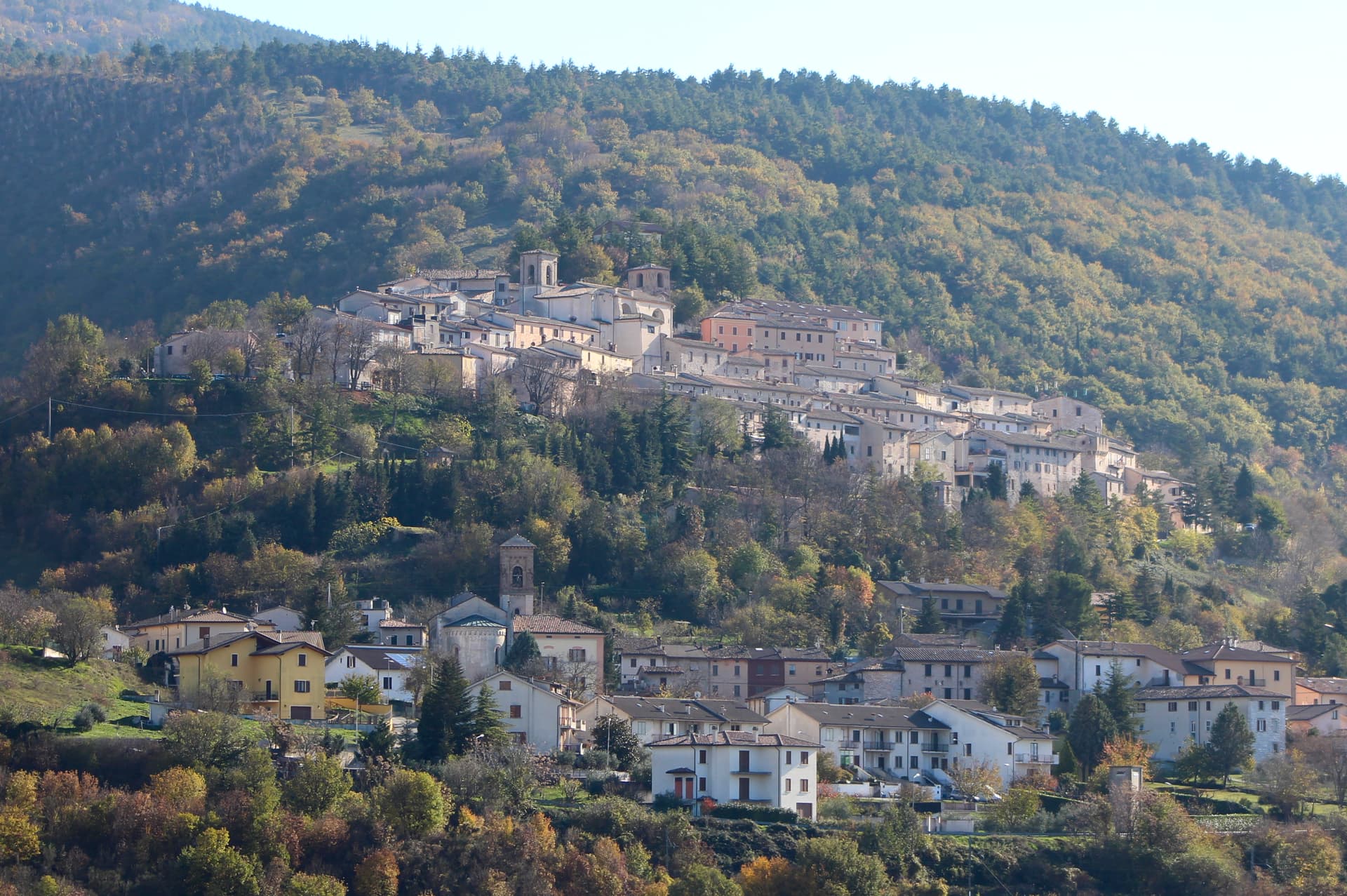
Fossato di Vico
Province: Perugia
A medieval village on Mount Mutali at 581 meters, where the Via Flaminia's Roman waystation Hellvillum became a tenth-century castle still threaded by covered alleyways.
🎨 Borghi più belli d'Italia
More Borghi più belli d'Italia towns in Marche
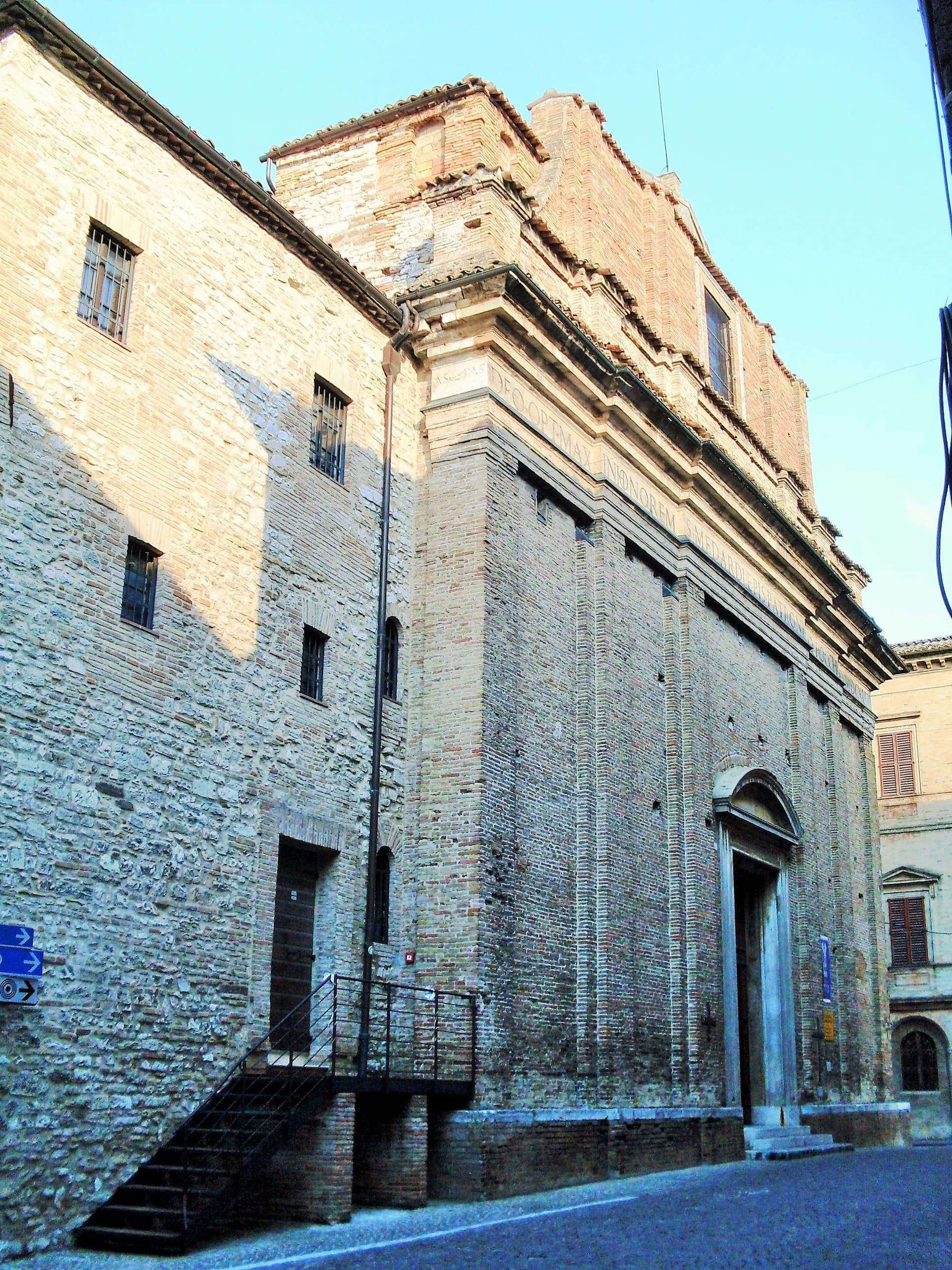
Arcevia
Province: Ancona
A hilltop borgo at 535 meters above the Misa and Nevola valleys, defended in the Middle Ages by a ring of nine satellite castles.
Cingoli
Province: Macerata
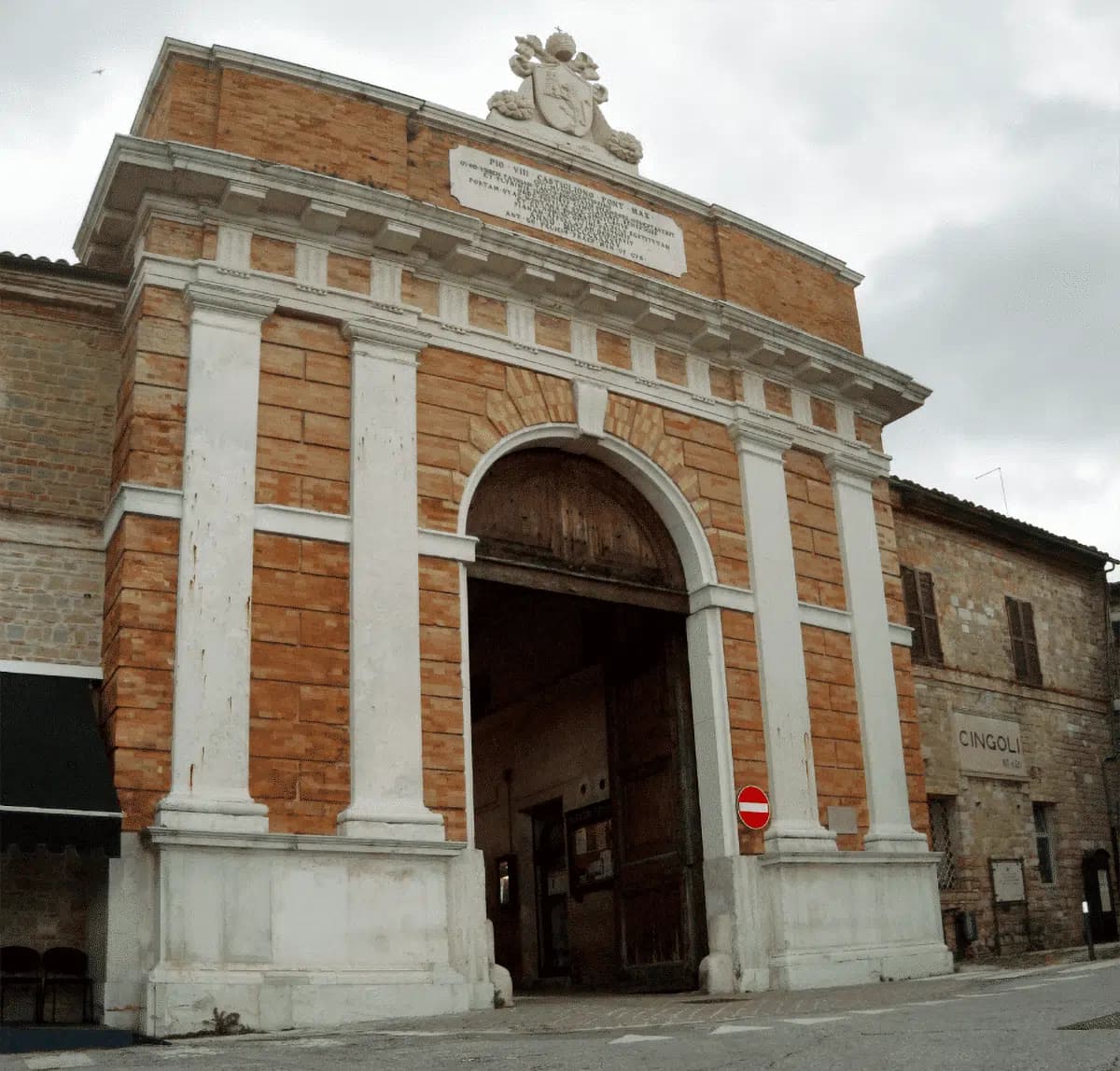
The Balcone delle Marche at 631 meters, a hilltop borgo where on clear days the view runs from the Sibillini to the Croatian coast.
Corinaldo
Province: Ancona
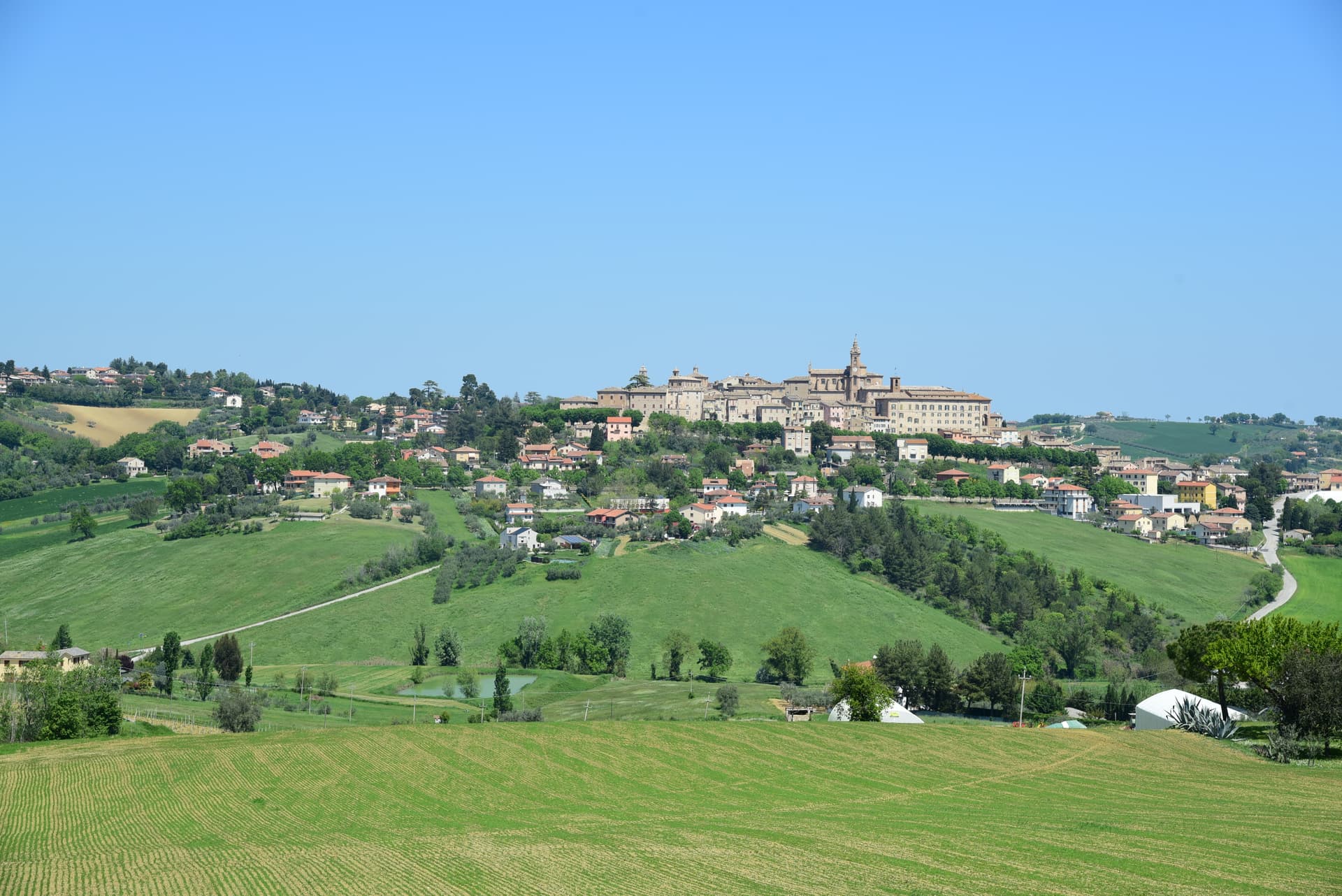
A walled hill borgo at 203 meters with 912 meters of intact medieval walls, the birthplace of Saint Maria Goretti and the Pozzo della Polenta.
Fermo
Province: Fermo
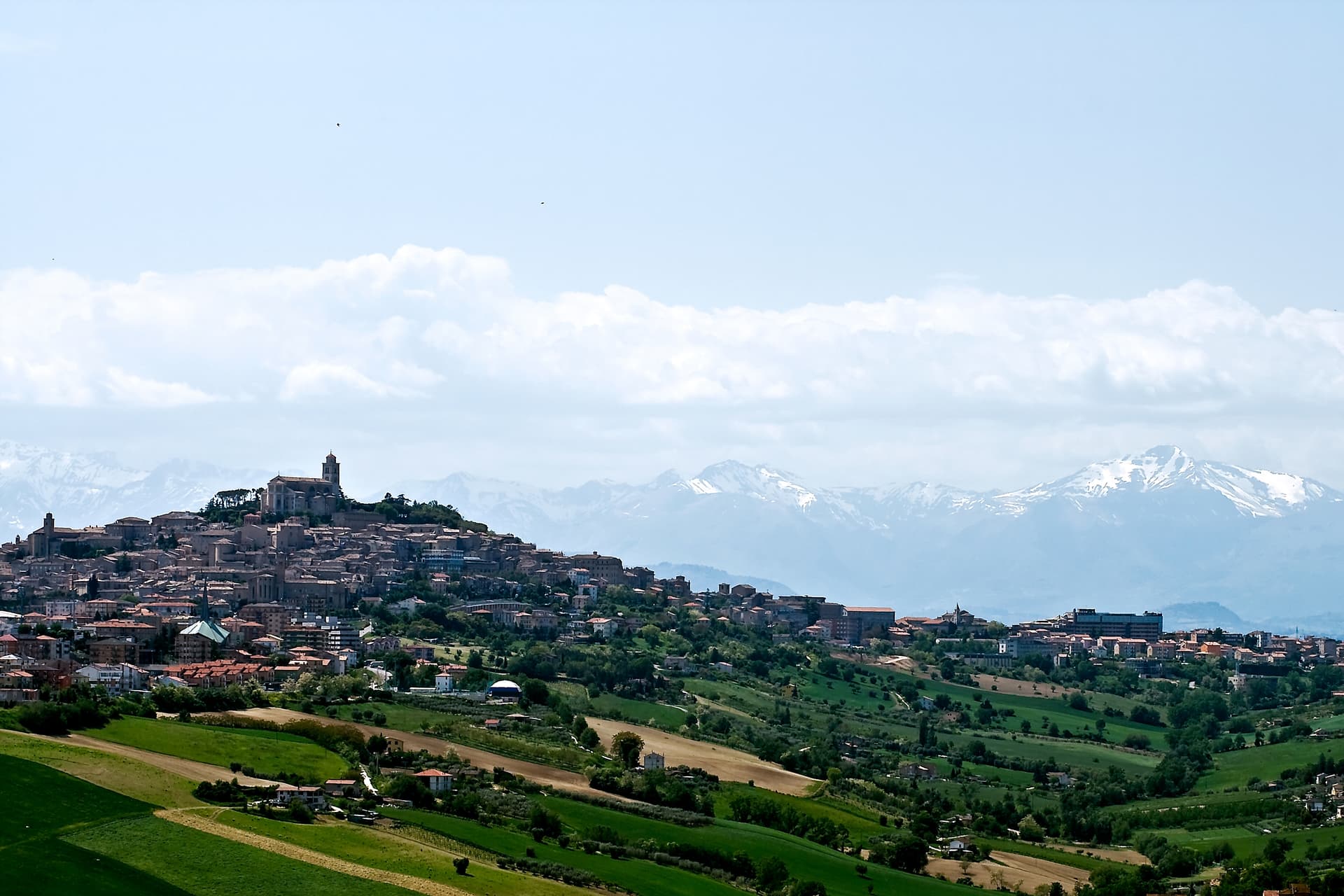
The provincial capital on the Sabulo hill at 319 meters, with 2,200 square meters of Augustan Roman cisterns running under the centro storico.
Gradara
Province: Pesaro e Urbino
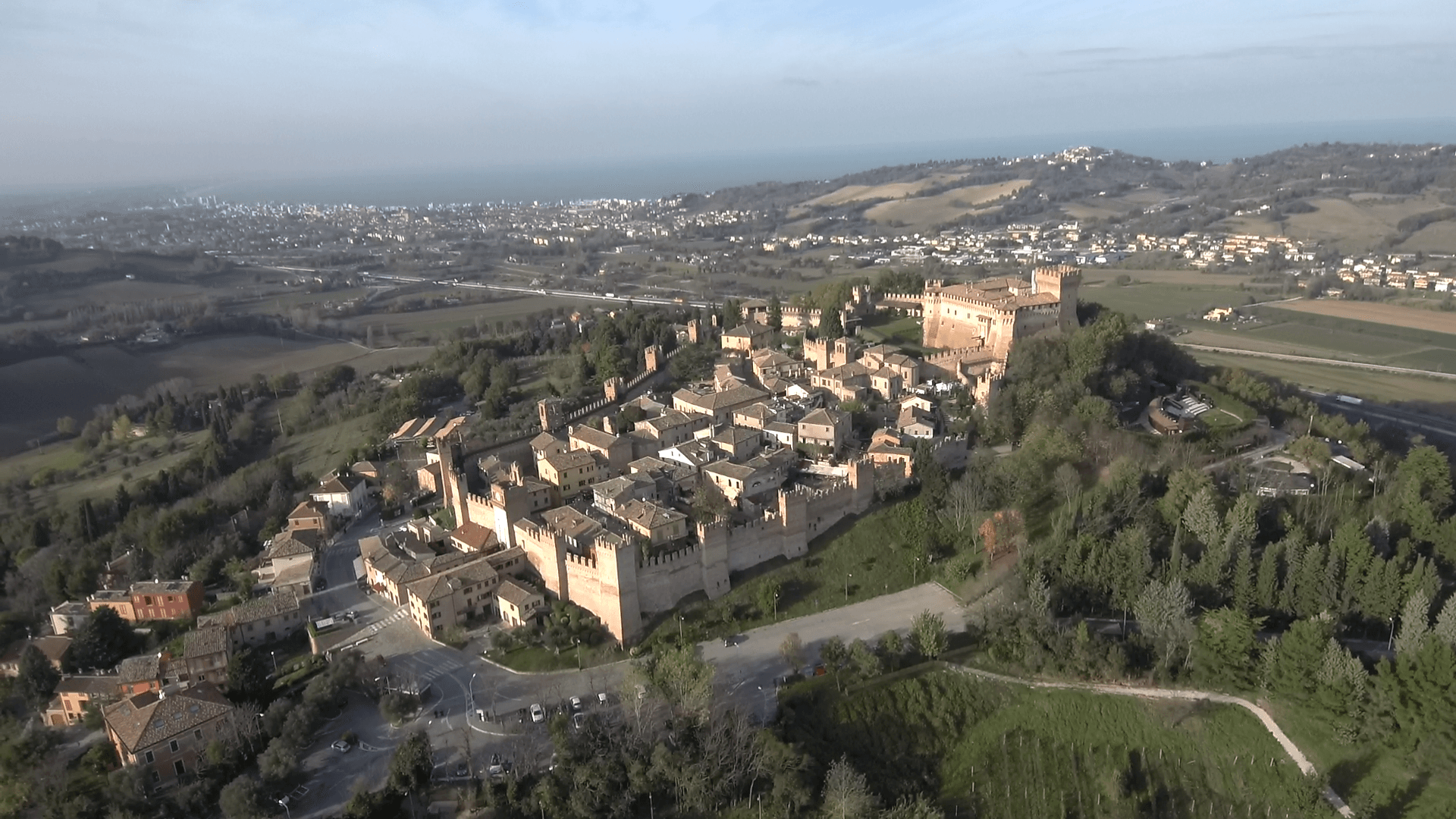
The walled hill borgo at 142 meters above the Adriatic where Dante set the deaths of Paolo and Francesca, with one of Italy's best-preserved castles.