

Tuscany · Firenze
Fiesole
An Etruscan hilltop above Florence, founded in the ninth century BC and conquered by Rome in 283 BC, still looking down on what later replaced it.
Known for
ETRUSCAN ROOTS
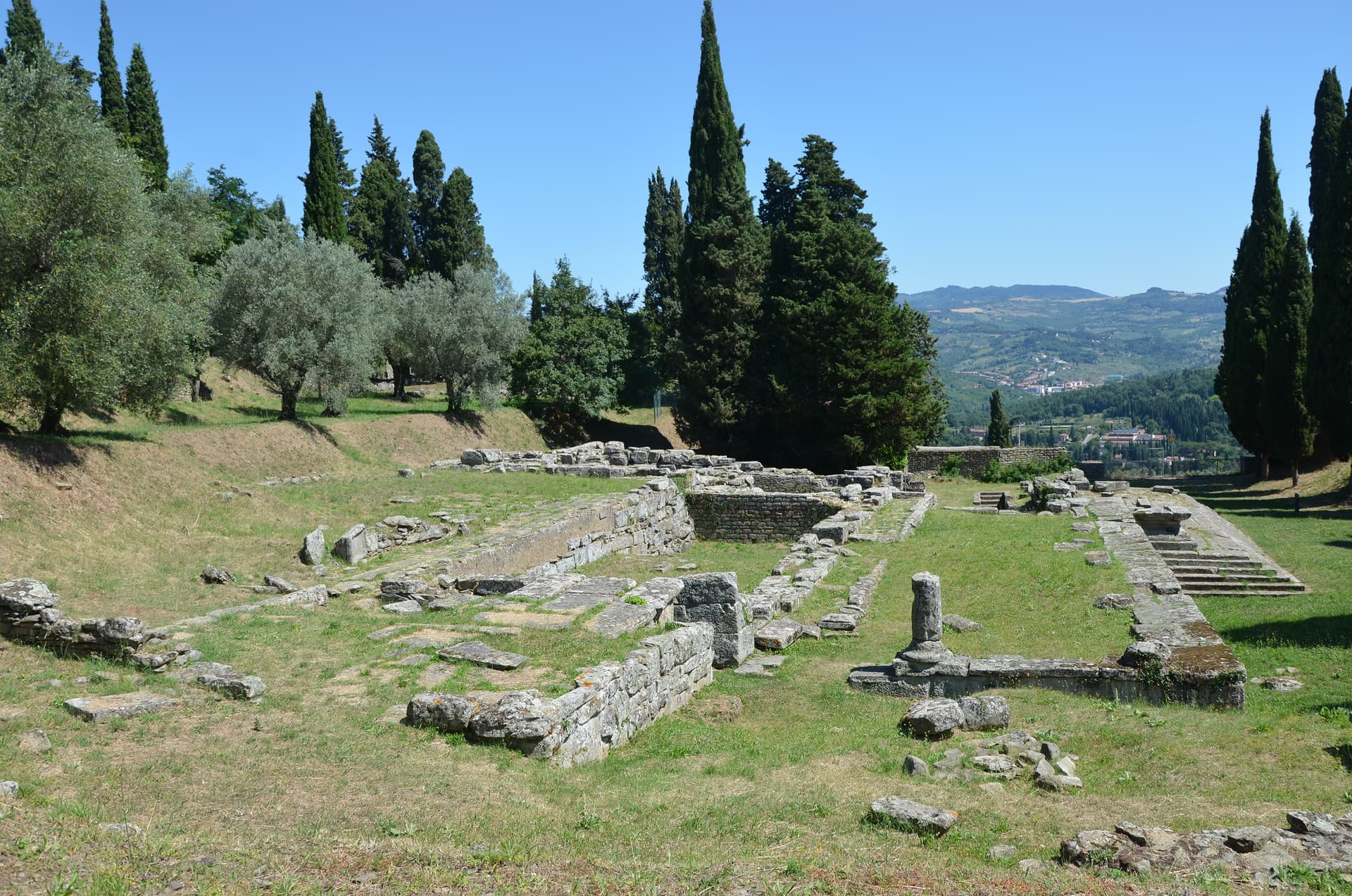
Founded in the ninth century BC, a member of the Etruscan confederacy, with surviving polygonal walls on the north flank.
ROMAN THEATRE
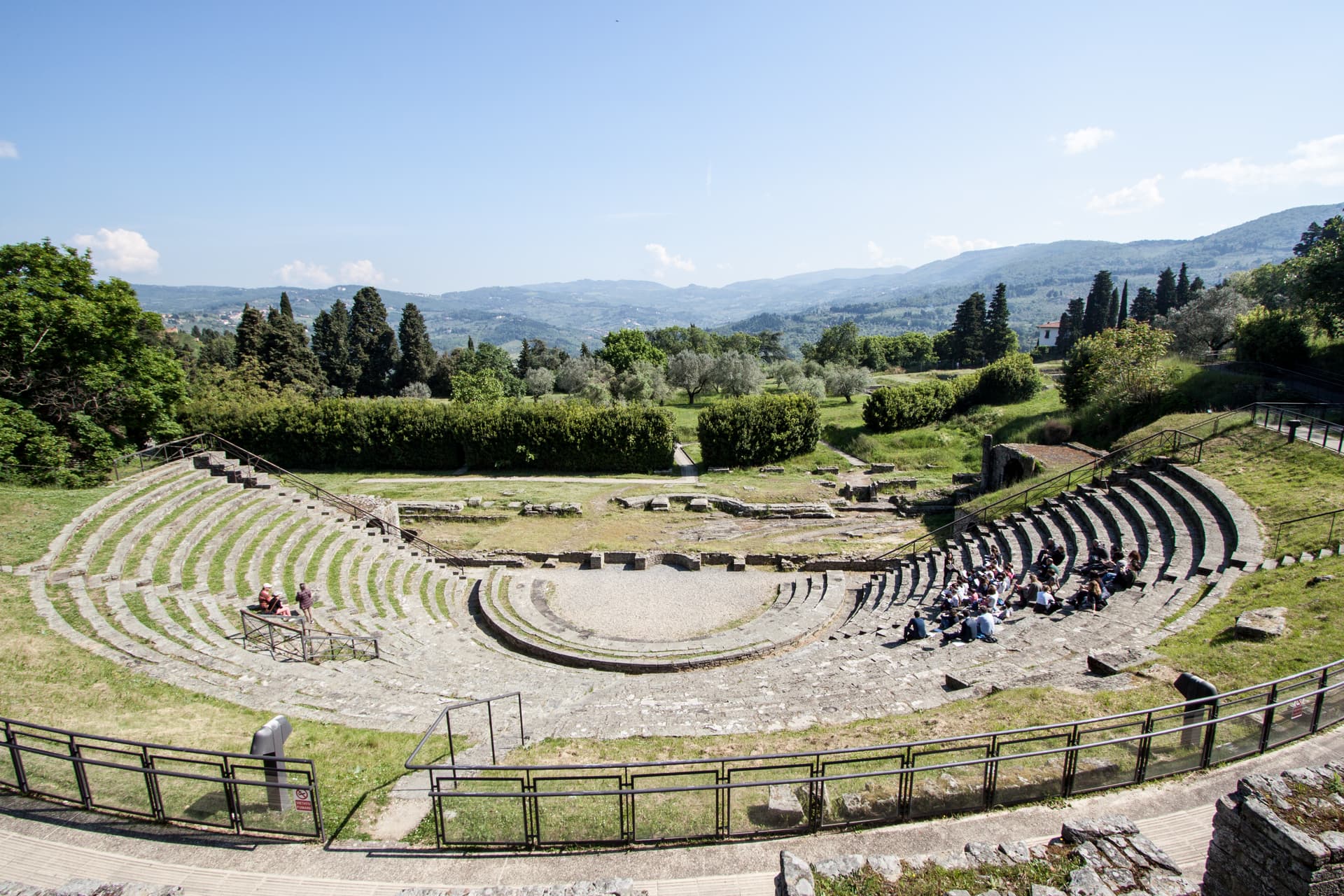
Built in the first century AD with 19 tiers and a 34-meter diameter, still active as the venue for the summer Estate Fiesolana.
THE VIEW
The 295-meter ridge directly above Florence, the source of the panoramic Florence-from-the-hills photograph everyone takes.
When to visit
Best · Apr–Oct
- J
- F
- M
- A
- M
- J
- J
- A
- S
- O
- N
- D
- Best
- Hot or crowded
- Quiet
- Mostly closed
The festa: Romolo di Fiesole, 6 July
Why come
Fiesole sits on a ridge above Florence, founded by the Etruscans in the ninth century BC as Viesul and conquered by the Romans in 283 BC as Faesulae. The Etruscan walls survive on the northern flank; the Roman theatre below the cathedral, built in the first century AD, has nineteen tiers of stone seats and a 34-meter diameter and still hosts the Estate Fiesolana summer festival. The Cattedrale di San Romolo, founded in 1028, holds a marble altar from 1273 and two Pietro Perugino frescoes.
The Convento di San Francesco crowns the highest point, the same height Boccaccio gave the brigata in the Decameron's frame story. Florence claimed Fiesole in 1125 and never let it go. Today the town is the hill seat of Florentine villas, the Villa Medici among them, and the panorama from the piazza is the photograph that defines what people mean by the Tuscan view of Florence.
The Sunday letter
We haven’t written Fiesole’s letter yet.
One town every Sunday, with the photo, the food, the festa. Be there when this one comes up. Free, by Peter & Sophia from Pietrasanta.
By subscribing you agree to Substack’s Terms of Use, our Privacy Policy and our Information collection notice.
What to see
Teatro Romano
First-century AD Roman theatre with 19 tiers of stone seats, 34 meters in diameter, still in use for the Estate Fiesolana summer festival.
Cattedrale di San Romolo
Romanesque cathedral founded in 1028, flanked by a 42-meter bell tower, with a marble altar from 1273 and two Pietro Perugino frescoes.
Convento di San Francesco
Romanesque-Gothic Franciscan convent at the ridge's highest point, 345 meters, with cloisters and a panoramic view back over Florence.
Area Archeologica e Mura Etrusche
Etrusco-Roman temple, Roman baths and surviving Etruscan walls, the largest archaeological zone in the Florentine countryside.
Museo Bandini
Civic collection of medieval and Renaissance painting, della Robbia ceramics and Byzantine icons, founded from a private bequest in 1795.
Piazza Mino
Sloping main square named for sculptor Mino da Fiesole, with the cathedral and the Palazzo Pretorio facing each other.
The slow-trip planner
Building a trip? Find where Fiesole fits in a slow Italy circuit.
Answer five questions. We will shape a geographically coherent slow trip from the 1,000 Italian towns most travelers skip. Yours to save and share.
We recommend
Where to eat and stay
Not our picks, but places the guides put their name to — a Michelin star, a Gambero Rosso fork, a Slow Food snail, a Michelin Key for the hotels. Worth a table, a counter, or a night when you pass through.
Serrae Villa FiesoleRistorante
Serrae Villa Fiesole holds one Michelin star and two Gambero Rosso forks (80/100).
Le Lance di FiesoleRistorante
A Gambero Rosso listing, at Le Lance di Fiesole.
Villa San Michele, A Belmond Hotel, FlorenceHotel
Villa San Michele, A Belmond Hotel, Florence holds one Michelin Key and a La Liste score of 90.5.
Living here
- Population 13,659
- Commuter belti
- Pharmacy in town
- High school within a 30-minute drive
- Train station in the comune
- Nearest airport Bologna, 1 h 30 min drive
- Regional capital Firenze, 24 min drive
Tags & datadesignations · numbers · sources
Recognised as
The numbers
- Elevation: 295 m
- Population: 13,659
- Surface area: 42.19 km²
These figures were compiled from public directories — ISTAT, OpenStreetMap, Wikidata — and from the official listings of the guides named on this page. Town details change; verify with official sources before you travel.
Close by
More towns near Fiesole
Barberino di Mugello
Province: Firenze
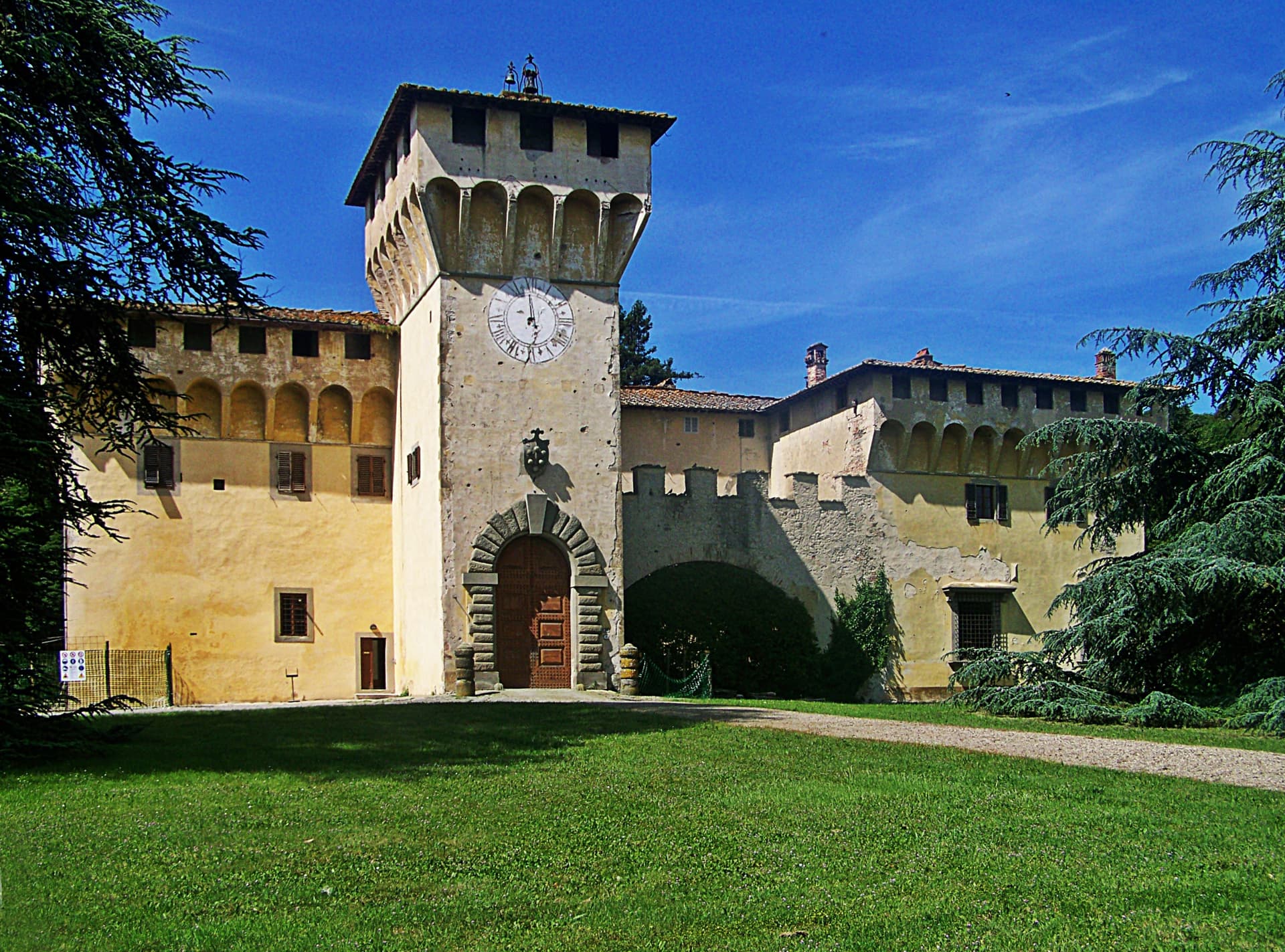
The Mugello gateway at 272 meters where the Medici family kept its first country villas, with Michelozzo's Cafaggiolo and the artificial Lago di Bilancino below.

Pistoia
Province: Pistoia
Italy's nursery capital and the medieval Tuscan rival that gave its name to the pistol — a quietly extraordinary centro storico of zebra-striped Romanesque churches, Andrea della Robbia's polychrome frieze on the Ospedale del Ceppo, and Italy's Capital of Culture 2017, all 30 minutes from Florence by train.
Carmignano
Province: Prato
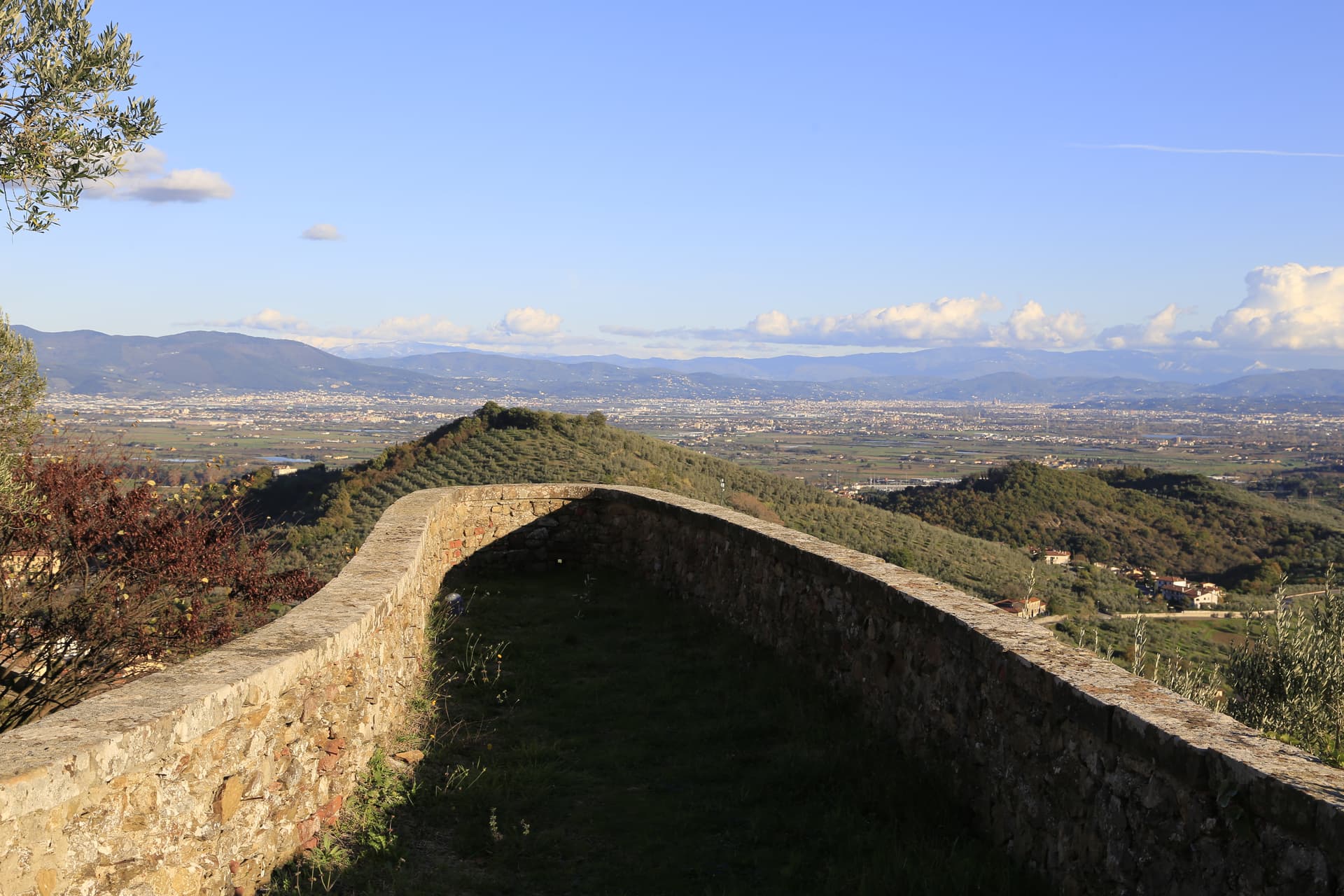
A Medici village at 189 meters on the Montalbano slopes, where Pontormo's Visitation hangs in the parish church and Etruscan tumuli sit below the Renaissance villas.
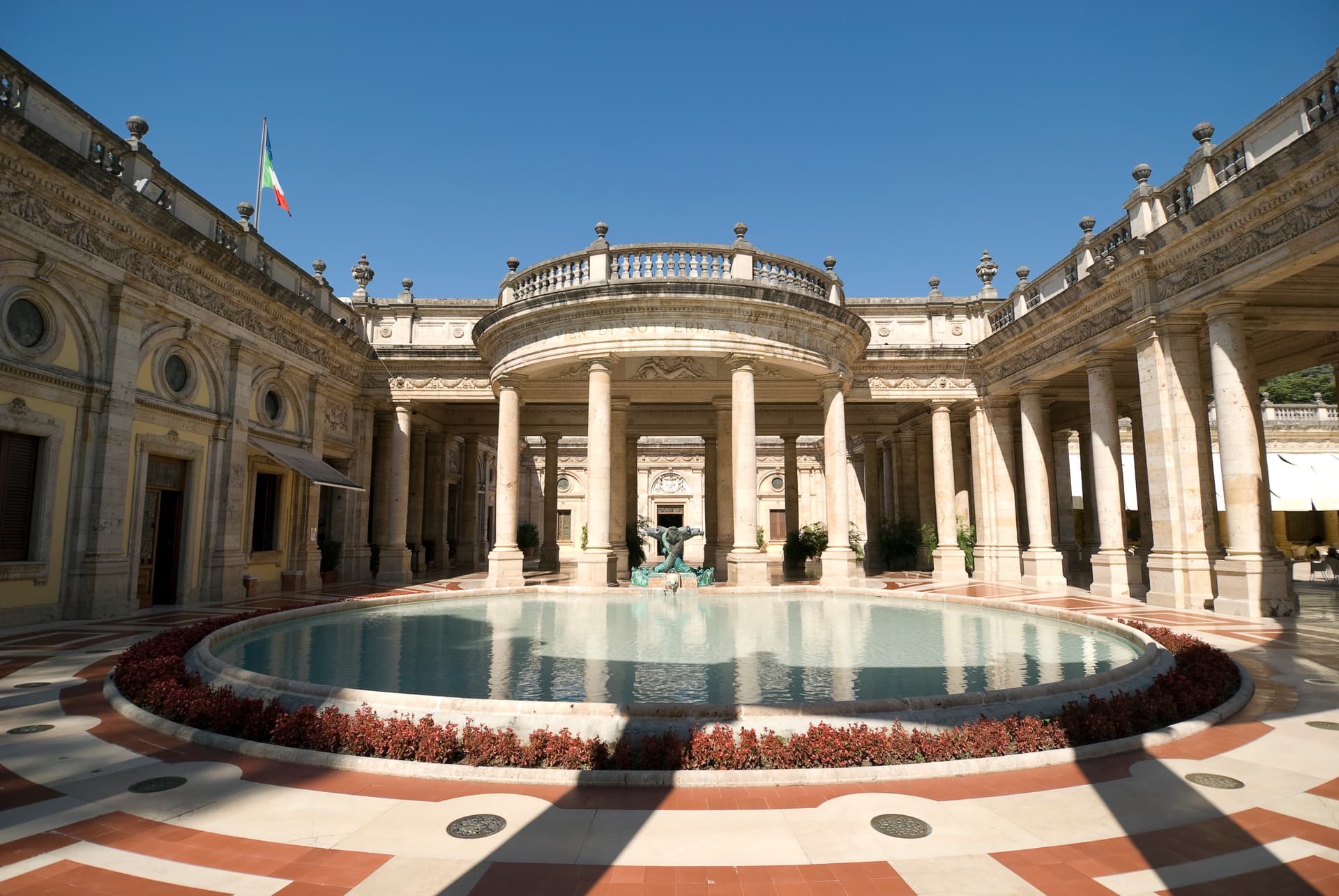
Montecatini-Terme
Province: Pistoia
Eleven thermal springs in a Liberty-style park at the foot of the Apennines, one of the Great Spa Towns of Europe inscribed by UNESCO in 2021.
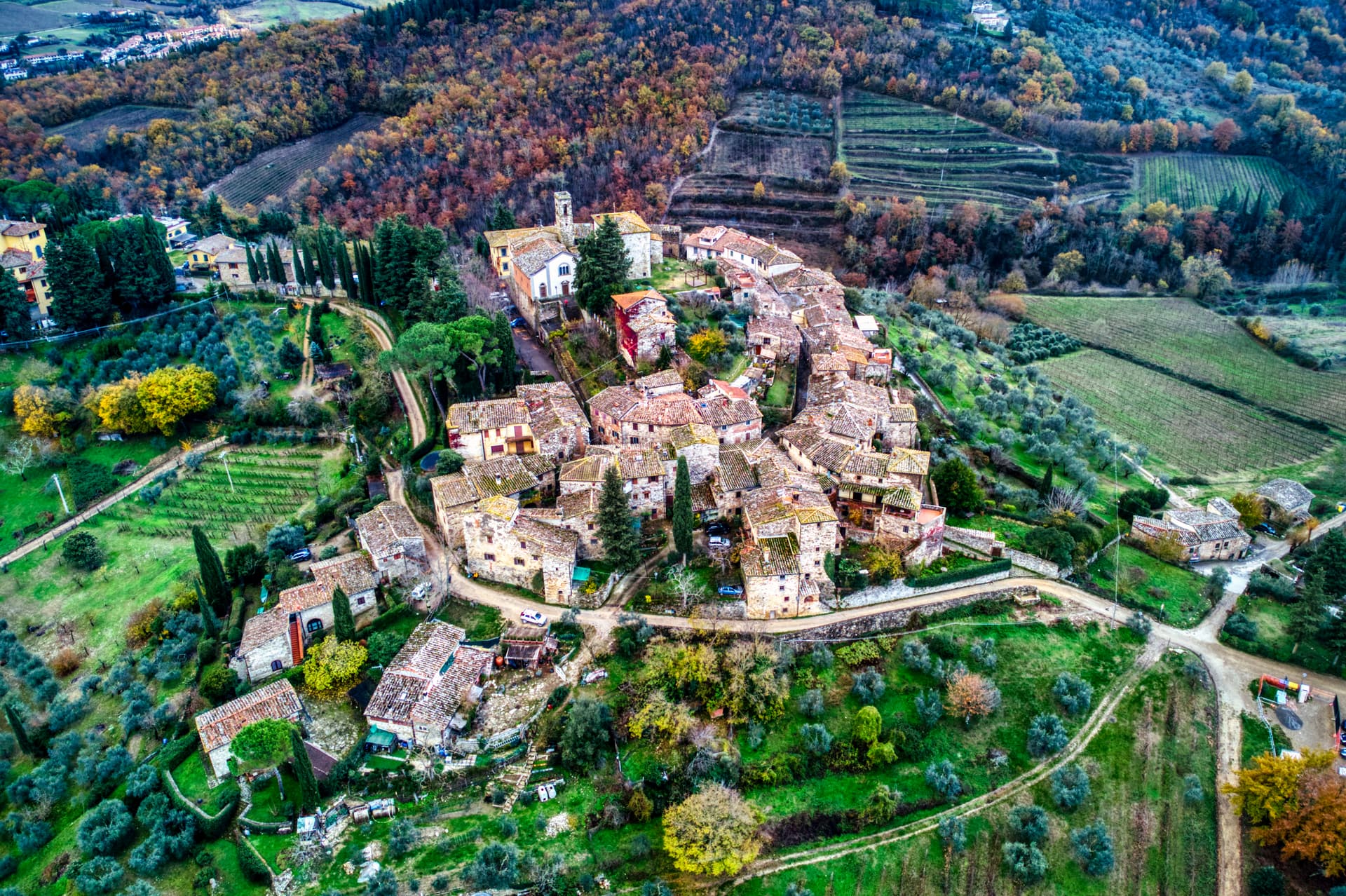
Greve in Chianti
Province: Firenze
The market town of the Chianti Classico zone on the Greve river, with a triangular piazza arcaded since the sixteenth century.
🫒 Città dell'Olio
More Città dell'Olio towns in Tuscany
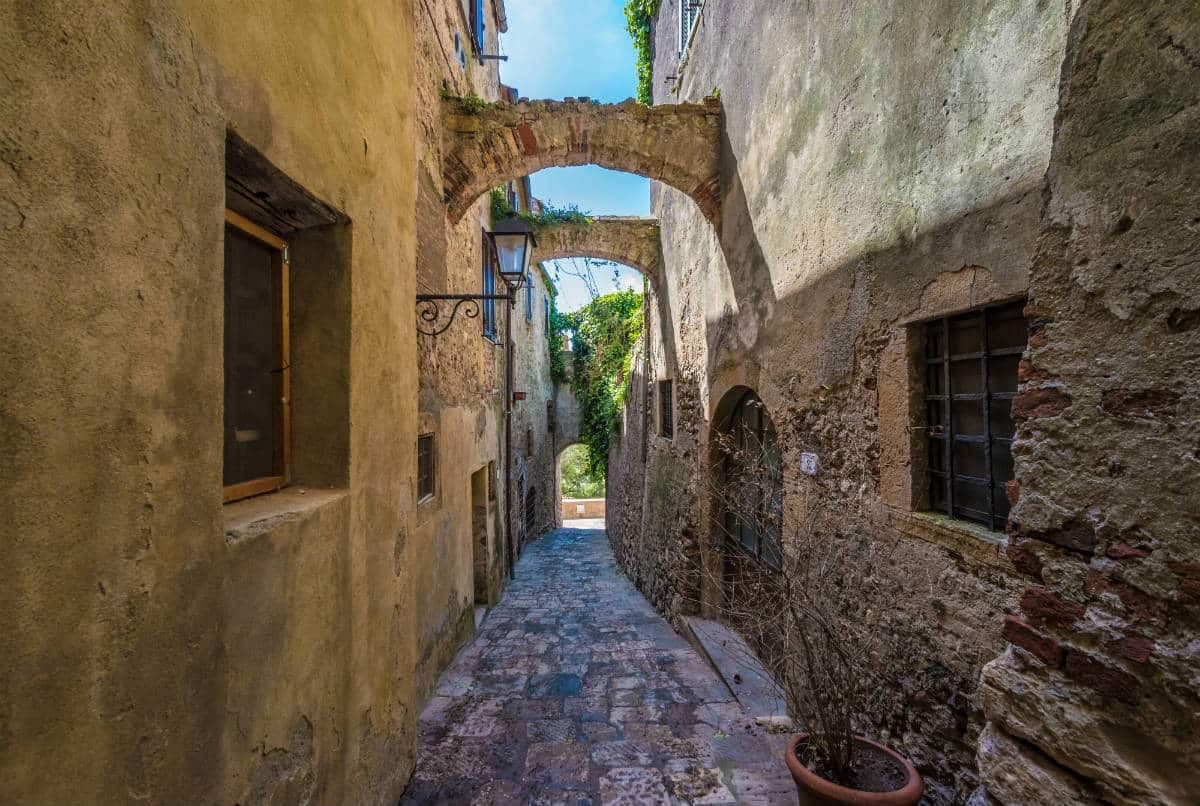
Capalbio
Province: Grosseto
A walled hilltop borgo at 217 meters in the southern Maremma, donated to the Abbey of Tre Fontane by Charlemagne and home of Niki de Saint Phalle's Tarot Garden.

Castagneto Carducci
Province: Livorno
A hilltop borgo at 194 meters above the Costa degli Etruschi, renamed for the poet Carducci in 1907 and the home of Bolgheri and Sassicaia.
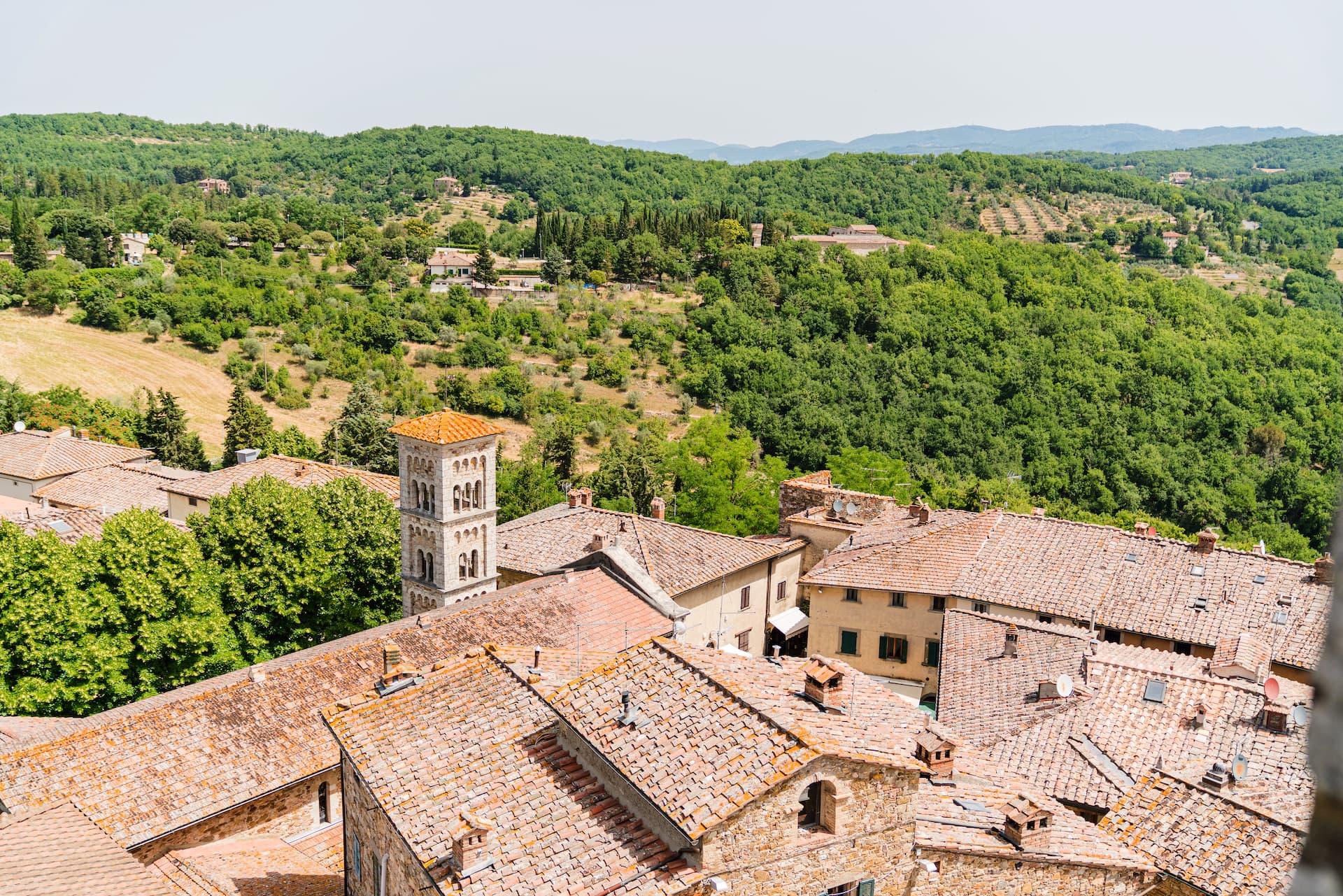
Castellina in Chianti
Province: Siena
A Chianti hill town at 578 meters on the watershed between the Arno and the Ombrone, with an Etruscan tumulus, a Brunelleschi-reinforced wall and a covered medieval walkway around its edge.
Castelnuovo Berardenga
Province: Siena
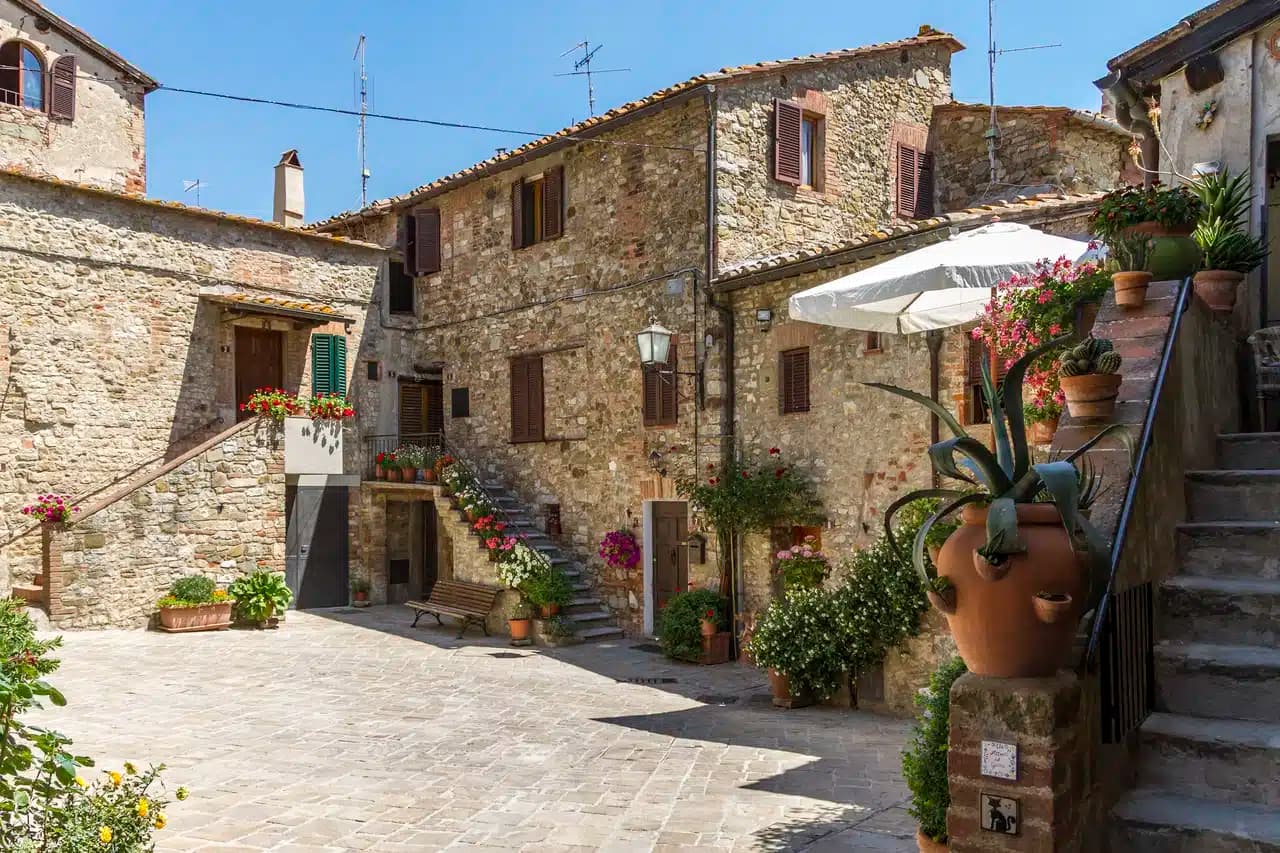
A Chianti Classico commune at 351 meters between the Ombrone and the Crete Senesi, the last castle Siena built against Florence, in 1366.
Castiglion Fiorentino
Province: Arezzo
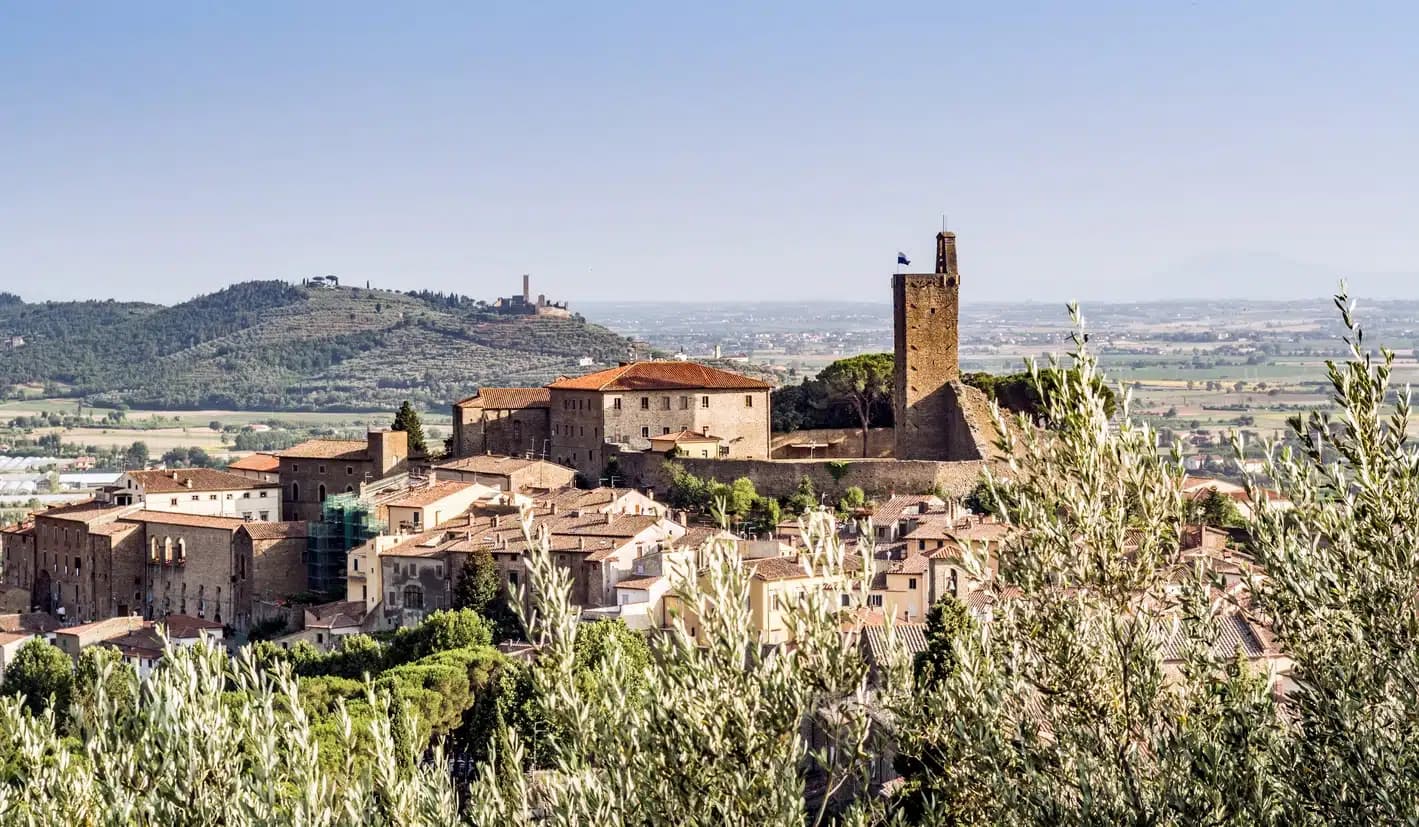
A walled hill town at 342 meters between Arezzo and Cortona, where Etruscan walls support the medieval Cassero and Vasari's loggia frames the Val di Chiana below.