

Tuscany · Firenze
Greve in Chianti
The market town of the Chianti Classico zone on the Greve river, with a triangular piazza arcaded since the sixteenth century.
Known for
CHIANTI CLASSICO
Market town of the black-rooster zone, with castle estates at Verrazzano and Vicchiomaggio producing on the surrounding hills.
PIAZZA MATTEOTTI
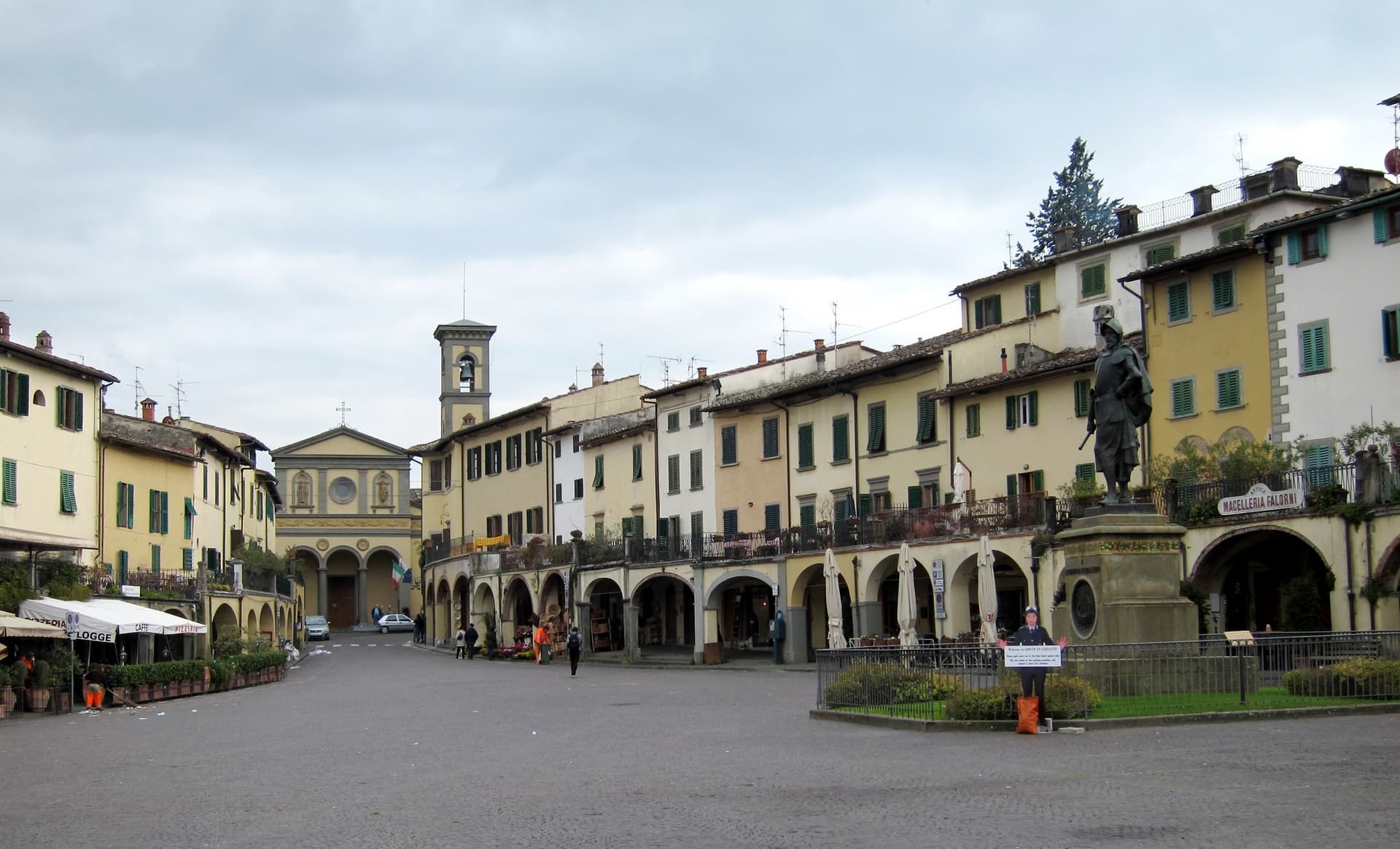
Triangular arcaded square from the sixteenth century, with the Verrazzano statue at its center and the Saturday market spreading under the porticoes.
VERRAZZANO
Giovanni da Verrazzano was born here in 1485 and sailed for France into New York Bay in 1524, fifty years before Hudson.
When to visit
Best · Apr–Oct
- J
- F
- M
- A
- M
- J
- J
- A
- S
- O
- N
- D
- Best
- Hot or crowded
- Quiet
- Mostly closed
Why come
Greve sits in the Val di Greve, thirty-one kilometers south of Firenze and forty-two north of Siena, on the small fast river that gave the town its name. The piazza is the point. Piazza Matteotti is triangular, irregular, lined with sixteenth-century arcades that shelter wine shops, butchers and pasticcerie, and centered on a bronze statue of Giovanni da Verrazzano, the navigator born in 1485 at a castle on the hills above town.
The Chianti wine district was redrawn in 1932 and Greve found itself at the center of the zone that supplies Chianti Classico, the wine sealed with a black rooster on the neck of the bottle. The Castello di Verrazzano and the Castello di Vicchiomaggio still operate vineyards on the slopes north of town. The Saturday market fills the piazza. The wine festival in early September empties the surrounding cellars into glasses for three days.
What to see
Piazza Matteotti
Triangular sixteenth-century market square ringed by arcades, with a bronze statue of Giovanni da Verrazzano at its center.
Chiesa di Santa Croce
Neoclassical parish church on the south point of the piazza, rebuilt in the nineteenth century after earthquake damage.
Castello di Verrazzano
Vineyard estate on the hills north of town, birthplace in 1485 of the navigator who explored New York Bay for the French crown.
Castello di Vicchiomaggio
Eleventh-century Longobard castle on the road to Firenze, still producing Chianti Classico from surrounding vineyards.
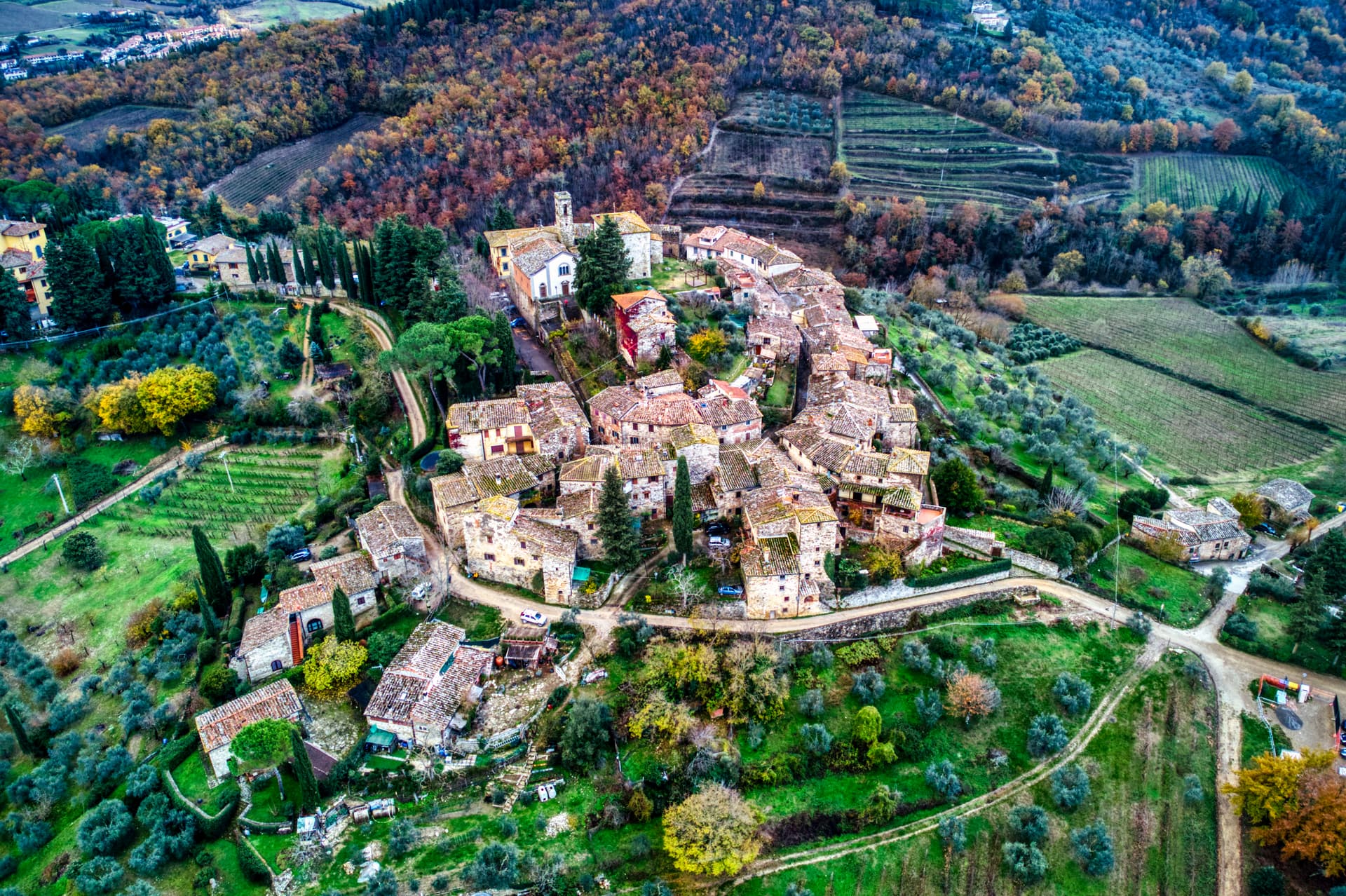
Montefioralle
Tenth-century walled hamlet a kilometer above Greve, member of the Borghi più belli network, with concentric streets around a single church.
The slow-trip planner
Building a trip? Find where Greve in Chianti fits in a slow Italy circuit.
Answer five questions. We will shape a geographically coherent slow trip from the 1,000 Italian towns most travelers skip. Yours to save and share.
We recommend
Where to eat and stay
Not our picks, but places the guides put their name to — a Michelin star, a Gambero Rosso fork, a Slow Food snail, a Michelin Key for the hotels. Worth a table, a counter, or a night when you pass through.
Castello VicchiomaggioRistorante
Castello Vicchiomaggio holds one Gambero Rosso fork (78/100).
Da PadellinaTrattoria
Da Padellina carries a Gambero Rosso listing.
Enoteca BaldiWine Bar
Enoteca Baldi carries two Gambero Rosso bottles.
Officina della BisteccaTrattoria
One Gambero Rosso prawn, at Officina della Bistecca.
Ristoro di LamoleRistorante
Ristoro di Lamole carries a Gambero Rosso listing.
Signature product
Chianti Classico DOCGDOCG
Sangiovese-dominant; one of nine Chianti Classico communes between Florence and Siena.
See every town in our catalogue producing Chianti Classico DOCG.
The Sunday letter
Greve in Chianti got its letter. One town every Sunday, free — the photo, the food, the festa.
By subscribing you agree to Substack’s Terms of Use, our Privacy Policy and our Information collection notice.
Living here
- Population 13,322
- In-betweeni
- Pharmacy in town
- Nearest high school over ~30 minutes away
- Nearest airport Bologna, 1 h 46 min drive
- Regional capital Firenze, 44 min drive
Tags & datadesignations · numbers · sources
Recognised as
The numbers
- Elevation: 236 m
- Population: 13,322
- Surface area: 169.38 km²
These figures were compiled from public directories — ISTAT, OpenStreetMap, Wikidata — and from the official listings of the guides named on this page. Town details change; verify with official sources before you travel.
Featured on
Greve in Chianti appears on 2 themed picks from our Collections:
Close by
More towns near Greve in Chianti
Castellina in Chianti
Province: Siena
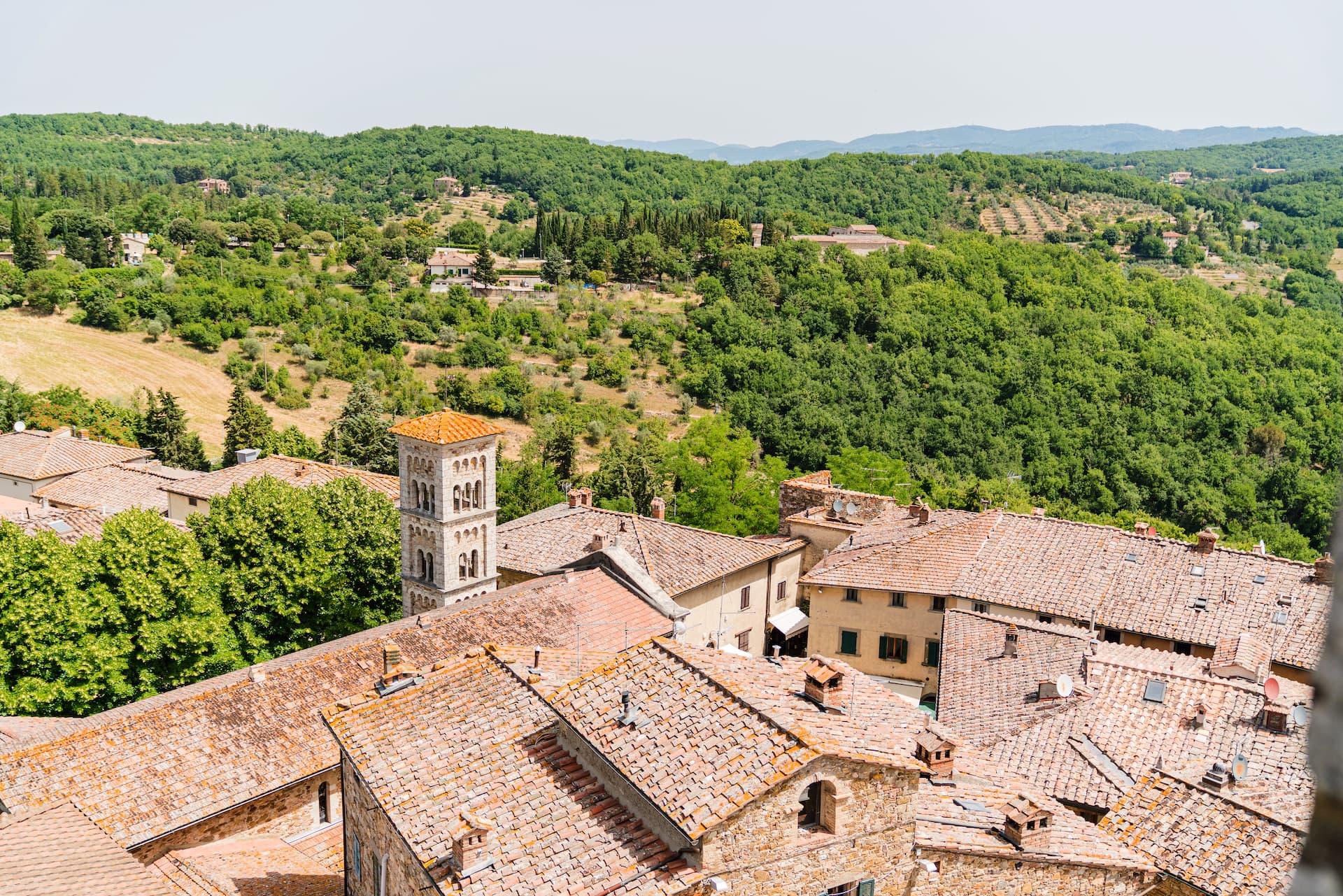
A Chianti hill town at 578 meters on the watershed between the Arno and the Ombrone, with an Etruscan tumulus, a Brunelleschi-reinforced wall and a covered medieval walkway around its edge.
Certaldo
Province: Firenze
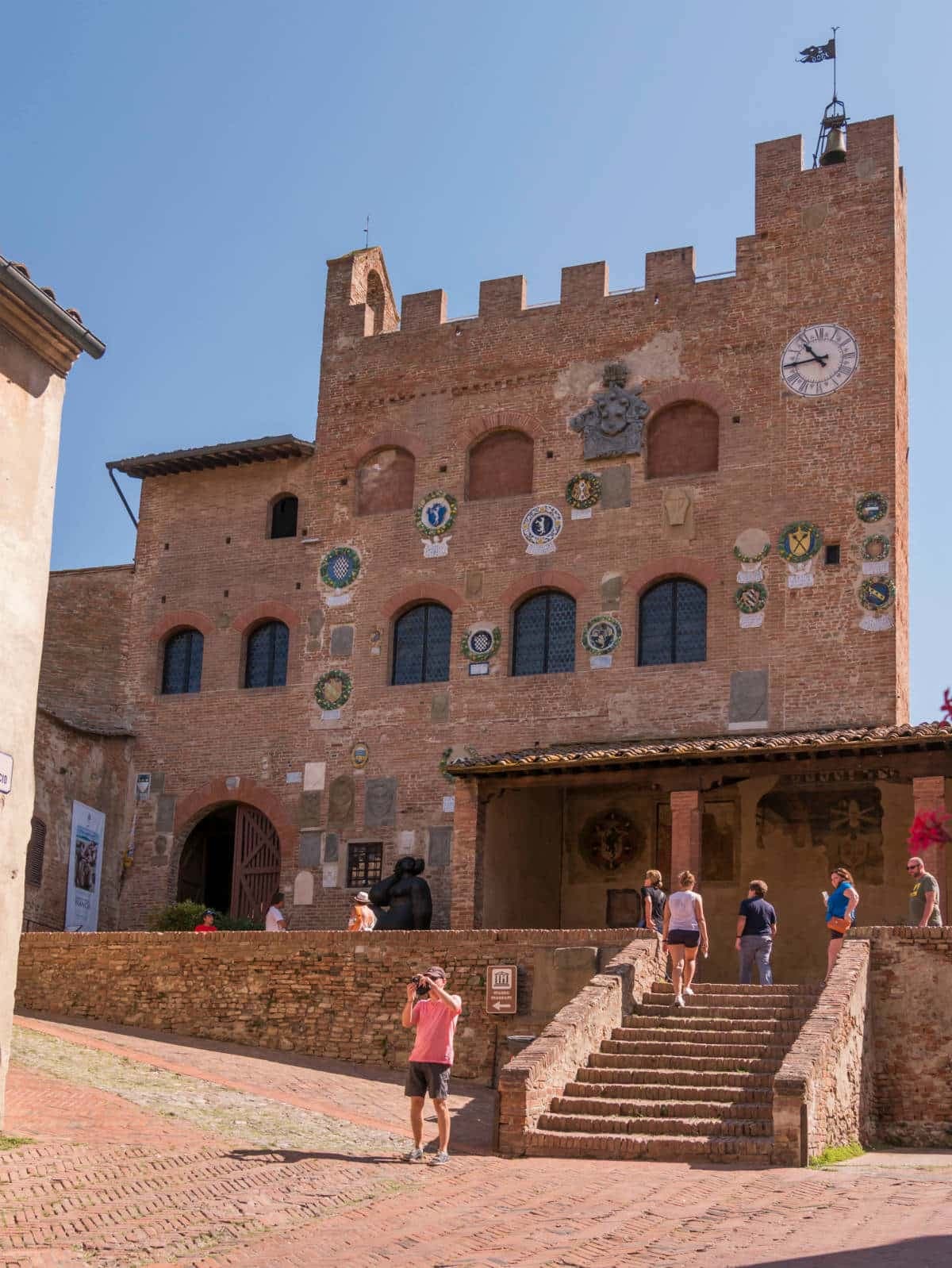
The brick-built upper town in the Valdelsa where Boccaccio spent his last years, twenty-five kilometers from Florence on the medieval road to Siena.
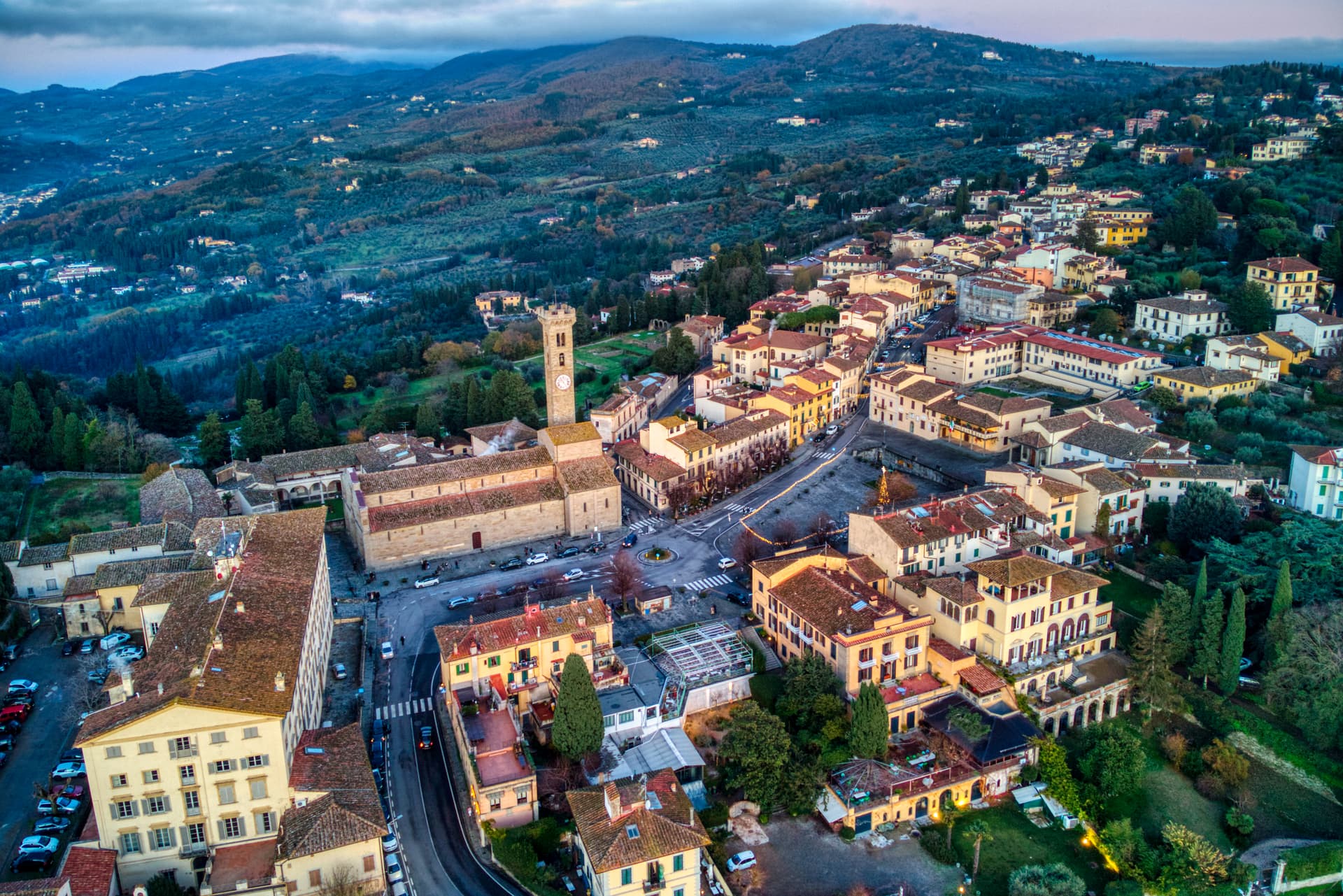
Fiesole
Province: Firenze
An Etruscan hilltop at 295 meters above Florence, founded in the ninth century BC and conquered by Rome in 283 BC, still looking down on what later replaced it.
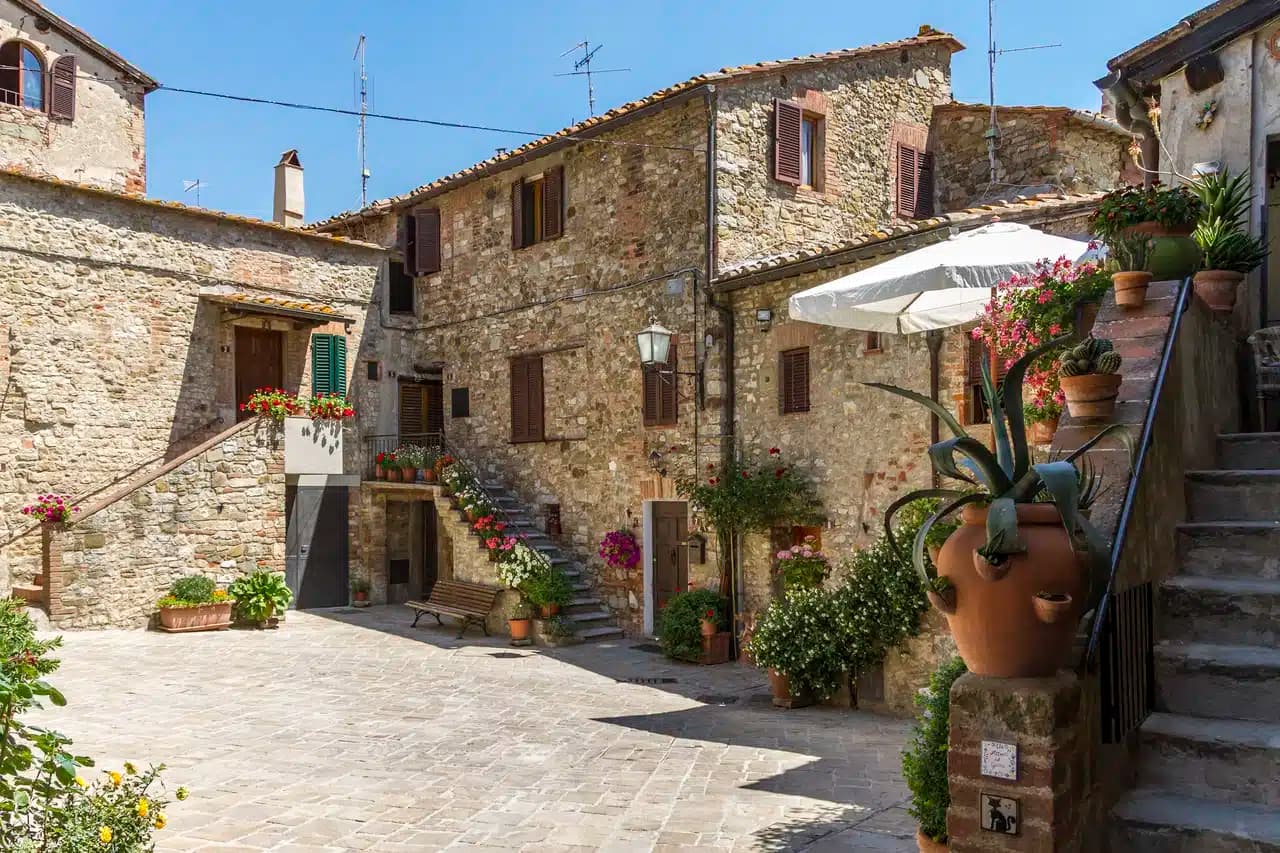
Castelnuovo Berardenga
Province: Siena
A Chianti Classico commune at 351 meters between the Ombrone and the Crete Senesi, the last castle Siena built against Florence, in 1366.
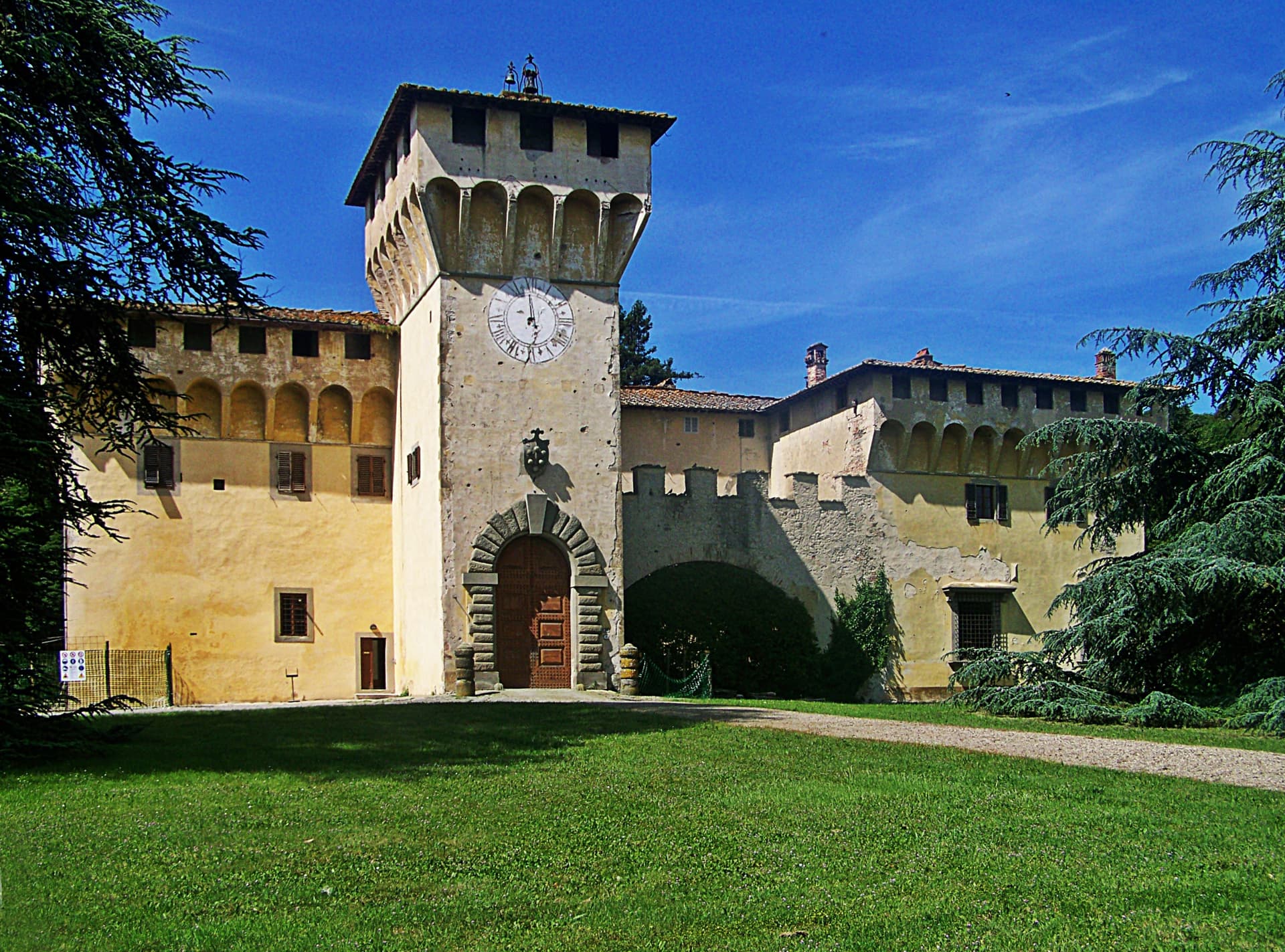
Barberino di Mugello
Province: Firenze
The Mugello gateway at 272 meters where the Medici family kept its first country villas, with Michelozzo's Cafaggiolo and the artificial Lago di Bilancino below.
🎨 Borghi più belli d'Italia
More Borghi più belli d'Italia towns in Tuscany
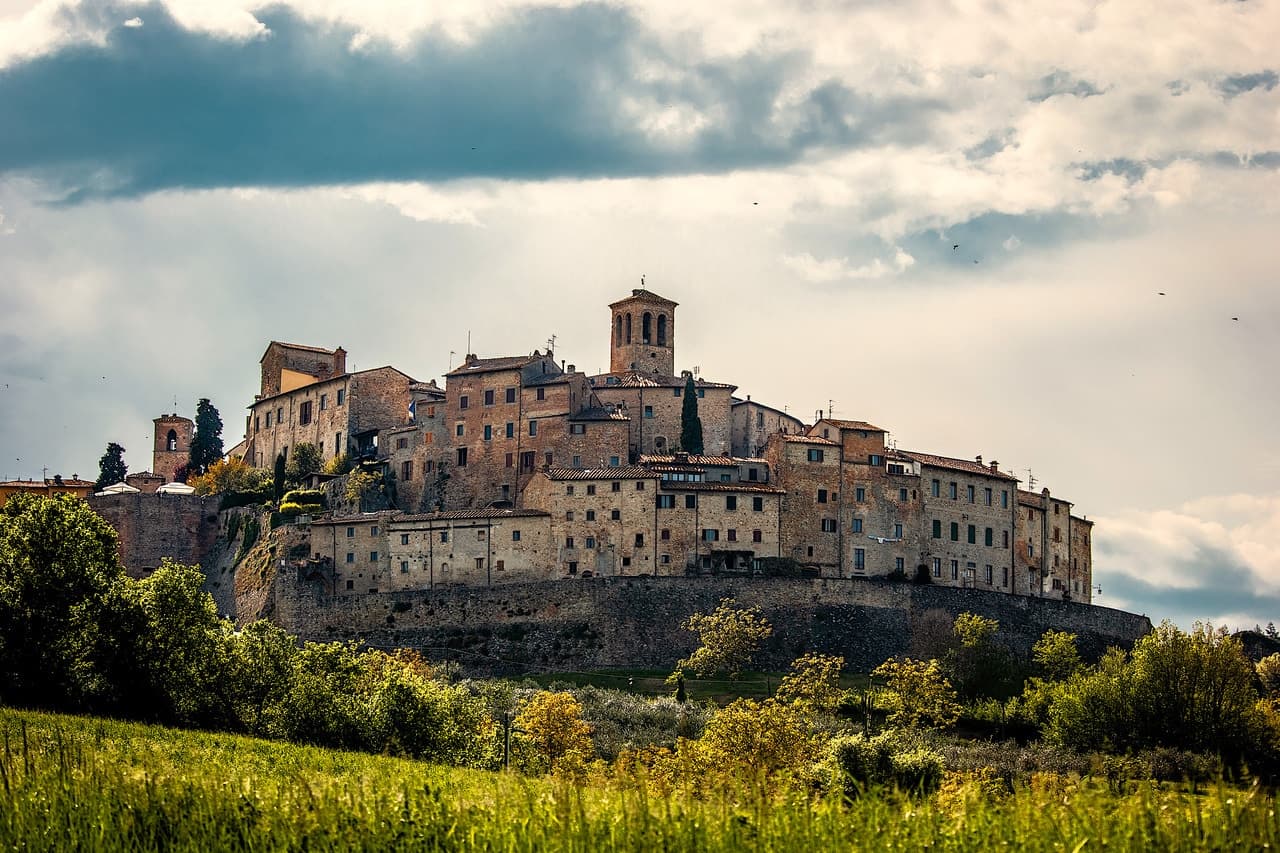
Anghiari
Province: Arezzo
A walled medieval town at 430 meters over the upper Tiber valley, where Florence beat Milan in 1440 and Leonardo started the fresco he never finished.
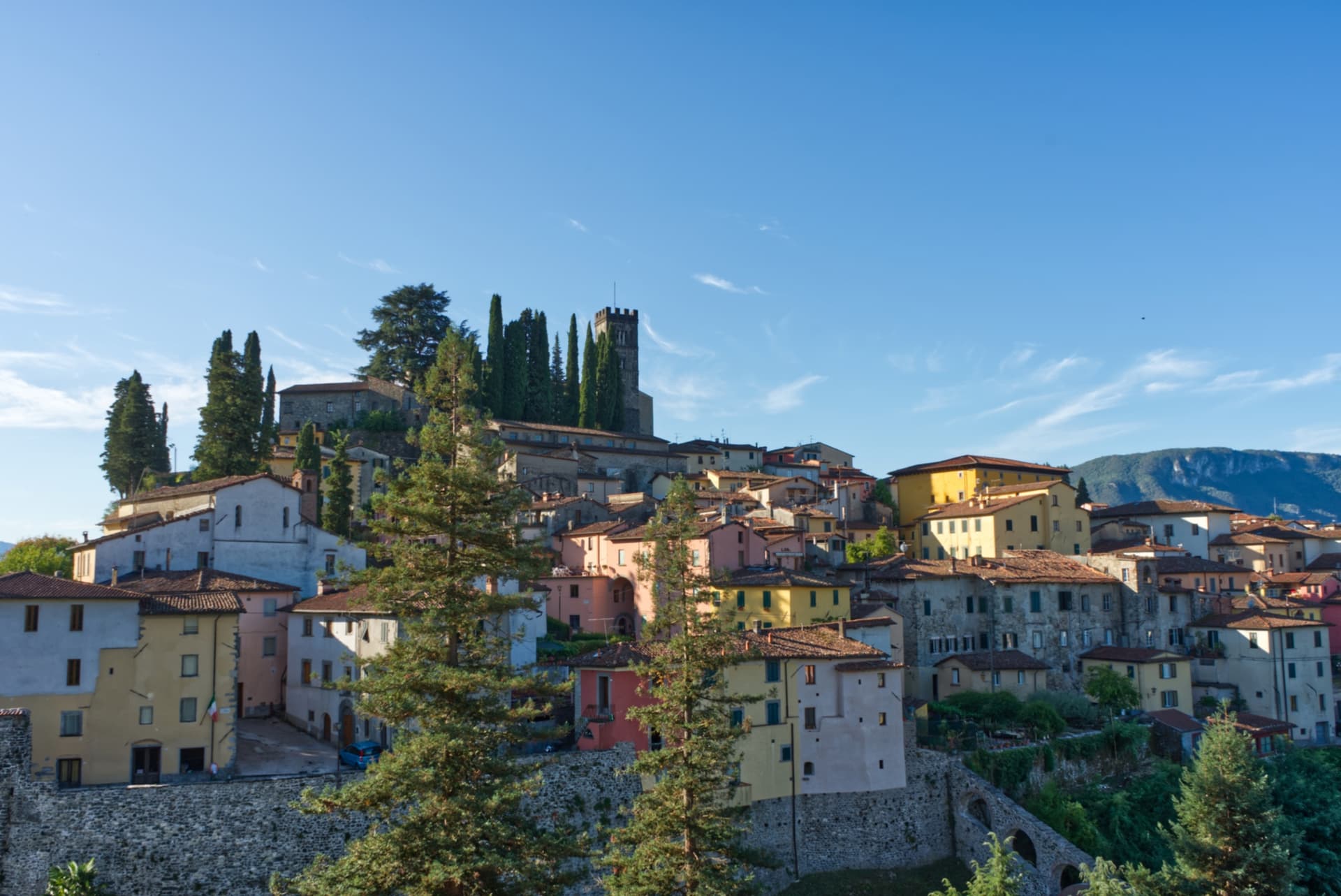
Barga
Province: Lucca
A medieval hilltop town at 410 meters in the Serchio valley between the Apuan Alps and the Apennines, where Giovanni Pascoli wrote his last poems and the August festival serves fish and chips.
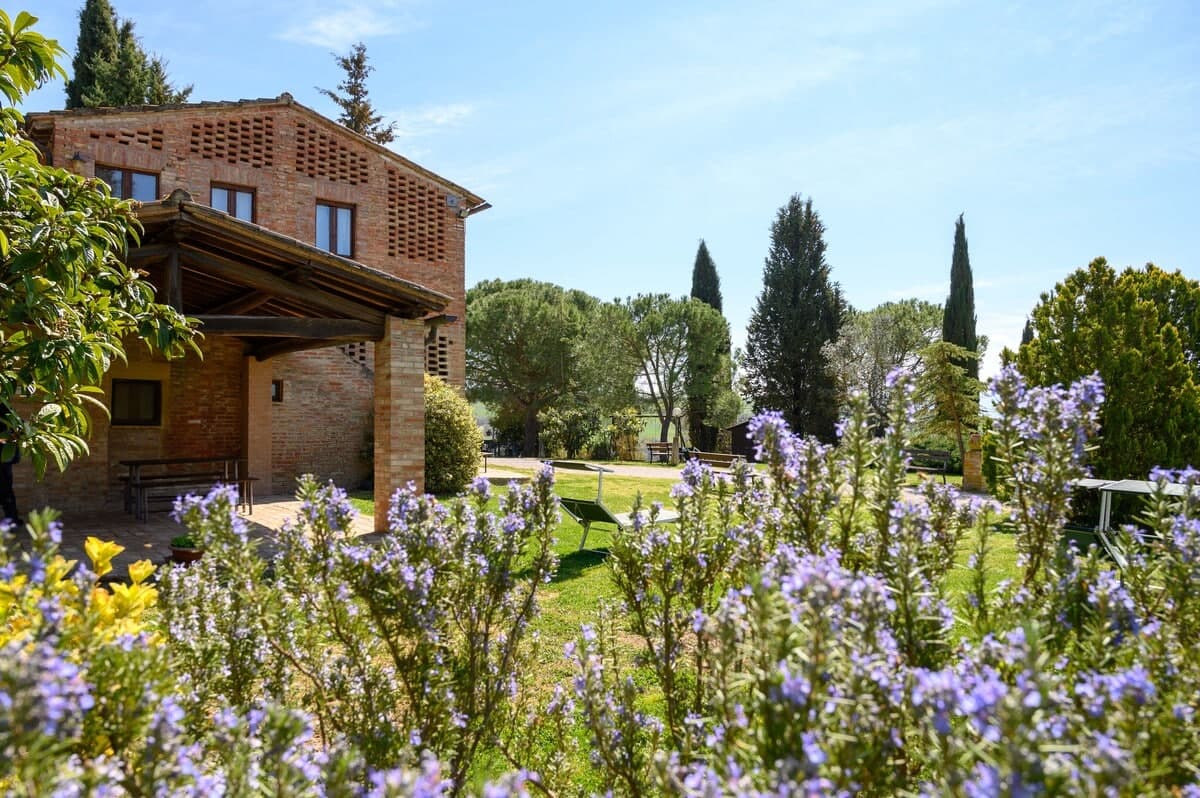
Buonconvento
Province: Siena
The walled brick borgo in the Crete Senesi where Emperor Henry VII died in 1313, on the Via Cassia at the confluence of the Arbia and Ombrone.
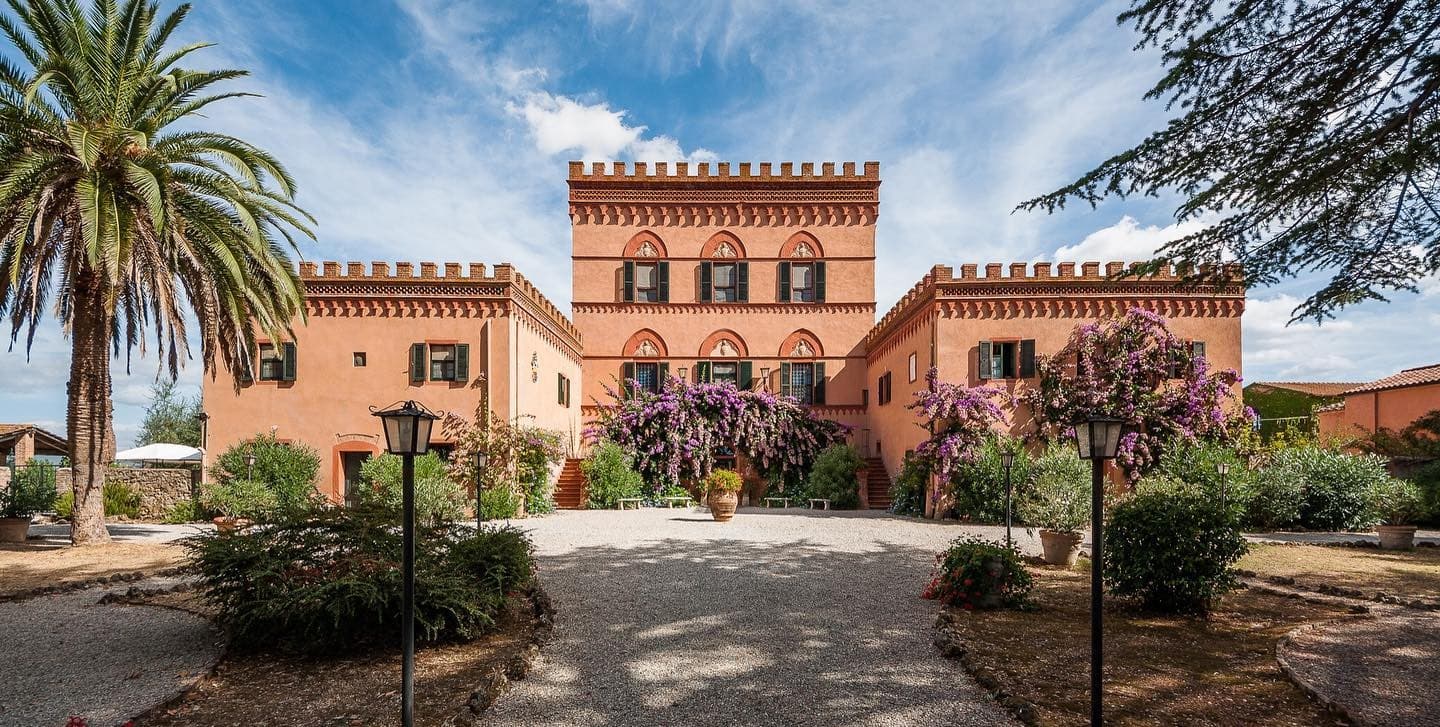
Campiglia Marittima
Province: Livorno
A walled hilltop borgo above the Val di Cornia, where the Rocca tower watches a mining landscape worked from the Etruscans to 1976.
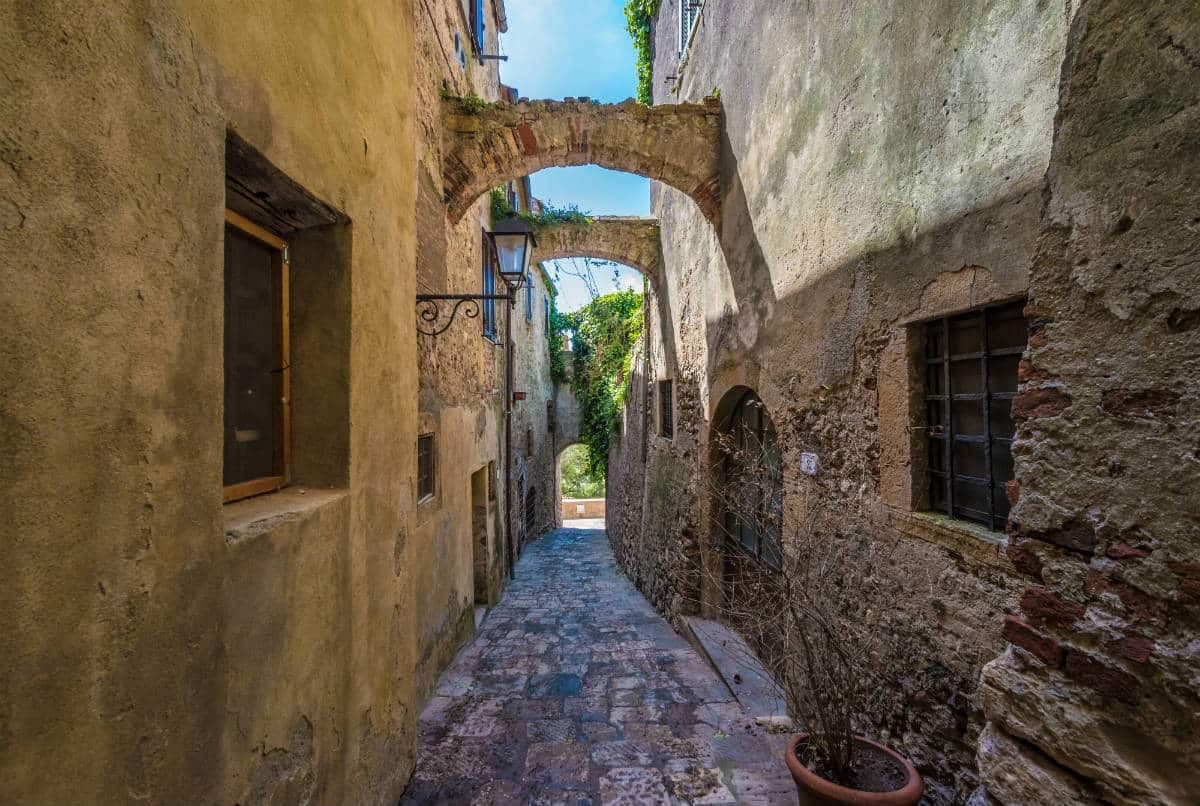
Capalbio
Province: Grosseto
A walled hilltop borgo at 217 meters in the southern Maremma, donated to the Abbey of Tre Fontane by Charlemagne and home of Niki de Saint Phalle's Tarot Garden.