
Apulia · Lecce
Lecce
The Baroque capital of the Salento, ninety-four thousand people on the Lecce-stone plain, carving its façades in honey limestone since 1500.
Known for
BAROCCO LECCESE
The densest Baroque carved ornament in Italy, worked into the soft Lecce stone by Zimbalo and Penna across Santa Croce, the Duomo and the Sedile.
LECCE STONE
Pietra leccese, the soft golden limestone that carves like butter and hardens in air, the material that made the Baroque city possible.
ROMAN AMPHITHEATER
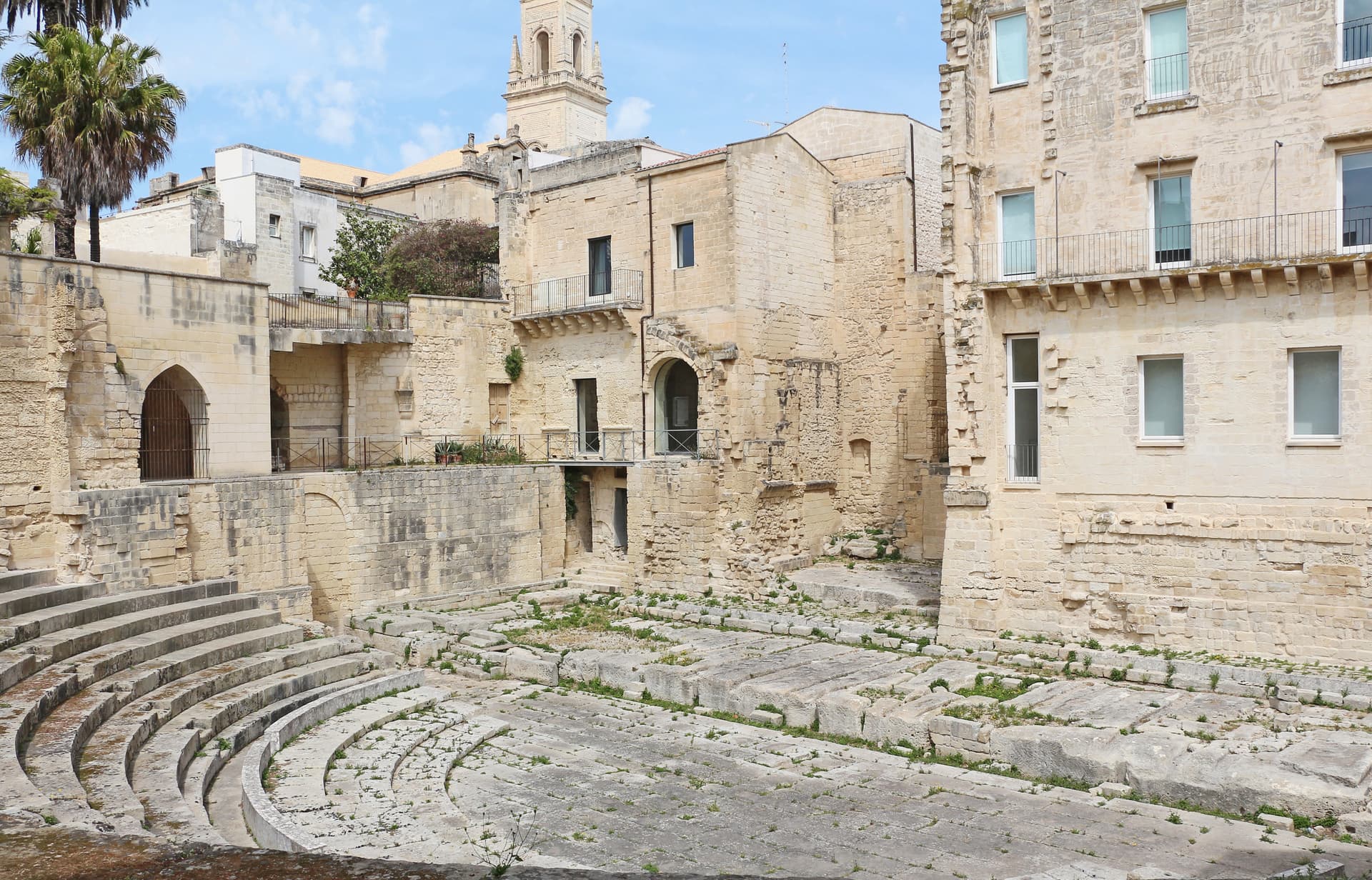
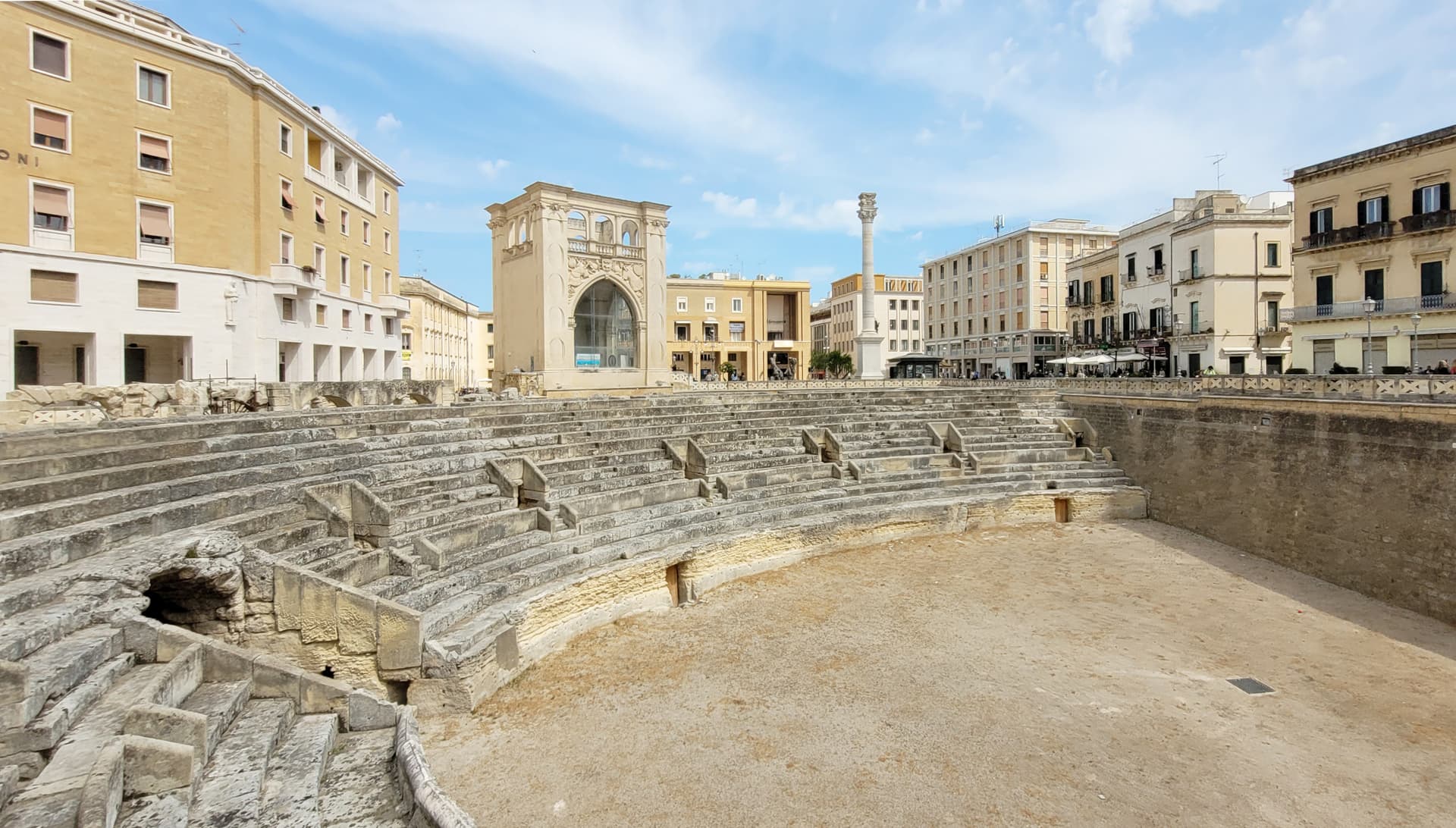
First-century BC amphitheater with a 25,000-seat capacity, uncovered in 1929 and visible at street level in the floor of Piazza Sant'Oronzo.
When to visit
Best · Apr–Oct
- J
- F
- M
- A
- M
- J
- J
- A
- S
- O
- N
- D
- Best
- Hot or crowded
- Quiet
- Mostly closed
The festa: Sant'Oronzo, 26 August
Why come
Lecce sits on the Salento plain, twelve kilometers inland from the Adriatic, a city of ninety-four thousand and the province's capital. The Messapian settlement of Lupiae was on this site by the eighth century BC; the Romans took it in the third century BC and Hadrian later moved it three kilometers and renamed it Licea. The Roman amphitheater in Piazza Sant'Oronzo, with a 25,000-seat capacity, was uncovered in 1929 and still sits half-excavated in the central square.
The Lecce stone, a soft and workable limestone that hardens after carving, made this city the unmatched Baroque capital of the south. Local masters, Giuseppe Zimbalo above all, covered the Basilica di Santa Croce, the Duomo and the Sedile with the densest carved ornament in Italy. Piazza del Duomo is closed on three sides, the lone Baroque enclosed cathedral square in Puglia.
Charles V's walls, with the Porta Napoli arch of 1548, still mark the old perimeter. The University runs a strong humanities program; the seafront at San Cataldo carries Lecce's Bandiera Blu.
The Sunday letter
We haven’t written Lecce’s letter yet.
One town every Sunday, with the photo, the food, the festa. Be there when this one comes up. Free, by Peter & Sophia from Pietrasanta.
By subscribing you agree to Substack’s Terms of Use, our Privacy Policy and our Information collection notice.
What to see
Basilica di Santa Croce
Baroque masterpiece worked for nearly two hundred years to 1695, the façade by Cesare Penna and Giuseppe Zimbalo carved with cherubs, monsters and allegories.
Piazza del Duomo
Baroque enclosed cathedral square, the only one in Puglia closed on three sides, with the seventeenth-century Duomo, Campanile, Bishop's Palace and Seminary.
Piazza Sant'Oronzo
Central square anchored by the column of the patron saint from the Appian Way and the half-excavated Roman amphitheater of the first century BC.
Anfiteatro Romano
Roman amphitheater with a 25,000-seat capacity built under Augustus, uncovered in 1929 and visible in the floor of Piazza Sant'Oronzo.
Porta Napoli
Triumphal arch of 1548 raised in honor of Charles V on the site of Porta San Giusto, the main northern gate of the walled centro storico.
Castello di Carlo V
Sixteenth-century quadrangular castle built by Charles V on Norman foundations, the larger fortification anchoring the eastern edge of the centro storico.
The slow-trip planner
Building a trip? Find where Lecce fits in a slow Italy circuit.
Answer five questions. We will shape a geographically coherent slow trip from the 1,000 Italian towns most travelers skip. Yours to save and share.
We recommend
Where to eat and stay
Not our picks, but places the guides put their name to — a Michelin star, a Gambero Rosso fork, a Slow Food snail, a Michelin Key for the hotels. Worth a table, a counter, or a night when you pass through.
Duo RistoranteRistorante
Duo Ristorante carries one Gambero Rosso fork (78/100), plus a spot in the Michelin Guide.
Gimmi RestaurantRistorante
Two Gambero Rosso forks (82/100) for Gimmi Restaurant, and a spot in the Michelin Guide.
Primo RestaurantRistorante
Primo Restaurant holds one Michelin star and two Gambero Rosso forks (84/100).
3 Rane RistoroRistorante
3 Rane Ristoro carries two Gambero Rosso forks (80/100).
300milaBistrot
300mila holds two Gambero Rosso tables.
AlexRistorante
Alex has two Gambero Rosso forks (82/100) to its name.
Classé - La Dogana RestaurantRistorante
Classé - La Dogana Restaurant holds two Gambero Rosso forks (81/100).
FrànRistorante
Fràn has two Gambero Rosso forks (82/100) to its name.
La cucina di Mamma ElviraBistrot
Two Gambero Rosso tables, at La cucina di Mamma Elvira.
Le Zie-Cucina CasarecciaRistorante
Le Zie-Cucina Casareccia has a Slow Food snail to its name.
Mezzo Quinto OsteriaTrattoria
Mezzo Quinto Osteria has two Gambero Rosso prawns to its name.
Osteria degli SpiritiTrattoria
Osteria degli Spiriti holds two Gambero Rosso prawns.
santavogliaRistorante
santavoglia carries one Gambero Rosso fork (77/100).
Zéphyr Restaurant - La Fiermontina Luxury HomeRistorante
One Gambero Rosso fork (77/100), at Zéphyr Restaurant - La Fiermontina Luxury Home.
La Fiermontina Luxury HomeHotel
La Fiermontina Luxury Home carries one Michelin Key.
La Fiermontina Palazzo Bozzi CorsoHotel
La Fiermontina Palazzo Bozzi Corso holds two Michelin Keys.
Masseria TrapanaHotel
Masseria Trapana holds a place in the Michelin hotel guide.
Palazzo de NohaHotel
Palazzo de Noha has a place in the Michelin hotel guide to its name.
Palazzo Maresgallo Suites & SPAHotel
A place in the Michelin hotel guide, at Palazzo Maresgallo Suites & SPA.
Patria PalaceHotel
One Michelin Key, at Patria Palace.
Living here
- Population 94,517
- A local hubi
- Pharmacy in town
- High school within a 30-minute drive
- Train station in the comune
- Nearest airport Bari / Brindisi, 2 h 11 min drive
- Regional capital Bari, 1 h 59 min drive
Tags & datadesignations · numbers · sources
The numbers
- Elevation: 49 m
- Population: 94,517
- Surface area: 241 km²
These figures were compiled from public directories — ISTAT, OpenStreetMap, Wikidata — and from the official listings of the guides named on this page. Town details change; verify with official sources before you travel.
Close by
More towns near Lecce
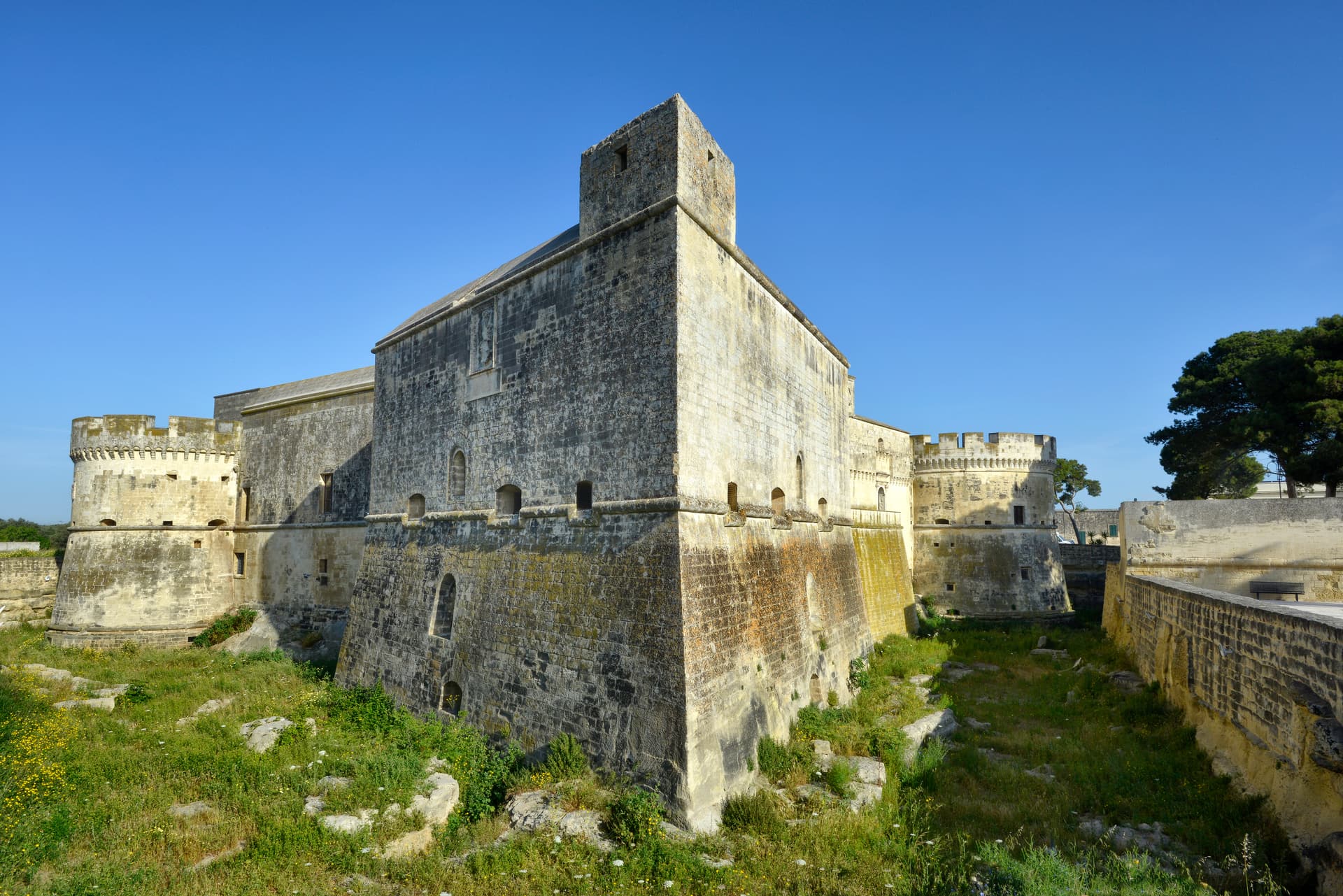
Campi Salentina
Province: Lecce
A Salento plain town fifteen kilometers north of Lecce, founded after the Saracen raids of 926, with a Frederician castle that became a Paladini-Enriquez marquisate.
Vernole
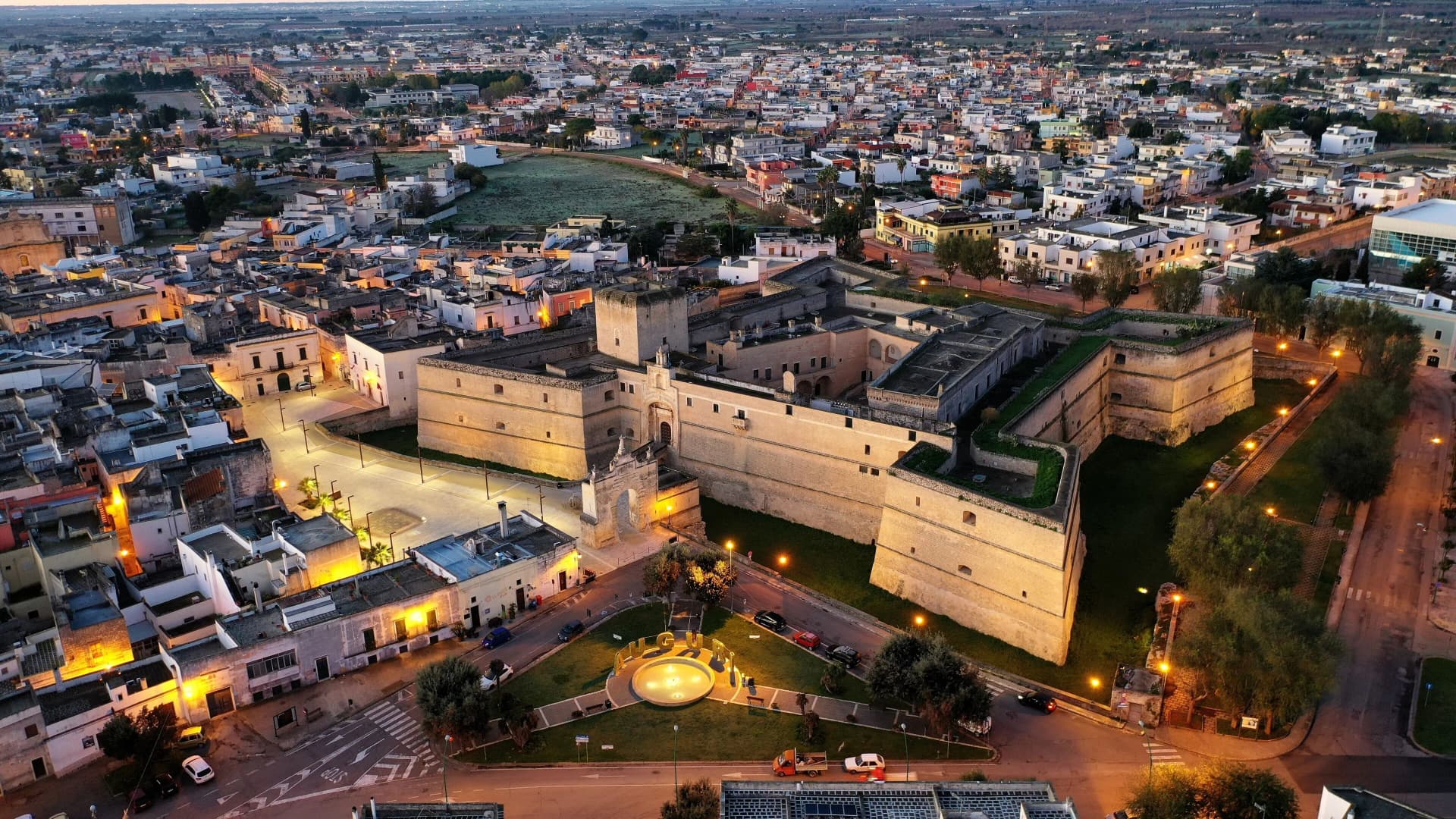
Province: Lecce
A Salento commune ten kilometers from Lecce whose frazione of Acaya is the only Renaissance fortified town in southern Italy.
Copertino
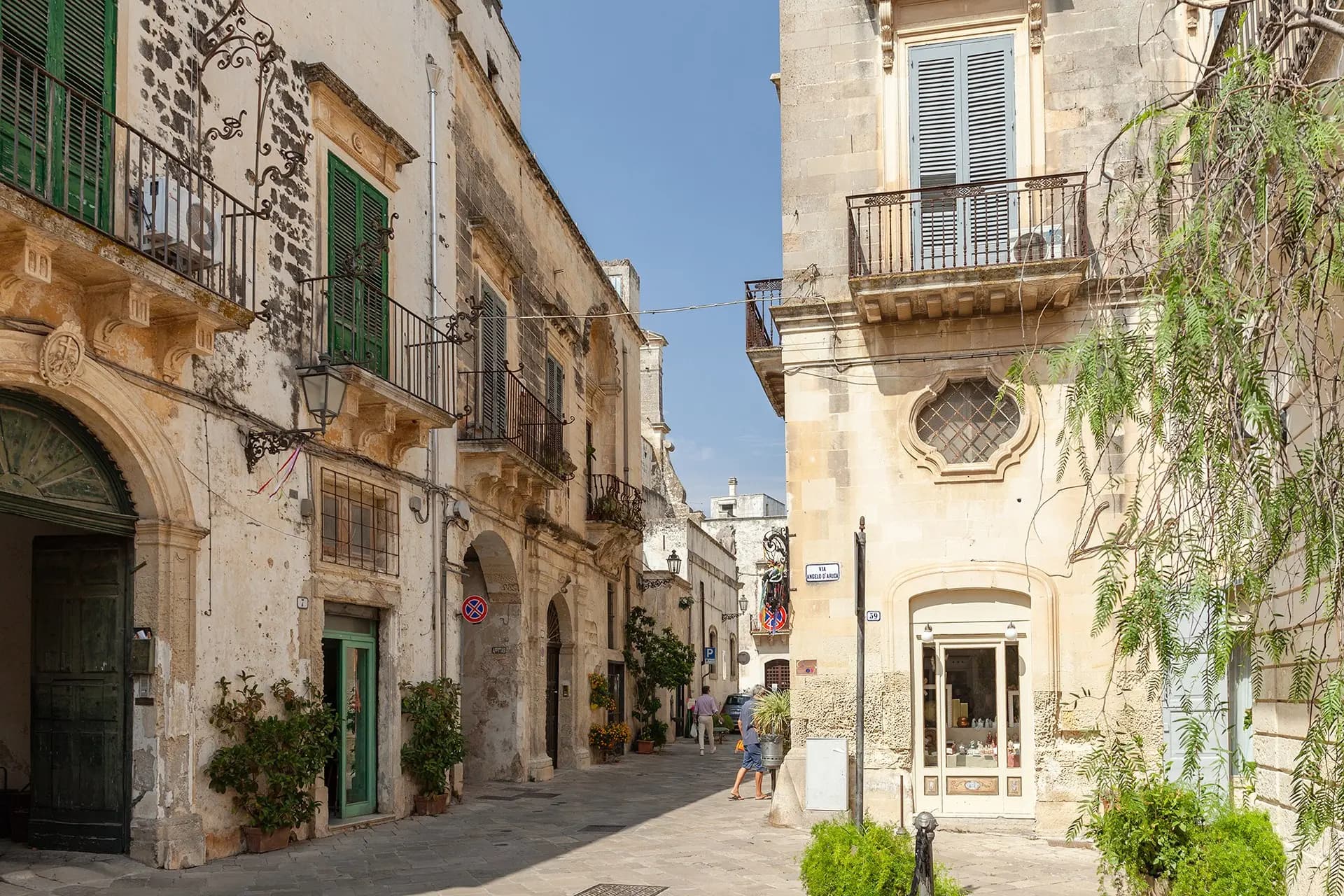
Province: Lecce
A Salento town fifteen kilometers west of Lecce, with one of Puglia's largest Renaissance fortresses and the birthplace of Saint Joseph of Copertino.
Galatina
Province: Lecce
The Salento town at 78 meters where the cult of San Paolo bred tarantism and gave the pizzica its origin myth.
Melendugno
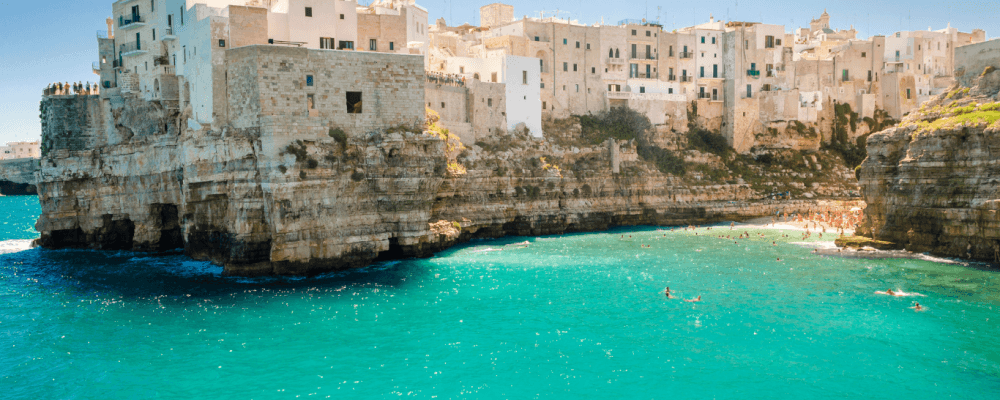
Province: Lecce
Salento's archaeological-beach capital — a 10,000-resident Lecce-province comune covering 17 km of Adriatic coast with three Bandiera Blu beaches (Torre dell'Orso, San Foca, Sant'Andrea), the Grotta della Poesia karst pool (one of the world's most beautiful natural pools per National Geographic), and the Bronze-Age-to-Messapian-to-medieval Roca Vecchia archaeological site.
🟦 Bandiera Blu
More Bandiera Blu towns in Apulia
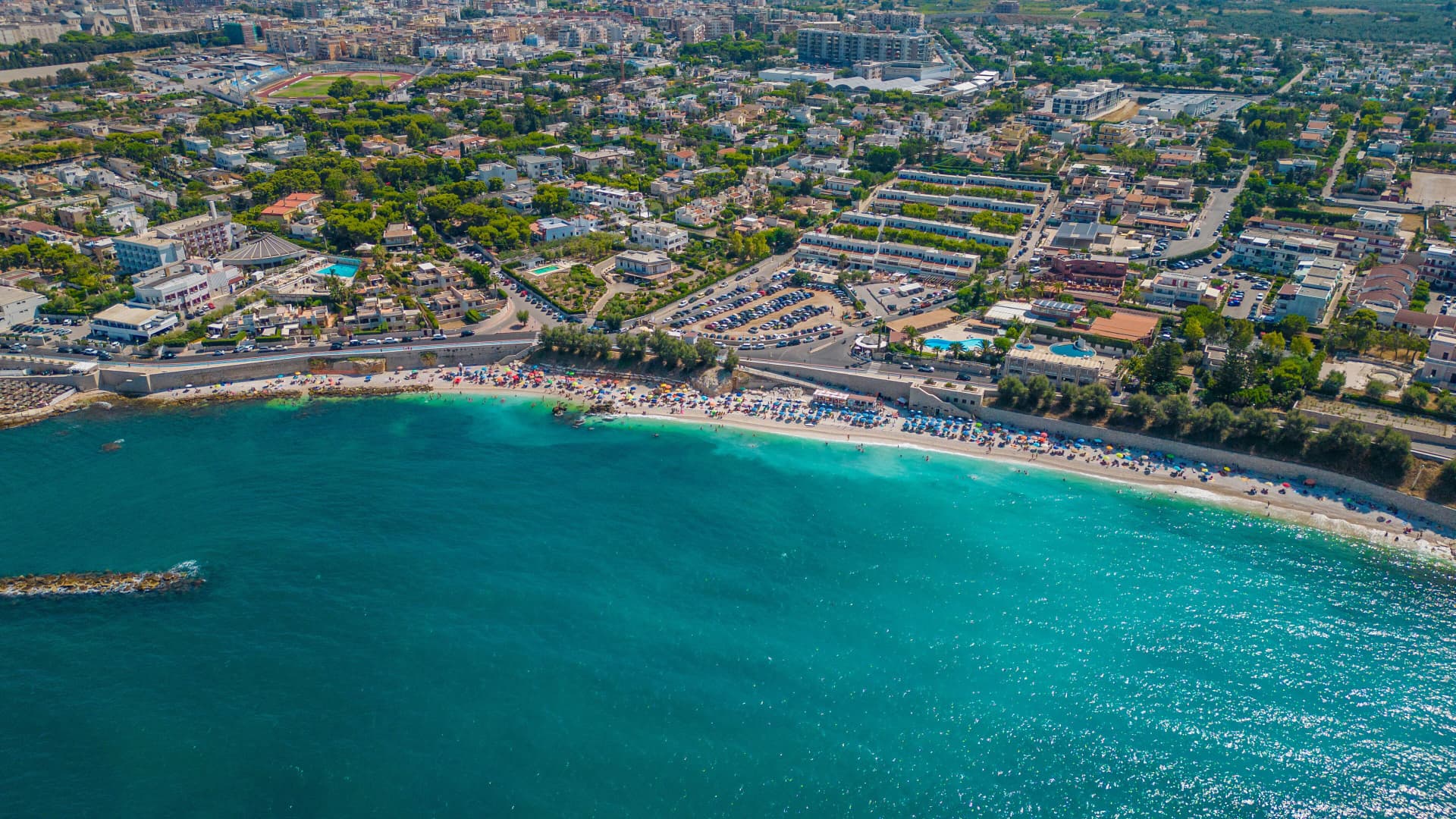
Bisceglie
Province: Barletta-Andria-Trani
An Adriatic port town between Trani and Molfetta, named for Roman watchtowers, with five dolmens around it and a Norman cathedral begun in 1073.
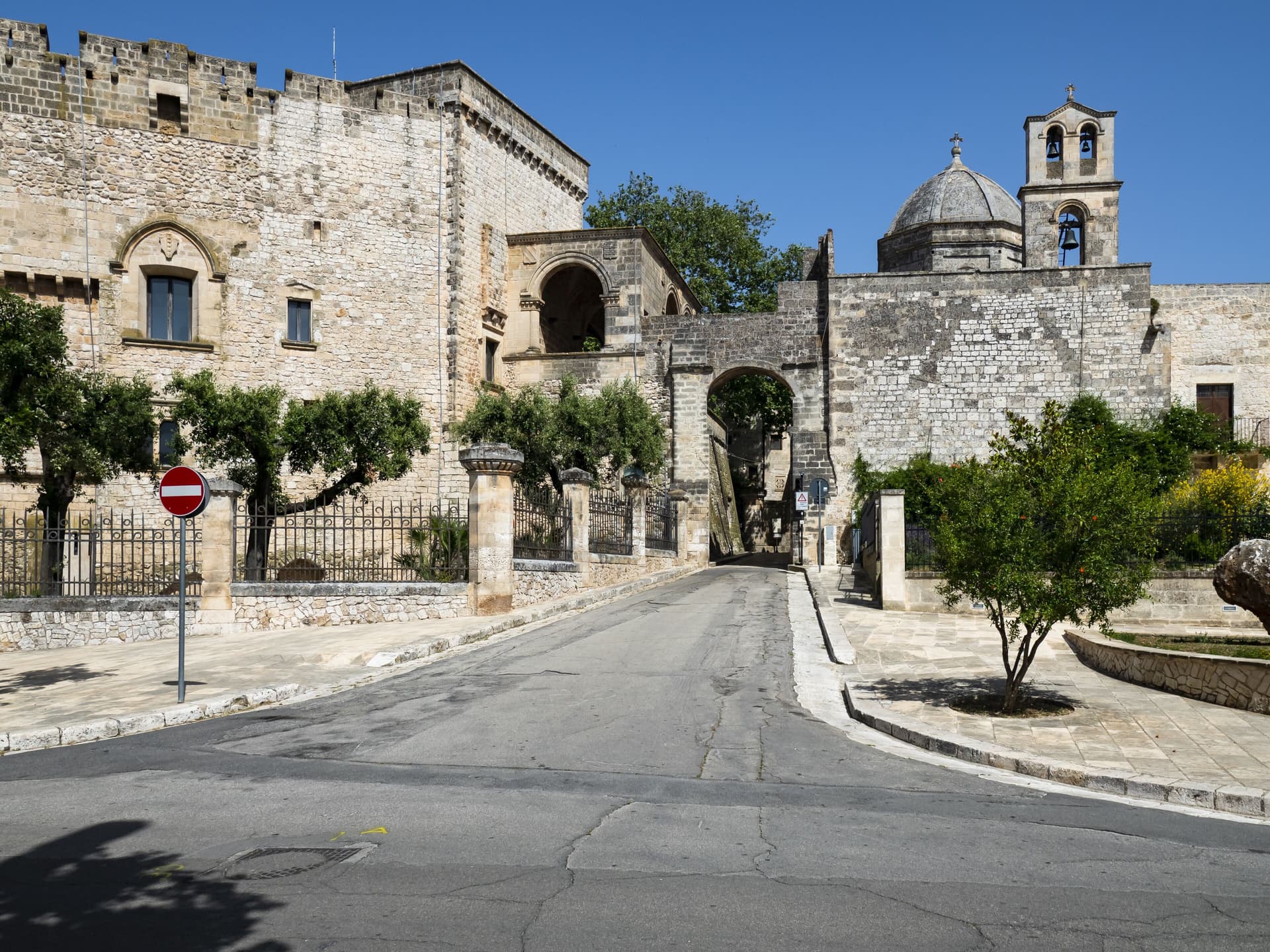
Carovigno
Province: Brindisi
An upper Salento town between Brindisi and Ostuni, built on the Messapian Carbina destroyed in 473 BC, with the Torre Guaceto marine reserve offshore.
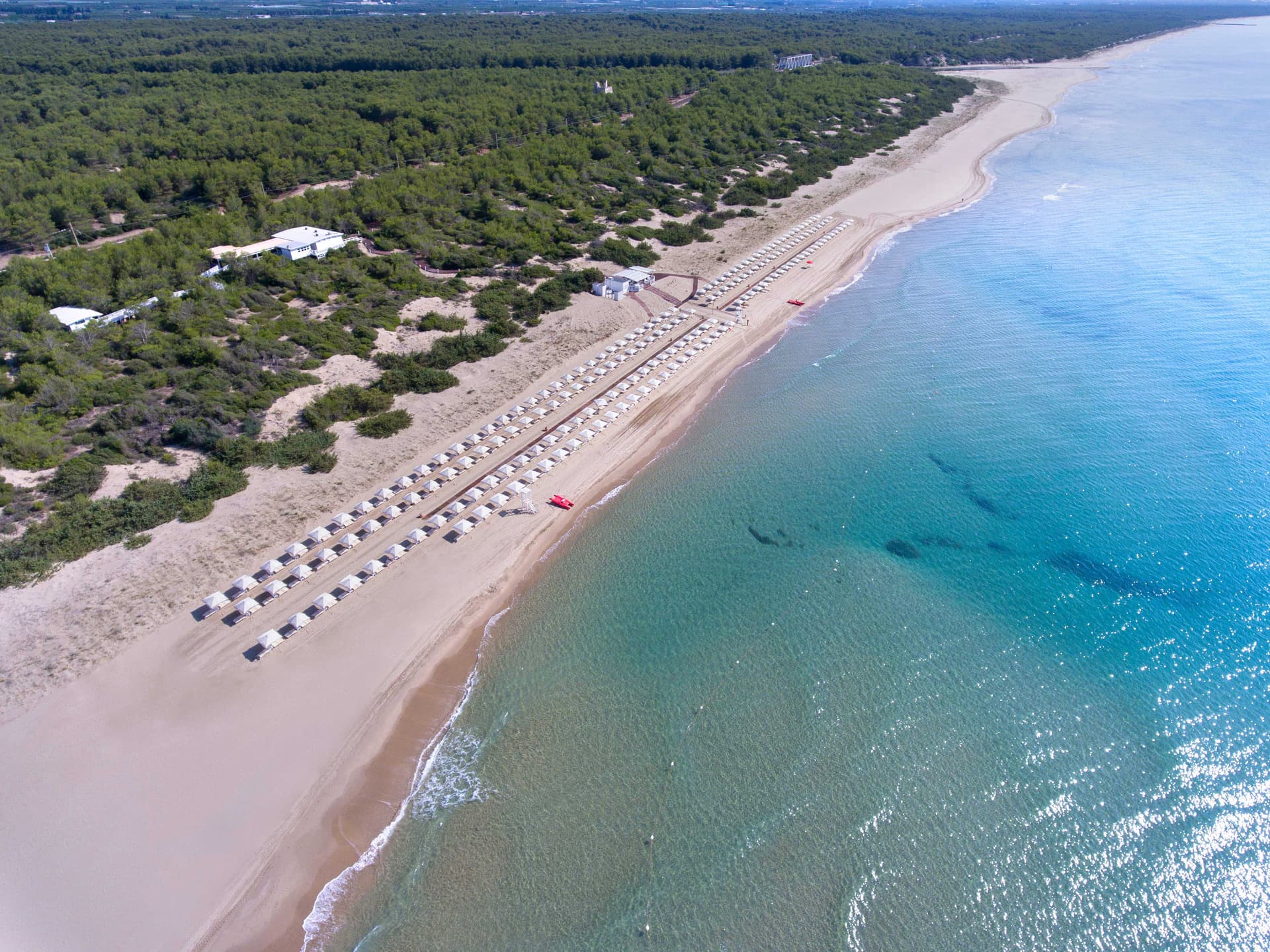
Castellaneta
Province: Taranto
A cliff-edge Murge town at 235 meters above the Gravina Grande canyon, birthplace of Rudolph Valentino in 1895, with a Bandiera Blu Ionian marina.
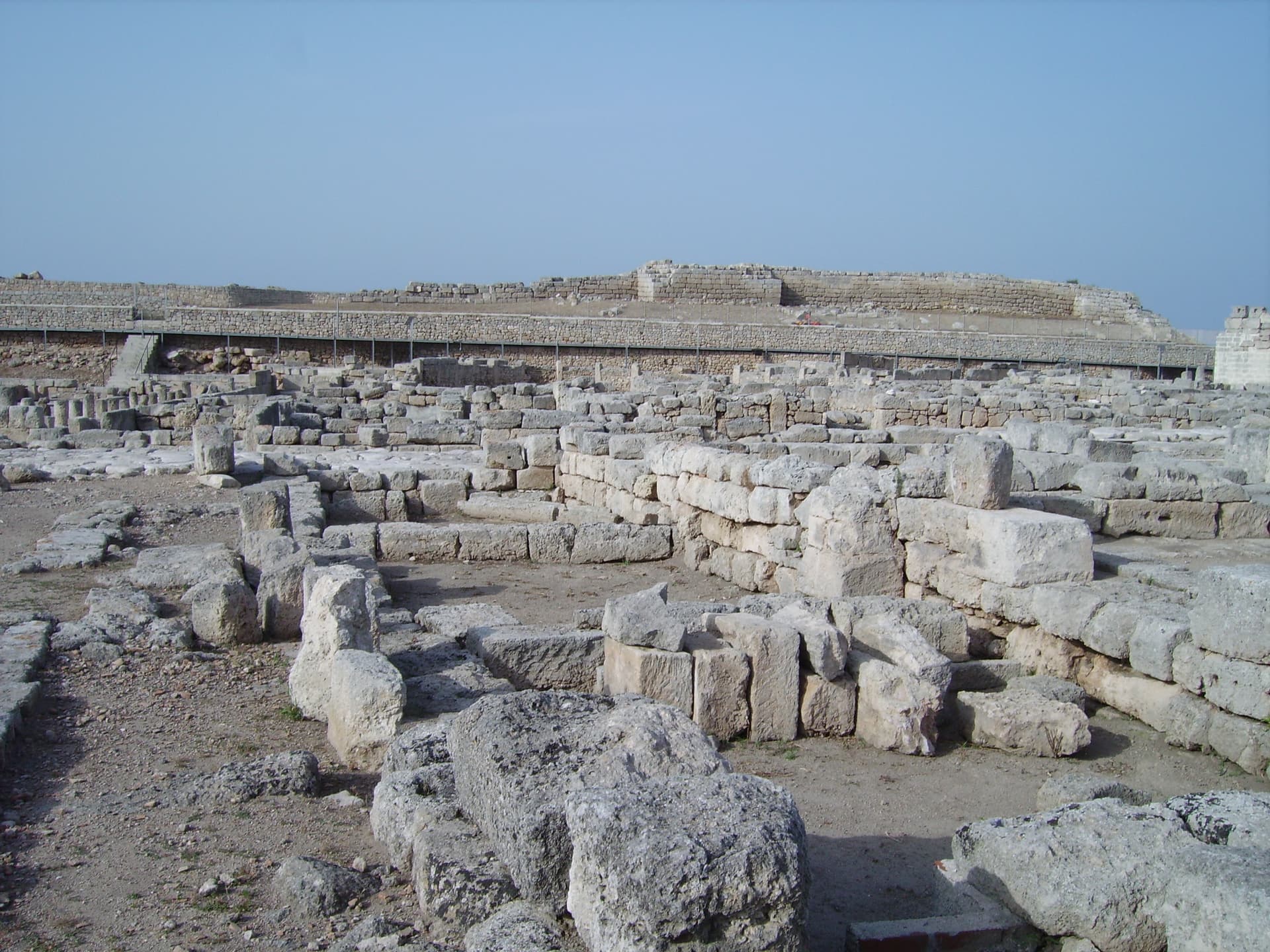
Fasano
Province: Brindisi
A Brindisi-province town from the Adriatic up to the Itria escarpment, holding the Roman ruins of Egnazia, the Selva, and Europe's second-largest safari park.
Gallipoli
Province: Lecce
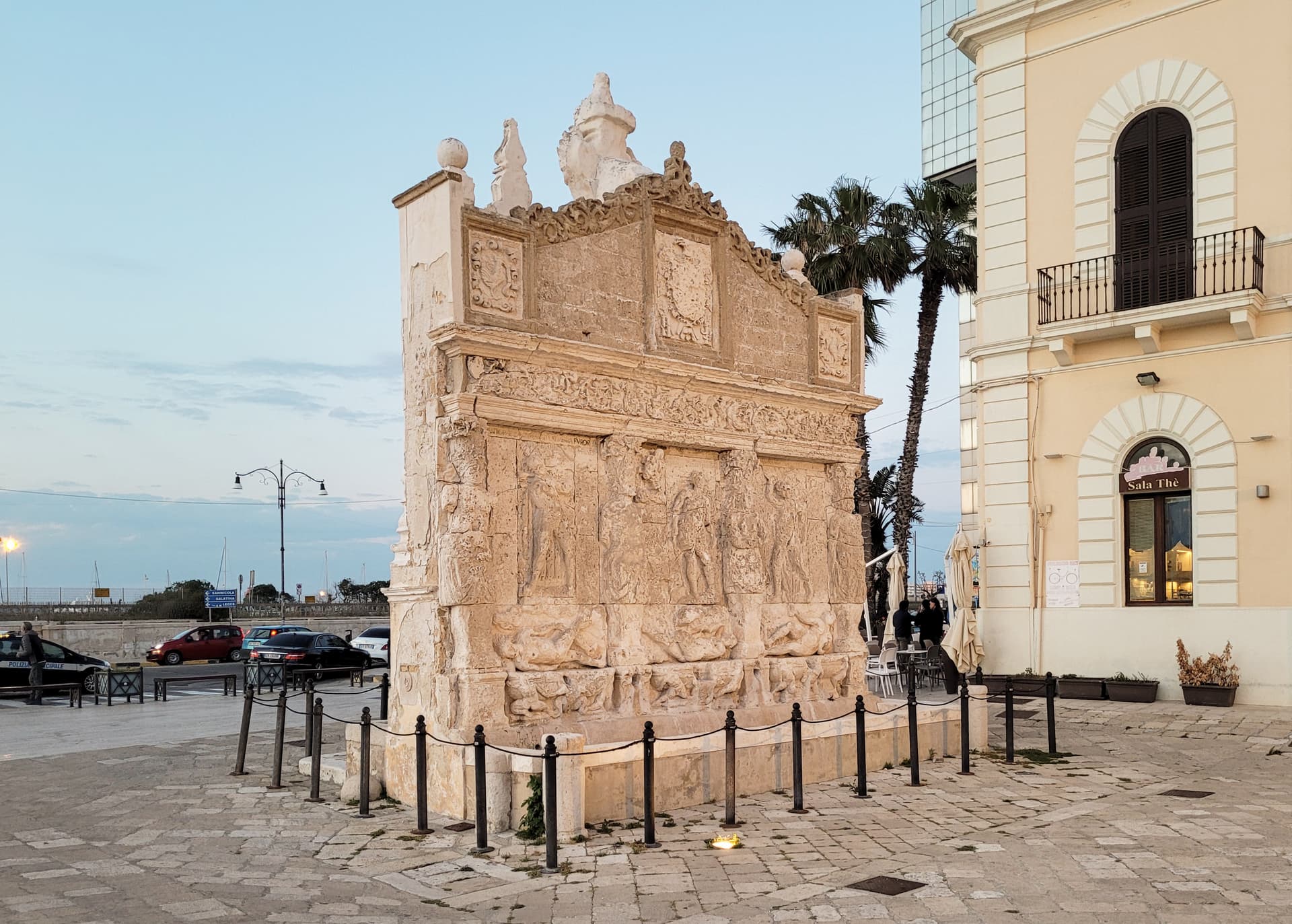
The Ionian beach city on a limestone island, Greek Kallipolis meaning beautiful city, tied to the mainland by a seventeenth-century bridge.