

Sicily · Messina
Lipari
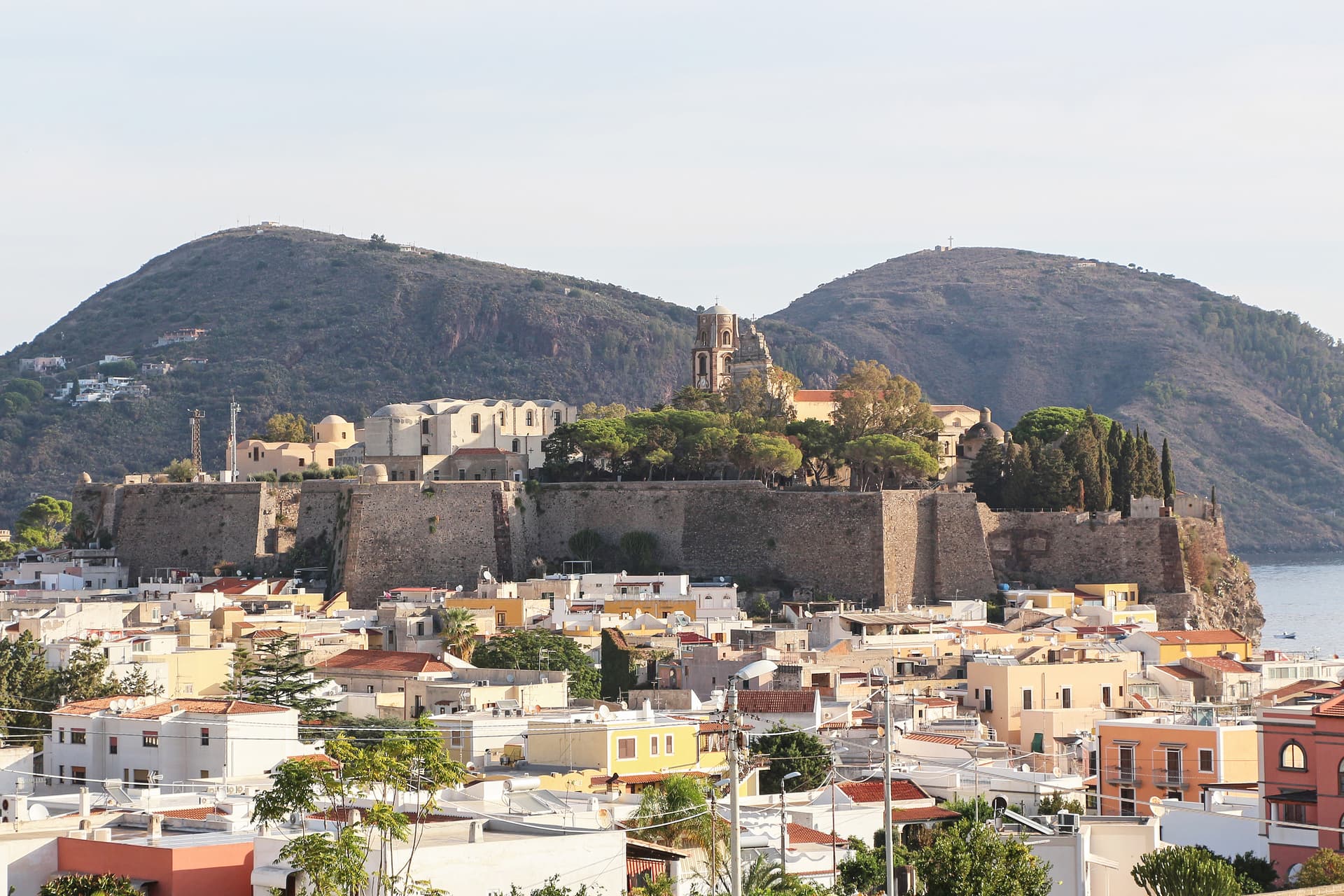
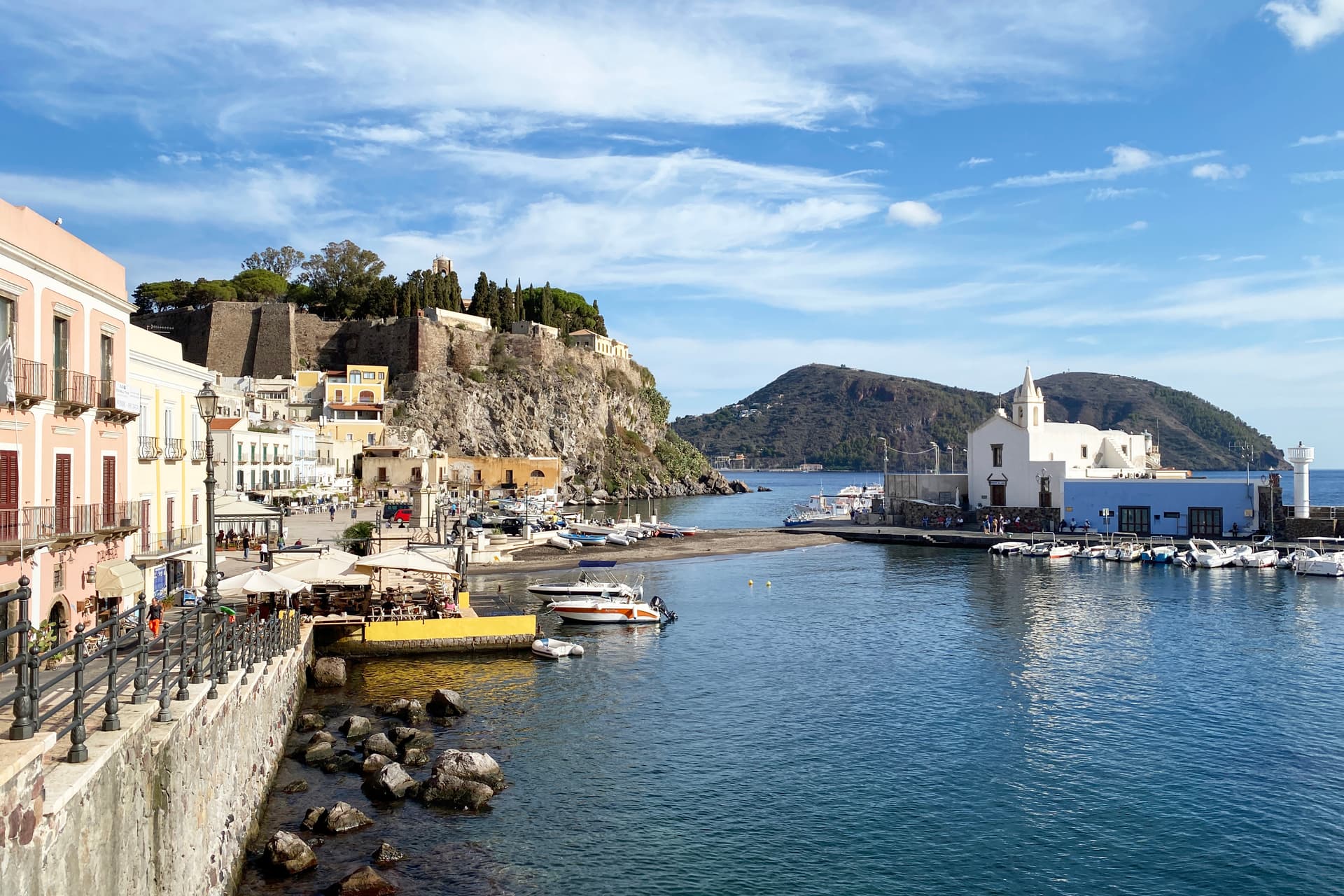
The largest Aeolian island and the only municipality that administers six of the seven, with a clifftop castle citadel rising above two harbors.
Known for
OBSIDIAN
Neolithic trading center since 5000 BC for the volcanic glass quarried from Rocche Rosse and Forgia Vecchia flows.
UNESCO 2000
Aeolian Islands inscribed on the World Heritage list for their volcanism, with Lipari as the archipelago's administrative center.
THE CITADEL
Castle rock above Marina Corta with the regional archaeological museum, San Bartolomeo cathedral and Greek-Roman necropolis layered together.
When to visit
Best · May–Oct
- J
- F
- M
- A
- M
- J
- J
- A
- S
- O
- N
- D
- Best
- Hot or crowded
- Quiet
- Mostly closed
The festa: Bartolomeo, 24 August
Why come
Lipari sits forty kilometers off Sicily's Tyrrhenian coast, the largest of the seven Aeolian islands and the only commune that administers six of them: Vulcano, Panarea, Stromboli, Filicudi, Alicudi and Lipari itself. Humans have lived here since 5000 BC, drawn by deposits of obsidian, the volcanic glass that made Neolithic Lipari a Mediterranean trading center. The Rocche Rosse obsidian flow on the north of the island dates to the last eruption in 729 CE.
The Spanish rebuilt the castle walls after Hayreddin Barbarossa sacked the town and enslaved the population in 1544; the citadel above Marina Corta now holds the Museo Archeologico Eoliano, one of the most important archaeological collections in the Mediterranean. The archipelago joined the UNESCO World Heritage list in 2000 for its volcanism. Around 12,500 people live here year-round.
In summer the population doubles. Ferries from Milazzo arrive every two hours.
The Sunday letter
We haven’t written Lipari’s letter yet.
One town every Sunday, with the photo, the food, the festa. Be there when this one comes up. Free, by Peter & Sophia from Pietrasanta.
By subscribing you agree to Substack’s Terms of Use, our Privacy Policy and our Information collection notice.
What to see
Castello di Lipari
Fortified citadel on a volcanic rock fifty meters above the sea, rebuilt by the Spanish under Charles V after the 1544 Barbarossa sack.
Museo Archeologico Regionale Eoliano
Six-section museum founded by Bernabò Brea and Cavalier in the 1950s, with prehistoric, classical, epigraphic and volcanological collections from the archipelago.
Cattedrale di San Bartolomeo
Cathedral on the castle plateau, ninth-century foundation rebuilt several times, dedicated to the patron saint whose relics were moved to Benevento in 839.
Rocche Rosse
Obsidian and rhyolite lava flow on the north of the island, product of the 729 CE eruption and the source of Neolithic Lipari's trading wealth.
Marina Corta
Small fishing harbor at the foot of the castle, ringed by cafés and the departure point for boats to the smaller islands.
Marina Lunga
Main port on the eastern side of town, where ferries and hydrofoils from Milazzo and Naples arrive.
The slow-trip planner
Building a trip? Find where Lipari fits in a slow Italy circuit.
Answer five questions. We will shape a geographically coherent slow trip from the 1,000 Italian towns most travelers skip. Yours to save and share.
We recommend
Where to eat and stay
Not our picks, but places the guides put their name to — a Michelin star, a Gambero Rosso fork, a Slow Food snail, a Michelin Key for the hotels. Worth a table, a counter, or a night when you pass through.
I TenerumiRistorante
I Tenerumi carries two Michelin stars, three Gambero Rosso forks (91/100), plus a La Liste score of 87.5.
FilippinoRistorante
Filippino has a place on Italy's historic-locali register and a spot in the Michelin Guide.
Il CapperoRistorante
Il Cappero holds one Michelin star and two Gambero Rosso forks (86/100).
Broccia dell'Hotel QuartaraRistorante
One Gambero Rosso fork (78/100), at Broccia dell'Hotel Quartara.
Castellaro BistrotBistrot
Castellaro Bistrot holds one Gambero Rosso table.
Il CannetoTrattoria
Il Canneto has one Gambero Rosso prawn to its name.
Le MacineRistorante
Le Macine carries a Slow Food snail.
Osteria San BartoloTrattoria
One Gambero Rosso prawn, at Osteria San Bartolo.
Trattoria del VicoloRistorante
Trattoria del Vicolo has a spot in the Michelin Guide to its name.
Therasia Resort Sea and SpaHotel
Therasia Resort Sea and Spa carries a Leading Hotels of the World listing.
Living here
- Population 12,565
- Off the beaten pathi
- Pharmacy in town
- High school within a 30-minute drive
- Regional capital Palermo, ~143 km
Thermal baths in town: Terme di San Calogero.
Tags & datadesignations · numbers · sources
Recognised as
The numbers
- Elevation: 44 m
- Population: 12,565
- Surface area: 89.72 km²
On the map
These figures were compiled from public directories — ISTAT, OpenStreetMap, Wikidata — and from the official listings of the guides named on this page. Town details change; verify with official sources before you travel.
Close by
More towns near Lipari
San Marco d'Alunzio
Province: Messina
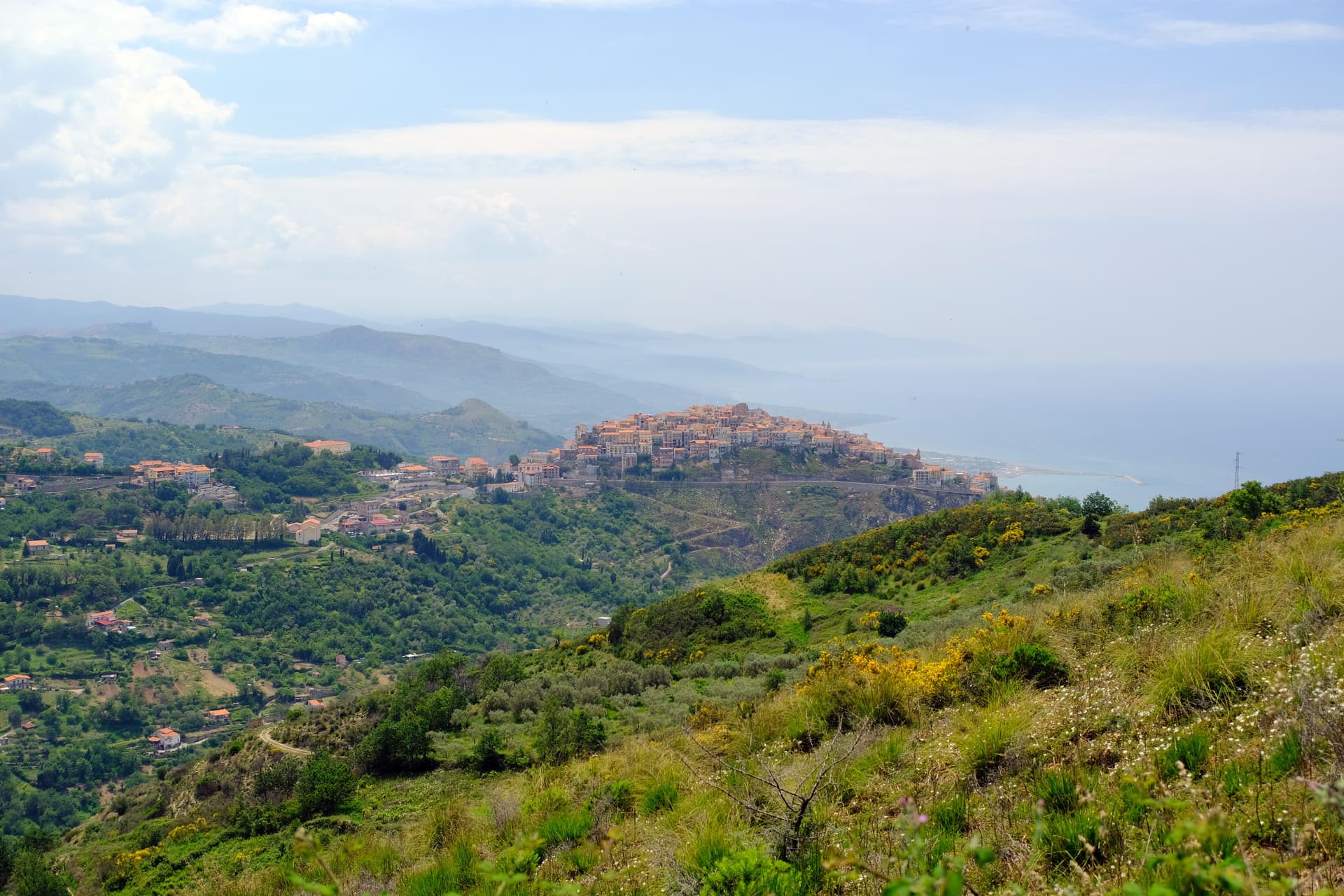
A hilltop borgo at 540 meters built in pink Aluntina marble, Robert Guiscard's first Sicilian base for the eleventh-century Norman conquest.
Montalbano Elicona
Province: Messina
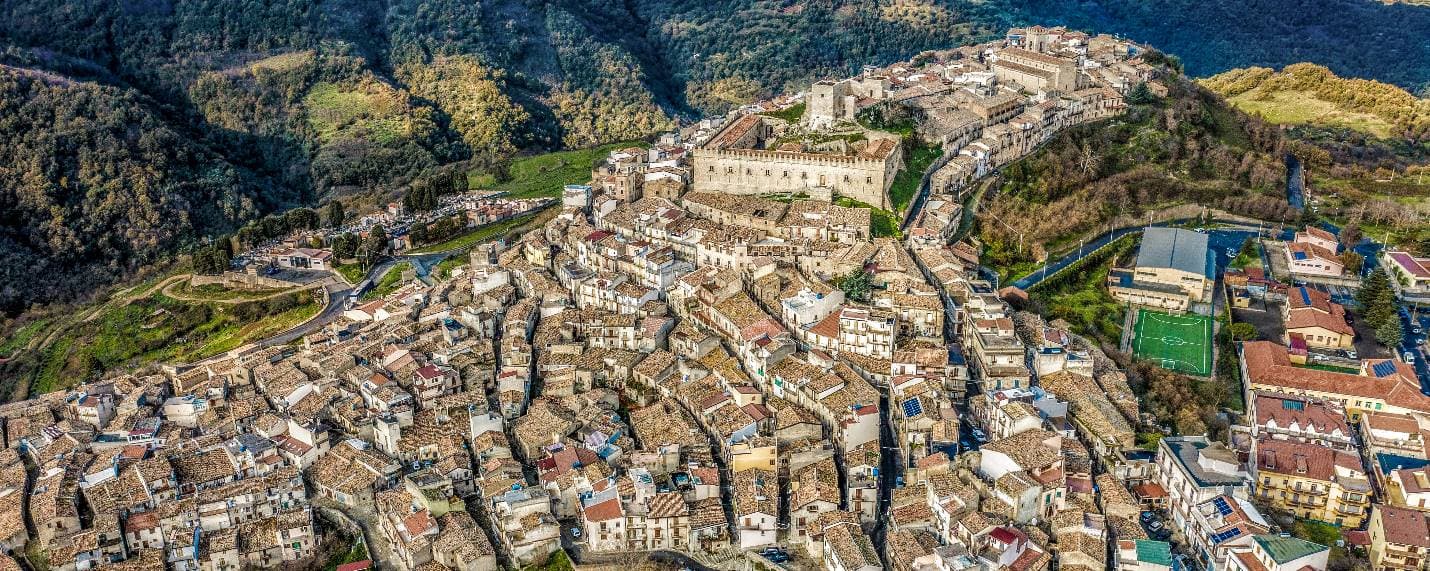
A Nebrodi castle town at 907 meters, Frederick III of Aragon's summer residence and gateway to the Argimusco megalithic plateau.
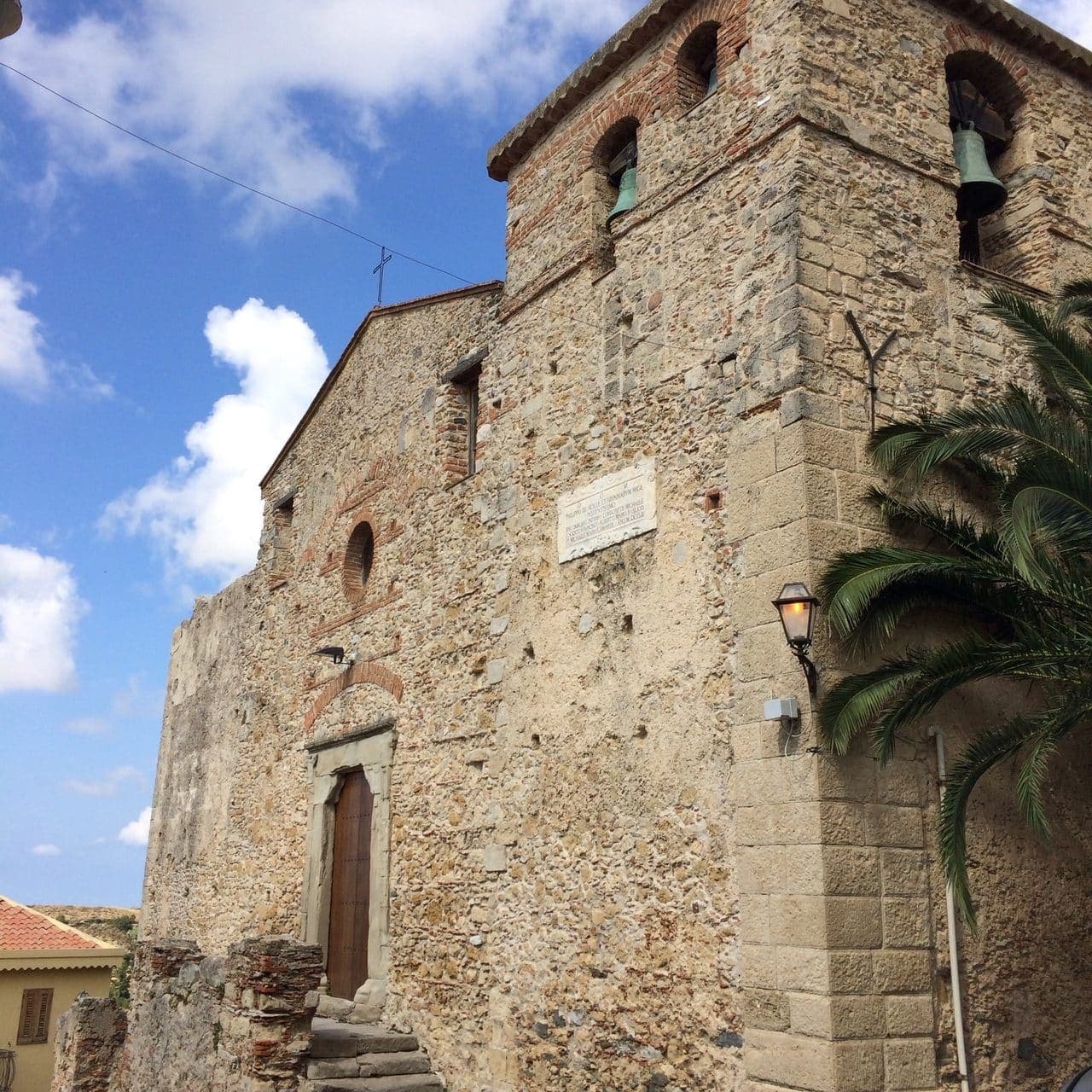
Castroreale
Province: Messina
A ridge town at 394 meters above the Milazzo plain, rebuilt by Frederick II of Aragon in 1324 as a royal demesne and second in the 2018 Borgo dei Borghi.
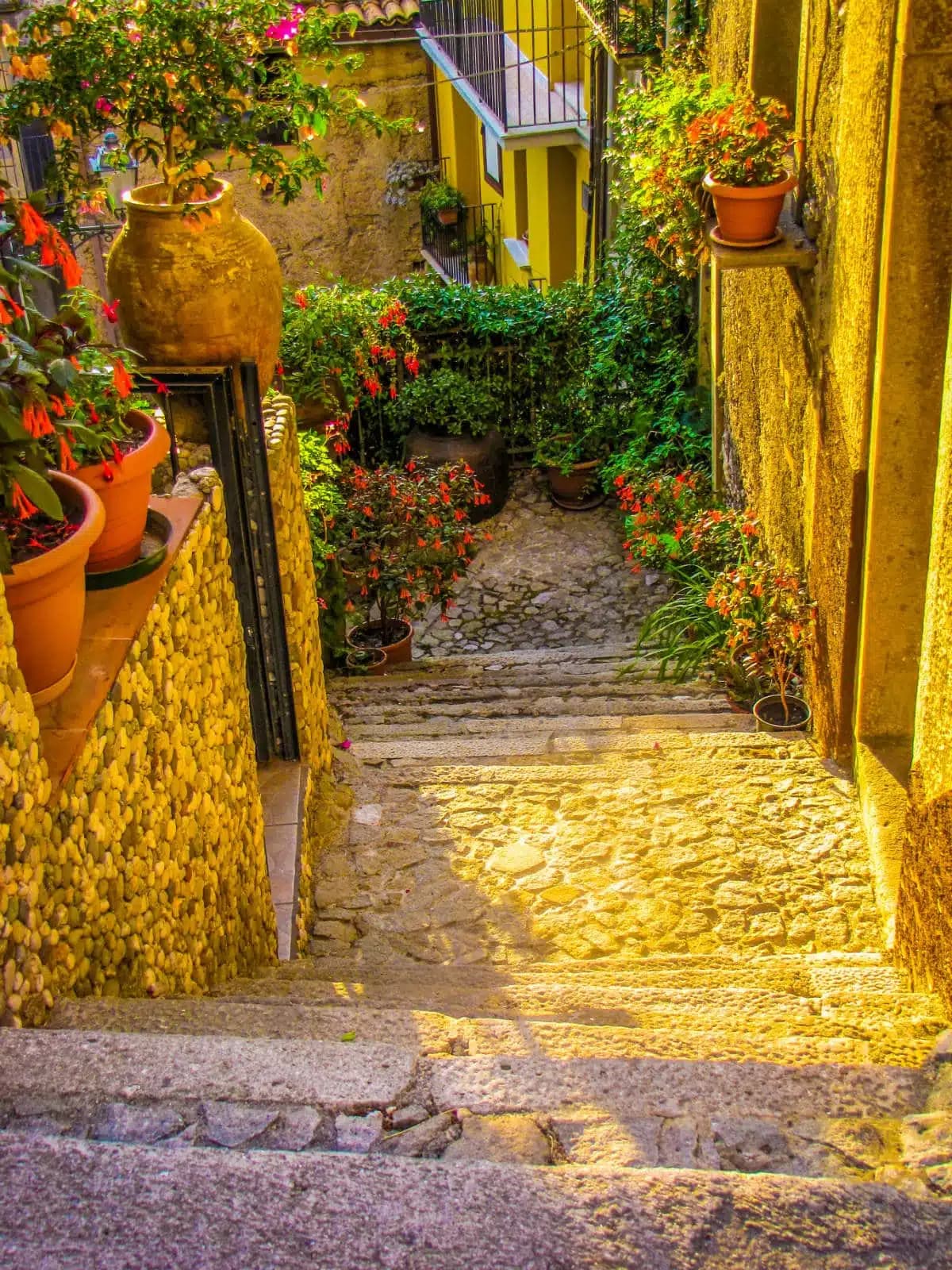
Novara di Sicilia
Province: Messina
A stone village at 650 meters where the Peloritani meet the Nebrodi, with a UNESCO-listed cheese race tumbling down the main street at Carnival.
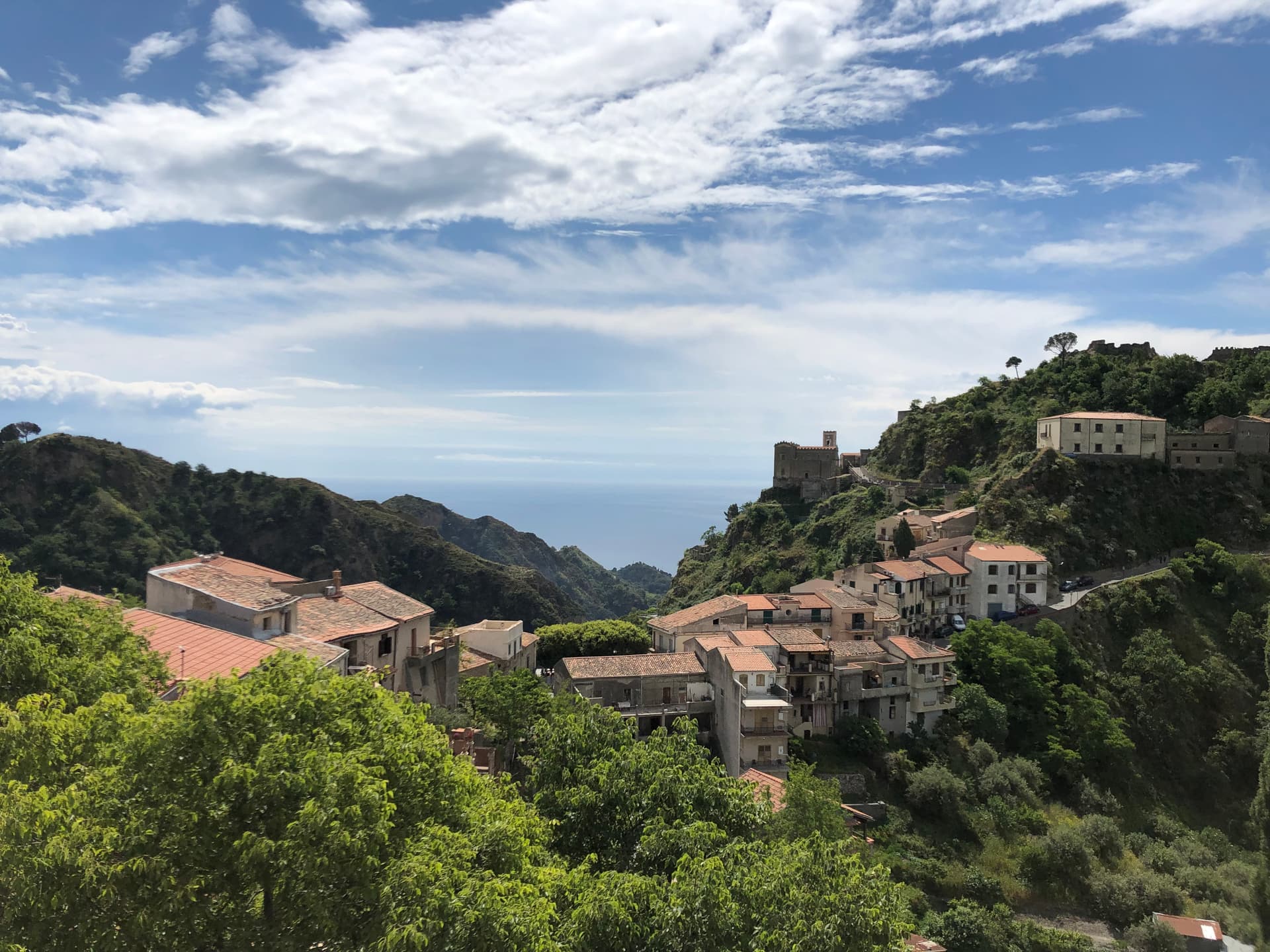
Savoca
Province: Messina
A hilltop borgo at 300 meters above the Ionian where Francis Ford Coppola filmed the Sicilian scenes of The Godfather in 1971.
🏛️ UNESCO
More UNESCO towns in Sicily
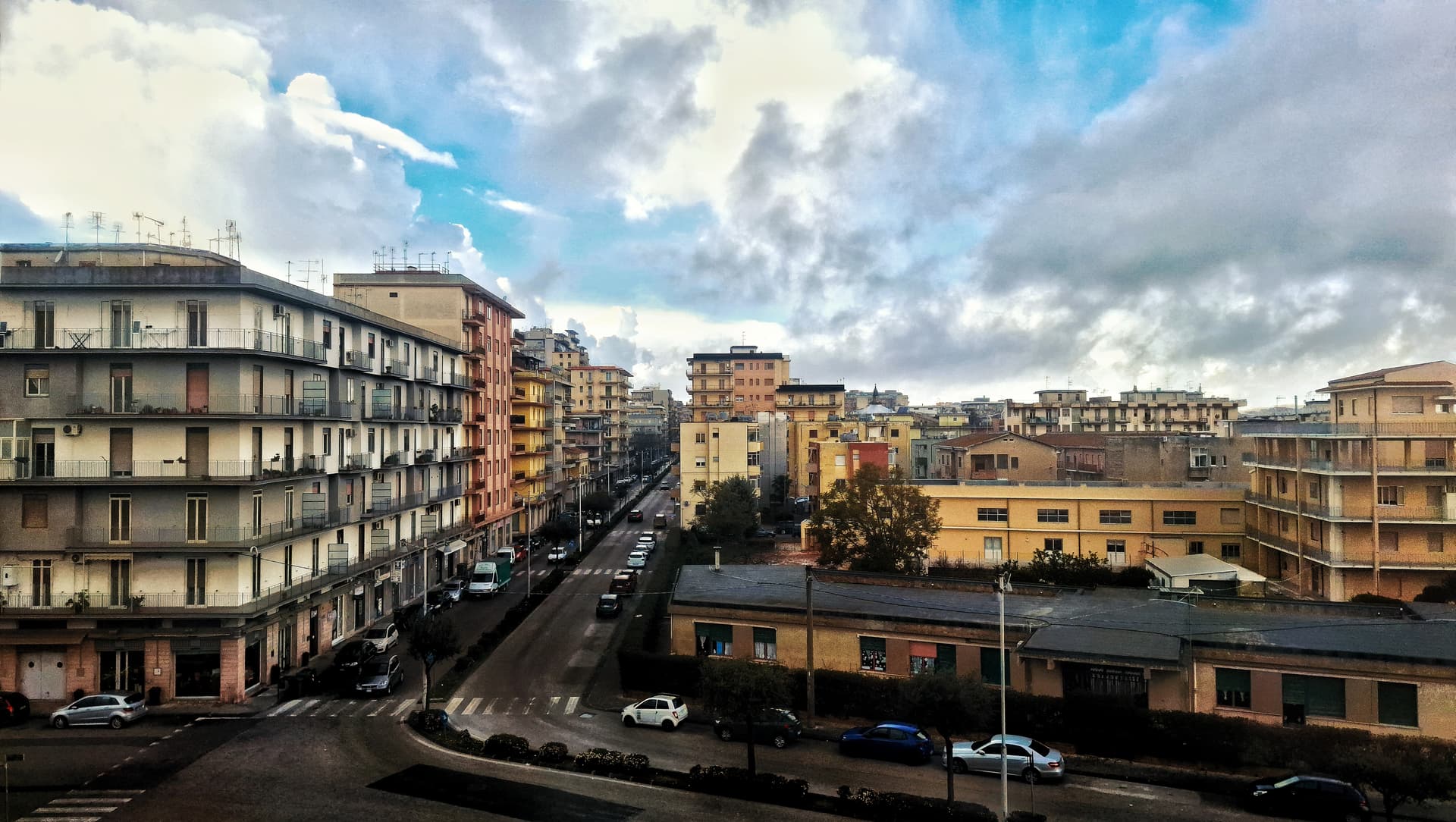
Caltagirone
Province: Catania
Sicily's ceramic capital at 611 meters on the Erei ridge, 142 majolica-tiled steps to Santa Maria del Monte and a Val di Noto UNESCO baroque rebuild.
Catania
Province: Catania
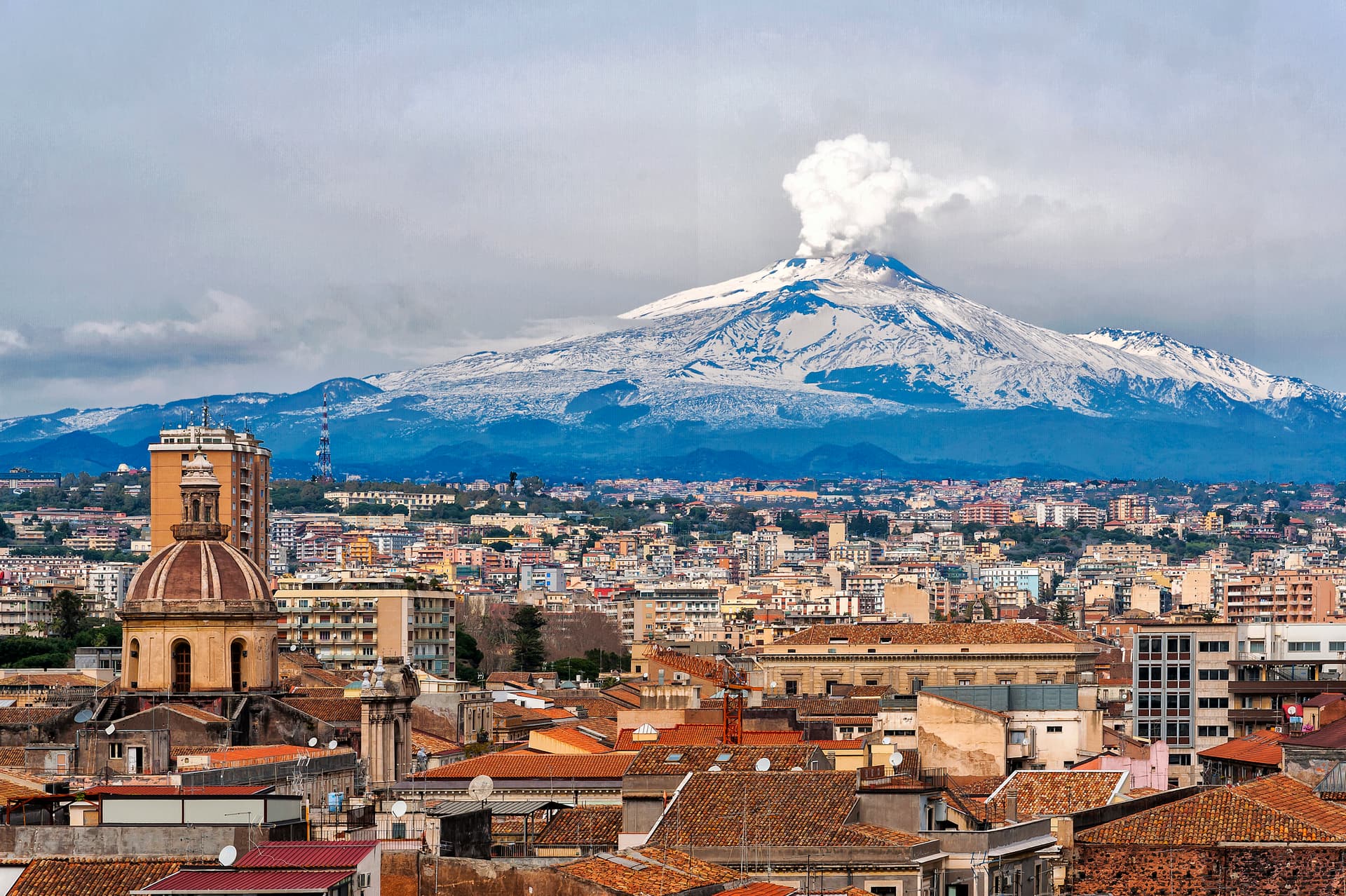
Sicily's second city and the cultural anchor of the Ionian coast — a UNESCO late-Baroque centro storico rebuilt in lava-black stone after the 1693 earthquake, sitting at the foot of Etna with a 17th-century elephant fountain (U Liotru) as its civic symbol.
Cefalù
Province: Palermo
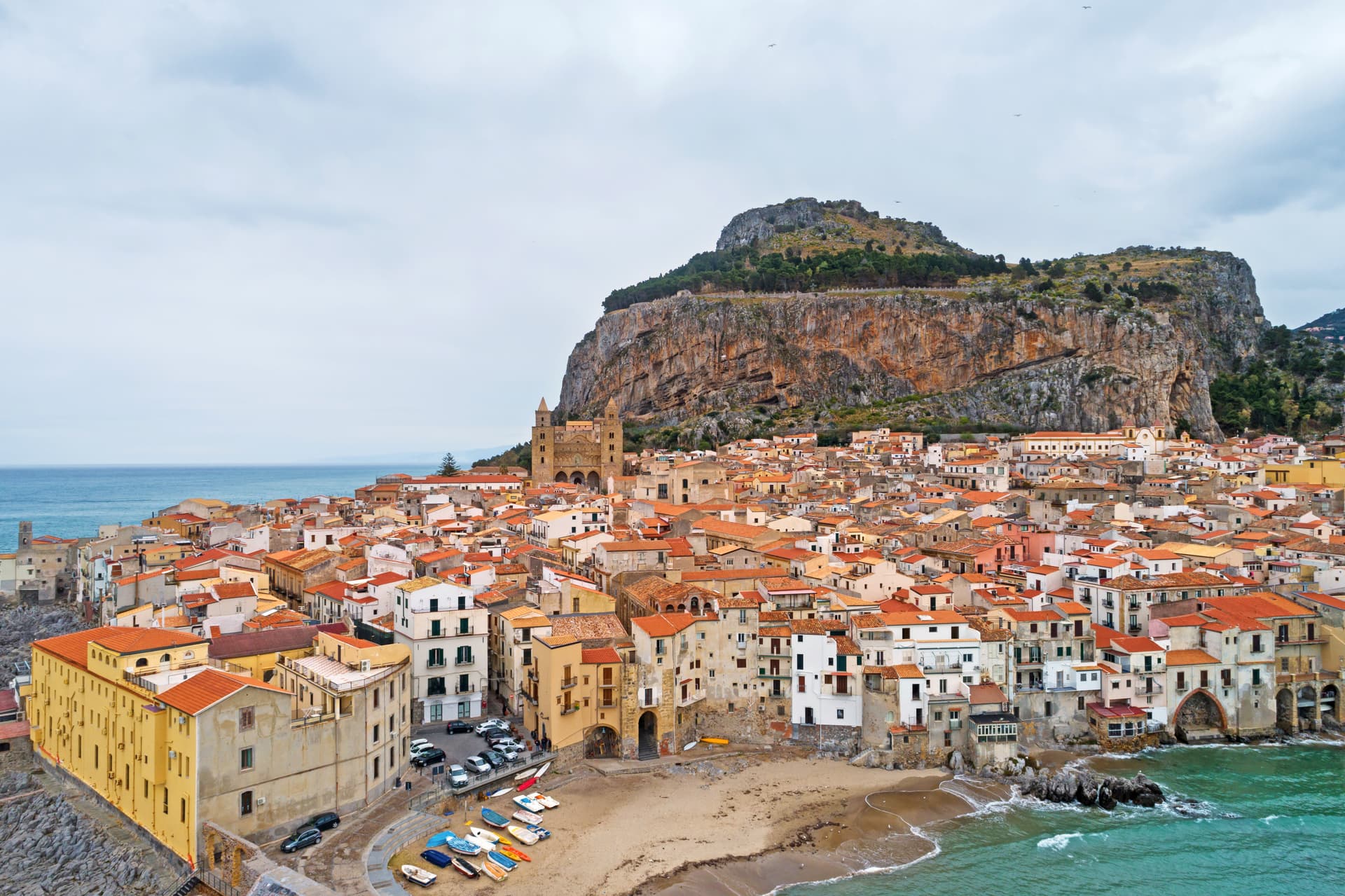
A Norman cathedral at the foot of a 270-meter rock on the Tyrrhenian coast, founded by Roger II in 1131 and on the UNESCO Arab-Norman list since 2015.
Modica
Province: Ragusa
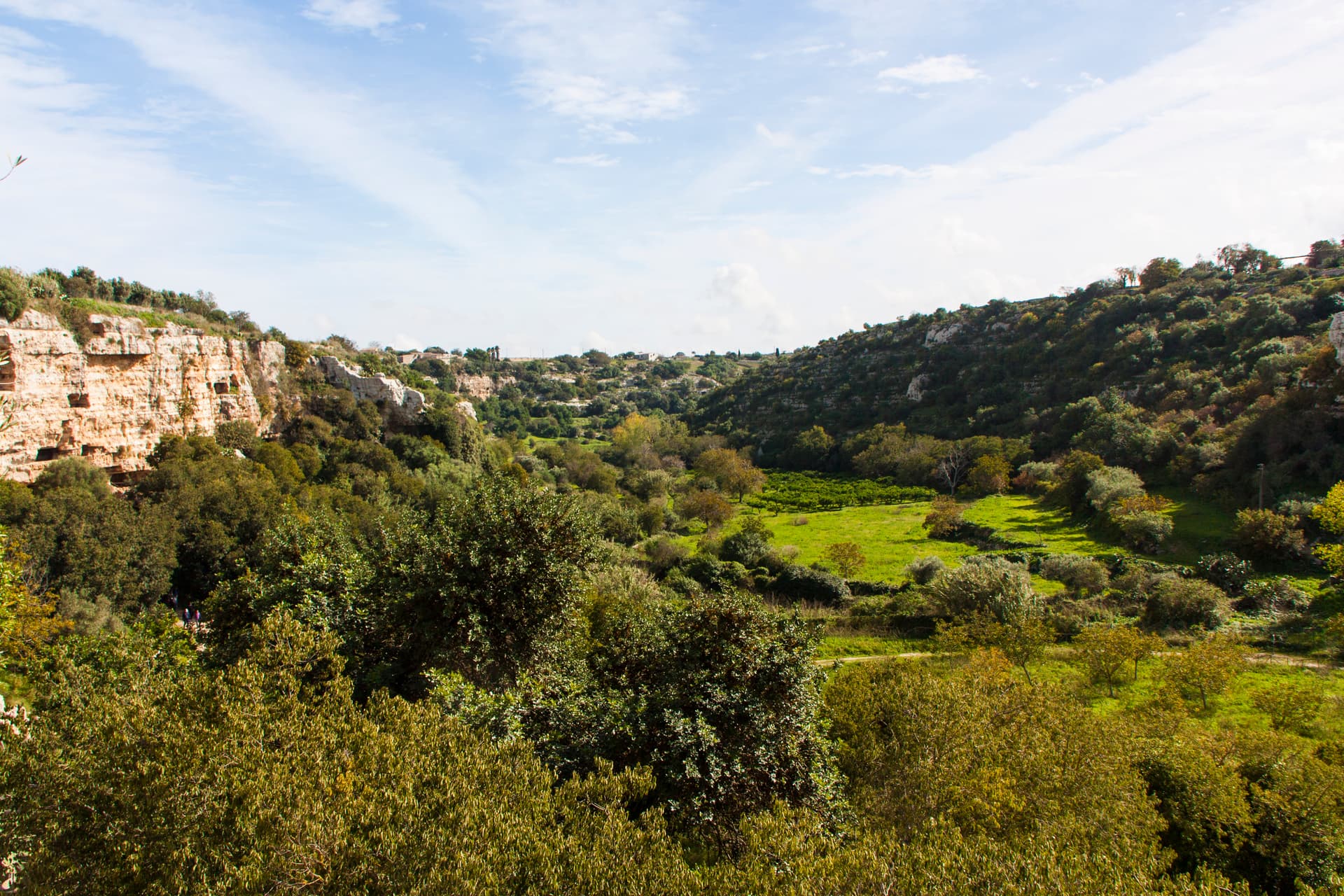
A vertical Baroque city in the Hyblean Mountains, rebuilt from the 1693 earthquake and home to a chocolate recipe brought from Aztec Mexico.
Monreale
Province: Palermo
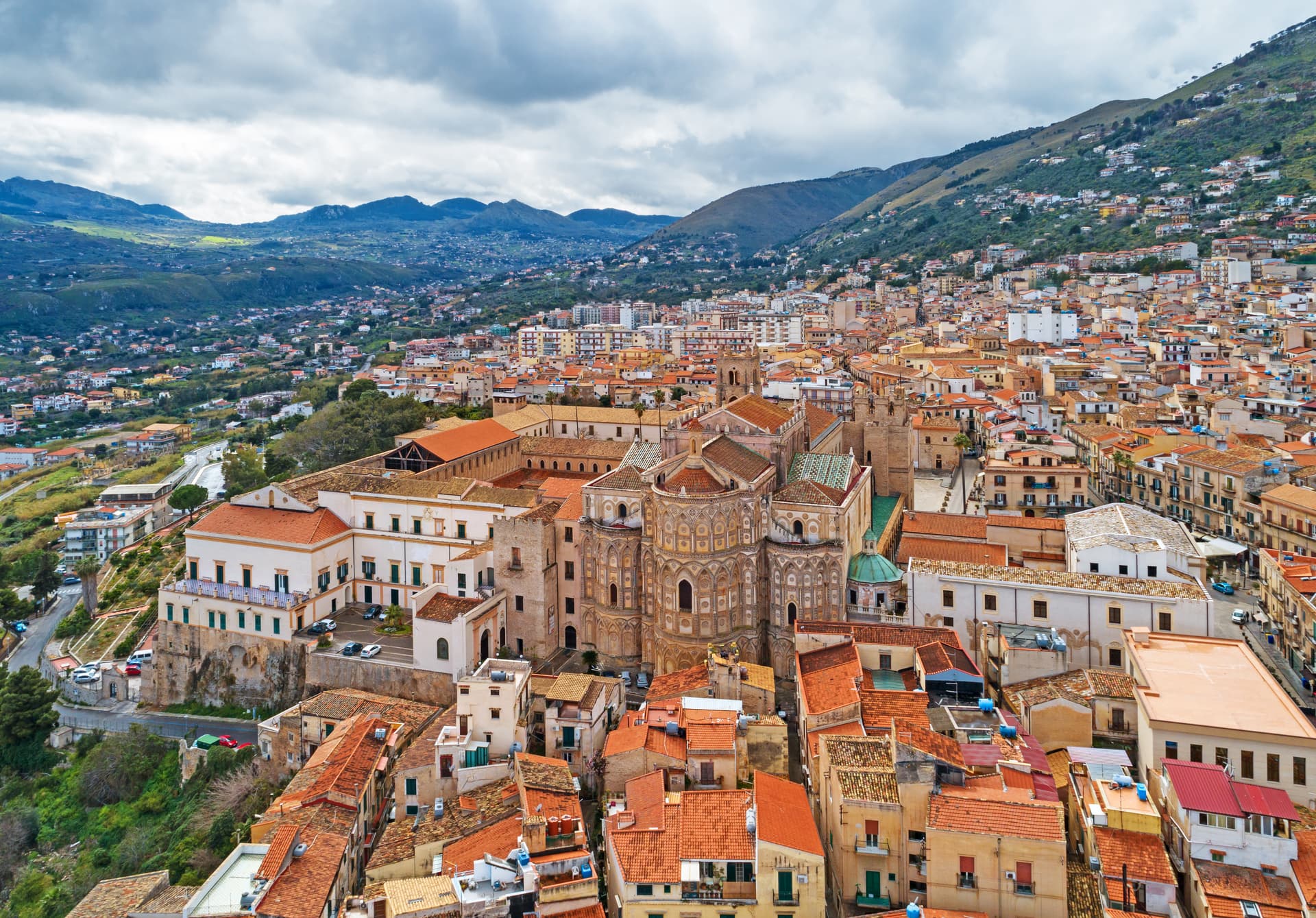
Above the Conca d'Oro at 310 meters, the cathedral William II built between 1174 and 1182 holds 6,340 square meters of Norman mosaics.