

Basilicata · Matera
Matera
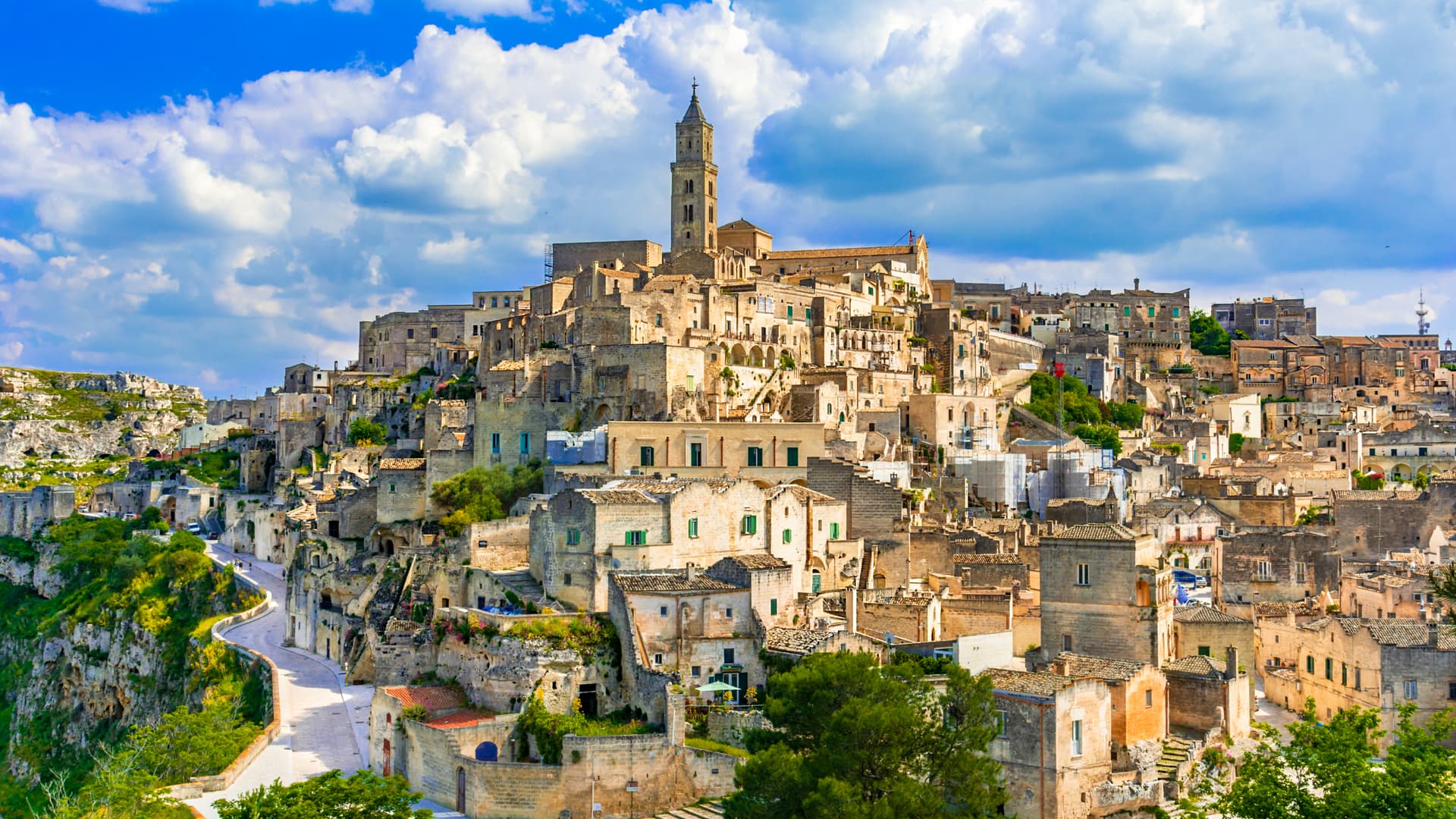
Cave dwellings carved into limestone since the Paleolithic, called the shame of Italy in the 1950s and made European Capital of Culture in 2019.
Known for
THE SASSI
UNESCO-listed since 1993; emptied by law in 1952, called the shame of Italy, reoccupied as boutique hotels and homes from the 1980s onward.
FILM LOCATION
Mel Gibson's Passion of the Christ in 2004 and No Time to Die in 2019; the Bond shoot brought twelve million euros into the city.
PANE DI MATERA
IGP wheat bread with a horn shape and seventy-two-hour ferment, baked in wood ovens from semola di grano duro.
When to visit
Best · Apr–Oct
- J
- F
- M
- A
- M
- J
- J
- A
- S
- O
- N
- D
- Best
- Hot or crowded
- Quiet
- Mostly closed
Why come
Matera sits on the edge of the Gravina ravine in eastern Basilicata, fifty-five kilometers inland from Bari. The Sassi, two districts of houses, churches and cisterns hollowed from tufa limestone, are among the oldest continuously inhabited settlements on earth, with traces of human presence from the Paleolithic. Sasso Caveoso and Sasso Barisano dropped down the canyon walls; people lived there with their animals into the 1950s.
Carlo Levi's 1945 book and the 1948 photographs that followed turned the Sassi into a national scandal, and a 1952 law moved twenty thousand residents to new housing on the plateau above. The caves stayed empty for thirty years. UNESCO listed them in 1993.
Mel Gibson shot The Passion of the Christ here in 2004 and the city was European Capital of Culture in 2019; No Time to Die filmed in the Sassi in 2019, bringing twelve million euros into the local economy. Bread, ceramics, and rock churches across the Gravina anchor what is now Basilicata's only mass-tourism destination.
The Sunday letter
We haven’t written Matera’s letter yet.
One town every Sunday, with the photo, the food, the festa. Be there when this one comes up. Free, by Peter & Sophia from Pietrasanta.
By subscribing you agree to Substack’s Terms of Use, our Privacy Policy and our Information collection notice.
What to see
Sassi di Matera
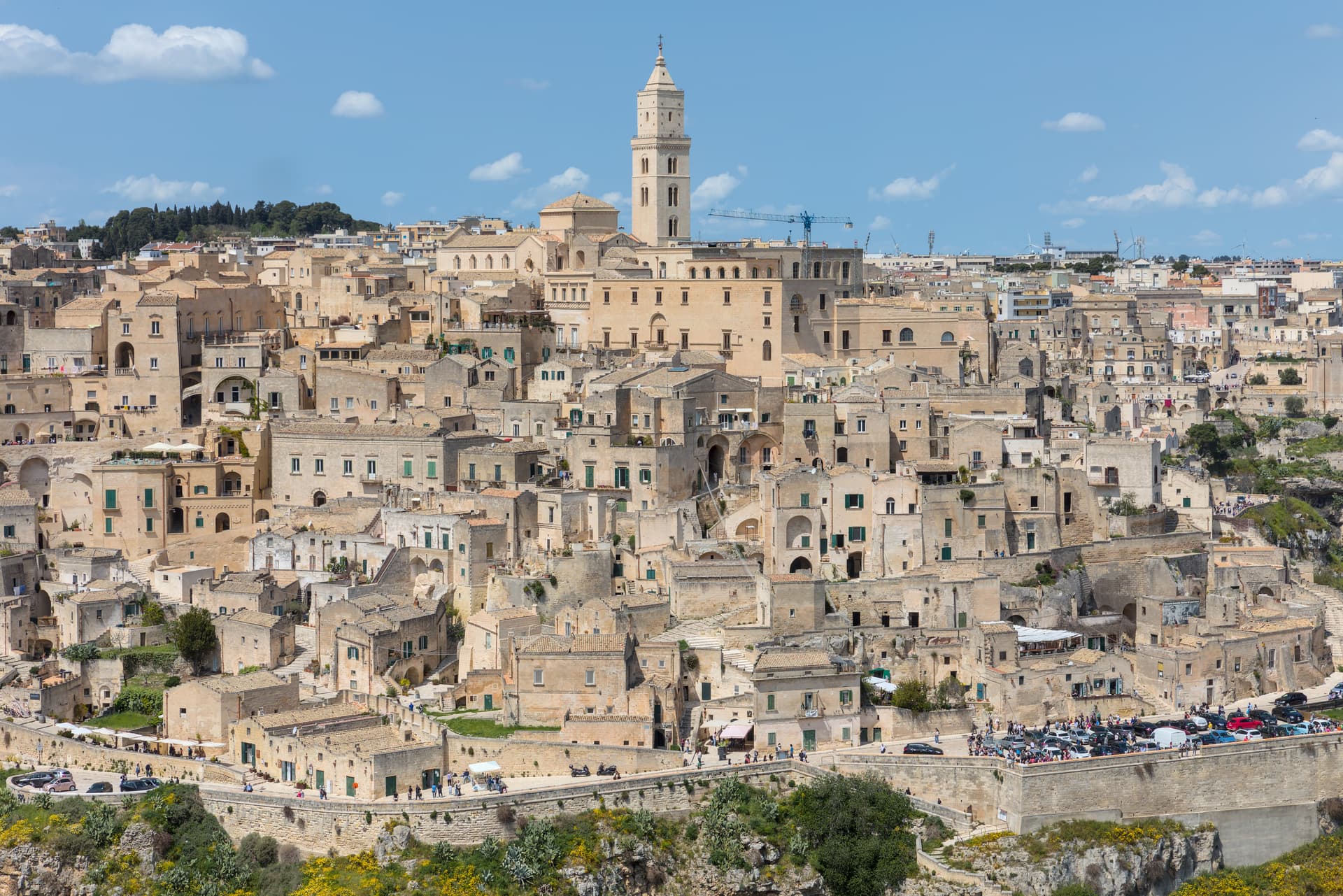
Two districts of cave dwellings, Sasso Caveoso and Sasso Barisano, carved from tufa limestone and inhabited continuously from the Paleolithic until the 1950s evictions.
Cattedrale della Madonna della Bruna e di Sant'Eustachio
Thirteenth-century Apulian Romanesque cathedral on the highest point of the Civita, between the two Sassi, with rose window and bell tower.
Chiese rupestri del Parco della Murgia
More than 150 rock-cut churches scattered across the Gravina canyon, frescoed between the eighth and thirteenth centuries by Italo-Greek monks.
Casa Grotta nei Sassi
Reconstructed cave dwelling preserved as a museum, showing how families, livestock and grain lived together in a single rock room until the 1952 eviction law.
Gravina di Matera
Limestone canyon below the Sassi, crossed by a footbridge to the rupestrian church park on the opposite cliff.
Castello Tramontano
Aragonese castle commissioned in 1501 by Count Giovan Carlo Tramontano, who was killed by townspeople before it was finished; three of the original twelve towers stand.
The slow-trip planner
Building a trip? Find where Matera fits in a slow Italy circuit.
Answer five questions. We will shape a geographically coherent slow trip from the 1,000 Italian towns most travelers skip. Yours to save and share.
We recommend
Where to eat and stay
Not our picks, but places the guides put their name to — a Michelin star, a Gambero Rosso fork, a Slow Food snail, a Michelin Key for the hotels. Worth a table, a counter, or a night when you pass through.
Dimora UlmoRistorante
Two Gambero Rosso forks (83/100) for Dimora Ulmo, along with a place in L'Espresso's Top 300 and a spot in the Michelin Guide.
Vitantonio LombardoRistorante
Vitantonio Lombardo carries one Michelin star, two Gambero Rosso forks (86/100), plus a place in L'Espresso's Top 300.
BaccantiRistorante
Baccanti carries two Gambero Rosso forks (81/100), plus a spot in the Michelin Guide.
DA MÓRistorante
DA MÓ carries a Gambero Rosso listing, plus a spot in the Michelin Guide.
Aroma Profumi e SaporiRistorante
Aroma Profumi e Sapori carries two Gambero Rosso forks (80/100).
L' Abbondanza LucanaRistorante
L' Abbondanza Lucana carries one Gambero Rosso fork (78/100).
Myricae RistoranteRistorante
Myricae Ristorante carries two Gambero Rosso forks (80/100).
Oi MarìRistorante
Oi Marì holds one Gambero Rosso fork (79/100).
Osteria San FrancescoRistorante
Osteria San Francesco carries two Gambero Rosso forks (80/100).
Regiacorte dell'Hotel Sant'AngeloRistorante
Regiacorte dell'Hotel Sant'Angelo holds two Gambero Rosso forks (80/100).
Ristorante Artema dell'Hotel Vetera MateraRistorante
Ristorante Artema dell'Hotel Vetera Matera has two Gambero Rosso forks (83/100) to its name.
StanoTrattoria
Stano carries two Gambero Rosso prawns.
Palazzo GattiniHotel
Palazzo Gattini has a Leading Hotels of the World listing and a place in the Michelin hotel guide.
Masseria Fontana di ViteHotel
Masseria Fontana di Vite carries a place in the Michelin hotel guide.
Palazzo Del Duca Hotel & RestaurantHotel
Palazzo Del Duca Hotel & Restaurant holds a place in the Michelin hotel guide.
Sant'Angelo, MateraHotel
Sant'Angelo, Matera carries a place in the Michelin hotel guide.
Sextantio Le Grotte della CivitaHotel
One Michelin Key, at Sextantio Le Grotte della Civita.
Signature dish
Pane di MateraBread
A tall durum-semolina loaf with a hard crust and open crumb, shaped like the Murgia hills and protected by IGP.
See every town in our catalogue with a dish of its own.
Living here
- Population 59,685
- In-betweeni
- Pharmacy in town
- High school within a 30-minute drive
- Train station in the comune
- Nearest airport Bari / Brindisi, 57 min drive
- Regional capital Potenza, 1 h 23 min drive
Thermal baths in town: Locanda di San Martino.
Tags & datadesignations · numbers · sources
Recognised as
The numbers
- Elevation: 401 m
- Population: 59,685
- Surface area: 392.09 km²
These figures were compiled from public directories — ISTAT, OpenStreetMap, Wikidata — and from the official listings of the guides named on this page. Town details change; verify with official sources before you travel.
Close by
More towns near Matera
Miglionico
Province: Matera
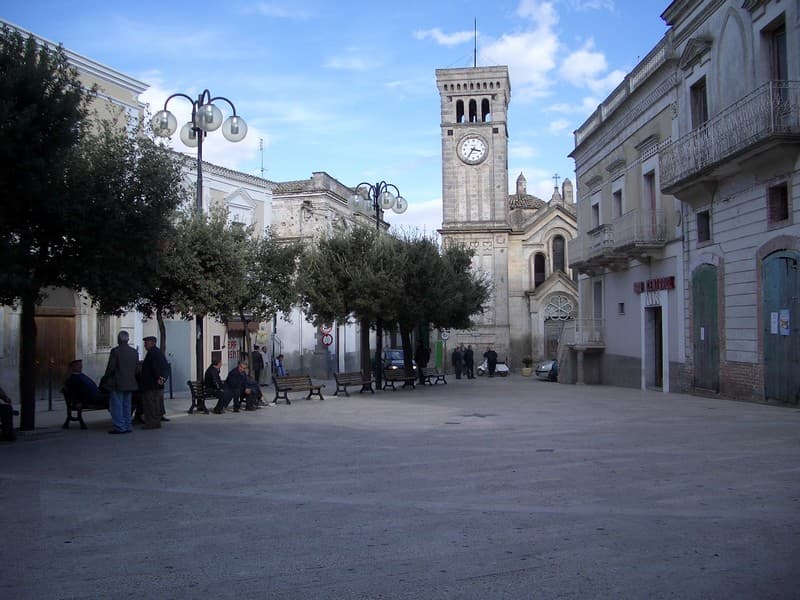
A hilltop borgo at 461 meters above the Bradano, the seven-tower castle that gave the 1485 Conspiracy of the Barons its hall.
Grottole
Province: Matera
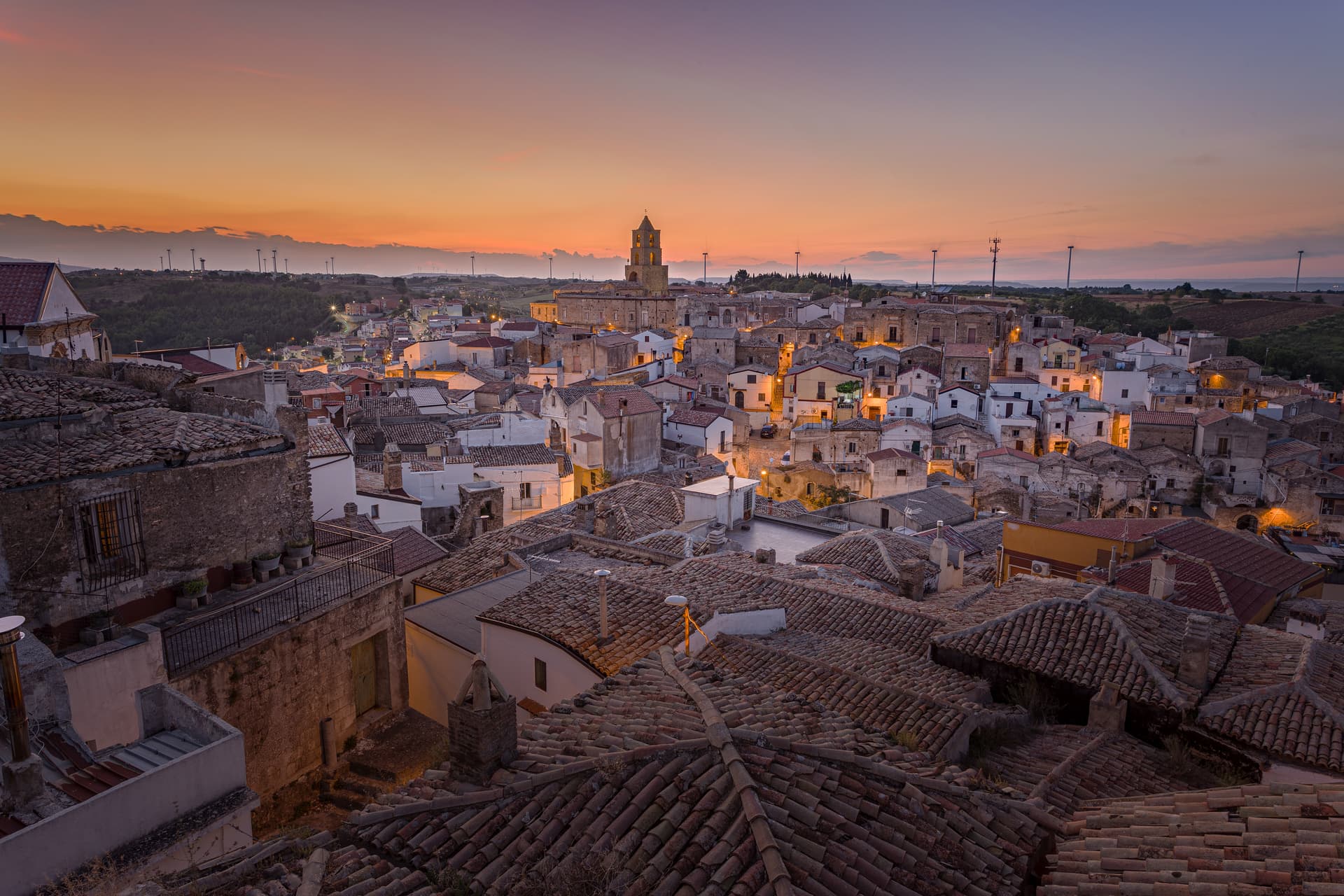
A hilltop borgo at 481 meters between the Bradano and Basento, where six hundred empty houses outnumber residents in the centro storico.
Gravina in Puglia
Province: Bari
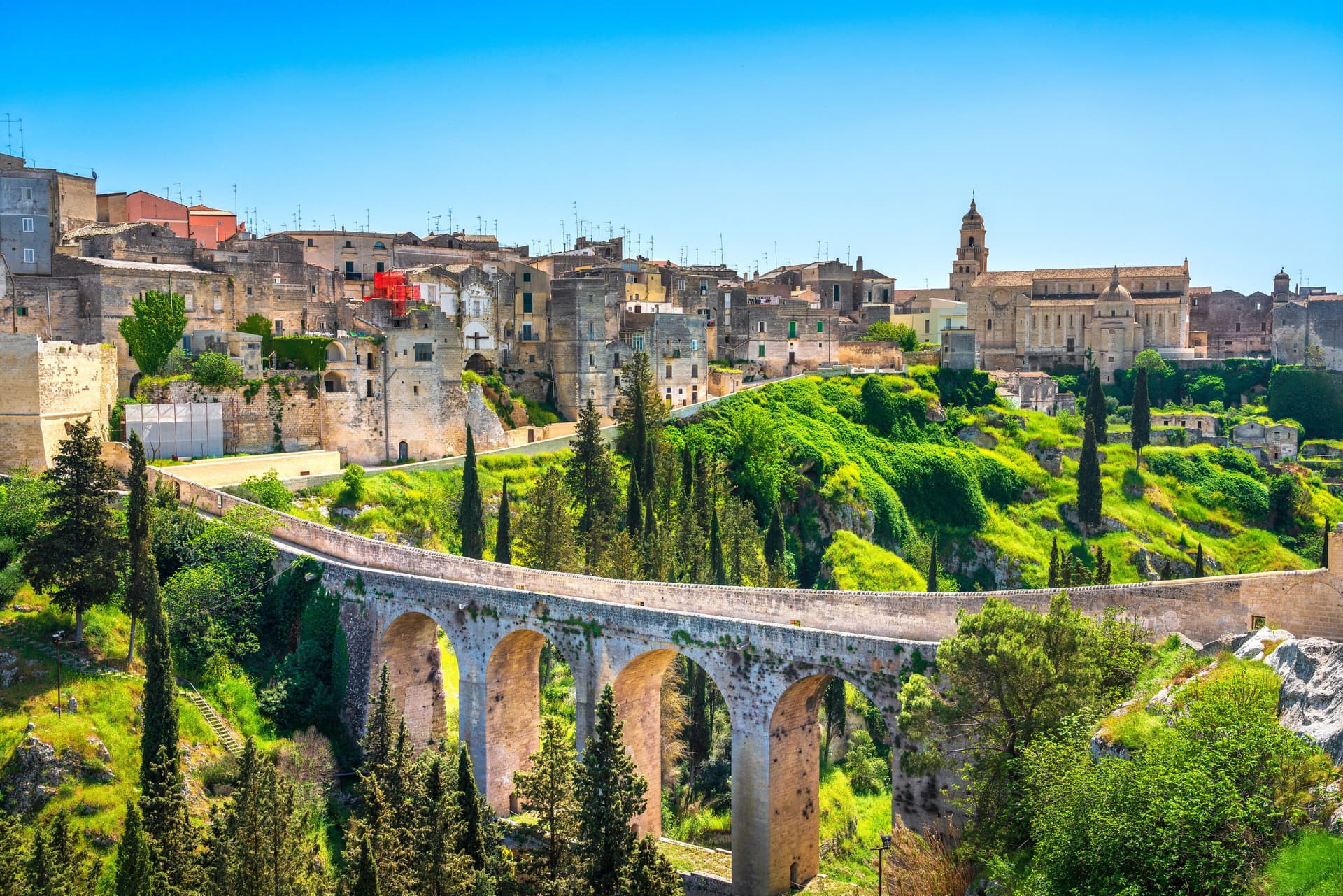
Puglia's deepest gravina — a 42,700-resident Bari-province town built on the lip of a 100m-deep limestone canyon, with the 18th-c Ponte Acquedotto walkway across the gorge that James Bond crossed in No Time to Die, a network of rupestrian cave churches in the cliff face, and the four-signal BPB + Cittaslow + Via Francigena + Parco Nazionale combination.
Irsina
Province: Matera
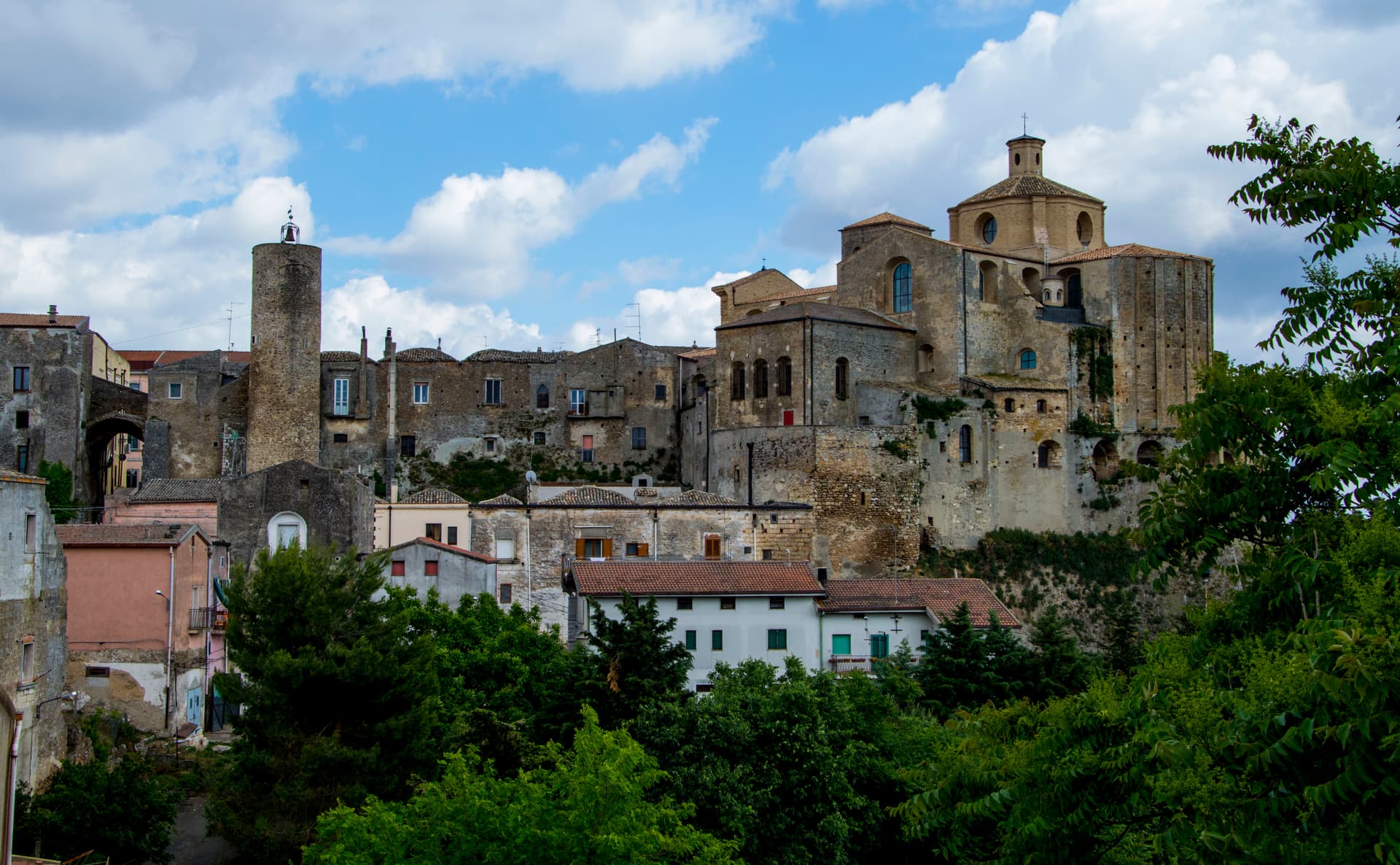
Called Montepeloso until 1895, a 548-meter Bradano-valley hill town whose cathedral holds the only surviving polychrome sculpture attributed to Andrea Mantegna.
Cassano delle Murge
Province: Bari
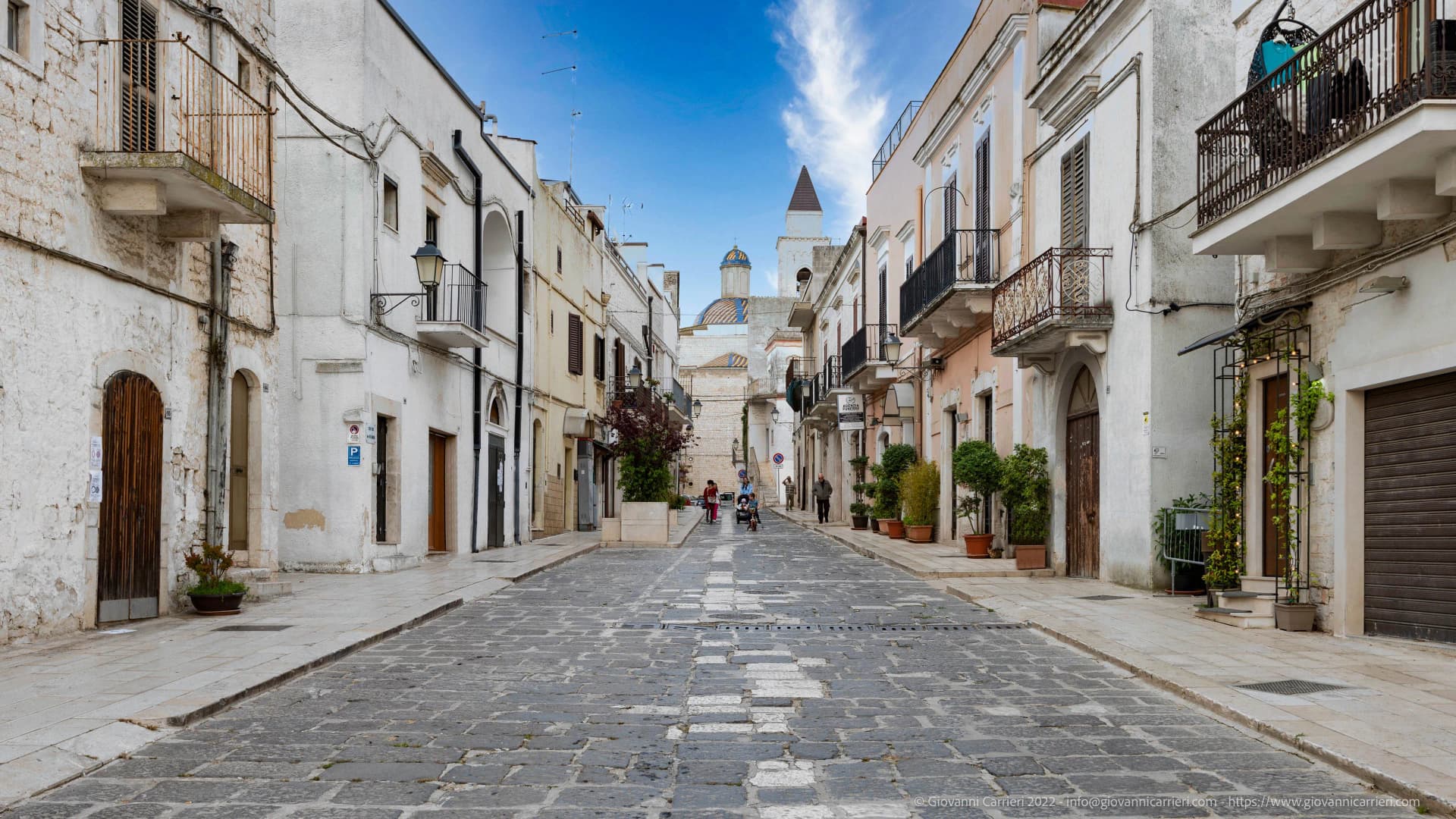
A Murge foothills town at 341 meters at the gate of the Alta Murgia park, with the 1,300-hectare Foresta Mercadante mostly inside its territory.
🏛️ UNESCO
More UNESCO towns
Amalfi
Province: Salerno
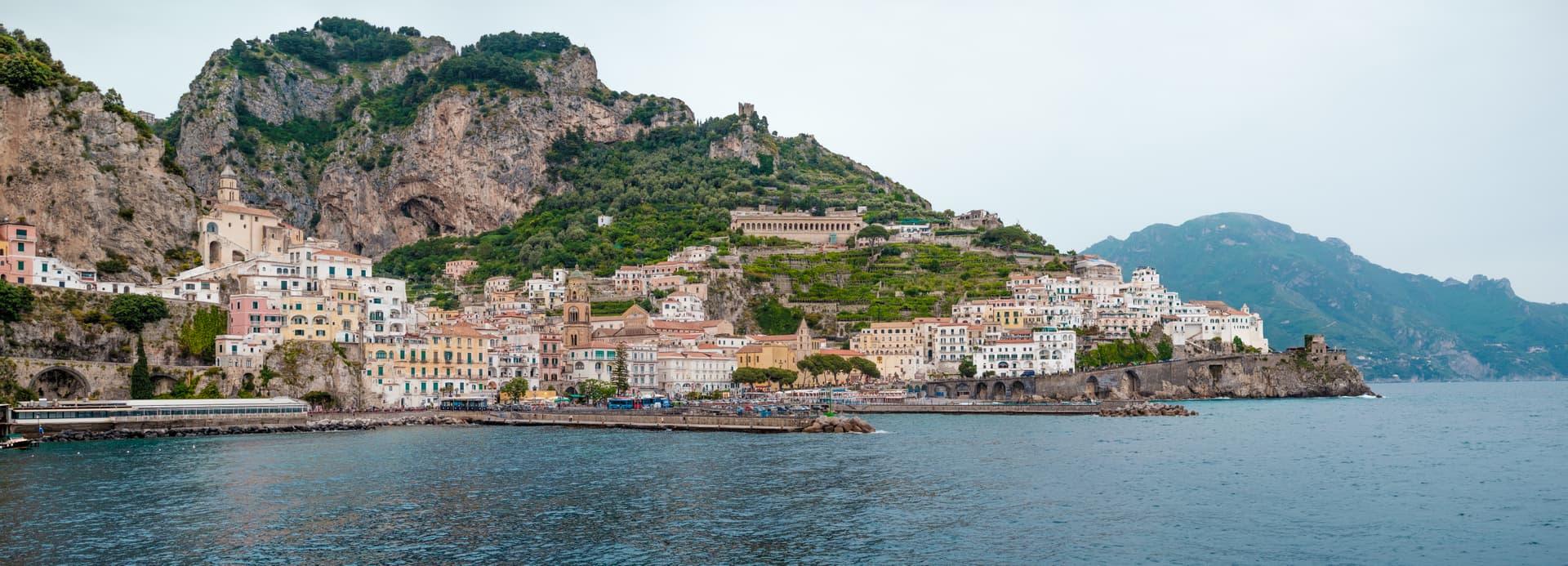
The first Italian maritime republic and the coast it named, six meters above the sea between cliffs that close around the duomo's steps.
Ascea
Province: Salerno
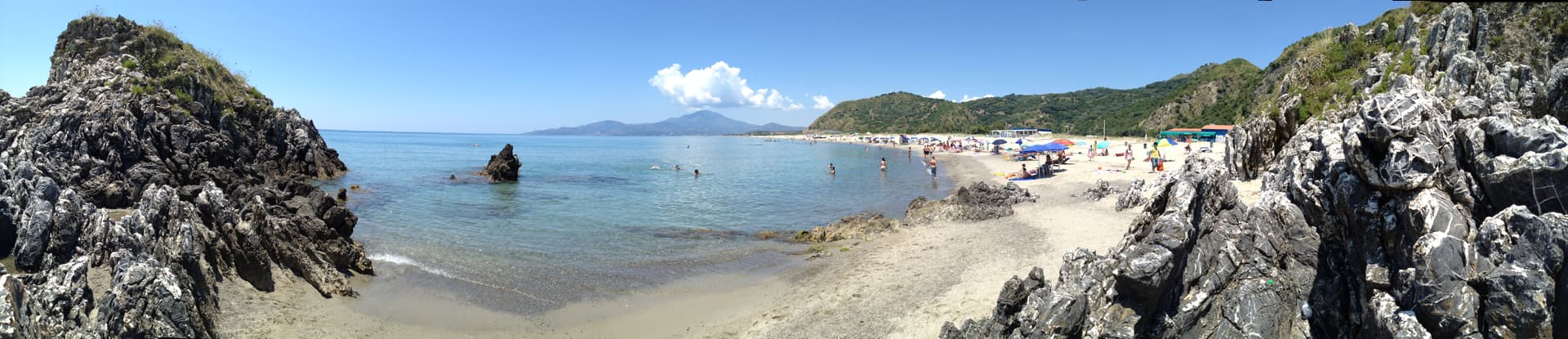
Two villages, a hilltown at 230 meters and a Cilento marina, with Parmenides and Zeno's Eleatic school in the ruins of Greek Velia below.
Atrani
Province: Salerno
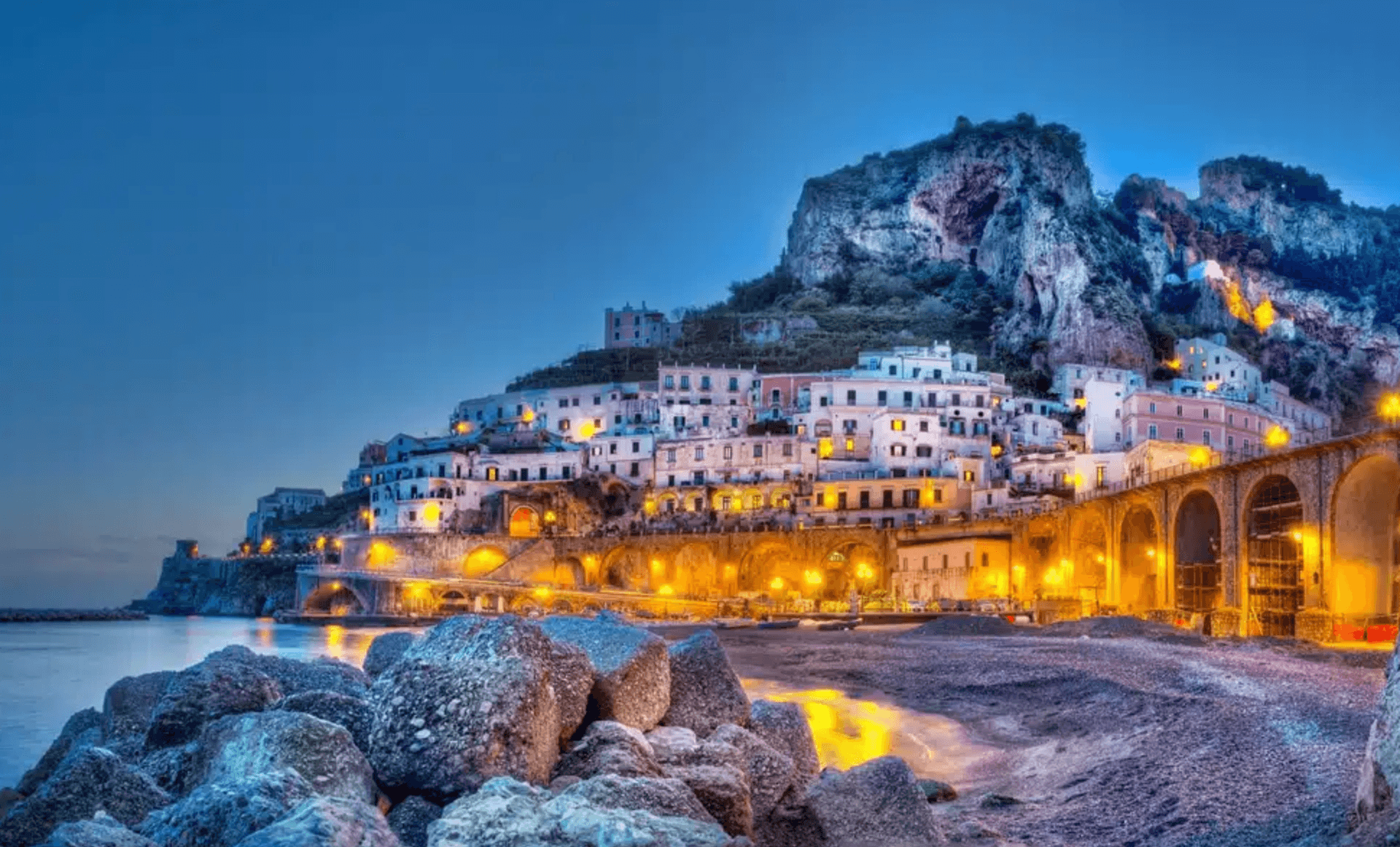
The smallest commune in Italy by area, twelve hectares of stacked houses where the Amalfi Coast pinches shut around a single piazza.
Benevento
Province: Benevento
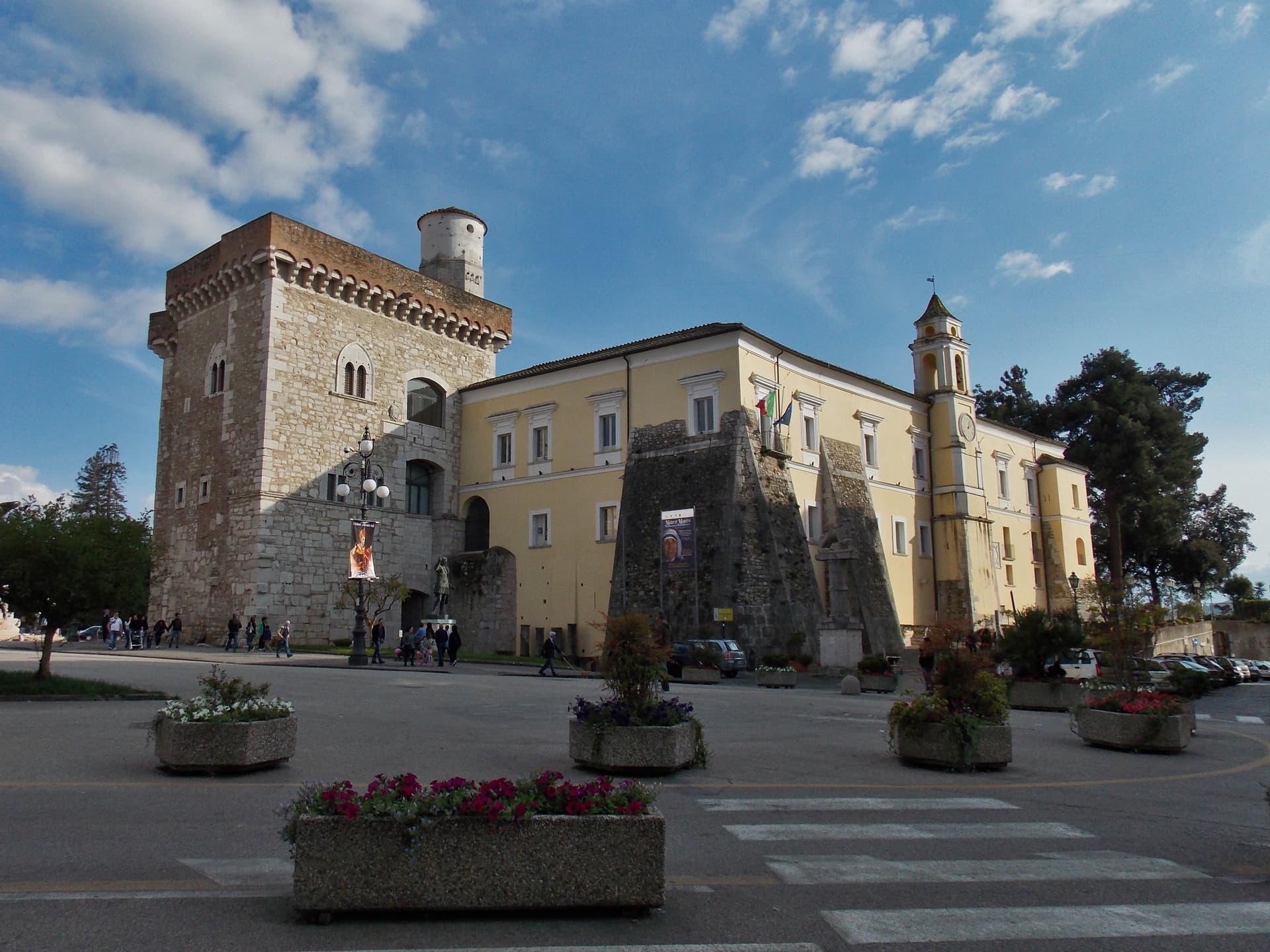
Sannio capital at the Calore-Sabato confluence, with a 114 AD Trajan arch and a Lombard rotunda on the UNESCO list.
Capaccio Paestum
Province: Salerno
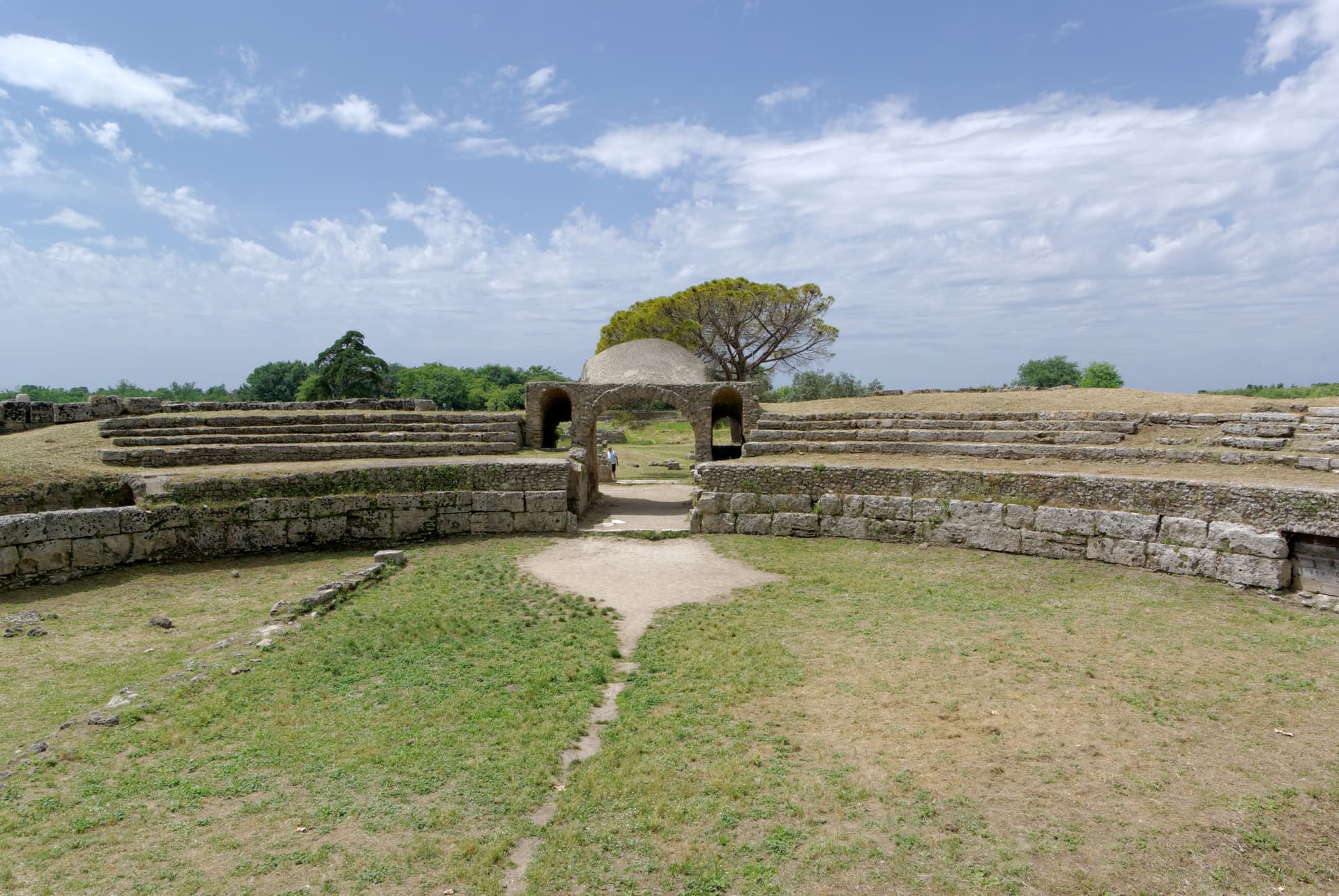
Three Doric temples of 550 to 450 BC on the Sele plain, with mozzarella di bufala DOP on the buffalo flats below Monte Calpazio.