

Apulia · Foggia
Rodi Garganico
A Gargano promontory town above the Adriatic, citrus capital of the peninsula, with DOP oranges and lemons grown since the Middle Ages.
Known for
DOP CITRUS
Arancia del Gargano and Limone Femminello del Gargano, both DOP, both cultivated continuously on the terraces below the town since the Middle Ages.
MADONNA DELLA LIBERA
Sanctuary icon said to have arrived with Venetian refugees fleeing Constantinople in 1453, venerated for over five centuries.
GARGANO COAST
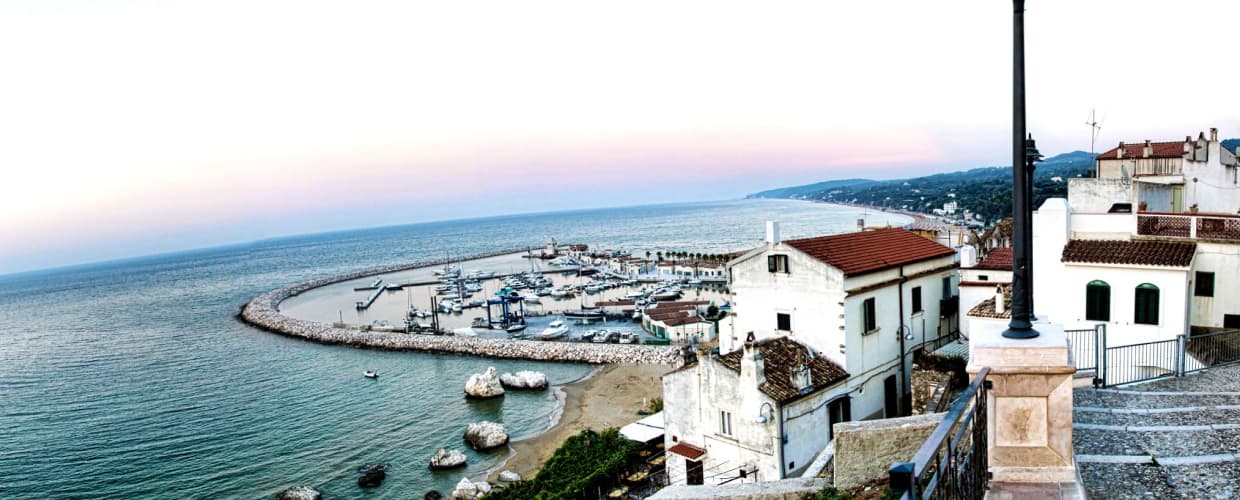
Promontory above two long sand beaches running west to Foce Varano and east to San Menaio, Bandiera Blu and inside the national park.
When to visit
Best · May–Sep
- J
- F
- M
- A
- M
- J
- J
- A
- S
- O
- N
- D
- Best
- Hot or crowded
- Quiet
- Mostly closed
Why come
Rodi Garganico sits on a rocky promontory on the northern slope of the Gargano peninsula, inside the Parco Nazionale del Gargano and east of the Lago di Varano. The early-nineteenth-century historian Michelangelo Manicone connected the founding to the Daunian people; a competing tradition has Greek colonists from Rhodes, the source of the modern name. The terraced slopes below the centro storico hold the citrus groves that define the town: the Arancia del Gargano and the Limone Femminello del Gargano, both DOP, both cultivated continuously since the Middle Ages, the lemon prized for its smooth thin peel and intense aroma.
The Sanctuary of the Madonna della Libera holds an icon of the Madonna that tradition says arrived with Venetian refugees fleeing Constantinople in 1453. The Chiesa di San Nicola di Mira keeps a Greek-Byzantine bell tower. Long beaches extend west and east of the town.
The Sunday letter
We haven’t written Rodi Garganico’s letter yet.
One town every Sunday, with the photo, the food, the festa. Be there when this one comes up. Free, by Peter & Sophia from Pietrasanta.
By subscribing you agree to Substack’s Terms of Use, our Privacy Policy and our Information collection notice.
What to see
Santuario della Madonna della Libera
Marian sanctuary above the old town, holding an icon tradition says was brought by Venetian refugees fleeing the fall of Constantinople in 1453.
Chiesa di San Nicola di Mira
Old parish church with a Greek-Byzantine bell tower, the architectural trace of the Gargano's eastern liturgical past.
Centro storico
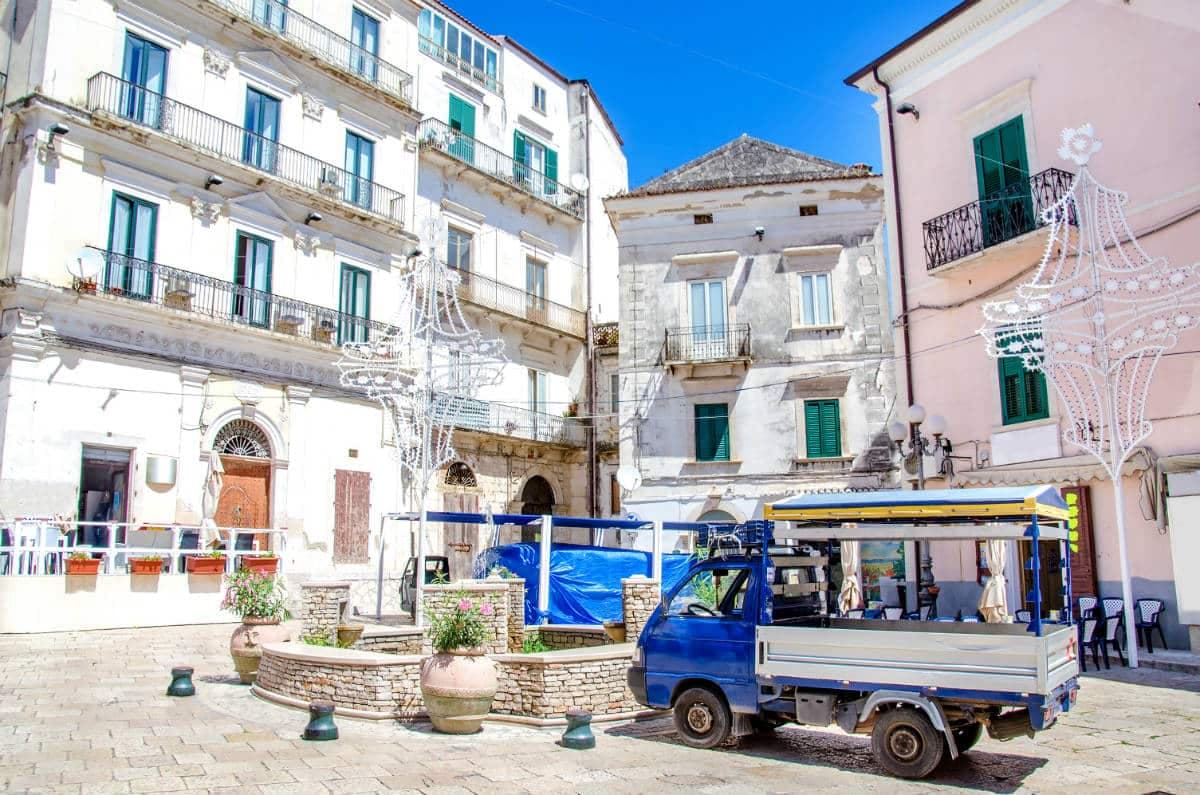
Whitewashed promontory village on the cliff above the Adriatic, narrow stepped lanes dropping toward the harbour and the beaches.
Spiagge di Rodi
Long sand beaches extending both west toward Foce Varano and east toward San Menaio, the longest continuous coastline on the Gargano.
Parco Nazionale del Gargano
National park covering the peninsula, with the citrus terraces of Rodi protected as a working agricultural landscape inside the park boundary.
The slow-trip planner
Building a trip? Find where Rodi Garganico fits in a slow Italy circuit.
Answer five questions. We will shape a geographically coherent slow trip from the 1,000 Italian towns most travelers skip. Yours to save and share.
Living here
- Population 3,302
- Very remotei
- Pharmacy in town
- High school within a 30-minute drive
- Train station in the comune
- Nearest airport Bari / Brindisi, 2 h 44 min drive
- Regional capital Bari, 2 h 48 min drive
Tags & datadesignations · numbers · sources
Recognised as
The numbers
- Elevation: 42 m
- Population: 3,302
- Surface area: 13.45 km²
These figures were compiled from public directories — ISTAT, OpenStreetMap, Wikidata — and from the official listings of the guides named on this page. Town details change; verify with official sources before you travel.
Close by
More towns near Rodi Garganico
Vico del Gargano
Province: Foggia
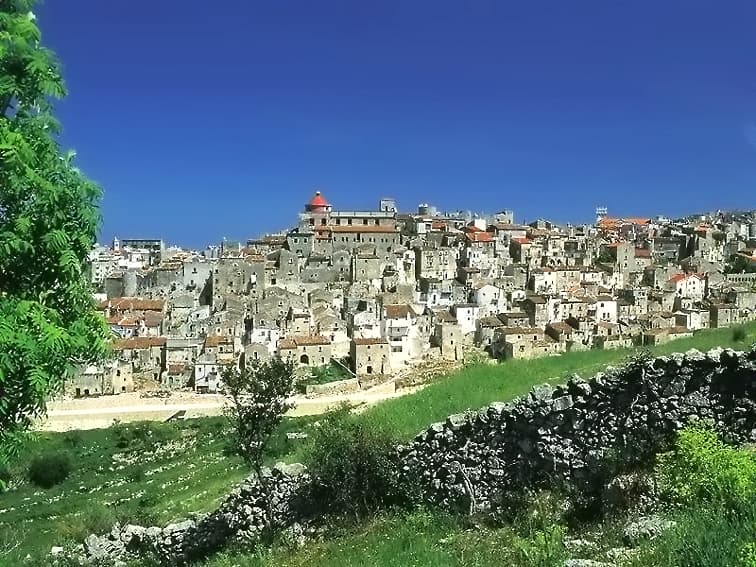
A Gargano hill town at 445 meters with a Norman castle, a kiss alley, and DOP citrus groves stepping down to the Adriatic.
Monte Sant'Angelo
Province: Foggia
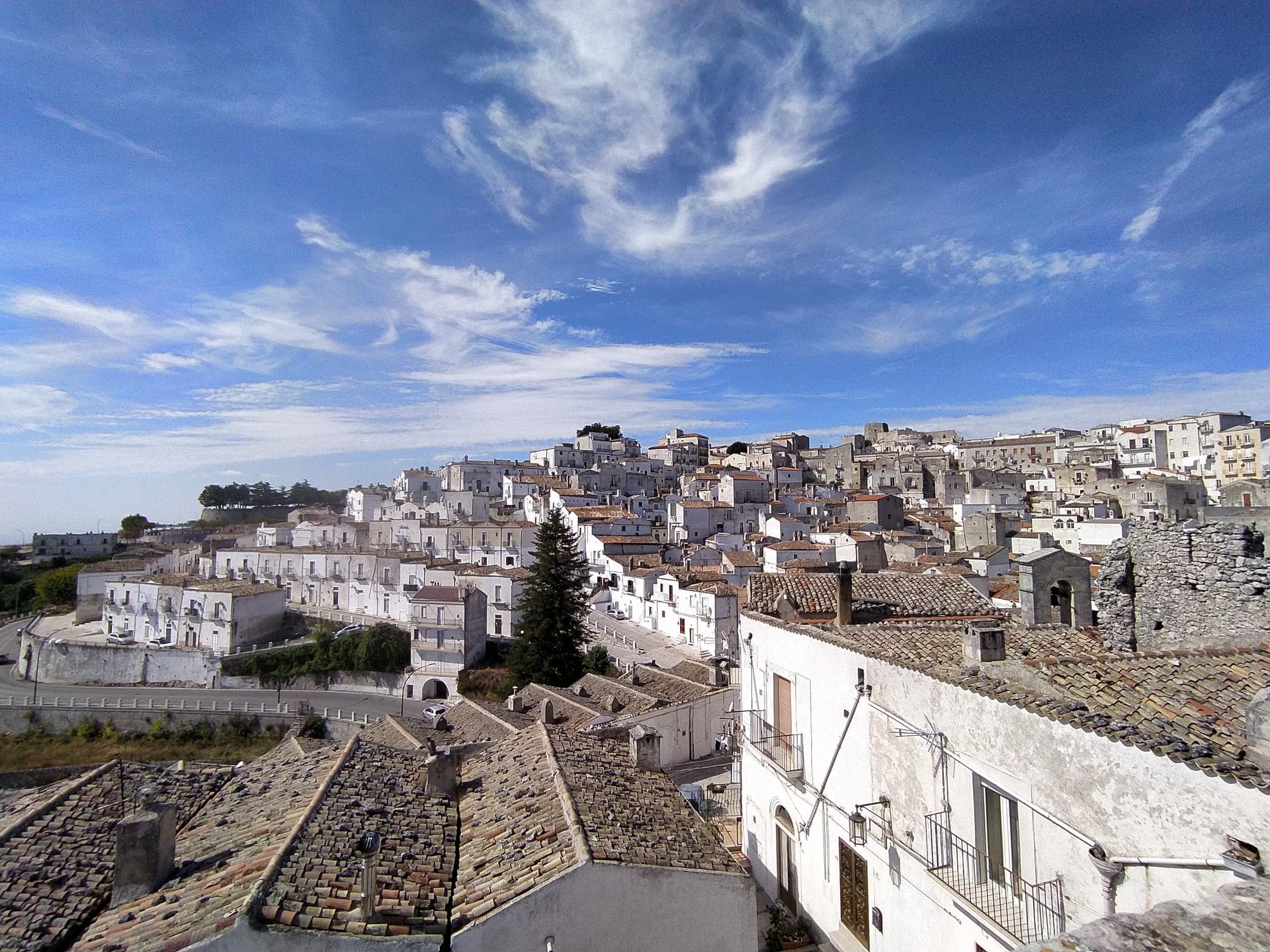
The Gargano peak at 843 meters where the Archangel Michael appeared in 490, the oldest western shrine to him, UNESCO since 2011.
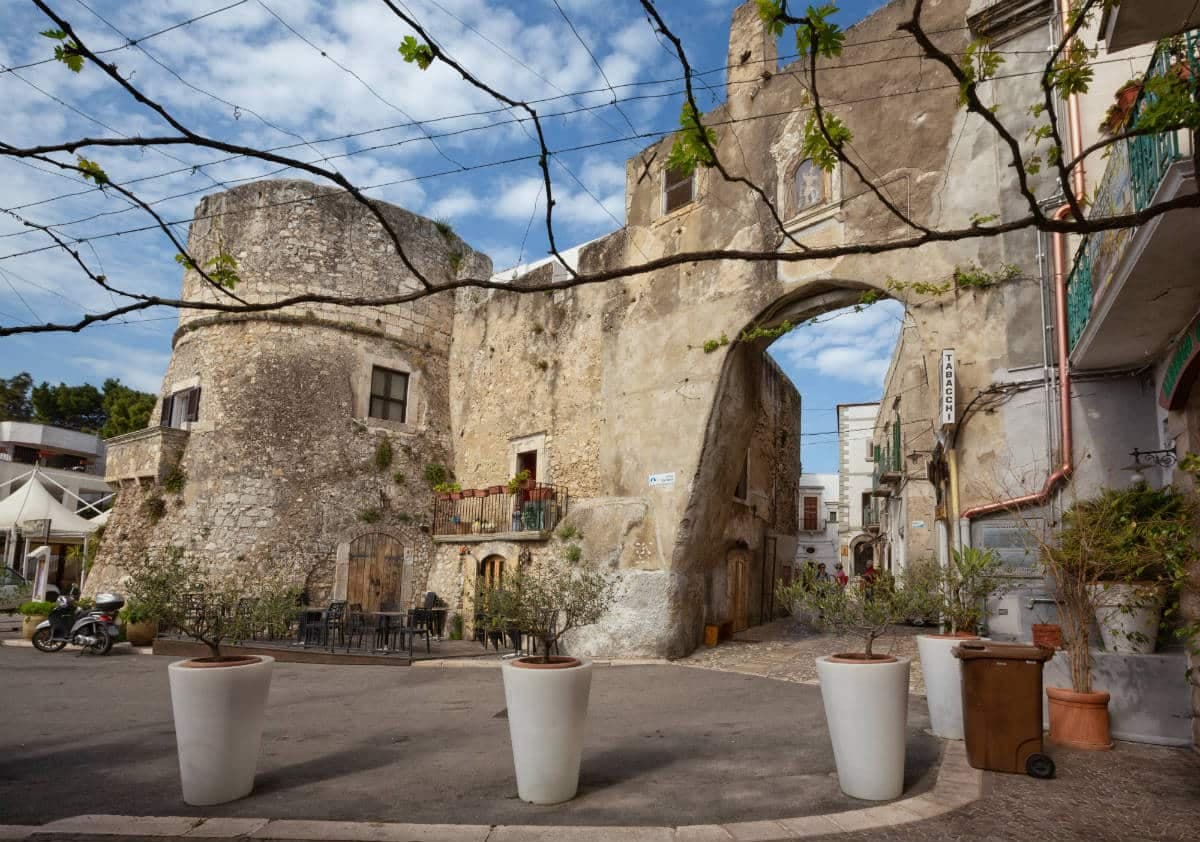
Peschici
Province: Foggia
A Gargano cliff-top village above the Adriatic with a Norman castle of 1023, white houses spilling toward the sea and trabucchi on the headlands.
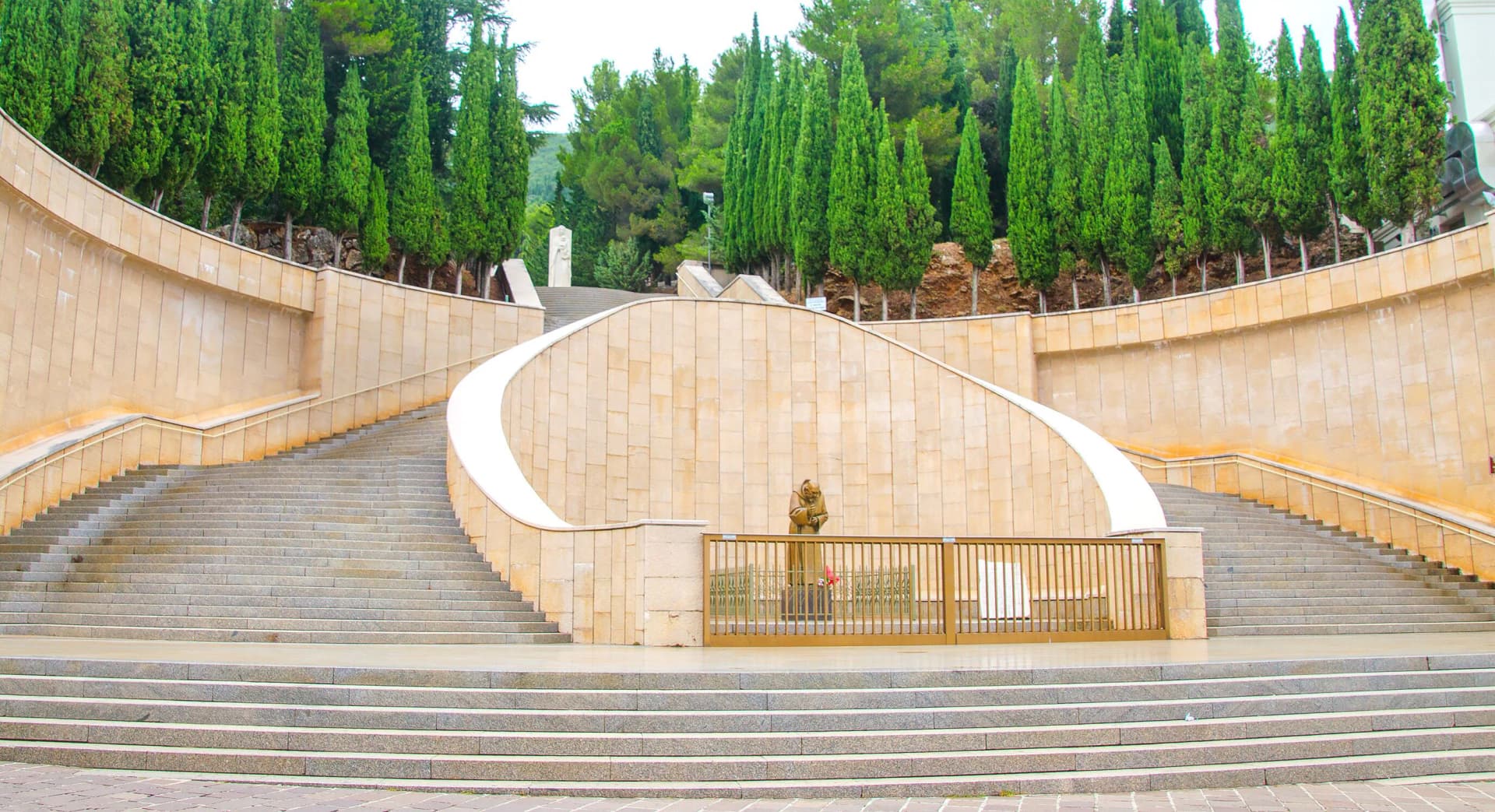
San Giovanni Rotondo
Province: Foggia
The Gargano town where Padre Pio lived for fifty-two years, second-largest pilgrimage site in Italy, with a Renzo Piano sanctuary that seats 6,500.
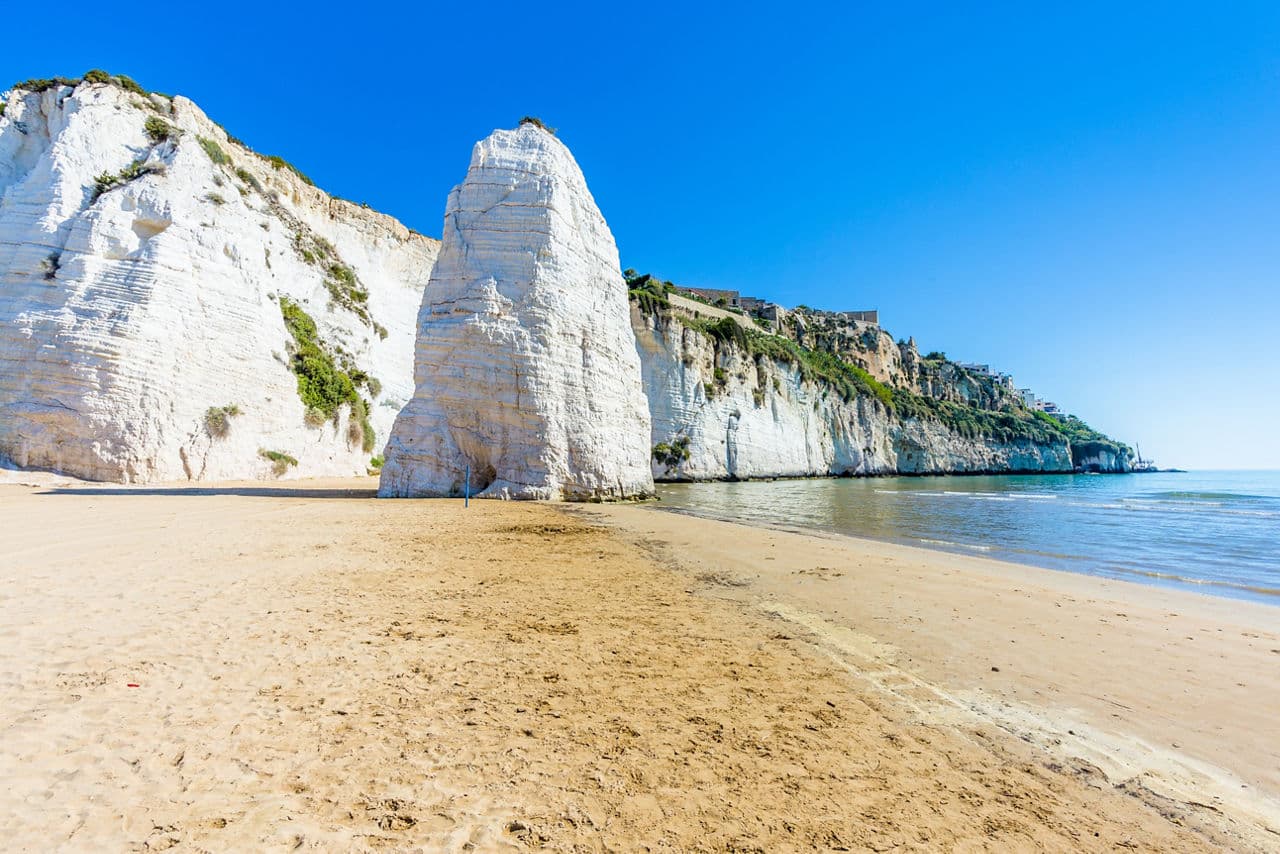
Vieste
Province: Foggia
The Gargano headland of whitewashed alleys on a white limestone cliff, with the Pizzomunno sea stack standing 26 meters offshore.
🟦 Bandiera Blu
More Bandiera Blu towns in Apulia
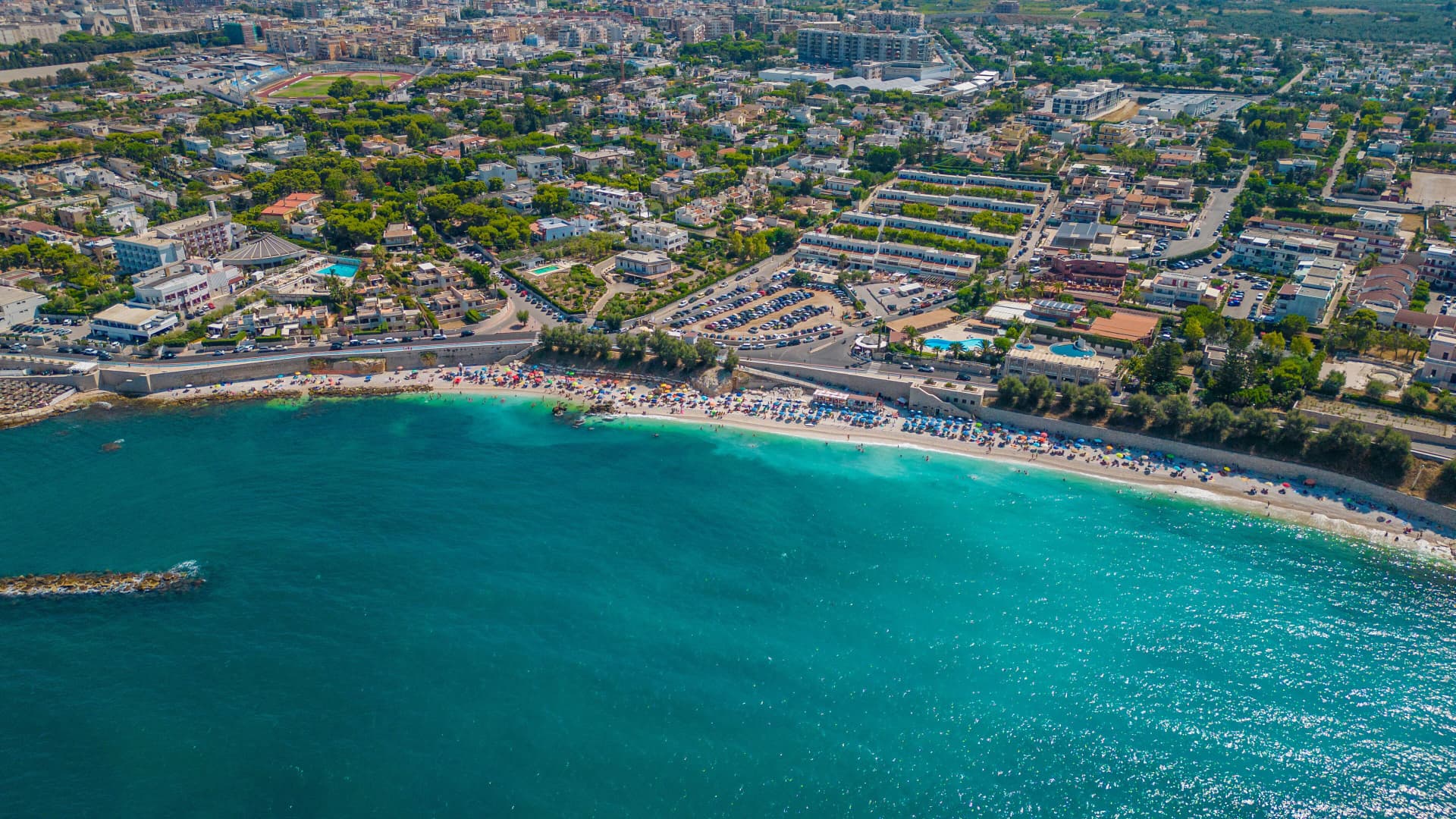
Bisceglie
Province: Barletta-Andria-Trani
An Adriatic port town between Trani and Molfetta, named for Roman watchtowers, with five dolmens around it and a Norman cathedral begun in 1073.
Carovigno
Province: Brindisi
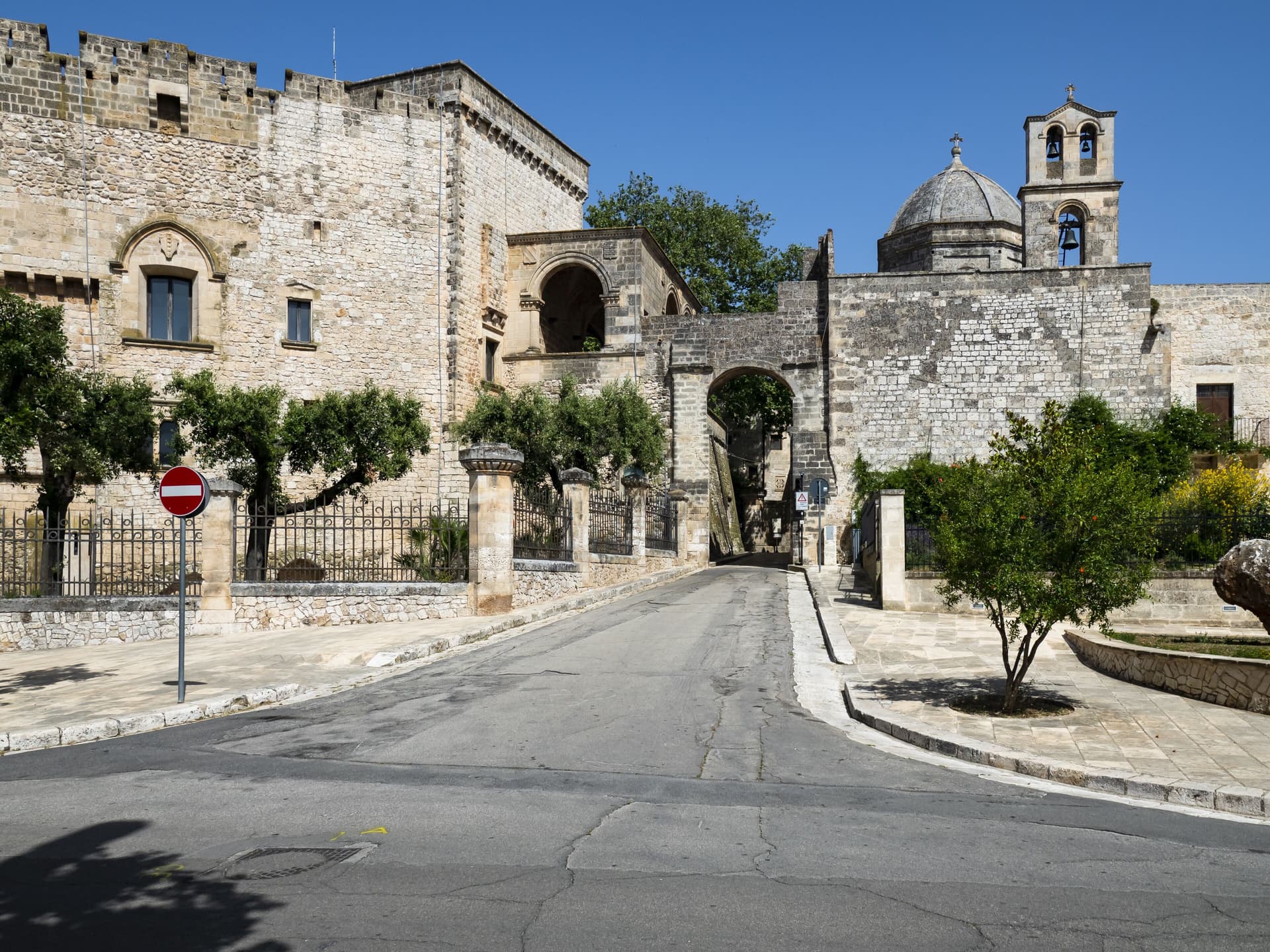
An upper Salento town between Brindisi and Ostuni, built on the Messapian Carbina destroyed in 473 BC, with the Torre Guaceto marine reserve offshore.
Castellaneta
Province: Taranto
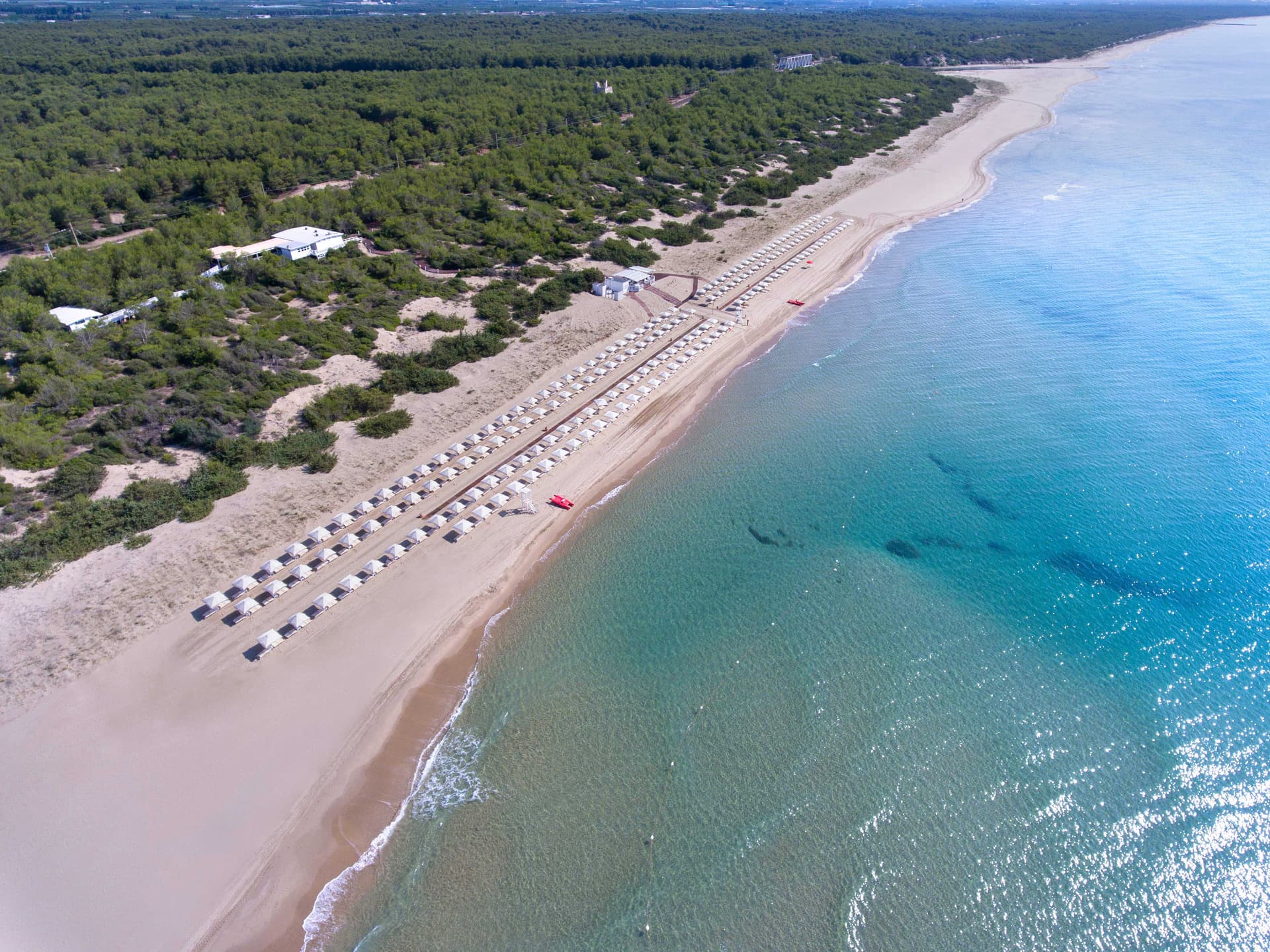
A cliff-edge Murge town at 235 meters above the Gravina Grande canyon, birthplace of Rudolph Valentino in 1895, with a Bandiera Blu Ionian marina.
Fasano
Province: Brindisi
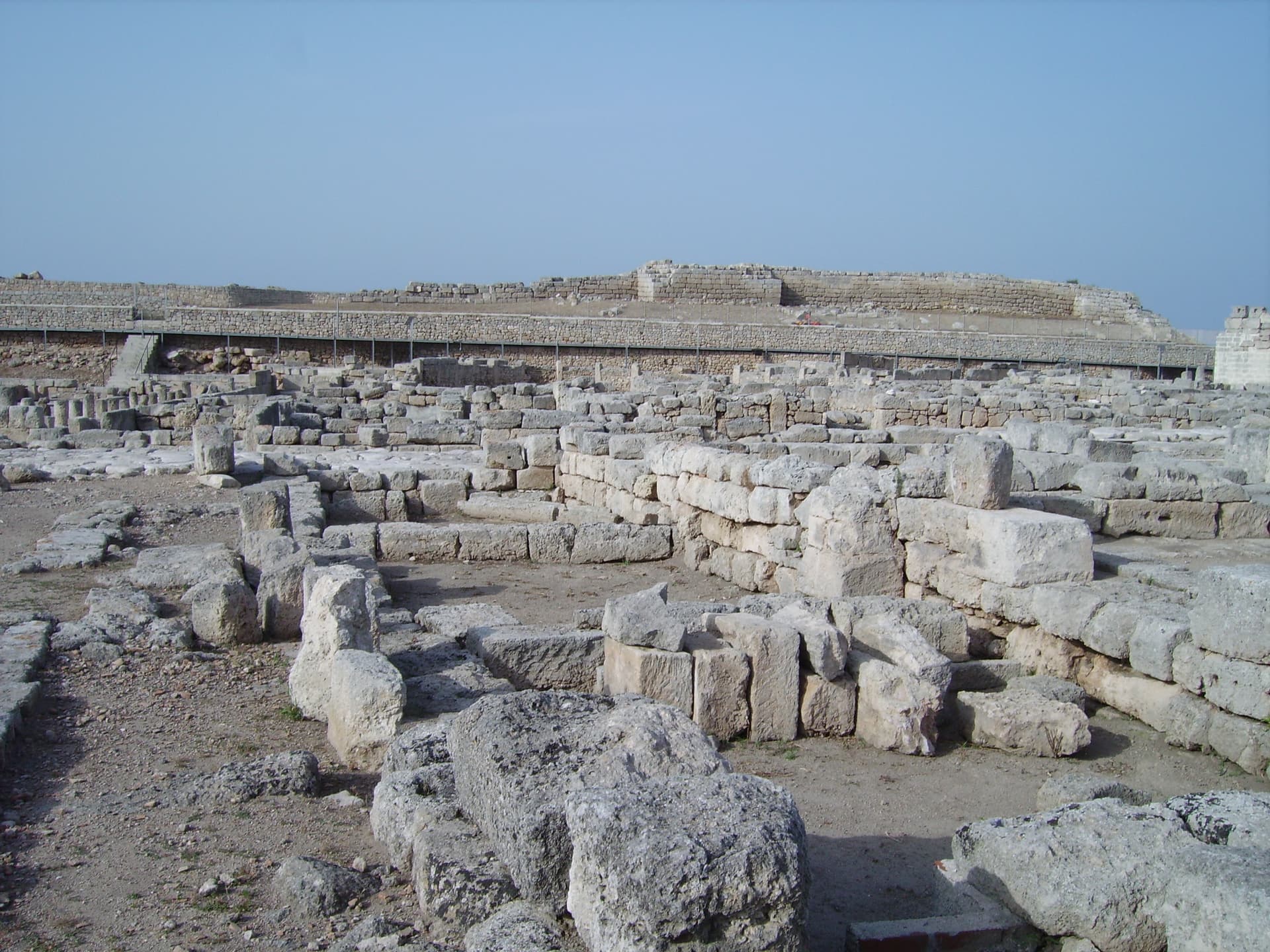
A Brindisi-province town from the Adriatic up to the Itria escarpment, holding the Roman ruins of Egnazia, the Selva, and Europe's second-largest safari park.
Gallipoli
Province: Lecce
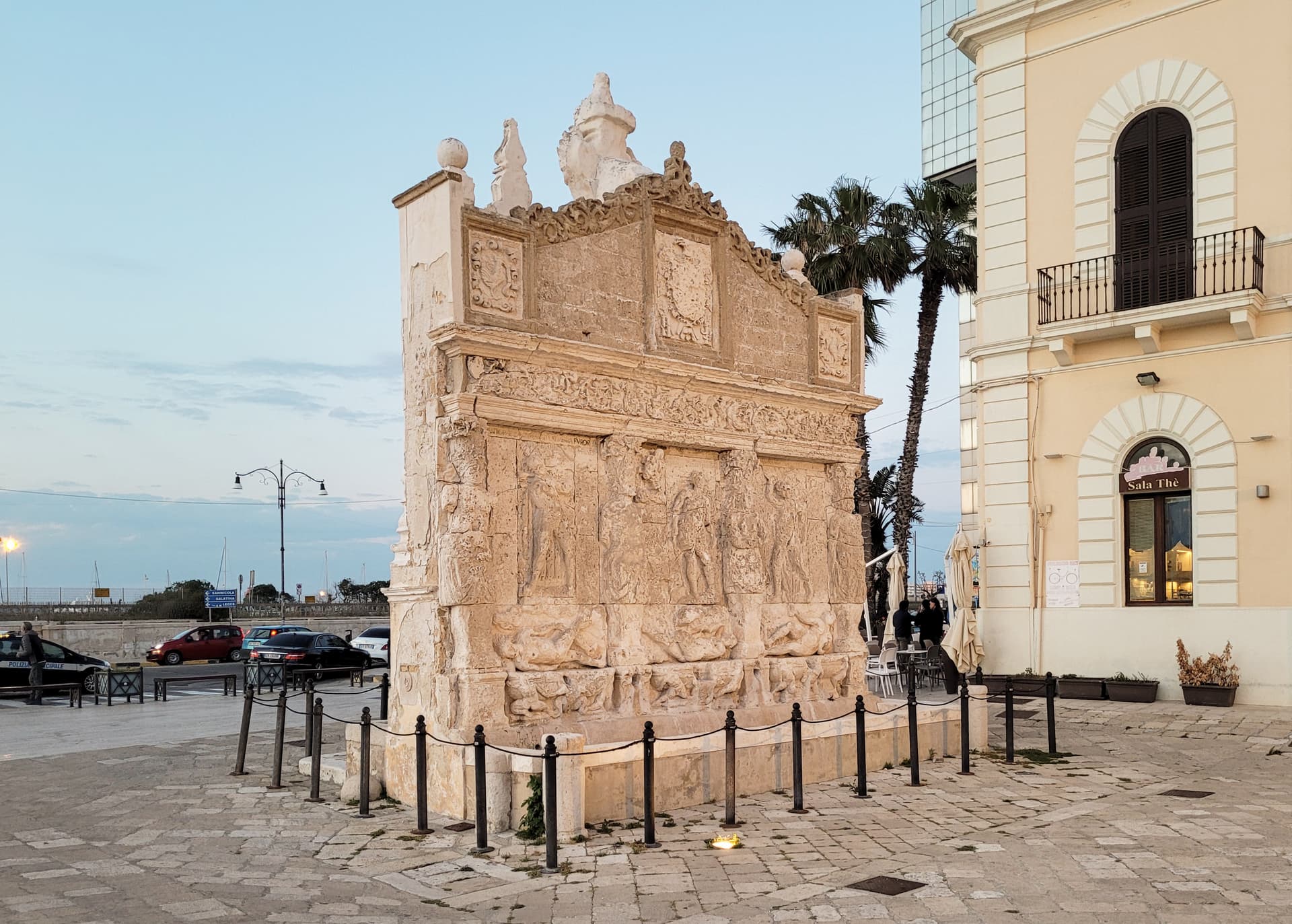
The Ionian beach city on a limestone island, Greek Kallipolis meaning beautiful city, tied to the mainland by a seventeenth-century bridge.