

Apulia · Foggia
Vieste
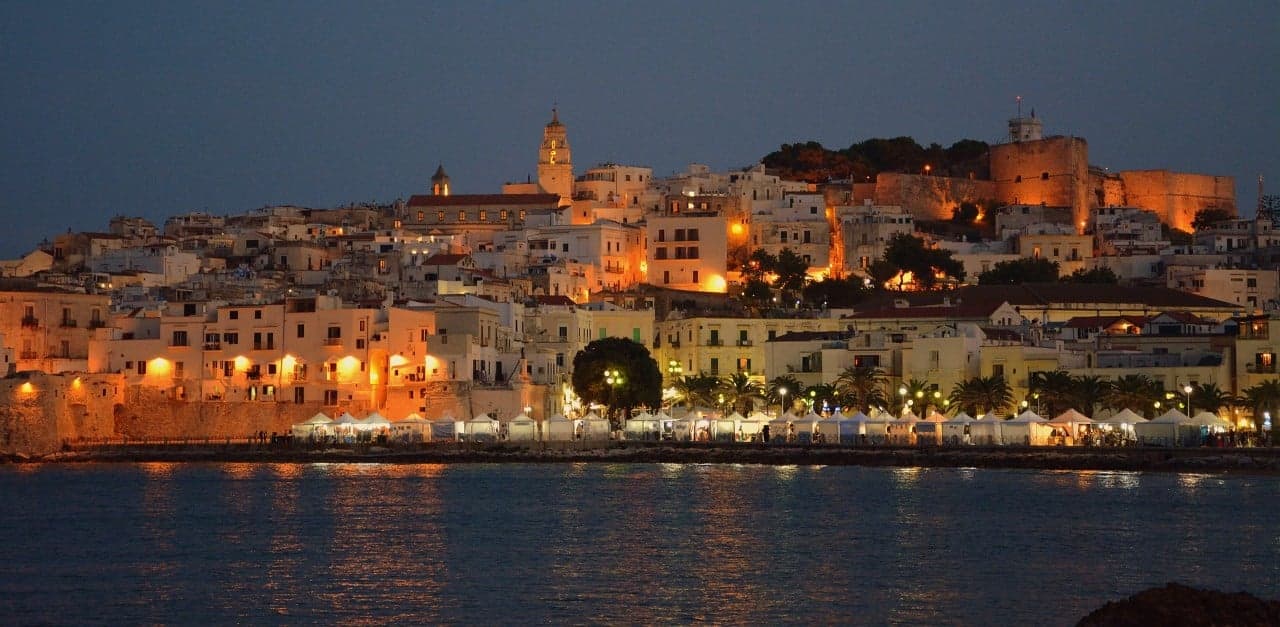
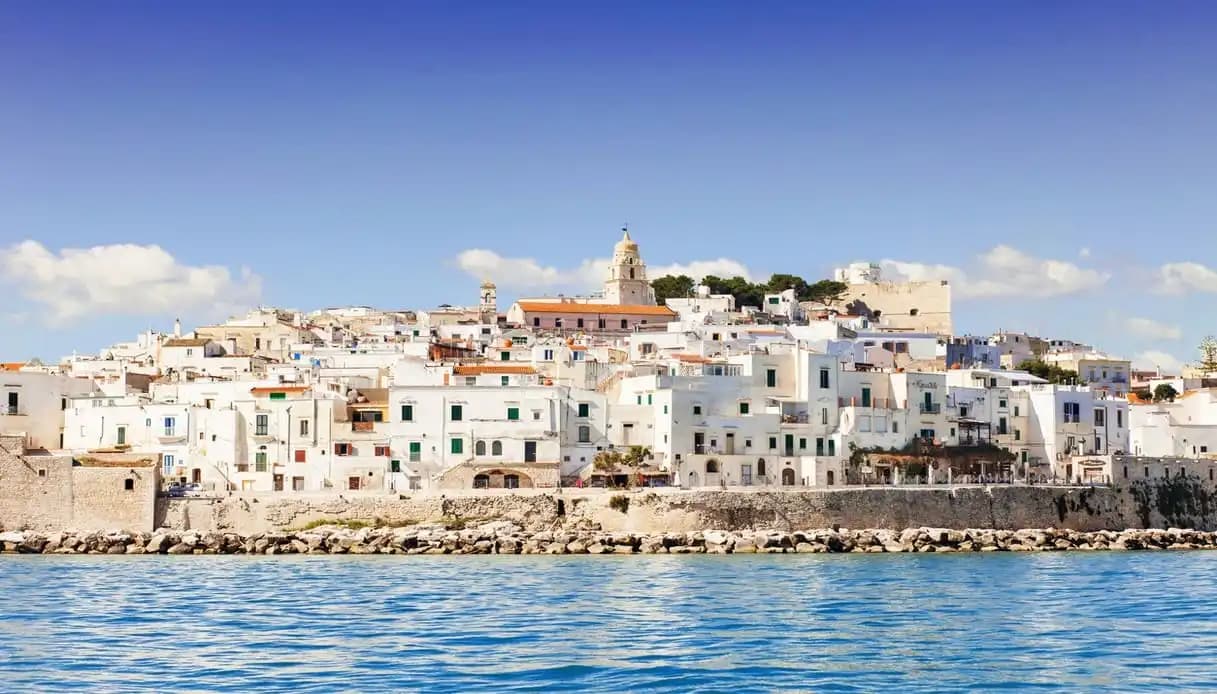
The Gargano headland of whitewashed alleys on a white limestone cliff, with the Pizzomunno sea stack standing 26 meters offshore.
Known for
PIZZOMUNNO
Twenty-six-meter limestone sea stack on Castle Beach, the visual symbol of the Gargano and the centerpiece of the local Cristalda legend.
FALESIE BIANCHE
White chalk-like limestone cliffs dropping straight into the Adriatic, carrying sea caves and arches along the Gargano coast.
CHIANCA AMARA
The bitter stone of the 1554 Ottoman massacre, embedded in a centro storico lane and still marking the worst day in the town's history.
When to visit
Best · May–Sep
- J
- F
- M
- A
- M
- J
- J
- A
- S
- O
- N
- D
- Best
- Hot or crowded
- Quiet
- Mostly closed
Why come
Vieste sits at the eastern tip of the Gargano promontory inside Gargano National Park, a medieval town on a white limestone cliff dropping straight into the Adriatic. The Cathedral was begun in the second half of the eleventh century in Apulian Romanesque, with three naves on two rows of six columns and capitals carved in oriental floral and animal motifs. The Norman castle of the eleventh century was rebuilt by Frederick II in 1242 as part of a coastal fortification line; the trapezoidal block of 1242 still anchors the headland.
On July 18-21, 1554, the Ottoman corsair Dragut sacked the town and executed roughly 5,000 inhabitants on the slab of stone now known as the Chianca Amara, the bitter stone, set into the lane that carries the memory. Pizzomunno, the 26. 6-meter limestone sea stack on Spiaggia del Castello, is the symbol of the Gargano and the centerpiece of a local legend about a fisherman whose lover was taken by sirens. The Bandiera Blu marks the water at Pizzomunno, Scialmarino and Lungomare Mattei.
The Sunday letter
We haven’t written Vieste’s letter yet.
One town every Sunday, with the photo, the food, the festa. Be there when this one comes up. Free, by Peter & Sophia from Pietrasanta.
By subscribing you agree to Substack’s Terms of Use, our Privacy Policy and our Information collection notice.
What to see
Cattedrale di Santa Maria Assunta
Eleventh-century Apulian Romanesque cathedral, three naves on two rows of six columns, with Corinthian and cubic capitals carved in zoomorphic and floral motifs.
Castello Svevo
Norman fortress rebuilt by Frederick II in 1242 on the headland above the sea, part of the Hohenstaufen Adriatic defensive line, still anchoring the old town.
Pizzomunno
Limestone sea stack 26.6 meters high on Spiaggia del Castello, the symbol of Vieste and the Gargano, attached to the legend of the fisherman and his stolen lover.
Chianca Amara
Bitter stone in the centro storico where Ottoman corsair Dragut executed thousands of inhabitants in July 1554 during the sack of Vieste.
Spiaggia del Castello e Scialmarino
Bandiera Blu beaches at the foot of the cliff and four kilometers north of town, sand strips against the white limestone of the Gargano coast.
Centro storico
Whitewashed medieval town of stepped lanes, sea-facing terraces and stone arches on the headland, set between the cathedral and the castle.
The slow-trip planner
Building a trip? Find where Vieste fits in a slow Italy circuit.
Answer five questions. We will shape a geographically coherent slow trip from the 1,000 Italian towns most travelers skip. Yours to save and share.
We recommend
Where to eat and stay
Not our picks, but places the guides put their name to — a Michelin star, a Gambero Rosso fork, a Slow Food snail, a Michelin Key for the hotels. Worth a table, a counter, or a night when you pass through.
Al DragoneRistorante
A spot in the Michelin Guide, at Al Dragone.
DonlùRistorante
Donlù has two Gambero Rosso forks (81/100) to its name.
La RipaRistorante
La Ripa carries one Gambero Rosso fork (77/100).
Lido VestaRistorante
One Gambero Rosso fork (78/100), at Lido Vesta.
Living here
- Population 13,405
- Very remotei
- Pharmacy in town
- High school within a 30-minute drive
- Nearest airport Bari / Brindisi, 2 h 55 min drive
- Regional capital Bari, 2 h 59 min drive
Tags & datadesignations · numbers · sources
The numbers
- Elevation: 43 m
- Population: 13,405
- Surface area: 169.19 km²
These figures were compiled from public directories — ISTAT, OpenStreetMap, Wikidata — and from the official listings of the guides named on this page. Town details change; verify with official sources before you travel.
Close by
More towns near Vieste
Peschici
Province: Foggia
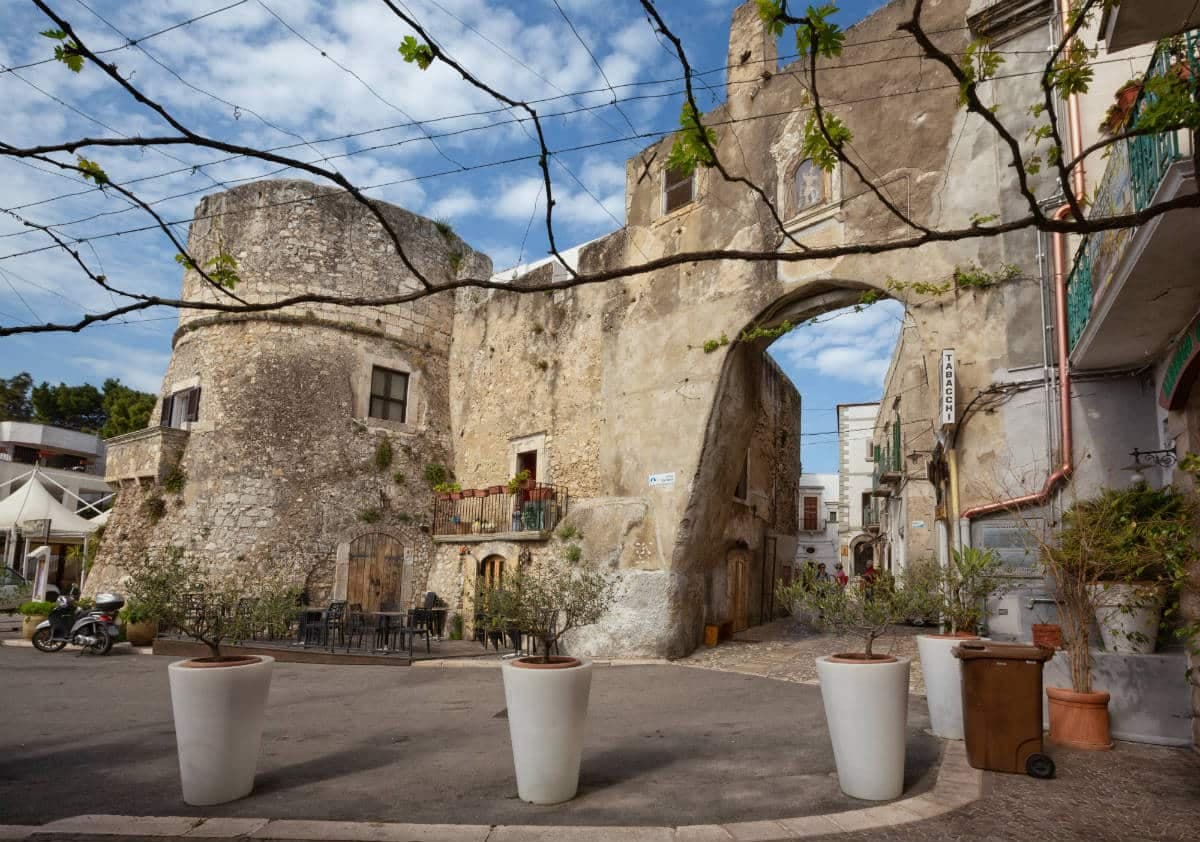
A Gargano cliff-top village above the Adriatic with a Norman castle of 1023, white houses spilling toward the sea and trabucchi on the headlands.
Vico del Gargano
Province: Foggia
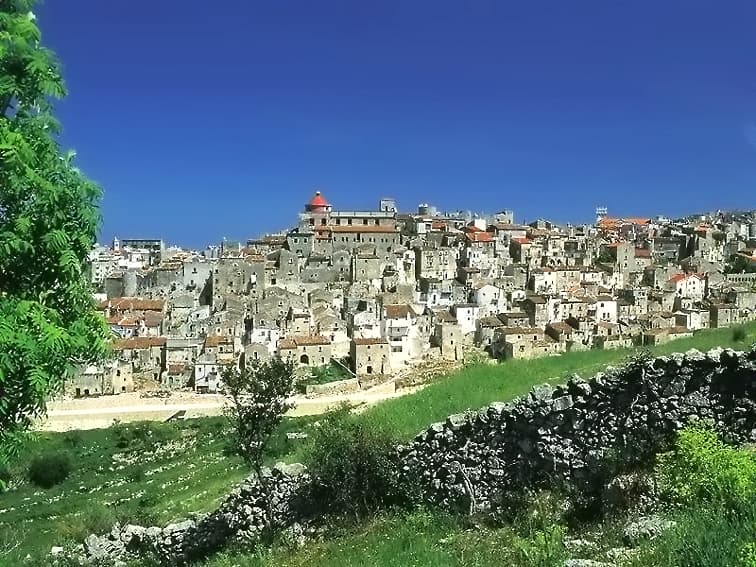
A Gargano hill town at 445 meters with a Norman castle, a kiss alley, and DOP citrus groves stepping down to the Adriatic.
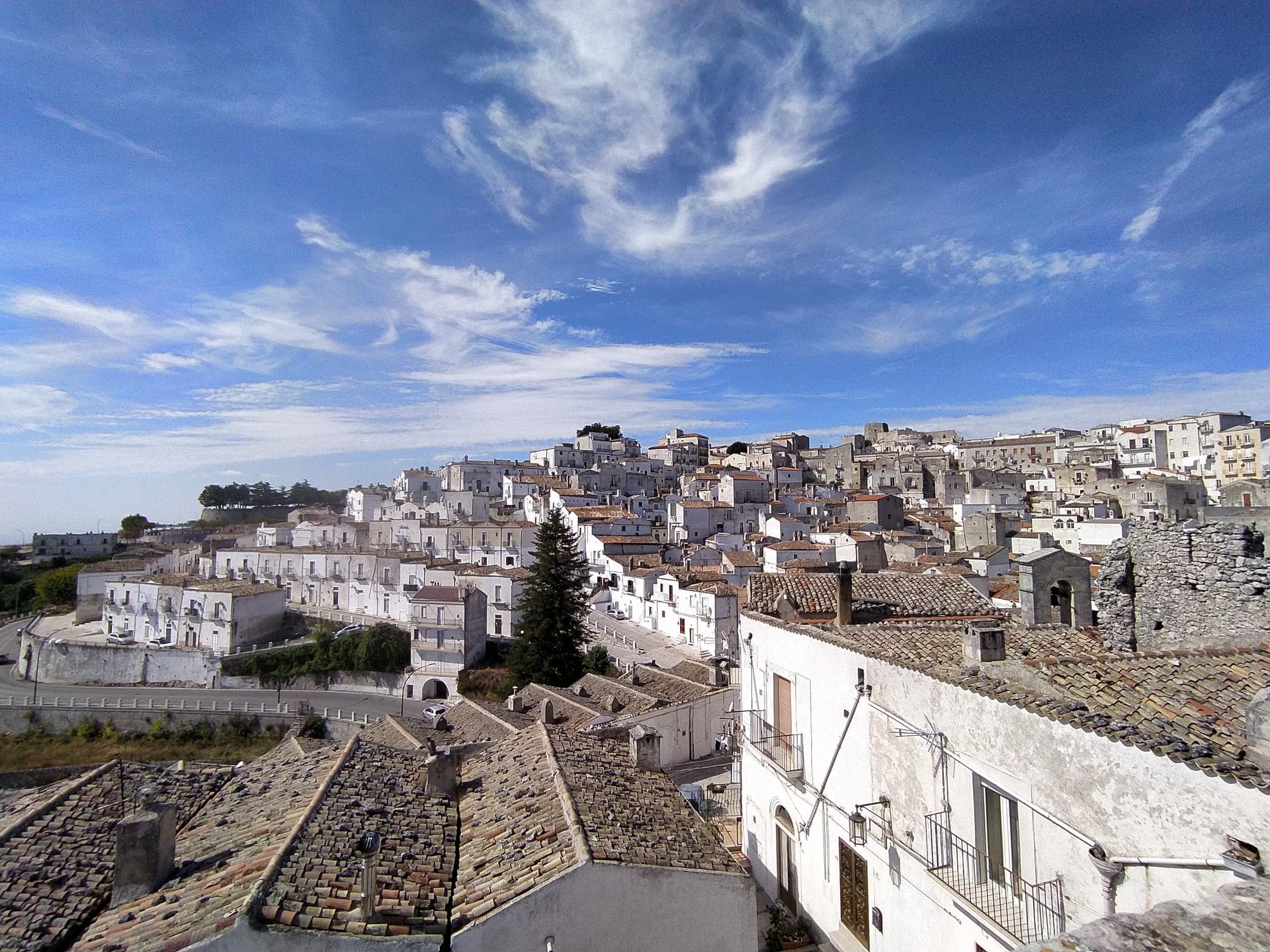
Monte Sant'Angelo
Province: Foggia
The Gargano peak at 843 meters where the Archangel Michael appeared in 490, the oldest western shrine to him, UNESCO since 2011.
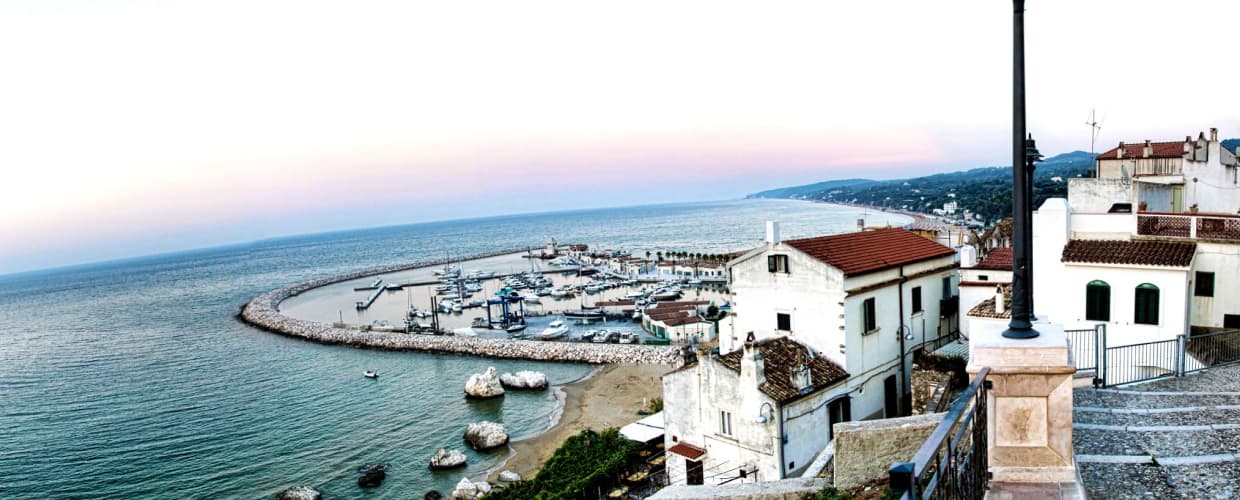
Rodi Garganico
Province: Foggia
A Gargano promontory town above the Adriatic, citrus capital of the peninsula, with DOP oranges and lemons grown since the Middle Ages.
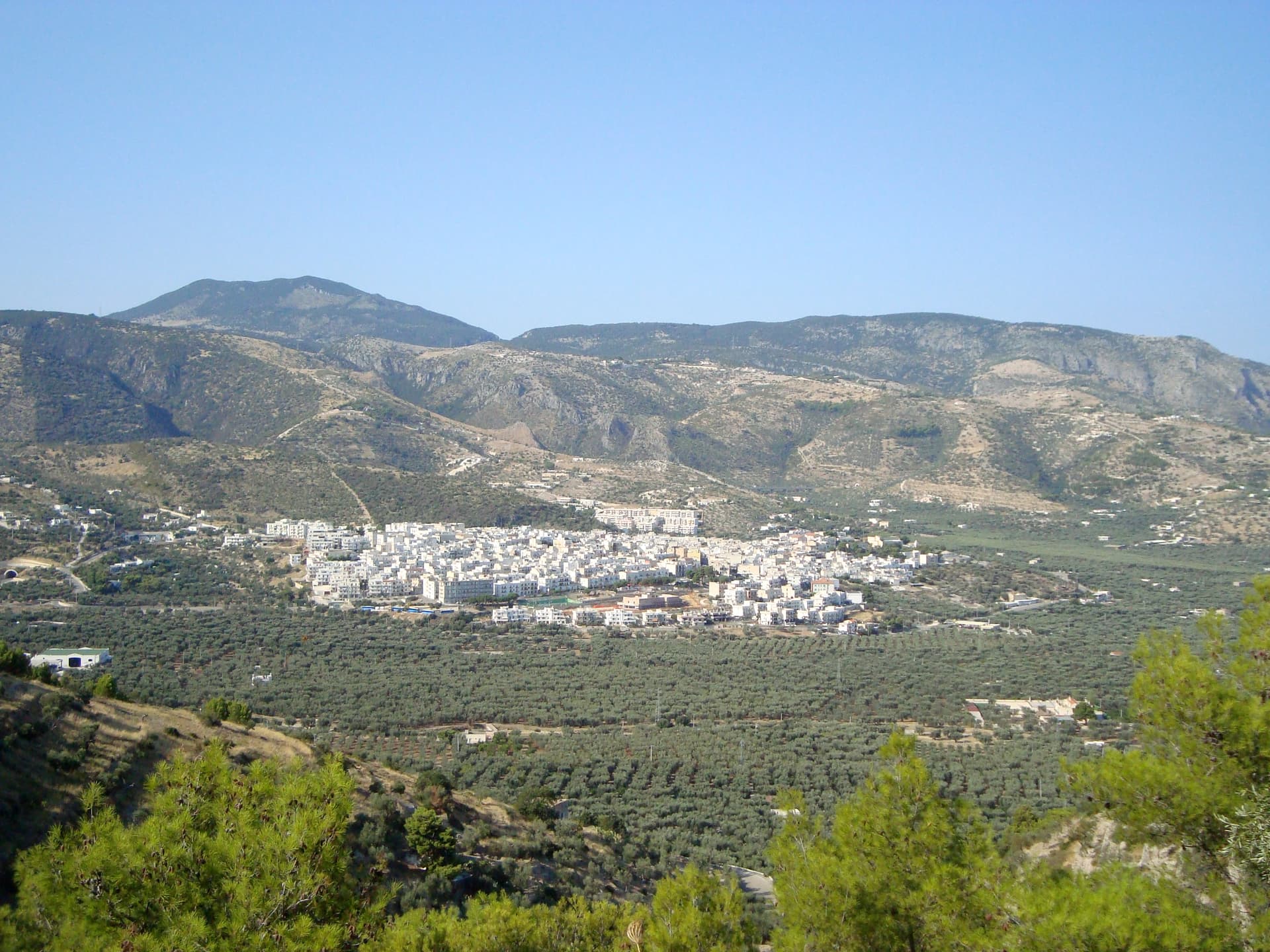
Mattinata
Province: Foggia
The only Apulian town that faces south on the Adriatic, the white amphitheater of the eastern Gargano with the Zagare sea stacks below.
💎 Borghi Autentici
More Borghi Autentici towns in Apulia
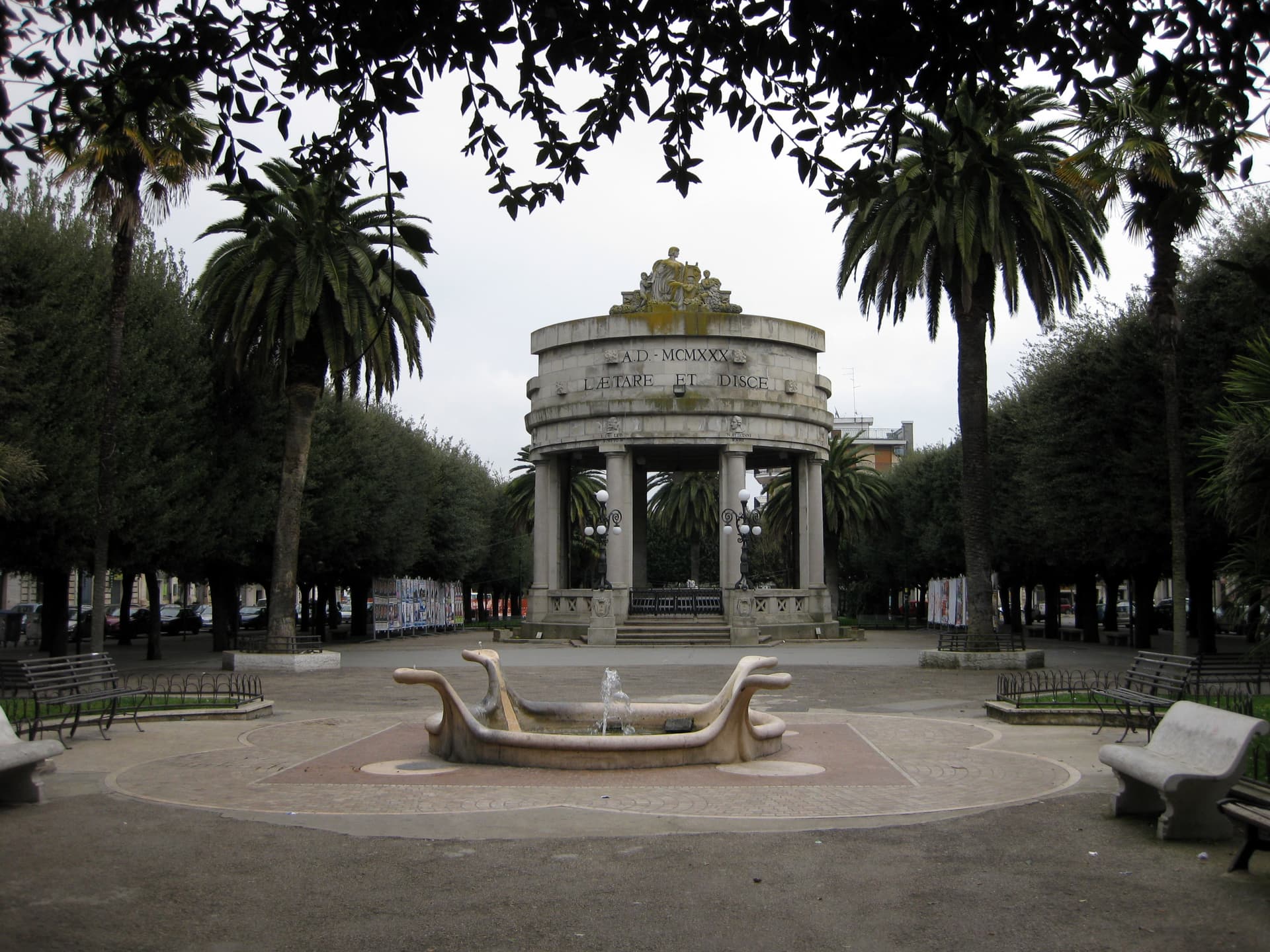
Acquaviva delle Fonti
Province: Bari
A Murge town at 300 meters between Bari and the Itria valley, named for its springs and a DOP red onion.
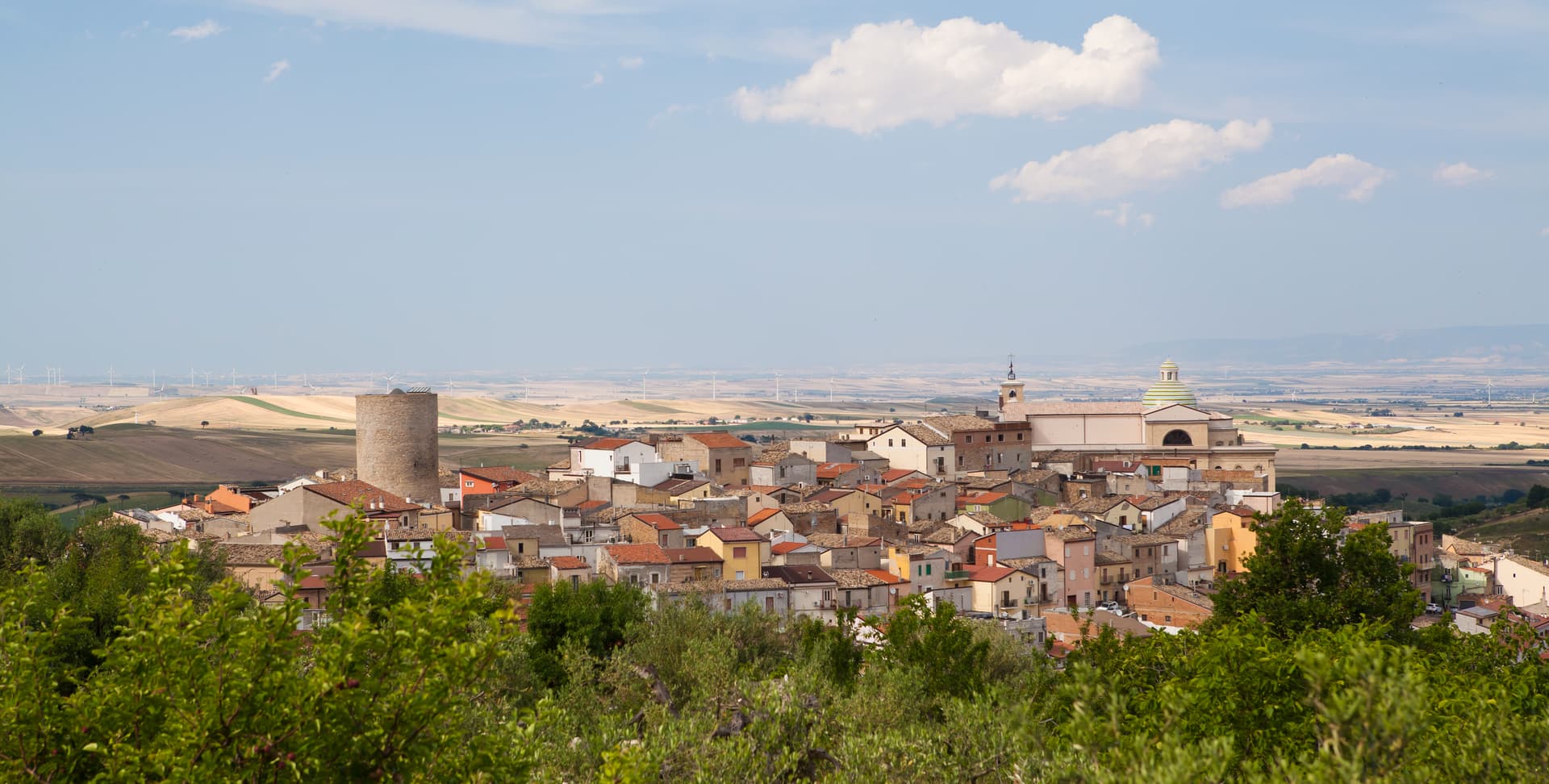
Biccari
Province: Foggia
A Subappennino Dauno borgo at 450 meters under Monte Cornacchia, the highest peak in Puglia at 1,151 meters, with a Byzantine tower at its core.
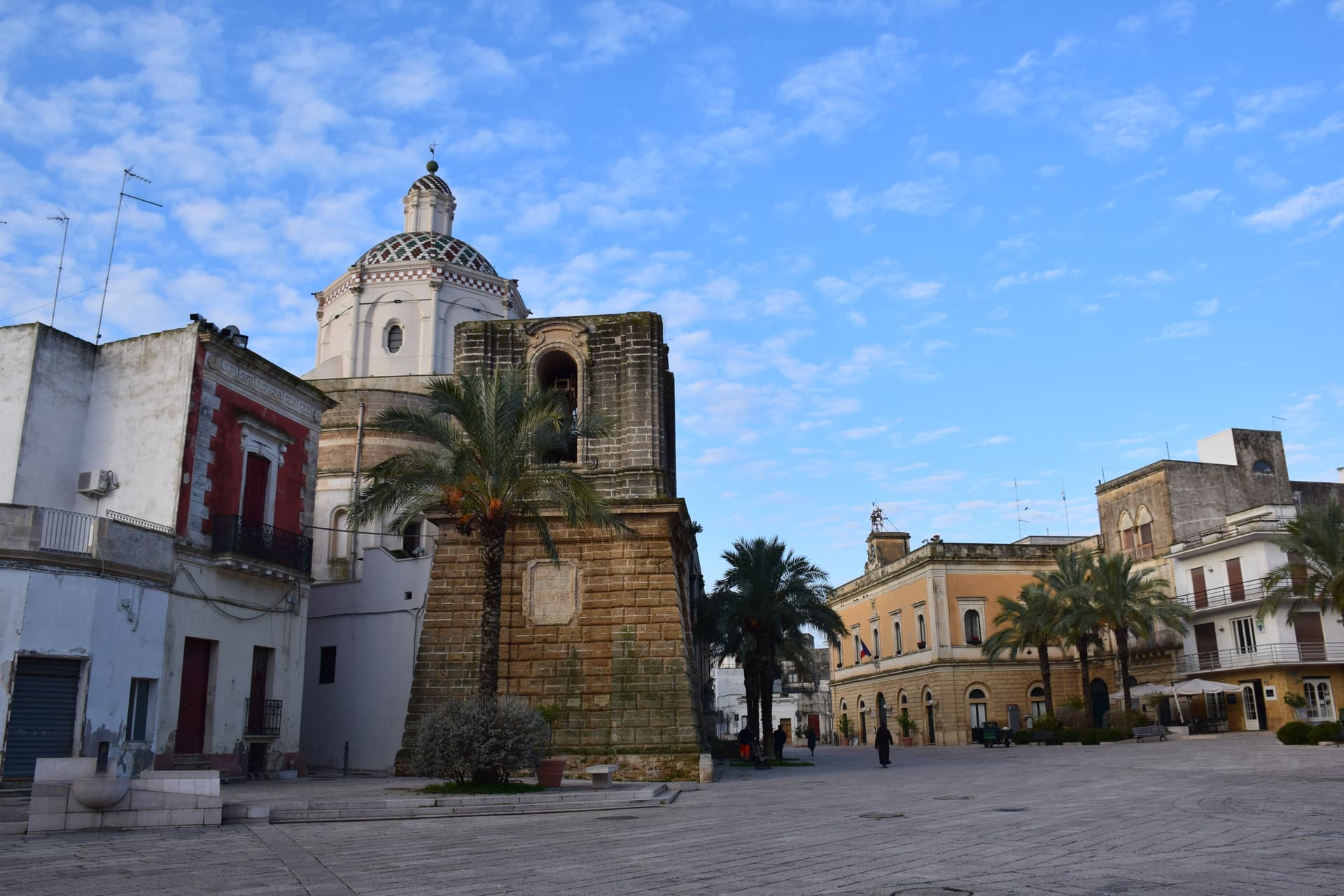
Campi Salentina
Province: Lecce
A Salento plain town fifteen kilometers north of Lecce, founded after the Saracen raids of 926, with a Frederician castle that became a Paladini-Enriquez marquisate.
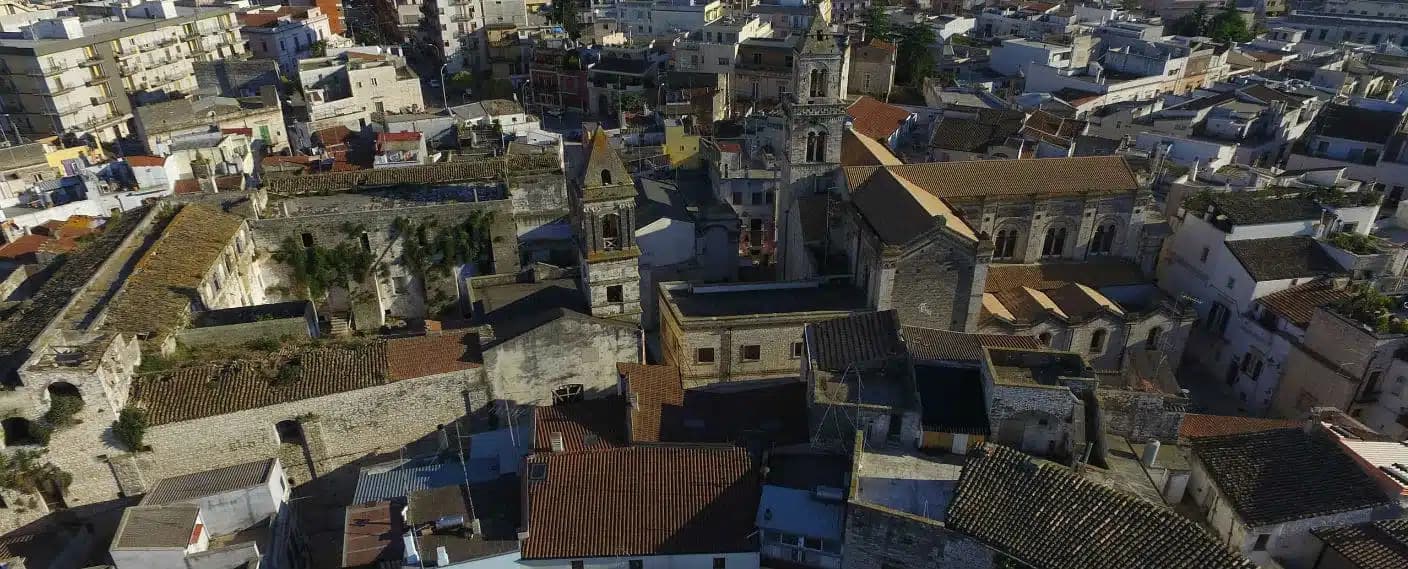
Casamassima
Province: Bari
The blue town of the Murge, twenty kilometers south of Bari, its centro storico painted with copper-blue lime after the 1658 plague spared its residents.
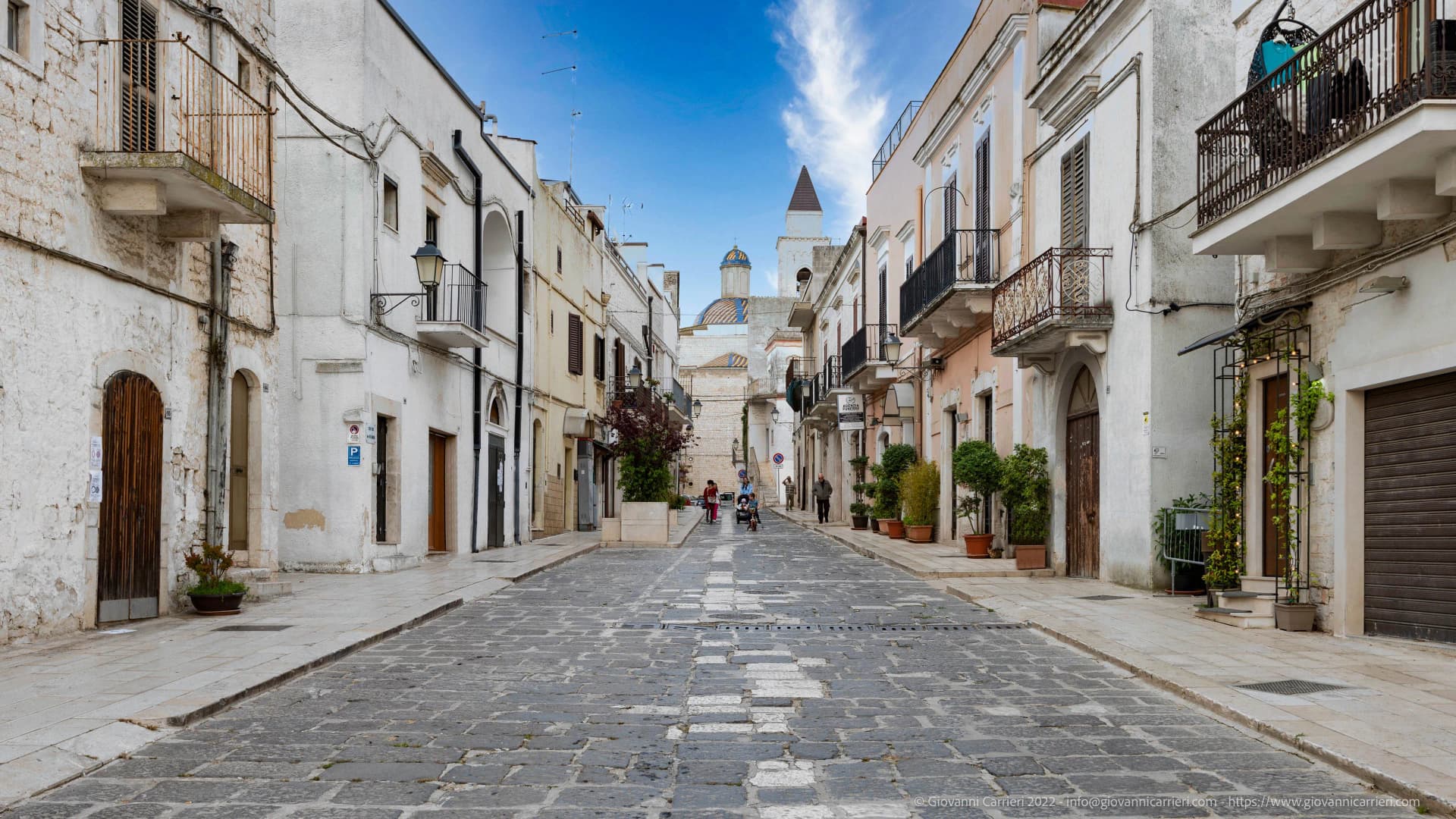
Cassano delle Murge
Province: Bari
A Murge foothills town at 341 meters at the gate of the Alta Murgia park, with the 1,300-hectare Foresta Mercadante mostly inside its territory.