

Lazio · Viterbo
Bomarzo
The Tuscia village below the Sacro Bosco, the 16th-century stone-monster garden built by a grieving condottiero for his dead wife.
Known for
SACRO BOSCO
Vicino Orsini's 16th-century stone-monster garden, attributed to Pirro Ligorio, built in mourning for Giulia Farnese.
ORSINI
The condottiero family who held Bomarzo from the medieval period and built both the Palazzo above and the garden below.
NOCCIOLA DEI MONTI CIMINI
Hazelnut growing area surrounding the village; Bomarzo is a member of the Città della Nocciola network.
When to visit
Best · Apr–Oct
- J
- F
- M
- A
- M
- J
- J
- A
- S
- O
- N
- D
- Best
- Hot or crowded
- Quiet
- Mostly closed
The festa: Anselmo di Bomarzo, 24 April
Why come
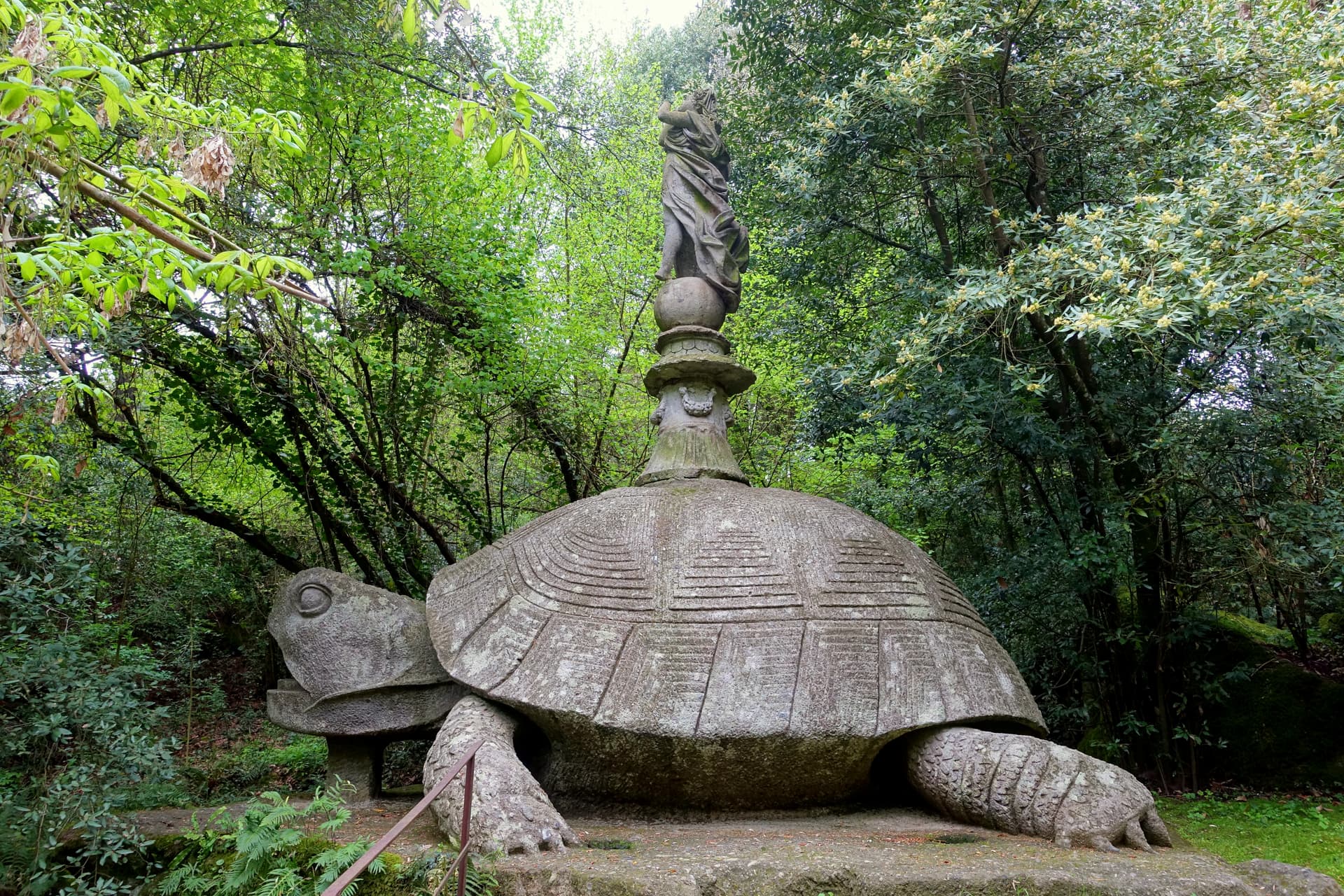
Bomarzo sits on a lava spur of the Monti Cimini, fifteen kilometers east of Viterbo, on the wooded edge of the Tuscia. The town itself is small and medieval, dominated by the Palazzo Orsini above it. The reason to come is in the wooded valley below: the Sacro Bosco, also called the Parco dei Mostri, a Mannerist sculpture garden commissioned by Pier Francesco Orsini, called Vicino, between 1547 and his death in 1588.
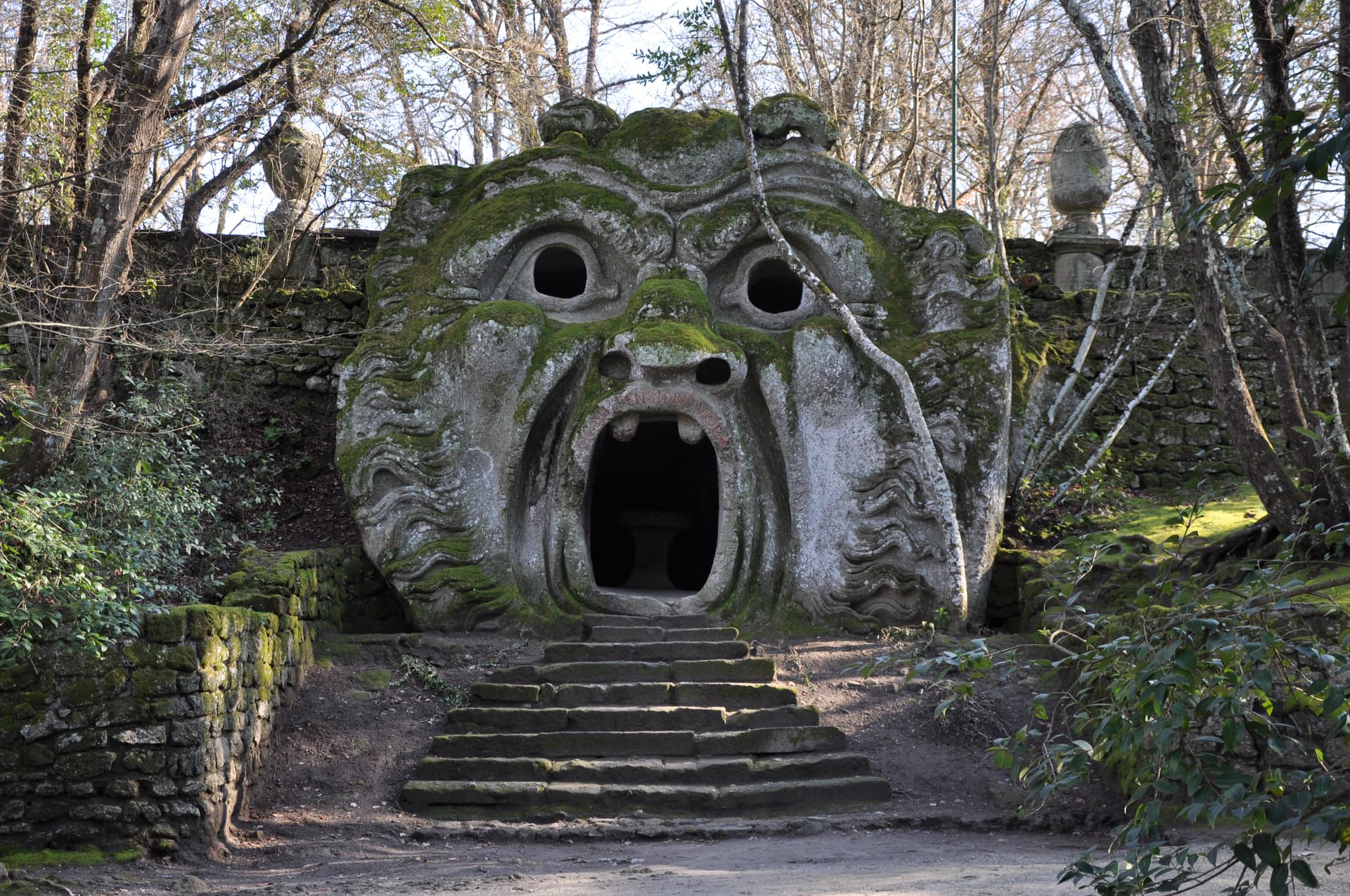
The design is attributed to Pirro Ligorio and the sculptures to Simone Moschino. Vicino built it after the death of his wife Giulia Farnese, and the inscriptions across the rocks make clear that the garden was meant to astonish rather than please: a leaning house, a giant tearing a man in two, an ogre's mouth carved into the bedrock with a stone bench inside it as a tongue. The garden was abandoned for centuries; Salvador Dalí and Jean Cocteau visited in the 20th century. The Bettini family restored it in the 1950s.
The Sunday letter
We haven’t written Bomarzo’s letter yet.
One town every Sunday, with the photo, the food, the festa. Be there when this one comes up. Free, by Peter & Sophia from Pietrasanta.
By subscribing you agree to Substack’s Terms of Use, our Privacy Policy and our Information collection notice.
What to see
Sacro Bosco (Parco dei Mostri)
Mannerist sculpture park commissioned by Vicino Orsini between 1547 and 1588, with stone giants, an ogre's mouth, and a leaning house.
Palazzo Orsini
Renaissance residence of the Orsini family above the village, built into the medieval rocca, partly used as a school and museum.
Centro storico
Medieval village on a lava spur, with stepped lanes leading from the lower piazza up to the Palazzo Orsini.
Piramide Etrusca
Pre-Etruscan or Etruscan altar carved into the bedrock in the woods near the village, rediscovered in the 1990s.
Chiesa di Santa Maria Assunta
Parish church in the village center, with a Cosmatesque-style floor and 16th-century frescoes.
The slow-trip planner
Building a trip? Find where Bomarzo fits in a slow Italy circuit.
Answer five questions. We will shape a geographically coherent slow trip from the 1,000 Italian towns most travelers skip. Yours to save and share.
Living here
- Population 1,674
- Commuter belti
- Pharmacy: none mapped
- High school within a 30-minute drive
- Train station in the comune
- Nearest airport Rome, 1 h 54 min drive
- Regional capital Roma, 1 h 19 min drive
Tags & datadesignations · numbers · sources
The numbers
- Elevation: 263 m
- Population: 1,674
- Surface area: 39.65 km²
These figures were compiled from public directories — ISTAT, OpenStreetMap, Wikidata — and from the official listings of the guides named on this page. Town details change; verify with official sources before you travel.
Close by
More towns near Bomarzo
Bassano in Teverina
Province: Viterbo
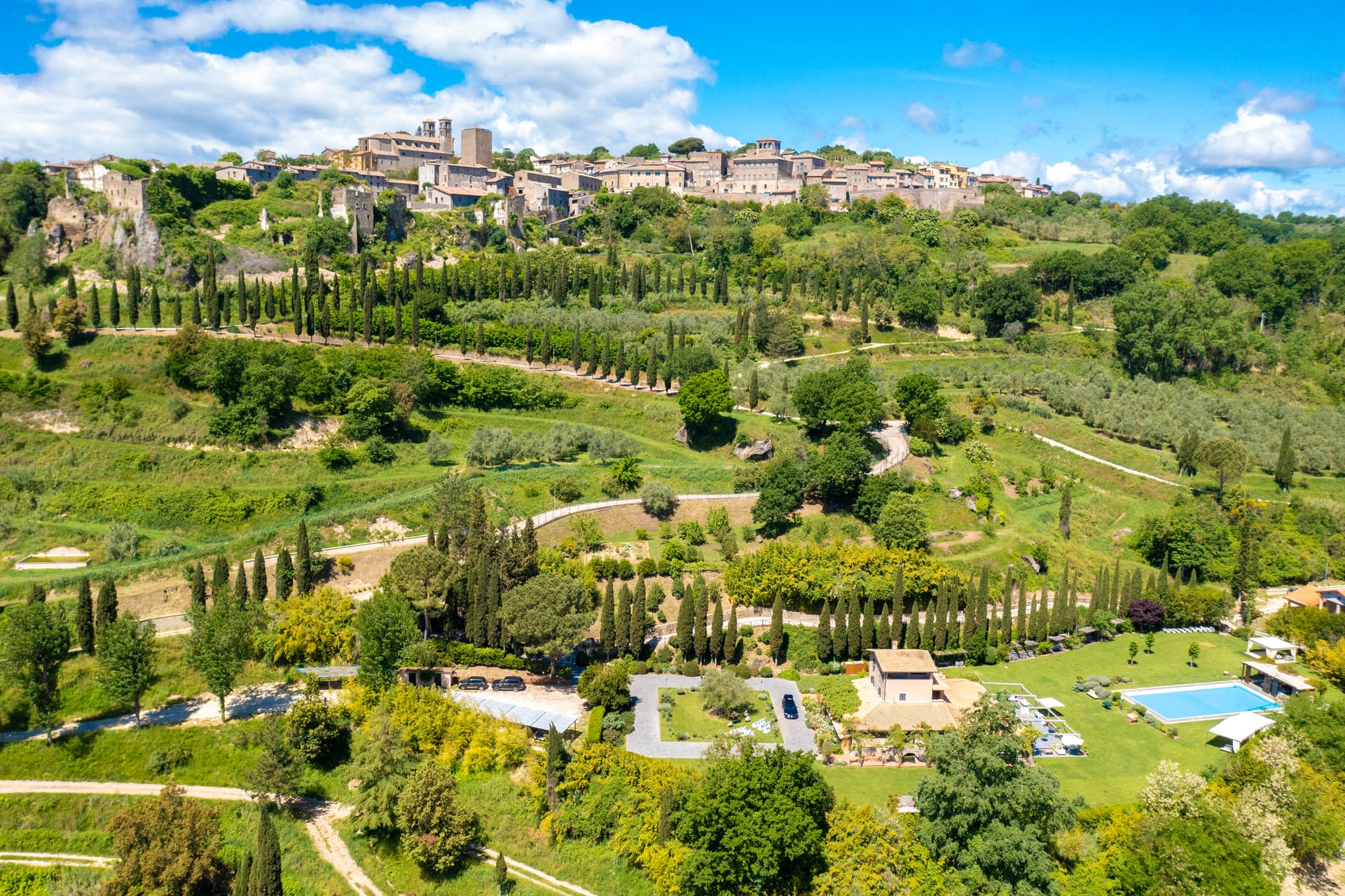
A tufa-spur borgo of 1,260 above the Tiber valley between Lazio and Umbria, with a clock tower that hides an eleventh-century animated bell tower.
Lugnano in Teverina
Province: Terni
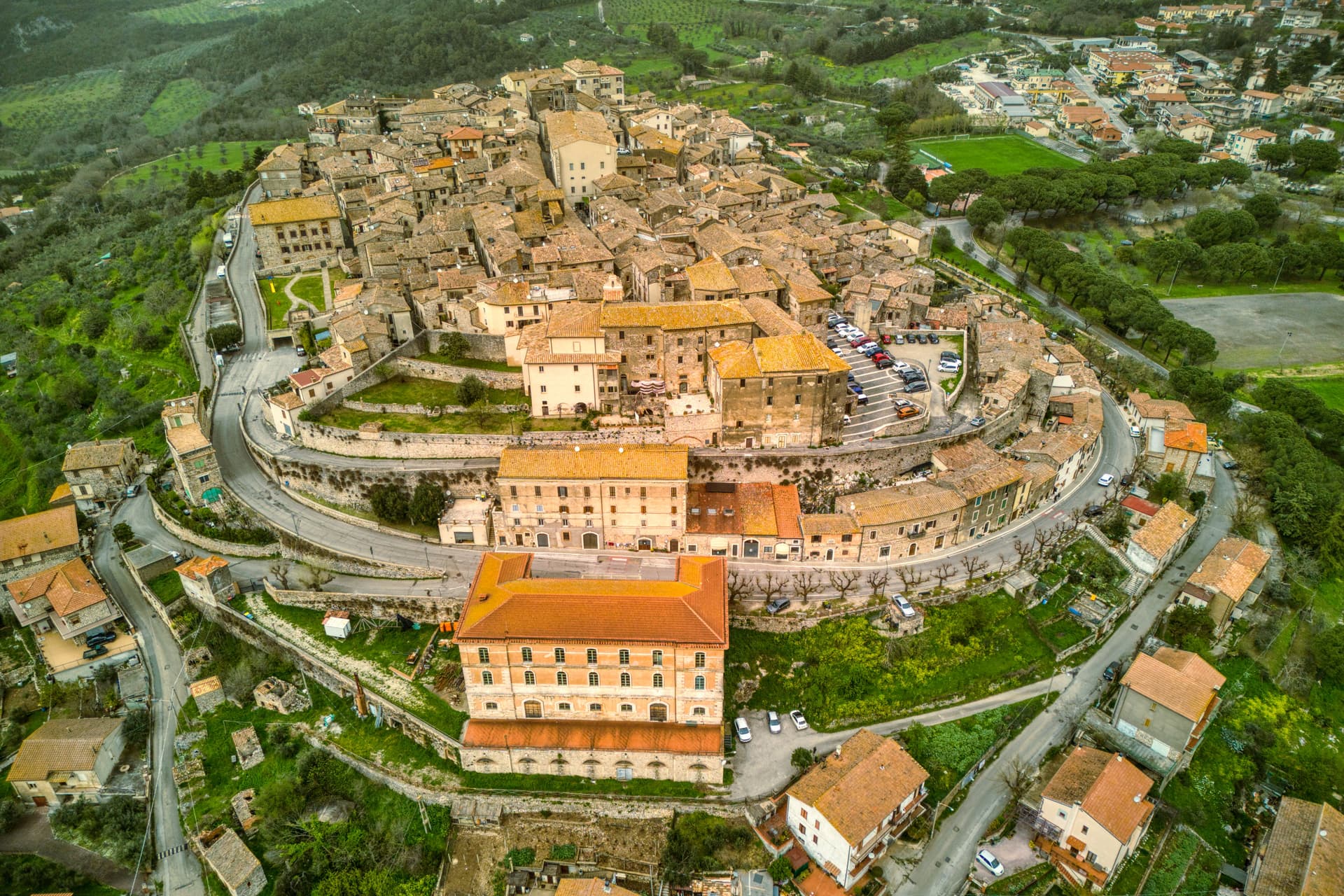
A ridge town at 441 meters above the lower Tiber valley, with a 1230 Romanesque collegiata and a late-Roman infant cemetery on the hill below.
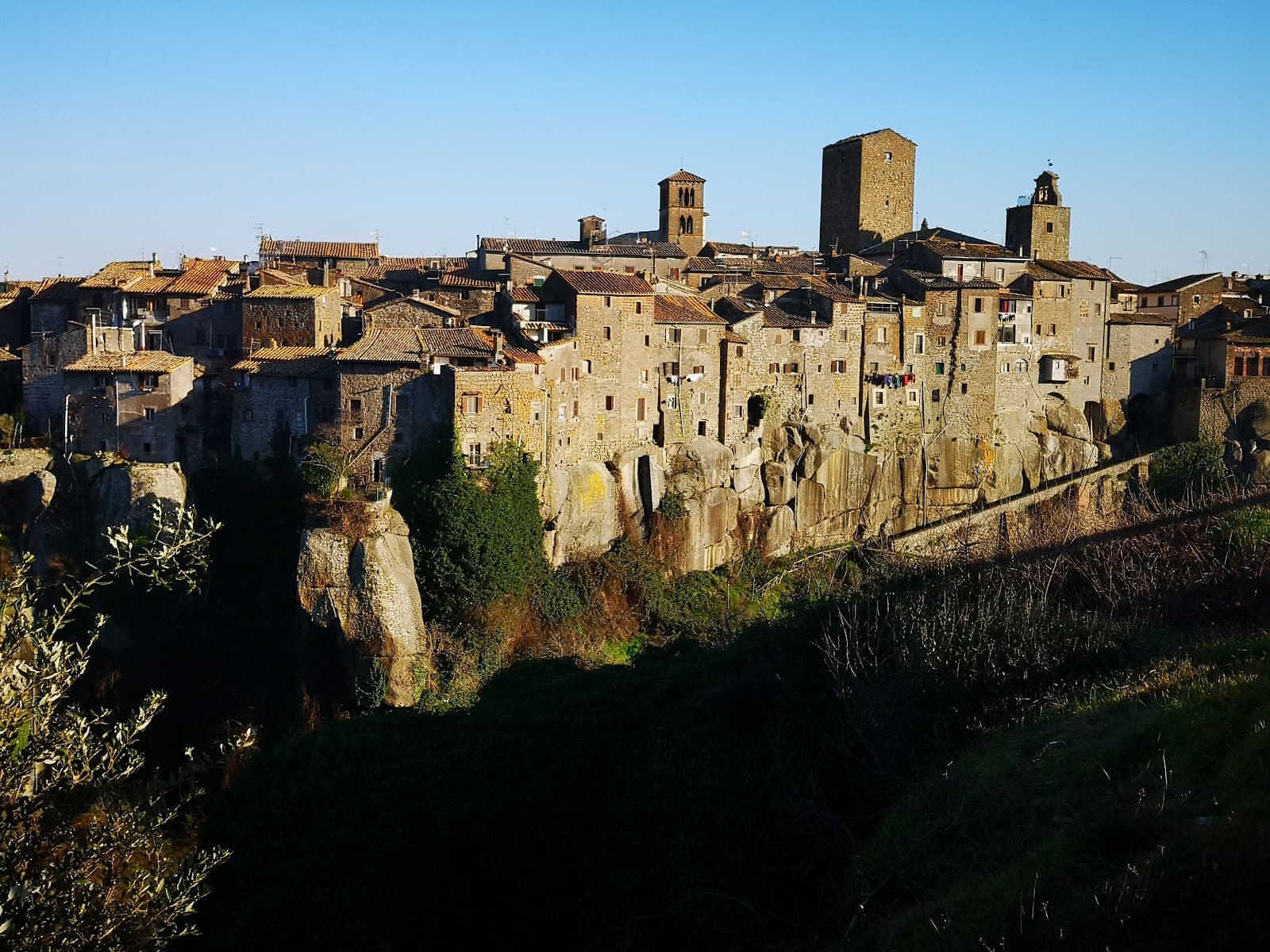
Vitorchiano
Province: Viterbo
A peperino borgo built on a single volcanic boulder near Viterbo, and the only place outside Easter Island with a true Moai.
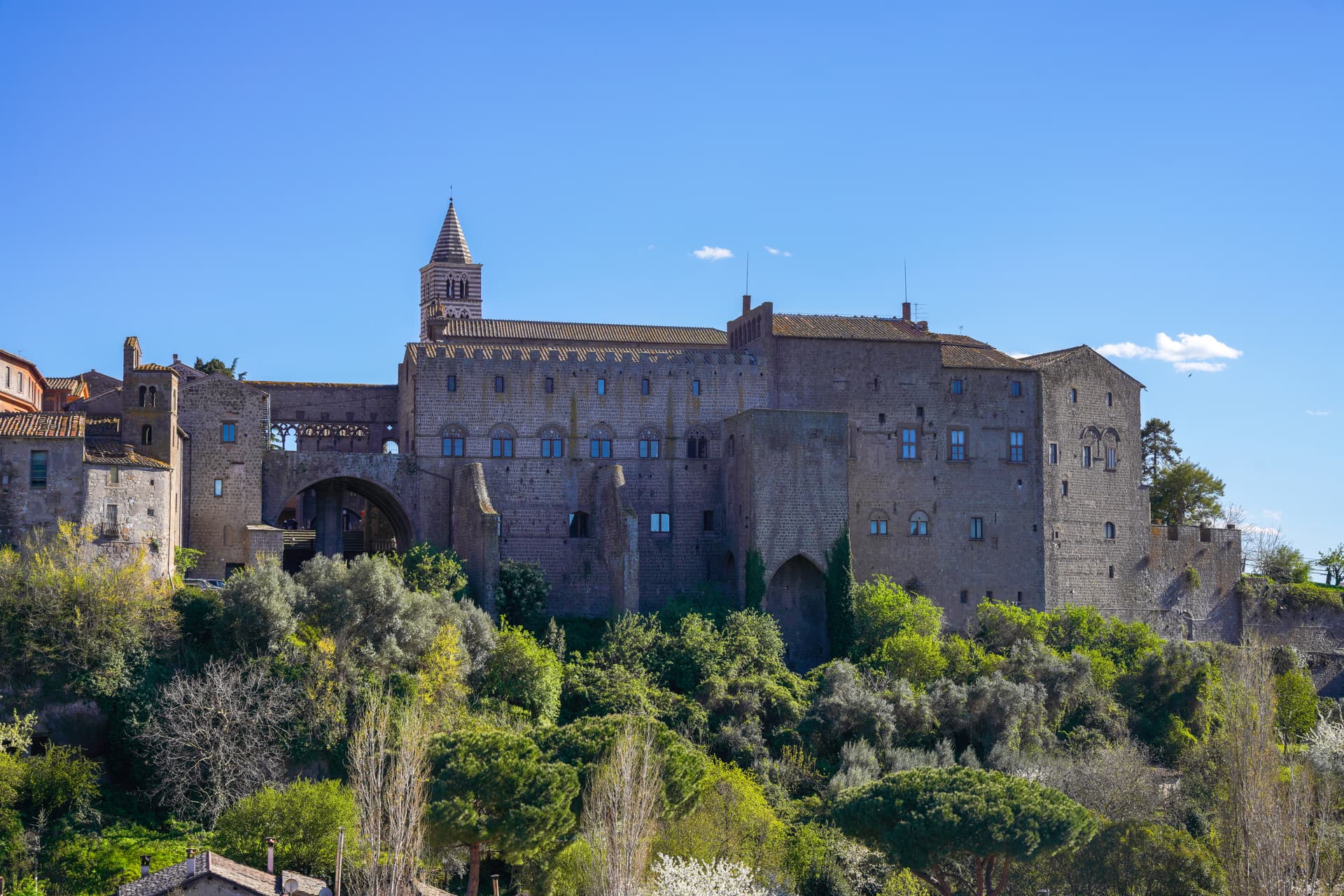
Viterbo
Province: Viterbo
The medieval capital of the Tuscia, papal seat for five popes between 1257 and 1281 and home to the longest conclave in Church history.
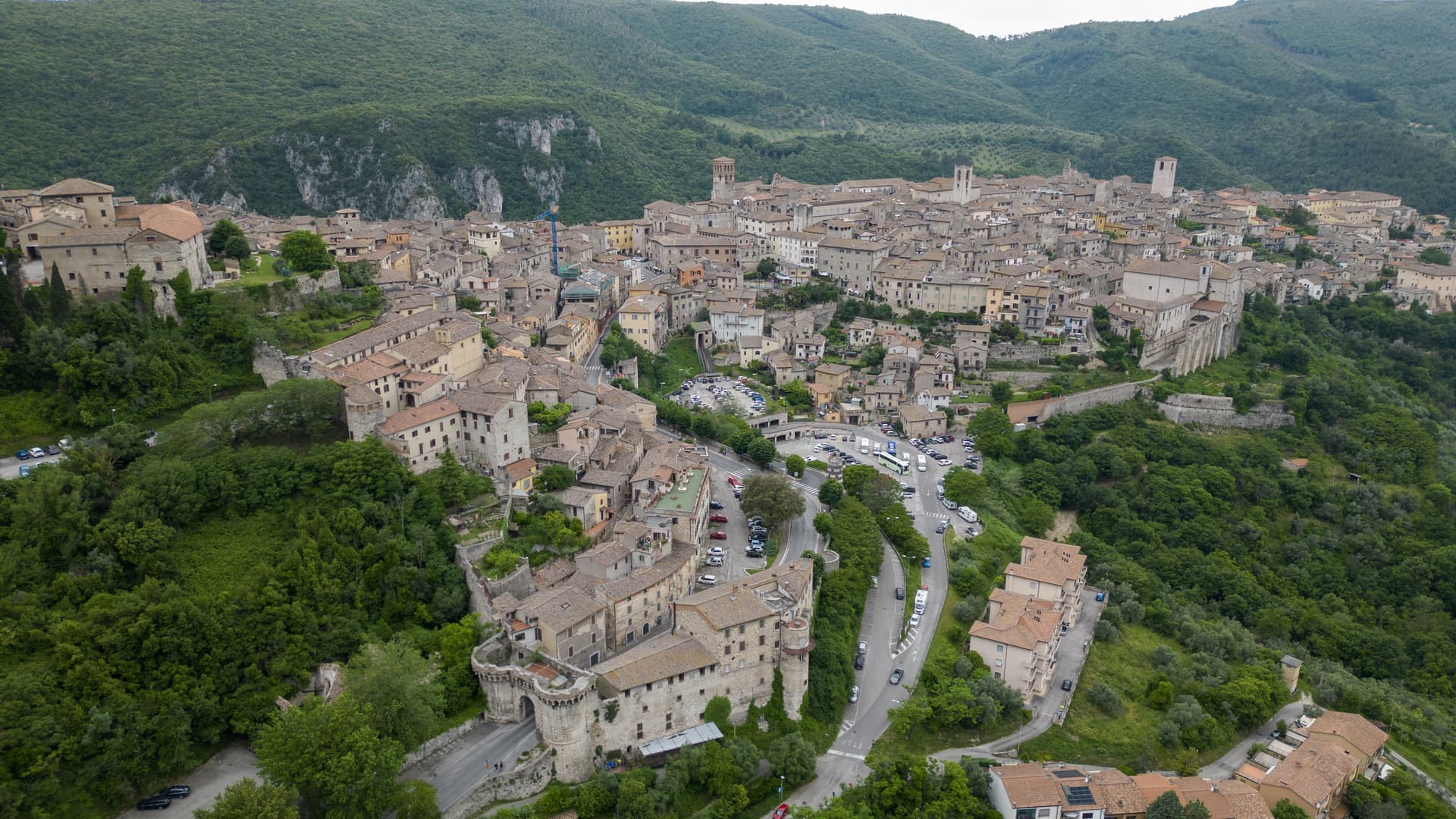
Narni
Province: Terni
Italy's geographical centre and the etymological 'Narnia' — a 17,900-resident hilltop town on a travertine outcrop above the Nera valley, with the Rocca Albornoz papal fortress, a 30m Roman arch of the Ponte d'Augusto, a hidden underground complex containing a 13th-c Inquisition cell with original prisoner graffiti, and the documented Latin name (Narnia) that C.S. Lewis lifted for his fictional kingdom.
🟠 Bandiera Arancione
More Bandiera Arancione towns in Lazio
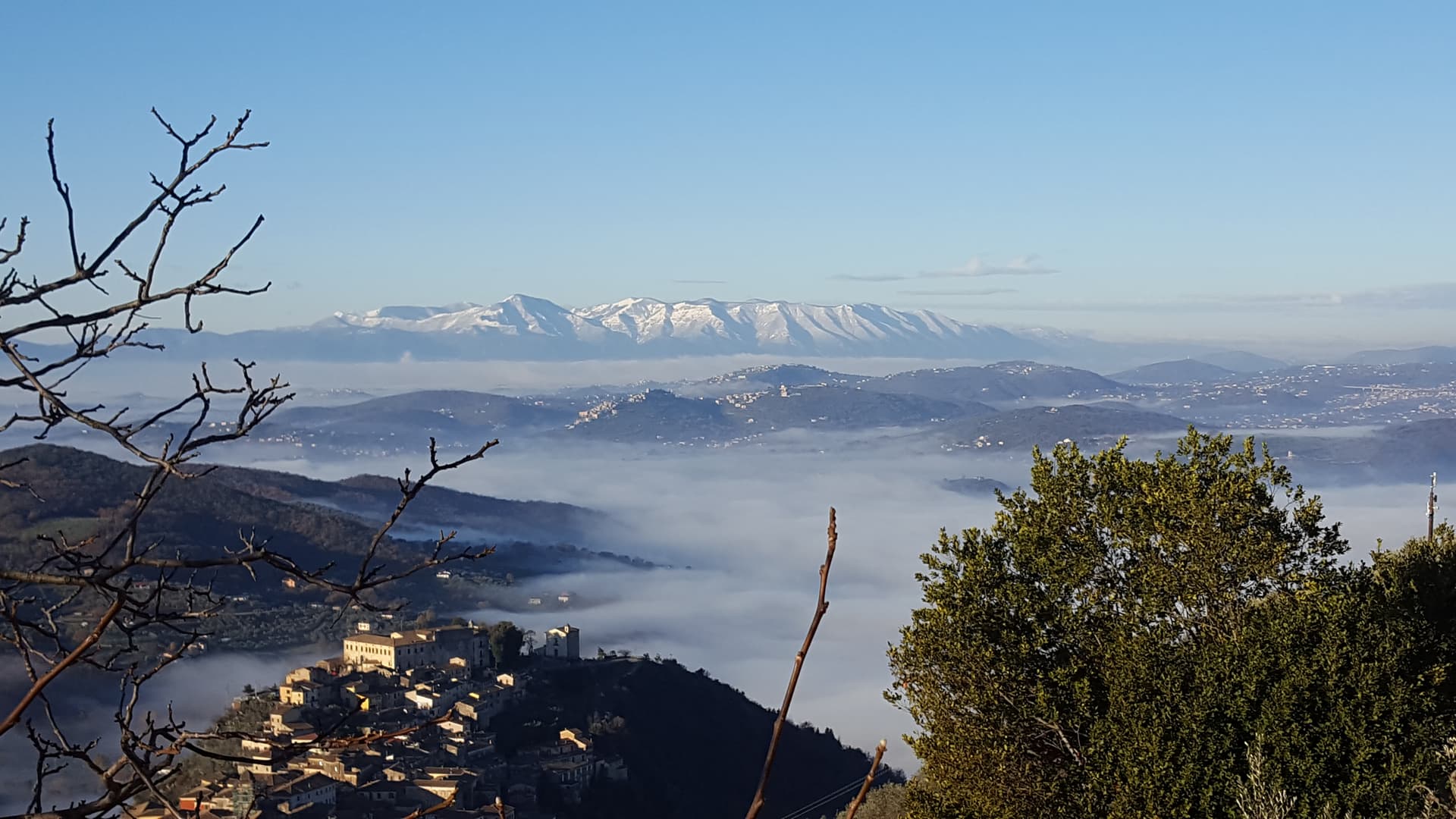
Arpino
Province: Frosinone
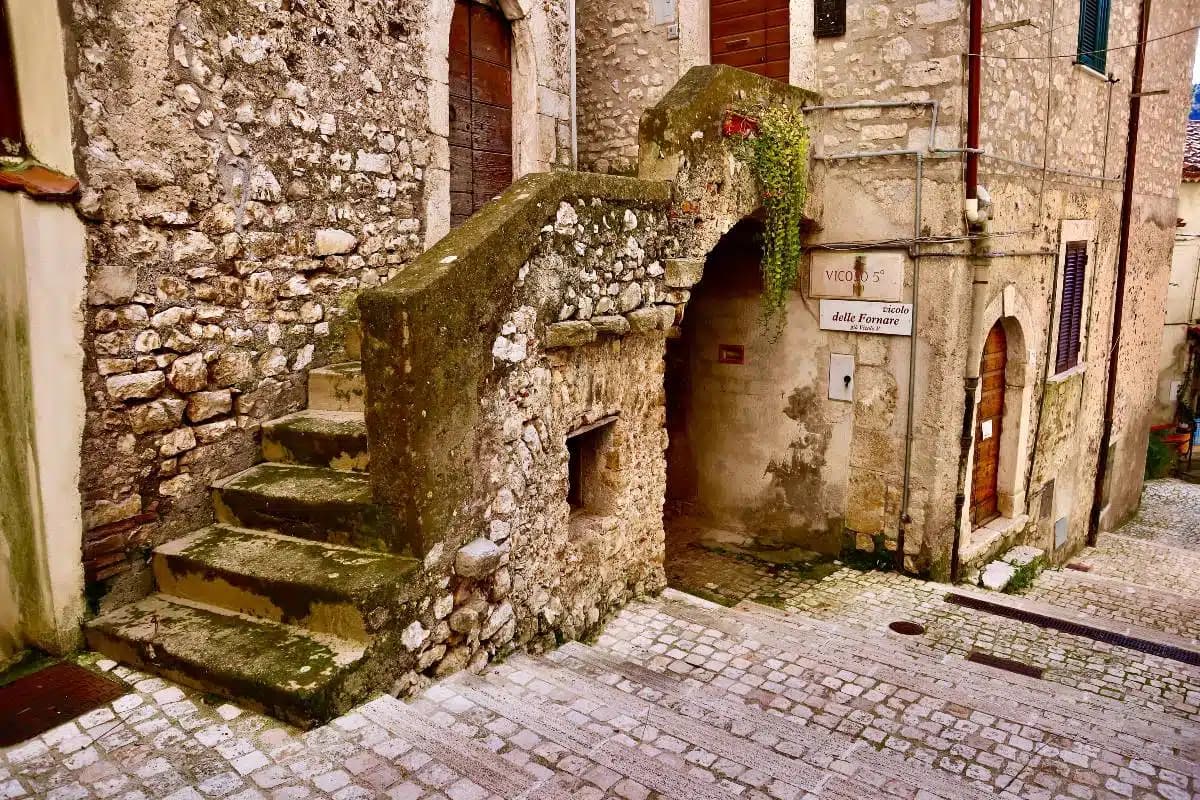
The Volscian-Roman hill town in the Liri valley that produced Marius and Cicero, with a pre-Roman acropolis above the modern center.
Bassiano
Province: Latina
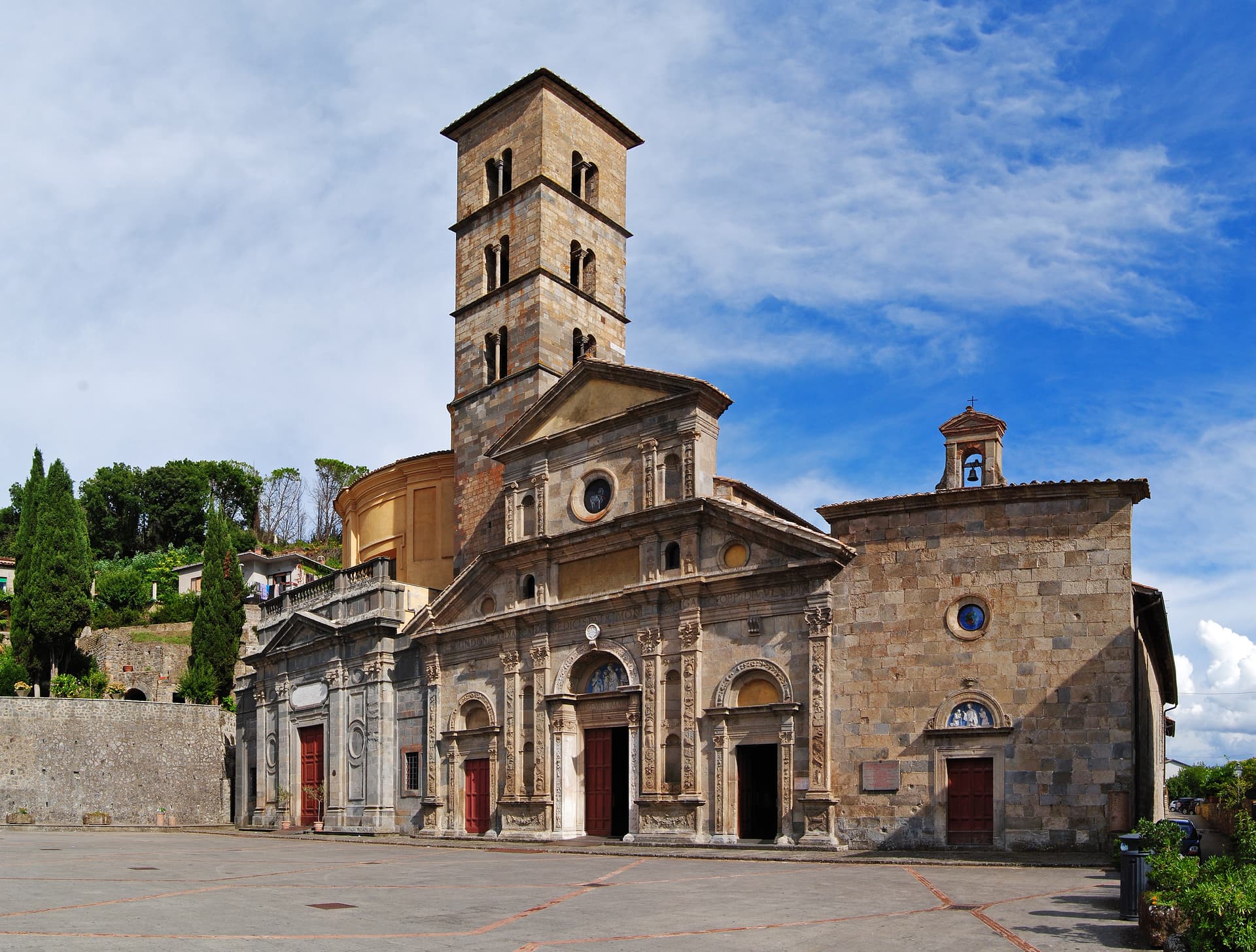
The highest village in the province of Latina at 562 meters, birthplace of Aldo Manuzio, who shrank the book to pocket size.
Bolsena
Province: Viterbo
A medieval town at 350 meters on the eastern shore of Europe's largest volcanic lake, where a Bohemian priest reported a Eucharistic miracle in 1263.
Calcata
Province: Viterbo
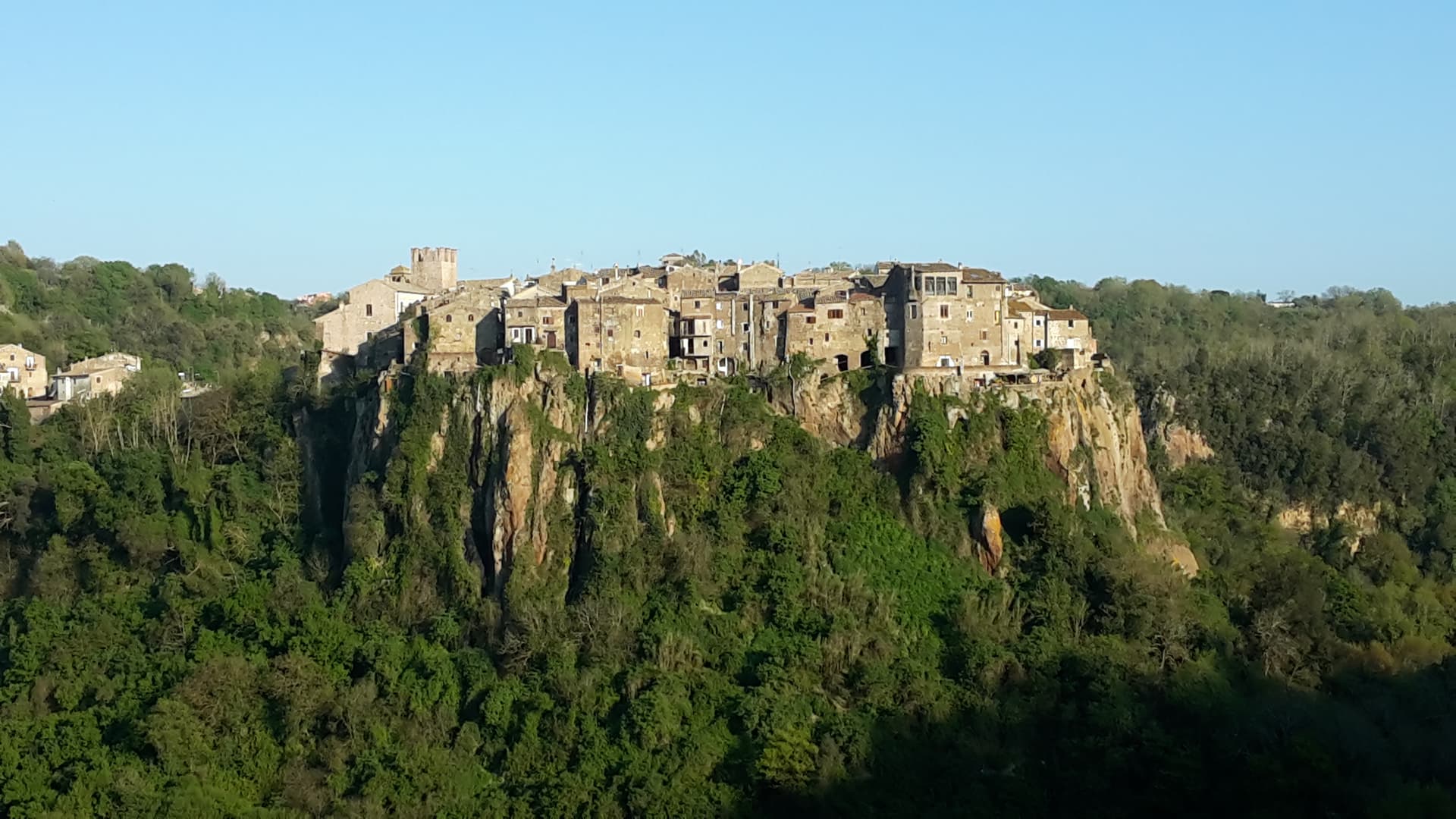
A tufa-cliff village forty kilometers north of Rome, condemned and abandoned in the 1930s, then occupied by artists and never left.
Caprarola
Province: Viterbo
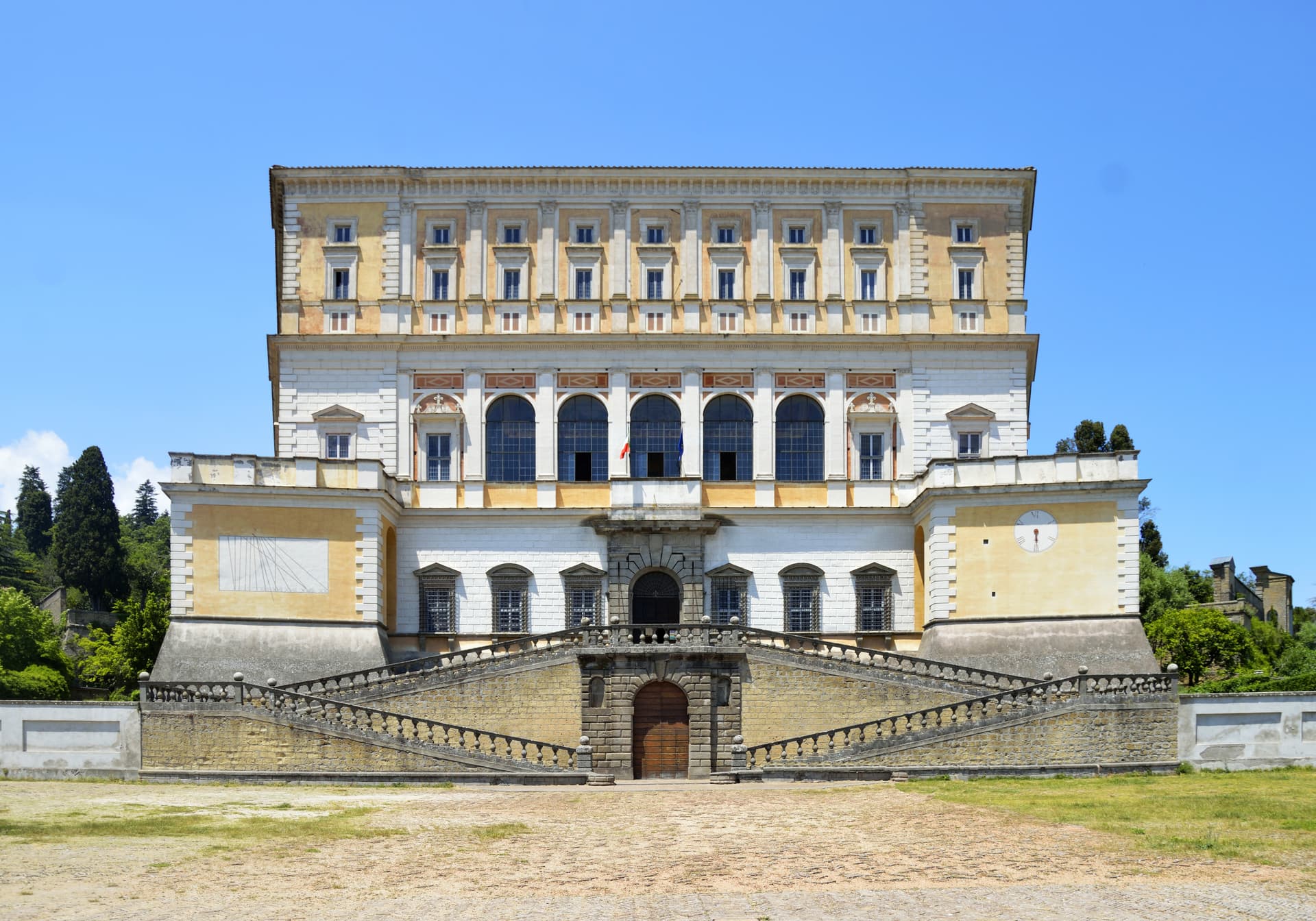
A Cimini hill town above Lago di Vico, dominated by the pentagonal Villa Farnese that Vignola built for the Farnese cardinals between 1559 and 1573.